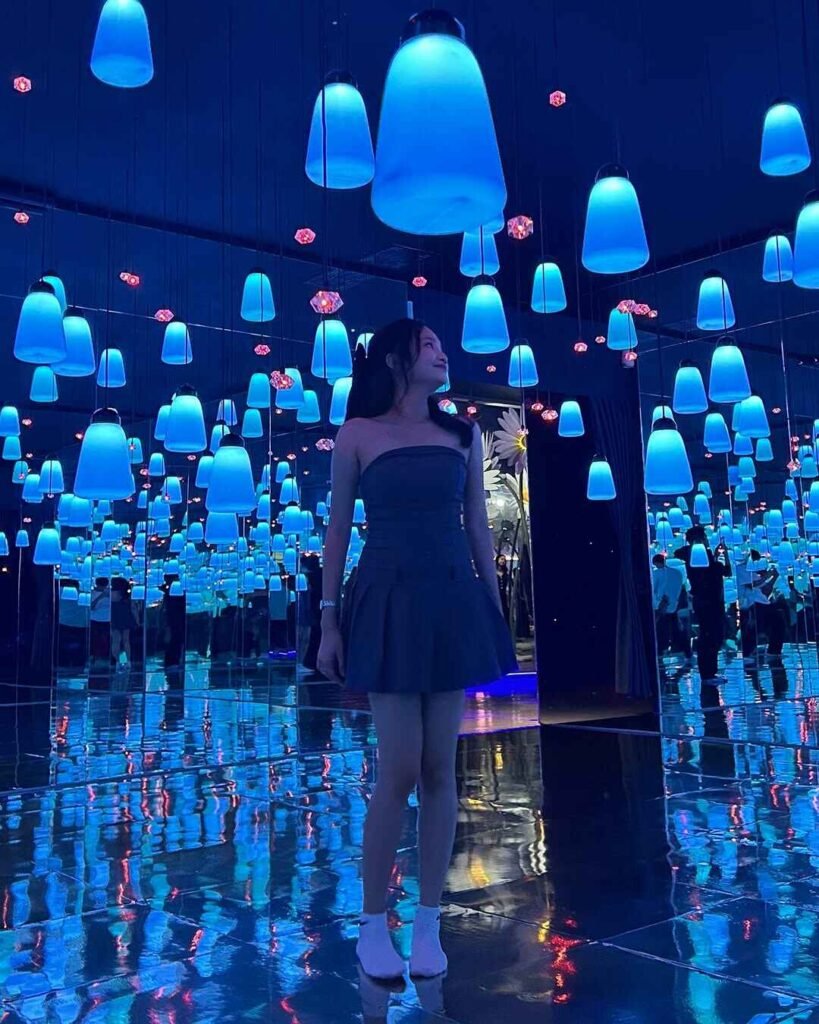
Art in Island, now formally known as The Media Square, is the largest mixed-media digital art museum in the Philippines, located at 175 15th Avenue, Cubao, Quezon City. A single general admission ticket covers the entire facility, with no hidden upsells or separate fees. Admission is ₱850 for adults, and the museum is open Tuesday to Sunday, closed every Monday.
Art in Island Quick Guide
| Detail | Info |
|---|---|
| Park / Attraction | Art in Island: The Media Square |
| Address | 175 15th Avenue, Barangay Socorro, Cubao, Quezon City |
| City / Province | Quezon City, Metro Manila |
| Type | Interactive Digital Art Museum |
| Pricing Model | Single general admission ticket covers all 15 zones |
| Cost to Enter | ₱850 (Adult), ₱700 (Student), ₱600 (Senior/PWD), Free (below 3 ft) |
| Operating Hours | Tue–Fri: 11:00 AM–7:30 PM; Sat–Sun: 11:00 AM–8:30 PM |
| Best Day to Visit | Tuesday to Thursday (lighter crowds) |
| Time Needed | 2 to 3 hours |
| Parking | Free, on-site (limited capacity, fills by 11:00 AM on weekends) |
Table of Contents
Where Is Art in Island Located?
Art in Island sits at 175 15th Avenue, Barangay Socorro, Cubao, Quezon City, just a short walk from the Cubao Expo compound. The building is easy to spot from Aurora Boulevard because of its distinct facade, and the Cubao Expo signage at the corner of 15th Avenue acts as your clearest landmark.
The museum is inside one of Quezon City’s most connected commercial districts. That means food options, malls, and transport links are all within walking distance once you’re done inside.
How to Get to Art in Island
The cheapest and most reliable way to reach Art in Island is by rail. Take the MRT-3 to Araneta Center-Cubao Station or the LRT-2 to Cubao Station. LRT-2 riders have a slight geographic advantage because the station connects directly to Gateway Mall, which is closer to 15th Avenue.
If you’re coming via MRT-3, don’t exit to the street right away. Follow the foot traffic through Farmers Plaza, cross the bridge into Gateway Mall, and exit toward General Aguinaldo or Aurora Boulevard. From there, walk east along the north side of Aurora Boulevard for about 500 meters. When you see the Cubao Expo sign, 15th Avenue is the next corner. The total walk from the Aurora Boulevard exit takes about 10 to 15 minutes. An MRT or LRT single-journey fare typically costs ₱13 to ₱35 depending on your origin station.
There are no dedicated shuttle services running between Art in Island and nearby landmarks. If you prefer a jeepney, routes heading toward Rosario-Citibank pass along 15th Avenue. Tell the driver to drop you off at Art in Island.
For those driving, the museum has its own on-site parking lot that is free of charge, covered under your visit at no extra cost. The catch is that capacity is extremely limited and the lot frequently fills to capacity by 11:00 AM on weekends. If the guard waves you off, go directly to Gateway Mall parking or Manhattan Heights rather than attempting street parking, which is subject to towing operations in the area.
Ticket Prices and Passes at Art in Island
The Art in Island ticket price is a single general admission rate with no add-ons required. One ticket covers all 15 zones. There are no pay-per-attraction counters, no premium zones, and nothing sold separately on top of your entry fee.
| Ticket Type | Price (PHP) | What It Covers |
|---|---|---|
| Adult / Regular | ₱850 | Full access to all 15 zones, all digital projections |
| Student | ₱700 | Same access; valid physical ID with current semester sticker required |
| Senior Citizen / PWD | ₱600 | Same access; physical OSCA or PWD ID required at the counter |
| Child (below 3 ft) | FREE | Full access; no ID needed |
The art in island entrance fee is identical whether you purchase online or walk in at the gate. Both the counter and platforms like Klook list the same ₱850 base price for adults. Klook occasionally runs promotional codes that yield slight discounts or allow you to skip the ticket queue, so checking before you buy is worth a few minutes of your time.
Senior citizens and persons with disabilities pay a flat rate of ₱600, not a percentage-based cut. You must present your physical OSCA or PWD ID at the ticket counter to claim this rate. Walk-in is the only way to claim the discount; there is no online redemption process for seniors or PWDs.
Students pay ₱700 but need to bring a physical ID with a valid current-semester sticker. The staff strictly reject digital copies on your phone, no exceptions. If you show up with just a screenshot, you will be charged the full ₱850 adult rate.
The ticket is single-entry and non-transferable. It cannot be split between guests or used across multiple visits.
On accepted payment, the ticket counter accepts cash. It is safest to bring bills, though GCash and card options may be available at the counter. Arriving with cash eliminates any risk of a declined transaction at the booth.
For an art in island museum visit with a group of 15 or more, a 20% group discount applies. Birthday celebrants can also enter free with a valid ID on their birthday.
Operating Hours at Art in Island
The museum is closed every Monday without exception, reserved entirely for maintenance and calibration of the projection mapping systems. The only time a Monday opening happens is when it falls on a major public holiday, and that schedule change is announced through the official Art in Island Facebook page.
| Day | Opening Time | Closing Time | Ticket Counter Cut-off |
|---|---|---|---|
| Monday | CLOSED | CLOSED | N/A |
| Tuesday to Friday | 11:00 AM | 7:30 PM | 6:00 PM |
| Saturday and Sunday | 11:00 AM | 8:30 PM | 7:00 PM |
The ticket counter closes 90 minutes before the museum closes, so do not show up at 7:15 PM on a weekday expecting to buy a ticket. The cutoff is firm. Arriving by 1:00 PM on a weekday gives you a comfortable margin and avoids the lunch-hour clusters that often form on weekends.
Top Attractions at Art in Island
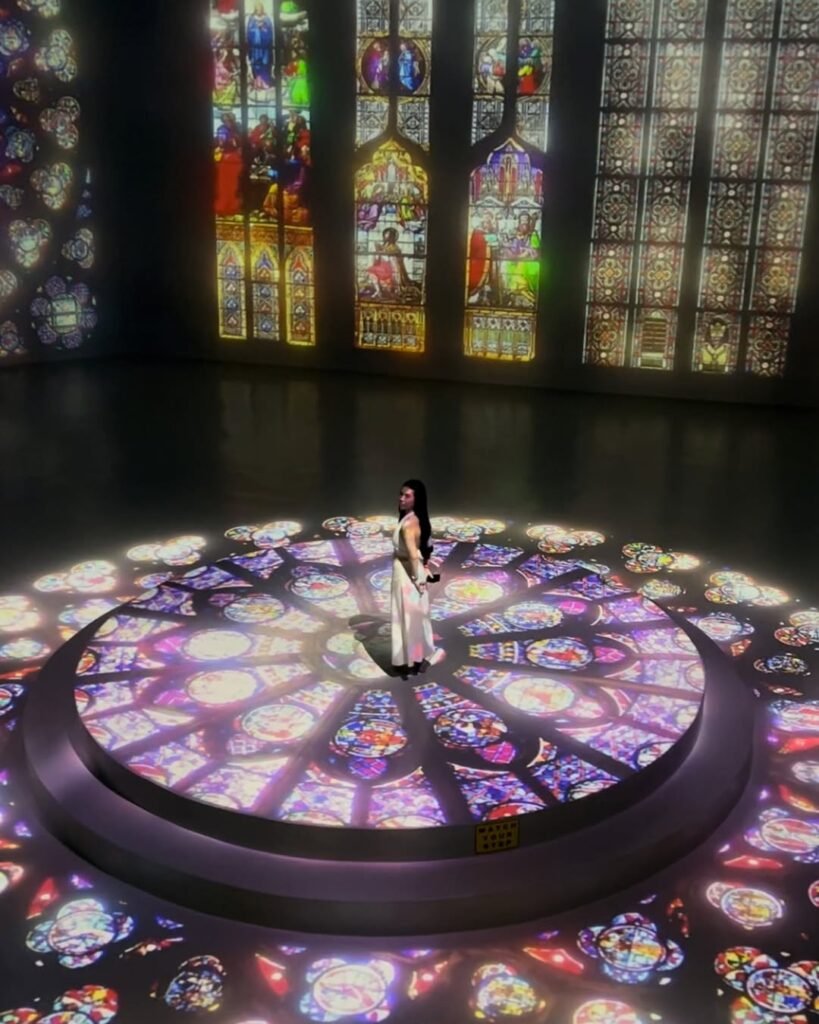
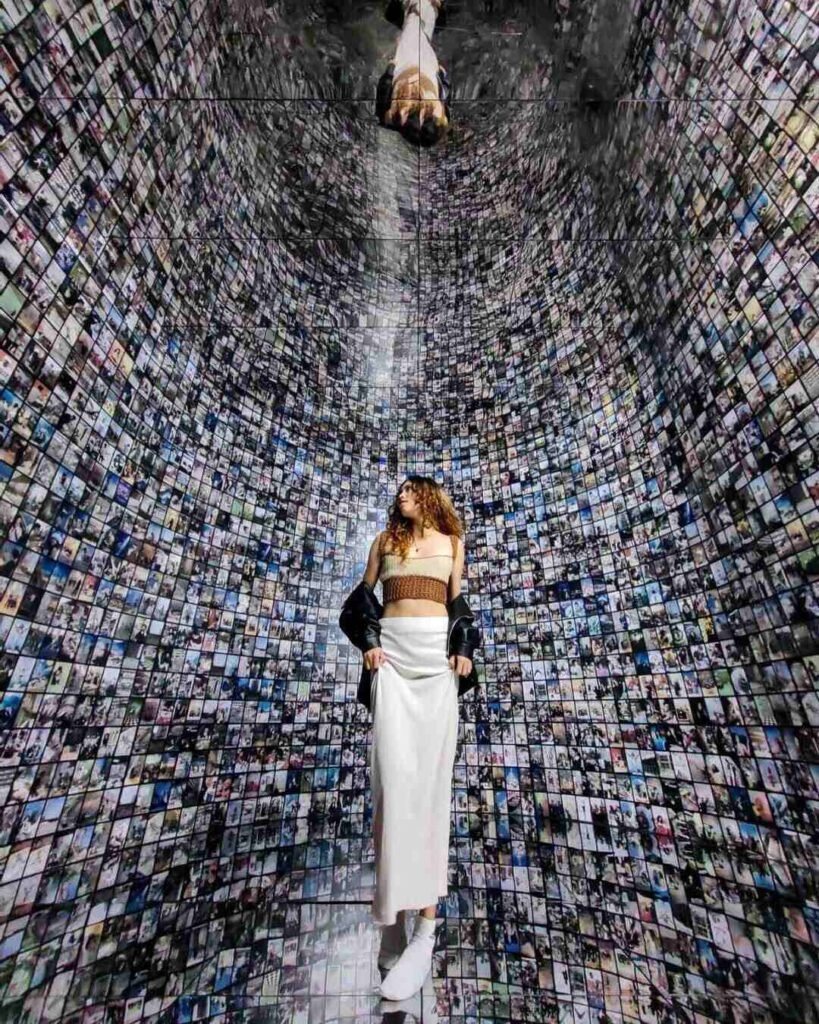
Art in Island is not a traditional museum. There are no artifacts behind glass, no velvet ropes, and no “do not touch” signs. Instead, the entire facility runs high-lumen digital projections across floors, walls, and ceilings so that you and your group become part of the image. The fifteen zones flow in a generally linear sequence, which makes the layout easy to follow without a map.
Welcome Wave
This is the entry corridor and it functions as a sensory reset. Depending on the current loop, the walls display a rolling barrel wave or a canopy of moving stars. After the noise of Cubao traffic, walking through here genuinely feels like hitting mute on the city. It also gives your eyes time to adjust to the lower light levels before you hit the more intense zones. Take your first photos here while the crowds are still forming behind you.
Mother Nature Zone
The Mother Nature Zone is where a lot of groups lose the most time. Floor-to-ceiling panoramic projections put you inside hyper-realistic forests and glacial landscapes, and the floor sensors track movement, so stepping on a “puddle” creates digital ripples and walking through “grass” scatters leaves. The surround sound pipes in bird calls and wind. If you have young kids, this is the zone where they will completely forget themselves.
Hiwaga ng Pilipinas
This is the one zone that breaks from digital projection entirely and uses UV blacklight technology instead. The walls glow with murals of Philippine mythology, Ibong Adarna, Sarimanok, and local wildlife, rendered in neon pigments that only fully reveal themselves under the ultraviolet light. If you wore white or pastel as recommended, your clothing glows a brilliant violet-blue in here. It is one of the more memorable sections precisely because the aesthetic shift is so sharp.
Stream of Life (Van Gogh Gallery)
The Stream of Life gallery wraps you in a 360-degree animation of Vincent van Gogh’s Starry Night. The brushstrokes actually move and swirl around you, floor to ceiling. It is part education and part spectacle, and it photographs well regardless of what you’re wearing. Kids who haven’t encountered van Gogh before tend to walk out genuinely curious about the original painting.
Four Seasons Room
This room has twelve-foot walls that cycle continuously through spring, summer, autumn, and winter landscapes. The cycle is time-based, not triggered by visitors, so what you see depends entirely on when you walk in. There is something mildly frustrating but also honest about that. You might arrive during peak autumn colors or catch it mid-summer. Either way, it is worth pausing for a full cycle if you have time.
Light of the Sea
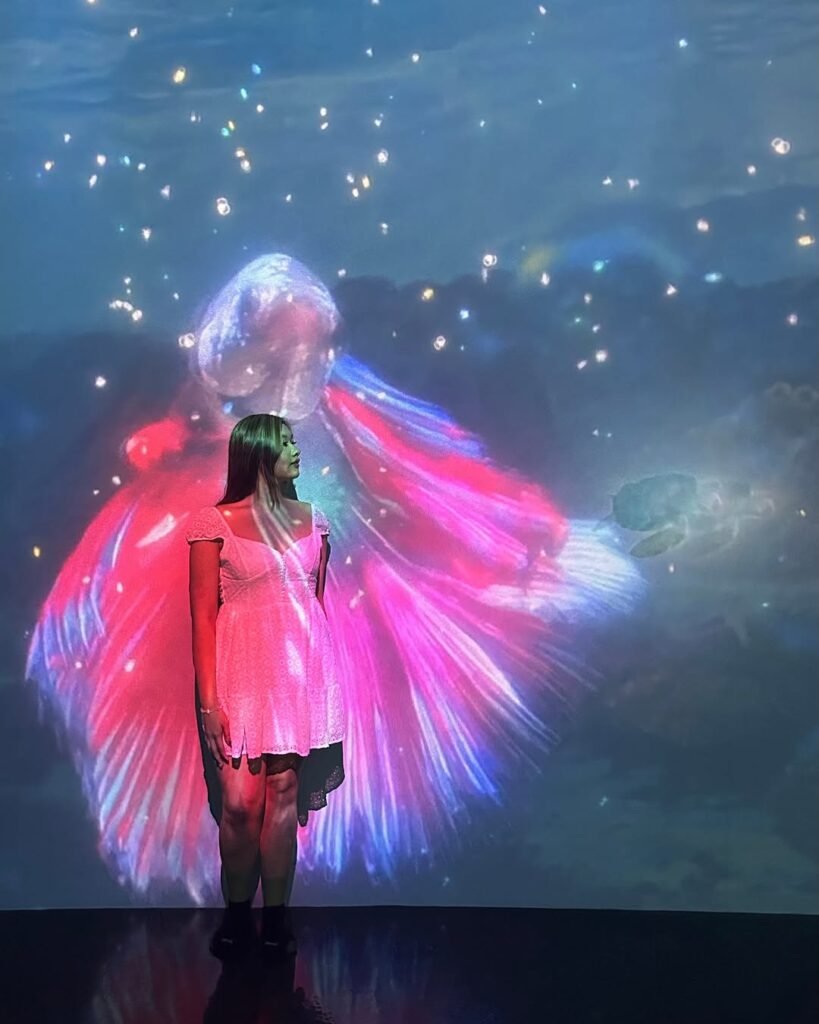
The Light of the Sea zone projects bioluminescent marine life, massive whale silhouettes, and deep-ocean textures against a deep-blue background. Most zones reward blending into the projection, but this one is different. The high contrast between the deep blue background and a human figure makes it ideal for silhouette photography. Stand with your back to the main projection source and let your companion shoot from the front. The results look nothing like a typical tourist photo.
Digital Spa
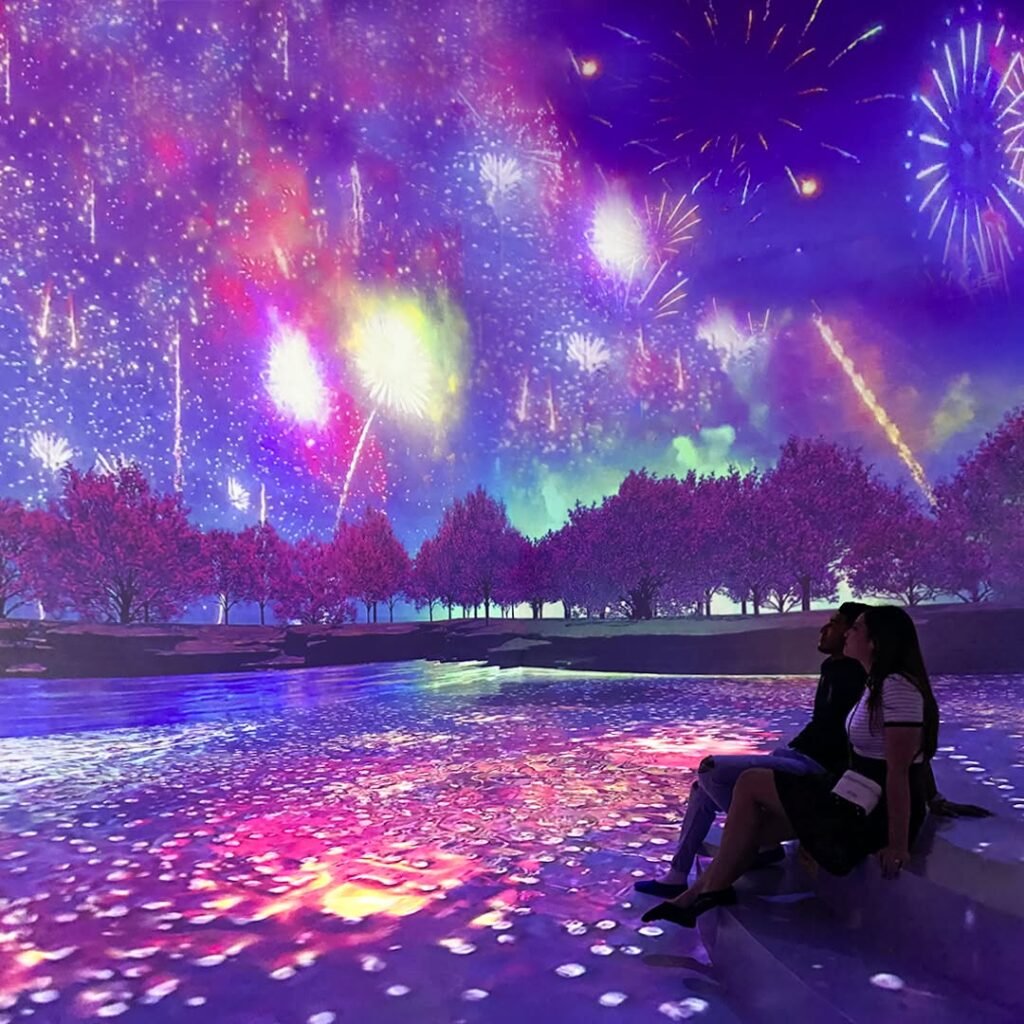
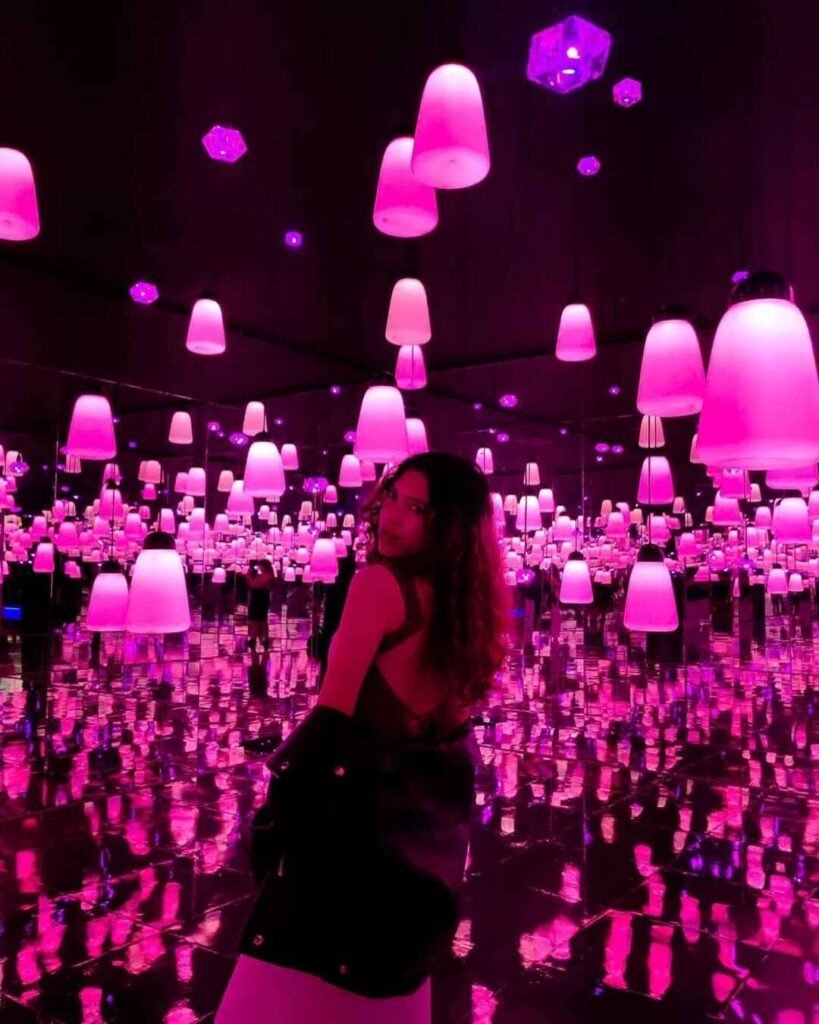
Midway through the museum is a cavernous hall scattered with oversized bean bags under ceilings displaying a continuous loop of floating lanterns, cosmic nebulas, and shifting geometric patterns. After 45 to 60 minutes of walking and posing, this room is a genuine rest stop. Many visitors spend upwards of 30 minutes lying flat on their backs, watching the ceiling. Take the hint and sit down. Your legs will thank you for the rest of the tour.
Height Requirements for Rides at Art in Island
Art in Island operates exclusively as an interactive digital art gallery, not an amusement park. There are no physical rides, no mechanical attractions, and no minimum height requirements for any zone. All fifteen areas are accessible to all ages.
| Attraction | Minimum Height | Notes |
|---|---|---|
| All 15 digital zones | None | Open to all ages without restriction |
| General admission pricing | 3 ft / below | Children under 3 ft enter free; those 3 ft and above pay the standard adult rate of ₱850 |
Height only matters at the ticket counter for pricing purposes. A toddler below three feet walks in free. A child who clears three feet is billed at the adult rate. There are no other height-related rules inside the museum.
Best Time to Visit Art in Island
Tuesday through Thursday is the best window for a low-crowd visit. Foot traffic on weekends, especially Saturday afternoons, is noticeably heavier, and the zones that depend on full-floor projections become harder to photograph with strangers walking through your frame.
Arriving right at opening time (11:00 AM) on any day gives you roughly the first 30 to 45 minutes with minimal crowds before the mid-morning wave comes in. School holidays and Holy Week are the busiest periods of the year. The museum occasionally runs special holiday promotions, including free admission for children in costume during Halloween, so those periods attract larger-than-usual turnout.
Avoiding rainy Friday afternoons is also practical for parking. If you drive, the on-site lot fills fast on any weekend. A weekday morning arrival almost always gets you a spot without going to Gateway Mall.
How Long Do You Need at Art in Island?
Plan for 2 to 3 hours inside the museum, though groups that take a lot of photos can easily stretch that to 3.5 hours. Rushing through all fifteen zones in under 90 minutes is possible, but you’d be skipping most of the moments that make the ticket price feel worth it.
Sample time plan:
| Time | Activity |
|---|---|
| 11:00 AM | Arrive and buy tickets at the counter |
| 11:15 AM | Enter, Welcome Wave and Mother Nature Zone |
| 12:00 PM | Hiwaga ng Pilipinas and Van Gogh Gallery |
| 12:45 PM | Four Seasons Room and Light of the Sea |
| 1:15 PM | Digital Spa rest break (20 to 30 minutes) |
| 1:45 PM | Remaining zones and exit |
| 2:00 PM | Lunch at Cafe Jeongwon or walk to Cubao Expo |
This is a half-day activity by design. There is no reason to build a full-day itinerary around Art in Island alone, but combining it with a late lunch at Cubao Expo and a short browse through the vintage shops there turns it into a satisfying full-afternoon plan.
If you want to explore more family-friendly attractions across the metro, check out the complete guide to amusement and theme parks in the Philippines for options at every budget. For a similar immersive indoor experience in Manila, the Space and Time Cube Museum at S Maison is worth comparing.
Full Budget Breakdown for a Day at Art in Island
| Expense | Cost (PHP) |
|---|---|
| MRT or LRT fare (round trip) | ₱26 to ₱70 |
| Jeepney supplement (optional, one way) | ₱15 to ₱20 |
| General admission (adult) | ₱850 |
| Cafe Jeongwon (Bingsu or Tteokbokki) | ₱200 to ₱400 |
| Cubao Expo lunch (Bellini’s or Habanero) | ₱300 to ₱600 |
| Parking (on-site) | Free |
| Locker / bag storage | Not available on-site |
| Total per adult (commute, entry, food) | ₱1,390 to ₱1,940 |
The museum does not offer lockers or bag-storage facilities, so you will be carrying everything you bring inside with you throughout the entire visit. Pack light. A small crossbody bag or a slim drawstring bag is genuinely more practical than a full backpack in the dimly lit, sock-only zones.
Cafe Jeongwon is the al fresco Korean restaurant right on the Art in Island premises. The Bingsu (shaved ice in Strawberry and Chocolate variants) is the standout item for a post-tour cool-down. Savory options include Tteokbokki and Samgyeopsal sets. For a broader meal, walking a few hundred meters to Cubao Expo puts you near Bellini’s and Habanero Kitchen Bar, two of the more celebrated local dining spots in Quezon City.
What to Bring to Art in Island
| Item | Needed? |
|---|---|
| Socks | Yes, mandatory. No shoes allowed past the lobby. |
| White or light-colored clothing | Strongly recommended. Dark clothes absorb projection light. |
| Physical student ID with sticker | Yes, if claiming the ₱700 student rate |
| Physical OSCA or PWD ID | Yes, if claiming the ₱600 senior/PWD rate |
| Fully charged phone or camera | Yes. Photography is central to the experience. |
| Cash | Yes. Bring enough for tickets and food. |
| Light jacket | Recommended. The museum is air-conditioned throughout. |
| Short skirt or dress | No. Mirrored floors in some zones make this uncomfortable. |
| Tripod or selfie stick | No. Both are banned inside the museum. |
| Flash equipment | No. Flash photography is strictly prohibited. |
| Outside food or drinks | No. Not allowed inside; water only in transition areas. |
| Gimbal | Tolerated (handheld only). |
Tips and Rules for Visiting Art in Island
The no-shoe policy is absolute. You will be asked to deposit your footwear at the main lobby before entering the galleries. Socks are not optional. Bring a pair you don’t mind walking several kilometers in, because the zones cover more ground than they look like from photos.
Wear white, pastel, or light-colored clothing. The high-lumen projectors need a reflective surface to cast the digital textures onto your body. Dark clothing turns you into a silhouette, which looks flat in photos and wastes the point of standing inside a projection. The one exception is the Light of the Sea zone, where silhouette shots are the actual goal.
Flash photography is banned. It washes out the projections and interferes with the calibration sensors. Your phone camera on auto mode works perfectly well in the low-lit zones. Large tripods and selfie sticks are also banned because they create tripping hazards in dimly lit corridors.
Avoid short skirts and dresses. Several transition areas have fully mirrored floors, which makes this a practical concern rather than a fashion one.
The ticket counter cuts off 90 minutes before closing time. On weekdays that means 6:00 PM is the last chance to buy. On weekends it is 7:00 PM. Do not bank on arriving late.
Don’t present a digital student ID. The counter staff look specifically for a physical ID with a current semester sticker. A screenshot gets you charged the full adult rate.
For more to plan around Metro Manila, the guides to DreamPlay at City of Dreams Manila, Manila Ocean Park, and Star City cover indoor and outdoor family-friendly options across the metro.
What I’d Do Differently Next Time
I visited in July 2026 on a Tuesday, which was the right call for crowds, but I made a few choices I’d change.
First, I wore a muted blue shirt instead of white. I knew the rule going in and still talked myself out of it because I thought blue was “close enough.” It wasn’t. The projections in the Mother Nature Zone barely showed up on the fabric. The person next to me in a white linen top was walking around looking like a living painting. Lesson firmly learned.
Second, I skipped Cafe Jeongwon because I wanted to save room for Habanero Kitchen Bar next door. That was fine for lunch, but I should have gone back for the Bingsu afterward. The walk back felt long after a full afternoon on my feet, and I ended up skipping it. Next visit I will build in 20 minutes for shaved ice at Jeongwon before heading to Cubao Expo.
Third, I spent too long in the early zones and rushed through the Four Seasons room and Light of the Sea. Those two deserve more time than they look like they need on paper. The silhouette shots in the underwater zone in particular require actual coordination with whoever is shooting for you. It took us three tries to get a single clean shot because we hadn’t planned the angle ahead of time. Next time I am walking that zone with a specific shot in mind and spending at least 15 minutes there.
Frequently Asked Questions About Art in Island
How much is the entrance fee at Art in Island in the Philippines?
The Art in Island entrance fee is ₱850 for adults and ₱700 for students with a valid physical ID. Senior citizens and PWDs pay ₱600 with a physical OSCA or PWD card. Children below three feet in height enter free. There is one admission ticket that covers the entire museum, with no additional fees for any zone or experience inside.
Is Art in Island open on Mondays?
No. Art in Island is closed every Monday for maintenance and calibration of its projection mapping equipment. The museum operates Tuesday through Sunday. The only exception is when a major public holiday falls on a Monday, in which case management announces the schedule change on the official Art in Island Facebook page.
What should I wear to Art in Island Cubao?
Wear white, pastel, or light-colored clothing. The projection mapping system needs a reflective surface to cast digital textures onto your body, so dark clothing absorbs the light and results in flat, poorly lit photos. Socks are mandatory because shoes are not allowed past the lobby. Avoid short skirts and dresses, as some transition corridors have fully mirrored floors.
Are children allowed free entry at Art in Island?
Yes. Children who are below three feet in height enter free of charge. Children who are three feet tall or taller are charged at the standard adult rate of ₱850. There are no age-based restrictions for any zone inside the museum, and no minimum height requirements for any of the digital installations.
Is Art in Island worth visiting in 2026?
Yes, with realistic expectations. Art in Island is genuinely unlike any standard museum in the country. The 15-zone digital experience is well-maintained, the dress code rules make a real difference to your photos, and the ₱850 ticket price holds up against comparable immersive experiences in Metro Manila. It works best for groups and families who are willing to slow down, pose properly, and not rush through. Anyone expecting an amusement park with rides will need to adjust their expectations, but as a photography-forward art experience, it delivers.
Final Verdict: Is Art in Island Worth Visiting?
Art in Island earns a solid 4 out of 5 for families, friend groups, and couples who enjoy photography-centered experiences. The single-ticket access to 15 fully immersive digital zones at ₱850 is fair value, the Hiwaga and Light of the Sea zones alone justify the trip, and the overall production quality is several steps above a standard trick-eye gallery. The only thing holding it back from a perfect score is the lack of bag storage facilities and the reality that your photos will genuinely suffer if you come unprepared in dark clothes and no socks.