
By Aiden Kenzy, founder of Lakbay Pinas and a passionate Filipino travel writer dedicated to uncovering the iconic destinations across the Philippines. Since 2015 — Climbed: August 2026 — Published: September 2026
Mt. Ulap is a 9.4-kilometer ridge traverse in Itogon, Benguet, doable as a day hike or overnight trip from Baguio City. Registration is walk-in at the Ampucao Barangay Hall, a guide is mandatory at PHP 800 per group (up to 7 hikers), and the full hike takes 4 to 6 hours depending on pace.
Key Takeaways:
- The PHP 100 registration fee and PHP 30 DENR environmental fee are paid on arrival, no advance booking required for groups under 15 people.
- November to April is the best season for clear skies and the famous Mt. Ulap sea of clouds.
- The trail is rated Difficulty 3/9 but the final descent into Sta. Fe is genuinely hard on the knees, don’t let the rating fool you.
- Gungal Rock at 1,814 MASL is the standout feature, a massive rock formation that juts out over the valley and has a queue on peak weekends.
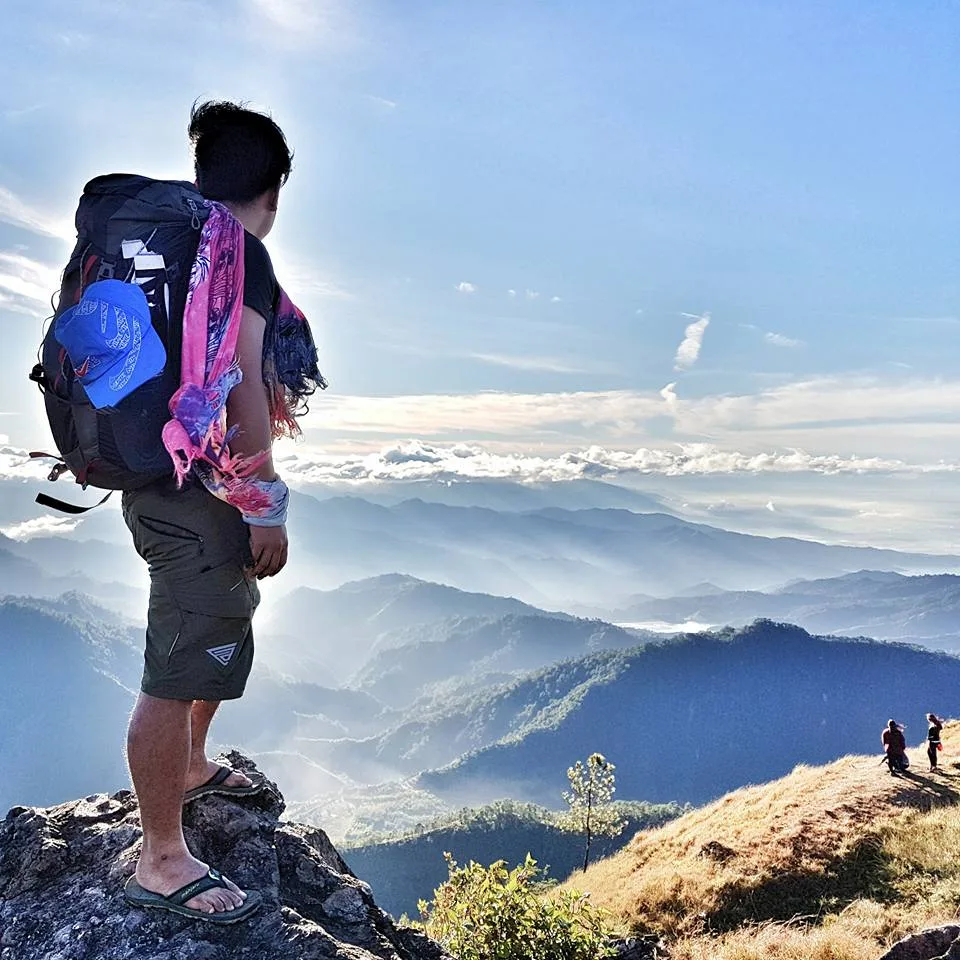
Table of Contents
Where Is Mt. Ulap Located?
Mt. Ulap sits in the municipality of Itogon, Benguet, in the Cordillera Central mountain range on the island of Luzon, Philippines. It is part of the Ampucao-Sta. Fe ridge system, a long spine of peaks that overlooks the Philex Mines complex and the broader Cordillera valleys.
The mountain sits roughly 45 to 60 minutes by road from Baguio City, making it one of the most logistically accessible peaks in the Cordilleras. That proximity is exactly why it gets crowded on weekends. For Baguio-based hikers, it’s practically a backyard climb.
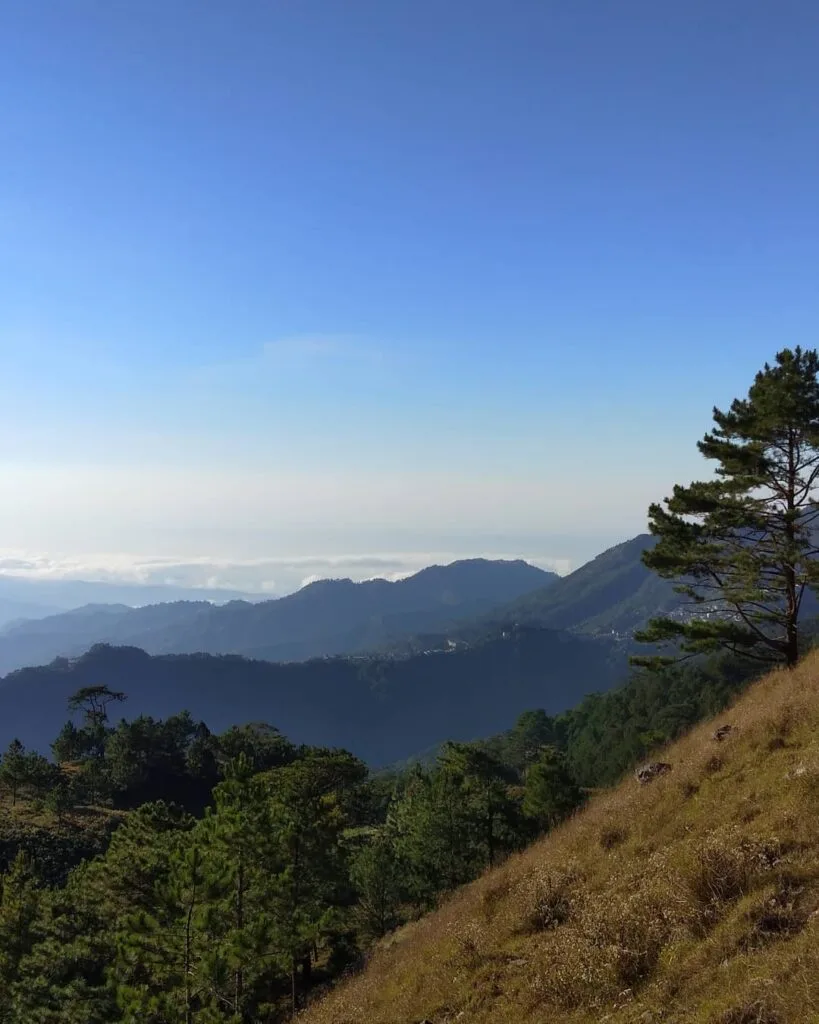
The name “Ulap” is Ilocano for cloud. Stand at the summit on a clear November morning and the name makes total sense. The valley below disappears under a white blanket, and you’re looking at nothing but mountain peaks poking through.
How to Get to the Mt. Ulap Jump-off Point
From Manila, take a night bus to Baguio City, then a jeepney straight to the Ampucao jump-off.
Manila to Baguio City
Several bus companies run the Manila–Baguio route from Cubao, Pasay, or Sampaloc terminals, including Victory Liner, Solid North, JoyBus, and Genesis, with trips running almost every hour. Travel time is roughly 6 to 7 hours and fares range from PHP 450 to PHP 800. Book a night bus to arrive in Baguio by early morning.
Departing Manila between 10:00 PM and midnight lands you in Baguio around 5:00 to 6:00 AM, which gives you just enough time to grab breakfast before catching the jeepney to Ampucao.
Baguio City to Ampucao
From Baguio City, ride a jeepney going to Barangay Ampucao via the Philes-Bound route. The terminal is located beside Jollibee Center Mall. Travel time is about 40 minutes and the fare is around PHP 30 to 50 per head. Look for jeepneys marked “AMPUCAO” or “Baguio Plaza Ampucao.” Tell the driver you’re going to Mt. Ulap — most jeepney riders on that route are fellow hikers.
According to the official Itogon LGU transport schedule, jeepneys run the Ampucao route from Baguio starting at 6:00 AM, with trips until 7:00 PM. From Ampucao back to Baguio, trips run from 5:30 to 6:00 AM through 5:00 PM. This is the detail most guides miss. If you finish the traverse late and reach the Sta. Fe highway after 5:00 PM, jeepneys become scarce. Get off that mountain by mid-afternoon.
After the Traverse: Sta. Fe to Baguio
Walk down to the highway and wait for a jeepney back to Baguio City. The fare is about PHP 50 and the ride takes approximately one hour. A shared van or tricycle from the trail exit to the highway costs around PHP 100 per person.
By Private Car
Use Waze and navigate to Ampucao Elementary School, Itogon. A parking fee of PHP 100 per vehicle is charged at the jump-off. Remember the trail is point-to-point: your car stays in Ampucao while you exit at Sta. Fe. Someone needs to shuttle the car, or you pay for the return jeepney.
Permits, Fees, and Guide Requirements at Mt. Ulap
Walk-in registration is fully accepted. No advance online booking is required for groups under 15 people.
Walk into the Ampucao Barangay Hall on the day of your hike, fill out a manifest form with your emergency contact details, pay the PHP 100 registration fee and PHP 30 DENR fee directly to the treasurer, and the local association will assign you the next available guide. A guide is mandatory at Mt. Ulap — you cannot hike unguided.
BALTGA is now officially registered with both the Securities and Exchange Commission (SEC) and the Bureau of Internal Revenue (BIR), which means guides are operating under formal professional standards. If you are organizing a group larger than 15 people, coordinate beforehand by emailing ampucaoblgu.itogon@gmail.com to confirm enough guides are available.
The Ampucao Barangay Hall landline for emergencies and advance coordination is (074) 637-2189. Save it in your phone before you leave for the mountain.
Registration at the start of Ulap opens at 4:00 AM on weekends and 5:00 AM on weekdays. On peak season weekends (December to April, Holy Week, long weekends), arrive before opening. Guide assignment can add 45 minutes to your start time if the queue is long.
2026 Fees at a Glance
| Fee | Amount (PHP) |
|---|---|
| Registration Fee (per person) | 100 |
| DENR Environmental Fee (per person) | 30 |
| Foreigner Entrance Fee (DENR) | 100 |
| Guide Fee — Day Hike (up to 7 hikers) | 800 |
| Guide Fee — Overnight/Camping (up to 7 hikers) | 1,600 |
| Porter — One-Way Day Hike (max 15 kg) | 800 |
| Porter — Two-Way Overnight (max 15 kg) | 1,200 |
| Campsite Spot Fee (per group) | 200 |
| Parking (per vehicle) | 100 |
| Water Refill at Campsite 2 (per liter) | 15 |
| Wash-up/Shower at Sta. Fe Exit | 50 |
These are the current rates as of 2026, replacing the old rates of PHP 600 (day hike guide) and PHP 1,000 (camping guide). The guide fee covers your entire group up to 7 people. A solo hiker pays the same PHP 800, so traveling with friends is the smarter financial call.
What Is the Mt. Ulap Trail Like?
The trail moves through five distinct stages: pine forest ascent, open ridge walking, the summit push, a steep descent, and a final pine forest exit.
The full traverse runs 9.4 kilometers from Ampucao to Sta. Fe. A moderately fit hiker finishes it in 4 to 5 hours. If you stop for photos, rest, and a meal at Campsite 2, budget 6 hours total. The terrain shifts dramatically between forest, grassland, and rocky ridgeline.
One honest note: the official Difficulty 3/9 rating undersells the descent. The grade is non-technical, but the drop into Sta. Fe is long, steep, and relentless. Your knees will know it the next morning.
For people planning complementary hikes in the area, the guide to Mt. Yangbew in Benguet is a shorter but equally rewarding option if you want something less physically demanding.
Stage 1: Ampucao to Ambanao Paoay (0 to 3.6 km) — Difficulty: 4/5
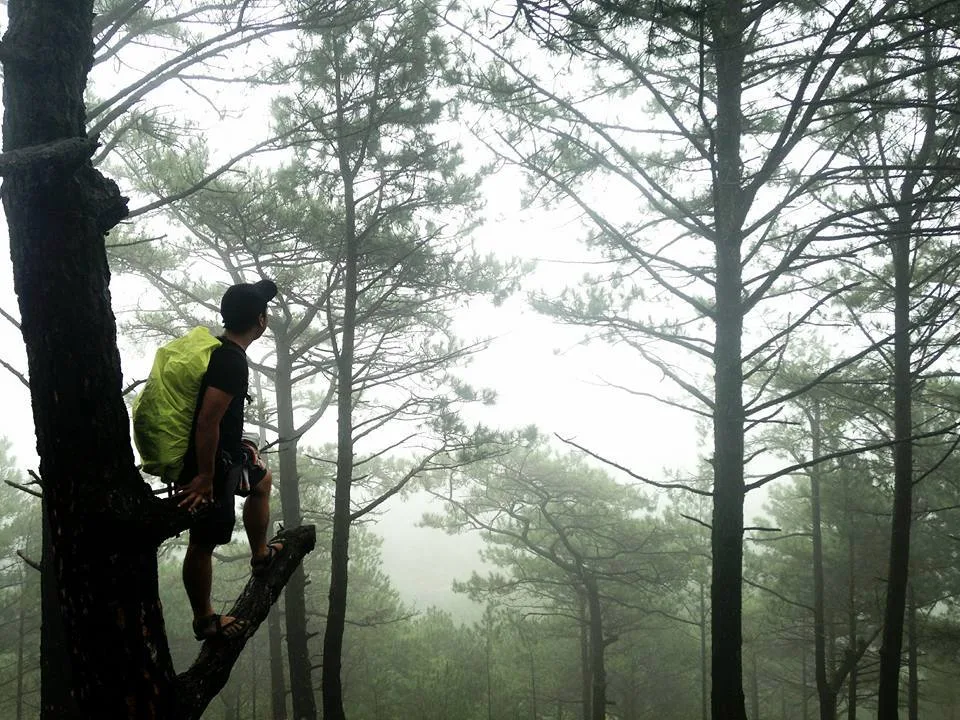
The hardest cardiovascular section of the entire hike. The trail starts at roughly 1,497 MASL and pushes upward through dense Benguet pine forest. The root-covered ground acts like natural steps, but they’re uneven and unforgiving. My legs were burning by the 2-kilometer mark, and I’d already eaten a cup of Pancit Canton from a stall near the barangay hall that morning.
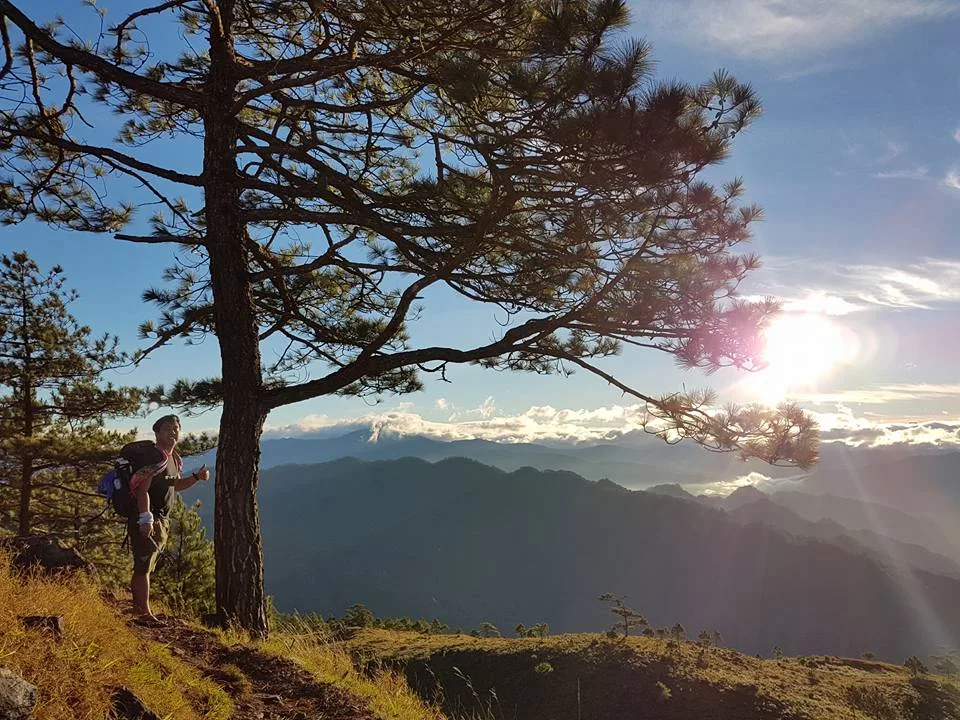
The reward is Ambanao Paoay at 1,788 MASL, where the pine forest ends abruptly and wide grassland views open up. The air gets noticeably cooler here even in August.
Stage 2: Ambanao Paoay to Gungal Rock (3.6 km to 5.0 km) — Difficulty: 2/5
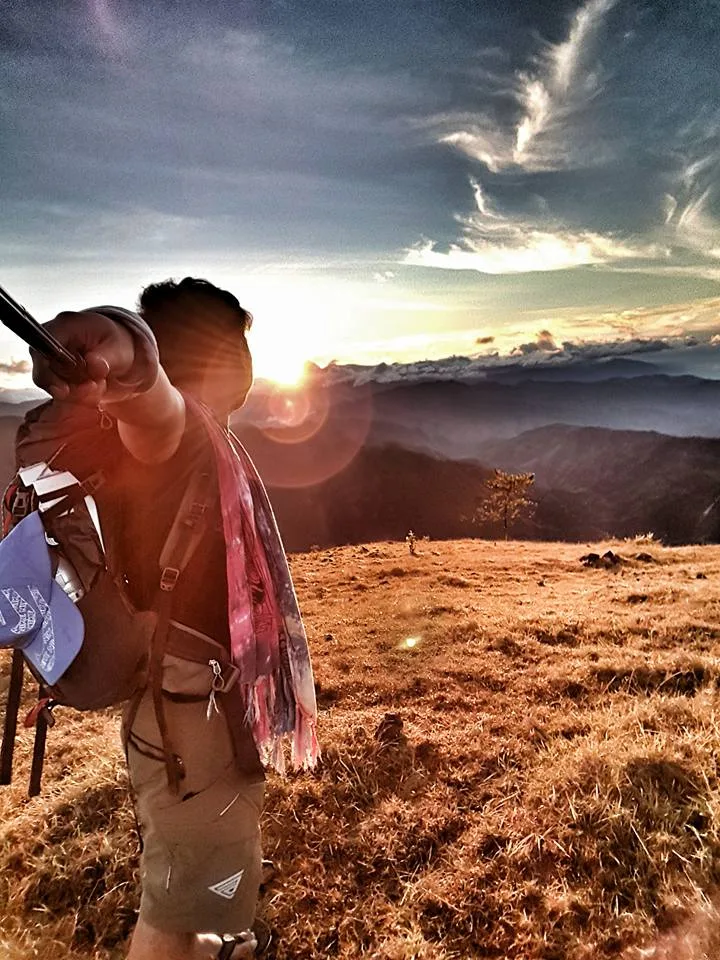
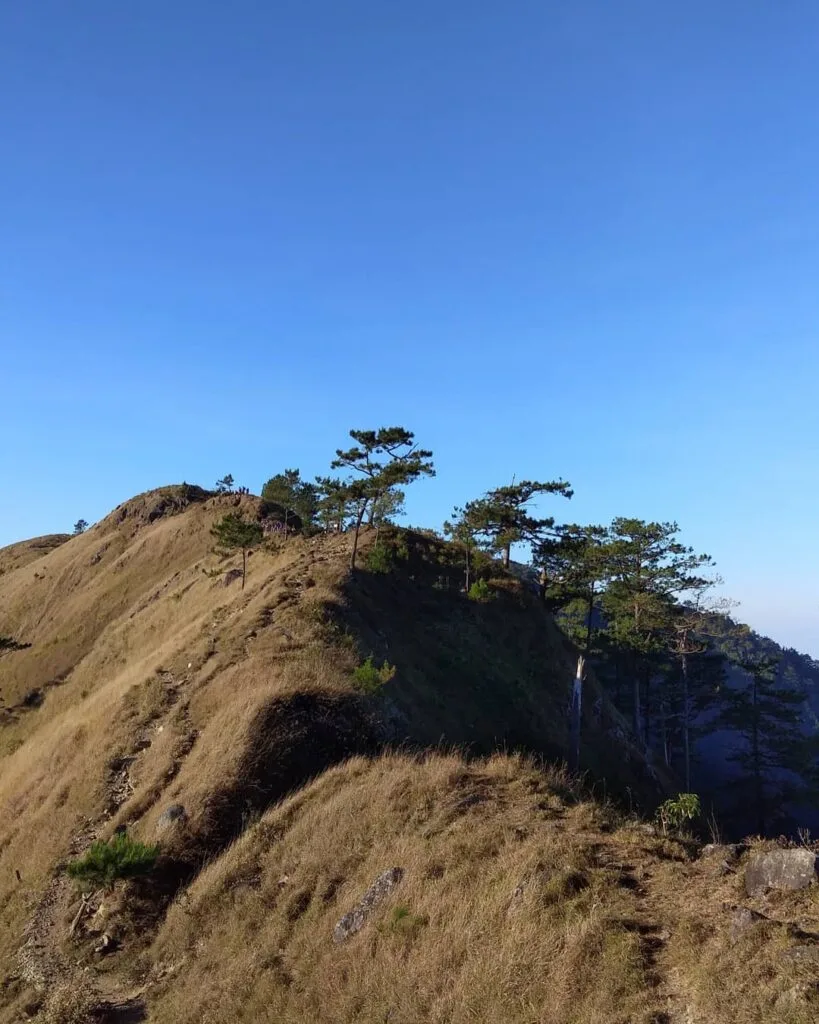
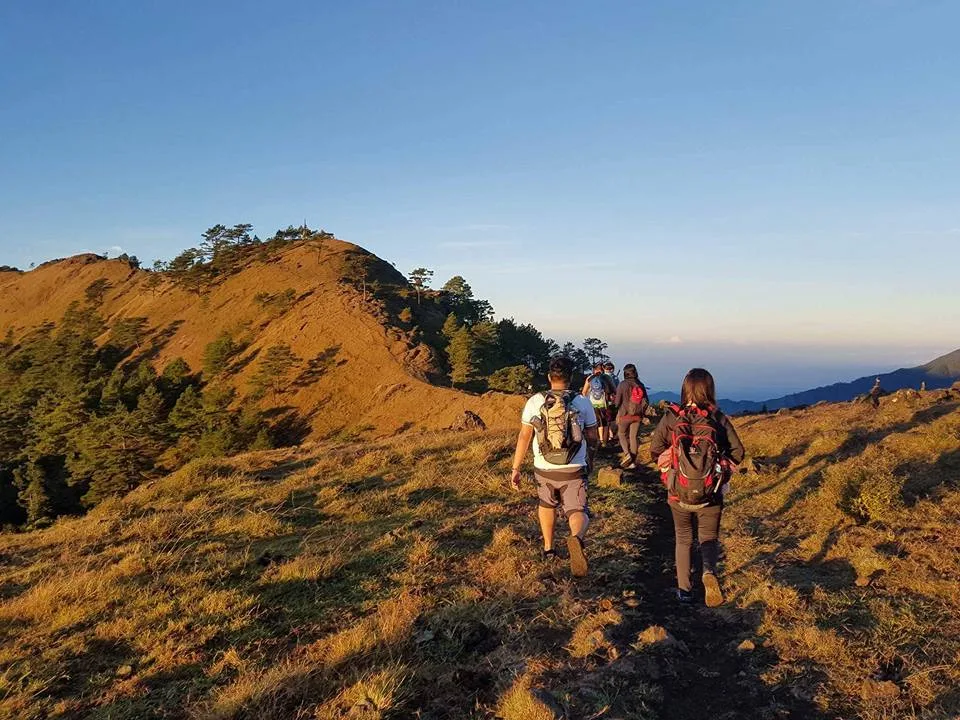
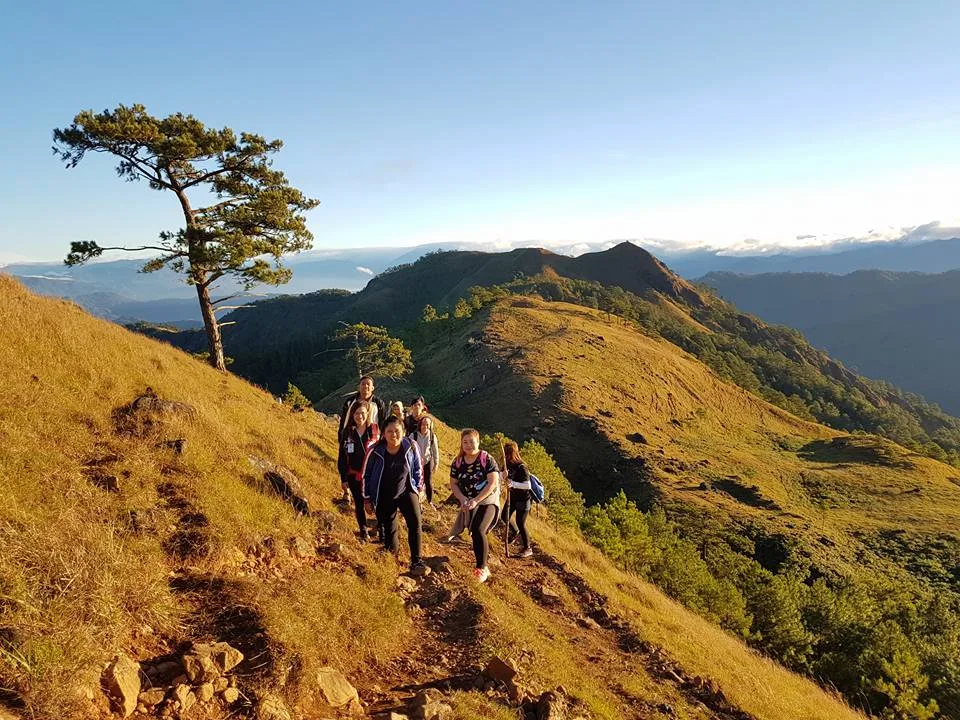
The most enjoyable 1.4 kilometers of the traverse. The ridgeline opens completely, and you’re walking through cogon grass with unobstructed views on both sides. Elevation gain is minimal. The wind picks up here, especially in November.
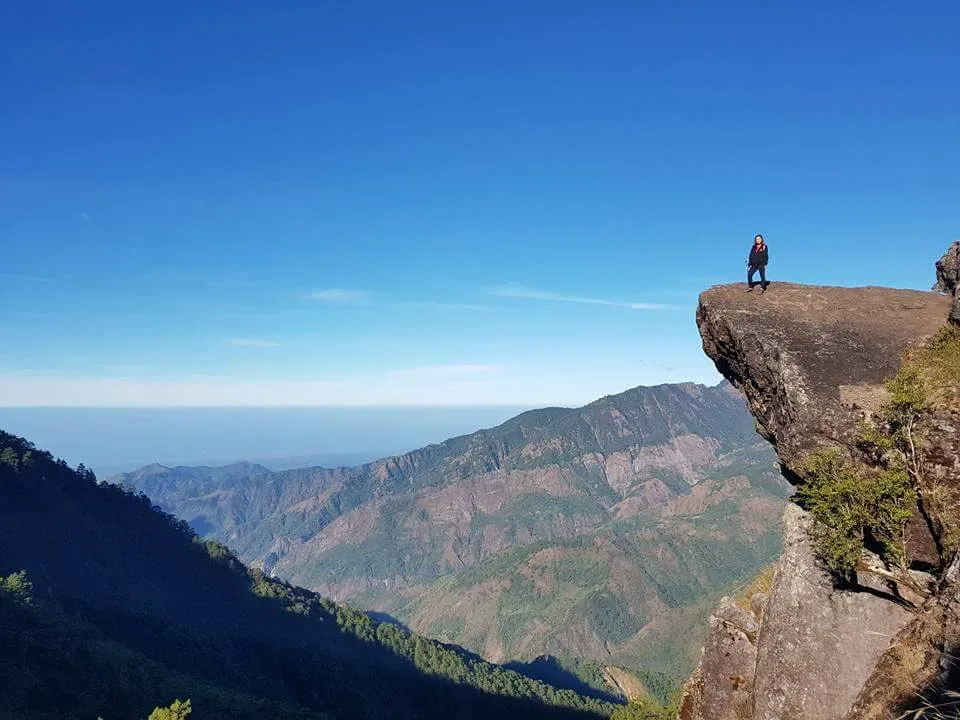
On a peak day, a lot of people would be on queue at the Gungal Rocks, a protruding rock formation popularly used as foreground for photos. When I was there in August, the fog came and went in waves. I stood at the edge of Gungal Rock at 1,814 MASL and could barely see the valley for about 10 minutes, then it cleared completely. That shifting view is the real Mt. Ulap experience.
Stage 3: Gungal Rock to Summit (5.0 km to 6.0 km) — Difficulty: 2/5
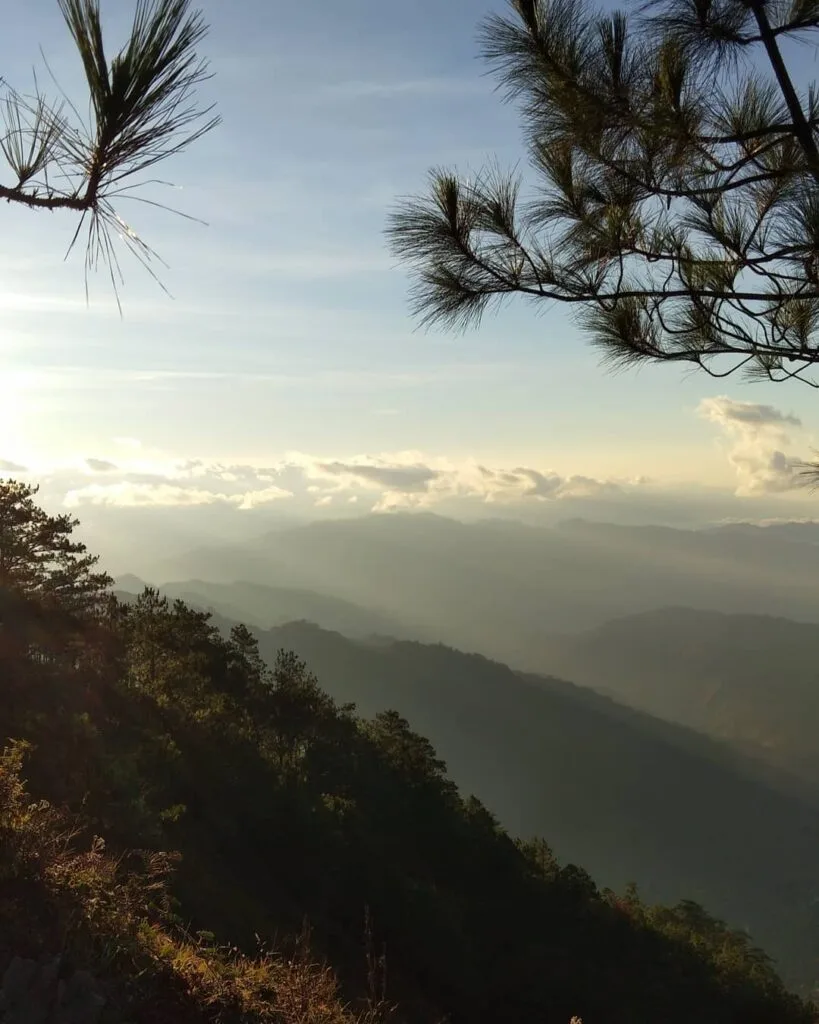
A gentle 1-kilometer push from Gungal Rock to the concrete summit marker at 1,846 MASL. The terrain stays grassy. You’ll pass fences and occasionally some cattle grazing right on the trail. The summit itself is marked by an LGU concrete post. The Mt. Ulap sea of clouds view is best here between 5:00 and 8:00 AM, before the sun burns off the fog.
Stage 4: Summit to Pong-Ol Burial Caves (6.0 km to 7.5 km) — Difficulty: 4/5
The hardest descent section and the one that catches people off-guard. The trail drops sharply on loose gravel and dry soil. Trekking poles are not optional here, they’re necessary. The way down is definitely more challenging than the way up. Be careful of the little stones and dried pine leaves as there is less friction when you step on them.
This section also passes the Pong-Ol Burial Caves, the ancestral resting place of the Ibaloi and Kankana-ey peoples. Do not photograph the caves, do not touch anything inside. BALTGA guides brief you on this before the hike starts. It is non-negotiable.
Stage 5: Burial Caves to Sta. Fe Exit (7.5 km to 9.4 km) — Difficulty: 3/5
The final stretch descends back into lower pine forest and over small hanging bridges. The trail eventually flattens out and delivers you to the Barangay Sta. Fe exit at roughly 1,277 MASL. A row of comfort rooms, food stalls, and a souvenir shop wait at the finish. The PHP 50 cold shower is worth every peso.
For a more challenging version of a multi-peak Benguet traverse, the Mt. Purgatory traverse guide covers another excellent Cordillera ridge route.
What I Would Do Differently Next Time
I started registration at 5:30 AM on a weekday, which was fine for crowd management. But I’d push the start to 4:30 AM on my next visit, even on a weekday. The foggiest, most atmospheric hour at Gungal Rock is the one just after sunrise, roughly 6:00 to 7:00 AM. By the time I reached the rock at 8:15 AM, the morning fog had mostly lifted. Beautiful, yes, but I missed the full Mt. Ulap sea of clouds effect. I’d also bring trekking poles from the start rather than renting a bamboo stick at the jump-off.
Best Time to Climb Mt. Ulap
The dry season from November to April gives you the best chance of clear skies and the signature sea of clouds.
Visiting during the dry months from November to May is recommended. November and December are the sweet spot: the air is coldest, the morning fog sits thickest in the valleys, and the grasslands are green from the tail end of the rains.
January to April is peak season. Expect larger crowds, especially on weekends and public holidays. Avoid weekends altogether if you can. Unless you want to march in a queue for the entire hike, just avoid Friday, Saturday, and Sunday. Some guides report a 3-hour queue just for the iconic Gungal lookout shot.
The rainy season runs June to October. The LGU closes the trail whenever PAGASA raises Typhoon Signal No. 1 over Benguet. Closures also extend after typhoons if the soil is saturated. Always check the official Ampucao BLGU Facebook page before you go during these months. In April 2026, the trail was also temporarily suspended due to forest fire risk, so the dry season carries its own hazard.
Budget Breakdown for Climbing Mt. Ulap
| Expense | Cost (PHP) |
|---|---|
| Bus from Manila to Baguio (economy) | 450 to 640 |
| Jeepney from Baguio to Ampucao | 50 |
| Registration Fee | 100 |
| DENR Environmental Fee | 30 |
| Guide Fee (shared by up to 7 hikers) | 800 (split) |
| Walking stick rental (optional) | 100 to 250 |
| Food and water on trail | 100 to 300 |
| Water refill at Campsite 2 (per liter) | 15 |
| Wash-up at Sta. Fe | 50 |
| Jeepney from Sta. Fe to Baguio | 50 |
| DIY Total (per person, from Baguio) | ~700 to 1,000 |
| DIY Total (per person, from Manila) | ~1,600 to 2,000 |
| Campsite fee (overnight, per group) | 200 |
| Guide fee for overnight (per group) | 1,600 |
Organized tour packages from Manila start at around PHP 1,900 per person for a day hike and PHP 2,500 for trips that include a Baguio City stopover and all fees. These are convenient if you don’t want to manage multiple transport legs.
What to Pack for Mt. Ulap
| Item | Essential? |
|---|---|
| Trail shoes or hiking boots (with grip) | Yes |
| Trekking poles | Strongly recommended |
| Rain jacket or windbreaker | Yes |
| Thermal layer (jacket) | Yes — temperature drops fast at rest stops |
| At least 2 liters of water | Yes (more if you sweat heavily) |
| Packed snacks / lunch | Yes for day hike; optional overnight (hot food at Campsite 2) |
| Sunscreen and hat | Yes — exposed ridges have zero shade |
| Trash bag | Yes — strict pack-in, pack-out rule, PHP 500 fine for littering |
| First aid kit with blister and joint support | Yes |
| Headlamp | Yes for early starts and overnight |
| Valid ID | Yes — required at registration |
| Cash (small bills) | Yes — all trail transactions are cash-only |
| Extra dry clothes | Recommended for descent and Sta. Fe wash-up |
Wear a moisture-wicking, sweat-resistant top and avoid cotton shirts. Cotton holds moisture and makes the cold ridgeline wind much worse. The temperature at Gungal Rock can feel 5 to 8 degrees cooler than at the Ampucao jump-off, especially in November.
Safety Tips for Climbing Mt. Ulap
Stay behind your guide’s pace in the first stage. The pine forest ascent looks gradual but it drains you fast. Most hikers who struggle on the descent burned out in the first hour of climbing.
For groups of 15 or more, coordinate at least a week in advance by emailing ampucaoblgu.itogon@gmail.com or calling (074) 637-2189. Walk-in registration is fine for smaller groups, but large groups showing up unannounced create bottlenecks at the barangay hall.
Do not photograph the Pong-Ol Burial Caves. The fine for violating indigenous cultural protocols is significant, but more importantly, these are sacred ancestral sites of the Ibaloi and Kankana-ey peoples. Your guide will remind you before you reach them.
Signal reception is weak to nonexistent at Campsite 2. Save all important contacts offline before you leave Baguio. The barangay hall number is (074) 637-2189 and serves as the primary local emergency contact for on-trail incidents.
Fire is a serious hazard during the dry season. Creating an open flame outside of designated fire pits carries a fine of PHP 1,000. The cogon grass and Benguet pines are highly flammable from February to May.
For anyone wanting to eventually move toward harder Cordillera climbs after Mt. Ulap, the Mt. Pulag guide via the Ambangeg Trail is the logical next step. The Mt. Kotkot hiking guide and the Mt. Kabunian guide in Bakun are also worth considering as you build trail experience in Benguet.
Frequently Asked Questions About Mt. Ulap
Is Mt. Ulap suitable for first-time hikers?
Yes, with honest preparation. Although Mt. Ulap is often labeled beginner-friendly, it’s not an easy one. The 3/9 difficulty rating covers the ascent, but the descent into Sta. Fe is long and steep and hits unprepared knees hard. A first-time hiker who does basic cardio training for a week beforehand, wears proper trail shoes, and carries trekking poles will finish comfortably. Someone who shows up in flip-flops will suffer.
How long does it take to complete the Mt. Ulap traverse?
Total distance is 9.1 to 9.4 km, and most hikers take around 6 hours including breaks and photo stops. A fast, fit group can do it in 4 hours. A leisurely group with longer photo stops at Gungal Rock and a hot meal at Campsite 2 should budget 6 to 7 hours. Either way, start before 7:00 AM to avoid finishing after the jeepney cutoff at Sta. Fe.
Is a guide required to hike Mt. Ulap?
Yes, tour guides are required. It is forbidden to hike the area unguided. The guide fee in 2026 is PHP 800 for a day hike, covering groups of up to 7 hikers. The fee replaced the old PHP 600 rate after BALTGA was formally registered with the SEC and BIR. Guides manage pacing, handle safety at Gungal Rock, and give the Burial Cave briefing. They also know the trail when fog drops visibility to near zero.
What is the best month to hike Mt. Ulap?
November and December are the most reliable months for a Mt. Ulap sea of clouds experience. The rainy season has just ended, morning fog still clings to the valleys, and temperatures are at their most comfortable. January and February also deliver good conditions but attract the largest crowds. Avoid Holy Week if crowds bother you: it’s the busiest period of the year, and the Gungal Rock queue can stretch 45 minutes to an hour on a good day.
How do you get to Mt. Ulap from Manila?
Several bus companies run the Manila–Baguio route from Cubao, Pasay, or Sampaloc terminals, including Victory Liner, Solid North, JoyBus, and Genesis. Travel time is roughly 6 to 7 hours and fares range from PHP 450 to PHP 800. From Baguio, take a jeepney from the terminal beside Jollibee Center Mall (look for “Baguio Plaza Ampucao” signage) for PHP 50 and a 40-minute ride to the jump-off. Book a night bus departing Manila between 10:00 PM and midnight to arrive in Baguio by early morning and catch the 4:00 AM weekend registration window.
Final Verdict: Should You Climb Mt. Ulap?
4.5 out of 5 for first-time and intermediate hikers.
Mt. Ulap delivers everything a first or second climb should: a clear trail, mandatory guides who know the route, hot food halfway up, a signature rock formation that genuinely earns its reputation, and a Cordillera skyline that takes a few seconds to register after you see it. The descent will test you, the weekend crowds are real, and the jeepney schedule at Sta. Fe is unforgiving if you start late. Manage those three variables and you’ll leave with a complete, memorable traverse and a very good reason to come back for the overnight version.


A highly recommend hike!!