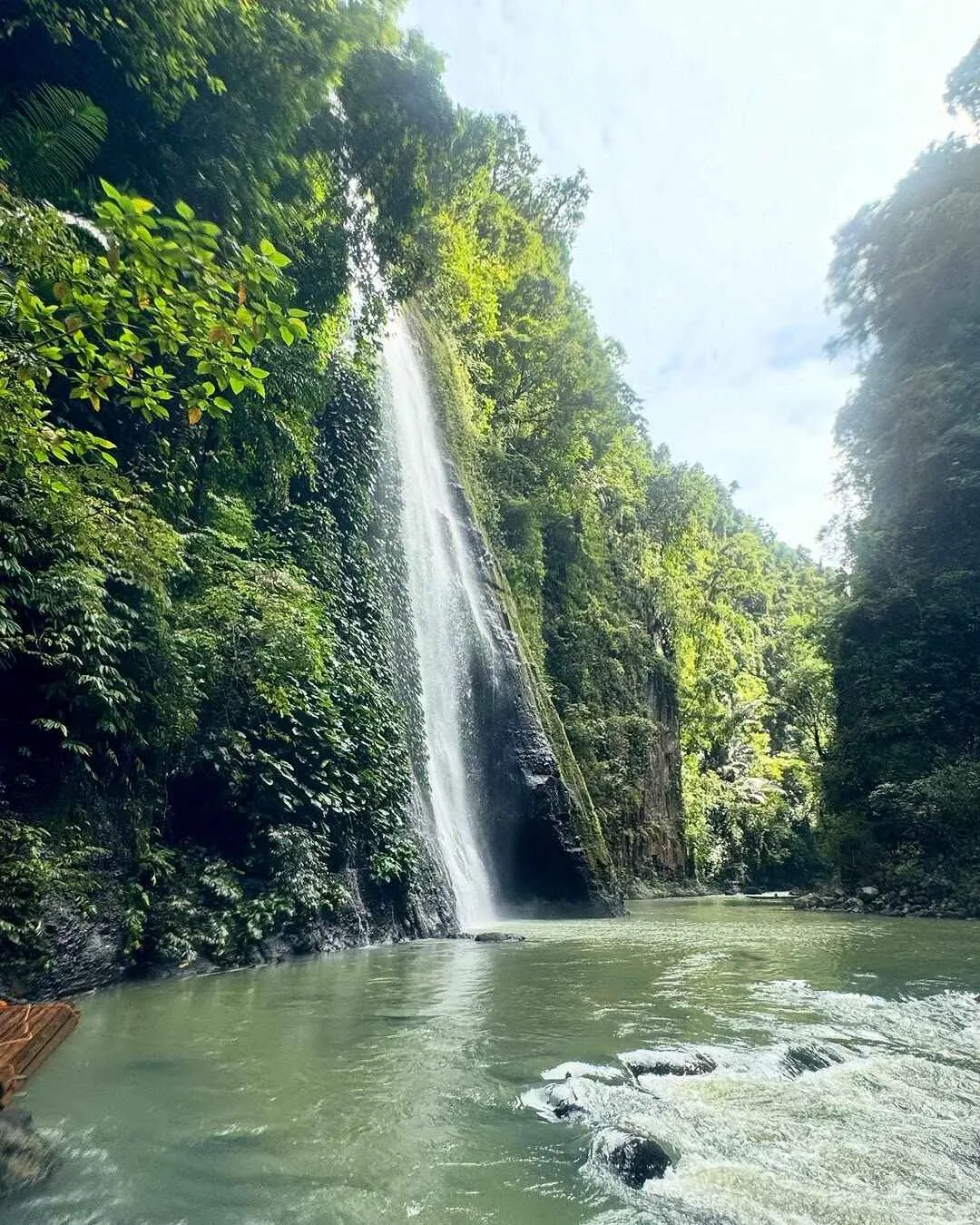
Pagsanjan Falls is a river gorge adventure in Cavinti, Laguna, about 100 kilometres southeast of Metro Manila, and the boat ride through the canyon is the main event, not just a detour to a waterfall. I was back there in September 2026, having now covered 69 of the 82 provinces since 2015, and this guide reflects what the trip actually costs and how it actually runs.
The falls go by three names depending on who you ask: Pagsanjan Falls, Cavinti Falls, and Magdapio Falls. They are the same cascade. The Pagsanjan name dominates because the most famous access route starts on the Pagsanjan side, but the waterfall itself sits physically within Cavinti. That distinction matters when you are choosing your route and buying your ticket.
This update is current as of the September 2026 visit. Prices in the live version of this article were stale, and I have corrected them below.
Key Takeaways
- The standard Pagsanjan-side boat ride costs ₱1,350 per person at the tourism office rate, covering the canoe, two boatmen, life vest, helmet, and entrance. The ₱1,250 figure still circulates but now applies only to hotel-packaged deals.
- The Cavinti-side trek costs ₱270 per person all-in, covering eco-park entrance, guide, harness, helmet, and life vest. It is cheaper but physically demanding and limited to ages 12 to 59.
- The trip takes a full day from Manila. The river ride alone is two hours round trip. Budget half a day on site minimum.
- Rainy season (August and September) carries real flash flood risk. The Tourism Office posts a go or no-go update at 7 AM daily. If the Sierra Madre highlands have had heavy rain, the gorge closes without warning.
- Solo travellers on the Pagsanjan route pay for two seats. The canoe is balanced for a minimum of two passengers and that minimum applies regardless of how many people are in your party.
- Who should skip it: anyone who wants a calm, dry, low-effort waterfall stop. This trip is wet, physically active in parts, and priced accordingly.
Table of Contents
What Pagsanjan Falls Is and Where It Is Located
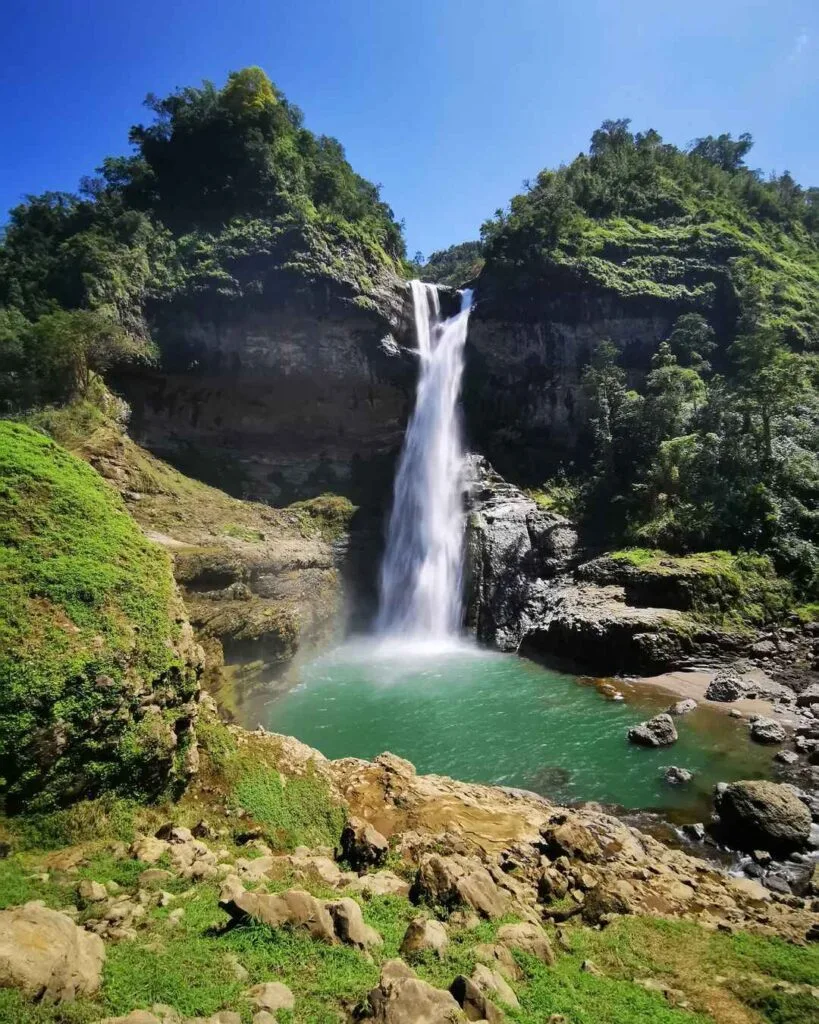
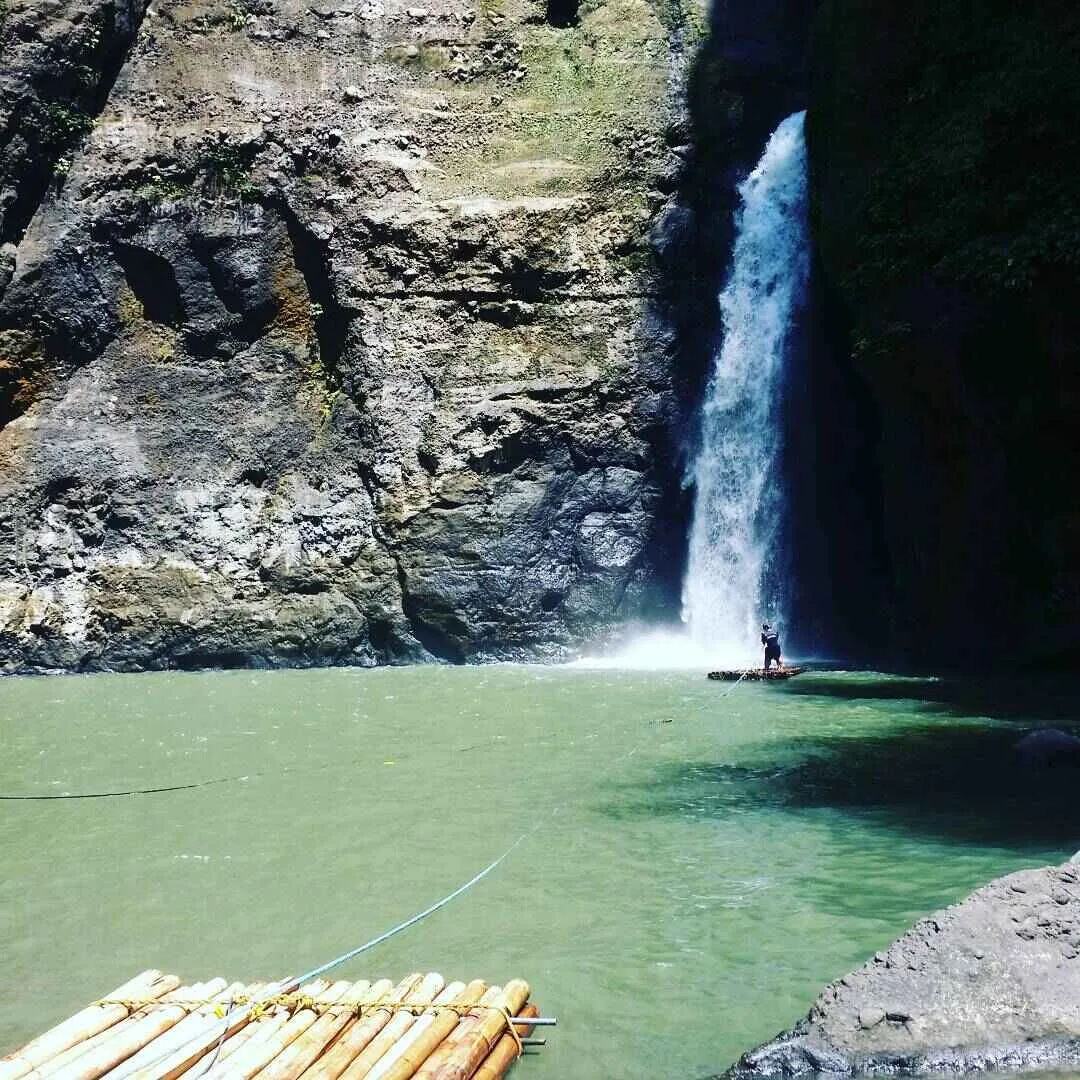
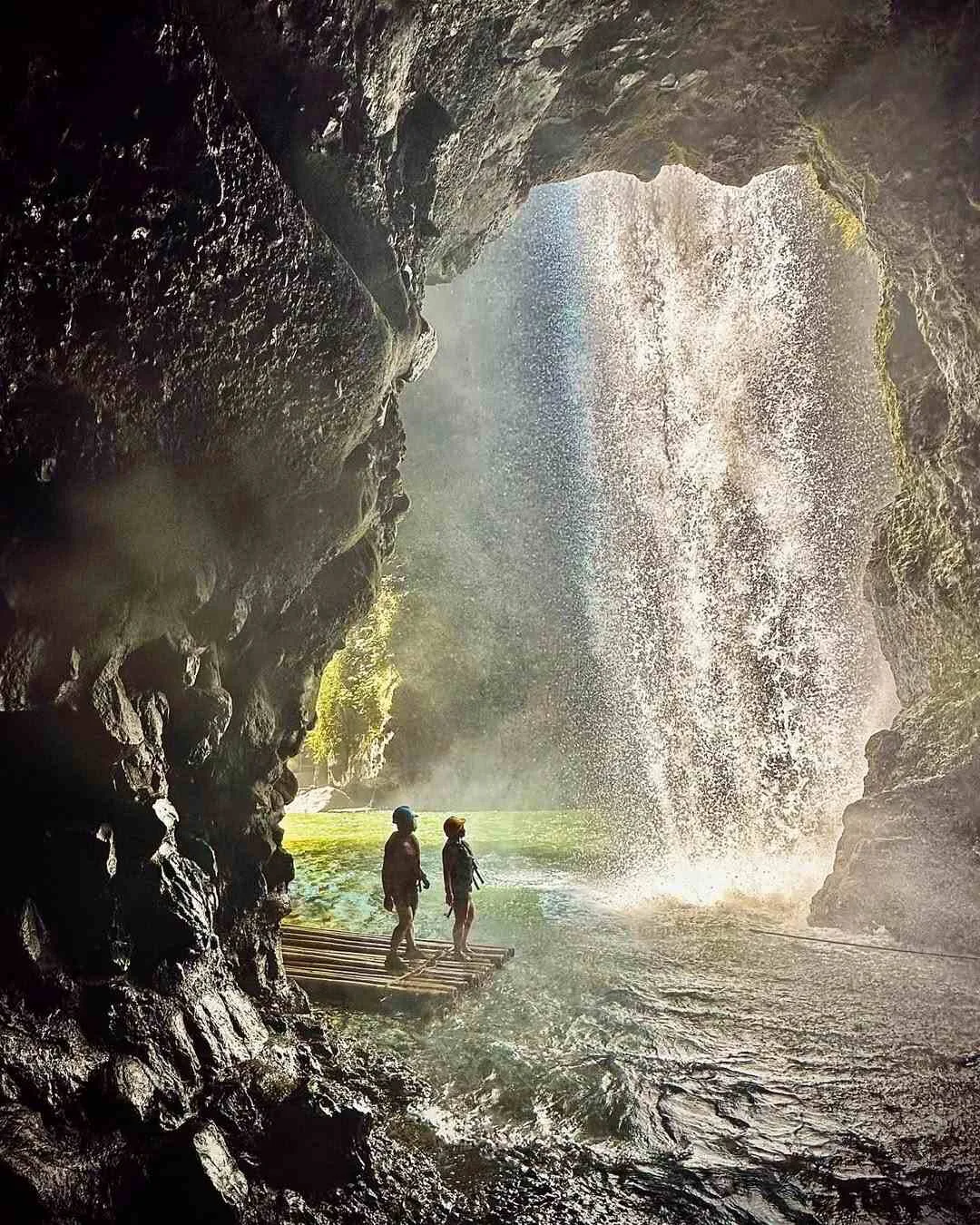
Pagsanjan Falls is a three-tiered waterfall at the end of the Bumbungan River gorge in Cavinti, Laguna. The longest drop is approximately 120 metres, and at the base sits a natural pool and the entrance to a cavern called the Devil’s Cave, which you access by bamboo raft. The rock walls of the gorge reach up to 30 metres on either side.
The site sits inside the Pagsanjan Gorge National Park, which spans the adjacent municipalities of Pagsanjan, Cavinti, and Lumban. For years, Pagsanjan and Cavinti disputed jurisdiction and revenue, because Pagsanjan controls the river access while Cavinti owns the land where the falls stand. A Tripartite Agreement signed in June 2023, ratified by the mayors of all three towns and witnessed by the Department of Tourism secretary and the Laguna governor, resolved the split. Revenue is now shared proportionally, and a combined tourism promotion fund of ₱300,000 (split equally at ₱100,000 per municipality) supports joint marketing and environmental management.
The falls are also called Magdapio Falls, a name rooted in local folklore. The legend holds that two elderly brothers, Balubad and Magdapio, suffered through a catastrophic drought. After his brother died, Magdapio struck the dry riverbed cliffs with his cane in grief, and a spring burst from the rock and swelled into the waterfall that stands today.
For the “saan makikita ang Pagsanjan Falls” question: the falls are in Barangay Tibatib, Cavinti, Laguna. The jump-off for the classic river ride is in the municipality of Pagsanjan, about six kilometres downstream.
Is Pagsanjan Falls worth visiting? Yes, for travellers who want an active day trip. The waterfall is impressive, but the gorge approach and the rapids are what people remember. If you want a simple, relaxed waterfall stop, the price-to-effort ratio is harder to justify. For couples, barkadas, and first-timers who are comfortable with water and motion, the experience is genuinely unlike anything else in Laguna.
Pagsanjan Falls Entrance Fee and Boat Ride Price (2026 Rates)
The Pagsanjan-side boat ride costs ₱1,350 per person at the official tourism office rate. That covers the two-hour round-trip canoe, two licensed boatmen (bangkeros), a life vest, a safety helmet, and the park entrance fee. It does not cover the tip, which is expected and discussed below.
The old ₱1,250 figure still appears on some tour aggregator pages, but the kuya at the registration desk confirmed the current rate is ₱1,350. The ₱1,250 now applies only when the ride is bundled into a hotel package.
The Cavinti-side route costs ₱270 per person all-in. That covers the Pueblo El Salvador Nature’s Park entrance, a licensed guide, a harness, a helmet, and a life vest for the bamboo raft. If you want a canoe ride back downstream to Pagsanjan after the trek, that add-on costs ₱360 to ₱750 separately, or you can book a round-trip canoe from the Cavinti side for ₱1,100 per person.
| Route | Base rate | What is included | Add-ons |
|---|---|---|---|
| Pagsanjan (canoe) | ₱1,350 / person | Canoe, 2 boatmen, life vest, helmet, entrance | Bamboo raft tip, boatman tip |
| Cavinti (trek) | ₱270 / person | Entrance, guide, harness, helmet, life vest | Canoe back downstream ₱360–₱750 |
| Cavinti round-trip canoe | ₱1,100 / person | Canoe both ways, guide | Raft tip, boatman tip |
Solo travellers on the Pagsanjan route pay for two seats regardless. The canoe is designed and balanced for two passengers minimum. If you are travelling alone, budget ₱2,700 for the boat.
For private tour packages from Metro Manila, the all-in price scales with group size. A private van, toll fees, travel insurance, the boat ride, and lunch for two people runs up to ₱14,999 per person. The same package for twelve people drops to ₱3,499 per person. Book only through tourism-office-accredited agencies or the LGU tourism offices directly.
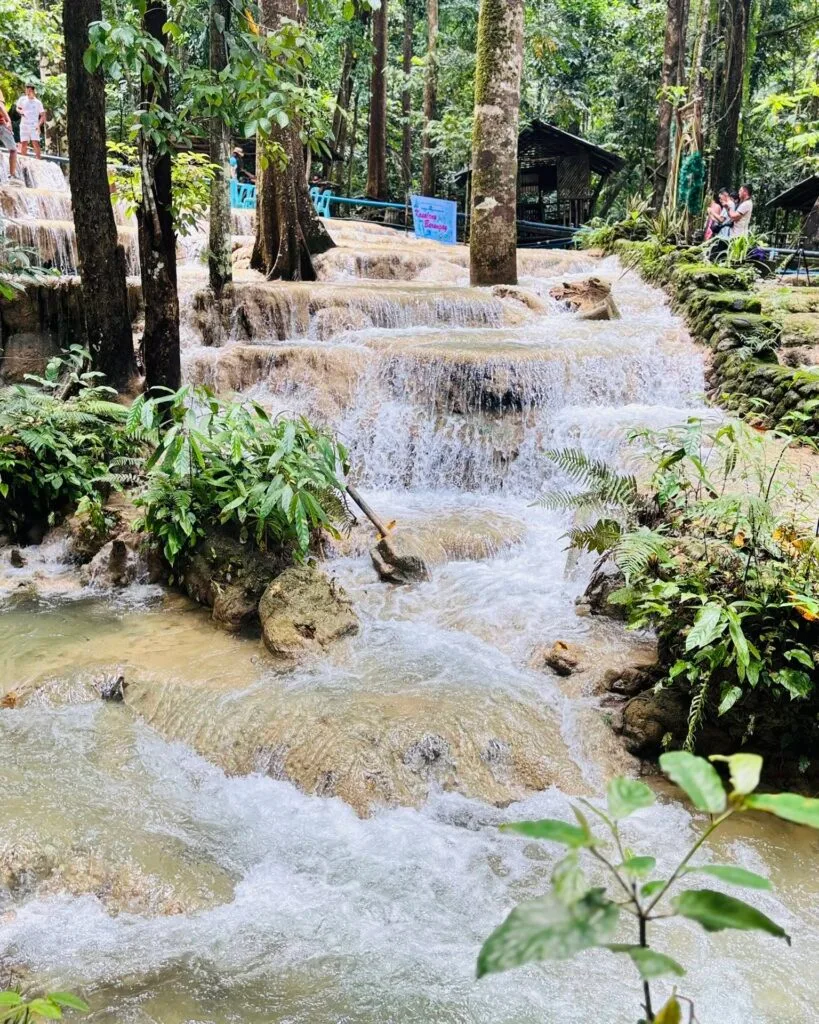
Cottage and table rentals at the Bumbungan Eco-Park in Cavinti cost ₱150 for a day use cottage and ₱200 overnight. There is a ₱10 environmental protection fee on top. This is a separate facility from the main falls, featuring smaller cascades over a spillway where you can swim.
Parking fees: confirm the current rate at the gate on arrival. The rate board at the parking area is the authoritative number and it changes periodically.
The total realistic budget for a day trip from Manila via the Pagsanjan route runs approximately ₱2,000 to ₱2,500 per person when you add a modest meal, a waterproof pouch, and a fair tip. The private package option adds significantly to that. Plan accordingly rather than arriving with only the base boat fare in your pocket.
How to Go to Pagsanjan Falls from Manila
By public transit, take a bus from Buendia (Pasay), PITX in Parañaque, or Cubao (Quezon City) to Santa Cruz, Laguna. Bus companies serving this route include DLTB, HM Transport, Jac Liner, and LLI. The fare from Cubao to Santa Cruz is approximately ₱212 for an air-conditioned seat. The ride takes roughly two and a half to three hours depending on traffic on the South Luzon Expressway (SLEX).
From Santa Cruz or the adjacent Pagsawitan terminal, take a jeepney bound for the Pagsanjan tourism office if you are doing the classic river route. For the Cavinti trek, take a jeepney to Lumban or Cavinti and then a tricycle to Pueblo El Salvador Nature’s Park in Barangay Tibatib.
By private car from Manila, the route is SLEX to the Calamba exit, then the national highway through Los Baños, Bay, Victoria, and Pila to Pagsanjan. Google Maps reads this as roughly two hours without traffic, which rarely describes the actual experience leaving Metro Manila on a weekend morning.
The expressway toll system runs on cashless RFID. Autosweep covers Skyway and SLEX; Easytrip covers NLEX. Top up your RFID before departure to avoid penalties at the plazas. Key toll figures for private cars (Class 1):
| Expressway segment | Class 1 toll |
|---|---|
| Skyway Stage 3 full length (Balintawak to Buendia) | ₱264 |
| Skyway Stage 1 and 2 (Buendia to Alabang) | ₱164 |
| Full Skyway (Balintawak to Alabang) | ₱428 |
| SLEX (Alabang to Calamba) | ₱126 |
From Calamba to Pagsanjan by tricycle is the last leg most private-car visitors miss in their budget. Confirm the fare with the driver before boarding.
How to get to Pagsanjan Falls from Calamba: Calamba is the most common SLEX exit. From the Calamba exit, you stay on the national highway heading south and east through the Laguna towns, then follow the road signs toward Pagsanjan town proper. The tourism office and the boat staging area are signposted once you enter the municipality.
The Pagsanjan Arch (locally called Puerta Real or Arco Real) marks your arrival in the municipality. Built between 1878 and 1880 using adobe stone, lime, and carabao milk under the Spanish polo y servicio labour system, it was declared a historic structure by the National Historical Commission of the Philippines in 2018. It is hard to miss and functions as an unofficial “you have arrived” marker.
What the Pagsanjan Falls Tour Is Actually Like
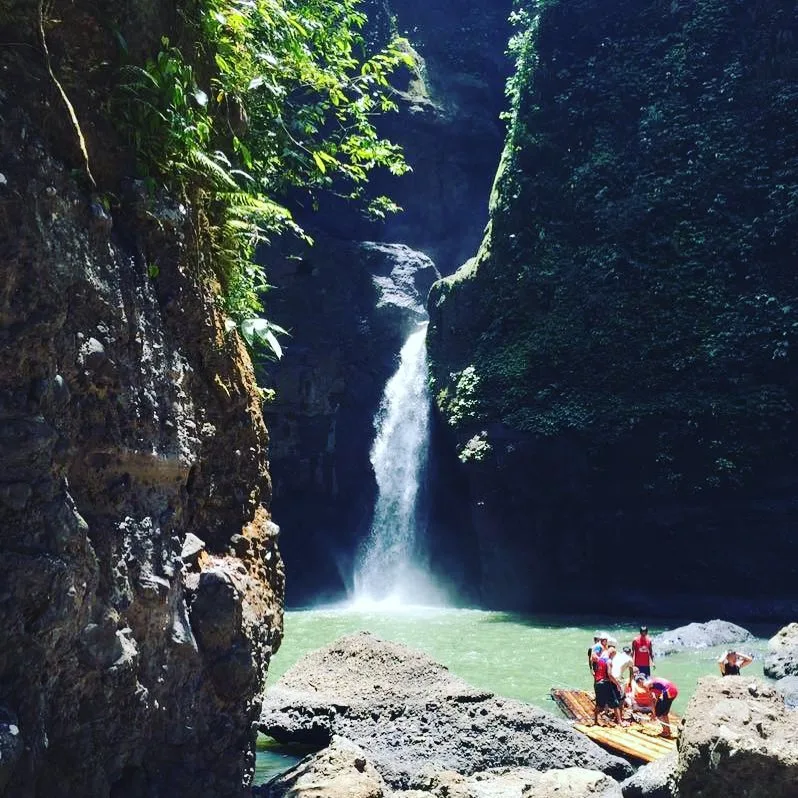
The Pagsanjan Falls tour begins at the staging area, not at the water. There is a visible system: registration, life vest and helmet fitting, a brief orientation, and then you wait for your assigned bangkeros. The process has a managed-attraction feel, which is accurate because this is a heavily regulated ecotourism site, not a casual river walk.
When I arrived in September 2026, the staging area had a calm but purposeful rhythm. Boats were cycling in and out, the boatmen were organised by assignment, and the safety gear was distributed before anyone touched a canoe. The tone shifts from tourist site to something more active the moment you sit down in the boat.
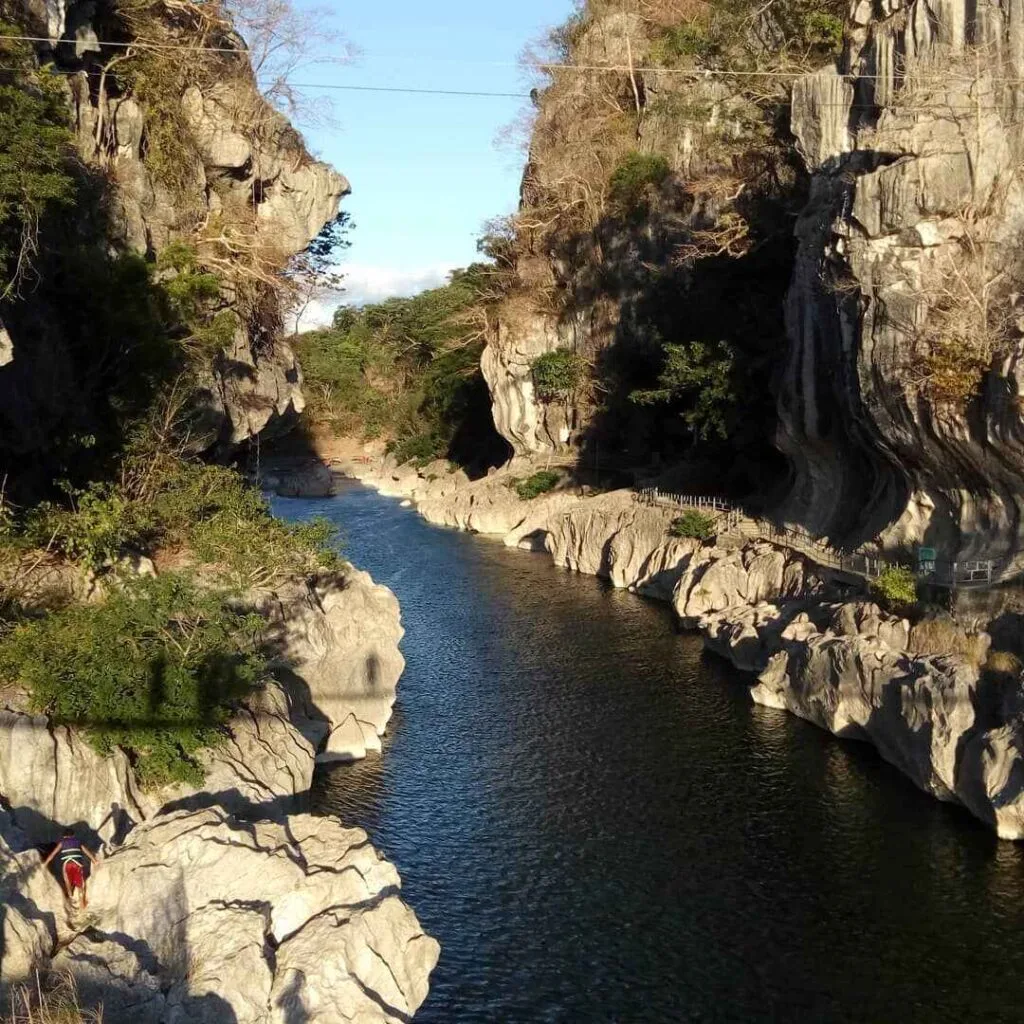
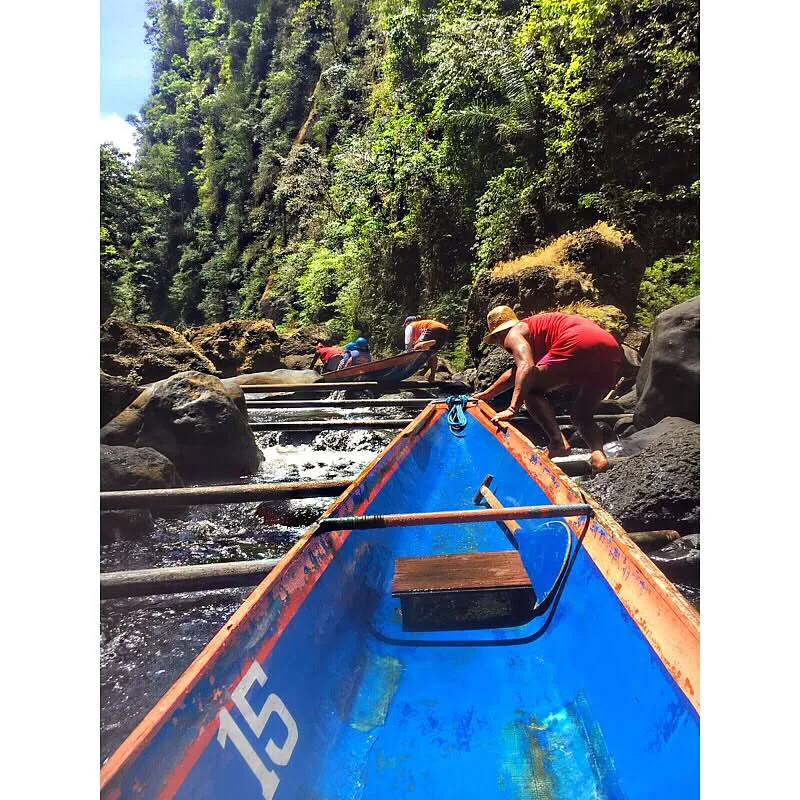
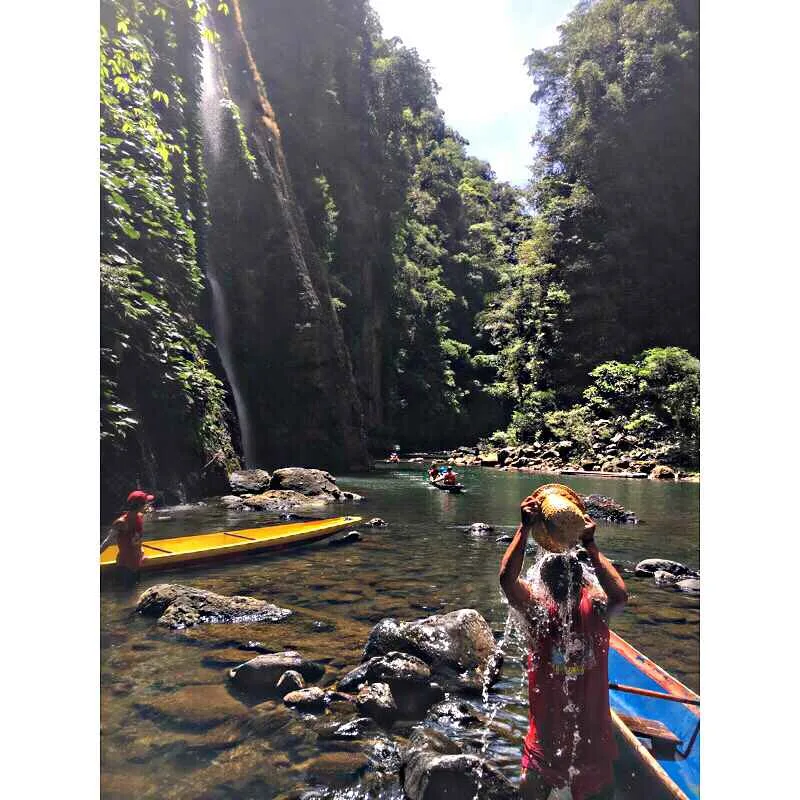
The canoe upstream takes one to one and a half hours. Two bangkeros navigate from the stern and bow, manually hauling and pushing the dugout canoe over 14 rapids through the gorge. The canyon walls close in as you go, and the atmosphere becomes steadily more enclosed and immersive. The gorge is the thing that competing destination photos do not fully convey: it surrounds you, not just frames you.
The rock walls, the sound of water, the shifting light through the canopy, it is more cinematic in person than any photograph makes it look. The Bumbungan River gorge is what gave Francis Ford Coppola the atmosphere he needed when Apocalypse Now relocated here from Zambales after Typhoon Olga destroyed the original sets in 1976. Local boatmen still point out the bends where specific scenes were filmed.
Shooting the Rapids is the return leg, not the upstream ride. After you reach the falls, swim in the pool, and take the bamboo raft into the Devil’s Cave, the boatmen guide the canoe back downstream with the current behind them. This is where speed and motion increase significantly. It is not an extreme experience, but it is loud, wet, and physically engaging in a way that the upstream leg is not. Most first-timers find it thrilling. People who dislike confined spaces, rapid lateral movement in a low boat, or significant splashing will find the return more stressful than fun.
The bamboo raft into the Devil’s Cave pushes you directly under the main cascade. The spray at that distance is heavy and cold. You are not observing the waterfall from this position; you are inside its immediate atmosphere. The cave itself is accessible for swimming and functions as a natural hydro-massage from the falling water.
Wetness level: plan to be thoroughly wet. The canoe takes on spray throughout the upstream ride, the raft puts you under the falls, and Shooting the Rapids adds more. Bring nothing you cannot afford to soak.
The Cavinti-side trek is a fundamentally different experience. You descend 600 metres through jungle to the base of the falls via metal ladders and vertical rappelling harnesses fixed to the cliff face. The descent takes 30 to 60 minutes. It is physically demanding and strictly limited to ages 12 to 59. Compared to the Pagsanjan route, which asks almost nothing physical of passengers, the Cavinti route asks a lot. The trade-off is the price difference and the close encounter with the jungle canopy that the canoe route does not offer.
For families planning trips to other waterfalls in Laguna, the Hulugan Falls day trip is a useful contrast: the trek there is steep but the overall experience is drier and simpler in logistics.
Scams and How to Avoid Them
Book through the tourism office or an accredited agency, never a street fixer. The most common trap is the highway interception: an unofficial agent on a motorcycle or tricycle flags down your vehicle before you reach the tourism office, offers cheap “entrance tickets” (sometimes quoted as low as ₱30), and then funnels you to a rogue operator who charges inflated rates for the actual boat ride and gear. The tricycle driver earns a commission on the redirect. The way around this is straightforward: do not stop for anyone flagging you down on the approach road. Drive directly to the official tourism office.
The second common issue is mid-river pressure to buy overpriced snacks or drinks from vendors who appear in the gorge, framed as supporting the boatmen. In many documented cases, the items are returned to the vendor after the trip in exchange for a cash kickback. You are not required to buy anything mid-river.
Accredited tourism offices in both Pagsanjan and Cavinti display posted rates, explain what is included before departure, and provide a receipt. That is the baseline of a legitimate booking.
Best Time to Visit Pagsanjan Falls
Early morning on a weekday in the dry season is the ideal visit. Specifically, arriving at the Pagsanjan staging area by 7 to 8 AM gives you the best light in the gorge, the shortest queue for boat assignment, and the coolest temperature for the upstream paddle. The gorge is predominantly east-facing in its upper section, so morning light catches the canyon walls directly rather than at a flat, overcast angle.
December through May is the most reliable window for clear river conditions and consistent operations. June through November brings the rainy season, with August and September being the highest-risk months for closures. That said, the dry season also brings the most competition for boats on weekends, particularly during the December to January peak holiday window and the Holy Week period.
Weekday visits are meaningfully quieter than weekends. The difference in wait time at the staging area between a Tuesday morning and a Sunday morning in February can be 40 minutes to over two hours.
For anyone building a multi-destination Laguna itinerary, pairing Pagsanjan Falls with Majayjay Falls (Taytay Falls) in the same province gives you two very different waterfall characters in one trip.
What to Wear and Bring for Pagsanjan Falls
Wear clothes you are fully comfortable getting soaked. The canoe takes on water throughout the upstream ride, the raft section puts you directly under spray, and Shooting the Rapids adds more. Swimwear or quick-dry shorts and a rash guard are the practical choice. Avoid cotton that stays cold and heavy when wet. Water shoes or old rubber sandals with a back strap are better than flip-flops, which float away.
What to bring:
A waterproof pouch or dry bag for your phone, cash, and IDs is the single most important item. The boats are open-deck and there is no dry storage. A waterproof phone case rated for submersion is worth more here than a good camera.
Bring cash for the tip, any add-on fees, and food. ATM access near the staging area is limited. Having exact or near-exact amounts makes the post-trip exit cleaner.
Bring your own water. The gorge is humid and the physical passivity of sitting in a boat does not mean you will not be dehydrated by the end.
What not to bring:
Leave anything in a regular backpack or paper bag at your accommodation or in your vehicle. Dry bags only on the boat. Prescription glasses should be secured with a strap.
Overnight Stays and Extended Itineraries
Most Manila-based visitors do Pagsanjan Falls as a day trip, and the logistics support that. An early departure from Metro Manila, a morning boat ride, lunch in Pagsanjan, and an afternoon return is a workable structure for a full but manageable day.
If you are staying overnight, the options near the site include:
Pagsanjan Falls Lodge and Summer Resort, a traditional property with direct river views, a swimming pool with kiddie slides, and easy boat ride access. It is the most convenient option for early starts.
Ysabella Suite in Cavinti town proper is an Art Deco-styled property with modern amenities including high-speed Wi-Fi and full kitchens. It works well as a base if you are also exploring the Cavinti Underground River and Cave Complex or Lake Caliraya.
Spacio Caliraya Bed and Breakfast in Lumban sits near the shores of Lake Caliraya and offers pool access, spa services, and cooked-to-order breakfasts for ₱300 additional. It is the most comfortable option if you want to extend into a two-day itinerary covering the lake.
Lake Caliraya itself, constructed by American engineers in the 1940s and seeded with largemouth bass, is a separate attraction worth combining with the falls if you have more than one day. Fishing, windsurfing, and a quieter pace than the gorge make it a natural counterpart.
For anyone building a longer Laguna circuit, Yambo Lake in Nagcarlan is another lake-centred day trip that pairs well with a Pagsanjan Falls visit, particularly for travellers who want something calmer on day two.
Frequently Asked Questions About Pagsanjan Falls
How much is the Pagsanjan Falls boat ride in 2026?
The standard tourism-office rate for the Pagsanjan-side canoe ride is ₱1,350 per person. This covers the two-hour round-trip, two licensed boatmen, a life vest, a safety helmet, and the park entrance fee. Solo travellers pay for two seats regardless of party size, bringing the solo cost to ₱2,700. The ₱1,250 figure that appears on older listings now applies only to hotel-packaged deals, not the walk-up tourism office rate.
What is the entrance fee for Pagsanjan Falls?
The entrance fee is bundled into the boat ride fee on the Pagsanjan side (₱1,350 all-in). On the Cavinti side, the all-inclusive rate at Pueblo El Salvador Nature’s Park is ₱270 per person, covering entrance, guide, harness, helmet, and life vest. There is no standalone entrance fee that allows you to simply view the falls from land.
Where exactly is Pagsanjan Falls located?
The falls are physically in Cavinti, Laguna, within Barangay Tibatib. The jump-off point for the classic river ride is in the adjacent municipality of Pagsanjan, approximately six kilometres downstream. Both towns are about 100 kilometres southeast of Metro Manila in Laguna Province.
How do you get to Pagsanjan Falls from Manila?
By bus, take a DLTB, HM Transport, Jac Liner, or LLI service from Buendia (Pasay), PITX in Parañaque, or Cubao (Quezon City) to Santa Cruz, Laguna. The air-conditioned fare from Cubao is approximately ₱212 and the ride takes two and a half to three hours. From Santa Cruz, take a jeepney to the Pagsanjan tourism office. By private car, take SLEX to the Calamba exit, then the national highway through Los Baños, Bay, Victoria, and Pila to Pagsanjan.
What is included in a Pagsanjan Falls tour package?
All-inclusive private packages from Metro Manila cover roundtrip air-conditioned van transfer, toll fees, driver and coordinator fees, group travel insurance, the boat ride, and a set lunch. Pricing scales with group size: two passengers pay up to ₱14,999 per person; twelve passengers pay as low as ₱3,499 per person. Book only through accredited agencies or the LGU tourism offices in Pagsanjan or Cavinti to avoid scam operators.
Is Pagsanjan Falls safe to visit during rainy season?
It can be, but it requires checking conditions the day before and morning of your visit. The Tourism Office posts a daily go or no-go update at 7 AM during rainy season based on assessments by the municipal DRRMO. Heavy rain in the Sierra Madre highlands can cause the Bumbungan River to swell rapidly and close the gorge without visible warning at the staging area. August and September are the highest-risk months. If the gorge is at hazard level, the bamboo raft and upper rapids are suspended first, followed by full closure if conditions worsen.
Do you need a guide for Pagsanjan Falls?
On the Pagsanjan side, two licensed bangkeros (boatmen) are assigned to every canoe and are included in the ₱1,350 rate. You do not hire a separate guide. On the Cavinti side, a licensed guide is included in the ₱270 fee and is mandatory for the cliff descent. Solo travellers cannot do the ladder descent unaccompanied.
How much should you tip the boatmen at Pagsanjan Falls?
The informal standard is ₱250 per boatman, or ₱500 total for the two who take you through. You will sometimes receive tip requests mid-river. The cleaner approach is to decide your amount before boarding, give it voluntarily at the end of the trip at the staging area, and not negotiate mid-gorge. The boatmen’s net from the official fee is approximately ₱400 to ₱700 per trip for work that is genuinely physical and carries real risk.
How long does the Pagsanjan Falls trip take?
The river ride itself is two hours round-trip. Add time at the falls for the bamboo raft, swimming, and the return staging, and the on-site portion runs three to four hours. From Manila, a full day is the realistic planning unit: two to three hours each way by bus or car, three to four hours on-site, plus meal stops.
Verdict: Who Should Go and Who Should Skip It
Pagsanjan Falls is genuinely worth the trip for the right person. The gorge approach, the rapids, the enclosed arrival at the falls, and the bamboo raft into the Devil’s Cave add up to an experience with real atmosphere and real physical engagement. I came back from the September 2026 visit still thinking it holds up, which is something I cannot say for every destination I return to after several years.
The right person is someone who wants an active day trip, is comfortable with getting thoroughly wet, and values the journey as much as the destination. Couples looking for a memorable Laguna outing, barkadas who want something with motion and a story to tell afterward, and first-timers who want the classic Philippine river adventure all belong here.
The wrong person is someone who wants a quiet, dry, low-effort waterfall stop. The price on the Pagsanjan side is not small for what is essentially a two-hour river ride, and if you are arriving expecting a serene nature moment rather than an active gorge experience, the gap between expectation and reality will be sharp. People with significant mobility limitations cannot do the Pagsanjan canoe route safely. The Cavinti trek is additionally restricted to ages 12 to 59.
The water quality data from the LLDA is worth knowing before you decide how much swimming to do at the base pool. The DENR Class D classification is an objective constraint, not a scare tactic.
Go in the dry season, on a weekday, before 8 AM. Book through the official tourism office. Bring only what fits in a dry bag. Tip the boatmen at the end of the trip. Check the 7 AM status update if you are going in the rainy months.
The gorge is worth the logistics. The rapids are worth the price. Just go in with accurate expectations and the day works.