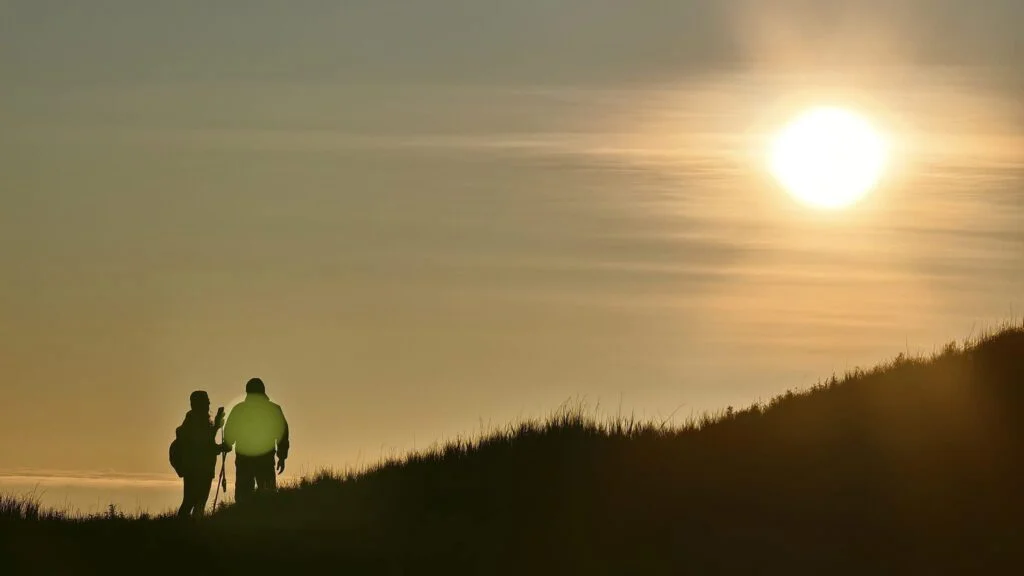
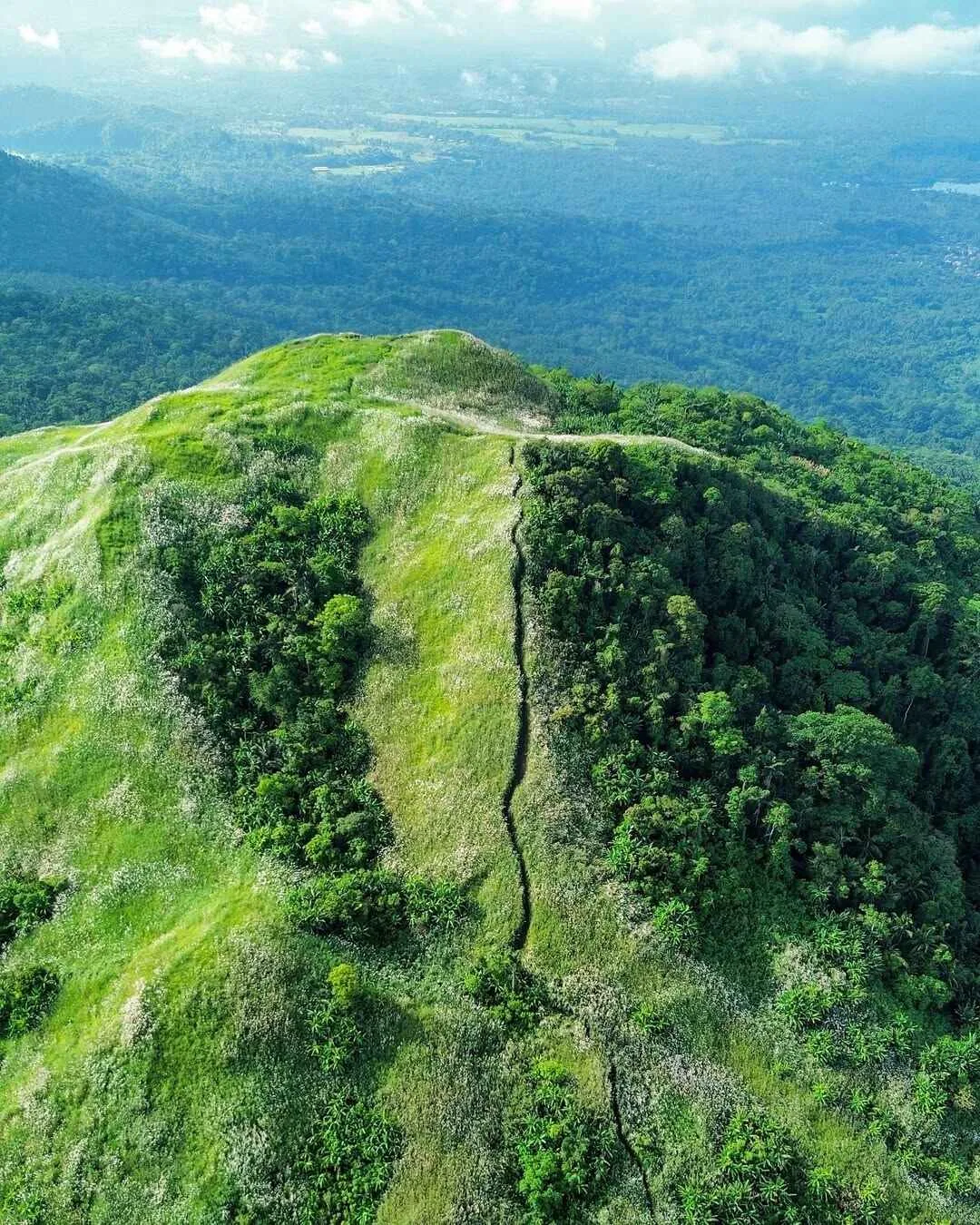
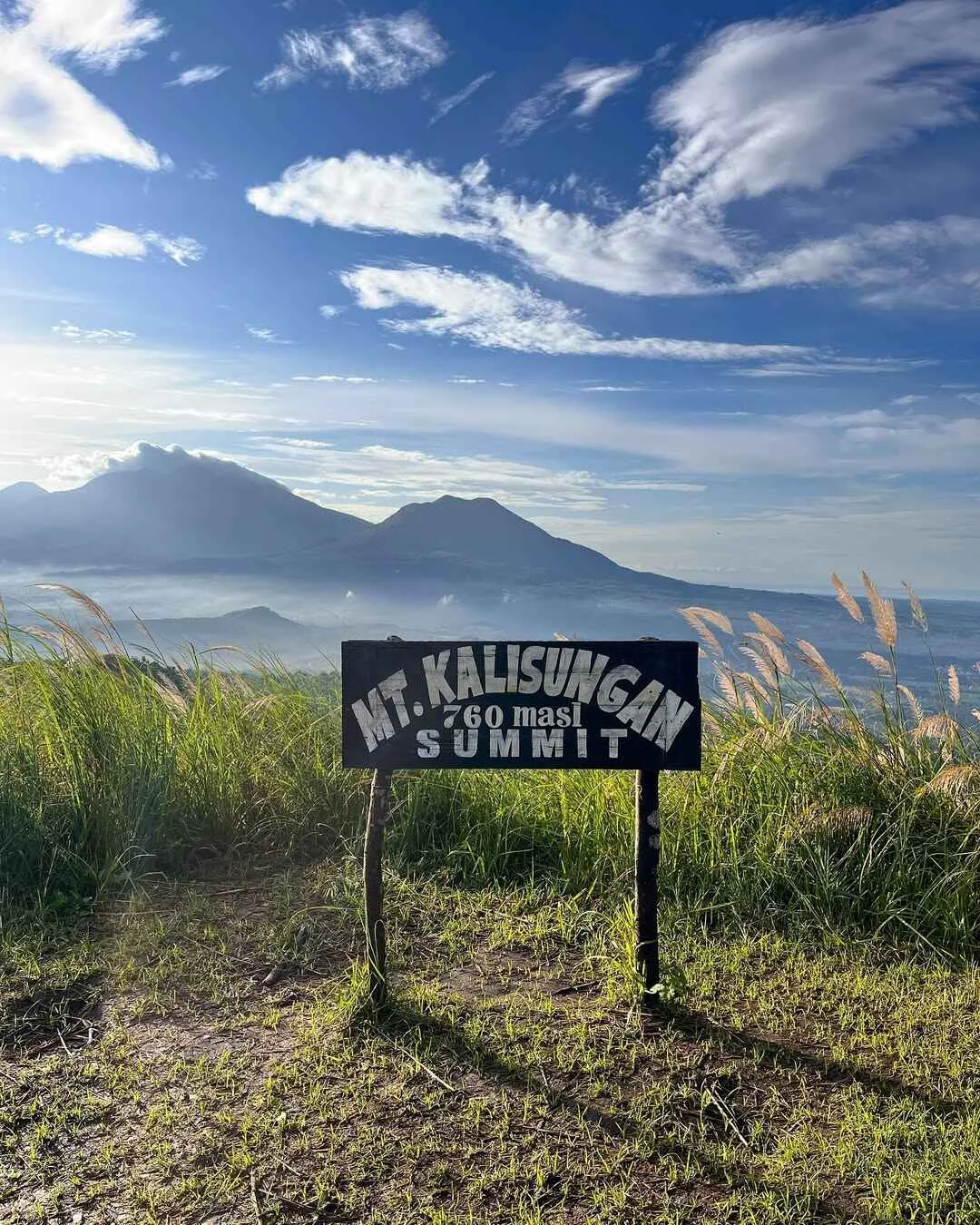
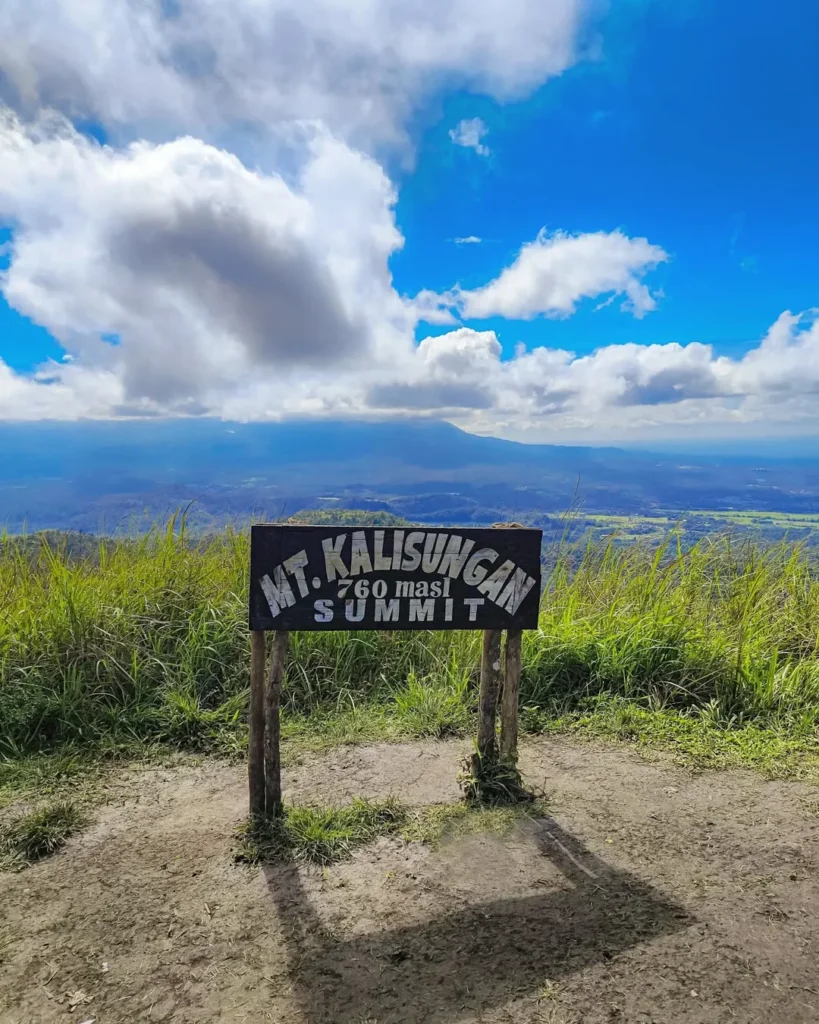
Mt. Kalisungan is a 760 MASL peak in Barangay Lamot II, Calauan, Laguna, rated difficulty 3/9 and reachable from Manila in under three hours. The trail is 3.2 to 3.5 km one way, climbs 564 meters of vertical elevation gain, takes 2.5 to 3 hours to ascend, and demands a mandatory guide, no exceptions.
Having covered 69 of the 82 provinces since 2015, I can say that Kalisungan punches well above its elevation. The official 3/9 rating measures technical complexity, not cardiovascular effort, and that distinction matters more here than almost anywhere else in Laguna. When I went back in September 2026, the trail was exactly as demanding as I remembered: humid lower forest, sharp cogon grass on the upper slopes, and loose volcanic soil on the descent that takes more out of your legs than the climb itself. This guide is everything I wish I had before my first time up.
This page was last updated based on a September 2026 visit.
Key Takeaways
- The summit sits at 760 MASL with 564 meters of total elevation gain from the Lamot II jump-off, making the gradient far steeper than the low altitude suggests.
- A guide is mandatory and non-negotiable. The flat guide fee is ₱800 per group of up to 8 hikers; confirm the current rate directly with the Lamot II Barangay Hall before your trip.
- There are zero water sources on the trail. Carry a minimum of 2 to 3 liters per person from the jump-off, more during summer months.
- Total round trip takes 4 to 6 hours (2.5 to 3 hours up, 1.5 to 2.5 hours down). Start no later than 5:00 AM; no later than 4:30 AM from March to May.
- The best months to climb are November through February, when temperatures are lower and summit views are clearest.
- First-timers who cannot walk uphill continuously for two to three hours without frequent stops should do a four-week conditioning block before attempting this trail.
Table of Contents
Where Mt. Kalisungan Is and Why the Views Are Worth It
Mt. Kalisungan sits on the boundary of three municipalities: Calauan, Nagcarlan, and San Pablo. The mountain goes by several local names. Some call it Mt. Calauan or Mt. Nagcarlan after the towns it borders; others call it Mt. Lamot because it lies in Brgy. Lamot. The mountaineering community has settled on Mt. Kalisungan as the standard name, and that is what you will find in barangay records at the jump-off.
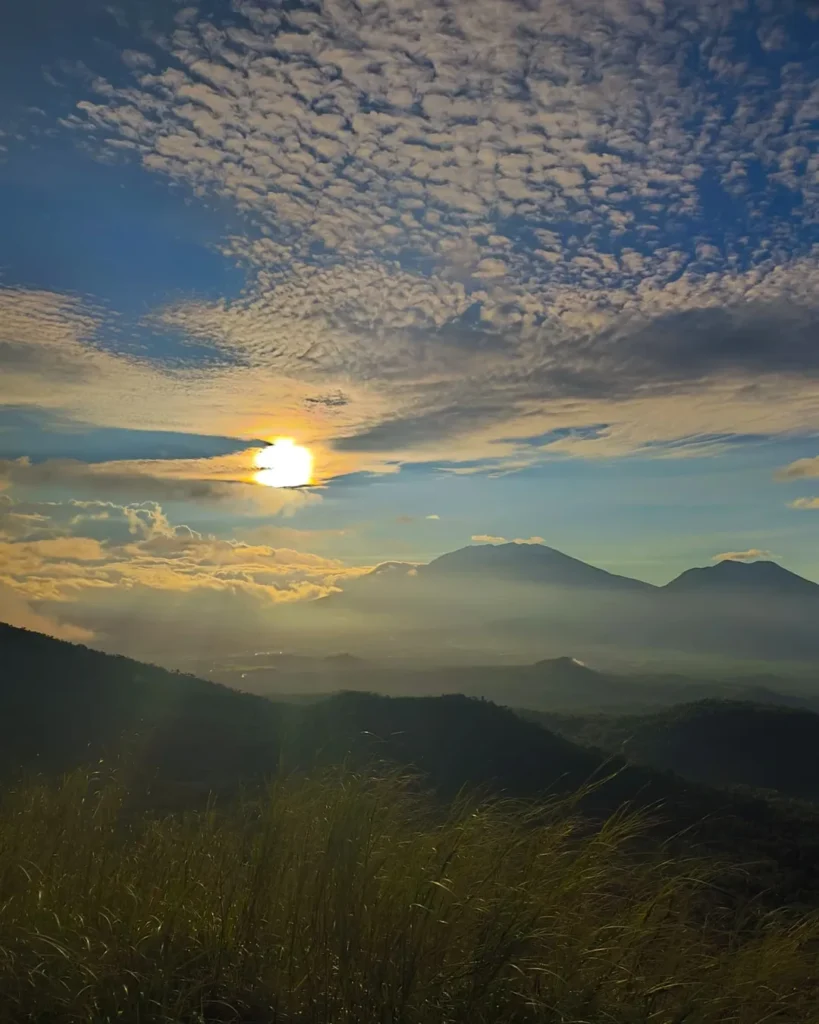
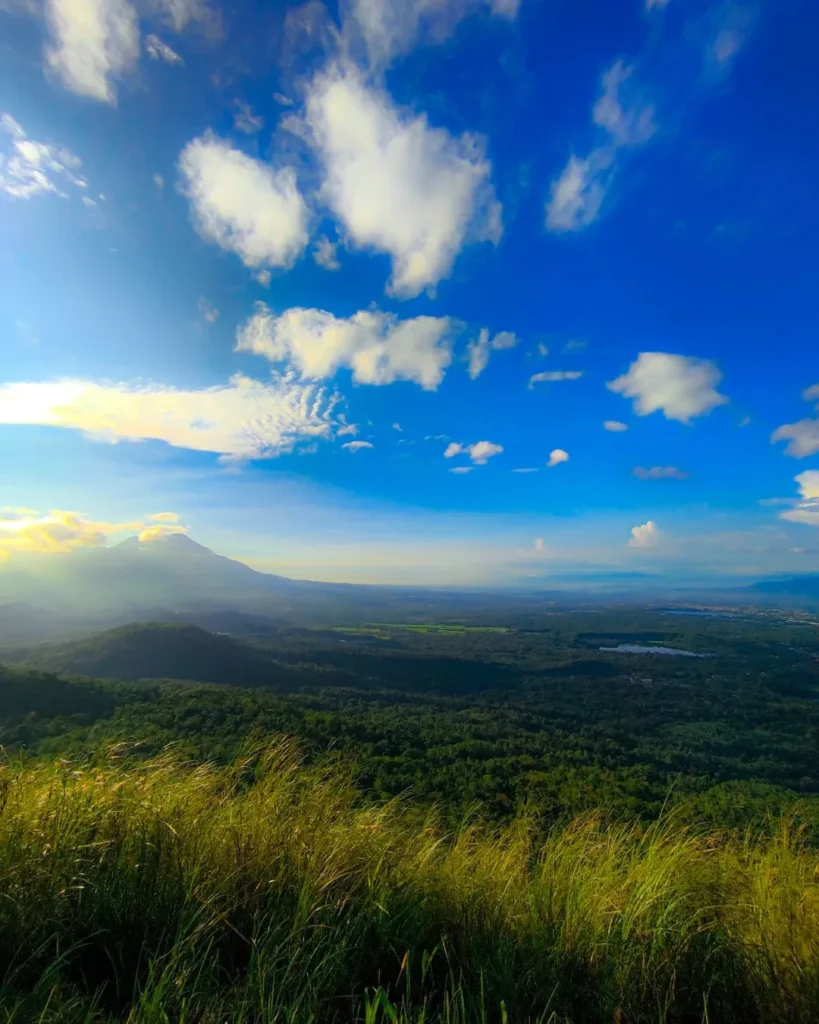
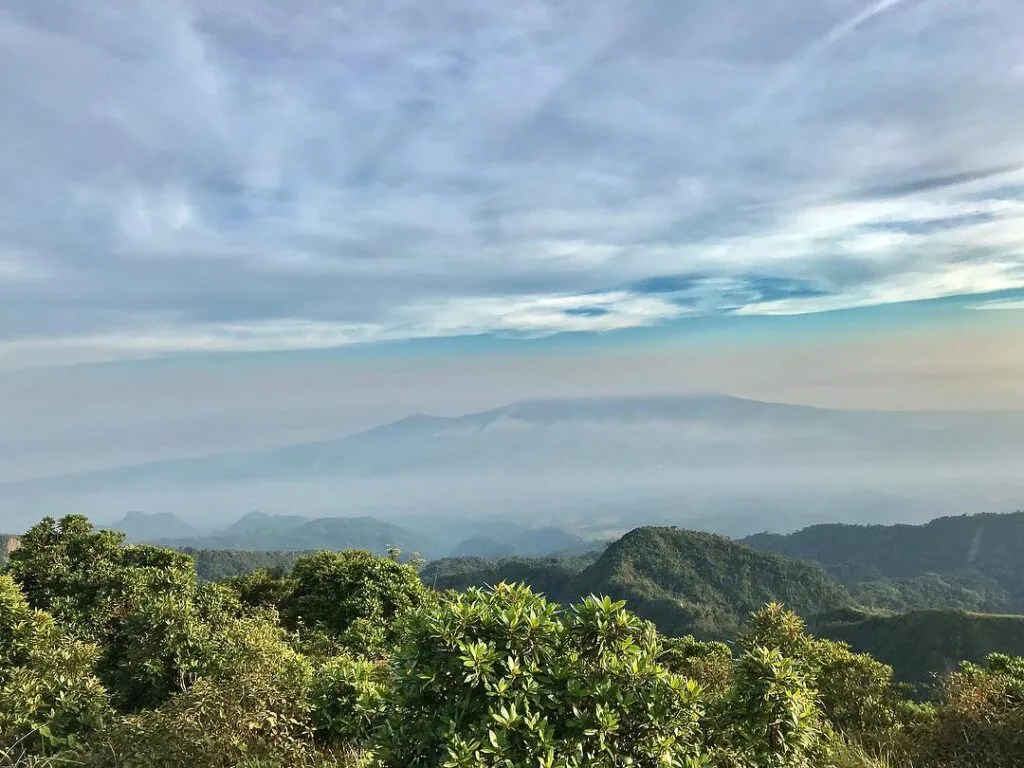
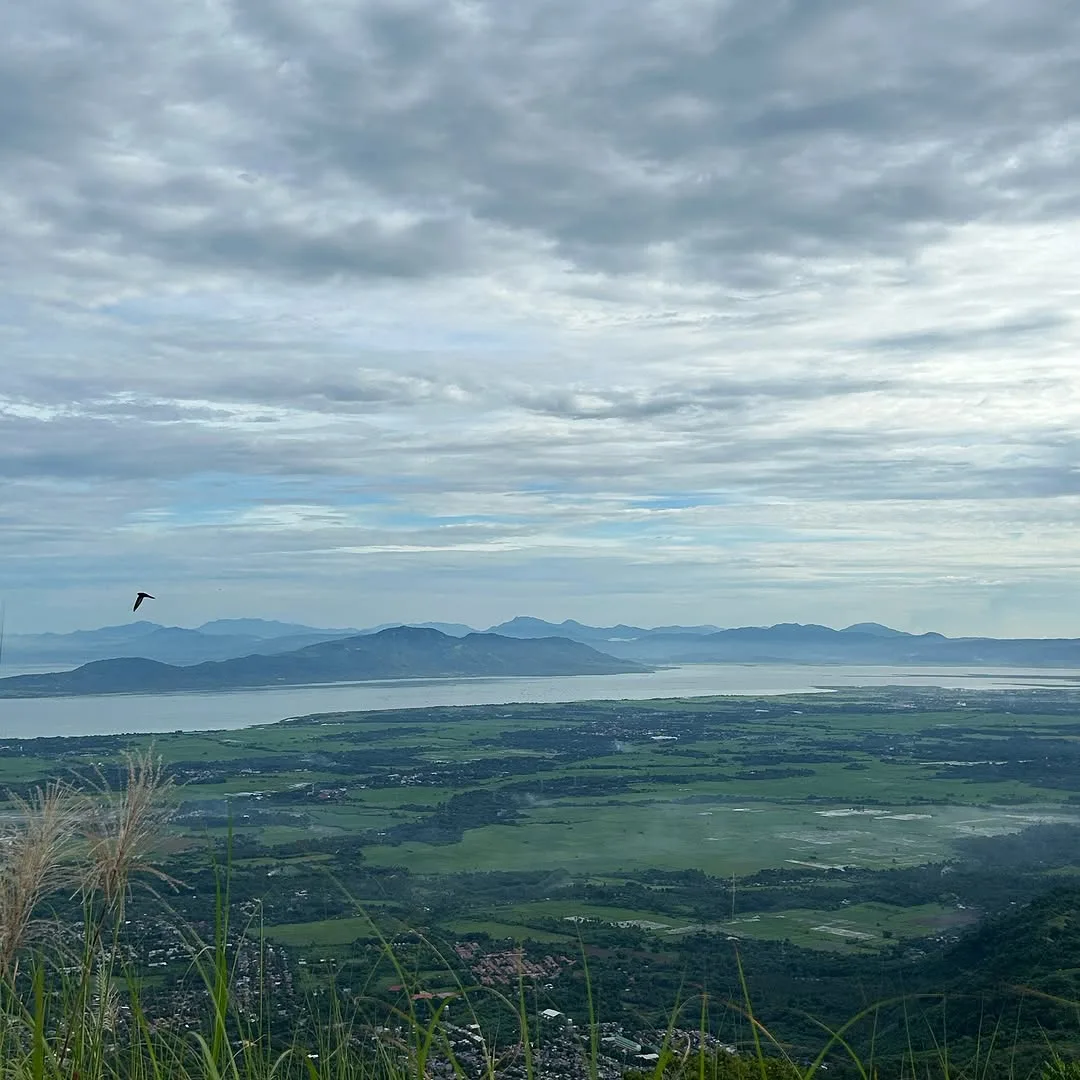
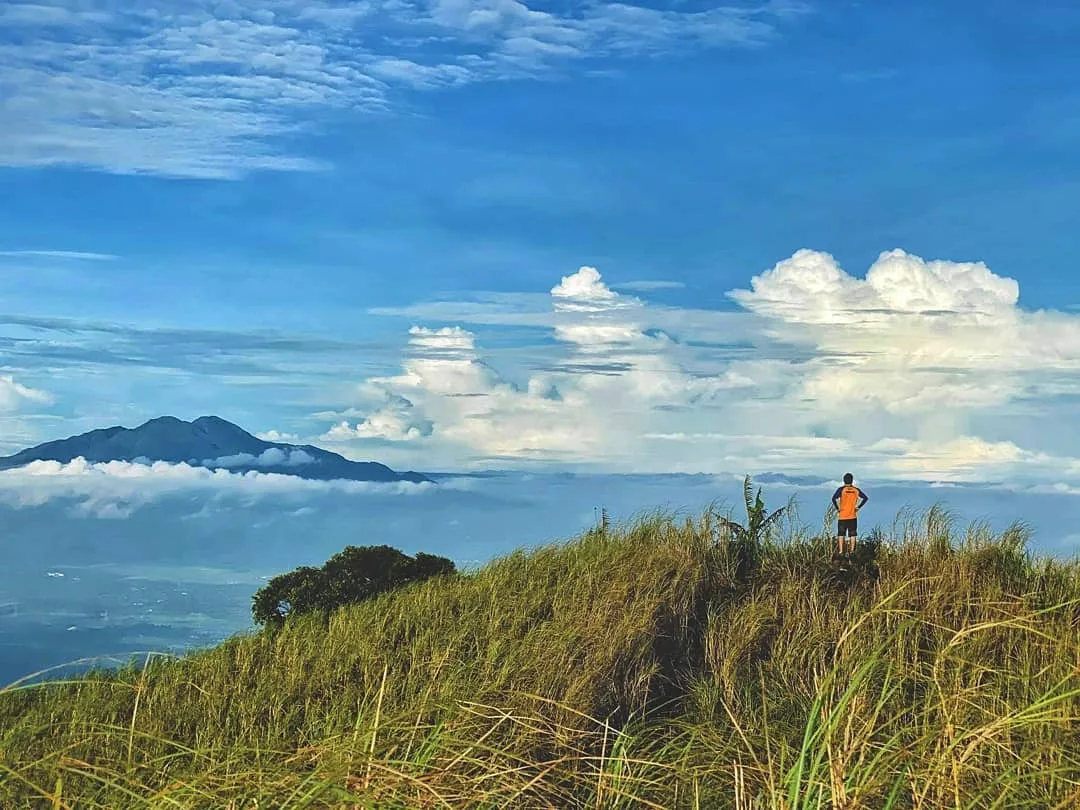
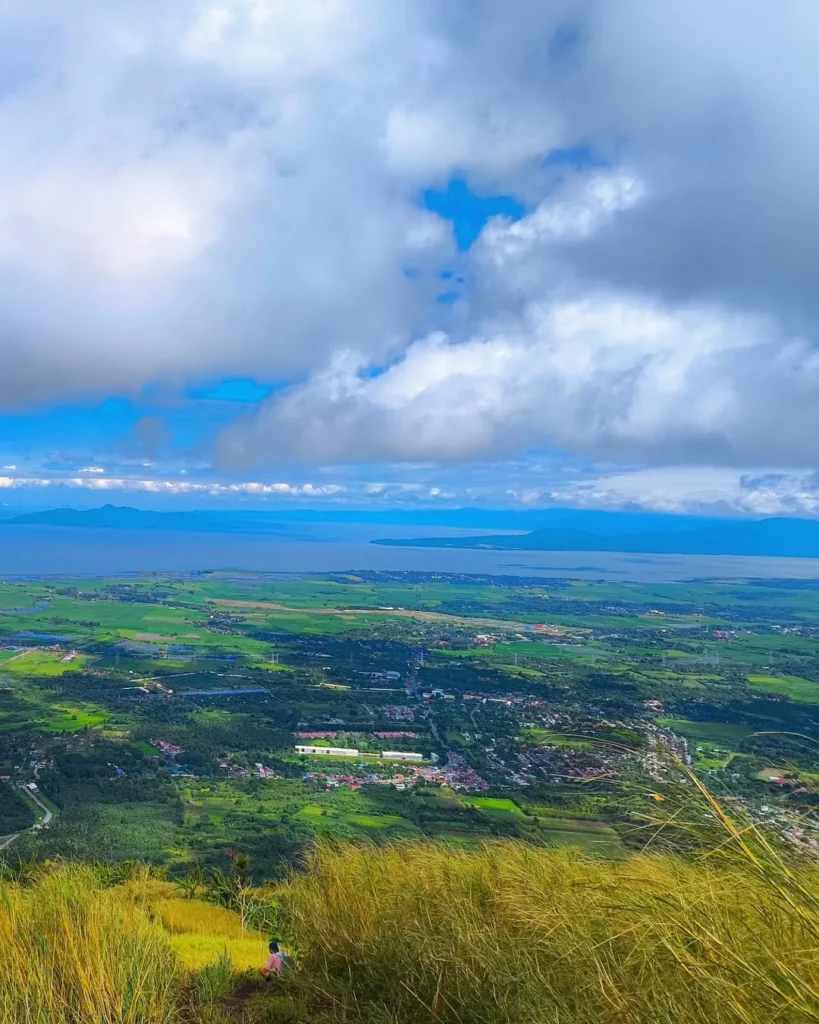
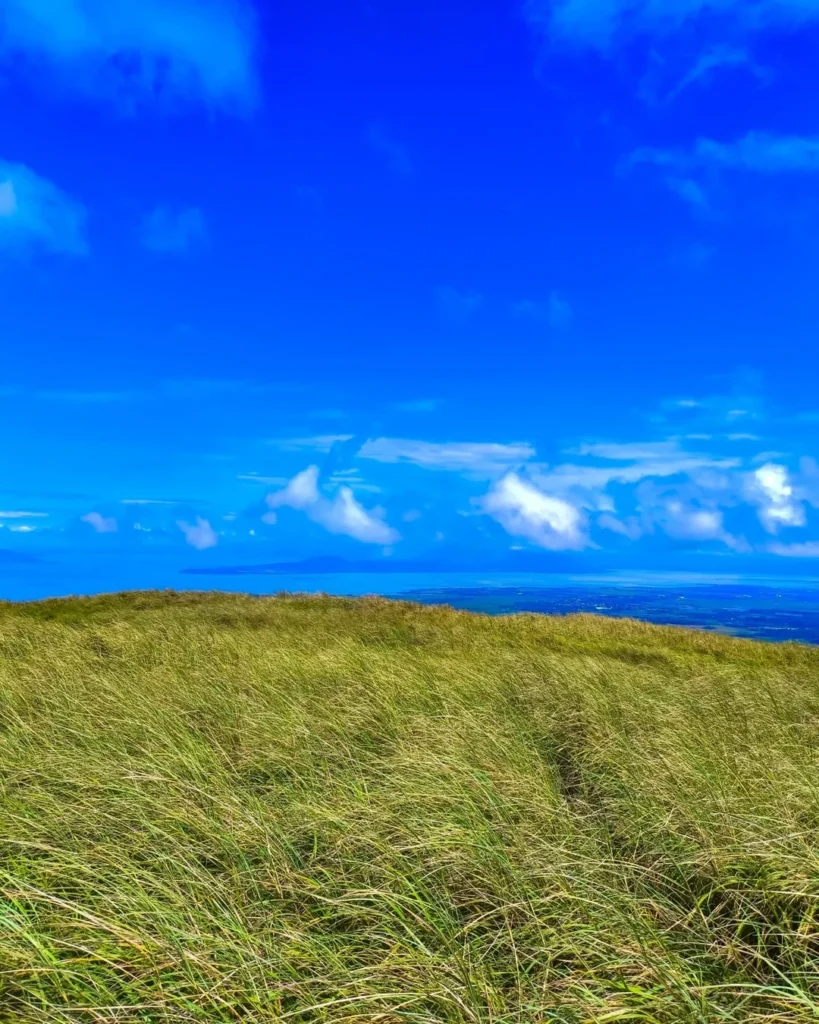
What makes the summit genuinely worth the climb is its position as a natural observation deck flanking the Banahaw Volcanic Trilogy. From the white cross at the top, you can see Mt. Banahaw, Mt. Cristobal, and Mt. Makiling simultaneously, along with at least six of the Seven Lakes of San Pablo, Laguna de Bay, Talim Island, the Jalajala peninsula, and the Caliraya highlands. Very few mountains at this elevation anywhere in Luzon give you that kind of return on the effort.
The mountain is a dormant component of the Laguna Volcanic Field, also documented as the San Pablo Volcanic Field. That geological origin explains the trail’s defining characteristic: nutrient-rich, friable volcanic soil that grips your boots on the way up and slides under them on the way down. The steep upper slopes and the loose terrain are not accidents of geography. They are a direct consequence of the same tectonic forces that created the crater lakes visible from the summit.
For context on nearby peaks in the same volcanic complex, the guide to Mt. Makiling’s UPLB trail and Maktrav route covers the highest point in the region.
What It Costs to Climb Mt. Kalisungan
Before transport, these are the fees you pay at the jump-off:
| Fee | Amount |
|---|---|
| Registration / Environmental Fee | ₱20–₱30 per person |
| Mandatory Guide Fee | ₱800 per group (up to 8 hikers) |
| Porter (optional) | Negotiate directly with the guide association |
All fees are cash only. A group of four splits the ₱800 guide fee to ₱200 per person. A solo hiker pays the full ₱800. That cost structure is one of the clearest arguments for organizing a group before you go. Call or message the Lamot II Barangay Hall in advance to confirm the current guide fee, because local LGU rates are set by the barangay council and the figure at the hall on the day is the authoritative one.
| Estimated Budget (Group of 4) | Cost per Person |
|---|---|
| Bus fare Manila to Victoria Junction (one way) | ₱100–₱175 |
| Bus fare return (Jac Liner / LLI routing) | up to ₱212 |
| Tricycle charter, junction to jump-off (shared) | ₱60–₱100 (divided by passengers) |
| Registration / Environmental Fee | ₱20–₱30 |
| Guide fee (₱800 split four ways) | ₱200 |
| Food and water for the trail | ₱150–₱300 |
| Estimated total per person (group of 4) | ₱600–₱800 |
How to Get to the Mt. Kalisungan Jump-off
The jump-off is at the Lamot II Barangay Hall in Calauan, Laguna. Getting there from Manila involves three steps: bus to Victoria Junction, then tricycle to the barangay hall.
Step 1 – Bus from Manila. Board a Jam Liner, HM Transport, Green Star, or DLTB bus bound for Sta. Cruz, Laguna, from the LRT Buendia terminal in Pasay, PITX in Parañaque, or Cubao. Bus fare runs ₱100 to ₱175 one way depending on the operator and terminal. Return fares via Jac Liner or LLI from the highway can reach ₱212. Travel time is 1.5 to 2.5 hours depending on SLEX traffic.
Step 2 – Get off at Masapang Junction. This stop is also called Duck Junction, after the large duck monument at the intersection in Victoria, Laguna. Tell the conductor you are getting off at the itik monument. You cannot miss it.
Step 3 – Tricycle to Lamot II. Charter a tricycle from Masapang Junction to the Lamot II Barangay Hall. The ride takes 10 to 15 minutes on quiet rural roads. Fare is ₱60 to ₱100 per tricycle, divided among passengers. Local jeepneys bound for San Pablo pass through the area for roughly ₱8 per person, but chartered tricycles are faster and far more practical for pre-dawn arrivals.
By private vehicle. Take SLEX to the Calamba exit, proceed through the national highway past Pansol and Los Baños, and continue to Victoria Junction. Turn right at the duck monument and drive straight until you reach the Lamot II Barangay Hall. Parking is available near the hall; confirm the arrangement with locals on arrival.
I was at the jump-off just after 5:00 AM on my September 2026 visit, and guides were already there. The barangay hall is right beside the road, easy to identify even in the dark.
When to Climb Mt. Kalisungan
November through February is the best window for Mt. Kalisungan. The Northeast Monsoon (amihan) brings cooler mornings, low humidity, firm trail surfaces, and the highest chance of clear summit views, including the occasional sea of clouds over the San Pablo lakes.
November to February (amihan). Coolest temperatures, best visibility, safest trail conditions. The right window for first-timers and anyone who wants to see the Seven Lakes clearly from the top.
March to May (tag-init). Trails are dry and mud-free, which speeds up the ascent. The trade-off is severe heat on the exposed upper grassland by mid-morning. Start no later than 4:30 AM during summer months to get the steep open section done before full solar exposure hits.
June to August (habagat). Heavy rainfall turns the middle forest section into deep mud trenches, partly because pack horses use the same trail and churn the soil badly. Summit views are often blocked by cloud cover. Trekking poles become essential rather than optional. The climb is manageable for fit, experienced hikers but not recommended for first-timers.
September to October (typhoon season). The barangay council monitors weather closely and will close the trail without notice following severe weather events. Hikers have been turned away at the jump-off after long bus trips when closures are called. Always call the Lamot II Barangay Hall to confirm trail status before traveling during this window. My September 2026 visit required exactly that check.
What the Mt. Kalisungan Trail Is Actually Like
Mt. Kalisungan’s difficulty 3/9 rating measures technical complexity, not how hard your body works. There are no scrambles, no ropes, and no cliff exposure. What the rating does not capture is the relentless 50 to 60 degree incline of the final grassland section, the total absence of shade in that same stretch, and the way loose volcanic soil degrades every footstep on the descent. The trail has three distinct stages, and each one has a different hazard profile.
Stage 1: Community Farm Section (Jump-off to Forest Edge)
The first section crosses flat to gently rising farm paths through the agricultural zone of Lamot II. Coconut trees, banana groves, rambutan, dalandan, calamansi, and kaimito line the early trail. The gradient is gentle enough for a proper cardiovascular warm-up. The fruit on these trees is private agricultural property; do not pick anything without explicit permission from locals.
Stage 2: Forested Middle Section (Forest Edge to ~490 MASL)
The trail enters dense secondary rainforest here. The canopy blocks wind almost completely, which traps moisture and ambient heat and makes this the section where unprepared hikers hit their first wall. The soil on this stretch is heavily churned by pack horses used to haul agricultural goods, and after any rainfall it becomes deep, slick mud that costs serious energy to negotiate. On my September climb, this section was exactly as slow-going as the terrain dictates. Wild ferns, wild coffee trees, and common burdock appear along the path, the latter sticking its seeds to clothing without warning.
At around 490 MASL, the forest thins and the trail levels briefly before the final push.
Stage 3: Open Grassland Summit Assault (~490 MASL to Summit)
This is where the mountain earns its reputation. The forest canopy ends abruptly and the gradient jumps to an unrelenting 50 to 60 degree average, covered entirely in cogon (talahib) grass. There is zero shade from the treeline to the summit cross. The cogon blades are sharp enough to cut exposed skin, and the volcanic soil underfoot provides poor traction in both directions. On a clear morning the summit assault is brutally exposed. On the cloudy September morning I climbed, the absence of direct sun made the upper section just barely manageable.
About 15 minutes into the climb, a large mango tree beside an ulingan marks the first viewpoint over Laguna Lake. If you reach it without being seriously winded, your conditioning is adequate for the rest.
There are zero water sources anywhere on the trail or at the summit. Carry your full supply from the jump-off: a minimum of 2 to 3 liters per person for a standard day hike, more during summer. This is the single most common reason hikers are in trouble on Kalisungan, and it gets underplayed in almost every other account of this mountain.
The summit plateau holds a white cross erected by the local community after World War II. The grassland at the top is used as high-altitude pasture by local cattle, which limits clean sitting areas and requires tent campers to clear space carefully before pitching.
Cellular signal from Smart, Globe, and DITO is strong and reliable throughout the entire trail, including the summit. That connectivity is worth knowing in case of an emergency.
Is Mt. Kalisungan Right for Beginners?
Mt. Kalisungan is appropriate for prepared beginners and will punish unprepared ones. The 3/9 difficulty rating and short 3.2 to 3.5 km distance make it look accessible on paper. In practice, 564 meters of elevation gain over that compact distance produces a gradient that tests cardiovascular fitness and lower-body endurance as hard as many higher-rated trails. If you can walk uphill continuously for two to three hours, you are ready. If climbing four flights of stairs leaves you winded, spend four weeks conditioning first.
The trail is also notably kinder than most Laguna peaks in some respects: no limatik (blood leeches), no dense rattan thickets, no poison ivy. The hazards here are heat, dehydration, and the loose descent.
Four-week conditioning plan:
| Week | Activity |
|---|---|
| 4 weeks out | 30-minute daily walk or jog; stair climbing, at least 10 flights twice daily |
| 3 weeks out | 45-minute incline walks, treadmill at 8–10% grade, three sessions per week |
| 2 weeks out | One 8–10 km flat endurance walk; break in your hiking footwear |
| 1 week out | Light activity only; prioritize hydration and 7–8 hours of sleep nightly |
If you can complete a 45-minute continuous incline walk without stopping, you are physically ready for Kalisungan.
For a side-by-side look at beginner-accessible peaks in CALABARZON, mountains in the Philippines by difficulty covers regional options with comparable elevation profiles.
Permits, Guides, and Rules at Mt. Kalisungan
Registration at the Lamot II Barangay Hall is strictly mandatory before any ascent. You sign the logbook, pay the environmental fee of ₱20 to ₱30 per person in cash, and secure your guide there.
The guide requirement is non-negotiable. Unguided hiking is expressly prohibited by the barangay council, and attempting to bypass it can result in being expelled from the municipality. This rule exists for a real reason: the lower farm and forest sections have multiple trail forks and paths used daily by local farmers, and the route is genuinely easy to get lost on without a guide who knows the mountain. The guide fee is ₱800 flat for a group of up to 8 hikers, making the per-person cost as low as ₱100 in a full group.
There is no published numerical daily visitor quota, but a de facto quota exists because the trail closes to new arrivals once all registered guides are dispatched. On peak weekends during dry season, guides are fully booked by early morning. Advance reservation is not a suggestion. Contact the Lamot II Barangay Hall before your travel date to secure a guide, especially for Saturday and Sunday climbs.
The Erais Farms entry point that some older posts describe no longer exists as a legal access route. Following a prolonged property dispute, the private owners closed that trailhead permanently. As of 2026, the Lamot II route is the only legal pathway up the mountain.
What to Bring for Mt. Kalisungan
Pack for heat, steep terrain, and complete self-sufficiency on water. Every item below is based on the specific hazards of this trail, not a generic gear list.
Non-negotiable:
- Water: 2 to 3 liters minimum per person. There is no resupply option anywhere on the trail.
- Trekking poles. The descent on loose volcanic soil is where knees and ankles take damage. Bamboo sticks are sometimes available near the jump-off from local vendors, but bring your own to be sure.
- Trail shoes or hiking boots with aggressive lugs. Smooth-soled sneakers will fail on the muddy middle section and the loose summit soil. This is not a suggestion based on comfort; it is a safety issue on the descent.
- Long trousers or robust leggings. The cogon blades in Stage 3 will lacerate bare legs. Light, moisture-wicking fabric is fine.
- Sun protection for the summit assault. Wide-brimmed hat, polarized sunglasses, UV arm sleeves, and sunscreen. Once you leave the treeline, there is no shade until you come back down.
Strongly recommended:
- Dry bag or pack liner for wet-season climbs
- Light snacks for the summit (there are no vendors anywhere on the trail)
- Small first aid kit, including blister treatment
The WWII History Behind the Summit Cross
The white cross on the summit of Mt. Kalisungan was put there deliberately, and its origin matters. During the final months of the Pacific War, Japanese Imperial Army forces under General Yamashita’s command used the steep, defensible slopes of the Laguna mountains as their last stronghold in the province. The natural redoubts, thick canopy, and punishing gradient made these peaks effective tactical positions for a desperate rearguard defense.
After the war, locals erected a wooden cross at the summit to commemorate the lives lost. That cross was later replaced with the permanent cement structure standing today. It transformed the mountain into a pilgrimage site, and the tradition of climbing during Holy Week for penance and reflection remains active in the local community.
The wartime history also attached the mountain to one of the most destructive legends in Philippine hiking: Yamashita’s Gold. The lore holds that Japanese forces concealed looted gold and artifacts in tunnel systems across the mountains where they made their final stands. Because Kalisungan was a confirmed last-stand site, it has attracted clandestine excavation teams over the decades. In late 2012, hikers found a vertical shaft dug at least 15 to 20 feet deep directly into the summit plateau by unauthorized treasure hunters. The damage was significant and is part of why strict local governance and mandatory guiding exist today.
Bunga Falls: The Post-Hike Side Trip
Bunga Falls is a natural pairing with a Kalisungan climb because Mt. Kalisungan is a completely dry mountain: no streams, no river crossings, and no water features anywhere on the trail. If you want immersion after coming down, Bunga Falls in Barangay Bunga, Nagcarlan, is 30 to 40 minutes from the Lamot II jump-off by tricycle or jeepney.
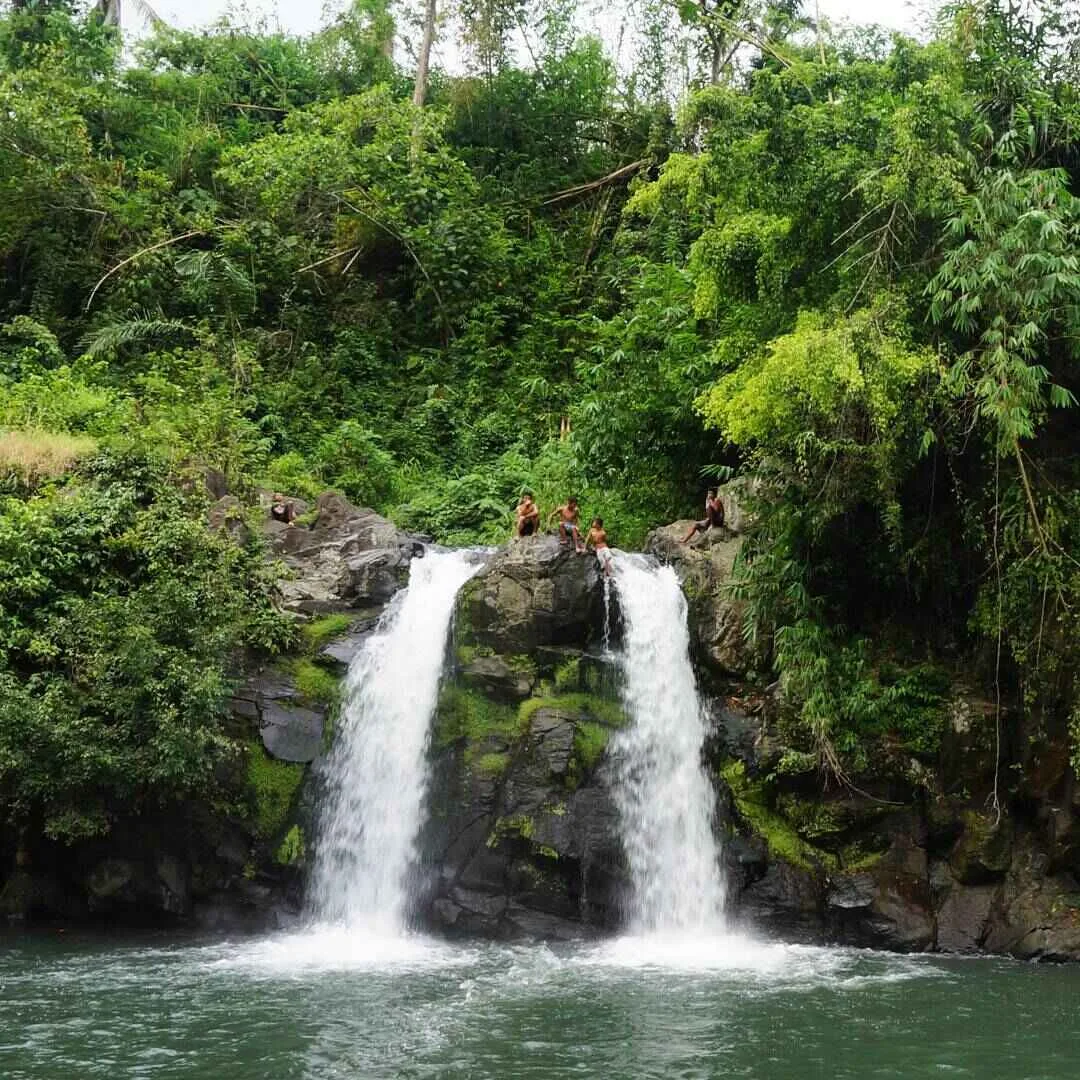
The falls are twin cascades, two waterfalls descending side by side, standing 15 meters high. The name comes from the bunga (betel nut) palms that once grew in the area. From the paved parking area, it is a 5 to 10 minute walk to the falls themselves. Entrance fees, parking, and cottage rental rates are collected on arrival. Confirm the current amounts at the gate because the fees have changed multiple times in recent years and the figure at the ticket booth is the one that counts.
The falls are also close to the Underground Cemetery of Nagcarlan, which is worth the detour if you have time. For other waterfalls in the province, the guide to Majayjay Falls (Taytay Falls) in Laguna covers another strong option in the same area.
Frequently Asked Questions About Mt. Kalisungan
What is the elevation of Mt. Kalisungan?
Mt. Kalisungan’s officially cited elevation is 760 MASL. More recent GPS-based topographical surveys have recorded the summit closer to 630+ MASL, though this figure is subject to ongoing verification. Regardless of the baseline measurement, the total elevation gain from the Lamot II jump-off is approximately 564 meters, which is the figure that actually determines how hard the climb feels.
How difficult is the Mt. Kalisungan trail?
The official rating is 3/9 (Minor Climb), Trail Class 1 to 2. That rating measures technical complexity: no scrambles, no ropes, no cliff exposure. It does not measure cardiovascular effort. The open grassland final section averages 50 to 60 degrees of incline with no shade, and the loose volcanic soil on the descent is more demanding on the knees than the uphill sections. Physically, it is harder than the 3/9 rating suggests.
Is a guide mandatory for Mt. Kalisungan?
Yes, a guide is strictly mandatory. Unguided hiking is prohibited by the Lamot II barangay council. The trail has multiple forks in the lower and middle sections that are easy to take incorrectly without local knowledge. The guide fee is ₱800 flat per group of up to 8 hikers. Call the Lamot II Barangay Hall to book in advance, especially on weekends during dry season, when guides are fully booked by early morning.
Where is the Mt. Kalisungan jump-off point?
The jump-off is the Lamot II Barangay Hall, Barangay Lamot II, Calauan, Laguna. The Erais Farms trailhead that appears in older guides is permanently closed. There is only one legal access point as of 2026.
How long does it take to hike Mt. Kalisungan?
Ascent takes 2.5 to 3 hours for a moderately fit group. Descent takes 1.5 to 2.5 hours. Total round-trip moving time is 4 to 6 hours, making it comfortably executable as a day hike with time for a stop at Bunga Falls or a meal in Victoria on the way home.
Is there water available on the Mt. Kalisungan trail?
There are zero water sources on the trail or at the summit. A historical well on a remote ridge toward Mt. Atimla is unreliable and typically dry during peak hiking months. Carry your entire water supply from the jump-off: a minimum of 2 to 3 liters per person, more during March to May.
Can you camp overnight at Mt. Kalisungan?
Yes, the summit plateau serves as a campsite. The meadow has enough space for several freestanding tents. Be aware that the summit is exposed to strong prevailing winds requiring robust tent staking into loose soil, there is no natural shelter, and grazing cattle use the same area, so clear the ground before pitching. There are no facilities of any kind at the summit.
What is Kalisungan Falls?
“Kalisungan Falls” most commonly refers to Bunga Falls, the twin waterfall side trip in Barangay Bunga, Nagcarlan, that is typically paired with a Kalisungan climb. The falls stand 15 meters high, are located about 30 to 40 minutes from the Lamot II jump-off by tricycle, and involve only a 5 to 10 minute walk from the parking area. Mt. Kalisungan itself has no waterfall on its trail.
What is the best time of year to climb Mt. Kalisungan?
November through February during the amihan (Northeast Monsoon). Cooler temperatures, lower humidity, firm trail surfaces, and the highest probability of clear summit views with the Seven Lakes of San Pablo visible below. March to May is viable for experienced hikers who start before 4:30 AM. June to October is manageable for fit climbers but comes with mud, reduced visibility, and the risk of sudden trail closures.
Final Verdict: Who Should Climb Mt. Kalisungan
Mt. Kalisungan is a genuinely rewarding climb for hikers who show up prepared. The summit view of Mt. Banahaw, Mt. Cristobal, Mt. Makiling, and the San Pablo lakes from a peak this close to Manila is exceptional value for the effort.
Climb it if you are a prepared beginner or intermediate hiker who has done the conditioning work, you start early enough to beat the heat, and you carry enough water. It is also a good choice for experienced hikers who want a fast, sharp workout with a meaningful view and easy access from the capital.
Skip it or postpone it if you are coming directly from a sedentary lifestyle with no training block behind you, or if you are planning to hike during a typhoon warning. The steep terrain and total absence of water on the trail mean that poor preparation here has real consequences, not just discomfort.
The guide fee, the registration, the mandatory early start: none of it is bureaucratic friction. It is the structure that keeps this mountain accessible and the trail intact. Work with the Lamot II community, bring your water, and the summit will be worth every step of that final grassland assault.