Is Nagpatong Rock Worth Visiting?
Yes — absolutely. Nagpatong Rock is one of the most rewarding short hikes near Metro Manila, and it punches well above its weight in terms of scenery and experience. The trek itself is brief, but the rope-and-ladder climb near the top and the dramatic Sierra Madre views from the summit make it genuinely memorable. If you want big adventure without committing to a full mountain climb, Nagpatong Rock delivers. That said, it is not a casual walk in the park — the final vertical section is real, and it demands grip strength, balance, and a steady head for heights.
I visited in April 2026 and came away thinking it’s one of the best day hike options within striking distance of the city. Here’s everything you need to know before you go.
Nagpatong Rock Quick Guide
| Item | Details |
|---|---|
| Destination | Nagpatong Rock Formation |
| Location | Barangay Cuyambay, Tanay, Rizal |
| Province | Rizal, CALABARZON |
| Elevation | ~560 MASL |
| Difficulty | Easy to Moderate (3/9) |
| Best For | Beginners, barkadas, day hikers, photographers |
| Main Activity | Forest trek + rock scrambling + rope/ladder climb |
| Trek Time | 1–2 hours ascent; 1–1.5 hours descent |
| Guide | Mandatory |
| Guide Ratio | 1 guide per 5 hikers |
| Summit Limit | Max 12 people at one time |
| Registration | Barangay Cuyambay Hall |
| Ecotourism Fee | ₱100/person (VERIFY LOCALLY) |
| Environmental Fee | ₱30/person (VERIFY LOCALLY) |
| Guide Fee | ₱750 (Nagpatong only); ₱1,000 (+ Mt. Masungki); ₱500 add-on for Tungtong Falls (VERIFY LOCALLY) |
| Best Season | Late November to early May |
| Best Start Time | Early morning / sunrise hike |
| Main Risk | Slippery limestone, vertical climb, descent |
| Nearby Add-Ons | Tungtong Falls, Treasure Mountain, Daranak Falls, Tinipak River, Regina Rica |
Table of Contents
What Is Nagpatong Rock Formation?
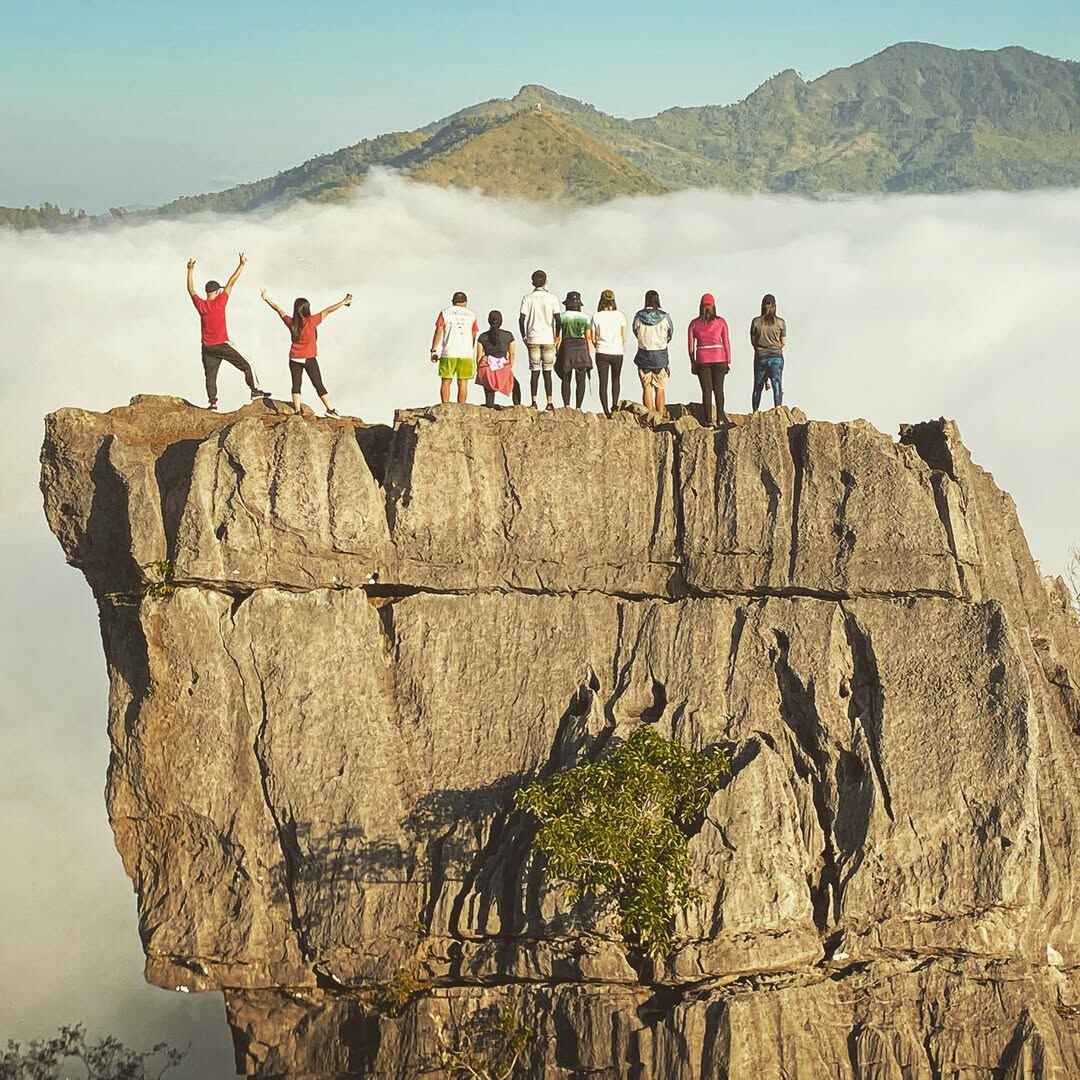
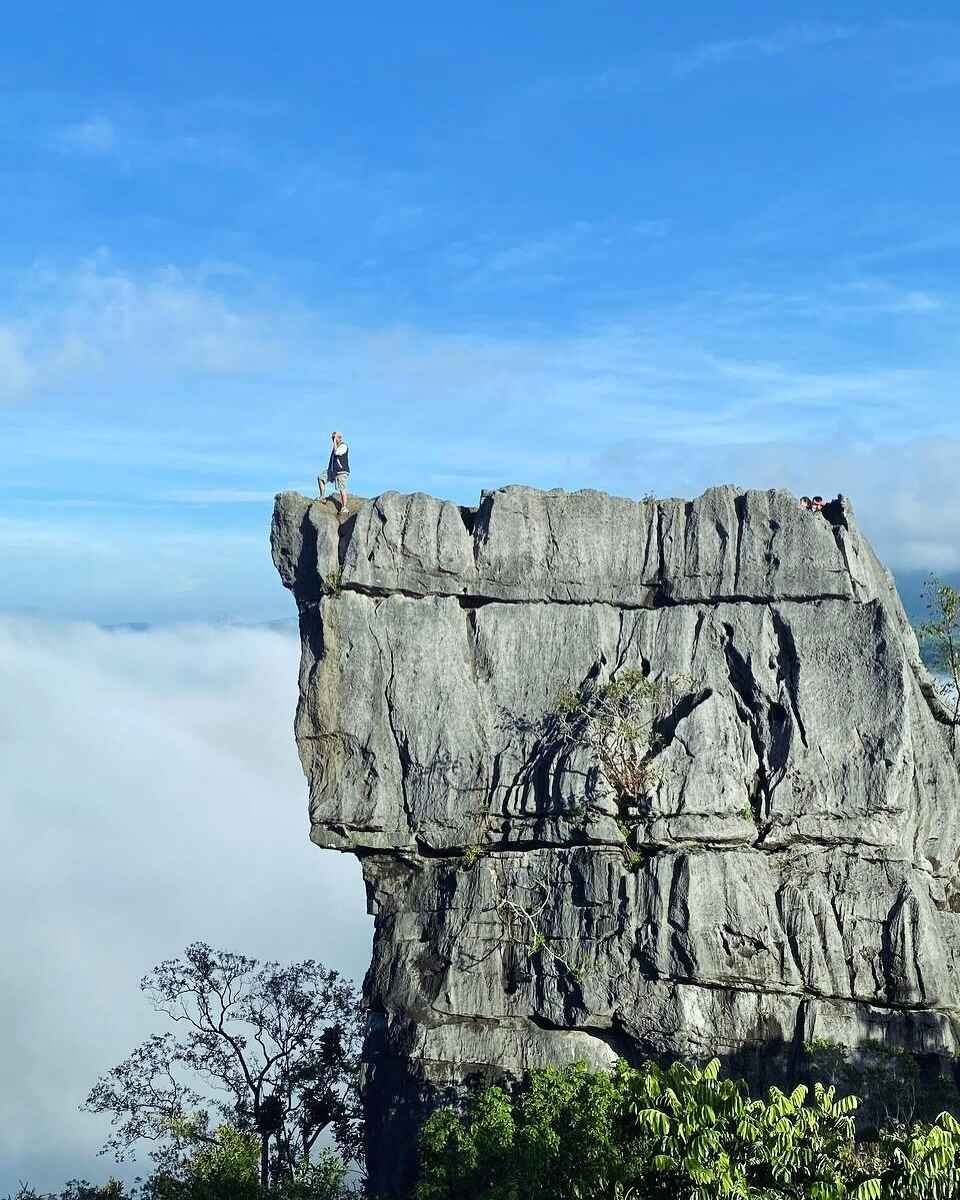
Nagpatong Rock Formation is a karst limestone rock formation in the upland barangays of Tanay, Rizal. The name “Nagpatong” literally means stacked or placed on top of each other in Tagalog — and once you see it, the name makes perfect sense. The formation looks like enormous limestone blocks that have been layered and balanced on top of one another by a giant’s hand.
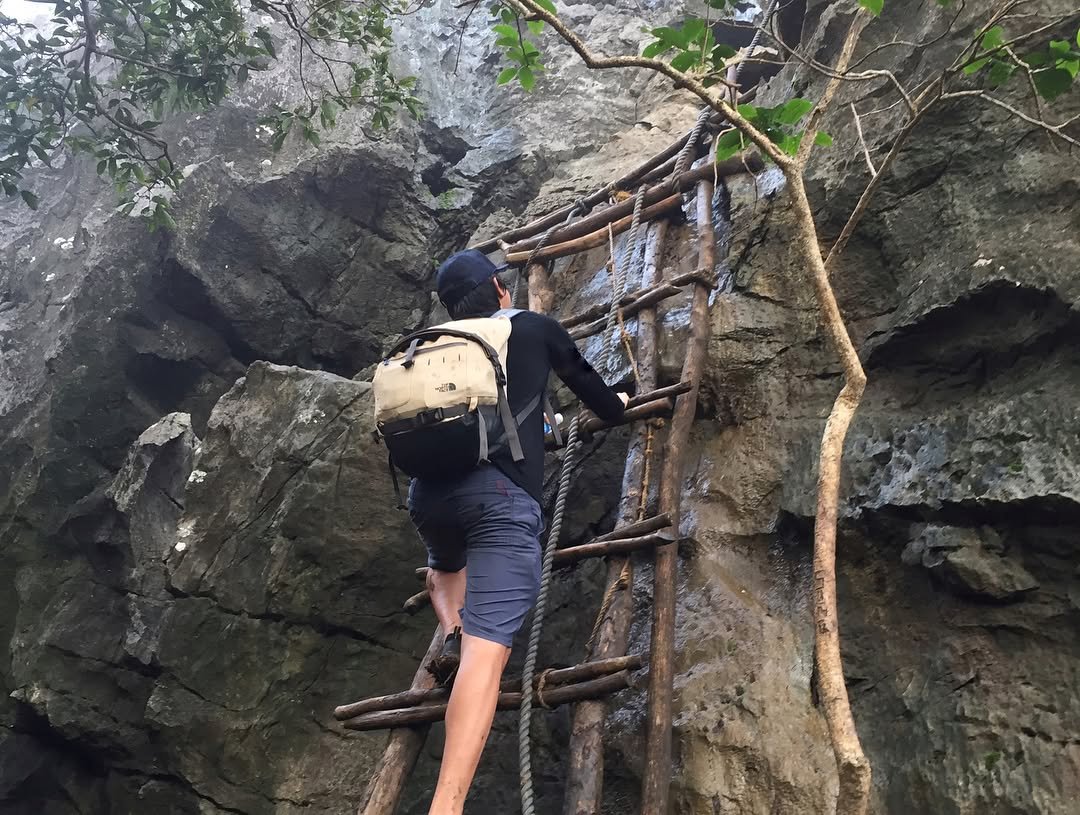
What makes Nagpatong Rock stand apart from ordinary hiking destinations is this: it is not a long mountain climb. You are not grinding up a full-day trail. Instead, it is a short forest trek that ends with a dramatic vertical rock face, complete with bamboo ladders, knotted ropes, and a near-vertical limestone section that rewards every bit of effort with a jaw-dropping view.
Where Is Nagpatong Rock Located?
Nagpatong Rock sits in Barangay Cuyambay, Tanay, Rizal, in the CALABARZON region. It falls within the Sierra Madre foothills along the Marilaque Highway corridor — the same stretch of road that passes Treasure Mountain, Tinipak, and the Tanay upland area.
From Metro Manila by private car, expect around 1.5 to 2.5 hours depending on traffic, using Marilaque Highway as your main route. The final road sections near the barangay can be rough and muddy, especially after rain. If you are driving a sedan, be cautious on those last stretches.
The official registration point is at Barangay Cuyambay Hall, where you pay your fees, get assigned a guide, and arrange transport to the trailhead.
Why Did I Visit Nagpatong Rock?
I had been eyeing Nagpatong Rock for a while. It kept coming up in hiking groups, barkada trip planning threads, and social media posts — always with that same iconic photo of a group of hikers perched on a high limestone ledge with mountains rolling behind them.
I went in April 2026 on a weekday, intentionally avoiding the weekend crowds. I wanted to experience the sunrise hike, which means leaving Metro Manila in the wee hours of the morning. My goal was to reach the summit right around first light.
Is Nagpatong Rock Open for Hiking?
VERIFY LOCALLY before your trip. Trail access depends on LGU decisions, weather conditions, typhoon damage, and seasonal factors. The Tanay Tourism Office manages access, and closures can be issued on short notice.
Contact numbers to check trail status:
- Tanay Tourism: 0998-578-8199 (VERIFY LOCALLY)
- Tanay Tourism: 0998-988-1590 (VERIFY LOCALLY)
- Tanay Tourism: 0965-556-5335 (VERIFY LOCALLY)
- Landline: 8-665-17-73 (VERIFY LOCALLY)
Call at least a day before your visit, especially during the rainy months or after a typhoon. Do not assume it is open just because it was open last week.
What Should You Check Before Visiting Nagpatong Rock?
Before you finalize any Nagpatong Rock itinerary, run through this pre-trip verification list.
Is the Trail Currently Open?
Check with Tanay Tourism for any LGU-issued closures due to rain, typhoon damage, trail maintenance, or local events.
What Is the Weather Forecast?
Wet limestone becomes dangerously slippery. Even if the trail is technically open, heavy rain the night before or forecasted rain on the day of your hike should make you reconsider or reschedule.
Are Guides Available for Your Group Size?
Guides are mandatory. If your group is large (6 or more), you will need at least 2 guides. Confirm guide availability ahead of time, especially on weekends and holidays.
What Are the Current Registration Rules?
Fees and procedures can change. Always confirm current ecotourism fees, environmental fees, and guide rates with the barangay registration area or Tanay Tourism before visiting.
Is Tungtong Falls Accessible?
If you plan to add Tungtong Falls as a side trip, verify that the river crossings are safe. After heavy rain or during monsoon season, the crossing can become dangerous.
Is Transport Available from the Highway?
Tricycle and habal-habal availability from the Cuyambay highway intersection can be limited, especially early morning or on weekdays. Confirm this if you are commuting.
How Difficult Is Nagpatong Rock?
Nagpatong Rock is rated around 3 out of 9 in hiking difficulty — classified as a minor climb. Do not let that number fool you into thinking it is a flat stroll.
The trail itself is manageable for fit beginners. The distance is short, the forest section is shaded and not overly steep, and the cardio demand is low to moderate. What catches people off guard is the final section — a near-vertical limestone face that requires you to grip bamboo ladders, pull yourself up knotted ropes, and trust your footing on jagged rock.
| Aspect | Level |
|---|---|
| Overall Difficulty | Easy to Moderate (3/9) |
| Cardio Demand | Low to Moderate |
| Upper Body/Grip Demand | Moderate |
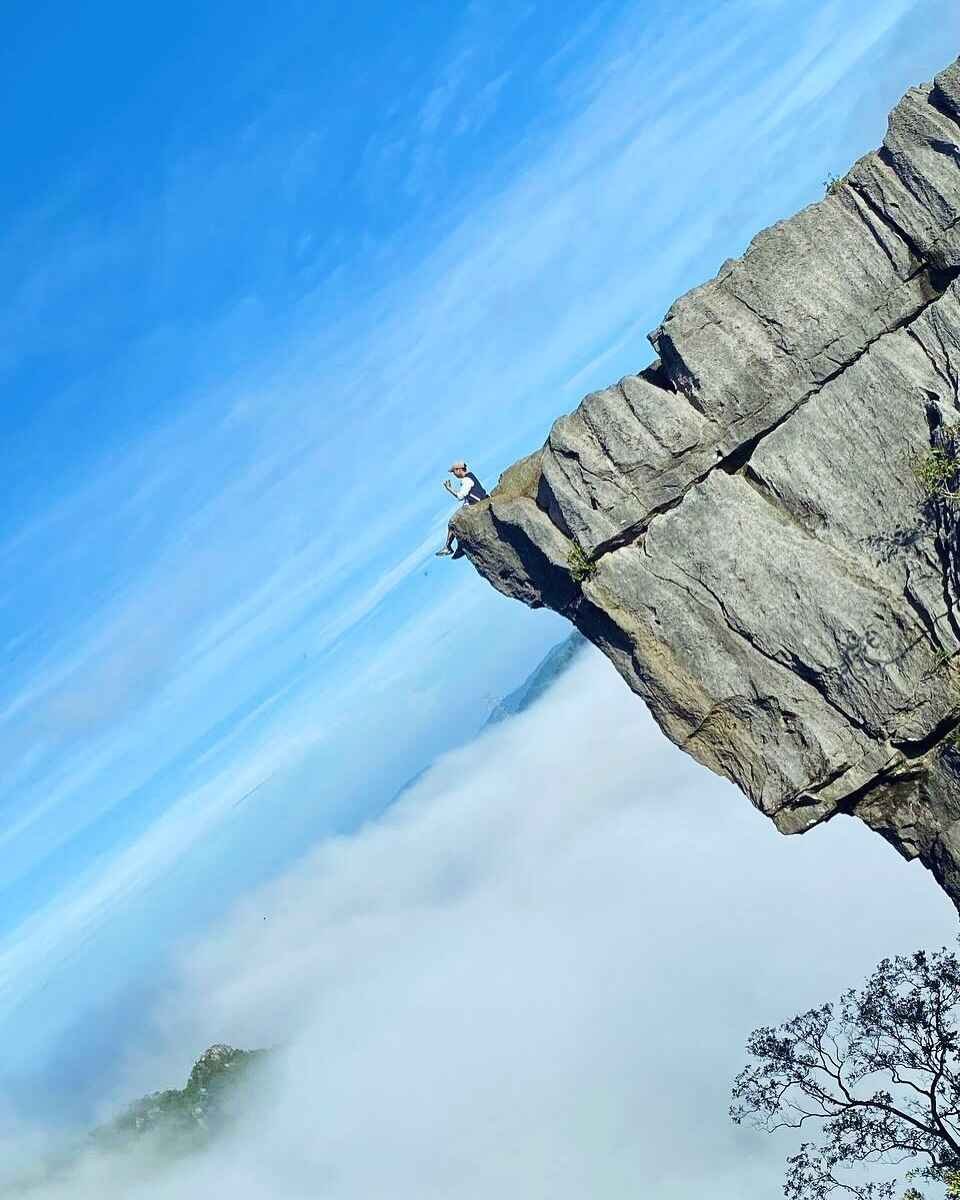
| Fear of Heights Risk | High — exposed summit, no guardrails |
| Descent Risk | Moderate to High — trickier than ascent |
| Trail Distance | Short |
Is Nagpatong Rock Beginner-Friendly?
Yes, with one important qualifier: beginner-friendly does not mean heights-friendly.
First-time hikers can absolutely complete Nagpatong Rock with proper footwear, gloves, and a capable guide. Active older adults with good mobility can manage it. Children may be allowed if they are at least approximately 4 feet tall (around 1.2 meters) — confirm with guides at the registration area.
Nagpatong Rock is NOT recommended if you have:
- A severe fear of heights or panic response on exposed ledges
- Poor grip strength
- Knee or ankle problems that affect your ability to descend carefully
- Serious mobility limitations
The descent is often harder than the ascent. Guides may instruct you to face the rock and climb down slowly — follow that advice. This is not a trail where stubbornness is a virtue.
What Is the Nagpatong Rock Trail Like?
The trail experience breaks down into roughly five sections. Here is what to expect at each stage.
The Jump-Off Area: Registration and Transfer
Your hike does not actually start at the barangay hall. After registering at Barangay Cuyambay Hall, paying fees, and getting assigned your guide, you will ride a tricycle or habal-habal to the actual trailhead. That short transfer ride is included in your pre-hike logistics and costs around ₱40–₱50 per person one-way.
The Forest Trail
Once you hit the trailhead, the first section is a secondary-growth forest path. Expect bamboo groves, shaded trail, some earthen sections, and the occasional rest hut along the route. In dry season, this part is very manageable. After rain, it becomes muddy and slippery, so grip shoes are not optional — they are survival gear.
The Limestone Approach
The dirt trail gradually gives way to rocky limestone terrain. Trekking poles become less useful here. You will start using both hands naturally for balance, and your foot placement becomes your primary concern. The rock is uneven and jagged, so move deliberately.
The Rope and Ladder Climb
This is the part that separates Nagpatong Rock from a regular forest hike. Bamboo ladders are fixed at key sections. Knotted ropes hang from above. The rock face becomes near-vertical.
Three points of contact at all times — two hands, one foot, or two feet, one hand. Move one limb at a time. Test each hold before you commit your weight. Gloves are strongly recommended here; bare hands on ropes and jagged limestone are a recipe for cuts and slipping.
Your guide will help with handholds, footholds, timing, and safety coaching. Listen to them. They have done this climb dozens or hundreds of times and know exactly where the safe placements are.
The Summit: Photo Spot and Views
The summit is narrow and fully exposed — no guardrails, no safety barriers. The view is spectacular. On a clear morning, the Sierra Madre range unfolds before you in a long, rolling green panorama. The Tanay valley drops away below.
A maximum of 12 people is allowed on the summit at any time. On weekends, expect a queue of 30 to 45 minutes at the rock base while other groups summit and descend. Weekday visits largely avoid this.
Your guide will often cross to the opposite rock formation to photograph your group. This is part of the experience and how you get those iconic floating-on-rock summit shots. Once your group is done, clear the summit promptly so the next group can go up.
What Are the Fees and Registration Requirements?
Register at Barangay Cuyambay Hall before starting the hike. All fees are collected here.
Visitor Fees (VERIFY LOCALLY — rates may have changed)
| Fee | Amount |
|---|---|
| Ecotourism Fee | ₱100/person |
| Environmental Fee | ₱30/person |
| Total Fixed Visitor Fee | ₱130/person |
Guide Fees (VERIFY LOCALLY)
| Coverage | Fee |
|---|---|
| Nagpatong Rock only | ₱750/guide (up to 5 hikers) |
| Nagpatong + Mt. Masungki | ₱1,000/guide (up to 5 hikers) |
| Tungtong Falls add-on | ₱500/guide (up to 5 hikers) |
Other Costs (VERIFY LOCALLY)
| Expense | Estimated Amount |
|---|---|
| Tricycle charter (highway to barangay hall, roundtrip) | ~₱600 for up to 5 pax |
| Habal-habal to trailhead (one-way) | ~₱40–₱50/person |
| Parking fee | ~₱30–₱50/vehicle |
| Gloves near jump-off | ~₱50 |
Bring cash in small bills. Do not rely on GCash or mobile payments.
How Do You Get to Nagpatong Rock?
From Manila by Commute (via Cubao / Cogeo Route)
This is the most commonly used commute route for hikers.
- From Cubao, take a van or jeepney to Cogeo Gate 2 (approx. 30–45 minutes).
- From Cogeo Gate 2, board a jeepney bound for Sampaloc, Tanay.
- Tell the driver to drop you off at the Barangay Cuyambay intersection (approx. 1 hour; fare ~₱45 (VERIFY LOCALLY)).
- From the highway intersection, charter a tricycle to Barangay Cuyambay Hall (approx. ₱600 roundtrip for up to 5 pax (VERIFY LOCALLY)).
From Shaw / Starmall Area
- From Starmall Shaw or nearby terminals, ride an FX, bus, or jeepney to Tanay town proper (approx. 2+ hours; bus fare ~₱270–₱350 (VERIFY LOCALLY); jeepney may be cheaper but slower).
- From Tanay Public Market, ride toward Sampaloc/Cuyambay direction.
- Transfer to a tricycle heading to Barangay Cuyambay Hall.
By Private Car
- Search on Waze or Google Maps: Barangay Cuyambay Hall or Treasure Mountain Tanay as a nearby reference.
- Route commonly uses Marilaque Highway.
- Travel time from Metro Manila: approximately 1.5–2 hours in good traffic conditions.
- Important: Low-clearance sedans may struggle on rough or muddy final road sections. An SUV, crossover, or pickup truck handles this better.
- If road conditions are uncertain, park at the barangay hall and take a habal-habal or tricycle to the trailhead.
- Parking fee: approximately ₱30–₱50 per vehicle (VERIFY LOCALLY).
Transport Summary Table
| Route | Estimated Travel Time | Estimated Fare |
|---|---|---|
| Cubao → Cogeo Gate 2 | 30–45 min | (VERIFY LOCALLY) |
| Cogeo → Cuyambay intersection | ~1 hour | ~₱45 (VERIFY) |
| Cuyambay highway → Barangay Hall (tricycle) | Short ride | ~₱600 RT, 5 pax (VERIFY) |
| Shaw → Tanay town proper (bus/FX) | 2+ hours | ~₱270–₱350 (VERIFY) |
| Metro Manila → Barangay Cuyambay (private car) | 1.5–2.5 hours | Fuel + ~₱30–₱50 parking |
How Much Is the Nagpatong Rock Budget?
Travel costs shrink significantly with a group of exactly 5 hikers, because guide and tricycle fees are split at their most efficient ratio. A group of 6 requires a second guide, which raises per-head cost.
Budget Breakdown (per person, estimates only — VERIFY LOCALLY)
| Expense | Solo / Small Group | Group of 5 (Efficient) |
|---|---|---|
| Ecotourism + Environmental Fee | ₱130 | ₱130 |
| Guide Fee (Nagpatong only) | ₱750 (own guide) | ₱150 (split 5 ways) |
| Tricycle roundtrip (split) | ₱600+ | ~₱120 |
| Habal-habal to trailhead | ~₱80–₱100 RT | ~₱80–₱100 RT |
| Food, water, snacks | ₱200–₱400 | ₱200–₱400 |
| Estimated Total (conservative) | ₱1,500–₱2,000+ | ~₱1,290 (with Tungtong Falls add-on) |
| Joiner Tour Package | ₱1,100–₱1,400/person | ₱1,100–₱1,400/person |
Notes:
- Add allowance for shower fees, tips, extra transport, and emergency expenses.
- Joiner tours typically include van transfer, guide coordination, and local fees — but confirm exactly what is and is not covered before booking.
- All figures should be verified with current rates at Barangay Cuyambay Hall and local operators.
What Is the Best Nagpatong Rock Itinerary?
DIY Day Hike Itinerary (Nagpatong Rock + Tungtong Falls)
| Time | Activity |
|---|---|
| 1:30 AM | Depart Metro Manila |
| 3:00 AM | Arrive at Cogeo Gate 2; transfer to Cuyambay-bound jeepney |
| 4:00 AM | Arrive at Barangay Cuyambay Hall |
| 4:00–4:30 AM | Register, pay fees, secure guide, eat light breakfast |
| 4:30 AM | Ride to trailhead; begin trek |
| 5:30 AM | Arrive at rock base; prepare for rope and ladder section |
| 6:45 AM | Summit — sunrise photos with Sierra Madre views |
| 8:00 AM | Begin descent |
| 10:00 AM | Back at jump-off; early lunch |
| 11:00 AM | Begin Tungtong Falls side trip |
| 12:00 NN | Arrive at Tungtong Falls; swim and rest |
| 2:00 PM | Depart Tungtong Falls |
| 3:00 PM | Wash up at barangay area |
| 4:00 PM | Depart Tanay |
| 6:00 PM | Estimated arrival back in Metro Manila |
Joiner Tour Option
Joiner tours typically cost ₱1,400–₱1,800 per person and usually cover van transfer, guide coordination, and local fees. Common pickup points include Cubao, Greenfield, or Mandaluyong. This is the easiest option for beginners who do not want to manage the commute.
Confirm before booking:
- Are all local fees included?
- Is Tungtong Falls part of the package?
- Is a meal included?
- Are shower facilities included?
- What are the pickup/drop-off points?
- What is the cancellation policy?
What Should You Bring to Nagpatong Rock?
What to Bring Checklist
| Category | Items |
|---|---|
| Must-Have | 1–1.5 liters of water, trail snacks (chocolate, energy bars, nuts, biscuits), trail shoes or hiking sandals with aggressive grip, gloves for ropes and limestone, dry-fit shirt, trekking pants or leggings, extra clothes, small towel, garbage bag, cash in small bills, power bank, phone or camera, basic first-aid kit |
| Recommended | Arm sleeves, cap, sunscreen, insect repellent, light rain jacket, extra socks, alcohol or hand sanitizer, personal medicine, waterproof phone pouch, waterproof bag during rainy season |
| Leave Behind | Flip-flops, casual flat-soled sneakers, heavy bags, cotton clothing, loose dangling accessories, large tripods on busy days |
Gloves are sold near the parking or jump-off area for around ₱50 — but it is better to bring your own. Bare hands on bamboo ladders and knotted ropes are both uncomfortable and risky.
What Are the Safety Risks at Nagpatong Rock?
Nagpatong Rock is a beginner hike, but that does not mean it is risk-free.
Primary hazards:
- Wet limestone becomes extremely slippery — even a light drizzle overnight changes the difficulty significantly
- Muddy forest trail increases slip risk in the early sections
- Sharp limestone edges can cut skin, especially without gloves
- Bamboo ladders and ropes require adequate grip strength
- The descent is technically harder than the ascent — most accidents on hikes like this happen on the way down
- Summit crowding creates waiting time and psychological pressure to rush
- Fear of heights can cause panic at the exposed summit
Safety behavior on the trail:
- Follow your guide’s instructions without argument
- Maintain three points of contact on the rope-and-ladder section
- Test every handhold and foothold before shifting weight
- Do not rush — the rock will wait
- Face the rock when climbing down if your guide tells you to
- Do not crowd the summit
- Leave once your photos are done; give the next group their space
Avoid hiking under these conditions:
- During or immediately after heavy rain
- During thunderstorms or high winds
- When you are tired, unwell, or recovering from injury
What Are the Common Mistakes to Avoid?
In my experience talking to hikers at the jump-off and observing the trail, these are the mistakes I see most often:
- Wearing flip-flops or flat-soled casual shoes
- Starting too late and missing the cut-off or summit window
- Underestimating the rope-and-ladder section after breezing through the forest trail
- Attempting the hike the day after heavy rain
- Overpacking with heavy gear that slows you down on the rock
- Ignoring guide instructions on the final climb
- Rushing the descent because they think the hard part is over
- Standing too close to the summit edges for dramatic photos
- Flying drones directly above climbers on the rope section
- Forgetting gloves and trying to improvise
- Not bringing enough water — 1.5 liters per person is the minimum
- Not tipping guides, particularly when they went out of their way for photos, bag carrying, and safety coaching
- Assuming Tungtong Falls is always open and accessible
- Depending entirely on mobile signal for navigation (signal is inconsistent deeper on the trail)
- Not bringing sufficient cash in small bills
What Nearby Places Can You Visit After Nagpatong Rock?
Tanay is rich with day trip options. Any of these can be paired with Nagpatong Rock depending on your energy level and timing.
Tungtong Falls
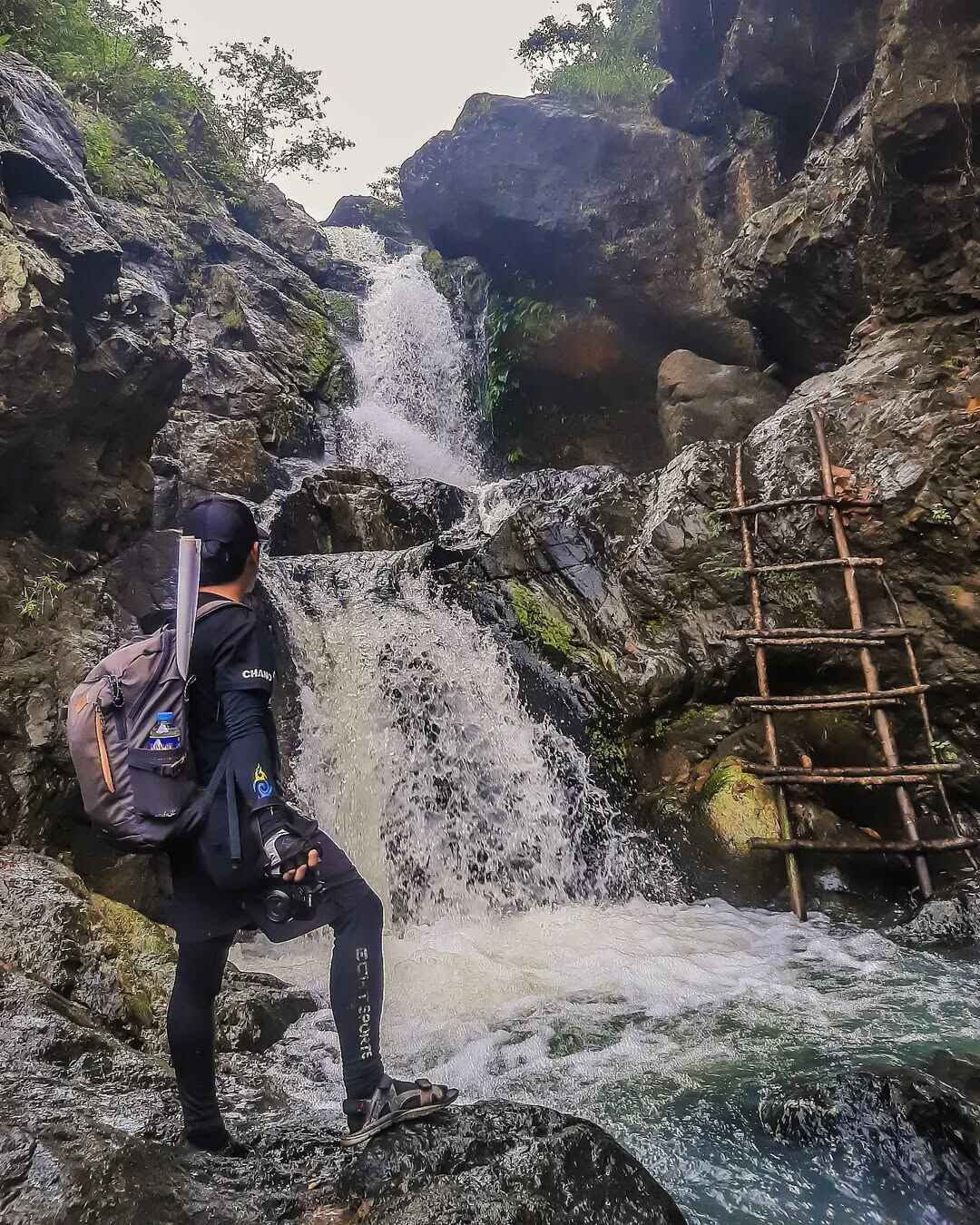
The most logical same-day add-on after Nagpatong Rock. Requires a separate guide with an additional fee of approximately ₱500 per guide. Great for post-hike swimming and recovery. Always verify accessibility — river crossings can become unsafe after heavy rain or during monsoon season.
Treasure Mountain
Known locally as a “no-hike mountain” destination — you get elevated views and the chance of sea of clouds without a demanding trail. Good for the traveler who wants relaxed scenery after the intensity of Nagpatong Rock. Located near the Cuyambay/Sitio Maysawa area.
Daranak Falls
A classic Tanay waterfall, more commercial and often busy on weekends. Good if you are traveling with non-hikers who want a swim without the rock climb. Easily accessible and family-friendly.
Tinipak River
Known for its stunning limestone river scenery and swimming holes. Often paired with Mt. Daraitan, but accessible as a standalone side trip. Requires extra travel time from Nagpatong Rock.
Regina Rica
Regina Rica is a quieter pilgrimage site near Tanay. Good for a short, reflective stop after the hike. Ideal if you want a non-physical side trip to end the day.
Marilaque Highway Cafés and Overlooking Restaurants
A growing stretch of cafés, coffee shops, and overlooking restaurants line Marilaque Highway. These make excellent soft endings to a Tanay day hike — good food, good coffee, and mountain views while your legs recover.
FAQs About Nagpatong Rock
Is Nagpatong Rock suitable for beginners?
Yes, with conditions. Nagpatong Rock is beginner-friendly in terms of distance and cardio demand, but the final rope-and-ladder section requires grip strength and comfort with heights. Beginners who are physically fit, wear proper shoes, and follow their guide should be able to complete it.
How long does the Nagpatong Rock hike take?
Expect 1 to 2 hours on the ascent and 1 to 1.5 hours on the descent, not counting registration, transit to the trailhead, summit waiting time, or side trips. Budget a full morning for the hike alone.
Is a guide required for Nagpatong Rock?
Yes. Guides are mandatory. The guide ratio is 1 guide per 5 hikers, and this rule is enforced at the Barangay Cuyambay registration area.
What is the best time to hike Nagpatong Rock?
Early morning on a weekday during the dry season (November to May). Starting around 4:30 AM allows you to summit near sunrise, avoid the heat, and beat weekend queues.
How do I get to Nagpatong Rock from Manila by commute?
Take a van or jeepney to Cogeo Gate 2, then board a jeepney bound for Sampaloc, Tanay, and alight at the Cuyambay intersection. From there, charter a tricycle to Barangay Cuyambay Hall. Fares and schedules should be verified locally before your trip.
Is Nagpatong Rock dangerous?
It has real risks, mainly wet limestone, the vertical climb, and the descent. Following your guide’s instructions, wearing proper footwear and gloves, and avoiding the trail during or after rain reduces these risks significantly. It is not a technically dangerous hike for fit, sensible hikers — but it should be respected.
Can children hike Nagpatong Rock?
Children may be allowed if they are at least approximately 4 feet tall (around 1.2 meters). Confirm this with the guides at the registration area on the day of your visit.
Is Tungtong Falls open?
Always verify locally. River crossings to Tungtong Falls can become unsafe during heavy rain or monsoon season. Confirm with Tanay Tourism or guides before including it in your itinerary.
What shoes are best for Nagpatong Rock?
Trail shoes or hiking sandals with aggressive grip soles. Do not wear flip-flops, casual sneakers, or flat-soled shoes. The limestone and wet sections will make anything without grip genuinely dangerous.
Can I visit Nagpatong Rock without a joiner tour?
Yes. DIY is entirely doable via public commute through Cogeo Gate 2 and Cuyambay. Joiners tour are easier for first-timers managing the commute, but the DIY route is manageable if you plan ahead.
Final Verdict: Should You Visit Nagpatong Rock?
Visit if you:
- Want a short but genuinely exciting day hike within reach of Metro Manila
- Are comfortable with heights and physically capable of a rope-and-ladder climb
- Want dramatic Sierra Madre summit photos without committing to a full mountain
- Are a beginner hiker who wants a real challenge — not just a walk in the park
- Are traveling with a barkada looking for a weekend adventure that does not require camping
Think twice if you:
- Have a serious fear of heights or panic response on exposed ledges
- Have knee, ankle, or grip strength issues that affect climbing and descent
- Are planning to visit on a rainy day or immediately after heavy rainfall
- Expect a completely easy, casual trail from start to finish
In my experience, Nagpatong Rock lands in a sweet spot that is rare in day hike destinations: it is short enough to be practical, dramatic enough to be genuinely memorable, and accessible enough to make sense for beginner hikers who are ready for something real. The rope-and-ladder section is the kind of thing you will talk about after the trip — not because it was terrifying, but because it was earned.
Go early. Bring gloves. Trust your guide. You will not regret it.