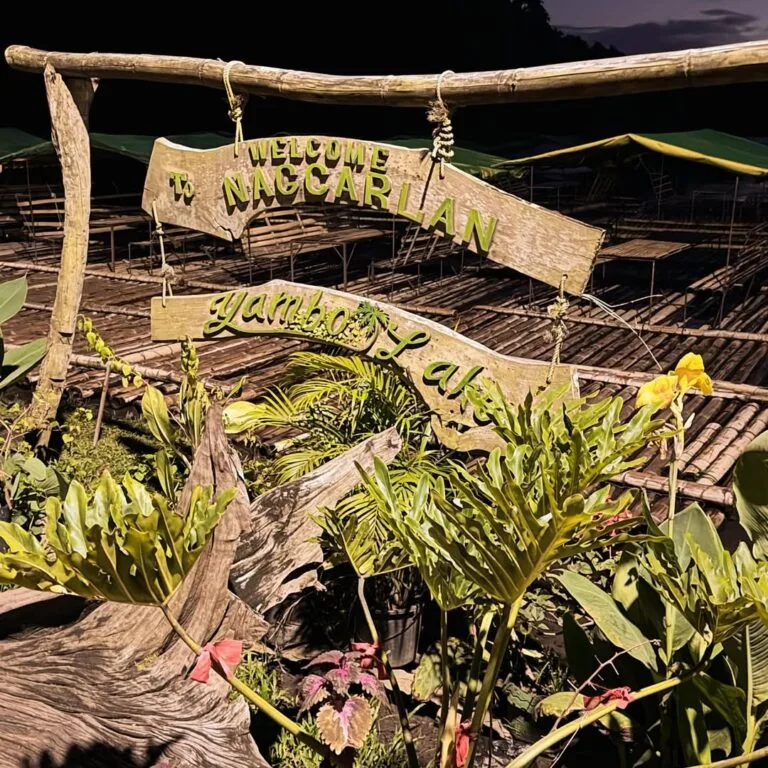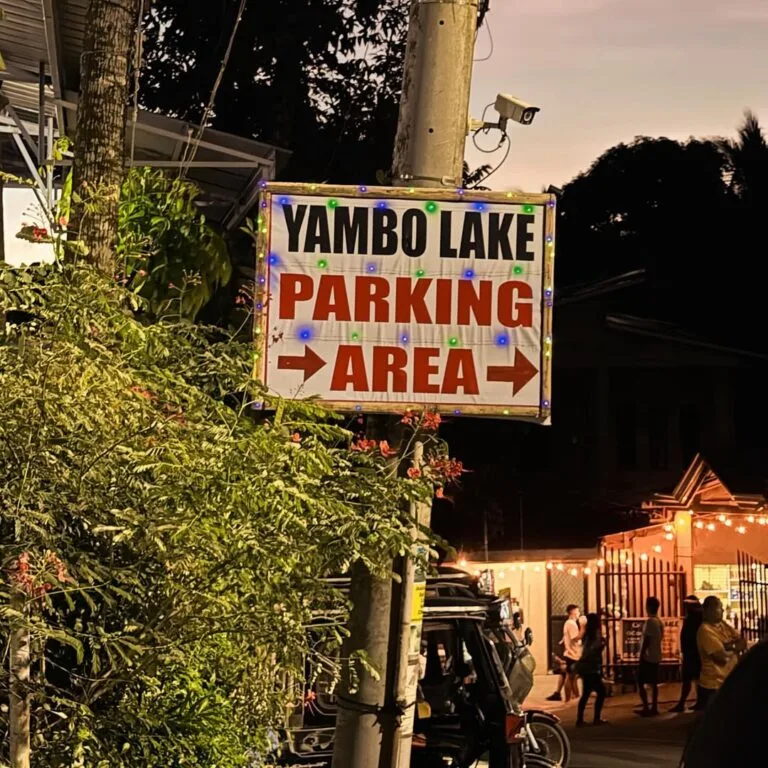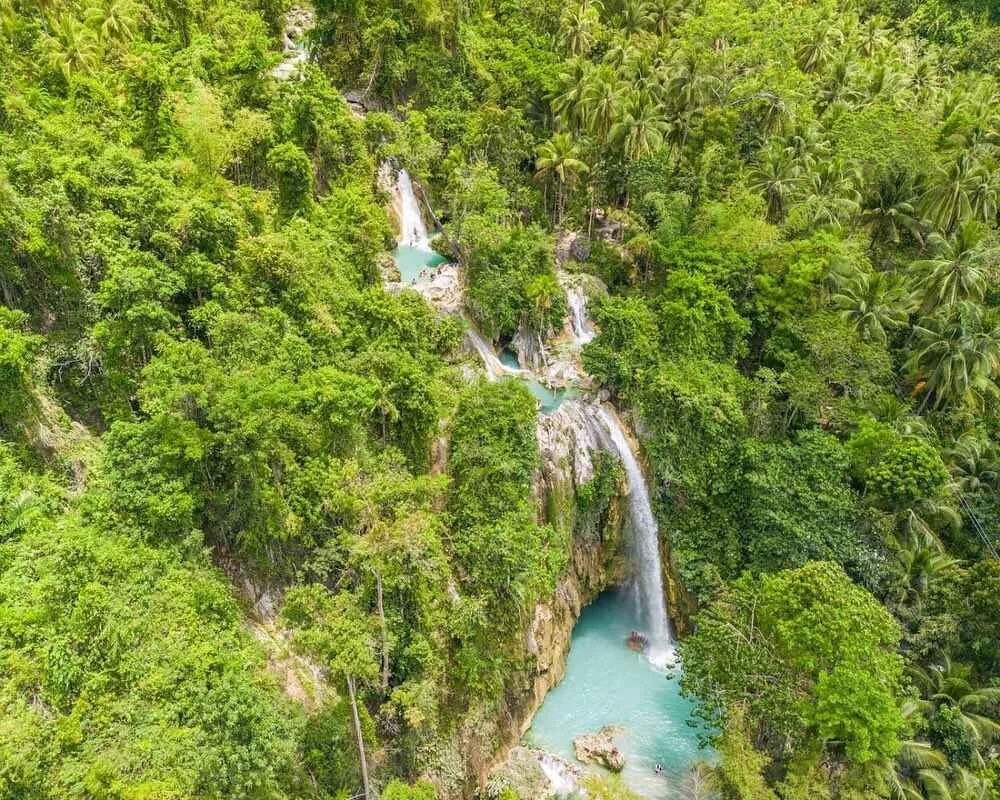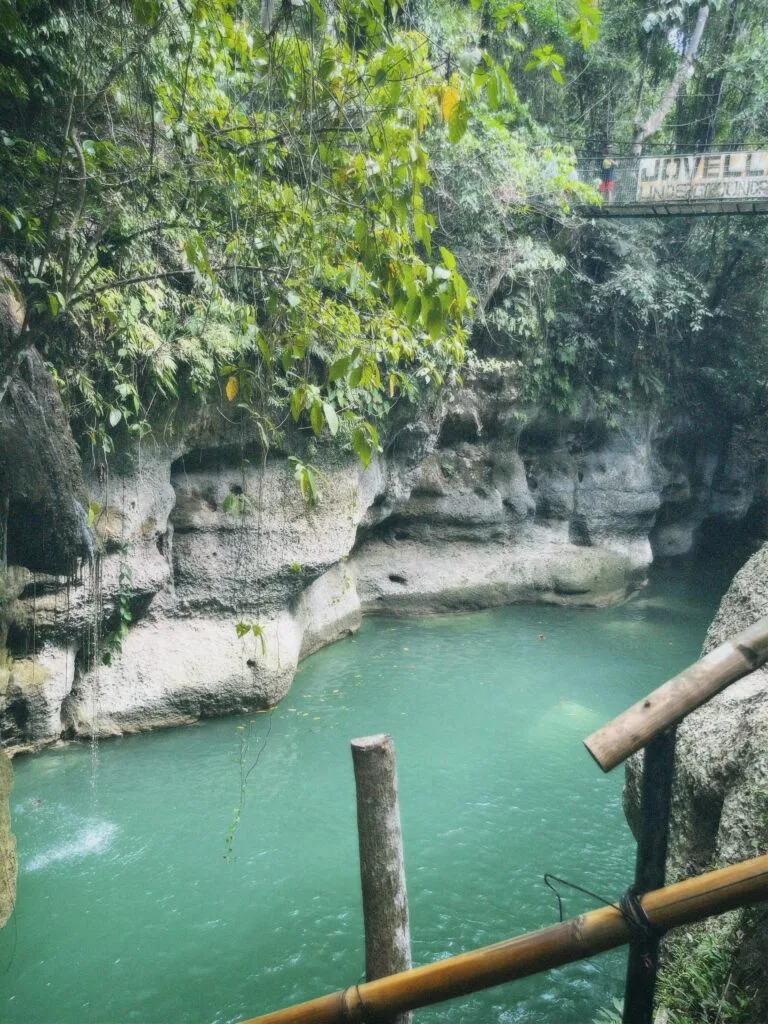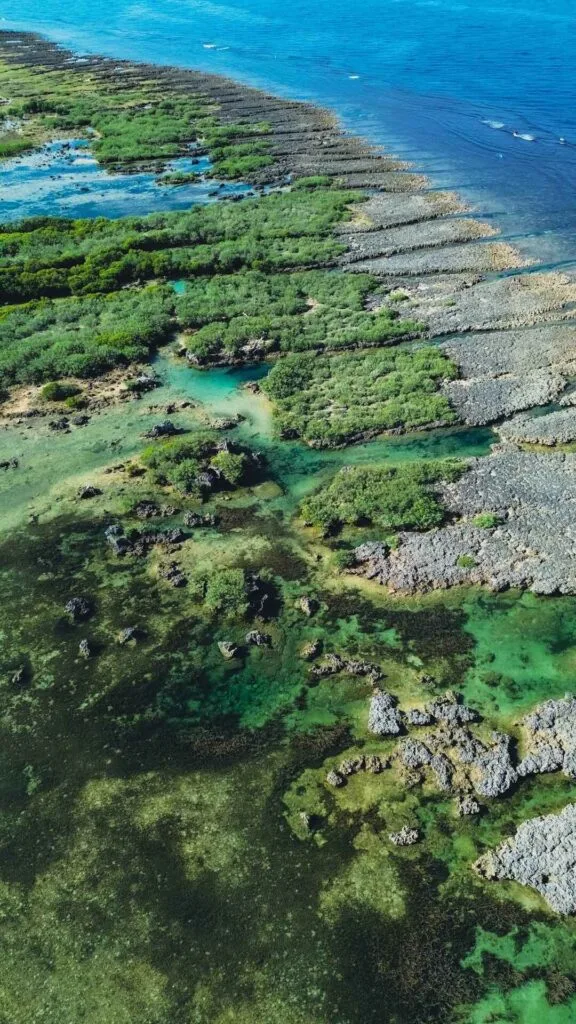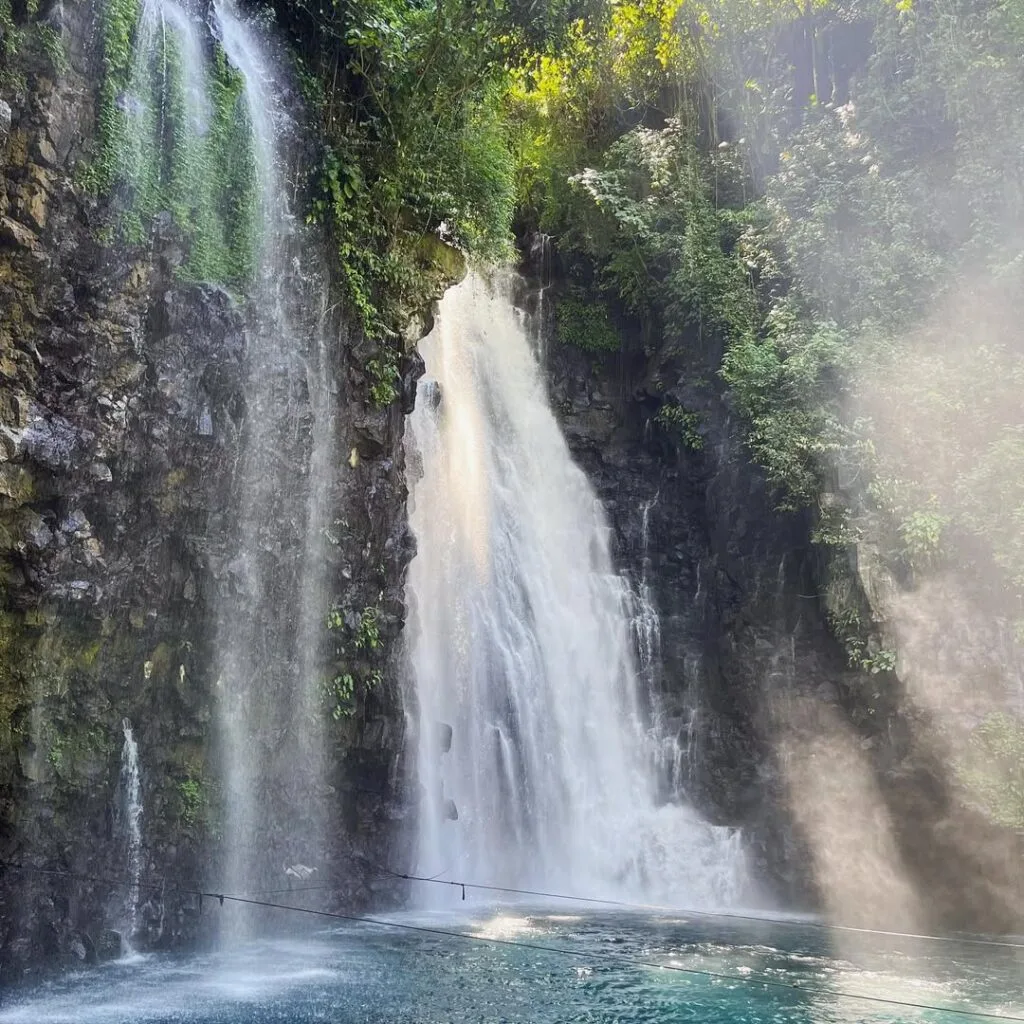
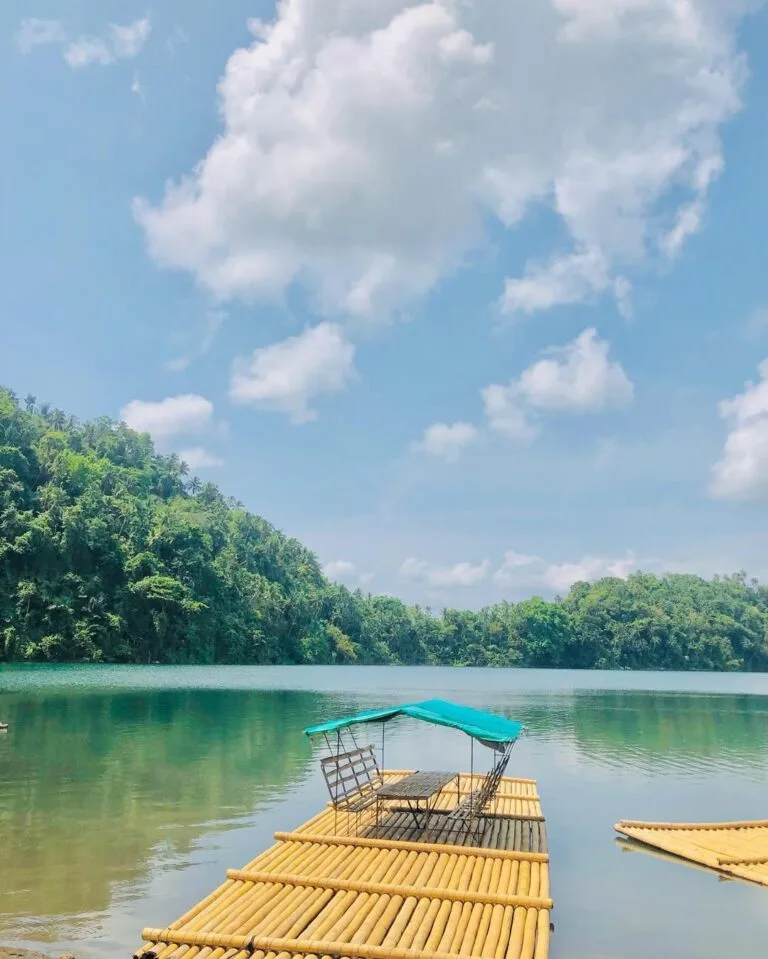
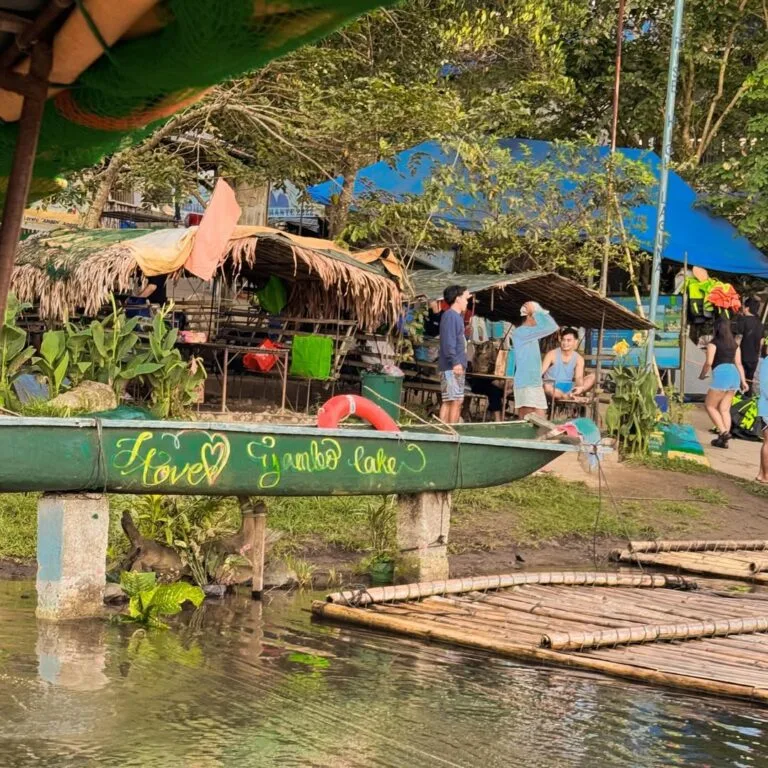
Yambo Lake is a 40-meter-deep volcanic crater lake in Barangay Sulsugin, Nagcarlan, Laguna, about 1.5 to 2.5 hours from Manila. The entrance fee is ₱20 per head, the lake is open 6:00 AM to 5:30 PM for day visitors, and a bamboo raft for a group of up to four people costs ₱1,000 to ₱1,200 for roughly two hours on the water. I was back here in September 2026, and this guide reflects what I paid and what I found.
Among the 69 provinces I have covered since 2015, Yambo sits in a particular category: genuinely quiet, not artificially so. Its twin, Lake Pandin, is more organized and more visited. Yambo is what Pandin used to feel like. The lake sits at 160 meters above sea level, covers 30.5 hectares, and because it has no major surface outflow, it is more sensitive to seasonal changes than most crater lakes. That matters for planning, and I will cover it.
Key Takeaways
- The entrance fee is ₱20 per person, paid at the Yambo Lake Livelihood Association (YLLA) desk at the Sulsugin access point in Nagcarlan.
- Day use hours are 6:00 AM to 5:30 PM; overnight campers must arrive before 10:00 PM and have tents pitched by 4:30–5:30 PM.
- A balsa raft rental costs ₱1,000–₱1,200 for up to four people, covering approximately two hours; the traditional lunch package (tilapia, ginataang hipon, ensaladang pako) adds ₱360–₱400 per person and is worth ordering.
- Life vests are mandatory for all swimmers, regardless of ability, because the lake drops to 40 meters. They are bundled into the balsa rental.
- The correct GPS pin is 14°7′8″N, 121°22′00″E on the Nagcarlan side. Setting the pin to “Seven Lakes” or “Lake Pandin” drops you at the wrong road.
- A group of four splitting transport and raft costs should budget ₱850–₱1,100 per person for a full day trip from Manila, including bus, tricycles, fees, raft, and the lunch package.
Table of Contents
What It Costs to Visit Yambo Lake in 2026
Every transaction at the lakeshore is cash only. There are no ATMs or e-wallet terminals at the YLLA desk or along the shore. Bring small bills.
| Expense | Cost (₱) | Notes |
|---|---|---|
| Environmental fee | ₱20–₱40 per person | Paid at YLLA desk; funds conservation |
| Vehicle parking | ₱50 per vehicle | Standardized rate at the barangay lot |
| Balsa raft rental | ₱1,000–₱1,200 | Covers up to 4 pax for ~2 hours; life vests included |
| Lunch package | ₱360–₱400 per person | Pre-order at YLLA; tilapia, shrimp, fern salad, rice, fruit |
| Rustic camping | ₱100–₱140 per person | Bring your own tent, sleeping bag, and cooking gear |
| Manila round-trip transport | ₱400–₱500 per person | Bus + jeepney + tricycles |
| Mt. Mabilog guide | ₱300–₱500 per group | Flat rate; required for summit access |
On my September 2026 visit, the kuya at the registration desk collected ₱20 for the environmental fee, which matched the rate board at the gate. The older ₱30 figure that circulated in earlier years is no longer posted. The parking fee of ₱50 was charged separately by the barangay attendant.
The life vest is bundled into the balsa package. There is no standalone rental line you need to budget for separately. If you are not renting a raft and want to swim independently, confirm the current vest arrangement directly with the YLLA at the desk.
For a group of four splitting the raft and tricycle fares, a full day (Manila transport, entrance, raft, and the lunch package) lands between ₱850 and ₱1,100 per person. That is cheaper per head than a Saturday trip to most inland resorts in Batangas, and the water is cleaner.
Where Yambo Lake Is and How to Get There
Yambo Lake is in Barangay Sulsugin, Nagcarlan, Laguna, not San Pablo City, even though most online maps default to the San Pablo side. Set your GPS to 14°7′8″N, 121°22′00″E. If you do not do this, you will end up on a narrow agricultural road near Pandin that dead-ends in someone’s coconut plantation.
By private car: Take SLEX south and exit at Calamba. Drive through Los Baños, Bay, and Calauan via the national highway, then take the Calauan-Nagcarlan road into the town proper. From Nagcarlan plaza, follow the barangay road signs toward Yambo Lake. The last 4 kilometers is paved but narrow, winding through coconut groves before opening onto the YLLA parking area. Alabang to Calamba on SLEX costs approximately ₱126 for a Class 1 vehicle; additional toll applies if you use the Skyway or TR4 extensions.
By public transport (from Manila):
| Leg | Mode | Cost | Instructions |
|---|---|---|---|
| Manila to San Pablo | JAC or Jam Liner bus | ₱140–₱170 | Board at Cubao, Buendia, or Pasay; alight at SM San Pablo or San Pablo Cathedral |
| San Pablo center to jeepney terminal | Tricycle | ₱20–₱30 | Ask for the terminal serving Nagcarlan or Liliw |
| San Pablo to Nagcarlan | Jeepney | ₱25–₱50 | Tell the driver to drop you at the Nagcarlan plaza |
| Nagcarlan plaza to Yambo Lake | Special tricycle | ₱100–₱150 | Tell the driver “Dagat” (the local term for the lake); they will know |
The Nagcarlan-to-lake tricycle is a special hire, not a shared ride. Agree on the fare before you board. Drivers at the plaza are familiar with the request.
Important note on the Pandin-Yambo ridge trail: There is a short overland trail across the forested ridge between Lake Pandin and Yambo Lake. Land ownership disputes in the area mean this trail is frequently closed without notice. Go via the Nagcarlan road. Do not assume the trail is open unless a local guide confirms it on the day of your visit.
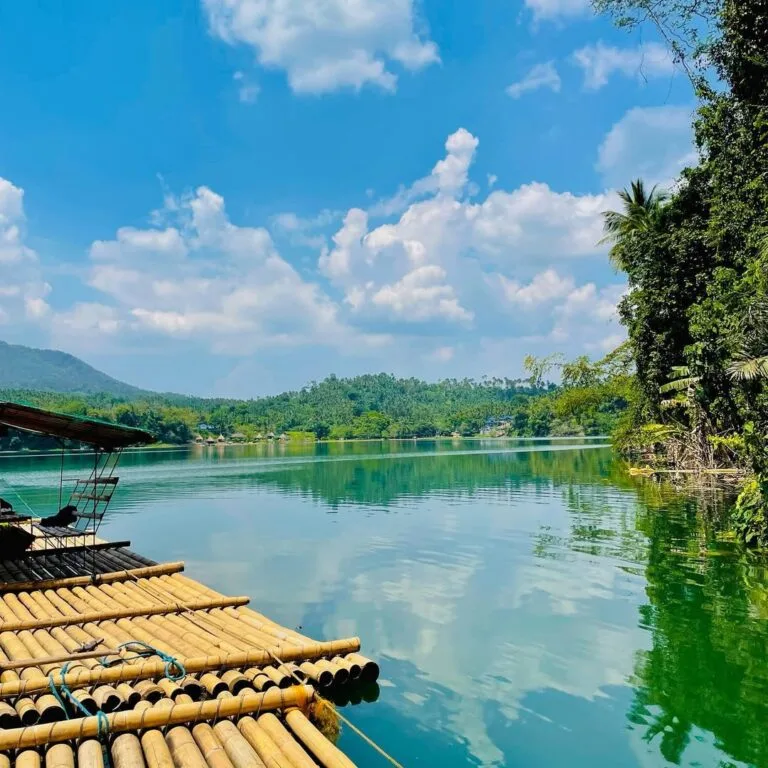
Opening Hours, Best Time to Go, and What Rainy Season Actually Means Here
Yambo Lake is open 6:00 AM to 5:30 PM for day visitors. Overnight campers must be at the site before 10:00 PM, with tents fully pitched by 4:30–5:30 PM. The 10:00 PM figure is a noise and access cutoff, not a tent-pitching deadline. Arriving at 9:00 PM and expecting to set up camp in the dark will cause problems.
The best time to visit for light and low crowds is Tuesday to Friday, 7:00–9:00 AM. The water catches the early sun perfectly before any haze comes in, and on weekdays you may have the raft to yourself or share it with one other group. Saturday mornings from November through February are the most popular time overall because the amihan brings cooler, clearer air. Expect the parking area to fill early on those days.
Rainy season (May to October) changes the experience significantly. During habagat, the lake undergoes thermal stratification: the surface warms, the deeper water loses oxygen, and the lakeshore can become wet and difficult. More critically, strong typhoons can raise the water level enough to partially or fully submerge the camping area along the shore. After Typhoon Kristine in October 2024, the camping zone at the lake was flooded and unavailable for several weeks. If you are planning to camp between June and November, check the YLLA Facebook page for current lakeshore conditions before you book transport.
During the dry amihan months of November to February, the lake undergoes full vertical mixing. Surface temperatures drop by roughly 2.55°C, the water becomes uniformly oxygenated from surface to sediment, and the overall swimming conditions improve. This is also when the lake looks its best in photos: calm, dark green, and wrapped in mountain silhouette on clear mornings. For the best time to visit Laguna’s crater lakes generally, the stretch from late November through February is the consistent answer.
The Geological and Cultural Story Behind the Lake
Yambo Lake is a maar lake, formed when rising magma collided with underground water and triggered a phreatomagmatic explosion that blasted a crater into the earth. This happened roughly 500 to 700 years ago as part of the broader Laguna Volcanic Field, which sits between Mount Banahaw and Mount San Cristobal. Rainfall and underground springs filled the depression over time. Because Yambo has no significant surface outflow, it is an endorheic lake: water leaves only through seepage and evaporation, which is why its ecosystem is more sensitive to drought and flooding than a river-fed lake.
The lake holds 5.8 million cubic meters of water in a basin 38 to 40 meters at its deepest point. Local guides sometimes say “180 feet deep” with a suggestive pause. That is 55 meters. The documented figure is 38 to 40 meters. Still more than enough.
The local legend frames the lake differently. Two lovers, Pandin and Yambo, are said to have caused the earth to split when Yambo, unaware of a curse, helped Pandin step down from a tree. The moment her feet touched the ground, the land tore apart and two craters flooded. The lakes were named after them. A boatman on my first visit here recited this without looking up, the way someone tells a story they have told a hundred times and still believe.
Yambo is technically shared by three municipalities: San Pablo City (Barangay San Lorenzo), Nagcarlan (Barangay Sulsugin), and Rizal (Barangay Antipolo). The primary access point and all YLLA operations are on the Nagcarlan side.
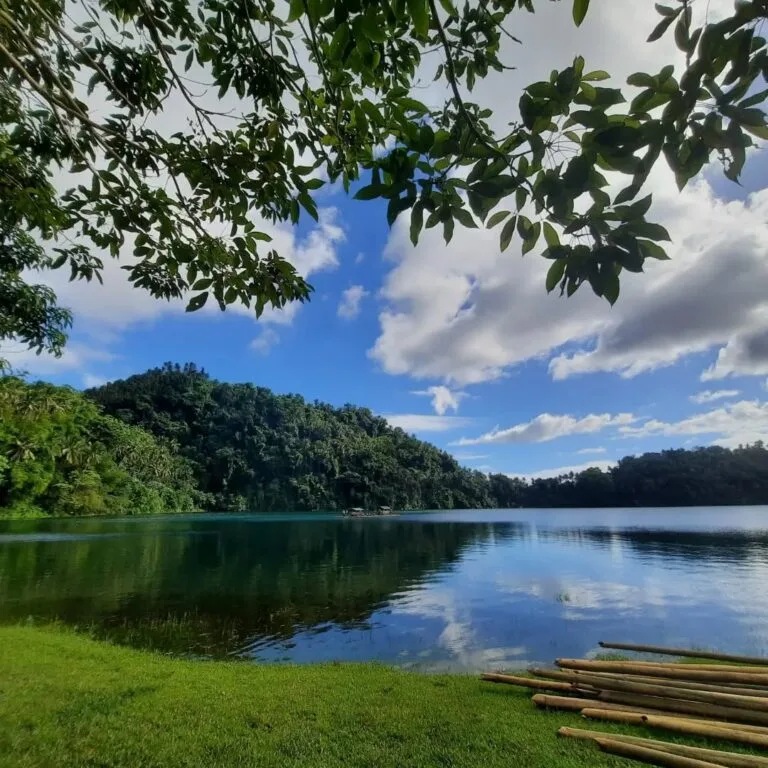
What to Do at Yambo Lake: Activities and Safety Rules
The bamboo raft (balsa) is the defining activity, and the entry point for everything else on the water. A balsa is a wide, sturdy raft with a shaded canvas roof and a central wooden table, pulled across the lake by a network of ropes by your bangkero (raft guide). The raft rental of ₱1,000–₱1,200 covers up to four people for approximately two hours.
The route almost always includes a stop at the “Tarzan Swing,” a thick vine hanging from a large tree at the waterline. You climb the base of the tree, grab the vine, and drop into the water. It is the kind of activity that looks embarrassing until you are flying over a 40-meter volcanic lake in Laguna, at which point it becomes the best decision of your Saturday.
Swimming is permitted only in the designated Contact Recreation Zone, which is typically anchored near the center of the lake. The LLDA mandates this to protect the littoral vegetation along the shoreline. Life vests are mandatory for all swimmers, no exceptions. The bangkero will not let you enter the water without one. Given that the lake floor is 40 meters down and invisible from the surface, this is not a rule worth debating. The vests are included in the raft rental.
The lake is classified as LLDA Class C water, suitable for contact recreation and commercial fishing but not potable. Microplastic surveys from 2023 and 2024 detected concentrations of 344 to 789 particles per cubic meter, significantly lower than the hyperurban Sampaloc Lake (up to 5,033 particles per cubic meter), but the data is a reason to keep the water out of your mouth. Shower thoroughly after swimming.
Kayaking is also available at the lake. Arrangements are informal and negotiated directly with lakeside landowners. If kayaking is your priority, ask at the YLLA desk when you arrive and they will point you to the right person.
Recreational fishing is permitted in the designated open zone. You pay for your catch by the kilo, which supports the community directly. Fishing in the sanctuary area is prohibited. The lake holds tilapia, catfish, mudfish, and freshwater shrimp (hipon). If you order the lunch package, the tilapia on your plate came from these waters.
Yambo’s aquaculture footprint is deliberately minimal. Fewer than a dozen fish pens remain in operation, a result of strict LLDA enforcement limiting aquaculture structures to 10% of the lake’s surface area. This is what keeps the water as clear as it is. The contrast with nearby lakes Bunot and Palakpakin, both heavily stocked and visibly turbid, is striking when you compare them on a circuit. If you are exploring the crater lakes of Laguna, the difference in water quality tells you everything about how governance works.
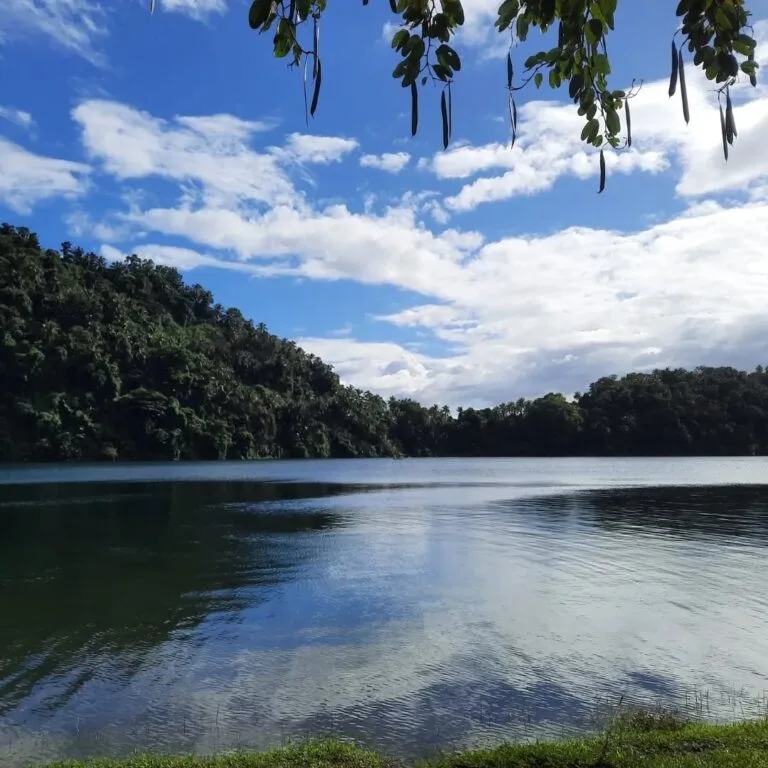
Camping and Overnight Stays at Yambo Lake
Rustic camping at Yambo Lake costs ₱100–₱140 per person for the overnight environmental fee. You bring everything: tent, sleeping gear, cooking equipment, food. The facilities at the campsite are basic. The rule is simple: tents pitched by 4:30–5:30 PM, guests inside the site before 10:00 PM. Pack in, pack out. There is no garbage collection at the shore.
After Typhoon Kristine raised the water level in October 2024, the camping area along the shore was submerged and temporarily unusable. The site has since been cleared, but the episode is a standing reminder: camping here during typhoon season carries real risk. Between June and November, check the YLLA Facebook page before committing to an overnight.
Camp Yambo is the glamping option on the Nagcarlan shore, operating Bali-inspired canvas tents on elevated wooden platforms so you are off the ground and away from the damp. Guests have access to proper bedding, a private swimming pool, and bathroom facilities. The site runs a café and gastropub serving Asian fusion and Filipino food, which makes it a functional mid-tier option for travelers who want a lakeshore night without carrying a backpack full of camping gear. Camp Yambo has been listed on Airbnb from November 2025 onward; search the current listings there for accurate nightly rates, since the pricing changes by season.
The honest comparison: rustic camping means waking up to absolute silence with water vapor over the lake and not another soul around. Camp Yambo means waking up comfortable. Both are valid. The rustic option is harder to get right because it depends on your gear and the weather. If you are camping during the wet months and your tent is not fully waterproofed, you will have a miserable night.
Trekking Mount Mabilog From the Yambo Lakeshore
Mount Mabilog can be summited directly from Yambo Lake via the Sulsuguin Trail, with a required local guide costing ₱300–₱500 per group. The mountain stands at 441 meters above sea level and carries a difficulty rating of 2/9, making it accessible for first-time hikers and families. The summit gives you the best overhead view of both Yambo and Pandin together, framed by Mount Banahaw and Mount San Cristobal.
The Sulsuguin Trail (East) starts at the Yambo Lake shore and moves west-northwest to the summit. The ascent takes 1.5 to 2 hours through woodlands, banana plantations, and jackfruit groves. Two other trailheads exist: the Sto. Angel Trail from near Lake Pandin in San Pablo, and the Sta. Catalina Trail from Purok 3 in San Pablo. The Sulsuguin Trail is the straightforward choice if you are already at the lake.
The trail doubles as a working farm path for local livestock and farmers. After rain, it becomes deeply rutted and slippery. Proper hiking shoes with grip are required. Sneakers are not suitable. The wet season (June to October) makes the ascent significantly harder and messier than the trail profile suggests. If you are doing this in September or October, budget extra time for the descent.
Guides are required to prevent trespassing on private agricultural land and to navigate the intersecting paths at the ridgeline. You arrange the guide at the YLLA registration desk when you arrive. The ₱300–₱500 flat fee covers your entire group, not per person.
A practical day combining the trek and the lake: arrive at Nagcarlan plaza by 8:00 AM, tricycle to Yambo by 8:20, register and secure a guide, begin the trek by 8:45, reach the summit by 11:30, descend and be back at the lake by 2:00 PM, then take the balsa and swim until 4:00 PM. That is a full day for a reasonable budget. For equally good trekking options in the same province, the Bunga Falls trail in Nagcarlan is a shorter, cooler alternative if the weather looks uncertain.
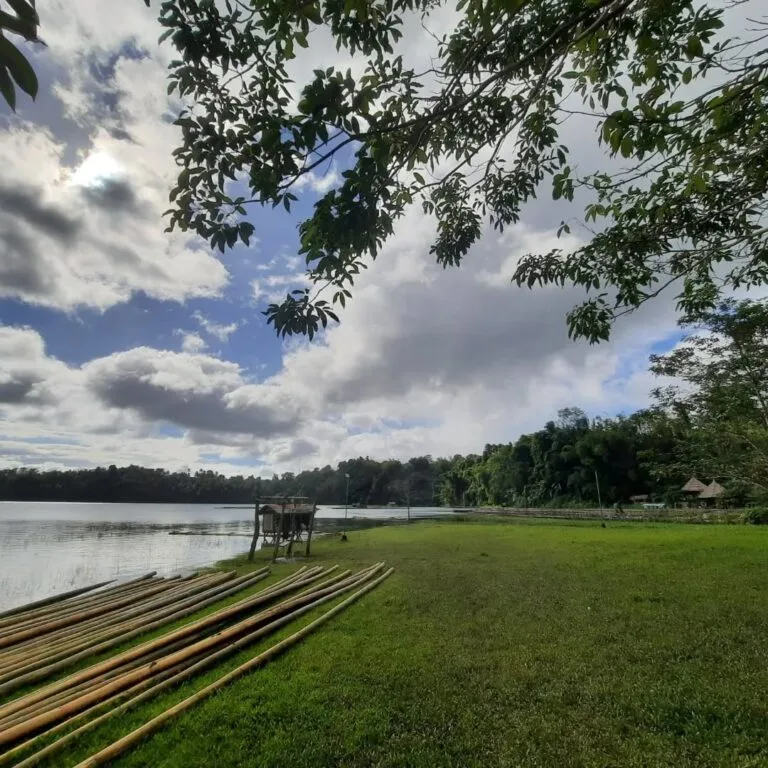
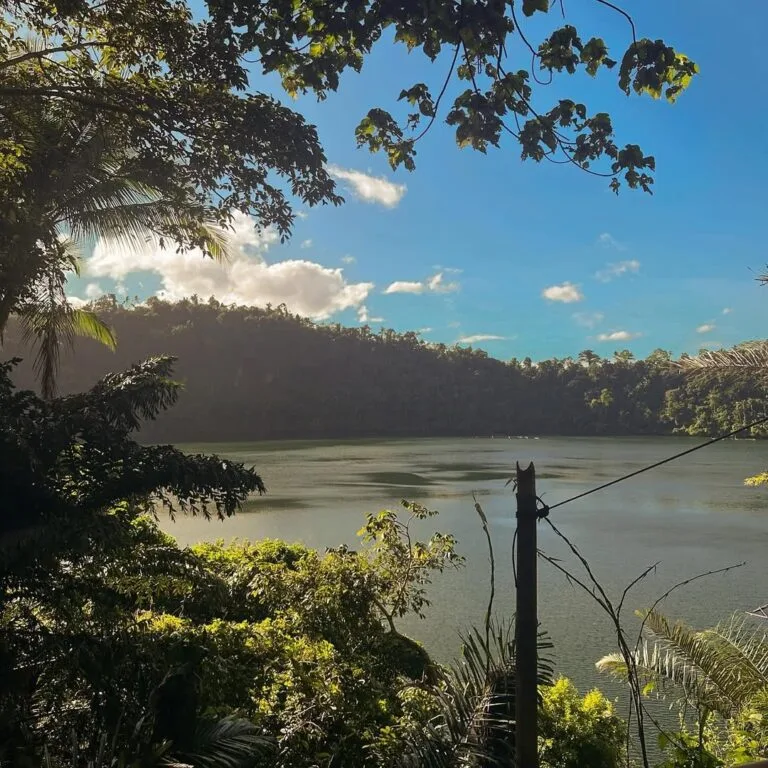
Frequently Asked Questions About Yambo Lake
How deep is Yambo Lake?
Yambo Lake reaches a maximum depth of 38 to 40 meters, making it one of the deeper crater lakes in the Seven Lakes group. Its water storage volume is 5.8 million cubic meters. Local guides sometimes quote figures as high as 180 feet (about 55 meters), which is not the documented measurement. The depth is the reason life vests are non-negotiable for swimming.
Is it safe to swim in Yambo Lake during rainy season?
Swimming itself remains within the designated Contact Recreation Zone, but the surrounding conditions are genuinely more dangerous from June to November. The camping area along the shore has flooded during strong typhoons (the October 2024 Typhoon Kristine event submerged the campsite). Water levels rise, the banks become muddy, and the raft schedule may be reduced. Check the YLLA Facebook page before visiting between June and November.
Can I hike from Lake Pandin to Yambo Lake?
There is a ridge trail between Pandin and Yambo that historically took 10 to 15 minutes. Land ownership disputes mean this trail closes without notice and without announcement. Access Yambo via the Nagcarlan (Sulsugin) road. Only attempt the ridge crossing if a verified local guide at your starting point confirms it is open that day.
What is the entrance fee at Yambo Lake?
The entrance fee is ₱20 per person, paid as an environmental fee at the YLLA desk at the Sulsugin access point. Parking costs an additional ₱50 per vehicle. Bring exact change or small bills; there are no digital payment options at the lakeshore.
Do I need a guide to visit Yambo Lake?
For the lake itself and the balsa raft, no guide is required beyond your bangkero. A local guide is strictly required for the Mount Mabilog summit trek to prevent trespassing on private farmland. The guide fee is ₱300–₱500 flat per group and is arranged at the YLLA registration desk.
How do I get to Yambo Lake from Calamba?
From Calamba, take the national highway through Los Baños, Bay, and Calauan. From Calauan, take the road to Nagcarlan. At the Nagcarlan town plaza, hire a special tricycle to Barangay Sulsugin and tell the driver “Dagat.” The tricycle fare is ₱100–₱150. Set your GPS to coordinates 14°7′8″N, 121°22′00″E to avoid being dropped at an agricultural road near Pandin.
Are there cottages for rent at Yambo Lake?
There are no enclosed resort-style cottages at Yambo. The experience is built around the balsa raft, which functions as your floating picnic space with a table and shade. For overnight stays, your options are rustic tent camping (₱100–₱140 per person, bring your own gear) or the Camp Yambo glamping tents on wooden platforms on the Nagcarlan shore, listed on Airbnb from November 2025.
What time should I arrive to avoid crowds?
Arrive at the YLLA desk by 7:00 AM on a weekday for the quietest conditions. Saturdays from November to February are the busiest period. The lake is at its most photogenic in the first two hours after dawn before haze moves in, and the raft experience is significantly better with fewer people on the water.
Is Yambo Lake the same as San Pablo Lake?
Yambo Lake is one of the Seven Crater Lakes in the San Pablo area but sits administratively in Nagcarlan, Laguna, not San Pablo City. Its primary access point is in Barangay Sulsugin, Nagcarlan. The confusion comes from its geographic proximity to the San Pablo lakes circuit. If your navigation points you toward San Pablo City, correct the pin.
Honest Verdict: Who This Trip Is For and Who Should Skip It
Yambo Lake is a strong choice for anyone who wants a crater lake experience that has not yet been smoothed into a resort format. The raft is genuinely the right way to see this place, the water is clean by Philippine inland standards, and the YLLA model means your money stays with the community that protects the lake.
It suits day-trippers from Manila with flexible weekday schedules, couples willing to pay for the full raft without splitting the cost awkwardly, and hikers who want a summit reward that includes a lake descent in the afternoon. The combination of Mt. Mabilog plus balsa plus the Nagcarlan Underground Cemetery makes for a full 10-hour day without any filler.
Skip it if you are expecting resort infrastructure. There are no enclosed cottages, no commercial swimming pools, no paved paths to a viewing deck. The facilities are basic and deliberately so. If your group needs air conditioning or reliable mobile signal to stay comfortable, the lakeshore will frustrate everyone. Solo swimmers who want to move freely in the water without a guided raft are also not well served here: the Contact Recreation Zone and mandatory life vest rule exist for good reasons, but they constrain what you can do independently.
Come in November through February for the best conditions. Come on a weekday if you can. Bring cash, small bills, and leave the single-use packaging at home. The lake has been here for 500 years because the people who live on it have kept it that way. That is worth a little effort on your end.
This guide was updated following a return visit to Yambo Lake in September 2026. — Aiden Kenzy