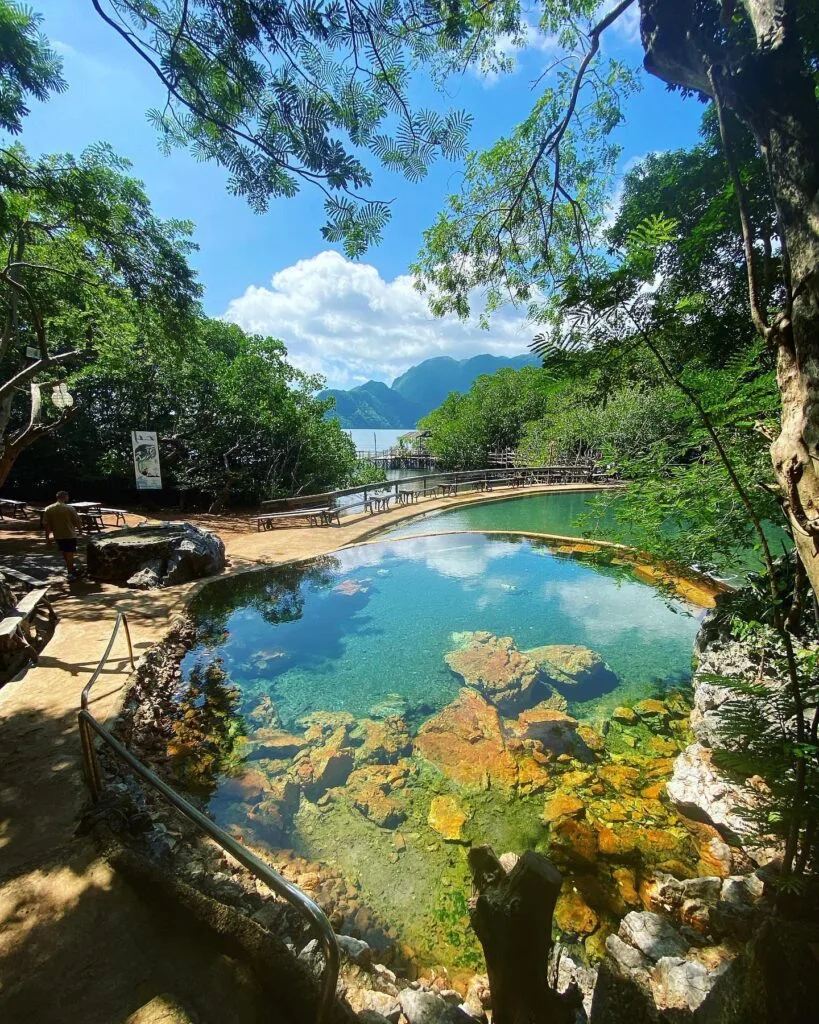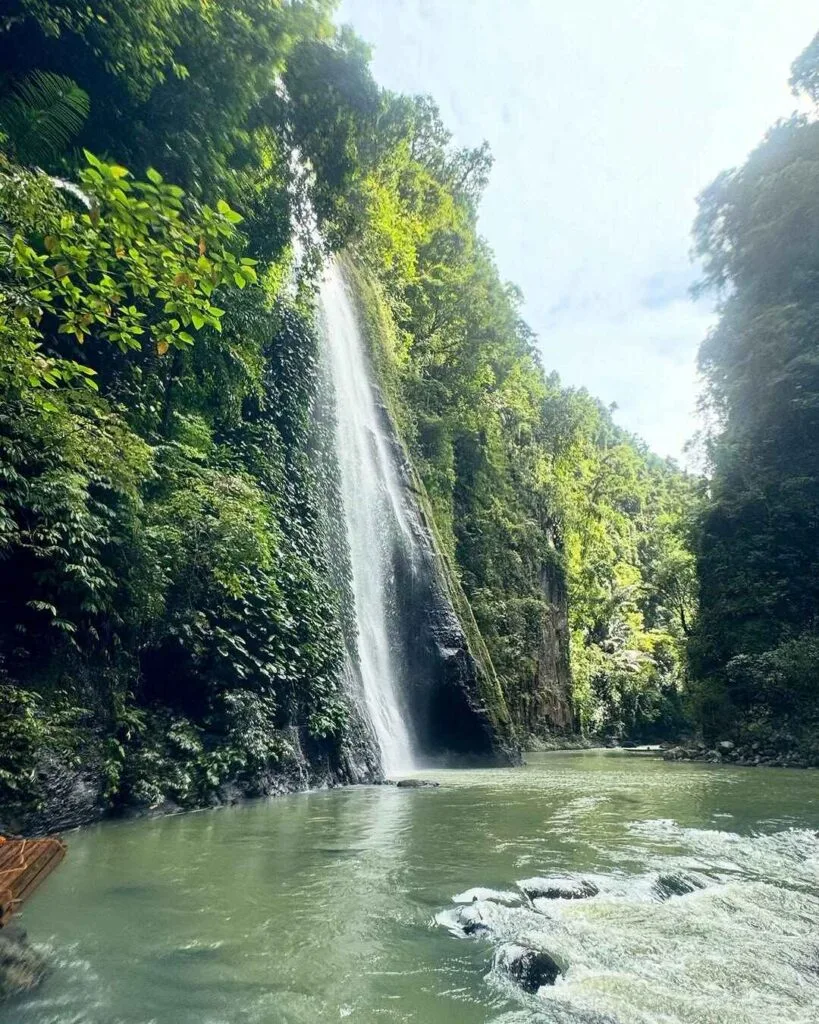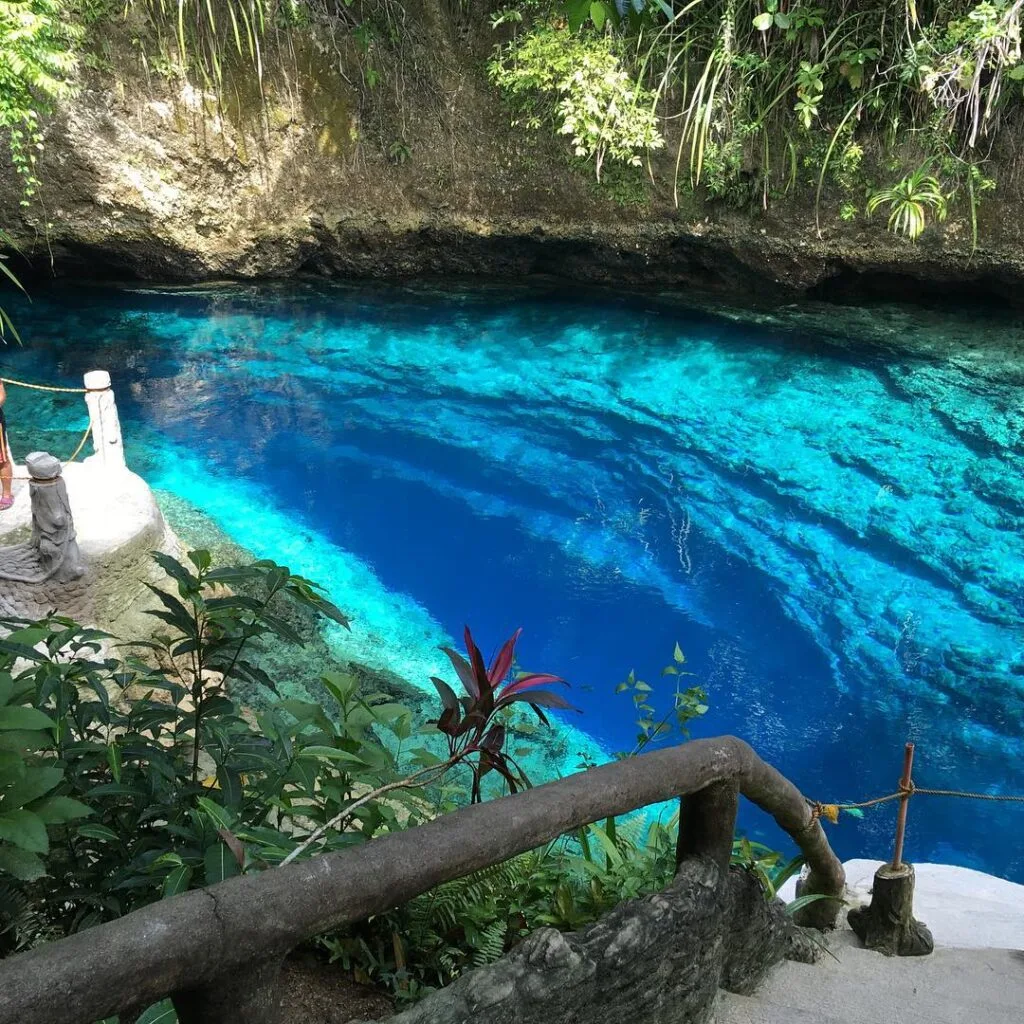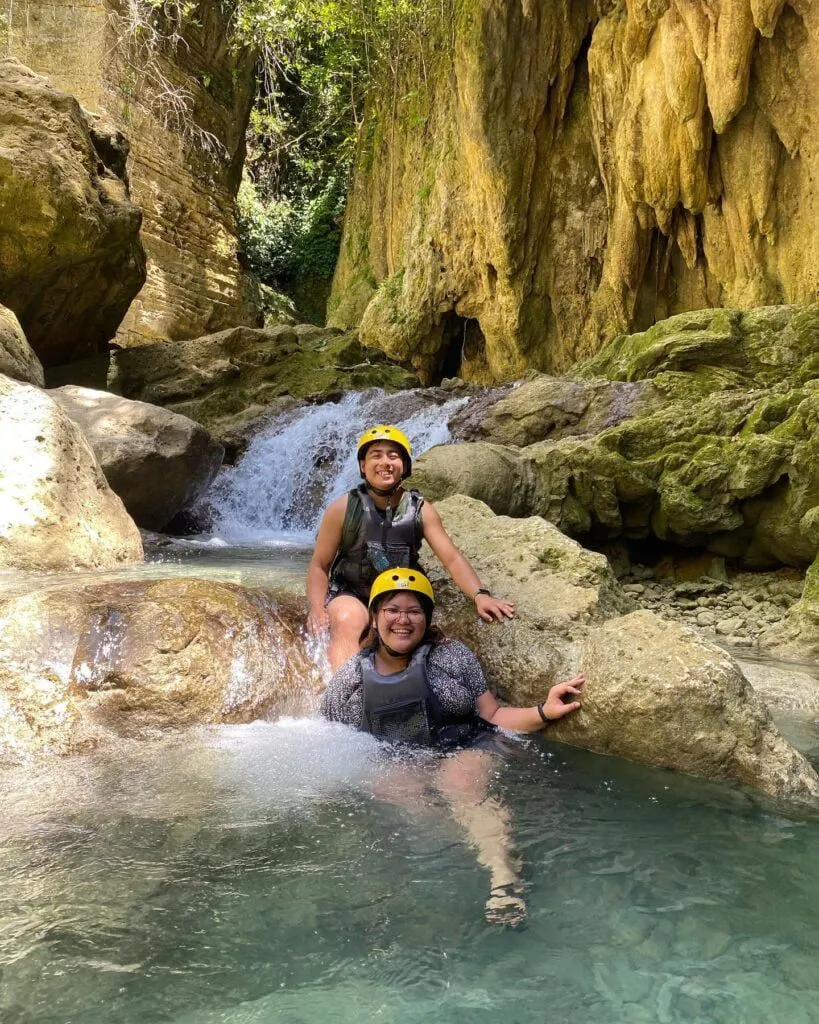
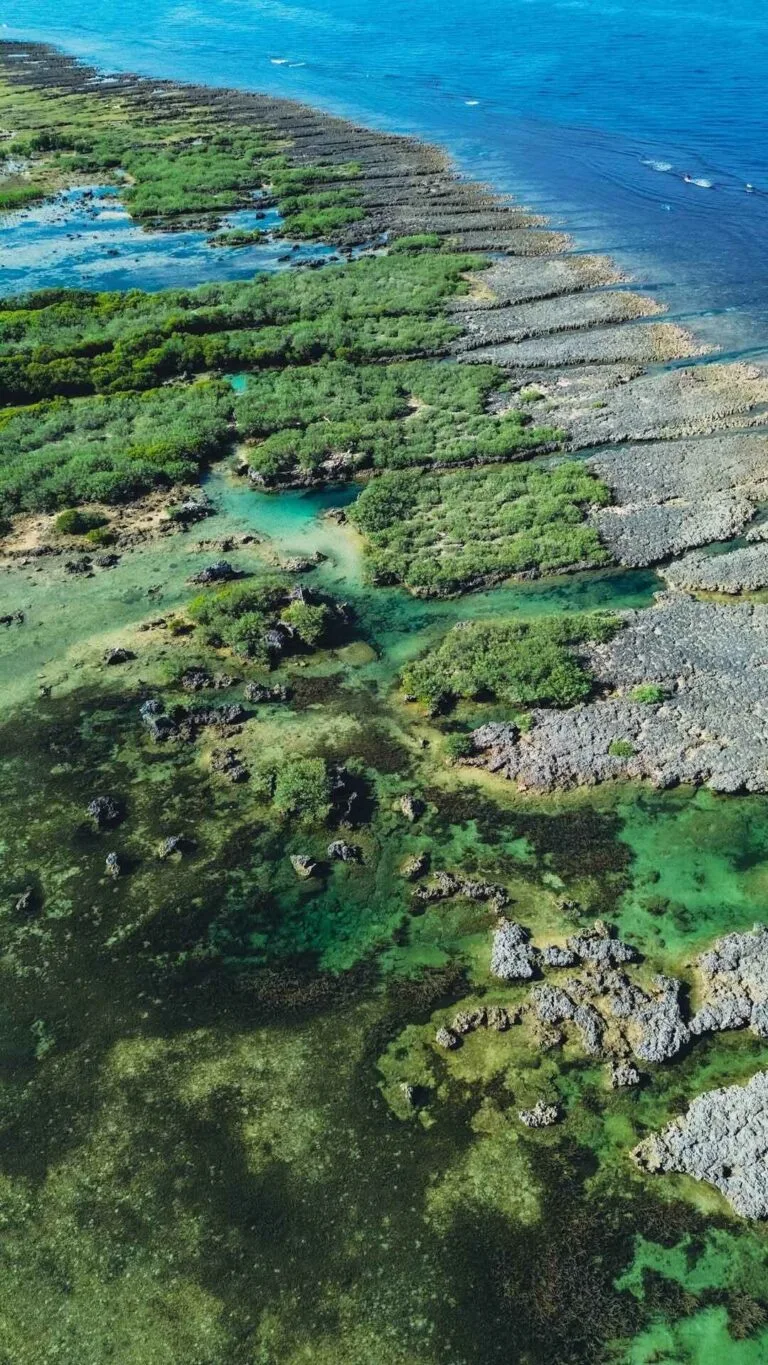
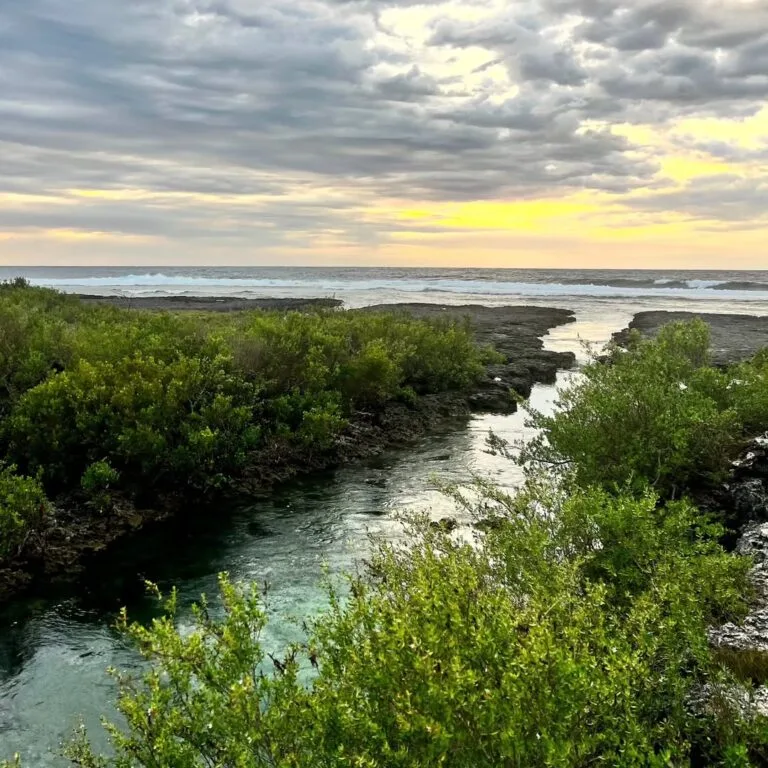
Immuki Island is a coral islet in Barangay Paraoir, Balaoan, La Union, about 30 minutes north of San Juan, with three natural lagoons carved from uplifted limestone, a ₱50 entrance fee, and opening hours from 6:00 AM to 6:00 PM daily. I revisited in September 2026, having now covered 69 of the 82 Philippine provinces since 2015, and this guide reflects current fares, the updated tariff board at the registration desk, and the things the photos don’t prepare you for.
What sets Immuki apart from La Union’s surf-heavy coastline further south is that it is not a beach at all. The islet is a fossilized coral shelf, jagged and sharp underfoot, with seawater pooling into distinct basins that shift in depth and mood with the tide. No sand, no waves, no resort behind you. Just the lagoons, the mangroves, and the community of Paraoir running the whole thing themselves.
Key Takeaways
- The entrance fee is ₱50 for adults and ₱30 for seniors and PWDs; there are no ATMs in Barangay Paraoir, so bring exact change.
- Plan at least half a day: the walk across the flats, lagoon time, and the return trip fill four hours comfortably.
- The best months are December to April, when the Amihan season keeps the water clear and the flats walkable; during Habagat (June to October), storm surges can close the site entirely.
- A morning arrival (before 10:00 AM) lets you walk to the island for free at low tide; an afternoon arrival (after 3:00 PM) means the channel is five feet deep and you need the bamboo raft at ₱250 per 1.5 hours.
- Aqua shoes are not optional. The coral substrate will cut through bare feet and thin flip-flops; the barangay enforces this rule at the gate.
- Families with young children and non-swimmers should come at low tide, when the lagoons are shallowest and calmest; anyone afraid of uneven footing should skip this trip entirely.
Table of Contents
Immuki Island Entrance Fee and What Everything Costs
The Immuki Island entrance fee is ₱50 for adults and ₱30 for senior citizens, PWDs, and students with valid ID. Every peso goes directly to the BalBaSan clean-up operations, mangrove upkeep, and the basic infrastructure at the site.
The full tariff, as posted on the rate board at the Barangay Paraoir registration desk in September 2026:
| Service | Rate | Notes |
|---|---|---|
| Entrance / Environmental Fee | ₱50 (adult), ₱30 (PWD/Senior) | Bring valid ID for discounted rate |
| Local Tour Guide | ₱150 | Strongly recommended for lagoon navigation |
| Bamboo Raft (Balsa) | ₱250 per 1.5 hours | Fits 5 to 6 passengers; required at high tide |
| Life Vest Rental | ₱20 to ₱30 | Advised for non-swimmers; lagoons reach 9 to 10 feet |
| Crystal Kayak Rental | Ask at the registration desk for current rate | Available on-site; rate is set by the barangay |
| Day-Use Cottage / Nipa Hut | ₱300 to ₱800 | Size and capacity determine price; mainland only |
| Shower Facility | ₱10 | Freshwater rinse stations near the registration area |
There are no ATMs anywhere in Barangay Paraoir. Bring cash in small bills and prepare for exact change. The barangay staff do not carry much float.
The guide fee is not a tourist upsell. The coral paths around the lagoons are not obvious, and a wrong step on the dead coral substrate can open a deep laceration. On my September 2026 visit, the guide pointed out a section of the path between Lagoon One and Lagoon Two that looked solid but flexed underfoot. Paid ₱150 and would pay it again without hesitation.
How to Get to Immuki Island
Getting to Immuki Island requires reaching Barangay Paraoir in Balaoan, La Union, then crossing to the islet itself either on foot at low tide or by bamboo raft at high tide.
From Manila
Take any northbound bus from Cubao or Pasay bound for Vigan, Laoag, or Abra. Partas Transportation, Viron Transit, Dominion Bus Lines, and Fariñas Transit all serve this corridor via the Tarlac-Pangasinan-La Union Expressway (TPLEX), which has cut the Manila-to-La Union leg to roughly five to seven hours depending on departure time and traffic. Check current fares at the terminal before you travel; board any bus headed north of San Fernando and tell the conductor to drop you at the Balaoan town plaza or the Bacnotan public market.
From Baguio
Partas Transportation runs the only direct bus from Baguio City to Balaoan, departing from the Governor Pack Road terminal below SM City Baguio. The 84-kilometer route via the Naguilian Road (Quirino Highway, N54) takes an average of 2 hours and 37 minutes. Buses depart every 3 to 4 hours, with the earliest at 4:00 AM and the last at 9:00 PM. Fare ranges from ₱180 to ₱490 depending on bus class. A private taxi or car hire from Baguio runs ₱1,300 to ₱1,600 and takes about 2 hours and 11 minutes.
From San Juan La Union to Immuki Island
San Juan is the most common base for visiting Immuki Island, and the trip north is straightforward. Two options:
Getting from San Juan to Immuki Island by tricycle charter costs ₱600 to ₱800 round-trip. The driver waits at Paraoir for the duration of your visit, which means you are not scrambling for a ride back in the afternoon.
The budget route: board any northbound jeepney from San Juan toward Bacnotan for ₱20, then charter a tricycle from the Bacnotan public market (near the Jollibee junction) to Barangay Paraoir for ₱150 to ₱200 per ride. That rate covers three to four passengers in the cab.
The last stretch: reaching the islet
Once you register at the Paraoir coastal staging area, the crossing depends on the tide.
At low tide, the shallow flats between the shore and the islet are exposed. You walk across for free. Most guides recommend arriving by 10:00 AM to catch this window. At high tide (typically 3:00 PM onward), the channel fills to about five feet and the bamboo raft becomes necessary. The raft fits five to six people and costs ₱250 per 1.5 hours.
What Immuki Island Is and Why It Exists
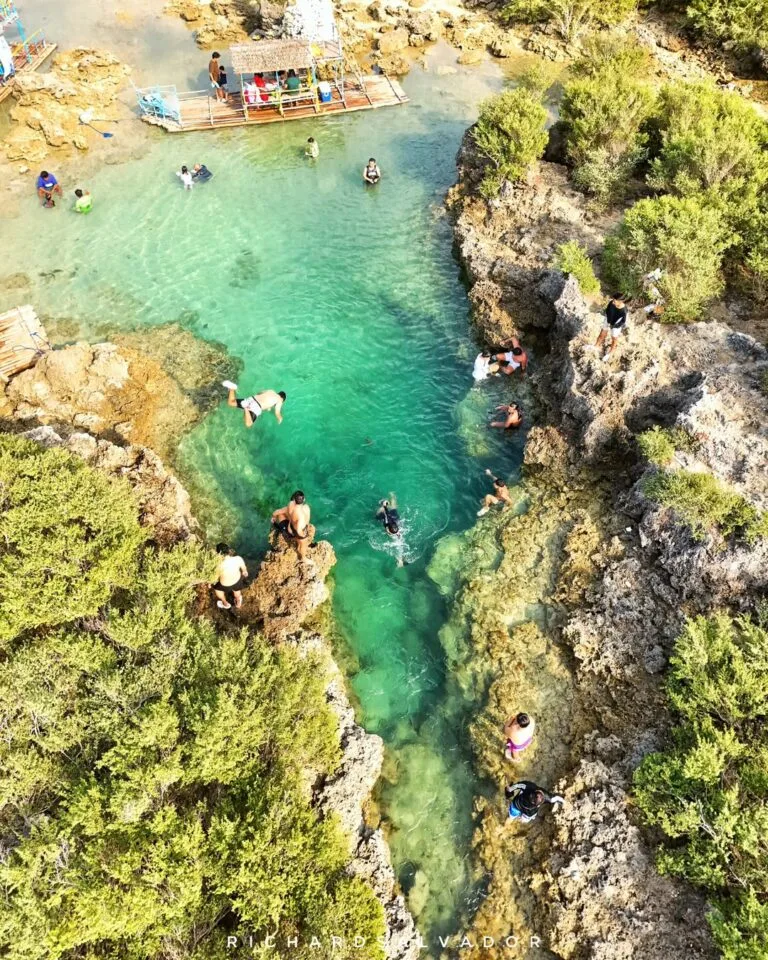
Immuki Island in Balaoan, La Union, is not a conventional island: it is an intertidal coral islet composed of uplifted limestone, sedimentary rock, and jagged coastal shelves that sit just off the coast of Barangay Paraoir. The site is locally known by its older name, Kaparingitan. The modern name Immuki comes from the Ilocano root word “buking,” meaning opening, referring to the natural apertures the tide has carved into the coral over millennia. A secondary local tradition links the name to the sea urchins and sea slugs that once filled those same crevices in abundance.
The island is administered not by a tourism company but by the community itself, under the BalBaSan Marine Protected Area Network (MPAN), a formal ecological alliance formed in 2017 among the municipalities of Balaoan, Bacnotan, and San Juan, supported by the Coastal and Marine Ecosystems Management Program and DENR Administrative Order No. 2016-26. Municipal Ordinance No. 13 S. 2024 formally designates the site as a protected Ecotourism Zone.
That ordinance bans single-use plastics, polystyrene, and plastic utensils across all establishments in Balaoan, specifically to prevent microplastic contamination in the lagoons. When the kuya at the registration desk reminded us to leave our plastic bags in the tricycle, he was not being precious about it: that rule carries legal weight.
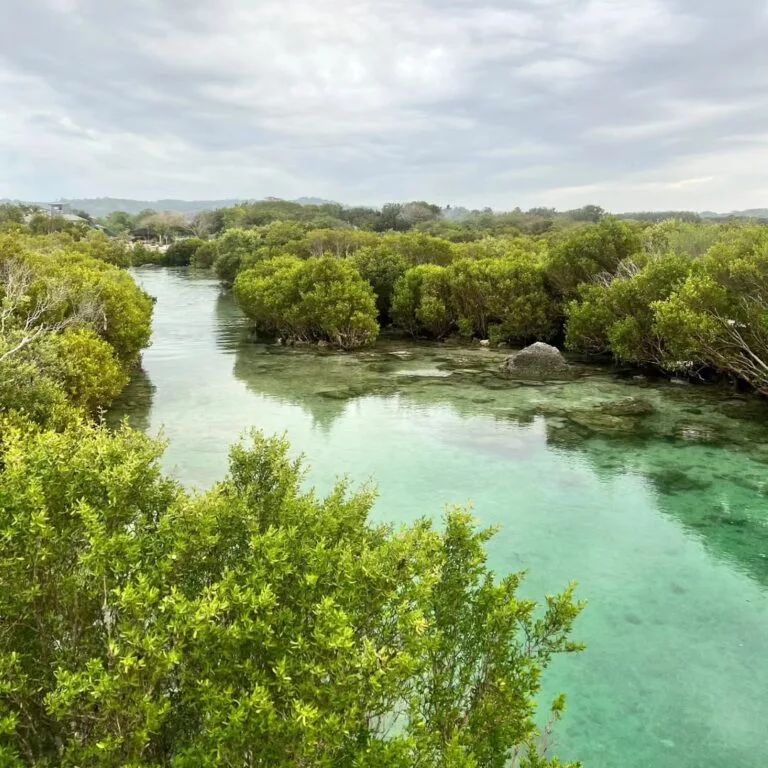
Mangrove assessments in Paraoir have documented at least fifteen species, including Bakawan lalaki, Bakawan babae, Pedada, Pototan, and the highly prevalent Bantigue. Those mangroves are not just scenery. They stabilize the shoreline during typhoon season and serve as the primary nursery for the juvenile fish that make lagoon-snorkeling worth doing without gear.
Balaoan itself has more history than most visitors realize. Originally called Purao, it was documented by Augustinian friars in 1582 as a trading hub where lowland Ilocanos exchanged gold from the Cordillera, silk, cotton, and burnay jars with highland Igorots. The name Balaoan translates to “no bullets” in Ilocano, honoring the indigenous defenders who, after exhausting their ammunition against Spanish forces, kept fighting with bolos and bare hands, shouting “Bala! Aoan!” The town also gave rise to the Siete Martires, the seven men who led the first organized resistance against Spanish colonial rule in northern La Union.
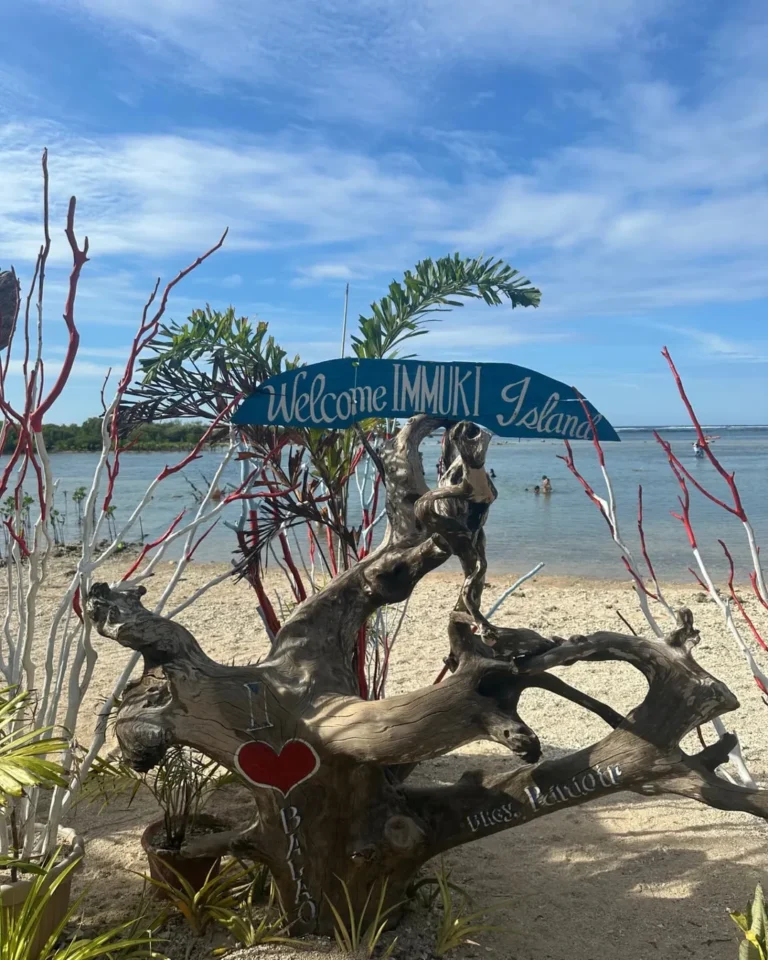
When to Visit: Amihan, Habagat, and the Tide Window
December to April is the best window for visiting Immuki Island, with January through March being the most consistently clear. During these months, the Amihan (Northeast Monsoon) keeps the skies clear, reduces oceanic turbidity, and allows the lagoons to reach their most photogenic turquoise. The shallow flats are stable and walkable, balsa operations run on schedule, and the coral paths around the islet stay dry and navigable.
The Habagat (Southwest Monsoon) runs from May to October and changes the experience entirely at this specific site. Balaoan, Bacnotan, and Luna sit on a coastline that is highly exposed to storm surges from typhoons crossing the West Philippine Sea. When DOST-PAGASA issues moderate to high-risk storm surge warnings, as it did during Typhoon Uwan and Tropical Depression Emong, the intertidal zones at Paraoir flood and the site closes. During Habagat, the lagoons also become cloudy from wave agitation, the coral paths get slippery, and balsa service may be suspended if the channel is rough.
I was there in September 2026, which sits late in Habagat, and saw firsthand how quickly the water color shifts from blue-green to murky grey when there is weather offshore. The lagoons were still swimmable that day, but the outer pool was noticeably less clear than photos from January visits show.
On tides specifically: the depth and character of each lagoon changes significantly through the day. At low tide, the main basin sits at its shallowest and calmest, safe for children and less confident swimmers. At high tide, Lagoon One fills to 9 to 10 feet, Lagoon Two deepens to about 8 feet, and the cliff-jump lines become usable. If your priority is cliff-jumping and deep swimming, plan your arrival to coincide with high tide in the afternoon. If your priority is low cost, ease of crossing, and calm water for photography, come early for low tide.
Weekday visits remain significantly quieter than weekends, which is worth noting for anyone whose trip purpose is photography or slow exploration.
What to Do at Immuki Island
Immuki Island’s three lagoons are the entire reason to come, and each one offers a different experience.
Lagoon One (the Main Basin) is the largest and deepest, dropping to 9 to 10 feet at high tide. The water clarity here is good enough to spot reef fish, including triggerfish, without snorkeling gear, though bringing a mask still improves the view considerably. This is the swimming center of the islet.
Lagoon Two is slightly shallower at about 8 feet and defined by steeper, more dramatic coral walls. The cliff-jump ledges sit above this pool. Check the depth with your guide before jumping; the bottom is coral, not sand.
Lagoon Three (the Outer Pool) faces the open sea and is buffered by dense mangrove root systems. It serves as the natural nursery for juvenile marine life. Swimming here is possible but the mangrove coverage makes it darker and more enclosed than the inner pools.
Beyond swimming, the site offers bamboo raft rides (which count as an activity as much as transport), crystal kayak rentals available through the barangay, and guided mangrove walks along the edges of the islet. The guide will point out the bantigue plants and explain the sea ranching cages visible just offshore, where the Paraoir Fisherfolk Association has been growing Tripneustes gratilla (the gracilis sea urchin) since 2002.
Balaoan is officially the Sea Urchin Capital of the North, and that designation is not ceremonial: the fisherfolk association started with 250 broodstock urchins from Sta. Maria, Ilocos Sur, developed the sea ranching model with BFAR and the Don Mariano Marcos Memorial State University, and built it into the municipality’s One Town, One Product (OTOP) designation. You can arrange a farm tour and a raw uni tasting directly through the local cooperatives. The urchin roe is eaten fresh, usually with vinegar or calamansi.
For photography, the aerial view of Immuki’s three lagoons against the surrounding mangrove line is what circulates most on social media, and it does require either a drone or a good telephoto from the elevated section of the coral shelf. At water level, the lagoons photograph best between 7:00 AM and 9:00 AM, when the sun angle is low and the color is at its most saturated. Afternoon light on the water is flatter and less defined.
What does not translate in the photos: how jagged the walking surface is. Every step between the registration area and the lagoons is on uneven, razor-edged dead coral. It is not strenuous but it is technical underfoot, and anyone with ankle instability or who cannot commit attention to their footing should think carefully before coming.
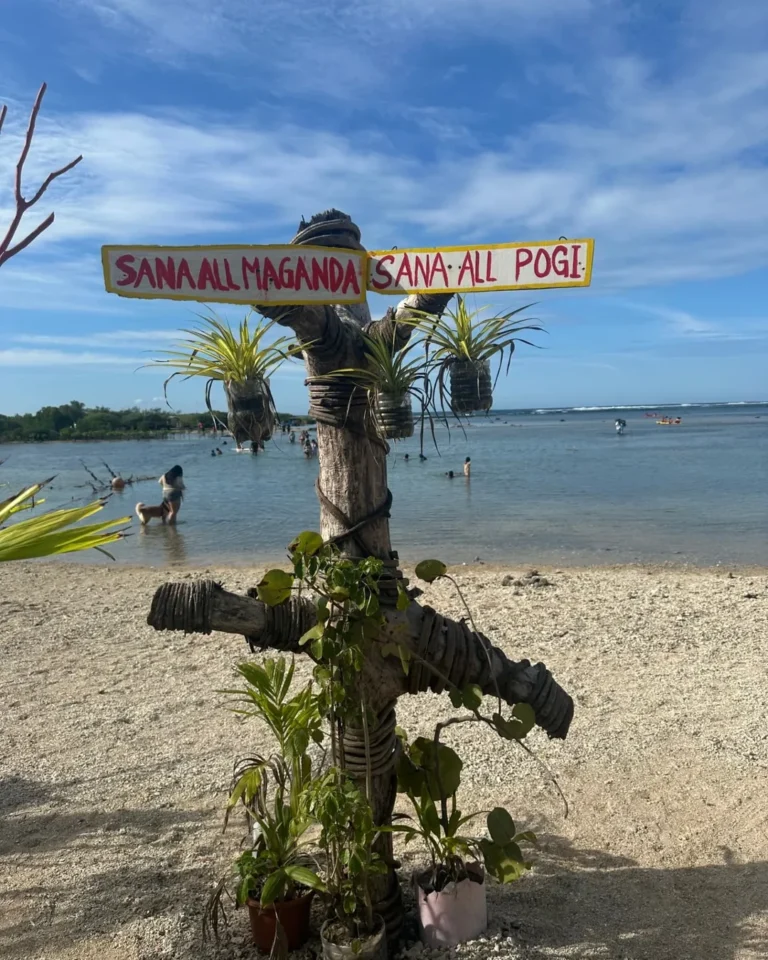
Where to Eat Near Immuki Island
There is no food for sale on the islet itself. On the mainland at Paraoir, sari-sari stores near the registration area sell drinks, chips, and light snacks. The sea urchin tastings through the fisherfolk cooperative are the most significant food experience available at the site itself: fresh uni consumed raw with vinegar or calamansi, arranged directly with the guides or cooperative members.
For a full meal, the options are in the neighboring towns.
Riverfarm Seafood Restaurant in Bacnotan sits on the banks of the Baroro River and specializes in aquaculture-to-table cooking. The kilawing isda (local ceviche), shrimp with ampalaya, and grilled seafood platters are frequently cited by regulars. Budget around ₱3,500 for a group of four for a proper meal.
Nacionales Special Royal Bibingka in Bangar is the correct stop for traditional Ilocano rice cakes if you are heading north after the lagoons. Buy enough for the road.
Heading back south toward San Juan, the cafe and restaurant strip in Elyu (Urbiztondo Beach) along San Juan’s main beach road covers everything from breakfast to dinner. Masa Bakehouse, Flotsam & Jetsam, and Kabsat are the reliable anchors on that strip. If you are going as far as San Fernando City, the Halo-Halo de Iloko on the main road is the local institution everyone mentions.
Where to Stay
There are no large resort hotels directly at Barangay Paraoir. Accommodation options cluster in Bacnotan and Balaoan for visitors who want to stay close, and in San Juan for those treating Immuki as a day trip from the surf hub.
For the northern corridor, Uncle Bob and Tere’s Beachfront House in Bacnotan is rated exceptionally by guests and offers direct beach access. Verdadero Norte Beach Resort and Paraiso Del Bacnotan are the other reliable options in the immediate area.
For those who prefer the full amenity range, Thunderbird Resorts at Poro Point in San Fernando is the upscale choice. San Juan’s hostel network (Flotsam & Jetsam, 3BU Hostel, and others) serves budget travelers and surfers and puts you 30 minutes from Paraoir by tricycle, which is close enough for an easy early start.
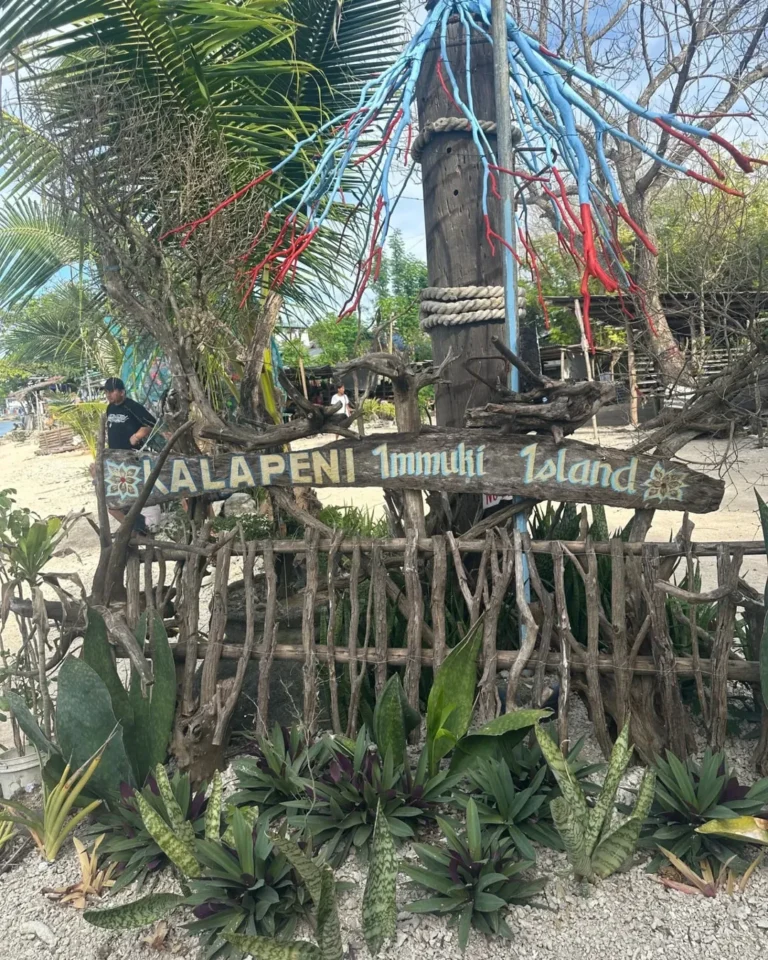
Frequently Asked Questions About Immuki Island
What is the Immuki Island entrance fee in 2026?
The entrance fee at Immuki Island is ₱50 for adults and ₱30 for senior citizens, PWDs, and students with a valid ID. The fee is collected at the Barangay Paraoir registration desk and funds BalBaSan clean-ups, mangrove maintenance, and site infrastructure. There are no ATMs in Barangay Paraoir, so bring cash in small denominations before you leave Bacnotan or Balaoan town proper.
What is Immuki Island and where exactly is it located?
Immuki Island is an intertidal coral islet located in Barangay Paraoir, Balaoan, La Union. It is not a sandy beach island but a fossilized coral shelf with three natural lagoons carved by tidal erosion over centuries. The site sits just off the coastline and is accessible by foot at low tide or by bamboo raft at high tide. From San Juan, the drive north takes about 30 minutes.
How do I get to Immuki Island from San Juan La Union?
From San Juan to Immuki Island, you have two options: charter a tricycle directly to Barangay Paraoir for ₱600 to ₱800 round-trip (the driver waits for you), or take a northbound jeepney from San Juan to the Bacnotan public market for ₱20 and then charter a local tricycle to Paraoir for ₱150 to ₱200. The jeepney-tricycle relay is the budget route; the direct charter is the easier option for groups or anyone carrying equipment.
What is the best time to visit Immuki Island?
The best months to visit Immuki Island are December through April, during the Amihan season, when water clarity is highest, the lagoons reach their most photogenic color, and the coral flats are safe to walk. During Habagat (May to October), typhoon-generated storm surges can close the site entirely, and the lagoon water turns cloudy even on non-typhoon days when there is offshore weather. Within any given day, low tide in the morning lets you walk to the island for free; high tide in the afternoon creates deeper, more dramatic swimming conditions but requires the bamboo raft.
Do I need aqua shoes at Immuki Island?
Aqua shoes are mandatory at Immuki Island. The entire walking surface between the shore and the lagoons is uplifted coral limestone: razor-edged, uneven, and unforgiving on bare skin. Thin flip-flops are not adequate. The barangay will turn you back if you arrive barefoot. Bring thick-soled aqua shoes, reef walkers, or sturdy trekking sandals.
Can I swim in the lagoons? How deep are they?
All three lagoons are open for swimming. Lagoon One, the main basin, reaches 9 to 10 feet at high tide. Lagoon Two is about 8 feet deep with steep coral walls, and serves as the primary cliff-jumping spot. Lagoon Three faces the open sea and is shallower, buffered by mangrove roots. At low tide, all three are significantly shallower and easier to manage, which is why families with children are advised to come in the morning. Non-swimmers should rent a life vest (₱20 to ₱30) and consider staying in the shallower sections.
Is it worth hiring a local guide at Immuki Island?
A local guide costs ₱150 and is worth it. The coral paths between the lagoons are not marked, and portions of the route that look stable can flex or break underfoot. The guide also checks lagoon depths before anyone jumps and can flag changes in tidal conditions. That ₱150 buys you someone who navigates this coral daily and prevents the most common injuries on the islet.
What can I not bring to Immuki Island?
You cannot bring food, alcohol, or pets onto the islet itself. Single-use plastics, including plastic cups, utensils, and polystyrene containers, are banned across Balaoan’s ecotourism sites under Municipal Ordinance No. 13 S. 2024. Chemical sunscreens are strongly discouraged near the lagoons; use a reef-safe non-nano zinc oxide sunscreen instead. Removing any sand, shells, coral, or marine life is a punishable offense under the Balaoan Fisheries Ordinance.
Is there anything to do at Immuki Island besides swimming?
Beyond swimming in the three lagoons, the site offers bamboo raft rides across the channel, crystal kayak rentals (rates set by the barangay, ask at the desk), cliff-jumping into Lagoon Two, guided mangrove walks, snorkeling in the main basin, and sea urchin farm tours with the Paraoir Fisherfolk Association. The uni tasting, where freshly harvested sea urchin roe is eaten raw with vinegar or calamansi, is a distinctly local experience that most visitors miss because they do not know to ask for it.
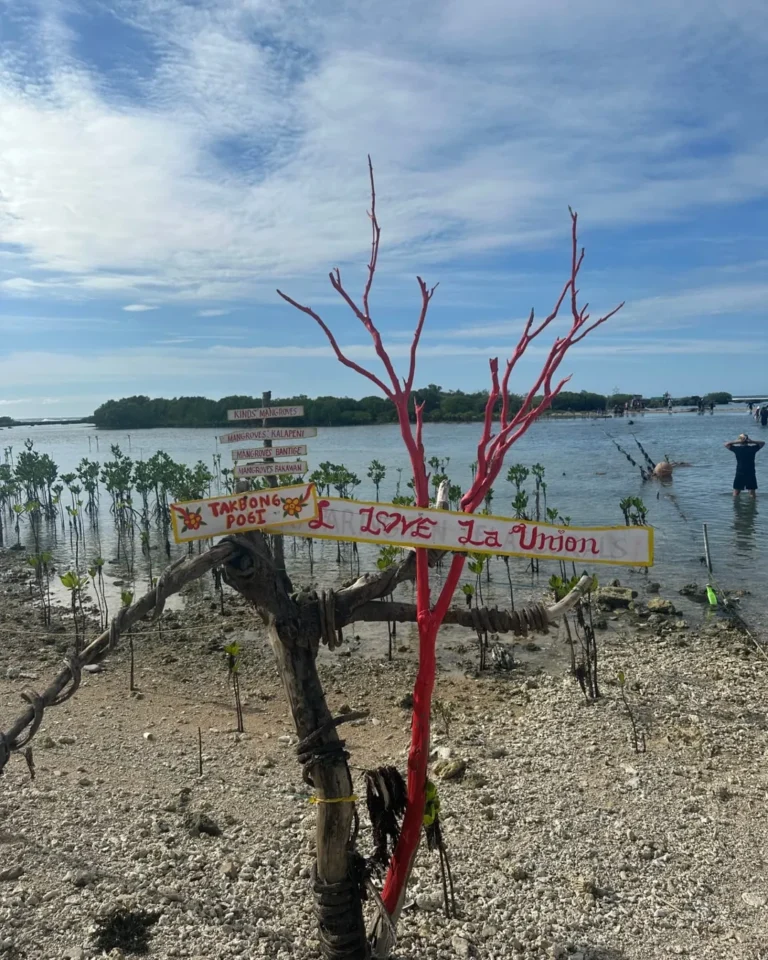
Verdict: Who Should Make This Trip and Who Should Not
Immuki Island is worth the detour from San Juan for anyone who has already done the surf scene and wants to see a completely different version of La Union. The lagoons are genuinely beautiful, the community management keeps the site clean and uncrowded on weekdays, and the sea urchin culture around Barangay Paraoir adds a layer of local depth that most beach stops do not have. Come during Amihan, arrive before 10:00 AM, hire the guide, and you will have one of the better half-days available in the northern corridor.
The trip does not suit everyone. Anyone who cannot manage rough, uneven footing for extended periods should not come. Children under five or anyone with limited mobility will struggle with the coral paths regardless of tide timing. If you are chasing a classic beach day with sand underfoot and food on demand, this is the wrong destination entirely:
the sandy beaches of Urbiztondo and the wider stretch of La Union’s tourist spots serve that purpose far better. And if you are arriving during Habagat without checking the PAGASA storm surge bulletin first, you are gambling with the trip: I was lucky in September 2026, but the week before my visit the site had been closed for two days due to weather.
For the right traveler at the right time of year, Immuki Island is one of the more distinctive day trips in northern Luzon.