
By Aiden Kenzy, founder of Lakbay Pinas and a passionate Filipino travel writer dedicated to uncovering destinations across the Philippines. Since 2015 — Visited: September 2026 — Published: September 2026
Quick Answer: Kaparkan Falls is a massive travertine waterfall in Tineg, Abra, made up of naturally formed limestone terraces and interconnected pools stretching 500 meters in length. Getting there requires an overnight bus to Bangued, an early-morning registration at 5:30 AM, and a three-hour 6×6 monster truck ride through mountain jungle. It is one of the most logistically demanding day trips in the Philippines and absolutely worth every minute of it.
Key Takeaways:
- The LGU package fee is PHP 1,999 per person, covering the monster truck, guide, environmental fee, and orientation.
- The site opens July to October only during the monsoon season; it is fully closed in the dry months.
- Access difficulty is high: a three-hour off-road truck ride plus a short, steep, slippery descent to the water.
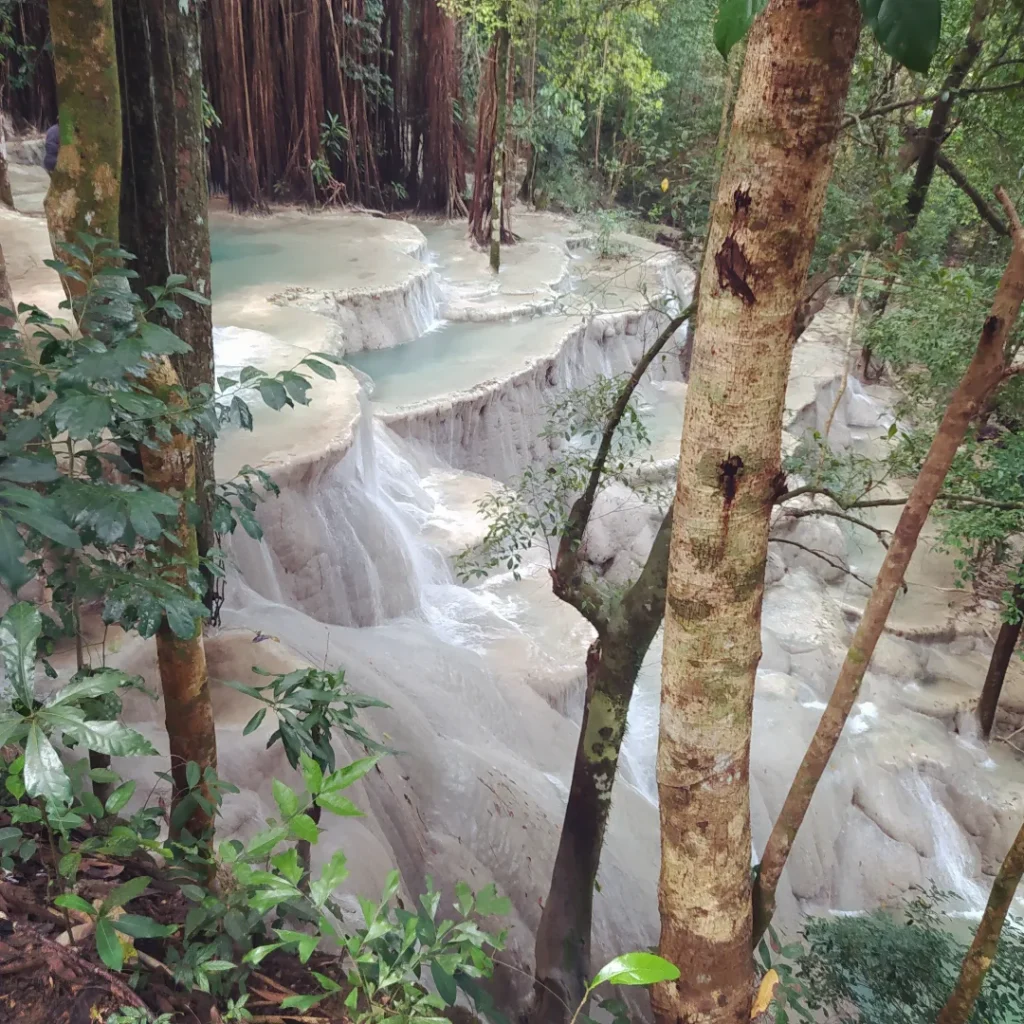
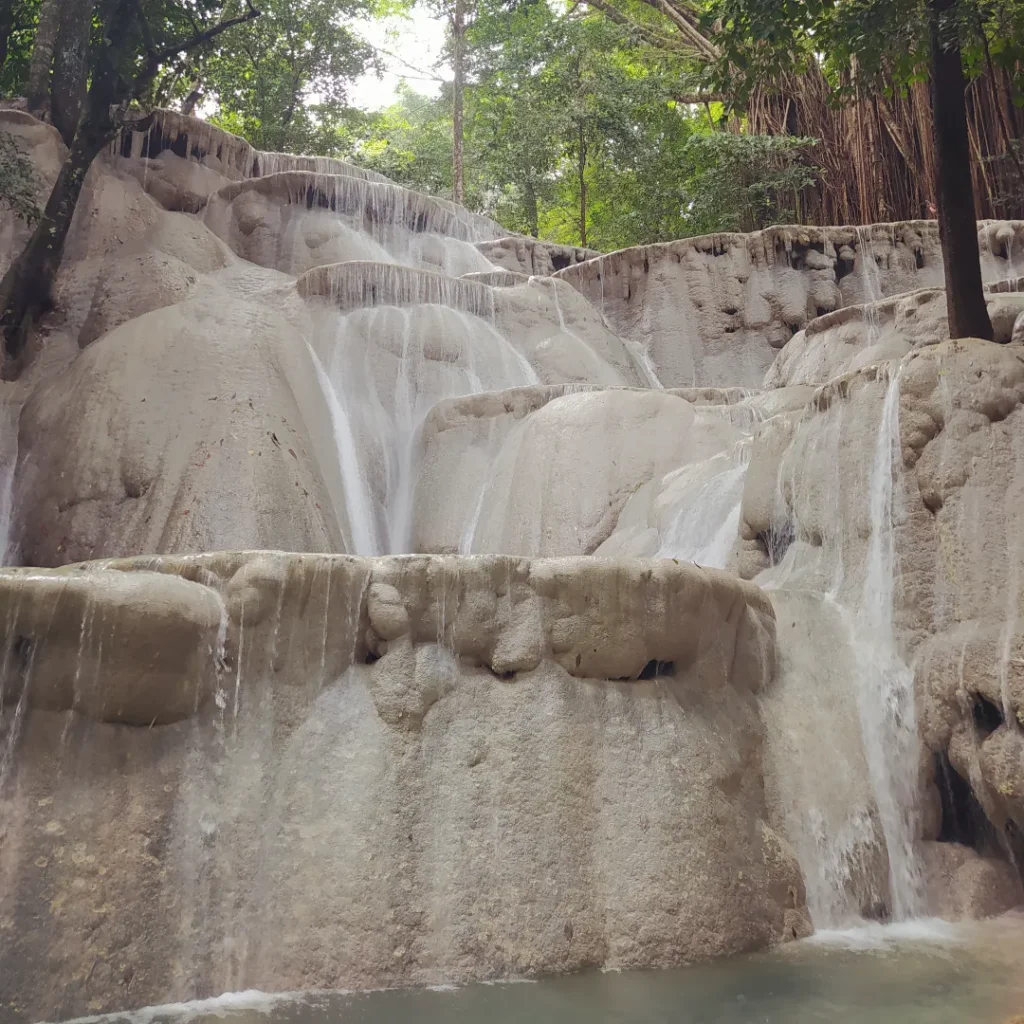
- The standout feature is the 500-meter-long travertine terrace, one of the largest of its kind in the Philippines, with active limestone pools you can wade through tier by tier.
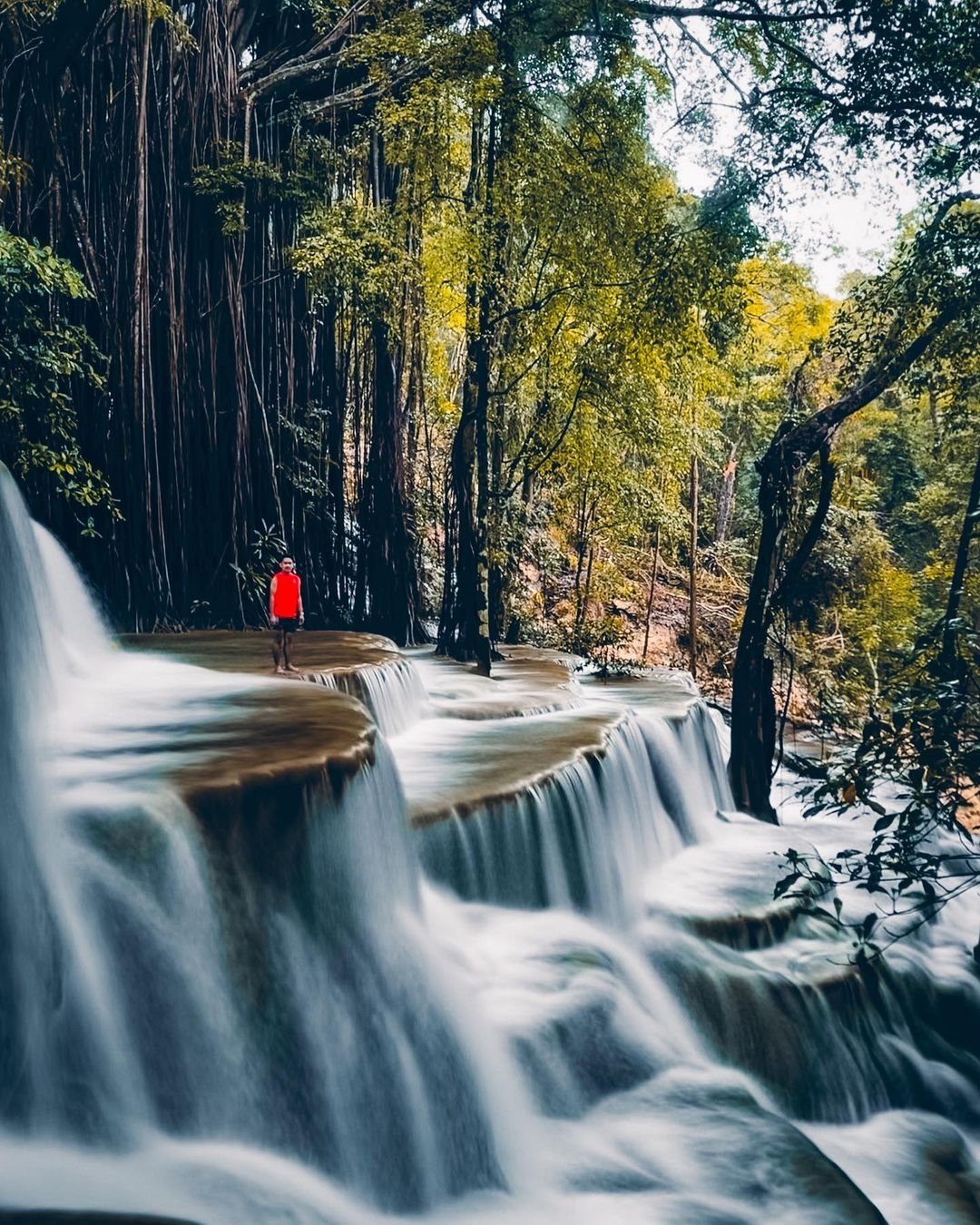
Table of Contents
Where Is Kaparkan Falls Located?
Kaparkan Falls sits deep inside the municipality of Tineg in the landlocked province of Abra, part of the Cordillera Administrative Region of northern Luzon. The falls discharge into the Tineg River, which lies roughly 530 meters below the spring source. The site is also locally known as Mulawin Falls.
The falls are not near any town in any practical sense. Tineg is one of Abra’s most remote municipalities, accessible only by a grueling off-road route. No public jeepney or tricycle reaches the site. The coordinates place it several mountain ranges east of the provincial capital Bangued, which serves as the jump-off base for all visitors.
If you’re exploring more of the province, check out this guide to the best Abra tourist spots and itinerary to plan your full trip around Kaparkan Falls.
How to Get to Kaparkan Falls
Getting to Kaparkan Falls from Manila is a multi-leg journey. No single vehicle or route takes you all the way there. Here’s the exact sequence.
Step 1: Bus from Manila to Bangued
The Partas Transportation Company is the main carrier serving Bangued from Manila. From Cubao, Quezon City (816 Aurora Boulevard), the fare is PHP 960 for a Super Deluxe air-conditioned coach with a comfort room on board. From Pasay, the regular aircon fare runs PHP 984. A night bus departing at 8:00 PM or 9:00 PM gets you into Bangued by 4:00 AM to 5:00 AM, which is the exact window you need.
From Baguio City, Partas departs from 47 Governor Pack Road at 9:00 PM for a PHP 663 Deluxe fare. The Baguio-to-Bangued route via San Fernando, La Union takes about 5 hours and 53 minutes.
Step 2: Tricycle to the DPWH Compound
From the Partas bus terminal in Bangued, flag a tricycle to the DPWH Compound on Rizal Street, Zone 7, Bangued. The fare is PHP 20. This is the official staging area for all Kaparkan Falls tours and where your registration happens.
Step 3: Withdraw Cash in Bangued First
The nearest ATMs are at Bangued Town Plaza, about a 10-minute tricycle ride from the bus terminals. Landbank, BDO, and PNB all have machines there. The entire Kaparkan circuit from staging area to falls and back runs on cash only. There are no card machines, no GCash terminals, and no digital payment options anywhere along the route. Withdraw everything you need before leaving Bangued proper.
Step 4: The Monster Truck Ride
This is the part no one fully prepares for. The 6×6 military-style cargo truck departs the DPWH compound at exactly 6:30 AM. The first hour covers paved lowland roads. The remaining two hours are an unpaved, deeply rutted mountain trail through dense jungle. When I made the trip in September 2026, the monsoon had turned the final 6.3-kilometer stretch into a sliding clay pit. The truck crew stopped at the transition point to manually chain the massive tires for traction. Even with chains, the truck lurched sideways toward embankments more than once.
The ride takes three hours one way under normal monsoon conditions. You grip the iron railings the entire time, get pelted by branches, and feel every single rut in your spine. It is loud, muddy, and relentless. I loved it.
The Kaparkan Falls monster truck ride experience is genuinely one of the most memorable parts of the whole trip, not just a means to an end.
For those interested in Abra’s other mountain challenges, this guide to Mt. Manmanoc, Abra’s highest peak, is a worthwhile next read.
Entrance Fees, Permits, and Guide Requirements at Kaparkan Falls
The LGU-arranged local package costs PHP 1,999 per person and covers your priority seat on the monster truck (roundtrip), the municipal tourism fee, the PHP 10 environmental fee, mandatory guide wages, and attendance at the pre-departure orientation. This is the straightforward option and the one most first-timers should book.
If you prefer the DIY route, an independent public truck slot costs up to PHP 1,000 per person, covering the roundtrip truck fare, environmental fee, and guide allocation. However, slots are capped at a strict 100 visitors per batch, and during the peak months of August and September, later batches fill up completely. A late arrival or failure to pre-book can mean being turned away for the day entirely.
Walk-in visits are strictly prohibited. All visitors must register in advance through LGU-sanctioned channels or accredited Manila-based tour operators. On arrival at the DPWH Compound, you sign a legal liability waiver and attend the mandatory safety and environmental orientation before boarding the truck.
The single-use plastic ban is enforced without exception. Under Municipal Ordinance No. 2011, commercial PET water bottles are confiscated at the checkpoint. Bring a reusable water flask. Packed meals must be in hard, reusable containers. No cling film, no Styrofoam, no commercial snack wrappers. All trash you bring in, you carry out.
Getting to the Water: The Trail at Kaparkan Falls
The truck drops you at a shaded staging plateau above the falls. From there, the walk down to the water is short but demands your full attention.
Stage Breakdown
- Truck drop-off to plateau edge: 2 minutes of flat ground, good for getting your land legs back after the ride.
- Plateau edge to main terrace: A 10 to 15-minute descent on a steep, root-tangled path. In September, this section was a slick mud chute. Use trekking poles if you have them. Your guide leads the way.
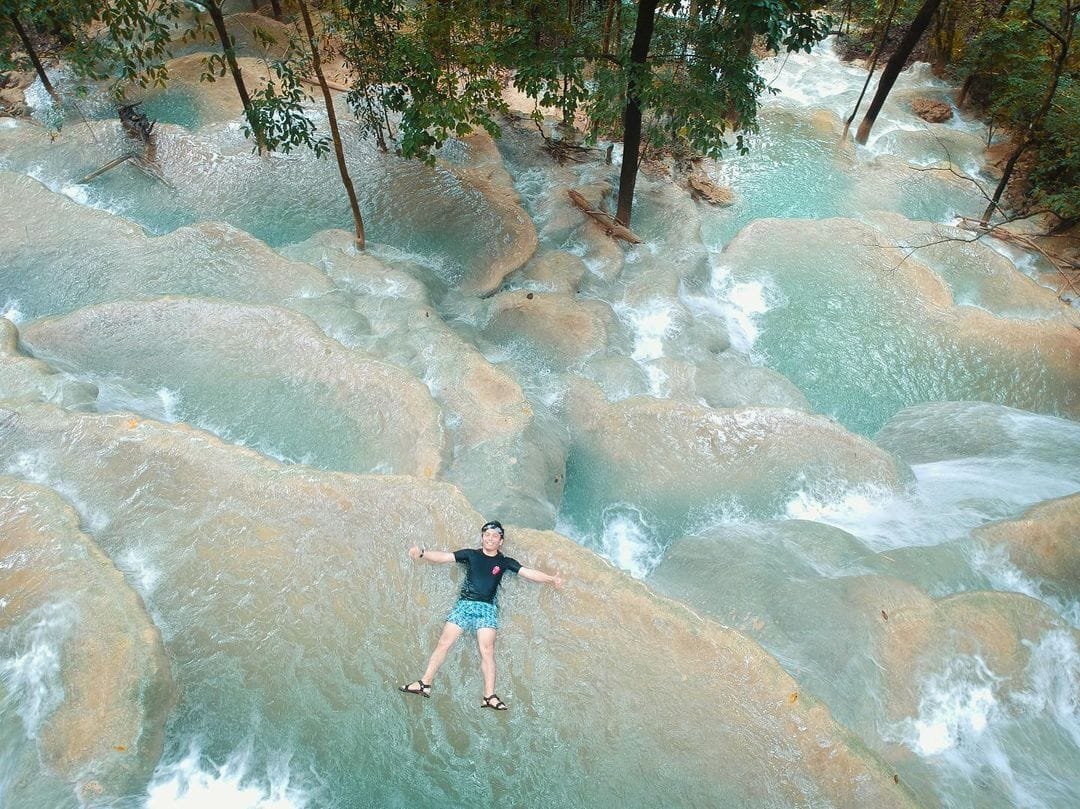
- Main terrace to upper pools: Once on the limestone, the terrain shifts completely. The travertine surface is rough and grippy, not slippery. You wade pool to pool, tier by tier, working your way up at your own pace.
The Balete Tree Midpoint
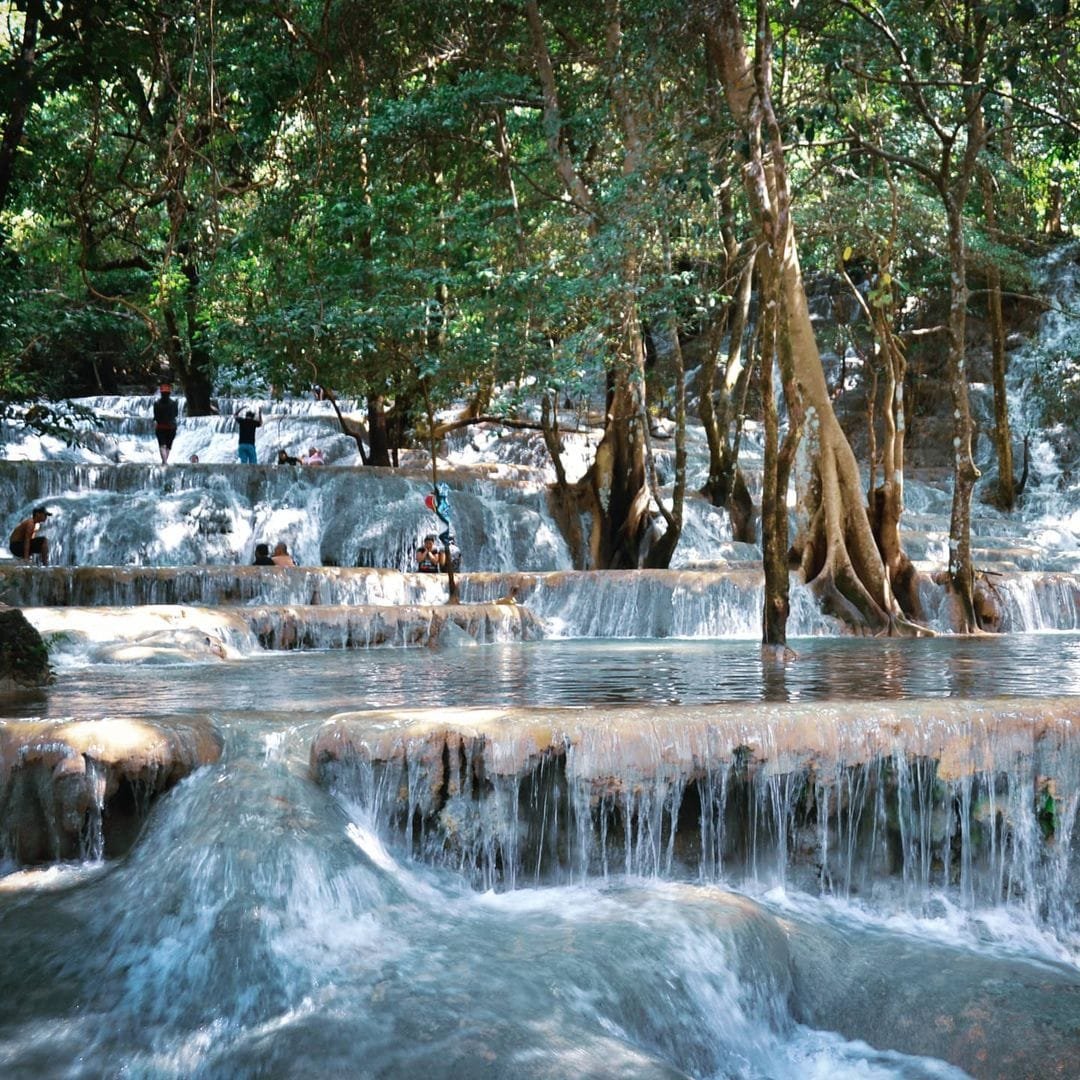
Roughly halfway up the terrace is a massive, century-old Balete tree (a strangler fig species). Its roots are encrusted in calcium carbonate, fusing wood and stone into a bizarre natural sculpture. It marks the midpoint of the terrace and makes a useful landmark if you’re keeping track of how far you’ve climbed.
Access Difficulty Score: 4 out of 5
The descent trail from the truck drop-off earns a 4 because the mud, exposed roots, and steep angle after three hours of truck travel combine into a genuinely testing final approach. The limestone terrace itself, once you’re on it, drops to a 2 out of 5 because the travertine surface offers excellent grip and the wading is gentle.
Swimming and Activities at Kaparkan Falls
Yes, you can swim at Kaparkan Falls, and wading through the interconnected travertine pools is the core activity of the visit.
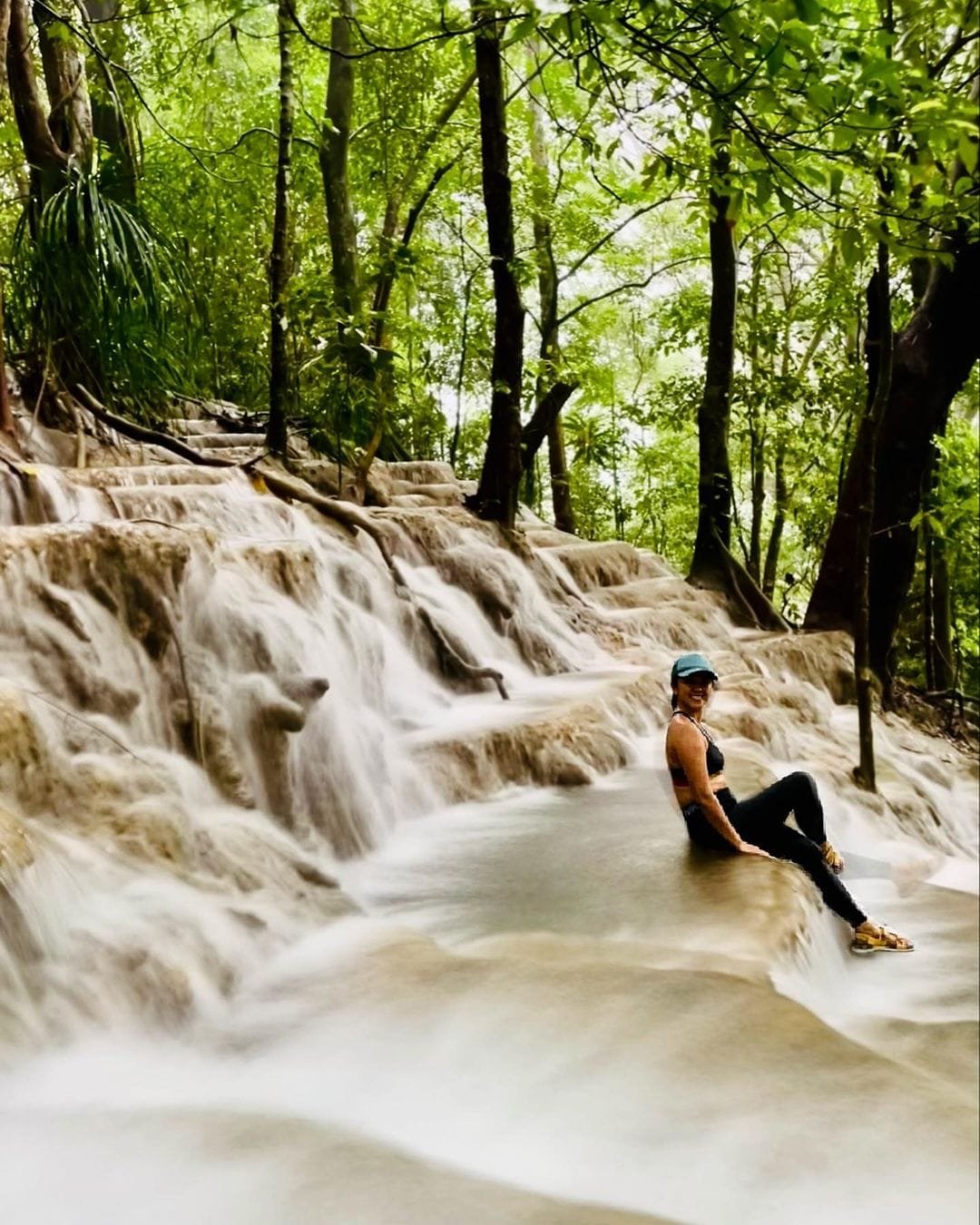
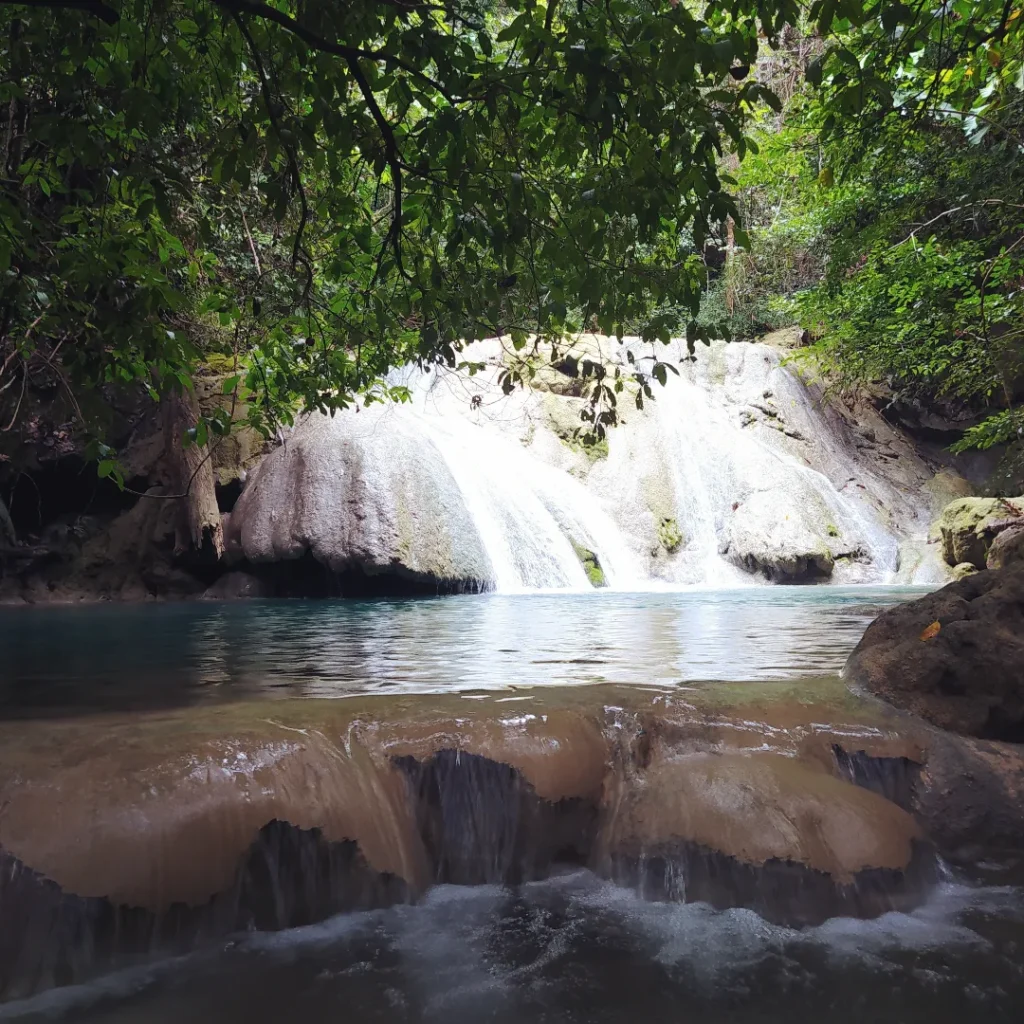
The pools sit in naturally formed limestone ridges called gours, each holding cold, flowing spring water. The water is clear and cold, fed directly from deep limestone reservoirs. There are no algae on the travertine surface because the continuous calcium carbonate precipitation prevents it from taking hold. This makes the rock surprisingly grippy rather than slippery.
Visitors wade and swim across the terraces for the full three-hour window allotted at the site. You move from pool to pool, climbing the 500-meter terrace from the lower end near the Tineg River up toward the spring source. Guides indicate which pools are safe to enter at each level.
For a broader look at other waterfalls and swimming spots around the Philippines, this river, lake, and falls travel guide covers many comparable destinations worth adding to your list.
Best Time to Visit Kaparkan Falls
Visit between July and October. The site only operates during the monsoon season because the spring-fed terraces depend on rainfall to maintain water levels. Outside of this window, the LGU closes the site and no tours depart.
August and September are peak months. The pools are fullest, the terraces are most photogenic, and the truck demand is highest. Book your slot well in advance if you’re targeting these months, because the 100-person daily cap fills fast.
Expect rain. Every single day during monsoon season carries the possibility of a downpour. When I visited in September 2026, it rained before dawn and then again on the truck ride home. The trail was muddy before the first group even arrived. That’s normal and expected. Bring a rain jacket, not a poncho.
Avoid the tail end of October if there’s an active typhoon signal in the Cordillera region. The LGU cancels tours when conditions become unsafe, but weather in the highlands can shift quickly.
Budget Breakdown for Visiting Kaparkan Falls
| Expense | Cost (PHP) |
|---|---|
| Bus fare Manila to Bangued (Cubao, Super Deluxe) | PHP 960 |
| Bus fare Baguio to Bangued (Deluxe) | PHP 663 |
| Tricycle from Partas terminal to DPWH Compound | PHP 20 |
| LGU all-in local package (truck, guide, fees) | PHP 1,999 |
| DIY truck slot (max, if available) | PHP 1,000 |
| Environmental fee (included in both packages above) | PHP 10 |
| Overnight accommodation, Abra Valley Grand Hotel (budget) | PHP 700+ |
| Overnight accommodation, Strutz Art Garden Resort (mid-range) | PHP 3,907 (avg high season) |
| Breakfast: Abra Miki Super Special bowl | PHP 64 |
| Tapsilog at local eateries near staging area | PHP 80–120 |
| Estimated total per person (mid-range, from Manila) | PHP 4,700–6,500 |
The biggest variable is accommodation. Budget travelers can keep costs under PHP 5,000 for the full overnight-and-trek package from Manila. The LGU all-in package at PHP 1,999 is the most cost-efficient option when you factor in the guide, truck, and fees separately.
What to Pack for Kaparkan Falls
| Item | Essential? |
|---|---|
| Reusable water flask (minimum 1.5L) | Yes, mandatory. PET bottles are confiscated. |
| Trekking sandals or aqua shoes | Yes. Better than boots on the travertine. |
| Rain jacket | Yes. A poncho blows off in the truck. |
| Trekking poles | Strongly recommended for the muddy descent. |
| Dry bag or waterproof pouch for phone/wallet | Yes. You will get wet. |
| Hard reusable food containers | Yes. No plastic wrapping allowed. |
| Change of clothes in a sealed bag | Yes. No changing facilities at the falls. |
| Sunscreen (reef-safe, no aerosol) | Yes. Reflective limestone amplifies heat on clear days. |
| Extra PHP in cash | Yes. No ATMs beyond Bangued town plaza. |
| Headlamp or phone flashlight | Yes. Pre-dawn registration and dark truck cabin. |
| Quick-dry shorts and rash guard | Yes. You’ll be in and out of pools for three hours. |
| Insect repellent | Yes. Trail through dense jungle. |
| Valid government-issued ID | Yes. Required at registration checkpoint. |
Leave hiking boots at your accommodation in Bangued if you have them. The travertine limestone at Kaparkan is completely free of algae because the active calcium carbonate precipitation creates a micro-abrasive surface. High-quality open-toed trekking sandals or aqua shoes with textured rubber soles give you far better feel and grip across the wet terraces than any waterlogged boot would.
Safety Tips for Visiting Kaparkan Falls
Kaparkan Falls is a genuinely safe destination when you follow the guide’s instructions, but the monsoon environment and remote location make preparation non-negotiable.
Flash flood risk is real. The Tineg highlands can receive intense rain in a matter of minutes. If the sky darkens rapidly and the sound of the water changes, move to higher ground immediately and wait for your guide’s instruction. The truck departure schedule is also partly a safety mechanism: the convoy must be back on the highland road before late-afternoon storm systems build.
The approach trail is the most dangerous part, not the water. The 10 to 15-minute descent from the truck drop-off to the terrace involves steep, root-exposed, rain-slicked terrain. Take it slowly. Use poles. If you slip, the guide is there, but the mud does not care about your hiking experience level. Grip something solid at every step.
Water depth on the travertine terraces varies by tier. Most pools are ankle to knee-deep, but some of the lower tiers near the Tineg River are deeper. Your guide will indicate which pools are safe to enter. Stay within designated swim areas. Do not cross ridge edges alone.
Non-swimmers should inform their guide at orientation. There are no life vests issued at the site, so anyone uncomfortable in water needs to stay in the shallowest pools and remain within arm’s reach of a guide or companion. The current is gentle within the gour pools, but water flowing over the terrace edges is faster and should not be tested.
Rocks between tiers are wet and mossy away from the travertine. The terrace itself is grippy. The natural stones at the edges of the terrace and beside the trail are covered in wet moss and are genuinely slippery. Wear your aqua shoes at all times. Do not go barefoot.
Zero cell signal from the moment the truck leaves the paved road. All networks including Globe, Smart, and DITO lose signal once you enter the highland route. Inform someone of your itinerary and your expected return time to Bangued before you board the truck. Download offline maps beforehand. Coordinate your return transport before departure, because you cannot call anyone from the site.
No medical facilities exist along the route. The nearest hospitals, Abra Provincial Hospital and Seares Memorial Hospital (contact: +63 74 752 8350), are both in Bangued. Any injury at the falls requires a three-hour truck ride back before professional medical care is possible. Take the safety orientation seriously.
Frequently Asked Questions About Kaparkan Falls
How long does it take to get to Kaparkan Falls from Manila?
The total travel time from Manila to the falls is roughly 10 to 12 hours. A night bus from Cubao takes approximately 8 hours to reach Bangued, arriving between 4:00 AM and 5:00 AM. After a short tricycle ride to the DPWH Compound, the monster truck ride to the falls takes another three hours. Factor in registration and orientation from 5:30 AM, and most visitors are standing at the travertine terraces by around 9:30 AM to 10:00 AM. Budget two full days: one for travel to Bangued and overnight rest, the next for the full trek.
Is Kaparkan Falls open during the dry season?
No. The LGU closes the site entirely during the dry season. The falls operate exclusively during the monsoon season, typically from July through October, depending on rainfall levels. Outside this window, no trucks depart and no permits are issued. Attempting to visit independently outside the open season is not only logistically impossible without the LGU truck, it is also prohibited under the site’s regulated access rules.
Do you need a guide to visit Kaparkan Falls?
Yes, a local guide is mandatory for every visitor. Guides are allocated through the LGU package or the DIY truck slot; you do not arrange one separately. The guide accompanies the group from the truck staging area through the descent trail and across the travertine terraces. They manage safety at the water, lead the orientation on conservation rules, and direct the return timing so the convoy reaches paved roads before late afternoon. There is no legal self-guided access to the site.
What is the entrance fee for Kaparkan Falls?
The LGU all-in package is PHP 1,999 per person, which covers the roundtrip monster truck seat, the mandatory guide, the municipal tourism fee, and the PHP 10 environmental fee. If you arrange transport independently, a public truck slot costs up to PHP 1,000, with the PHP 10 environmental fee included. There is no standalone gate entrance fee separate from these package structures. All payment is in cash only; no digital payments are accepted anywhere along the route.
Is Kaparkan Falls safe for solo travelers?
Yes, solo travelers visit Kaparkan Falls regularly without issue. Because the LGU batches all visitors together in groups capped at 100 people per trip, you’re never alone on the trail or at the water. The mandatory guide assignment means there’s always someone responsible for your safety. The main practical concern for solo travelers is cost: the all-in PHP 1,999 package is per-person regardless of group size, so there’s no shared discount. Book through a Manila-based tour operator or coordinate directly with the Tineg LGU to secure your slot well before your travel date, especially for August and September visits.
What I Would Do Differently Next Time
Book the accommodation closer to the DPWH Compound. I stayed centrally in Bangued, which meant an extra tricycle leg at 5:00 AM when my brain was not fully operational. Next time, I’d confirm whether any guesthouses near Zone 7 take walk-ins, or at least pre-arrange a tricycle the night before.
Eat tapsilog before boarding, not after. The tapsilog available near the staging area is good, substantial, and cheap. I skipped it thinking I’d eat on the trail. There is no food on the trail and no stalls at the falls. By hour two of the truck ride, I regretted that decision thoroughly.
Bring a second dry bag for shoes. My aqua shoes were soaked through before I even reached the terrace, just from the mud on the descent. That’s fine. The problem was putting them back on inside the truck for three hours without a bag to contain them.
Final Verdict: Is Kaparkan Falls Worth Visiting?
5 out of 5 for adventure travelers and nature-focused visitors who come prepared. Kaparkan Falls is not a casual waterfall stop; it is a full-day physical commitment with a precise logistical window, zero cell signal, no toilets at the site, and a three-hour truck ride each way through conditions that will test your patience. Every single element of that difficulty is exactly what makes arriving at those 500 meters of white travertine terraces feel so disproportionately rewarding. If you follow the logistics in this guide, show up at the DPWH Compound by 5:30 AM with your cash and your reusable flask, Kaparkan Falls will be one of the most memorable days you spend anywhere in the Philippines.
If you’re building out a broader Abra hiking itinerary, the guides to Mt. Baruyen’s Windows XP trail and Aw-asen Falls in nearby Ilocos Sur pair well with a Kaparkan Falls trip for a full multi-day Cordillera circuit.

Could you try to contact the LGU of Tineg, Abra? https://www.facebook.com/profile.php?id=100085470035872
This travel blog is incredibly informative and well-researched, offering valuable tips and insights for both first-time and seasoned travelers. The detailed itineraries and personal experiences make it easy to plan trips with confidence. Anyways, do you have any food recommendation on the nearby area?