By Aiden Kenzy, the founder of Lakbay Pinas and a passionate Filipino travel writer dedicated to uncovering the destinations across the Philippines. Since 2015 — Visited: June 2026 — Published: September 2026
Quick Answer: Aw-Asen Falls in Sigay, Ilocos Sur is the tallest verified waterfall in the Ilocos Region, dropping roughly 110 to 120 meters in a single massive plunge into a deep rock basin. Getting there from Manila requires an overnight in Tagudin plus a pre-arranged monster jeep or habal-habal ride up a 24-kilometer mountain road, followed by a 45-minute hike — all of it manageable if you plan the logistics carefully before you leave home.
Key Takeaways:
- The LGU sets the environmental registration fee at PHP 50 per person and the mandatory guide fee at PHP 750 per group.
- The best time to visit is November to May (dry season): safer trail, drier stairs, and calmer water in the basin.
- The hike from the Barangay Sto. Rosario jump-off is rated Difficulty 2/9, making it one of the most accessible high-reward waterfall treks in northern Luzon.
- The single standout feature is the bamboo balsa raft at the basin, the only way to safely approach the falls’ mist-heavy impact zone.
Table of Contents
Where Is Aw-Asen Falls Located?
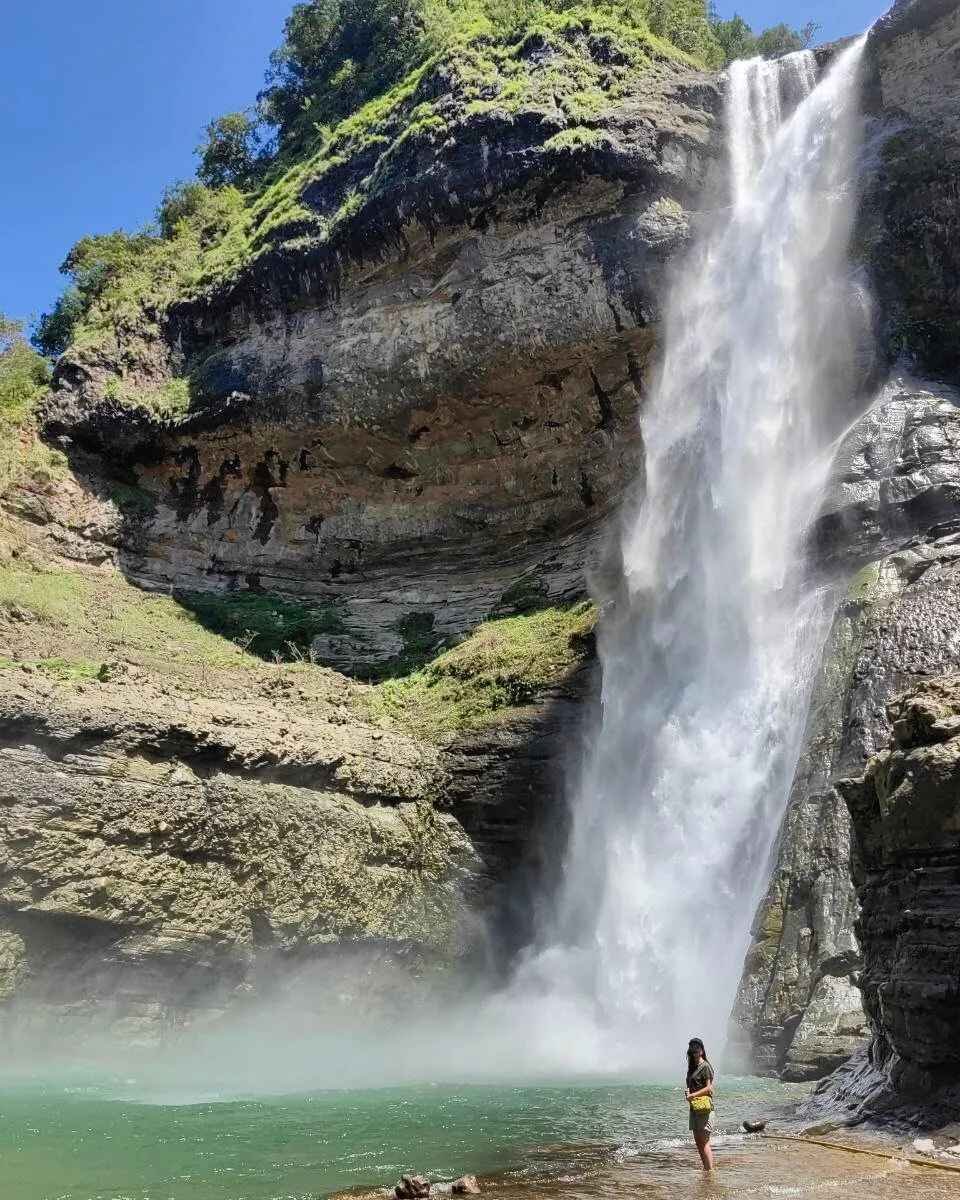
Aw-Asen Falls is in Barangay Santo Rosario in the municipality of Sigay, Ilocos Sur. Sigay sits deep in the Ilocos highland interior, far from the coastal highway that most Ilocos tourists stick to. The Tirad Pass Protected Landscape, established by Republic Act No. 11687, covers Sigay along with the municipalities of Gregorio del Pilar, Quirino, Cervantes, and Suyo. Aw-Asen Falls sits inside this protected zone, which means environmental rules are actively enforced on the ground.
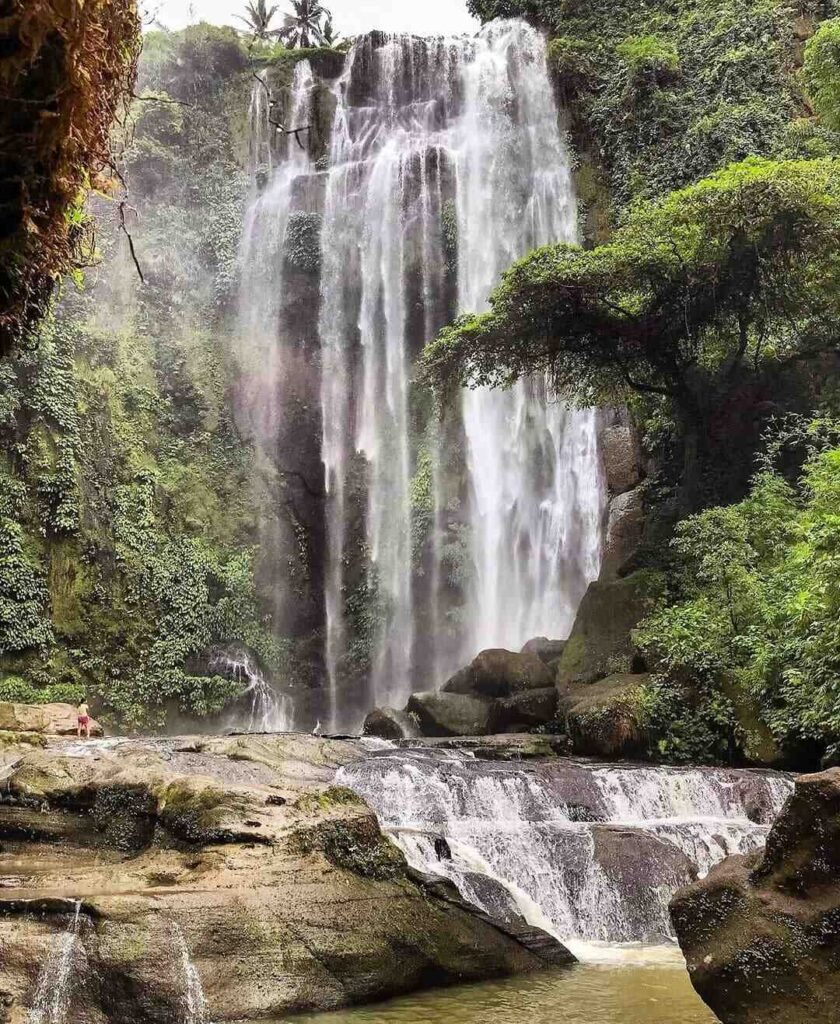
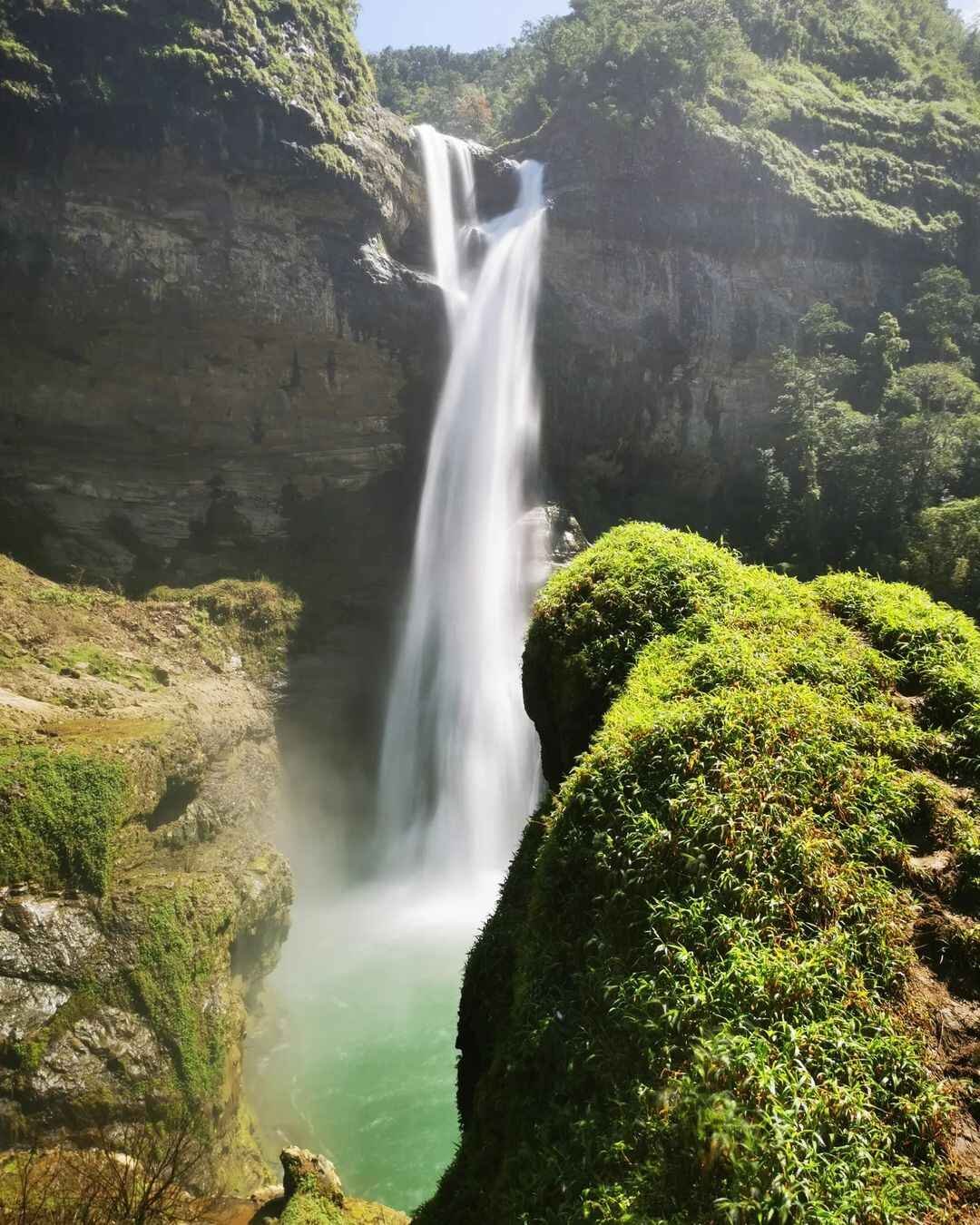
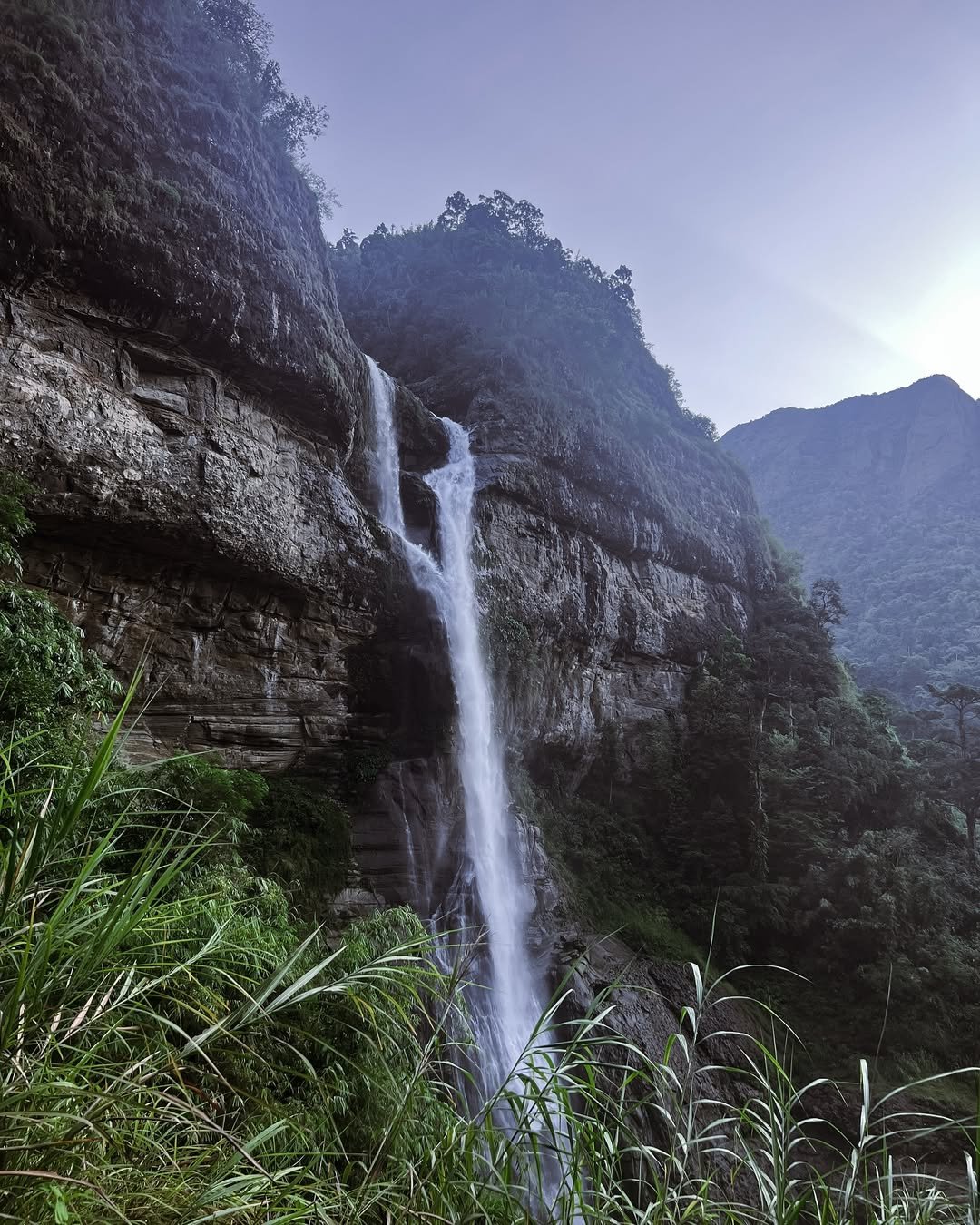
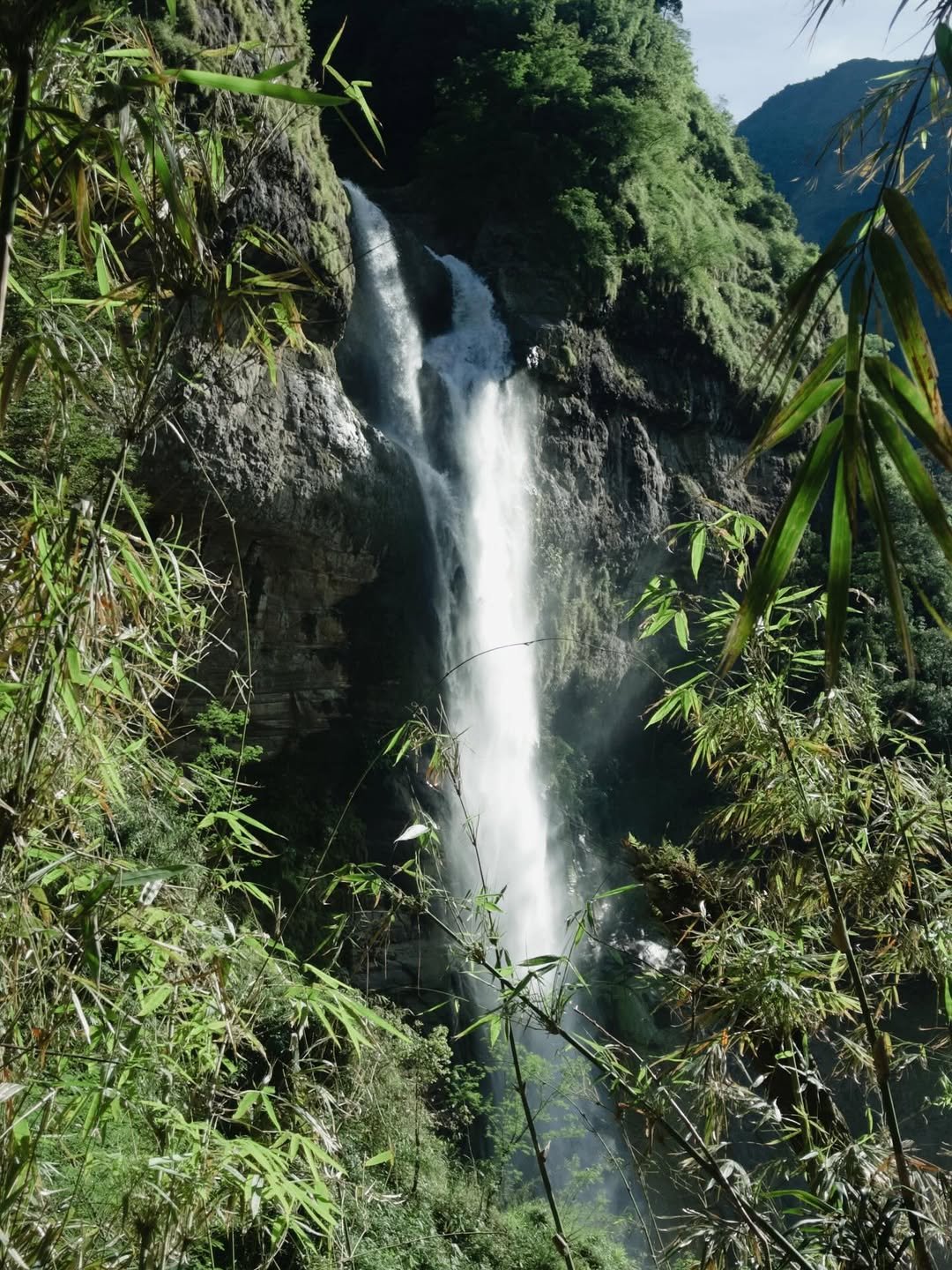
Aw-Asen Falls is the highest waterfall in the Ilocos Region with a height of 120 meters. The water comes directly from upland mountain springs. The remote location keeps the place away from pollution, and the water is so fresh you can drink it at its source.
If you plan to explore more of the Ilocos Region before or after this trip, check out our guide to the top Ilocos Sur tourist spots for a full picture of what else the province offers.
How to Get to Aw-Asen Falls
Getting here is the real challenge. The trip is three legs: Manila to Tagudin by bus, Tagudin to Barangay Santo Rosario by chartered high-clearance vehicle, then the trail on foot.
Leg 1: Manila to Tagudin
From Manila, ride any bus bound for Vigan or Laoag, usually departing from Cubao or Pasay. Alight in Barangay Bitalag (junction) in Tagudin, Ilocos Sur. Travel time is approximately 6 to 7 hours.
The two operators that run this route reliably are Viron Transit and Partas. Viron Transit fares from Cubao to Tagudin run around PHP 680; Partas ranges from PHP 650 (standard) to PHP 1,500 (luxury sleeper bus). Both depart roughly every four hours, so you’re not locked into one specific time.
My advice: take the overnight bus. You arrive in Tagudin early in the morning with the whole day ahead of you, rather than arriving midday and rushing the logistics.
Leg 2: Tagudin to Barangay Santo Rosario (the Hard Part)
From Tagudin Junction, transfer to chartered monster jeeps bound for Sto. Rosario in Sigay. The road covers about 24 kilometers, but the terrain is the issue. From Tagudin, the paved road gives way to steep mountain dirt tracks with narrow single-lane cliffside sections. During wet season the riverbeds along the route run heavy and demand a high-clearance vehicle.
For groups: A chartered monster jeep (4×4) runs around PHP 800 per passenger at current market rates. This is the most reliable option in any weather.
For solo travelers or pairs: An Aw-Asen Falls habal-habal ride from Tagudin covers the same route at roughly PHP 1,200 for a round-trip charter. Treat both figures as working field prices, not fixed official tariffs, and confirm rates directly when booking.
The most important thing I can tell you here: drivers are not waiting on-site for random passengers. Contact Sigay Tourism Officer Bal Quitor at 0916-443-0028 (Globe) or 0968-443-7926 (Smart) prior to your target date of visit. Arrange your two-way charter before you leave Manila. Showing up without a pre-booked driver and hoping someone is available at the jump-off is how you get stranded in a mountain barangay.
Entrance Fees, Permits, and Guide Requirements at Aw-Asen Falls
The environmental fee is PHP 50 per visitor, and hiring a guide costs PHP 750 per group. The bamboo balsa raft at the basin is a separate charge of PHP 50 per person. All fees are paid at the registration area in Barangay Santo Rosario.
The registration area is the strict administrative checkpoint. Camping is allowed near the site, but visitors must coordinate with the Sigay Tourism Office. Walk-in overnight stays without prior approval are not permitted. This matters for anyone planning to camp, not just for logistics but because Aw-Asen Falls falls within the Tirad Pass Protected Landscape, where environmental regulations are actively enforced.
Hiring a guide is not optional. The LGU makes it mandatory, and for good reason. Guides manage the river crossings, monitor upstream weather for flash-flood risk, and physically keep visitors away from the dangerous hydraulic zones near the plunge pool. Think of the PHP 750 as a safety cost, not an optional add-on.
Critical logistics note: There are zero ATMs in Sigay and no cashless payment anywhere on-site. Landbank and BDO ATMs are available along the national highway in Tagudin town proper. Withdraw everything you need before you start the inland climb. Calculate your full budget (transport, fees, food, emergency reserve) and bring physical cash.
Getting to the Water: The Trail at Aw-Asen Falls
Trail Overview
The trail from the Barangay Santo Rosario jump-off to Aw-Asen Falls covers 4 kilometers, with the jump-off point sitting at 372 meters above sea level. The hike is rated Difficulty 2/9, Trail Class 1 to 2. The trail takes around 45 minutes one way at a comfortable pace.
The trail composition is roughly 10 percent uphill, 25 percent flat, and 65 percent downhill. That means the descent to the falls is largely easy on your legs. The return climb is where most first-timers feel it.
Trail Stages
- Stage 1 (0 to 0.5 km): Cross active rice fields, then walk across a long suspended metal hanging bridge.
- Stage 2 (0.5 to 1.5 km): Cross two rivers, one with a hanging bridge, on the trail to the falls.
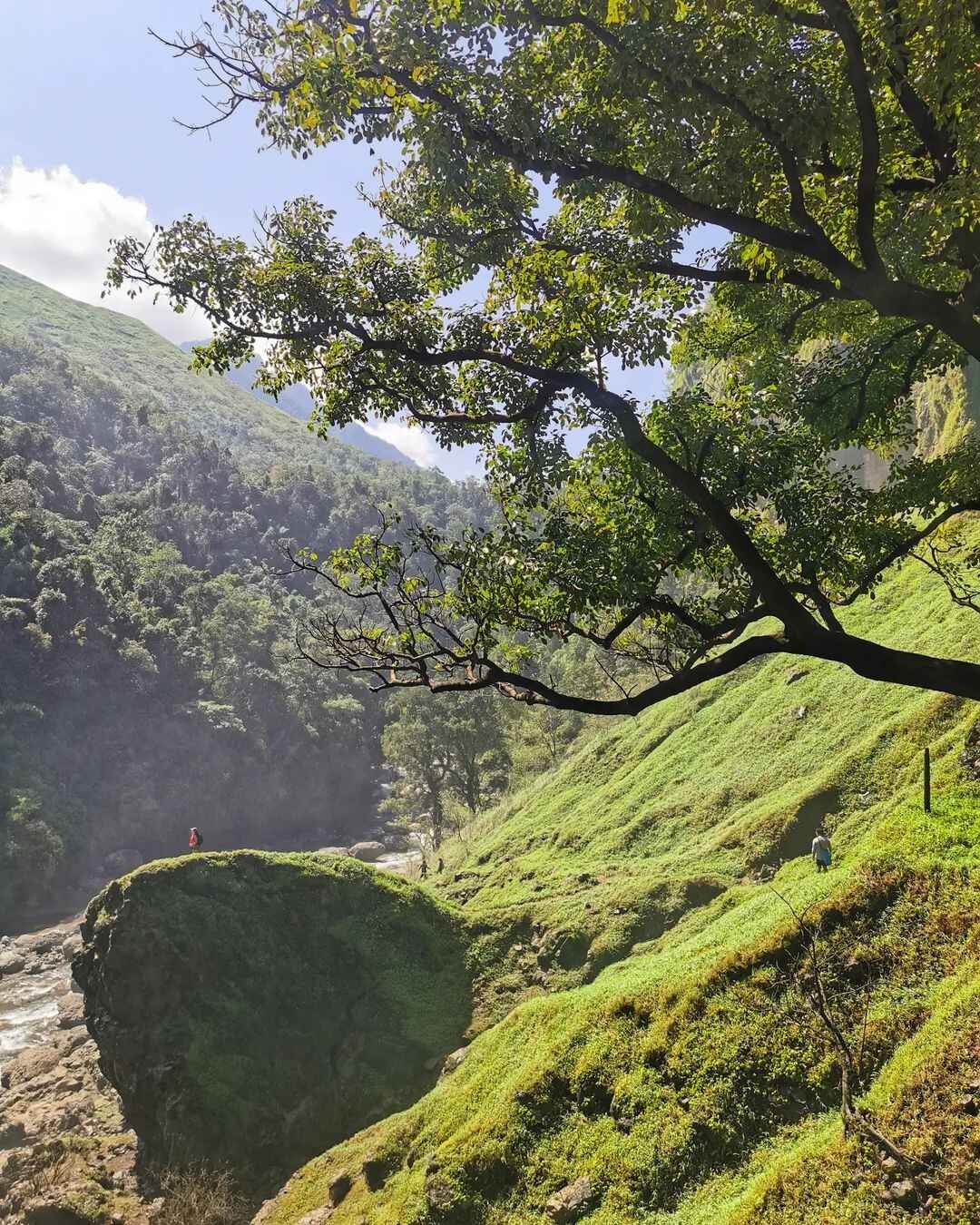
- Stage 3 (1.5 to 4 km): Enter dense forest, then descend via concrete staircases with metal handrails down the valley wall to the basin.
Honest Assessment of the Trail Infrastructure
The LGU has heavily upgraded the trail. Construction efforts are underway to establish a comfort room and upgrade hiking paths, including the installation of handrails along the trails for additional safety. This cementation makes the trail accessible to beginner hikers and older visitors. A 60-year-old first-time hiker completed it comfortably, which tells you something about the realistic difficulty.
The trade-off is real, though. The concrete stairs have a sterile, urban feel in the lower sections of the valley. Wilderness purists will notice it. If you’re coming for a raw jungle experience, the basin itself is what delivers that feeling, not the path down.
The steps are uneven and close-spaced in stretches. On the way back up, that unevenness becomes a genuine leg-burner. Build in more return time than you think you’ll need. The hike down takes 45 minutes. The return climb can take 60 to 75 minutes if you haven’t done any training.
What I Would Do Differently Next Time
I arrived mid-morning in June, and the basin was already filling up with tour groups. The light was good, the water was full from the previous week’s rain, and the falls themselves were exactly as large as I’d hoped. But the crowds were real. Next time, I’d push my arrival to around 2:00 PM, after the morning tour groups have already started heading back up. The valley empties fast by early afternoon. Standing in front of a 120-meter waterfall with almost no one around is a completely different experience than sharing the viewing rock with fifty other people.
I’d also pack a dry change of clothes in a separate waterproof bag. The mist from the falls soaks everything within twenty meters. My camera was fine inside its dry bag, but I spent the last hour of the hike back in wet shorts.
Swimming and Activities at Aw-Asen Falls
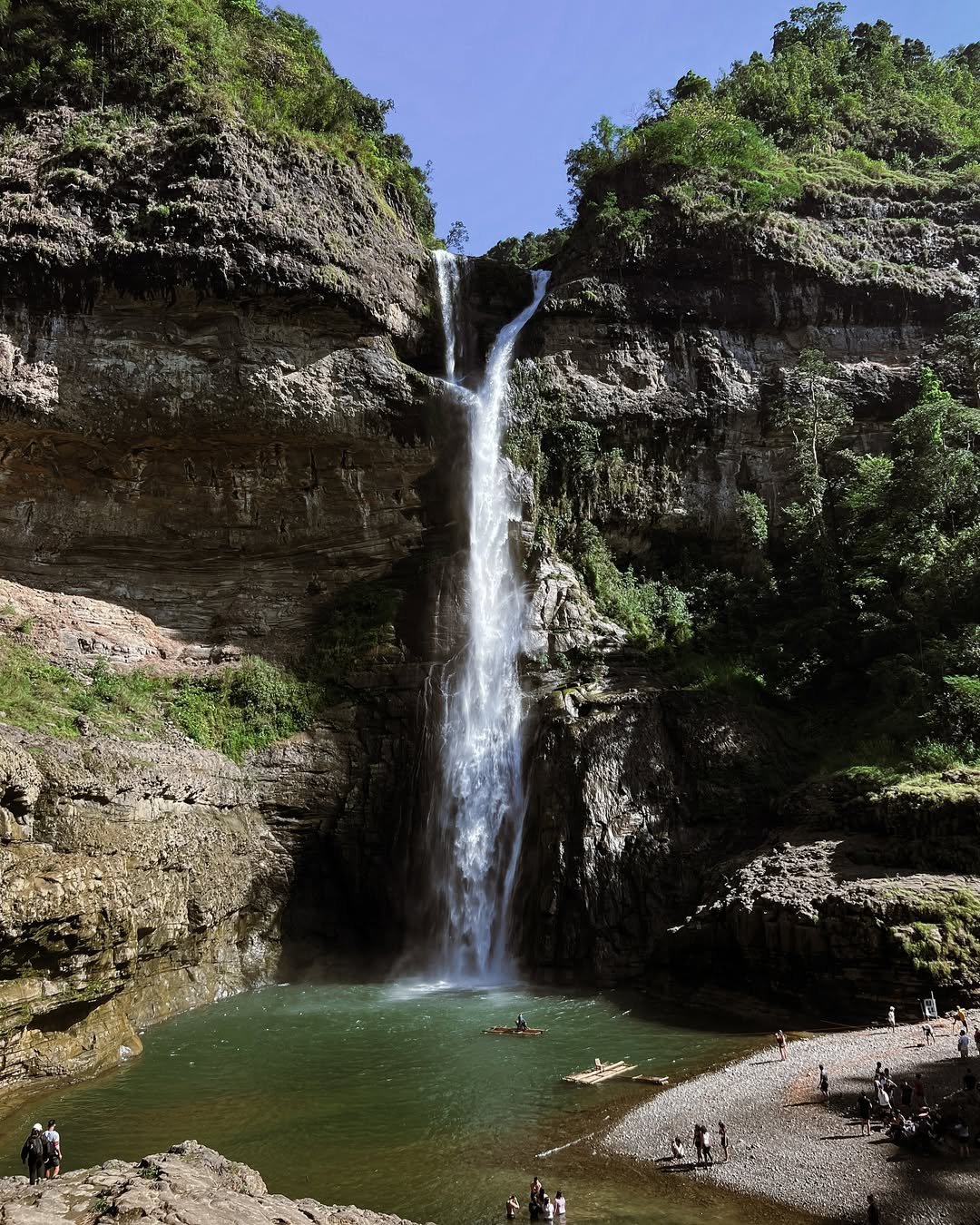
The water basin runs deep and still during summer; non-swimmers can enjoy the place floating on a raft. The pool is fed by spring water flowing down from the highland mountains. The water comes from a spring uphill and is so fresh that you can even drink from it.
Swimming is possible in the calmer areas of the basin away from the main plunge. The basin drops to around 7 feet deep almost immediately off the rock ledges, so non-swimmers should stay on the raft or at the water’s edge with supervision. There is no shallow wading zone in the center of the pool.
The main activity at the water is the bamboo balsa raft. For PHP 50 per person, your guide pulls the raft across the center of the basin using a rope system anchored to the cliff walls. The highlight for many visitors is floating on a bamboo raft in the mist. From the raft surface, the cliff walls look much taller than they do from the concrete viewing platform, and you get close enough to the impact zone to feel the continuous spray.
You cannot safely swim directly under the falls. The hydraulic force of a 120-meter plunge creating displacement in the basin produces strong, unpredictable undertows. Getting close to the main impact point on your own is physically dangerous. The raft is the right way to experience proximity to the falls.
For more waterfall adventures across the Philippines, see our complete guide to rivers, lakes, and falls.
Best Time to Visit Aw-Asen Falls
The dry season, November to May, is the best time to visit Aw-Asen Falls for most travelers. What makes Aw-Asen Falls unique is the constant water flow year-round, even during summer. The falls don’t dry out in summer the way many regional waterfalls do, so you always get a full view of the drop regardless of season.
During the dry months the trail is far safer, the concrete stairs aren’t as slippery, and the river crossings are shallower and manageable. The water in the basin is calmer, which makes the raft ride more comfortable and swimming safer.
The rainy season (June to December) produces a dramatically larger volume of water, which creates a louder, more visually powerful waterfall. The surrounding moss and forest look their most alive. The trade-off is a genuinely slippery trail, fast-rising river crossings, and a real flash-flood risk on the approach road. I visited in June and caught a sunny day by luck. But my guide was clear: if it rains upstream before we start the hike, we’d have waited at the registration area until conditions settled. Be flexible with your schedule in wet season.
Visitors recommend going on weekdays to avoid crowds and long waits for photos at the iconic spot. On peak weekends, the basin receives hundreds of visitors. A weekday visit in the dry season is the ideal combination.
Budget Breakdown for Visiting Aw-Asen Falls
| Expense | Cost (PHP) |
|---|---|
| Bus fare (Manila to Tagudin, one-way, standard) | PHP 650 to 680 |
| Accommodation in Tagudin (per night) | PHP 1,000 to 3,916 |
| Inland transport (monster jeep, per head, round-trip) | ~PHP 800 per person |
| Inland transport (habal-habal, solo/pair, round-trip charter) | ~PHP 1,200 |
| Environmental/registration fee | PHP 50 per person |
| Mandatory guide fee | PHP 750 per group |
| Bamboo balsa raft | PHP 50 per person |
| Food and water (packed from Tagudin) | PHP 200 to 400 |
| Emergency reserve (cash only) | PHP 500 minimum |
| Approximate total per person (DIY, group of 4) | PHP 2,500 to 3,500 |
Accommodation in Tagudin: Some inns and homestays around Tagudin range from PHP 1,000 to PHP 2,000 per night per group. Higher-end options like Buenavista Family Inn (with pool) run around PHP 3,916 per room on standard booking platforms. There are absolutely no commercial lodging options in Sigay or at the Barangay Santo Rosario jump-off.
What to Pack for Aw-Asen Falls
| Item | Essential? |
|---|---|
| Traction trail shoes or rugged trekking sandals with grip soles | Yes |
| Waterproof dry bag for phone, camera, wallet | Yes |
| Change of clothes (sealed in plastic inside bag) | Yes |
| At least 1.5 liters of water per person | Yes |
| High-energy trail food (nuts, energy bars, rice meals) | Yes |
| Light windbreaker or quick-dry jacket | Yes |
| Trekking poles (optional, helpful on return climb) | Recommended |
| Insect repellent | Recommended |
| First aid basics (plasters, antiseptic, pain relief) | Yes |
| All cash for the full trip (no ATM on-site) | Yes |
| Sunscreen | Yes |
| Trash bags (Leave No Trace is enforced) | Yes |
Bringing food is allowed, but travelers are requested to take their trash home with them and do their part to keep the waterfall clean by not littering. There are no waste bins on the trail or at the basin. Pack everything out. The guides enforce this.
The most underrated item is your footwear. Smooth-soled urban sneakers fail on algae-covered rocks and wet concrete stairs. The river crossings involve submerged boulders. Bring shoes with actual grip.
Safety Tips for Visiting Aw-Asen Falls
Safety at Aw-Asen Falls comes down to four specific risks, and you should understand each one before you reach the basin.
1. The basin depth and undertows. The pool reaches around 7 feet deep almost immediately off the ledge. There is no gradual entry point in the center of the basin. Non-swimmers must stay on the bamboo raft or at the rocky shore. The main plunge creates aggressive undertows. Do not swim toward the impact zone under any circumstances.
2. Flash flooding. The highland watershed above Sigay can send water downstream rapidly even when the sky above the trail looks clear. The local government is currently improving the visitor experience by adding restrooms, improving trails, and building a bridge to avoid dangerous river crossings. Until that bridge is complete, your guide makes the call on whether the river crossings are safe. Trust that call.
3. Slippery stairs and rocks. The concrete steps become genuinely hazardous when wet, either from rain or from the constant mist near the falls. Slow down on the descent. The return climb on those same stairs takes more out of you than you expect. Take rest breaks rather than pushing through fatigue.
4. Zero cellular signal at the basin. There is no mobile network at the falls from Globe, Smart, or DITO. A weak Smart/TNT signal is occasionally available near the jump-off area. A coin-operated peso WiFi machine at the Barangay Santo Rosario registration area provides satellite internet access. Use it to confirm your driver pickup before you head down the trail.
If a medical emergency happens at the falls, a guide has to physically run the 4-kilometer trail back to the jump-off before any help can be contacted. This is precisely why the guide is mandatory. They are trained in water safety, flash-flood monitoring, and emergency protocols. Do not attempt this trail solo without having confirmed your guide arrangement at registration.
For comparison with another challenging remote waterfall in northern Luzon, see our Kaparkan Falls guide.
Frequently Asked Questions About Aw-Asen Falls
How do you get to Aw-Asen Falls from Manila by public commute?
A journey of about six to eight hours by road from Metro Manila via Tagudin or Candon City, Ilocos Sur, is expected, followed by a 45-minute hike. Take any northbound Ilocos Sur bus from Cubao or Pasay (Viron Transit or Partas) and alight at Bitalag Junction in Tagudin. From there, charter a monster jeep or habal-habal for the 24-kilometer inland climb to Barangay Santo Rosario, which you must pre-arrange before your trip by contacting the Sigay Tourism Office. The DIY route is very doable, but the inland transport must be booked in advance.
Is the hike to Aw-Asen Falls beginner-friendly?
The difficulty level of the trail is Easy and is perfect for beginner hikers. It is officially rated a minor climb at Difficulty 2/9, covering 4 kilometers total. The LGU has installed concrete staircases and metal handrails along the steepest sections, which significantly reduces the challenge for less experienced trekkers. The return uphill climb is physically demanding, so budget at least 60 to 75 minutes for the ascent back to the registration area.
Can you swim at the base of Aw-Asen Falls?
The water basin runs deep and still during summer, and non-swimmers can enjoy the place floating on a raft. Stronger swimmers can enter the basin in the calmer areas away from the main plunge, but the pool drops to around 7 feet deep near the rock ledges, and undertows near the impact zone make swimming directly under the falls dangerous. The safest and most rewarding way to experience the water up close is the guided bamboo balsa raft ride, which costs PHP 50 per person.
What is the entrance fee and guide fee at Aw-Asen Falls?
The fees required to visit Aw-Asen Falls are a guide fee of PHP 750 and a registration fee of PHP 50. A bamboo raft ride at the basin is an additional PHP 50 per person. The guide fee is paid as a single per-group charge, not per individual, so it becomes more economical in larger groups. Hiring a guide is mandatory under local LGU rules, not optional.
What is the best time of year to visit Aw-Asen Falls in Ilocos Sur?
The dry season from November to May is the best time for most visitors, particularly those on their first trip. The trail is drier and safer, the river crossings are shallower, and the basin is calmer for swimming. Sigay Tourism Officer Balligi Quitor confirmed that Aw-Asen Falls flows year-round, even during summer, so you get a full waterfall regardless of season. Rainy-season visits (June to December) produce a more voluminous, dramatic falls but introduce flash-flood risk and genuinely slippery trail conditions.
Final Verdict: Is Aw-Asen Falls Worth Visiting?
Aw-Asen Falls delivers exactly what the logistics demand of you. The stunning 120-meter drop makes the effort worth it, and the bamboo raft experience at the basin is something you simply cannot replicate at any other waterfall in the region. 4.5 out of 5 for adventure travelers and waterfall enthusiasts willing to handle the multi-leg transport. First-timers who plan ahead, book transport in advance, bring all cash from Tagudin, and arrive on a dry-season weekday will leave with one of the most memorable waterfall experiences in all of northern Luzon.
If you’re building a wider Ilocos itinerary, pair this with the rest of what the province offers. Our Ilocos Norte tourist spot guide covers what’s waiting for you just north of the border.