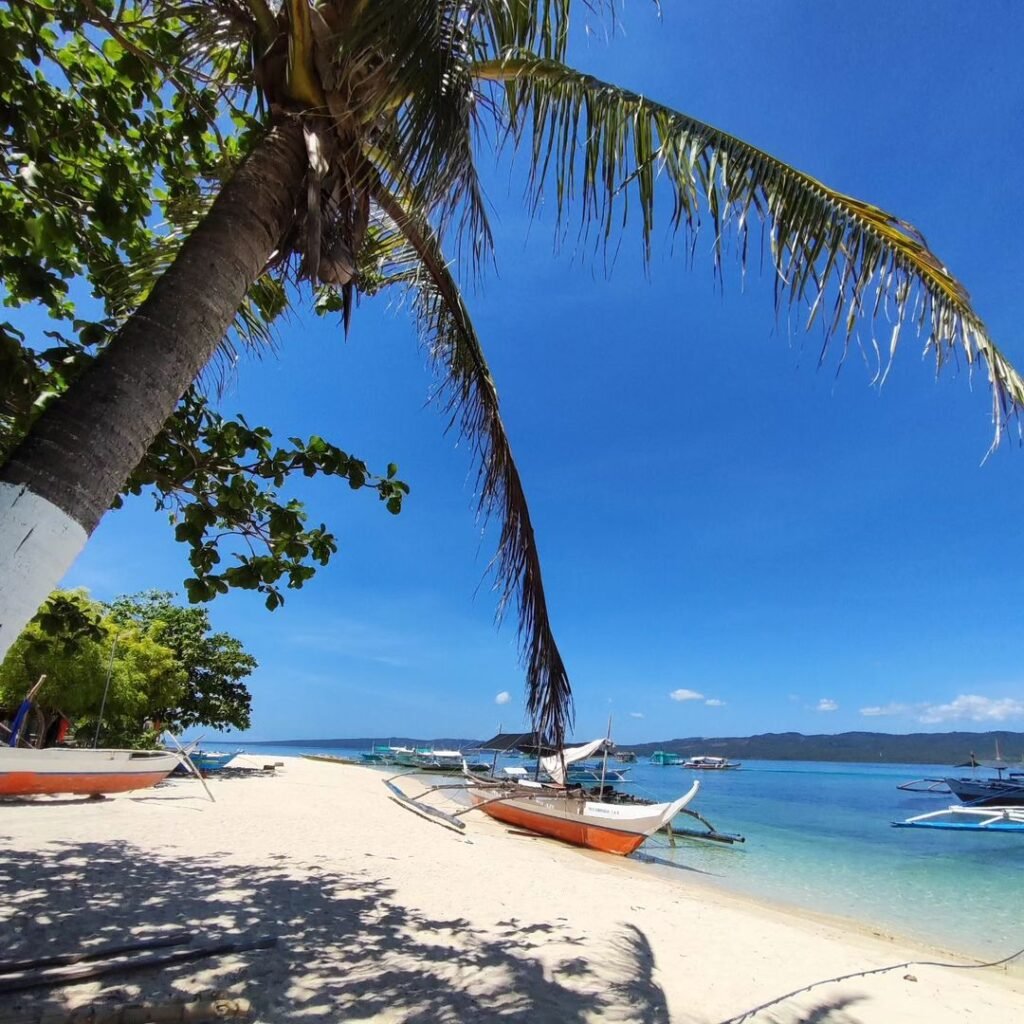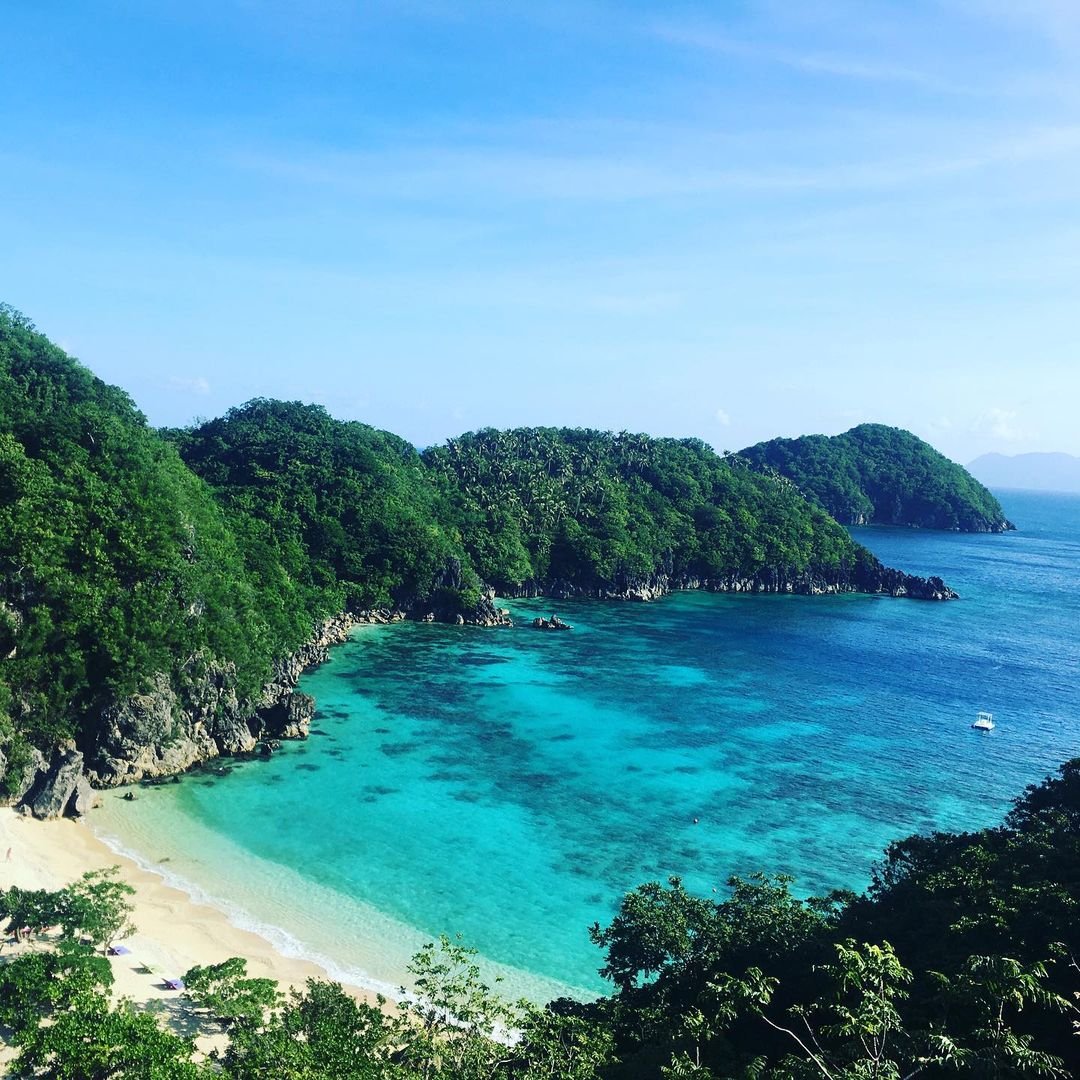
Caramoan Island is not a single island. It is a cluster of limestone formations, sandbars, and pocket beaches. These are spread across the eastern coast of Camarines Sur in the Bicol Region.
They are grouped under the municipality of Caramoan on the Caramoan Peninsula. People come here for one reason above all others: to hop between islands that look like they were designed for a reality television show, which, in several cases, they literally were. I was back in May 2026, my most recent visit, and the place still earns its reputation.
Getting there and navigating the logistics requires more planning than most beach trips in the country. Having covered 69 of 82 Philippine provinces since 2015, I can say Caramoan sits in a category of its own for sheer visual drama per hour of boat ride.
Caramoan, Camarines Sur sits at the southeastern tip of the Caramoan Peninsula, separated from the rest of Luzon by the Caramoan National Park and the dense mountain range behind it. The municipality is roughly 450 to 500 kilometers from Manila by road, and is not accessible by plane. The nearest airport is in Naga City (officially Pili Airport), about 100 kilometers away.
That isolation is the whole point. It is also the thing that makes the trip harder than it should be, and the reason two nights is the absolute minimum stay.
Key Takeaways
- The jump-off point for most island hopping tours is Paniman Beach, about 15 to 20 minutes by tricycle from Caramoan town proper.
- Boat charter fares (as of September 30, 2026): ₱1,500 to ₱2,000 for the short route and ₱2,500 to ₱3,000 for the long route, per boat for up to six passengers.
- The mandatory environmental fee is ₱30 per person, paid at the port before boarding.
- Best months to visit are November through May (amihan season), with March to May the most reliably calm for open-water crossings.
- Travel time from Naga City to Caramoan by public bus is 4 to 5 hours via the Gov. Felix A. Fuentebella National Highway.
- The old Sabang-to-Guijalo sea route is no longer operating. Use the land route only.
- Skip this trip if you cannot handle an 11-to-14-hour overnight bus ride and open-water boat crossings in a small bangka.
Table of Contents
Where Is Caramoan Island and How Do You Get There?
Caramoan is located on the eastern seaboard of Camarines Sur, Bicol Region, Philippines. The municipality sits at the end of the Caramoan Peninsula, flanked by the Lagonoy Gulf to the south and the Pacific Ocean to the east.
There is no airport, no major ferry terminal connected to Manila, and no expressway. Every traveler arrives overland, either directly from Manila or through Naga City as a mid-point.
The direct Manila-to-Caramoan bus is the recommended route for most DIY travelers. Operators including Raymond Transportation, Peñafrancia Tours, and Isarog run overnight air-conditioned coaches from Araneta Center Cubao, Pasay, and the Parañaque Integrated Terminal Exchange (PITX) straight to Caramoan town proper. The ride covers approximately 450 to 500 kilometers of the Pan-Philippine Highway and the Fuentebella Highway, arriving in Caramoan Centro the following morning.
Board the 6:00 PM or 8:00 PM departure so you sleep through the long haul and arrive ready to check in. Confirm current departure times with the terminal before you go, because schedules shift with demand.
Fares as of September 30, 2026 are below. Boat fares and bus fares here follow diesel, so when pump prices jump the rate at the ticket window usually moves with it.
| Route | Mode | Fare | Travel Time |
|---|---|---|---|
| Manila (Cubao / Pasay / PITX) to Caramoan | Direct overnight air-con bus | ₱1,000 to ₱1,300 | 11 to 14 hours |
| Manila to Naga City | Provincial bus | ₱700 to ₱1,300 | 8 to 9 hours |
| Manila to Naga City | Flight (PAL, Cebu Pacific, AirAsia) | ~₱2,000 and up | 45 to 60 minutes |
| Naga City to Caramoan | Air-con bus (MRR, Florencia, Raymond) | ₱270 to ₱350 | 4 to 5 hours |
| Naga City to Caramoan | Chartered van per vehicle | ₱2,500 to ₱5,500 | 4 to 5 hours |
If you fly into Naga, proceed to the Naga Central Bus Terminal or the FILCAB van terminal across SM City Naga. The Naga-to-Caramoan leg winds through Goa, Tigaon, and Garchitorena along the Fuentebella Highway. By public bus, that stretch takes 4 to 5 hours, not the 3 to 3.5 hours you may see in older articles.
The shorter figure applies to a chartered van on a good day. Do not drive the Fuentebella Highway at night. The road has steep zigzags, unlit sections, and stretches that drop toward coastal ravines.
A note on the old Sabang-Guijalo sea route. Older blogs still mention taking a boat from Sabang Port in San Jose across the Lagonoy Gulf to Guijalo Port in Caramoan. That route no longer operates for regular passenger service.
It is gone, not unreliable. The paved coastal highway made it obsolete, and no commercial boats run it consistently.
If you arrive at Sabang expecting a public boat, you will be stranded. Use the land route.
There is a secondary route from Catanduanes:
- Fly to Virac
- Travel to Codon Port by van or tricycle (30 to 45 minutes)
- Charter a private outrigger boat across the Maqueda Channel to Caramoan (₱2,500 to ₱5,000 per charter, 30 to 45 minutes crossing)
Local maritime authorities advise against this crossing outside the dry season (December to May) because of swells and tidal shifts. It is an option for those already in Catanduanes, not a recommended primary route.
Once in Caramoan, the town center (Barangay Tawog) is your commercial base: market, pharmacies, ATM, bus terminal. Shared tricycle rides within town cost ₱10 to ₱20 per person. A chartered tricycle to Paniman Beach or Bikal Port takes 15 to 20 minutes and costs ₱100 to ₱300 per vehicle for up to three to four passengers.
If you are traveling solo, ask your accommodation host to connect you with other guests going the same direction. That ₱300 adds up fast when you are paying it alone every morning.
How Do You Reach the Islands by Boat?
Do not skip this step. Boats with unregistered passengers are turned back.
The Caramoan Municipal Tourism, Culture and Arts Office (MTCAO) organizes tours into two routes: the Short Trip and the Long Trip. You charter the entire bangka, which fits up to six passengers.
The more people in your group, the lower your per-head cost, which is why Caramoan rewards barkada travel more than almost any other island destination in the country. If you are going solo or as a couple, ask your accommodation about joining an existing group departure, especially for the long route.
Fares as of September 30, 2026:
| Route | Boat Capacity | Charter Rate per Boat |
|---|---|---|
| Short Trip (Matukad, Lahos, Cagbalinad, Minalahos) | Up to 6 passengers | ₱1,500 to ₱2,000 |
| Long Trip (Guinahoan, Manlawi, Cotivas, Sabitang Laya) | Up to 6 passengers | ₱2,500 to ₱3,000 |
| Combined Trip (highlights of both routes) | Up to 6 passengers | ₱4,000 and up |
For groups of ten, per-head package rates can drop to around ₱2,527. Smaller groups of four may pay up to ₱3,629 per head for comprehensive packages. Ask accredited operators at Paniman for the current group rate structure.
The long trip is tide-dependent. Boats depart as early as 7:00 AM to catch the right tidal window for the open-water crossing to the eastern islands.
If you miss that window, your boatman will tell you the sea is too rough, and he is correct. Departing late on the long route is the most common mistake first-timers make.
The entire maritime economy here is cash-only. Beyond the ₱30 environmental fee, individual islands charge separate docking and entrance fees ranging from ₱50 to ₱150.
Bring small bills. ₱20, ₱50, and ₱100 denominations cover almost everything at the island level.
For travelers coming from other isolated Philippine island destinations, the bangka experience here is similar in scale to reaching Burias Island from the Visayas side, where small boats and cash transactions are the only currency that matters.
For senior citizens and persons with disabilities, ask the MTCAO desk at Paniman about applicable discounts on boat and port fees before you pay. The registration desk is where any exemptions are processed.
What Are the Best Island Hopping Spots in Caramoan?
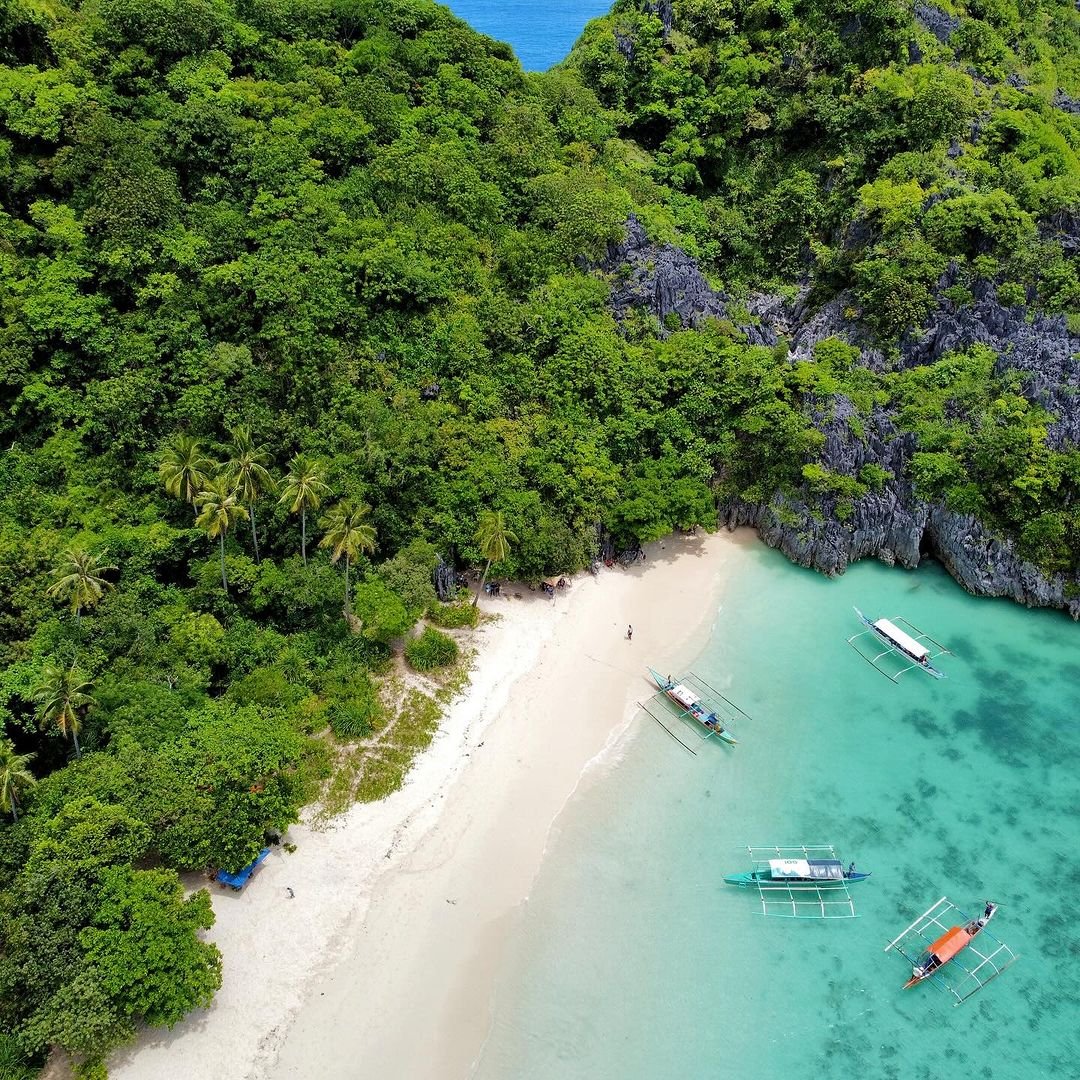
Caramoan island hopping covers two distinct route types, each with its own character. The short route stays within the protected coves directly offshore from Paniman.
The long route pushes into open water toward the eastern islands facing the Pacific. Each island offers something specific, not just a variation of the same white beach.
Short Route Islands
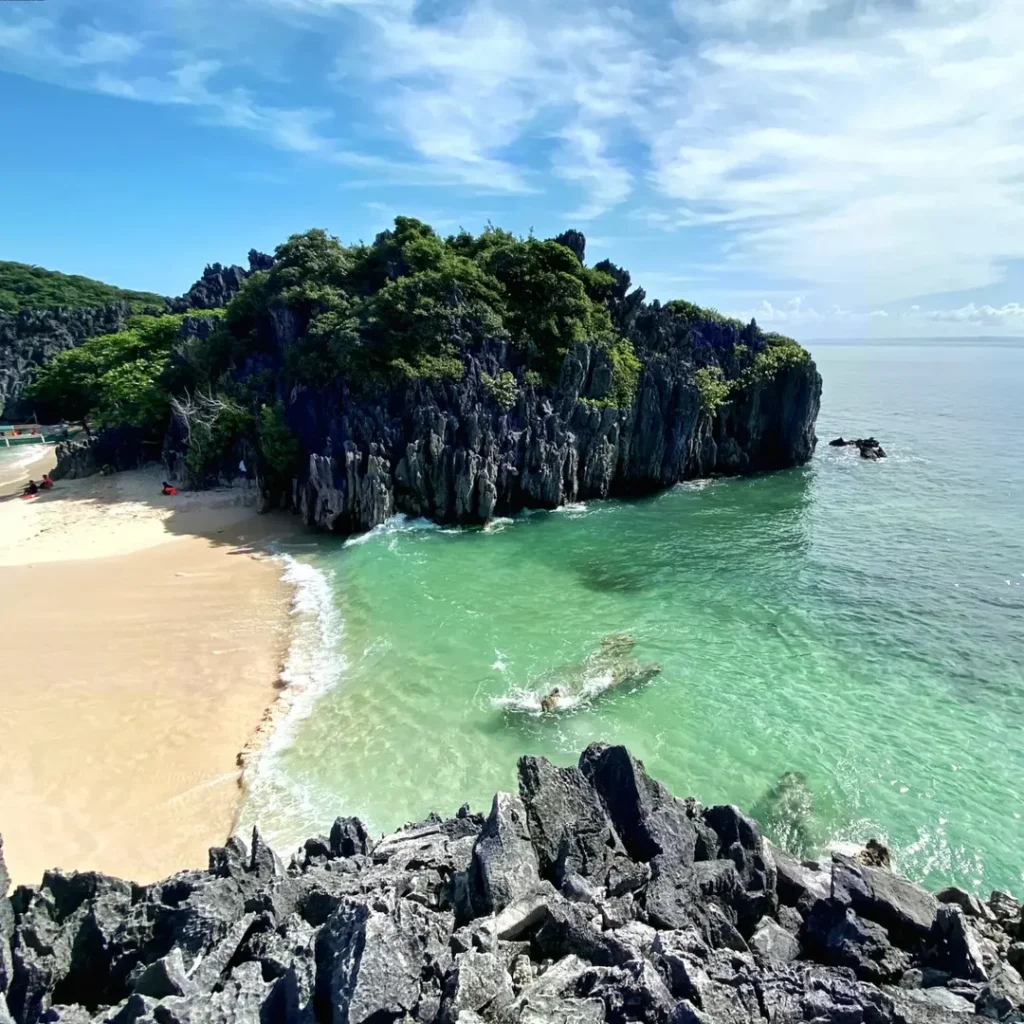
Matukad Island is the highlight of the short route. The beach here is powdery and pale, with the same fine texture as Boracay Station 1, but with vertical limestone walls on three sides instead of crowds and resort umbrellas. Behind the beach, a brackish lagoon sits completely enclosed by rock.
Reaching it requires free-climbing a sharp limestone wall, which is steep enough that people with no grip strength or fear of heights should stay on the beach. The lagoon is home to a pair of bangus (milkfish) that local legend says appeared supernaturally, and locals treat the surviving fish as sacred.
The Bureau of Fisheries and Aquatic Resources Region 5 has officially confirmed the fish are present. Do not touch them.
Lahos Island takes its name from the Bikol word for “to vanish.” At high tide, the sea surges in from both sides of the narrow sandbar simultaneously and covers it completely. Come at low tide and you get twin beaches pressed between two limestone monoliths.
Come at high tide and you get swim-through caves and aquamarine channels instead. Both versions are worth seeing; the timing is luck.
Cagbalinad Island is primarily a snorkeling stop. The fringing reef here holds banded sea snakes threading through coral heads.
Wear aqua shoes on the rocky entry. Minalahos Island serves a similar function, with reef snorkeling as the main draw.
Long Route Islands
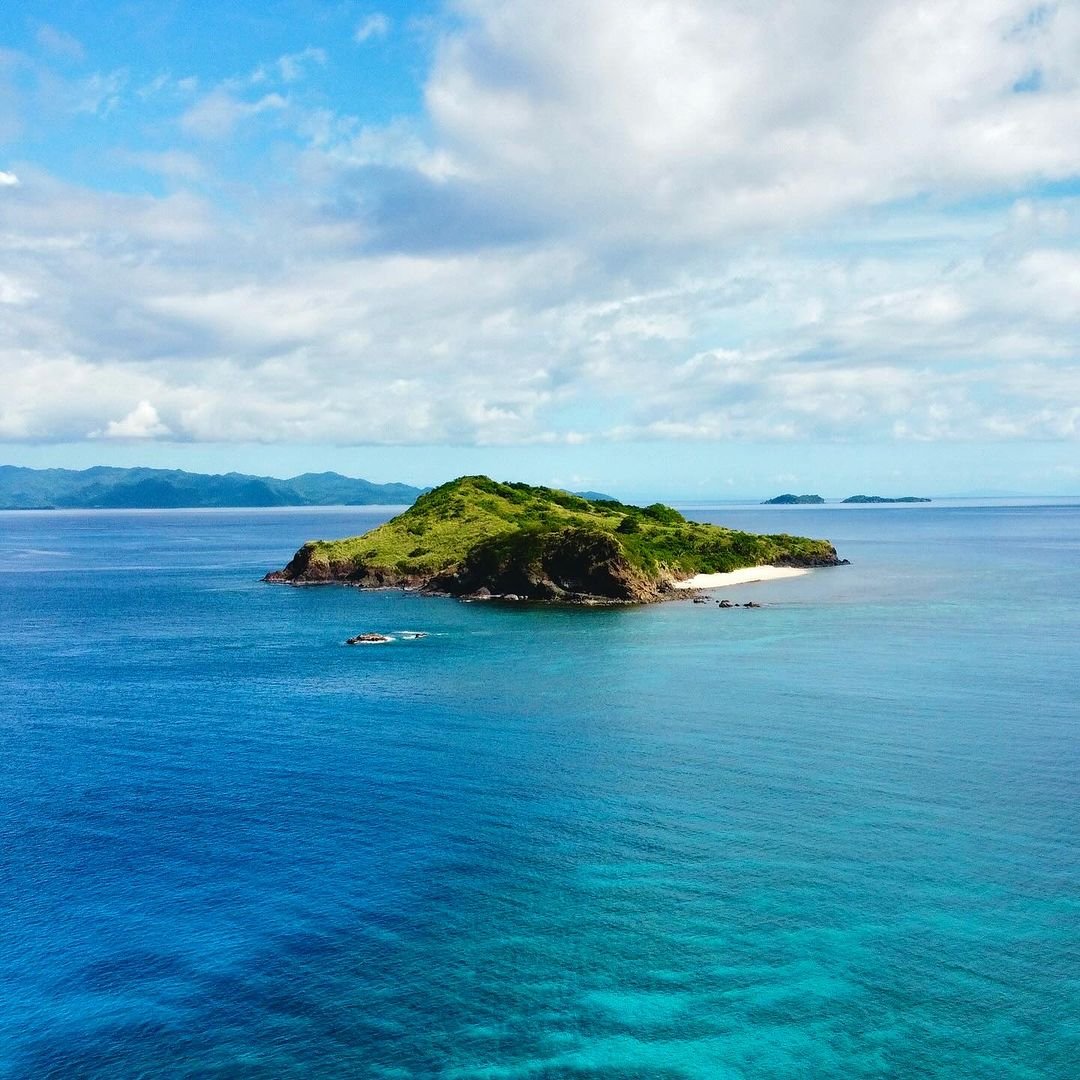
Guinahoan Island looks nothing like the rest of Caramoan. The limestone karsts disappear entirely, replaced by rolling green hills dotted with grazing carabaos. The comparison people reach for is Batanes, and it is apt.
A short uphill trek leads to a lighthouse at the summit with an unobstructed view of the Pacific. The path passes through fungal growth on carabao manure, which is exactly as earthy as it sounds and adds to the appeal of the place.
Manlawi Sandbar emerges at low tide as a wide, rippled expanse of sand surrounded by shallow water. The local community has built floating bamboo cottages you can rent for ₱150 to ₱300.
The sandbar is a lunch stop on most long-route tours. Sitting semi-submerged while eating freshly caught seafood is one of those experiences that photographs worse than it feels.
Cotivas Island has no shade trees, so locals have built open-air huts along the beach. The sandbar shifts with the tides. It is a rest stop more than a destination on its own.
Sabitang Laya (also called Bagieng Island) is the anchor of the long route and the most expansive piece of land you will visit. Two beaches each stretch roughly two kilometers, backed by dense jungle, with limestone formations at the eastern tip. This is the island Koh-Lanta has used most heavily for filming.
Koh-Lanta Season 32 aired February through June 2025, and Season 33 aired March through June 2026 on TF1, both filmed in Caramoan. When a production is active, Sabitang Laya and adjacent coves including Gota Beach and Hunongan Cove are locked down with military and private security.
No tourist access during filming windows. Check with the MTCAO on the current filming status before finalizing your dates, because the lockdowns can cover six to eight months at a stretch.
For the snorkeling breakdown by island: Cagbalinad and Minalahos are the dedicated snorkel stops on the short route. Lahos has swim-through caves. Matukad’s lagoon is for climbing, not snorkeling.
On the long route, Manlawi Sandbar is wading-depth fun, not a reef dive. Scuba diving packages can be added to your charter; individual dives run ₱150 and unlimited daily diving is capped at ₱300.
For a sense of scale, the open-water transit to Sabitang Laya is rougher than a typical island-hopping circuit in northern Luzon, where the coves provide more shelter. On the Caramoan long route, you are crossing the Lagonoy Gulf in a wooden outrigger.
Your boatman makes the call on whether to go. Trust that call.
What Are the Environmental and Entrance Fees in Caramoan?
The environmental fee in Caramoan is ₱30 per person, collected at the Paniman Beach registration desk before you board any island-hopping boat. This fee is mandatory and goes to the local government.
Your boatman logs you on the port manifest at the same time. No receipt, no boarding.
Beyond the ₱30, individual islands charge their own docking and entrance fees. Cotivas Island and Guinahoan Island both collect fees ranging from ₱50 to ₱150 per person, paid on arrival at each island.
The rate board at each island’s landing point shows the current amount. Bring exact change in small bills because no one at the island level has change for a ₱500 note.
Caramoan enforces a strict no-single-use-plastic policy on all islands and beaches. Bringing single-use water bottles, plastic bags, and polystyrene containers onto the boats and beaches is prohibited. Violations are treated seriously by LGU personnel and tour operators.
Pack a reusable water container, a cloth bag for snacks, and a dry bag for your phone and valuables. The municipality also requires that you transact only with accredited operators who hold a valid Mayor’s Permit and BIR Certificate of Registration.
Boats with unaccredited operators are denied access at the port. Ask to see the operator’s permit if you are booking independently.
Where Should You Stay in Caramoan?
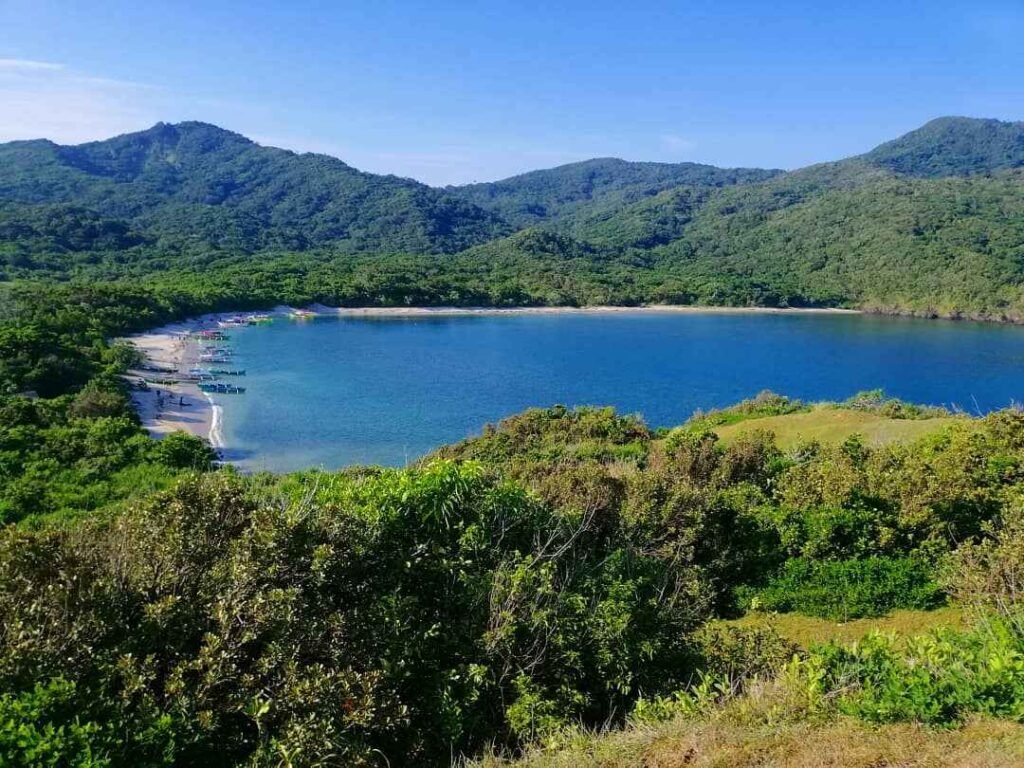
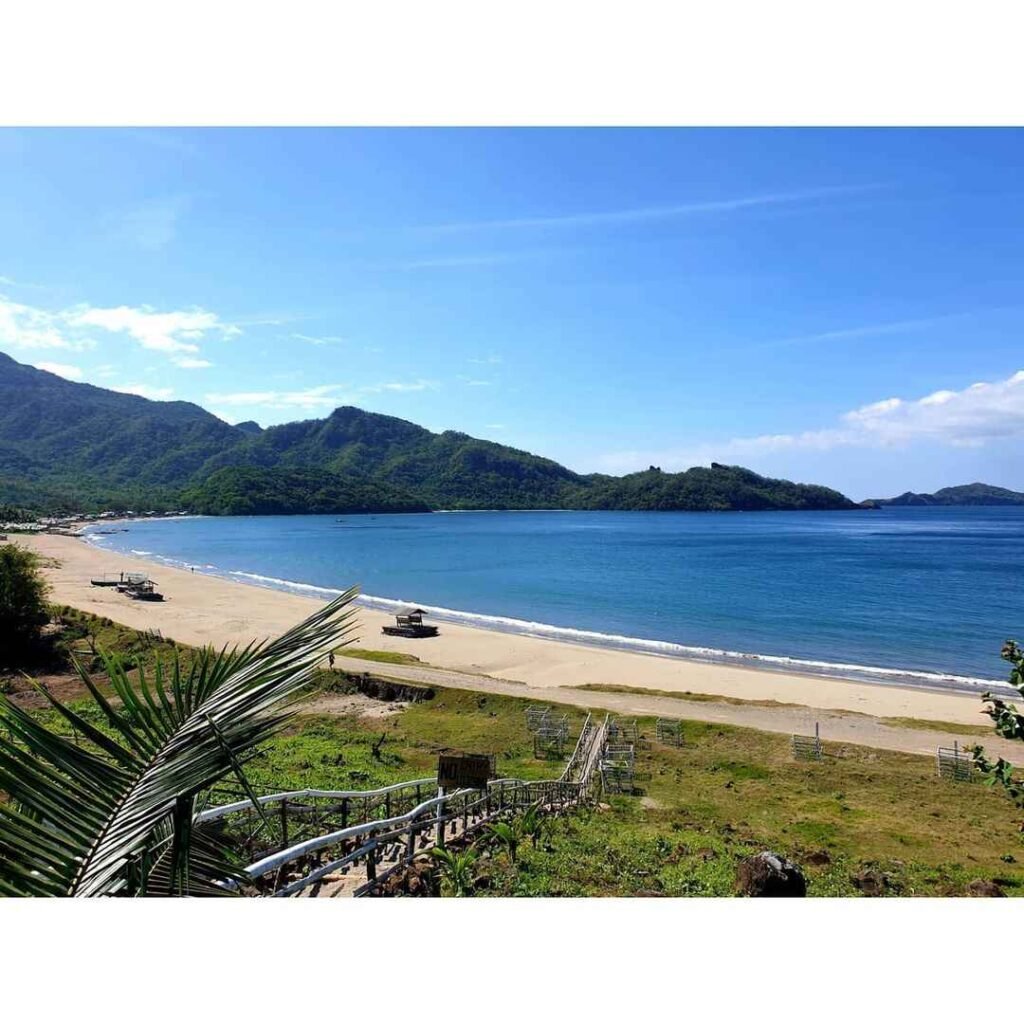
Paniman Beach is where the boats leave from. Staying here means you walk directly from your guesthouse to the registration desk with no tricycle fare and no coordination time.
Options along the beach include Paniman Bay Lodge, Casita Mia Bed and Breakfast, RMTM’s Beachfront Accommodation, and Daniel’s Place. Nightly rates run ₱1,000 to ₱2,000.
Town center (Barangay Tawog) has the market, pharmacies, the Landbank ATM, and cheaper food. The trade-off is the daily tricycle charter to Paniman, which adds ₱100 to ₱300 per vehicle each way.
Budget options here include La Casa Roa Hostel (₱1,000 to ₱1,800, generally well-regarded by solo travelers), Magindara Guesthouse, River View Vacation Inn, Central Discovery Hotel, and Mamima BnB. For extreme budget travelers, Rex Tourist Inn has offered fan rooms with shared bathrooms at around ₱300 per night.
For higher-end stays, Tugawe Cove Resort is the only property in Caramoan with a legitimate 4-star designation. It sits on a hillside above Lauing Bay and requires a private boat transfer to reach. Room rates range from ₱3,750 for a Small Wood Cabin to ₱18,000 for the Presidential Suite, with Deluxe Cove rooms at ₱12,250.
The resort runs its own island-hopping fleet, so guests skip the Paniman boat queue entirely. For couples or small groups who want comfort and have the budget, Tugawe is the clearest choice.
Gota Village Resort is the other premium name that comes up constantly, built originally as the Koh-Lanta production base camp. The timber duplexes are distinctive, with limestone cliffs rising directly behind the property. Duplex rates sit around ₱7,500.
The practical problem is that Gota Village closes for a hard annual window from October 12 to November 30 regardless of filming status, and during active productions, the entire cove is off-limits. Booking a stay at Gota requires checking current availability well before you commit, because production lockdowns can extend far beyond those dates.
Power cuts are a normal part of life in Caramoan. Budget accommodation can go without grid electricity from 6:00 AM to 6:00 PM during peak load periods. Bring a high-capacity power bank, a small rechargeable fan, and waterproof dry bags for every electronics item you plan to take on the water.
Wi-Fi at most budget guesthouses is either absent or unreliable outside the town center. The Smart Communications network has the strongest and most consistent signal in Caramoan, reaching 4G coverage in town and along Paniman Beach.
Globe drops out behind the limestone formations and during open-water crossings. DITO has no meaningful coverage here.
If you have done the logistics puzzle of reaching somewhere like Jomalig Island from Quezon province, the Caramoan accommodation decision feels familiar:
- Beachfront costs more and saves time
- Town center is cheaper and slower
- The math shifts entirely depending on the size of your group
When Is the Best Time to Visit Caramoan?
The best months for Caramoan island hopping are November through May, when the amihan (northeast monsoon) brings dry, relatively stable weather to the eastern Bicol coast. The calmest window for the open-water long route is March to May, when seas are at their most predictable and the risk of wave cancellation is lowest.
The habagat (southwest monsoon) runs from June through October and is the period to avoid if you have a choice. Caramoan sits on the Pacific-facing side of Camarines Sur, which means it catches weather systems that bypass Naga and the western provinces entirely. During habagat, boat operators regularly cancel the long route due to swells, sometimes for multiple consecutive days.
The short route close to Paniman is more protected and still runnable in moderate habagat conditions. You are gambling on the weather if you book a July or August trip without buffer days.
The Holy Week window and peak summer weeks (late March through late April) bring the highest tourist volumes. Accommodation in Paniman books out fast, boat charter prices are firm at the top of the posted range, and the islands feel crowded by Caramoan standards.
If you want the visuals without the crowd, the shoulder months of November to December and February offer amihan-season calm with noticeably fewer people. January sits in the middle: good weather, manageable crowds, and the lowest accommodation rates of the dry season.
December and January are also the months when Koh-Lanta production setup typically begins, meaning some islands may already be pre-staging before the hard lockdowns kick in. The safe planning assumption is that any trip between December and June should confirm MTCAO access status for Sabitang Laya and Gota Beach before finalizing dates.
A call or message to the Caramoan MTCAO Facebook page is the most reliable way to get a current answer.
Typhoons are a real risk on the Pacific side of Bicol. The season runs broadly from June through November, with the highest landfall probability in September and October. Do not plan a Caramoan trip during this window without full flexibility on dates and refundable bookings.
How Much Does a Caramoan Trip Cost?
A Caramoan trip costs significantly less per head the more people you travel with. The biggest expense, the boat charter, is a flat rate per vessel regardless of how many passengers are aboard. Solo travelers pay the full charter alone.
A barkada of six splits it evenly. That difference matters more here than at almost any other Philippine beach destination.
When I checked the rate board at Paniman during my May 2026 visit, the short route charter was ₱1,500 to ₱2,000 and the long route at ₱2,500 to ₱3,000 per boat. The total I paid for the long route came out slightly above the posted floor once island entrance fees were added. This is the consistent pattern at Caramoan: the boat rate is what is advertised, and the island fees stack on top.
Below is a per-person budget estimate for a 3-night, 4-day trip, based on fares as of September 30, 2026. Figures assume both the short and long route are done on separate days.
| Expense | Solo | Couple (per head) | Barkada of 6 (per head) |
|---|---|---|---|
| Manila-Caramoan roundtrip bus | ₱2,600 | ₱2,600 | ₱2,600 |
| Accommodation, 3 nights (mid-range) | ₱4,500 | ₱2,250 | ₱1,500 |
| Environmental fee (₱30 x 2 days) | ₱60 | ₱60 | ₱60 |
| Short route boat (shared) | ₱2,000 | ₱1,000 | ₱333 |
| Long route boat (shared) | ₱3,000 | ₱1,500 | ₱500 |
| Island entrance fees (est. 2 days) | ₱400 | ₱400 | ₱400 |
| Food and water, 4 days | ₱2,000 | ₱2,000 | ₱1,600 |
| Local tricycle transfers | ₱600 | ₱300 | ₱100 |
| Cash buffer | ₱2,000 | ₱1,500 | ₱1,000 |
| Estimated total | ~₱17,160 | ~₱11,610 | ~₱8,093 |
For solo travelers, a joiner tour from Manila that bundles transport, accommodation, and boat fees is worth comparing. Package rates for joiners run approximately ₱4,800 to ₱5,300 per person depending on inclusions. Contact accredited Manila-based tour operators directly for current pricing.
The Landbank ATM in Caramoan town center is the only machine on the peninsula, and it depletes during peak weekends and holidays. Withdraw everything you need in Manila or Naga.
Bring a mix of ₱20, ₱50, and ₱100 bills. GCash and credit cards are not accepted by boatmen, tricycle drivers, market vendors, or most eateries.
For comparison, a similar island-hopping setup in the Siargao area runs higher per head for equivalent boat access. Polillo Island in Quezon Province costs significantly less for the transit but delivers far less visual payoff on the water.
Caramoan sits in the middle on price and above almost everything on scenery. If you want to see what a full-budget southern Leyte island trip compares to, Limasawa Island gives a useful reference point for remote-island cost planning in the Visayas.
Things to Do in Caramoan Beyond Island Hopping
Caramoan beyond the water has more to offer than most visitors use, partly because most people arrive exhausted from the bus and immediately focus on the boats.
The St. Michael the Archangel Parish Church in the town center is a 16th-century red-brick structure built by Spanish Franciscan friars. It has survived centuries of typhoons on a peninsula that faces the Pacific directly, which makes the structure itself the point of the visit as much as the religious site.
Mount Caglago in Barangay Tabgon requires climbing 524 to 530 concrete steps to reach the Our Lady of the Most Holy Rosary, Mother of Peace Grotto and a 26-foot statue of the Virgin Mary. The summit gives the most complete aerial view of the Caramoan archipelago available without a drone.
The construction began in 1989, and local residents hauled all materials up on foot. Go at dawn before the heat sets in.
Umang Cave and Kamot Cave are accessible as terrestrial side trips for those who want to go underground. Ba’haw Falls, Layahan Falls, and Hugsad Falls are in the neighboring municipality of Presentacion, requiring a separate land transfer but worth the addition for a 4-day itinerary.
Kayaking and freediving can be arranged through accredited operators at Paniman Beach. Scuba diving is integrable into the boat charter, with individual dives at ₱150 and unlimited daily diving at ₱300.
For food, the Paniman beachfront has:
- Wowoys Seafood Restaurant for boodle fight packages (the secret menu items like Lambong Butong and Ginataang Santol need 24 hours‘ advance notice)
- Bay Sand Food Stop for reliable all-day seafood
- Caramo-tan Grill and RestoBar at the Island View Lodge for grilled squid with a sea view
In the town center, Caramoan Bed and Dine serves kinalas and Bicol Express from a tiki-hut setup. The public market at the back serves full meals for under ₱50 from early morning.
Kape Real has the best pancit in town and operates in both Paniman and Centro. For anything after 8:00 PM, Chow O’ Clock is the only option.
Most kitchens in Caramoan close by 8:00 PM. Plan dinner before sundown and you will eat well. Arrive at 9:00 PM expecting options and you will not.
If you enjoy exploring islands that require real effort to reach, the same drive that takes you to Caramoan also applies to reaching somewhere like Immuki Island in La Union, where the payoff scales directly with how much logistical patience you bring.
Frequently Asked Questions About Caramoan Island
Is Caramoan Island worth it for a 3-day trip?
Yes, but only if you can absorb the travel time without it eating into your island days. A 3-day, 2-night stay is the minimum, and it leaves no margin for weather delays or a rough arrival.
Four days and three nights gives you two full island-hopping days and a recovery buffer. The short route and long route each need their own day to do properly.
How far is Caramoan from Naga, and how long does the trip take?
Caramoan is roughly 100 kilometers from Naga City by road via the Gov. Felix A. Fuentebella National Highway.
By public bus (MRR, Florencia, or Raymond Transportation departing from Naga Central Bus Terminal), the journey takes 4 to 5 hours. By chartered van with a group, the same road takes about 4 hours. Do not rely on older travel blogs that cite 3 to 3.5 hours for the bus; that figure reflects a chartered van on an ideal day.
Can you do Caramoan island hopping without a tour package?
Yes. The DIY route is to take the direct bus to Caramoan, stay in Paniman or town, and charter a boat directly from accredited boatmen at Paniman Beach the morning of your trip. You pay the ₱30 environmental fee at the desk, agree on a route, and go.
No tour package is required. The advantage of a package tour from Manila is mainly logistical comfort and group cost-sharing, not exclusive access.
What island is Survivor and Koh-Lanta filmed in Caramoan?
The primary filming locations are Sabitang Laya (Bagieng Island), Gota Beach, and Hunongan Cove. Koh-Lanta (the French version of Survivor) used these locations for Season 32 (aired February to June 2025) and Season 33 (aired March to June 2026).
During active filming, all three locations are closed to tourists with military and private security enforcement. Check with the MTCAO before your trip for current access status.
Are there ATMs in Caramoan?
There is one Landbank ATM in the town center. It runs out of cash during peak weekends, Holy Week, and long holidays. Withdraw everything you need in Manila or Naga City before you travel.
The entire island-hopping economy is cash-only. No GCash or card terminals are accepted. This covers:
- Boat charters
- Tricycle fares
- Island entrance fees
- Most food stalls
Is it safe to visit Caramoan during habagat?
The short route near Paniman is generally runnable in mild habagat conditions because the coves provide shelter.
The long route crosses open water to:
- Guinahoan
- Manlawi
- Cotivas
- Sabitang Laya
It is frequently cancelled during habagat swells.
If you travel between June and October, build multiple buffer days into your itinerary and accept that the long route may not happen at all. The risk is not safety in town but access to the islands you came to see.
What should I pack for Caramoan island hopping?
Bring the following for every boat day:
- Reef-safe sunscreen (standard sunscreen is prohibited on some islands)
- Aqua shoes (mandatory for Cagbalinad and rocky landings)
- Dry bag for electronics and documents
- Reusable water container (no single-use plastic bottles on the islands)
- Small bills in ₱20, ₱50, and ₱100 denominations
- Snacks, as some islands have no food vendors
- Motion sickness medication if you are prone to it, especially for the long route
What SIM card works best in Caramoan?
Smart Communications is the only network with reliable 4G coverage in the town center and along Paniman Beach. Globe works in the town center but loses signal behind the limestone formations and during open-water transits.
DITO has no coverage in Caramoan. Buy a Smart SIM before you leave Manila or Naga.
Is Caramoan Island Still Worth Visiting in 2026?
Caramoan is worth it if you are the type of traveler who accepts that great places are usually hard to reach, and who treats the journey as part of the experience rather than a tax on it. The islands themselves stand apart from everything else in Luzon.
Matukad alone would justify a shorter trip. Sabitang Laya, when it is accessible, is the kind of place you compare everything else against.
The caveats are real. The overnight bus is long. The road from Naga is longer than it looks.
The boats are wooden outriggers with no cushions. The power cuts out. The ATM empties.
When I was there in May 2026, I watched a couple at the Paniman desk turn back on Day 1 because they had not budgeted enough cash and the ATM in town was empty. That is not a flaw of the destination; that is a planning failure. Come prepared and none of those things become a problem.
Skip this trip if a 12-hour overnight bus ride sounds miserable rather than manageable, or if riding an open-water bangka in a small wooden boat triggers anxiety rather than excitement. Caramoan is not the destination to push through physical discomfort you have not already tested on shorter trips. It rewards the seasoned DIY traveler, the barkada with a flexible schedule, and the couple willing to trade comfort for genuine remoteness.
For everyone else, plan two full island-hopping days, stay at Paniman to cut the morning logistics, bring more cash than you think you need, and go between November and May. The place does the rest.