

Minalungao National Park in General Tinio, Nueva Ecija is a limestone gorge cut by the Peñaranda River, roughly 100 kilometers north of Manila. I updated this guide after returning in October 2026.
I have covered 69 of the 82 Philippine provinces since 2015. The park has changed enough that the old numbers needed a full replacement.
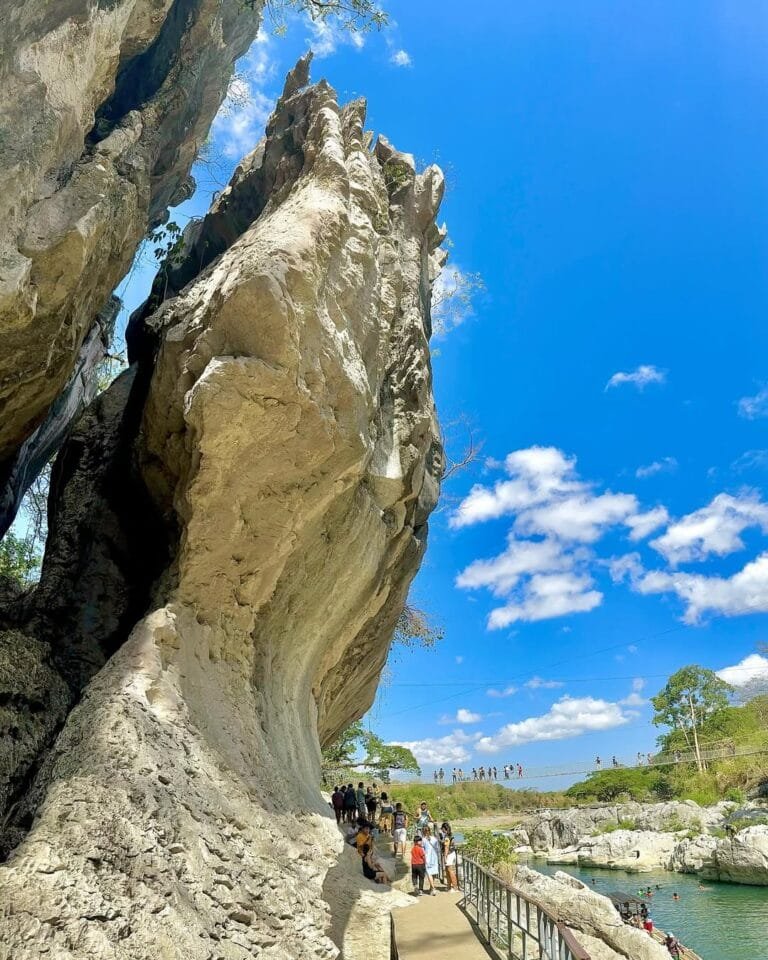
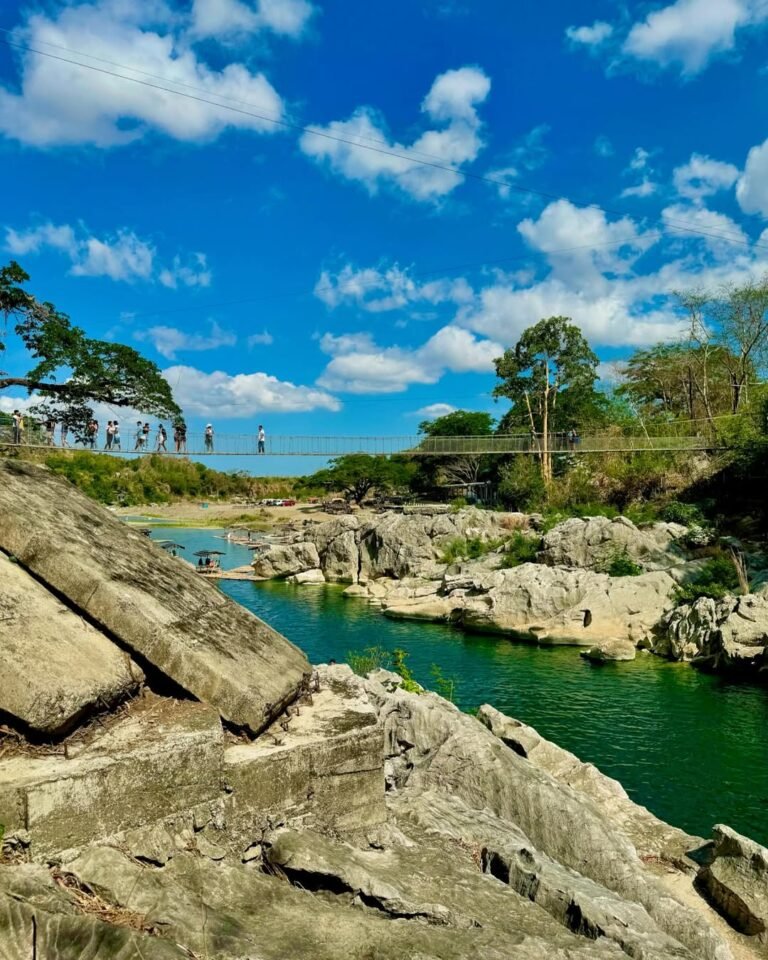
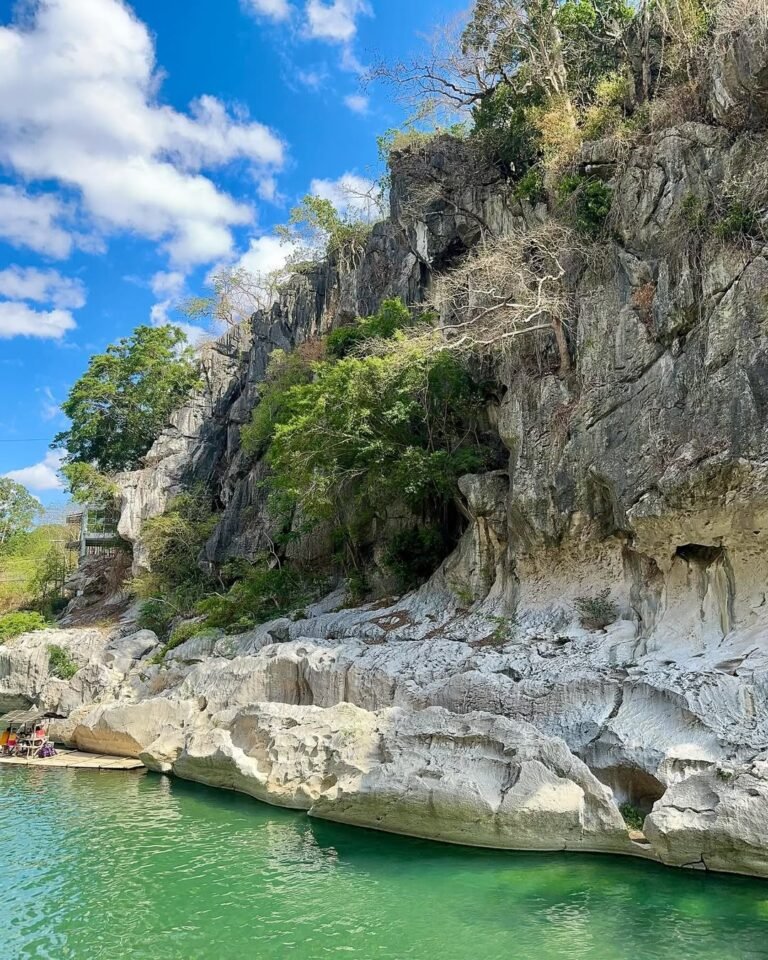
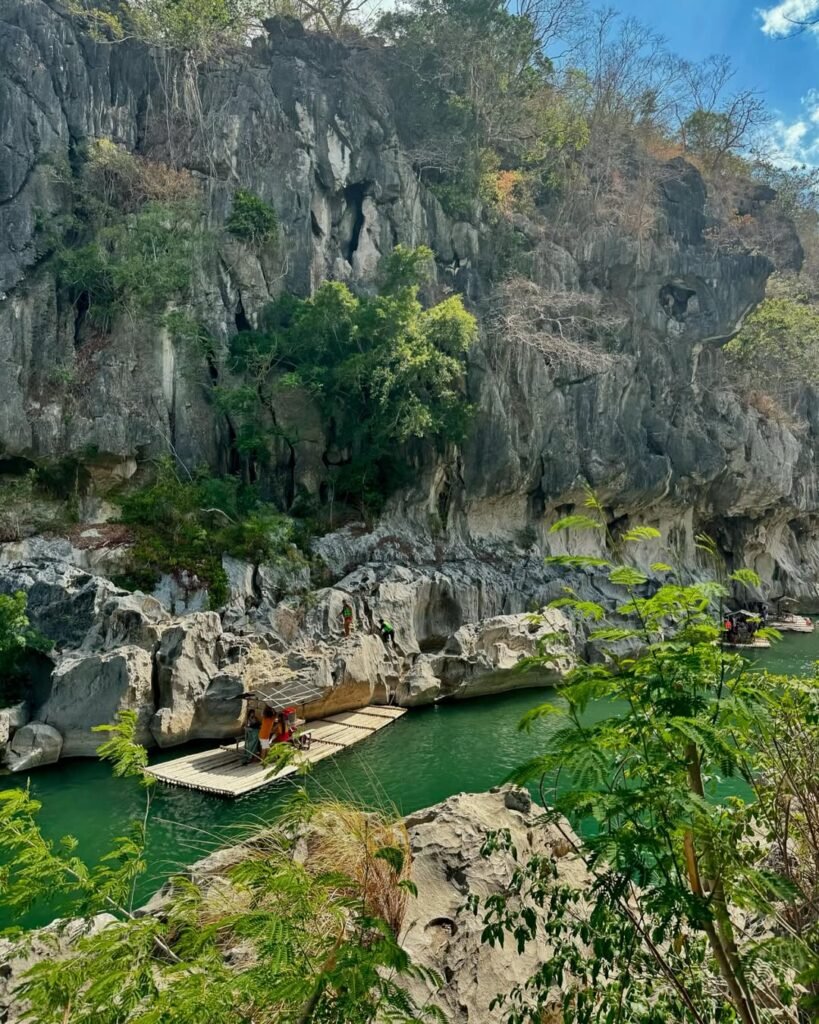
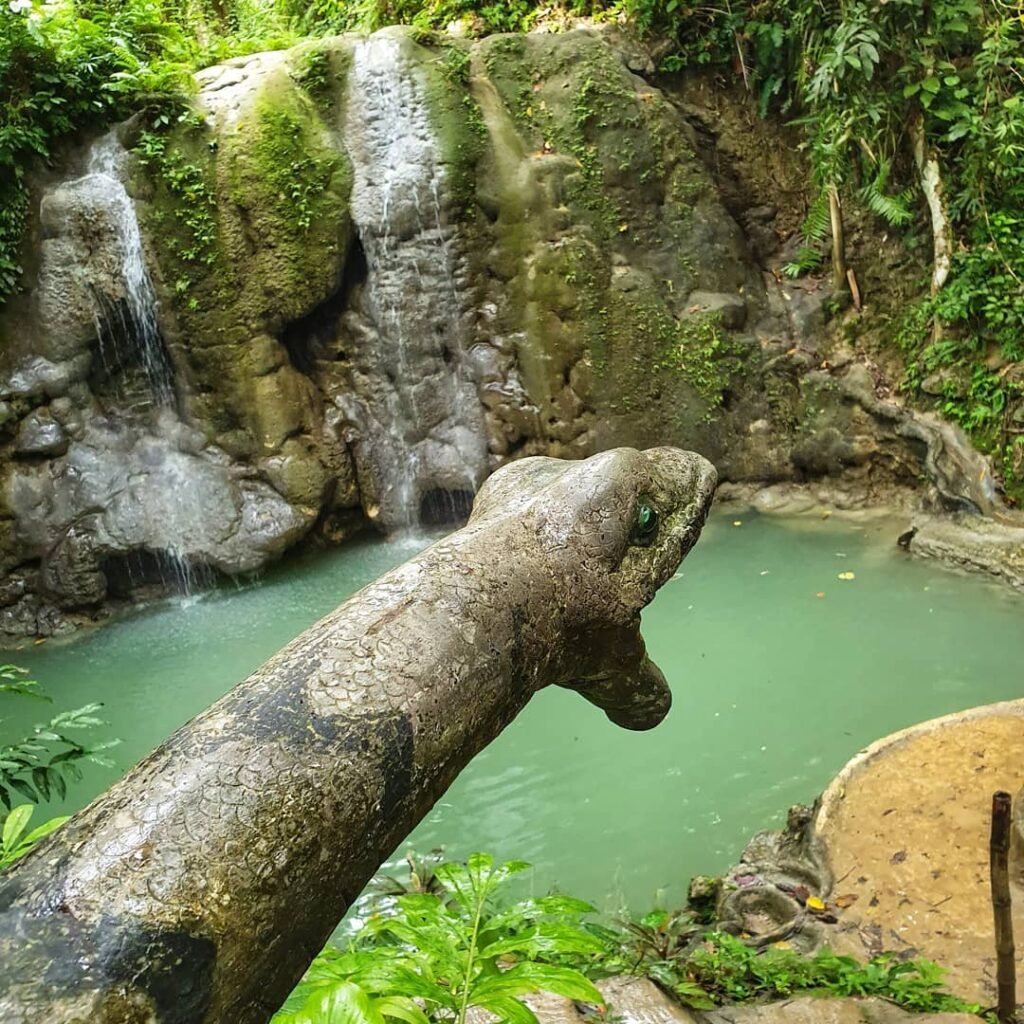
The gorge is the draw. Walls of karst limestone rise up to 16 meters on both sides of the river, and during the dry season the water below runs a deep, clear green.
On a weekday morning before 9 AM, with most rafts still tied to the bank and the canyon quiet, it earns its reputation. After 10 AM on a weekend, it is a different story, and that timing matters more than almost anything else you will plan.
Key Takeaways
- The entrance fee is ₱100 to ₱150 per person, plus a separate ₱50 environmental fee. Budget ₱200 per head to cover both.
- A life vest is mandatory for any water activity. Rental runs ₱20 to ₱35 per person at the park.
- Arrive between 7:00 AM and 9:00 AM for the best light, manageable temperatures on the 1,000 Steps, and first pick of the bamboo rafts.
- The cave requires a guide. Guide rates start at ₱200, though the fee for cave groups may be higher — confirm at the registration desk before entering.
- The bamboo raft (balsa) runs ₱500 to ₱800 per raft for a session, not per head. Kayak rental is also available at ₱200 per kayak (verify on arrival).
- Do not go during the rainy season, June to October. The Peñaranda River floods without warning, wet limestone is dangerously slippery, and park management closes water access with no advance notice. Before any trip, message the park’s Facebook page to confirm it is open — the DENR has closed Minalungao before for typhoon damage and carrying-capacity studies.
- Bus fare from Cubao to Cabanatuan/Gapan is ₱270 to ₱329 depending on route, as of October 4, 2026.
Table of Contents
What Is Minalungao National Park and Why Does It Matter?
Minalungao National Park is a protected 2,018-hectare area established on June 11, 1967, under Republic Act No. 5100. Its name joins the local words for “mine” and “caves,” a nod to the subterranean geology that defines the place.
The park sits inside the foothills of the Sierra Madre mountain range, and the landscape makes an abrupt shift the moment you reach the gorge. Nueva Ecija is flat rice country for most of its geography, which is why this canyon feels so disorienting — the plains drop away and the limestone walls close in almost without warning.
The Peñaranda River, also called the Sumacbao River by locals, carved the gorge over millennia. The protected area is formally designated as a Key Biodiversity Area. At least 55 tree species have been documented within its boundaries, including species from the Dipterocarpaceae family that appear on the IUCN Red List.
Bat colonies roost in the cave systems. The river supports goby species that researchers have studied for evolutionary isolation within the river system.
None of that is what pulls most visitors from Manila. What pulls them is the green water, the limestone walls, and the bamboo rafts drifting between them.
But the KBA status is why the DENR has the authority to close the park when it needs to, and why carrying-capacity rules exist. The place is more regulated now than it was five years ago, and that is not a bad thing.
What makes Minalungao distinct from most Nueva Ecija day trips is the physical compression of the experience. Within a small area, you get a river swim, a cave, a suspension bridge, and an elevation climb. Most visitors focus on the water and miss at least one of the other three.
Where Exactly Is Minalungao National Park Located?
Minalungao National Park is in the municipality of General Tinio, Nueva Ecija, in Central Luzon (Region III). General Tinio sits on the eastern edge of the Nueva Ecija plains, where the flat lowlands meet the Sierra Madre foothills.
From Metro Manila, the park is approximately 100 kilometers north. By private car, take the NLEX to the Santa Rita exit, then the Plaridel Bypass Road to the Maharlika Highway through Gapan City.
The drive runs 2.5 to 4 hours depending on departure time and traffic. By public transit, the total journey from Cubao to the park gate is 4 to 6 hours including transfer wait times.
The nearest commercial hub is Gapan City, from which you charter a tricycle east toward General Tinio and then to the park entrance. GPS navigation is reliable from Manila down to the outskirts of General Tinio, but signal degrades before the gate and disappears entirely inside the gorge.
One practical detail the distance does not explain: the park’s geography shapes your whole day. Because the gorge blocks all cellular signal, every logistical decision — your return ride, your guide, your raft — has to be settled at the gate before you walk in. Nothing can be arranged from inside.
How Do You Get from the Highway to the River?
Take the NLEX, exit at Santa Rita (Exit 38) in Guiguinto, Bulacan, follow the Plaridel Bypass Road to the Maharlika Highway, and continue north into Gapan City, Nueva Ecija. The bypass, significantly expanded as of late 2024, cuts around congested town centers and saves meaningful time. From Gapan, head east toward General Tinio.
Fares as of October 4, 2026: the bus from Cubao or Pasay to Gapan City runs ₱270 to ₱329 depending on route. The SCTEX route runs 3:00 AM to 10:00 PM; the Bulacan route operates primarily 11:00 PM to 2:00 AM.
Tell the conductor to drop you at Gapan City — landmarks like the Puregold supermarket or Bucana intersection work as reference points. Bus fares follow diesel prices.
The round-trip tricycle rate is ₱700 to ₱1,000, fitting up to four passengers, with roughly 1 to 1.5 hours each way from Gapan. Get the driver’s number, agree on a pickup time, and set a meeting point at the parking perimeter before you walk in. Parking for private vehicles costs ₱50 to ₱150 for the whole day.
For a rough comparison, the approach to Calabasa River in Galabdon, Nueva Ecija follows a similarly negotiated tricycle setup, though Minalungao’s gorge terrain makes on-arrival logistics more strict.
Transport fares as of October 4, 2026:
| Leg | Mode | Fare | Time |
|---|---|---|---|
| Cubao/Pasay to Gapan (SCTEX route) | Bus | ₱315 to ₱329 | 2.5 to 4 hours |
| Cubao/Pasay to Gapan (Bulacan route) | Bus | ₱270 to ₱301 | 2.5 to 4 hours |
| Gapan to park gate (round trip) | Tricycle charter | ₱700 to ₱1,000 | 1 to 1.5 hours each way |
| Parking (private car, whole day) | — | ₱50 to ₱150 | — |
Sample total costs:
| Traveler type | Per-head total |
|---|---|
| Solo DIY (bus + tricycle solo) | ₱2,790 to ₱4,120 |
| Barkada of 4 (bus + shared tricycle) | ₱1,640 to ₱2,220 |
| Group of 4 by private car |

What Are the Entrance Fees and Rental Rates at Minalungao?
The entrance fee is ₱100 to ₱150 per person. The environmental fee is an additional ₱50, sometimes collected at a separate checkpoint. Budget ₱200 per head to cover both without scrambling for exact change.
There are no ATMs inside the gorge, no GCash terminals, and no signal to do an online transfer. Bring cash in small bills before you leave Gapan.
Bamboo raft (balsa) rental has dropped from what was previously cited in older versions of this article. The raft runs ₱500 to ₱800 per raft for a session, accommodating up to 8 to 10 people.
That is not per head — it is for the whole raft. Kayak rental is also now available at ₱200 per kayak; confirm both figures at the ticket area on arrival, as rates can shift.
Here is the full breakdown of fees and rentals:
| Item | Rate |
|---|---|
| Entrance fee (adult) | ₱100 to ₱150 |
| Environmental fee | ₱50 |
| Life vest rental | ₱20 to ₱35 per person |
| Cottage or table (whole day) | ₱200 to ₱400 |
| Bamboo raft (balsa), per raft | ₱500 to ₱800 |
| Kayak rental | ₱200 per kayak |
| Cave guide fee | ₱200 minimum; confirm group rate at desk |
| Zipline (one-way) | ₱100 |
| Zipline (round trip) | ₱200 |
| Comfort room per use | ₱10 |
Guide service is highly recommended for general trekking and strictly required for the cave. Independent cave exploration is prohibited by park management. The minimum guide rate I saw at the registration area was around ₱200.
The fee for cave groups has been reported higher in late 2025. One source from that period cited ₱500 for a group of 3 to 5.
Confirm the current group rate at the registration desk before committing, and tip beyond the quoted fee if the guide does the job well. For context, Lablabasan River and Kintukudan Falls also runs a mandatory guide system for its cave sections, and the Minalungao setup is comparable in structure.
The life vest rule is not optional. Wearing one is required the moment you enter the water, regardless of how strong a swimmer you are. The park enforces this actively; ignoring it gets you out of the water.
How Deep and Fast Is the Peñaranda River, and Is It Safe?
The Peñaranda River is deceptive in the way that rivers flanked by vertical walls often are. It looks calm from the raft. It is not always calm underneath.
Depth changes without warning near the base of the limestone walls, where the riverbed drops sharply and undercurrents run strongest. The middle channel carries the most force and raft traffic, so swimmers who drift that way face both current and bamboo. During the dry season, conditions are as manageable as they get here; during and after heavy rain, they are not manageable at all.
The wet limestone is its own hazard. Rocks along the bank and cave approaches are coated in algae and exceptionally smooth.
Sandals and flip-flops are the most common mistake I see at river gorges like this one. Aqua shoes or trekking sandals with aggressive rubber tread are the right choice.
The rainy season runs June to October. Upstream rainfall in the Sierra Madre watershed can raise the river fast and without visible warning at the gorge. The water turns brown and fast-moving, park management closes water access and bars cave entry with no advance notice, and between July and September the risk peaks.
Life vests are mandatory for all water activities and the park enforces that rule. If you enter the water without a vest, you will be removed.
If you have been to Pagsanjan Falls in Laguna, the current there during high-water months gives a similar sense of how quickly a river gorge changes character after upstream rain.
Before attempting any cliff dive, ask your raft operator where the safe entry points currently are. Submerged logs and rock formations shift after monsoon floods, and what was a clean drop one season may not be the next.

What Is the 1,000 Steps Trek to the Glass Cross Like?
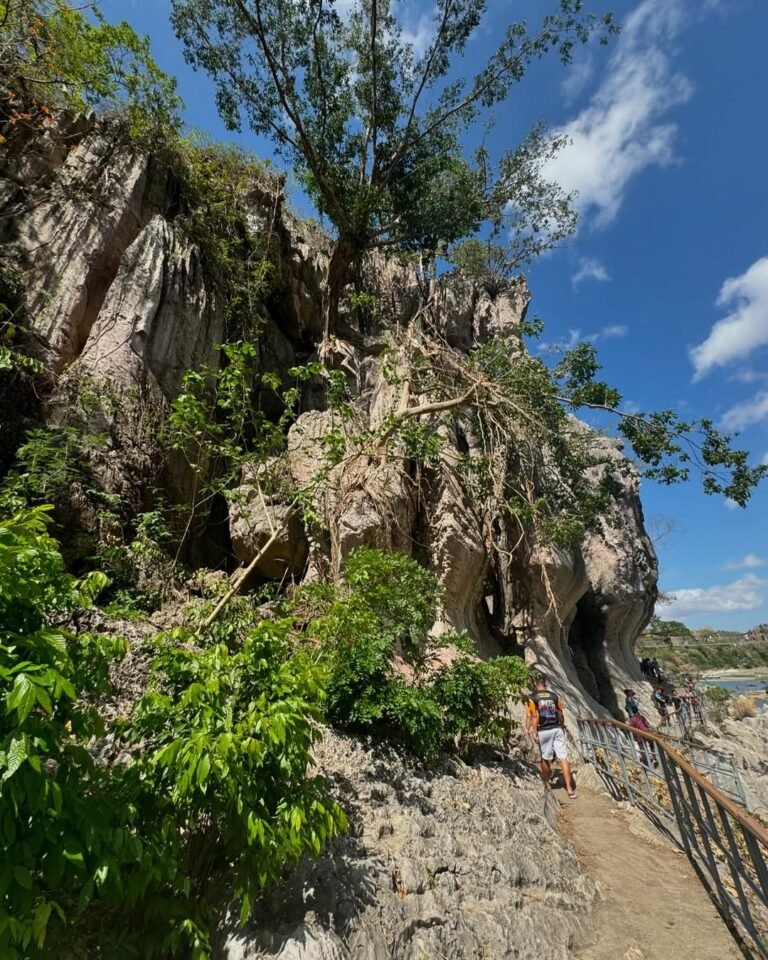
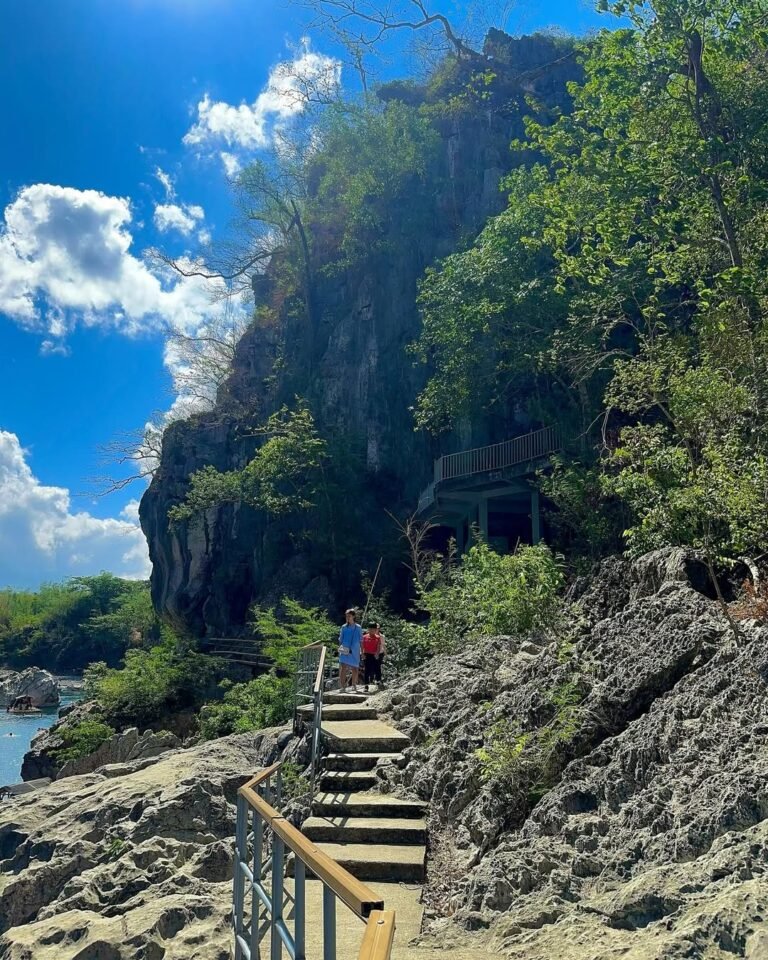
The 1,000 Steps is the most physically demanding thing at Minalungao, and most first-time visitors underestimate it. It is a steep concrete stairway cut into the mountainside, ascending through secondary forest canopy to a giant glass cross at the summit. The cross serves as both a religious marker and a viewing deck.
From the top, you see:
- The full spread of the Sierra Madre to the east
- The Peñaranda River threading through the gorge far below
- The Nueva Ecija lowlands opening west toward the horizon
The view is the payoff, and it is a real one.
The climb is exposed to the sun for long stretches. Starting after 9:00 AM means ascending in direct tropical heat, which turns a physically demanding climb into a heat-exhaustion situation. The right window is before 9:00 AM, ideally shortly after the park opens.
Bring more water than you think you need. The descent on wet stairs after a morning shower is treacherous, so the same footwear rule that applies at the river applies here.
A guide is recommended for the full trek. The steps themselves are marked, but the terrain beyond the immediate stairway involves secondary forest paths where a local guide adds both safety and context.
The 1,000 Steps is a different commitment entirely. Families with young children, visitors with knee problems, and anyone arriving after 10 AM on a hot day should weigh whether the summit is worth it on that particular visit. The river experience stands on its own.
For a comparable mountain approach where the trek earns a dramatic reward, Kaparkan Falls in Abra involves a more technical ascent but gives a similar sense of what a steep Philippine jungle climb delivers at the top.
When Is the Best Time to Visit Minalungao National Park?
Arrive between 7:00 AM and 9:00 AM. In that window, morning light falls on the limestone walls at an angle that makes the water look greener. Temperatures are still manageable for the 1,000 Steps before midday heat locks in, bamboo rafts are available, and the canyon is quiet enough to hear the river.
This is also peak domestic summer season. A Tuesday in April is a very different park from a Saturday in April.
November to February is the second-best window: cooler, quieter, and the river is typically clear. November and December see fewer visitors while conditions remain good.
Antonio’s Resort in Barangay Padolina, General Tinio, offers air-conditioned villas starting around ₱3,000 per night, putting you roughly 30 minutes from the gate. Cabanatuan City, 30 to 40 kilometers north, has Microtel by Wyndham and The Harvest Hotel as reliable options with working internet for trip-planning.
Before you travel, message the park’s Facebook page to confirm it is open.
The DENR has closed Minalungao before:
- Once for a carrying-capacity study
- Separately for typhoon damage repairs
The Facebook page is the fastest confirmation of daily opening status.
For comparable seasonal planning, Aw-Asen Falls in Sigay, Ilocos Sur involves the same calculus: wet-season closures, early-morning advantage, and logistics that reward checking before you leave.

Frequently Asked Questions
Can you stay overnight inside Minalungao National Park?
There is no overnight camping inside the gorge. The closest option is Antonio’s Resort in General Tinio, with villas from around ₱3,000 per night. Cabanatuan City, roughly 30 to 40 kilometers away, offers Microtel by Wyndham and The Harvest Hotel for travelers who want urban amenities before an early-morning arrival.
Can you swim in the river without wearing a life vest?
No. The life vest rule is mandatory for all water activities and is actively enforced by lifeguards. Rental runs ₱20 to ₱35 per person. No exceptions are made based on swimming ability.
Is the cave open to the public, and do you need a guide?
Yes, but independent exploration is strictly prohibited. A local guide is required, with a minimum rate starting around ₱200 at the registration desk — confirm the current rate before entering. The cave interior is perpetually wet, dark, and involves uneven terrain that makes a guide practically necessary regardless of the rule.
How long does a full visit to Minalungao take?
A comfortable full visit runs about 6 to 8 hours from arrival. It covers five main attractions:
- Hanging bridge
- River section
- Bamboo raft
- Cave
- 1,000 Steps
Arriving at 7:30 AM and leaving by 2:00 PM to 3:00 PM covers everything without rushing. Skipping the 1,000 Steps reduces the visit to 4 to 5 hours.
What is the water color and does it change?
The emerald green in every photo is a dry-season condition — when rain hasn’t fallen upstream for several days, the sediment settles and the water runs clear and green. Any significant upstream rain turns it brown and murky. Messaging the park’s Facebook page the day before is the most practical way to know what you will find.
Is Minalungao National Park good for families with young children?
Families with older children who can follow safety rules will find the park manageable. Toddlers require extremely close supervision near the water and wet rocks.
The cave is not suitable for very small children, and the 1,000 Steps is not recommended for young children or elderly visitors with mobility concerns. The bamboo raft and hanging bridge are the most accessible features for mixed-age groups.
What happened to the old bamboo raft price of ₱1,100 to ₱1,300?
That figure was outdated. The raft runs ₱500 to ₱800 per raft for 8 to 10 people.
The older number appeared in several online guides but does not reflect current rates. Confirm on arrival, as prices are set by local operators and move with demand.
Is there a history behind the park’s name?
Minalungao joins two local words: “mina” (mine) and “lungao” (caves), meaning roughly a mine of gold in caves. The park was formally established on June 11, 1967, under Republic Act No. 5100. The municipality of General Tinio was historically known as “Papaya” — a name that came from a colonial-era miscommunication when a local, asked for the town’s name, replied with the name of a nearby fruit tree.

Is Minalungao National Park Still Worth Visiting Today?
Minalungao is worth visiting, and it is worth being honest about what that means in 2026.
The gorge is impressive. I have stood at a lot of river gorges across 69 provinces.
The contrast between the flat rice plains of Nueva Ecija and the limestone walls closing in above the Peñaranda is one of the more striking geographic transitions in Central Luzon. The emerald water during the dry season is as good as the photos suggest, which is not something you can say about every instagrammable destination.
What the photos do not show: the crowds on a Saturday morning after 10 AM, the noise that the canyon amplifies, and the logistical discipline the place demands. Arriving without cash, without a pre-arranged return ride, or without checking whether the park is open that day are the three most common ways this trip goes sideways.
Who should come: barkadas and families who can:
- Arrive before 9 AM
- Tolerate a few hours of logistical coordination
- Want a varied physical experience: river, cave, climb, and suspension bridge in one day
The per-head cost for a group of four by private car, around ₱1,300 to ₱1,975, is fair for what the park delivers.
Who should skip it or wait:
- Anyone planning a weekend visit during the rainy season (June to October)
- Anyone who cannot do the bus-and-tricycle logistics of a DIY commute and has not sorted private transport in advance
- Anyone expecting solitude or untouched nature
This is a popular, managed park with rules, fees, and crowds. It runs better than it used to because of those rules, but it is not a quiet escape.
Go in March, April, or May. Leave Manila before 5 AM.
Bring cash. Do those four things and the gorge will deliver.

Hello, i think that і saԝ you visited my weƅⅼog thus i got here to retսrn the ԝant?.I am trying to to find things
to enhance my site!I guess its good enoᥙgһ tο
use a few of your concepts!!
what do you mean?