

Every Filipino departing the Philippines must clear immigration at the airport, and the documents you need depend on your travel category, your destination, and whether you are traveling alone or with a minor. This guide covers the complete set of Philippine immigration departure requirements as they stand in mid-2026, including updated terminal fees, the current status of the travel tax, the eTravel registration rule, and what actually triggers offloading at the primary counter.
Whether you are heading to Japan for a long weekend, starting a job in the Middle East, or sending a grandchild to study abroad, the process follows the same structure. The requirements do not change based on how often you have traveled before, but some categories of traveler carry extra documents that others do not. Getting those right before you arrive at the airport is the difference between a ten-minute counter experience and an hour in secondary inspection.
Table of Contents
The Universal Departure Checklist: What Every Passenger Needs
All departing Filipino passengers must present four core documents at the primary immigration counter, regardless of destination or travel purpose.
1. Valid passport with at least six months of remaining validity beyond your travel dates. Most destination countries enforce this independently, but Philippine immigration officers also check it. If your passport expires in fewer than six months from your departure date, renew it before booking.
2. Confirmed return or onward ticket. A one-way ticket to a country that requires proof of onward travel will raise an immediate flag. If you are traveling on a one-way ticket for a legitimate reason (permanent relocation, for example), bring supporting documentation.
3. Valid visa for your destination, if required. Check the visa requirements for your destination country well before you travel. Philippine immigration officers are not responsible for advising you on foreign visa rules, but they will stop you if your visa is missing or clearly invalid.
4. Boarding pass. A printed or digital boarding pass is required to enter the departure area. Check in online or at the airline counter before heading to immigration.
These four documents are what the IACAT (Inter-Agency Council Against Trafficking) 2023 Revised Guidelines describe as the standard basis for primary inspection. If all four are in order and your profile does not flag for further review, the primary counter takes roughly three to five minutes.
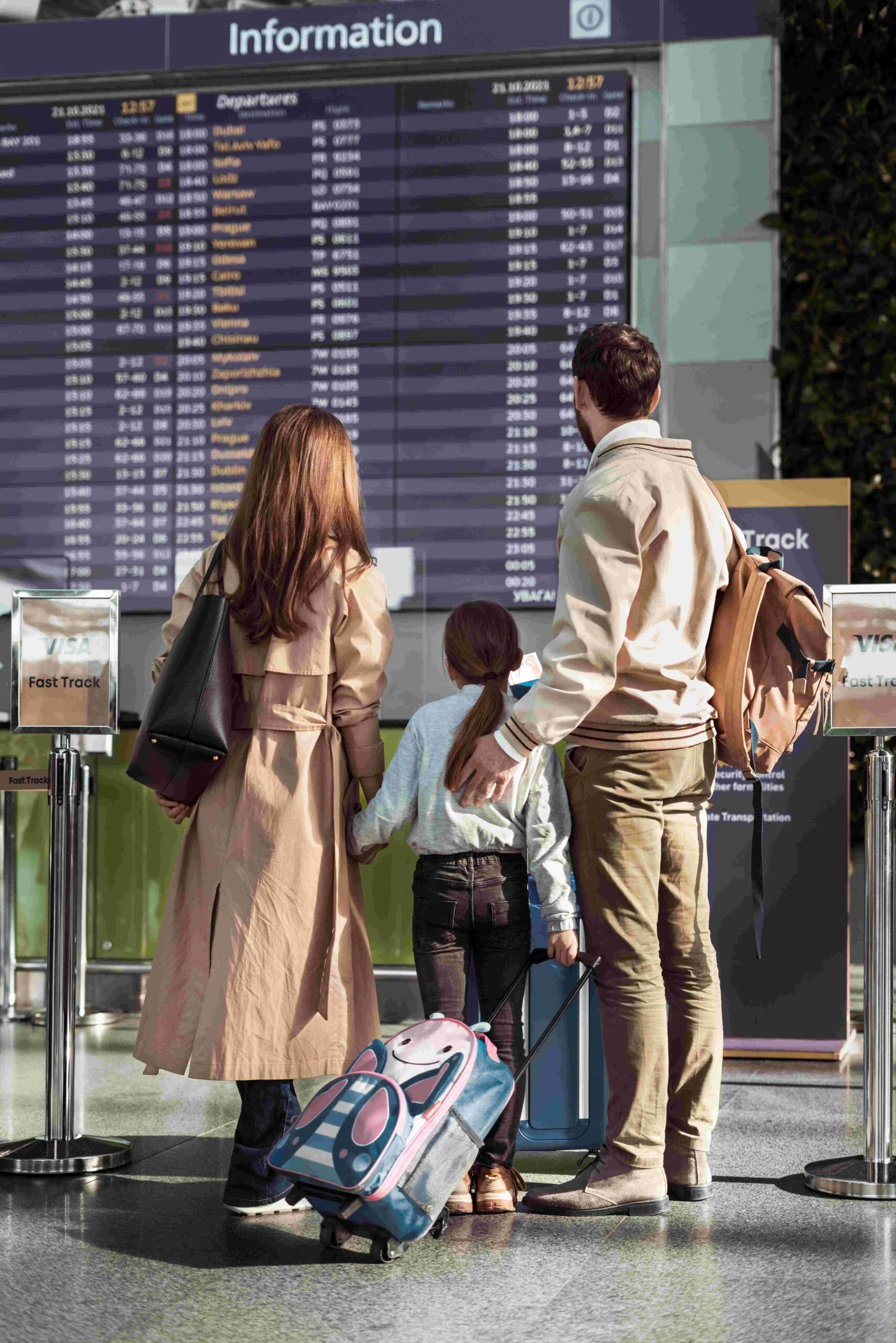
Category-Specific Requirements: What You Need Beyond the Basics
Beyond the universal four, your specific travel situation may require additional documents. The categories below cover the most common situations.
Proof of Financial Capacity
Philippine immigration officers can request proof that you can support yourself abroad, particularly for first-time travelers going to destinations with high overstay rates. You are not required to carry a formal dossier, but having the following available reduces your offloading risk significantly.
Documents that satisfy this requirement include recent bank statements (the last three to six months), a certificate of employment stating your salary and length of service, pay slips, or an income tax return. If you are self-employed, bring your business registration documents and a bank statement together.
No specific minimum balance is published by the Bureau of Immigration as a universal rule. The officer uses judgment. A bank statement showing a balance that is clearly insufficient for the trip you have booked is a flag; one that shows regular income and a reasonable balance is not.
Affidavit of Support and Guarantee
If someone else is funding your trip, whether a relative abroad or a non-relative sponsor, you will need a notarized Affidavit of Support and Guarantee. This document must name the sponsor, state their commitment to cover your expenses, and be accompanied by the sponsor’s own proof of financial capacity (bank statements, employment certificate, or equivalent).
For a relative sponsor, you also need a document establishing the relationship, usually a birth certificate or marriage certificate. For a non-relative sponsor, immigration officers will look more closely at what connects you, so bring any correspondence, photographs, or official documents that clarify the relationship.
The affidavit must be notarized. If the sponsor is abroad, it must be authenticated at the Philippine embassy or consulate in their country of residence, or carry an apostille. A plain, un-notarized letter does not satisfy the requirement.
DSWD Clearance for Minors
A DSWD (Department of Social Welfare and Development) clearance is required for any minor under 18 traveling internationally without both parents. The three situations that trigger this requirement are: a minor traveling alone, a minor traveling with only one parent, and a minor traveling with someone who is not their parent or legal guardian.
If a minor is traveling with one parent and the other parent cannot accompany them, the traveling parent needs an affidavit of consent from the absent parent, notarized and accompanied by the absent parent’s government-issued ID. If both parents are deceased or if there is a sole custody arrangement, bring the legal documentation that establishes that.
If a minor is traveling with a non-parent (a grandparent, aunt, uncle, or family friend), the process requires an Affidavit of Support and Consent signed by both parents or the legal guardian, the minor’s birth certificate, and submission to the nearest DSWD office for assessment and clearance issuance. Allow time for this: DSWD offices have processing queues, and same-day clearance is not guaranteed.
For detailed step-by-step guidance on DSWD clearance and consent letter requirements for minors, the Bureau of Immigration’s official website publishes current forms and procedures.
OFW Departure Requirements (OEC and Exemptions)
Overseas Filipino Workers have a separate lane at major airports and a specific set of documents that replace or supplement the standard requirements. The core document is the Overseas Employment Certificate (OEC), now issued by the Department of Migrant Workers (DMW), which replaced the POEA for this function.
The OEC exempts OFWs from paying travel tax and airport terminal fees, which is a significant saving. First-time OFWs must complete the Pre-Departure Orientation Seminar (PDOS) and ensure their OWWA membership is active before their OEC is released.
Because OFW departure requirements are detailed enough to fill their own guide, and because the DMW portal and exemption rules have changed several times since 2024, a dedicated article covers this in full. What matters for the immigration counter: have your OEC, valid employment visa or work permit, and employment contract with you, and use the OFW lane where available.
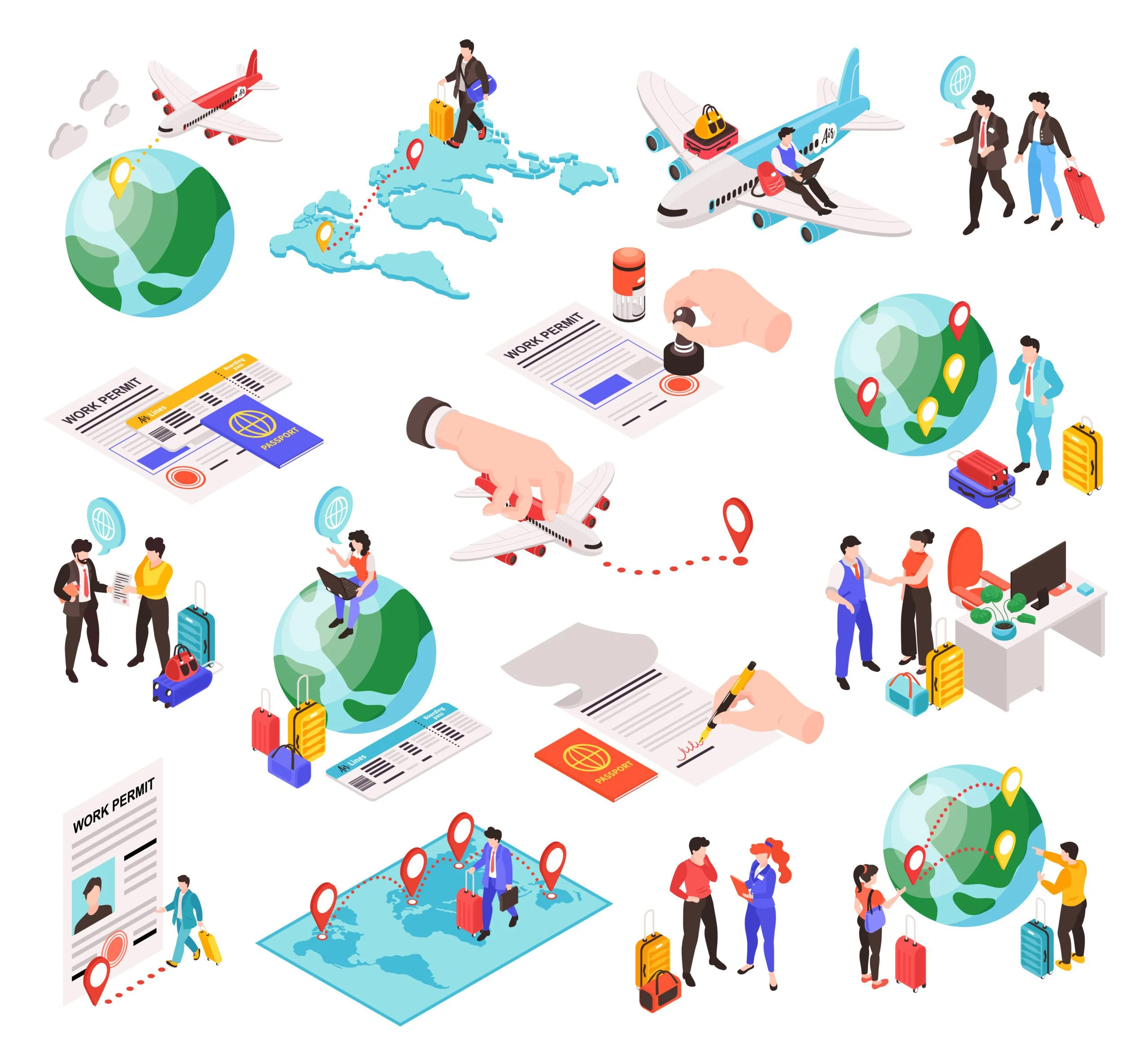
eTravel Registration: Who Must Register and Who Does Not
Departing Filipino citizens must register on the eTravel system before leaving the Philippines. The eTravel system (etravel.gov.ph) is browser-based and requires no app download. Registration takes roughly five minutes and generates a QR code that some airports now check at departure.
Departing foreign nationals are not required to register on eTravel for their departure from the Philippines. This is a common point of confusion: eTravel registration for departure applies to Filipino passport holders, not to foreigners leaving the country. Foreign passengers arriving in the Philippines do need to register eTravel for their arrival, but that is a separate process on the other side.
Register on eTravel within 72 hours before your scheduled departure. The system asks for your flight details, passport information, and destination. Keep the QR code accessible on your phone or print it.
Departure Fees: Terminal Fees and Travel Tax in 2026
Airport Terminal Fees
Terminal fees are charged at departure and vary by airport. The NAIA privatization under NNIC (New NAIA Infra Corporation) resulted in a fee increase effective 14 September 2025. CAAP-managed airports moved in the opposite direction, reducing their international passenger service charge effective 1 April 2026. The table below reflects current rates.
| Airport | International Terminal Fee | Notes |
|---|---|---|
| NAIA (all terminals, Manila) | ₱950 | Increased from ₱550 under NNIC, effective Sept 2025 |
| MCIA (Mactan-Cebu) | Check with GMCAC | Verify current rate at the airport or GMCAC website |
| Clark International (CRK) | Check with LIPAD Corp | Verify current rate at the airport or LIPAD Corp website |
| CAAP-managed airports | ₱700 | Reduced from ₱900, effective April 2026 |
OFWs with a valid OEC are exempt from terminal fees at their departure airport. Confirm this exemption at the airline check-in counter with your OEC before proceeding to the terminal fee payment counter.
For MCIA and Clark, rates are set by their respective private operators and have been adjusted at different intervals from NAIA. Contact the airport or check the operator’s official website for the current figure before your trip.
Travel Tax
The travel tax is currently ₱1,620 for economy class and ₱2,700 for first class for most Filipino passengers. Certain categories are exempt, including OFWs with a valid OEC, minors under two years old, and Philippine-based foreign diplomatic personnel.
Travel tax is either collected by the airline at ticket purchase or paid at the TIEZA (Tourism Infrastructure and Enterprise Zone Authority) counter at the departure airport before check-in closes.
Legislative update as of mid-2026: The House of Representatives passed HB 8464 on 16 March 2026 with 257 votes in favor, which would abolish the travel tax entirely. The Senate accepted the companion bill in February 2026, and President Marcos included travel tax abolition in the Legislative-Executive Development Advisory Council (LEDAC) priority legislation list. The bill had not yet been signed into law as this article was last updated. If you are booking travel for late 2026 or 2027, monitor the TIEZA website and reputable Philippine news sources for the signing date and effective date. Do not assume the tax has been abolished until a law takes effect.
The Immigration Counter: What Actually Happens Step by Step
Understanding the physical process at the airport reduces anxiety and helps you prepare the right documents in the right order.
Step 1: Check in with your airline. Get your boarding pass, check your bags, and pay travel tax if it was not collected by the airline at booking. Some airlines include travel tax in the ticket price; check your booking confirmation.
Step 2: Pay the terminal fee, if it is not already included in your ticket. At NAIA, terminal fees are typically collected at a dedicated counter before the immigration queue. At some other airports they are collected at check-in. Check your airline’s instructions.
Step 3: Complete eTravel registration if you have not done so already. Do this before you reach the immigration area.
Step 4: Join the immigration queue. Present your passport, boarding pass, return ticket, and visa (if applicable) to the immigration officer. The officer will scan your passport, verify the documents, stamp your passport if everything is in order, and clear you through. For most travelers with complete documents, this takes three to five minutes.
Step 5: Proceed through security screening and to your departure gate.
At NAIA Terminal 3, OFWs use a dedicated lane that typically moves faster. Senior citizens and passengers with disabilities also have dedicated lanes.
What Triggers Offloading and How to Reduce the Risk
Offloading happens when an immigration officer finds sufficient reason to prevent you from boarding. It is not arbitrary, but the officers have discretionary authority, and the decision at the counter is final unless you escalate immediately to the supervising officer on duty.
The IACAT 2023 Revised Guidelines formalized the documentation requirements and removed some of the more subjective discretion that characterized the process before. Officers now follow a structured assessment, but that does not mean every traveler is treated identically.
Situations that increase offloading risk:
A first-time traveler going to a high-risk destination (Japan, South Korea, certain Middle Eastern countries) with no return ticket and no financial documents is a profile match. A traveler with a previous overstay record in any country will receive closer scrutiny. A traveler going alone whose only stated purpose is tourism but who cannot describe a coherent itinerary may face questions. A minor traveling with a non-parent who has no DSWD clearance will not be cleared.
What reduces offloading risk:
A complete document set is the single most effective protection. For first-time travelers to Japan, South Korea, or any destination with an overstay history, bring your bank statements, employment certificate, hotel bookings, and a printed itinerary. Organize them in a folder in the same order you would present them: passport on top, boarding pass next, then supporting documents behind.
If you are called to secondary inspection, remain calm, answer questions directly, and present only what is asked. Secondary inspection is not a criminal proceeding. Most secondary inspections resolve within 30 minutes for travelers with legitimate travel plans and complete documents.
If you are offloaded, ask for the specific reason in writing. You have the right to know the basis for the decision. You can also contact the BI main office or file a complaint through the IACAT if you believe the offloading was unjustified.
Exit Clearance Certificate (ECC) for Long-Stay Foreign Nationals
Foreign nationals who have stayed in the Philippines for more than six months on a non-immigrant visa are required to secure an Exit Clearance Certificate (ECC) before departing. This applies to holders of tourist visas who extended their stay, holders of 9(g) pre-arranged employment visas, and other long-stay non-immigrant visa categories.
The ECC is issued by the Bureau of Immigration. The process has been integrated with the Annual Report system as of recent BI administrative updates, so foreign nationals who complete their Annual Report may find the ECC process handled as part of the same visit.
For the current ECC fee, contact the Bureau of Immigration directly at their main office in Intramuros, Manila, or through their official website (immigration.gov.ph). Fee figures published by third-party sources conflict, and the BI has adjusted fees at different points, so the only reliable source is the BI itself.
Foreign nationals on a Special Resident Retiree’s Visa (SRRV) or a 9(a) tourist visa with a stay of less than six months do not need an ECC.
Hold Departure Orders and Blacklist Orders
A Hold Departure Order (HDO) is a court-issued order that prevents a specific individual from leaving the Philippines. HDOs are issued in connection with criminal cases and are entered into the BI database. If your name appears on an HDO, immigration officers will stop you at the counter regardless of the documents you carry.
A Blacklist Order (BLO) bars a foreign national from entering or re-entering the Philippines. It is separate from an HDO and applies primarily to foreigners, not to departing Filipino citizens.
If you believe you may be subject to an HDO, you can verify your status through the Bureau of Immigration’s Verification Unit. Present valid identification. Filipinos who have a court case pending but have not been served an HDO are not automatically restricted from travel, but it is worth confirming your status before booking a flight if you have any legal proceedings open.
Frequently Asked Questions
Do I need to register on eTravel before departing the Philippines?
Filipino citizens departing the Philippines must register on the eTravel system at etravel.gov.ph before their flight. The registration generates a QR code linked to your flight and passport details. Departing foreign nationals do not need to register eTravel for their departure from the Philippines, though arriving foreign passengers do need to register it for their arrival.
What documents reduce my risk of being offloaded at NAIA?
The four documents that cover primary inspection are your passport, boarding pass, return ticket, and valid visa. Beyond those, financial documents (bank statement, certificate of employment) and a printed hotel booking or itinerary are the most effective additions for first-time travelers going to destinations with high overstay rates. Organized, complete documentation is the clearest signal that your travel is legitimate.
Is the Philippine travel tax still required in 2026?
Yes, the travel tax is still in effect as of mid-2026. The current rate is ₱1,620 for economy class and ₱2,700 for first class. The House passed HB 8464 to abolish it on 16 March 2026, and the Senate companion bill advanced in February 2026, but the law had not been signed as of this update. Monitor the TIEZA website for any announcement of a signing date and effective date.
How much is the terminal fee at NAIA in 2026?
The NAIA international passenger terminal fee is ₱950, effective 14 September 2025 under the new private operator NNIC. This is an increase from the previous ₱550. CAAP-managed airports outside Manila charge ₱700 for international departures as of April 2026. OFWs with a valid OEC are exempt from terminal fees.
Does my child need a DSWD clearance to travel abroad?
A minor under 18 needs a DSWD clearance if traveling alone, with only one parent, or with a non-parent companion. If the minor is traveling with both parents, no DSWD clearance is required. If only one parent is traveling with the child, the traveling parent should carry a notarized affidavit of consent from the absent parent along with the absent parent’s ID. Allow processing time for DSWD clearances; they are not issued instantly.
What is an OEC and do all OFWs need one?
An Overseas Employment Certificate is issued by the Department of Migrant Workers and certifies that an OFW is legally deployed and registered. It is required for first-time OFWs and for returning OFWs going back to their employer or transferring to a new one. The OEC exempts the holder from paying travel tax and airport terminal fees. Balikbayans and OFWs who qualify under the DMW’s OEC exemption program may not need a new OEC for every trip; check the current DMW guidelines for your specific situation.
What happens if I am sent to secondary inspection?
Secondary inspection is a more detailed review conducted in a separate area of the immigration hall. It is triggered when the primary officer finds a discrepancy in your documents, your profile matches a risk pattern, or your travel purpose is unclear. Bring all your supporting documents and answer questions directly. Most secondary inspections resolve within 30 to 60 minutes for travelers with complete and consistent documentation. If you are offloaded, request the specific reason in writing immediately.
Verdict: Who This Process Is Straightforward For, and Who Needs Extra Preparation
For Filipinos with a complete document set, a clear travel purpose, and a history of travel, the departure process at Philippine airports is routine. The primary immigration counter is quick, and the fees, while not trivial, are predictable.
The process requires more preparation for four groups: first-time travelers going to destinations with high overstay rates, travelers with minors in their care, OFWs departing for the first time, and foreign nationals who have overstayed their visa validity. For these travelers, the additional documents are not obstacles so much as a checklist that, when complete, removes the uncertainty from the counter interaction.
The fee picture in 2026 is genuinely in flux. NAIA’s terminal fee went up significantly under its new operator, while CAAP airports moved in the opposite direction. The travel tax may be abolished before the end of the year. Anyone booking travel for late 2026 or 2027 should treat the current figures as a baseline and verify before departure.
The Philippines has a lot to offer before you leave for wherever you are going, and it will be here when you return. Explore the best beaches in the Philippines for ideas on where to go on your next domestic trip before heading to an international gateway, or check the mountains in the Philippines travel guide if you want to schedule a highland stop before your flight. Historical travelers can browse the historical places in the Philippines travel guide, and the river, lake, and falls guide covers the country’s inland water destinations for a different kind of itinerary.
The departure requirements are the paperwork side of a trip. Get them sorted early, and the rest of the journey is yours.
Written by Aiden Kenzy. Last updated: September 2026.


What documents do I have to be issued the Balikbayan visa , my wife is Philippine citizen.
For Family Visit Visa going to Qatar,is it okay the visa only written First and Last Name?
No, unless your passport truly only lists two names.