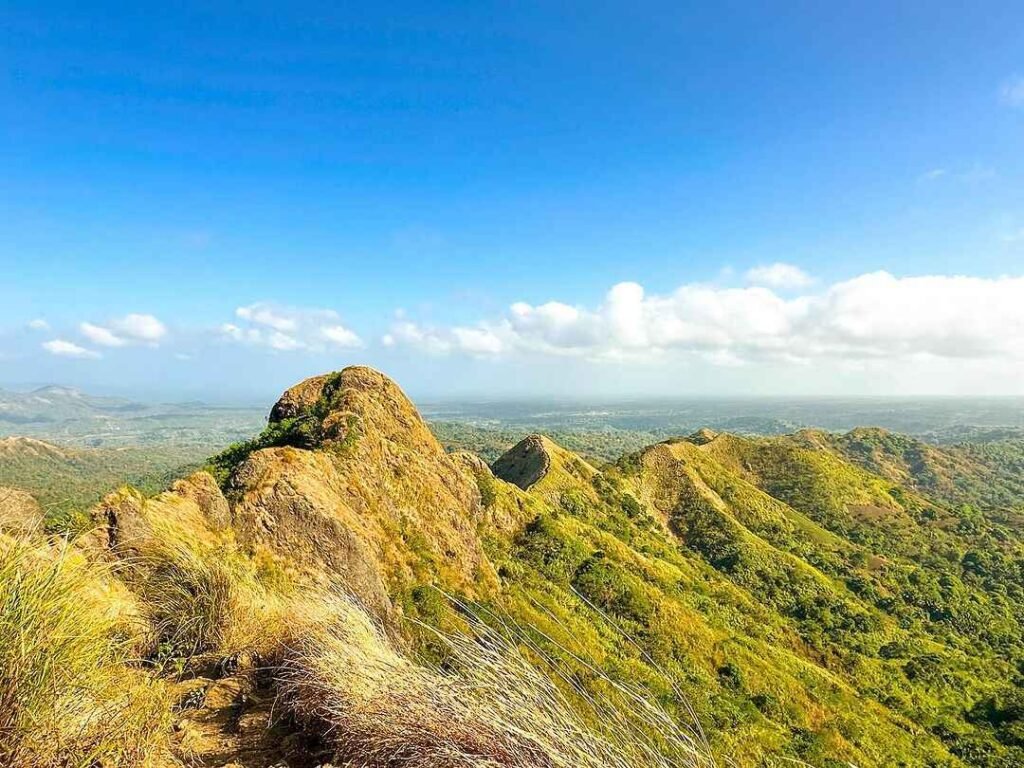
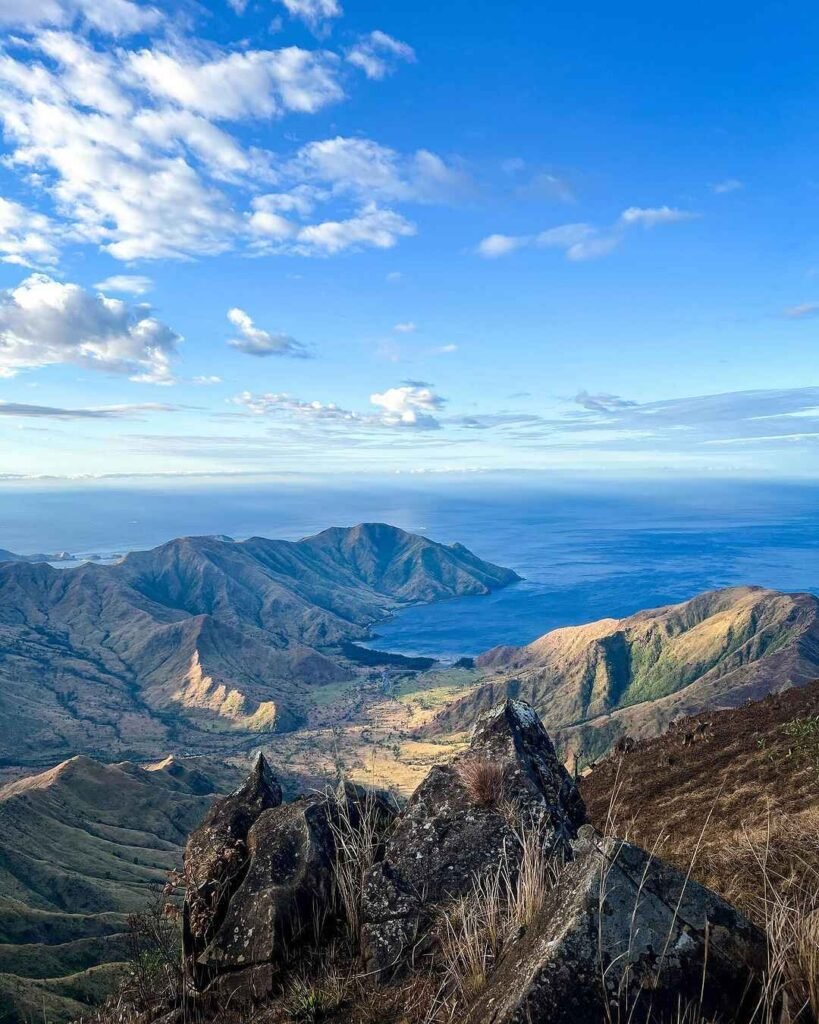
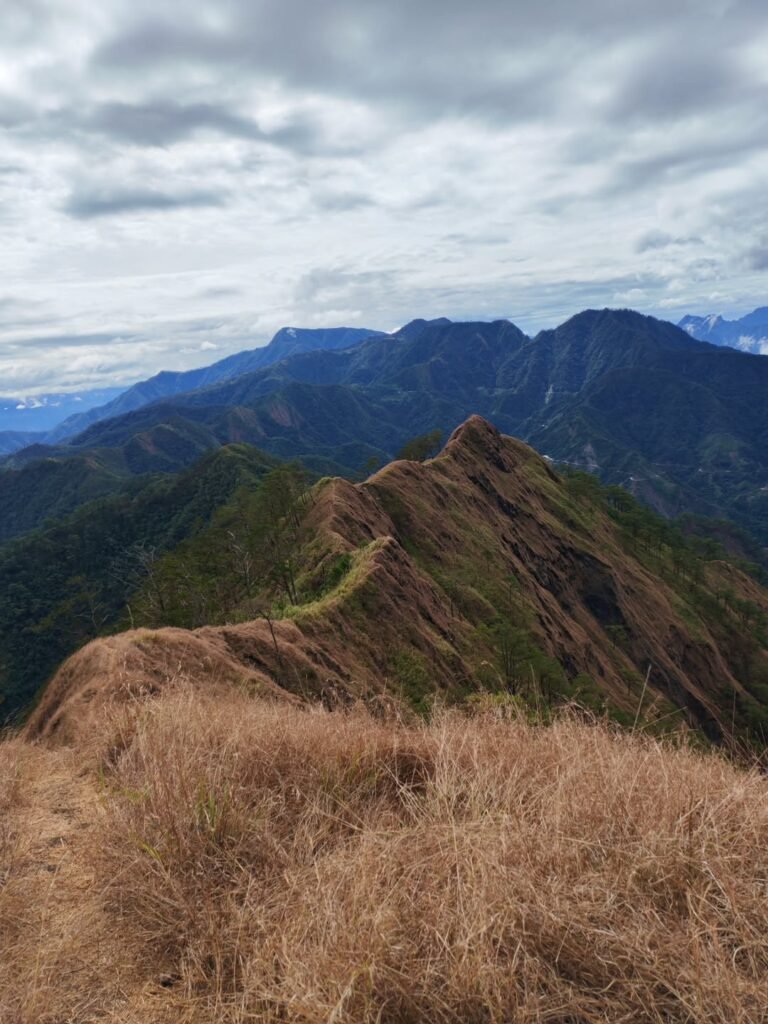
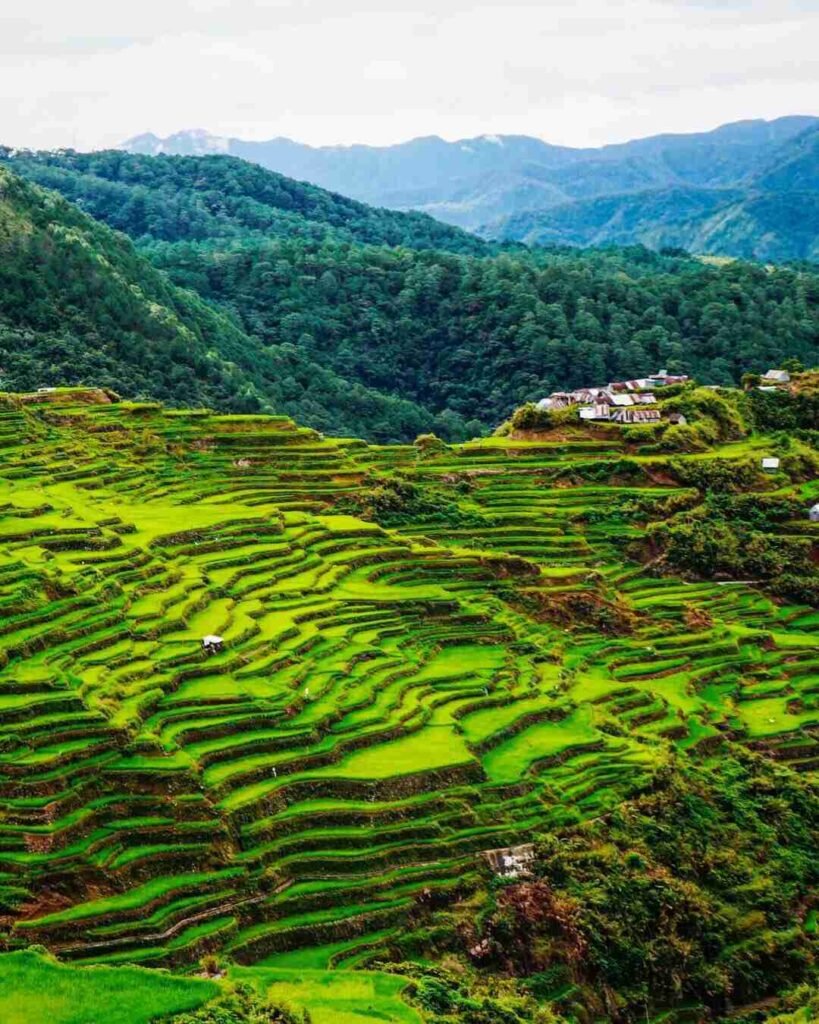
Mt. Arayat’s difficulty depends entirely on which trail I take:
- The standard North Peak via Magalang sits at 4/9 to 5/9
- The Quad Peak circuit, linking all four summits across 12 to 14 hours of continuous movement, is rated 7/9
- The Quad Peak is one of the hardest day hikes in Central Luzon
This guide covers the full Quad Peak circuit as well as the easier trail options, with fees, transport, and gear details updated for October 2026. Mt. Arayat is one of the standout mountains to hike in Pampanga, rising as a lone stratovolcano from the flat agricultural plains of the province. I have been to 69 of the 82 provinces since 2015, and this mountain earns its reputation.
Key Takeaways
- North Peak elevation: 1,030 MASL. South Peak: 1,008 to 1,026 MASL. Both peaks are inside the Mount Arayat Protected Landscape (MAPL), covering 3,715.28 hectares.
- Quad Peak traverse difficulty: 7/9. Duration: 12 to 14 hours. Start no later than 4:00 AM from the San Juan Baño side.
- Guide fee (Quad Peak day traverse): ₱2,000 per group of up to 5 hikers. Overnight traverse: ₱3,500 per group. You pay this at the jump-off before you start.
- Magalang Ranger Station (Brgy. Ayala entry fee): ₱30 to ₱50 per person. Some hikers in mid-2026 paid up to ₱100 depending on barangay toll adjustments. Confirm the current rate on-site.
- San Juan Baño Station (Arayat National Park exit fee): ₱30 per person. You pay this when you finish the traverse on the other side.
- Joining an organized tour? Expect to pay ₱1,900 to ₱2,400 per person as of late 2026. This usually covers roundtrip van transfers from Manila, both environmental fees, and the guide fee.
- No Guide, No Hike policy is strictly enforced by the Protected Area Management Board (PAMB) under DENR. No exceptions.
- No water sources anywhere on the trail. Carry a minimum of 4 to 5 liters per person from the jump-off.
- Best months to climb: November to May. The Quad Peak during the wet season (June to October) is dangerous because of slippery near-vertical scrambles and leeches (limatik in Filipino). Fees as of October 2026; confirm all amounts on-site as these can change without notice.
Table of Contents

Mt. Arayat Trails and Difficulty Ratings
Mt. Arayat difficulty level ranges from 4/9 for the standard Magalang route to 7/9 for the Quad Peak and Pinnacle technical trails. There are five distinct routes, and choosing the wrong one for your fitness level is the most common mistake first-time visitors make.
Magalang Trail (North Peak)
Jump-off: Barangay Ayala, Magalang, Pampanga. Difficulty: 4/9 to 5/9. Ascent: 3 to 4 hours.
The terrain starts with a flat agricultural walk, then moves into steady Dipterocarp forest with no severe scrambling. The summit view from North Peak gives a 270-degree panorama across the Pampanga River, Nueva Ecija plains, and the Sierra Madre range. This is the right entry point for fit beginners with no scrambling experience.
San Juan Baño Trail (South Peak)
Jump-off: DENR Ranger Station, Barangay San Juan Baño, Arayat, Pampanga. Difficulty: 4/9 to 5/9. Ascent: 3 to 4 hours.
The first hour crosses an open agricultural apron with no shade. After that, the trail turns into aggressive boulder scrambling and near-vertical dirt steps where you grab exposed roots. A narrow cliffside passageway appears near the top.
Standard Cross (North to South or South to North)
Difficulty: 5/9. Total distance: about 10 kilometers. Duration: 8 to 10 hours.
The key technical feature is the Monkey Trail saddle, whose crux is Haring Bato (King’s Rock), requiring a stem-and-pull scramble or light rope use. Bring heavy-duty garden gloves and protective arm sleeves for the thorny plants on the southern descent.
Pinnacle Peak Technical Trail
Distance: 8 kilometers. Difficulty: 7/9. The terrain involves razor-sharp ridges with serious drops on both sides and fixed ropes on sheer rock faces.
This trail needs flawless balance, comfort with heights, and strong upper-body strength. It is not suitable for beginners under any conditions.
Quad Peak Circuit
Summits covered: TKO Peak, Pinnacle Peak, South Peak, and North Peak. Difficulty: 7/9.
Duration: 12 to 14 hours. This is covered in detail in the next section.

What Makes the Quad Peak Circuit So Hard?
The Mt. Arayat Quad Peak is rated 7/9 for good reason. It combines near-vertical volcanic rock scrambles, a technical ridgeline with serious drop exposure, zero water sources, and a 12 to 14 hour total duration.
There is no easy exit once I am past the Pinnacle section. The circuit was pioneered by local mountaineers between 2016 and 2018.
The hike starts from Barangay San Juan Baño between 3:00 AM and 4:00 AM. The early start is not optional. Starting after 4:00 AM risks finishing the descent in the dark on red clay that behaves like grease after dew.
TKO Peak (Alde Peak, 830 MASL) is the first technical summit. The assault trail hits gradients of 75 to 85 degrees on volcanic rock slabs with no flat rest sections between moves.
You need both hands the entire time. Use aggressive, stiff-soled hiking boots; trail runners are not suitable here.
From TKO, the route moves to Pinnacle Peak (920 MASL) via the Hunter’s Trail, the most exposed section of the full circuit. Strong upper-body strength is not optional. One wrong step on this ridge has no margin.
After Pinnacle, the circuit crosses to South Peak (989 MASL) through the Monkey Trail saddle. You are moving on all fours across sun-warmed volcanic rock.
Keep your centre of gravity low and listen to your guide before you commit the move. Bring thick gloves and arm sleeves because thorny plants on the southern descent will cut through bare skin.
The final push to North Peak (1,030 MASL) comes after South Peak. The cumulative elevation gain across all four peaks exceeds 1,300 meters because the route descends into saddles between each summit before climbing again. Carry 4 to 5 liters minimum, more in summer or if you sweat heavily.
The descent from South Peak to Barangay San Juan Baño takes 3 to 4 hours on reddish clay soil. When I climbed on a cloudy day in October 2026, the morning dew had already made the clay slippery by mid-morning. Trekking poles are not a luxury on this descent.

Elevation, Distance, and Trail Specs
Mt. Arayat’s true summit is North Peak at 1,030 MASL, making the Mt. Arayat MASL figure straightforward for anyone planning gear or fitness benchmarks. South Peak sits at 1,008 to 1,026 MASL depending on the measurement point. Both peaks are within the Mount Arayat Protected Landscape (MAPL), a protected area covering 3,715.28 hectares managed by the PAMB under DENR.
The jump-offs on both sides sit at roughly 50 MASL, so the direct elevation gain to North Peak is about 980 meters. The Quad Peak circuit adds saddle descents between each peak, pushing the total cumulative gain beyond 1,300 meters.
Here is a summary of the main trail specs:
| Trail | Distance | Duration | Difficulty |
|---|---|---|---|
| Magalang (North Peak) backtrail | 8–11 km roundtrip | 3–4 hrs ascent | 4/9–5/9 |
| San Juan Baño (South Peak) backtrail | 8–10 km roundtrip | 3–4 hrs ascent | 4/9–5/9 |
| Standard Traverse | ~10 km point-to-point | 8–10 hrs | 5/9 |
| Pinnacle Segment | 8 km | included in Quad | 7/9 |
| Quad Peak Circuit | ~14+ km cumulative | 12–14 hrs | 7/9 |
Cell signal is strong at both jump-offs and at the summits of North and South Peaks, which face the plains. Signal drops completely inside the forested ridges and along the Monkey Trail.

Permits, Fees, and Guide Rates
The “No Guide, No Hike” policy at Mt. Arayat is enforced by the PAMB under DENR. The ranger station will not let you proceed without a registered licensed guide. No exceptions are made for experienced hikers or large groups.
About San Juan Baño: The resort pools and amenities at Arayat National Park in Barangay San Juan Baño have been closed since late 2024. The DENR ranger station there is a completely separate operation. It still processes hiker registrations on its own, regardless of what the resort is doing. You will log in at the DENR Registration Area near the 7th Station of the Cross in Brgy. San Juan Baño before heading uphill. The jump-off point has not moved.
The environmental and registration fee is ₱30 per person at each jump-off. Bring small bills.
Guide rates are set per group, not per person:
| Service | Guide Fee |
|---|---|
| Standard day hike (North or South Peak, backtrail) | ₱700–₱1,500 per group |
| Quad Peak circuit, day traverse (up to 5 hikers) | ₱3,500 per group |
| Overnight traverse | ₱3,000–₱3,500 per group |
A note on the Quad Peak fee because this one trips people up: the standalone guide fee for the Quad Peak circuit is ₱3,500 per group for up to five hikers. Split five ways, that is roughly ₱700 per person. The ₱2,000 figure you may have seen online is the per-person all-in rate charged by commercial organizers like Tanaw Explorer. That covers roundtrip van transfers from Manila, registration fees, and their share of the guide fee. If you are doing a DIY trip, you pay ₱3,500 directly at the trailhead. These two numbers are not the same thing, and they are often mixed up in group chats and blog comments.
Porters are available for hire at the jump-off at roughly ₱800 to ₱1,500 for a day hike, depending on bag weight. For the Quad Peak circuit, the scrambling sections are technical enough that many hikers choose to hire a porter so they can move freely on the rocks without a heavy pack slowing them down.
Leave No Trace rules apply throughout the Mt. Arayat Protected Landscape. Strict Protection Zones are closed to entry entirely. Eco-tourism activities are only allowed in Multiple Use Zones. No campfires are permitted at either campsite.
Camping is done at one of two sites:
- The North Peak campsite has a police outpost and tower with a 270-degree view of the central plains.
- The South Peak campsite is spacious, forested, and close to the view deck.
The San Fernando LGU page at cityofsanfernando.gov.ph carries updated advisories for Central Luzon protected areas.
How to Get to Mt. Arayat’s Jump-off Points
Fares as of October 12, 2026. These fares follow diesel and gas prices, so what you pay can be a little higher or lower than the figures below.
The Quad Peak circuit starts at the San Juan Baño side and ends near the North Peak on the Magalang side. I need transport arranged at both ends before leaving Metro Manila.
To the San Juan Baño jump-off (Quad Peak start, South Peak)
Take a bus from Cubao to San Fernando, Pampanga. The fare is ₱120 to ₱150.
From San Fernando, I ride a jeepney (a local public minibus) to Arayat town proper for ₱40 to ₱60. From there, I take a tricycle (a motorcycle with a covered sidecar) to Arayat National Park in Barangay San Juan Baño for ₱50 to ₱100 per trike.
To the Magalang jump-off (North Peak end, backtrail start)
Take a bus from Cubao to Dau or Angeles, Pampanga for ₱120 to ₱150. From Dau or Angeles, ride a jeepney to Magalang town proper for ₱35 to ₱40, then hire a tricycle to the Barangay Ayala trailhead for ₱60 to ₱100 per trike.
A note on timing: Public bus schedules from Cubao to Pampanga do not support a pre-dawn arrival for a 3:00 to 4:00 AM trailhead start.
Organized Quad Peak groups solve this in two ways:
- Chartering a van the night before and sleeping at a guesthouse near the jump-off
- Joining a group climb event where transport is coordinated as part of the package
If you are doing this independently, arrange your van rental in advance. Do not count on a late-night bus putting you at the trailhead in time.
For the Quad Peak, your group will finish on the Magalang side. Arrange a trike or a waiting vehicle to meet you at the Barangay Ayala end so you are not stranded after a 14-hour circuit. The Sinukwan Festival, Pampanga’s largest cultural event, is worth building into my trip if my visit falls in April or May.
Families extending the trip can also check Sky Ranch Pampanga rides and fees for a lighter day out. I can also cool off at the water park at Aqua Planet Clark Pampanga if the kids need a post-hike reward. Full details are in the Sinukwan Festival travel guide.

Sample Itineraries: Day Hike vs. Quad Peak Circuit
Two main itinerary types work for Mt. Arayat: a standard day hike on either the Magalang or San Juan Baño trail, and the full Quad Peak circuit.
Standard Day Hike (North or South Peak)
| Time | Segment |
|---|---|
| 5:00–6:00 AM | Arrive jump-off, register, meet guide |
| 6:00–6:30 AM | Start ascent from trailhead |
| 9:30–10:30 AM | Reach summit (North or South Peak) |
| 10:30–11:00 AM | Rest, lunch, views at summit |
| 11:00 AM–2:30 PM | Descend via same trail (backtrail) |
| 2:30–3:00 PM | Return to jump-off |
Total trail time: 8 to 9 hours including rest. This is the right option for fit beginners and intermediate hikers.
Quad Peak Circuit
| Time | Segment |
|---|---|
| 3:00–4:00 AM | Depart San Juan Baño ranger station |
| 6:00 AM | Reach TKO Peak (830 MASL), sunrise and breakfast |
| 10:30 AM | Reach Pinnacle Peak (920 MASL) |
| 11:30 AM | Reach South Peak (989 MASL), lunch at view deck |
| 1:30 PM | Reach North Peak (1,030 MASL) |
| 2:00 PM | Begin descent from North Peak |
| 4:30–6:00 PM | Arrive at Barangay Ayala, Magalang (Quad Peak end) |
Add 1 to 2 hours if your group is slower or stops long at each summit. The descent from North Peak to Barangay Ayala takes the most time for tired legs, especially on the loose clay sections.
The overnight cross guide fee is ₱3,000 to ₱3,500 per group. No campfires at either campsite. Carry all your water from the jump-off, as there are no water sources at camp.
What to Bring for Mt. Arayat
The gear list for Mt. Arayat changes significantly depending on which trail you take. The standard day hike needs less than the Quad Peak circuit, which demands technical-specific gear.
Gear for any Mt. Arayat hike:
- Hiking boots with stiff, aggressive soles. Trail runners will not hold on the volcanic rock sections and will take serious damage on the sharp ridges. This applies to both the San Juan Baño trail and the Quad Peak.
- Trekking poles. Mandatory for the red clay descent. Your knees will tell you this was not optional.
- Headlamp with fresh batteries. The Quad Peak starts at 3:00 to 4:00 AM. A headlamp is also insurance against a slow finish after sunset.
- 4 to 5 liters of water minimum per person, more in summer or if you sweat heavily. There are no water sources anywhere on any trail.
- Packed lunch and trail snacks. No food stalls along any trail.
- Insect repellent. Mosquitoes are present throughout, and leeches (limatik) appear on the forested ridges during the wet season.
- Personal first-aid kit including blister treatment, elastic bandage, and antiseptic.
Additional gear for the Quad Peak and cross:
- Thick construction or gardening gloves. Mandatory for Haring Bato and the Monkey Trail. The volcanic rock is sharp and the fixed rope sections need full-hand grip.
- Protective arm sleeves. The thorny plants on the southern descent section will cut bare skin.
- Sun protection (cap, buff, long sleeves) for the open agricultural apron, which has no shade for the first hour.
For the Quad Peak, a lighter pack makes the technical sections significantly safer, so a porter is worth considering.

Is Mt. Arayat Worth It for Beginners?
Mt. Arayat difficulty varies widely by trail, and the Quad Peak circuit is not accessible to beginners. Skip the Quad Peak if you are not physically fit and have not completed at least two prior major climbs.
The Magalang Trail to North Peak is the best entry point for new hikers. At 4/9 to 5/9 difficulty with no severe scrambling, it is a long but manageable climb through Dipterocarp forest, and the 270-degree summit view justifies the effort.
The San Juan Baño trail is also rated 4/9 to 5/9, but it includes aggressive boulder scrambling and near-vertical root-grab sections near the top. In practice, it is harder than the Magalang route.
It introduces the Monkey Trail saddle and Haring Bato without the full Quad Peak commitment.
The Quad Peak circuit at 7/9 is strictly for conditioned, advanced hikers. The Pinnacle section, with its razor ridges and lethal drops, has no beginner margin.
One wrong move there is not a sprain, it is a fall. If you are building toward the Quad Peak, complete the standard cross at least once first.
For first-time hikers in Central Luzon who want a comparable mountain with a clearer difficulty progression, the Mt. Pinatubo hike in Zambales is worth considering. It offers a dramatic volcanic landscape without the technical scrambling of Mt. Arayat’s upper trails.
Best Time to Climb Mt. Arayat
The dry season from November to May is the best window for any Mt. Arayat trail. The rock scrambles are drier, the agricultural apron is navigable, and the heat, while still intense, is predictable.
The wet season from June to October is highly discouraged for the Quad Peak specifically. The near-vertical volcanic rock scrambles on the TKO and Pinnacle sections become dangerous when wet. Limatik (blood leeches) are also active in the forested ridge sections during the rainy months, and they are not a minor inconvenience at that scale.
Trail closures can happen without advance notice when a typhoon hits Central Luzon. The PAMB under DENR makes that call and does not always post it publicly in advance. Contact the barangay hall in Brgy. Ayala (Magalang) or the DENR Ranger Station in Brgy. San Juan Baño directly before you travel during typhoon season.
For the Quad Peak specifically, an early start is critical year-round. The heat on the open ridges between Pinnacle and South Peak is severe from mid-morning onward. A 3:00 to 4:00 AM departure keeps the most exposed sections in the cooler morning hours.
Frequently Asked Questions About Mt. Arayat
Do I need to register before the climb?
Yes. Registration is required at the jump-off before you start. Bring a valid ID and complete the logbook. The ranger station handles this, and they will not let you through without it.
Is a guide required, or can I go alone?
A guide is required. The PAMB under DENR enforces a “No Guide, No Hike” policy at both jump-offs. The ranger station will not clear you to proceed without a licensed guide, no matter how experienced you are.
What time should I start for the Quad Peak circuit?
Leave by 3:00 to 4:00 AM. The full circuit takes 12 to 14 hours of continuous movement for a conditioned group, and up to 15 hours for slower ones. Starting before sunrise gives you enough daylight to reach Barangay Ayala by 4:30 to 6:00 PM.
What are the four peaks, and in what order do I climb them?
From the San Juan Baño side, the order is TKO Peak (also called Alde Peak, 830 MASL), Pinnacle Peak (920 MASL), South Peak (989 MASL), and North Peak (1,030 MASL). After each peak you descend into a saddle before climbing the next one, so the cumulative elevation gain goes well past what the summit heights alone suggest.
How hard is the Quad Peak compared to other climbs I might have done?
It is rated 7/9 on the Philippine hiking scale, which puts it firmly in the major climb category. It includes near-vertical rock scrambles at 75 to 85 degrees, exposed ridgelines with serious drop-offs, and fixed ropes on the Pinnacle section. Cumulative elevation gain exceeds 1,300 meters. Do not treat this as a trail to test yourself on for the first or second time.
I am a beginner. Is there a route I can actually do?
Yes. The Magalang Trail to North Peak is rated 4/9 to 5/9. If you are fit, have finished at least one minor climb, and can hike for 8 to 9 hours, you can manage it with a guide. The San Juan Baño trail carries the same difficulty rating but is harder in practice because of root-grab steps and boulder sections.
Can I camp on the mountain?
Two campsites are available. The North Peak campsite has a police outpost tower and a 270-degree view of the central plains. The South Peak campsite is spacious and forested, beside the view deck. No campfires are allowed at either site.
Is there water on the trail or at the campsites?
No. There are no water sources on the trail or at either campsite. Carry all the water you need from your jump-off before you start.