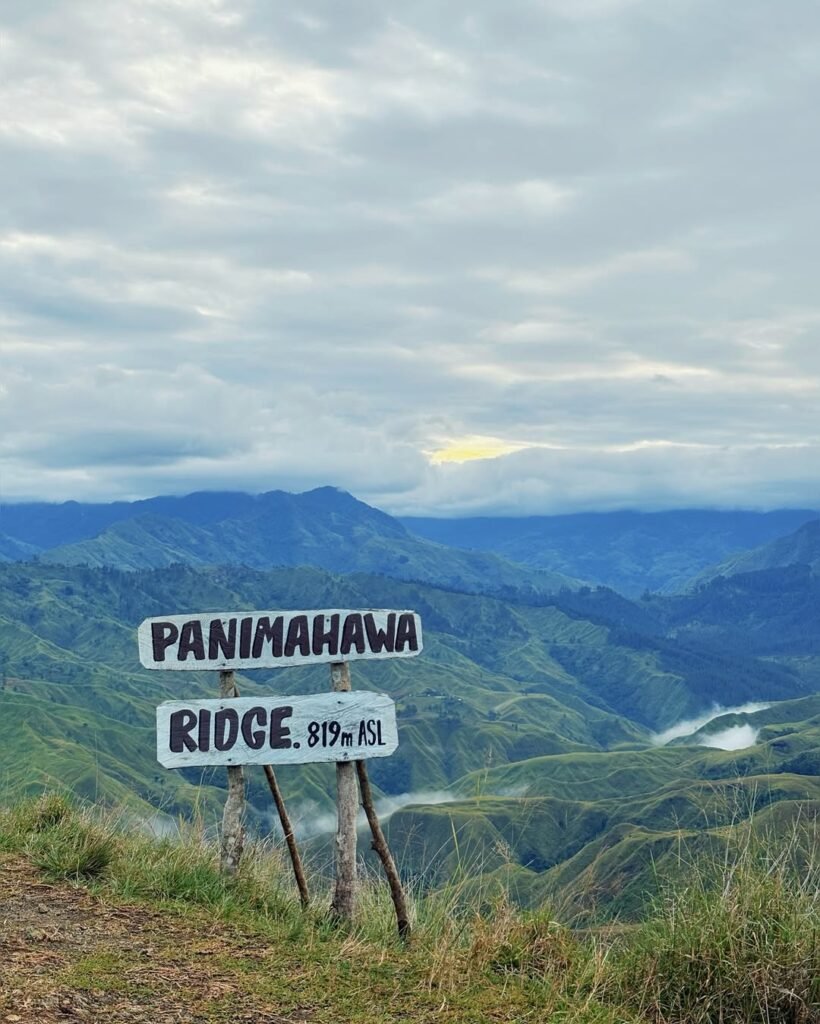
Panimahawa Ridge is a 2/9 minor climb reaching 870 MASL. The roundtrip trail is 6.5 to 8 km. Its reverse-mountain layout makes it more demanding than its difficulty rating suggests.
I was back on the trail in October 2026, my second time up. I first climbed it in April of that year. Both visits confirmed the same thing: this half-day hike in Mindanao delivers a real summit view and a cultural encounter in under half a day — and most CDO hikers have not heard of it.
It sits within the cluster of mountains in the Philippines that Cut the sentence or replace with: “Its elevation is modest, but the trail’s layout makes the physical effort disproportionate to the number.. I have been to 69 of the 82 provinces since 2015, so I have a few comparisons to draw from.
Key Takeaways
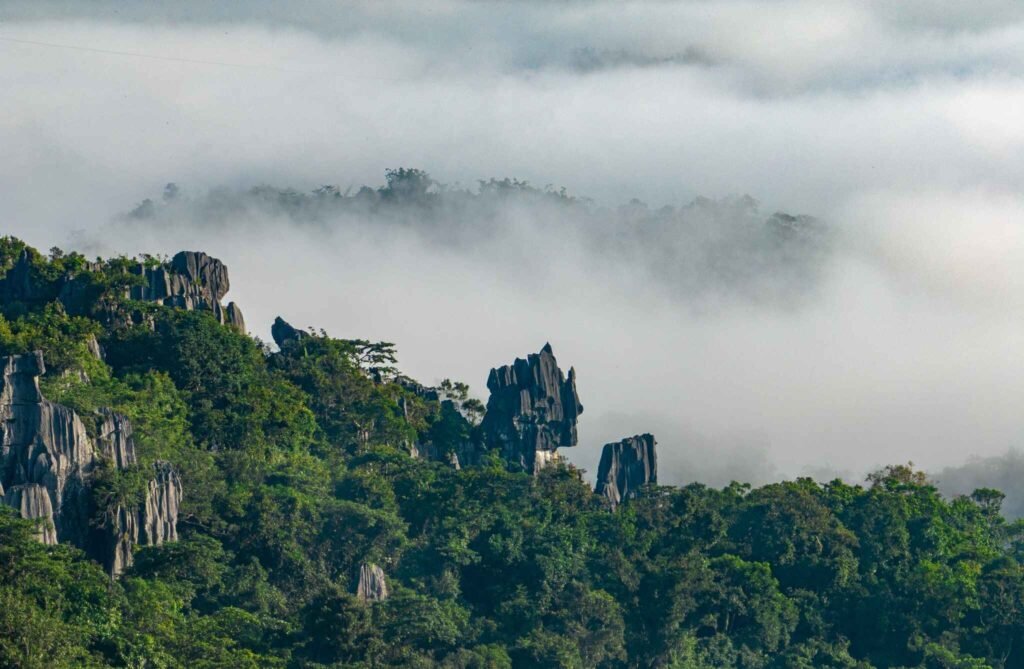
- 870 MASL elevation at the summit ridge, with roughly 280 to 300 m of cumulative elevation gain from the lowest point at the Dila River crossing — and on clear mornings, that ridge gives you a sea of clouds rolling across the Bukidnon plateau.
- Difficulty 2/9 (minor climb), but the reverse-mountain layout means the hardest uphill section, Deadman’s Slope, hits on tired legs during the return.
- ₱350 per person covers both registration and guide; groups of fewer than 5 hikers pay an extra ₱300 small-group surcharge on top.
- Jump-off point is Ant Farm Basekamp, Barangay Impalutao. Walk-ins are accepted, but book ahead for weekends: contact Sir Bob at +63 997 801 3135.
- Roundtrip takes 2 to 4 hours depending on pace and trail moisture. Start by 4:00 AM for a day hike to catch sunrise and the best chance of seeing the sea of clouds before it burns off.
Table of Contents
Panimahawa Ridge at a Glance: Location, Elevation, and Trail Class
Panimahawa Ridge sits in Barangay Impalutao, Impasug-ong, Bukidnon, in Northern Mindanao (Region X), about 3 to 4 hours overland from Cagayan de Oro. This is Higaonon indigenous territory, and that matters for how the trail is managed and how you behave on it. The panimahawa ridge elevation is 870 MASL, which places it well below altitude-sickness territory. The challenge here is gradient, not altitude.
The roundtrip panimahawa ridge km distance is about 6.5 to 8 kilometers. Cumulative elevation gain is about 280 to 300 m, measured from the Dila River ravine floor to the summit ridge.
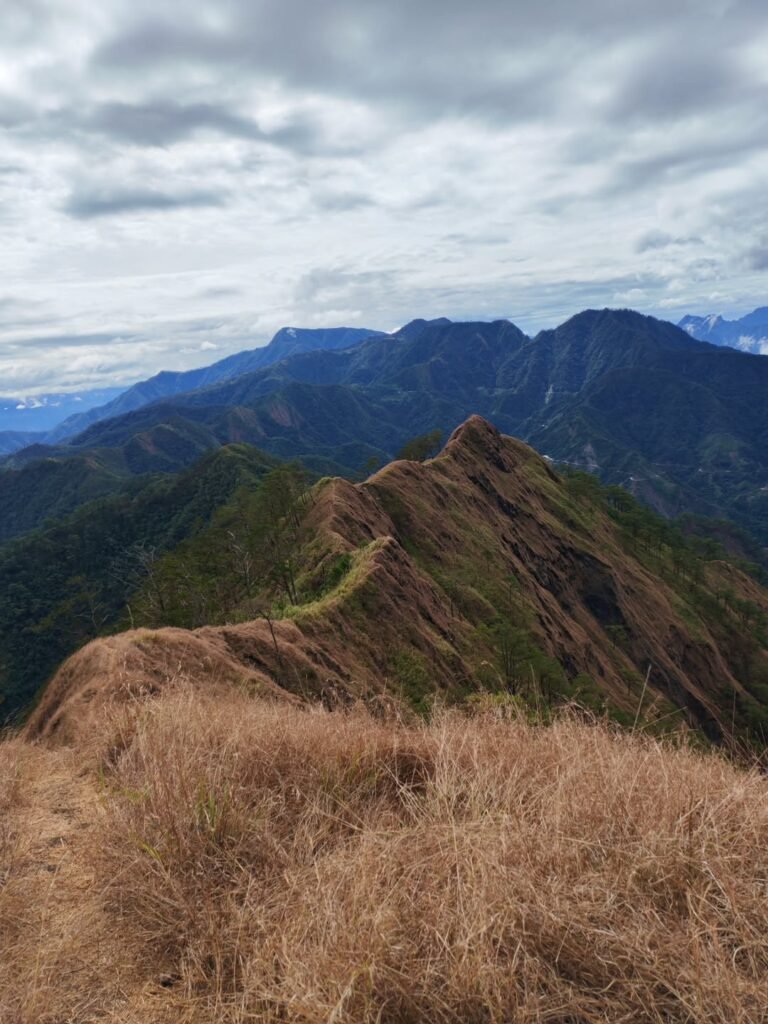
What sets Panimahawa Ridge bukidnon apart from most beginner trails in the Philippines is the reverse-mountain layout. The trailhead sits on an already-elevated highland plateau. From there, hikers drop steeply into a deep river ravine carved by the Dila River, a tributary of the Tagoloan River, before climbing back up to the ridge.
This means the steepest ascent, the section locals call Deadman’s Slope, comes on the return leg when legs are already tired. Most hikers expect the hardest part to be on the way up. Here, it is on the way back.
The trail passes through five distinct stages:
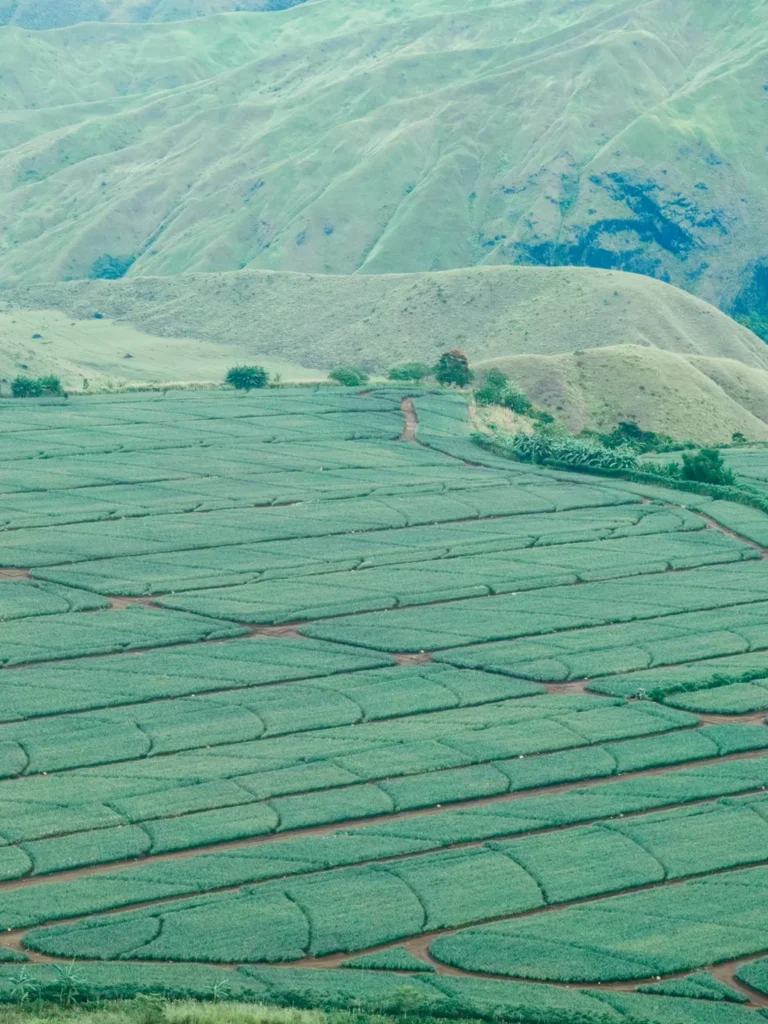
- A flat walk through corn and pineapple fields
- A steep descent to the Dila River
- The Deadman’s Slope climb
- A flat recovery section with a sari-sari store
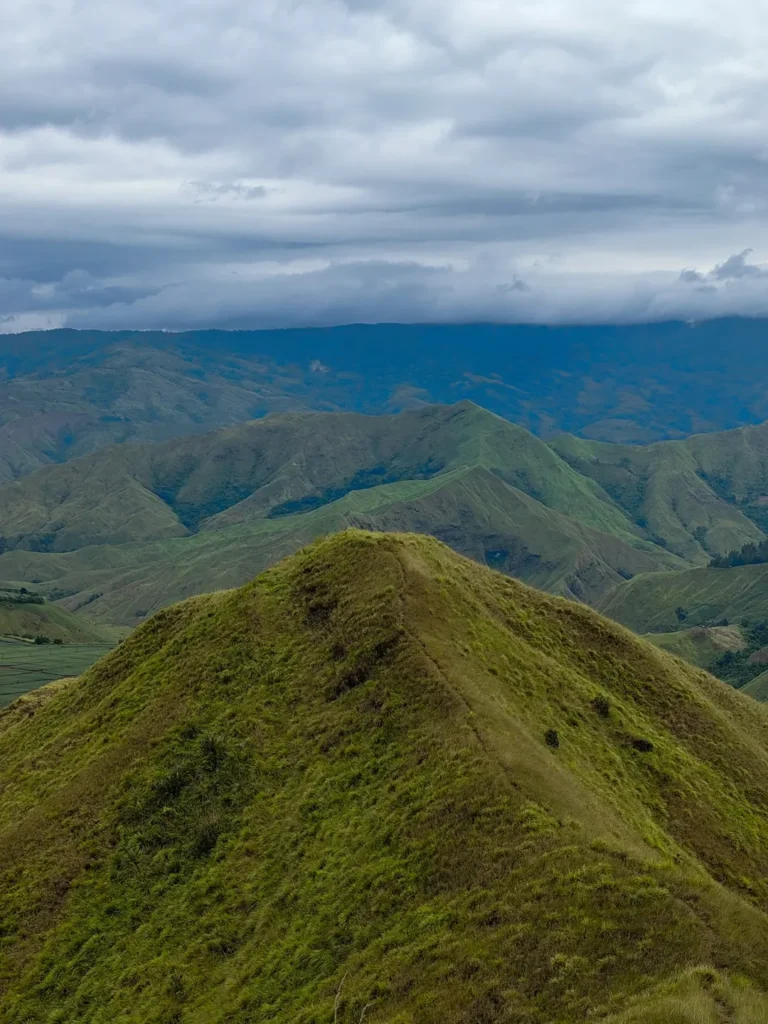
- The final ascent to the open grassland ridge
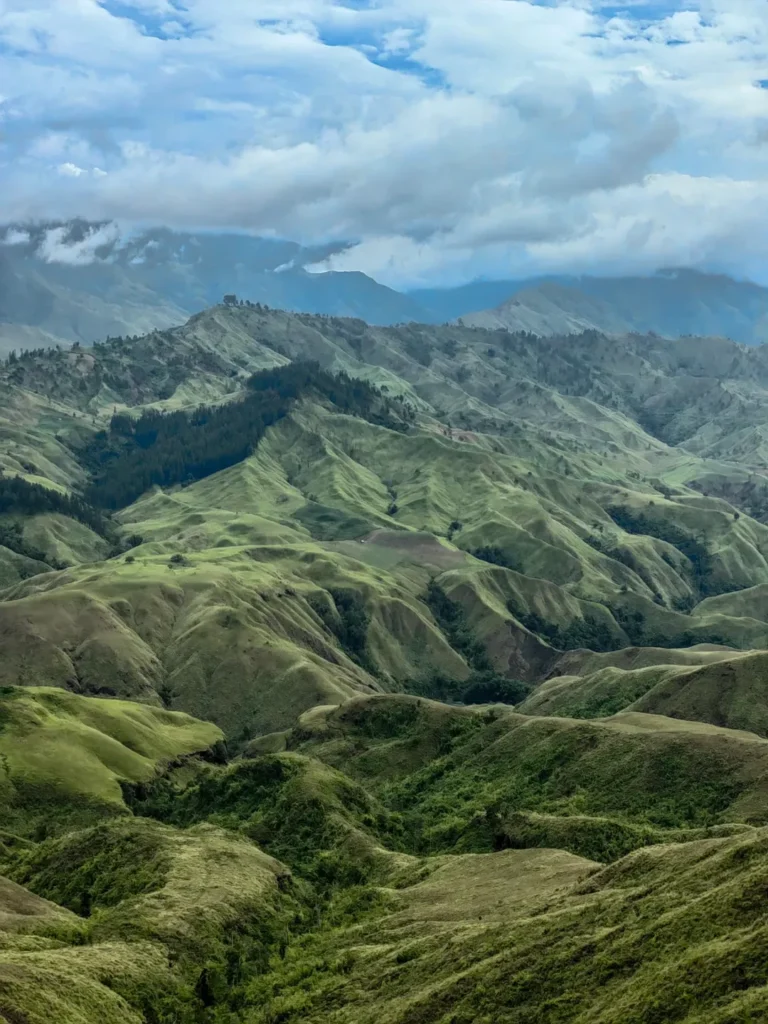
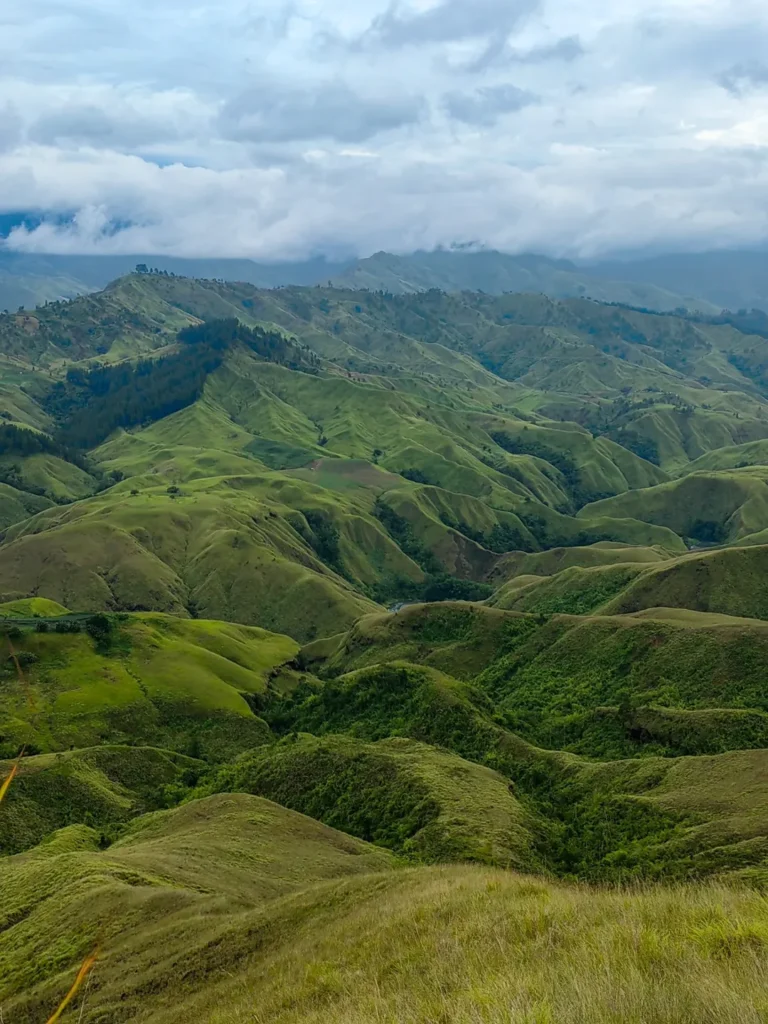
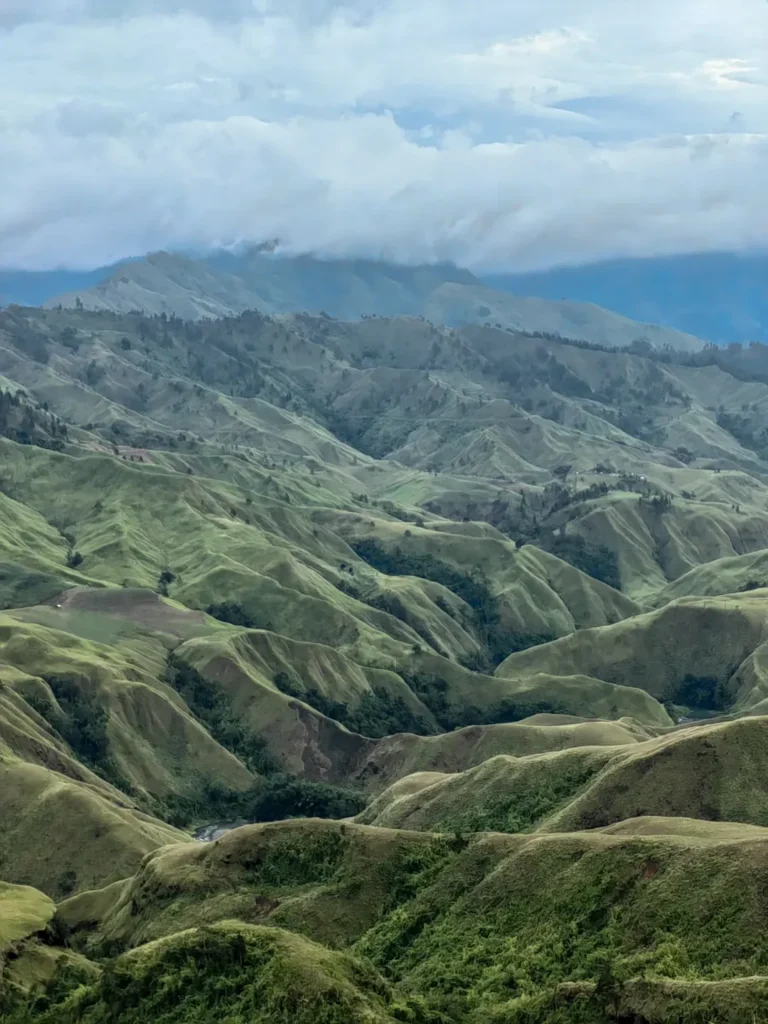
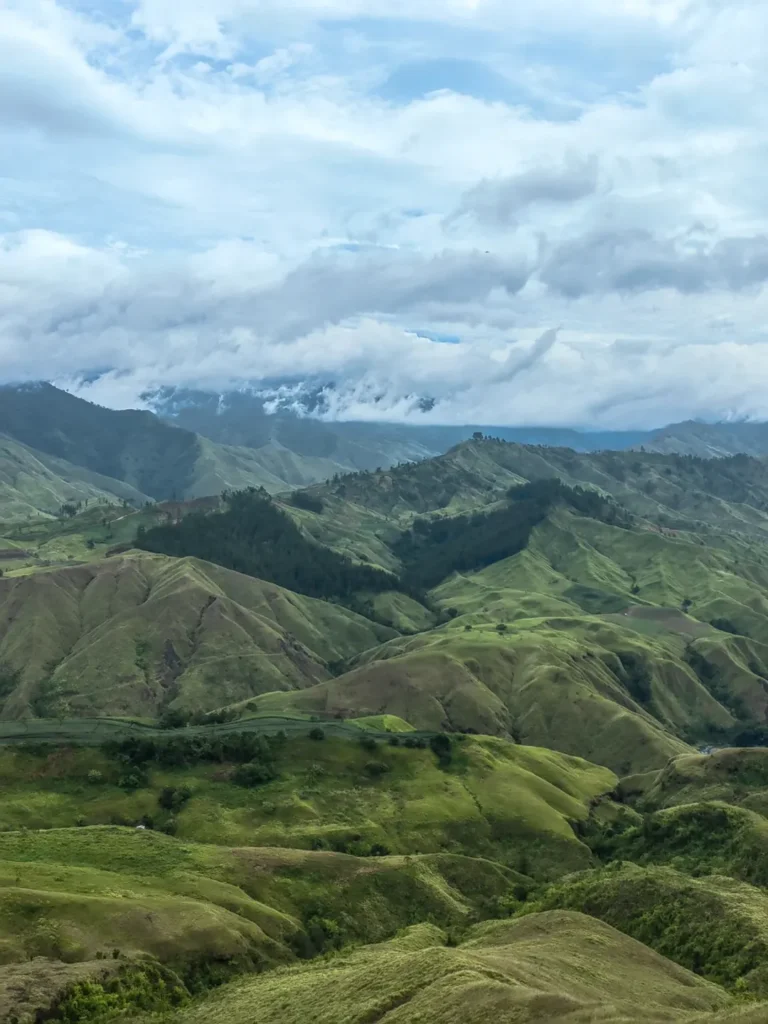
The summit offers clear sightlines to Mt. Kitanglad and Mt. Kalutungan on a good morning, and the Tagoloan canyon drops away below in a sweep of green ridgelines. The Tagoloan Basin sees soil erosion rates of 312 to 363 tons per hectare per year, which tells you how fast the red clay trail can change after heavy rain.
Panimahawa ridge location puts it about 9 km from Impalutao Elementary School along a barangay road, accessible by habal-habal (a motorcycle taxi) from the highway.
How to Get to Panimahawa Ridge from Cagayan de Oro
These fares follow diesel and gas prices, so what you pay can be a little higher or lower than the figures below.
Panimahawa Ridge is reached via Cagayan de Oro (CDO) from Laguindingan Airport, then by bus to Impalutao, then by habal-habal to the jump-off. A habal-habal is a motorcycle-for-hire, the workhorse of rural transport in Bukidnon. The full trip from the airport takes roughly 4 to 5 hours door to door.
| Leg | Transport | Fare | Travel Time |
|---|---|---|---|
| Laguindingan Airport to CDO Agora Terminal | Shuttle, van, or taxi | ₱150–₱200 | 45–60 min |
| CDO Agora Terminal to Impalutao Elementary School | Passenger bus (Davao or Malaybalay bound) | ₱140–₱180 | 3–4 hours |
| Impalutao Elementary School to Ant Farm Basekamp | Habal-habal (shared) | ₱50–₱100 | 10–15 min |
| Impalutao Elementary School to Ant Farm Basekamp | Habal-habal (solo charter) | ₱150–₱200 | 10–15 min |
At the Agora Terminal, board any bus bound for Davao City or Malaybalay and tell the conductor to drop you at Impalutao Elementary School, not Impasug-ong town proper. The two stops are different, and getting off at the wrong one adds significant backtracking.
The habal-habal ride covers a 9-kilometer barangay road to the Ant Farm Basekamp. The road is rough in wet weather, so if you are arriving after heavy rain, expect a bumpier ride.
From Davao City, private vehicle drivers come in via the Ecoland Terminal direction and allow about 5 to 6 hours on the road. There is no formal parking lot at Ant Farm, but you can park along the barangay road margins if you clear it with the local trail coordinator first.
Permits, Fees, and Guide Requirements
The entrance fee is ₱350 per person and covers both the mandatory local guide and environmental registration. There is no separate environmental fee paid to a different office. All registration is handled at Ant Farm Basekamp (some older posts spell it “Ant Farm Base Camp” — same place) before the hike starts.
The fee structure has one detail most first-timers miss: a ₱300 small-group surcharge applies to any group of fewer than 5 hikers. This covers the guide’s minimum daily wage when the group is too small to reach the standard rate. Two hikers, for example, pay ₱350 x 2 plus ₱300, which is ₱1,000 total.
A full group of 5 pays ₱1,750 total (5 × ₱350 = ₱1,750; no surcharge applies at exactly 5). The staff at the Ant Farm Basekamp registration desk will walk you through the breakdown before you sign the logbook.
The full fee breakdown is as follows:
| Item | Rate | Notes |
|---|---|---|
| Registration and guide fee | ₱350 per person | Standard for groups of exactly 5 |
| Small-group surcharge | ₱300 per group | Applied if group is fewer than 5 hikers |
| Porter service (optional) | ₱400 per porter | Motorcycle to drop point, then on foot |
| CEDAR waterfalls guide (optional) | ₱100 per group | Add-on after descending the ridge |
There is no daily cap on visitors. Walk-ins are accepted any day, which matters if your schedule is loose. That said, guides get stretched thin on weekends and holidays, so booking ahead is the smarter move.
The No Guide, No Hike policy is strictly enforced. The maximum guide ratio is one guide per 5 hikers. No exceptions have been made in either of my two visits. If a guide is not available at walk-in, you wait or reschedule.
One practical thing worth knowing: the trail crosses a river before the climb begins. If water levels are too high and the hike is called off at that point, ask Sir Bob directly what happens to the fees you have already paid.
Tour operators also bundle Panimahawa into packages ranging from ₱7,999 to ₱9,900 per person, depending on duration and group size. These include transport, accommodation, and sometimes drone photography. The Impasug-ong Tourism Facebook page posts updates on packages and seasonal closures, and it is the most reliable place to check before a long weekend.
Book ahead through Sir Bob at +63 997 801 3135 or +63 935 198 6781.
What Is the Panimahawa Ridge Trail Like?
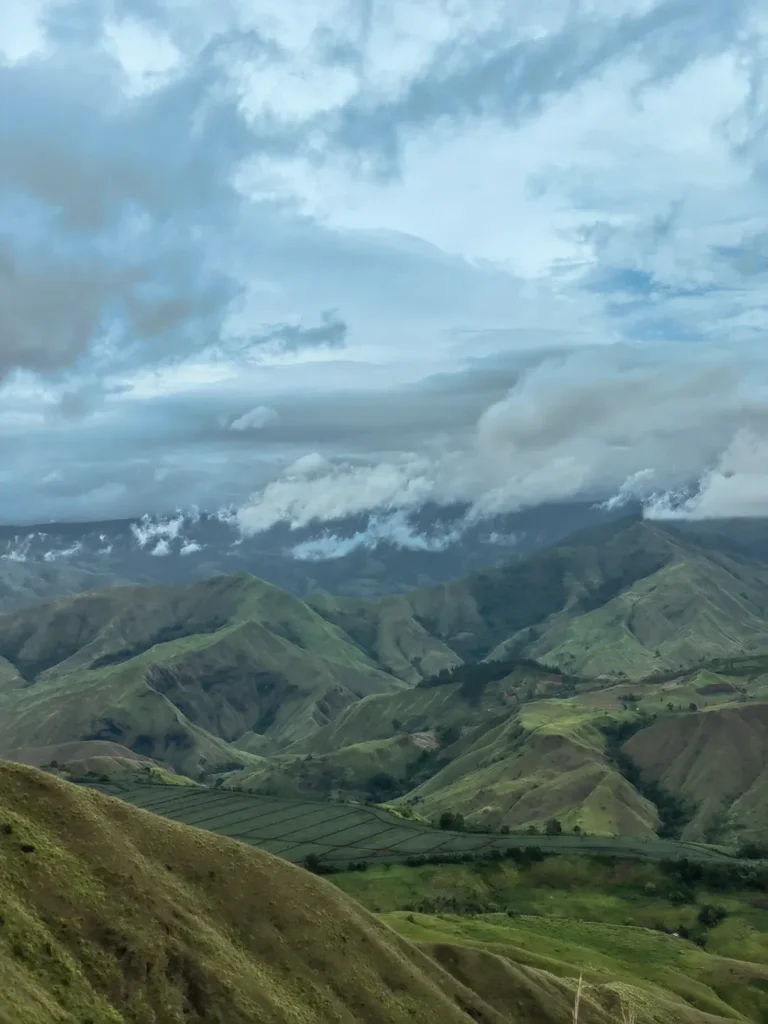
The trail drops into the Dila River ravine before climbing to the ridge, which means the hardest uphill push comes on the return leg, when your legs are already tired. That reverse-mountain layout is what catches first-timers off guard. A trail rated 2/9 does not sound like much until you are hauling yourself back up on heavy legs.
The five stages break down like this:
Stage 1 is an easy warm-up through corn and pineapple fields, fully exposed to sun.
Stage 2 is a steep descent into the Dila River ravine. The red clay turns extremely slick when wet. Bamboo railings are in place at the sharpest drop-offs.
Stage 3 is Deadman’s Slope, the local name for the wall of trail that stops casual hikers cold: a 300 m sustained climb at roughly 30 to 45 degrees, no switchbacks and no flat sections to rest. The river crossing happens on a makeshift bamboo bridge between Stages 2 and 3. Walk single file and stay centered.
This is the hardest part of the trail. For first-timers who have not been doing cardio, Deadman’s Slope will spike the heart rate fast.
Stage 4 is a 20 to 25 minute recovery walk on gentler slopes. A small sari-sari store here sells drinks and biscuits. Fill your water here. There is no water at the summit.
Stage 5 is the final climb on loose earth and exposed rock to the open grassland ridge. The second coin ritual happens before this ascent.
How Long Does the Panimahawa Ridge Hike Take?
Roundtrip, plan for 2 to 4 hours at a normal pace. The ascent takes 1.5 to 2 hours and the descent takes 1 to 1.5 hours on dry days.
After rain, the descent can take just as long as the ascent because the red clay on Stage 2 becomes extremely slippery. The Tagoloan Basin’s soil erodes at 312 to 363 tons per hectare per year, which explains why the trail condition can shift so fast after a downpour.
Aggressive-traction footwear is not optional. On my October 2026 visit, the trail above the river had dried out enough to be manageable. The descent to the Dila crossing was still wet clay from rain two days earlier.
I watched two hikers in rubber sandals turn back at Stage 2. The guide did not stop them from starting, but he did warn them at the trailhead.
Panimahawa is similar in access to the beginner-friendly minor climbs listed here. Its reverse-mountain layout makes it physically distinct from most trails in that category. Hikers who want a multi-peak challenge can look at the Bakun Trio itinerary, expenses, and difficulty breakdown as a step up in commitment.
The Coin Ritual
Before the trail starts and again before the final ascent, every hiker must stop for a mandatory coin offering to the Higaonon ancestors. Bring ₱5 to ₱10 coins for each of the two ritual points: one at the trailhead in the agricultural fields, and one just before Stage 5.
The Higaonon are the indigenous people of these highlands. Their name translates roughly to “people of the living mountains,” and the mountains here are not a recreation area to them.
These mountains are the ancestral domain the Higaonon have protected for generations. and the spiritual territory they have protected for generations. The coin ritual is how a visitor formally asks permission to enter and requests safe passage.
Cameras must be lowered during both rituals. The guides are firm about this, not aggressive, but firm.
On my first visit in April 2026, one person in our group raised a phone out of habit and the guide stepped over and gently put a hand on it. No confrontation, just a clear boundary.
Move the anecdote before this sentence, then soften to: “The guides are clear: cameras down, both times. Participating with genuine attention takes less than two minutes at each point and costs almost nothing. It is also, practically speaking, the moment where the group settles, slows down, and actually looks at where it is.
Is Panimahawa Ridge Good for Beginners?
Panimahawa Ridge is rated 2/9, which places it in the minor climb category and makes it a mountain hike nearly any fit adult can complete. Most healthy adults with no prior hiking experience can complete it. The trail is non-technical: no ropes, no rock faces, no scrambling.
What catches beginners off guard is the reverse-mountain layout. The trail descends into the Dila River ravine first, crossing the river on a bamboo bridge before the climb begins. That bamboo bridge crossing is a real chokepoint: when the Dila River runs high after heavy rain, the crossing becomes unsafe and the hike does not proceed. Check river conditions with Sir Bob before you travel. After the crossing, the hardest climb, Deadman’s Slope, arrives when legs are already 45 minutes into the hike.
And then, after the summit, there is a full uphill return through the same ravine. Hikers who expected a gentler descent home will find the return leg tiring.
The panimahawa ridge difficulty level is honest when read correctly: 2/9 means the technical demands are low, not that the physical effort is light. Deadman’s Slope is a 300 m sustained push at 30 to 45 degrees with no flat sections. Anyone who has not been doing cardio in the weeks before will feel it.
Who should come:
- Beginners who can handle a brisk 30-minute uphill without stopping
- Day hikers looking for a real view with a short commitment
- Anyone curious about Higaonon culture and the coin ritual
Who should reconsider:
- Hikers with knee problems (the clay descent on the return is hard on joints)
- Anyone planning to wear sandals or flat rubber shoes (the guide will likely warn you at the trailhead)
- Groups arriving in the middle of typhoon season without checking river conditions first, because a flooded Dila River means no bamboo bridge crossing and no hike
For families, fit teenagers and adults are fine. Young children and older adults should factor in the Deadman’s Slope push and the bamboo bridge crossing before committing.
The Mt. Yangbew trail in Benguet is a comparable beginner-friendly ridge walk if the terrain here sounds too demanding. Mt. Kabunian in Bakun, Benguet is another minor climb worth considering if you want a northern Luzon alternative with a similar cultural dimension.
Best Time to Hike Panimahawa Ridge
The best months to hike Panimahawa Ridge are December to February for the highest chance of a sea of clouds, and March to May for dry, firm trails. Both windows give you the clearest summit views and the most stable river conditions at the Dila crossing.
Bukidnon sits on an elevated plateau and its weather does not follow the coast. Rain can arrive fast and without much warning, and afternoon thunderstorms are common even in the dry months. Plan your summit arrival for early morning. If you leave at 4:00 AM and take about two hours to reach the top, you should be heading back by 8:30 to 9:00 AM to stay ahead of afternoon rain.
The Habagat monsoon runs from roughly June to February with the heaviest rains concentrated between June and October.
Trail closure rule: If the guides deem it unsafe to cross the makeshift bamboo bridge, the hike is aborted with no exceptions.
Even in the drier months, the go/no-go decision follows river conditions, not the calendar. If it has rained heavily in the highlands the night before your hike, call Sir Bob before you travel. A cancelled trip is far better than a dangerous crossing.
What to Pack for Panimahawa Ridge
Aggressive-traction hiking shoes are the single most important item on this list. Not trail runners, not rubber sandals. The guide at Ant Farm will check your footwear before you sign in, and with good reason.
Beyond footwear, pack these:
- Loose coins (₱5 and ₱10 denominations) for the two mandatory ritual points. At least four to six coins per person.
- Water: carry at least 1.5 liters from the start for a day hike. The sari-sari store at Stage 4 sells drinks, but do not rely on it being stocked. There is no water at the summit.
- Rain jacket or poncho: afternoon rain is common even in the dry season. The summit is fully exposed with no tree cover.
- Layering piece: the exposed ridge can get cold, especially before sunrise on an overnight.
- Headlamp or torch: essential for a 4:00 AM start, which is when you need to leave for sunrise.
- Packed food: bring your own lunch or snacks. The sari-sari store carries biscuits and drinks, not meals.
- Garbage bag: there are no bins on the trail or the summit. Pack out everything you bring in.
- Trowel and waste bags: there are no toilet facilities anywhere on the trail or at the summit. For overnights especially, you need to come prepared to handle human waste and carry it out. This is not optional.
For overnight camping, add a sturdy tent with guylines and a warm sleeping bag. The ridge is a fully exposed grassland and the crosswinds at night are strong. There are no tent rentals at the summit.
Portable burners are available for rent at Ant Farm Basekamp, which is worth knowing before you pack. Bring 4 to 5 liters of water per person for an overnight stay, since there is no potable source at the top.
One thing that genuinely surprised me: both Smart and Globe have strong 4G/LTE coverage on the trail and at the summit. That is rare for a mountain hike in Bukidnon, so do not leave your phone behind thinking you will be off-grid.
Porters are available at ₱400 per porter to carry heavy gear to a secondary drop point before hiking the final steep section on foot. If you are camping with full gear, that is a worthwhile expense.
For a broader look at how Panimahawa compares to other Bukidnon multi-peak options, the Communal Ranch in Bukidnon is a low-effort half-day complement you can add to the same trip without another overnight.
Frequently Asked Questions About Panimahawa Ridge
Where exactly is Panimahawa Ridge located?
Panimahawa Ridge is in Barangay Impalutao, Impasug-ong, Bukidnon, Northern Mindanao (Region X). The jump-off point is at Ant Farm Basekamp, about 9 km from Impalutao Elementary School along a barangay road.
From Cagayan de Oro, total travel time is roughly 4 to 5 hours by bus and habal-habal. “Mt. Panimahawa” is another name that turns up in searches; it refers to the same ridge.
What is the Panimahawa Ridge elevation in MASL?
The panimahawa ridge elevation is 870 MASL. Older articles cite 819 MASL; the figure at Ant Farm Basekamp is 870 MASL, and that is the number this guide uses.
The elevation is low enough that altitude sickness is not a concern. The difficulty comes from gradient, not height.
How many kilometers is the Panimahawa Ridge trail?
The roundtrip panimahawa ridge km distance is about 6.5 to 8 kilometers, with about 280 to 300 m of cumulative elevation gain. The exact distance varies slightly depending on the starting point and any side viewpoints visited. The trail is an out-and-back route on the same path.
How difficult is Panimahawa Ridge?
The panimahawa ridge difficulty level is 2/9, classified as a minor climb under the Philippine hiking grading system. The trail is non-technical, but the reverse-mountain layout means the hardest section, Deadman’s Slope, lands on fatigued legs.
Beginners with reasonable fitness can complete it. Hikers with no cardio base should expect Deadman’s Slope to be hard.
What is the Panimahawa Ridge entrance fee?
The panimahawa ridge entrance fee is ₱350 per person, which covers both the guide fee and registration. Groups of fewer than 5 hikers pay an additional ₱300 small-group surcharge.
There is no separate environmental fee collected by a different office. All fees are paid at Ant Farm Basekamp before the hike.
Is a guide mandatory, and how do I book one?
A guide is mandatory under the strict No Guide, No Hike policy. The maximum ratio is one guide per 5 hikers. Walk-ins are accepted on weekdays, but guide availability can be stretched on weekends and holidays.
Contact Sir Bob at +63 997 801 3135 or +63 935 198 6781 to book ahead. The Impasug-ong Tourism Facebook page also posts current availability and announcements.
How long does the Panimahawa Ridge hike take?
A typical roundtrip takes 2 to 4 hours. The ascent takes 1.5 to 2 hours at a normal pace.
The descent takes 1 to 1.5 hours on a dry day, but can match the ascent time after rain because the red clay becomes extremely slippery. For a sunrise day hike, start at 4:00 AM from the basekamp.
Can I camp overnight at Panimahawa Ridge?
Overnight camping is allowed on the open grassland at the summit. Bring your own tent, sleeping bag, and all the water you will need, as there is no potable source at the top.
The ridge is fully exposed, so a sturdy tent with guylines is essential. Temperatures drop significantly after dark. Porters are available at ₱400 per porter for gear-heavy overnight trips.
What is the best month to hike Panimahawa Ridge?
December to February gives the best chance of a sea of clouds at sunrise. March to May offers the driest trails and firmest red clay.
Avoid hiking on days following heavy rain regardless of the month, because the Dila River can rise quickly and force a cancellation. The panimahawa ridge bukidnon trail is open year-round, but June to October carries the highest flood and slippery-trail risk.
Should You Hike Panimahawa Ridge?
Panimahawa Ridge is worth the trip if you want a genuine mountain view without a two-day commitment. The combination of the Tagoloan canyon view, the Higaonon coin ritual, and the physical reality of Deadman’s Slope makes it more interesting than its 2/9 rating suggests.
It suits: day hikers from CDO who want a half-day mountain experience, overnight campers chasing the sea of clouds, and anyone curious about indigenous culture in Mindanao. The trail is short enough that even a moderate fitness level is enough. Just make sure you are wearing the right shoes and have called ahead to check river conditions.
It does not suit:
- Hikers with knee problems
- Anyone counting on sandals or flat shoes getting through
- Groups that book last-minute on a long weekend and assume a guide will be free
For the broader Bukidnon hiking context, a complete guide to Bukidnon tourist spots covers what else you can pair with this trip.