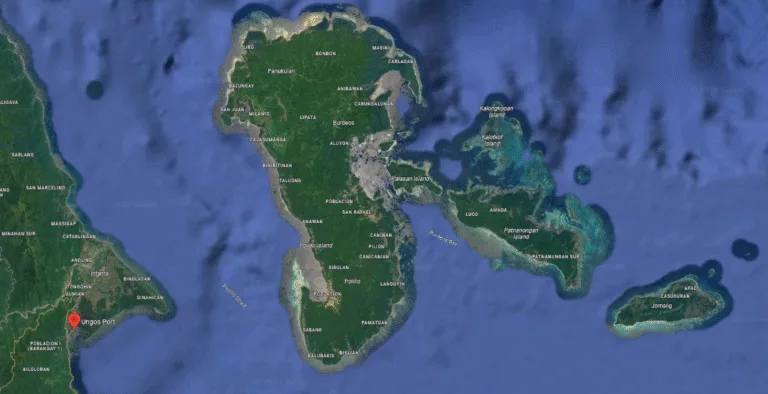
Polillo Island is a group of five island municipalities off the northeastern coast of Quezon Province, facing the Philippine Sea. Getting there from Manila takes roughly four to five hours by land to Ungos Port in Real, then a two-hour fastcraft or up to three hours on a RORO vessel across the Polillo Strait. Having covered 69 of the Philippines’ 82 provinces since 2015, I can say without hesitation that Polillo remains one of the most underrated island systems in Luzon, not because it is remote, but because most people who ask “how do I get there?” are looking at outdated numbers.
This guide is built from my most recent visit in April 2026 and corrects the ferry fares, operator details, and budget floors that have been circulating incorrectly for years.
Key Takeaways
- Ferry fare from Ungos Port (Real) to Polillo: ₱430–₱600 regular fare depending on operator; student and senior/PWD discounts are available (see the fare table below)
- Travel time from Manila to Polillo Island: roughly 6–8 hours total (4–5 hours bus + 2–3 hours ferry); the overnight bus + dawn fastcraft combo cuts a full day of transit
- Best months to visit: December to May (amihan season); the Pacific-facing location means northeastern winds actually flatten the strait in this window
- Hardest part of the trip: Coordinating the Ungos Port check-in (arrive at least 2 hours before departure) and accepting that afternoon crossings are significantly rougher than morning ones
- Budget floor: A realistic daily minimum once you are on the island is ₱1,500–₱1,800 (homestay, carinderia meals, public tricycles); the old ₱1,200/day figure did not account for current ferry fares and entry fees
- Who should skip it: Anyone who needs reliable WiFi, guaranteed daily electricity, or cannot tolerate an itinerary that bends around tides and weather
Table of Contents
Where Is Polillo Island Located?
Polillo Island sits off the northeastern coast of Quezon Province in the CALABARZON region, separated from the Luzon mainland by the Polillo Strait. The archipelago faces the open Philippine Sea and the Pacific Ocean directly, which is the single most important geographic fact for planning: crossings are calmer on the Pacific side during the amihan (northeast monsoon, November to April) and significantly rougher during habagat (southwest monsoon, May to October).
The Polillo Group of Islands comprises five municipalities: Polillo (the administrative center and main port), Burdeos (island-hopping base on the northeastern coast), Panukulan (surf and mangrove kayak territory on the northwestern tip), Jomalig (famous for its golden-sand Salibungot Beach), and Patnanungan (the quietest of the five, known for sea turtle habitat and twin sandbars).
For first-time visitors, the route goes: Manila → Real, Quezon (Ungos Port) → Polillo Port (also called Anawan Port). From Polillo town, you can fan out to the other municipalities by arranged boat or the island’s internal road network.
For an overview of what else Quezon Province offers beyond the island group, the Quezon Province tourist spots guide covers the mainland attractions worth pairing with this trip.
How to Get to Polillo Island from Manila
The fastest reliable route is the overnight Raymond Transportation bus from Legarda Terminal in Sampaloc, Manila, direct to Real (Ungos Port), connecting to the early morning fastcraft. This is the midnight bus strategy that most regulars use: board the 11:30 PM ordinary bus or the 1:00 AM air-conditioned bus, sleep through the Marilaque highway, and wake up at the port with enough time to check in for the 4:30 AM or 5:00 AM crossings. There is also a pre-dawn 4:00 AM departure for those who prefer a later start. Bus fare runs ₱220–₱300 for the standalone bus-only ticket.
The more efficient option introduced in recent years is the direct Manila–Polillo RORO Bus by Raymond Transportation, where the bus boards the Roll-On/Roll-Off vessel and passengers stay with their luggage the entire way. The unified fare is ₱645 from Manila to Polillo and ₱920 from Manila all the way to Burdeos, which includes the maritime crossing. This eliminates the luggage transfer and ticketing shuffle at the port entirely, and I would recommend it to anyone carrying a full backpack.
Alternative routes from Manila:
- Passenger vans from Shaw Boulevard or Mandaluyong bound for Infanta can drop you at Ungos Port gates
- Daytime route via Cubao or Buendia → bus to Sta. Cruz, Laguna → jeepney transfers through Siniloan → Real (adds roughly 2.5 hours beyond Sta. Cruz)
- Private vehicle via the Marilaque highway takes 3–4 hours; secure parking near Real Port costs ₱100–₱200 per day
From Real town proper, a tricycle to Ungos Port costs around ₱15–₱30.
Ungos Port Ferry Schedule and Fares (2026)
Polillo Port is the formal name for the arrival pier on the island; Ungos Port in Real, Quezon is the departure point on the mainland. The 2026 schedule below requires check-in at least two hours before departure, and a valid ID is required at the terminal.
Real (Ungos Port) → Polillo Port
| Operator | Vessel Type | Departure | Arrival |
|---|---|---|---|
| Starhorse Shipping Lines | RORO | 1:00 AM | 3:00 AM |
| Syvel 108 | Fastcraft | 4:30 AM | 6:30 AM |
| Syvel 808 | RORO | 5:00 AM | 8:00 AM |
| Starhorse Shipping Lines | RORO | 5:30 AM | 7:30 AM |
| Polillo Express Lines | Fastcraft | 6:00 AM | 8:00 AM |
| Syvel 104 | Fastcraft | 9:30 AM | 11:30 AM |
| Starhorse Shipping Lines | RORO | 11:00 AM | 1:00 PM |
| Starhorse Shipping Lines | RORO | 5:30 PM | 7:30 PM |
Polillo Express Lines operates on Mondays, Wednesdays, Fridays, Saturdays, and Sundays only.
Polillo Port → Real (Ungos Port)
| Operator | Vessel Type | Departure | Arrival |
|---|---|---|---|
| Syvel 104 | Fastcraft | 5:00 AM | 7:00 AM |
| Starhorse Shipping Lines | RORO | 5:30 AM | 7:30 AM |
| Syvel 108 | Fastcraft | 9:30 AM | 11:30 AM |
| Starhorse Shipping Lines | RORO | 10:00 AM | 12:00 NN |
| Syvel 808 | RORO | 12:00 NN | 3:00 PM |
| Polillo Express Lines | Fastcraft | 1:00 PM | 3:00 PM |
| Starhorse Shipping Lines | RORO | 5:00 PM | 7:00 PM |
| Starhorse Shipping Lines | RORO | 9:00 PM | 11:00 PM |
Which vessel type is which: Starhorse Shipping Lines operates RORO ferries, meaning vehicles can be loaded. Syvel operates fastcraft (passenger-only, no vehicles). This distinction matters if you are driving to Real and considering bringing your car across.
2026 Passenger Fare Matrix
A municipal terminal fee of ₱10–₱20 is collected separately at the port before boarding.
| Passenger Category | Starhorse (RORO) | Syvel (Fastcraft/RORO) | Polillo Express (Fastcraft) |
|---|---|---|---|
| Regular | ₱450–₱600 | ₱430 | ₱350 |
| Student | ₱360–₱475 | ₱345 | ₱280 |
| Senior Citizen / PWD | ₱324–₱425 | ₱345 | ₱280 |
| Children (Half Fare) | ₱225–₱300 | ₱215 | ₱175 |
Senior citizen and PWD passengers are entitled to the 20% discount mandated by law. Bring your senior citizen ID or PWD ID to the ticketing counter. Payment at the port is cash only; no card terminals are available at Ungos Port. Withdraw what you need in Manila or in Real town before queuing.
My recommendation: the Syvel 5:00 AM or 5:30 AM fastcraft slot from Polillo heading back is the one I always take on the return leg. The channel is at its flattest before the afternoon wind picks up, and you reach Ungos in time to catch a morning bus that gets you back to Manila before peak traffic.
2026 Vehicle Freight Rates (Starhorse RORO)
| Vehicle / Cargo Type | Freight Rate |
|---|---|
| Bicycle | ₱495 |
| Bicycle with Sidecar | ₱935 |
| Motorcycle | ₱1,815 |
| Motorcycle with Sidecar | ₱2,805 |
| Small Cars (Eon, Wigo, Jeep-type) | ₱3,740 |
| SUVs / Vans / L-300 | ₱4,620 |
| Pickup / Closed Vans | ₱5,555 |
| Passenger Jeep (Extended) | ₱5,940 |
| Medium Trucks | ₱6,875 |
| Minibus / Coaster | ₱8,195 |
| Dump Truck | ₱9,020 |
| Bus | ₱10,340 |
| Large Trucks (10-wheeler, Long Body) | ₱11,220–₱12,540 |
Bringing a private vehicle is worth it only for week-long stays or commercial purposes. For a 2D1N or 3D2N trip, parking in Real at ₱100–₱200 per day and using island trikes is the smarter call.
Getting Around Once You Land
The pier at Polillo town (Anawan Port area) has tricycles queued and ready. Short hops within the poblacion run ₱30 per person. Chartered tricycles for beach transfers or resort runs cost ₱150–₱300, depending on distance. For the 3720 Glampground in Apad, the standard charter rate is exactly ₱420.
Transport options by use case:
- Pedicab (padyak): Best for the plaza-to-market shuffle, ₱30–₱50, slow, no backpack issues
- Tricycle: General workhorse for beaches and short inter-barangay runs
- Habal-habal: For the Tamulaya Falls trailhead and interior dirt roads; whole-day charter is ₱600
- Jeepney to Burdeos: Departs close to ferry arrival times from the port; the 45-minute ride on bumpy roads costs ₱100–₱200
- Pump boat charters: Private boat for island-hopping in Burdeos runs ₱4,500–₱5,000 for up to 10 passengers; a mandatory local guide costs ₱1,000 per day
Roads are partly unlit outside the town center. Plan returns before dark and carry a headlamp.
Best Time to Visit Polillo Island
December through May is the reliable window. Because Polillo faces the Philippine Sea directly, the amihan (northeast monsoon) from November to April actually works in your favor on this side of Luzon: seas flatten, crossings are predictable, and island-hopping in Burdeos is doable most mornings.
May is a transition month; crossings are usually still fine in early May but can turn choppy without much warning by mid-month. June through October is habagat territory: the southwest monsoon pushes weather systems across the archipelago, typhoons tracking from the Pacific hit this coastline first, and the Philippine Coast Guard can suspend all crossings for several consecutive days under a Gale Warning. If you get stranded on the island in habagat, it is genuinely pleasant, but your return trip will not run on your schedule.
For Luli Sandbar in Burdeos, the timing question is not just the season but the daily tide. The sandbar disappears completely at high tide. Ask your boatman for the low-tide window on the day you are going, and build the island-hopping sequence around it.
Shoulder weeks I prefer: late December to early January (quiet between holiday rushes) and the first two weeks of April (dry, before summer crowd peaks). Holy Week and long weekends in summer pack the ferries; if you travel those dates, arrive at Ungos Port significantly earlier than the two-hour check-in minimum.
Polillo Island Tourist Spots and Things to Do
Burdeos Island-Hopping Circuit
The Burdeos circuit is the reason most people make the trip, and it delivers. Standard boat rental for the loop is ₱4,500–₱5,000 for up to 10 passengers, plus a mandatory local guide at ₱1,000 per day. Your guesthouse can arrange a joiner slot the night before if you are traveling solo or in a small group, which cuts the per-head cost significantly.
The anchors of the circuit:
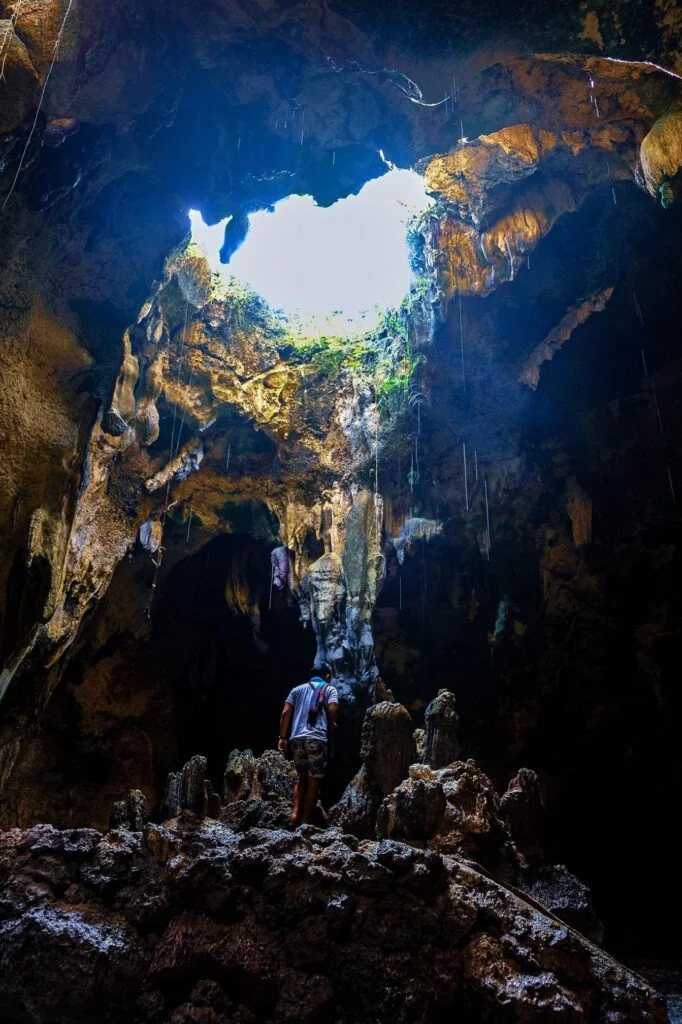
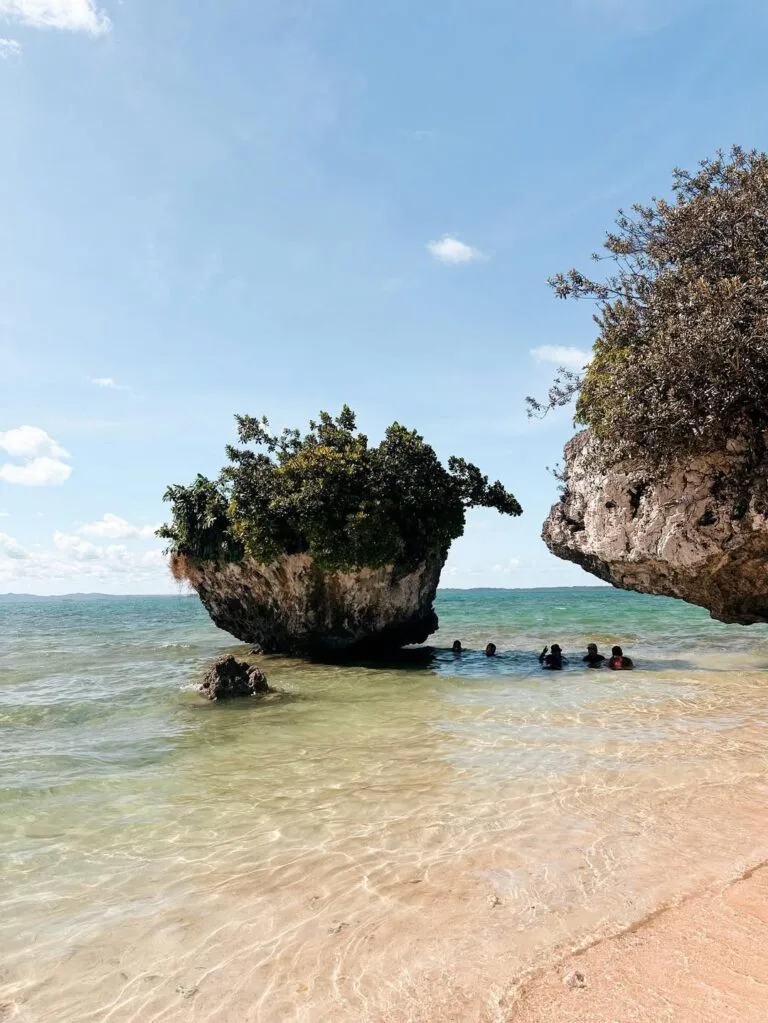
Anilon Island and May Butas Cave: A 15-hectare island with its own white sandbar and the natural limestone arch that has become the visual symbol of Polillo tourism. The opening in the boulder is large enough to swim through, and the surrounding water sits in shades of shallow green and deeper blue that make it worth the entrance fee of ₱150 per person. An optional ₱100 camping fee applies if you stay; an overnight cottage costs ₱500.
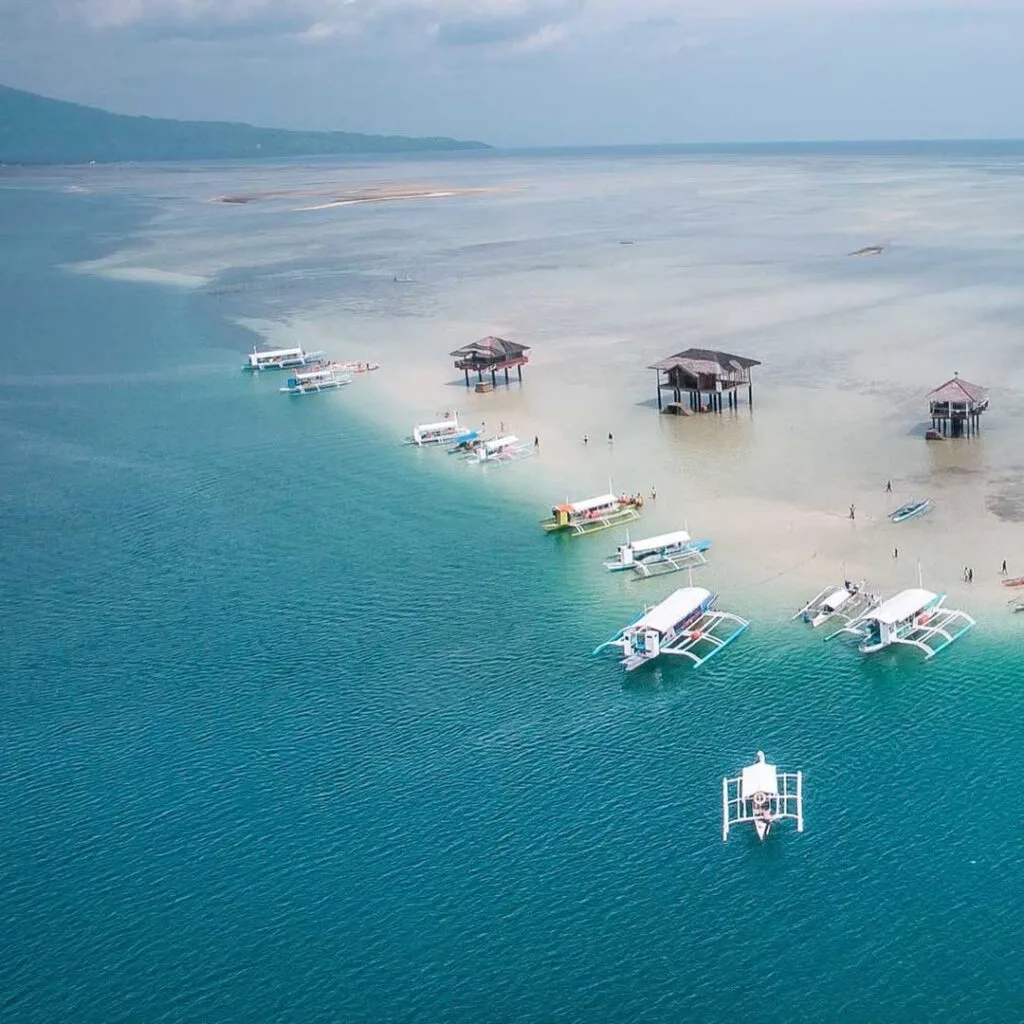
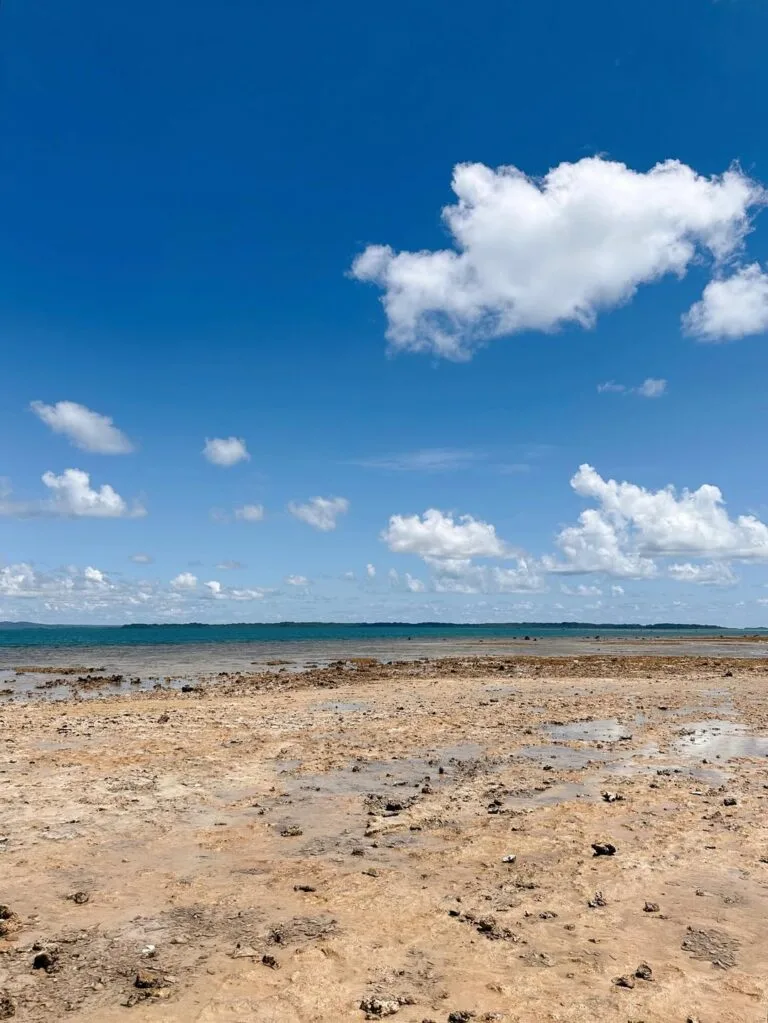
Luli Sandbar (Pulong Buhangin): Named for “lulubog, lilitaw” (to sink and to rise). It is made of fine sand and broken coral fragments, and at high tide it vanishes entirely. Time your arrival to low tide, stay for 30–45 minutes, and move on. The magic here is the isolation: during a weekday morning in April 2026, there were exactly three of us on it.
Isla Puting Bato: Sheer white limestone cliffs drop to clear water with shallow coral gardens underneath. Snorkeling here is better than at most of the more photographed spots in the circuit because the cliffs block the afternoon chop and the coral coverage is still intact. Bring your own mask; rentals are not reliably available on the boat.
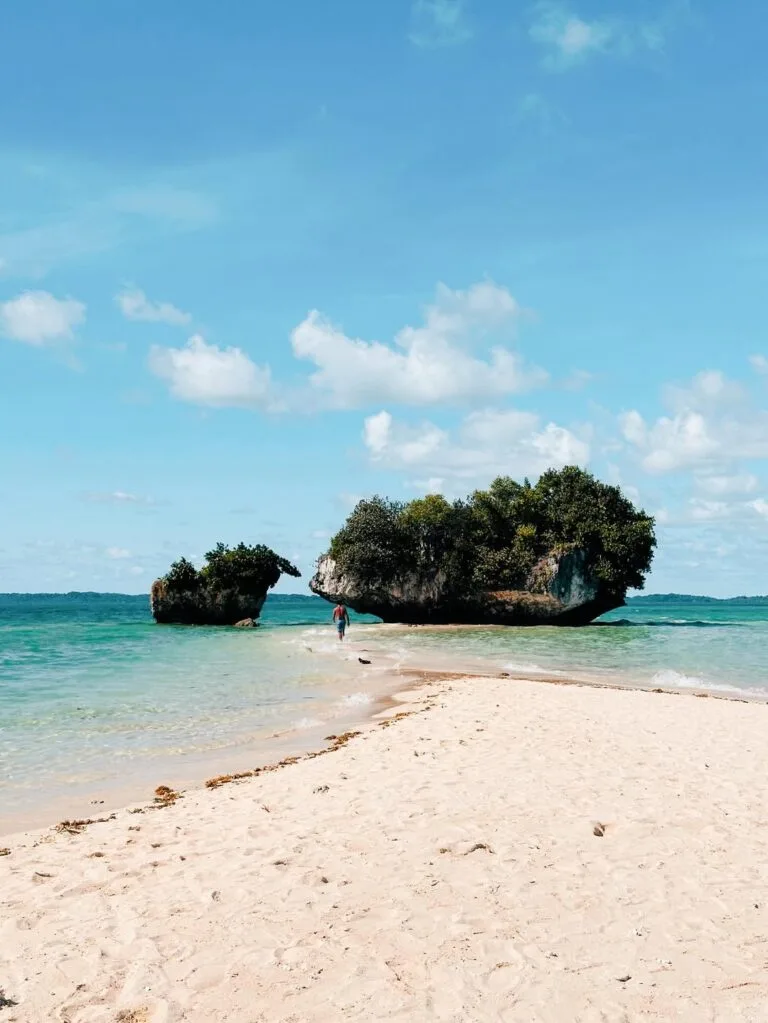
Pulong Kukok: Named for its chicken-shaped silhouette from the water, this islet is also habitat for banded sea kraits (walo-walo). They are docile, but give them space and do not corner them in crevices.
Minasawa Bird Sanctuary: An offshore islet off Burdeos with restricted access and no permanent human population, which is exactly why it still hosts Chinese egrets, Philippine cockatoos, and the endemic Polillo Tarictic Hornbill. Go at early morning or late afternoon. Move slowly, keep noise down, and wear closed shoes for the leaf-litter trails.
Beaches Near Polillo Town
Bato Beach (Barangay Agta): A long caramel-colored stretch defined by the concrete ruins of a Japanese-era pier from the 1940s. The ruins jut into the water at angles and make for one of the more unusual foreground compositions available on the island. The sand is coarse but the water is calm inshore.
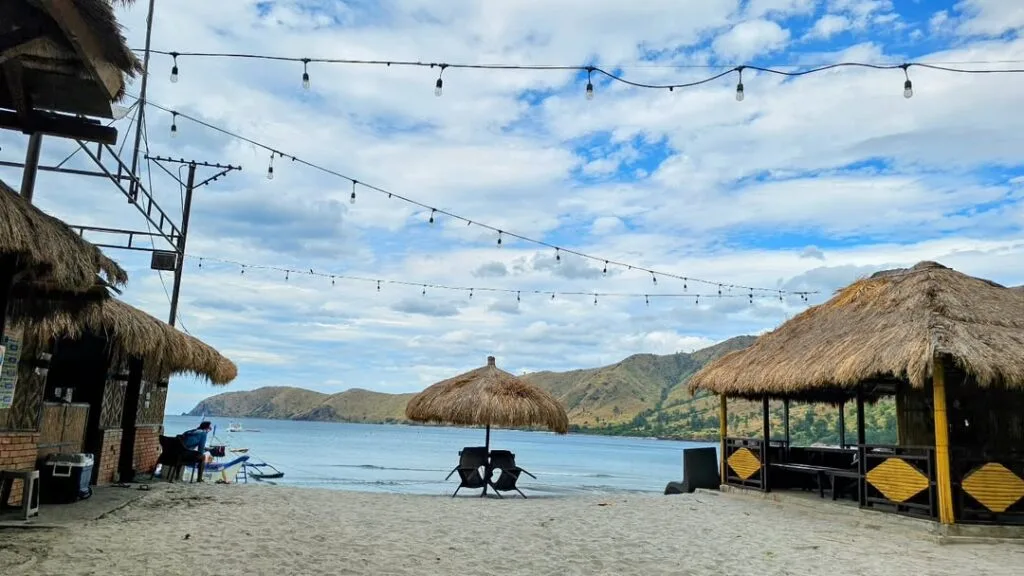
Sabang Beach: The fishermen’s beach, best at sunrise before the bancas head out. Golden sand under coconut trees, nets being mended, a general absence of noise. It is not a swimming beach in the resort sense, but it is the most photographing-while-standing-quietly beach on the island.
San Francisco Beach: Mellow waves, picnic huts, and a wide breathing shoreline. This is the one I use for a slow first-day afternoon after the ferry. Weekdays are nearly empty; weekend afternoons welcome local families and the occasional volleyball game.
A practical note nobody mentions in photos: the nik-nik sandflies on some of these beaches are relentless, particularly around dusk and in areas with shade from coconut trees. I wore reef-safe long sleeves after 4 PM in April 2026 and was still picking at bites the next morning. Bring insect repellent with DEET, apply it before you sit down, and do not assume the sea breeze will protect you.
Tamulaya Waterfalls
A light forest trek, roughly 30 minutes, ends at a multi-tiered cascade with a clear basin at the base. The site is in Barangay Tamulaya and is steeped in local lore about elemental spirits, which the barangay residents mention with complete seriousness and which I am not in a position to argue with. Hire a habal-habal to the trailhead (included in the ₱600 whole-day rate), wear grippy sandals, and check conditions after heavy rain. The rocks near the basin go slick fast and the current surges.
Panukulan: Surf and Mangroves
Panukulan sits on the northwestern tip of the main island, facing the open Pacific. It is the municipality for people who want surf swells and guided mangrove kayak trails rather than island-hopping, and it is genuinely off the regular tourist circuit. The annual Panukulan Cultural Night features traditional weaving exhibitions from the local artisan communities, and the abaca and banig products they sell are better pasalubong than anything available in the market stalls of the poblacion.
History and Culture in Polillo Town
The ruins of 16th-century Spanish fortification walls still stand at the entrances of Barangay Poblacion. Local residents built them from boulders, river gravel, and lime derived from seashells to defend against Moro raids after Juan de Salcedo arrived in 1567. Watchtowers called castillos were built at the four corners; the remnants are visible and worth ten minutes of your morning. The church was built in 1577. Padre Domingo Hispanicized “Pu Li Lu” (the name from Chinese chronicles, meaning a beautiful island with an abundance of food) into “Polillo” because the original was a mouthful in Spanish.
Where to Stay in Polillo Island
Budget (₱300–₱800 per night):
Andy’s Inn in Burdeos is the backpacker baseline: clean, no-frills, ₱300 per head, with communal kitchen access for guests who buy seafood at the market and cook it themselves. In Polillo town, basic inn rooms with fan and private bath run ₱500–₱800. Expect thin walls, intermittent water pressure, and power interruptions. These are not design quirks; they are structural realities of a diesel-powered off-grid island. Bring a power bank. Bring two.
Mid-range (₱1,000–₱2,500 per night):
Polillo Bayview Resort in Polillo town is the best combination of comfort and location for first-timers. Landscaped terraces, an open-air restaurant, and sunset views that make the extra cost feel reasonable after a full day on a boat.
3720 Glampground in Barangay Kalubakis sits beside Bato Beach, about 45 minutes from the port. It is a glamping setup with modern amenities, positioned well for anyone who wants the Bato Beach morning light and a proper bed.
Coral Escape Villas in Burdeos is built for divers. Solar power, passive cooling architecture, and direct access to the Burdeos Wall dive site. It is a boutique property; message ahead and confirm availability before committing to Burdeos as your base.
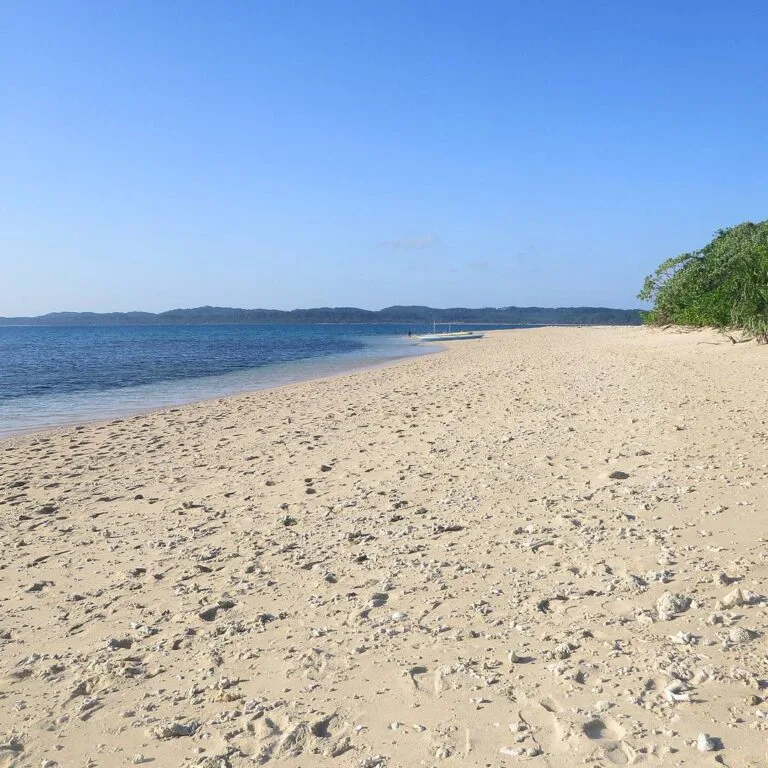
For Jomalig: The South Pacific Island Resort (SPIR) offers nipa huts starting at ₱500 or tent pitching for ₱150. Tejada’s Resort provides rooms with shared bath at ₱300. The Jomalig Sands Boutique Hotel runs its own generator 24/7, has a desalination water system, and offers floor-to-ceiling window suites 200 meters from Salibungot Beach. It is the highest-comfort option available on the island at a price to match.
Power note: Many budget accommodations, especially on Jomalig, cut generator power between 1:00 AM and 6:00 AM. Plan charging windows accordingly.
Reaching Jomalig and Patnanungan from Polillo
Once you are on Polillo main island, the outer municipalities are reachable by scheduled inter-island boats.
| Operator | Route | Type | Schedule | Fare |
|---|---|---|---|---|
| MV Golden Pacific | Polillo Port → Jomalig Port | Fastcraft | Mon, Wed, Fri at 6:30 AM | ₱450 |
| MV Patnanungan Princess | Polillo Port → Patnanungan Port | Passenger Boat | Tue, Thu, Sat, Sun at 7:00 AM | ₱200 |
| MV Golden Pacific | Jomalig Port → Patnanungan Port | Fastcraft | Mon, Wed, Fri at 10:00 AM | ₱250 |
Jomalig-specific logistics: The waters near Jomalig are extremely shallow, so arriving boats cannot dock directly. Local boatmen ferry passengers the last 100 meters on flat-bottomed bamboo rafts called balsas for ₱50 per person. At the port, a consolidated entry fee of ₱170 covers ₱100 environmental preservation, ₱40 general tourism fee, and ₱30 port entry. Exploring the island (Salibungot, Little Boracay, Kanaway Beach, Lingayen Cove) runs on a price-controlled habal-habal circuit at ₱600 per passenger for a full-day tour.
Patnanungan is the quietest and least developed of the five, marketed for sea turtle and dugong habitat snorkeling at the Patnanungan Marine Sanctuary and the Twin Sandbar Cove.
For full logistics on the Jomalig leg, the Jomalig Island ferry schedule and boat guide covers that crossing in detail.
What to Eat in Polillo
The food economy here runs entirely on what came out of the water that morning, which means the menu is genuinely seasonal and the fish is always fresh. The absence of any commercial food chains is not a gap; it is a feature.
What to order:
Kibit: The local marine specialty, resembling squid in texture but with a distinctly earthy flavor. Order it grilled or sautéed in soy-garlic. If you see it on a menu, order it. It is not available on the mainland.
Adobong Sahang: Sea snails (sahang) cooked in coconut milk, vinegar, and spices. The meat absorbs the sauce well. The alternative is sahang afritada, which runs richer.
Pancit habhab: This is what I ate at the market stalls in April 2026, served on banana leaf with no plate, eaten by tipping the leaf directly into your mouth. It is the right breakfast after a dawn ferry.
Fresh buko: Coconut plantations cover the island. Fresh coconut water here costs almost nothing and is the correct response to the afternoon heat.
Where to eat:
- Seaside Grill and Seafood (Polillo town): Grilled platters sourced from boats at the adjacent pier. Straightforward, generous, honest pricing.
- Burdeos Bay Kitchen (Burdeos): Wooden deck over the bay. The sinigang na maya-maya and the pandan-stuffed roasted chicken are both worth the slightly longer wait.
- Mom’s Island Pizza (Rizal Street, Polillo): The one non-seafood option worth knowing when you have eaten tuna every meal for two days.
- Yuno’s Food Ave and Sampaguita Lugawan: Silog, lugaw, burgers. Budget traveler essentials for early mornings before a boat.
Pasalubong to bring home: Virgin coconut oil (VCO) from local producers, dried fish (daing, danggit), and handwoven abaca or banig products from Panukulan weaving communities. The VCO is sold in many small shops near the market and is significantly cheaper than the bottled versions sold in Manila health stores.
Budget Breakdown (What You Actually Spend Per Day)
The old figures circulating for Polillo are structurally wrong now that ferry fares are ₱430–₱600 each way. A round-trip crossing alone costs ₱860–₱1,200 before you eat or sleep. These tables show daily on-island costs, excluding the Manila–Polillo transit cost.
| Expense | Thrifty | Mid-Range | Comfy / Eco-Resort |
|---|---|---|---|
| Accommodation | ₱300–₱600 (homestay/kubo) | ₱1,000–₱1,500 (A/C inn) | ₱2,000–₱3,500+ (villa/resort) |
| Food | ₱200–₱300 (carinderia meals) | ₱500–₱800 (seafood dining) | ₱1,200+ (resort dining) |
| Local Transport | ₱100 (public trike/padyak) | ₱300 (trike charter) | ₱600+ (habal-habal full day) |
| Activities (per pax) | ₱500 (joiner boat share) | ₱800 (joiner + entrance fees) | ₱2,000+ (private boat charter) |
| Estimated Daily Total | ₱1,100–₱1,500 | ₱2,600–₱3,400 | ₱5,800+ |
Manila → Polillo one-way transport cost (add this separately):
- Bus only (Raymond, Legarda → Real): ₱220–₱300
- Ferry only (fastcraft or RORO, Ungos → Polillo): ₱350–₱600 depending on operator and category
- Bundled RORO Bus (Manila → Polillo, Raymond): ₱645
- Bundled RORO Bus (Manila → Burdeos, Raymond): ₱920
The Landbank ATM in Polillo town is the only withdrawal option on the island, and it runs out of cash on long weekends. Withdraw enough in Manila or Real before boarding.
Polillo Island Itinerary
2D1N Weekend Setup
Night 0: Board the 11:30 PM ordinary or 1:00 AM air-conditioned Raymond bus from Legarda Terminal, Manila. Arrive at Ungos Port before 5 AM; queue for the Syvel 5:00 AM fastcraft or 5:30 AM RORO.
Day 1: Arrive at Polillo Port by 7–8 AM. Drop bags at your inn, eat pancit habhab at a market stall, then spend the late morning at San Francisco Beach or Sabang. Take a habal-habal to Tamulaya Falls in the afternoon, back before dark. Apply DEET at dusk. Prep cash and confirm your Burdeos boat for tomorrow.
Day 2: Early jeepney to Burdeos (₱100–₱200, departs near ferry arrival time). Board joiner boat or private charter. Sequence: Luli Sandbar first (time it to low tide), Anilon May Butas Cave (₱150 entrance), Isla Puting Bato snorkeling, Pulong Kukok. Picnic lunch on the boat. Return to Polillo by early afternoon, catch a 5:00 PM or later ferry back to Ungos. Overnight bus or book lodging in Real.
Reconfirm the return ferry schedule at your inn the night before. Afternoon departures run only when the sea state allows.
Practical Notes and Safety
Weather and cancellations: The Philippine Coast Guard suspends all crossings when a Gale Warning is issued. This can strand you for several days. During habagat (June–October), build a buffer day into your return itinerary. Check PAGASA before you leave Manila, and check the evening again before your return ferry.
Power: Polillo runs on diesel microgrid power through QUEZELCO II. Brownouts are regular, not exceptional. A power bank is mandatory. Some budget accommodations cut generator power between 1 AM and 6 AM. Charge everything before bed.
Connectivity: LTE towers cover the town centers of Polillo and Burdeos. Signal drops fast in rural barangays and on the water. Several accommodations now offer Starlink-based WiFi. Globe Starlink mobile plans provide light data and emergency SMS on compatible devices even in off-grid zones.
Medical: The Polillo Medicare Hospital is a government Level 1 facility for standard emergencies. Serious trauma or critical cases require medical evacuation to the mainland. Carry comprehensive travel insurance.
Cash: Landbank ATM in Polillo town is the only island option. It runs out of cash before long weekends. Withdraw in Manila or Real.
Senior/PWD passengers: Bring your senior citizen ID or PWD ID for the 20% discount at the ferry ticketing counter. No card terminals at the port.
Sandflies: The nik-nik sandflies near beach areas with coconut shade are aggressive at dusk. DEET repellent, applied before sitting down, is not optional if you are spending any time near the shoreline after 4 PM.
Water: Carry a refillable bottle. Potable water access can be limited in dry season, particularly on smaller islands. Some remote areas have solar-powered purification systems but do not rely on this.
Respect in barangays: Dress modestly when you leave the beach. Greet with “Magandang araw.” Ask consent before portraits. If there is a fiesta, you are welcome to join but contribute and do not treat it as a photo event.
Frequently Asked Questions
Is Polillo Island safe for first-time solo travelers?
Polillo is safe for solo travel. The biggest risks are logistical: missing a ferry, underestimating the sea state on afternoon crossings, or running out of cash. Plan morning departures, carry more cash than you think you need, and reconfirm ferry schedules the evening before travel.
How long should I spend in Polillo Island?
Two nights and three days is enough to cover the Burdeos island-hopping circuit, beaches near town, and Tamulaya Falls. Add a third night if you want to reach Panukulan or Jomalig, or if you are diving the Burdeos Wall.
Can I bring my car or motorcycle to Polillo Island?
Yes, via the Starhorse RORO service. Motorcycle freight is ₱1,815 and small car freight is ₱3,740 one way. For trips under a week, it is almost always cheaper and simpler to leave your vehicle in Real (₱100–₱200/day parking) and use island tricycles.
What is the cheapest way to get to Polillo Island from Manila?
Take the Raymond ordinary bus from Legarda Terminal (₱220–₱300), then the Polillo Express fastcraft from Ungos Port (₱350 regular fare). Total one-way cost is roughly ₱570–₱650, excluding the terminal fee. The bundled RORO bus at ₱645 is only marginally more but eliminates luggage hassle.
Are there GCash or card payment options in Polillo?
Not reliably. The local economy is almost entirely cash-based. A few mid-range resorts may accept GCash for accommodation, but transport, carinderia meals, boat rentals, and entrance fees all require cash. Withdraw in Manila before you travel.
What is the environmental fee at Polillo Island?
A municipal terminal fee of ₱10–₱20 per person is collected at Ungos Port before boarding. Jomalig charges a consolidated entry fee of ₱170 at its port (₱100 environmental, ₱40 tourism, ₱30 port entry). Anilon Island charges a separate ₱150 entrance fee. Confirm any additional LGU fees directly at the tourism desk on arrival in Polillo town, as local ordinances update.
What endemic wildlife can I see in Polillo?
The Polillo Tarictic Hornbill, the Philippine cockatoo, the Polillo blue-backed parrot, and the Butaan (Varanus olivaceus), a large frugivorous monitor lizard that lives in the forest canopy and acts as a seed disperser. The Butaan is shy and rarely seen by casual visitors; camera-trap studies are the main method of monitoring it. Minasawa Bird Sanctuary is the best place to see the avian species.
Honest Verdict: Who Should Go and Who Should Wait
Polillo Island is the right trip for a traveler who can tolerate logistical uncertainty, sleep through a rough ferry crossing, and find the absence of resort infrastructure liberating rather than stressful. It rewards people who plan around tides rather than fight them, who know that “basic A/C room” means intermittent electricity and thin walls, and who would rather eat kibit at a market stall than order from a laminated menu.
It is the wrong trip for someone who needs a guaranteed return date, reliable internet, or wants the beach resort experience with consistent water pressure and nightly entertainment. Those conditions simply do not exist here yet, and there is no version of this trip where that changes in the next few years.
The Burdeos circuit on a calm December morning, with the limestone at Isla Puting Bato above you and nothing below the keel but clear water, is the kind of thing that makes you understand why people keep coming back. I went in April 2026 knowing exactly what it would deliver and it still delivered it.
For nearby islands in the same province that offer a different texture, Cagbalete Island in Mauban is the obvious comparison point in Quezon: more accessible, sandier, less dramatic.