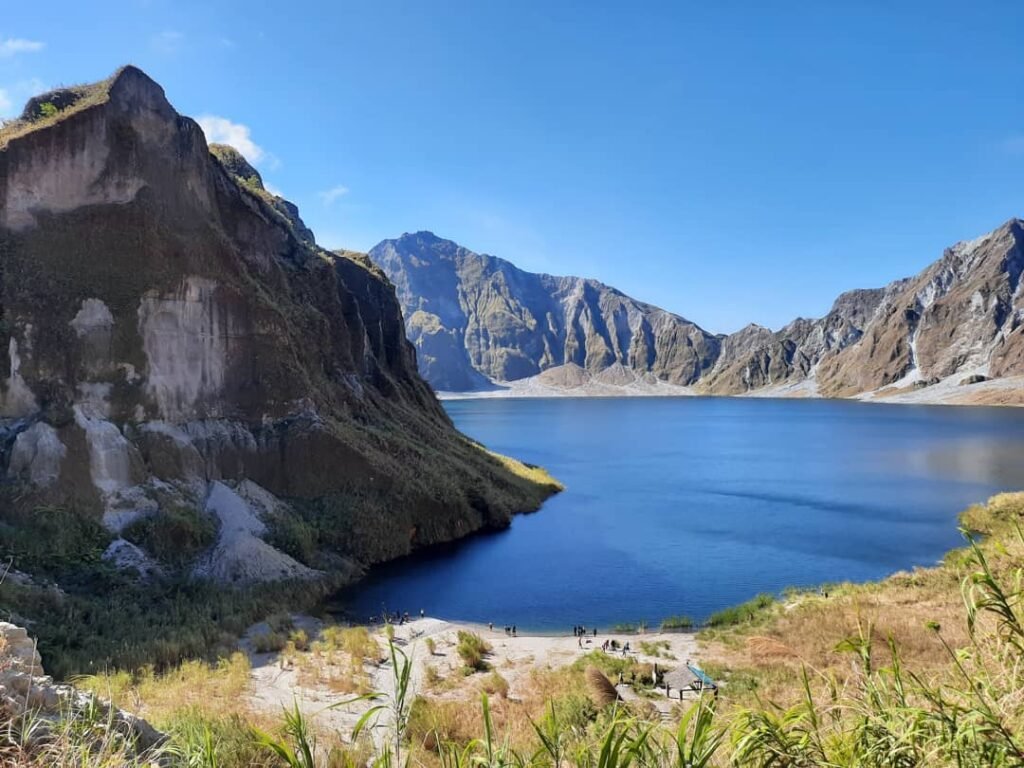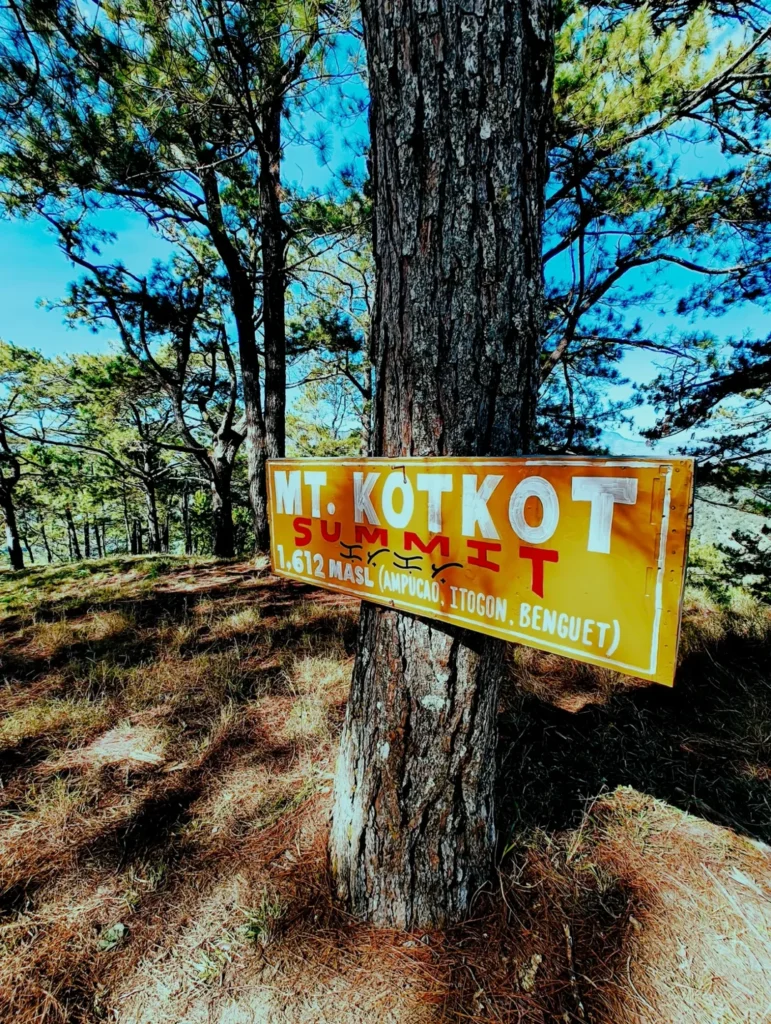
Mt. Kotkot is a physically demanding ridge traverse in Itogon, Benguet that rewards experienced hikers with sweeping Cordillera views and a genuine sense of accomplishment. The full MarMax Farm to Sigsiglay traverse runs 7–10 hours on trail, requires a mandatory local guide, and is best attempted between January and early March. This guide gives you everything you need for a safe, self-organized climb in 2026.
Mt. Kotkot Quick Guide
| Detail | Info |
|---|---|
| Mountain | Mt. Kotkot |
| Location | Barangay Ampucao, Itogon, Benguet |
| Province | Benguet, Cordillera Administrative Region (CAR) |
| Elevation | 1,612 MASL |
| Difficulty | Major Climb / Advanced (approx. 6/9) |
| Jump-off | MarMax Farm, Barangay Ampucao |
| Best Season | January to early March (Amihan) |
| Trek Time | 7–10 hours (traverse, MarMax Farm → Sigsiglay) |
| Registration | Ampucao Barangay Hall |
| Campsite | No established campsite; day hike traverse only |
Table of Contents
Where Is Mt. Kotkot Located?
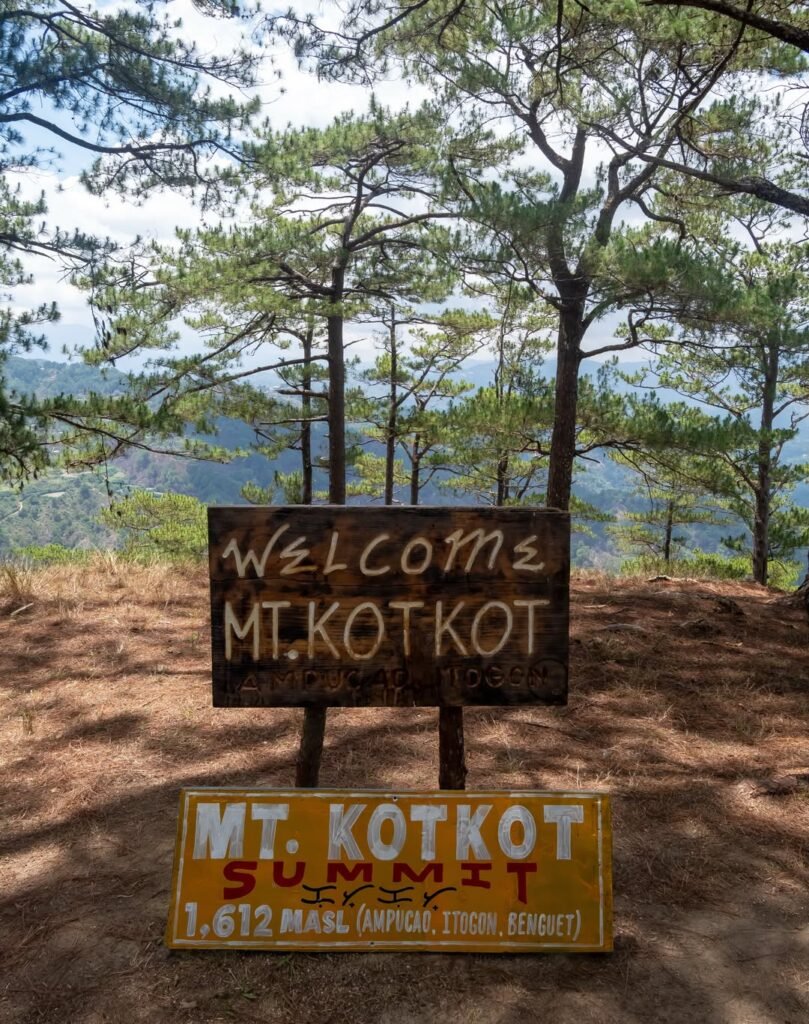
Mt. Kotkot is located in Barangay Ampucao, within the municipality of Itogon, Benguet — part of the Cordillera Administrative Region (CAR), characterized by dramatic topography, deep valleys, and resilient indigenous communities. The peak reaches an elevation of 1,612 metres above sea level.
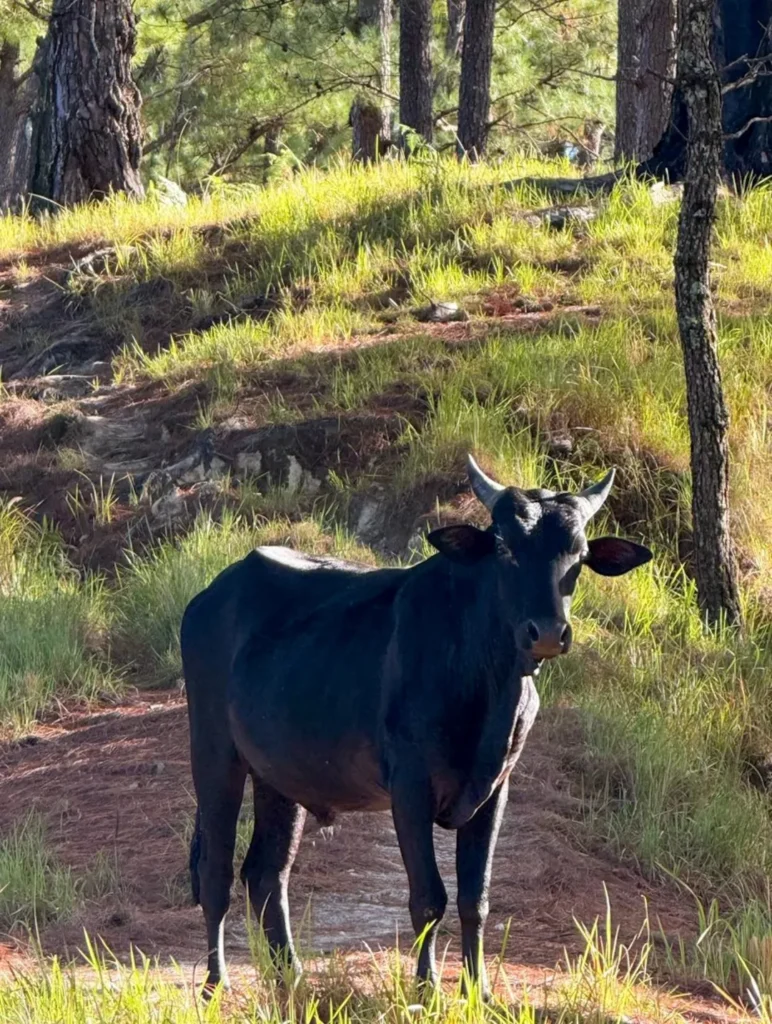
The ridges here sit within the ancestral domains of the Ibaloi and Kankanaey peoples. These mountains are not simply weekend playgrounds — they are working landscapes dotted with small-scale farms, grazing lands for local cattle, and areas of deep cultural significance. Approaching this mountain with that understanding changes how you walk through it, and the local guides assigned at registration reflect this reality intimately.
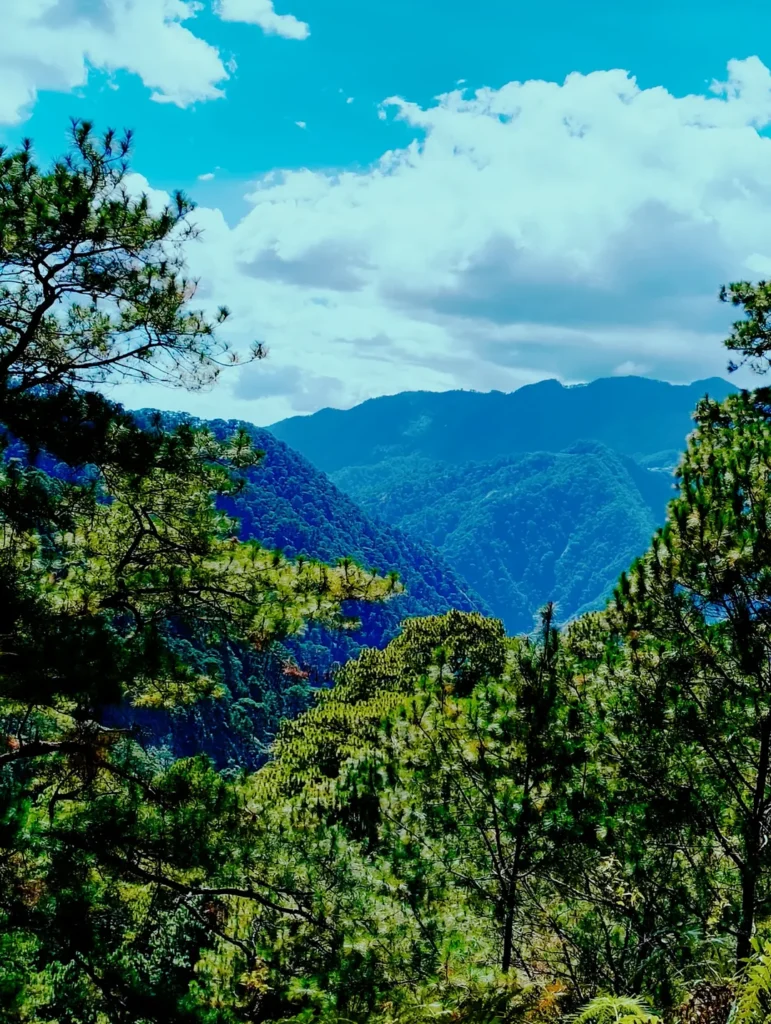
The topography on the Kotkot traverse is unique: unlike the dense, mossy forests of Mt. Pulag or Mt. Kalawitan, the traverse is heavily exposed, categorized by open grassland ridges and scattered Benguet pine forests. The soil is predominantly laterite — a reddish, iron-rich earth that turns into fine, slippery dust during the dry season and treacherous, clay-like mud during the monsoon.
I climbed Mt. Kotkot on May 5, 2026, at the very edge of the hot season. Standing at the MarMax Farm jump-off before dawn, I could already feel the season’s heat waiting just behind the tree line. Understanding where this mountain sits — both geographically and culturally — before you arrive is not optional. It is the foundation of a safe climb.
How to Get to the Mt. Kotkot Jump-off Point
The cleanest DIY plan for Mt. Kotkot is to arrive in Baguio around 3:00 AM, then transfer straight to Ampucao and onward to MarMax Farm for a pre-dawn start. For groups, a chartered jeepney or arranged vehicle is usually faster and less stressful than piecing together rides.
From Manila: Head to the PITX or Cubao terminals and book a late-night trip to Baguio City — Victory Liner, JoyBus, and Solid North are the standard operators. Target a bus departing around 10:00 PM or 11:00 PM, aiming for a Baguio arrival between 2:30 AM and 3:00 AM.
From Baguio to Ampucao: Once in Baguio, head toward the jeepney staging areas near Lakandula Street, Orion Drug, or the Baguio Center Mall / Magsaysay area. If you are with a group of 4 to 10 people, chartering a “special trip” jeepney directly to Ampucao is the most cost-effective method, generally running ₱1,500 to ₱2,000 one-way, split among the group.
Itogon is also accessible by public transportation from Baguio City, with jitney terminals at Lakandula Street beside Orion Drug/Pharmacy and Petron Gasoline Station on Harrison Rd. The Ampucao route runs 12 hours daily with 30-minute to 1-hour intervals, departing from Baguio starting 6:00 AM. For a pre-dawn start, the public jeepney schedule does not work — a charter or Grab ride is your practical option.
From Ampucao, proceed to MarMax Farm and complete registration logistics at the barangay. The last-mile stretch from the barangay hall to the farm jump-off is short and is typically covered by habal-habal or on foot.
Cell signal: Signal is partial and intermittent, usually better on open ridges. Do not rely on it for safety — assume there will be dead spots and keep your group together at all times.
Permits, Fees, and Guide Requirements at Mt. Kotkot
Registration is at Ampucao Barangay Hall, and a local guide is required. The environmental/registration fee is approximately ₱150 per person (verify the latest rate on arrival).
The Baguio-to-Ampucao transfer for a shared vehicle runs ₱200–₱400 per person, the registration/environmental fee is approximately ₱150 per person, and the mandatory local guide fee ranges from ₱500–₱1,000+ per group, with pricing tiers that vary by group ratio and traverse complexity.
Plan to register at Barangay Ampucao and secure a mandatory local guide, especially on weekends when guide availability can run out. If the process shifts to QR or eGov-style systems, confirm the latest steps with the barangay or Itogon Tourism. The primary registration point is Ampucao Barangay Hall, with on-ground coordination handled by jump-off staff or your assigned guide — the exact process can vary by day.
No DENR technical climbing permit is required for the standard traverse, as this is a barangay-managed trail under the LGU of Itogon. Your guide doubles as your safety officer and your cultural liaison on ancestral domain land — treat that role seriously. Your local guide is not just a trail-pointer or photographer; they are your safety officer. If they call for a retreat due to a sudden weather shift or tell you to speed up to beat the midday heat, you listen without argument.
What Is the Mt. Kotkot Trail Like?
Mt. Kotkot’s difficulty comes less from technical climbing and more from exposure: long ridge walking under sun and wind, plus a steep, loose descent to Sigsiglay that demands focus when you are already tired. This is the mountain’s defining character, and every decision you make on trail — pace, water intake, snack timing — flows from understanding that reality.
MarMax Farm Jump-off to the Ridge (Pre-Dawn Start)
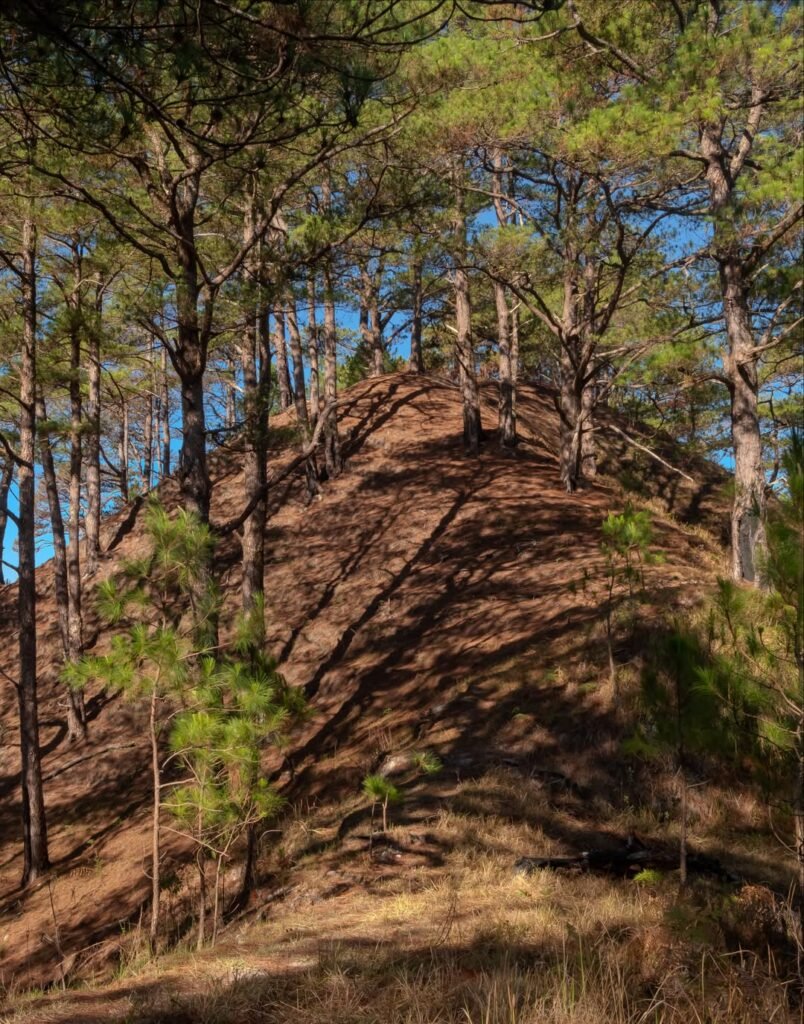
Your target time to begin trekking from the MarMax Farm jump-off is strictly between 04:30 AM and 05:10 AM. You will start in pitch black, relying entirely on the beam of your headlamp. The air will be cold, and the terrain is a mix of established dirt paths and gradual inclines.
- Begin with a deliberate, Zone-2 pace — the cold air and pre-dawn adrenaline will tempt you to push; resist this.
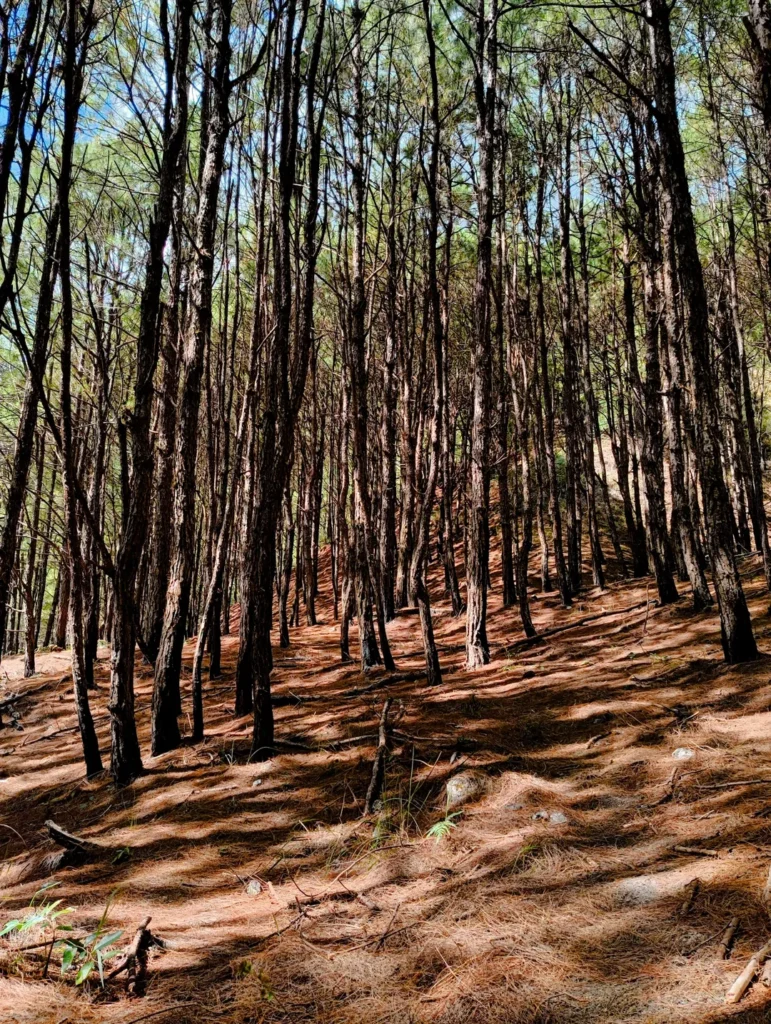
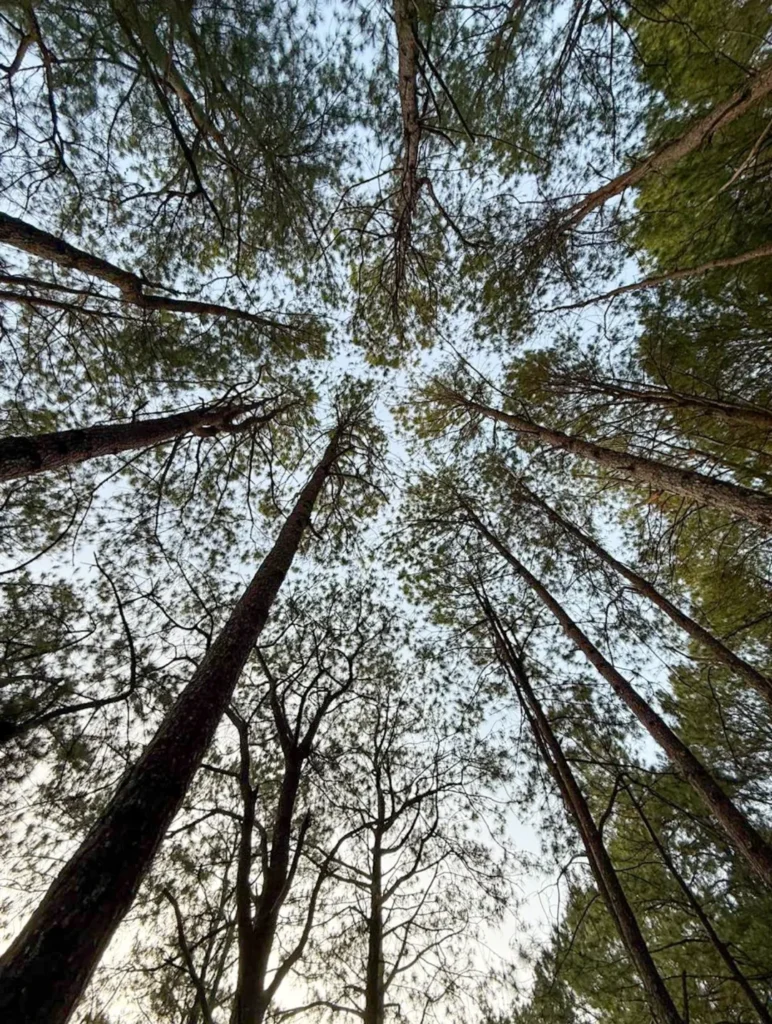
- The initial ascent climbs steadily through pine forest before breaking out onto the first open ridge sections.
- Pacing tip: keep it deliberately slow here — if you burn out early, the ridge punishes you later. Eat small snacks every 45–60 minutes so you are not catching up on energy later.
The Ridge Traverse to the Summit
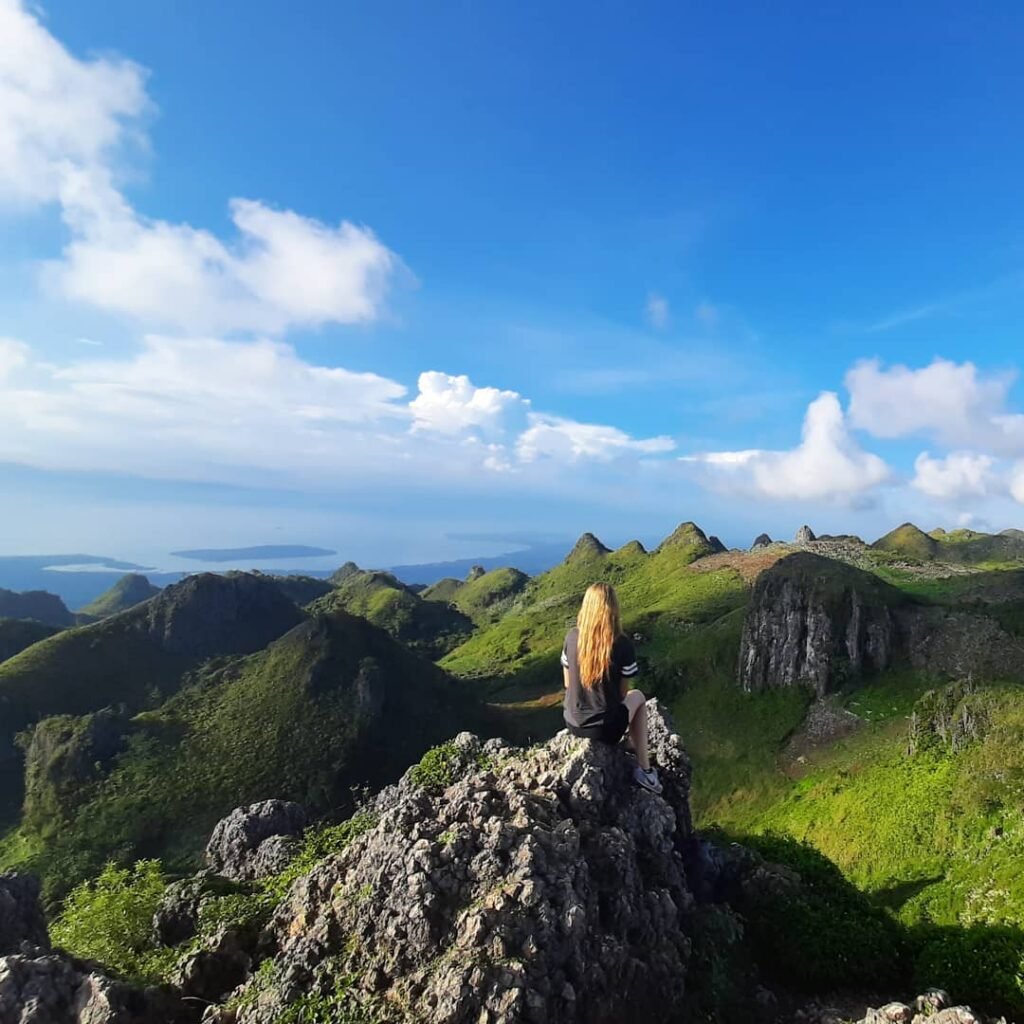
This is where Mt. Kotkot reveals its true character. Once you leave the tree cover and step fully onto the exposed laterite ridge, the landscape opens to an extraordinary panorama of rolling Cordillera hills — and the sun has no mercy.
- The ridge is open, shadeless, and subject to unpredictable wind shifts.
- Use a “walk 10 minutes, sip” hydration rhythm — waiting for thirst is too late at this elevation and exposure level.
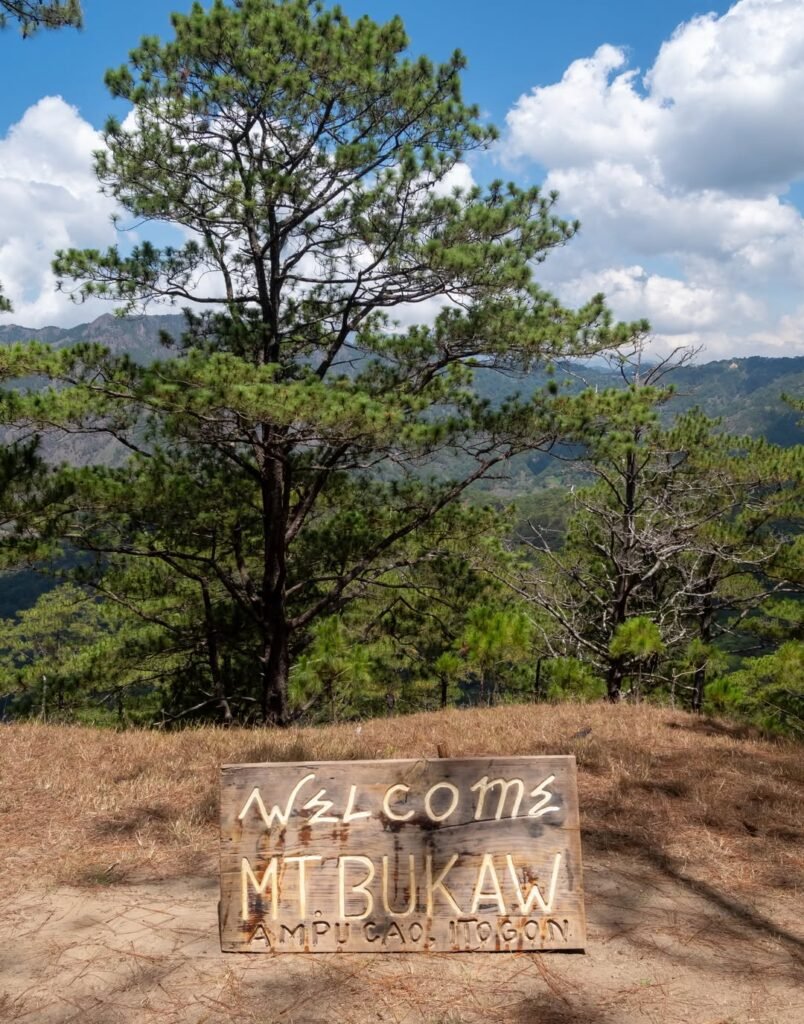
- Summit views extend across the Cordillera range, with Mt. Bukaw visible along the continuing ridge to the northwest.
Summit to Mt. Bukaw Ridge Section
The route summary follows: MarMax Farm (Ampucao) → Mt. Kotkot summit → ridge traverse toward Mt. Bukaw → Sigsiglay exit. The Bukaw section is where trail-reading matters — the path is not always clearly defined, and your guide will earn their fee navigating the junction correctly.
The Sigsiglay Descent
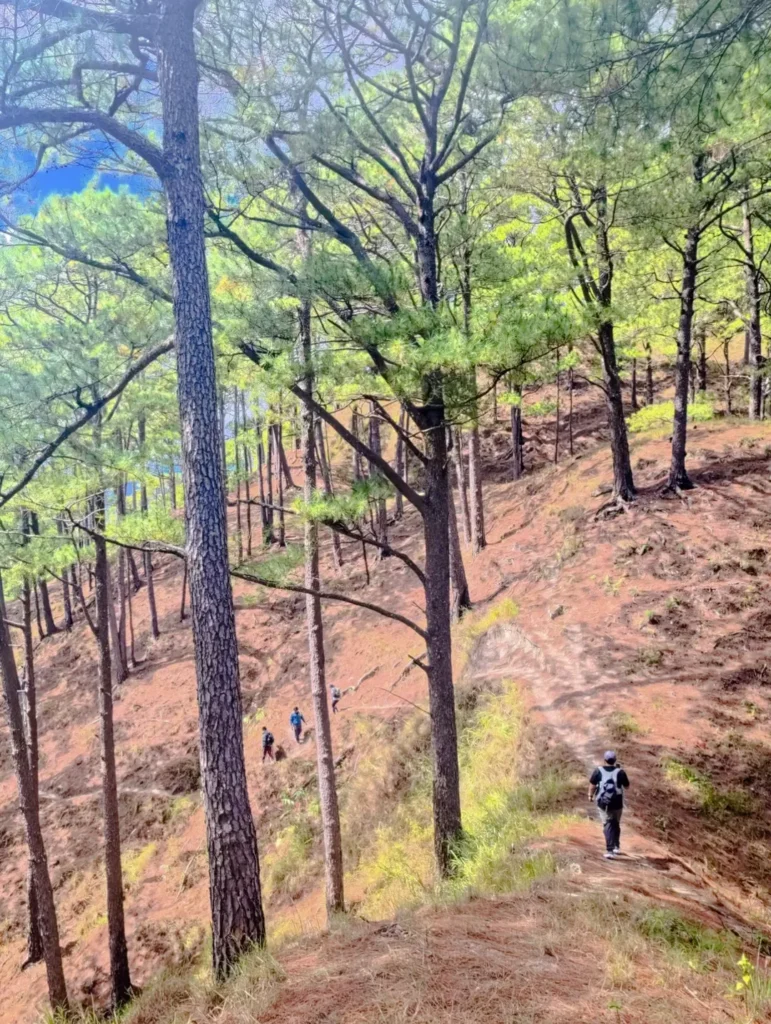
The exit descent is where accidents happen, especially when legs are already cooked and the trail turns dusty or slick. The Sigsiglay descent is steep and loose — on my May climb, the laterite surface was already dry and powdery, which made each downhill step a micro-negotiation between grip and gravity.
- Shorten your stride and keep weight centered — this is where trekking poles pay for themselves.
- Allow more time for this section than your uphill pace would suggest.
- Reach Sigsiglay, where habal-habal or arranged transport back to Ampucao can be coordinated.
Is Mt. Kotkot Good for Beginners?
Mt. Kotkot is not recommended as a first mountain — it works best as a level-up climb after several long day hikes. Fit beginners can attempt it, but the sun exposure and steep descent can be risky without proper conditioning. If you are sedentary or very new to hiking, this mountain’s heat exposure and demanding exit will catch you off-guard.
Common beginner mistakes include underestimating sun exposure (no shade means heat fatigue arrives fast), bringing too little water (2L is often not enough for slow movers), and wearing poor footwear for loose gravel and pine needles on the descent. If you can comfortably complete a 10–15 km day hike with a steep descent component, you have the baseline fitness to attempt Mt. Kotkot with proper preparation. Consider Mt. Ulap in Itogon, Benguet first — it shares similar terrain character and is a reliable benchmark.
Best Time to Climb Mt. Kotkot
The best time to hike Mt. Kotkot is January to early March, when mornings are cool and trails are drier, reducing slip risk and heat stress. Avoid June to October because Habagat rains turn slopes muddy and raise lightning danger on exposed ridges. Start before sunrise to finish the ridgeline before peak heat and afternoon storm windows.
Here is the season breakdown:
- January–Early March (Amihan): This is the best window for the traverse. The Amihan winds bring crisp, cooler air; trails are bone dry, providing maximum traction, and the morning wind chill actively keeps your core temperature down during the strenuous initial ascent.
- Late March–May (Hot Season): The heat radiating off the open, shadeless terrain is intense and relentless. You must secure a pre-dawn start and carry a minimum of 3 to 4 liters of water per person. Heatstroke is a documented medical emergency on this trail during April and May. I can personally confirm this — on my May 5 climb, the sun was already punishing by 8:00 AM.
- June–October (Habagat / Wet Season): When the southwest monsoon rains arrive, the laterite dust becomes a slippery clay slick. The open ridges offer zero cover from lightning strikes. Hiking an exposed ridge during a thunderstorm is a fatal gamble — treat active thunderstorm forecasts, low-pressure areas, and typhoon windows as a non-negotiable no-go.
Budget Breakdown for Climbing Mt. Kotkot
Costs are driven mainly by the Manila–Baguio–Ampucao transport chain, guide share, and whether you DIY or join an organized setup. DIY can be cheaper for groups who split charter costs, while joiner trips trade money for smoother logistics.
| Expense | Cost (PHP) |
|---|---|
| Bus (Manila → Baguio, one way) | ₱500–₱700 |
| Baguio → Ampucao (shared transfer) | ₱200–₱400/pax |
| Ampucao → MarMax Farm (habal-habal) | ₱50–₱100/pax |
| Registration / Environmental Fee | ₱150/pax |
| Mandatory Local Guide Fee | ₱500–₱1,000+/group |
| Exit Transport (Sigsiglay → Ampucao) | ₱100–₱200/pax |
| Food, Water & Electrolytes | ₱400–₱800 |
| Accommodation in Baguio (optional) | ₱400–₱800/pax |
| Total Estimate (DIY, group of 4) | ₱2,000–₱3,500/pax |
All fees are approximate — verify current rates with Barangay Ampucao upon arrival. Save on snacks bought in town and shared transport; budget carefully for early and reliable transfers, trekking poles if you’re prone to knee pain, and extra water and electrolytes.
What to Pack for Mt. Kotkot
For Mt. Kotkot, pack for sun, wind, and a long descent — hydration and leg protection matter more than ultralight bragging rights.
| Item | Essential? |
|---|---|
| Trekking poles | Yes — critical for Sigsiglay descent |
| Headlamp + extra batteries | Yes — pre-dawn start is mandatory |
| 3–4 liters of water | Yes — zero reliable water sources on ridge |
| Electrolyte packets (ORS or tabs) | Yes — prevents cramping on long ridge |
| Sun protection (hat, sunscreen, buff) | Yes — fully exposed trail |
| Trail shoes with ankle support | Yes — loose laterite on descent |
| Rain jacket / windbreaker | Yes — afternoon temperature drops fast |
| High-calorie snacks (bars, nuts, gels) | Yes — no resupply on route |
| First aid kit | Yes — minimum blister and bleed kit |
| Trekking gloves | Recommended — rocky sections near summit |
| Extra dry bag / liner for bag | Recommended — protects gear from sweat/rain |
| Camera or phone mount | Optional |
| Poles / ascenders / rope | No — not required on standard route |
Safety Tips for Climbing Mt. Kotkot
Start before 5:00 AM, without exception. A safe start window is 04:30–05:10 AM. Starting early helps you finish major ridge exposure before peak heat and reduces the chance of getting caught in afternoon storm conditions.
Apply a strict go/no-go decision at the trailhead. Go if the forecast is clear, thunderstorm probability is low, there is no LGU trail closure, and your group is hydrated and paced. Do not go if there is a thunder forecast, active rain at the jump-off, unsafe ridge winds, poor visibility, or if someone is already unwell at registration.
Hydrate on a schedule, not on thirst. Water sources on the ridge are none or completely unreliable. Bring 2–3 liters plus electrolytes as a minimum; increase this if it is hot or your pace is slower than average.
Leave No Trace is non-negotiable. Because there is virtually no water on the ridge, the natural decomposition of organic matter is incredibly slow. Pack out absolutely everything you bring in, including organic waste and small trash like gel tear-off tabs.
Listen to your guide — always. The Barangay Ampucao guides know this ridge’s weather patterns, water pockets, and bail-out options better than any map. Treat their judgment as law on the hill.
Frequently Asked Questions About Mt. Kotkot
1. Where is Mt. Kotkot located?
Mt. Kotkot is located in Barangay Ampucao, within the municipality of Itogon, in the province of Benguet, Cordillera Administrative Region (CAR). It sits at 1,612 MASL and is most commonly climbed via the MarMax Farm to Sigsiglay traverse route.
2. How difficult is the Mt. Kotkot hike?
Mt. Kotkot rates approximately 6 out of 9 on the Philippine major climb difficulty scale because of its long exposed ridges, heat risk, and steep, loose descent to Sigsiglay. It is not highly technical, but it is physically demanding and punishes poor pacing. Previous long-day hiking experience is strongly recommended before attempting this trail.
3. How do I get to the Mt. Kotkot jump-off point from Manila?
Take an overnight bus from PITX or Cubao to Baguio City, targeting a 2:30–3:00 AM arrival. From Baguio, head to the jeepney staging areas near Lakandula Street, Orion Drug, or Baguio Center Mall / Magsaysay area. Groups of 4 to 10 should charter a special trip jeepney directly to Ampucao, then proceed to MarMax Farm for registration and your pre-dawn start.
4. What is the Mt. Kotkot trail route?
The standard Mt. Kotkot traverse follows a point-to-point route: MarMax Farm in Barangay Ampucao → Mt. Kotkot summit → ridge traverse toward Mt. Bukaw → Sigsiglay exit. The entire traverse takes 7–10 hours for most groups, depending on pace and weather conditions. There is no loop option on the standard route.
5. Is there camping on Mt. Kotkot?
Mt. Kotkot is designed and managed as a day hike traverse, not an overnight climb. There is no established campsite, no reliable water source on the ridge, and no sanctioned camping area along the MarMax Farm to Sigsiglay route. Groups planning multi-day Cordillera itineraries should base in Baguio City or Itogon town proper. For a complete Benguet mountain itinerary, see the Mt. Kabunian in Bakun, Benguet guideand the Mt. Kupapey and Mt. Fato DIY itinerary as logical extension climbs.
Final Verdict: Should You Climb Mt. Kotkot?
4.2 out of 5 for conditioned intermediate hikers. Mt. Kotkot delivers one of the most honest Cordillera ridge experiences in Benguet — genuinely exposed, genuinely beautiful, and genuinely demanding — without requiring technical gear or multi-day logistics. The caveat is real: this is a hike that looks easy in photos until you are under full sun with zero water sources and a long descent ahead, and what surprises most hikers is not the climb itself but how exposed the ridge feels once the day heats up. Go with the right fitness, the right season, and at least 3 liters of water, and you will earn one of the most rewarding ridge views in Benguet.
If you want to continue building your Cordillera experience, pair it with a visit to Lake Tabeo in Kabayan, Benguet or level up to the Mt. Kimat hiking route for your next challenge. For a broader overview of Philippine mountains to target after Mt. Kotkot, the Philippines mountains travel guide is the best place to plan your next Cordillera circuit.