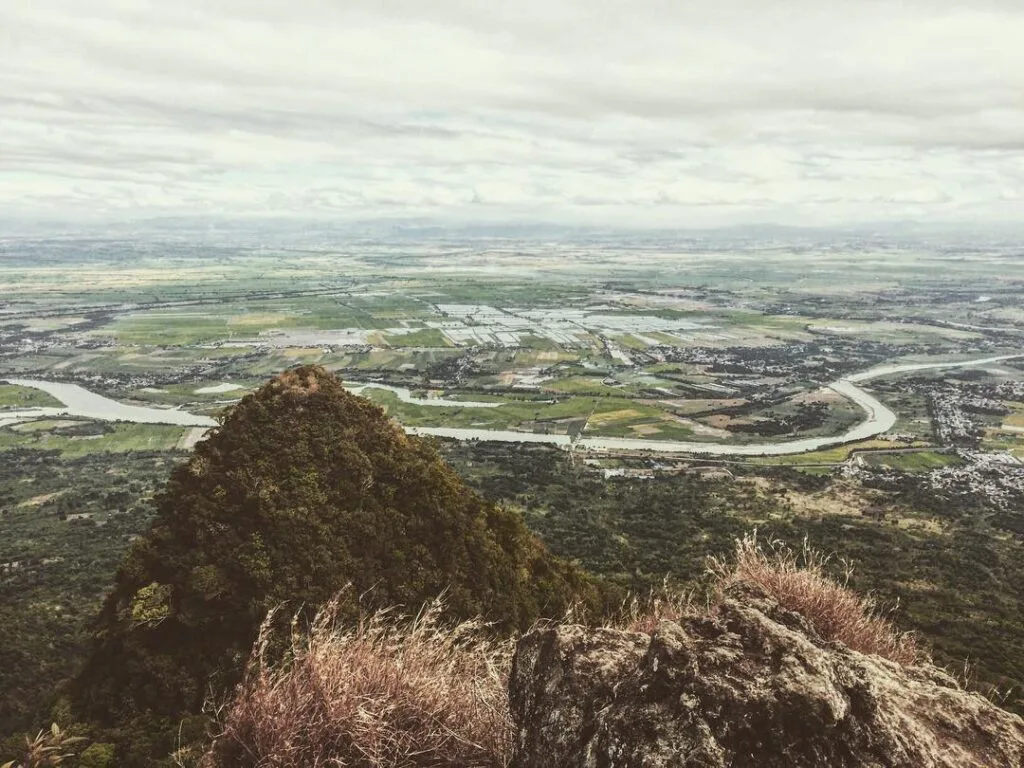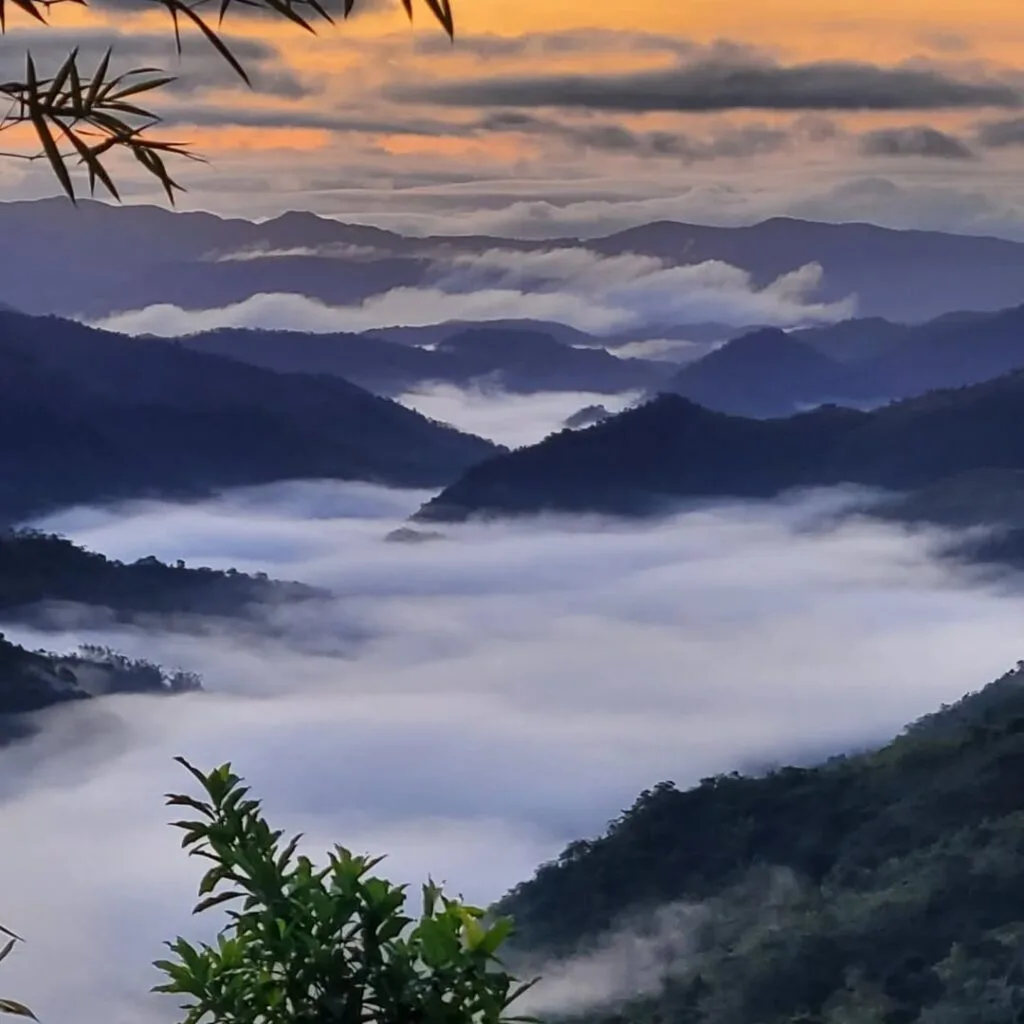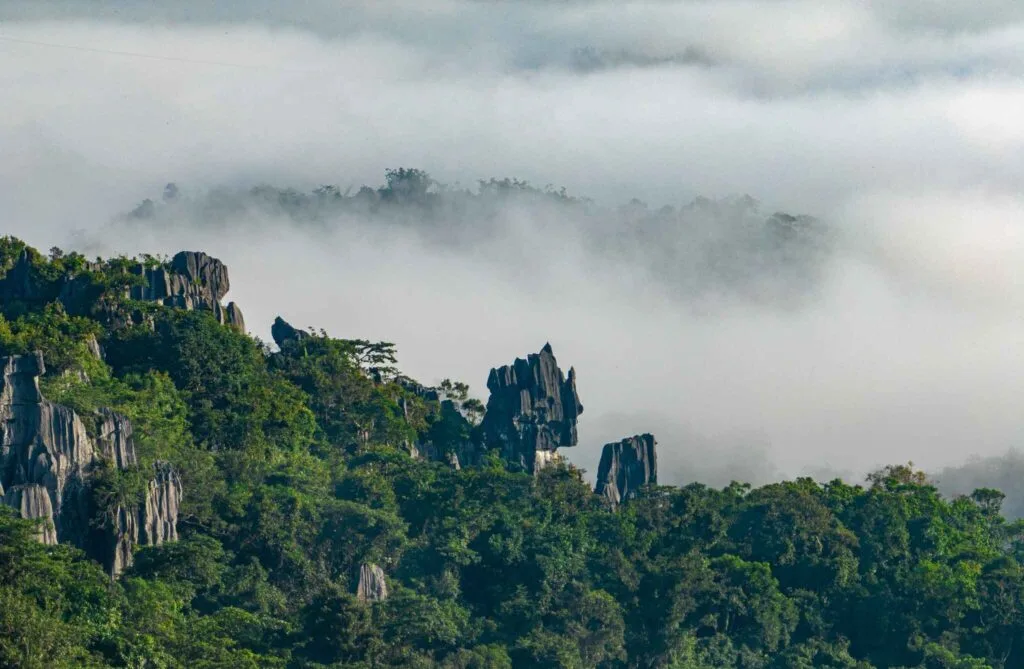
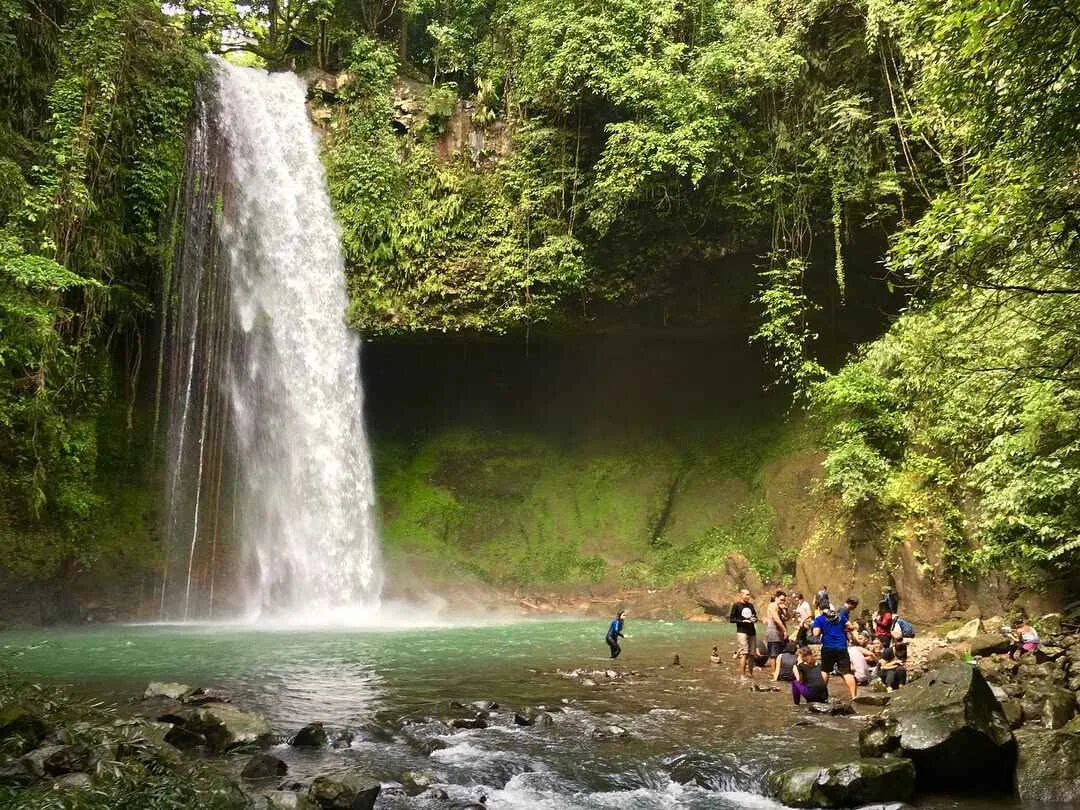
Mt. Romelo in Siniloan, Laguna is one of the most accessible beginner hikes in the Philippines, sitting at just 300 meters above sea level with a difficulty rating of 2 out of 9. The main reward is Buruwisan Falls, reached after a 3–4 hour trek from the jump-off in Brgy. Macatad — but the volcanic clay mud and steep river gorge descent will test you more than the elevation suggests.
Mt. Romelo and Buruwisan Falls Quick Guide
| Detail | Info |
|---|---|
| Mountain | Mt. Romelo |
| Location | Siniloan, Laguna |
| Province | Laguna |
| Elevation | 300 MASL |
| Difficulty | 2/9 (Minor Climb, Trail Class 1) |
| Jump-off | Brgy. Macatad, Siniloan (The Greenhouse) |
| Best Season | November to May (dry season) |
| Trek Time | 3–4 hours (jump-off to Buruwisan Falls) |
| Registration Fee | ₱50 per head |
| Campsite | Plateau above Buruwisan Falls |
Table of Contents
Where Is Mt. Romelo and Buruwisan Falls Located?
Mt. Romelo sits inside Siniloan, Laguna, on the western edge of the Sierra Madre mountain range in the province of Laguna in Luzon, Philippines. It is roughly 3–4 hours from Manila by public bus, making it one of the most realistic same-day escapes for Metro Manila-based hikers.
The mountain itself is low-lying — just 300 meters above sea level — but the terrain around it is dense, riverine, and surprisingly rugged once you descend toward the falls. Buruwisan Falls sits inside a river gorge beneath the campsite plateau, hidden behind layers of old-growth forest that make the approach feel far more remote than the proximity to the capital city would suggest.
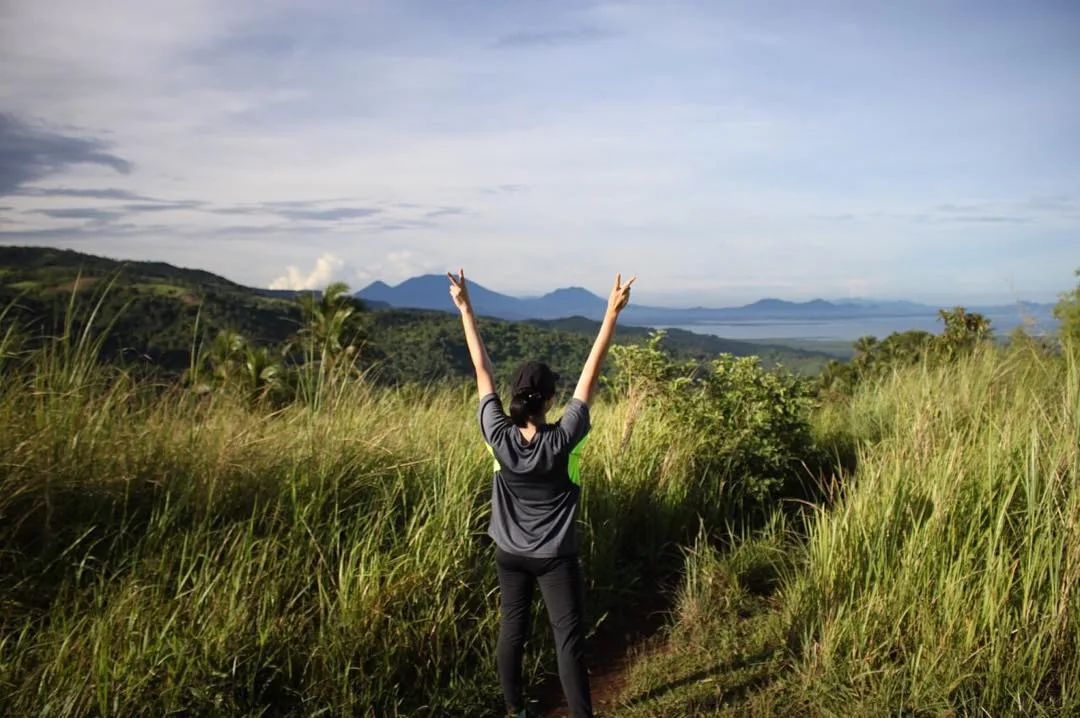
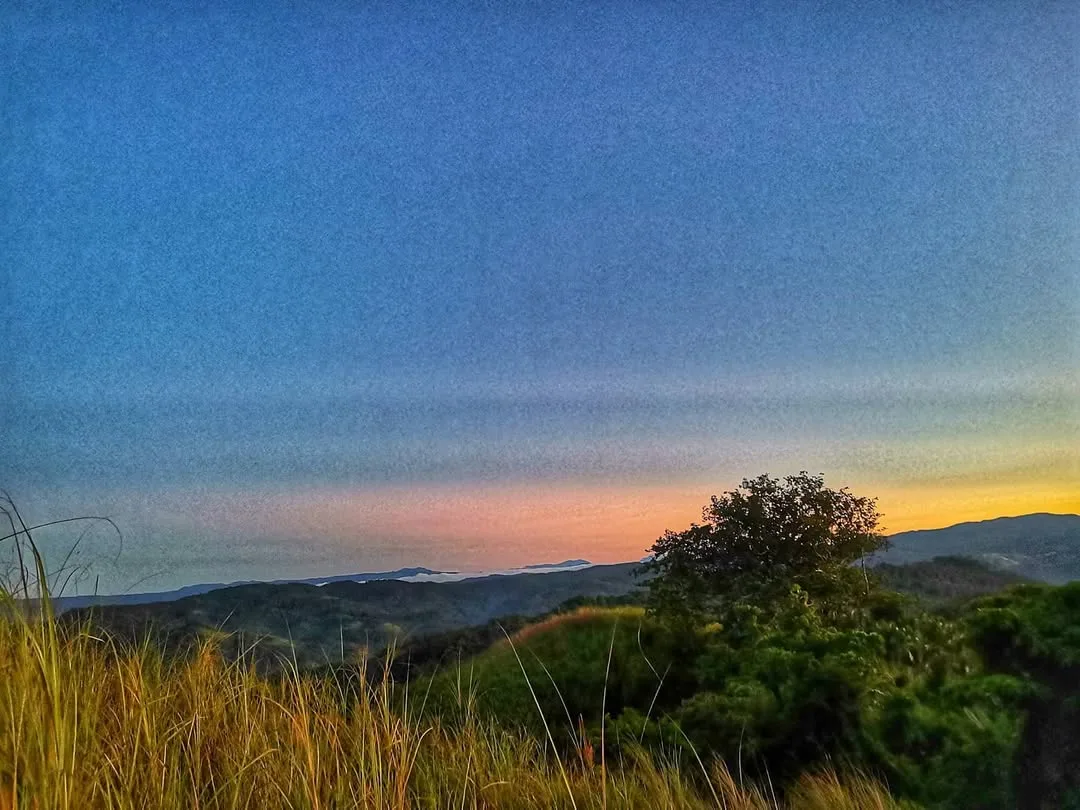
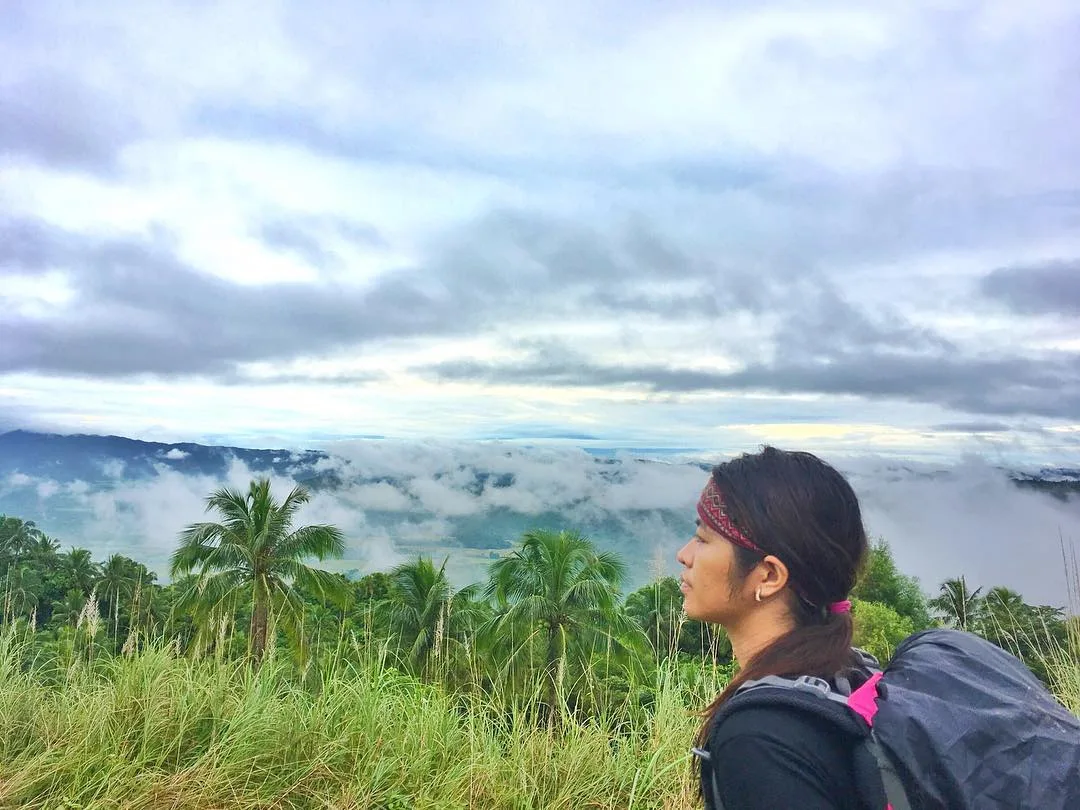
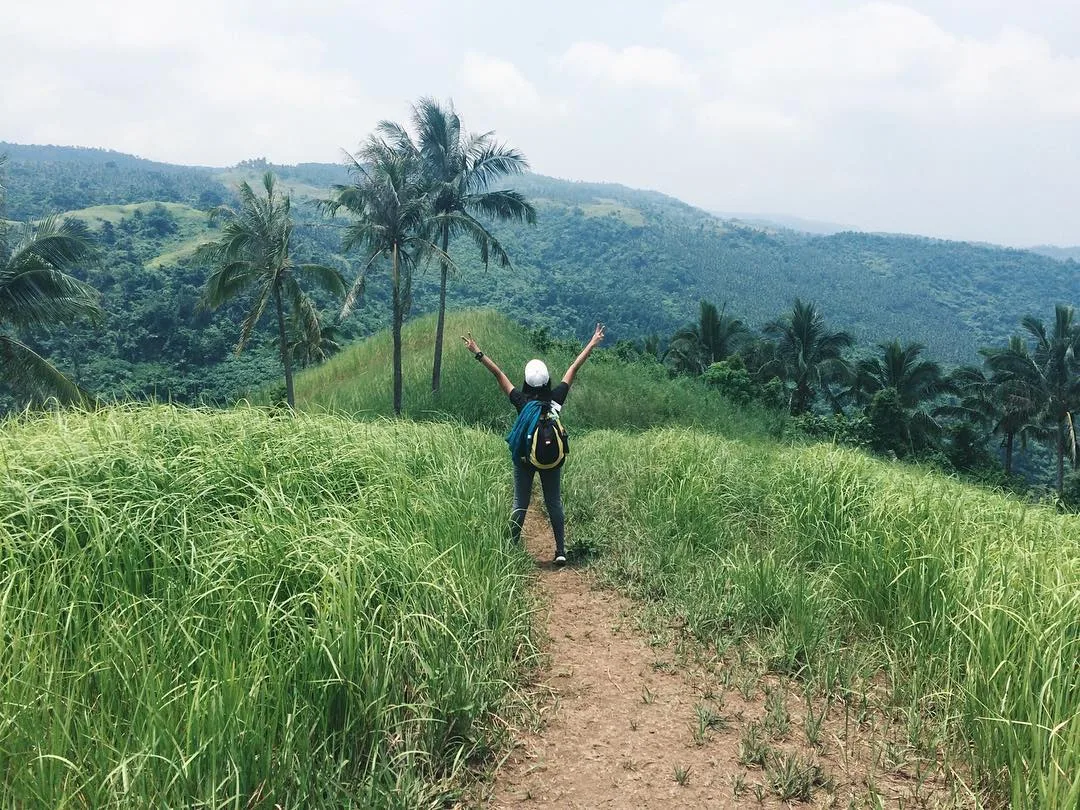
This is not a highland mountain with sweeping summit views. What draws people to Mt. Romelo is the trail ecosystem: the river crossings, the mud, the waterfall circuit, and the feeling of a full-day wilderness experience without needing to take a leave from work.
How to Get to the Mt. Romelo and Buruwisan Falls Jump-off Point
The jump-off for Mt. Romelo is at The Greenhouse in Brgy. Macatad, Siniloan, Laguna, and there are three reliable ways to get there from Metro Manila.
Route 1: Cubao or PITX via Raymond Transportation Bus (Most Direct)
The most straightforward option is boarding a Raymond Transportation bus from Araneta Center Cubao or PITX (Parañaque Integrated Terminal Exchange), bound for Infanta, Quezon. Tell the conductor you’re getting off at the Siniloan Public Market or the junction. From there, hail a tricycle to Brgy. Macatad — fare runs ₱20–₱50 per head. Total travel time from Manila is 3–4 hours, depending on traffic leaving the city.
Route 2: Shaw or Cubao to Tanay to Siniloan (Often Cheaper)
From Starmall Shaw (EDSA Central) or Araneta Center Cubao, take a UV Express van or jeepney to Tanay Public Market for around ₱70–₱100 (roughly 1.5–2 hours). From Tanay, board a jeepney bound for Siniloan (₱50–₱70, about 45 minutes to 1 hour), then take a tricycle from Siniloan town proper to Brgy. Macatad. This route works well if you’re coming from the eastern side of Metro Manila.
Route 3: South via Santa Cruz (Best for South Manila Residents)
Ride a bus from Metro Manila to Santa Cruz, Laguna — DLTB buses depart near LRT Taft-Buendia and take 2–3 hours. From Santa Cruz, take a jeepney to Siniloan (1–1.5 hours), then charter a tricycle to Barangay Macatad. This is the least commonly used route but logical if you’re starting from Parañaque, Las Piñas, or Muntinlupa.
At the Jump-off
Once you reach the Siniloan area, walk approximately 15 minutes from the main highway to reach the Barangay Hall for registration. Tricycles are easy to flag down in Siniloan town proper and at the jump-off area. On the return, tricycles back to Siniloan proper from the Buruwisan trailhead cost around ₱20 per head and take about 15 minutes. Habal-habal are not commonly used on this route — tricycles are the standard.
Permits, Fees, and Guide Requirements at Mt. Romelo and Buruwisan Falls
Registration costs ₱50 per person, collected at the barangay outpost inside The Greenhouse at the Brgy. Macatad jump-off. There is also a toilet and bath fee of ₱20 per head, charged separately. These fees go directly to the local barangay and fund basic trail maintenance and community services.
Guides are stationed at the registration area and are available on a walk-in basis — no advance booking is required. That said, if you want a specific guide, pre-arrangement is possible; local guide Arnold is one name that circulates in hiker circles and will be waiting at the registration site if contacted ahead of time. Be aware that some guides contacted through third-party channels tend to quote higher rates than those at the jump-off directly.
Guide fees run approximately ₱600 for a group of up to 7 hikers for a standard day hike. For an overnight trip covering the summit and multiple falls, guide fees can reach ₱1,500. If you’re hiking solo and must shoulder the full guide fee alone, budget accordingly — this is where solo hiking becomes noticeably more expensive than going in a group.
A guide is strongly recommended for first-timers, particularly for the falls circuit. The main trail to the campsite is manageable with attention, but fork trails exist, and the descent into the gorge toward the falls has routes that are genuinely easy to miss.
What Is the Mt. Romelo and Buruwisan Falls Trail Like?
The Mt. Romelo trail is officially rated Trail Class 1, Difficulty 2 out of 9 — the kind of classification that makes it sound almost too easy. That rating reflects the elevation and the absence of technical climbing. What it does not capture is the mud.
The Mud: “Romelo Chocolate”
The soil along the Mt. Romelo trail is volcanic clay, and when wet it doesn’t just get slippery — it loses structural integrity entirely. Locals and repeat hikers call it “Romelo Chocolate,” a thick, suction-heavy sludge that grabs your boots with every step and refuses to let go quietly. A trail that takes 2 hours in dry conditions can stretch to 4 hours of genuine struggle after rain.
The trail also doubles as a working path used by horses and carabaos transporting local goods, which churns the clay further and creates deep hoof-print craters filled with standing water. You will sink. Accept it early and your day will go better.
Stage Breakdown: Jump-off to Summit
- 5:00 AM — Depart from The Greenhouse registration area in Brgy. Macatad
- ~5:55 AM — Reach the Mt. Romelo summit (300 MASL, marked with a summit post)
- The summit section is a relatively gradual ascent through forest with intermittent open patches
The summit itself is not a dramatic peak — it’s a forested high point that serves more as a waymarker than a destination. Most hikers barely pause there before pushing on toward the campsite and the falls.
Stage Breakdown: Summit to Campsite and Buruwisan Falls
- Summit to Campsite — Continue along the ridge trail to the open plateau campsite; the terrain here flattens and offers breathing room
- ~7:30 AM — Arrive at Buruwisan Falls (following the early start above)
- The descent from the plateau into the river gorge to reach the falls is the most demanding section of the entire hike
For slower groups or those starting later, budget 3–4 hours total from the jump-off to Buruwisan Falls. Non-climbers and those who stop frequently report it taking closer to 5 hours to reach the campsite.
The Descent to the Falls
To reach Buruwisan Falls, you leave the plateau and drop into a river gorge via trails that frequently exceed 60-degree inclines. Exposed tree roots function as natural ladder rungs, and this is where the hike earns its difficulty in a way the 2/9 rating doesn’t telegraph.
As of 2026, many of the old fixed guide ropes along these descent routes have deteriorated significantly. Test any rope before trusting your weight to it. Three-point contact scrambling — two hands and one foot, or two feet and one hand on the roots at all times — is the right technique here, not speed.
Is Mt. Romelo and Buruwisan Falls Good for Beginners?
Yes — Mt. Romelo is genuinely good for beginners, but with one honest caveat: the mud and the gorge descent are more demanding than the mountain’s beginner classification implies. If you’ve never hiked before and you go during or just after a rainy stretch, the Romelo Chocolate mud alone will humble you. Go during the dry season (November to May) for your first attempt and the experience will be far more welcoming.
The elevation (300 MASL), trail length, and absence of any technical gear requirements make this an excellent first or second climb. It pairs the feeling of a full-day outdoor adventure with a reasonable endpoint — waterfalls — that gives hikers of any fitness level something to look forward to throughout the trek. For anyone who has already done beginner-friendly minor climbs, Mt. Romelo sits comfortably at the manageable end of that spectrum.
Waterfalls and River Crossings
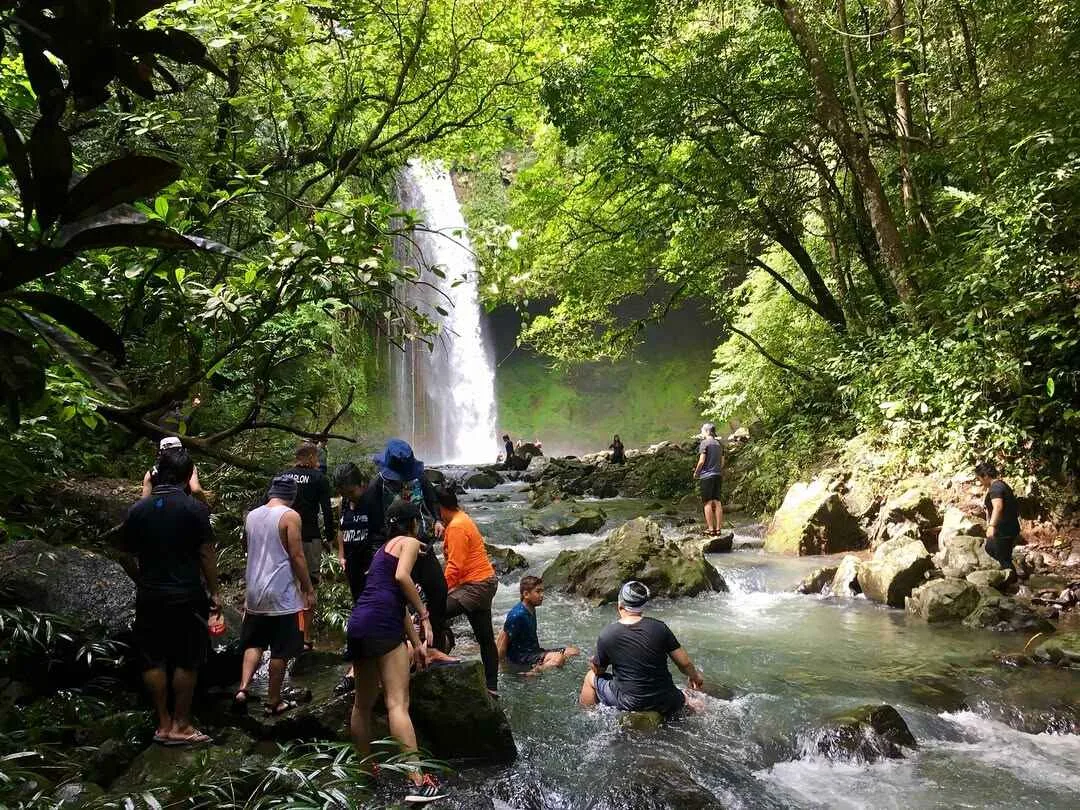
Buruwisan Falls is the headline attraction of the Mt. Romelo hike, and it earns the billing. The falls drop dramatically over a mossy rock face into a clear pool inside the gorge — the kind of payoff that makes the mud and root-scrambling feel entirely worth it. The visual impact comes from the contrast: you push through dense forest and then the gorge opens and the falls are simply there, larger than you expected.
Beyond Buruwisan, the Mt. Romelo area has multiple falls accessible from the campsite. An overnight trip with a guide can cover four falls total, though day hikers with an early start can reach more than just the main drop. River crossings along the gorge floor are part of reaching the secondary falls — expect wet feet regardless of footwear choice, so waterproof hiking sandals or old trail shoes you don’t mind soaking are the pragmatic call.
For other remarkable falls in Laguna worth adding to your itinerary, Hulugan Falls is another beginner-accessible option worth considering, as is the iconic Pagsanjan Falls
Best Time to Climb Mt. Romelo and Buruwisan Falls
November through May is the best window for climbing Mt. Romelo, with the core dry season months of December through March offering the most stable trail conditions. During this period, the volcanic clay stays firm enough to hike without the mud becoming a primary obstacle, and water levels at the falls and river crossings are manageable.
June through October brings the southwest monsoon and typhoon season to Laguna, and this is when the Romelo Chocolate mud reaches its worst. The gorge can also become dangerous during heavy rain events, as river water levels rise quickly. That said, many hikers specifically target the early wet season — May and June — when the falls are at peak volume and the foliage is intensely green, accepting the mud as part of the experience.
My own climb was in May 2026, which sits at that transitional window — the trail was already showing its wet-season character, but the falls were full and worth every muddy step.
Budget Breakdown for Climbing Mt. Romelo and Buruwisan Falls
| Expense | Cost (PHP) |
|---|---|
| Bus fare (Manila to Siniloan, one way) | ₱150–₱200 |
| Jeepney/UV Express transfers (if applicable) | ₱50–₱170 |
| Tricycle to jump-off (Brgy. Macatad) | ₱20–₱50/head |
| Registration fee | ₱50/head |
| Toilet and bath fee | ₱20/head |
| Guide fee (split among group of 7) | ₱600 total (~₱86/head) |
| Guide fee (solo hiker, day hike) | ₱600 |
| Food and water | ₱200–₱400 |
| Tricycle back to Siniloan | ₱20/head |
| Total (group hiker, estimated) | ~₱800–₱1,200/head |
| Total (solo hiker, estimated) | ~₱1,700–₱2,500 |
Solo hikers bear the full guide fee, which is the biggest cost variable. Going with a group of 5–7 people is the single most effective way to reduce per-person spending on this trail.
I grabbed a Chicksilog (chicken, sinangag, itlog) at the jump-off area before starting — hot, filling, and exactly the right pre-hike fuel. Don’t skip a real meal before you hit the trail.
What to Pack for Mt. Romelo and Buruwisan Falls
| Item | Essential? |
|---|---|
| Old trail shoes or waterproof sandals | Yes |
| Trekking pole(s) | Strongly recommended |
| Change of clothes (sealed in dry bag) | Yes |
| Extra socks (at least 2 pairs) | Yes |
| Minimum 2L water | Yes |
| Packed meal or energy snacks | Yes |
| Rain jacket or poncho | Yes |
| Insect repellent | Yes |
| Small first aid kit | Yes |
| Waterproof bag or dry bags for valuables | Yes |
| Sunscreen | Recommended |
| Headlamp or flashlight (early starts) | Yes |
| Swimwear or quick-dry shorts | Yes |
| Microspikes or gaiters | Optional (wet season) |
Pack light but don’t sacrifice the dry bag. Electronics, documents, and your change of clothes will not survive a gorge descent without waterproof protection — the river crossings are not optional ankle-dips, they are full wading.
Safety Tips for Climbing Mt. Romelo and Buruwisan Falls
Start as early as possible — 4:30 to 5:00 AM is ideal. An early start gives you cooler temperatures on the ascent, more time at the falls, and daylight buffer for the return. The gorge descent in fading afternoon light is significantly harder and riskier than it needs to be.
Test every rope before using it. As of 2026, the fixed ropes along the gorge descent have deteriorated and should be treated as supplementary handholds only — not anchor points. Use the exposed tree roots as your primary grip and ladder system, and practice three-point contact on steep sections.
Do not attempt the gorge or the river crossings if there has been heavy rain in the 24 hours prior. Water levels in the gorge rise fast and without warning. If you hear the river suddenly getting louder during your visit, move immediately to higher ground and wait for guidance from your guide.
Hire a guide for your first visit, particularly for the falls circuit. Fork trails are real, the gorge is disorienting, and even experienced hikers have gotten turned around at Buruwisan. The ₱600 guide fee is the best insurance you can buy on this trail.
For more routes around Laguna, Mt. Kalisungan and Bunga Falls is another solid option, and Yambo Lake in Nagcarlan pairs well as a next-day addition to a Laguna weekend.
Frequently Asked Questions About Mt. Romelo and Buruwisan Falls
1. How difficult is the Mt. Romelo hike for a complete beginner?
Mt. Romelo carries an official difficulty rating of 2 out of 9 (Minor Climb, Trail Class 1), making it one of the most beginner-friendly mountains in Laguna. The elevation is only 300 MASL and no technical gear is required. The main challenge for first-timers is the volcanic clay mud — called “Romelo Chocolate” — which becomes extremely slippery and energy-draining after rain. Going during the dry season (November to May) and bringing trekking poles significantly reduces the difficulty.
2. How long does it take to hike from the jump-off to Buruwisan Falls?
Most hikers reach Buruwisan Falls in 3–4 hours from the Brgy. Macatad jump-off. Groups starting at 5:00 AM typically arrive at the falls by 7:30 AM at a steady pace. Slower groups or those taking frequent breaks should budget up to 5 hours. The Mt. Romelo summit is reached in roughly 55 minutes from the start, with the campsite plateau and falls coming after.
3. Do I need to book a guide in advance, or can I hire one at the jump-off?
Walk-in guide hire is available at The Greenhouse registration area in Brgy. Macatad — no advance booking is required. Guides are stationed there and available on the day. If you prefer a specific guide, pre-arrangement is possible and the guide will meet you at registration. Walk-in rates tend to be more transparent; guides booked through third parties sometimes quote higher fees. The standard day hike guide fee is approximately ₱600 for a group of up to 7 hikers.
4. What is the Mt. Romelo registration fee and where do I pay it?
The registration fee is ₱50 per person, paid at the barangay outpost inside The Greenhouse at the Brgy. Macatad jump-off. A separate toilet and bath fee of ₱20 per head is also collected. Both fees are managed by the local barangay. No online pre-registration is required — walk up, log your name, pay the fees, and you’re cleared to start the hike.
5. Is Mt. Romelo worth it as a day hike, and what makes Buruwisan Falls special?
Mt. Romelo is absolutely worth it as a day hike from Manila. The combination of a manageable trail, a river gorge descent, and Buruwisan Falls — a dramatic multi-tiered waterfall cascading over mossy rock into a clear pool — makes it one of the most rewarding beginner hikes in Laguna. The full experience of summit, campsite plateau, gorge scramble, and falls is hard to match at this distance from the city. It’s also one of the best introductions to what hiking in the Philippines actually feels like beyond manicured day-tour trails.
Final Verdict: Should You Climb Mt. Romelo and Buruwisan Falls?
4.2 out of 5 for beginner and intermediate hikers who want a full-day adventure within reach of Manila. Mt. Romelo delivers a genuine wilderness experience — mud, root scrambling, river crossings, and a waterfall payoff — without demanding technical skill or high fitness. The trail’s reputation undersells its physical demand (the mud is no joke), but that’s actually a feature for anyone who wants to be genuinely tested on their first or second climb. If you’re building toward bigger mountains like those featured in this Philippines mountains travel guide, Mt. Romelo is one of the most honest training grounds you’ll find this close to the city.