
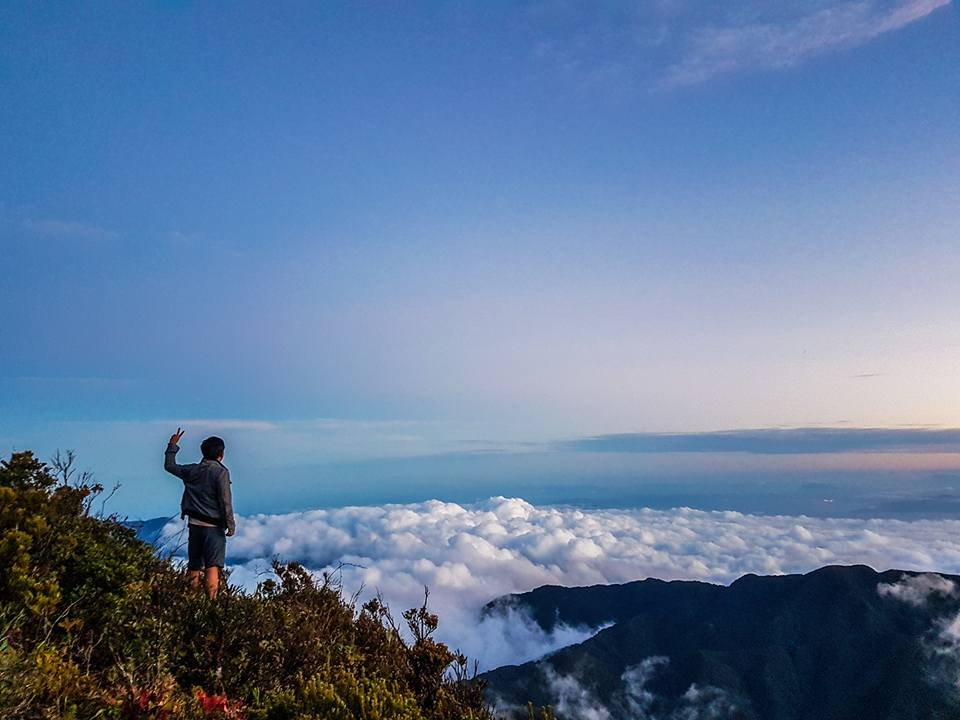
Harkor Climb Philippines: The 9/9 Difficulty List for Elite Mountaineers
Welcome to the Pain Cave
WARNING: This is not a travel guide. This is a survival manual. The mountains listed below are rated Difficulty 9/9 (“Harkor”). They feature extreme technical hazards, including Class 4-5 rock scrambling (free soloing), river crossings prone to flash floods, and trails that require 16-24 hours of continuous trekking. If you have not completed at least three Major Climbs (Difficulty 7-8/9) like Mt. Apo or Mt. Pulag Akiki, turn back now. This page is not for you.
You don’t hike these mountains for “fun” or for the Instagram aesthetic. You hike them to see if you can break yourself—and then put the pieces back together before the sun goes down.
This is the realm of the “Harkor” (Hardcore).
In the Philippine mountaineering community, the jump from a Major Climb (7-8/9) to a Harkor Climb (9/9) is exponential. On Mt. Pulag, the worst thing that happens is you get cold. On Mt. Guiting-Guiting or Mt. Halcon, a single mistake—a slipped footing on a knife edge or a miscalculation of a river current—can be fatal.
These expeditions are raw, uncurated, and unforgiving. There are no starry-eyed beginners here; only veterans who have accepted that for the next 3 to 5 days, comfort is not an option.
The Real Risks (Read Before Proceeding)
We are not exaggerating. These hazards are present in every mountain on this list.
 Flash Floods: Rivers in Mt. Halcon and Mt. Sicapoo can rise 6 feet in under 10 minutes during rain.
- Gravity Kills: The “Knife Edge” trails of G2 involve walking on fractured rocks with 80-degree drop-offs on both sides.
- Hypothermia: Wet trails combined with wind in Mt. Madja-as can drop your core temperature dangerously low, even in tropical weather.
- Isolation: Rescue in these areas is not a phone call away. It takes 1-3 days for a rescue team to reach the interior of Mt. Mantalingajan.
 Flash Floods: Rivers in Mt. Halcon and Mt. Sicapoo can rise 6 feet in under 10 minutes during rain.
If you are still reading, and you accept these terms, then welcome to the elite tier of Philippine mountaineering. Let’s look at the monsters.
Defining the Beast (What is “Harkor” and Difficulty 9/9?)
What is a “Harkor” Climb? “Harkor” (localized slang for “Hardcore”) refers to mountains rated Difficulty 9/9 on the Pinoy Mountaineer Scale—the highest rating in the Philippines. These climbs are defined by extreme physical demands (16–24 hour trekking days), technical hazards (Class 4 scrambling, knife edges), and high-risk environments (unpredictable river swells or extreme heat). They require advanced skills, a Basic Mountaineering Course (BMC), and total self-sufficiency.
Before we drop the list of mountains, we need to define the terms. “Harkor” isn’t just a vibe or a hashtag you use because you got tired on a hike. It is a technical classification.
In the Philippines, we use the Pinoy Mountaineer Difficulty Scale (1-9). A 9/9 rating means the mountain attempts to stop you from reaching the summit using every weapon in nature’s arsenal. It is the ceiling of local mountaineering difficulty.
The 4 Pillars of a 9/9 Climb
What separates a 9/9 from a hard 8/9? It comes down to four distinct “Kill Factors.”
1. Technicality: Rock Climbing Without a Harness
On a Major Climb (7/8), you might use your hands to steady yourself. On a Harkor Climb, you are essentially rock climbing.
Class 4 Scrambling: You will encounter “Kiss the Wall” scenarios (famous in Mt. Guiting-Guiting), where you must hug a jagged rock face while shuffling your feet on a 3-inch ledge with a 1,000-foot drop behind you.
No Safety Net: There are rarely ropes installed. You rely entirely on your grip strength and balance. One slip is often fatal.
2. The “Death March” (Endurance)
Harkor climbs disrespect your sleep schedule.
The Duration: Standard itineraries often involve 16 to 24 hours of continuous movement.
The Mileage: Trails like the Cawag Hexa Traverse force you to cover 50+ kilometers (an ultramarathon distance) over six mountain peaks in a single day. You will enter the “Zombie Mode”—walking while asleep—somewhere around Kilometer 40.
3. The Elements: Unpredictable and Violent
Nature here is not scenic; it is hostile.
Water: In Mt. Halcon or Mt. Sicapoo, a peaceful river crossing can turn into a raging, impassable flash flood in less than 10 minutes of rain. You might be stranded on a bank for days waiting for the water to recede.
Heat: In Zambales, the heat index on the rocks can hit 45°C by noon, turning the trail into an open-air oven that cooks hikers alive (Heat Stroke is the #1 enemy here).
4. The “Mental Break” Point
This is the intangible pillar. Every 9/9 climber knows the feeling. It’s that moment at 2:00 AM, soaked in rain, shivering, with 5 hours of hiking still left, where your body physically shuts down (“bonking”). The only thing that moves your legs forward is sheer willpower. Harkor climbs are 40% physical and 60% mental.
The MIMAROPA “Big Three” (The Knife Edges)
What are the MIMAROPA Big Three? The MIMAROPA “Big Three”—Mt. Guiting-Guiting (Romblon), Mt. Halcon (Mindoro), and Mt. Mantalingajan (Palawan)—are the holy trinity of Philippine mountaineering. Rated Difficulty 9/9, these climbs are technically demanding expeditions requiring 3–5 days. They feature “Knife Edge” ridges, flash-flood prone river crossings, and dense jungles requiring indigenous guides and strict LGU permits.
If you want to earn your stripes in the Philippine mountaineering scene, this is the ultimate test. These three mountains, located in the MIMAROPA region (Mindoro, Marinduque, Romblon, Palawan), are widely considered the toughest peaks in the country. They don’t just test your legs; they test your nerve.
Mt. Guiting-Guiting (Sibuyan Island, Romblon)
Tagline: “G2: The Sawtooth”
Stats: 2,058 MASL | Difficulty 9/9 | Trail Class 4-5
Jump-off: Magdiwang, Romblon (Traditional) or San Fernando (Traverse)
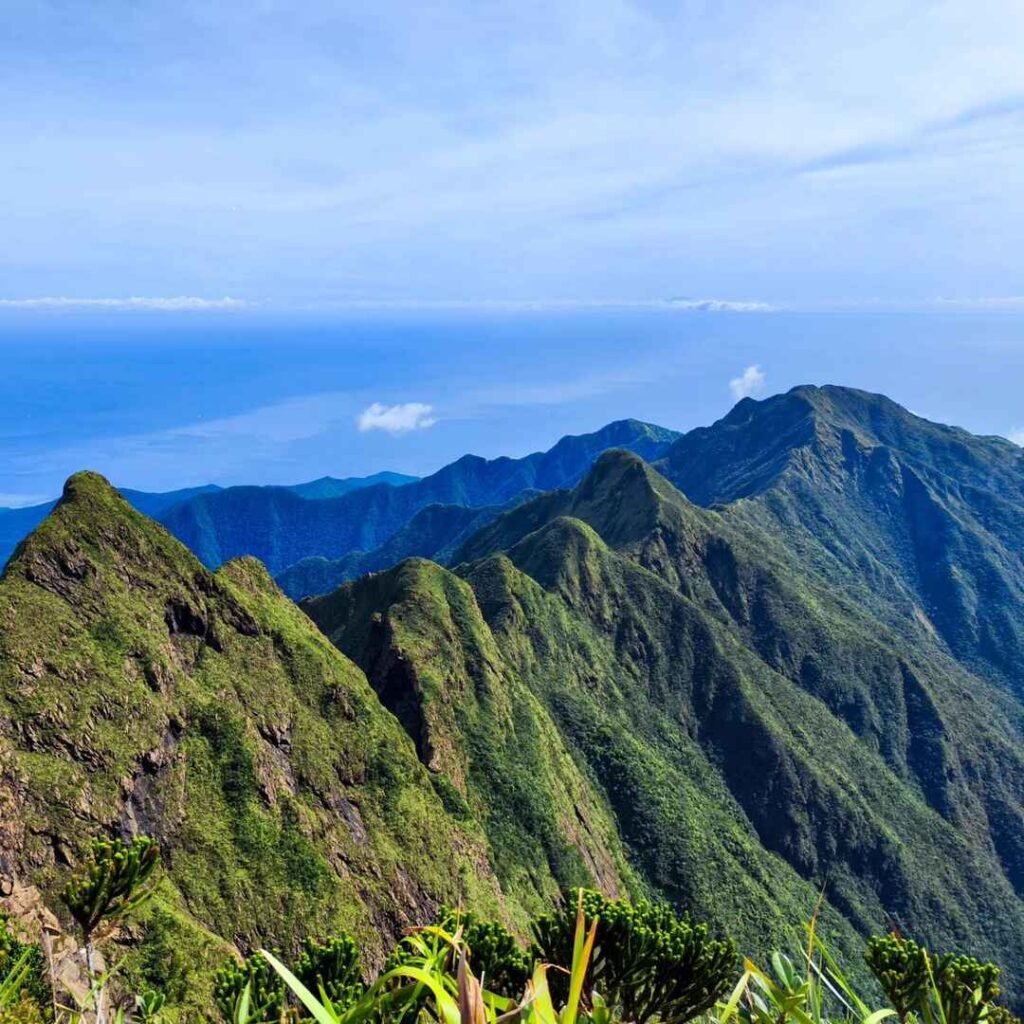
Mt. Guiting-Guiting (G2) gets its name from the local word for “jagged teeth,” and looking at the summit ridge, you understand why. This isn’t a hike; it is a traverse over a fractured spine of ultramafic rock.
The Hazard: The “Knife Edge” is world-famous. You are walking on jagged rocks with lethal drop-offs on both sides. There are no handrails. In sections like the “Kiss the Wall,” you must hug a vertical rock face while shuffling sideways on a tiny ledge. One slip, and gravity takes over.
Mt. Halcon (Oriental Mindoro)
Tagline: “The Most Difficult Mountain in the Philippines”
Stats: 2,582 MASL | Difficulty 9/9 | Trail Class 4
Jump-off: Baco, Oriental Mindoro
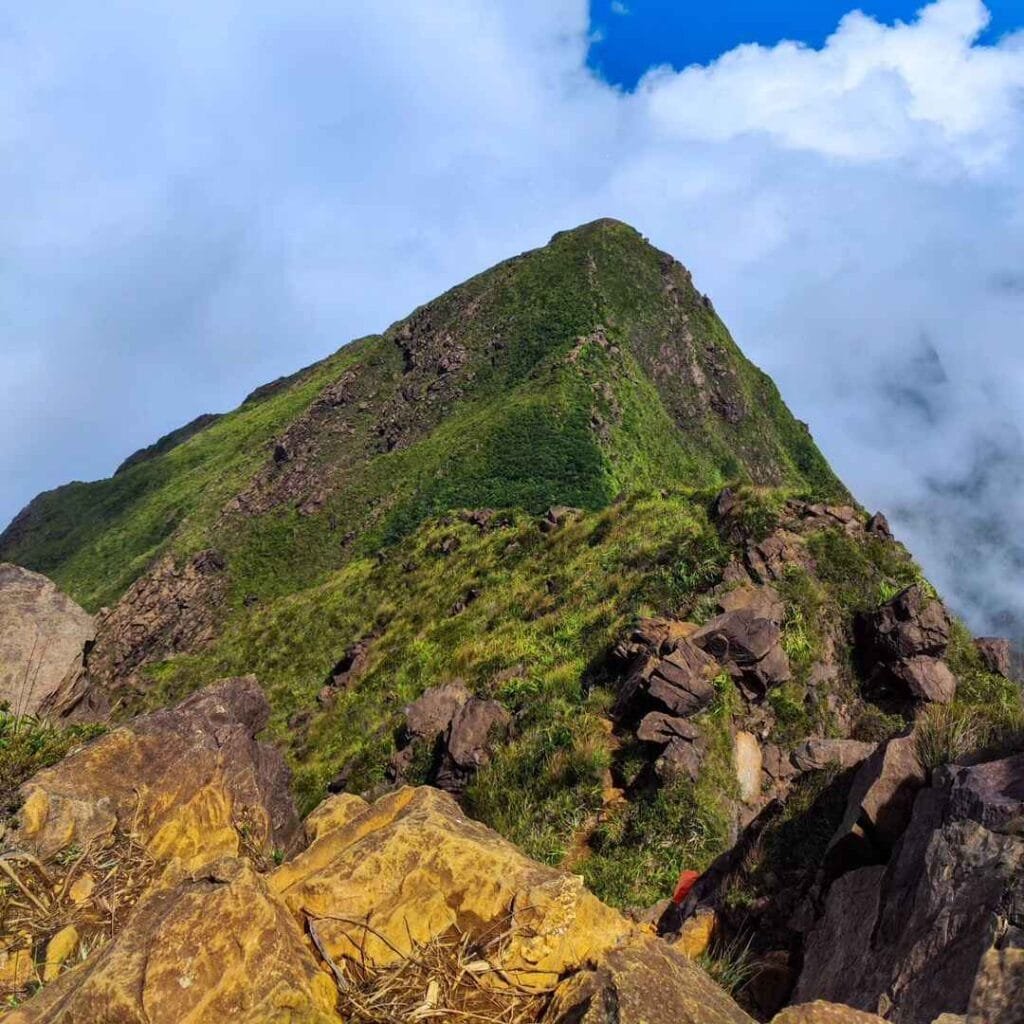
For decades, Mt. Halcon has held the title of the “toughest.” It is wet, wild, and teeming with life that wants to bite you. The trail is a relentless assault through mossy forests infested with aggressive Limatiks (blood leeches) that target your eyes and open wounds.
The Hazard: The Dulangan River. This is the widow-maker. The river is wide and deceptively calm, but rain at the summit causes flash floods that sweep hikers away. If the water turns chocolate brown, do not cross. Teams have been stranded here for days, waiting for the water to subside.
Mt. Mantalingajan (Palawan)
Tagline: “The Jungle Labyrinth”
Stats: 2,086 MASL | Difficulty 9/9 | Duration: 3-5 Days
Jump-off: Rizal (Entry) to Brooke’s Point (Exit)
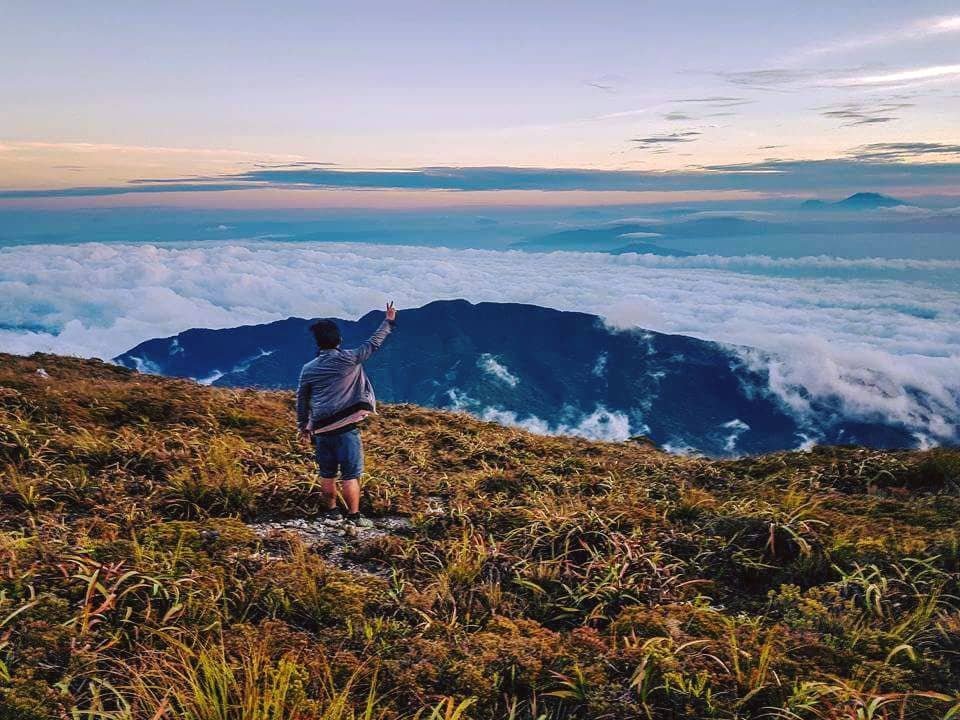
Mt. Mantalingajan (MPG) is the grandmaster of isolation. Located in southern Palawan, it is a massive mountain range that requires a multi-day traverse. Unlike the established trails of Luzon, MPG feels like a machete-led expedition into the unknown.
The Hazard: This is “Tau’t Bato” territory. The jungle is dense, confusing, and filled with Balatik (indigenous hunting traps involving sharpened bamboo spears). You strictly follow your guide’s footsteps.
Health Risk: Palawan is a Malaria-endemic area. While cases are lower now, the risk is non-zero. Taking prophylaxis (like Doxycycline) before the climb is standard protocol for prudent teams.
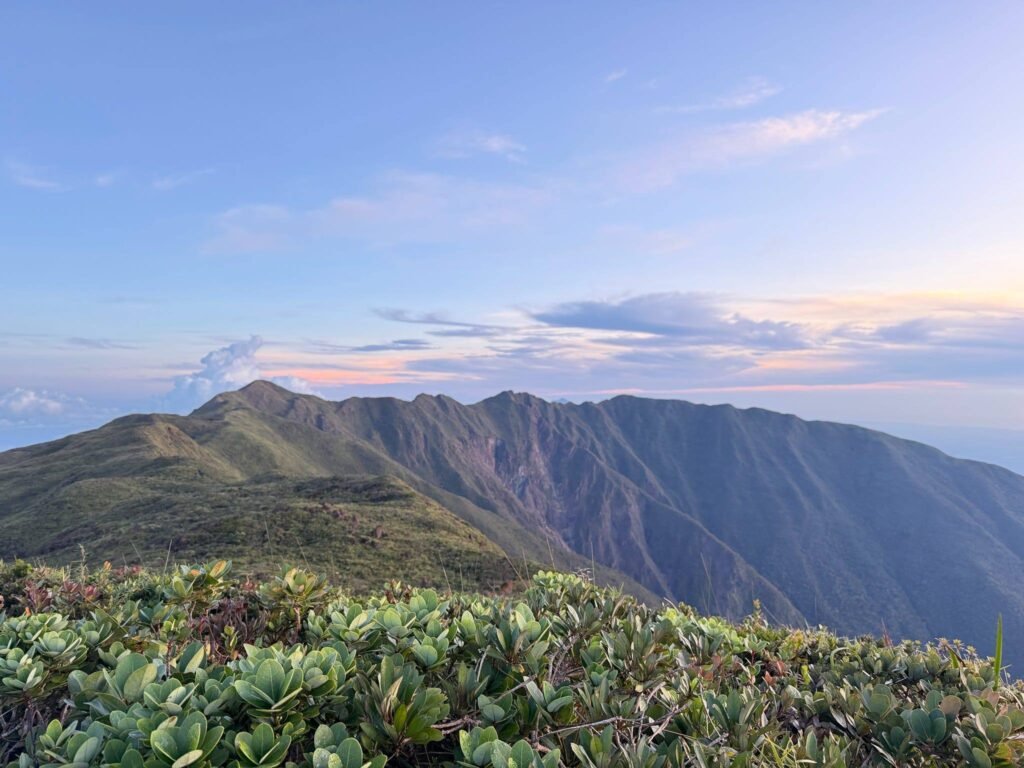
The Panay Trilogy (Visayas)
What is the Panay Trilogy? The Panay Trilogy consists of the three highest and toughest peaks on Panay Island: Mt. Madja-as (Antique), Mt. Nangtud (Capiz/Antique), and Mt. Baloy Daku (Iloilo/Antique). Rated Difficulty 9/9, these mountains are infamous for “river trekking” expeditions, near-vertical assaults (80–90 degrees), and highly technical mossy forests. While some elite teams attempt a continuous “Through-Hike,” most climbers tackle them individually over 3–4 days each.
If you think Visayas is all about the white sand of Boracay, the Panay Trilogy will brutally correct that assumption. These three mountains form a triangle of pain in the Central Panay Mountain Range. They are wet, wild, and incredibly technical.
Unlike Luzon mountains, that often have established footpaths, the trails here feel ancient and barely touched. You aren’t just hiking; you are navigating a jungle obstacle course.
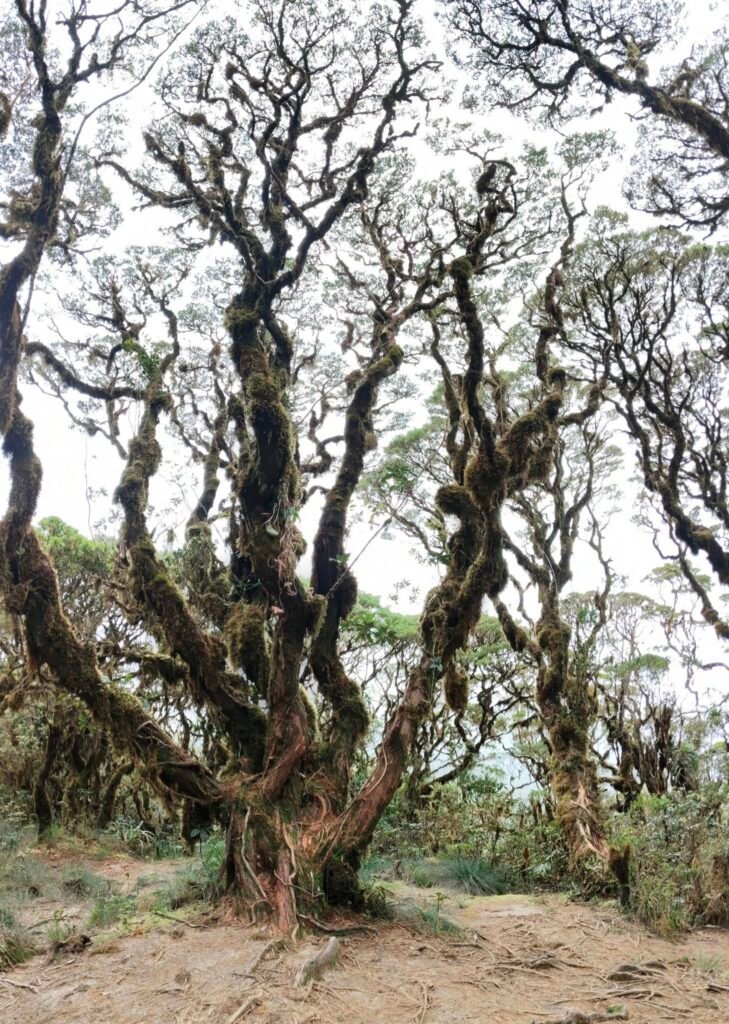
Mt. Madja-as (Culasi, Antique)
Tagline: “The Weeping Mountain”
Stats: 2,117 MASL (Highest in Panay) | Difficulty 9/9 | Trail Class 4-5
Jump-off: Brgy. Flores, Culasi
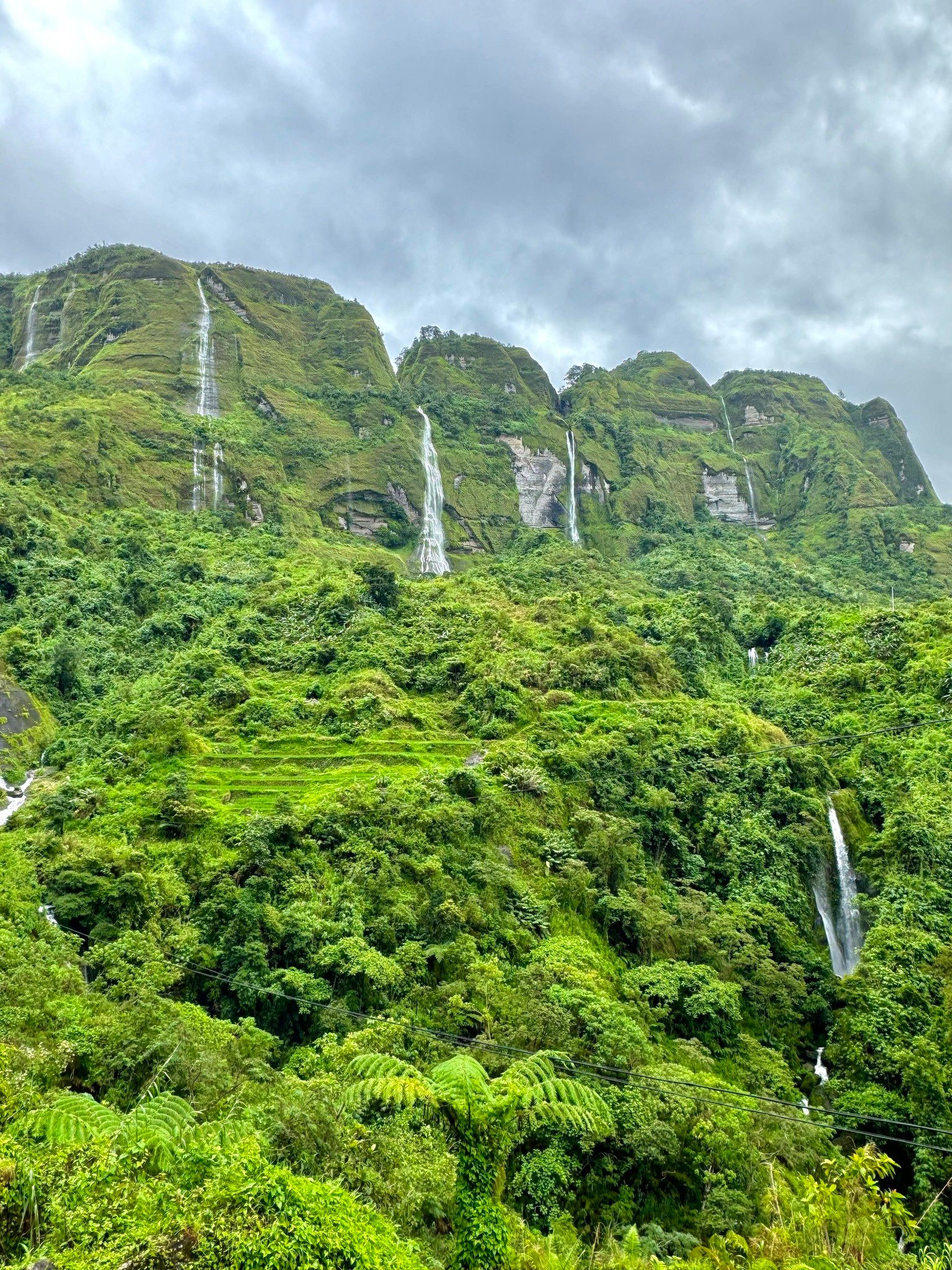
Mt. Madja-as is the crown jewel and the most feared of the three. Legend says it is the home of the ancient Visayan deity Sidapa. The mountain earns its “Weeping” nickname because it is almost perpetually shrouded in rain and features 14 waterfalls along the trail.
The Challenge: The defining feature is the “Bantang” Trail. After hours of river trekking, you face a vertical wall of roots and rocks angled at 80 to 90 degrees. It is a relentless scramble where your chin is practically touching the dirt in front of you.
The Descent: Going down is often harder than going up. The mossy rocks are slick with slime, making every step a potential slip hazard.
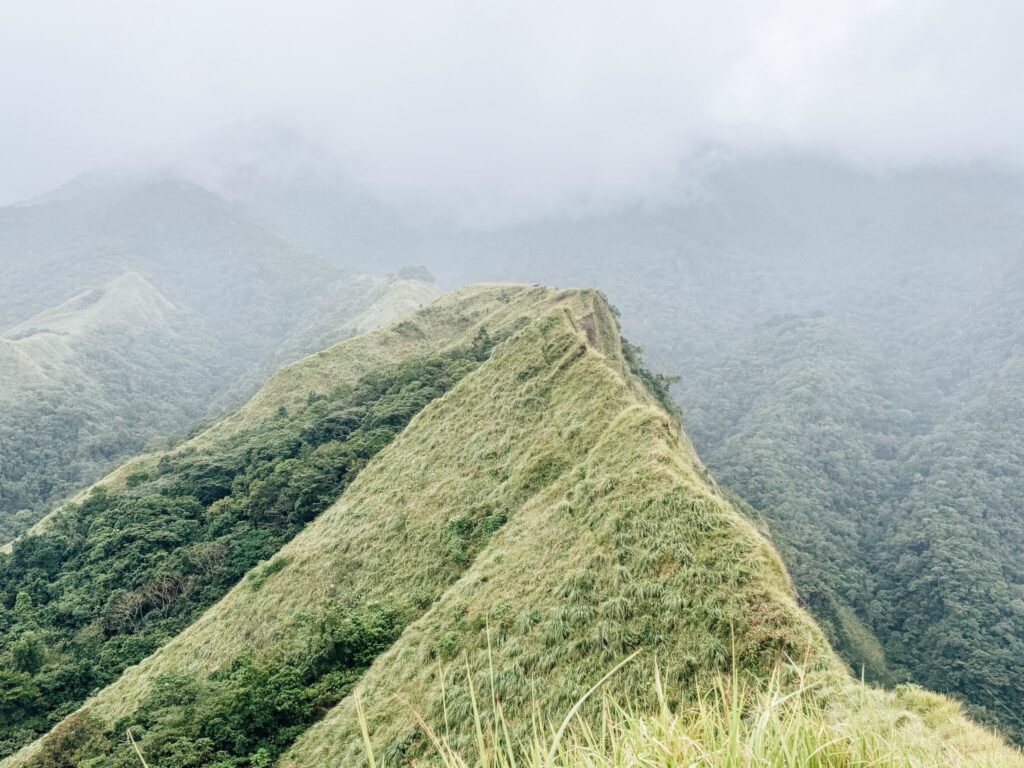
Mt. Nangtud (Barbaza, Antique / Jamindan, Capiz)
Tagline: “The River Trekker’s Nightmare”
Stats: 2,073 MASL | Difficulty 9/9 | Trail Class 4
Jump-off: Brgy. Lomboyan, Barbaza
If Madja-as is about verticality, Mt. Nangtud is about water torture. Situated on the boundary of Capiz and Antique, this mountain forces you to cross the Dalanas River and its tributaries countless times.
The Challenge: You will be wet for 90% of the climb. The trail weaves in and out of the river, and even the “land” portions are boggy and leech-infested.
The Knife Edge: Yes, Nangtud has its own Knife Edge near the summit—a narrow ridge covered in wild orchids and moss. Crossing this while shivering from the wet cold requires intense focus.
Hypothermia Risk: Because you are constantly soaked, the wind chill at 2,000 MASL hits harder. Hypothermia is the #1 enemy here, not fatigue.
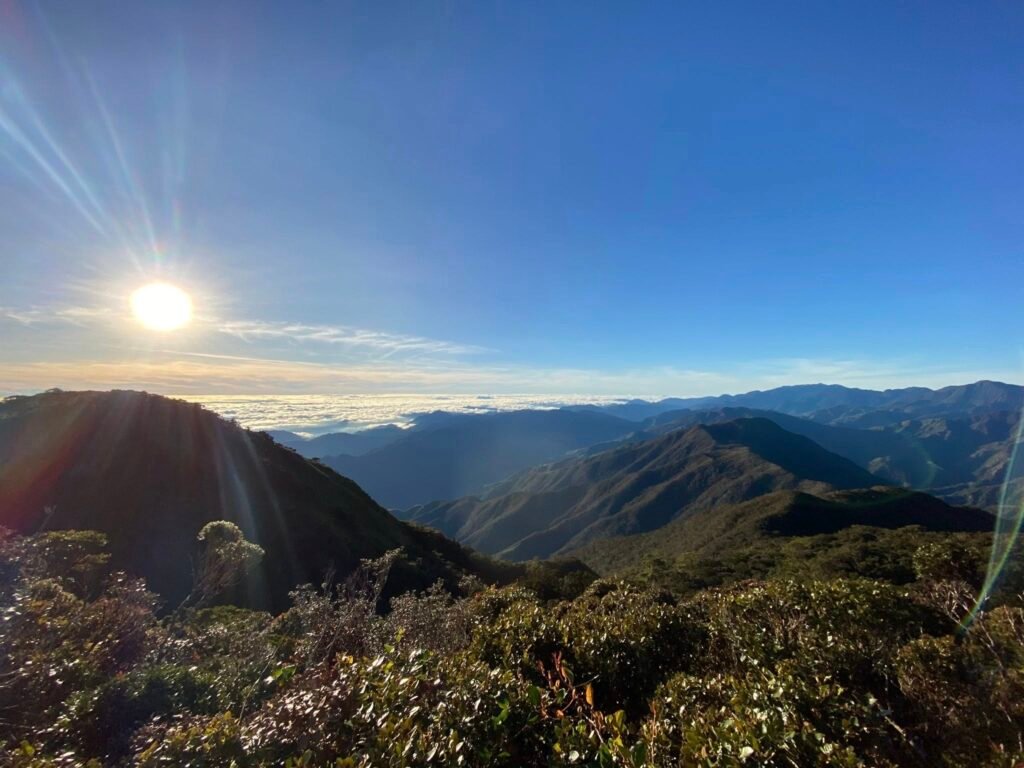
Mt. Baloy Daku (Valderrama, Antique)
Tagline: “The Heart of Panay”
Stats: 1,958 MASL | Difficulty 9/9 | Trail Class 4
Jump-off: Brgy. San Agustin, Valderrama
Mt. Baloy Daku feels ancient. Located deep in the interior, it is the most remote of the trilogy. The trek to the jump-off alone is an adventure. This mountain is famous for its “Guardian,” the Panay Cloud Rat, and its mossy forests that rival anything in Mindanao.
The Challenge: The “False Floor” phenomenon. The mossy forest here is so dense that massive roots intertwine feet above the actual ground. You might think you are stepping on solid earth, only to punch through a gap in the roots and fall 6 to 10 feet into a hole.
River Crossings: Like its siblings, Baloy requires navigating the Aklan River headwaters. The current here is strong and deafening.
The Luzon “Death Marches” (Endurance Killers)
What is a “Death March” Climb? A “Death March” in the Philippines refers to trails where the difficulty comes from extreme distance (30km–50km) and exposure rather than technical rock climbing. These hikes often require walking for 18–24 hours straight with minimal rest. The enemies here are exhaustion, dehydration, and the mental urge to quit.
If the Knife Edge mountains break your bones, the Death Marches break your spirit. These climbs are found in Luzon and are often attempted as “Day Hikes” by masochistic trail runners and endurance junkies. They are long, hot, and unending.
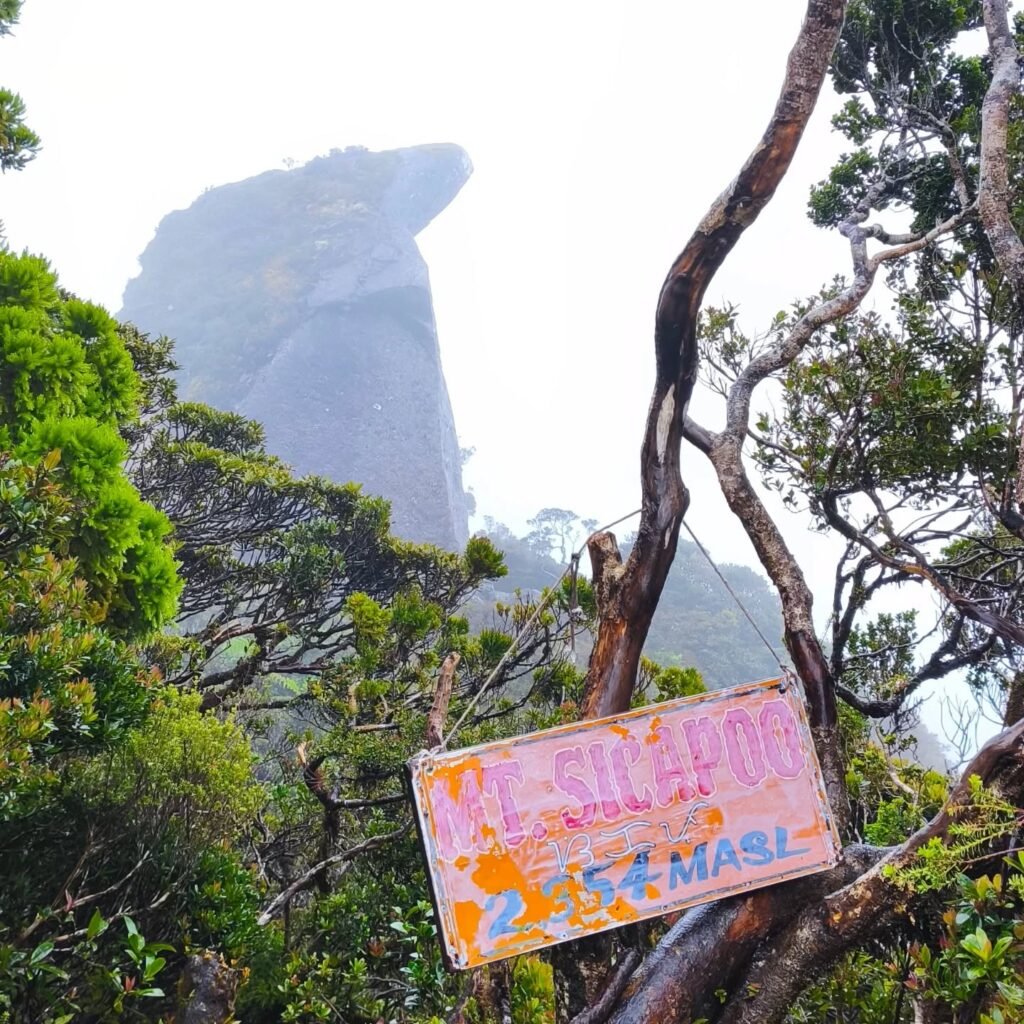
Mt. Sicapoo (Solsona, Ilocos Norte)
Tagline: “The Penguin and the Rivers”
Stats: 2,354 MASL | Difficulty 9/9 | Trail Class 2-4
Jump-off: Solsona Dam, Ilocos Norte
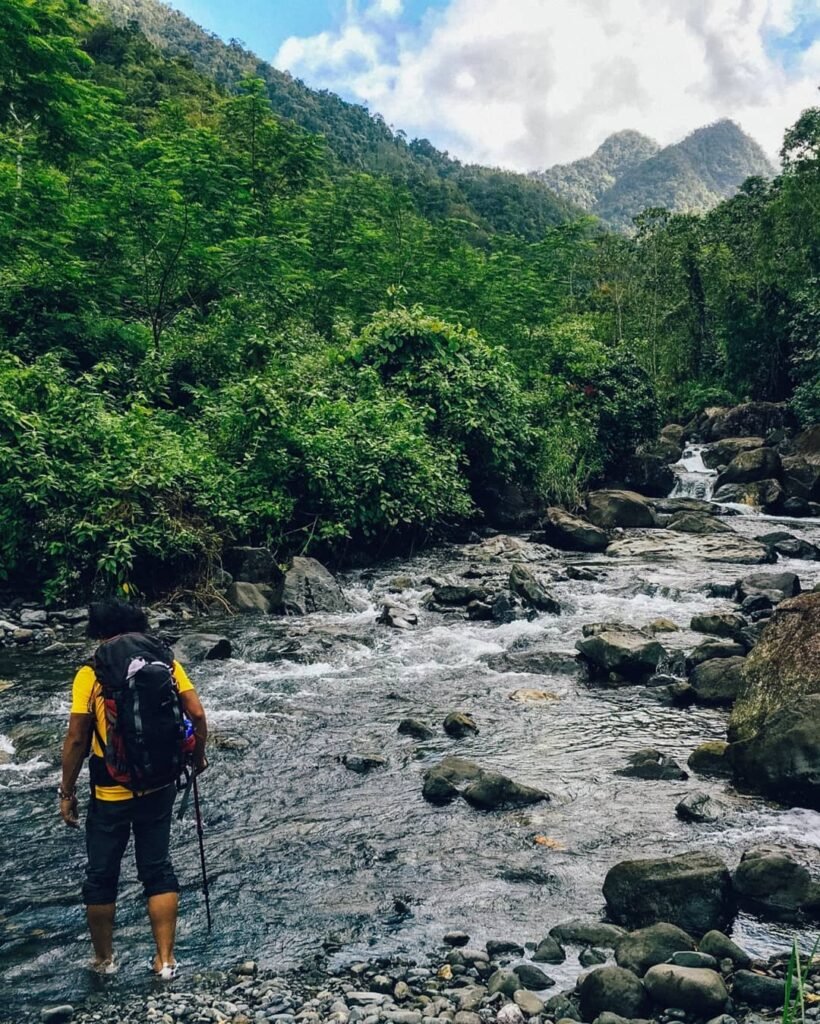
Mt. Sicapoo is not just a mountain; it is a marathon with obstacles. Before you even touch the mountain base, you must survive the approach. The trail is famous for the Gasgas River, which snakes through the valley. You don’t cross it once; you cross it 14 to 18 times (depending on the route).
The Challenge: The river current is strong and cold. Crossing it repeatedly with a heavy pack saps your leg strength. After the final crossing, the assault begins—a steep, vertical grind to the summit where the famous rock formation shaped like a Penguin waits.
The Hazard: If it rains in the mountains, the Gasgas River swells instantly. Hikers have been stranded on the banks for days with no food, waiting for the water to lower.
Kibungan Cross Country / KXC (Benguet to La Union/Ilocos)
Tagline: “The Endless Cordillera”
Stats: 15+ Peaks | Difficulty 8/9 to 9/9 | Duration: 3 Days
Jump-off: Poblacion, Kibungan, Benguet
The Kibungan Cross Country (KXC) is a test of monotony and resilience. It is widely regarded as one of the most beautiful trails in the country, resembling the Swiss Alps, but the beauty comes at a price: the “Unli-Ahon” (Unlimited Assault).
The Challenge: You aren’t climbing one mountain; you are traversing a jagged mountain range. Over 3 days, you will summit roughly 15 peaks, including Mt. Tagpew and Mt. Oten. The cycle of climbing up a steep ridge, descending to a valley, and immediately climbing again happens dozens of times. It destroys the knees and the mind.
The Isolation: Once you pass Mt. Tagpew (Day 1), there is no easy exit. You are committed. You either finish the trek or get carried out on a stretcher.
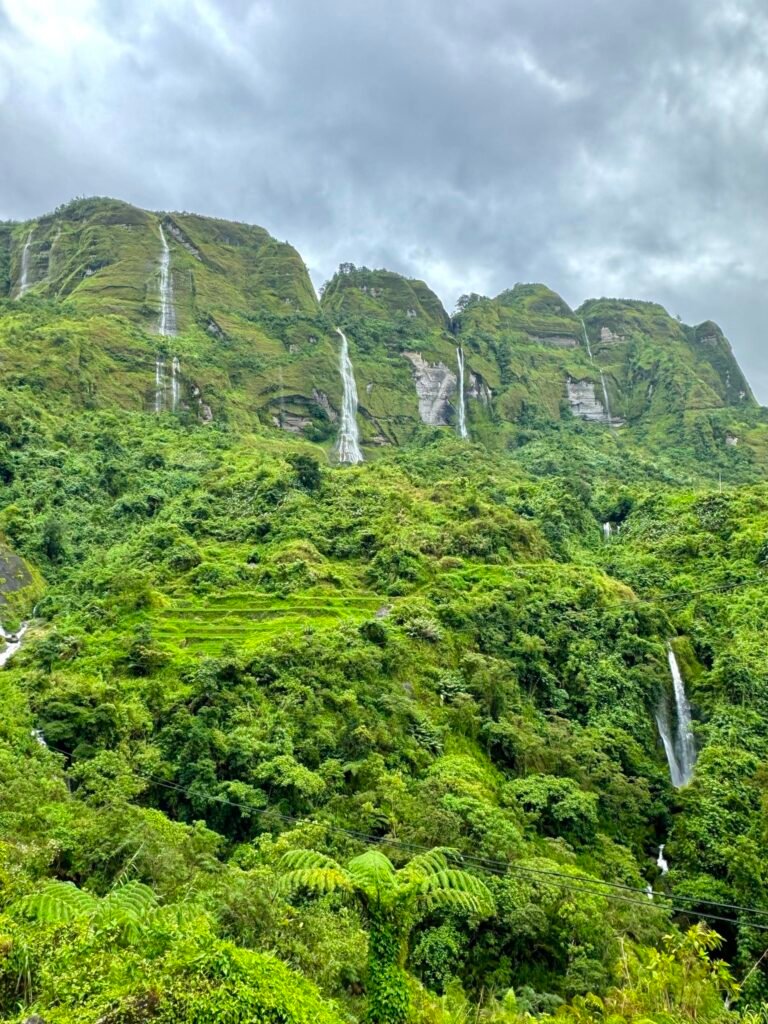
Cawag Hexa Traverse (Subic, Zambales)
Tagline: “The Oven Toaster”
Stats: 6 Peaks | Difficulty 9/9 (Dayhike) | Distance: 50km+
Jump-off: Sitio Cawag, Subic
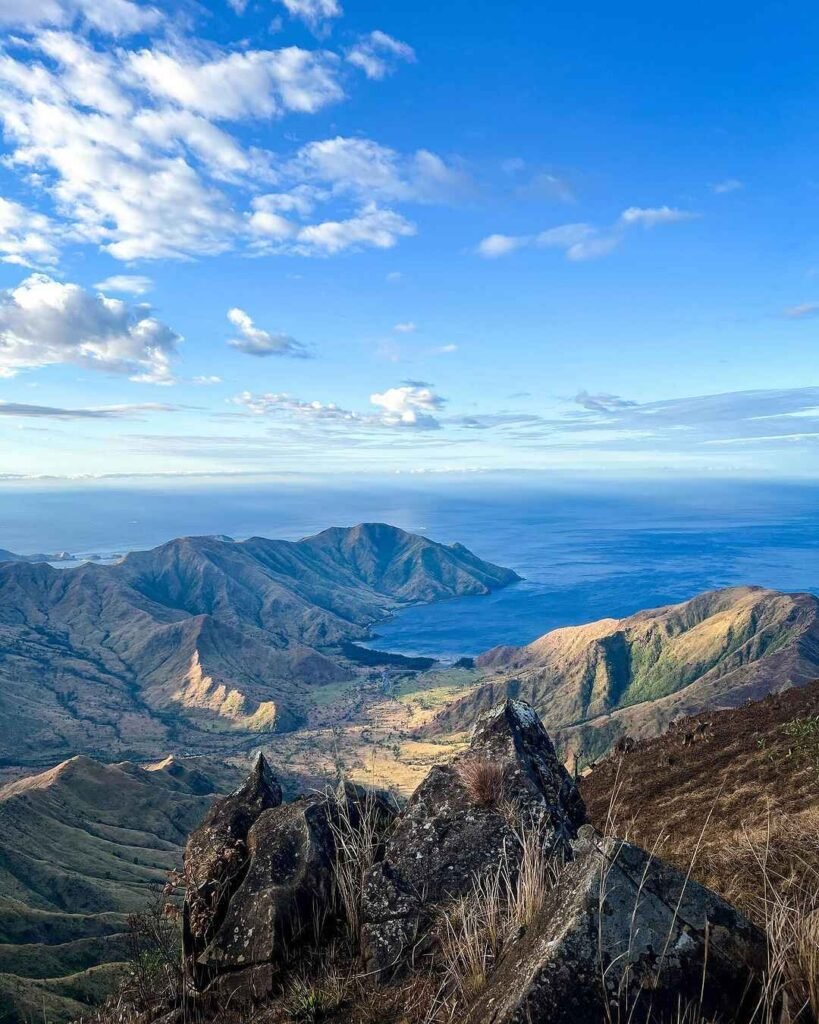
This is the most dangerous day hike in the Philippines. The Cawag Hexa involves summiting six mountains: Mt. Balingkilat, Mt. Bira-Bira, Mt. Naulaw, Mt. Dayungan, Mt. Cinco Picos, and Mt. Redondo—all in less than 24 hours.
The Challenge: The enemy is the Sun. The trail is 90% exposed grassland. By 10:00 AM, the heat index on the rocky ridges reflects upwards, creating an “oven effect” that hits 40°C – 45°C.
Heat Stroke Risk: This trail has claimed lives due to heat stroke and severe dehydration. There are very few reliable water sources along the ridge. If you run out of water at Mt. Dayungan, you are in serious trouble.
The Cut-off: You usually start at 12:00 Midnight. If you don’t reach Mt. Cinco Picos by a certain time (usually 2:00 PM), guides will force you to abort via a shorter exit trail.
The Mindanao Technicals
What distinguishes Mindanao Technical Climbs? Mindanao Technical Climbs (Difficulty 9/9) are defined by their “wild” state. Unlike the established trails of Luzon, these mountains—like Mt. Hilong-Hilong and Mt. Hamiguitan—feature raw, unmaintained jungles. Hikers must navigate aggressive flora (thorny Rattan/Uway), steep slippery riverbeds, and require technical rope skills for rappelling beside waterfalls.
Welcome to the jungle—the real one. While Mt. Apo is the King, the lesser-known giants of Mindanao are the assassins. These mountains are less commercialized, meaning there are no wooden stairs, no convenient campsites, and often, no trail at all. You are bushwhacking through virgin rainforests where the flora fights back.
Mt. Hilong-Hilong (Cabadbaran, Agusan del Norte)
Tagline: “The Waterfall Citadel”
Specs: 2,012 MASL | Difficulty 9/9 | Trail Class 4-5
Jump-off: Brgy. Mahaba, Cabadbaran City
Ask any local guide in Caraga, and they will tell you: “Apo is for tourists; Hilong-Hilong is for mountaineers.” This mountain is widely regarded as the hardest climb in Mindanao, surpassing the country’s highest peak in sheer technical difficulty.
The Challenge: The trail is a vertical obstacle course. You aren’t just hiking; you are canyoneering. The route traverses the Seven Waterfalls, requiring you to rappel down slippery rock faces while water crashes next to you.
The “Uway” Hell: The upper forest is a maze of Rattan (Uway). These are climbing palms covered in needle-sharp thorns that hook into your clothes and skin. You will not finish this hike with your trekking pants intact.
The Terrain: It is perpetually wet. The mossy forest here is slippery and steep, often requiring you to pull yourself up using roots while avoiding the thorns.
Advanced Skills Required (Beyond Walking)
What skills do you need for a 9/9 Climb? To survive a Difficulty 9/9 “Harkor” Climb, physical fitness is not enough. You must master four technical skills: 1. Scrambling (maintaining 3-point contact on vertical Class 4 terrain), 2. River Safety (reading currents and using the “Triangle Method” for crossing), 3. Rope Works (tying Bowline and Figure 8 knots for emergency lines), and 4. Mental Fortitude (making rational decisions while under extreme exhaustion).
On a Major Climb, you can get away with just walking. On a Harkor Climb, “walking” is only 50% of what you do. The rest is climbing, swimming, and problem-solving. If you show up to Mt. Guiting-Guiting without knowing where to put your hands, you become a liability to your team.
Here are the non-negotiable skills you need to learn before signing that waiver:
Scrambling (3-Point Contact):
- The Concept: When the trail goes vertical (Class 4), put your trekking poles away. They are dangerous here. You need 3-Point Contact at all times—meaning two hands and one foot, or two feet and one hand, are always touching the rock. You only move one limb at a time.
- Application: Essential for the G2 Knife Edge and Mt. Madja-as Bantang Trail. Test every rock before trusting your weight to it.
River Crossing Safety (Hydrology):
- The Concept: Never cross a raging river alone. Use the “Triangle Method” or “Link Arm Method.” The strongest member breaks the current upstream, while the others support from behind, forming a tripod. Unbuckle your backpack’s hip belt and sternum strap before entering the water—if you slip, you need to jettison the bag instantly so it doesn’t drag you down.
- Application: Critical for Mt. Sicapoo (Gasgas River) and Mt. Halcon (Dulangan River).
- The Red Flag: If the water is “Chocolate” (muddy brown) and carrying debris, DO NOT CROSS. Wait it out.
Rope Skills (Knots):
- The Concept: You don’t need to be a certified lead climber, but you must know two knots:
- Bowline: For tying a secure loop around a tree or anchor (it doesn’t jam under load).
- Figure 8 on a Bight: For creating a loop to clip a carabiner or safety line.
- Application: You will use these to haul bags up vertical walls in Mt. Hilong-Hilong or set up a handline for a slippery descent.
Navigation Basics (GPX):
- The Concept: Guides are human; they get lost too (especially in Mt. Mantalingajan). You should have a offline map app (like Gaia GPS or Strava) with the .gpx file of the route pre-loaded.
- Application: In the thick jungle of Palawan, the trail often disappears. A quick glance at your GPS can tell you if you’ve veered off the ridge.
Wilderness First Aid (Trauma):
- The Concept: Band-aids are for kids. You need to know how to splint a broken ankle using branches and tape, and how to stop massive bleeding (tourniquet application).
- Application: Rescue in Mt. Nangtud takes days. If someone breaks a leg, you are the doctor until help arrives.
Training for the Impossible
Let’s get one thing straight: A 1-hour session on the elliptical machine will not save you on Mt. Mantalingajan. The gym is a controlled environment; the mountains are not.
To survive a Difficulty 9/9, you need to simulate the misery before you get there. You need to train your body to move when it is exhausted, hot, and hungry. Here are the three pillars of Harkor conditioning.
1. The “Double Day” (Cumulative Fatigue)
Most people can hike hard for one day. Very few can wake up the next morning, put on a wet, heavy backpack, and do it again.
The Drill: Schedule back-to-back heavy training sessions on weekends.
Saturday: Hike a Major Climb (e.g., Mt. Arayat Traverse or Tarak Ridge) with a full load.
Sunday: Run 10km or hike another mountain (e.g., Mt. Batulao) immediately.
The Goal: You are training your legs to function on “pre-exhaustion.” This simulates Day 3 of the Halcon or G2 itinerary, where you have to summit despite having zero recovery time.
2. Tire Dragging (Gravity Simulator)
Walking on a flat treadmill doesn’t prepare you for the vertical drag of a 15kg backpack on an 80-degree slope.
The Drill: Get an old car tire, drill a hole in it, attach a rope and a harness (or belt), and drag it on gravel or grass for 45 minutes to an hour.
The Goal: This builds “Posterior Chain” power (glutes, hamstrings, and lower back). The constant resistance of the tire mimics the relentless downward pull of gravity on a steep assault. It hardens your mind because it is boring, heavy, and painful—just like the Cawag trail.
3. Fasting Cardio (The “Bonk” Training)
“Bonking” (hitting the wall) happens when your body runs out of glycogen (sugar). Your vision blurs, your legs turn to jelly, and you want to quit.
The Drill: Once a week, perform a long, slow run (LSD) or hike before eating breakfast. Do it on an empty stomach.
The Goal: This forces your body to become “Metabolic Flexible”—burning fat for fuel instead of relying solely on sugar. It also trains your brain to stay calm when you feel that hollow hunger pang at 2,000 MASL.
Warning: Do this gradually. Start with 30 minutes and build up. Bring emergency sugar just in case you pass out.
4. Heat Training (For the Open Trail)
If you are targeting Cawag Hexa, you must acclimatize to heat.
The Drill: Run at 12:00 PM (noon). Yes, it sucks. Wear a hoodie or a windbreaker to induce sweating (be careful and stay hydrated).
The Goal: Raise your heat tolerance threshold. You want your body to become efficient at cooling itself down so you don’t stroke out on the exposed ridges of Zambales.
Insider Tip: The “Shakedown” Climb. Three weeks before your 9/9 expedition, do a “dress rehearsal.” Wear the exact socks, shoes, and underwear you plan to use. Pack your bag to the exact weight. Hike a hard mountain like Mt. Damas or Mt. Tapulao. If your shoes pinch your pinky toe on Tapulao, they will cripple you on Sicapoo. Fix your gear issues here, not at the trailhead.
The “Harkor” Gear Checklist
On a standard hike, if your gear fails, you get uncomfortable. On a Harkor Climb, if your gear fails, you get evacuated.
Forget the “Ultralight” philosophy for a moment. When you are bushwhacking through the thorny rattan of Mt. Hilong-Hilong or gripping the jagged rocks of G2, durability is the only metric that matters.
Here is the loadout that separates the tourists from the survivalists.
1. Hand Protection: Industrial/Mechanic Gloves
Leave the PHP 50 cotton gardening gloves at home.
The Scenario: The rocks on Mt. Guiting-Guiting are ultramafic—they are literally jagged crystals. They will slice through cotton and skin in minutes. In Mindanao, you need to grab thorny vines to pull yourself up.
The Upgrade: Buy Mechanix Wear or legitimate leather work gloves. You need thick padding on the palms and reinforced fingertips.
Why: You cannot scramble safely if your hands are bleeding.
2. The “Group Lifeline”: 20m Utility Rope
Every group (per 5-7 pax) must carry at least one rope. This is not for rappelling down a cliff for fun; it is for safety.
The Scenario: You reach the Gasgas River in Sicapoo, and the water is waist-deep and rushing.
The Gear: A 20-meter, 8mm to 9mm static rope. It doesn’t need to be a dynamic climbing rope (which is heavy), just strong enough to hold a person’s weight against a current.
Why: A simple handline prevents a slip from turning into a drowning incident.
3. First Aid: Trauma & Anaphylaxis
Band-aids are useless here. You need to prepare for two specific threats: Major Trauma (Falls) and Allergic Shock (Stings).
Tourniquet (CAT): If someone falls on a sharp rock or slides down a ravine and severs an artery, you have minutes to stop the bleeding. A belt is not enough.
SAM Splint: Lightweight and moldable. If someone twists an ankle or breaks a wrist on the Mantalingajan traverse, you need to immobilize it to walk them out.
Intense Antihistamines: In the deep jungle, wasp attacks and snake bites are real risks. Carry Cetirizine (high dose) or an EpiPen if anyone in the group has a history of allergies.
4. Hydration: The “Camel” Capacity
On the Cawag Hexa, there is no water source on the ridge. None.
The Capacity: You need to carry 4 Liters to 6 Liters of water from the jump-off. This means a 3L bladder plus three 1L Nalgene bottles.
The Add-on: Salt Sticks or ORS (Oral Rehydration Salts). Drinking 6L of plain water will dilute your blood sodium and cause Hyponatremia (water poisoning), which can be fatal. You must replace the salt you sweat out.
LakbayPinas Tip: For Mt. Madja-as and Mt. Nangtud, bring a heavy-duty dry bag (Ocean Pack style) to line your backpack. Rain covers always fail during river crossings. If your sleeping bag gets wet in Antique, you are looking at a miserable, shivering night that could lead to hypothermia.
FAQ (The Reality Check)
Common Questions about Harkor Climbs Harkor Climbs (9/9) are strictly regulated. Solo or DIY climbs are illegal for mountains like Mt. Guiting-Guiting and Mt. Halcon. A Basic Mountaineering Course (BMC) certificate is often a mandatory requirement for permits. Rescue in these remote areas is slow (2–3 days), relying on manpower rather than helicopters. Beginners should strictly avoid the Cawag Hexa Traverse.
We receive emails asking if these mountains can be done “on a budget” or “without a guide.” The answer is almost always No. Here is the reality check.
Can I DIY Mt. Guiting-Guiting (G2)?
A: No. It is illegal. Mt. Guiting-Guiting is a protected sanctuary under the DENR-PAMB. You strictly need to coordinate with the DENR Office in Magdiwang or San Fernando. You must hire accredited local guides (usually a 1:3 or 1:4 ratio) and porters. Attempting to “ninja” (sneak) this mountain will get you arrested and blacklisted.
Do I strictly need a BMC (Basic Mountaineering Course) Certificate?
A: Yes, for most.
Mt. Halcon: The Baco Tourism Office often requires proof of BMC or major climb experience during the permit application.
Mt. Guiting-Guiting: While not always asking for the paper certificate, they will screen your group during the briefing. If you look unprepared, they have the authority to cancel your climb.
The Reality: Even if they don’t ask for the paper, you need the skills. If you don’t know LNT (Leave No Trace) or basic first aid, you are a liability.
What happens if I get injured on Mt. Mantalingajan?
A: You wait. This is not the movies; there is no 911 chopper coming in 20 minutes. Rescue in the interior of Palawan involves human manpower. Guides and porters will have to carry you in a makeshift hammock/stretcher over roots and mud for 2 to 3 days just to reach the nearest road in Brooke’s Point. Do not get injured. It is that simple.
Is the Cawag Hexa Traverse safe for beginners?
Absolutely not. Just because it is a “Day Hike” does not mean it is easy. In fact, the time pressure makes it more dangerous than some overnight hikes. We have seen beginners collapse from heat stroke at Mt. Bira-Bira because they underestimated the 40°C heat. If you have not done a standard 6/9 hike (like Mt. Arayat Quad Peak), stay away from Cawag.
Conclusion
There is a moment on every Harkor Climb where you will ask yourself: “Why am I doing this?”
It usually happens when you are clinging to a wet rock on Mt. Madja-as, shivering in the dark, or when your legs are cramping on the 40th kilometer of Cawag.
But then, you reach the summit. You stand on the Knife Edge of Guiting-Guiting or look out over the mossy expanse of Dulang-Dulang, and you realize the answer. You aren’t there for the view—you can see that on Google Images. You are there for the survival.
The badge of a Harkor climber isn’t the selfie you post on Facebook; it’s the quiet knowledge that you pushed your body to its absolute breaking point, and it didn’t break.
A Final Warning: The mountains on this list are ancient and powerful. They do not care about your ego. Always respect the weather, respect the locals, and respect your own limits. There is no shame in turning back. The mountain will always be there; make sure you are alive to climb it another day.
Still alive? If you have survived any of these monsters, or if you are crazy enough to be planning your first G2 expedition, drop a comment below. We want to hear your war stories.
Ingat sa trail, ka-Lakbay!
Stay Connected:
Subscribe to our newsletter for exclusive travel insights, deals, and updates. Join our community of travel enthusiasts and stay connected with the latest from our blog.
Follow us on social media for daily inspiration and updates on mountain climbing in the Philippines:
Contact Information:
- Email: travel.ph@lakbaypinas.com
- Phone: 09260******
- Address: Marikina