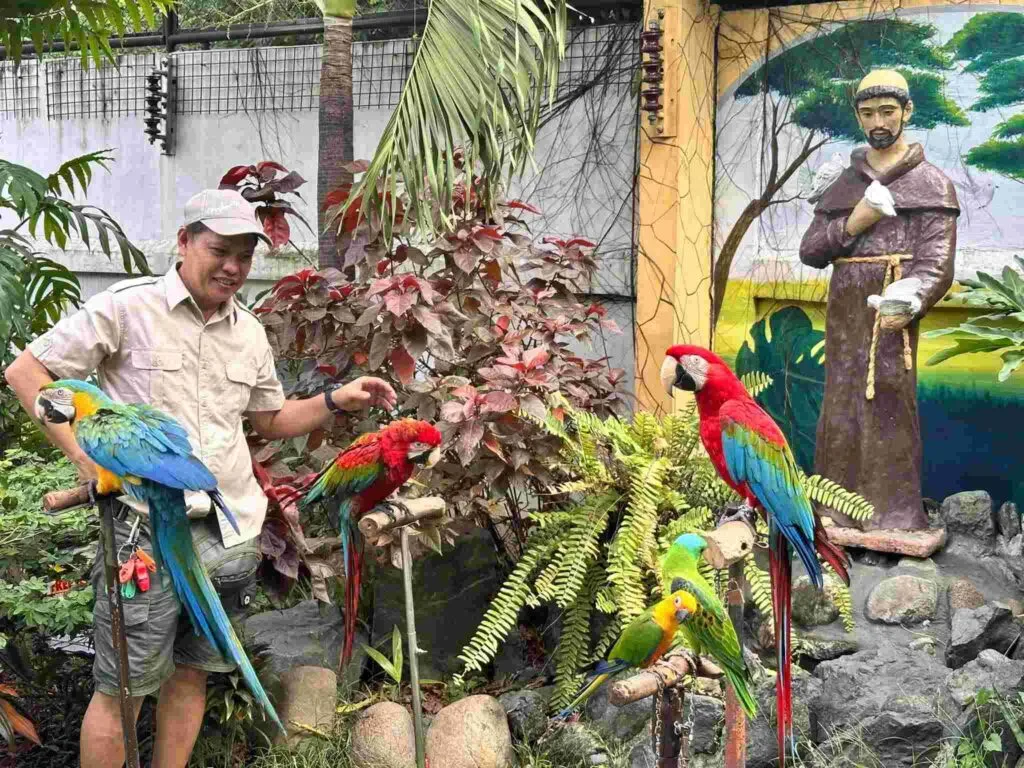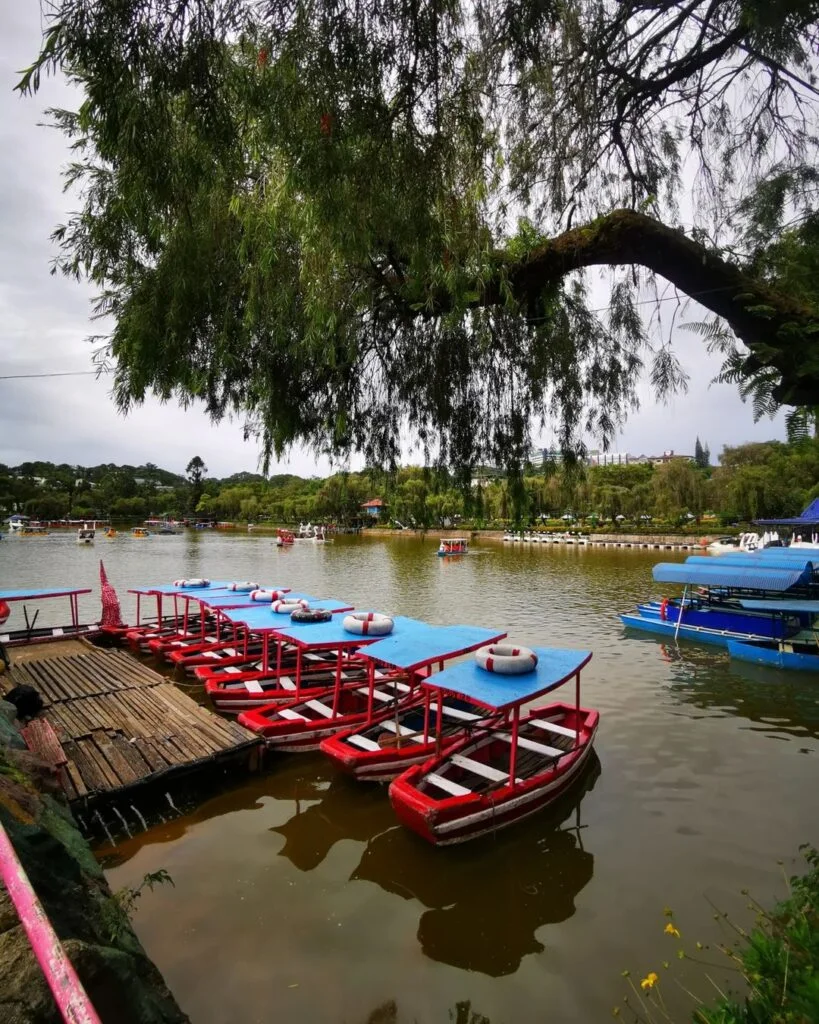

Manila Zoo in Malate, Manila is a 5.5-hectare zoological and botanical garden that operates on a single flat entry fee covering all animal habitats, the Butterfly Garden, the Botanical Garden, and the Children’s Park. Non-residents pay ₱300 per person, Manila residents pay ₱150, and children two years old and below get in free. It is a half-day to full-day outing best suited for families who want an affordable, walkable wildlife experience right inside the city.
Manila Zoo Quick Guide
| Detail | Information |
|---|---|
| Park | Manila Zoological and Botanical Garden (Manila Zoo) |
| Location | M. Adriatico Street, Malate, Manila |
| City/Province | Manila, Metro Manila |
| Type | Zoological and Botanical Garden |
| Pricing Model | Single flat entry fee — covers all habitats, gardens, and play areas |
| Cost to Enter | ₱150 (Manila resident) / ₱300 (non-resident) |
| Operating Hours | Mon: 11:00 AM to 8:00 PM / Tue to Sun: 9:00 AM to 8:00 PM |
| Best Day to Visit | Tuesday to Thursday (fewer crowds) |
| Time Needed | 2 to 4 hours |
| Parking | ₱50 (cars) / ₱30 (motorcycles), limited on-site lot |
Table of Contents
Where Is Manila Zoo Located?
Manila Zoo sits on M. Adriatico Street in Malate, Manila, right in the middle of one of the city’s most well-connected neighborhoods. The main entrance faces Adriatico Street near the corner of Quirino Avenue, making it visible and easy to find on foot or by any vehicle. It’s within easy walking distance of Manila Bay, Rizal Park, and Robinson’s Place Manila, so you can genuinely pair it with other spots in the area.
The zoo covers 5.5 hectares, which sounds modest but feels like a full morning or afternoon of walking once you factor in all the enclosure loops and garden paths. If you’re visiting from outside Manila and unfamiliar with Malate, just search “Manila Zoo” on Google Maps and it pins to the Adriatico Street entrance accurately.
If you’re planning a broader Manila day out, the nearby Rizal Park is a ten-minute ride away and makes a great combined stop, especially for families with kids who have energy left after the zoo.
How to Get to Manila Zoo
The cheapest and most reliable way to reach Manila Zoo by public transport is via LRT-1 to Quirino Station, followed by a short ten-minute walk or a quick tricycle or pedicab ride to the main entrance. The LRT-1 fare from key central stations like Central Terminal or Gil Puyat is typically under ₱30 per person, making this the most budget-friendly commute option by a wide margin. From Quirino Station, just follow Quirino Avenue toward Adriatico Street and the zoo entrance comes up on your right.
If you’re coming by jeepney, request a drop-off at the intersection of Quirino Avenue and Adriatico Street to minimize walking, especially with young kids or strollers in tow. Grab and Angkas are also practical options if you want door-to-door convenience — the Adriatico entrance area has enough street space for a safe drop-off.
Driving? The zoo has a dedicated on-site parking lot accessible from the Adriatico entrance, but it’s small and fills up fast. Parking costs ₱50 for private cars and ₱30 for motorcycles. Note that you need to have already purchased your entrance ticket before you can access the lot, so sort your tickets first. The lot typically reaches capacity by 10:00 AM on weekends — if you arrive after that, your best paid alternatives are Robinsons Place Manila or Century Park Hotel nearby, both of which have proper pay parking facilities.

Ticket Prices and Passes at Manila Zoo
Manila Zoo uses a single, flat entry fee. One ticket per person gets you full access to every animal habitat, the Botanical Garden, the Butterfly Garden, and the Children’s Park. There are no add-on fees, no premium zones, and no separate charges for individual attractions inside. The ticket cannot be shared between visitors — it is strictly one ticket per individual.
| Ticket Type | Manila Resident (PHP) | Non-Resident (PHP) |
|---|---|---|
| Adult and Child (3 years and above) | ₱150 | ₱300 |
| Student | ₱100 | ₱200 |
| Senior Citizen / PWD | ₱120 | ₱240 |
| Child (2 years and below) | Free | Free |
Senior Citizens and PWDs receive a 20% discount applied directly to the base entry fee. To claim it, present a valid senior citizen card or PWD ID at the ticket area. You claim this discount at the same counter or kiosk where everyone else buys tickets — there is no separate queue specifically for seniors or PWDs, but staff are present to assist.
On the Manila Zoo ticket discount for residents: the lower resident rate applies only when you present a valid government-issued ID that explicitly states a Manila city address. Your driver’s license, PhilHealth ID, voter’s ID, or barangay ID all work, as long as the address printed on it falls within the city of Manila. Staff are strict about this. If your ID shows a Quezon City or Pasay address, you pay the non-resident rate.
Online booking vs. walk-in at Manila Zoo: the ticket price is identical whether you book on the official website at [OUTBOUND LINK: manilazoo.ph] or walk in at the gate. The practical difference matters, though. When you book online, you pay via GCash or Maya, get a QR code, and scan it at the turnstile without queuing at the kiosk. Walk-in guests use automated kiosk machines at the entrance that dispense tickets but do not give change. Bring exact denominations — if you insert a ₱500 bill for a ₱300 ticket, you forfeit the difference. On weekends and holidays, online booking is the smarter move purely to skip the registration line.
Operating Hours at Manila Zoo
Manila Zoo is open six days a week, including Philippine public holidays, but has a delayed Monday opening for weekly maintenance.
| Day | Opening Hours | Last Entry |
|---|---|---|
| Tuesday to Sunday | 9:00 AM to 8:00 PM | 6:00 PM |
| Monday | 11:00 AM to 8:00 PM | 6:00 PM |
| Public Holidays | 9:00 AM to 8:00 PM (11:00 AM if the holiday falls on a Monday) | 6:00 PM |
The 6:00 PM last entry rule is firm. Even though the grounds technically stay open until 8:00 PM, you won’t get in after six. Arriving by 9:00 AM on a Tuesday to Sunday gives you the most time — and the coolest part of the day. Midday heat in Manila is no joke, and the zoo has limited shaded seating along the routes.
Attractions at Manila Zoo
Manila Zoo is not a theme park and has no mechanical rides or roller coasters. What it offers instead is a compact but genuinely interesting zoological collection organized around glass-fronted naturalistic enclosures, a walk-through aviary, a Butterfly Garden, and a substantial Botanical Garden. The experience is observation-based and educational rather than thrill-based.
The Big Cats: Kois and the Bengal Tigers
The star of the zoo is Kois, a White Siberian Tiger named as an anagram of former Manila Mayor Isko Moreno’s nickname. Kois lives in a glass-fronted enclosure that replaced the old pit-and-moat setup, and the difference is dramatic. When the tiger is close to the glass, you get a direct eye-level view that kids genuinely react to. Right beside Kois, the Bengal tiger occupies a similar enclosure with a soaking pool.
My visit in July 2026 was midmorning, and both cats were active enough to pace — afternoon visits reportedly catch them more awake, especially between 4:00 PM and 5:00 PM when the sun intensity drops. African lions round out the big cat zone in the same wing. One practical note: midday sun creates a strong glare on the thick glass. Press your phone lens flush against it or use a dark shirt behind your camera to kill the reflection for better Manila Zoo photos.
Walk-Through Aviary
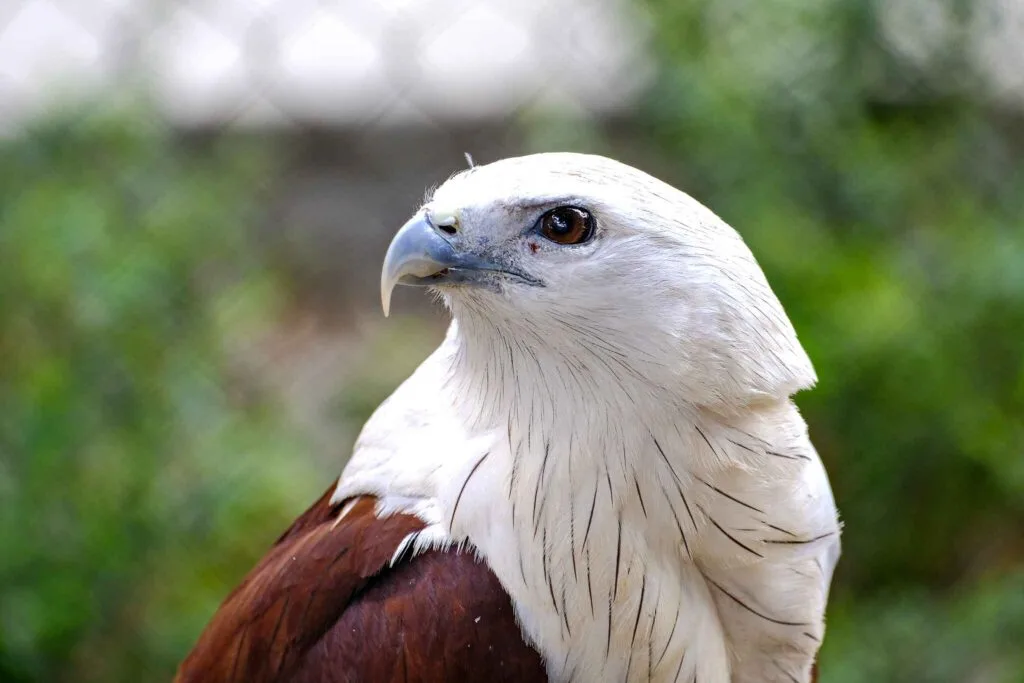
This is honestly the most immersive part of the zoo. The aviary is a large netted canopy structure where you walk along elevated pathways while Brahminy Kites and Philippine Serpent Eagles move overhead. It’s humid and feels deliberately jungle-like, which is either your favorite thing or your least favorite thing depending on your tolerance for heat. For kids, the scale of it — big birds flying at close range without a cage in front of them — is genuinely exciting.
Butterfly Garden and Reptile House
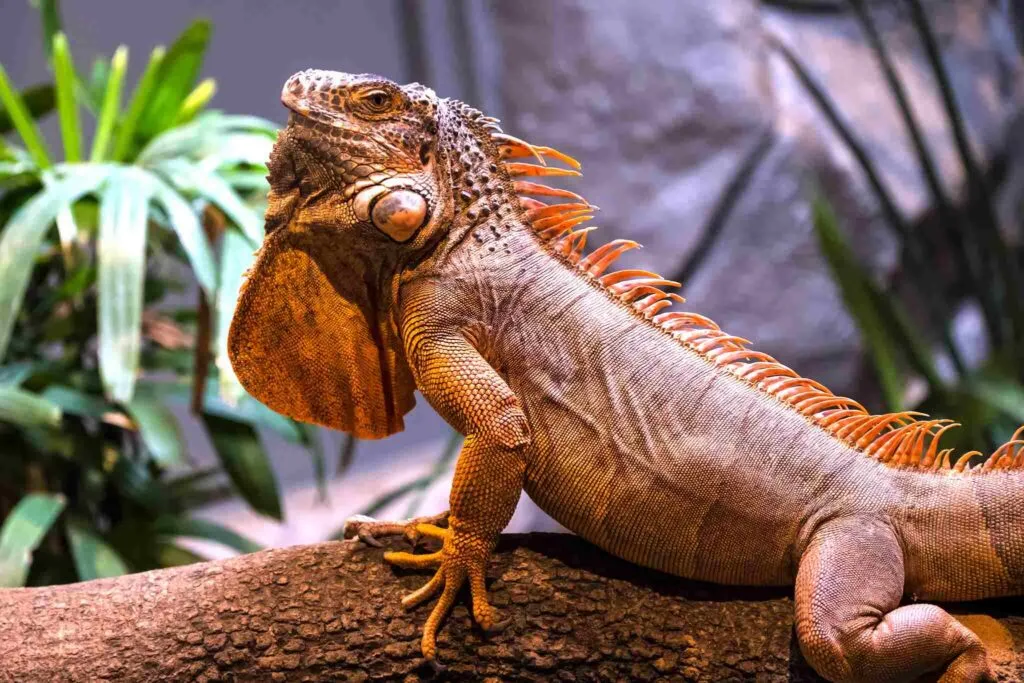
The Butterfly Garden (also called Diana’s Corner) is a dedicated chrysalis room where cocoons are monitored by staff and live butterflies are present, though the population varies by season. Entry is included in your ticket. The Reptile House is one of the more comfortable stops because it’s air-conditioned inside. You’ll find Burmese Albino Pythons, monitor lizards, and various crocodilian species in climate-controlled viewing areas. Kids who might be nervous around large reptiles generally find the glass barriers reassuring.
The Hebra and Open Plains Area
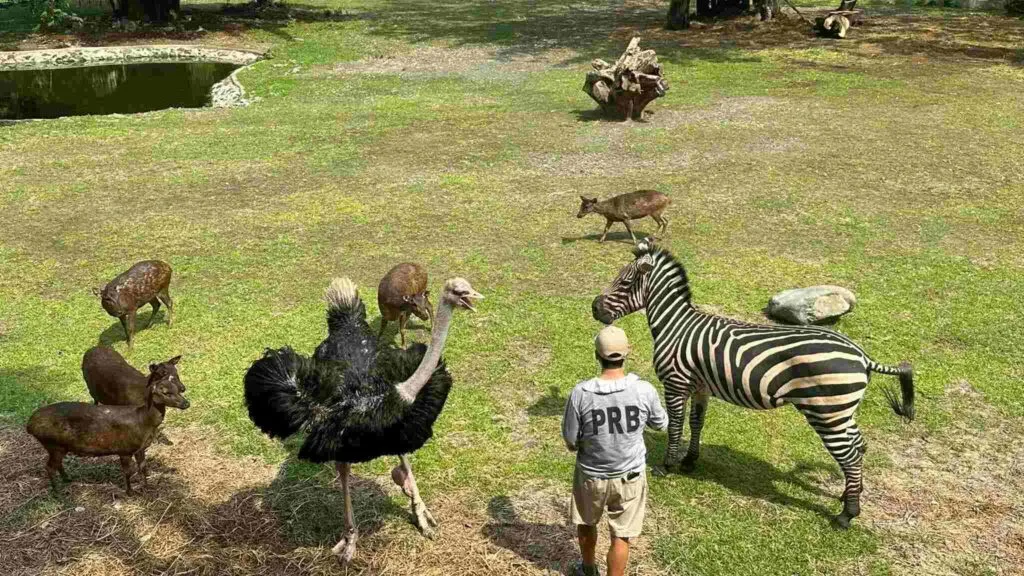
Near the reptile zone, look for the Hebra, a biological hybrid cross between a horse and a zebra. It’s a genuinely unusual animal that most visitors aren’t expecting, and it’s become a quiet crowd-pleaser. The open plains area nearby houses Philippine deer, ostriches, and ducks around a pond — one of the more relaxed sections of the zoo that’s good for slower-paced families.
Botanical Garden and Children’s Park
The Botanical Garden contains over 10,000 plants and serves as both a passive educational experience and a shaded walkway between enclosure zones. It’s genuinely lush for a city zoo. The Children’s Park has a playground situated near the primate enclosures. Children cannot use the play equipment unsupervised — a guardian must be present at all times, which is enforced. It’s a good energy-release stop after the animal sections.
If you want to compare this experience to Avilon Zoo, the difference comes down to scale and logistics. The Manila Zoo vs. Avilon Zoo choice is essentially proximity versus biodiversity: Manila Zoo is a city zoo you can reach by LRT in under an hour from most of Metro Manila, while Avilon in Rodriguez, Rizal, is a 7.5-hectare wildlife expedition that takes more travel time and physical stamina but offers a significantly larger animal collection. For families with very young children or limited mobility, Manila Zoo wins on convenience and accessibility.
For more options on indoor family attractions within Manila, the Space and Time Cube Museum in Pasay and Manila Ocean Park are both solid rainy-day alternatives worth considering.
Height Requirements for Rides at Manila Zoo
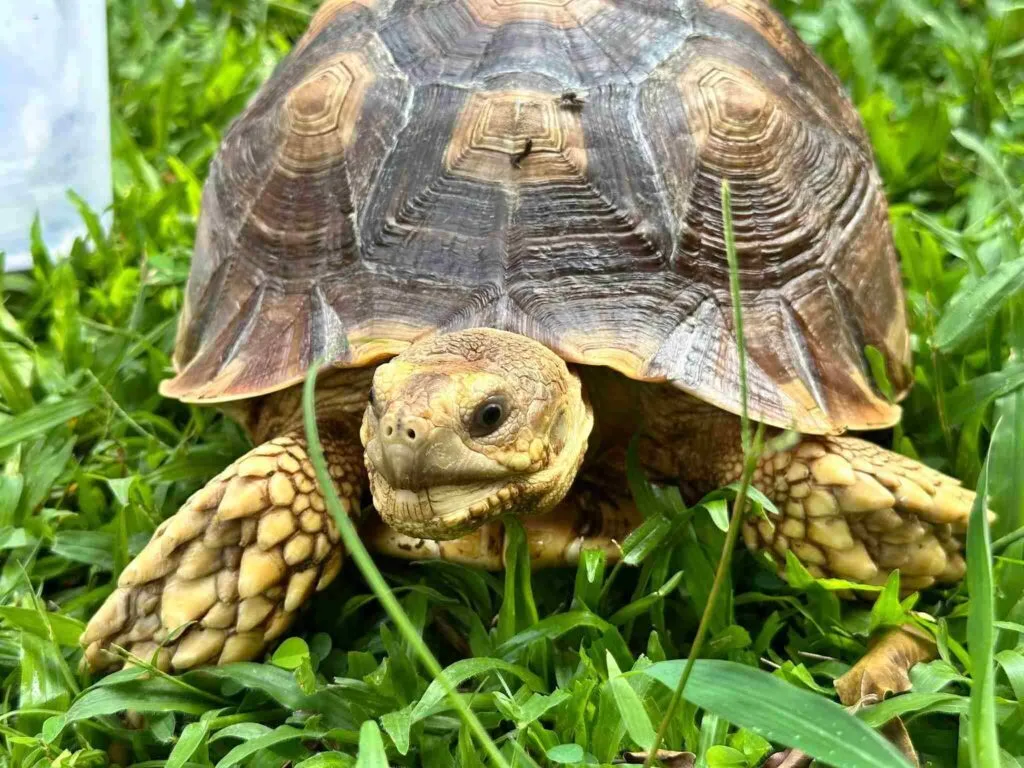
There are no minimum height requirements applicable to any attraction inside the premises. All animal viewing areas, the walk-through aviary, the Butterfly Garden, the Reptile House, and the Children’s Park playground are accessible to visitors of all ages and sizes.
| Attraction | Minimum Height | Notes |
|---|---|---|
| Animal Enclosures (all zones) | None | Open to all ages |
| Walk-Through Aviary | None | Suitable for strollers |
| Butterfly Garden | None | Staff-supervised area |
| Reptile House | None | Air-conditioned, all ages |
| Children’s Park Playground | None specified | Guardian must be present at all times |
Best Time to Visit Manila Zoo
The best time to visit Manila Zoo is on a Tuesday, Wednesday, or Thursday, arriving at 9:00 AM when the gates open. Weekday mornings have significantly shorter registration lines, cooler air, and more active animals compared to midday or weekend crowds. Saturday and Sunday mornings see the longest queues by a wide margin, particularly during school holidays and long weekends.
In terms of the calendar year, the Manila Zoo animals list and population remain consistent year-round since the zoo does not have seasonal closures. That said, wet season months from June through October bring afternoon thunderstorms that can make outdoor walking sections muddy and uncomfortable. If you’re visiting during rainy season, aim for a morning departure and pack a compact umbrella.
The afternoon window between 4:00 PM and 6:00 PM is actually excellent for photography — lower sun angle, reduced glare on the enclosure glass, and the big cats tend to be more active as the day cools down. Just factor in the 6:00 PM last entry cutoff.
How Long Do You Need at Manila Zoo?
Two to three hours is the comfortable minimum for most families, and three to four hours is realistic if you have young children who move at their own pace through each section. A half-day visit covers everything well without rush.
Sample time plan (9:00 AM arrival):
- 9:00 AM — Enter, proceed to big cat enclosures (best morning activity)
- 9:45 AM — Walk-Through Aviary and bird exhibits
- 10:30 AM — Reptile House (cool break)
- 11:00 AM — Open plains, Hebra, Philippine deer pond
- 11:30 AM — Botanical Garden and Butterfly Garden
- 12:00 PM — Children’s Park playground
- 12:30 PM — Lunch at the Food Park inside
- 1:30 PM — Exit or leisurely second loop
If you have a large group with elderly members or a toddler, add 45 minutes across the board. The flat, wide pathways throughout the zoo mean no one gets left behind physically — the entire facility is stroller and wheelchair accessible after the 2022 renovation.
Full Budget Breakdown for a Day at Manila Zoo
| Expense | Cost (PHP) |
|---|---|
| Entrance fee — non-resident adult | ₱300 per person |
| Entrance fee — Manila resident adult | ₱150 per person |
| Entrance fee — student (non-resident) | ₱200 per person |
| Entrance fee — senior/PWD (non-resident) | ₱240 per person |
| Child (2 years and below) | Free |
| Parking — private car | ₱50 |
| Parking — motorcycle | ₱30 |
| Food and drinks inside (Food Park) | Variable, no outside food allowed |
| LRT-1 fare (per person, approximate) | ₱15 to ₱30 |
| Tricycle from Quirino Station | ₱15 to ₱30 per ride |
| Stroller rental | Not available |
| Locker rental | Not available |
Realistic total for a family of four (2 non-resident adults + 2 children aged 3 to 10): Entrance fees alone come to ₱1,200. Add LRT fares (₱120 round-trip for two adults), plus food from the internal Food Park, and a full day realistically costs ₱1,600 to ₱2,200 for the whole group, depending on food spending. No locker or stroller rentals are available on-site, so factor that into your packing.
What to Bring to Manila Zoo
| Item | Needed? |
|---|---|
| Valid ID with Manila address (for resident rate) | Yes — mandatory for ₱150 rate |
| Senior/PWD ID | Yes — for 20% discount |
| Exact cash in small bills (₱20s, ₱50s, ₱100s) | Yes — kiosk machines give no change |
| Personal water tumbler (reusable) | Yes — allowed and encouraged |
| Sunscreen | Yes — strong tropical sun, limited shade |
| Compact umbrella | Yes — dual-purpose for rain and sun |
| Comfortable walking shoes | Yes — flat but considerable walking distance |
| Own stroller (if traveling with a toddler) | Yes — zoo paths are stroller-accessible, rental not available |
| Outside food or packed snacks | No — strictly prohibited, bag inspection at entrance |
| Outside bottled drinks | No — outside drinks are banned |
| Pets | No — strictly prohibited |
Tips and Rules for Visiting Manila Zoo
No outside food or drinks, with one exception. The prohibition on outside food is a hard rule enforced by security guards conducting bag inspections at the entrance. This includes baby snacks and packed lunches. The sole exception is personal reusable water tumblers — you can and should bring a filled Aquaflask or any insulated bottle because Manila heat is relentless and buying drinks inside adds up. All dining needs are met at the internal Food Park, which includes Beanleaf, the Aviary Cafe, and several other stalls and counters.
No touching or holding animals. The current zoo management enforces a strict “no touching, no holding” policy across all animal areas. Feeding the animals is categorically prohibited. This is a genuine conservation and health measure, not a suggestion. Some older blogs and travel aggregators still mention a petting zoo or feeding sessions from the pre-2019 closure era — that feature no longer exists.
Do not tap or bang the glass. You will see signs at every glass-fronted enclosure. Many visitors ignore them. Please don’t — the animals respond with stress, and your photo of a panicked animal isn’t a better photo anyway.
Book online for weekends. Walk-ins are accepted daily, but for Saturdays, Sundays, and public holidays, booking via the official Manila Zoo website using GCash or Maya skips the registration and kiosk queue entirely. The ticket price is the same either way — the payoff is purely time saved.
The new Manila Zoo review after renovation is consistently better on infrastructure than on animal density. The grounds, pathways, and enclosures are genuinely well-maintained. The animal collection is smaller than what the original zoo maps suggest — some exhibits shown on signage remain empty. Go with calibrated expectations and you’ll have a good visit.
What Other Guides Get Wrong About Manila Zoo
Most guides still write about Manila Zoo as if it has a petting zoo, animal feedings, or ride-based attractions. None of those exist. The petting zoo operated until 2019 and was permanently closed when the zoo shut down for renovation. The current management’s strict “no touching, no holding, no feeding” policy is official and comprehensive — no amount of asking will change it at the gate.
A second thing guides get consistently wrong: the kiosk payment system. Nearly every listicle says “bring cash.” That’s partially right, but the critical detail they miss is that the kiosks do not dispense change. If you’re a non-resident buying a ₱300 ticket and you insert a ₱500 bill, you get a ₱300 ticket and ₱0 back. The actual advice is to bring exact denominations or book online.
Third: the zoo maps available inside (and photos circulating online) still show a hippopotamus enclosure and an elephant habitat. Queen Bertha the hippo died in 2017. Mali the elephant passed away in November 2023. Her taxidermied remains were placed on display near the entrance in December 2024 as a memorial — a decision that remains controversial. There are no live hippos or elephants at Manila Zoo currently.
Frequently Asked Questions About Manila Zoo
How much is the entrance fee at Manila Zoo for non-residents and students?
Non-resident adults and children aged three and above pay ₱300 each. Non-resident students pay ₱200. Manila residents pay ₱150 for adults and ₱100 for students, upon presenting a valid ID with a Manila address. Children two years old and below enter free regardless of residency.
Is walk-in allowed at Manila Zoo or do you need to book tickets online in advance?
Walk-in is allowed every day of the week. You purchase your ticket at the automated kiosk machines near the entrance using exact cash. Online booking through the official Manila Zoo website is not required, but it is recommended for weekend and holiday visits because it lets you skip the registration queue entirely. Accepted online payment methods are GCash and Maya. The ticket price is the same whether you book online or walk in.
What time does Manila Zoo close and what is the last entry time?
The zoo closes at 8:00 PM daily. The last entry allowed is 6:00 PM, two hours before closing. On Mondays, the zoo opens at 11:00 AM instead of 9:00 AM due to maintenance. On other days (Tuesday to Sunday) and on public holidays, it opens at 9:00 AM. If a public holiday falls on a Monday, the 11:00 AM opening applies.
Can you bring food inside Manila Zoo?
No. The Manila Zoo enforces a blanket ban on all outside food and bottled drinks. Security guards conduct bag inspections at the entrance, and you will be asked to leave food behind or eat it outside before entering. This policy applies to everyone, including families with young children. The only exception is personal reusable water tumblers, which are permitted and encouraged. All food and drink purchases must be made at the internal Food Park, which has multiple stalls and cafes inside the grounds.
What animals can you see at the new Manila Zoo after its renovation?
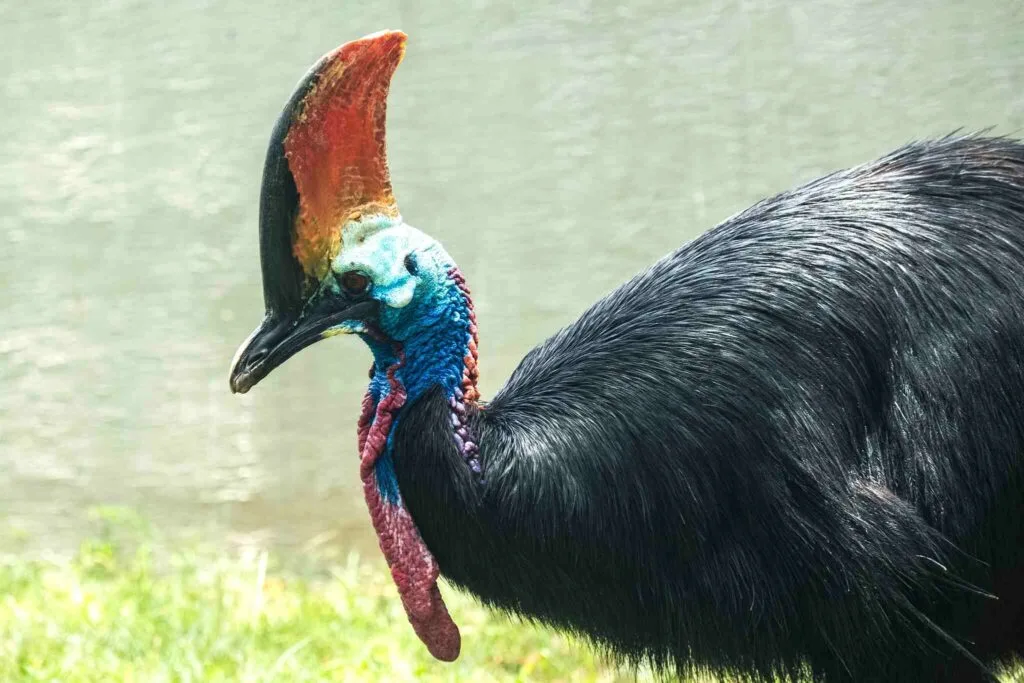
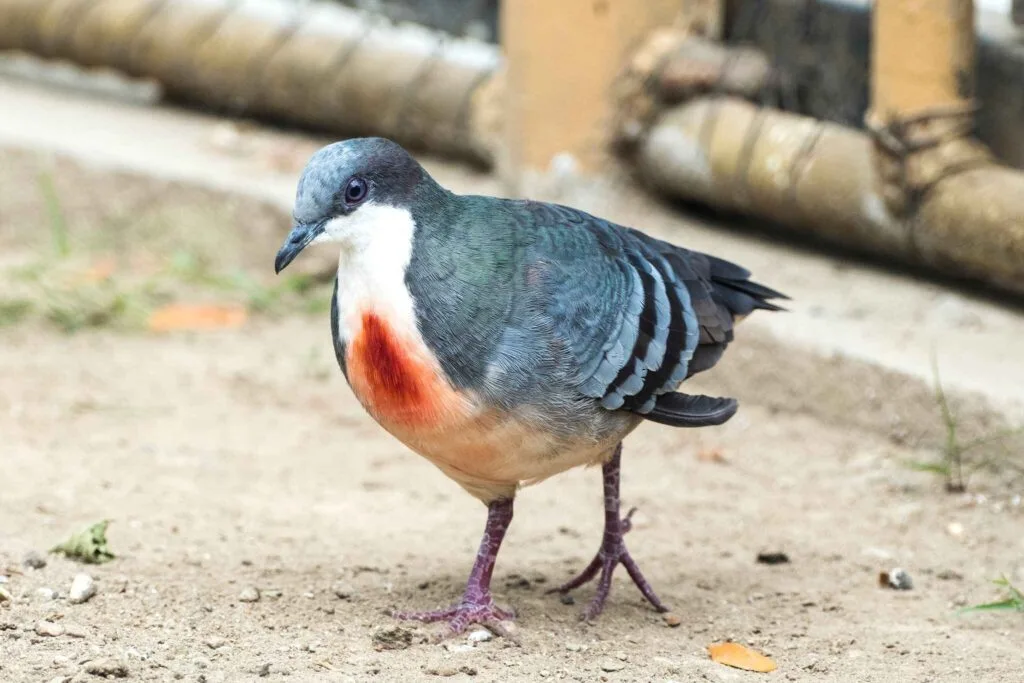
The post-renovation Manila Zoo animals list includes the White Siberian Tiger Kois, Bengal tigers, African lions, Brahminy Kites, Philippine Serpent Eagles, Burmese Albino Pythons, monitor lizards, crocodiles, Philippine deer, ostriches, peacocks and peahens, double-wattled cassowaries, toucans, macaws, and cockatoos, and various primates. The Botanical Garden houses over 10,000 plants, and the Butterfly Garden is a separate stop with live butterflies and chrysalis displays. Note that some exhibits shown on the zoo map — including hippopotamus and hyena enclosures — are currently empty.
Final Verdict: Is Manila Zoo Worth Visiting?
Manila Zoo is worth visiting as a budget-friendly, half-day family outing in Manila, rating 3.5 out of 5 for families with children aged three to twelve, and a 2.5 out of 5 for adults expecting a wildlife-dense experience comparable to international zoos or even Avilon Zoo in Rizal. The renovated grounds are genuinely clean and accessible, the big cat glass enclosures deliver real face-to-face moments, and the price point — especially for Manila residents — is hard to argue with. Just go in knowing that Manila Zoo is a compact city zoo with an honest handful of highlights, not a sprawling wildlife sanctuary, and you’ll leave satisfied rather than disappointed.
For more city-based family activities to round out your Manila trip, check out this guide to Star City and other amusement options in Manila and the best things to do in Quiapo and around Manila.