
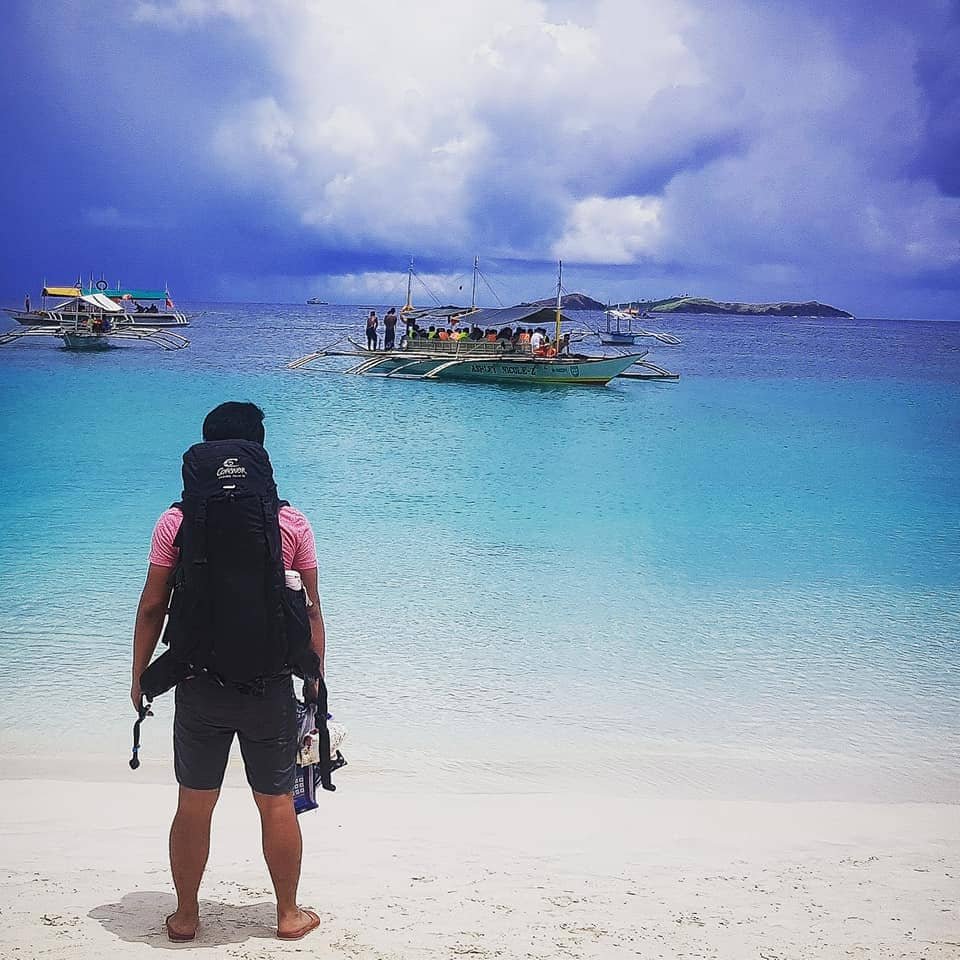
Calaguas Island is a white-sand beach destination in Camarines Norte, Bicol, and the main beach most travelers visit is Mahabang Buhangin on Tinaga Island, a 1.27-kilometer stretch of pale sand facing the Philippine Sea. To get to Calaguas Island from Manila, you take an overnight bus to Camarines Norte, ride a jeepney or van to either Paracale Fish Port or Vinzons Minaogan Port, then cross by outrigger boat to the island, a journey that takes between 12 and 15 hours door to beach on a good day.
I have been covering Philippine beaches and islands since 2015, now across 69 of 82 provinces, and Calaguas is one I keep coming back to because it keeps changing. My most recent visit was May 2026, and what I found was meaningfully different from what the older posts describe. The island is no longer a rough backpacker secret. It has resorts, organized camping zones, a new hospital, Starlink Wi-Fi at some stores, and a strict cooperative that controls boat rates. None of that is bad, but it matters to your planning.
This guide is built around the 2026 version of the trip, not the one from five years ago.
Key Takeaways
- Getting there takes 12 to 15 hours from Manila, combining an overnight bus (7.5 to 11 hours) and a boat crossing from Paracale (1.5 to 2.5 hours) or Vinzons (2.5 to 3 hours).
- A 2D1N joiner tour from Manila costs ₱3,499 to ₱3,999 per person, all-in including bus, boat, tent, and three meals. DIY for a group of six runs ₱2,820 to ₱3,970 per person.
- The safest months for the boat crossing are November through May (amihan season). Most operators suspend trips from June through September when habagat swells make the open-sea crossing unreliable or unsafe.
- Bring enough cash for the whole trip. There is no ATM on the island, and mobile signal on the beachfront is too weak for e-wallet transactions.
- The ₱20 barangay environmental fee and ₱100 to ₱150 campsite entrance fee are paid on arrival, separate from your tour package or boat fare.
- Calaguas is not suited to travelers who need comfort, strong internet, or a predictable schedule. Weather can cancel your boat with no warning, and facilities are basic even at the premium resorts.
Table of Contents
Where Calaguas Island Is Located
Calaguas Island refers to the Calaguas island group in the Philippine Sea, off the northeastern coast of Camarines Norte in the Bicol Region. The group has 17 islands and islets. The main landmass is Tinaga Island, and the main tourism beach on Tinaga is Mahabang Buhangin, also called Halabang Baybay.
For travel planning, three mainland towns matter. Daet is the provincial capital where most buses stop and where travelers stock up on supplies or stay the night. Paracale is a working fishing town 28 kilometers from the islands and the shorter jump-off point. Vinzons is the formalized tourism gateway through Minaogan Port or Pajares Port.
The access chain is: Manila to Camarines Norte by bus, then a van or jeepney to the port, then an outrigger boat to the island. There is no shortcut in that sequence.
Is Calaguas Island Worth It in 2026?
Calaguas Island is worth visiting if you want a long white-sand beach in Bicol with clear water, camping, and an island-trip atmosphere that still feels farther and more involved than Batangas or Quezon beach runs. It is not worth it if you expect polished resort comfort, reliable internet, or a quick getaway.
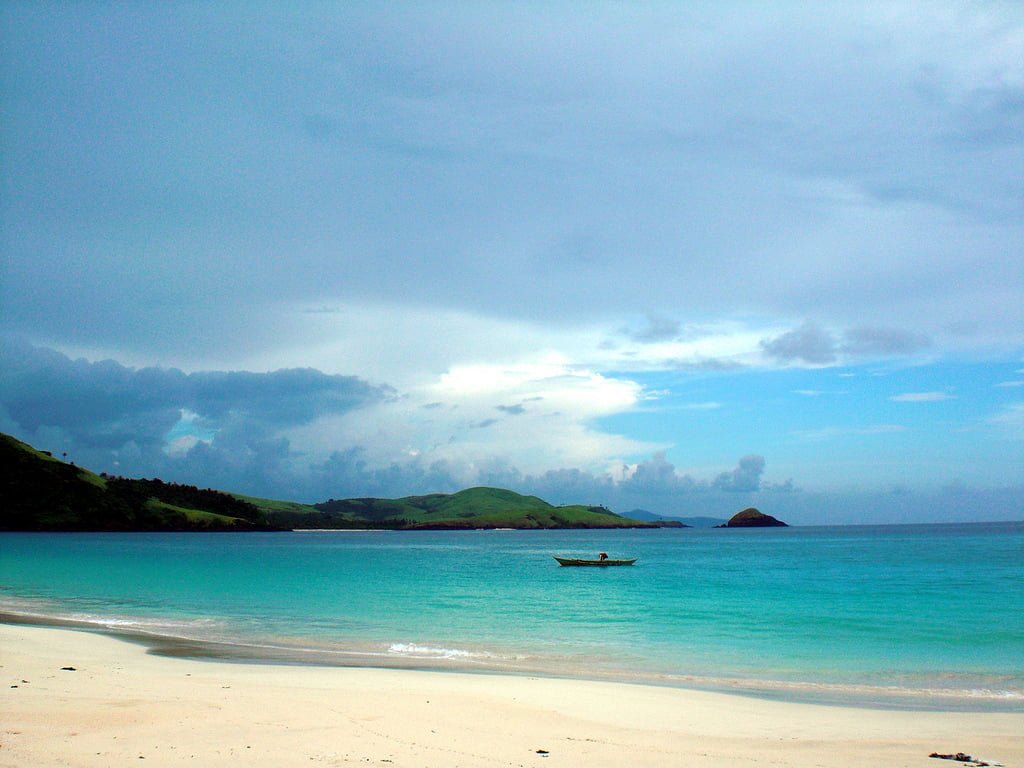
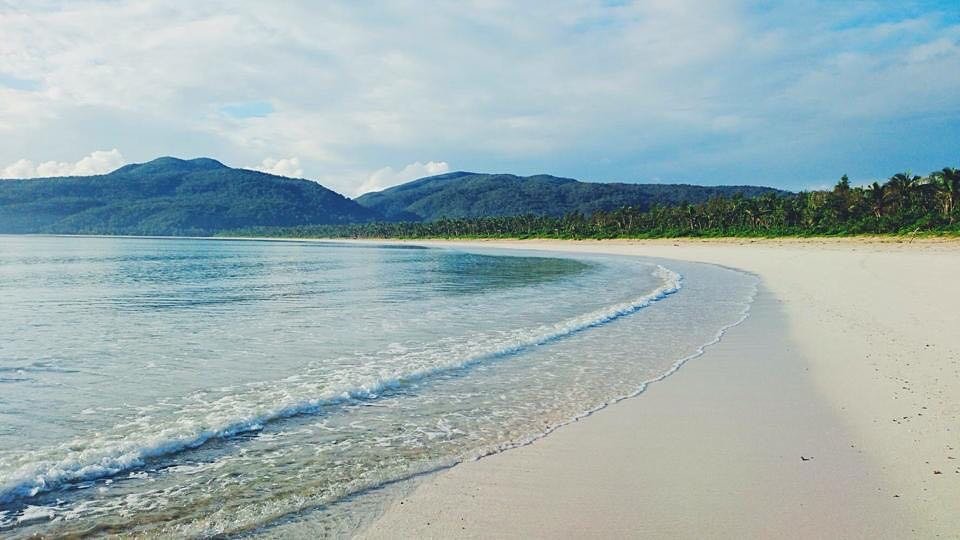
The beach itself, Mahabang Buhangin, is genuinely wide and photogenic. The water turns a clean blue-green in good weather. The boat crossing across open Philippine Sea water is part of the experience, not just a transfer. And the island’s relative difficulty of access has kept it from becoming Boracay, which famously had to be shut down for six months in 2018 for rehabilitation.
What the old “hidden paradise” posts do not tell you: in May 2026, the beachfront had organized resort areas, tent zones, paid shower stations, and sari-sari stores with posted rates. You will not be alone on the sand. On summer weekends and holidays, you will be sharing it with a lot of people. Weekdays are noticeably quieter. I would rate this among the more physically demanding beach trips I have made from Manila, comparable in effort to Cagbalete Island in Mauban but with a longer sea crossing and weaker facilities.
That is not a reason to skip it. It is a reason to go with the right expectations.
Budget and Costs for a Calaguas Island Trip
A 2D1N joiner tour from Manila costs ₱3,499 to ₱3,999 per person and covers the overnight bus or van from Manila, boat transfer, dome tent for two nights (4- to 5-person tents shared), and three hosted meals on the island. If you meet the operator at Vinzons Port instead of joining from Manila, the same package runs ₱2,499 to ₱2,799 per person.
DIY costs for a group of six, splitting a private boat, work out to roughly ₱2,820 to ₱3,970 per person for 2D1N including bus, boat share, tent pitching fee or rental, and food. The variable is how much you spend at the market before departure.
| Expense | DIY (Group of 6) | Joiner (Vinzons meet-up) | Joiner (Manila departure) |
|---|---|---|---|
| Bus Manila to Daet/Port (round trip) | ₱1,200 to ₱1,600 | Not included | Included |
| Local port transfers | ₱100 to ₱300 | Not included | Included |
| Boat charter (round trip, split) | ₱500 to ₱600 | Included | Included |
| Accommodation (tent pitch or rental) | ₱100 to ₱300 | Included | Included |
| Food and water supplies | ₱500 to ₱800 | Included (3 meals) | Included (3 meals) |
| Environmental and camp fees | ₱170 (see below) | Included | Included |
| Island hopping (optional) | ₱250 split | Usually extra | Usually extra |
| Estimated total | ₱2,820 to ₱3,970 | ₱2,499 to ₱2,799 | ₱3,499 to ₱3,999 |
On-island micro-costs that catch first-timers off guard: fresh water for showering is sold separately, at ₱10 per bucket or ₱50 for unlimited manual pump access. Restroom use at shared or public facilities is ₱20 per use. Charging your phone or power bank at a sari-sari store costs ₱50 per device, available only during generator hours (6:00 PM to 6:00 AM). A local guide for hill trekking charges ₱50 per person. Clear kayak rentals run ₱300 per 30 minutes.
The island is cash-only from port to beach. There is no ATM on Tinaga Island and the mobile signal on the main beachfront is too weak for GCash or PayMaya to process reliably. In May 2026, the stores near the camping area had posted rates on chalkboards, which helped, but none of them accepted digital payment. Bring more cash than you think you need.
Fees You Pay on Arrival at Calaguas Island
Every visitor pays a ₱20 barangay environmental fee upon arriving at Mahabang Buhangin. If you are camping or using a campsite area rather than staying in a resort room, you also pay a ₱100 to ₱150 campsite entrance fee. These fees are collected at the beach registration point and are separate from anything your tour package has already covered. Joiner packages typically include both, but confirm this when you book.
The viewpoint trails also charge small toll fees because they pass through private land. The lower “Mababa” trail is ₱20 per person and the higher “Mataas” trail is ₱60 per person.

How to Get to Calaguas Island from Manila
To get to Calaguas Island from Manila, take an overnight bus from Cubao, Pasay, Alabang, or PITX to Camarines Norte, then ride a van or jeepney to Paracale or Vinzons port, then board an outrigger boat to Tinaga Island. The total travel time from Manila to the beach is 12 to 15 hours.
Step 1: Manila to Camarines Norte by Bus
Overnight departures between 7:00 PM and 10:00 PM are the practical choice because they put you at the port in the early morning, aligned with boat departure windows before afternoon swells build.
| Operator | Terminals | Travel Time | Notes |
|---|---|---|---|
| Superlines | Cubao, Alabang, PITX | 7.5 to 8.5 hours | Has direct routes toward Paracale; check current fares at the terminal |
| DLTB | Cubao, Pasay, PITX | 8.5 to 11 hours | Direct to Daet; check current fares at the terminal |
| Philtranco / Amihan | Pasay, PITX | 8.5 to 11 hours | Useful alternative; check current fares at the terminal |
| Non-aircon bus | Cubao, Pasay | 8.5 to 11 hours | ₱300 to ₱400, budget option |
| Jam Liner (indirect) | Cubao, Pasay to Lucena | Around 8.5 hours total | Requires transfer in Lucena |
Bus fares for Superlines and DLTB shift with fuel surcharges and seasonal demand. The figures that circulated in older posts are no longer accurate. Check the posted rate at the terminal counter or call the bus line before you buy.
An alternative for those who want to cut total travel time: fly from NAIA or Clark to Naga Airport (WNP) or Bicol International Airport (DRP), about one hour in the air, then take a passenger van or bus from Naga City to Daet, roughly two to three hours. Total door-to-port time drops to around five to seven hours, though the flight adds cost.
Step 2: Camarines Norte to the Port
If you are heading to Paracale Fish Port, the most efficient option when taking Superlines is to disembark at Talobatib Junction in Labo, which saves you from going all the way to Daet and backtracking. From Daet, a passenger van to Paracale costs ₱50 to ₱150. The ride is around 45 minutes to an hour.
If you are using Vinzons Minaogan Port or Pajares Port, you ride a jeepney or tricycle from Daet, about 20 to 30 minutes, for ₱10 to ₱150 depending on the mode.
Step 3: The Boat to Tinaga Island
This is where the trip becomes genuinely adventure-level. The sea between the port and Tinaga is open Philippine Sea, and conditions change fast.
From Paracale, the crossing takes 1.5 to 2.5 hours depending on sea conditions. From Vinzons, it takes 2.5 to 3 hours.
Boat rates are controlled by the Paracale cooperative, which standardized fares and runs a queuing system for captains. This ended the old practice of passengers hitching on fishing vessels for a fraction of the cost, but it also means rates are consistent.
| Vessel Capacity | 2026 Charter Rate (Round Trip) | Best For |
|---|---|---|
| Small outrigger (1 to 4 pax) | ₱2,500 to ₱3,000 | Solo travelers, couples |
| Medium outrigger (5 to 7 pax) | ₱4,000 | Small barkadas |
| Large outrigger (8 to 10 pax) | ₱6,000 | Medium groups |
| Extra large (11 to 15 pax) | ₱8,000 | Larger joiner groups |
| Commercial size (16 to 21+ pax) | ₱12,000 to ₱15,000 | Corporate groups, large tours |
Overnight vehicle parking at the port averages ₱200.
Coast Guard clearance is required before departure. If PAGASA issues a gale warning, the Coast Guard will not release boats. This happens more often than people expect, especially during transition months. Always check PAGASA and the Coast Guard advisory the day before you travel, and have a contingency plan if the boat does not leave.
Bring a dry bag or waterproof cover for electronics, documents, and anything you cannot afford to wet. Sea spray reaches the interior of the boat even in calm weather.
Best Month to Visit Calaguas Island
The best months to visit Calaguas Island are November through May, when amihan (northeast monsoon) brings drier weather and calmer seas. February to April are peak beach months, with the clearest water and most reliable boat conditions. March to May also draws the biggest crowds, especially during Holy Week and summer long weekends.
The habagat season, roughly June through September, brings southwest monsoon swells that make the open-sea crossing to Calaguas unpredictable. Most tour operators suspend regular trips during habagat. Individual months vary year to year, and a strong typhoon can close the island at any point in the calendar, but June through September carries consistently higher cancellation risk. If you are planning a trip in October, the tail end of habagat, confirm with your operator or the port whether boats are running before you book anything.
For quieter visits during the amihan season, go on weekdays in February or early March. The beach on a Tuesday in February looks very different from the same beach on Easter Sunday.
| Season | Months | Boat Conditions | Crowd Level |
|---|---|---|---|
| Amihan (best) | November to May | Generally calm, reliable | Low to very high (peaks March to May) |
| Habagat (avoid) | June to September | Frequent swells, trips often suspended | Very low (operators may not run) |
| Transition | October | Variable, check before going | Low |
What Arrival at Calaguas Island Is Actually Like
The first view of Tinaga Island from the water is one of the genuinely good moments of the trip. After a night on a bus and a long boat crossing, the pale sand of Mahabang Buhangin appearing from a distance still lands well. That moment is worth the journey.
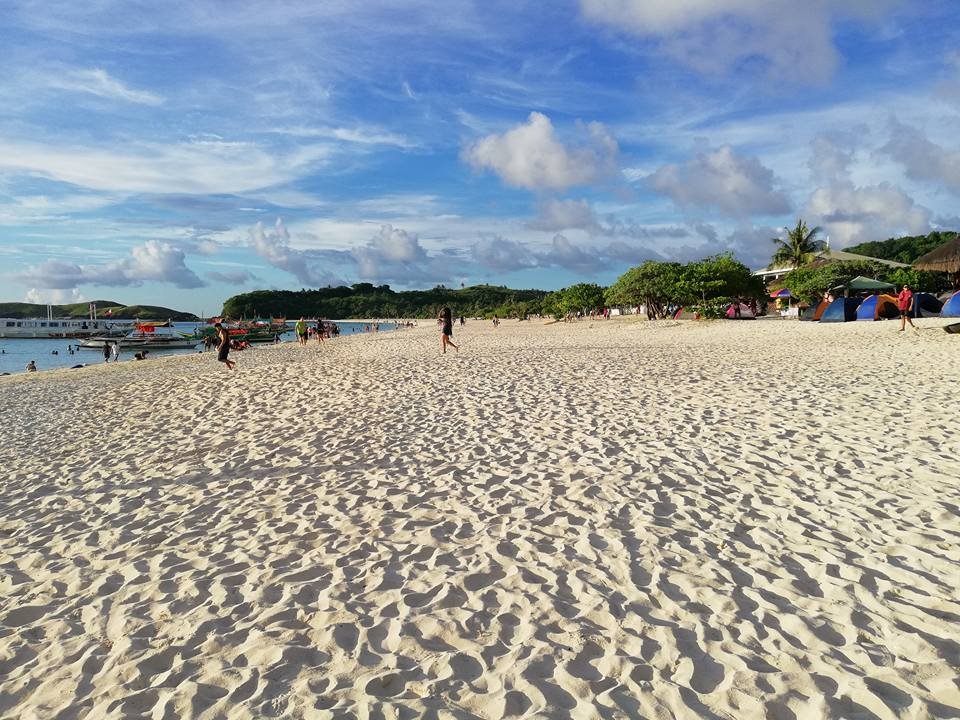
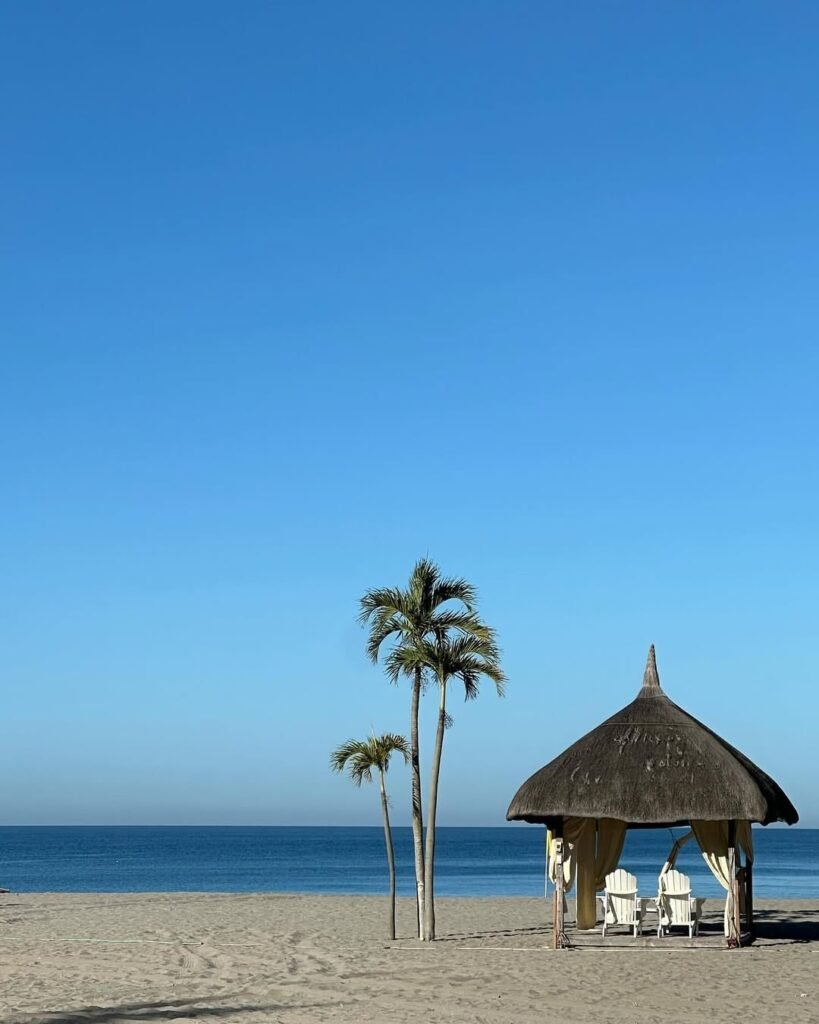
What you see when you get closer is more organized than the old photos suggest. There are resort structures, campsite rows, and registered boats lined up along the shore. In May 2026, I counted more than a dozen tent clusters visible from the beach waterline on a weekday, which I was not expecting mid-week. Peak season and long weekends push that number much higher.
The sand at Mahabang Buhangin is light-colored and soft underfoot in most sections. The water is clear and swimmable in the main cove when conditions are calm. Swimming is best in the morning and late afternoon. Midday is very hot, particularly in summer, and the glare off the water makes the beach less enjoyable than it looks in photos taken at golden hour.
There are no formal municipal lifeguards on the beach. Families with small children and non-swimmers should stay in the shallow section of the cove. Calaguas faces the open Philippine Sea, and conditions inside the cove can still shift.
The beach is longer than most people realize at 1.27 kilometers, which means even on a busy day you can walk far enough in either direction to find quieter sections.
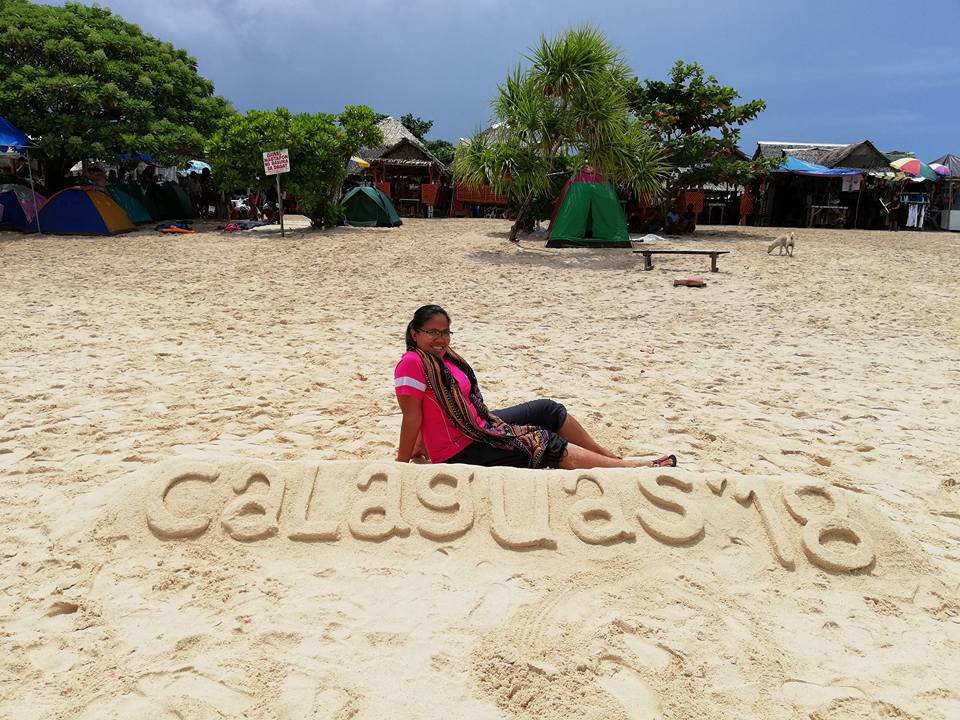
Tents are no longer pitched at the tidal line. Local ordinances now require tents to be placed in designated zones set back from the high-tide mark, which has reduced erosion and kept the beachfront cleaner.
Island Hopping Around Calaguas
Island hopping is a separate activity from the main Tinaga Island stay, and the cost is not included in most standard 2D1N packages. A private boat for island hopping costs around ₱1,500 per boat, which splits to roughly ₱250 per person for a group of six.
The main islands worth the trip are:
Balagbag Island is a 20-minute boat ride from Mahabang Buhangin. It has dramatic rock formations, cliff viewpoints, and some rustic cottage structures that were never finished. There is a ₱50 private entrance fee paid on arrival. It is photogenic but undeveloped, which is part of the appeal.
Maculabo Island is administered separately by Paracale and is the better option for snorkeling. The reef here is healthier than the sections closest to Mahabang Buhangin, where boat traffic has pushed fish populations to deeper water. Experienced local fishermen on the island will tell you that catches close to the reef are now about thirty percent of what they were a decade ago, a direct result of the increase in motorized boat traffic.
The Pinagtigasan Marine Sanctuary near Tinaga Island has reached Level 3 enforcement, meaning the protected area is actively policed. Swimming and snorkeling within the sanctuary boundaries are permitted under supervision, but fishing and extraction are not.
If you want to do island hopping, it works best on Day 1 in the early afternoon after lunch, before the wind picks up. The standard joiner itinerary slots this from 3:00 PM to 5:00 PM, which is workable but tight. Book the island hopping boat the moment you arrive at Mahabang Buhangin.
For a broader picture of what the Bicol region offers beyond the island, the 14 must-visit Bicol tourist spots guide covers the province beyond Camarines Norte.
Where to Stay in Calaguas Island
Calaguas Island has a tiered accommodation system now, from DIY camping to off-grid resort rooms. All electricity comes from a shared generator that runs from 6:00 PM to 6:00 AM. Air-conditioning is unavailable during the day regardless of what a room is called.
DIY camping is the cheapest option. Bring your own tent and pay the ₱100 to ₱150 campsite pitching fee. Renting a 4- to 5-person dome tent from a resort operator costs ₱300 to ₱500 per night. Joiner tours typically provide dome tents at no extra cost. If you want a private 2-person tent setup instead of the standard shared dome, some operators charge an additional ₱300 per person.
Mid-range cabanas offer shade and natural ventilation. I Love Calaguas Island Resort has open cabanas (good for 5 people) at roughly ₱3,500 per night and closed cabanas at ₱4,500 per night. Kagedama Agri-Beach Resort and Calaguas Paradise Resort are also in this tier. These are native-material structures, ventilated but not air-conditioned during daytime.
Off-grid luxury at Waling-Waling Eco Village and Calaguas White Sand Resort sits at the top end. AC cabanas at Waling-Waling start at around ₱3,500 per night. Calaguas White Sand Resort runs curated packages and has also introduced workation packages for extended stays.
Calaguas White Sand Resort’s workation packages are per head and include round-trip boat transfers, meals, and environmental fees:
| Duration | Non-AC Cabana | Premium AC Room | Deluxe Sunset AC Suite |
|---|---|---|---|
| 5 Days / 4 Nights | ₱17,700 | ₱19,500 | ₱20,500 |
| 6 Days / 5 Nights | ₱21,700 | ₱23,500 | ₱24,500 |
| 7 Days / 6 Nights | ₱25,700 | ₱27,500 | ₱28,500 |
| 8 Days / 7 Nights | ₱29,700 | ₱31,500 | ₱32,500 |
| 10 Days / 9 Nights | ₱37,700 | ₱39,500 | ₱40,500 |
Workation guests get 8 hours of daily internet, a dedicated workspace, and scheduled plated meals rather than buffet-only service. Starlink Wi-Fi is available at some stores and mid-tier resorts at around ₱100 per 1.5 hours for a 5 Mbps connection. This is usable for messaging and light browsing, not for video calls or large uploads.
Whatever you book, confirm generator hours, what is included in the package, and whether the rate covers the environmental fees. These details are not always clear on booking pages.
Food, Water, Power, and Signal on the Island
Food on the island is sold by resort canteens and sari-sari stores. Joiner packages include three hosted meals, typically Filipino comfort food like Bicol Express, grilled squid, and steamed crab. DIY travelers should buy provisions at the Daet or Paracale market before boarding the boat. Estimated market prices: chicken at ₱150 per kilo, pork at ₱200 per kilo, rice at ₱40 per kilo.
Fresh water for showering is sold separately everywhere on the island. The rate is ₱10 per bucket or ₱50 for unlimited manual pump access. This is not a surprise fee at one resort, it is the island-wide reality because natural aquifers are limited.
Power runs on a diesel generator, currently being transitioned to a diesel-solar-battery hybrid under the National Power Corporation’s Small Power Utilities Group program. The existing plant capacity runs between 0.333 MW and 0.483 MW. Generator hours are 6:00 PM to 6:00 AM. Plan your device charging, fan use, and any AC around those hours.
Mobile signal on the main beachfront is effectively zero for most networks. You will find weak signal in some inland barangay areas, but do not count on it for anything practical. Tell people at home when you are leaving the port and when you expect to be back on the mainland.
Calaguas Island 2D1N Sample Itinerary
A 3D2N trip is better if you can manage the schedule, because the 12 to 15-hour journey from Manila is a lot to absorb in exchange for a single full day on the beach. But 2D1N is the minimum most people do, and this is how the standard joiner schedule looks in 2026:
| Time | Activity |
|---|---|
| Day 0, 7:00 PM to 10:00 PM | Board overnight bus or van from Manila (Cubao or Pasay) |
| Day 1, 5:30 to 6:00 AM | Arrive at Vinzons or Paracale Port, eat breakfast, final supply run |
| Day 1, 7:00 to 9:00 AM | Board outrigger, cross to Tinaga Island (2 to 2.5 hours) |
| Day 1, 9:30 to 10:00 AM | Arrive Mahabang Buhangin, pay fees, set up camp |
| Day 1, 12:00 to 1:00 PM | Lunch (hosted or DIY) |
| Day 1, 3:00 to 5:00 PM | Island hopping (Balagbag) or kayaking |
| Day 1, 5:45 to 7:00 PM | Sunset, dinner, generator activates at 6:00 PM |
| Day 2, 4:30 to 6:00 AM | Wake up, trek to hilltop viewpoint for sunrise |
| Day 2, 7:00 to 9:00 AM | Breakfast, free beach time, photography |
| Day 2, 10:30 AM to 12:30 PM | Break camp, board return boat |
| Day 2, 1:00 to 6:30 PM | Wash up at port, optional side trip to Daet or Bagasbas, depart Manila |
For the viewpoint treks: the lower Mababa trail costs ₱20 per person and takes 15 to 20 minutes to the top. The higher Mataas trail costs ₱60 per person. Both pass through private land. Going before sunrise is worth it because the heat on the way up at midday is punishing, and the view at dawn over Mahabang Buhangin and the surrounding islets is one of the better payoffs of the trip.
DIY Calaguas Island Trip vs Joiner Tour: Which Is Better?
A joiner tour is better for first-timers, solo travelers, and couples. The logistics of negotiating a boat, arranging provisions, carrying a tent, and managing the timing at port are genuinely complicated the first time, and the price difference between a joiner and DIY is not large enough to justify the stress unless you have a group to split costs.
DIY is better for barkadas of six or more, or for repeat visitors who know what to expect. A private boat for 8 to 10 people at ₱6,000 splits to ₱600 to ₱750 per person round trip. If you buy your own food at Daet market and bring your own tent, the per-person total drops well below what a joiner costs, and you control your own schedule on the island.
The single most important thing to know about both options: the boat cooperative’s queuing system means you cannot just show up at Paracale and expect a boat immediately. For DIY trips, arrange the boat contact ahead of time, either through a resort on the island or a trusted contact at the port. For joiner tours, this is handled for you.
Who Should Skip Calaguas Island
Calaguas is not suited to everyone. If any of the following apply to you, there are better beach options in the Philippines.
Travelers with limited mobility will find the boat crossing, tent camping, and unpaved paths around the beach difficult. Families with very young children should weigh the medical evacuation reality carefully, even with the new hospital open. Anyone who cannot tolerate being offline for 24 to 48 hours will find the trip frustrating rather than restful.
People on tight or inflexible schedules should also think carefully. Weather delays are real. I have seen boats held at port for an extra half day because Coast Guard clearance was delayed by wind conditions. If you have a flight or a Monday morning meeting, build buffer into your itinerary.
The most beautiful beaches in the Philippines covers destinations across the full comfort and accessibility spectrum if you want to compare options before deciding.
Final Verdict: Is Calaguas Island Still Worth Visiting?
Calaguas Island is worth visiting if you know what you are signing up for. The beach at Mahabang Buhangin is one of the longest and most photogenic white-sand stretches in Bicol, the boat crossing feels like a real journey, and the island’s relative difficulty of access has kept it from being destroyed by its own popularity.
In May 2026, I found it more organized and more developed than I expected based on older coverage, but not worse for it. The new hospital alone changes the trip calculus for families. The roads being paved. Starlink in the stores. These are not signs of a destination losing its character; they are signs of a destination trying to survive long-term.
What has not changed: you still need a full day just to get there, cash for everything, and a tolerance for basic facilities and unpredictable weather. The people who get the most out of Calaguas are the ones who treat the journey as part of the experience and arrive without expecting Boracay.
If you want a scenic, off-grid island trip with a real adventure feel and you are prepared to handle the logistics, Calaguas delivers. If you want a beach you can get to by 10 AM on a Saturday, this is not that trip.
Frequently Asked Questions About Calaguas Island
How long does it take to get to Calaguas Island from Manila?
Getting to Calaguas Island from Manila takes 12 to 15 hours total, depending on which port you use and how fast the overnight bus runs. The bus from Manila to Camarines Norte takes 7.5 to 11 hours. From Paracale, the boat crossing is 1.5 to 2.5 hours. From Vinzons, it is 2.5 to 3 hours.
What is the best month to visit Calaguas Island?
The best months to visit Calaguas Island are February through April, when amihan season brings calm seas and good beach weather. March to May are the busiest months. June through September is habagat season, when most boat operators suspend trips because of Pacific swells. If you are visiting in October, confirm with your operator before booking because conditions in that month vary year to year.
How much does a trip to Calaguas Island cost?
A 2D1N joiner tour from Manila costs ₱3,499 to ₱3,999 per person, covering bus, boat, tent, and three meals. A joiner from Vinzons Port runs ₱2,499 to ₱2,799. A DIY trip for a group of six costs roughly ₱2,820 to ₱3,970 per person including transport, boat share, and food. Budget extra cash for on-island fees: ₱20 environmental fee, ₱100 to ₱150 campsite fee, ₱20 per restroom use, ₱10 per shower bucket, and ₱50 per device for charging.
Can you do Calaguas Island as a day trip?
Technically possible but not practical. The boat crossing from Paracale alone takes 1.5 to 2.5 hours each way, which eats most of a short day and leaves almost no time on the beach. Overnight is the minimum that makes the journey worthwhile. A 3D2N stay is better.
Is there ATM or Wi-Fi on Calaguas Island?
There is no ATM on Tinaga Island. Bring all the cash you need before leaving the mainland. Mobile signal on the main beachfront is too weak for reliable e-wallet transactions. Starlink Wi-Fi is available at some sari-sari stores and mid-tier resorts at around ₱100 per 1.5 hours for a 5 Mbps connection, usable for basic browsing but not video calls.
What can you do besides swimming at Calaguas Island?
Beyond swimming, you can trek to the hilltop viewpoints (Mababa trail at ₱20 or Mataas trail at ₱60 per person), go island hopping to Balagbag Island (₱50 entrance fee, 20-minute boat ride) or Maculabo Island for snorkeling, rent a clear kayak at ₱300 per 30 minutes, and hike 15 minutes inland to Barangay Mangcawayan to see how people actually live on the island.
What is the difference between Paracale and Vinzons as departure ports?
Paracale Fish Port is closer to the Calaguas group (28 kilometers away) and gives you the shorter boat ride of 1.5 to 2.5 hours. It has a more local, working-port feel and is used by DIY groups and private charters. Vinzons Minaogan Port is the formalized tourism gateway, preferred by organized tour operators. The boat ride from Vinzons is 2.5 to 3 hours. Both ports require Coast Guard clearance before departure.

thanks
If someone tries to fly to Naga he should be prepared to waste two days of his valuable time and spend overnight in Daet. You should stress that to foreigners like me, not leave it outside…
Anyways, taking the exhausting 9h bus trip is a one way necessity… congratulations to your National Tourism Officials!!!!