About the Authors
This article was written by students of the College of Hospitality and Tourism Management, Bulacan State University, Malolos Campus, as part of their feature on LakbayPinas.
Authors and Photographers
- Ashly M. Alejo
- Ana Veronica M. Angcog
- Kaetrix S. Consigna
- Pauline A. Cristobal
- Ma. Antonette P. Galvez
Authors
- John Harry A. Bayani
- Gemailen B. Quiao
- Algerome Y. Uy
Diocesan Shrine and Parish of Saint Augustine
Can you find faith, history, and flavors just steps away from one another? Baliwag has them all together, just waiting to be discovered.
As the sun greets the town of Baliwag, the park is already busy and lively. In the distance stands the centuries-old Diocesan Shrine and Parish of Saint Augustine, located along Plaza Naning in Poblacion, Baliwag. The streets are filled with the beeping of cars and conversations. But as we step inside, the atmosphere changes. The noise of the town fades into a peaceful silence, where only the heart and mind are left to speak.
We had traveled from BulSU Main in Malolos that morning, riding a jeepney to Tabang in Guiguinto for ₱15—₱17 without the student discount—which took about thirty minutes. From there, we transferred to a jeepney bound for Baliwag, making sure the signage read “Baliwag Loob” rather than just “Baliwag,” since the latter may only pass along the highway. That second ride cost ₱35, or ₱37 without discount, and took about an hour. We got off at Baliwag Proper, the town market, and walked less than five minutes to the church. The trip was worth every peso the moment we stepped through the doors.
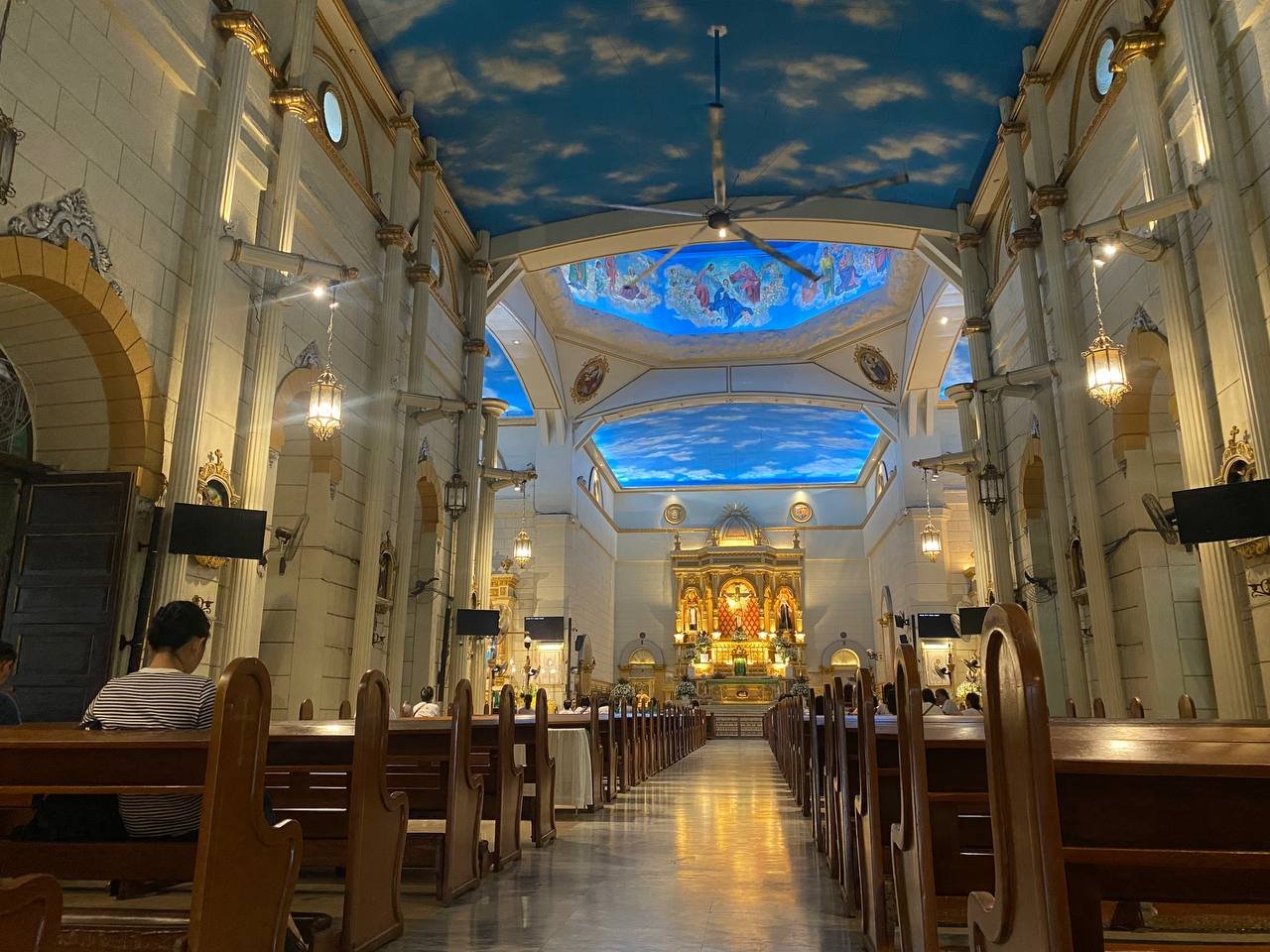
The saint-sensational interior left us in awe. An illuminated golden altar immediately caught our eye. Above us, the painted ceiling is expansive like an open sky. Tall white columns and hanging lantern-style lamps cast a warm glow on both sides of the church. While on the right side is a small prayer room, where various statues of saints can be found. As visitors, we made sure to follow the standard dress code required when entering a sacred place—modest clothing covering shoulders and knees—a small act of respect for a space that has welcomed the faithful for centuries.
Planning to see more of the province? Browse our list of Bulacan tourist spots for other places to pair with your Baliwag day trip.
Table of Contents
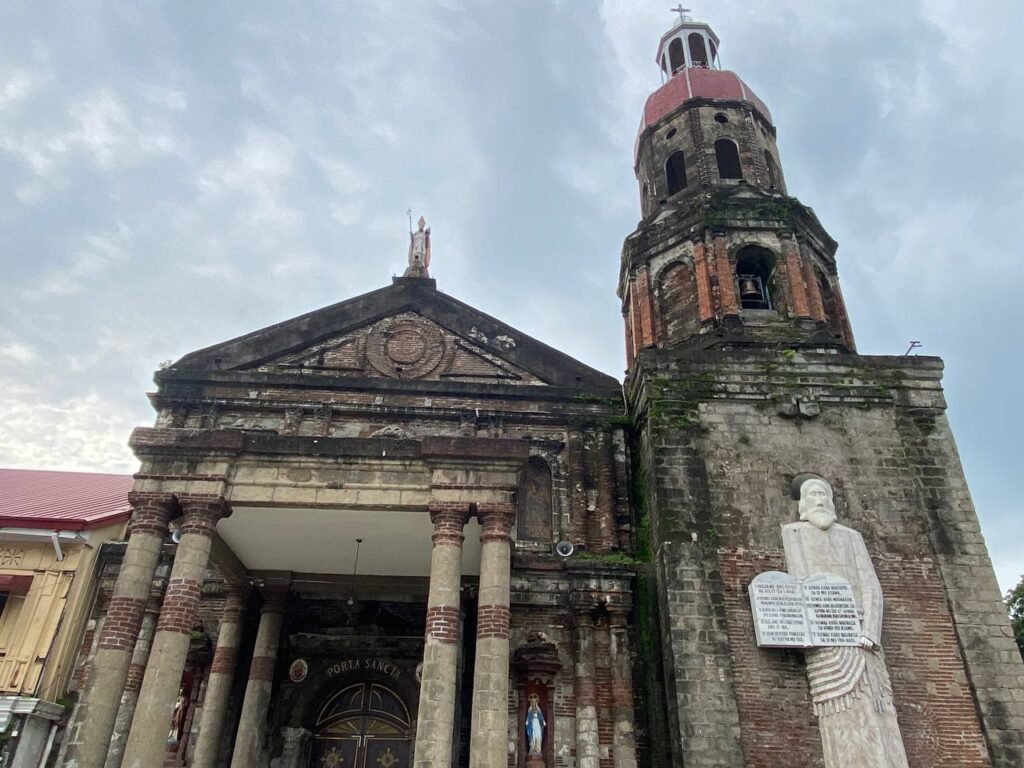
As we explore this historic church, we discover a place filled with history. Built after 1733, it has stood for nearly three centuries, like a faithful guard watching over the community. Its earliest structure was made of wood and nipa before becoming stone in 1769. Due to calamities, particularly earthquakes, the church was rebuilt three times. The earthquake in 1863 caused significant damage, while the third reconstruction in 1890 resulted in the structure we see today.
We learned that it served as a garrison and resting place for American soldiers, while its highest point was used as a watchtower. It also witnessed the baptism of Filipino patriot Mariano Ponce. In front of the church, near the patio and Mama Mary’s statue, the first municipal election in the Philippines was held in 1899. The ancient walls whisper stories of the past. Though damaged, it remains strong, reminding us of our enduring heritage.
Galeria San Agustin
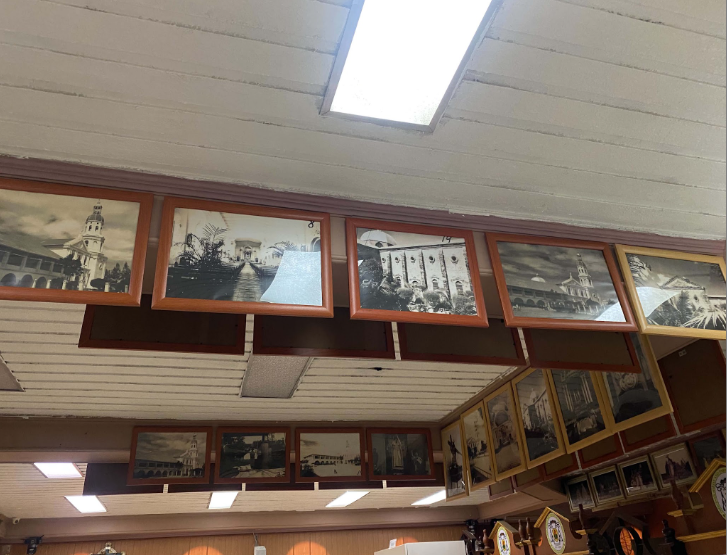
After our visit to one of the longest churches in the Diocese of Baliwag, we discovered a connected museum called Galeria San Agustin, located at the rear of the church complex. There was no entrance fee, though donations are welcome, and no appointment was needed—it is free and open to students and anyone interested in learning about what the museum has to offer. At a souvenir shop, we encountered Ma’am Recci, Vice Shrine Minister, who offered us a tour despite her busy schedule.
As we ascended the stairs, we softened our footsteps, mindful of the deafening silence surrounding the sleeping priests nearby. A conference room adorned with a ceiling filled with framed images of karos welcomed us. Upon entering, we experienced a blend of sacred warmth alongside the intense heat of the room.
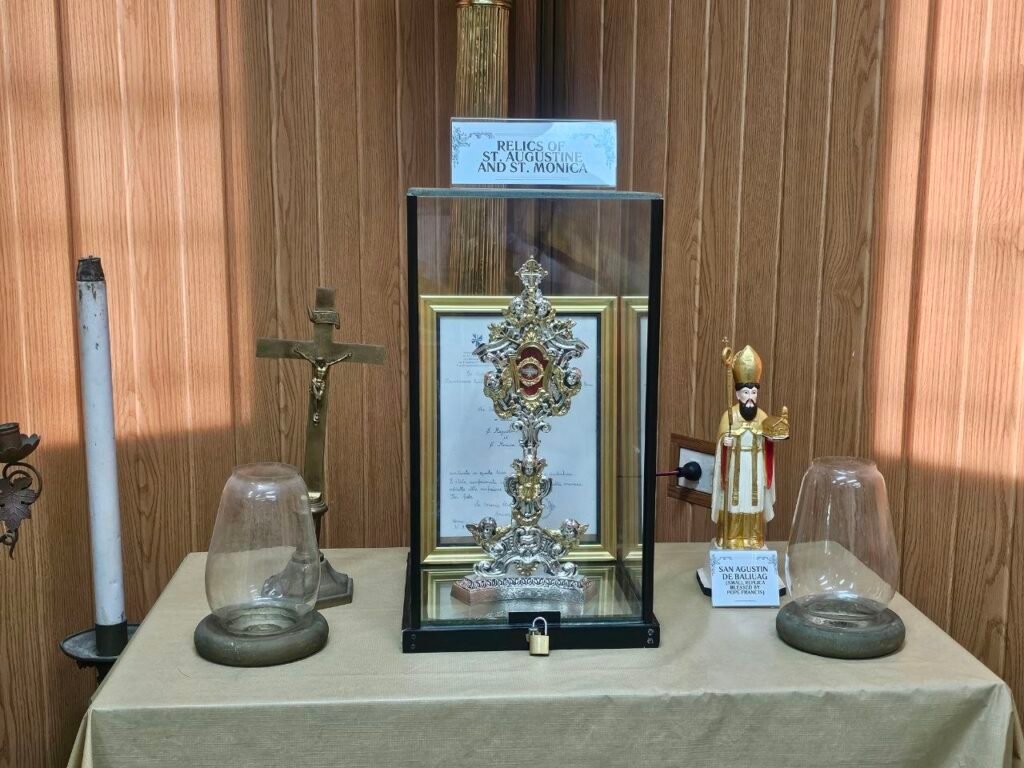
The devotion to St. Augustine in Baliwag was clear in every corner, with his relics and teachings showcasing the community’s continuous faith in him. We were reminded that life was not easy and prayers can change everything through his life story. The museum may be small, but it’s filled with history and faith that inspires every tourist. Looking at Saint Augustine’s metal mitre replica, this holy relic is a symbol of change and a promise of spiritual transformation.
Gazing toward the archives, we discovered the oldest preserved manuscript, early census ledgers, and Entierro Death record, where frail paper whispers stories of departed souls who once walked these historic grounds. Dazzling beneath the hall lighting, the majestic Capa Magna made with real gold thread instantly captures interest; the sacred vestment was valued at twenty thousand pesos at that period, however currently its worth leaps to millions despite few missing fragments. The museum typically opens daily from 9:00 AM to 5:00 PM, and we were grateful to have arrived within those hours.
Shifting toward the adjacent displays, the facing closet features the pastoral vesture, showing how ministerial attire evolved from shorter hemline styles of previous eras into the extended robes worn nowadays. Anchored at the center of the room, the parish timeframe stands like an open book, bridging centuries of history and evoking a lasting devotion unto Baliwag’s eternal sanctuary
Siglo (Antiques, Collectibles & Memorabilia)
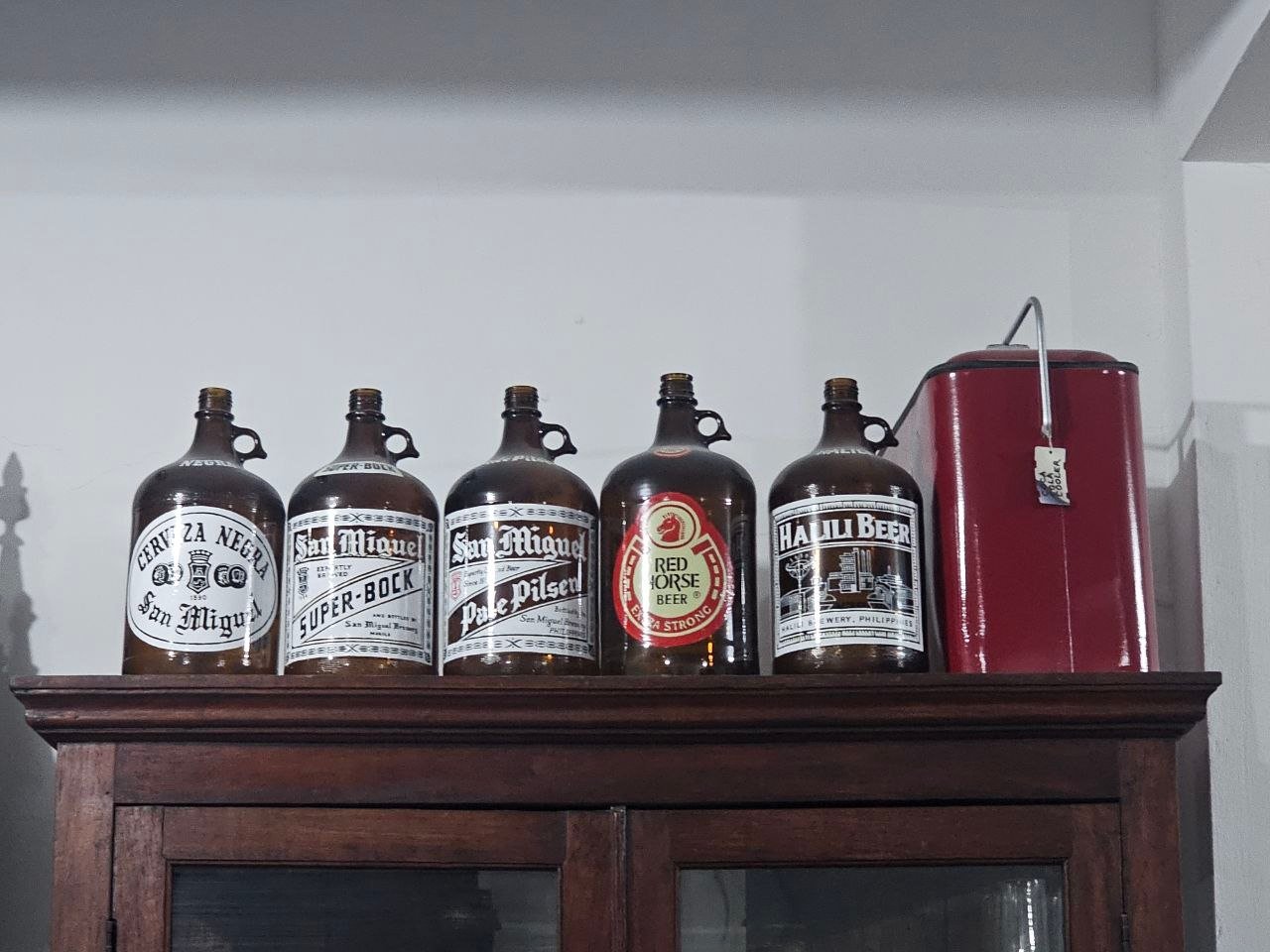
Having explored the different eras and history of the Church, we take another trip back in time through Siglo, an antique shop that holds antiques, collectibles, and memorabilia owned by Engineer Mike M. Nicolas. It sits at 1A GLN Plaza, 276 M. Ponce Street, Poblacion, Baliwag—behind Mercury Drugstore and beside Shakey’s, just a short walk from the church. At a young age, he developed his endearing passion for collecting things. He’s been collecting various kinds of stamps, coins, paper bills, photographs, furniture, and other historical and cultural items coming from the early 1850s to the late 1960s.
Our visit became even more special when Engr. Nicolas warmly toured us around his collection for free. We learned that the shop is not normally open to walk-in visitors—unless the owner himself tours you around, which is exactly what happened to us. He was like our tour guide from the past, guiding us door-to-door in his shop as he shared stories about his antiques, where all of us had no idea that we would be witnessing the objects before us feel more alive.
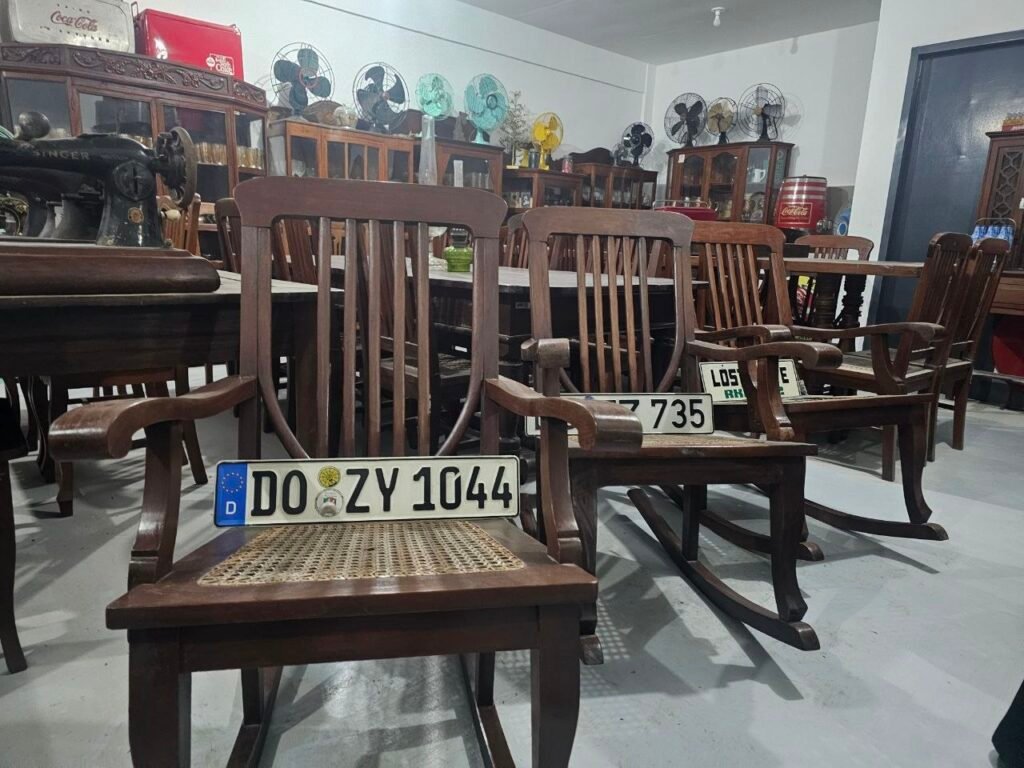
Our every step into the shop felt like entering a place where time stood still. Each piece was like a little time capsule, holding memories that have traveled through generations. The shop is surrounded by old treasures and forgotten keepsakes. We can still remember the excitement of how our hands raced just to hold the old Japanese money he gave us. It was so old that we could tear it by simply blowing it. As we left the place, we felt like the old Coca-Cola bottles, San Miguel beer mugs, Jukebox, Calesa and Jeep, Typewriter, and every piece of furniture were quietly calling us back to tell us more stories, memories, and a piece of the lives that came before us.
Walking around the shop, we realized that history does not always live in textbooks or even in museums. Sometimes, it hides in dusty corners and shines through old treasures. Our visit to Siglo reminded us that the past may be gone, but its stories can still live on.
Tony’s Bakery Shop
After a few minutes’ walk from the antique shop—no more than fifteen minutes between any of our stops that day—we moved on to visit a bakery that has been standing for more than fifty years. Owned by Mrs. Estelita Santos, Tony’s Bakery is said to be the first bakery in Baliwag—a claim we learned from Mrs. Santos herself. It sits along Plaza Naning, Poblacion, very close to Glorietta Park, about 110 meters west, and roughly 150 meters from the Baliwag Terminal. The bakery is open daily, and though we weren’t able to confirm their exact opening hours, we visited around 7:00 PM and found them still open and stocked with pastries.
As we walked past the bakery’s inviting signage, blinking steadily as if calling for us to come in, we were greeted inside by numerous types of pastries—ensaymada, putok, pandesal, and many more. Upon conversing with the owner herself, we then learned that their best-selling bread is their cheese bread and that the bakery was named and inspired by her husband, Tony.
Following our curiosity and preferences, we settled on buying their famous ensaymada, which cost only ₱10 each, along with small cheese bread at ₱2.50 apiece—prices that felt like a steal for such honest, comforting food. We paid in cash, as we did at every establishment we visited that day. The ensaymada was bigger than the usual ones; we even joked that it was as big as our heads. Afterwards, we decided to enjoy our pastries at the plaza—savoring the ensaymada’s milky, cheesy taste paired with the softest bread.
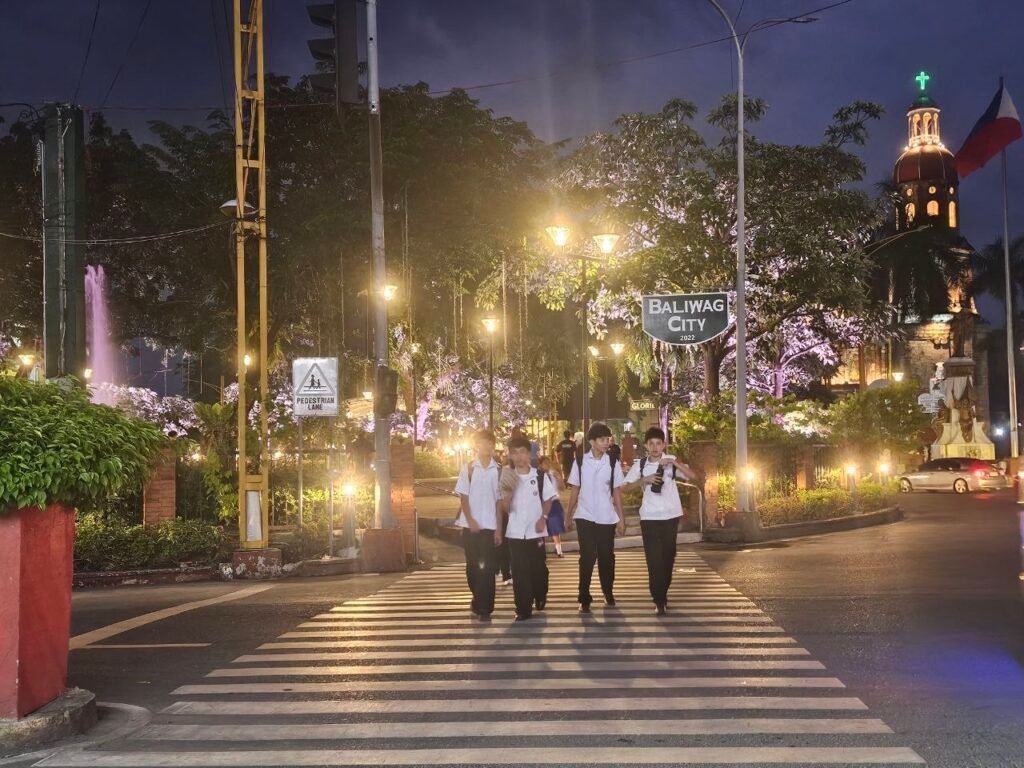
During this, a kid named “Goten” approached us. He was bubbly and talkative, slipping into our conversations as if he was part of our group. He even helped us get to the jeepney terminal when we were worrying about how to go home. After making it to the terminal, we then gave him a small amount of money as a token of appreciation, making our last moments in Baliwag that day more special. Before heading home, we lingered a while at Glorietta Park, which sits directly opposite the church, watching the town settle into the evening.
Our route home mirrored our journey that morning: from the jeepney terminal in Baliwag Proper near the market, we rode a jeepney back to Tabang in Guiguinto for ₱35—₱37 without discount—which took about an hour. We then transferred to a jeepney to BulSU Main, Malolos for ₱15, or ₱17 without discount, which took another thirty minutes. All in all, our round-trip fare came to ₱100 per person, and with a budget of ₱500 each covering transportation, food, and pocket money, we went home with both our wallets and our hearts full. Travel time, of course, may vary depending on traffic.
After exploring the streets of Baliwag City, our curiosity about the town’s history and sweet pastries was finally satisfied. But more than that, we experienced Baliwag beyond its architecture and infrastructure. From our conversation with Ma’am Recci to our encounter with bubbly Goten, we felt the warmth and hospitality of its people. A true testament that the beauty of a place is not defined by its buildings or attractions, but by the people within.