Bataan is known for two things above everything else: the WWII memorials that mark some of the darkest days in Philippine history, and a coastline that rewards visitors who know exactly which spots to target. Having covered 69 of the 82 provinces since 2015, I came back to Bataan in April 2026 specifically to verify what the old version of this guide got wrong, and there was plenty.
The province sits at the tip of the Bataan Peninsula, roughly 100 to 150 kilometres northwest of Manila depending on your route. It takes two to five hours to get there, again depending on your route, and that gap matters enormously when you are planning a day trip. More on that below. This guide covers every major Bataan tourist spot with honest verdicts, verified 2026 fees, and the transport logistics that most first-timers get badly wrong.
Key Takeaways
- The fastest route from Manila to Bataan is the 1Bataan ferry from Esplanade Seaside Terminal in Pasay, which reaches Mariveles in 1.0 to 1.5 hours for ₱499 walk-in or ₱249 on promo fares.
- A private vehicle via NLEX and SCTEX to Balanga costs roughly ₱569 in tolls (Class 1) and takes 2.0 to 2.5 hours; to Subic/Tipo add another 30 minutes and roughly ₱38 more.
- The public bus (Genesis Transport or Bataan Transit from Cubao or Avenida) reaches Balanga in 3 to 4 hours for ₱200 to ₱230, making it the cheapest entry but the least flexible for multi-stop days.
- Without a private car, getting between tourist spots inside Bataan is genuinely exhausting: tricycle rides are long and expensive, and jeepneys run on irregular schedules.
- Most of Bataan’s public beaches have dark, volcanic sand, not white sand. Camaya Coast and select resort beaches are the exceptions.
- The best month to visit the Pawikan Conservation Center (for hatchling releases) is anywhere between August and February.
Table of Contents
What Bataan Is Known For
Bataan is known for the Bataan Death March, the Battle of Bataan, and a peninsula full of WWII-era memorials that you genuinely cannot find anywhere else in Southeast Asia. That historical weight is the main draw, and the province handles it well: the memorials are maintained, the museums are real, and the landscape itself, a forested peninsula flanked by Manila Bay on one side and the South China Sea on the other, reinforces the sense of geographic isolation that made Bataan such a strategic flashpoint in 1942.
Beyond the war history, Bataan is known for eco-adventure (Mount Natib, Tarak Ridge, Bataan National Park), marine turtle conservation at Morong, and a cluster of coastal resorts in Mariveles that have grown significantly in the last few years. Las Casas Filipinas de Acuzar in Bagac has also given the province a foothold in heritage tourism that has nothing to do with WWII, drawing a completely different kind of visitor.
What Bataan is not known for, and what you should know before you book, is powdery white-sand beaches. The public coastal areas largely have darker, volcanic sand. If white-sand beaches are your primary goal, Bataan will disappoint.
How to Get to Bataan from Manila
Getting to Bataan is easy. Getting around Bataan once you arrive is where the trip either works or falls apart, and the mode of transport you choose at the start dictates everything that follows.
By Ferry (Recommended)
The tip I give everyone now: skip the multi-hour coastal drives and take the direct 1Bataan ferry from Esplanade Seaside Terminal in Pasay straight to Mariveles. The crossing takes 1.0 to 1.5 hours, walk-in fare is ₱499, and promo fares drop to ₱249. For a day trip centred on Mariveles, Corregidor, Five Fingers Cove, or Camaya Coast, the ferry is not just convenient, it is the logical choice.
The main limitation is weather. Habagat season (southwest monsoon, roughly June through September) can suspend or delay sailings, so check the 1Bataan schedule before you commit to that date.
By Private Vehicle
Private vehicle via NLEX from Balintawak to SCTEX, exiting at Dinalupihan, reaches Balanga in 2.0 to 2.5 hours. ETC tolls run approximately ₱569 for Class 1 vehicles. If you continue to Subic or Tipo, add another 30 minutes and roughly ₱607 total in tolls.
Private vehicle gives you the only genuinely practical way to move between tourist spots inside the province. Without it, you are at the mercy of tricycles and jeepneys.
By Public Bus
Genesis Transport and Bataan Transit run daily buses from Cubao and Avenida to Balanga (3 to 4 hours, ₱200 to ₱230) and to Mariveles (4 to 5 hours, ₱280). This is the cheapest way in. It is also the most punishing option if you are trying to cover multiple spots in a single day, because once you arrive by bus, your tricycle costs inside the province add up fast.
| Transit Mode | Route | Travel Time | 2026 Fare / Toll |
|---|---|---|---|
| Ferry | Pasay (Esplanade) to Mariveles | 1.0–1.5 hrs | ₱499 walk-in / ₱249 promo |
| Private Car | NLEX to SCTEX (Dinalupihan exit) | 2.0–2.5 hrs | ~₱569 tolls (Class 1) |
| Private Car | NLEX to SCTEX (Subic/Tipo exit) | 2.5–3.0 hrs | ~₱607 tolls (Class 1) |
| Public Bus | Cubao/Avenida to Balanga | 3.0–4.0 hrs | ₱200–₱230 |
| Public Bus | Cubao/Avenida to Mariveles | 4.0–5.0 hrs | ₱280 |
Sample Itinerary: 1 Day and 2 Days in Bataan
Planning a Bataan tourist spots itinerary requires you to make one structural decision early: are you coming for the history, the nature, or the coast? All three in one day is theoretically possible with a private car, but you will rush everything.
1-Day Itinerary (History Focus, Based in Balanga)
Start at the Bataan WWII Museum in Balanga when it opens. Walk the adjacent plaza, then drive or arrange a tricycle to Mount Samat National Shrine in Pilar. Spend two hours at the shrine including the elevator ride to the cross. On the way back, stop at Dunsulan Falls for a swim. End the day with dinner in Balanga at the Wooden Leaf Cafe or anywhere along the main plaza strip.
1-Day Itinerary (Coast and Adventure Focus, Based in Mariveles)
Arrive by the morning ferry from Pasay. Head directly to Porto Aplaya (Barangay Balon) and hire a boat to Five Fingers Cove and Laki Beach. Budget the full morning and early afternoon for the coves. If time allows, swing by Sisiman Bay on the way back, which requires no boat and no entrance fee. Late afternoon, check into Camaya Coast or catch the return ferry.
2-Day Itinerary
Day 1: Balanga and Pilar, covering the WWII Museum, Mount Samat, and Dunsulan Falls. Evening at a restaurant in Balanga City. Overnight at the Plaza Hotel.
Day 2: Drive or ferry south to Mariveles. Morning at Five Fingers Cove and Laki Beach via boat from Porto Aplaya. Afternoon at Camaya Coast or Sisiman Bay. If you are in Morong at any point, add the Pawikan Conservation Center (best during nesting season) and Playa La Caleta.
Bataan Historical Places: The WWII Circuit
Bataan’s historical places are among the most significant WWII sites in all of Asia, and the province has invested genuinely in presenting them. This is not a museum-in-a-box situation. The geography itself, the peninsula, the bay, the ridge lines, is part of what you are reading when you visit.
Death March Markers: Dinalupihan and Mariveles
At the provincial boundary in Dinalupihan, Death March Marker #68 and the Layac Junction First Line of Defense Monument mark the entry point into Bataan and the northern end of the Death March route. In Mariveles at the southern tip, the Zero Kilometer Death March Marker marks where the march actually began, after the fall of Bataan to Japanese forces in April 1942. Filipino and American prisoners of war were forced to walk more than 90 kilometres northward. The Mariveles marker is free to visit, easily accessible, and worth a short stop even if you are just passing through on your way to the ferry terminal.
Bataan WWII Museum, Balanga City
Best for: History enthusiasts and anyone who wants context before visiting the other WWII sites.
The Bataan WWII Museum sits inside the grounds of Balanga Elementary School, which is unusual enough that first-timers often walk past the entrance. Entrance is ₱50. Inside, dioramas, authentic uniforms, weapons, personal effects, and informational panels walk you through the Bataan Death March chronologically. It is a small museum by international standards, but the curation is earnest and the artifacts are real. Guided tours are available. I would start any Bataan itinerary here because it gives you the framework to understand what you are looking at everywhere else.
Mount Samat National Shrine (Dambana ng Kagitingan), Pilar
Best for: Anyone who wants a panoramic view of the Bataan Peninsula alongside the WWII context.
The shrine sits at the summit of Mount Samat in Pilar and is dominated by a 92-metre memorial cross built to honour Filipino and American soldiers who died defending Bataan. Gate entrance costs ₱20 to ₱50, and the elevator ride to the arms of the cross costs an additional ₱30. The viewing deck inside the cross arms offers a clear line of sight across Manila Bay and back toward the Bataan ranges. The drive up is steep and narrow in sections.
One clarification the old version of this guide got wrong: Mount Samat is a drive-up shrine, not a major hike. You can walk the grounds around the monument comfortably. The 4-to-5-hour hiking estimate you may have seen elsewhere on this page referred to Mount Natib, which is a completely different mountain on the other side of the province. Do not confuse the two.
The shrine is open 8:00 AM to 5:00 PM.
Las Casas Filipinas de Acuzar, Bagac
Best for: Architecture enthusiasts and visitors interested in the Spanish colonial period, not primarily for WWII history.
Las Casas is a 400-hectare heritage resort in Bagac that has assembled a collection of dismantled and rebuilt 18th- and 19th-century Spanish-Filipino colonial homes from across the archipelago. Day tour rates run ₱1,850 on weekdays and ₱2,500 or more on weekends, which includes a walking tour and welcome drinks. Overnight guests pay separately for accommodation.
The place is genuinely impressive to walk through: the houses are large, the craftsmanship is visible, and the grounds are well-maintained. But there is an ongoing debate you should know about before you visit. The resort’s method, dismantling heritage structures from their original locations and reassembling them in Bagac, has drawn criticism from architectural historians who argue that removing a building from its original site strips it of the sociocultural context that gives it meaning.
“In situ” preservation advocates say the resort essentially creates a theme park from buildings that should have been preserved where they stood. The counter-argument is that many of these structures were already deteriorating beyond local capacity to repair. Both positions have legitimate weight. Go in knowing the conversation exists.
Natural Attractions in Bataan: Mountains, Waterfalls, and Parks
Bataan’s natural attractions range from genuinely technical mountain hikes to easy family-friendly waterfall swims, and the province is large enough that you need to be clear about which one you are heading to before you leave.
Mount Natib, Orani
Best for: Experienced hikers who are serious about the climb.
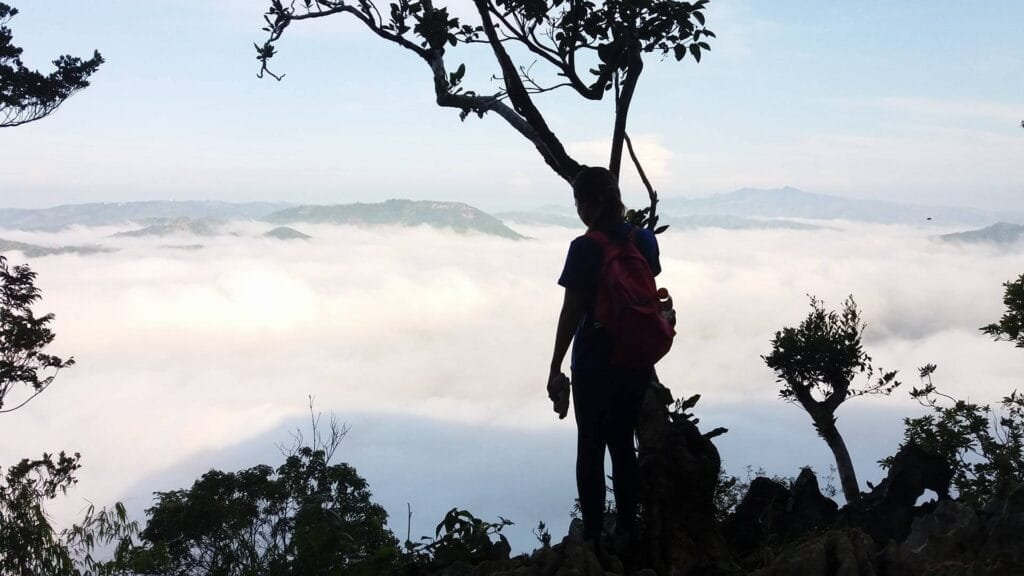
Mount Natib is a dormant volcano that rises to 1,287 metres above sea level in the Bataan National Park range. This is a major climb. The trail is classified as a technical hike, a mandatory guide is required at a 1:7 ratio, registration is at Barangay Tala in Orani, and guide fees run ₱1,000 to ₱1,500. Registration fees are ₱30 to ₱70. The trail is notorious for limatik (leeches), which are active year-round but especially aggressive after rain. Bring aggressive-tread footwear, start before dawn, and budget a full day. This is not the trip for sandals and a day bag.
After the descent, some hikers go to Tala River or Orani River for a wash-down swim, which is a genuinely good call.
Tarak Ridge
Best for: Intermediate to advanced hikers who want serious elevation without the full Natib commitment.
Tarak Ridge is a separate trail from Mount Natib and earns its own entry because the two are frequently confused. The Tarak Ridge trail is physically demanding, involves significant elevation gain, and takes considerably longer than the Mount Samat grounds walk. If you are a day-tripper weighing hiking options, Tarak Ridge is the harder commitment and should be treated as an overnight or very early-morning start trip. Confirm current guide and registration requirements at Barangay Alas-Asin in Mariveles before attempting.
Dunsulan Falls, Pilar
Best for: Families and anyone who wants a waterfall swim without a major hike.
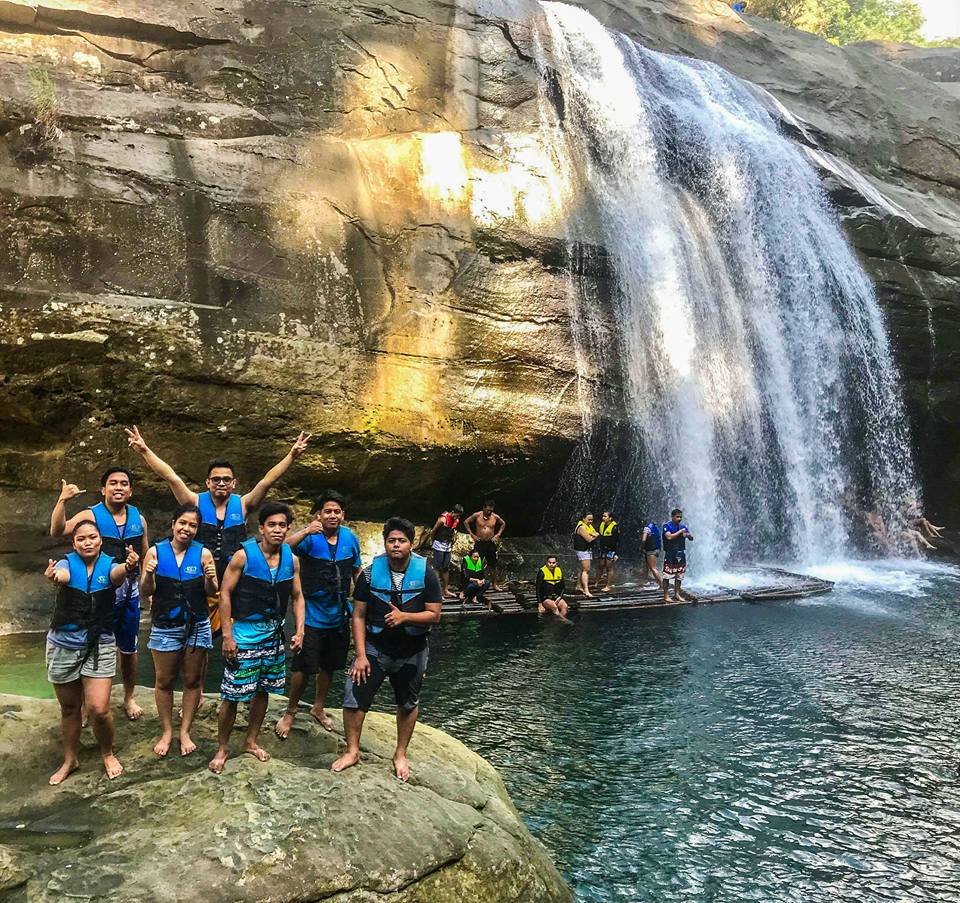
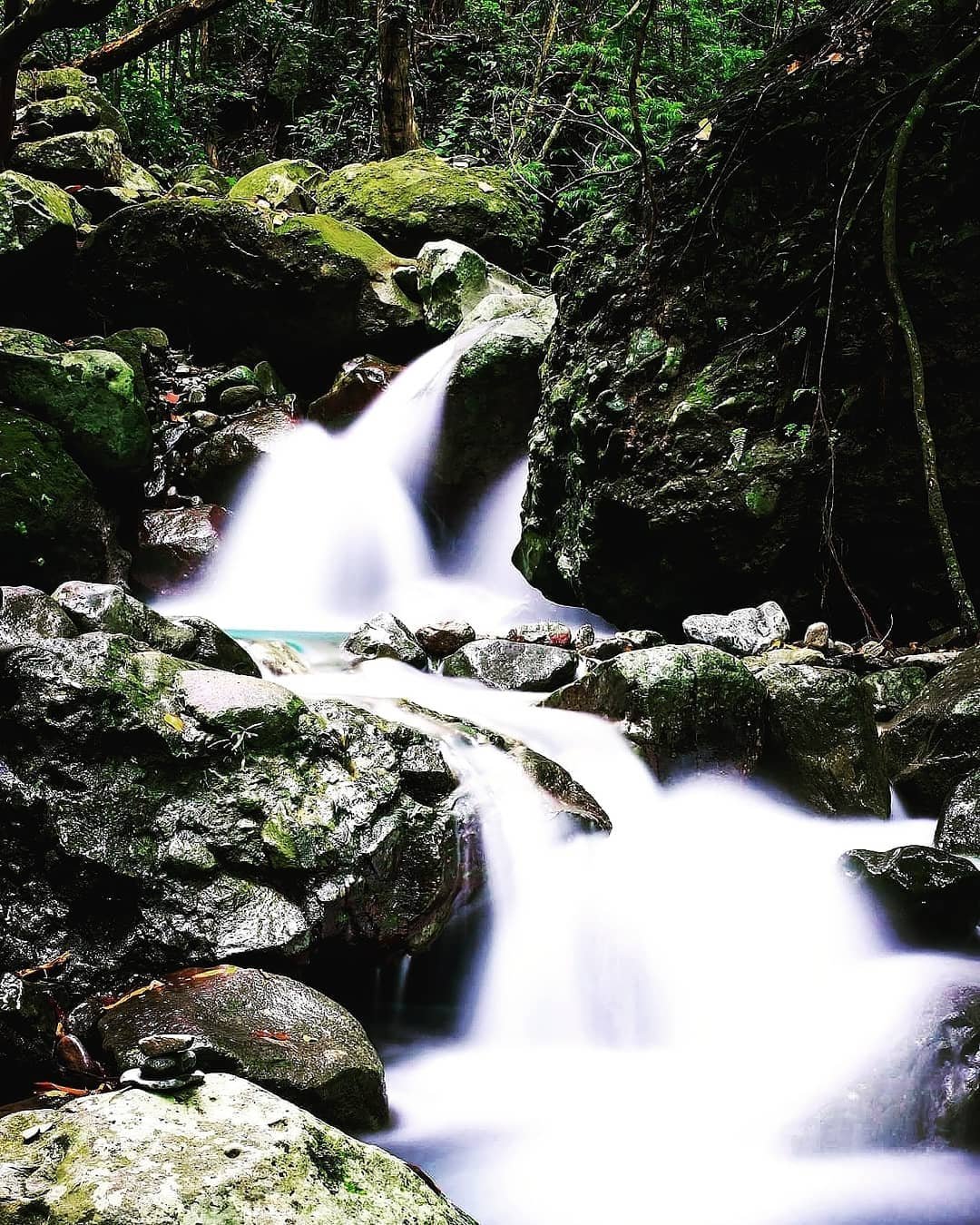
Dunsulan Falls is at the foot of Mount Samat in Pilar, which makes it a natural pairing with the shrine visit. Gate entrance is ₱50, and tree-hopping (a rigged course in the canopy above the falls area) costs an additional ₱300. The falls drop into a natural pool that is good for swimming. Tricycles from the Mount Samat road can reach it. It is a calm, easy half-day add-on rather than a destination in itself.
Bataan National Park
Best for: Wildlife watchers and those who want to hike to Pasukulan Falls without the technical commitment of Natib.
The park covers 23,688 hectares and provides the habitat for Mount Natib’s upper slopes. Giant fruit bats, civet cats, deer, eagles, and monkeys have all been recorded inside the park boundaries. The trail system also leads to Pasukulan Falls, which is less visited than Dunsulan and correspondingly more peaceful.
Balanga Wetland and Nature Park, Balanga City
Best for: Birdwatchers and anyone interested in the ecological side of the province.
The Balanga Wetland and Nature Park is a managed ecological area with mudflats, mangrove stands, and viewing decks designed specifically for observing migratory birds. More than 35 species have been recorded here. The best sightings happen during early morning and late afternoon feeding periods. Guided tours and educational exhibits are available inside the park. It is located in Balanga City, which makes it an easy add-on if you are already basing yourself in the city centre.
| Destination | Location | 2026 Fee | Notes |
|---|---|---|---|
| Mount Natib | Orani | ₱30–70 (reg) + ₱1,000–1,500 (guide) | Major climb; guide mandatory |
| Dunsulan Falls | Pilar | ₱50 gate + ₱300 tree-hopping | Pairs well with Mt. Samat |
| Bataan National Park | Orani/Pilar | Included with Natib reg | 23,688 hectares; wildlife-rich |
| Balanga Wetland | Balanga City | Check at gate | Best early morning or late afternoon |
Tourist Spots in Morong, Bataan
Morong is the municipality that surprises most visitors. It holds the Pawikan Conservation Center, several of the province’s better resort beaches, and a restaurant with a backstory unlike anything else in Bataan.
Pawikan Conservation Center, Morong
Best for: Families, marine conservation advocates, and anyone visiting between August and February.
The center protects several species of sea turtle (pawikan) that nest along the Morong coastline. Gate entrance is ₱20. If you visit during a hatchling release event, the release itself costs ₱50 to participate. The nesting and hatching season runs August to February, and outside that window there is significantly less to see. During season, the releases happen at night and can involve large numbers of hatchlings moving toward the water simultaneously, which is genuinely striking to watch. The center staff can walk you through the life cycle, the threats these turtles face, and the confiscation work the center does against poachers.
Visiting outside the nesting season is still possible, but manage your expectations.
Playa La Caleta, Morong
Best for: Resort visitors who want beachfront accommodation with activity options.
Playa La Caleta has the cleaner, resort-maintained beach experience that the public coves in Mariveles do not offer. Accommodation ranges from beachfront villas to glamping tents, and activities include snorkeling, kayaking, and island hopping. The resort has a pool, restaurant, and bar. For day-trippers, check current day-use rates directly with the resort.
Loleng’s Hu Tieu-an, Morong
Morong hosted the Philippine Refugee Processing Center during the Indochina refugee crisis of the 1980s. Vietnamese refugees passed through the area in large numbers, and their culinary influence stayed. Loleng’s Hu Tieu-an, an open-air eatery, serves Filipinized Vietnamese noodle soup (Hu Tieu) using recipes passed from refugee cooks to local workers during that period. A bowl costs around ₱50. It is the most historically specific meal you will eat in Bataan, and it costs less than a tricycle fare.
Bataan Tourist Spots in Mariveles
Mariveles is at the southern tip of the peninsula and is the most action-dense municipality in the province. It is also the ferry arrival point, which makes it the natural starting point if you came by boat from Pasay.
Five Fingers Cove and Laki Beach
Best for: Boat-based coastal exploration and swimming in calm coves.
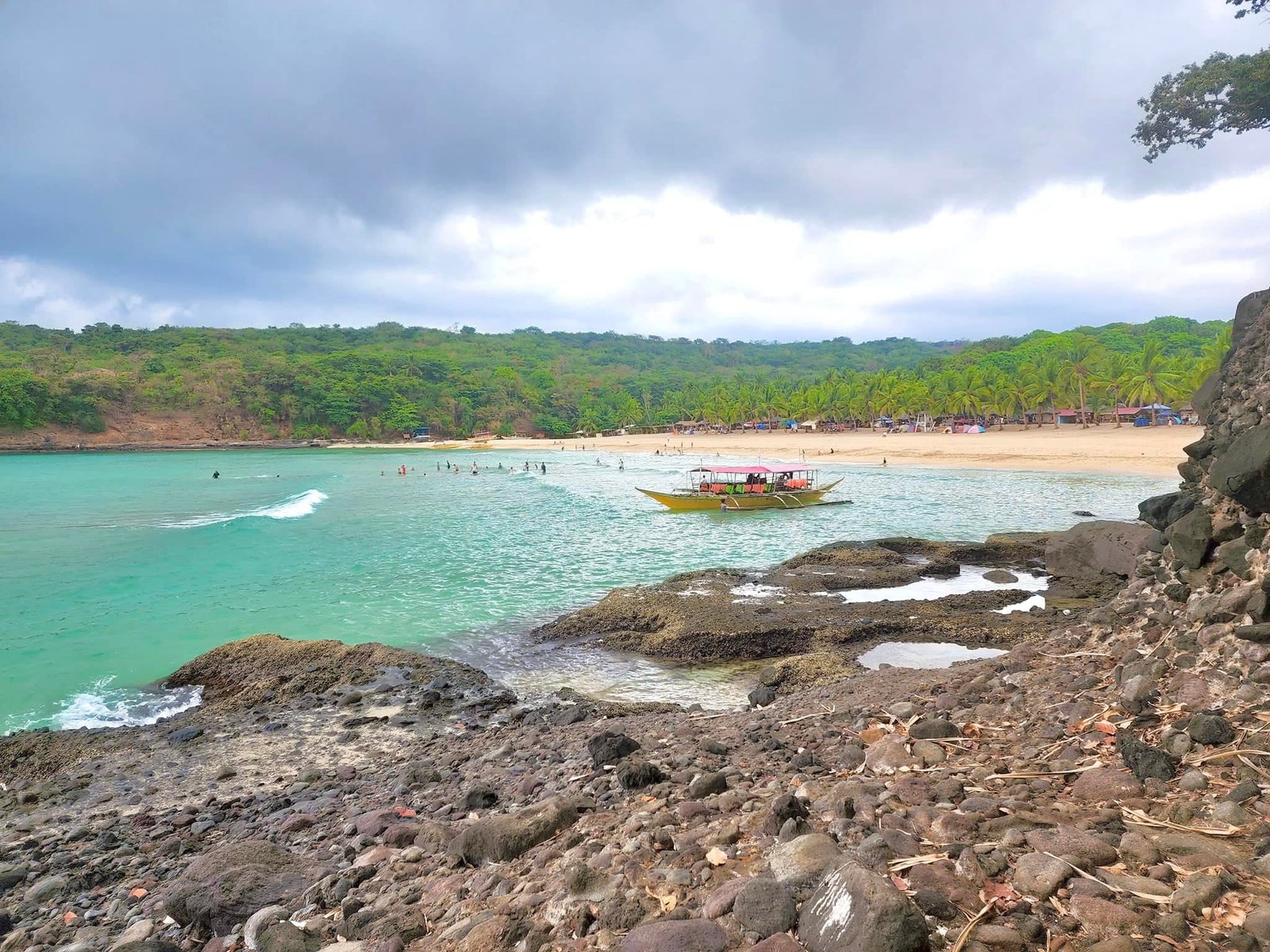
Five Fingers Cove and Laki Beach are both reached by hiring an outrigger boat from Porto Aplaya (Barangay Balon). Boat rental averages ₱2,500, with the cost divided among your group. Laki Beach charges a separate ₱1,000 entrance fee per person. Five Fingers Cove gets its name from the geographic formation: the coastline breaks into finger-like inlets, each with its own small beach or lagoon. The cove-hopping format means you move between these stops on the same boat charter, which is part of what makes it a good half-day. Cliff diving spots are available for those who want them.
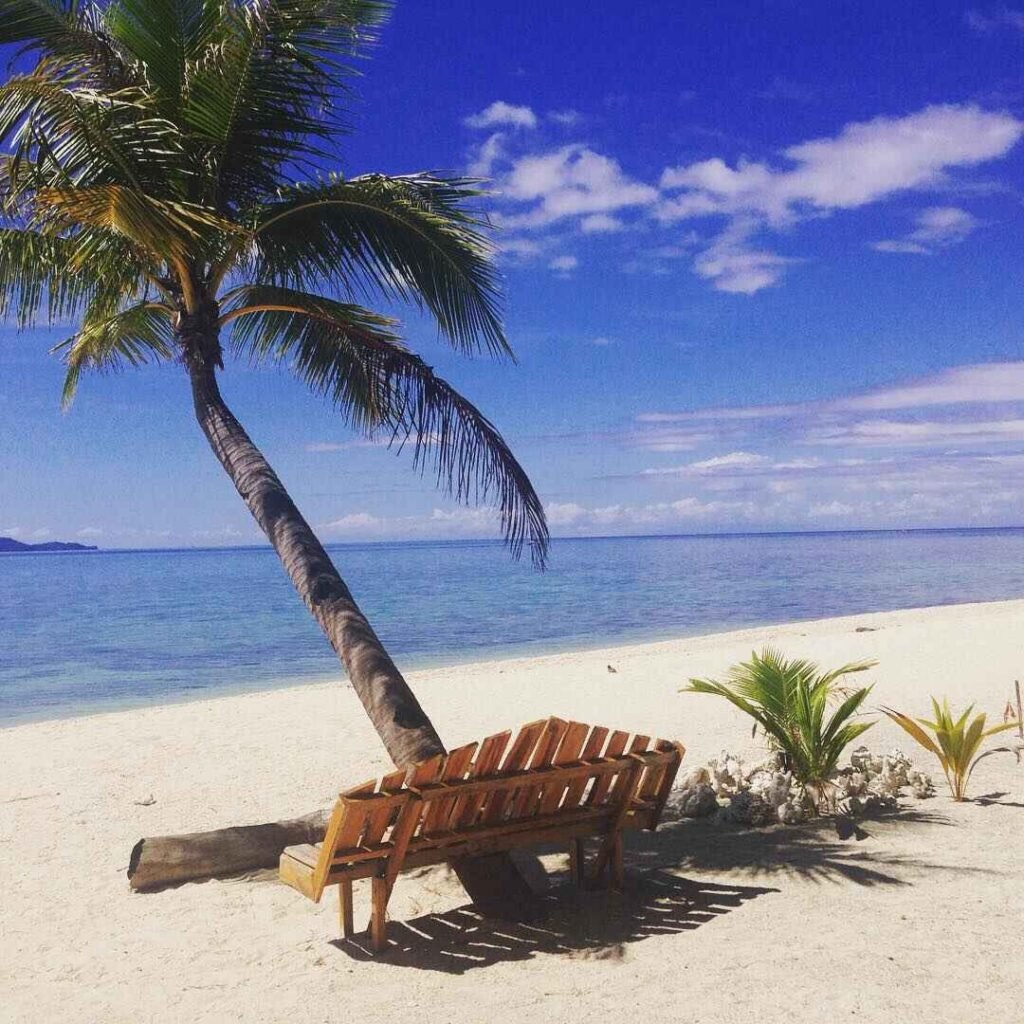
Honest note on the sand: Laki Beach’s sand is darker and more volcanic in character than resort-beach photos suggest. It is a beautiful coastal setting, but it is not the fine white sand you see in Palawan or Boracay. Go for the cove geography and the water, not the sand.
For more details on the Laki Beach experience specifically, I have a separate post on this site that goes into much more depth.
Corregidor Island (Departing from Mariveles)
Best for: WWII history completists and anyone who wants to extend the historical circuit from land to sea.
Corregidor Island was a fortified island at the mouth of Manila Bay and fell to Japanese forces in May 1942, shortly after the Bataan Death March began. Tours now frequently depart from Villa Carmen in Mariveles rather than from Manila, which shortens the crossing significantly. Join-in tours run approximately ₱2,599 (around $50 to $60) and require advance booking due to strict carrying capacity limits. Do not show up and expect a walk-on spot.
Sisiman Bay
Best for: Anyone who wants a quiet coastal escape without entrance fees or boats.
Sisiman Bay is the antidote to the commercialized cove experience. It has a pebble beach, a working lighthouse (the Sisiman Lighthouse), and San Miguel Peak at 700 feet, which offers a short hike to a viewpoint over the bay. There is no entrance fee. Cottage rentals are available for around ₱200. A tricycle from the Freeport Area of Bataan (FAB) costs roughly ₱15 to ₱50 depending on your starting point. It is not a resort beach. It is an undeveloped, unfenced coastal area that locals use, and that is exactly the point.
Camaya Coast and Aqua Fun Water Park, Mariveles
Best for: Families with children who want a controlled resort experience with organized activities.
Camaya Coast bundles beach access, water park entry (Aqua Fun), and resort facilities into consolidated day passes running ₱1,299 to ₱1,699. The resort also has its own ferry service from Manila, which you can book separately. Land-only access (if you are already in Mariveles) costs ₱299 to ₱499. No outside food is permitted inside the resort.
Balanga City Tourist Spots
Balanga is Bataan’s capital and the most practical base for a multi-day trip covering the historical circuit. It has the best concentration of restaurants, hotels, and services in the province.
For comprehensive coverage of Balanga City’s local attractions, markets, and hidden corners, I have a dedicated Balanga guide on this site. This section covers the spots that are part of the provincial tourist circuit.
The Bataan WWII Museum and the Balanga Wetland and Nature Park (both covered in detail in their respective sections above) are the two main stops. The Plaza Mayor in the city centre is worth a walk in the early evening when the heat drops and local food stalls set up around the perimeter.
Ecotourism: Sinagtala Farm Resort, Orani
Best for: Visitors who want a nature-farm experience outside the standard beach-and-mountain circuit.
Sinagtala Farm Resort in Orani offers a different pace from the WWII-history-and-cove itinerary that most Bataan visitors follow. Entrance runs ₱350 to ₱450, and the resort requires a minimum hut rental of ₱1,000. It is a working farm resort, which means the experience is more about wandering agricultural grounds, seeing animals, and sitting in open-air cottages than ticking off landmarks. Good call for a rest day between heavier activities.
Where to Eat in Bataan
Wooden Leaf Cafe, Balanga City: A mid-range cafe noted for its Uji matcha drinks, generous portions, and health-conscious menu. Popular with locals and a solid choice if you want something better than fast food after a day at the museum or the wetland park.
Cafe Kyoto at Plaza Hotel, Balanga City: Japanese food attached to the Plaza Hotel on the Plaza Mayor. Convenient if you are staying there. Reliable for a sit-down lunch between historical sites.
Loleng’s Hu Tieu-an, Morong: Covered in detail above. The ₱50 bowl of Filipinized Vietnamese noodle soup is one of the most interesting meals in the province for reasons that go well beyond the food itself.
Where to Stay in Bataan
The Plaza Hotel, Balanga City: The most practical base for the historical circuit. Located directly on Plaza Mayor, room rates average ₱2,870 to ₱3,500 per night. Cafe Kyoto is on-site for dining. Central enough to walk to the WWII Museum and close enough to Pilar and Mariveles for day trips.
The Oriental Bataan, Mariveles: The premium option in the southern end of the province, at roughly ₱5,800 (around $104) per night. Positioned close to the Freeport Area of Bataan and the coastal departure points. The right choice if your itinerary is built around the Mariveles coves, Camaya Coast, or Corregidor.
2026 Bataan Tourist Spot Fees at a Glance
| Destination | Location | 2026 Fee |
|---|---|---|
| Mount Samat National Shrine | Pilar | ₱20–50 gate + ₱30 elevator |
| Bataan WWII Museum | Balanga | ₱50 |
| Dunsulan Falls | Pilar | ₱50 gate + ₱300 tree-hopping |
| Las Casas Filipinas de Acuzar | Bagac | ₱1,850 weekday / ₱2,500+ weekend |
| Pawikan Conservation Center | Morong | ₱20 gate / ₱50 hatchling release |
| Five Fingers Cove + Laki Beach | Mariveles | ₱2,500 boat + ₱1,000 Laki Beach |
| Sisiman Bay | Mariveles | Free (cottages ~₱200) |
| Corregidor Island (from Mariveles) | Mariveles | ~₱2,599 join-in tour |
| Camaya Coast (land access) | Mariveles | ₱299–499 |
| Camaya Coast (day pass) | Mariveles | ₱1,299–1,699 |
| Mount Natib | Orani | ₱30–70 reg + ₱1,000–1,500 guide |
| Sinagtala Farm Resort | Orani | ₱350–450 entrance + ₱1,000 min hut |
Frequently Asked Questions
What is Bataan known for?
Bataan is known primarily for its World War II history, particularly the Bataan Death March of 1942 and the Battle of Bataan, which ended in the largest surrender of American-led forces in US military history. Beyond the war history, it is known for the Pawikan Conservation Center in Morong, the heritage resort Las Casas Filipinas de Acuzar in Bagac, and coastal activities in Mariveles. The province also has a strong hiking culture centred on Mount Natib and Tarak Ridge.
How do I get to Bataan from Manila?
The fastest option is the 1Bataan ferry from Esplanade Seaside Terminal in Pasay, which reaches Mariveles in 1.0 to 1.5 hours for ₱499 walk-in. By private vehicle via NLEX and SCTEX, Balanga takes 2.0 to 2.5 hours with approximately ₱569 in tolls. Public buses from Cubao or Avenida (Genesis Transport, Bataan Transit) reach Balanga in 3 to 4 hours for ₱200 to ₱230.
What are the best historical places in Bataan?
The core historical circuit is the Bataan WWII Museum in Balanga (₱50 entrance), the Zero Kilometer Death March Marker in Mariveles, and the Mount Samat National Shrine in Pilar (₱20 to ₱50 plus ₱30 for the elevator). For the full picture, add the Layac Junction monument and Death March Marker #68 at the Dinalupihan entry to the province. Corregidor Island, accessible by tour from Mariveles, extends the circuit into the bay.
What tourist spots are in Morong, Bataan?
Morong’s main tourist spots are the Pawikan Conservation Center (sea turtle conservation, best August to February), Playa La Caleta beach resort, and Anvaya Cove luxury resort. For something completely different, Loleng’s Hu Tieu-an serves Vietnamese-Filipino noodles for around ₱50, a direct legacy of the refugee processing center that operated in Morong during the 1980s.
Are the beaches in Bataan worth visiting?
It depends on your expectations. Resort-managed beaches at Camaya Coast, Playa La Caleta, and Anvaya Cove are well-maintained and offer good facilities. The public coves at Five Fingers and Laki Beach are worth visiting for the boat trip and cove geography, not for fine sand. Most of Bataan’s open public coastline has darker, volcanic sand. If white sand beaches are your standard, you will be underwhelmed by the free public areas.
Honest Verdict: Who Should Visit Bataan
Bataan suits history-focused travellers better than any other type of visitor, and that is not a backhanded compliment. The WWII circuit is genuinely well-presented, the geography reinforces the story, and the combination of the Death March markers, the Balanga museum, and the Mount Samat shrine gives you a complete narrative arc in a single day.
Nature and eco-travellers get a solid second tier: Mount Natib for serious hikers, Dunsulan Falls for families, the Pawikan Center for marine conservation, and Bataan National Park for wildlife. These are real draws, not filler.
Coastal resort visitors get the weakest case unless they book into a managed resort. Camaya Coast and Playa La Caleta deliver on their own terms, but anyone expecting an untouched white-sand coastline from the public beaches will be disappointed. Bataan is volcanic peninsula geography, and the sand reflects that.
Skip Bataan if your primary goal is beach-hopping comparable to Palawan or the Visayas. Go to Bataan if you want to understand what happened here in 1942, or if you want a peninsula’s worth of eco-adventure within two hours of Manila.