The Philippines is not just a destination; it is an adventure across 7,641 islands. It is a place where your morning might begin with a hike through a misty pine forest in Sagada and end with a sunset sail in the limestone lagoons of El Nido. The country welcomes you with sun-drenched beaches, emerald waters, and a warmth from the locals (the “Pinoy” hospitality) that makes every trip unforgettable.
However, the very geography that makes the Philippines so breathtaking—its fragmented, island-based nature—presents a unique set of challenges for travelers. Moving from bustling metropolises like Manila or Cebu to remote shores involves a mix of planes, ferries, tricycles, and outrigger boats (bangkas).
Preparation is the difference between a trip defined by stress and one defined by freedom. A well-packed bag allows you to navigate crowded ferry terminals and sandy paths with ease. But in the modern age, the most critical tool in your backpack isn’t just your swimwear or your camera—it’s your connection to the world.
Whether you are navigating the chaotic traffic of Metro Manila or trying to find a hidden waterfall in Siquijor, smart packing sets the tone. This comprehensive guide covers everything you need, from the revolutionary convenience of a Philippines data eSIM to the specific fabrics that survive the tropical humidity.
Table of Contents
1. The Digital Essential: Staying Connected in the Islands
Before we discuss clothes or toiletries, we must address the most immediate logistical hurdle you will face upon landing: Connectivity.
In the past, arriving at Ninoy Aquino International Airport (NAIA) or Mactan-Cebu International Airport meant joining long, serpentine queues at kiosk counters to buy a local physical SIM card. Recently, this process has become even more complex due to the SIM Card Registration Act, which mandates that all SIM card users, including tourists, must register their personal details and passport information before the SIM becomes active. This can mean standing in line for an hour or more after a long-haul flight, trying to upload documents on spotty airport Wi-Fi.
The Modern Solution: A Philippines Data eSIM
Smart travelers are bypassing this hassle entirely by switching to a Philippines data eSIM. An eSIM (embedded SIM) is a digital version of the traditional SIM card that is already built into most modern smartphones (iPhone XR and later, Google Pixel 3 and later, and many Samsung Galaxy models).
Why Nomad eSIM is the Superior Choice for the Philippines:
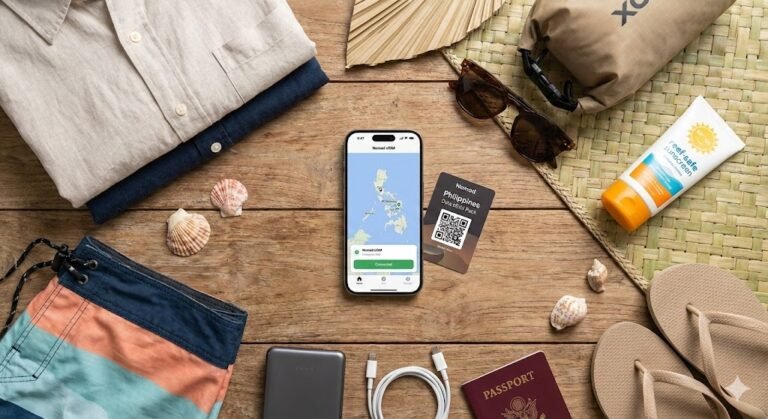
- Instant Activation: You can purchase and install your Nomad eSIM from your couch before you even pack your bags. When your plane touches down in Manila or Clark, you simply toggle the line on, and you have instant internet access. No queues, no tiny ejector tools, and no risk of losing your home SIM card.
- Reliable Coverage: The Philippines relies heavily on two major networks (Globe and Smart). Coverage can vary wildly—one might work perfectly on a beach in Boracay but fail in the mountains of Ifugao. Nomad’s eSIM technology often connects you to high-quality local networks, ensuring you have navigation and communication capabilities when you need them most.
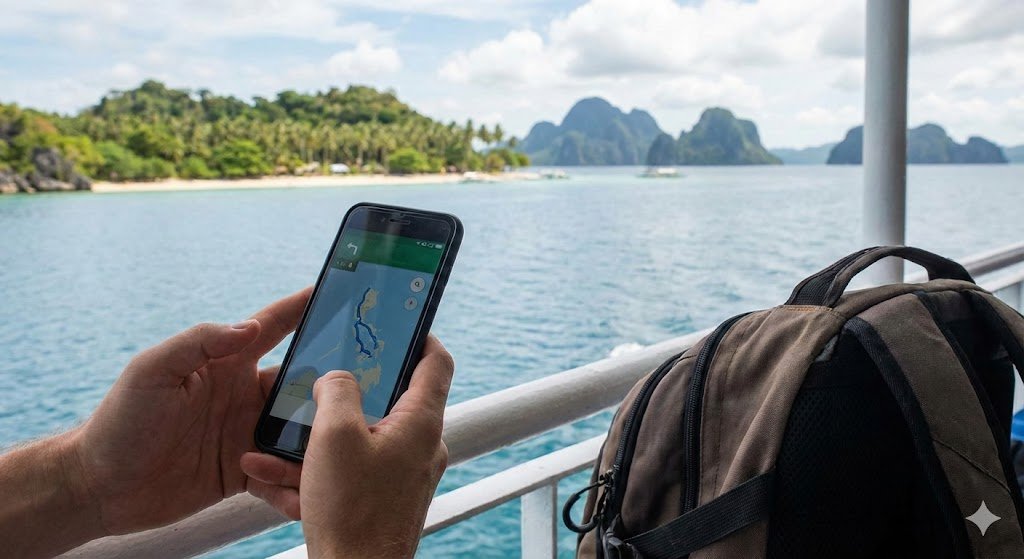
- Safety and Logistics: Travel in the Philippines often involves “on-the-fly” changes. Ferries can be delayed due to weather; tricycle drivers might need to see a map of your hotel. Having reliable data allows you to use essential local apps like Grab (for safe rides and food delivery), Waze (to help drivers navigate), or Google Translate (to bridge language gaps in remote provinces).
- Security: Using public Wi-Fi in airports or cafes exposes you to security risks. A personal data connection is always safer for accessing banking apps or booking flights.
Pro-Tip: Don’t wait until you land. Install your Philippines data eSIM a day before your flight. This ensures that the moment the “Fasten Seatbelt” sign turns off, you can message your family or book your airport transfer immediately.
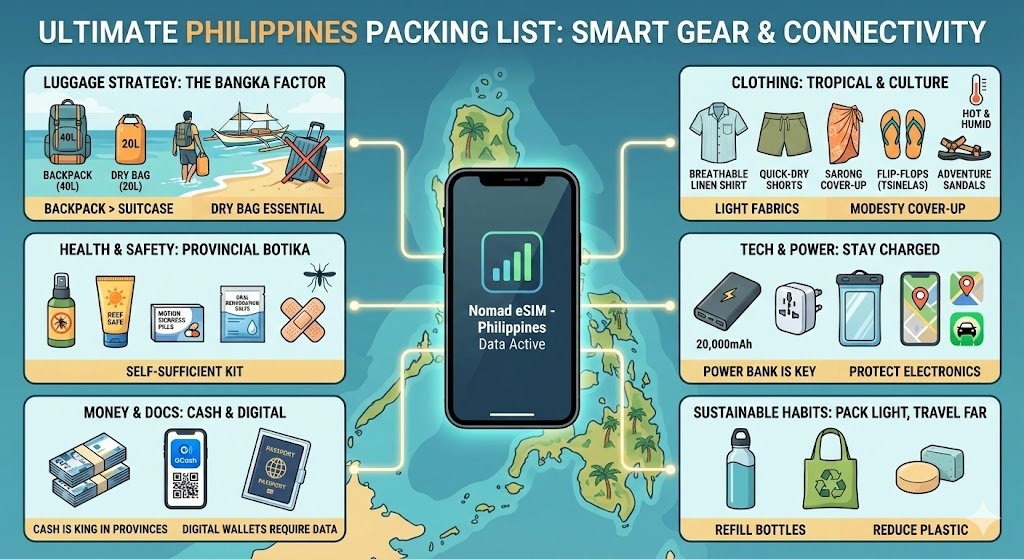
2. Luggage Strategy: The “Bangka” Factor
Packing for the Philippines requires a different mindset than packing for Europe or North America. The key factor to consider is the Bangka (the traditional outrigger boat).
If you plan to visit islands like Coron, El Nido, Siargao, or Bohol, you will eventually find yourself transferring luggage onto a boat. These boats often do not dock at a concrete pier; they pull up to the beach. You may have to wade through knee-deep water to board, carrying your luggage.
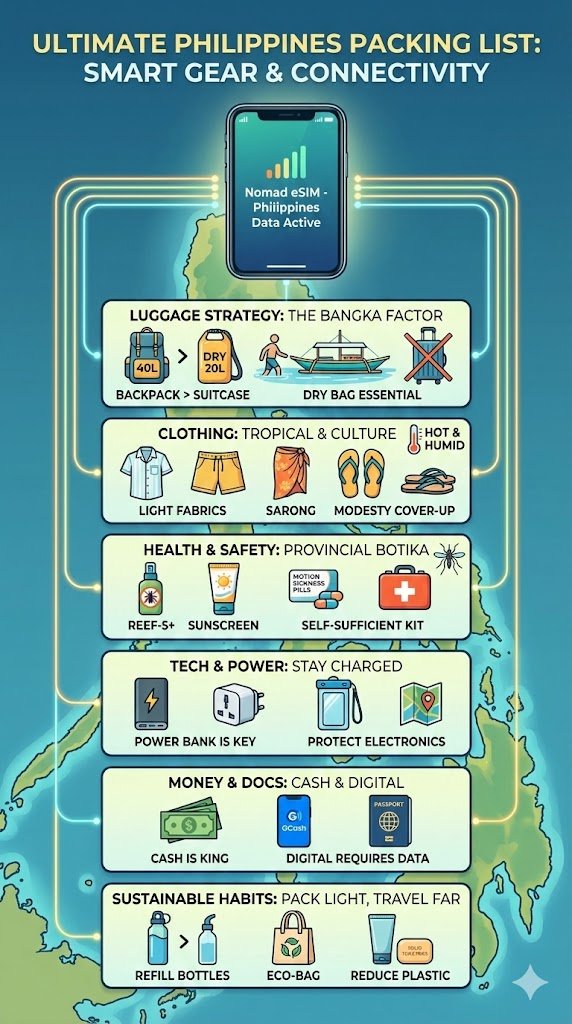
- The Main Bag: A travel backpack (40L–50L) is vastly superior to a rolling suitcase. Dragging a wheeled suitcase through sand, gravel paths, or up the stairs of a budget hostel is a recipe for frustration. A backpack keeps your hands free for balance when boarding ferries or climbing into tricycles.
- The Day Pack: Bring a lightweight, foldable daypack (15L–20L) for daily adventures. This is what you will take on hikes, motorbike rides, and city tours.
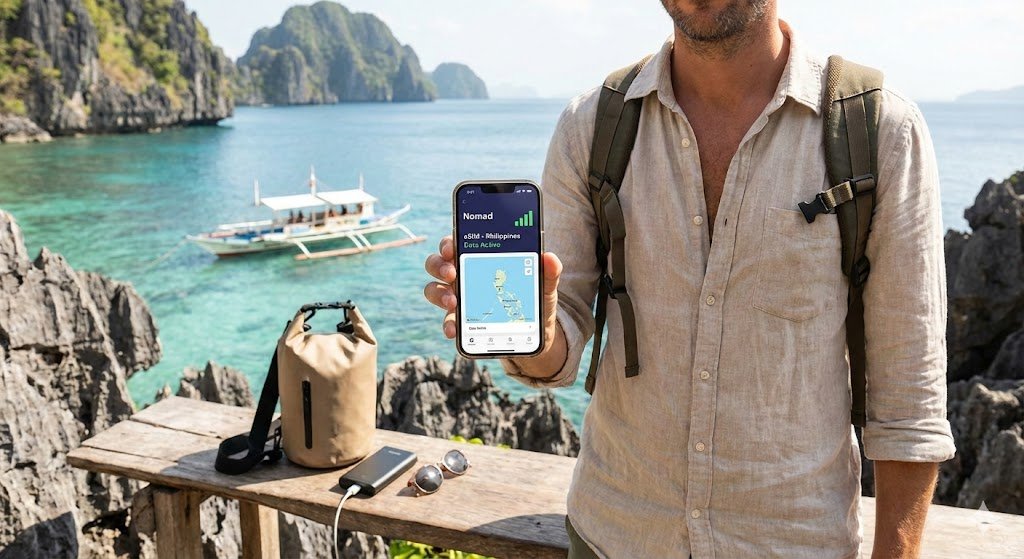
- The Dry Bag (Non-Negotiable): This is the most underrated item for the Philippines. A 10L or 20L waterproof dry bag is essential. When you are on an island-hopping tour, splashes are inevitable. A dry bag ensures your expensive camera, passport, and phone stay bone-dry even if a wave crashes over the side of the boat.
3. Clothing Essentials: Tropical Comfort & Culture
The climate in the Philippines is generally hot and humid, with a wet season (Habagat) roughly from June to October and a dry season (Amianan) from November to May. However, brief rain showers can happen anytime. Your goal is breathable fabrics that dry quickly.
Tops and Bottoms
- Fabrics: Avoid heavy cotton and denim. In 85% humidity, thick cotton absorbs sweat and never dries, leaving you uncomfortable and prone to skin chafing. Opt for linen, rayon, or synthetic moisture-wicking blends. Merino wool is also excellent as it is naturally anti-microbial and temperature-regulating.
- The “Mall” Factor: While it is hot outside, Filipinos love air-conditioning. Malls, cinemas, and long-distance buses are often freezing cold. Always pack one lightweight hoodie or a versatile scarf/sarong that can double as a blanket.
- Modesty: The Philippines is a conservative, predominantly Catholic country. While bikinis and board shorts are standard on the beach, wearing them in churches, government offices, or even some family-run restaurants is frowned upon. Pack a “cover-up” outfit—like a sarong or a loose button-down shirt—for transition moments.
- Quantity:
- 4-5 T-shirts/Tank tops
- 2-3 pairs of shorts (quick-dry hybrid shorts are best for men)
- 1 pair of lightweight long pants (for mosquitoes at night or riding motorbikes)
- 1 light rain jacket (essential, even in the dry season)
The Footwear Trinity
You only need three pairs of shoes for the Philippines:
- Flip-Flops (Tsinelas): The national footwear. You will live in these. Easy to slip on and off when entering local homes or hostels (where shoes are often removed).
- Adventure Sandals (with straps): Think Teva or Chaco style. You need footwear that stays attached to your feet while swimming in rocky waterfalls (like Kawasan Falls) or hiking muddy trails.
- Lightweight Sneakers: For travel days, airports, and city walking in Manila or Cebu.
4. Beach and Water Gear: Exploring the Blue Frontier
A trip to the Philippines is incomplete without exploring its aquatic wonders. The coral triangle is teeming with life, and you want to be ready to jump in.
- Snorkel Mask: While you can rent masks, they are often scratched or leaky. Bringing your own mask ensures a clear view of the turtles in Apo Island or the sardine run in Moalboal.
- Rash Guard (UV Protection): The tropical sun is fierce. A sunburn on day one can ruin the rest of your trip. A long-sleeved rash guard protects your skin better than sunscreen and helps you avoid stinging jellyfish (which are common in certain seasons).
- Microfiber Towel: Traditional towels are bulky and take forever to dry in humidity (leading to a musty smell). A microfiber travel towel packs down to the size of a fist and dries in minutes.
- Reef-Safe Sunscreen: Many popular tourist spots, such as El Nido and Coron, are strictly enforcing rules against toxic sunscreens to protect their coral reefs. Look for mineral-based sunscreens containing Zinc Oxide or Titanium Dioxide, and avoid Oxybenzone and Octinoxate.
5. Travel Health and Safety Kit: The Provincial “Botika”
While major cities have excellent pharmacies (Botika), remote islands may have limited stock. It is vital to be self-sufficient for minor ailments.
- Motion Sickness Tablets: Inter-island ferries can be choppy. If you plan to take the fast craft from Bohol to Cebu or a bangka across open water, having meclizine or dramamine is a lifesaver.
- Stomach Health: “Traveler’s Tummy” can happen due to changes in water or food bacteria. Pack Loperamide (Imodium) for emergencies and an electrolyte powder (like Oral Rehydration Salts) to recover from dehydration.
- Insect Repellent: Dengue fever is a real risk in tropical countries, transmitted by mosquitoes that bite during the day. Bring a repellent with DEET or Picaridin.
- The “Boo-Boo” Kit: Waterproof band-aids, antiseptic wipes, and antibiotic ointment. Coral cuts (which you should try to avoid by not touching coral!) can easily get infected in tropical climates.
6. Technology That Simplifies Travel
Electronics are your lifeline, but they need to be protected and powered correctly.
- Power Bank: This is non-negotiable. Island power grids can be unreliable. “Brownouts” (blackouts) are common in places like El Nido or Siargao. A 20,000mAh power bank ensures your phone—and your Philippines data eSIM connection—stays active so you can use your flashlight or maps even when the town goes dark.
- Universal Adapter: The Philippines primarily uses Type A (two flat pins, like the US) and Type B (two flat pins with a grounding pin), but some older establishments use Type C (two round pins, European style). A universal adapter covers all bases.
- Waterproof Phone Pouch: Even if your phone is “water-resistant,” salt water is corrosive. A cheap plastic waterproof pouch that hangs around your neck is great for taking photos while kayaking or paddleboarding.
Digital Preparedness:
- Download Offline Maps: While your Nomad eSIM will give you great coverage, having an offline area of Google Maps saved is a good backup for dead zones in deep valleys.
- Ride-Hailing Apps: Download Grab (for cars and food) and Angkas or JoyRide (for motorbike taxis) before you arrive. These are the safest ways to avoid taxi scams in Manila.
7. Important Documents and Cash Strategy
The Philippines is becoming more digital, but Cash is still King (Cash is King), especially in the provinces.
- Cash Breakdown: ATMs in remote areas frequently run out of money or reject foreign cards. Withdraw cash in major cities (Manila/Cebu) before heading to the islands. Try to break your 1,000 Peso bills into smaller 100s and 50s; tricycle drivers and small fruit vendors rarely have change for large bills.
- Digital Wallets: The local equivalent of Venmo/Apple Pay is GCash. It is ubiquitous. You can pay for grilled pork sticks on the street or tricycle rides using a QR code. Note: You need a Philippine mobile number to register for GCash, or roaming data to access your banking apps to withdraw cash. This is where the reliable connection from your Philippines data eSIM becomes crucial for managing finances on the go.
- Document Protection: Keep your passport, travel insurance policy, and vaccination records in a plastic sleeve or a dedicated travel organizer. Humidity destroys paper quickly.
8. Sustainable Packing Habits: The Responsible Traveler
The beauty of the Philippines is fragile. As tourism booms, plastic pollution becomes a major issue. Your packing list can help be part of the solution.
- Reusable Water Bottle: The Philippines has the “Refill Revolution.” Most hostels, hotels, and dive shops offer free filtered water refills to reduce plastic bottle usage. An insulated bottle (like a Hydro Flask) keeps water cold in the sweltering heat.
- Eco-Bags: Single-use plastic bags are banned in many cities (like El Nido and Makati). Bring a foldable tote bag for your 7-Eleven runs or souvenir shopping.
- Solid Toiletries: Shampoo bars and solid deodorants reduce plastic waste and—crucially—save you from liquid restrictions and messy spills in your luggage.
Conclusion: Pack Light, Connect Smart
Strong sunlight, sea breezes, and endless activities define an unforgettable Philippines journey. To embrace the spontaneity of the islands—like jumping on a random boat to a sandbar or changing plans for a local fiesta—you need to be unburdened by heavy luggage but supported by the right tools.
From breathable linen to reef-safe protection, practical gear means fewer troubles on the road. But above all, staying connected is what keeps you safe. Before diving into turquoise seas, equipping yourself with a Philippines data eSIM from Nomad ensures you are linked, informed, and free to roam.
Pack smart, install your eSIM, and step into an experience that feels both exciting and effortless.
Frequently Asked Questions
1. Why should I choose a Philippines data eSIM instead of a physical SIM card?
Buying a physical SIM at Philippine airports now requires standing in long queues and completing a mandatory SIM registration process with your passport details. A Philippines data eSIM allows you to skip these lines entirely. You can install it before you fly and get instant internet access the moment you land, making it the faster and more convenient option.
2. Will my phone work with a Philippines data eSIM?
Most modern smartphones released in the last few years are eSIM compatible. This includes iPhone XR and newer, Google Pixel 3 and newer, and many recent Samsung Galaxy models. You can check your phone’s settings (under “Cellular” or “Mobile Data”) to see if there is an “Add eSIM” option.
3. What is the “Bangka Factor” in packing?
The “Bangka Factor” refers to the small outrigger boats used for island hopping. These boats often do not dock at piers, requiring you to wade through knee-deep water to board. Because of this, travel backpacks are recommended over rolling suitcases, and a waterproof dry bag is essential to protect your electronics from splashing waves.
4. How much cash should I bring to the islands?
While cities like Manila accept credit cards, cash is still king in provinces like Palawan or Siargao. It is best to withdraw cash in major cities before heading to remote islands. Digital wallets like GCash are also widely used, but remember that you will need a reliable internet connection—via your Philippines data eSIM—to use them.
5. Is there a strict dress code in the Philippines?
The Philippines is a tropical country, so lightweight, breathable clothing is best. However, it is also a conservative Catholic nation. While swimwear is fine for the beach, you should have a cover-up, sarong, or pants for visiting churches, government offices, or conservative family establishments.
6. Do I need a power adapter for the Philippines?
The Philippines uses Type A (two flat pins), Type B (two flat pins with a grounding pin), and occasionally Type C (two round pins). If you are coming from Europe or the UK, you will likely need an adapter. A universal travel adapter is the safest choice to ensure you can keep your devices charged.