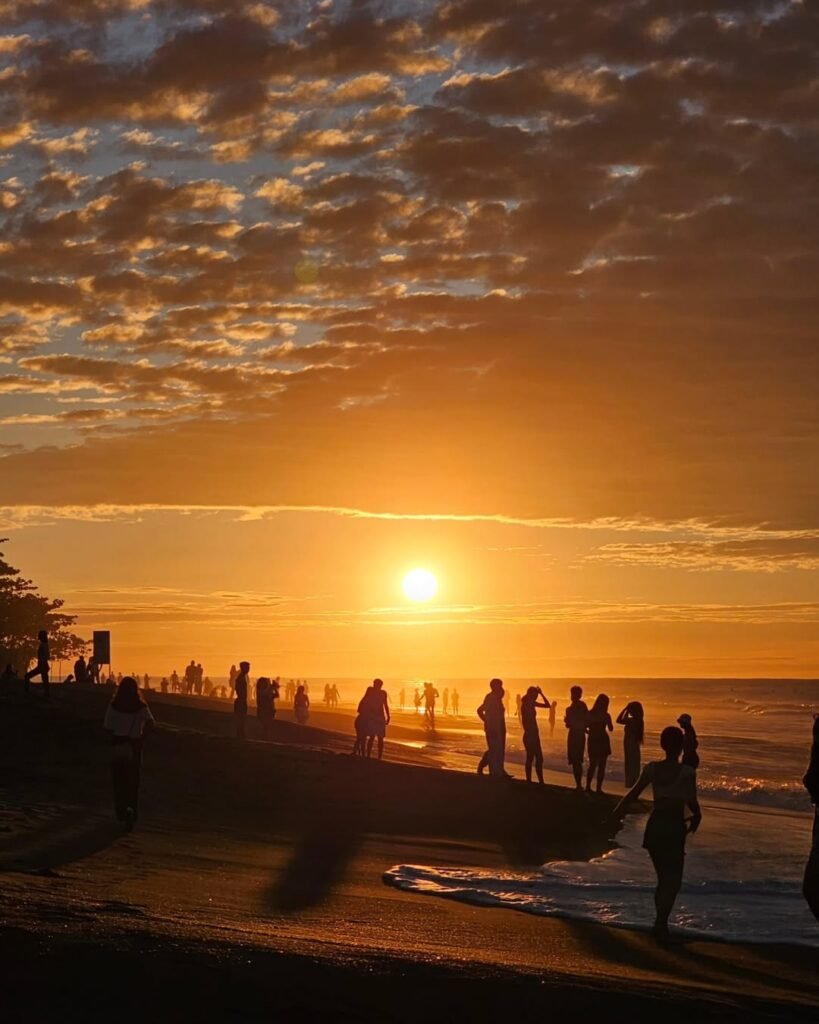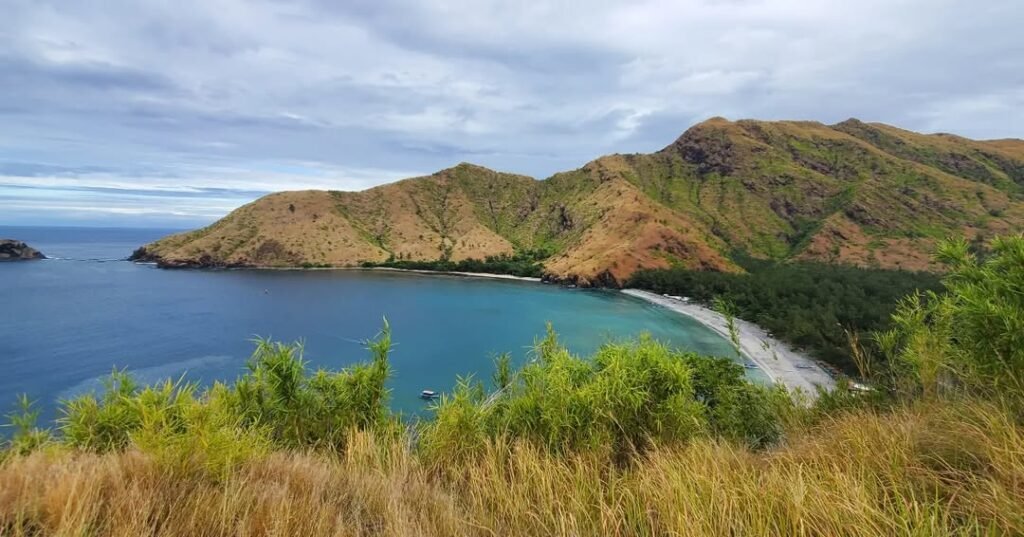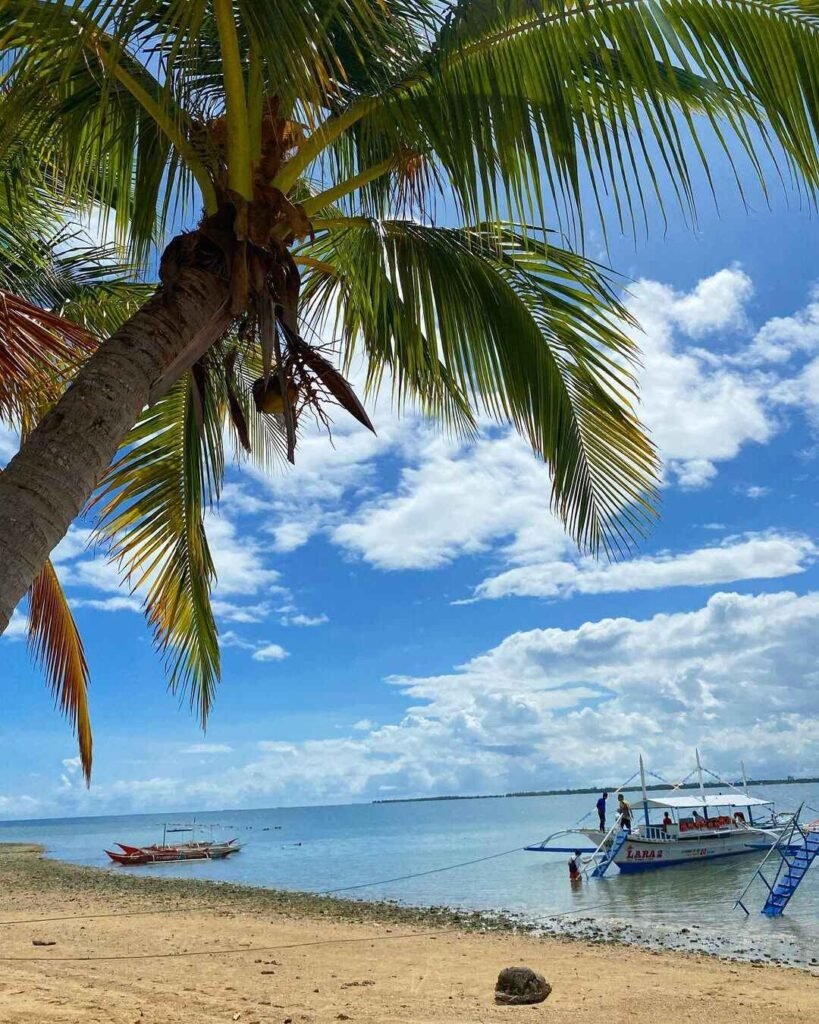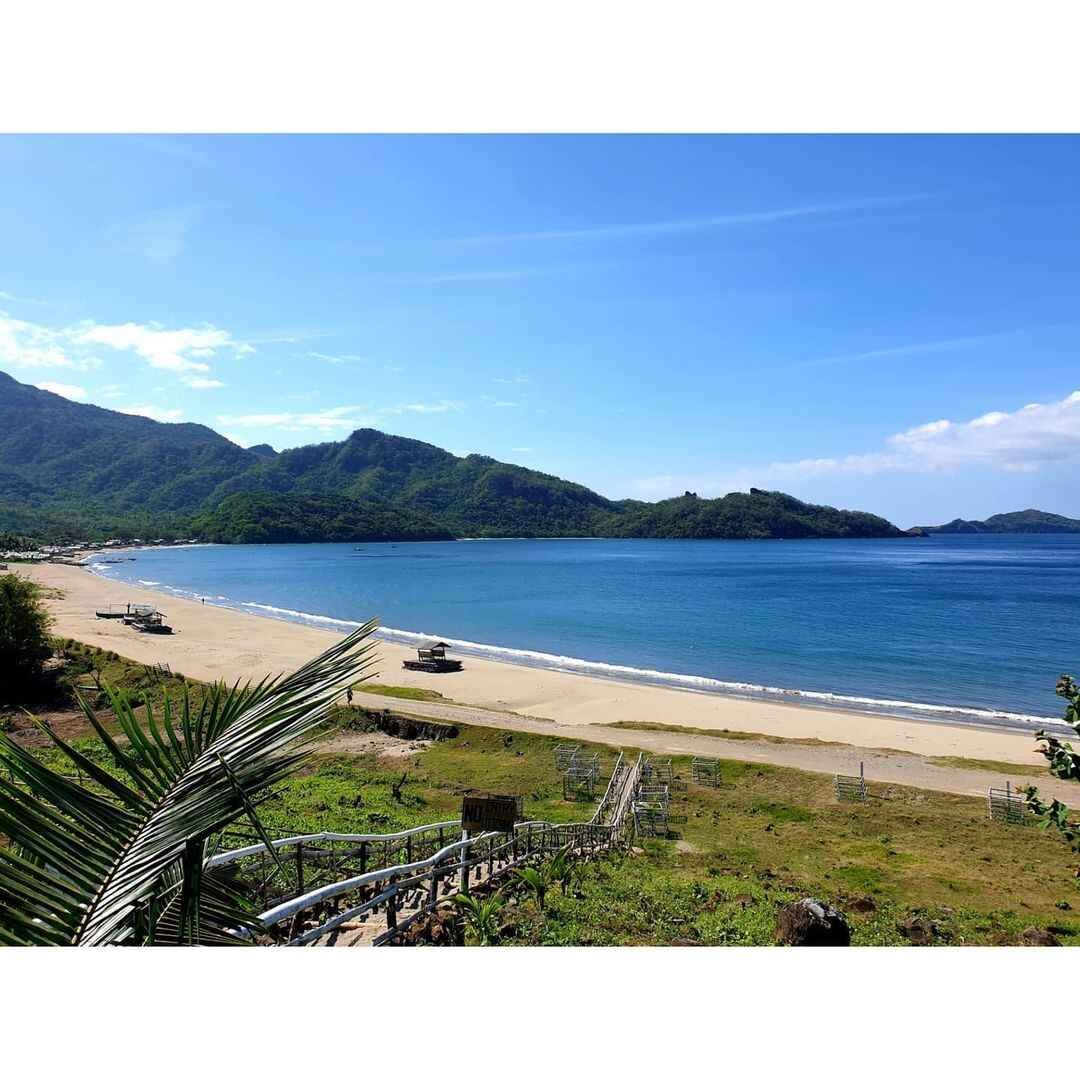
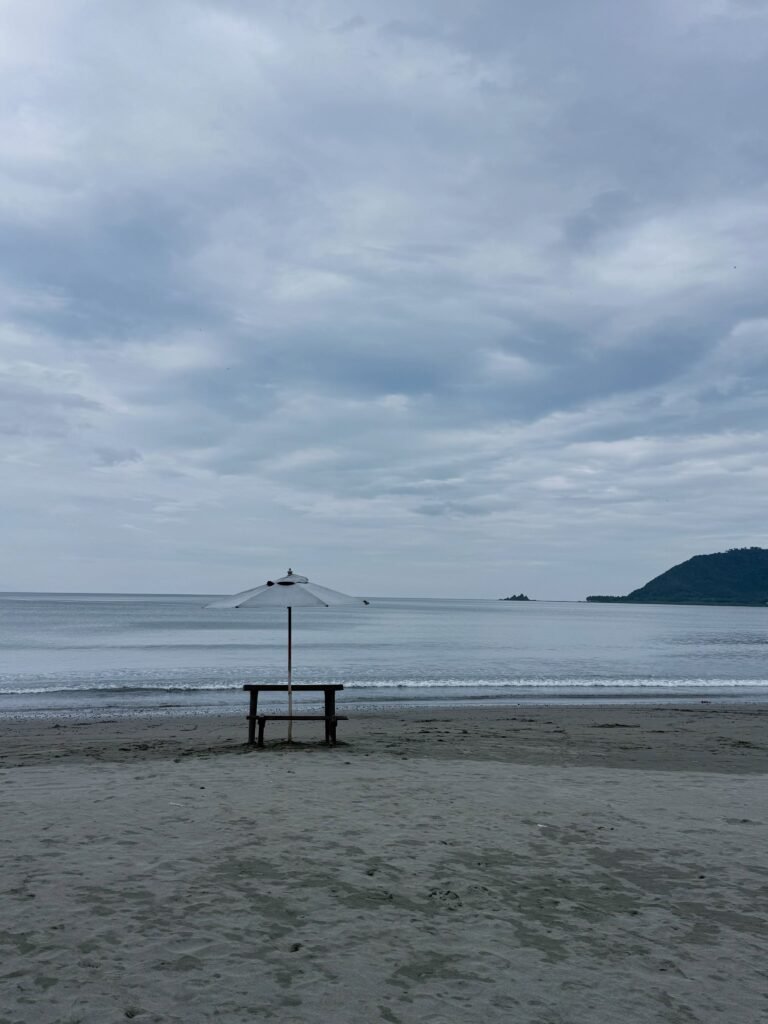
Sabang Beach in Baler, Aurora is the official Birthplace of Philippine Surfing, a title enshrined in law under Republic Act No. 11957 signed in August 2023, and after visiting in May 2026 as part of my running count across 69 of the 82 provinces, I can say the beach earns that status on the water, not just on paper. The shoreline is several kilometres of dark volcanic sand facing the open Pacific, wide enough that even on a long weekend you can find your own pocket of it without fighting anyone for space.
This guide covers everything a planner needs: what the water actually does to non-surfers, which surf break is for whom, how to get here from Manila and from Cabanatuan, where to sleep, and a realistic peso-by-peso cost breakdown built from 2026 figures.
Key Takeaways
- A one-hour surf lesson with board costs ₱350–₱400; independent board rental runs ₱150–₱200 per hour.
- The JoyBus from Cubao to Baler takes 5–6 hours and costs ₱920–₱1,080 one way; the regular Genesis bus takes 7–8 hours at ₱450–₱750.
- Peak surf runs from September to March, driven first by habagat typhoon swells and then by clean amihan offshore winds; April to August is calmer and better for beginners and non-surfers.
- A solo 2-day, 1-night DIY trip from Manila costs roughly ₱5,590–₱7,160 all-in, including transport, accommodation, meals, surfing, and entrance fees.
- Sabang has a sandy bottom beach break suited to all levels; Cemento/Cobra Reef is for advanced surfers only and requires reef booties.
- Non-surfers should check the beach flags before entering the water. Strong currents and shore break make casual swimming genuinely risky when conditions pick up.
Table of Contents
Is Sabang Beach Worth It?
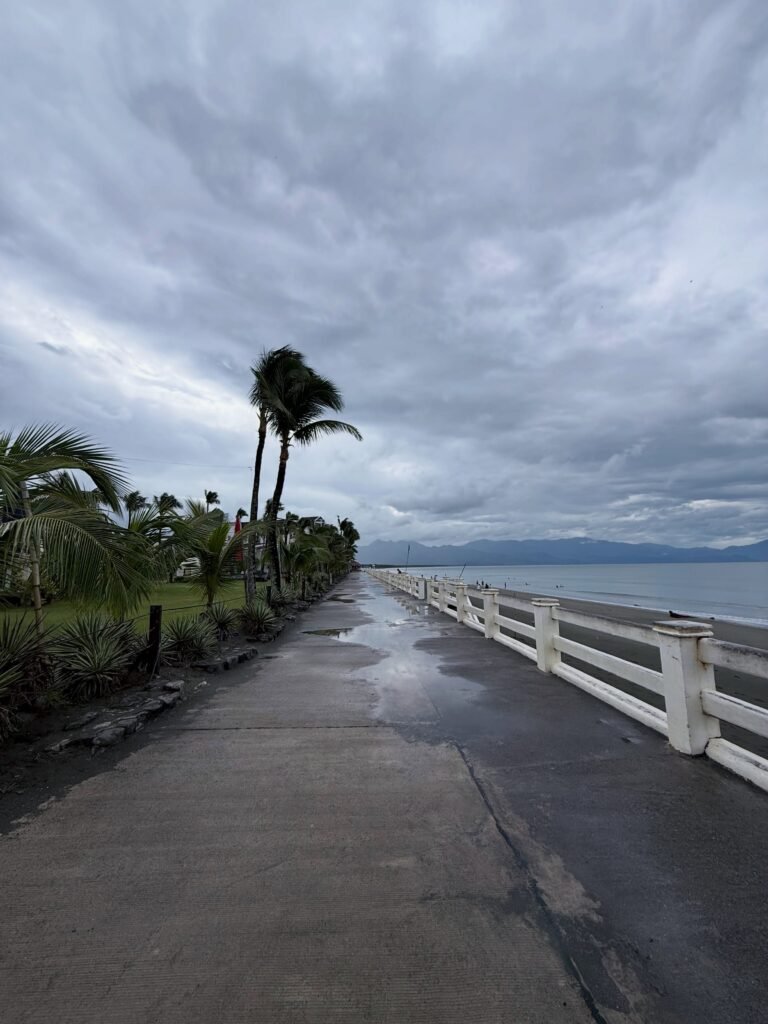
Sabang Beach in Baler Aurora, is worth the trip if you want beginner-friendly surf on a Philippine Pacific beach with a genuine local surf culture and a town full of things to do beyond lying on the sand.
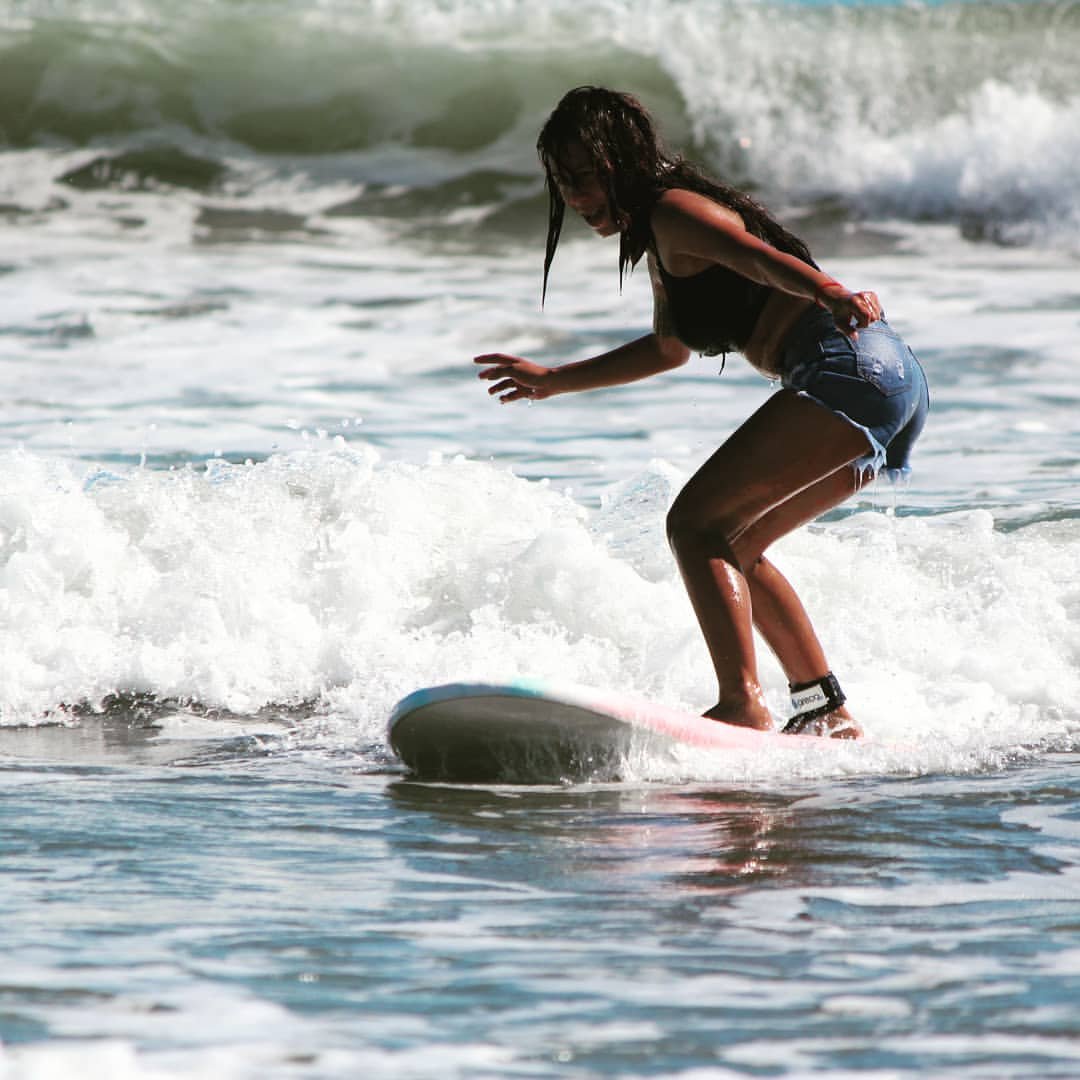
The waves at Sabang crumble rather than pitch, which surf people call mushburgers. They break over a sandy bottom, they run for a decent length, and they accommodate foam boards well. The geography of the bay means there are multiple shifting peaks spread across several kilometres, so even during busy holiday weekends there is room. I have surfed at La Union and at Siargao. Sabang is calmer than both in terms of crowd intensity on the water, and the instruction quality is higher than what I found at comparable beginner beaches in La Union.
For non-surfers, the beach is beautiful to sit on and walk along, but the water is not a casual swim. The shore break is heavier than it looks from the sand, and rip currents form without warning, particularly during swell events. The municipal flag safety system (covered in detail later in this guide) is real and actively enforced. Leisure swimmers need to pay attention to those flags.
The food scene, the inland day trips, and the affordable accommodation push Sabang ahead of many comparable beaches in the country. A solo DIY trip for two days and one night costs roughly ₱5,590 to ₱7,160 all-in.
2026 Cost Breakdown for a Sabang Beach DIY Trip
The table below is built for a solo traveller departing Manila, staying one night at a mid-range pension house, eating at beachfront restaurants, and doing one surf lesson plus a full inland tricycle tour. Costs for accommodation and tricycle hire drop sharply when shared with travel companions.
| Expense | Detail | Cost (₱) |
|---|---|---|
| Transport Manila–Baler (roundtrip) | JoyBus Executive, both ways | ₱1,840–₱2,160 |
| Accommodation (1 night) | Mid-range pension house | ₱1,000–₱1,500 |
| Local transit | Whole-day tricycle tour, solo | ₱800 |
| Surfing | 1-hour lesson with board | ₱350–₱400 |
| Food and drinks | 4–6 meals at ~₱300 each | ₱1,200–₱1,800 |
| Entrance and guide fees | Mother Falls, Balete Tree, museum, Ermita Hill | ₱300–₱400 |
| Short tricycle drops | Terminal to beach, miscellaneous | ₱100 |
| Total | Comprehensive 2-day trip | ~₱5,590–₱7,160 |
The old version of this article listed surf lesson rates and bus fares from 2024 that no longer reflect what is posted at the beach. The figures above are from the 2026 rate boards and buses.
Surfing rates on Sabang Beach in 2026:
| Service | Cost (₱) |
|---|---|
| 1-hour lesson (instructor + softboard) | ₱350–₱400 |
| 1-hour board rental only | ₱150–₱200 |
| Half-day board rental | ₱400 |
| Full-day board rental | ₱800 |
Independent travellers who negotiate directly with roaming instructors on the beach rather than through a resort sometimes get a lesson-and-board package for as low as ₱150 per half hour, but there is no guarantee of that rate.
Travel packages from Manila-based tour operators scale sharply with group size. For a 2-day, 1-night package from operators like PL Travel Services and WayPH:
| Group Size | Per-head rate (₱) |
|---|---|
| 12–14 pax | ₱2,200–₱3,999 |
| 8–11 pax | ₱2,700–₱5,999 |
| 5–7 pax | ₱6,999–₱8,999 |
| 2–4 pax | ₱10,999–₱14,999 |
Children aged 0–3 travel free (no seat, sharing a bed). Children aged 4–5 are charged at 50%. Meals are excluded from base package rates and holiday surcharges apply during Holy Week and long weekends. Surfing lessons at ₱350 per hour and Dicasalarin Cove access at ₱300 per person are add-ons.
Senior citizen and PWD discount policies at individual resorts, restaurants, and activity providers vary. Confirm directly at each establishment before paying, and ask whether card payment is accepted, as many beachfront vendors remain cash-only.
How to Get to Sabang Beach in Baler
The fastest and most comfortable way to reach Sabang Beach from Manila is the JoyBus from Cubao, which takes 5–6 hours and costs ₱920–₱1,080 one way. The regular Genesis air-conditioned bus covers the same route in 7–8 hours for ₱450–₱750.
From Manila (Cubao or Pasay)
Both services depart from the Genesis terminal at 704 EDSA cor. New York St., Cubao, Quezon City, and from the Pasay terminal.
| Service | Fare (one way) | Travel time |
|---|---|---|
| Genesis Regular Aircon | ₱450–₱750 | 7–8 hours |
| JoyBus Executive | ₱920–₱1,080 | 5–6 hours |
JoyBus coaches seat 28 in reclining “lazy boy” chairs, include an onboard lavatory, a stewardess, blankets, and complimentary snacks, and run non-stop. Book through iWantSeats or PinoyTravel. Confirmed Cubao departures include 12:30 AM, 2:00 AM, and 4:30 AM; check the booking platform for the current full schedule, as slots change seasonally and sell out on long weekends.
From the Baler Central Terminal, a tricycle to Sabang Beach or your accommodation costs ₱15–₱25 per passenger.
From Central or Northern Luzon via Cabanatuan
If overnight buses from Manila are full, or if you are coming from Central Luzon, Cabanatuan City in Nueva Ecija is the transit hub. The Cabanatuan-to-Baler leg is 115.4 kilometres and takes approximately 3 hours.
JoyBus runs direct services on this corridor with no transfers. Departures are staggered roughly every four hours: 3:30 AM, 5:00 AM, 5:30 AM, 7:30 AM, and continuing through the day to a final departure at 5:30 PM (arriving in Baler at 8:30 PM). The fare for this leg is ₱868.
Driving
The driving distance from Manila is roughly 275 kilometres, taking 5–8 hours depending on traffic and road conditions. The standard route goes through NLEX and SCTEX, then through Cabanatuan and up through the Canili-Pantabangan Road into Aurora. That mountain pass features steep grades, sharp hairpin turns, and sections that narrow significantly, so the vehicle needs to be in solid mechanical condition and the driver needs to know the road. An alternate route through Baler-Bongabon is subject to closures and landslides during heavy rain and is generally treated as a secondary option.
The winding Sierra Madre topography physically limits the number of large tour buses that can reach Baler, which is one reason the place feels less saturated than comparable coastal destinations that sit on flat, easily accessible ground.
When to Visit Sabang Beach
The best time to visit Sabang Beach depends on whether you are there to surf seriously or to swim and relax.
September to March is the peak surf season. It splits into two phases. From September through November, habagat (southwest monsoon) low-pressure systems and typhoon swells push powerful, disorganised waves onto the coast. These suit intermediate to advanced surfers and produce the raw, heavy conditions that draw competitive riders. From December through March, the amihan (northeast monsoon) takes over, delivering clean offshore winds that groom the incoming groundswells into their best shape. Peak quality sits between December and January. This is also when WSL-affiliated events like the Baler International Pro are held.
April to August brings calmer conditions, clearer skies, and smaller waves. Water visibility improves, currents ease, and the beach becomes genuinely comfortable for non-surfers, families, and beginner learners who do not want to fight heavy shore break on their first pop-up attempt. May was dry and manageable during my visit, though the waves were modest by surf standards.
The old article described the peak surf season as driven by the “northeast monsoon from September to February.” That framing was off. September is still habagat territory. The full surf window is September to March, but the conditions within that window differ significantly between the typhoon-swell months and the clean amihan months.

What to Expect on the Water: Surf Breaks and Swimming Safety
Sabang Beach has a sandy bottom beach break suited to beginners and intermediates, but the wider bay includes advanced reef breaks and river-mouth peaks that are not for the uninitiated.
The surf breaks by skill level
Sabang Beach (beginner to intermediate): The main break sits directly in front of the resort strip. The sandy bottom forgives wipeouts. Waves produce left and right peaks, crumble rather than throw, and run between 2 and 8 feet depending on the swell. Multiple peaks spread across several kilometres mean there is room even when it is busy. Softboard instructors from ASRAI-affiliated schools work this section all morning. This is where you take your first lesson.
Charlie’s Point (all levels): A short tricycle ride or walk north of town, at the mouth of the Tibag-Sabang River. This is the stretch where the Apocalypse Now crew filmed the surfing sequences in 1976. It produces medium-quality lefts and rights and is highly consistent during the amihan season. The mixed sand-and-gravel bottom is more forgiving than a reef but rougher than Sabang’s sand.
Lindy’s Point (intermediate to advanced): Further north of Charlie’s Point, this break was created when local engineers opened the Baler Bay mouth to the river for flood management. The clash between river outflow and incoming Pacific swell creates tall, sharp, unpredictable waves. Beginners should not be in the water here.
Cemento Reef / Cobra Reef (advanced only): Located south of town, across the river. The reef creates a wedge-shaped break, resembling a cobra’s spread hood, that produces fast, hollow rights and lefts. The paddle-out crosses a pebble reef populated with sea urchins. Reef booties are not optional here, they are necessary. This is where local competitions have historically been staged. If you are still working on your pop-up, this break is not for you.
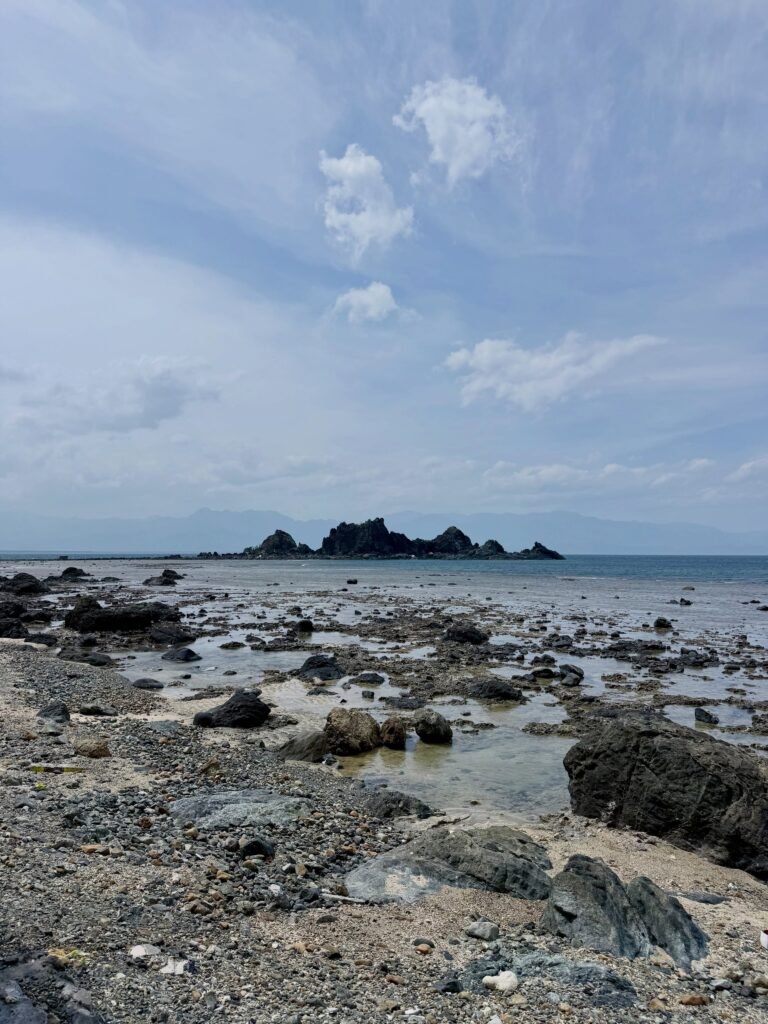
Diguisit Beach (advanced): Near the Lukso-lukso rock formations, offering strong waves against a dramatically photogenic backdrop. Less crowded than Sabang, with rocky hazards that punish technical mistakes.
Surf instruction
All first-time learners go through a dry-land tutorial before entering the water. Instructors cover paddling mechanics, the pop-up into a stable stance, keeping the gaze forward rather than down at the board, and falling protocol (backward, not forward; leash hand rather than board hand in the impact zone). Lessons use 8-foot soft-top foam boards, which maximise buoyancy and absorb impact. The hour costs ₱350–₱400 including the board and a dedicated instructor who pushes you into waves.
Is it safe to swim at Sabang Beach?
Sabang has strong currents and heavier shore break than many Philippine beaches, and this is not flagged clearly enough in most travel content about the place. For casual leisure swimming, the conditions genuinely matter, and the municipal flag system tells you whether today is safe. Familiarise yourself with these before going anywhere near the water:
| Flag | Meaning | What to do |
|---|---|---|
| Green | Low hazard | Swimming permitted, lifeguards on duty |
| Yellow | Medium hazard | Swim with caution; currents or sandbar shifts present |
| Red | High hazard | Water closed to the public; no swimming |
| Red + Yellow (paired) | Supervised zone | The safest section for swimmers; lifeguards actively patrolling |
| Black + White (paired) | Surf craft zone | Surfboards and non-powered craft only; no swimmers |
| Purple | Marine hazards | Jellyfish, stingrays, or sea snakes present |
If no flags are flying, no lifeguards are on duty. Do not enter the water.

Where to Stay at Sabang Beach
Sabang Beach accommodation divides cleanly into three tiers. DOT accreditation requirements introduced during the pandemic raised the floor across all of them, so the unregulated transient houses that used to dominate the budget end have largely been absorbed into the formal market.
Luxury: Costa Pacifica Resort is the premium property on the strip, owned by the Angara family. It has 78 rooms, a swimming pool, 24-hour reception and in-room dining, a shuttle service, and massage facilities. Check-in is 2:00 PM, check-out is 12:00 PM. The resort is pet-friendly for vaccinated cats and dogs. Guests get significantly discounted entry to Dicasalarin Cove (₱100 vs. the standard walk-in rate of ₱250–₱450). A 10% spa discount applies for stays from Sunday to Thursday. For current room rates, book directly through the Costa Pacifica website or an OTA, as rates shift seasonally.
Mid-range surf camps: Nalu Surf Camp and Aliya Surf Camp both sit directly on Sabang Beach and are built around the surf lifestyle. Both offer beachfront access, in-house instructors, and board rentals. Aliya is better known for structured group lessons with strict safety oversight. Nalu fosters more of a communal atmosphere suited to solo travellers. Playa Azul Baler targets couples and families who want ocean views without the full surf-camp energy. Bay’s Inn remains one of the more recognisable names on the strip, with its Hungry Surfer restaurant next door.
Budget: Isaguirre’s Pension House offers air conditioning and Wi-Fi at rates around ₱1,096 per night, with an early check-in fee of approximately ₱200. It sits slightly inland, which means easier walking access to both Sabang and Cemento Reef. Blue Coco Baler Beach House is another solid budget option slightly removed from the loudest part of the strip. The Circle Hostel targets solo backpackers looking for a social environment.
Specialist: Seasta Beach Resort is positioned directly in front of Cemento Reef. If you are an experienced surfer who wants to paddle out to the reef without a daily tricycle transfer, this is the only property that eliminates that logistics problem. It has wood-built cabanas, a pool, and a bar.
Other options along the strip and in the town proper include Akkaw Baler Hometel, Coastal Breeze Hotel, Hotel Rupert A Baler, Bahai Jujai Baler by RedDoorz, Ola de Baler Hotel, La Patricia Hotel de Baler, Casa Herminia Baler, Nina’s Transient, and Damara Beach Front Resort.
Book early for Holy Week and Christmas-New Year. The JoyBus seats and the beachfront rooms fill weeks in advance.
What to Do Beyond the Beach
Sabang Beach is the starting point. The rest of Baler justifies at least a second full day.
Dicasalarin Cove and the Baler Lighthouse: Privately managed by the Angara family, this white-sand cove is reached via a steep, narrow, one-way mountain road. Standard tricycles and sedans often cannot complete the ascent; expect to transfer to an off-road vehicle or habal-habal for upwards of ₱700. Walk-in entrance is ₱250–₱450 per person. Costa Pacifica guests pay ₱100–₱150.
The cove itself is worth the logistics. The Baler Lighthouse at its edge requires climbing 170 concrete steps to a viewpoint overlooking the Sierra Madre, the Aniao Islets, and the open ocean. Parts of the cliff face around the lighthouse lack safety railings and show erosion, so keep children close. The adjacent PAG-ASA Weather Radar Station also has a rooftop with panoramic views and is free to enter after signing a logbook.
Ditumabo Mother Falls (San Luis): A 140-foot waterfall in the neighbouring municipality of San Luis, about 30–45 minutes of trekking from the trailhead through secondary forest and over multiple river crossings on slippery rocks. Entrance is ₱30 per person and ₱30 for vehicle parking. Hiring a local guide is mandatory under municipal rules, not a suggestion; guide fees run ₱200–₱300 per group of up to 10–12 persons. The pool at the base runs ice-cold from mountain springs.
Swimming is allowed in the deeper sections but tourists are prohibited from approaching the impact zone directly under the falls because of powerful, unpredictable currents. There are no washroom facilities at the falls; use the ones at the commercial stalls near the parking area before you start the trek.
Millennium Balete Tree (Maria Aurora): In the next municipality over, this massive Balete tree is claimed to be the largest in Asia. The tree is hollow at the centre and you can walk inside the intertwined root structure for an entrance fee of ₱10–₱15. The inner roots are slippery after rain; a guide helps with the climb.
Ermita Hill: In 1735, a tsunami called Tromba Marina destroyed the original Baler settlement. Survivors climbed this hill to escape the water, and a statue at the foot of the hill commemorates that event. Ascending the 270 steps to the view deck gives clear sightlines over Sabang Beach, the Tabag-Sabang Beach, and the river delta. The grounds also contain a grotto, a white cross, and Spanish-era escape tunnels. Entrance is ₱15 per person, with proceeds going partly to local scholarships.
Town proper: The Museo de Baler and the Dona Aurora Aragon-Quezon House together trace the provincial history and the legacy of President Manuel L. Quezon, who was born in Baler. A combined eco-tourism fee of ₱30–₱50 covers entry to both. The Zabali Hanging Bridge, a pedestrian suspension bridge over the Tibag River connecting Barangay Tibang and Barangay Sabang, is free and offers a perspective on the town that most day-trippers miss.
Getting Around Baler
Once inside Baler, everything runs on tricycles. The municipality standardises the rates.
| Trip type | Cost (₱) |
|---|---|
| Terminal to Sabang Beach (per passenger) | ₱15–₱25 |
| Half-day inland tour (up to 3 pax) | ₱300–₱500 |
| Full-day inland tour covering falls, Balete Tree, Ermita Hill | ₱800 |
Renting a mountain bike costs ₱35 per hour or ₱300 per day. Scooters and motorcycles rent for approximately ₱800 per day. A van for a group of up to 10 people averages ₱2,500 per day.
Where to Eat in Baler
Meals at mid-range beachfront restaurants average around ₱300 per person.
The most photographed spot on the strip is Baler Surfer Grill on Buton Street, where the charcoal grill is built into the engine bay of a vintage Volkswagen Beetle. It is entirely al fresco, the food runs ₱89–₱200 per order, and the queue at peak mealtimes is real. Arrive early or go between meal rushes. Charlie Does, adjacent to Bay’s Inn, runs an Asian menu with a strong vegan-friendly lean and is where much of the local surf community congregates. Kusina Luntian does traditional Filipino plates presented on banana leaves.
Gerry Shan’s draws large tour groups with its buffet format. For kinilaw and local longganisa at budget prices, the carinderias along the beachfront open early and run out by midday.
Boutique options include Kubli Bistro, Angela’s Cafe, Madison’s Cafe, Yellowfin Bar and Grill, The Shack, Dialyn’s Bakeshop, and Yolly’s Ihaw Ihaw and Seafood Resto for anyone after something other than Filipino comfort food. Pako (fiddlehead fern) salad and suman appear on menus across the town and are worth ordering at least once.
Sabang Beach vs. La Union: Which Makes Sense for You
Sabang Beach in Baler Aurora and the surf beaches in La Union are different trips serving different needs, and the right answer depends on your level and your schedule.
La Union is about four to five hours from Manila along a relatively flat, well-serviced road. The waves are generally more powerful and more technical, which suits intermediate to advanced surfers. The commercial strip at San Juan is well-developed, with strong cafe culture and easy-to-navigate booking options. It fills up significantly on weekends.
Baler takes 5–8 hours from Manila depending on your bus choice and the mountain road conditions. The waves at Sabang are softer and more forgiving, the beach is wider and less congested, and the instruction quality within the ASRAI framework is notably high. Baler also wins decisively on the depth of the non-surf itinerary, with the falls, the cove, the heritage sites, and the Balete Tree extending the trip well beyond a single beach day.
For a first-time surfer, Sabang is the better choice. For an intermediate surfer who wants a proper workout and shorter travel time, La Union is more practical. Since August 2023, Baler has the national legislative recognition as the Birthplace of Philippine Surfing, which settles the branding question even if it does not settle where you personally will have more fun.
Frequently Asked Questions About Sabang Beach, Baler
How long is the bus ride from Manila to Sabang Beach, Baler?
The JoyBus from Cubao or Pasay takes 5–6 hours direct with no stops. The regular Genesis air-conditioned bus takes 7–8 hours with stops along the provincial highway. From the Baler Central Terminal, a tricycle to Sabang Beach takes a few minutes and costs ₱15–₱25 per person.
Is Sabang Beach good for non-surfers?
The beach is wide and enjoyable to walk and sit on, but casual swimming carries real risk. The shore break is heavier than it looks from the sand, and the currents shift without obvious warning. Check the beach flag before entering the water. Green flag means swimming is permitted with lifeguards on duty. A red flag means the water is closed. If no flags are flying at all, no lifeguards are present and you should stay out.
What is the water like at Sabang Beach in Baler Aurora?
Sabang faces directly east into the Pacific with no reef barrier, so the water is open-ocean. During the amihan season (December to March), the conditions are at their cleanest and most consistent for surfing. During summer (April to August), the waves flatten out and the water becomes calmer and clearer. No wetsuit is needed year-round; the water temperature stays tropical.
What are the surf spots in Baler and which one is right for me?
Beginners belong at Sabang Beach main break, which has a sandy bottom, soft waves, and wide spacing between peaks. Charlie’s Point at the river mouth is manageable for all levels during calmer periods and is historically significant as the Apocalypse Now filming location. Lindy’s Point and Cemento/Cobra Reef are for intermediate to advanced surfers only. Cemento requires reef booties because the paddle-out crosses a sea-urchin-covered reef. Beginners should not attempt either.
Can I do a day trip to Sabang Beach from Manila?
Technically yes, but it is a poor use of the travel time. The round trip on the JoyBus alone is 10–12 hours. You would arrive by mid-morning and need to be back on the bus by mid-afternoon, leaving a few hours at the beach. If you only have one day available, the trip is not worth it. Two days and one night is the practical minimum; three days is better if you want to see Dicasalarin Cove and the Balete Tree.
What is the best time of year to visit Baler for surfing vs. swimming?
For surfing, visit September to March. The September to November window delivers powerful typhoon-driven swells; December to March brings cleaner amihan winds and more consistently shaped waves with the best quality between December and January. For leisure swimming and beginner surf lessons, April to August is better. Waves are smaller, currents ease, and the weather is dry and sunny.
Are there tour packages from Manila to Baler?
Yes. Operators like PL Travel Services and WayPH run 2-day, 1-night packages that bundle roundtrip van transfer, DOT-accredited accommodation, entrance fees, and a guided inland tour. The per-head rate scales with group size: groups of 12–14 people pay ₱2,200–₱3,999 each, while groups of 2–4 people pay ₱10,999–₱14,999 each. Meals and optional activities (surfing, Dicasalarin Cove) are add-ons. For groups of five or fewer, taking the JoyBus independently and hiring a local tricycle driver is cheaper.
What should I bring to Sabang Beach?
Reef booties if you plan to surf Cemento Reef. Cash, because many beachfront vendors and small restaurants do not accept card payment. Sunscreen rated for open water, since the Pacific sun reflects off the water with more intensity than calmer bay beaches. A dry bag for your phone on the water. The beach is exposed to direct easterly wind, so a light layer for the early morning is useful even in summer.
Are entrance fees charged at Sabang Beach itself?
There is no entrance fee to walk onto Sabang Beach. Fees apply at the specific destinations you visit from it: ₱30 per person at Mother Falls (plus mandatory guide fee of ₱200–₱300), ₱15 at Ermita Hill, ₱10–₱15 at the Balete Tree, ₱250–₱450 per person at Dicasalarin Cove (walk-in rate), and ₱30–₱50 for the museum and heritage house in the town proper.