
Affiliate disclosure: This post contains affiliate links and a promo code. If you sign up for Surfroam through LakbayPinas, I may earn a commission at no extra cost to you. I only recommend products I believe are useful for travellers, and my opinions are my own.
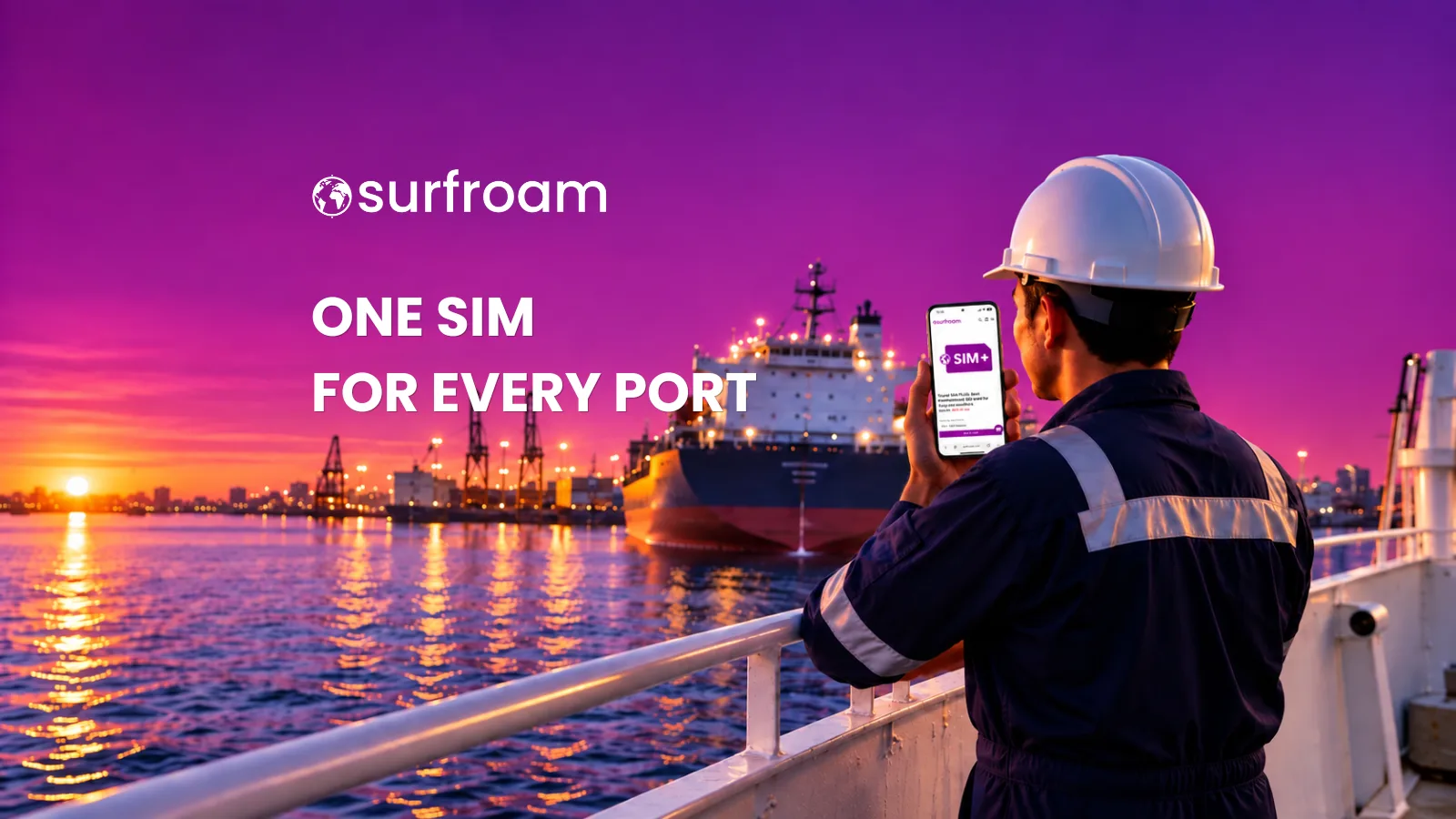
Seafarers have a very different connectivity problem from ordinary holiday travellers. A tourist might need mobile data for one country or one two-week trip. A mariner can spend months moving between ports, countries and continents, often without knowing exactly where the next assignment or diversion will take them.
That changes what makes a travel connectivity solution useful.
For seafarers, the real advantage is not simply finding another inexpensive data package. It is having a mobile connection that can stay with them from one destination to the next.
That is where Surfroam takes a different approach.
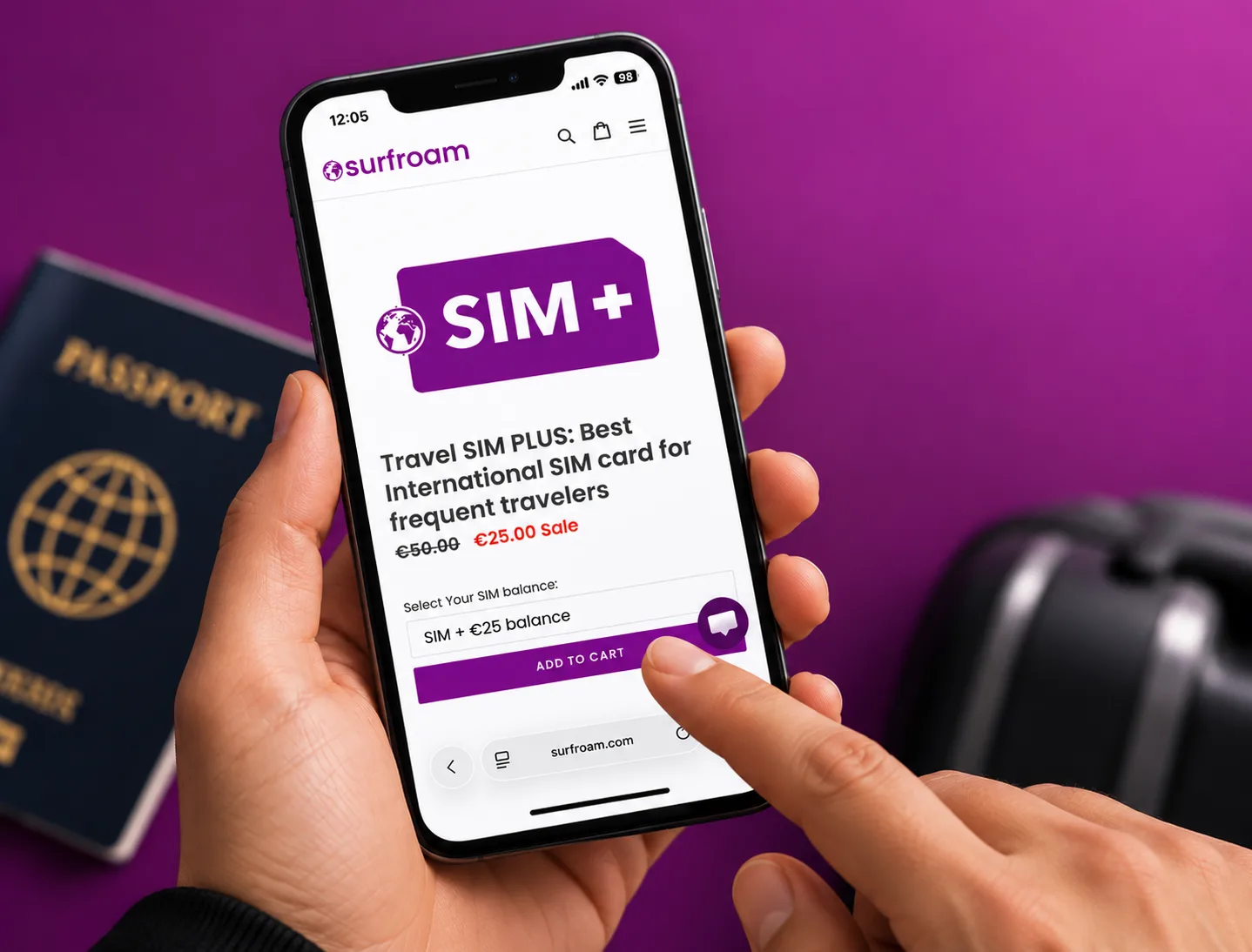
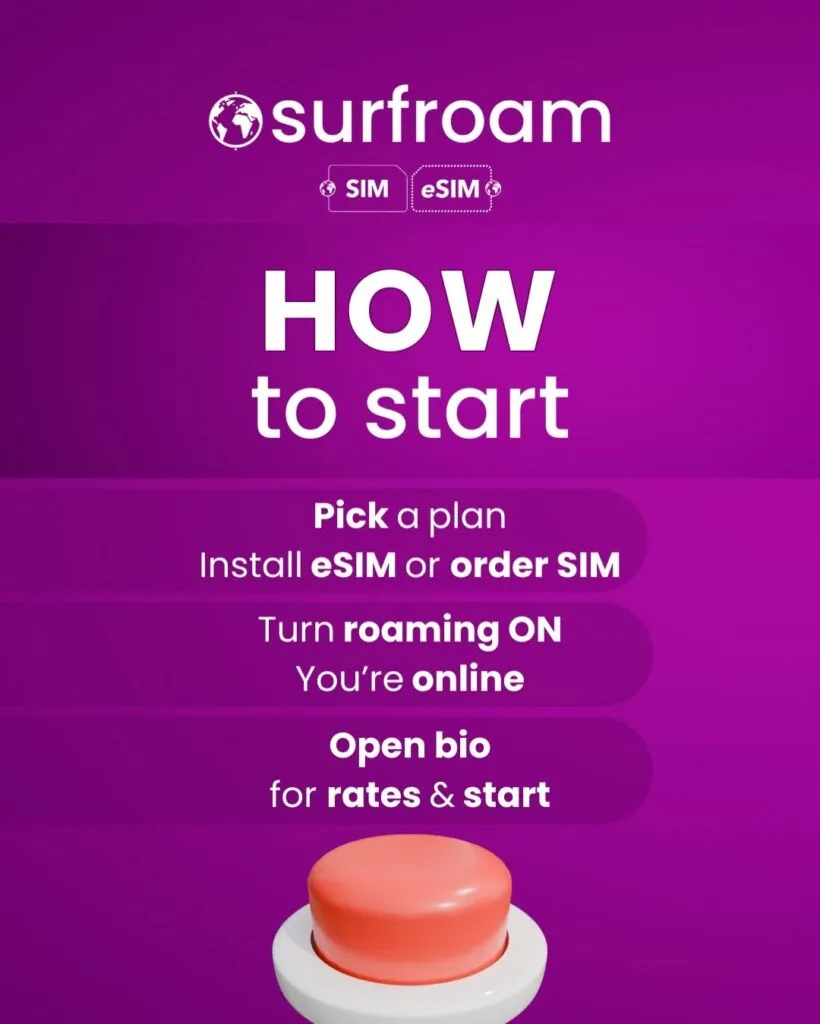
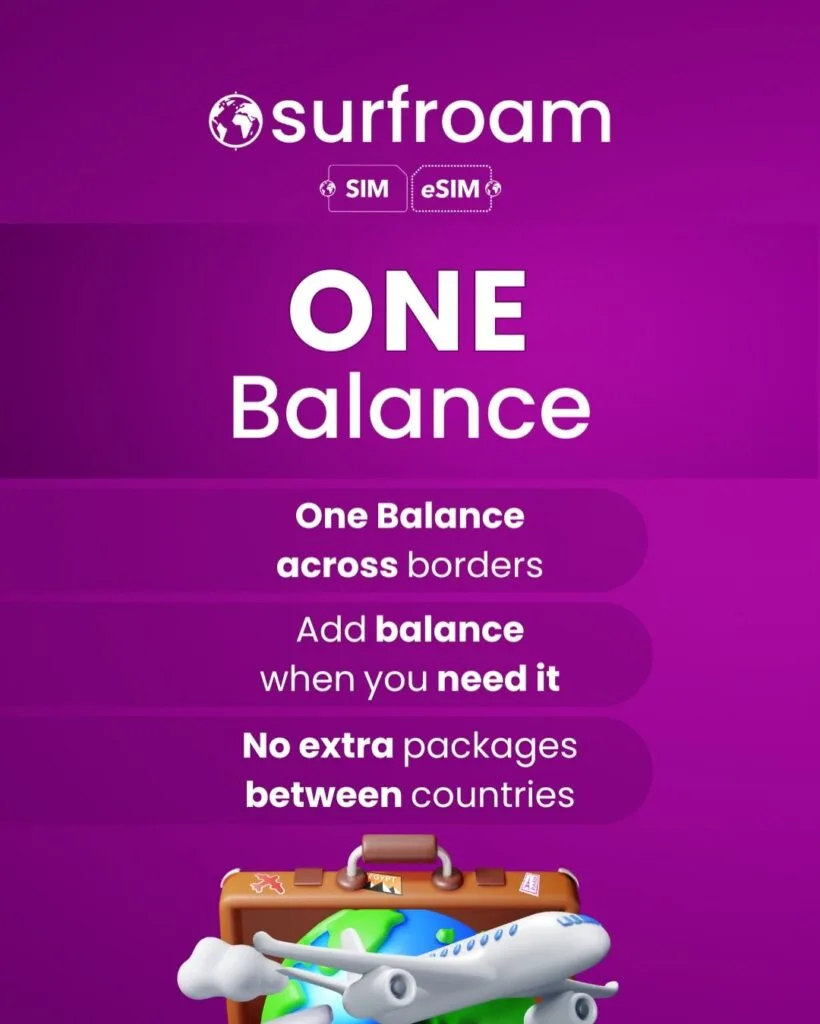
Instead of requiring travellers to buy a new regional package every time their itinerary changes, Surfroam is built around a persistent SIM or eSIM, pay-as-you-go data and a monetary balance that can remain available for future travel.
For someone whose working life regularly crosses borders, that continuity can matter more than the size of any individual data bundle.
LakbayPinas reader offer: Use promo code PINAS10 for 10% off your first Surfroam purchase of €15 or more. New customers also get a €5 welcome bonus credited to their balance. Get Surfroam here
Table of Contents
Why Conventional Travel eSIM Packages Can Be Awkward for Seafarers
Fixed travel eSIM packages are convenient for many holidays.
Choose a destination, buy a certain number of gigabytes for a fixed validity period, install the eSIM and use it during the trip.
The problem for professional mariners is that their travel pattern rarely fits neatly inside that model.
A contract may last several months. Port calls can change. Ships may be redirected. Crew can transit through several countries before even reaching the vessel.
Three issues become particularly important.
Changing regions. A package bought for one country or region may not cover the next destination. A seafarer can therefore find themselves buying another package every time the route moves outside the original coverage area.
Unpredictable usage. Some port calls may generate heavy mobile-data use, while others may require little more than messaging and essential online services. Buying a predefined allowance in advance means estimating usage before knowing how much time will actually be spent within cellular coverage.
Repeated administration. Searching for another eSIM, comparing packages, purchasing it and installing a new profile may be a minor inconvenience on holiday. Repeating the process throughout a long maritime contract is something else entirely.
Surfroam approaches the problem from the opposite direction: rather than designing the connection around each individual trip, the traveller keeps the Surfroam connection and takes it from trip to trip.
Exclusive Offer for LakbayPinas Readers
If you’re a seafarer, or you travel across borders often, there are two ways to save when you join Surfroam through LakbayPinas:
1. Promo code PINAS10: 10% off your first purchase. Enter PINAS10 at checkout to get 10% off your first Surfroam purchase of €15 or more.
2. €5 welcome bonus for every new customer. Every new Surfroam customer receives a €5 welcome bonus, credited directly to their balance with their first purchase. The bonus is separate from the promo code, so you can enjoy both benefits on your first order.
Because Surfroam works on a monetary balance rather than a fixed data bundle, the welcome bonus adds to the same balance you carry from port to port, with no separate package to activate.
How to claim both:
- Go to Surfroam through this link and choose your product (PLUS or GLOBAL are the usual picks for frequent travellers).
- Make sure your first purchase is €15 or more.
- Enter PINAS10 at checkout.
- Your €5 welcome bonus is credited to your balance with your first purchase.
Get Surfroam with PINAS10 →
Disclosure: PINAS10 is a creator-partnership code offered to LakbayPinas readers. LakbayPinas may earn a commission if you purchase through our link, at no extra cost to you.
Surfroam’s Long-Term Connectivity Model
Surfroam is designed for travellers who regularly move between countries rather than those making a single short journey.
One Surfroam SIM or eSIM can remain with the traveller across multiple destinations. Instead of purchasing a fixed bundle of data for every trip, customers maintain a monetary balance and mobile data is charged according to actual usage.
Rates are expressed per MB, while actual usage is billed in 1 KB increments.
That distinction is particularly useful for travellers whose data requirements vary dramatically from one destination to another.
A seafarer might use only messaging and navigation during one short port call, then use considerably more data during several days ashore at the next destination. With Surfroam, there is no requirement to predict that usage by selecting a fixed-size package beforehand.
The same Surfroam profile can simply continue to be used wherever the relevant product has coverage.
The One Balance Travels With You
For seafarers, one of Surfroam’s most important characteristics is what happens after a trip or port call ends.
With many travel eSIM products, the traveller buys a specific allowance with a fixed validity period. Once that period ends, unused data may no longer be usable.
Surfroam works differently because the customer holds a monetary balance rather than a country-specific bundle of gigabytes.
With PLUS and GLOBAL, the remaining balance stays valid as long as the account is kept active with at least one top-up every 365 days.
That means a mariner does not need to think of every contract as a completely new connectivity purchase.
The balance left after one journey can remain available for the next.
For someone who travels professionally year after year, that is a fundamentally different proposition from repeatedly buying disposable travel packages.
Which Surfroam Option Makes Sense for Seafarers?
Surfroam offers several products designed around different patterns of travel.
ULTRA is aimed at travellers who expect higher data consumption during a defined period and want particularly competitive rates in supported destinations.
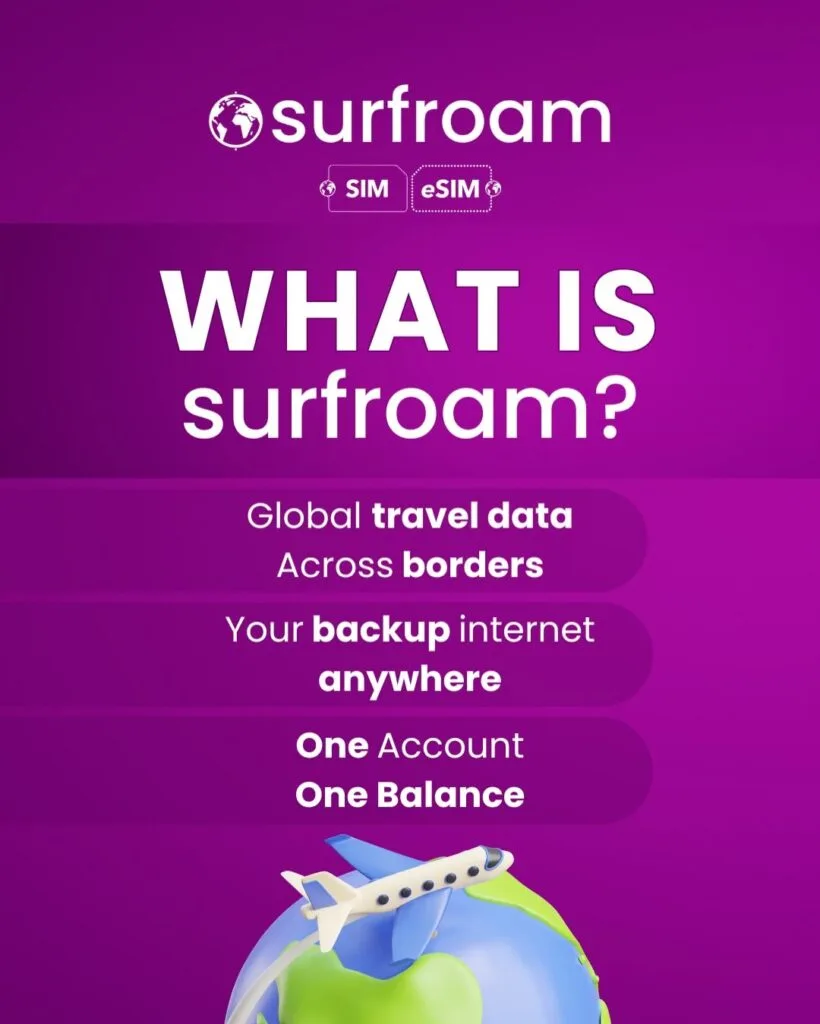
PLUS is designed for frequent travellers who value simple pay-as-you-go use, long-term balance validity and broad international coverage.
GLOBAL is intended for travellers who need the broadest coverage and additional Multi-IMSI flexibility across different regions.
For many seafarers, the decision therefore depends less on the length of one holiday and more on the routes they are likely to encounter throughout their work.
A crew member regularly moving through mainstream international ports may find PLUS sufficient. Someone whose assignments can reach a wider range of destinations may prefer GLOBAL and its Multi-IMSI capabilities.
The important point is that Surfroam is not asking the traveller to choose a new product for every border crossing.
The countries may change. The Surfroam connection stays with the traveller.
One SIM or eSIM Instead of Planning Every Border
This is probably Surfroam’s strongest advantage for maritime travellers.
A conventional travel-eSIM workflow often begins again with every new journey:
destination → package → validity period → purchase → next destination → another package
Surfroam changes that workflow to:
one SIM or eSIM → one monetary balance → country after country → journey after journey
That difference sounds small until travel becomes a permanent part of someone’s job.
A seafarer travelling from the Philippines through the Middle East to a European port does not necessarily need to research and purchase a separate connection for every stage of that journey.
Where the Surfroam product supports the destination, the existing profile can continue to be used.
And when a destination requires a different compatible Surfroam profile, support can provide an additional profile and transfer the valid balance so that the customer’s existing funds are not lost.
That gives Surfroam another advantage over disposable travel eSIMs: the relationship is not limited to the lifespan of one downloaded package.
Multiple Surfroam Profiles Under One Account
Professional travellers often have more than one connectivity requirement.
A person may use an eSIM in their main phone, keep a physical SIM for another device, or maintain additional Surfroam profiles for different purposes.
Surfroam allows multiple SIMs and eSIMs to be kept under the same account.
With One Balance, you can keep multiple Surfroam SIMs and eSIMs under one account and transfer any valid balance between them on request.
For a frequent traveller, this provides flexibility that a single disposable travel profile cannot easily offer.
Multi-IMSI: Additional Flexibility for GLOBAL Users
Surfroam GLOBAL adds another layer of flexibility through Multi-IMSI technology.
An IMSI identifies a mobile subscription to the mobile-network environment it uses.
Rather than depending on a single IMSI configuration, GLOBAL includes multiple IMSI profiles that can provide access to different partner networks and rates across countries and regions.
The appropriate IMSI can be selected automatically, while advanced users can also select an available IMSI manually when needed.
This can provide additional flexibility for coverage, connectivity troubleshooting and, in some destinations, different data rates.
For a traveller making one predictable journey, that may never become particularly important.
For a seafarer who can move between Europe, Asia, the Middle East, Africa and island destinations during successive assignments, the value is easier to see.
The product has been designed around changing network environments rather than one fixed destination.
Connectivity Before the Ship Even Leaves Port
The usefulness of Surfroam for maritime workers begins before they board the vessel.
A seafarer may leave home, connect through one or two international airports, spend time at a crew hotel, travel to the port and then eventually join the ship.
Those transitions often happen in several different countries.
With Surfroam, travellers can use their own cellular connection instead of depending entirely on public airport or hotel Wi-Fi, avoiding many of the security and privacy risks associated with shared or unfamiliar public networks.
It also removes another small but repetitive task from a complicated travel day: finding connectivity every time the aircraft lands somewhere new.
Where supported terrestrial mobile coverage is available, the same Surfroam connection can continue serving the traveller.
The result is continuity not just between ports, but throughout the journey to and from the vessel.
Why Personal Mobile Data Matters in Port
Connectivity is particularly important when a vessel reaches land.
A crew member’s own cellular connection gives them a personal way to get online without depending on the vessel’s onboard Wi-Fi infrastructure.
When a supported terrestrial network is available, Surfroam provides an independent personal mobile-data connection.
That can be useful for video calls, messaging, banking, government services, navigation, travel bookings and the countless other online tasks people increasingly need to manage themselves.
For someone who may spend months away from home, having their own mobile connection whenever cellular coverage is available can be particularly valuable.
And because Surfroam remains with the traveller, that connection is not limited to the port itself. The same SIM or eSIM can continue to be useful during airport transfers, shore leave, hotel stays and onward travel through supported countries.
Where Surfroam Works for Seafarers
Surfroam uses terrestrial mobile networks.
For maritime travellers, that makes it particularly useful in ports, airports, coastal areas, anchorages within cellular coverage and during travel on land.
There is no universal distance from shore at which cellular connectivity begins or ends. Coverage depends on the available network, frequencies, base stations, the user’s device and other radio conditions.
Coverage beyond the reach of terrestrial mobile networks is therefore not guaranteed.
The practical rule is simple:
Surfroam works wherever the device can connect to a supported terrestrial mobile network.
For seafarers, this means one Surfroam connection can accompany a much larger journey than the time spent aboard the vessel itself — from home to airport, through international transit points, to the port, during shore time and onwards to the next destination.
Why Surfroam Makes Particular Sense for Long Maritime Contracts
The strongest case for Surfroam appears when connectivity is viewed over an entire year rather than one port visit.
Imagine two travellers.
The first takes a ten-day holiday in Spain. They know the destination, dates and approximate data requirement. A conventional fixed travel-eSIM package may serve them perfectly well.
The second is a seafarer.
They leave the Philippines, transit through Dubai, join a vessel in Europe, call at ports in several regions, return home months later and then start another contract.
Their problem is not finding a five-gigabyte package.
Their problem is maintaining continuity through all of those movements.
That is what Surfroam is designed to solve.
The SIM or eSIM remains with them.
The monetary balance remains available subject to its validity conditions.
They pay according to actual data usage rather than purchasing another fixed allowance every time the itinerary changes.
GLOBAL can add Multi-IMSI flexibility for users travelling through particularly diverse network environments.
Additional Surfroam profiles can be kept within the account, and valid balance can be transferred between them when necessary.
Wherever a supported terrestrial mobile network is available, the same Surfroam connection can continue to serve the traveller without requiring another destination-specific eSIM purchase.
For professional travellers, that combination can be considerably more valuable than simply finding the cheapest temporary eSIM for the next port.
FAQ
Does a Surfroam eSIM Work at Sea?
Surfroam uses terrestrial mobile networks. It can therefore work in ports, coastal areas and anchorages wherever the device can connect to a supported terrestrial mobile network.
Coverage beyond the reach of terrestrial mobile networks is not guaranteed, and there is no fixed distance from shore that applies everywhere.
Which Surfroam Product Is Best for Seafarers?
PLUS is designed for frequent travellers who want broad coverage, simple pay-as-you-go use and long-term balance validity.
GLOBAL is intended for travellers who need broader coverage and Multi-IMSI flexibility across a wider range of destinations.
The best choice depends on the countries and regions the traveller expects to visit.
Does Surfroam Balance Expire Between Contracts?
With PLUS and GLOBAL, the remaining monetary balance stays valid as long as the account is kept active with at least one top-up every 365 days.
This makes it possible to retain remaining credit for future journeys rather than treating every voyage as a completely new data purchase.
Can I Have More Than One Surfroam SIM or eSIM?
Yes. A customer can maintain multiple Surfroam SIMs and eSIMs under the same account.
Valid balance can be transferred between them on request when needed.
Does One Balance Mean Several Devices Use One Shared Pool Simultaneously?
No.
One Balance is not a conventional pooled-data family plan. Multiple Surfroam SIMs and eSIMs can be kept under the same account, and valid balance can be transferred between them on request.
Why Use Surfroam Instead of Buying Another Travel eSIM at Every Port?
Because Surfroam is designed around continuity.
Rather than choosing a new destination package and validity period every time the itinerary changes, the traveller keeps the same Surfroam connection and monetary balance for future supported destinations and trips.
For someone crossing borders professionally throughout the year, that can remove a significant amount of repeated purchasing, installation and planning.
Why Is Surfroam Particularly Useful for Seafarers?
Because a seafarer’s journey rarely consists of just one destination.
It can include the home country, several international transit points, the joining port, multiple ports during a contract, shore travel and the journey home.
Surfroam is designed to remain with the traveller across those movements. Instead of treating every stop as another mobile-data purchase, the traveller keeps the same long-term connectivity solution and uses it wherever the relevant Surfroam product has coverage.