Quick Guide: Price, Hours, and “Need to Know”
Quick Answer: Art in Island (The Media Square) is located at 15th Ave, Cubao, Quezon City. As of 2025, entrance fees are ₱850 for adults and ₱700 for students. It is open Tuesday to Sunday (closed Mondays).1 Socks are mandatory, and white clothing is highly recommended for the best photo results.
Before navigating the traffic to 15th Avenue, lock in these operational details. The museum operates on a precise schedule to allow for the daily calibration of its high-tech projection equipment. Unlike many malls in the metro, Mondays are strictly for maintenance, meaning the gates will be closed regardless of the season.
Operating Schedule (2025)
| Day | Opening Time | Closing Time |
| Monday | CLOSED | CLOSED |
| Tuesday – Friday | 11:00 AM | 7:30 PM |
| Saturday – Sunday | 11:00 AM | 8:30 PM |
Note: The ticket booth enforces a cut-off 90 minutes before closing time.
Admission Fees
| Category | Price (PHP) | Requirements |
| Regular (Adult) | ₱ 850.00 | Walk-in standard rate |
| Student | ₱ 700.00 | Must present valid, current ID (Expired IDs rejected) |
| Senior / PWD | ₱ 600.00 | OSCA / PWD ID required for discount |
| Children | FREE | Toddlers below 3 feet in height |
Pro Tip: Don’t rely on digital copies of your Student ID. The ticket counter staff are trained to look for physical validation stickers for the current semester. If you cannot produce the physical ID, you will be charged the full ₱850 adult rate without exception.
Table of Contents
How to Get to Art in Island (Commute & Parking)
Directions: To get to Art in Island via commute, take the MRT-3 or LRT-2 to Araneta Center-Cubao Station. Walk towards Aurora Boulevard, turn onto 15th Avenue, and look for the large museum structure. From PITX, take the EDSA Carousel to Main Avenue and walk 10-15 minutes.
From the South (PITX & EDSA Carousel)
If you are coming from Cavite, Pasay, or Parañaque, the EDSA Carousel is your most direct link. Head to Gate 10 at PITX (Ground Floor) to board the northbound bus.
-
The Drop-Off: Alight at the Main Avenue bus stop. While Nepa Q-Mart is nearby, Main Avenue offers a more straightforward walking path for pedestrians.
-
The Walk: Head east towards Aurora Boulevard. You will navigate through the bustling, sometimes chaotic streets of Cubao, so keep your belongings close.
-
Last Mile: Once you hit Aurora Boulevard, walk past the Araneta Coliseum area until you reach 15th Avenue. Turn right, and the massive Art in Island building will be visible on your left.
Via Rail (MRT-3 & LRT-2): The “Mall Walk”
Cubao is a concrete maze, but you can utilize the mall connections to stay in the air-conditioning for most of the trip.
-
MRT-3 Riders: Get off at Araneta Center-Cubao Station. Do not exit to the street immediately. Instead, follow the foot traffic into Farmers Plaza, cross the bridge to Gateway Mall, and navigate to the General Aguinaldo / Aurora Boulevard exit.
-
LRT-2 Riders: You have the advantage. The Cubao Station connects directly to Gateway Mall and is geographically closer to the venue.
-
The Landmark: Exit the mall onto the north side of Aurora Boulevard. Walk towards the view of the mountains (East) for about 500 meters. Look for the Cubao Expo signage; 15th Avenue is the immediate corner.
Parking: The Reality Check
Driving to Cubao requires patience. The museum compound has its own parking lot, but capacity is extremely limited and operates on a strict first-come, first-served basis.
-
Weekends: The on-site lot is often full by 11:00 AM.
-
Plan B: If the guard waves you off, proceed immediately to Gateway Mall Parking or Manhattan Heights. Do not attempt street parking along 15th Avenue; towing operations are active and unpredictable.
Pro Tip: If you are taking the MRT, the walk through Farmers Plaza and Gateway Mall can be confusing due to the sheer volume of shoppers. Keep your eyes on the overhead signs pointing to “Aurora Blvd” or “LRT-2” to avoid getting turned around in the department store aisles.
The “Human Canvas”: Dress Code & Preparation
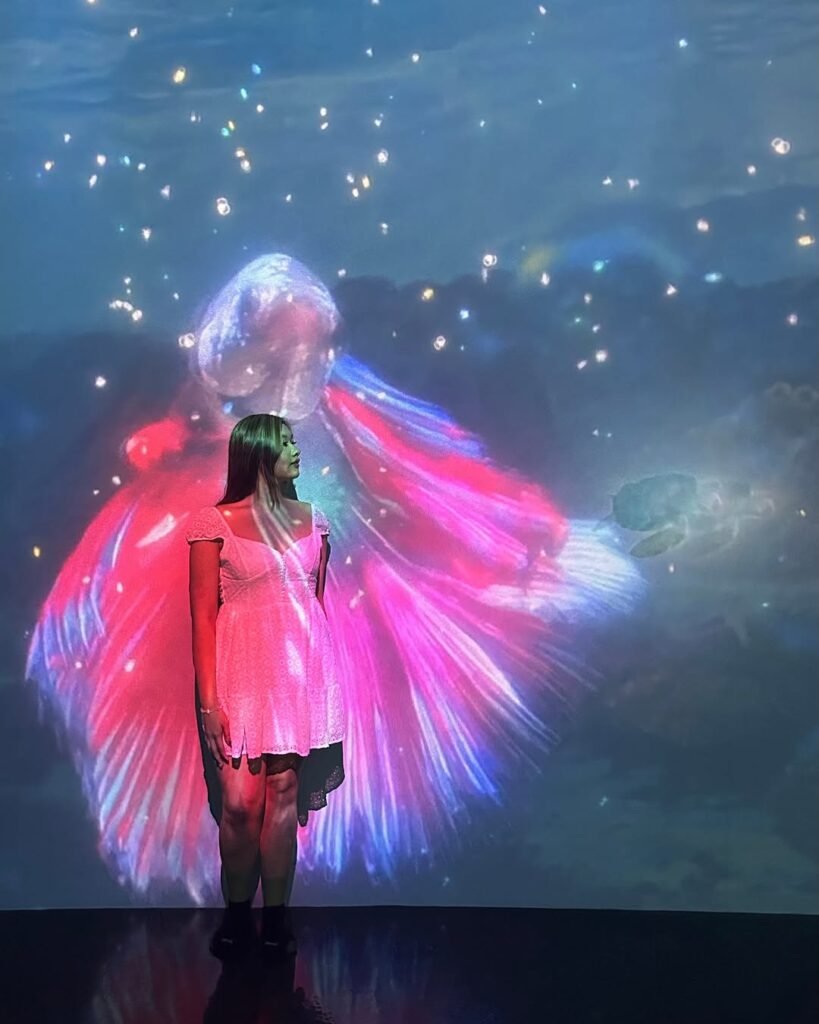
To fully immerse yourself in the Art in Island experience, wear white or light-colored clothing to act as a canvas for the projections, and bring clean, stylish socks as shoes are strictly prohibited inside the main galleries.
Why Wear White? (The Canvas Theory)
Most visitors make the mistake of wearing black to “look slim,” but in a projection mapping museum, this is a strategic error.
The Physics: The high-lumen projectors need a reflective surface to work. Dark clothing absorbs light, turning you into a black silhouette against a bright background.
The Goal: Wearing white or pastel fabrics allows the digital textures—whether it’s Van Gogh’s brushstrokes or ocean waves—to map directly onto your body. You don’t just stand next to the art; you become the art.
The “No Shoe” Zone
To protect the pristine white projection floors and soft bean bag areas, footwear is banned beyond the lobby.
The Drill: You will deposit your shoes in designated lockers or shelves at the entrance.
Sock Strategy: Since you will be shoeless for 2+ hours, your socks are a major part of your “OOTD.” Avoid worn-out pairs; instead, coordinate your sock color with your outfit for aesthetic continuity in full-body photos.
Strict Prohibitions
No Flash Photography: The entire facility relies on carefully calibrated darkness. A camera flash washes out the projections for everyone in the room and ruins the sensors.
Tripod Restrictions: while handheld gimbals are usually tolerated, large tripods are prohibited in high-traffic zones to prevent tripping hazards in the dark.
No Food/Drinks: Protect the bean bags. Water is allowed only in specific transition areas.
Pro Tip: “The floors in the projection zones are smooth and polished white. To avoid slipping (or looking ungraceful in videos), wear socks with rubberized grip soles if you have them. It makes holding dynamic poses much easier.”
Inside The Media Square: Top Zones & Attractions
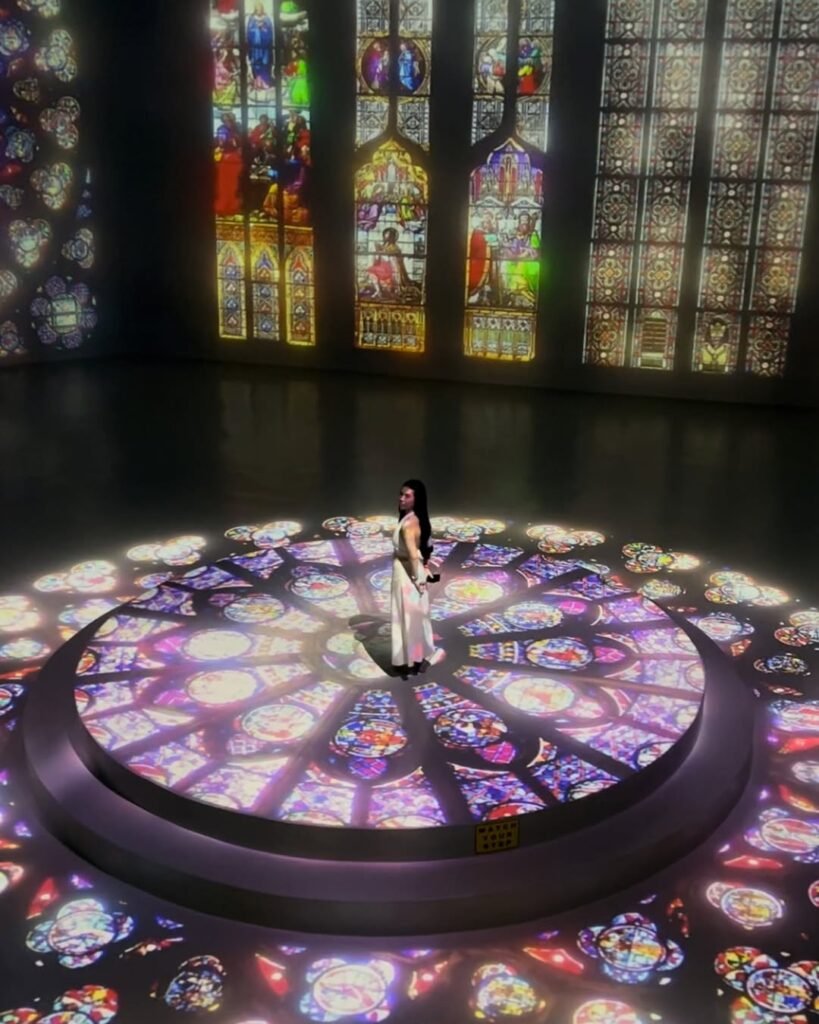
The Media Square offers a linear journey through distinct digital ecosystems, transitioning from the high-energy “Nature” zones to the meditative “Bean Bag Lounge” and the culturally rich “Hiwaga” gallery.
If you visited Art in Island prior to 2022, wipe that memory clean. The old hand-painted trick art—where you had to hold a pose for awkward minutes—is largely gone. It has been replaced by “The Media Square,” a high-fidelity projection mapping environment where the art moves around you. The experience is now passive and immersive, requiring less acting and more feeling.
The Welcome Wave & Nature Zones
The journey begins with a deliberate sensory reset. After the chaos of commuting through Cubao, you step into the “Welcome Wave,” a corridor that typically features a rolling barrel wave or a canopy of digital stars. It acts as a decompression chamber, forcing your eyes to adjust to the low light.
This leads directly into the massive Mother Nature Zone. Here, floor-to-ceiling panoramic projections transport you into hyper-realistic forests and glacial landscapes.
Interactive Floors: Watch your step—literally. The floor sensors track movement, so stepping on a “puddle” creates digital ripples, and walking through “grass” scatters leaves.
Audio Landscape: It’s not just visual; the surround sound pumps in bird calls and wind, drowning out the city noise completely.
The Hiwaga Zone (Filipino Heritage)
While most zones rely on digital projection, the Hiwaga Zone pivots to UV (blacklight) technology to celebrate Philippine mythology. This area is a neon-soaked tribute to local folklore, featuring glowing murals of the Ibong Adarna and the Sarimanok.
The Glow Effect: If you followed the advice to wear white, this is where it pays off differently. Under the intense UV lights, white fabric glows a brilliant violet-blue, making you pop against the dark, mythical backgrounds. It bridges the gap between the old static art and the new digital format.
The Bean Bag Lounge (The Digital Spa)
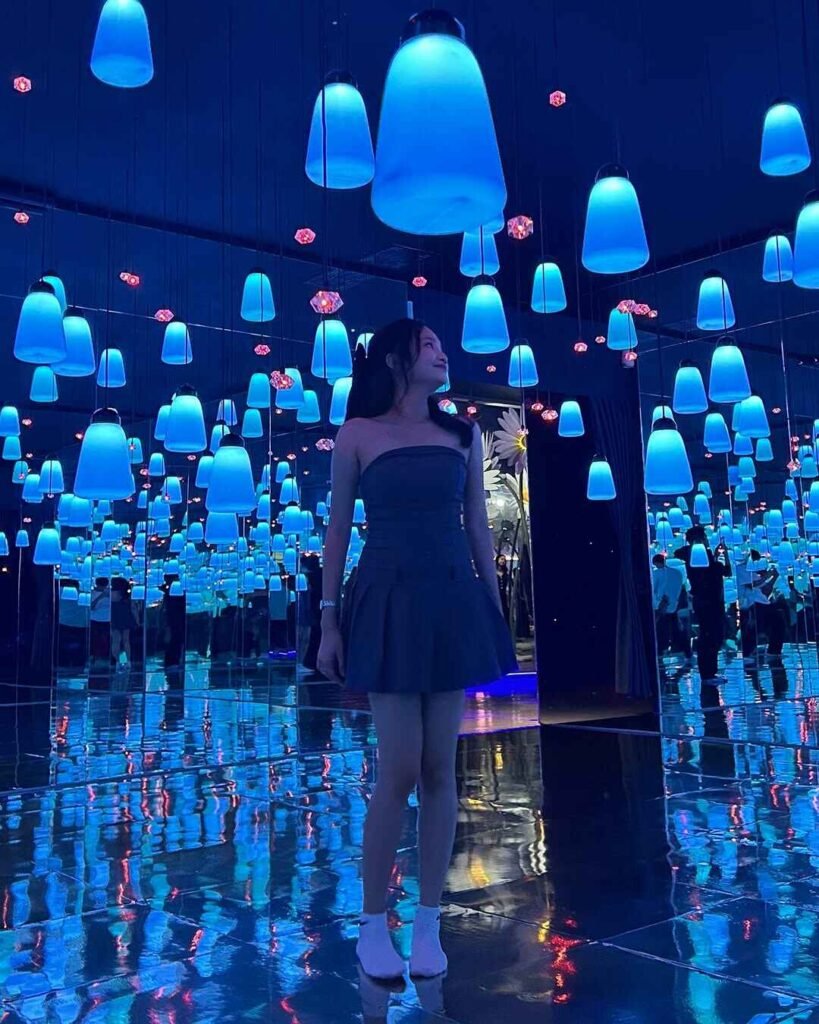
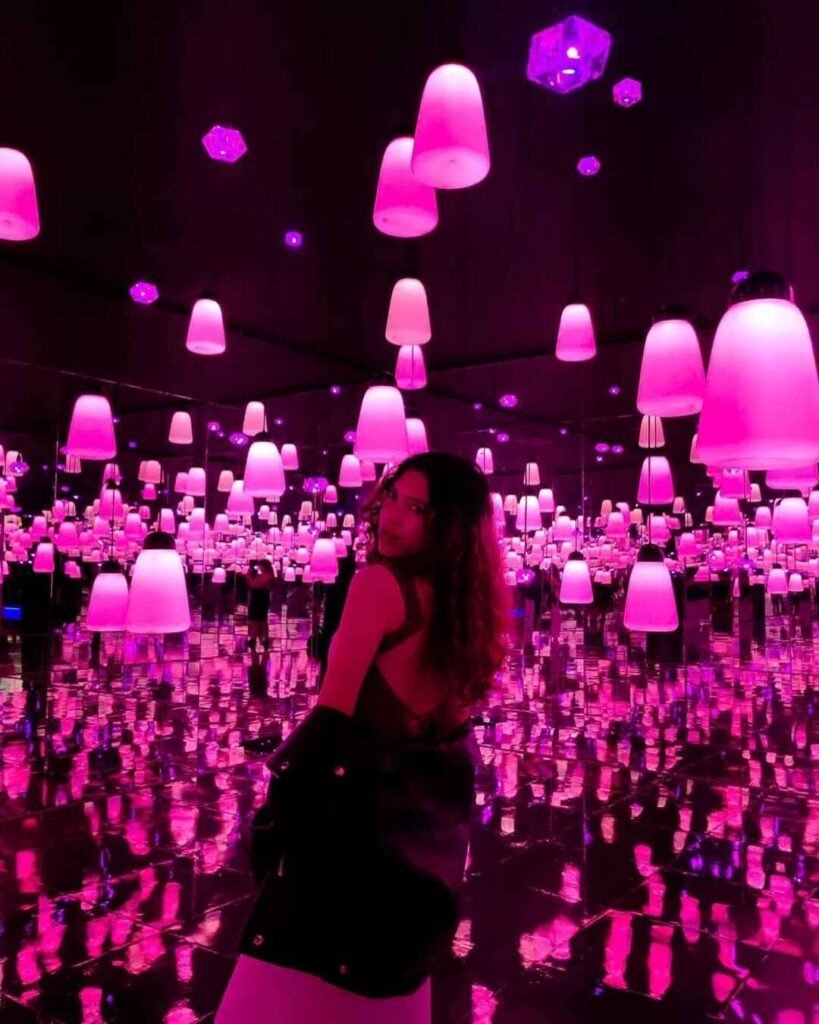
Midway through the museum lies what many visitors call the “Digital Spa.” This cavernous hall is scattered with dozens of oversized bean bags under high ceilings displaying a continuous loop of abstract art—floating lanterns, cosmic nebulas, and shifting geometry.
The Strategy: Do not rush this room. After 45 minutes of walking and posing, this is your designated rest stop. Many visitors spend upwards of 30 minutes here, lying flat on their backs, simply watching the ceiling. It is arguably the most relaxing spot in Quezon City.
Masterpieces & The Deep Sea
The final leg of the tour offers two contrasting vibes:
The Van Gogh Gallery: Step inside a 360-degree animation of Starry Night. The brushstrokes swirl and flow, offering a trippy, educational look at classical composition.
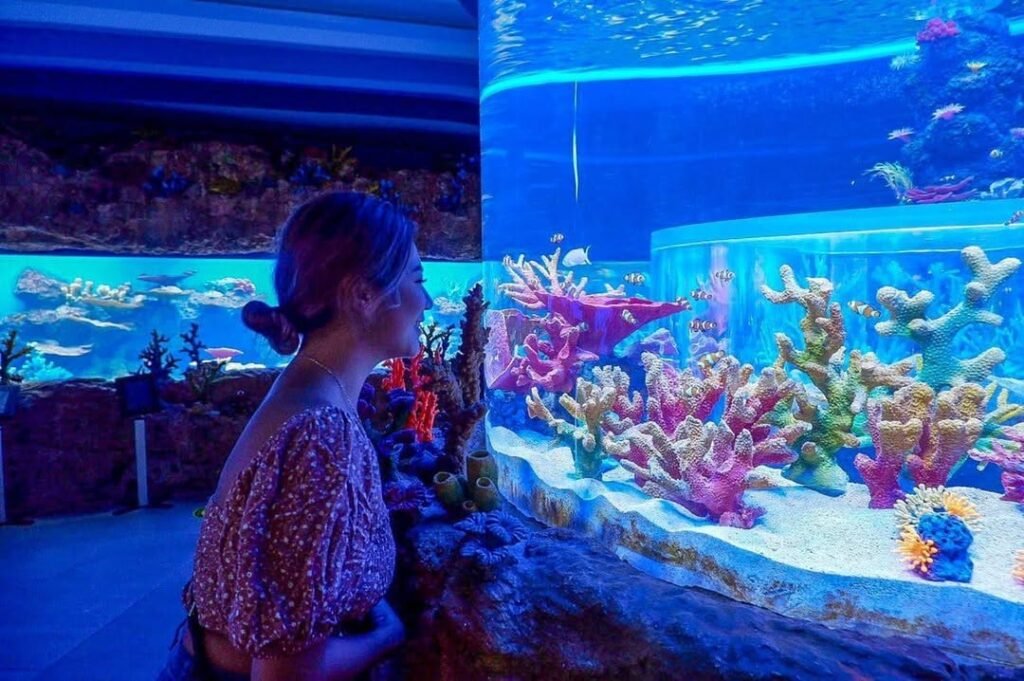
The Underwater Zone: This area projects bioluminescent marine life and massive whales.
Photo Op: Unlike the other rooms where you want to blend in, this zone is perfect for silhouette photography. The deep blue background creates a high-contrast shadow, perfect for moody, dramatic shots where facial features are obscured.
Pro Tip: “The museum flow is generally linear. Once you exit the ground floor Nature Zone to ascend to the upper galleries, returning against the flow of crowd traffic is difficult. Ensure you have captured all your video content in the forest area before heading up the stairs.”
Where to Eat: Jeongwon and Cubao Expo
For immediate dining, Jeongwon is located directly inside the museum compound, while the culinary hub of Cubao Expo is just a 5-minute walk away for those seeking craft beer and artisan pizza.
Jeongwon: The Convenient Choice
If your feet are throbbing after two hours of exploring, you don’t need to go far. Jeongwon (Korean for “Garden”) is integrated into the Art in Island compound, making it the most logical stop for lunch or a post-tour snack.
The Vibe: It continues the museum’s aesthetic with a lush, garden-themed interior and warm lighting. It bridges the gap between the digital fantasy you just left and the reality of the city.
The Menu: The food is distinctly Korean. It is famous for its Bingsu (shaved ice)—specifically the Strawberry and Chocolate variations—which serves as a perfect cool-down treat in the humid Manila weather. For savory options, the Tteokbokki (spicy rice cakes) and Samgyeopsal sets are crowd favorites.
Cubao Expo: The Bohemian Neighbor
For those willing to walk a few hundred meters, Cubao Expo (formerly the Marikina Shoe Expo) offers a completely different energy. This U-shaped compound is the heart of Quezon City’s alternative culture, packed with vinyl shops, vintage stores, and standout restaurants.
Habanero Kitchen Bar: This is the heavyweight champion of the compound. You are here for one thing: the Lechon Habanero. It’s a spicy, crispy roasted pork belly that pairs perfectly with their signature Three-Cheese Pizza.
Bellini’s: An institution in Cubao, this Italian restaurant is run by an eccentric former paparazzo. The walls are covered in painted murals (fitting for an art trip), and the pasta is authentic and unpretentious.
Pro Tip: “Habanero is notoriously popular on weekends. Before you finish your final round at the museum, send one member of your ‘barkada’ ahead to put your name on the waiting list. The queue can easily run 45 minutes to an hour during dinner service.”
Is Art in Island Worth the ₱850 Ticket? (The Verdict)
Verdict: Yes, Art in Island is worth the price for content creators and families seeking an indoor escape. The shift to high-tech projection mapping justifies the premium fee. For the best experience, visit on Tuesday or Wednesday mornings to avoid crowds.
At ₱850, Art in Island is a premium experience. If you are looking for a more budget-friendly indoor attraction in Metro Manila that features thrill rides instead of art, you might want to check our ultimate guide to Star City in Manila.
Who is this for?
-
The Content Creator (Gen Z/Millennial): With unlimited dwell time, the cost per hour is low if you stay for 3-4 hours to stockpile TikTok content and Instagram reels. If you are chasing the most Instagrammable spots in the Philippines, Art in Island is just the start. If you are willing to drive south for a fairy-tale aesthetic, check out the new J Castle in Tanauan, Batangas.
-
Families: While Art in Island is great for visual stimulation, active toddlers might prefer a play-centric environment. For a high-energy indoor alternative, read our ultimate guide to DreamPlay at City of Dreams Manila. Alternatively, if your family prefers live animal encounters over digital ones, the New Manila Zoo and Manila Ocean Park are excellent nearby options.
-
Couples: The dimly light, ambient rooms provide a surprisingly romantic backdrop for a date, far more engaging than a standard movie.
Who is this NOT for?
If you are nostalgic for the 2014 version where the fun relied entirely on you posing physically next to a painting, you might find the new format too passive. The experience is now about viewing and feeling rather than acting.
Pro Tip: “Never pay full price at the door if you can avoid it. Check booking platforms like Klook before you go. They frequently offer ‘flash sales’ or bundle deals that can drop the effective price to around ₱750, or include food credits for Jeongwon.
Frequently Asked Questions About Art in Island (2026)
Q: Is Art in Island open on Mondays?
A: No. Art in Island is strictly closed on Mondays for the maintenance and calibration of its projection mapping sensors and audio equipment. The museum operates from Tuesday to Sunday, opening at 11:00 AM.
Q: How much is the entrance fee in 2025?
A: As of 2025, the regular adult entrance fee is ₱850. Students with a valid ID pay ₱700, while Senior Citizens and PWDs pay ₱600. Children below 3 feet in height can enter for free.
Q: Do I need to book tickets online, or are walk-ins allowed?
A: Walk-ins are allowed and are very common. However, buying tickets online (via platforms like Klook) is recommended for weekends to secure your slot and occasionally get discounted rates.
Q: What is the dress code?
A: There are two main rules:
No Shoes: You must remove your shoes and wear socks inside the gallery zones to protect the floors.
Wear White: While not mandatory, wearing white or light-colored clothing is highly recommended so the projections blend with your outfit, creating the “Human Canvas” effect.
Q: Are pets allowed inside Art in Island?
A: Generally, no. Pets are not allowed inside the main projection galleries due to the sensitive equipment, loud audio, and bean bag areas. However, the outside garden area and some parts of the restaurant (Jeongwon) may have specific pet-friendly protocols, so it is best to check with security upon arrival for the outdoor zones.
Q: Can I bring food or drinks inside?
A: No. Food and drinks are prohibited inside the exhibit halls to prevent damage to the bean bags and carpets. You can leave your tumblers in the lockers provided at the entrance or dine at Jeongwon (the on-site Korean restaurant) before or after your tour.
Q: How long does the tour take?
A: Most visitors spend between 2 to 3 hours inside. This includes time for taking photos in the “Nature” and “Hiwaga” zones, and relaxing in the Bean Bag Lounge.
Q: Is there parking available?
A: Yes, there is a parking lot inside the compound, but it has limited slots and fills up quickly on weekends (usually full by 11:00 AM). If full, you can park at the nearby Gateway Mall or Manhattan Heights and walk to the museum.