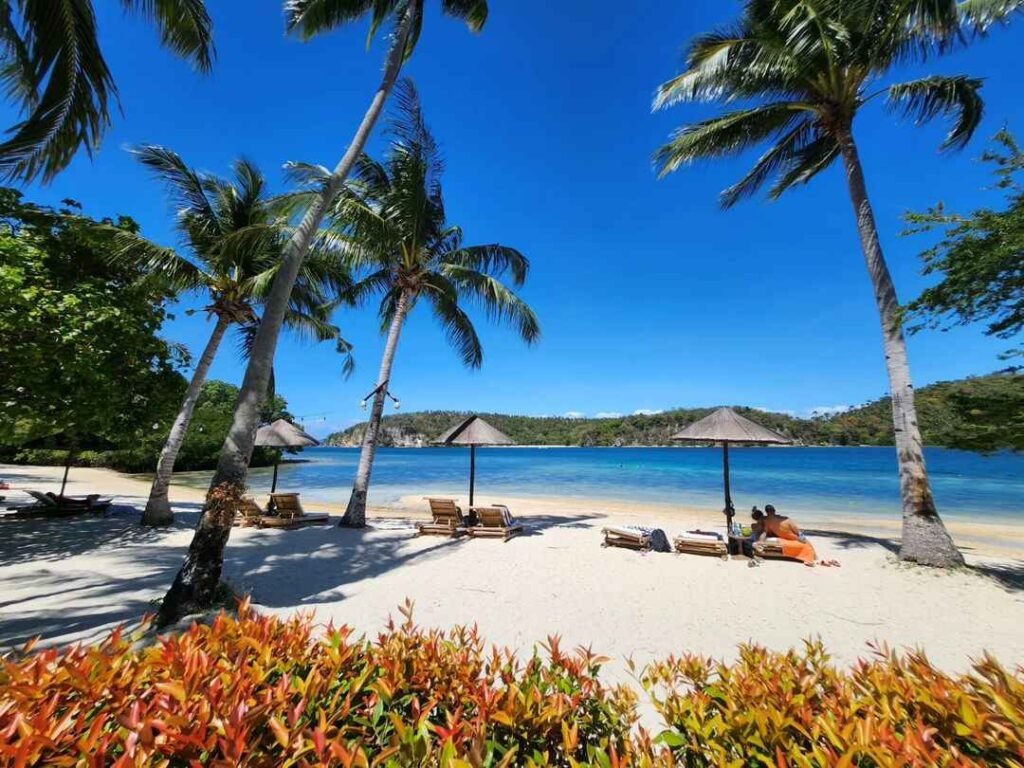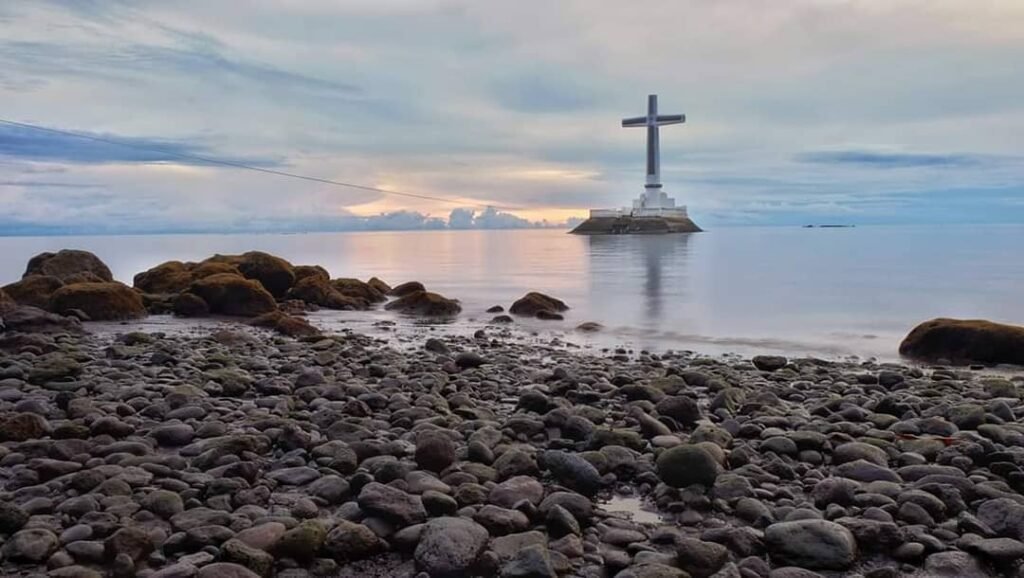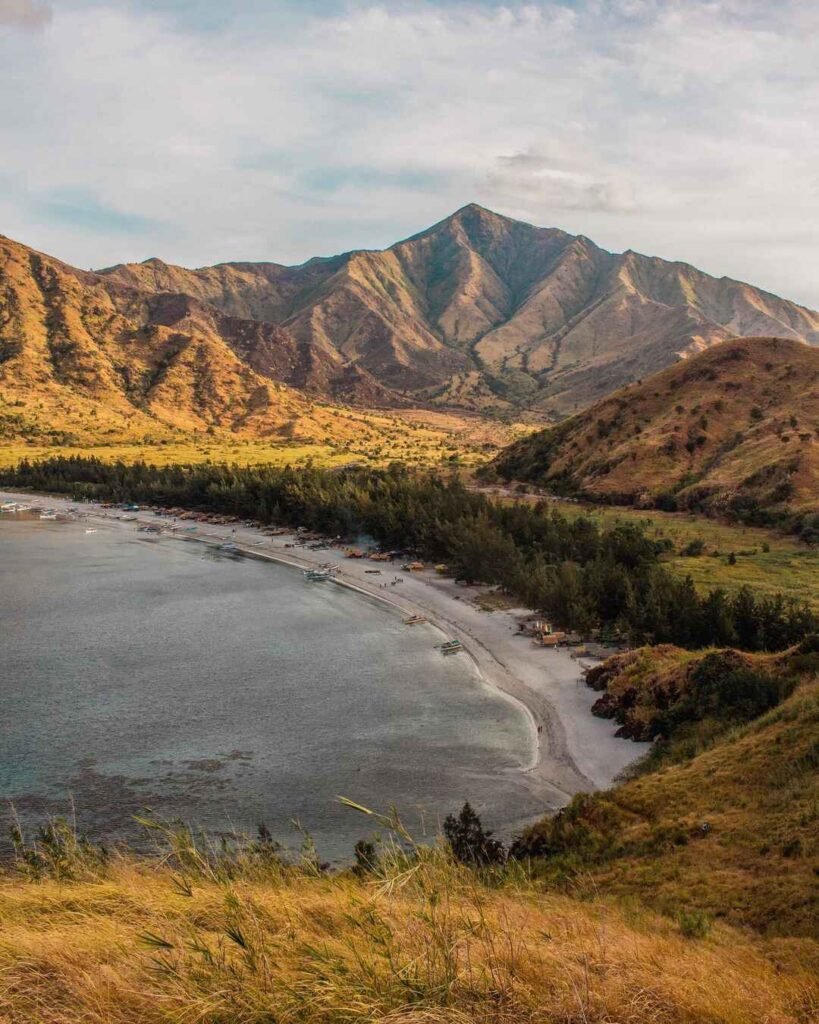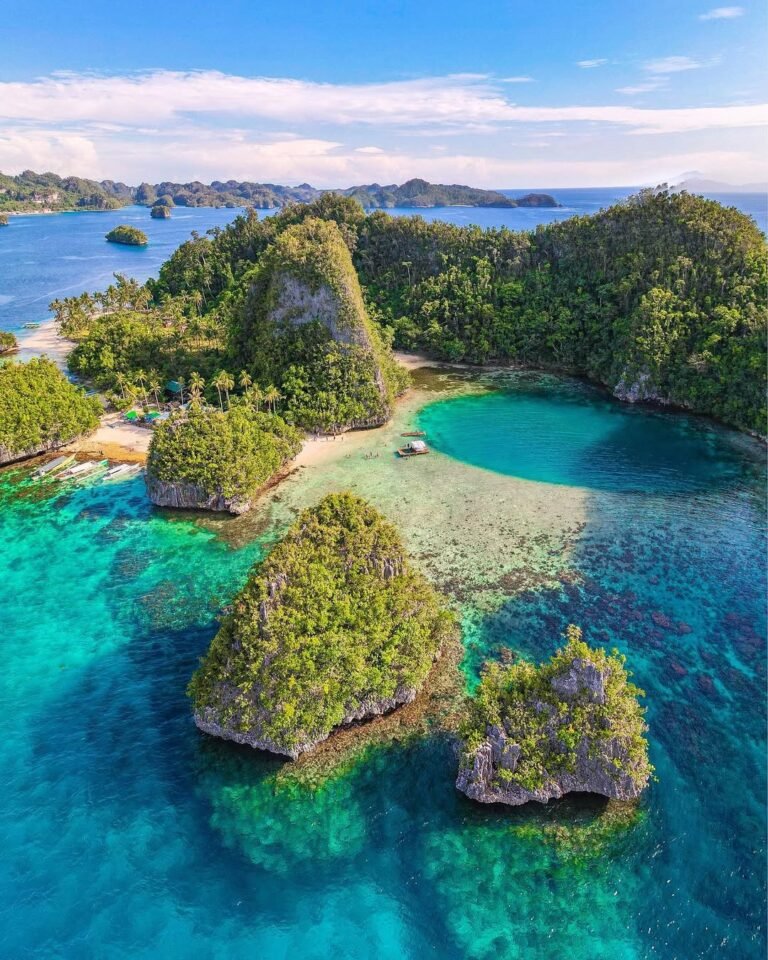
Dinagat Island in the Philippines sits in the Dinagat Sound, northeast of Surigao City in Surigao del Norte — and it is unlike anywhere else I have been in the country. You reach it by passenger boat from Surigao City, the crossing takes roughly one to two and a half hours depending on the operator, and what you find on the other side is raw limestone scenery, a culturally distinct community, and almost no tourist crowds at all.
Dinagat Island Quick Guide
| Detail | Info |
|---|---|
| Destination | Dinagat Island |
| Location | Dinagat Sound, northeast Mindanao, Philippines |
| Province | Dinagat Islands |
| Type | Island |
| Access | Passenger boat or RoRo from Surigao City |
| Entrance / Environmental Fee | PHP 100 environmental fee on arrival |
| Best Season | November to May (amihan / dry season) |
| Swimming | Yes — several beaches and lagoons |
| Island Hopping | Yes — Basilisa and Libjo circuits available |
| Travel Time from Surigao City | 1 to 2.5 hours depending on vessel type |
Table of Contents
Where Is Dinagat Island Located?
Dinagat Island is the largest landmass in the province of Dinagat Islands, located in the Dinagat Sound directly northeast of Surigao City in Surigao del Norte. For anyone searching where is Dinagat Island located on a map, look for the island chain that separates the Surigao Strait from the Philippine Sea — it sits there, largely off the main tourist trail.
The provincial capital, San Jose, sits on the western coast of the island and serves as the primary arrival point for visitors. On the Dinagat Island map, San Jose faces Surigao City directly across the water, which is why the boat crossing is feasible as a short strait hop rather than an open-ocean voyage.
How to Get to Dinagat Island
Getting to Dinagat Island from Surigao City is the most straightforward part of planning this trip — the complexity is in the legs that get you to Surigao first.
Step 1 — Fly to Surigao City (SUG)
From Manila, Cebgo and Cebu Pacific both operate flights to Surigao Airport. Flight time is approximately 3.5 to 4 hours, often with a brief Cebu connection. Fares range from PHP 3,600 to PHP 8,000 depending on season and how far in advance you book. From Cebu, the flight is roughly 1 hour direct, which makes Cebu a practical stopover hub if you’re island-hopping across Visayas and Mindanao.
If you’re coming from Leyte, the route from Leyte to Dinagat Island means traveling down to Surigao City first — typically via ferry across the Surigao Strait from Liloan or Maasin — and then catching the onward boat to San Jose. It adds a day but is very doable.
Step 2 — Tricycle to the Port
Once you land at Surigao Airport, a tricycle charter to the port costs between PHP 30 and PHP 90. The ride covers roughly 3 kilometers and takes 15 to 20 minutes. Specify your drop-off clearly because operators depart from two different points: the Surigao City Ferry Terminal (Pantalan Dos) for Evaristo & Sons and Montenegro Shipping, and Surigao City Boulevard for Viel’s Shipping Lines and Vince Gabriel Liner.
Step 3 — Surigao to Dinagat Island Ferry
This is where the surigao to dinagat island ferry schedule actually matters. Here is the breakdown of operators running the Surigao to Dinagat Island crossing as of mid-2026:
| Operator | Vessel Type | Departure Point | Departure Times | Travel Time | Fare (PHP) |
|---|---|---|---|---|---|
| Evaristo & Sons | Fast Craft / Ferry | Surigao City Ferry Terminal | 04:30 AM, 11:00 AM | 1.5 hrs | 150–200 |
| Viel’s Shipping Lines | Passenger Boat | Surigao City Boulevard | 06:25, 07:20, 08:15, 10:25, 11:45 AM; 02:15, 04:55, 06:15 PM | 1 hr | 200 |
| Montenegro Shipping | RoRo / Fast Craft | Surigao City Ferry Terminal | Twice daily | 2.5 hrs | 170–255 |
| Vince Gabriel Liner | Passenger Boat | Surigao City Boulevard | Early afternoon | 1 hr | ~200 |
The most important detail on these schedules: Evaristo & Sons serves both San Jose and Magsaysay ports. Buy your ticket explicitly for San Jose Port — the capital side — or you will disembark in the wrong municipality.
A terminal fee of PHP 30 is collected at Surigao City Ferry Terminal before boarding. Book the earliest departure you can manage. I took the 06:25 AM Viel’s boat in June 2026 and conditions were calm. By midday the swells had picked up noticeably on the return crossing, and I saw at least one afternoon trip briefly delayed by coast guard assessment.
Entrance Fees, Environmental Fees, and Permits at Dinagat Island
The moment you disembark at San Jose Port, you pay a PHP 100 environmental / municipal tourism fee. This is non-negotiable and goes toward local environmental programs. Have exact change or small bills ready — the collection desk is right at the port exit and does not always have change for large bills.
Specific attractions carry additional fees. The Islander’s Castle charges PHP 150 per person. The PBMA Founder’s Shrine in Barangay Aurelio requires conservative dress — pants are mandatory — and if you don’t have them, loose pants can be rented at the gate for PHP 20. Lake Bababu charges PHP 30 to PHP 75 per person including a mandatory local guide. The Pangabangan Blue Lagoon (the blue lagoon dinagat island locals love to show off) charges PHP 20 per person entry.
No tourist registration in a formal separate system was required on my visit beyond the environmental fee at the port — but that may change as tourism increases. Check with your accommodation before arrival.
Getting Around Dinagat Island
Once on Dinagat Island, you move around by tricycle within San Jose town, habal-habal (motorcycle taxis) for longer inland routes, and chartered bangka for anything marine.
Short town tricycle trips cost PHP 10 to PHP 35. For a chartered habal-habal to handle San Jose’s land tour circuit — covering Islander’s Castle, the PBMA Shrine, and the market — expect to pay PHP 500 to PHP 1,500 for the full run depending on distance and negotiation.
For the northern Bonsai Forest at Mount Redondo in Loreto, the journey is roughly 70 kilometers and the road is rough. Charter a motorcycle for PHP 1,500 and factor in a PHP 100 permit fee at the trail entrance. That is a full-day commitment and not something to tack onto an already busy itinerary.
Beaches and Things to Do at Dinagat Island
Things to do in Dinagat Island fall into two main categories: island hopping circuits based out of Basilisa and Libjo, and land-based cultural and geological attractions around San Jose. One day per category is the right pacing.
Basilisa Island Hopping — Tour B
The Basilisa circuit covers the northern cluster of islets and is the most popular starting point for first-timers. A DIY boat charter for up to 4 people costs PHP 2,500 to PHP 3,500 for the day. Joiner packages through a local agency run PHP 1,499 per person.
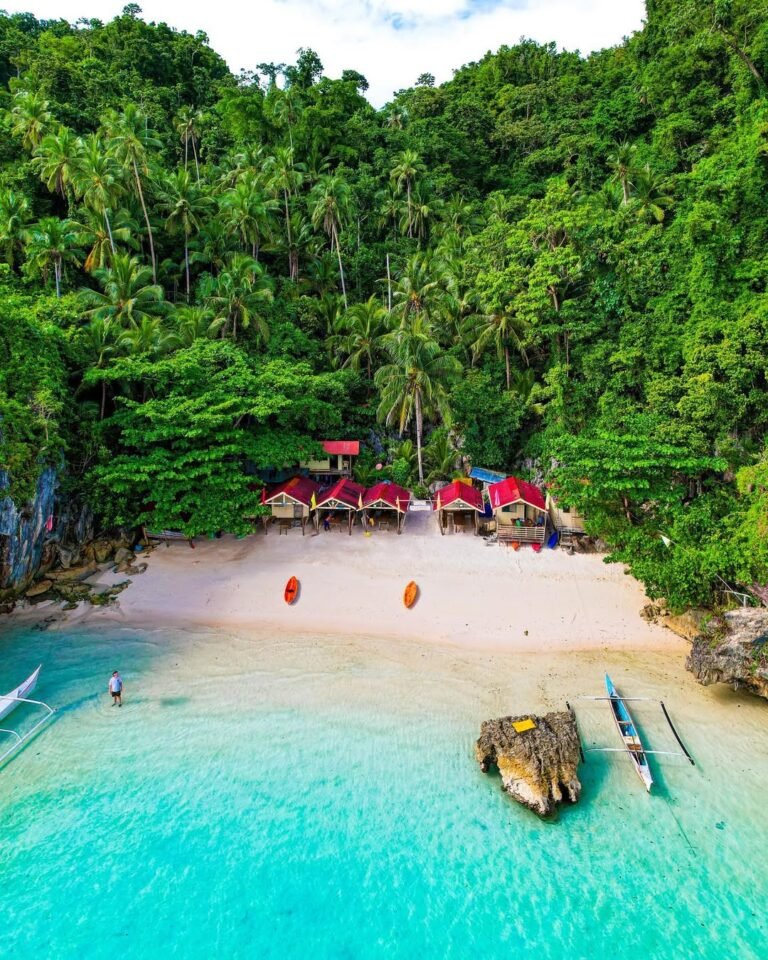
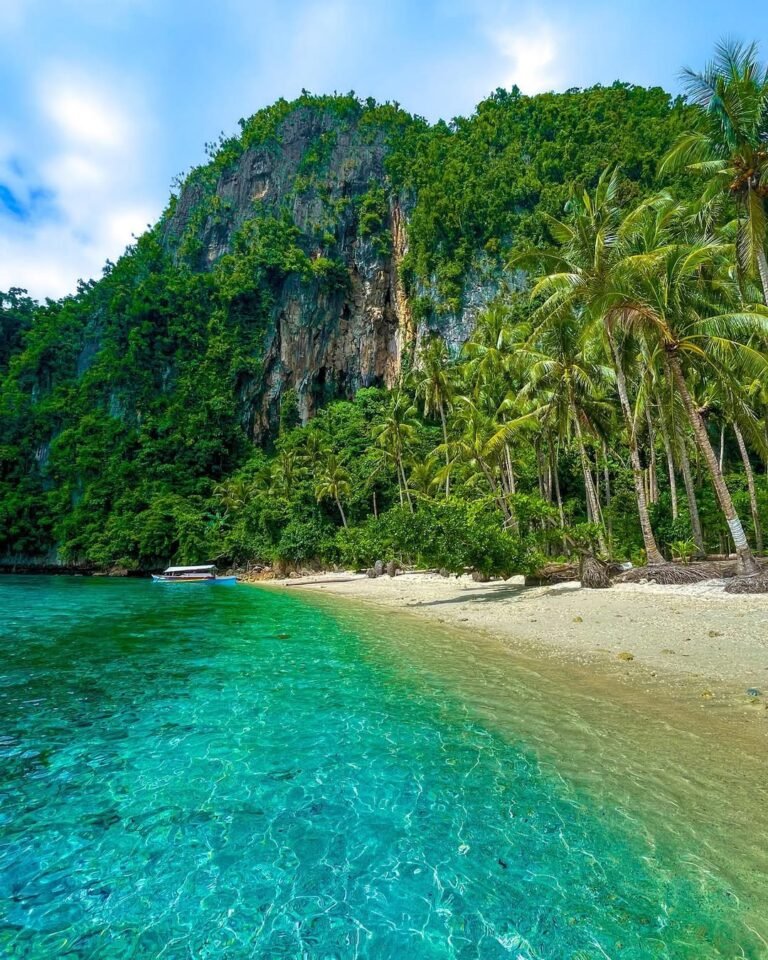
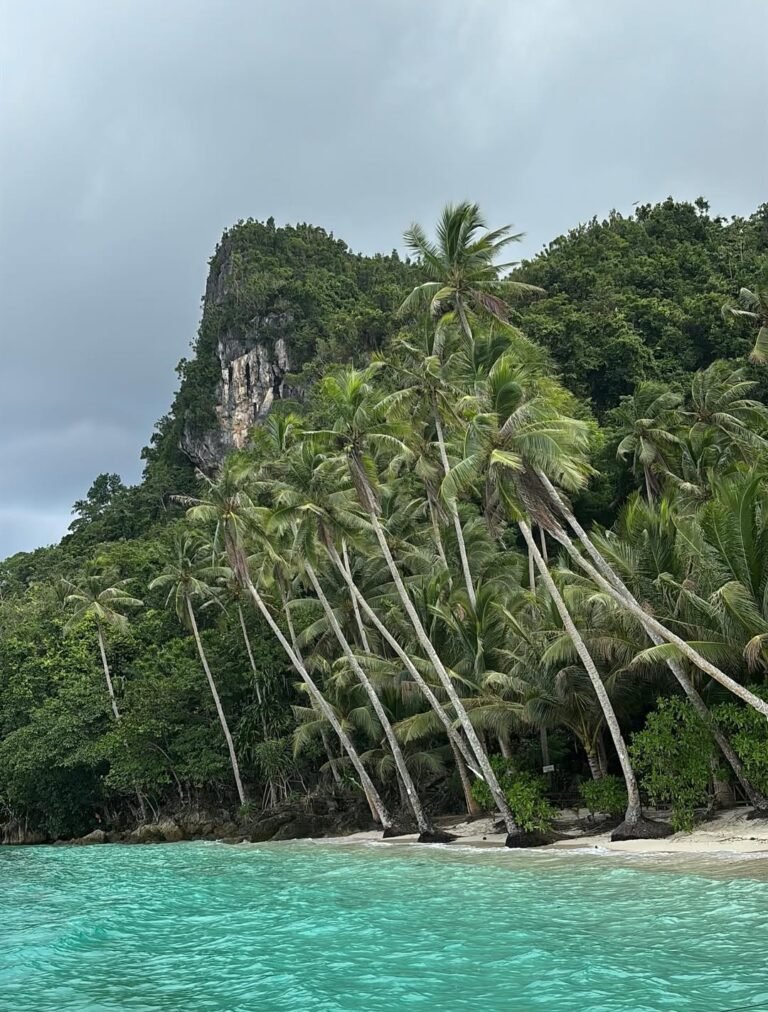
Bitaog Beach — 4/5. Wide arcs of white sand backed by dramatic limestone walls. The water is calm enough for swimming in the morning and the formations are genuinely unlike anything I have seen outside of Palawan. The trade-off is that there are no facilities, so you bring everything you need.
Cab-ilan Island — 3.5/5. Better for snorkeling than swimming. The coral coverage is patchy but there is enough marine life in the shallow sections to justify 45 minutes in the water. Wear aqua shoes — the entry points are sharp.
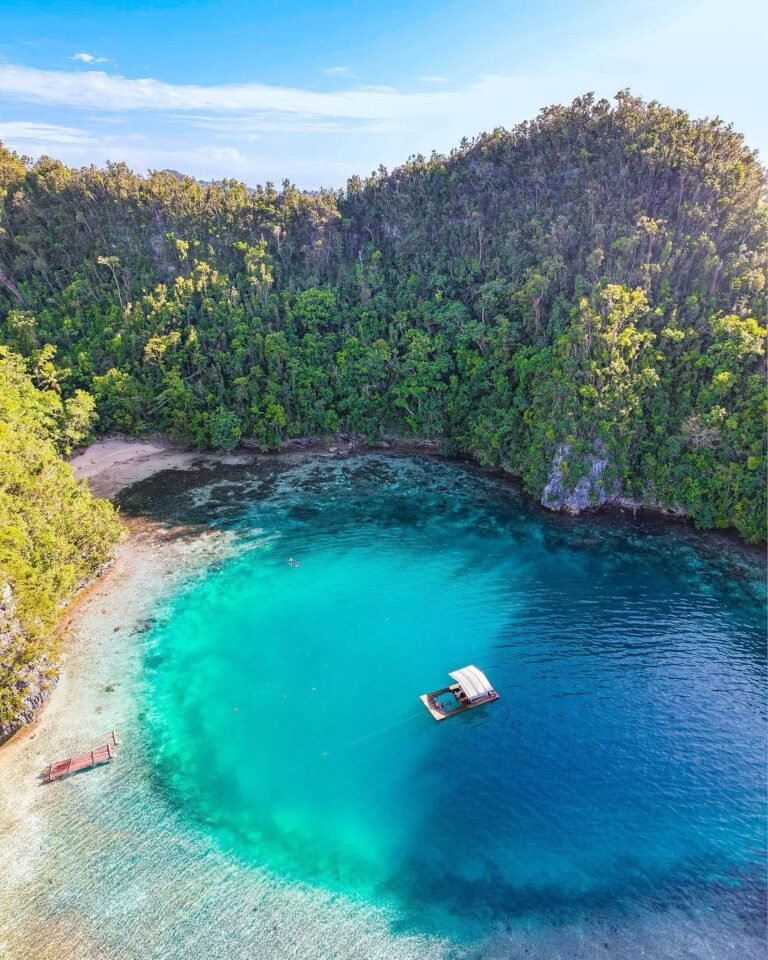
Pangabangan Blue Lagoon — 5/5. This is the reason to visit Dinagat Island. A wooden dock extends out over an enclosed pool of vivid blue water surrounded entirely by karst walls. The color is produced by the geological composition of the basin, not a filter, and it looks more extraordinary in person than in any photo.
This was the single moment from June 2026 that I keep returning to mentally. The PHP 20 entrance fee is almost absurdly low for what you see. Technically in Libjo waters, it is often combined with the Basilisa circuit on a longer day.
Libjo Island Hopping — Tour A
The Libjo circuit is the more remote option. A DIY charter costs PHP 3,000 to PHP 4,000 for a group of four. Agency joiners pay PHP 1,599 per person. Stops include Jelmar’s Islet Resort, RSG Munting Paraiso, Hagakhak Rock Formations, and the Miracle Pool Underground Cave. The cave guide requests strict silence inside — abide by this without argument, it matters to the community.
Miracle Pool Underground Cave — 4/5. Dark, genuinely eerie, and unlike typical tourist caves because there is minimal lighting infrastructure. Bring a waterproof flashlight. The silence rule makes the experience feel sacred rather than performative.
Lake Bababu
Lake Bababu is a meromictic lake — a body of water with distinct, non-mixing layers. Specifically, a 20-foot layer of fresh rainwater floats above dense saltwater that connects to the ocean via a 650-meter underwater cave system. You reach it via Babas Cove, then hike a steep limestone trail for 30 to 45 minutes. It is slippery and exposed, and the guide fee of PHP 30 to PHP 75 is not optional — and genuinely necessary for navigation.
Lake Bababu — 4.5/5. The science alone makes this worth the climb. Standing at the surface and understanding what is beneath you — a connection to open ocean hundreds of meters away — is the kind of thing that stays with you.
Islander’s Castle and PBMA Shrine
The Islander’s Castle was built in 2007 and features distinctive maroon spires visible from the port approach. Entry is PHP 150. It overlooks the coast and gives a useful panoramic orientation to San Jose on arrival afternoon. The PBMA Founder’s Shrine in Barangay Aurelio is the resting place of Ruben Ecleo Sr. and represents the cultural and spiritual core of the province. Approach it with the same seriousness you would any active religious site.
Mount Redondo Bonsai Forest
A 70-kilometer ride north to Loreto brings you to one of the stranger natural phenomena in the Philippines. The trees in the Bonsai Forest grow stunted and gnarled due to the mountain conditions, creating a landscape that reads almost alpine despite the latitude. The PHP 1,500 habal-habal charter plus PHP 100 permit is the going rate. Reserve this for a dedicated Day 3 if your schedule allows.
Best Time to Visit Dinagat Island
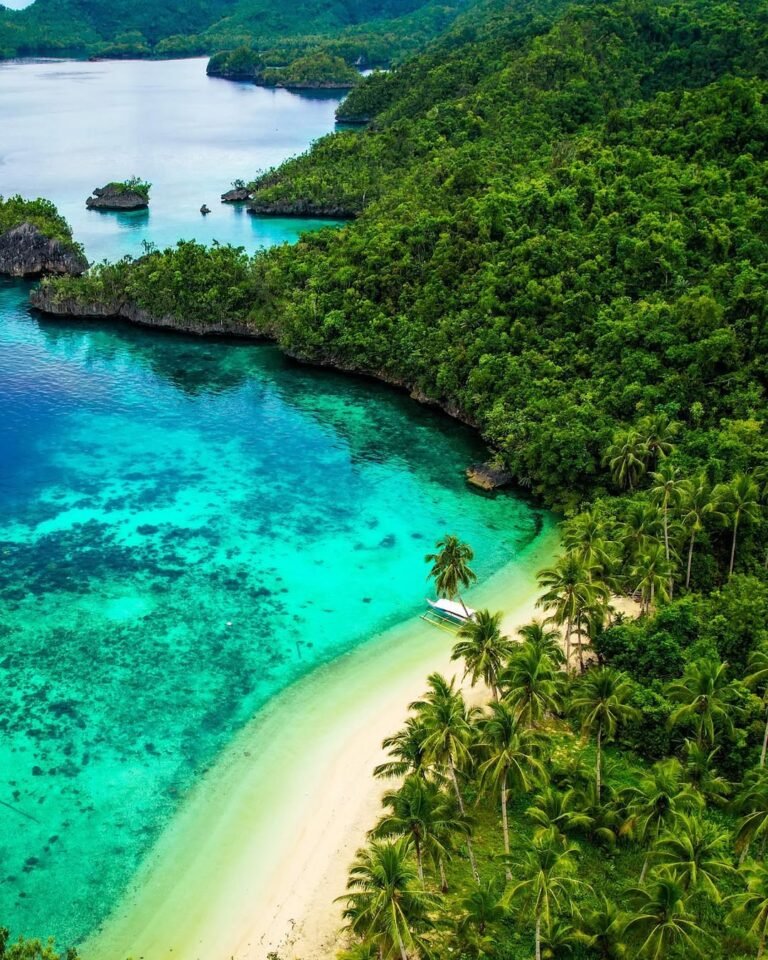
November through May is the reliable window, aligned with the amihan (northeast monsoon) season that brings calmer seas and lower rainfall to northeastern Mindanao. This is when the ferry crossings are most consistent, island hopping is safest, and the beaches are at their most accessible.
June through October falls under habagat (southwest monsoon) influence, with increased rainfall and rougher seas in the Dinagat Sound. I visited in June 2026 and the conditions were manageable but required attention to departure timing. Afternoon crossings during this period carry real risk of coast guard cancellation. July through September are the peak typhoon months — travel is possible but requires flexibility and a backup plan for extended delays.
For the Pangabangan Blue Lagoon specifically, clarity of the water is best during dry season when runoff is minimal. My June visit showed slightly more particulate than dry-season photos suggest, though the color remained remarkable.
Where to Stay at Dinagat Island
San Jose is where you base yourself. There is no beachfront resort in the Bali or Siargao sense — accommodation here is functional and local, which is part of what keeps the experience authentic.
Budget (PHP 250–750/night): Basic fan-cooled pension houses and homestays. Shared bathrooms are common. Vines guesthouse is frequently mentioned by locals as a reliable cheap option. Expect intermittent power in some barangays.
Mid-range (PHP 750–3,000/night): Island View Suites and Along D Road offer more structured accommodation with private rooms and, in some cases, air conditioning. Book ahead — inventory is limited and fills during long weekends.
There is no online booking infrastructure for most properties. WhatsApp or Facebook Messenger contact via local tourism pages is the standard approach. Confirm your booking the day before departure and again the morning of travel.
Budget Breakdown for Visiting Dinagat Island
| Expense | Cost Per Person (PHP) |
|---|---|
| Flight Manila to Surigao (economy) | 3,600–8,000 |
| Tricycle Surigao Airport to Port | 15–30 |
| Surigao City Terminal Fee | 30 |
| Boat fare Surigao to San Jose (one-way) | 150–255 |
| Environmental/Tourism Fee on arrival | 100 |
| Accommodation per night (budget) | 250–750 |
| Accommodation per night (mid-range) | 750–3,000 |
| Basilisa island hopping (joiner) | 1,499 |
| Libjo island hopping (joiner) | 1,599 |
| DIY bangka charter Basilisa (÷4 pax) | 625–875 |
| DIY bangka charter Libjo (÷4 pax) | 750–1,000 |
| Islander’s Castle entrance | 150 |
| PBMA Shrine pants rental | 20 |
| Lake Bababu entrance and guide | 30–75 |
| Pangabangan Blue Lagoon entrance | 20 |
| Habal-habal land tour charter | 500–1,500 |
| Mount Redondo habal-habal + permit | 1,600 |
| Meals (local carinderia per day) | 150–300 |
Solo travelers save significantly by booking agency joiner packages for island hopping rather than chartering private boats. Groups of 3 to 4 get better value from DIY charters split across the group.
What to Pack for Dinagat Island
| Item | Essential? |
|---|---|
| Dry bag (waterproof) | Yes — mandatory for electronics on bangka |
| Aqua shoes or trekking sandals | Yes — karst landings and cave entries are sharp |
| Sunscreen (reef-safe) | Yes |
| Sufficient cash in small bills | Yes — ATMs in San Jose go offline frequently |
| Offline maps downloaded before arrival | Yes — signal is unreliable outside San Jose center |
| Lightweight pants (for PBMA Shrine) | Yes |
| Reusable water bottle | Yes — hydration on full island hopping days is critical |
| Snorkeling mask (personal) | Recommended — rental quality is inconsistent |
| Waterproof flashlight | Recommended — for Miracle Pool cave |
| Portable power bank | Yes — power outages occur in remote barangays |
| Basic first aid and antihistamines | Yes |
| Light rain jacket | Yes (June–October especially) |
Safety Tips for Visiting Dinagat Island
The remote nature of many sites around Dinagat Island means safety is your own responsibility. There are no lifeguards at any of the beaches or lagoons I visited.
Sea crossings: Always cross in the morning. Afternoon winds in the Dinagat Sound — especially from June onward — generate swells that cause coast guard holds on departures. A delayed afternoon return can cascade into missed flights from Surigao. Life vests should be available on all registered passenger vessels; put yours on before the boat leaves the dock, not if conditions worsen. If a crew member does not offer one, ask for it directly.
Rip currents: Open beaches like Bitaog can produce rip currents when swells increase. If you feel yourself being pulled sideways and out, do not swim against it. Swim parallel to the shore until you are out of the pull, then angle back in. The currents here are stronger than they look from the beach.
Sea urchins and sharp coral: Aqua shoes are not optional at limestone island landings. Sea urchin spines are common in shallow reef areas, and the karst rock edges at cave entries and tidal pools cut like broken glass. I watched two people cut their feet badly at Cab-ilan by trying to wade in without footwear.
Jellyfish: Small jellyfish and sea lice are more common during the transition months of May to June and September to October. A rash guard provides meaningful protection. If stung, rinse with salt water — not fresh water, which can worsen the reaction.
Sun and dehydration: Full island hopping days on open water mean hours of direct sun exposure with minimal shade. Reapply sunscreen every 90 minutes, drink more water than you think you need, and eat something substantial before a full day on a boat. Heat exhaustion is a real risk on calm, cloudless days when the boat feels comfortable.
Tide awareness: The Pangabangan tidal pool and several sandbars in the Libjo circuit are affected by tidal movement. Your boat operator will know the schedule — listen to them on timing. Trying to visit a tidal feature at the wrong phase can mean there is simply nothing to see, or that entry is unsafe.
Cash and communication: No ATM reliability and limited signal mean you cannot call for help easily in remote barangays or on open water. Keep your operator’s local number saved offline. Tell your accommodation where you are going each day.
What I’d Do Differently Next Time
I spent too much of Day 1 in San Jose town and not enough time locking in my island hopping logistics early. By the time I confirmed the Basilisa boat on Day 1 afternoon, the better morning slots for Day 2 were already taken by another group that had booked the day before. Book your bangka charter — or your joiner slot through a local agency — as soon as you arrive, not the evening before you want to go.
I would also plan the Bonsai Forest as a standalone day rather than folding it into a Day 3 that also included Libjo island hopping. The 70-kilometer habal-habal ride each way is rougher than it sounds, and arriving back exhausted before a sunset lagoon visit meant I didn’t fully appreciate either. Give the forest its own day or cut it from a short itinerary entirely.
Finally, I would bring a better underwater camera. My phone in a dry bag captured the Blue Lagoon reasonably well above the surface, but the snorkeling footage around Cab-ilan was useless. A basic action camera would have changed that.
Frequently Asked Questions About Dinagat Island
How do you get to Dinagat Island from Surigao City?
Take a tricycle from Surigao Airport to either the Surigao City Ferry Terminal (Pantalan Dos) or Surigao City Boulevard, depending on your chosen operator. Multiple passenger boat lines run daily crossings, with the most frequent service operated by Viel’s Shipping Lines from Surigao City Boulevard. The one-way fare runs PHP 150 to PHP 255 and crossing time is 1 to 2.5 hours. Target morning departures for calmer seas and wider schedule options.
Is Dinagat Island safe to visit for tourists?
Yes, Dinagat Island is safe for tourists in the general security sense. The primary risks are environmental — rough sea crossings in the afternoon, sharp karst terrain at island landings, and the absence of lifeguards at remote beaches. Use morning crossings, wear aqua shoes, bring sufficient cash, and download offline maps before you lose signal. Respect PBMA cultural protocols at the Founder’s Shrine and conservative dress codes will be expected at religious sites.
What are the must-see tourist spots in Dinagat Islands?
The Pangabangan Blue Lagoon in Libjo is the signature attraction — an enclosed karst lagoon with vivid blue water that is genuinely one of the more remarkable natural features in the Philippines. Lake Bababu, a meromictic lake connected to the ocean by a 650-meter underwater cave, is the second must. Bitaog Beach in Basilisa offers the best open sand swimming. The Islander’s Castle and PBMA Founder’s Shrine provide the cultural layer. The Mount Redondo Bonsai Forest in Loreto requires a full day but rewards the effort.
Is Dinagat Islands better than Siargao for off-the-beaten-path travel?
They serve completely different travelers. Siargao has surf culture, established restaurants, resorts, and a social scene. Dinagat Islands has almost none of that infrastructure, which is precisely the point. If you want raw geology, a deeply local cultural experience, minimal crowds, and no tourist economy shaping the itinerary around you, Dinagat wins clearly. If you want convenience, nightlife, or reliable connectivity, Siargao is the better call. Dinagat is for travelers who plan carefully and adapt when plans shift. For more options across the country, the best beaches in the Philippines] guide covers the full range from developed to remote.
What is the best time of year to visit Dinagat Islands?
November through May offers the most reliable conditions. The amihan season keeps seas calm, the air dry, and the ferry schedules consistent. December through February is peak dry season and the most comfortable for full island hopping days. June through October is manageable with careful morning scheduling but carries higher cancellation risk. July through September is typhoon season and requires maximum flexibility on return travel — do not book non-refundable flights home on a tight turnaround during these months.
Final Verdict: Is Dinagat Island Worth Visiting?
Dinagat Island is 4.5 out of 5 for independent travelers who genuinely want an uncommercialized Philippine island experience without the hand-holding of an established tourism circuit. The logistics require preparation — cash in advance, morning departures, offline maps, proper footwear — but none of it is difficult once you understand the system. The Blue Lagoon alone justifies the trip; Lake Bababu makes it exceptional.
If Limasawa Island caught your attention for its historical weight and remote access, Dinagat offers the same spirit with more natural spectacle — you can read the Limasawa Island travel guide to compare the DIY approach between the two. And if you’re building a longer Mindanao route, the Hinatuan Enchanted River guide and Tinuy-an Falls mare natural extensions south from Surigao that pair well with this island.