Is Maniwaya Island Worth Visiting?
Yes — and I have the sunburn and sand in my bag to prove it.
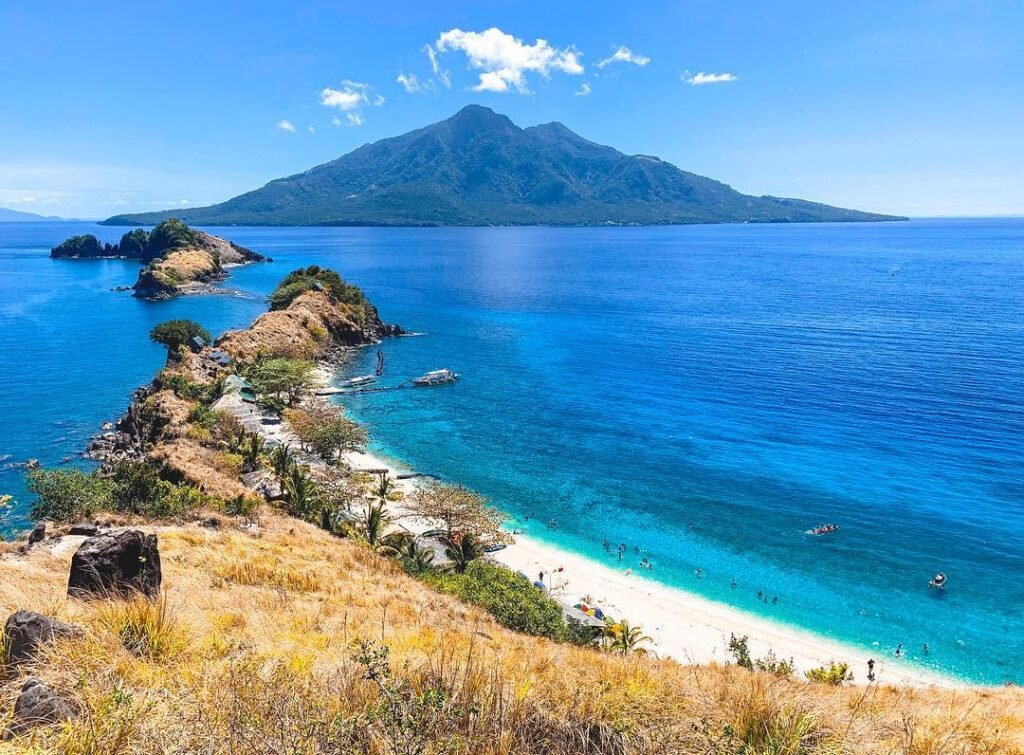
I made the trip to Maniwaya Island this May 2026 as a DIY weekend escape from Metro Manila, and I can tell you upfront: this is not a luxury destination. There are no beach clubs, no malls, no nightlife, and no polished resort infrastructure. What Maniwaya does offer is something harder to find — raw island calm, a genuinely scenic island-hopping circuit, and one of the most surreal low-tide sandbars I have ever stood on.
If you are the kind of traveler who can handle rustic facilities, plan around a once-daily boat schedule, and shows up with enough cash and snacks — Maniwaya Island will not disappoint. This guide is everything I wish I had before I went.
Maniwaya Island Quick Guide
| Item | Details |
|---|---|
| Location | Santa Cruz, Marinduque Province, MIMAROPA |
| Best for | DIY travelers, barkada, couples, campers, island hoppers |
| Suggested stay | 2D1N (quick trip) or 3D2N (relaxed) |
| Main attractions | Palad Sandbar, Ungab Rock Formation, Mongpong Island |
| Main access ports | General Luna Port (Quezon), Buyabod Port (Santa Cruz, Marinduque) |
| Best season | December to May (dry season) |
| Best months | March, April, May |
| Travel difficulty | Moderate |
| Budget range | ₱2,890–₱5,010 per person (varies by group size) |
| No ATM on island | Bring enough cash from Manila, Lucena, or General Luna |
| Mobile signal | Weak to moderate; expect limited connectivity |
| Verify locally | 2026 boat schedules, resort rates, island hopping fees, environmental fees |
Table of Contents
Where Is Maniwaya Island Located?
Maniwaya Island is located in the municipality of Santa Cruz, in the province of Marinduque, under the MIMAROPA administrative region (Region IV-B). It sits in the Sibuyan Sea, positioned between the coastline of Quezon Province on one side and the rest of mainland Marinduque on the other.
This in-between geography is exactly what creates two distinct access routes. Travelers coming from Metro Manila can either skip Marinduque entirely and take a direct boat from General Luna Port in Quezon Province, or they can travel the longer route through Marinduque via RORO ferry and take a shorter boat from Buyabod Port in Santa Cruz.
From Manila, total travel time from bus departure to island arrival is roughly 6 to 9 hours, depending on your route, traffic, and boat timing. I left Manila at midnight and arrived on the island just before noon — completely doable for a weekend trip.
What Is Maniwaya Island Known For?
Maniwaya Island sits quietly off most tourist radars, and that is part of its appeal. Here is what draws travelers here:
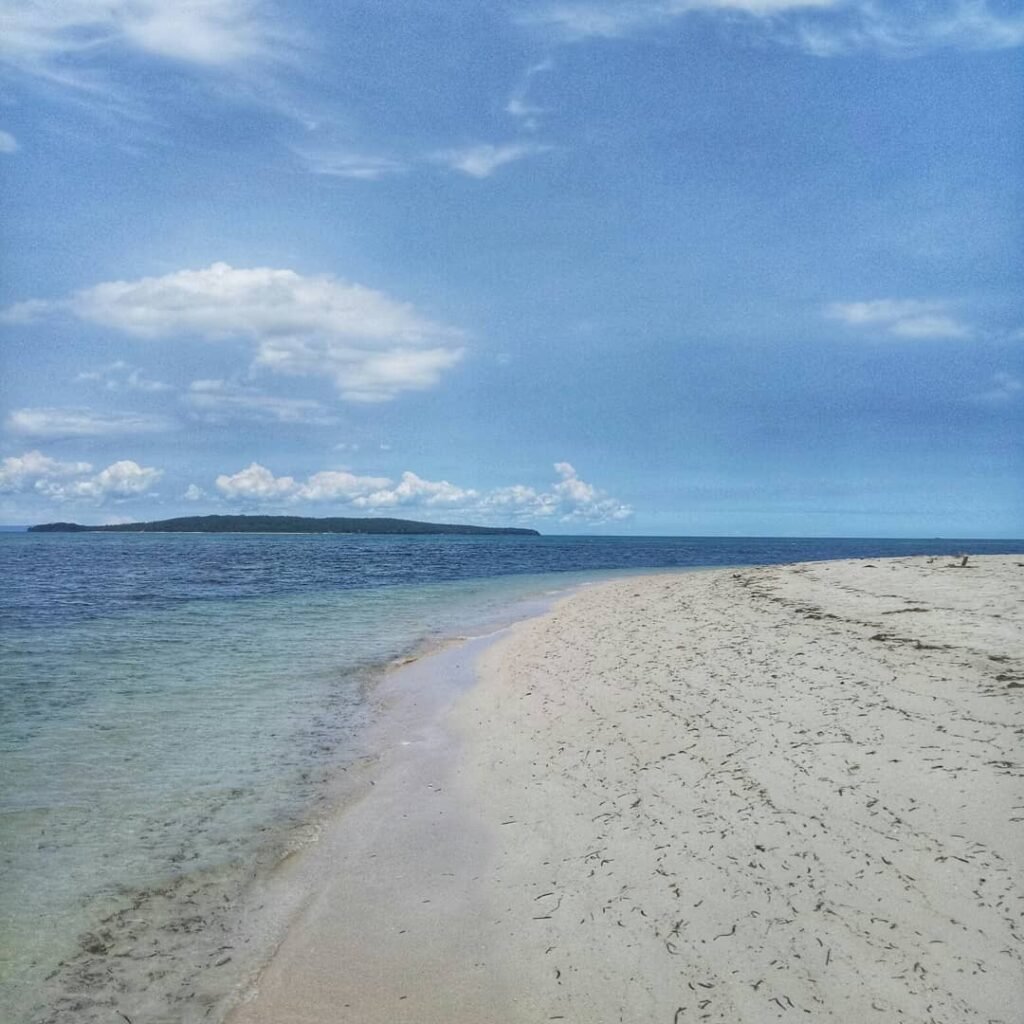
- Palad Sandbar — a breathtaking sandbar of crushed white coral that surfaces during low tide, surrounded by nothing but clear sea water
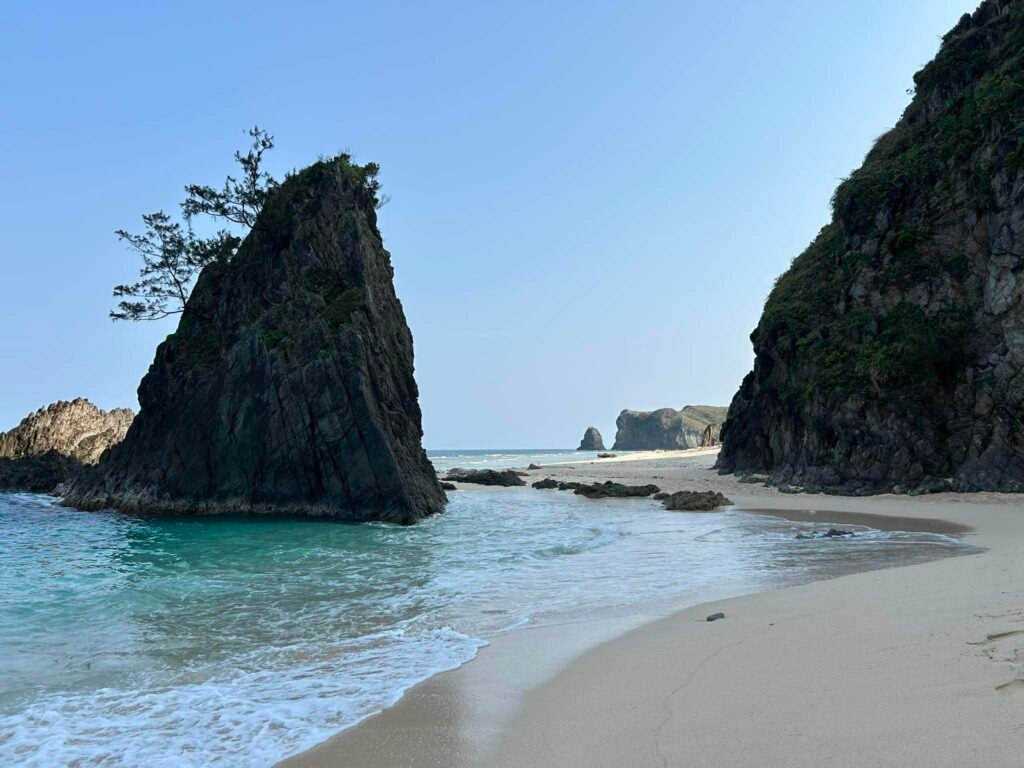
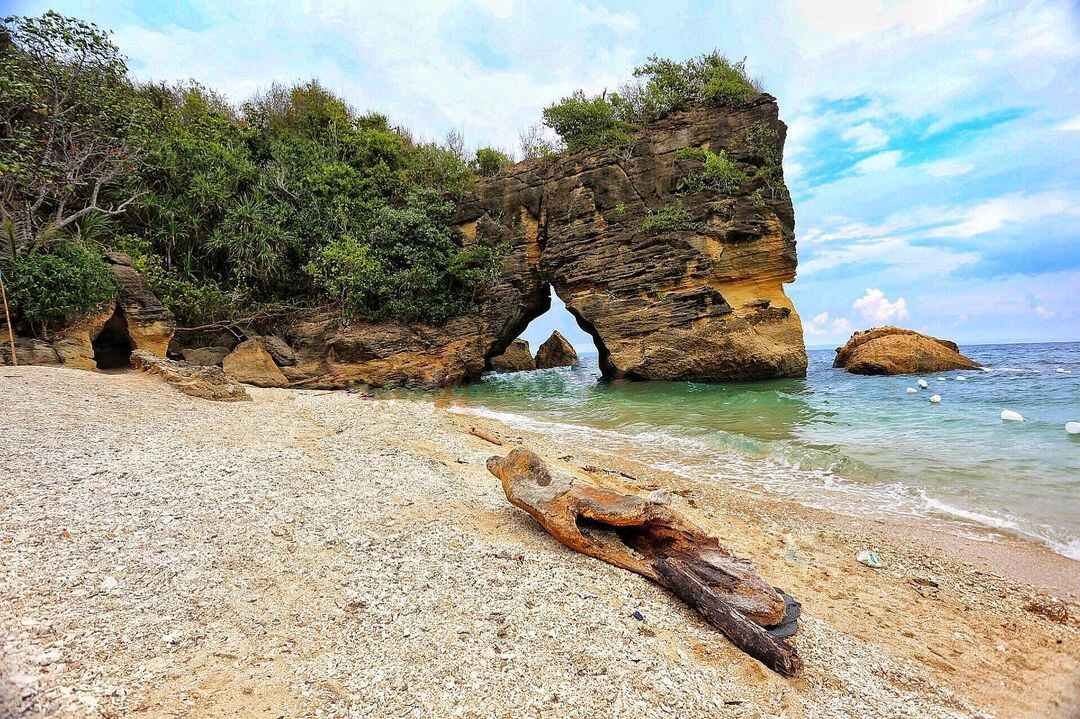
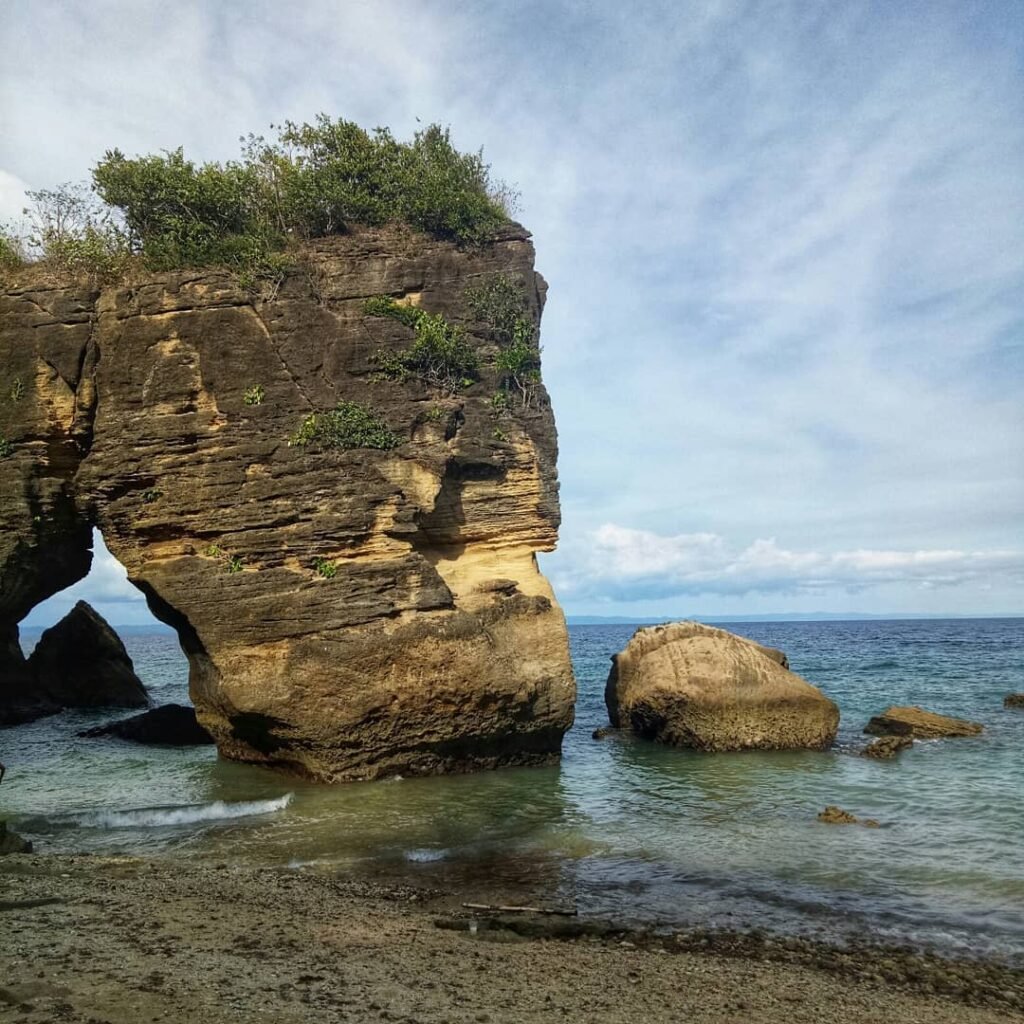
- Ungab Rock Formation — a dramatic natural limestone arch carved by waves on Mongpong Island, one of the most photographed spots in Marinduque island hopping
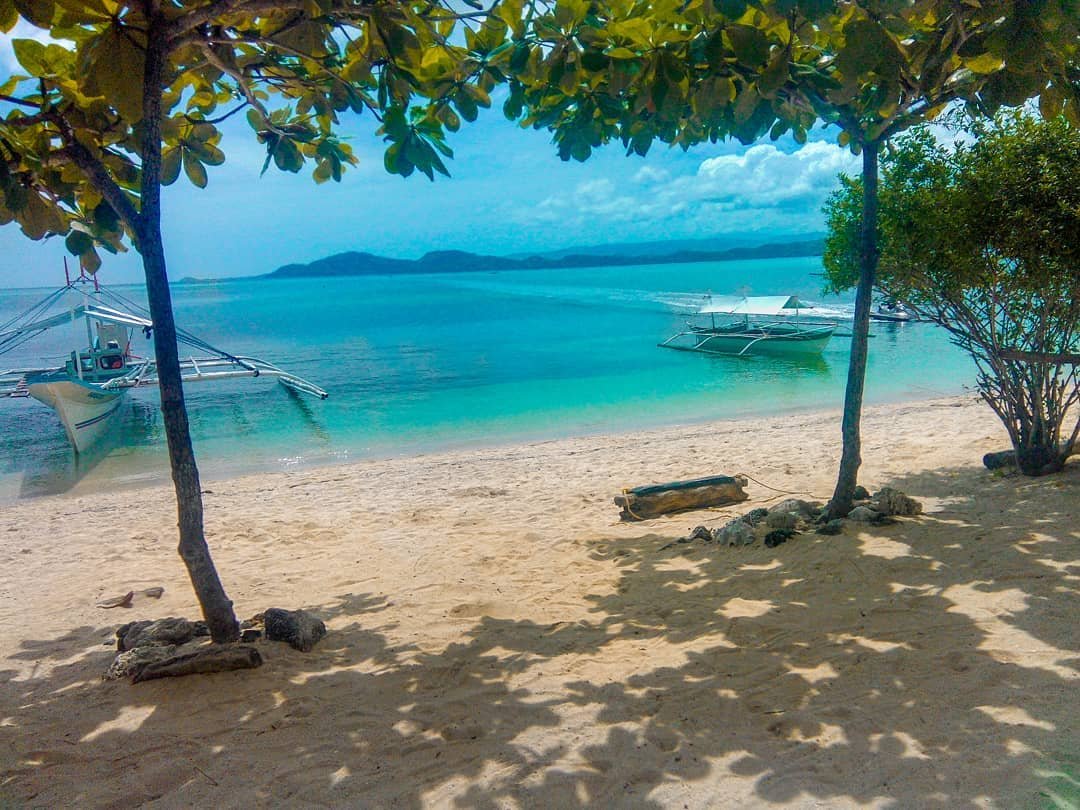
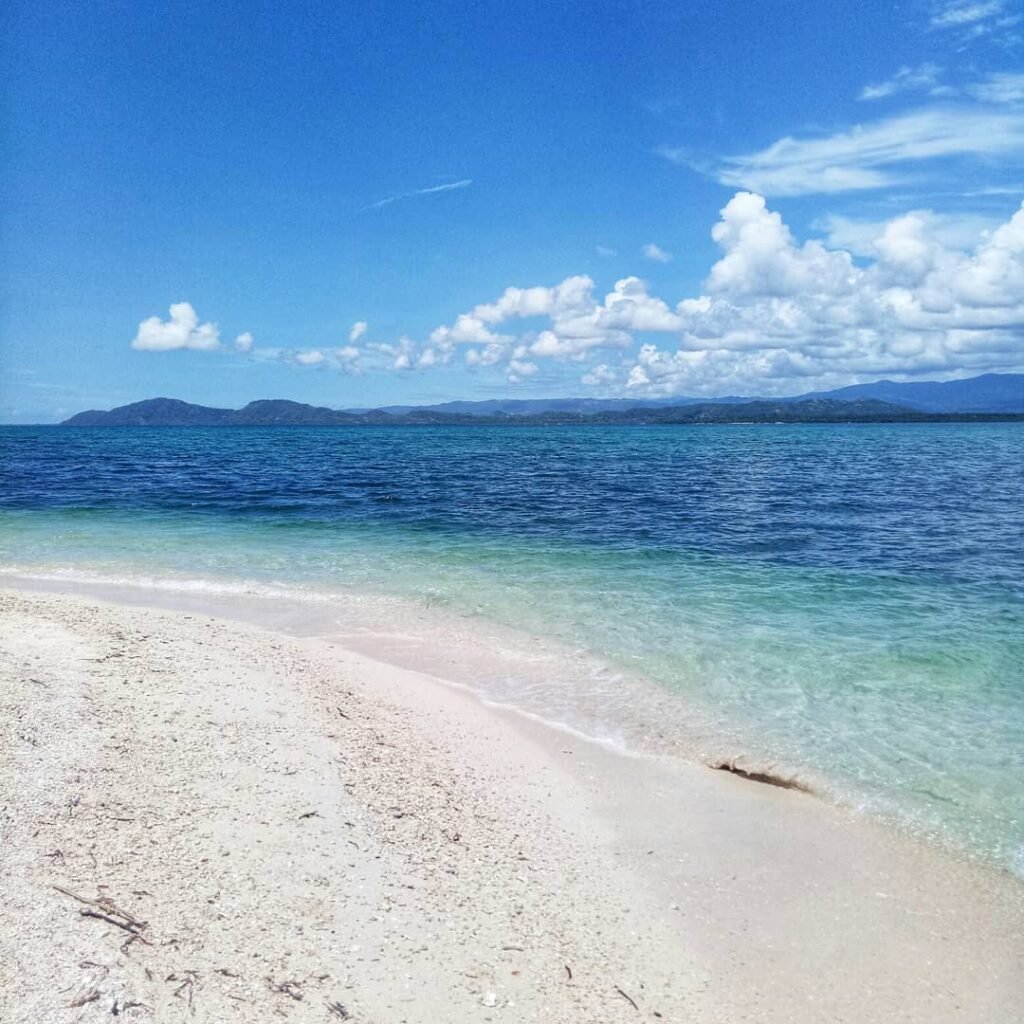
- Mongpong / Mompong Island — a nearby island featured in most hopping routes, with clear waters and scenic coastline
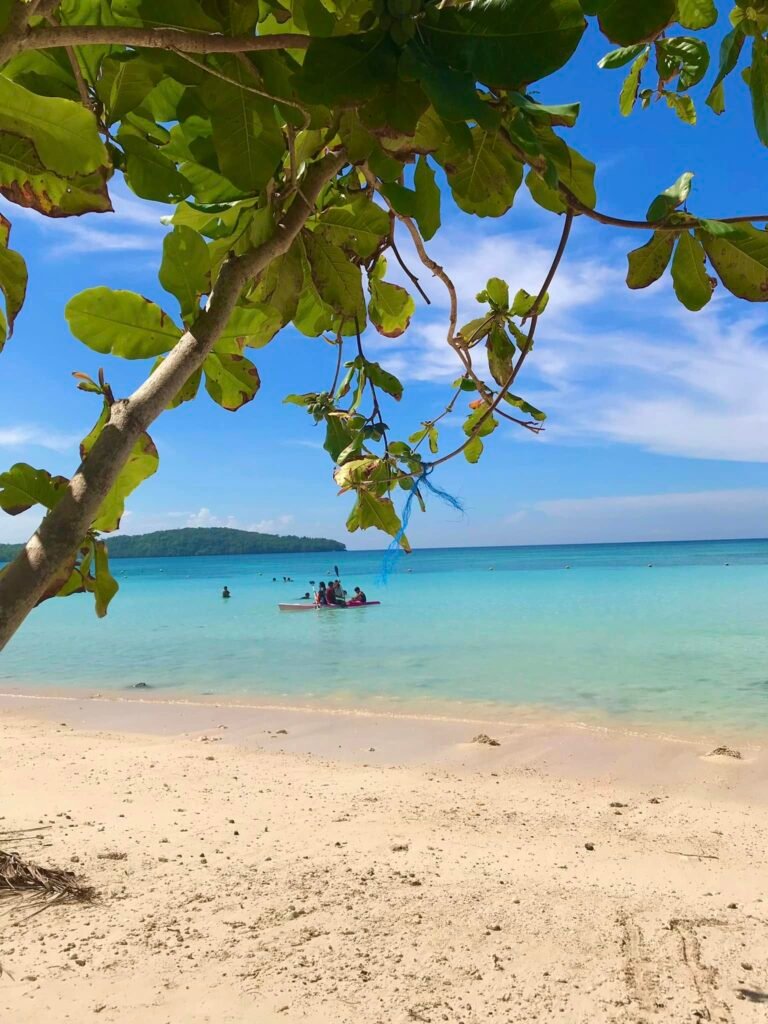
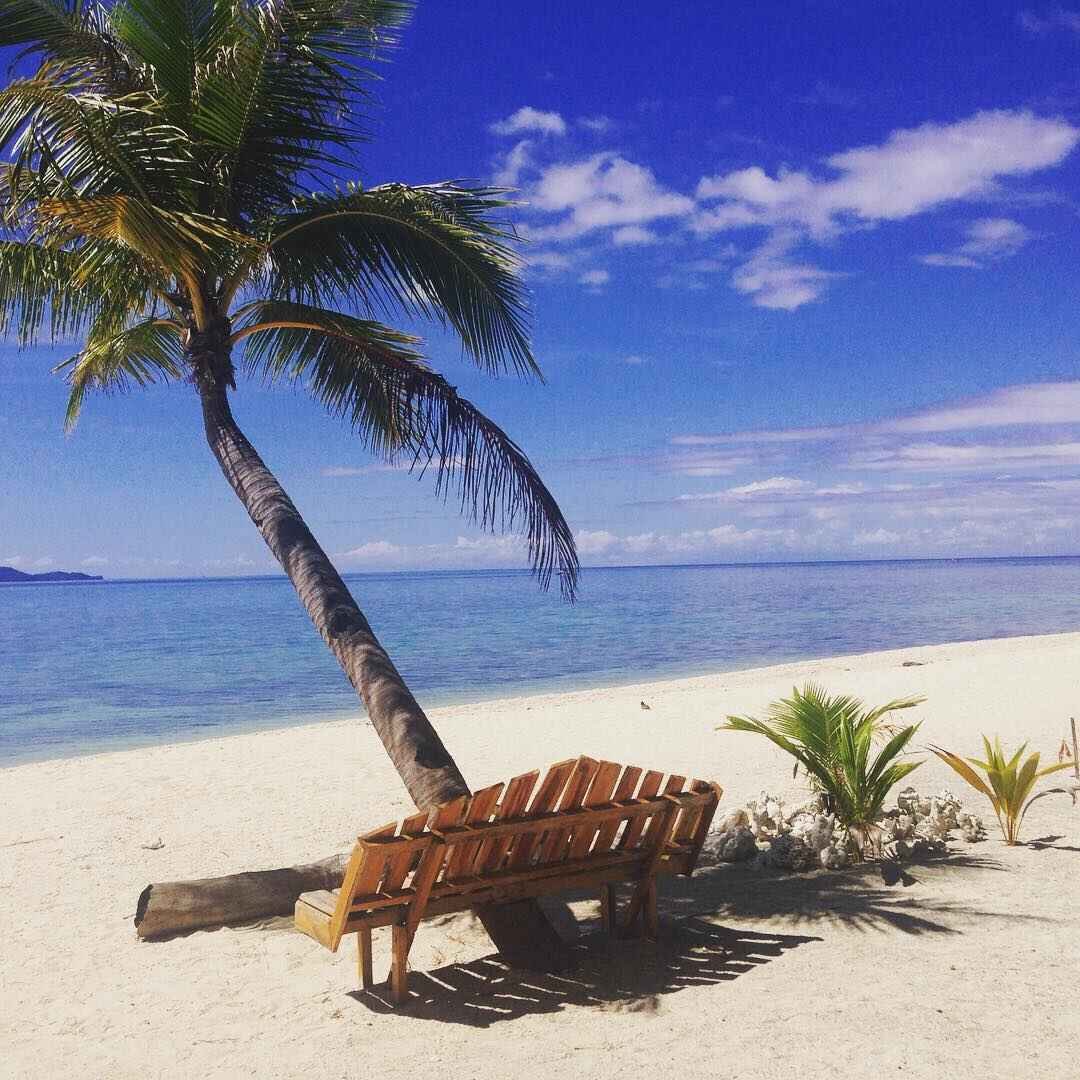
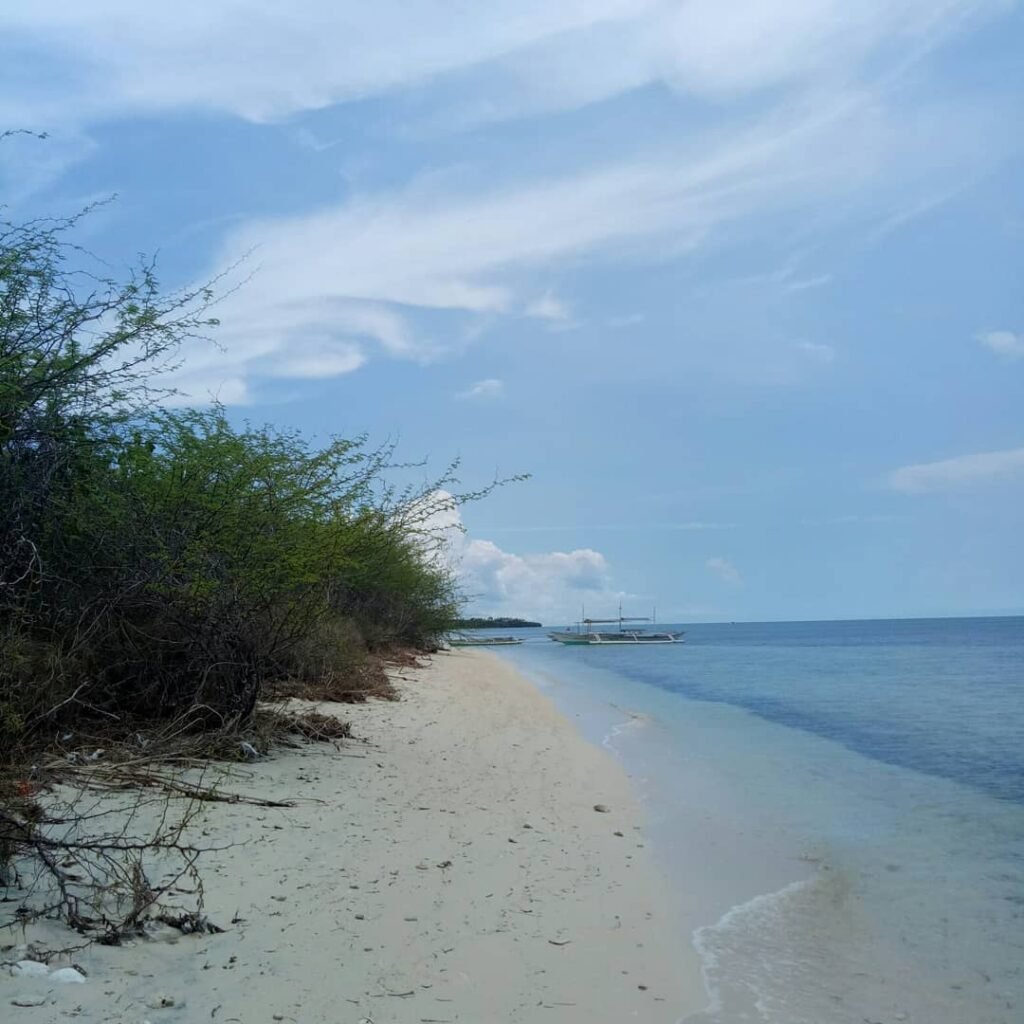
- White-to-cream sand beaches — not ultrafine powdery white, but clean, photogenic, and peaceful
- Simple island life — no commercial buzz, no noisy crowds on weekdays, and genuinely local character
- Budget island camping — tent pitching is available, making it accessible for backpackers
- Snorkeling spots — reef areas around the islands, though specific sites may vary due to rehabilitation closures
- Weekend digital detox — weak signal and generator-only electricity force a welcome disconnect
Think of Maniwaya Island as the no-frills answer to a beach trip: raw, quiet, and honest about what it offers.
How to Go to Maniwaya Island from Manila
There are two main routes to Maniwaya Island from Manila. The route you choose depends on your timeline and whether you want to explore mainland Marinduque.
Route 1: Manila → Lucena → General Luna Port → Maniwaya Island (Best for Weekend Trips)
This is the route I used for my May 2026 trip. It is the most direct option from Manila and the one I recommend for a 2D1N weekend visit.
Step 1: Manila to Lucena Grand Terminal
Board a bus from any major Manila terminal heading to Lucena Grand Terminal. Common operators include JAC Liner and Jam Transit. Terminals to check in Manila include Cubao, Buendia (EDSA-Taft), Kamias, PITX, and Alabang.
| Route | Travel Time | Fare |
|---|---|---|
| Manila → Lucena Grand Terminal | ~3.5–4 hours | ₱210–₱270 |
My tip: Leave Manila no later than midnight. I departed at 11:30 PM and arrived at Lucena around 3:30 AM, giving me more than enough buffer before the 10:00 AM boat.
Step 2: Lucena Grand Terminal to General Luna, Quezon
From Lucena Grand Terminal, take a van or bus bound for General Luna, Quezon. Vans are faster and leave frequently in the early morning.
| Route | Travel Time | Fare |
|---|---|---|
| Lucena Grand Terminal → General Luna | ~2 hours | ₱150–₱170 |
Step 3: General Luna Town to General Luna Port
Once in General Luna town, board a tricycle to the port. It is a short, inexpensive ride.
| Route | Travel Time | Fare |
|---|---|---|
| General Luna town → General Luna Port | 5–10 minutes | ₱10–₱20 per person |
Do this before heading to the port: Buy drinking water, snacks, and food supplies from the General Luna town market or sari-sari stores. Options on Maniwaya Island are very limited. I bought two large water bottles, instant noodles, bread, and chips here — and I was glad I did.
Step 4: General Luna Port to Maniwaya Island (The Critical Step)
This is the most important detail of the entire trip: there is only one public passenger boat per day from General Luna Port to Maniwaya Island.
| Boat Route | Schedule | Travel Time | Fare |
|---|---|---|---|
| General Luna Port → Maniwaya Island | 10:00 AM (daily) | ~1 hour | ₱150–₱180 per person |
| Maniwaya Island → General Luna Port | Morning (confirm with resort) | ~1 hour | ₱150–₱180 per person |
⚠️ VERIFY LOCALLY: The 10:00 AM schedule is based on available information and may change due to weather, tide, passenger count, vessel availability, or Philippine Coast Guard (PCG) advisories. Confirm this schedule directly with the port or your resort before you travel.
If you miss the 10:00 AM public boat, your only option is chartering a private boat:
| Private Boat Charter (General Luna to Maniwaya) | Rate |
|---|---|
| Small boat (up to 4 passengers) | ~₱1,500 per boat |
| Larger boat | ~₱2,500–₱3,000 per boat |
For travelers with private vehicles: parking near General Luna Port costs approximately ₱100 per night. VERIFY LOCALLY.
Route 2: Manila → Dalahican Port → Balanacan Port (Marinduque) → Buyabod Port → Maniwaya Island
This route is the better choice if you want to explore mainland Marinduque before or after Maniwaya, or if you are already on the island.
| Route Segment | Mode | Travel Time | Fare |
|---|---|---|---|
| Manila → Dalahican Port, Lucena | Bus (JAC Liner and others) | ~3.5–4 hours | ₱210–₱270 |
| Dalahican Port → Balanacan Port, Marinduque | RORO ferry | ~3 hours | VERIFY LOCALLY |
| Balanacan Port → Santa Cruz town | Jeepney | ~1 hour | VERIFY LOCALLY |
| Santa Cruz town → Buyabod Port | Tricycle | ~15 minutes | ₱20/person or ₱100 chartered |
| Buyabod Port → Maniwaya Island | Public boat | ~30 minutes | ₱70 per person |
Buyabod Port Public Boat Schedule to Maniwaya Island:
| Departure | Travel Time | Fare |
|---|---|---|
| 7:00 AM | ~30 minutes | ₱70 per person |
| 11:30 AM | ~30 minutes | ₱70 per person |
If you miss both public departures, private boat charters from Buyabod are available at approximately ₱1,500–₱2,000 per boat.
⚠️ VERIFY LOCALLY: RORO ferry schedules between Dalahican and Balanacan, updated fares, and public boat availability. Some bus operators (e.g., JAC Liner) offer combined bus-to-ferry packages directly to Marinduque — check at the terminal for current schedules and rates.
General Luna Port vs Buyabod Port: Which Route Is Better?
| Category | General Luna Port | Buyabod Port |
|---|---|---|
| Best for | Manila weekend trippers | Marinduque explorers |
| Boat travel time to Maniwaya | ~1 hour | ~30 minutes |
| Public boat schedule | Once daily — 10:00 AM | Twice daily — 7:00 AM & 11:30 AM |
| Public boat fare (one way) | ₱150–₱180 | ₱70 |
| Private boat charter | ₱1,500–₱3,000 | ₱1,500–₱2,000 |
| Overall difficulty from Manila | Moderate | Higher (RORO + more transfers) |
| Best traveler type | Backpackers, barkada, car-owners, weekend warriors | Families, province explorers, those already in Marinduque |
| Main risk | Missing the once-daily 10:00 AM boat | RORO timing, more coordination points |
| Details to verify | Boat schedule, port parking fee | RORO schedule, ferry fare, public boat schedule |
My verdict from May 2026: For a quick weekend trip from Manila, use General Luna Port. It is straightforward, and as long as you leave Manila by midnight, you will catch that 10:00 AM boat with time to spare. For a longer Marinduque itinerary, Buyabod Port is worth the extra coordination.
Where to Stay in Maniwaya Island
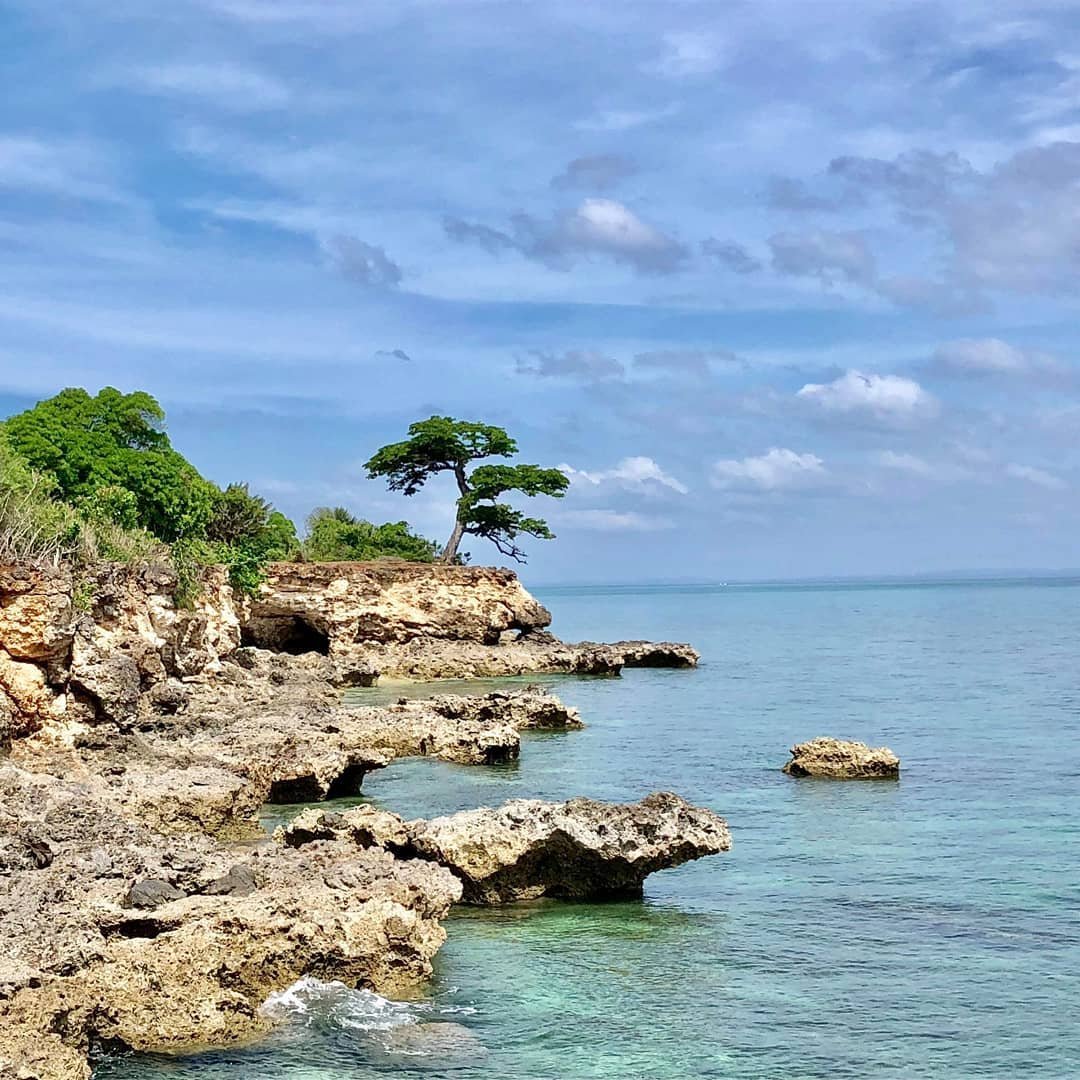
Do not expect hotel chains or boutique resorts. Maniwaya Island accommodation is simple, locally owned, and beach-fronting. Most places offer basic rooms, shared bathrooms, and generator-based electricity.
Known accommodations on Maniwaya Island include:
- Wawie’s Beach Resort
- Cozea Beach Lodge
- Playa Amara
- Residencia De Palo Maria
- Marikit na Beach Resort
- Villa Anita
| Accommodation Type | Estimated Rate |
|---|---|
| Beachfront fan room (2–4 pax) | ₱1,000–₱1,500 per night |
| Beachfront aircon room (2–4 pax) | ₱1,000–₱1,500 per night (VERIFY LOCALLY) |
| Tent pitching / camping fee | ₱100–₱300 per night |
| Tent rental | ~₱500 per night |
⚠️ VERIFY LOCALLY: All 2026 resort rates, availability, and package inclusions. Confirm directly with the resort before paying any deposit.
Always ask your resort these questions before booking:
- Is the boat transfer (to and from the mainland port) included?
- Is island hopping included in the package?
- Are meals included? Which meals?
- What hours does the generator run?
- Is the room fan-only or aircon?
- Is the restroom private or shared?
- Is there freshwater for showering?
- What time is check-in and check-out?
- Are outside food and drinks allowed (corkage fees)?
About electricity and signal: Most resorts have generators, but generator hours are typically limited to evenings — not 24 hours. Do not rely on air conditioning running through the night. Mobile signal ranges from weak to spotty. You may catch 3G or LTE in open beachfront areas, but do not count on it for calls or data inside rooms or inland. There are no ATMs on Maniwaya Island. Withdraw cash in Manila, Lucena, General Luna, or Santa Cruz before crossing.
What Are the Best Things to Do in Maniwaya Island?
1. Visit Palad Sandbar
Palad Sandbar is the star of the island-hopping circuit. It is a sandbar made of crushed white coral that emerges only during low tide, surrounded by open sea in every direction. Standing on it felt like being on the edge of the world.
Best time windows to visit Palad Sandbar:
| Time | Notes |
|---|---|
| 6:00 AM – 8:00 AM | Best light for photography; sandbar typically at peak visibility |
| 3:00 PM – 6:00 PM | Good for afternoon golden-hour photos |
Check tide schedules specific to your travel dates. During high tide, Palad Sandbar may be partially or fully submerged — and there is nothing to see.
2. Explore Ungab Rock Formation
Located on Mongpong Island (also spelled Mompong), Ungab Rock Formation is a natural limestone arch sculpted by waves and weather over centuries. It is one of the most dramatic and photographed spots in all of Marinduque island hopping. Access depends entirely on sea condition — if the sea is rough or Habagat winds are active, your boatman may not be able to dock safely.
3. Go Island Hopping
Island hopping is the main organized activity on Maniwaya Island and the best way to see the highlights in a single morning. The typical circuit covers:
- Palad Sandbar (low-tide only)
- Ungab Rock Formation on Mongpong Island
- Mongpong / Mompong Island (clear waters, beach scenery)
- Snorkeling stops (specific spots vary; some reef areas may be closed for rehabilitation)
| Island Hopping Option | Estimated Rate |
|---|---|
| Private boat (6–8 pax) | ₱1,500–₱2,000 per boat |
| Joiner rate (ask your resort) | ~₱250–₱300 per person |
Solo travelers and couples: ask your resort if they can merge you with other guests to lower the per-head cost. Most resorts can arrange joiner trips during peak season.
⚠️ VERIFY LOCALLY: Island hopping boat rates, environmental fees, snorkeling spot availability, and Palad Sandbar access rules.
4. Swim and Relax on the Beach
Do not underestimate how good it feels to have almost an entire beach to yourself on a weekday. The water around Maniwaya is generally clear during the dry season. Spend an afternoon swimming, lying on the sand, and watching the sky.
5. Eat Fresh Seafood
Ask local fishermen or your resort about the daily catch. You can buy fresh fish, squid, and other seafood in the morning, then have it cooked paluto-style by your resort. Since there are no restaurants on the island, pre-arranging meals with your resort — or bringing your own food from the mainland — is important.
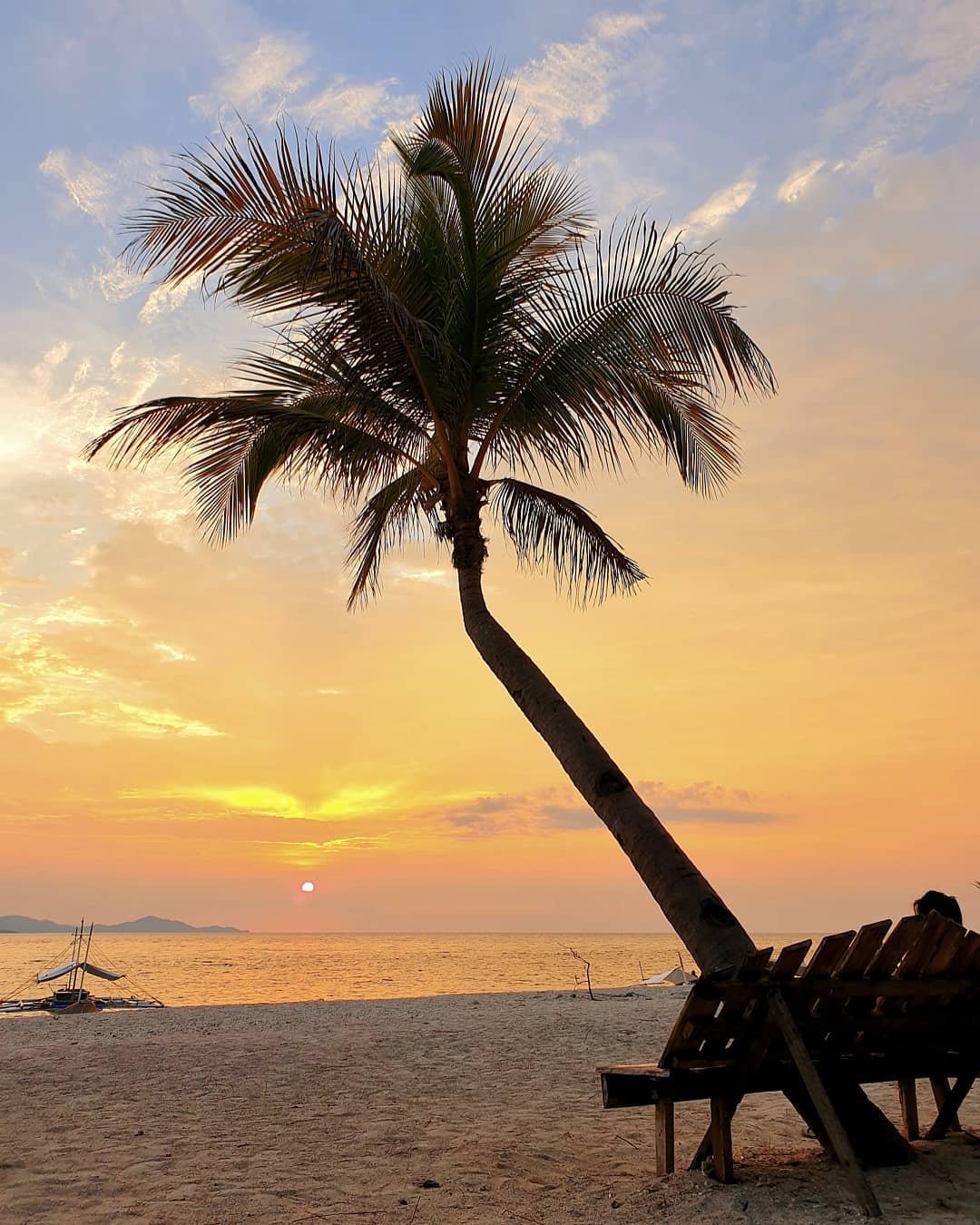
6. Watch the Sunrise and Sunset
Maniwaya Island faces different directions depending on which section of the beach you are on. Ask your resort about the best spot for sunrise or sunset. My best morning in May 2026 was a 5:30 AM wake-up, a cup of instant coffee from my bag, and a slowly brightening horizon from the beachfront.
Maniwaya Island Hopping Stops at a Glance
| Stop | What to Expect | Reminder |
|---|---|---|
| Palad Sandbar | Crushed-coral sandbar in open sea | Visit during low tide only |
| Ungab Rock Formation | Natural limestone arch, Mongpong Island | Depends on sea condition |
| Mongpong / Mompong Island | Clear water, beach scenery | Usually included in all circuits |
| Snorkeling areas | Reef and fish viewing | Specific spots may vary; ask boatman |
How Much Does Maniwaya Island Cost? Budget Breakdown
DIY Cost Per Person (General Luna Port Route)
| Expense | Solo | Couple (each) | Barkada of 6 (each) | Family of 4 (each) |
|---|---|---|---|---|
| Bus: Manila → Lucena | ₱210–₱270 | ₱210–₱270 | ₱210–₱270 | ₱210–₱270 |
| Van/bus: Lucena → General Luna | ₱150–₱170 | ₱150–₱170 | ₱150–₱170 | ₱150–₱170 |
| Tricycle: General Luna town → Port | ₱10–₱20 | ₱10–₱20 | ₱10–₱20 | ₱10–₱20 |
| Public boat roundtrip (General Luna) | ₱300–₱360 | ₱300–₱360 | ₱300–₱360 | ₱300–₱360 |
| Resort stay (1 night) | ₱300 (camping) | ₱500–₱750 | ₱250–₱300 | ₱375–₱500 |
| Island hopping | ₱1,500 (private) / ₱250–₱300 (joiner) | ₱750–₱1,000 | ₱250–₱330 | ₱375–₱500 |
| Food (3–4 meals) | ₱500–₱800 | ₱500–₱800 | ₱400–₱600 | ₱500–₱700 |
| Environmental / port fees | ₱50–₱100 | ₱50–₱100 | ₱50–₱100 | ₱50–₱100 |
| Emergency buffer | ₱1,000 | ₱1,000 | ₱1,000 | ₱1,000 |
| Estimated Total | ₱3,290–₱4,760 | ₱3,740–₱5,010 | ₱2,890–₱3,690 | ₱3,240–₱4,160 |
One-Way Transport Cost Summary (General Luna Route)
| Leg | Fare |
|---|---|
| Manila → Lucena Grand Terminal (bus) | ₱210–₱270 |
| Lucena Grand Terminal → General Luna (van/bus) | ₱150–₱170 |
| General Luna town → Port (tricycle) | ₱10–₱20 |
| General Luna Port → Maniwaya Island (public boat) | ₱150–₱180 |
| Estimated One-Way Transport Total | ₱520–₱640 |
| Estimated Roundtrip Transport Total | ~₱1,040–₱1,280 |
Package Tour / Joiner Tour Rates
| Tour Type | Estimated Rate |
|---|---|
| Manila joiner tour (van + boat + tent + hopping) | ₱2,299–₱2,699 per person |
| Private group tour | From ~₱3,999 per person |
Joiner packages often include van transfers, boat rides, tent accommodation, and island hopping, but always verify exactly what is and is not included. Meals, environmental fees, entrance fees, and shower fees may be charged separately depending on the organizer.
⚠️ All rates in this guide are based on available research and personal travel reference. VERIFY LOCALLY for 2026 current rates before booking or traveling.
Best Maniwaya Island Itinerary
2D1N Weekend Itinerary (Manila via General Luna Port) — What I Did in May 2026
Day 1: Manila to Maniwaya Island
| Time | Activity | Notes |
|---|---|---|
| 11:30 PM | Depart Manila by bus | Target Lucena arrival ~3:30 AM |
| ~3:30 AM | Arrive Lucena Grand Terminal | Rest briefly if needed |
| 4:30 AM | Board van to General Luna | Fare ~₱150–₱170 |
| 6:30 AM | Arrive General Luna town | Buy water, snacks, food supplies here |
| 7:30 AM | Tricycle to General Luna Port | ₱10–₱20; confirm boat at the port |
| 10:00 AM | Board public boat to Maniwaya Island | ₱150–₱180; ~1 hour ride |
| 11:00 AM | Arrive Maniwaya Island | Proceed to resort, check in |
| 12:00 NN | Lunch | Arrange with resort; or eat packed food |
| 2:00 PM | Beach time | Swim, walk the shore, explore |
| 5:00 PM | Sunset viewing | Ask resort for the best facing shore |
| 7:00 PM | Dinner / seafood paluto | Pre-arrange with resort or bring supplies |
| 9:00 PM | Rest | Generator may run limited hours |
Day 2: Island Hopping and Return
| Time | Activity | Notes |
|---|---|---|
| 5:30 AM | Wake up early | Prepare for island hopping |
| 6:00 AM | Palad Sandbar | Visit during low tide for best view |
| 7:30 AM | Ungab Rock Formation | Sea conditions permitting |
| 9:00 AM | Mongpong Island + snorkeling | Bring aqua shoes |
| 11:00 AM | Return to resort | Wash up and pack |
| 12:00 NN | Lunch + check-out | Confirm return boat night before |
| 1:00 PM+ | Boat back to General Luna Port | Confirm schedule with resort/boatman |
| Afternoon | Van back to Lucena | ₱150–₱170 |
| Evening | Bus back to Manila | ₱210–₱270 |
When Is the Best Time to Visit Maniwaya Island?
| Season | Months | Notes |
|---|---|---|
| Best | March, April, May | Calmest sea, clearest skies, best visibility |
| Good | December, January, February | Dry season, cooler weather |
| Caution | June, July, August | Habagat season; boat trips may be canceled |
| Avoid | September, October | Peak rainy and typhoon season |
Weekday vs Weekend: Maniwaya Island gets noticeably busier on weekends, especially during Holy Week, summer, and long holidays. For a quieter experience with more resort availability and a more peaceful sandbar visit, go Tuesday to Thursday.
Palad Sandbar timing: The sandbar appears during low tide. Check the tide schedule for your specific travel dates at pagasa.dost.gov.ph or a tide chart app before finalizing your island hopping day.
What to Bring to Maniwaya Island
| Item | Why You Need It |
|---|---|
| Cash (large and small bills) | No ATM on island; small bills for tricycle, fees, and sari-sari stores |
| Dry bag | Protect gadgets and clothes from boat sea spray |
| Waterproof phone pouch | Essential for sandbar and island hopping |
| Aqua shoes or water sandals | Crushed coral and rocky seabed in snorkeling and sandbar areas |
| Rash guard | Full-day sun protection in open water |
| Reef-safe sunscreen | Better for marine environments and coral health |
| Power bank (fully charged) | Generator hours are limited; charge your devices on the bus |
| Insect repellent | Mosquitoes are active in the evenings on the island |
| Personal medicine | No major pharmacy on Maniwaya Island |
| Extra drinking water | Buy more bottles before the boat crossing |
| Snacks and instant food | Limited stores on the island; bring enough for a day buffer |
| Valid ID | For ferry, resort registration, and port check-in |
| Trash bag | Pack out all your waste; leave the beach clean |
| Soft bag or backpack | Hard suitcases are impractical and dangerous on small boats |
| Towel and extra clothes | Bring one change per activity (beach, island hopping, boat ride home) |
What Should You Know Before Going to Maniwaya Island?
- The General Luna public boat runs only once a day at 10:00 AM. Missing it means paying ₱1,500–₱3,000 for a private charter. Leave Manila by midnight.
- There is no ATM on Maniwaya Island. Withdraw enough cash at home, at an ATM in Manila, Lucena City, General Luna, or Santa Cruz before crossing.
- Electricity is limited. Most resorts run generators for limited hours, typically evenings. Do not assume 24-hour power or uninterrupted air conditioning.
- Mobile signal is weak. Expect limited calls and data. Download maps and confirm all bookings before you cross.
- Palad Sandbar visibility depends on the tide. Go during low tide. Check the tide schedule before your island hopping day.
- Weather can cancel everything. Philippine Coast Guard can suspend boat operations during bad weather. Check forecasts through weather.com, windy.com, or pagasa.dost.gov.ph before traveling.
- Resort packages vary widely. Some include room only. Others include meals, boat transfers, and island hopping. Always ask for a written or verbal breakdown before paying.
- Verify all rates before traveling. Fares, fees, and package prices listed in this guide are research-based references and may have changed by the time you travel.
Common Mistakes to Avoid at Maniwaya Island
- Leaving Manila too late. This is the most common mistake. If you want to catch the 10:00 AM boat from General Luna, you must depart Manila no later than midnight. A 1:00 AM or 2:00 AM departure leaves almost no room for delays.
- Assuming all packages include island hopping. Many resort packages only include accommodation. Island hopping, meals, and boat transfers may be separate. Confirm every line item.
- Not bringing enough cash. Digital payments (GCash, Maya) may work in some resorts but weak signal makes it unreliable. Cash is always the safer choice.
- Overpacking for the boat ride. You will board a small outrigger boat with your luggage. A hard-shell suitcase is not just inconvenient — it can be a safety hazard. Use a soft backpack or duffel bag instead.
- Visiting Palad Sandbar at the wrong tide. If you schedule island hopping without checking the tide, the sandbar may be submerged. Check beforehand. This mistake cannot be undone once you are already on the boat.
- Skipping the weather check. Rough seas in the Sibuyan Sea can cancel your entire trip. A quick weather and wave forecast check before you leave Manila could save you a wasted commute.
- Booking a resort without confirming inclusions. Always confirm what is and is not included — especially meals, boat transfers, and island hopping — before making any payment.
- Leaving gadgets unprotected during the boat ride. Sea spray during the crossing from General Luna can reach bags placed on the boat hull. Use a dry bag or waterproof pouch for phones, cameras, and power banks.
Nearby Marinduque Side Trips
If you are taking the Buyabod route or extending your stay to explore mainland Marinduque, here are the destinations worth visiting:
| Attraction | Location | Estimated Fee | Notes |
|---|---|---|---|
| Boac Cathedral (1792) | Boac, Marinduque | Free | Fortress-style heritage church; VERIFY LOCALLY |
| National Museum Marinduque-Romblon | Boac, Marinduque | Free | Open Tue–Sun, 9:00 AM–5:00 PM; closed Mon |
| Poctoy White Beach | Torrijos, Marinduque | ~₱25 entrance; ~₱200 cottage | VERIFY LOCALLY |
| Bathala Caves | Santa Cruz, Marinduque | ~₱50 env. fee + ~₱300 guide/group | VERIFY LOCALLY |
| Bagumbungan / San Isidro Cave | Santa Cruz, Marinduque | ~₱300 package (env. fee + guide + equipment) | 1.9 km subterranean; VERIFY LOCALLY |
Always confirm access, fees, and operating hours before visiting. Some caves and heritage sites may close temporarily for safety assessment or environmental reasons.
 Always confirm access, fees, and operating hours before visiting. Some caves and heritage sites may close temporarily for safety assessment or environmental reasons.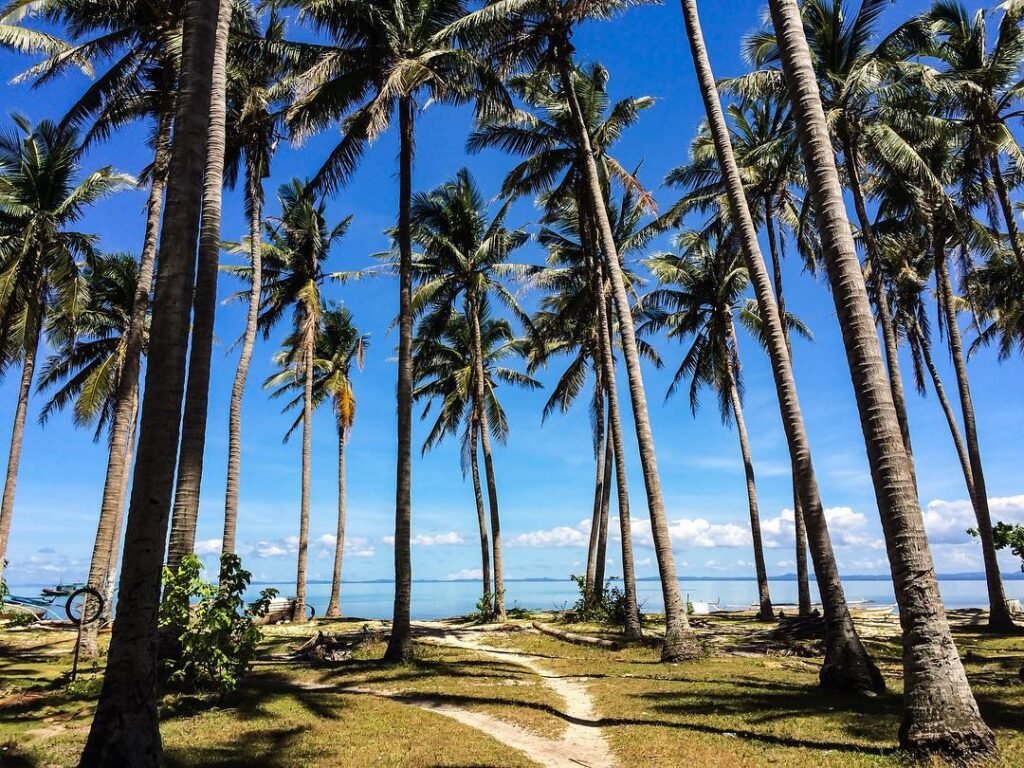
FAQs About Maniwaya Island
Is Maniwaya Island worth visiting?
Yes, especially for travelers who want a quiet, budget-friendly, and raw island experience near Manila. It is not a luxury destination, but the island hopping, Palad Sandbar, and overall peaceful vibe make it genuinely rewarding.
Where is Maniwaya Island located?
Maniwaya Island is located in Santa Cruz, Marinduque Province (MIMAROPA Region). It sits in the Sibuyan Sea, between Quezon Province and the rest of Marinduque island.
How far is Maniwaya Island from Manila?
Approximately 6 to 9 hours total travel time by bus and boat, depending on your route.
What is the best route from Manila to Maniwaya Island?
For a quick 2D1N weekend trip, the General Luna Port route (Manila → Lucena → General Luna → Maniwaya) is the most direct. For a longer Marinduque itinerary, use the Buyabod Port route via RORO ferry.
How much is the boat fare to Maniwaya Island?
From General Luna Port: approximately ₱150–₱180 per person one way. From Buyabod Port: approximately ₱70 per person one way. VERIFY LOCALLY for 2026 rates.
What time does the public boat leave from General Luna Port?
The public boat departs at approximately 10:00 AM daily. This is a once-a-day schedule — do not miss it. VERIFY LOCALLY before traveling.
What time do boats leave from Buyabod Port to Maniwaya Island?
Public boats depart at approximately 7:00 AM and 11:30 AM. VERIFY LOCALLY.
What is Palad Sandbar?
Palad Sandbar is a crushed-coral sandbar near Maniwaya Island that appears only during low tide. It is the most photographed attraction in the island-hopping circuit. Visit only during low tide, ideally early morning.
What is Ungab Rock Formation?
Ungab Rock Formation is a natural limestone arch on Mongpong Island, accessible by boat during island hopping. It is one of the most scenic stops in Marinduque island hopping.
Is there an ATM on Maniwaya Island?
No. There is no ATM on Maniwaya Island. Withdraw enough cash in Manila, Lucena City, General Luna, or Santa Cruz before crossing.
Is there mobile signal on Maniwaya Island?
Signal is limited and inconsistent. You may get weak 3G or LTE in open beachfront areas. Expect connectivity to be unreliable.
Is Maniwaya Island safe for first-timers?
Yes, as long as you plan around the boat schedule, check weather conditions, bring enough cash, and manage expectations about facilities. It is a rustic destination — safe but not luxurious.
When is the best time to visit Maniwaya Island?
March, April, and May offer the calmest seas, clearest skies, and best water visibility. These are the ideal months for Palad Sandbar and island hopping.
Final Verdict: Should You Visit Maniwaya Island?
Go to Maniwaya Island if: You want a budget-friendly, raw, and genuinely peaceful beach escape within reach of Manila. You are comfortable with simple facilities. You enjoy island hopping, camping by the beach, fresh seafood, and occasional phone-free hours. The sandbar, the rock formation, the quiet, and the local character make it a trip worth planning.
Consider another destination if: You need reliable air conditioning throughout the night, strong Wi-Fi, luxury resort services, nightlife, or polished tourist infrastructure. Maniwaya is not that kind of place, and expecting it to be will only disappoint you.
My May 2026 trip gave me two nights of salty hair, early mornings, one low-tide sandbar under golden light, and exactly zero social media notifications. The commute is long, the boat schedule is unforgiving, and the signal is terrible — and I would still go back.
Plan your cash, confirm your boat schedule, check the tide for Palad Sandbar, and leave Manila by midnight. Everything else on Maniwaya Island will take care of itself.
Read Next: Explore More of the Philippines
Loved the rustic vibe of Maniwaya? Here are other destinations and guides to help you plan your next adventure.
 Explore the Rest of Marinduque Don’t just stay on the island! If you are taking the Santa Cruz route, you are already on the mainland. Maximize your trip by exploring the province’s heritage and culture.
The Full Itinerary: Top 8 Marinduque Tourist Spots 2025: Ultimate Guide
Seasonal Guide: Moriones Festival: Marinduque’s Unique Holy Week Experience
 The “Rustic Camping” Alternatives If you enjoyed the “DIY and Disconnect” atmosphere of Maniwaya, these two destinations offer a similar (or even wilder) experience for your next long weekend.
The “Golden Standard” of Camping: Calaguas Islands Travel Guide (Camarines Norte DIY)
The “End of the World” Vibe: Jomalig Island 2024 Travel Guide
 Bigger Picture Inspiration Still deciding where to go next year? Zoom out and look at the best the archipelago has to offer.
Regional Guide: Visayas Tourist Spots: Eastern, Central & Western Gems
The Bucket List: Top 10 Most Beautiful Places in the Philippines