Traveling today almost always means staying connected. From navigating unfamiliar streets to booking transport and keeping in touch with others, your phone plays a central role in how you experience a new place. It offers convenience and flexibility, but it also carries a large amount of personal data that deserves attention.
When you are constantly switching between networks, locations, and apps, your data is moving with you. This creates situations where information can be exposed without you even noticing. Being aware of these risks helps you stay connected without compromising your privacy.
Why being mobile increases your exposure
Using your phone while traveling means relying on networks you do not control. Airports, cafés, hotels, and public spaces all offer easy access to Wi-Fi, but these networks are not always secure.
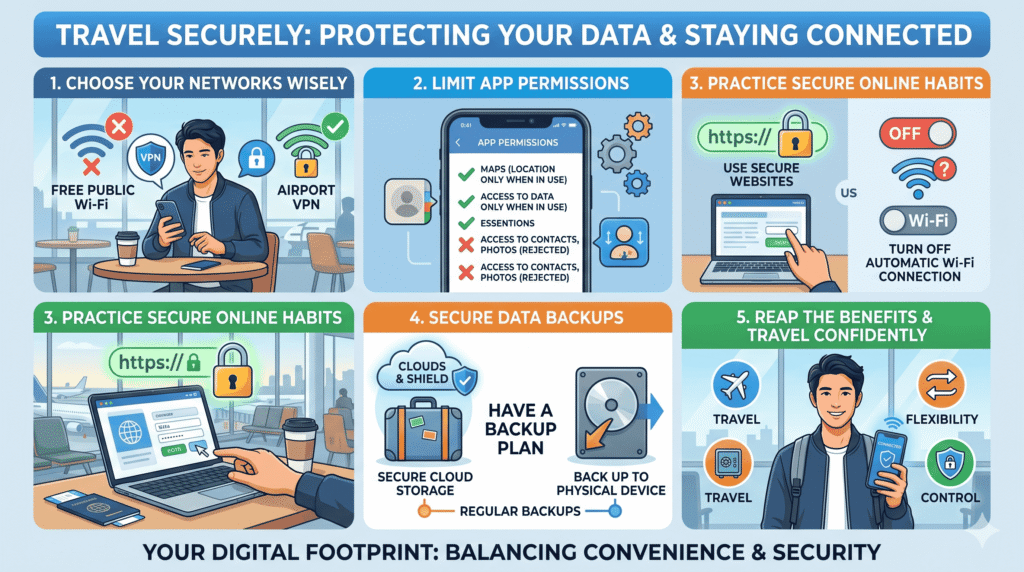
Many travelers use tools like a vpn for mobile to add an extra layer of privacy when connecting to public networks, especially when moving between different locations throughout the day.
The more often you connect to unfamiliar networks, the greater the chance that your data could be intercepted. This is especially relevant when accessing emails, travel bookings, or financial information on the go.
Table of Contents
Public Wi-Fi is not always what it seems
Open networks are designed for convenience, not protection. In some cases, malicious networks can even mimic legitimate ones, making it difficult to tell the difference.
Connecting without verifying the source can expose your activity to others on the same network. This includes browsing habits, login details, and other sensitive information that travels through the connection.
Apps can quietly collect more than expected
Most smartphones are filled with apps that support your daily activities. While many are useful, some request access to data that goes beyond their core function. Location tracking, background activity, and data sharing can all happen without much visibility.
Reviewing app permissions helps reduce unnecessary exposure. Limiting access to only what is needed keeps your device more secure while you travel.
The importance of secure habits
Staying safe online often comes down to simple habits. Avoid logging into sensitive accounts on unfamiliar networks whenever possible. Pay attention to website security indicators and be cautious with unexpected pop-ups or redirects.
Turning off automatic Wi-Fi connections can also help. This prevents your device from connecting to unknown wireless networks without your knowledge, giving you more control over your online activity.

Preparing for the unexpected
Travel comes with unpredictability. Devices can be lost, stolen, or damaged, which makes having a backup plan essential. Keeping your data backed up ensures that you do not lose important information if something goes wrong.
Cloud storage or secure backups allow you to recover quickly and continue your journey without major disruptions.
Staying flexible while staying secure
Being connected while traveling adds a level of freedom that enhances the entire experience. It allows you to explore, communicate, and manage your plans in real time.
By taking a few precautions, you can maintain that flexibility while keeping your data protected. It is about finding a balance that supports both convenience and security.
Travel with confidence
When you understand how your data moves and where risks can appear, it becomes easier to make smarter choices. You do not need to limit your online activity, just approach it with a bit more awareness.
With the right habits and tools in place, you can enjoy your travels while staying in control of your digital footprint.