By Aiden Kenzy, the founder of Lakbay Pinas and a passionate Filipino travel writer dedicated to uncovering the hidden gems and iconic destinations across the Philippines. Since 2015 — Visited: September 2026 — Published: September 2026
Quick Answer: Tulali Falls is a tiered waterfall in Barangay Pudong, Kapangan, Benguet, officially opened to the public by the Kapangan LGU in August 2026. Reaching it requires a multi-leg journey from Baguio City plus a 1.5 to 2-hour trek through steep, mossy forest. There is no entrance fee, but guide and environmental fees apply.
Key Takeaways:
- No entrance fee; mandatory environmental fee of PHP 100 per person and guide fee of PHP 500 per group of 3 to 4 people
- Best visited November to May (dry season) for safer trails and calmer water
- Access difficulty is high: expect slippery descents, zero phone signal on trail, and strict jeepney schedules
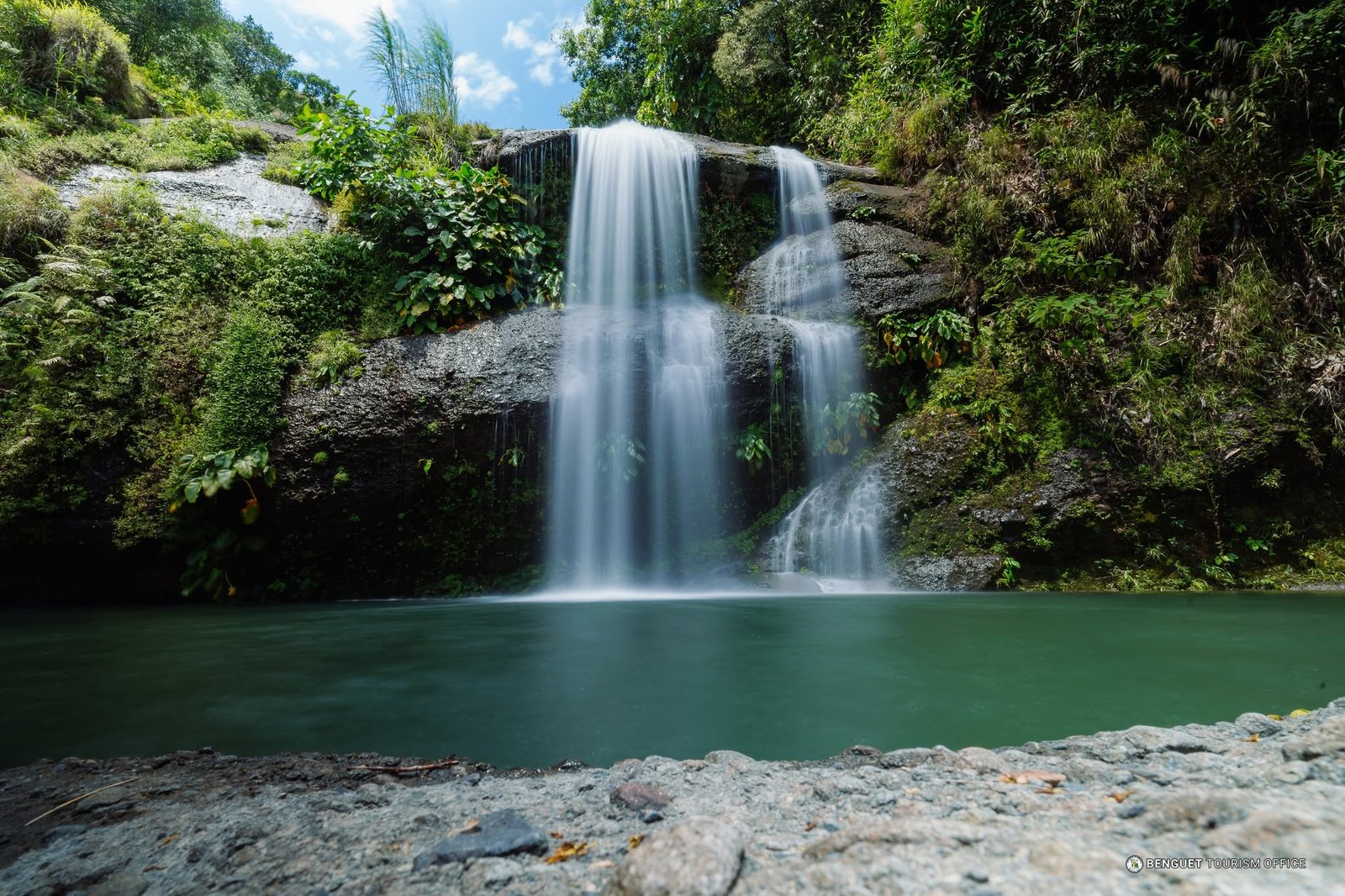
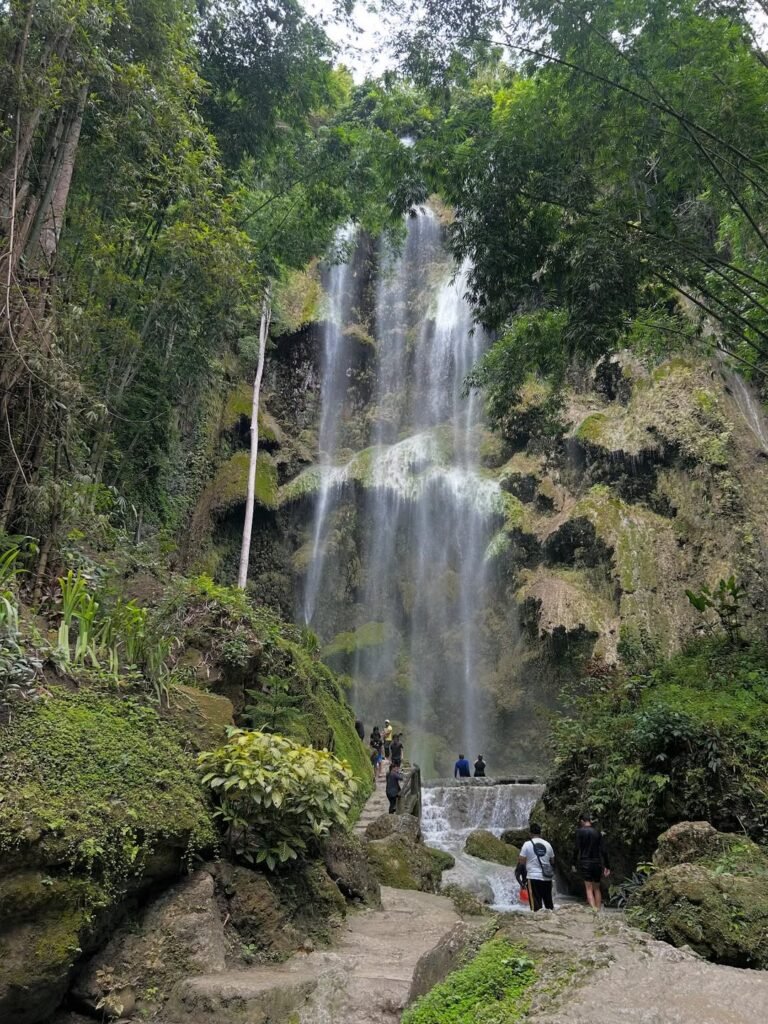
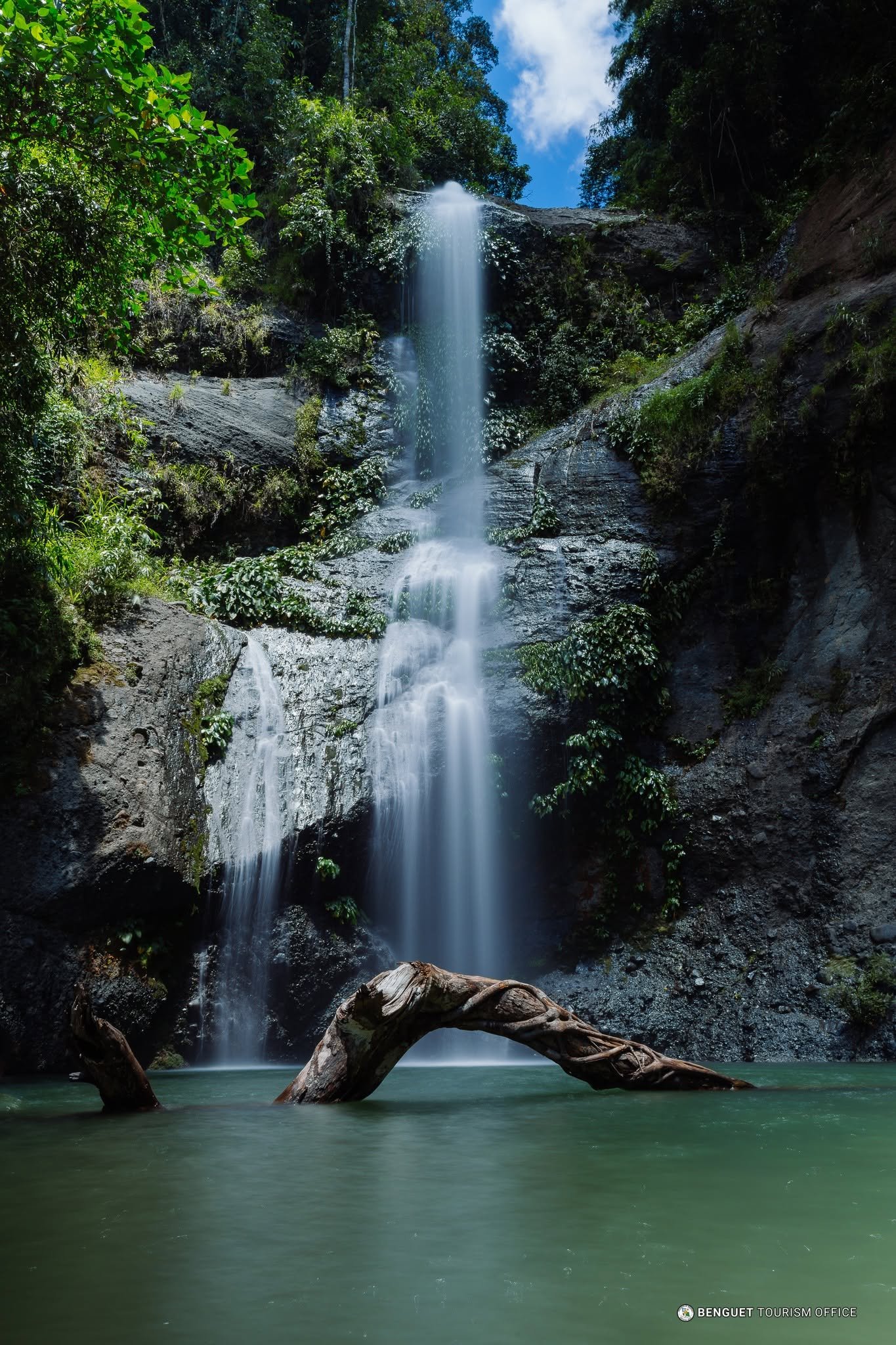
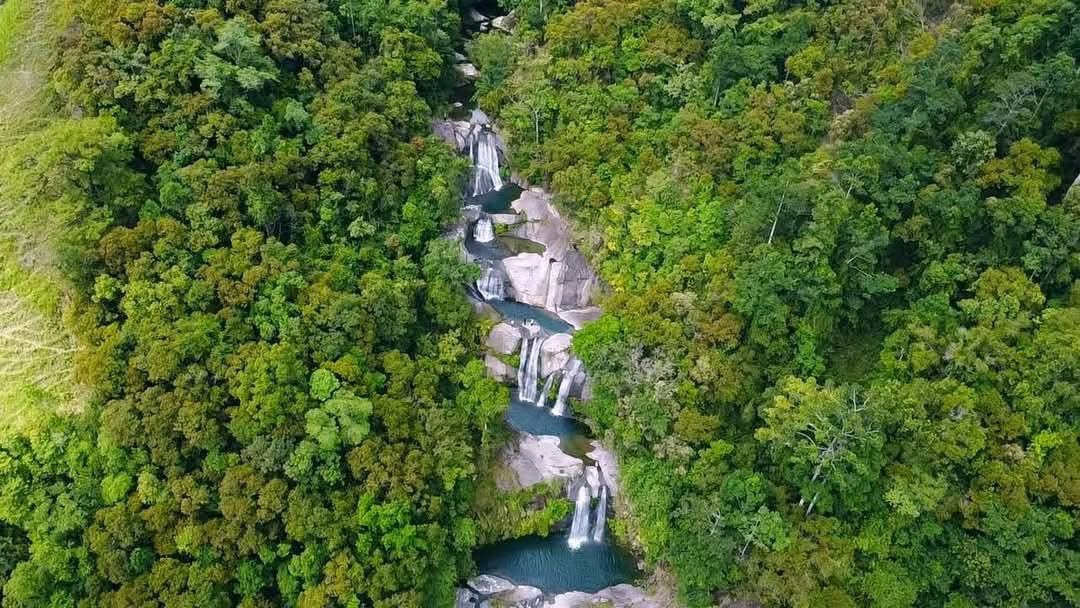
- The waterfall drops across multiple natural rock terraces rather than a single plunge, creating a series of sitting pools along the way
Table of Contents
Where Is Tulali Falls Located?
Tulali Falls sits in Barangay Pudong, in the municipality of Kapangan, Benguet, within the Cordillera Administrative Region of the Philippines. The falls lie deep inside a river valley carved into the western face of the Cordillera mountain range, roughly two hours by road northwest of Baguio City.
The Kapangan LGU officially branded the site “The Falls Terraces of Kapangan” and announced its formal opening in August 2026. The municipality of Kapangan is the same highland area gaining recognition for other natural attractions across the Benguet highlands, and Tulali Falls is now its flagship ecotourism draw.
The waterfall itself is not visible from any road. It sits at the bottom of a forested ravine, accessible only on foot from the Tadayan Warehouse jump-off in Barangay Pudong. That geographic isolation is exactly what keeps it quiet and genuinely rewarding for visitors who make the effort.
How to Get to Tulali Falls
Getting to Tulali Falls from Manila or Baguio City is a multi-leg journey with strict timing requirements. There is no single direct route, and the jeepney schedule from La Trinidad is the most common reason day-trippers miss the falls entirely.
From Metro Manila to Baguio City
Start from Cubao (Quezon City) or Pasay and board an overnight bus to Baguio City. Operators like Victory Liner, Genesis, and JoyBus run frequent departures throughout the day and night. Travel time is 4 to 6 hours depending on traffic at Kennon Road or Marcos Highway.
Arriving in Baguio City by early morning (around 5:00 to 6:00 AM) is the ideal target so you have enough time to catch the morning jeepney to Kapangan.
From Baguio City to La Trinidad (Dangwa Terminal)
From the Baguio bus terminals, take a taxi to the Dangwa Jeepney Terminal at KM 4, La Trinidad. The fare runs PHP 80 to PHP 100 and the ride takes 20 to 30 minutes, depending on morning traffic. Look for the terminal near the La Trinidad Sunrise Trading Building and the PSBank branch along the highway.
This is not the same as the Baguio City jeepney terminal. You need La Trinidad specifically for Kapangan-bound jeepneys.
From La Trinidad to Kapangan
This is the leg where timing becomes critical. Jeepneys to Kapangan depart at 8:40 AM, with the next trip not until 12:00 PM noon. Missing the morning departure effectively kills a day-trip plan.
The fare is PHP 80 to PHP 90 per person. Travel time to the Kapangan municipal center is 1.5 to 2 hours along the Halsema Highway and local roads. The ride is scenic but rough in sections, so secure your bags.
From Kapangan Centro to Tadayan, Barangay Pudong
Once in Kapangan, you need to reach the Tadayan Warehouse in Barangay Pudong, which is the official registration and jump-off point. A chartered tricycle from Kapangan centro for this last leg costs approximately PHP 600 round trip.
For groups of 5 or more, chartering a monster jeepney directly from Baguio City is worth considering. It removes the schedule risk, takes the group door-to-door, and costs more upfront but saves hours of coordination.
One thing other guides miss entirely: do not head straight to the mountains when you arrive in the barangay. Your mandatory starting point is the Tadayan Warehouse, not the trailhead. Going straight to the forest means you skip registration and violate the LGU’s No Guide, No Trek policy. Every group I spoke to that had a smooth experience started here.
Entrance Fees, Permits, and Guide Requirements at Tulali Falls
There is no entrance fee at Tulali Falls. The Kapangan LGU charges a mandatory environmental fee and a guide fee under Municipal Ordinance No. 126, Series of 2018.
All registration happens at the Tadayan Warehouse in Barangay Pudong. Before the trek begins, visitors log their details in the official visitor manifest and sit through a mandatory safety and Leave No Trace briefing. Walk-ins are accommodated during the dry season, but pre-coordination with the Barangay Pudong Tourism, Culture, and the Arts office (contact: Crisencia Sagayo, +63 938 564 8430) ensures guides are available and that trails are open. You can also reach the Kapangan Municipal Tourism Office at +63 907 705 4401.
The LGU enforces a strict No Guide, No Trek policy. Independent trekking without an assigned guide is prohibited.
Official Fee Breakdown
| Expense | Amount (PHP) | Notes |
|---|---|---|
| Entrance Fee | 0 | No entrance fee charged |
| Environmental / Ecological Fee | PHP 100 per person | Mandatory, per LGU ordinance |
| Tour Guide Fee | PHP 500 per group | 1 guide for every 3 to 4 visitors |
| Porter Fee | PHP 500 per porter | Optional; recommended for heavy gear |
Bring exact cash in Philippine Pesos. There is no ATM in the barangay, GCash does not work in the area due to zero cellular signal, and there are no card payment options at the registration point.
Getting to the Water: The Trail at Tulali Falls
The trail to Tulali Falls is a moderate to challenging hike, classified as such by the Kapangan LGU based on its terrain and elevation demands.
Stage 1: Tadayan Warehouse to Forest Entry
The first section from the Tadayan Warehouse follows concrete agricultural steps built along the edge of the community. This part is manageable and gives you a false sense of ease. It takes roughly 15 to 20 minutes.
Stage 2: Forest Descent into the River Valley
Once the concrete path ends, the trail shifts to unpaved dirt, loose soil, and exposed root systems. This is where the difficulty climbs fast. The canopy is thick enough that sunlight barely reaches the path, keeping everything perpetually damp.
- Mossy rocks covered in a slick dark green film line the entire descent
- Bamboo railings are installed at the steepest cliff-side sections
- The trail narrows to single-file in several places with steep drops to the right
On my visit in September, the trail was cloud-covered and the rocks were wet even without rain. Every guide I watched placed feet with deliberate care on each step.
Stage 3: Approach to the Falls
The sound of the falls reaches you before the view does. The final approach drops steeply into the valley floor, where the river meets the base of the terraces. Total one-way trek time is 1.5 to 2 hours.
The return trip is harder. Coming back up the same trail is a two-hour uphill climb, usually in the warmest part of the afternoon. This is where unprepared hikers run into trouble. Budget your energy accordingly.
Swimming and Activities at Tulali Falls
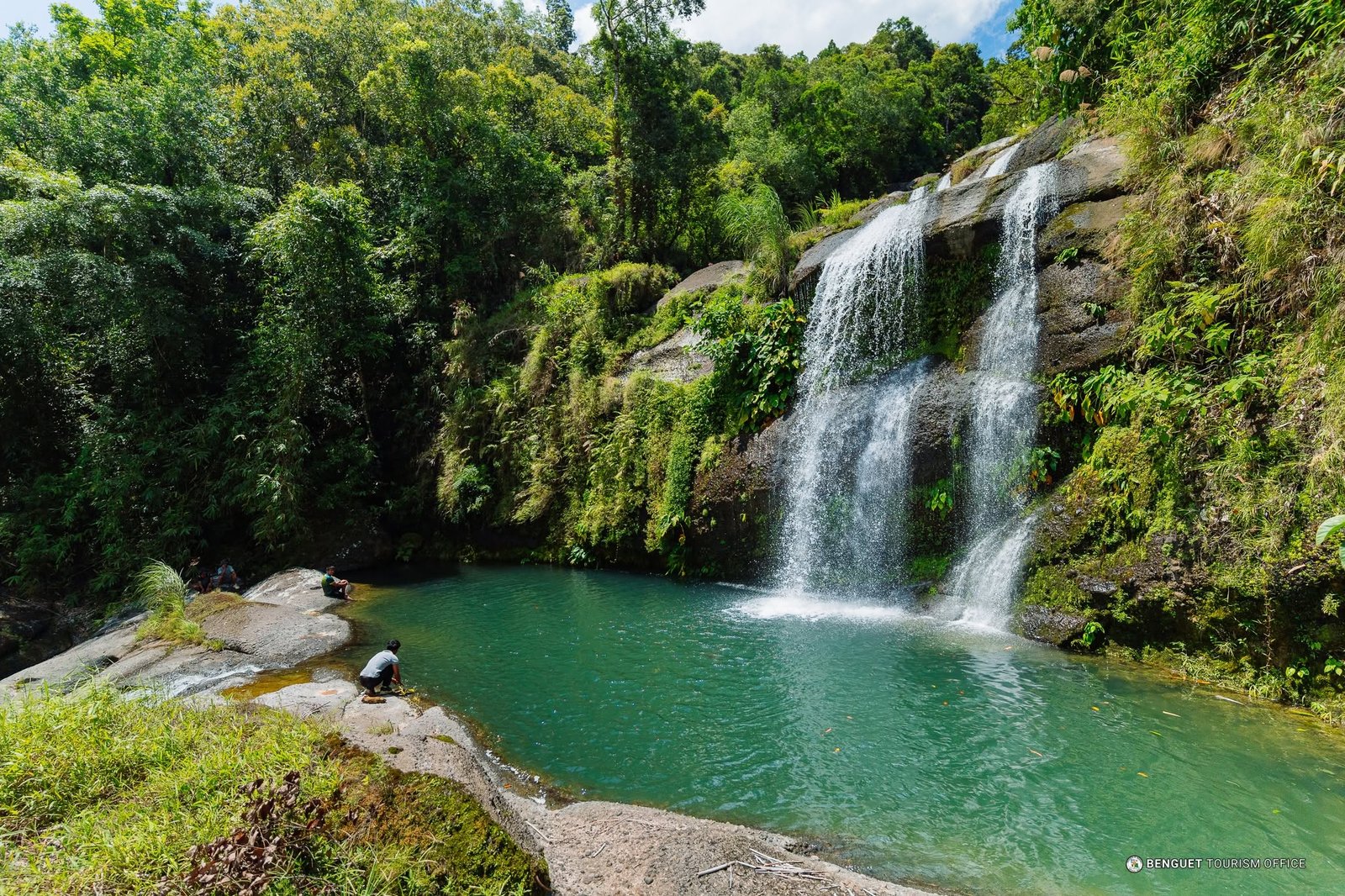
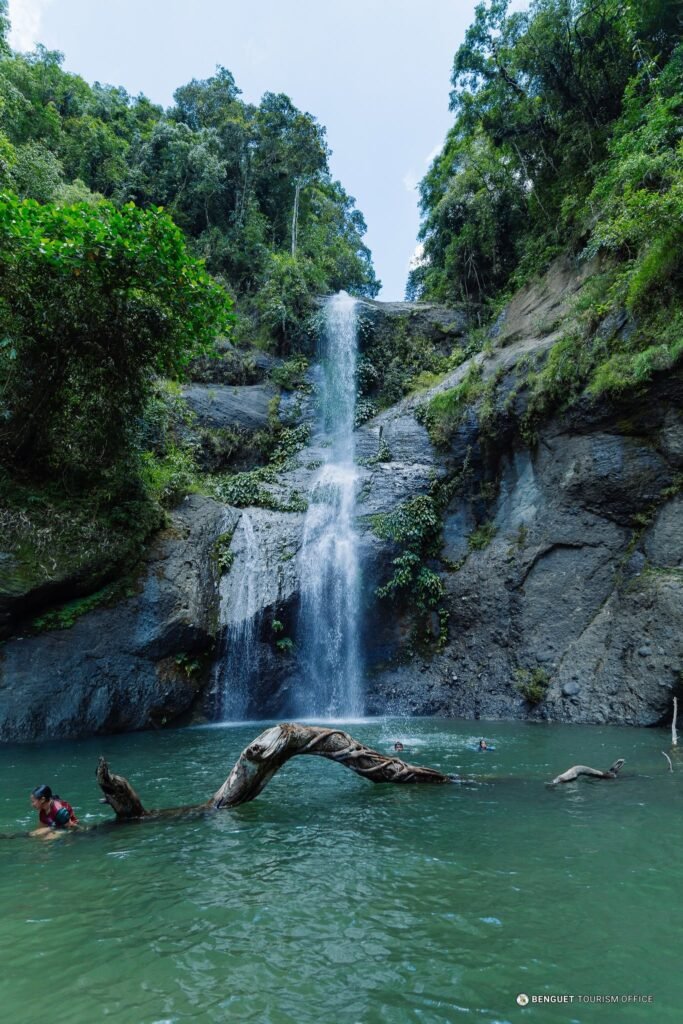
Swimming is allowed at Tulali Falls, and the natural pool at the base is large enough for small groups to swim comfortably. The water originates from high-altitude Cordillera headwaters and stays extremely cold year-round, providing a sharp but welcome contrast after the sweat of the descent.
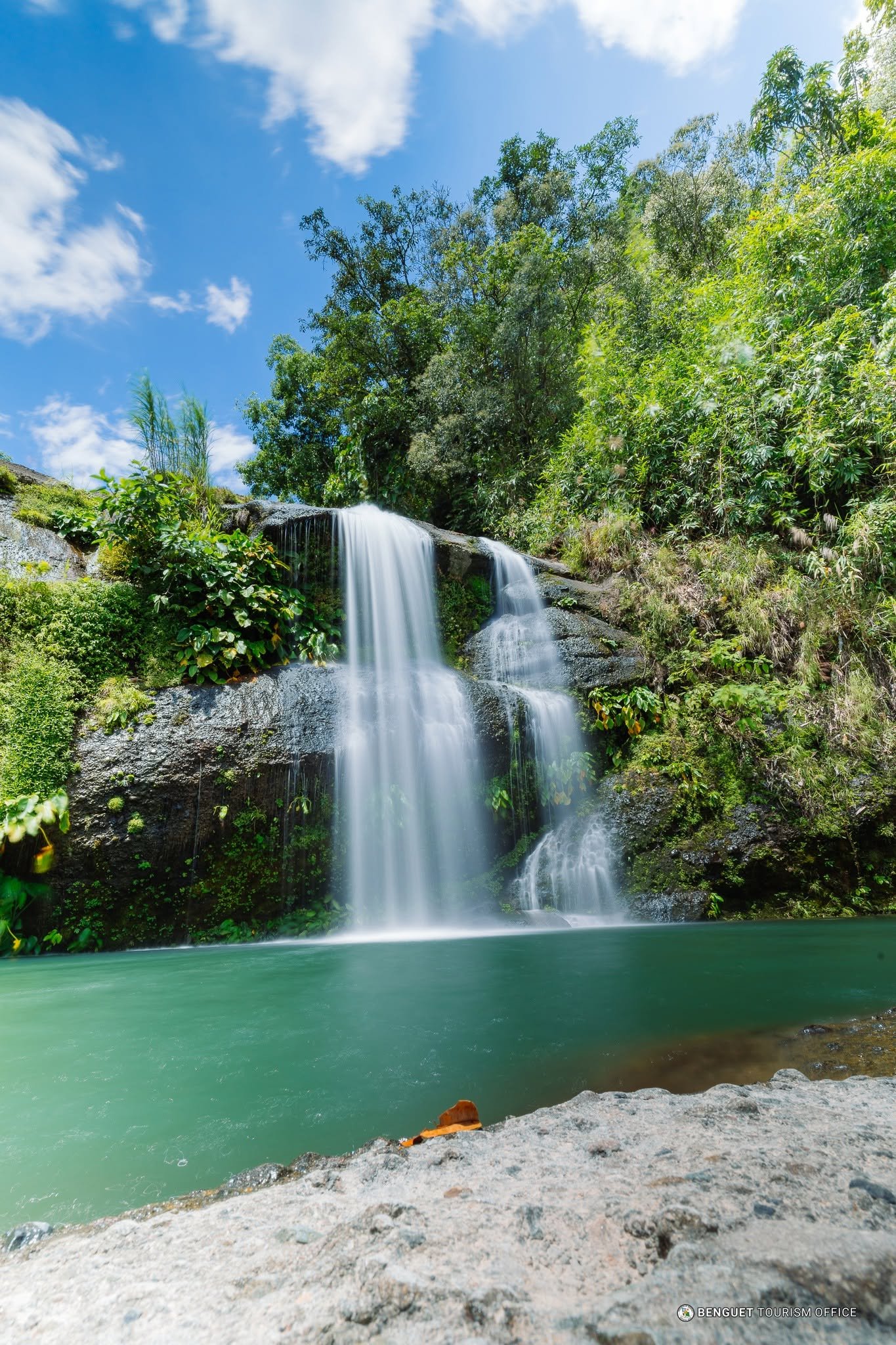
The defining feature of this waterfall is not height but structure. The water flows over multiple natural rock ledges instead of dropping in a single plunge. Watching that happen in person, especially with cloud cover diffusing the light across the terraces on a September morning, is the kind of thing you want to photograph for an hour straight. The intermediate ledges also create smaller sitting pools above the main basin, where you can rest and let the water run over your feet without fully submerging.
Cliff jumping is not safe here and is not permitted. The tiered rock shelves hide submerged boulders and shallow ledges beneath the surface. Swimming directly under the main cascade is also limited by the tiered structure; the water hugs the rock face as it descends rather than creating a single curtain with open space behind it. Smaller peripheral cascades do offer spots to sit under a thin curtain of water, but reaching them means navigating extremely slippery moss-covered rocks.
Activities at the falls include:
- Swimming in the main plunge pool
- Wading in the shallower tier pools above the basin
- Photography (the terraced structure photographs well from multiple angles)
- Guided nature immersion with your assigned community guide
For a broader look at other remarkable waterfall destinations around the country, the river, lake, and falls travel guide on Lakbay Pinas is a useful companion resource.
Best Time to Visit Tulali Falls
The best time to visit Tulali Falls is November through May, during the dry season (Amihan and the subsequent dry months).
During this window, the trail is firm enough underfoot to be manageable, the water volume in the pools is calmer, and the risk of flash flooding drops significantly. The terraced rock formations are partially exposed rather than submerged under peak-monsoon flow, which makes the site more visually interesting and far safer for swimming.
I visited in September, which falls inside the wet season. The falls were dramatic and full, but the trail was genuinely difficult. Every rock surface was wet, the mud was deep in several sections, and my guide kept pausing to read the water color for flash flood signs. The experience was worth it, but I would not recommend a September visit to anyone who hasn’t done serious trail hiking before.
From June to October (Habagat or southwest monsoon), the Kapangan MDRRMO can suspend all ecotourism activity during tropical weather disturbances. Always pre-coordinate with the tourism office before visiting in those months. A last-minute closure after traveling from Manila is not a situation you want to be in.
If you’re building a multi-day Benguet itinerary, combining Tulali Falls with a visit to Lake Tabeo in Kabayan makes geographic sense. Both are deep highland destinations with similar fitness requirements and the same seasonal logic.
Budget Breakdown for Visiting Tulali Falls
A solo traveler doing a day trip from Baguio City should budget roughly PHP 1,200 to PHP 1,400 for the full experience. Costs are lower per person in a group of three or four because the guide fee is split.
| Expense | Estimated Cost (PHP) |
|---|---|
| Bus (Manila to Baguio, one way) | PHP 400 to PHP 700 |
| Taxi (Baguio to Dangwa Terminal, La Trinidad) | PHP 80 to PHP 100 |
| Jeepney (La Trinidad to Kapangan, one way) | PHP 80 to PHP 90 |
| Tricycle charter (Kapangan to Barangay Pudong, round trip) | PHP 600 |
| Environmental Fee | PHP 100 per person |
| Tour Guide Fee | PHP 500 per group (3 to 4 pax) |
| Porter Fee (optional) | PHP 500 per porter |
| Food and water for the day | PHP 300 to PHP 400 |
| Estimated Total (Solo) | PHP 1,660 to PHP 1,990 |
| Estimated Total (Per Person, Group of 4) | PHP 1,135 to PHP 1,440 |
Bring more than you think you need in cash. There are no ATMs in Barangay Pudong and no digital payment infrastructure at the trailhead.
What to Pack for Tulali Falls
The trail punishes casual gear choices hard. What you wear on the descent directly affects how safe the return climb is.
| Item | Essential? |
|---|---|
| Trekking shoes or hiking boots with aggressive rubber lug soles | Yes — mandatory |
| Moisture-wicking activewear (no cotton) | Yes — cotton retains sweat and drops core temperature |
| Lightweight fleece or windbreaker (inside a drybag) | Yes — cold after swimming |
| Waterproof drybag (for phone, cash, dry clothes) | Yes |
| Trekking poles | Strongly recommended |
| Packed lunch and high-energy snacks | Yes — no food stalls at falls |
| At least 2 liters of water | Yes |
| Personal first-aid kit with antiseptic | Yes |
| Change of clothes and a small towel | Yes |
| Waterproof sandals or aqua shoes (for the pool) | Recommended |
| Sunscreen and insect repellent | Yes |
| Rubber flip-flops (tsinelas) as primary footwear | No — dangerous on mossy rock |
One small detail worth noting: the mist from the terraced falls reaches farther than you’d expect. Anything not inside a drybag will be damp by the time you leave.
Safety Tips for Visiting Tulali Falls
The Kapangan LGU’s mandatory orientation at Tadayan Warehouse covers these points directly, and your guide will reinforce them on the trail. Read them before you arrive.
On the trail:
- Dark green, wet moss on rock surfaces offers zero traction. It functions like ice. Step around it, not on it.
- Narrow cliff-side sections have bamboo railings. Use them. A fall on these sections drops into deep ravines.
- Do not separate from your guide. The trail is not marked for solo navigation.
At the water:
- The plunge pool is cold enough to cause thermal shock. Enter gradually, especially after heavy exertion.
- Prolonged immersion risks hypothermia. Get out, dry off, and put on your thermal layer before the climb back.
- Do not jump from rocks into the pool. Submerged boulders sit beneath the opaque surface at varying depths.
- Non-swimmers should stay in the shallow tier pools above the main basin, not in the primary plunge pool.
- Life vests are not provided on-site. Non-swimmers should not enter the main pool.
Flash flood awareness:
- A flash flood can arrive under a clear sky if heavy rain is falling upstream at the headwaters. Your guide watches for this.
- If the water suddenly turns brown or muddy, exit the pool and move to higher ground immediately. That discoloration is the primary field indicator of an incoming surge.
- Do not visit the falls during or immediately after heavy continuous rainfall, even if you are already at the jump-off.
Communications:
- Cellular signal is completely absent at the falls and throughout most of the trail. Smart and Globe both drop out as the trail descends into the valley.
- Confirm pickup times with your transport driver before you start the descent. You will not be able to call them from the falls.
- Leave a detailed itinerary with someone outside the group before you go.
For more Benguet trail context, the [Mt. Ulap guide on Lakbay Pinas](https://lakbaypinas.com/ultimate-guide-to-mt-ulap-in-itogon-benguet/) covers similar terrain and safety protocols for highland Benguet trekking.
What I Would Do Differently Next Time
Start from La Trinidad the night before. Missing the 8:40 AM Kapangan jeepney is the single biggest logistical risk in this whole itinerary, and it’s completely avoidable. Staying one night near the Dangwa Terminal removes that pressure entirely.
Bring trekking poles. I didn’t. The descent was manageable without them, but my knees felt the return climb for two days afterward. The poles are not about balance; they’re about distributing the load on a two-hour uphill grind.
Eat a full meal in Kapangan Centro before heading to the barangay. I brought snacks but not a real meal. By the time I was back at the Tadayan Warehouse after the return trek, I was running on empty. There’s a local eatery called Suvani’s Avong in the municipal center worth stopping at. A hot meal there before and after the hike changes the whole experience.
Pre-contact the guide coordinator. Walking in during the dry season worked fine, but calling Crisencia Sagayo (+63 938 564 8430) ahead of time would have saved me 30 minutes of standing around at the warehouse while guides were rounded up.
Frequently Asked Questions About Tulali Falls
Where exactly is Tulali Falls located in the Philippines?
Tulali Falls is located in Barangay Pudong, Tadayan, in the municipality of Kapangan, Benguet, within the Cordillera Administrative Region (CAR) of Luzon. It sits deep inside a forested river valley in the western Benguet highlands, approximately two hours by road from Baguio City via the Halsema Highway. The official registration and jump-off point is the Tadayan Warehouse in Barangay Pudong.
Is swimming allowed at Tulali Falls?
Yes, swimming is allowed at Tulali Falls. The natural plunge pool at the base is large enough to accommodate small groups and is safest during the dry season from November to May, when water volume is lower and currents are gentler. The water is extremely cold year-round, originating from high-altitude Cordillera headwaters. Cliff jumping is prohibited due to submerged rocks, and non-swimmers should stay in the shallower upper tier pools rather than the main basin.
How do you get to Tulali Falls from the nearest town?
From Baguio City, take a taxi to the Dangwa Jeepney Terminal in La Trinidad, then board a jeepney to Kapangan (departs 8:40 AM, fare PHP 80 to PHP 90). From Kapangan centro, charter a tricycle to the Tadayan Warehouse in Barangay Pudong for approximately PHP 600 round trip. The trek from the warehouse to the falls takes 1.5 to 2 hours one way. Total travel time from Baguio is roughly 3.5 to 4.5 hours including transport and trekking.
What is the entrance fee at Tulali Falls?
There is no entrance fee at Tulali Falls. Under Municipal Ordinance No. 126, Series of 2018, the Kapangan LGU collects a mandatory environmental fee of PHP 100 per person and a mandatory tour guide fee of PHP 500 per group of 3 to 4 visitors. An optional porter fee of PHP 500 is available for groups carrying heavy equipment. Bring exact cash in Philippine Pesos; there is no ATM in the barangay and digital payments are not accepted.
What is the best time of year to visit Tulali Falls?
The best time to visit Tulali Falls is during the dry season from November to May. In this period, the trail is firmer, flash flood risk is minimal, and the swimming pools are calmer and safer. The wet season from June to October brings fuller water flow but hazardous, muddy trails and a real risk of activity suspensions by the Kapangan MDRRMO during tropical weather disturbances. If you visit during the wet season, always pre-coordinate with the Barangay Pudong Tourism office to confirm the trail is open before traveling.
Final Verdict: Is Tulali Falls Worth Visiting?
Tulali Falls is a 4.5 out of 5 for experienced day-hikers and adventure travelers who are comfortable with remote logistics, slippery terrain, and zero phone signal for several hours. The waterfall’s terraced structure is genuinely unlike most falls in the Benguet region, and the new LGU framework means it’s well-managed without feeling over-commercialized. First-time hikers or travelers without solid footwear and a realistic grasp of the transport schedule will find it far more stressful than rewarding.
If you’re planning a broader Benguet trip, Tulali Falls pairs well with the Strawberry Farm in Baguio as a softer opening day before the trek, or with Dragon Treasure Castle in Baguio as a rest-day option afterward.