
Last updated: August 2026
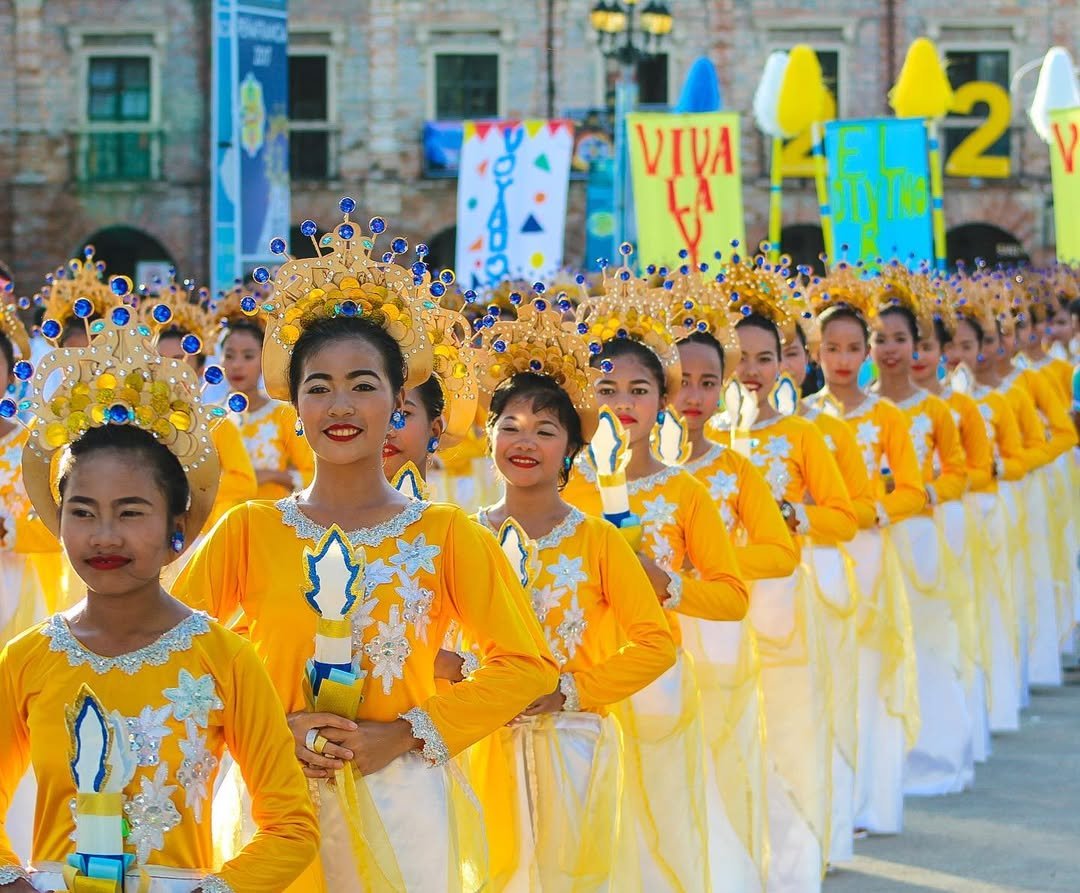
The Peñafrancia Festival in Naga City, Camarines Sur, is the largest Marian celebration in Asia, held every September in honor of Our Lady of Peñafrancia, known as “Ina.” The two anchor events are the Traslacion procession on September 11 and the Fluvial Procession on September 19, with the official Feast Day on Sunday, September 20, 2026. Every street event is free to attend, so your real costs are transport, accommodation, and food.
Peñafrancia Festival Quick Guide
| Detail | Info |
|---|---|
| Festival | Peñafrancia Festival 2026 |
| Location | Naga City, Camarines Sur |
| Festival Dates | September 6 to 20, 2026 |
| Main Event Day | Sunday, September 20, 2026 |
| Festival Type | Religious / Patronal (Marian) |
| Cost to Attend | Free (street events) |
| Trip Length Needed | 3 to 5 days minimum |
| Best Home Base | Downtown Naga, near Magsaysay Ave or Basilica |
Table of Contents
When Is Peñafrancia Festival?
The Peñafrancia Festival falls on the Sunday after the Octave of the Nativity of the Blessed Virgin Mary, landing on the third or fourth Sunday of September.
For 2026, that means the official Feast Day is Sunday, September 20, 2026. The festival calendar runs from early September, with the Traslacion on September 11 and the Fluvial Procession on September 19. The Naga City Investment and Tourism Promotions Office (NCITPO) releases the full official schedule of events each year typically by July, so following the city’s official channels around that time gives you the confirmed lineup.
A critical planning note for 2026: the Philippine Bar Examinations fall on September 6, 9, and 13, and the Licensure Examination for Professional Teachers (LET) falls on September 20, the exact same day as the Feast Day. Testing centers inside Naga City will generate their own traffic and impose noise restrictions around their sites. Plan your movements around those exam windows, particularly the early morning ingress before 6 AM.
What Is Peñafrancia Festival About?
The Peñafrancia Festival is the annual feast of Our Lady of Peñafrancia, called “Ina” (Mother) by Bicolanos, the officially recognized Patroness of the entire Bicol Region.
The devotion in the Philippines began in the early 18th century when a Spanish-born seminarian named Miguel Robles de Covarrubias fell seriously ill and was miraculously healed by a holy card of Our Lady of Peñafrancia.
He later brought the image to Naga, where it has been venerated ever since.
The celebration involving solemn processions where the image is carried from its shrine to the cathedral and back originated in 1864.
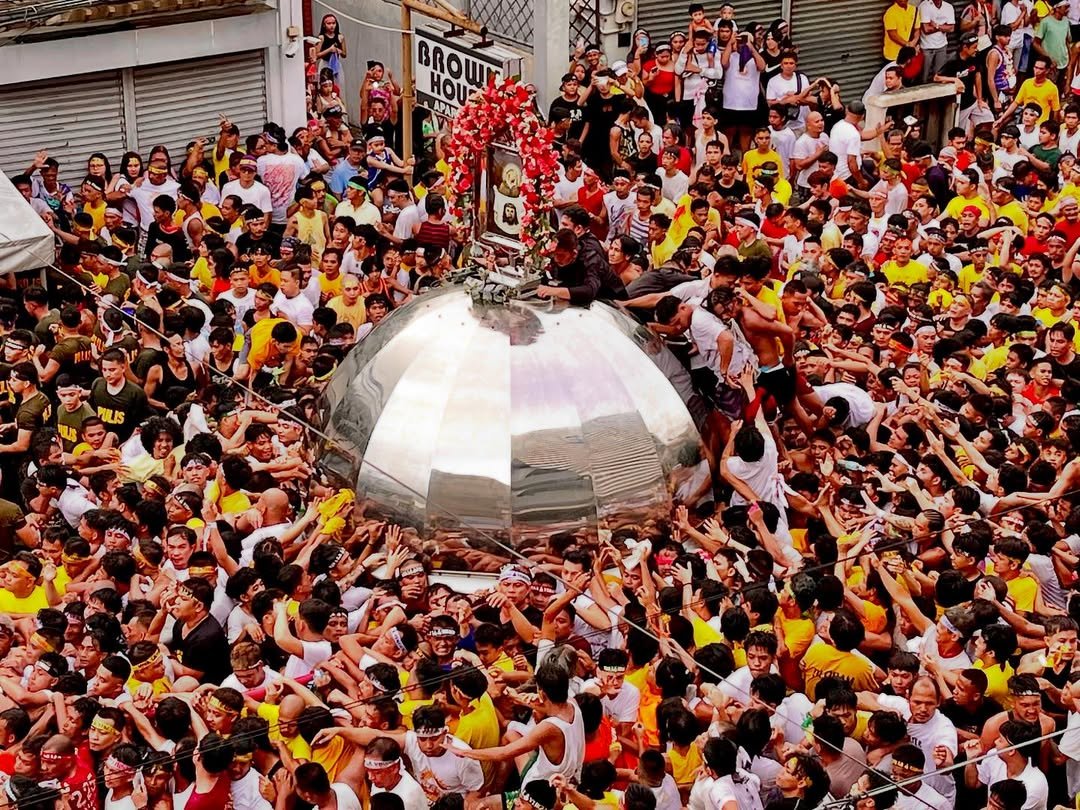
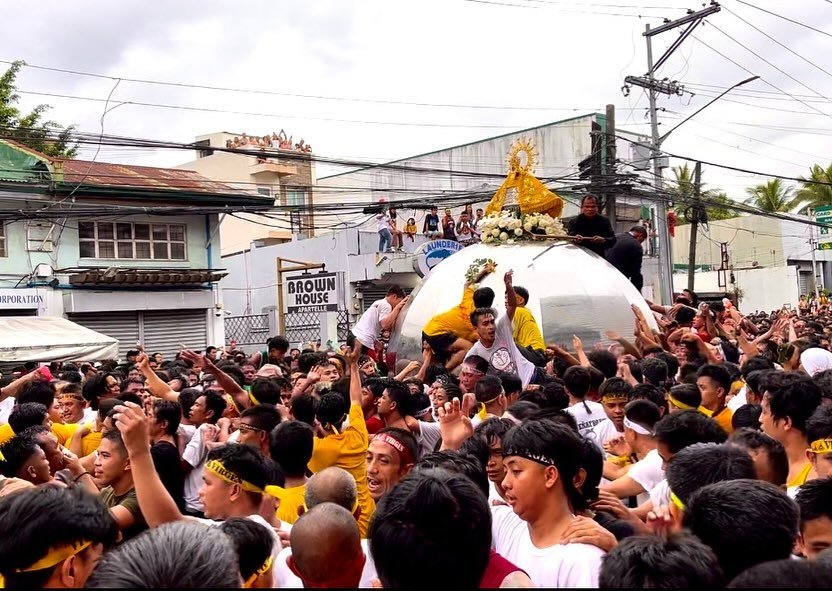
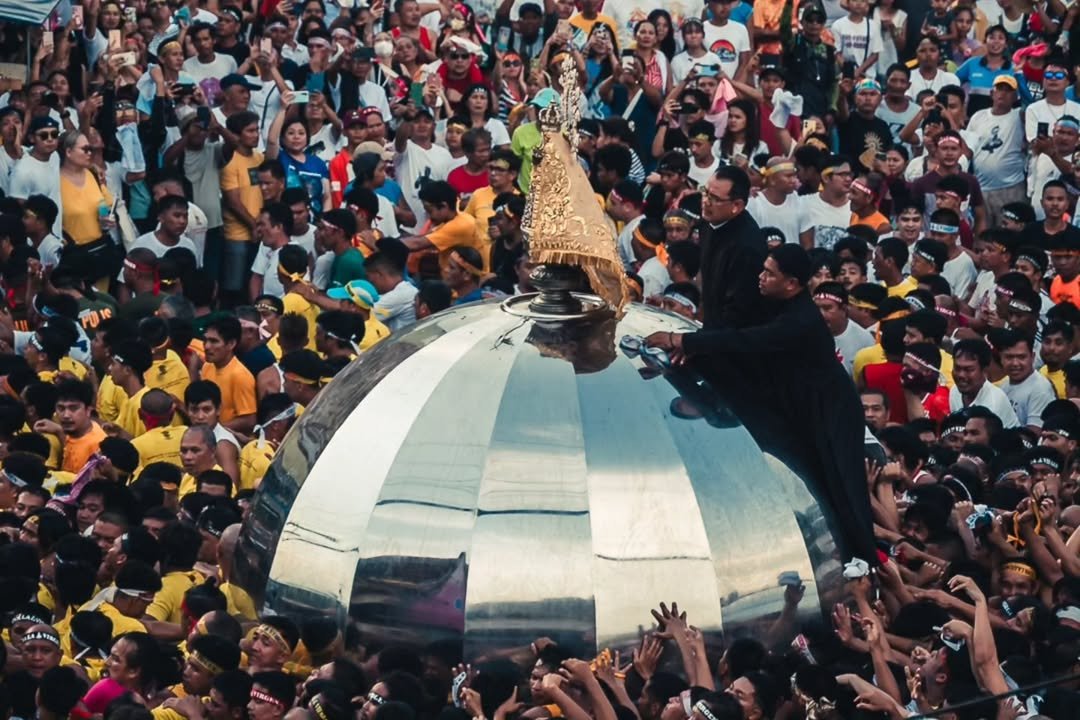
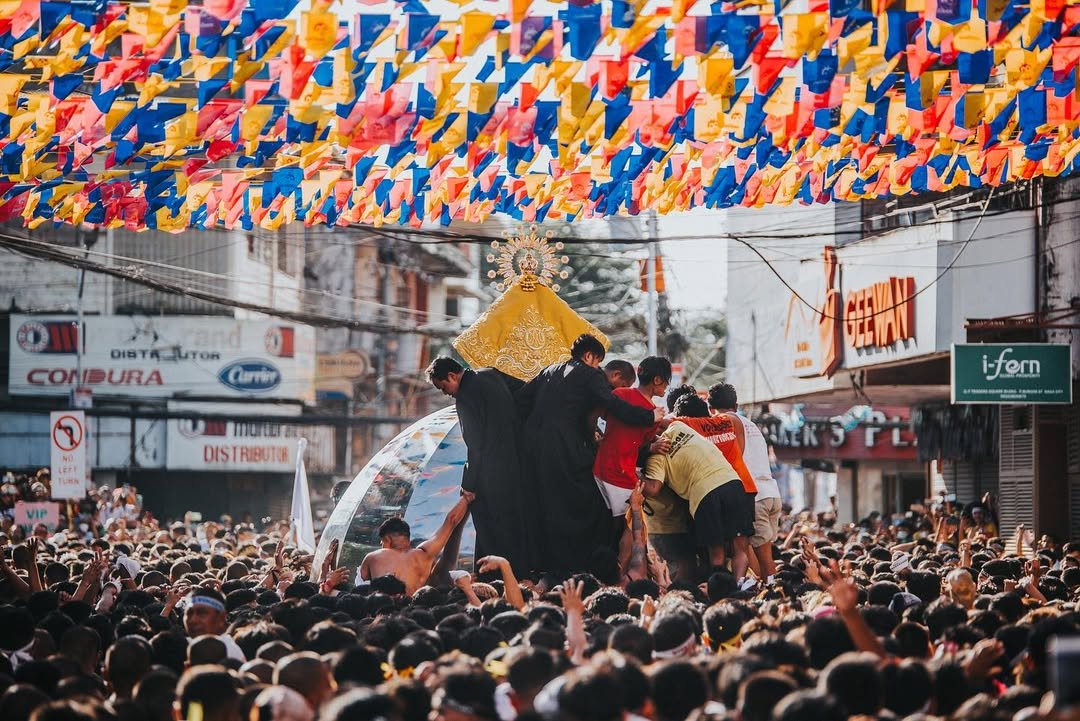
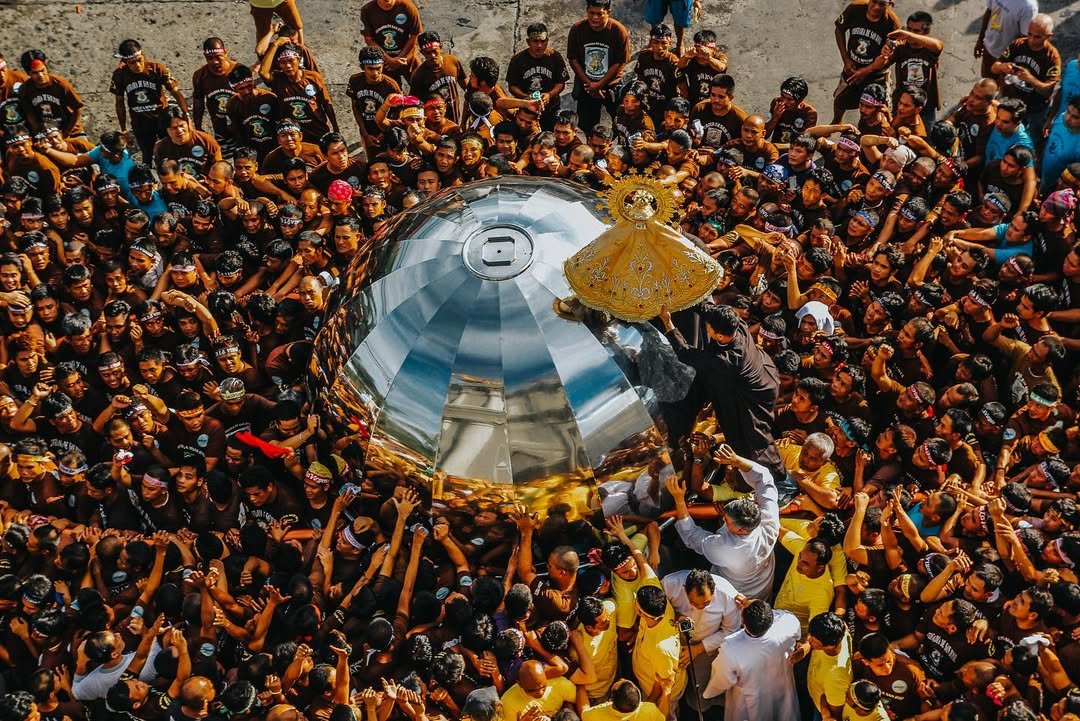
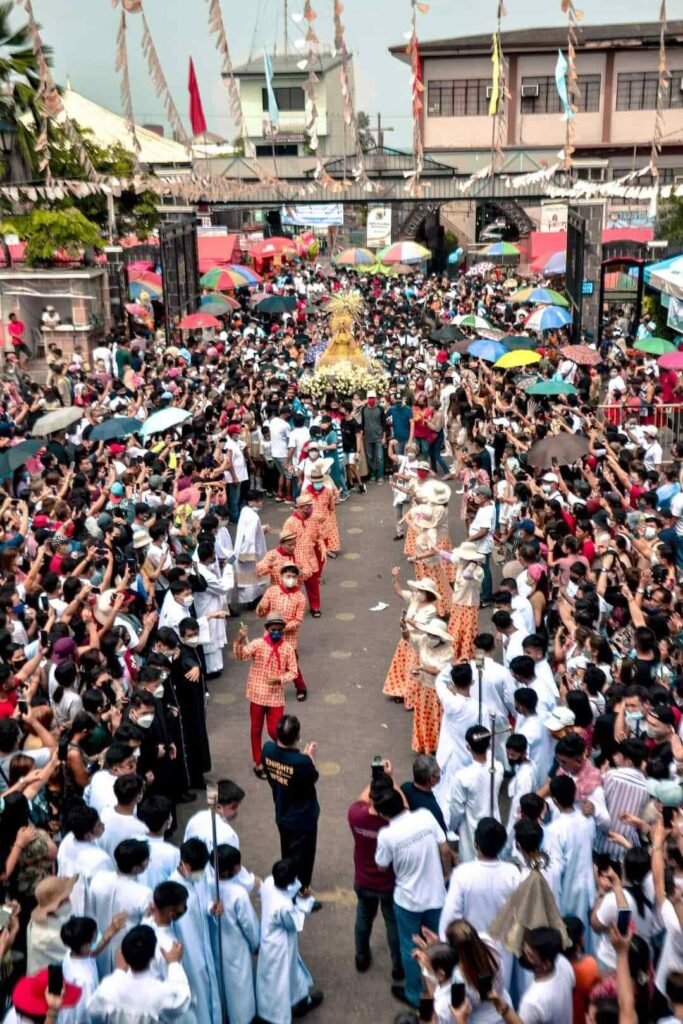
The festival also honors the Divino Rostro (Holy Face of Jesus), whose image travels alongside Ina during both processions. At the center of everything are the Voyadores, predominantly male devotees who carry the heavy wooden andas (carriage) bearing the sacred images through massive crowds, often barefoot on hot asphalt. Their chant of “Viva la Virgen!” is the defining sound of the entire festival.
The Peñafrancia Basilica is one of the largest Marian pilgrimage sites in Asia, and the annual festival in Naga is the largest Marian celebration in the Asian region.
If you want to explore other major Bicol festivals, the Ibalong Festival is another deeply rooted celebration from the region worth adding to your calendar.
How to Get to Peñafrancia Festival
The fastest route from Manila to Naga City is by air.Cebgo flies from Ninoy Aquino International Airport to Naga Airport (WNP) once daily.
The flight is just over one hour.Book flights at least 2 months ahead for September dates; prices surge significantly in the lead-up to the festival week.
The cheapest route is by bus.The bus fare from Manila to Naga costs around PHP 810 to 830, with a travel time of approximately 10 hours.
For premium sleeper or 1×2 seat configurations,Peñafrancia Elite class costs PHP 1,740 and Isarog Elite runs PHP 1,450 to PHP 1,740.
Buses depart from PITX in Parañaque, Cubao, and Muntinlupa. Book at least 3 to 4 weeks ahead for the peak September window, and 6 to 8 weeks out if you want sleeper seats. Peñafrancia Tours and Travel Transport and Bicol Isarog are the main operators.
Once you land at Naga Airport in Pili, the cheapest way downtown is by jeepney.From the airport, walk 400 meters to the main highway and take a 30-minute jeepney or bus ride to downtown Naga for PHP 15.
A tricycle to the city center costs PHP 150 to 250, but agree on the price before you load your bags. If you’re coming from Legazpi City in Albay after exploring Albay’s tourist spots, the bus fare between Legazpi and Naga runs PHP 290 to 440 depending on class, with a travel time of 2.5 to 3 hours.
Peñafrancia Festival 2026 Schedule of Events
This is the confirmed 2026 master calendar published by the Naga City authorities.
| Date | Event | Venue / Route |
|---|---|---|
| Sept 6 | Peñafrancia Marathon (12:00 MN) | Balatas Development Complex |
| Sept 10 | Miss Gay Bicolandia 2026 (7:00 PM) | Balatas Development Complex |
| Sept 11 | Traslacion Procession (12:00 NN) | Old Shrine to Naga Metropolitan Cathedral |
| Sept 13 | South Star Drug Run for Wellness (4:00 AM) | Robinsons Mall Grounds |
| Sept 15 to 19 | Tagboan Arts, Music and Food Festival (6:00 PM) | Balatas Development Complex |
| Sept 16 | Scouts Parade and Majorettes Competition (7:00 AM) | Panganiban Drive to Plaza Quezon |
| Sept 17 | Civic and Float Parade (7:00 AM) | Panganiban Drive to Plaza Quezon |
| Sept 17 | Voyadores Festival Street and Pilgrims Dance (2:00 PM) | Naga Metropolitan Cathedral to Plaza Quezon |
| Sept 18 | Bicol Regional Military Parade (7:00 AM) | Panganiban Drive to Plaza Quezon |
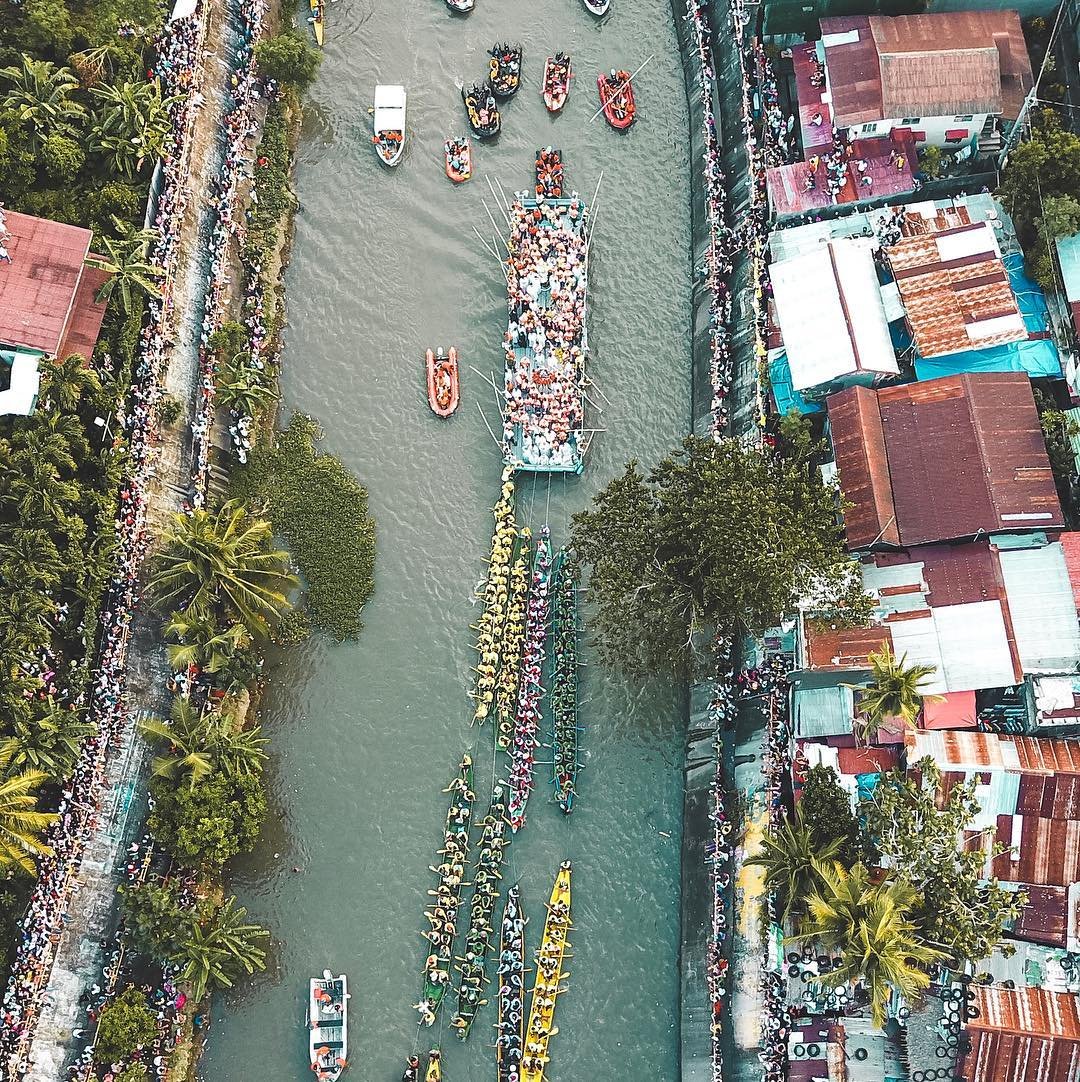
| Sept 19 | Peñafrancia Fluvial Procession (3:00 PM) | Naga Metropolitan Cathedral to Basilica Minore via Naga River |
| Sept 20 | Feast Day Pontifical Masses | Basilica Minore de Nuestra Señora de Peñafrancia |
The parades on September 16, 17, and 18 all follow the same corridor: Panganiban Drive, terminating at Plaza Quezon. That stretch becomes one of the best free street-viewing sections of the entire festival week. For an overview of Philippines festivals to pair with your Bicol trip, the Philippines festival travel guide is a solid starting point.
Tickets and Grandstand Prices at Peñafrancia Festival
The Peñafrancia Festival itself has no admission fee. Every procession, every parade along Panganiban Drive, every novena mass at the Naga Metropolitan Cathedral, and the entire Fluvial Procession viewed from public riverbanks is completely free.
| Ticket / Area | Price (PHP) | What It Covers |
|---|---|---|
| Street procession viewing | Free | All public sidewalks, Panganiban Drive, Plaza Quezon |
| Novena masses (Cathedral) | Free | Open to everyone, Catholic and non-Catholic |
| Riverbank viewing (Fluvial) | Free | All public banks of the Naga River |
| Grandstand / paid bleachers | Not applicable | No official paid grandstands for processions |
No official paid grandstand system exists for the public processions or the Fluvial Procession. Some riverfront restaurants and hotels sell balcony table packages for the Fluvial Procession viewing, which bundle food and a reserved elevated seat. These are offered by private establishments at their own rates, not by the city or the Archdiocese of Caceres.
If any paid event venue does offer bleacher seating at a cultural show or competition (such as at Balatas Development Complex), Philippine law mandates a 20% senior citizen and PWD discount on ticketed admissions under the Expanded Senior Citizens Act and the Magna Carta for Disabled Persons. Bring a valid Senior Citizen ID or PWD ID to claim it. Payment at most Naga City commercial venues is accepted in cash, GCash, and Maya.
Best Viewing Spots at Peñafrancia Festival
The best single vantage point for the Traslacion depends on how deep into the crowd you want to go.
Traslacion (September 11, 12:00 noon): The procession moves from the Old Shrine of Our Lady of Peñafrancia toward the Naga Metropolitan Cathedral. The stretch along General Luna Street and approaching the Cathedral gives you a clear forward view of the andas before the crush becomes impossible to move through. Arrive at least 2 to 3 hours before noon to claim a spot with any sightline. Once the Voyadores begin moving, forward pedestrian movement stops entirely.
Stay behind the police barricades; the kinetic force of the devotees around the andas is not a small crowd pressing gently, it is a mass of tens of thousands of people in religious fervor. Getting caught on the wrong side of a barricade is genuinely dangerous.
Parades (September 16 to 18, 7:00 AM):
Paseo del Rio, located along the riverside near the Panganiban Bridge, is a good spot to watch the Fluvial Procession up close.
For the land parades, the Panganiban Drive median gives you access to both sides of the route and a clean line of sight for floats, school bands, and military formations. Plaza Quezon at the end of the route is the loudest and most concentrated viewing point, but also the most crowded.
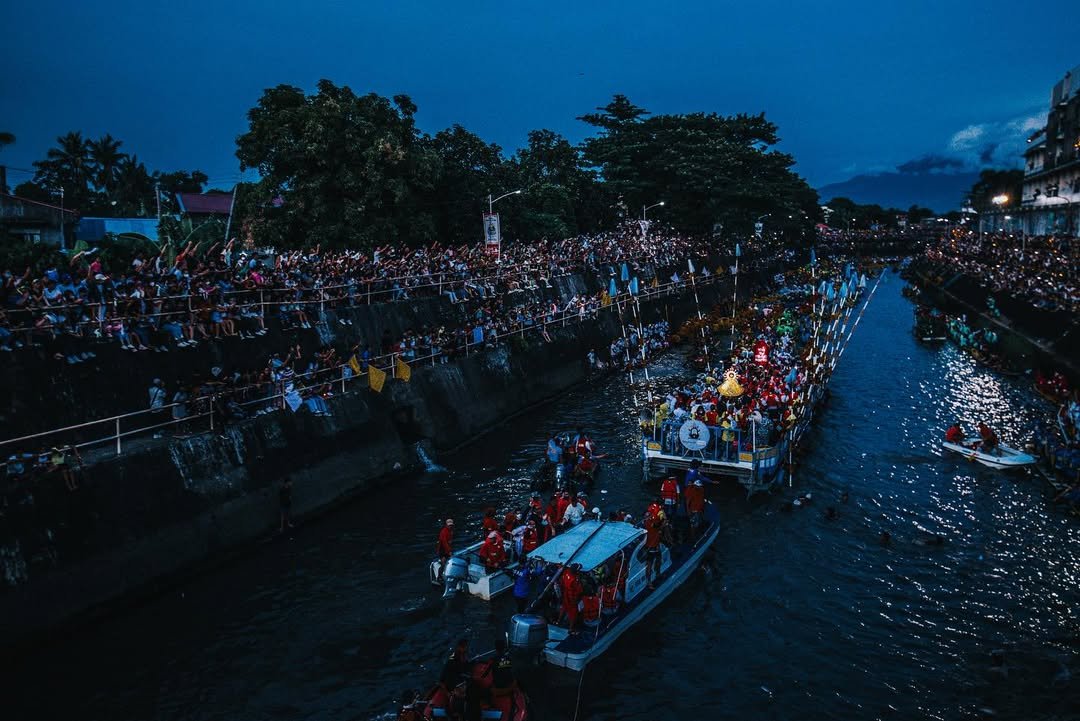
Fluvial Procession (September 19, 3:00 PM): The entire length of the Naga River’s public banks is free and open. The procession begins at the Cathedral and moves downstream toward the Basilica Minore.
For close-up views of the pagoda, stake out a location near the riverbanks by San Francisco Church.
The procession begins at the Naga Metropolitan Cathedral at 3:00 PM and the image returns to the Basilica Minore around 6:00 PM.
That window from 5:00 PM to 6:00 PM, as dusk falls and devotees light candles along the banks, is the one moment that makes the entire trip worth every hour on the bus.
What I’d Do Differently Next Time
I’d skip trying to be right at the starting point of the Traslacion. The crowd there is impenetrable and you end up seeing the back of heads for 90 minutes before the andas ever comes close. Instead, I’d post up at a spot roughly midway along the route, closer to the Cathedral, where the procession has momentum but the mass of Voyadores has thinned slightly into something you can actually photograph. For the Fluvial, I’d arrive by 1:30 PM to secure a riverbank spot near the Panganiban Bridge. The people who show up at 2:30 PM end up four rows deep behind someone holding a selfie stick.
What to Wear and Bring to Peñafrancia Festival
September in Naga City is hot, humid, and unpredictably rainy. You are going to be standing outside for hours at a stretch.
| Item | Needed? |
|---|---|
| Light, breathable clothes | Yes |
| Closed-toe shoes or sneakers | Yes |
| Rain jacket or compact umbrella | Yes |
| Sun hat or cap | Yes |
| Reusable water bottle | Yes |
| Portable phone charger | Yes |
| Small anti-theft crossbody bag | Yes |
| Small cash (PHP 15 to 100 bills) | Yes |
| Modest attire for masses | Yes |
| Flip-flops or sandals for procession | Not recommended |
For the novena masses and any entry into the Cathedral or Basilica, cover your shoulders and knees. A loose shirt and long shorts or pants work fine. You do not need formal wear. Non-Catholic visitors are welcome to attend any open mass or procession as observers. Sit, stand, and kneel with the congregation out of respect, even if you are not praying. Do not treat the procession as purely a photo opportunity while Voyadores are actively carrying the andas; keep your phone or camera down during the most intense moments of the devotional act.
September is part of the rainy season in the Philippines, so bring rain gear and be prepared for sudden downpours.
The procession does not stop for rain. In 2025, the Traslacion drew an estimated 800,000 devotees despite heavy rain.
Where to Stay for Peñafrancia Festival
Book your accommodation for the Peñafrancia Festival the moment you commit to coming.
Some hotels in Naga City are fully booked weeks ahead of the fiesta, with particularly high demand for the dates of September 13 to 14 and September 19 to 21, which coincide with the Traslacion and Fluvial Procession events.
In 2026, that pressure is compounded by the Bar Exams and LET examinees filling the same inventory.
During peak season, hotel rates in Naga City range from PHP 4,800 to PHP 6,000 per night, depending on the room type.
Budget guesthouses further from the city center run lower, but expect any room within walking distance of the Cathedral or Basilica to command a significant premium over off-season pricing.
Reserve accommodations 2 to 3 months in advance.
The best home bases for festival access are along Magsaysay Avenue and in the area around Plaza Quezon and the CBD. These put you within walking distance of the Cathedral, the parade routes on Panganiban Drive, and the riverbanks. The Avenue Plaza Hotel and Villa Caceres Hotel on Magsaysay Avenue are well-positioned. The Knights of Columbus Hostel near the Basilica Minore is a popular choice for pilgrims on tighter budgets.
For the Fluvial Procession specifically, hotels and residences with direct river views command the highest premium, and some sell out 4 to 5 months out. If you’re also planning side trips to see more of the Bicol region, the top Bicol tourist spots guide covers the best options within reach of Naga City.
Getting Around During Peñafrancia Festival
Moving around Naga City on procession days requires accepting one fact early: major roads close, and they stay closed for hours.
On September 11 (Traslacion day), the road sections along the Traslacion route from the Old Shrine to the Metropolitan Cathedral are blocked to vehicle traffic starting mid-morning. On September 19 (Fluvial day), riverside roads and bridges near the Naga River close from early afternoon. The parades on September 16 to 18 close Panganiban Drive from 7:00 AM through midday.
Jeepneys operate on fixed routes and maintain the standard PHP 15 minimum fare, making them the reliable choice along major corridors that remain open. Tricycles will quote “special” rates during the festival, anywhere from PHP 60 to PHP 350 for short rides that normally cost PHP 15. Before loading your bags, ask whether the ride is “regular” (shared, metered) or “special” (chartered flat rate). Grab is active in Naga City and gives you transparent pricing without the negotiation. Use it for cross-city journeys with luggage.
Over 5,000 security forces are deployed to ensure the safety and orderliness of events.
Expect road checkpoints, pedestrian-only zones near the Cathedral, and crowd marshals along the riverbank. First-aid stations are positioned along the main procession routes. The Naga City Police emergency number is 911, and the Central Command Center for non-medical emergencies is reachable at 0985-253-000 or (054) 472-3000.
Full Budget Breakdown for Peñafrancia Festival
All street events and processions are free. Your costs are entirely logistical.
| Expense | Cost (PHP) |
|---|---|
| Bus Manila to Naga (economy) | 810 to 1,740 |
| Flight Manila to Naga (one way) | 5,000 to 8,500 |
| Airport to city center (jeepney) | 15 |
| Hotel per night (mid-range) | 2,500 to 6,000 |
| Budget guesthouse per night | 800 to 1,500 |
| Tricycle (short rides, per day) | 50 to 200 |
| Grab rides (per trip) | 100 to 300 |
| Street food and meals per day | 300 to 600 |
| Sit-down restaurant meals | 200 to 500 per meal |
| Festival events (admission) | Free |
| Estimated 3-day total (budget) | 4,000 to 7,000 |
| Estimated 3-day total (comfort) | 12,000 to 22,000 |
Bicol festival food includes pinangat and laing, Bicol Express, inolokan or tilmak, pecadillo, and cocido.
Street stall meals around Plaza Quezon and near the Tagboan Arts, Music and Food Festival at Balatas run PHP 50 to 150 per dish. A full sit-down meal at a proper Naga restaurant costs PHP 200 to 500 per person. Bicolano cuisine is coconut-milk heavy and notably spicy, so if you have a low chili tolerance, just ask before ordering.
Laing features taro leaves cooked in coconut milk and spiced with chili peppers, resulting in a creamy and slightly spicy dish that pairs perfectly with steamed rice.
Inolokan or tinolmok is a mixture of crab and coconut meat wrapped in gabi or squash leaves simmered in coconut oil, and cocido is an Albayano-style sour soup.
These are not spiced the same as Bicol Express, so they’re solid picks if you want flavor without heat.
Festival Etiquette and Safety at Peñafrancia Festival
The Peñafrancia Festival is a religious event first, a cultural spectacle second. Non-devotees are genuinely welcome, but the crowd of a million people or more is not a passive audience. Voyadores are physically exerting themselves in acts of faith, not performing for cameras.
Dress modestly near sacred sites. Bare shoulders and very short shorts are fine on Panganiban Drive during the civic parades, but cover up before entering the Cathedral, the Basilica Minore, or when standing close to the andas during the Traslacion. Stay behind barricades during the Traslacion procession. The pressure of the crowd around the carriage is genuinely dangerous, and the police enforce those lines firmly.
Use anti-theft bags or belt pouches; pickpocketing can occur in tight spaces.
Keep your phone in a front pocket or a zippered bag during the Traslacion, not a back pocket. Establish a physical meeting point with your travel companions before entering any crowd, because mobile networks saturate and calls will not connect during peak crowd moments.
Hydration is not optional. The noon start of the Traslacion in September heat, standing in a packed crowd for 2 to 3 hours, is the fastest way to overheat. Carry water, eat before you go out, and know where the nearest first-aid station is before you commit to a viewing position. The Bicol Medical Center at the corner of Panganiban Drive and J. Miranda Avenue is the primary government hospital for serious emergencies, reachable at (054) 472-6125 to 31.
Frequently Asked Questions About Peñafrancia Festival
What is the Peñafrancia Festival and why is it celebrated?
The Peñafrancia Festival is an annual religious festival celebrated in Naga, Camarines Sur, in honor of Our Lady of Peñafrancia, the city’s patron saint.
It commemorates over 300 years of Bicolano devotion to “Ina,” involving nine days of novena masses, the Traslacion procession transferring the image to the Naga Metropolitan Cathedral, and the Fluvial Procession returning her home by river to the Basilica Minore. It is the largest Marian celebration in Asia.
When is the Peñafrancia Festival 2026 and what are the key dates?
The 2026 Peñafrancia Festival runs from September 6 to 20, 2026. The two most important dates are the Traslacion on September 11 (12:00 noon, from the Old Shrine to the Naga Metropolitan Cathedral) and the Fluvial Procession on September 19 (3:00 PM, via the Naga River). The official Feast Day is Sunday, September 20, 2026, when pontifical masses are held at the Basilica Minore.
Where is the best spot to watch the Peñafrancia Fluvial Procession?
The best free riverbank vantage points for the Peñafrancia Fluvial Procession date September 19 are along the public banks of the Naga River, particularly near San Francisco Church and near the Panganiban Bridge (Paseo del Rio).
The procession begins at the Naga Metropolitan Cathedral at 3:00 PM and the image arrives at the Basilica Minore around 6:00 PM.
Arriving by 1:30 to 2:00 PM secures a front-row standing spot. Elevated viewing from private hotel balconies and riverside restaurants is available at commercial rates set by those establishments.
How do I get to Naga City from Manila for the Peñafrancia Festival?
Cebgo flies from Ninoy Aquino International Airport to Naga Airport once daily,
with the flight taking just over an hour. By bus, operators like Peñafrancia Tours and Bicol Isarog depart from PITX Parañaque, Cubao, and Alabang, with the trip taking approximately 10 hours and economy fares at PHP 810 to 830. Book transport at least 6 to 8 weeks in advance for the September festival period.
Are there grandstand tickets or reserved viewing areas for the Peñafrancia procession?
There are no official city-issued grandstand tickets or reserved paid viewing areas for the Traslacion procession or the Fluvial Procession. All public street and riverbank viewing is free. Some private hotels and restaurants along Magsaysay Avenue and the Naga River offer elevated balcony packages with food during the Fluvial, but these are commercial products sold by private businesses. The festival events themselves carry no admission charge.
Final Verdict: Is Peñafrancia Festival Worth It?
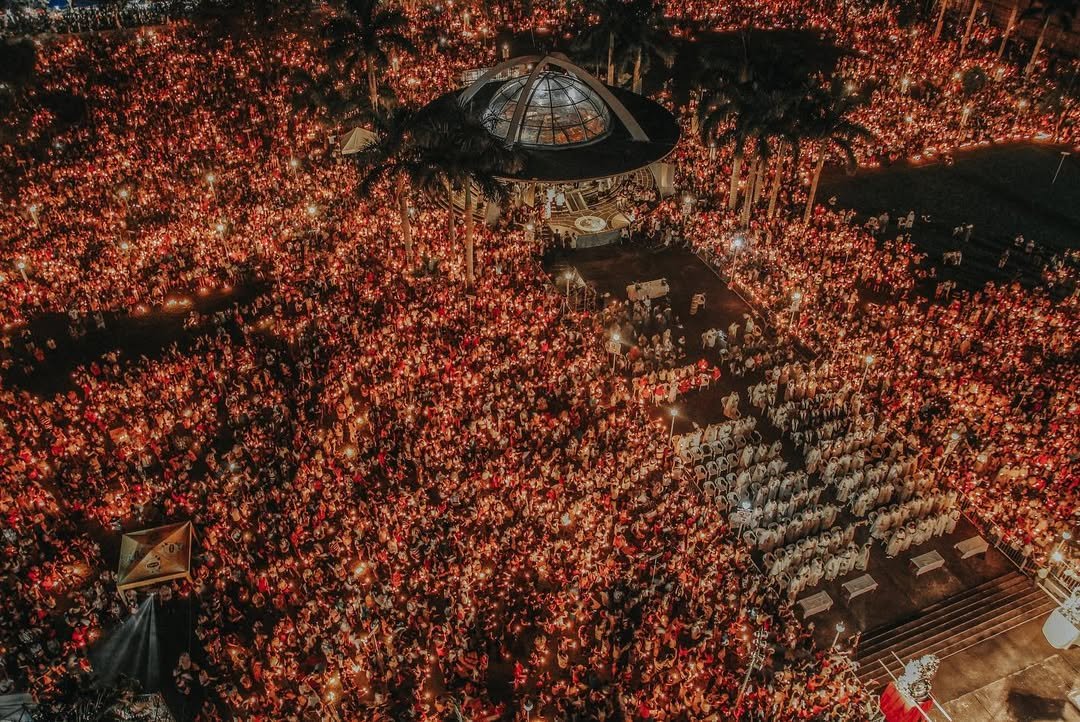
The Peñafrancia Festival earns a 5 out of 5 for any traveler genuinely curious about Filipino religious culture, and a 4 out of 5 for logistics-averse first-timers who need to plan tightly. The Fluvial Procession alone, as candlelight spreads across the Naga River at dusk and a million voices shout “Viva la Virgen,” is one of the most affecting public spectacles in the Philippines. Go with realistic expectations about crowds, heat, and road closures, and you’ll come back next year. LakbayPinas has more guides to help you plan the full Bicol trip around it.
Archdiocese of Caceres official schedule and liturgical information

If you’re exploring options for a luxurious stay during events like the Peñafrancia Festival 2025, I highly recommend Roc Villa 1111. This stunning seafront residence in Castiglioncello offers private access to a beautiful rocky cove and sandy beach, perfect for relaxation after festival activities. The expansive Mediterranean garden, high-speed Wi-Fi, kayaks, paddleboards, smart TV, and premium audio system ensure comfort and entertainment. Additionally, services like laundry and housekeeping on request make it an ideal retreat. For more details, contact Maria at maria.rossi@email.com. Roc Villa 1111 truly combines luxury, privacy, and scenic beauty, making it the perfect getaway destination.