
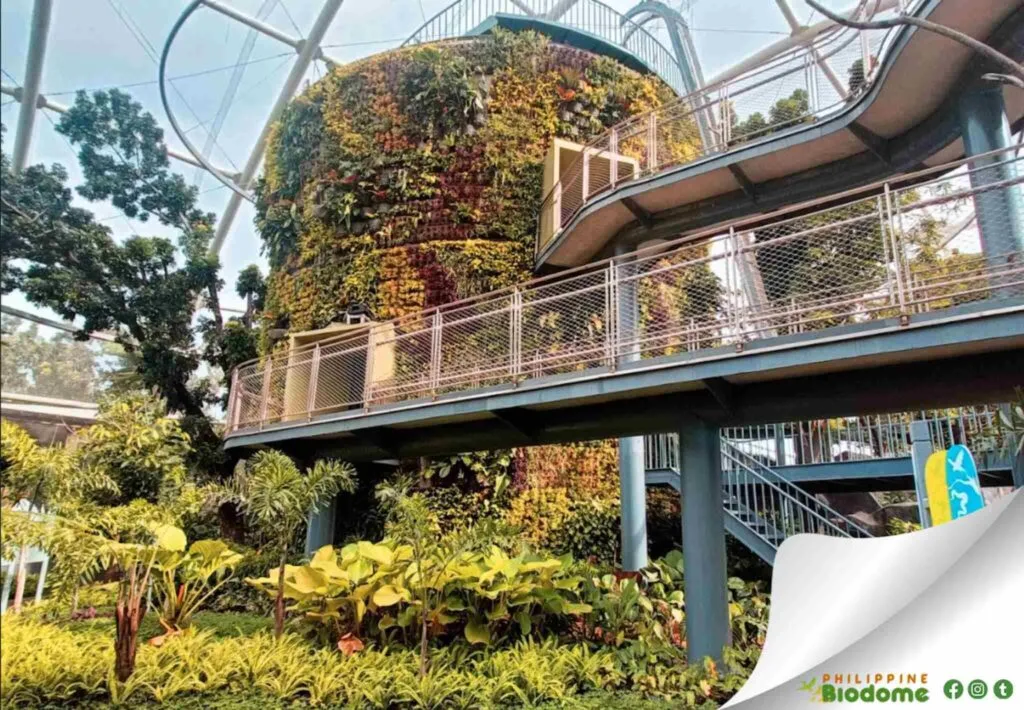
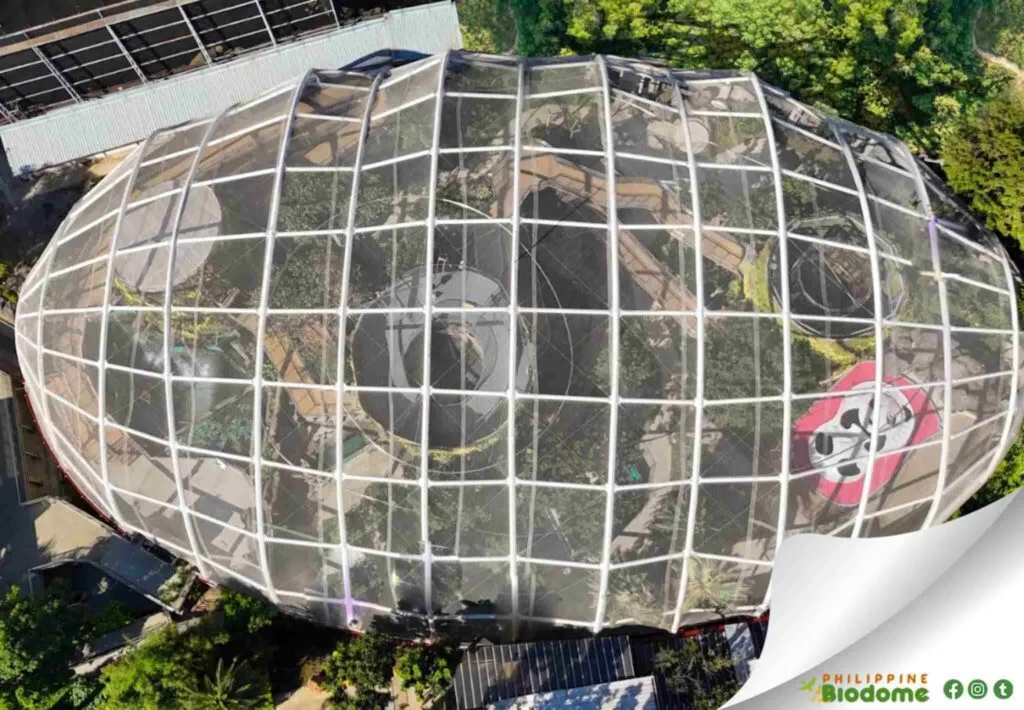
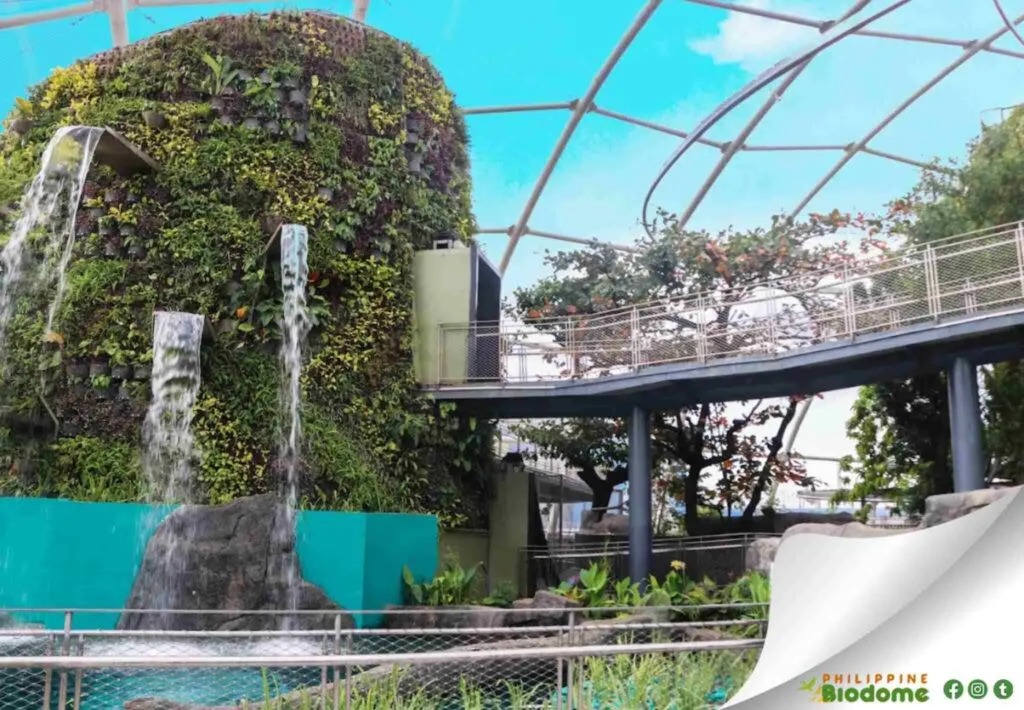
The Philippine Biodome, located inside the Manila Ocean Park complex behind Quirino Grandstand in Ermita, Manila, is an open-air, climate-influenced wildlife sanctuary where you walk through free-flight bird habitats, observe a 14-foot saltwater crocodile, and watch laser-mapped evening light shows. The All-Access Pass covers most exhibits but excludes several premium add-ons, so budgeting a little extra is smart. If you book online and pair the Biodome with the Oceanarium, the per-attraction cost drops dramatically compared to a walk-in ticket.
Philippine Biodome Quick Guide
| Park | Philippine Biodome |
|---|---|
| Location | Manila Ocean Park Complex, behind Quirino Grandstand, Ermita, Manila |
| City / Province | Manila, Metro Manila |
| Type | Wildlife sanctuary, zoological conservatory, family attraction |
| Pricing Model | All-Access Pass (bundle covers entry and most exhibits) |
| Cost to Enter | PHP 680 online / PHP 750 walk-in (standalone); ~PHP 187 to PHP 400 effective per attraction in bundles |
| Operating Hours | Mon to Fri: 10:00 AM to 6:00 PM / Sat, Sun, Holidays: 9:00 AM to 6:00 PM |
| Best Day to Visit | Weekday morning for smaller crowds |
| Time Needed | 3 to 5 hours (Biodome alone); full day for the entire complex |
| Parking | PHP 50 first 3 hours (car); PHP 40 flat rate (motorcycle); not included in pass |
Table of Contents
Where Is Philippine Biodome Located?
The Philippine Biodome sits inside the Manila Ocean Park complex, directly behind the Quirino Grandstand in Ermita, Manila. The complex faces Manila Bay and sits along the southeastern edge of Rizal Park. The physical address most navigation apps recognize is Manila Ocean Park, Roxas Boulevard, Ermita, Manila. For optimal drop-off routing, enter “Hotel H2O” or “North Parking” into your map app rather than the generic “Manila Ocean Park” pin, which tends to route vehicles to the wrong side of the complex.
How to Get to Philippine Biodome
The cheapest way to get there is the LRT-1 to UN Avenue Station, then a short pedicab or E-Trike ride to the Quirino Grandstand entrance.
The UN Avenue Station on LRT-1 is the closest rail stop. From there, the Biodome is roughly 1.2 kilometers away across Rizal Park. In July, that walk under the midday sun is rough. Pedicabs and E-Trikes wait just outside the station exit, and you can negotiate a fare directly to the Quirino Grandstand rear entrance. This is the approach I took and it cost me very little, much less than a ride-hailing app from the station.
If you’re coming from northern provinces like Meycauayan or Angeles City, take a provincial bus to Monumento or a nearby LRT station, then ride LRT-1 south to UN Avenue. Coming from the south via the Parañaque Integrated Terminal Exchange (PITX), skip the Lawton-bound buses as they drop you too far from the entrance. Modern jeepneys routed for “Pier 15” or “South Pier” navigate the inner service roads near the Manila Hotel and get you significantly closer to the gates.
From NAIA, your cleanest option is a Grab or metered taxi directly to “Hotel H2O.” There is no complimentary shuttle from any nearby mall or transit hub, so every guest arriving by public transport is responsible for that last-mile connection. Plan for it and it won’t stress you out.
For private vehicles, the North Parking lot adjacent to the Manila Hotel is the one you want. It puts you closest to the Biodome entrance.
| Vehicle | Rate |
|---|---|
| Automobiles / SUVs | PHP 50 first 3 hours, then PHP 30 per hour or fraction thereof |
| Motorcycles | PHP 40 flat rate from 6:00 AM to 10:00 PM |
A 15-minute grace period applies to both vehicle types, which means drop-offs by taxis or Grab won’t get charged. Parking fees are not included in the All-Access Pass or any bundle, so set that money aside separately. The Philippine Biodome parking area rates are straightforward, but they add up on a long full-day visit.
Ticket Prices and Passes at Philippine Biodome
Buying online always costs less than walking up to the gate, and bundling with other attractions drops the effective cost per attraction even further.
The standalone Philippine Biodome ticket price 2026 is PHP 750 over the counter at the gate. Book online through the official Manila Ocean Park website or authorized third-party platforms and the standalone price drops to PHP 680. The bigger savings, though, come from bundles.
Multi-attraction packages like the “Festive Wave 8-Attractions Package” or the “Ocean to Jungle One Pass” combine the Biodome, the Oceanarium, and several shows into a single online purchase for around PHP 1,500. When you do the math, your effective Biodome entry cost within an eight-attraction bundle can fall to as low as PHP 187 to PHP 400. That is a massive difference from the PHP 750 walk-in rate. You can also look for a Philippine Biodome Klook discount promo on the Klook platform, which often lists authorized bundle packages at competitive rates.
For the Philippine Biodome bundle package Manila Ocean Park, book directly through the official site or Klook to guarantee you get a legitimate QR code. Tickets are non-refundable, non-transferable, and have no cash value once the voucher is generated. You cannot roll over unused attractions in a bundle to a future date.
| Ticket Type | Price (PHP) | What It Covers |
|---|---|---|
| Walk-In Standalone | 750 | Biodome entry only |
| Online Advance Standalone | 680 | Biodome entry only, skip queue |
| Multi-Attraction Bundle (Online) | ~1,500 (8 attractions) | Biodome + Oceanarium + shows + other exhibits; effective per-attraction cost ~PHP 187 to 400 |
Senior Citizens and PWD Discounts: The park fully complies with RA 9994 and RA 10754, offering a mandatory 20 percent discount plus VAT exemption on admission. Senior Citizens must present an OSCA ID, or a government-issued photo ID (SSS, GSIS, PRC, Driver’s License, or valid passport) that shows their date of birth and confirms Filipino citizenship of at least 60 years old. PWDs must present a valid PWD ID issued by PDAO, C/MSWDO, or NCDA.
One critical rule: the 20 percent discount applies only to the PHP 750 walk-in base rate. It cannot be combined with online bundle pricing or promotional offers. If you hold both a Senior Citizen ID and a PWD ID, you can only claim one 20 percent discount per transaction.
For payment, bring a mix of options. Physical ticket counters at the gate accept cash. Online platforms accept credit and debit cards, GCash, and Maya.
When approaching the turnstile scanners with a digital ticket on your phone, maximize your screen brightness before you get in line. The midday glare at the booth makes it hard for the scanner to read a dim QR code.
Operating Hours at Philippine Biodome
The park opens earlier on weekends and holidays, which is your best window for cooler morning animal activity.
| Day | Operating Hours | Final Admission |
|---|---|---|
| Monday to Friday | 10:00 AM to 6:00 PM | 5:15 PM |
| Saturday, Sunday, Public Holidays | 9:00 AM to 6:00 PM | 5:15 PM |
The final admission cutoff is 5:15 PM, which is 45 minutes before closing. No new guests are allowed in after that point, so plan your arrival with this in mind. If you want to stay for Borealis Nights, the evening light show runs at 6:30 PM and 7:15 PM after standard closing. Guests who exit the park can re-enter for the evening show using their ticket or a hand stamp. This is the one formal exception to the otherwise strict no-re-entry policy. Check the Philippine Biodome Borealis Nights schedule at the ticketing counter when you arrive, since the show timing is confirmed daily.
Top attractions at Philippine Biodome
The Biodome’s strongest suit is its free-flight animal habitats, not mechanical rides, and most of what you pay for with an All-Access Pass is the ability to walk through those living ecosystems.
The Avian Cones
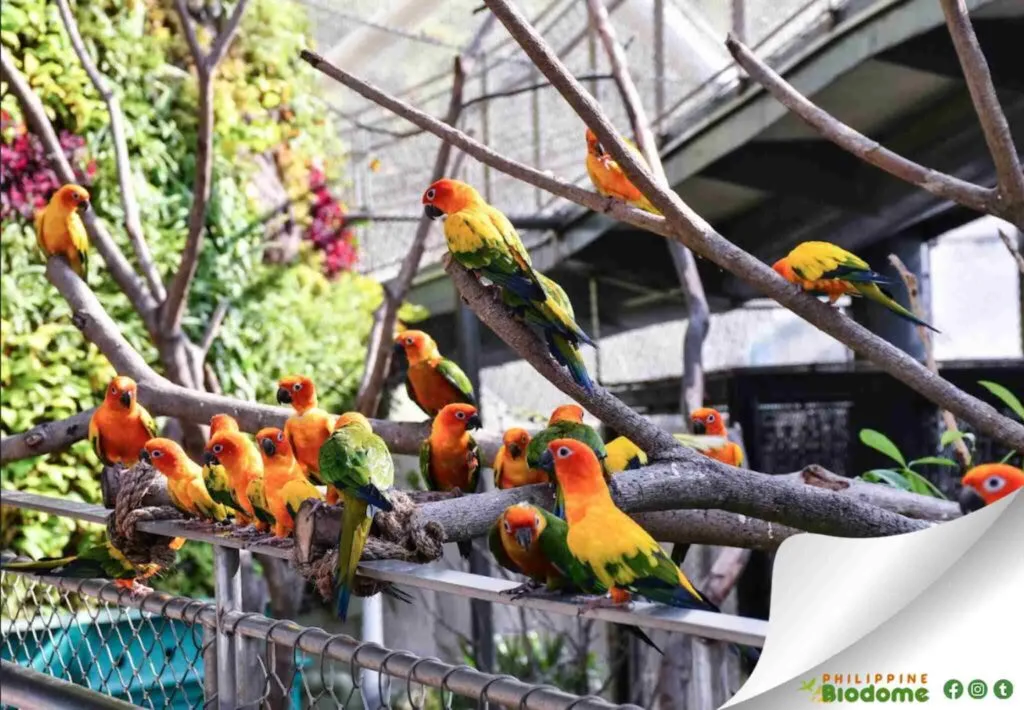
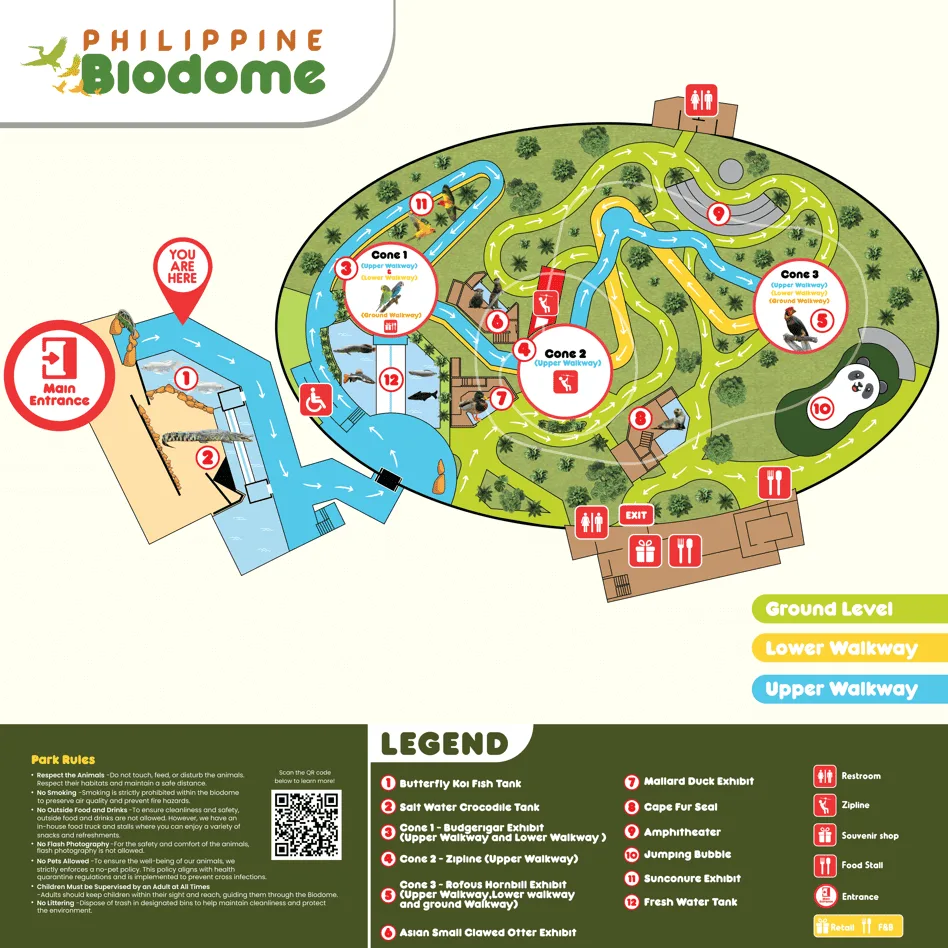
Three large netted enclosures house the Biodome’s bird collection. The first holds Budgerigars, small parakeets that land on your arms and shoulders if you stand still. The second houses Brahminy Kites and the Rufous Hornbill, two dramatically large birds that move through the canopy above you. The third hosts African Spoonbills and Scarlet Ibis, whose red plumage against the green foliage is impossible to miss. These cones are included in the All-Access Pass.
Sun Conure Feeding Experience
This is a separate paid experience at approximately PHP 700, not included in the pass. You step into an enclosure with a flock of bright yellow-orange Sun Conures that fly freely and land on you. A handler guides you through it, and you walk out with an 8R printed photo souvenir. It is worth every peso if you have young kids.
14-Foot Saltwater Crocodile Viewing Deck
Viewing the crocodile from the elevated deck is included in the All-Access Pass. Standing up there and looking down at a 14-foot saltwater crocodile is something you genuinely do not expect to feel as visceral as it does. The Crocodile Tunnel Adventure, where you physically crawl through a transparent acrylic tunnel directly beneath the tank, is a premium add-on with a separate fee and includes an 8R photo.
Glide Experience (Zipline)
The overhead canopy Glide Experience gives you a suspended bird’s-eye view of the Biodome’s foliage from above. This is billed separately from the All-Access Pass. For context, the Philippine Biodome zipline flying encounter experience is one of the more unusual things you can do in Ermita, Manila, since you are literally gliding over animals and plants in the middle of the city. Weight and height minimums apply for harness safety.
Freshwater Gallery
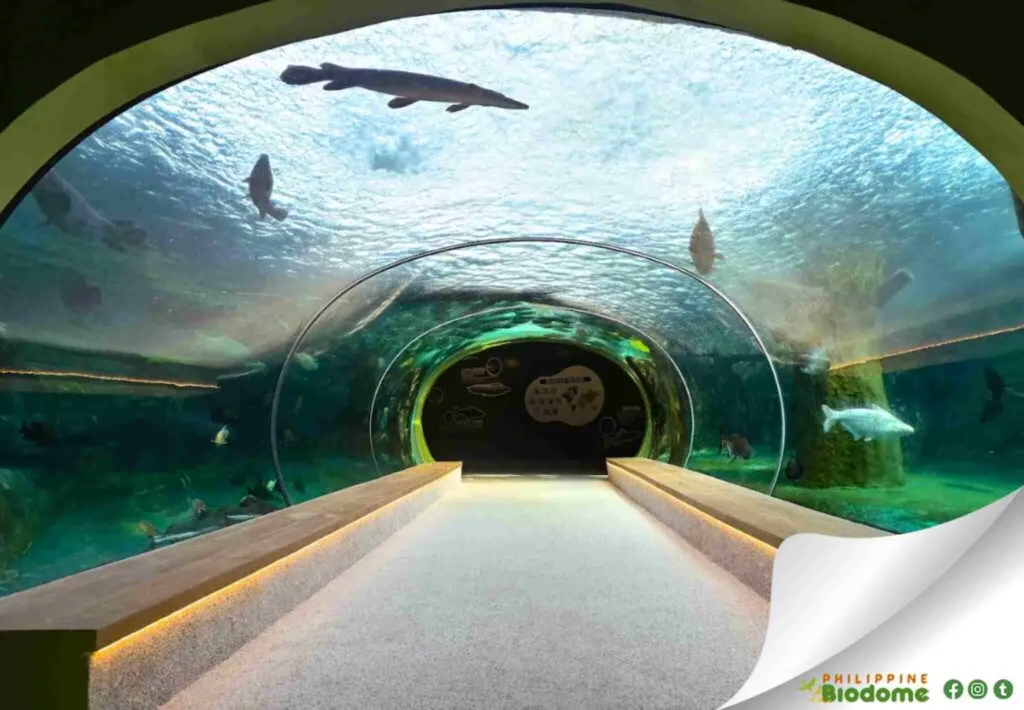
One of the quieter and more underrated sections. Floor-to-ceiling transparent panels bring you face to face with Butterfly Koi, Paddle Fish, and other freshwater species. The low panel design is specifically good for toddlers and stroller-level viewing.
Jumping Bubble
An interactive zone where kids step inside large, resilient bubbles. It is loud and physical and serves as a useful energy release for toddlers who have been walking through animal exhibits all morning.
Amphitheater Show and Tell
Handlers bring out Sulcata Tortoises, Burmese Pythons, and Green Iguanas in a seated, controlled environment. Scheduled daily at 11:10 AM, 12:10 PM, 1:10 PM, and 2:10 PM. This is included in the All-Access Pass and is probably the most family-friendly scheduled activity in the entire park.
Sea Lion Show and All-Star Bird Show
Both are included in standard bundles and are held in dedicated performance areas. The Sea Lion Show is crowd-pleasing for all ages.
What Is NOT Included in the All-Access Pass
The pass does not cover: the Sun Conure Feeding (~PHP 700), the Crocodile Tunnel Adventure, the Glide Experience (Zipline), or the Aqua Adventure outdoor water park, which is a completely separate facility with its own admission ticket.
For a broader look at family-friendly attractions across the country, this guide to amusement and theme parks in the Philippines covers a lot of ground worth bookmarking.
What I’d Do Differently Next Time
I spent too long in the Freshwater Gallery before realizing the 11:10 AM Show and Tell was about to start, and I nearly missed it. Next visit, I would plan the schedule around the show times first and fill the in-between hours with the free-roam exhibits. I would also book the Sun Conure Feeding in advance instead of deciding on the spot, because the handler slots fill up quickly on weekends. And I’d bring a waterproof phone pouch, not because I planned on getting wet, but because the humidity inside the dome fogs up everything and the transition from the air-conditioned Oceanarium lobby into the Biodome hits you hard.
Height Requirements for Rides at Philippine Biodome
Height-based rules apply both to the free entry policy for small children and to specific kinetic attractions within the park.
| Attraction / Policy | Height Requirement | Notes |
|---|---|---|
| General Biodome Entry (Free) | 2 feet (61 cm) and below | Free entry; any child above 2 feet pays full adult rate |
| Glide Experience (Zipline) | Minimum height required (harness safety) | Exact measurement confirmed at attraction; weight limits also apply |
| Aqua Adventure Spiral/Tornado Slides | Minimum height required | Children below minimum restricted to splash pads and wading zones |
The Philippine Biodome free entry height requirement is 2 feet (61 centimeters). That is an exceptionally low threshold. Most walking toddlers aged 12 to 18 months already exceed it, which means the majority of young children need a paid ticket at the full adult rate. There is no junior or discounted mid-tier. The park measures height strictly at the entrance turnstiles, so do not assume your toddler qualifies. Children 12 and under must be accompanied by a paying adult aged 18 or older at all times.
Best Time to Visit Philippine Biodome
Weekday mornings are consistently the best window, both for animal activity and for avoiding crowds.
The birds in the free-flight cones are most active in the cooler morning hours. By midday, many of them perch high in the canopy and stay still. If you want to see the Brahminy Kite or the Rufous Hornbill moving around at eye level, arrive by 10:00 AM on a weekday. Weekend mornings are busier, especially on public holidays when Manila families turn out in large numbers.
July sits in the wet season, which I experienced firsthand. Afternoon rain showers are common and the open-air dome means you will feel them. Bring a compact rain poncho rather than an umbrella because you need both hands free when you are managing kids or a camera. The rain does clear quickly, and the post-rain air inside the dome actually feels better than the pre-rain humidity.
For the Philippine Biodome Borealis Nights experience, arriving by 9:00 AM on a Saturday gives you the full day itinerary: morning animals, midday food, and the evening light show without needing a second ticket.
How Long Do You Need at Philippine Biodome?
The Biodome alone takes 2 to 3 hours. A full day covering the Biodome plus the Oceanarium, shows, and an evening Borealis Nights session runs 8 to 10 hours.
For a half-day visit focused purely on the Biodome, 2 to 3 hours is realistic. This covers all three avian cones, the Freshwater Gallery, the crocodile viewing deck, the Jumping Bubble, and one Amphitheater Show. If you add the premium experiences like the Sun Conure Feeding or the Crocodile Tunnel, add another 30 to 45 minutes.
Sample Full-Day Time Plan:
- 9:00 AM — Arrive, scan tickets, start with the avian cones while birds are active
- 11:10 AM — Amphitheater Show and Tell
- 12:00 PM — Lunch at Makan Makan Asian Food Village
- 1:10 PM — Second Show and Tell slot (good for photos you missed the first time)
- 2:00 PM — Oceanarium glass tunnel, Sea Lion Show
- 4:00 PM — Crocodile Tunnel Adventure or Sun Conure Feeding (add-on)
- 5:00 PM — Exit for dinner outside the complex
- 6:30 PM — Return for Borealis Nights first show
If you are only visiting the Biodome without the rest of Ocean Park, a half-day starting at 10:00 AM on a weekday is enough and leaves you time to explore Rizal Park afterward.
Full Budget Breakdown for a Day at Philippine Biodome
A solo visit on a budget can cost around PHP 1,200 to PHP 1,500 all-in; a family of four planning a full day should budget PHP 5,000 to PHP 8,000 depending on add-ons.
| Expense | Cost (PHP) |
|---|---|
| Biodome Standalone Ticket (Online) | 680 per person |
| Multi-Attraction Bundle (Online, 8 attractions) | ~1,500 per person |
| Sun Conure Feeding Add-On | ~700 per person |
| Crocodile Tunnel Adventure Add-On | Separate fee (confirm at counter) |
| Glide Experience (Zipline) | Separate fee (confirm at counter) |
| Parking — Car (3 hours) | 50, then PHP 30/hr after |
| Parking — Motorcycle | 40 flat rate |
| Meal at Makan Makan (per person) | ~250 to 500 |
| Quick Snack at Park Kiosk | ~80 to 150 |
| LRT-1 Fare (per person) | ~18 to 35 depending on origin |
| E-Trike from UN Avenue Station | Negotiable, typically ~30 to 60 |
| Grab from NAIA | ~200 to 350 depending on traffic |
For a realistic total, a family of four buying the 8-attraction online bundle would pay around PHP 6,000 for entry, then add food, parking, and at least one premium add-on. Budget a buffer of PHP 500 to PHP 1,000 for impulse experiences.
What to Bring to Philippine Biodome
| Item | Needed? |
|---|---|
| Lightweight, breathable clothing | Yes |
| Change of dry clothes for kids | Yes, especially for Jumping Bubble or Aqua Adventure |
| Compact rain poncho | Yes, wet season especially |
| Waterproof phone pouch | Yes, humidity and splash zones are real hazards |
| Microfiber cloth for glasses/camera lens | Yes, fogging is immediate when you enter from A/C lobbies |
| Sunscreen | Yes |
| Wearable baby carrier | Highly recommended for upper canopy sections |
| Stroller | Permitted, but park it at the entrance stroller area before heading upstairs |
| Baby food, formula, pureed pouches | Yes, these are explicitly permitted |
| Reusable water tumbler | Generally permitted |
| Commercial bottled drinks / outside food | No, these will be confiscated at bag check |
| Extra cash for add-ons | Yes |
The Biodome does not rent strollers or wheelchairs on-site. If you need equipment, arrange rentals from third-party providers like Cloud of Goods, which delivers to Manila attractions and hotels.
Tips and Rules for Visiting Philippine Biodome
Read these before you pack, not after you arrive.
No outside food or commercial drinks are allowed. Security does thorough bag checks at all entry points. Baby food, formula, and pureed pouches are the one exception and are explicitly allowed in reasonable quantities for infants. A reusable water tumbler is usually fine.
The strict no-re-entry policy applies to all paid attraction zones except Borealis Nights, where a hand stamp or your original ticket lets you back in for the evening show. Do not exit a zone if you are not done with it.
No flash photography. This is actively enforced near the bird enclosures. Some avian species are highly sensitive to flash and handlers will ask you to leave the zone if you persist.
No running, shouting, or physical horseplay. The park treats this as a genuine wildlife environment and the behavioral rules reflect that.
Children 12 and under must be with a paying adult at all times. The park can remove any guest who leaves a child unattended.
Input “Hotel H2O” or “North Parking” into your navigation app, not the generic Ocean Park address. This saves you a long walk in the wrong direction.
Pre-download your QR code ticket and max out your screen brightness before you reach the turnstile.
For a similarly immersive, indoor attraction that is good for families, DreamPlay at City of Dreams Manila is another strong option worth planning around.
Frequently Asked Questions About Philippine Biodome
Is the Philippine Biodome worth it as a standalone ticket or is the bundle better?
The bundle is almost always the better deal. The standalone Philippine Biodome ticket price 2026 is PHP 680 online and PHP 750 at the gate. A multi-attraction bundle online that includes the Biodome, the Oceanarium, and multiple shows costs around PHP 1,500, which brings your effective Biodome entry cost down to as low as PHP 187 to PHP 400. If you are visiting Manila Ocean Park specifically, buy the bundle. The only scenario where a standalone makes sense is if you genuinely want only the Biodome and nothing else.
What animals can you see and interact with inside the Philippine Biodome?
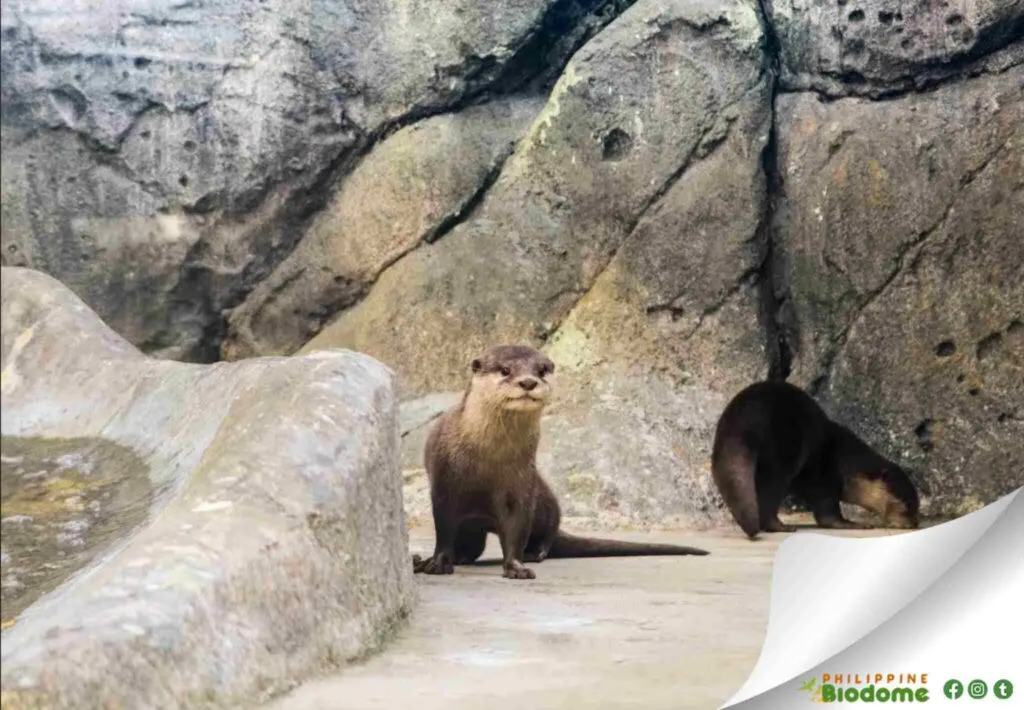
The Philippine Biodome animals and exhibits list includes Budgerigars, Brahminy Kites, Rufous Hornbills, African Spoonbills, Scarlet Ibis, Sun Conures, Asian Small-Clawed Otters, Cape Fur Seals, a 14-foot Saltwater Crocodile, Sulcata Tortoises, Burmese Pythons, Green Iguanas, Butterfly Koi, and Paddle Fish, among others. Active interaction (touching, feeding) is only permitted in designated, handler-supervised zones. The Sun Conure Feeding is the most hands-on experience available, though it costs extra beyond the pass.
Is the Philippine Biodome air-conditioned or open-air?
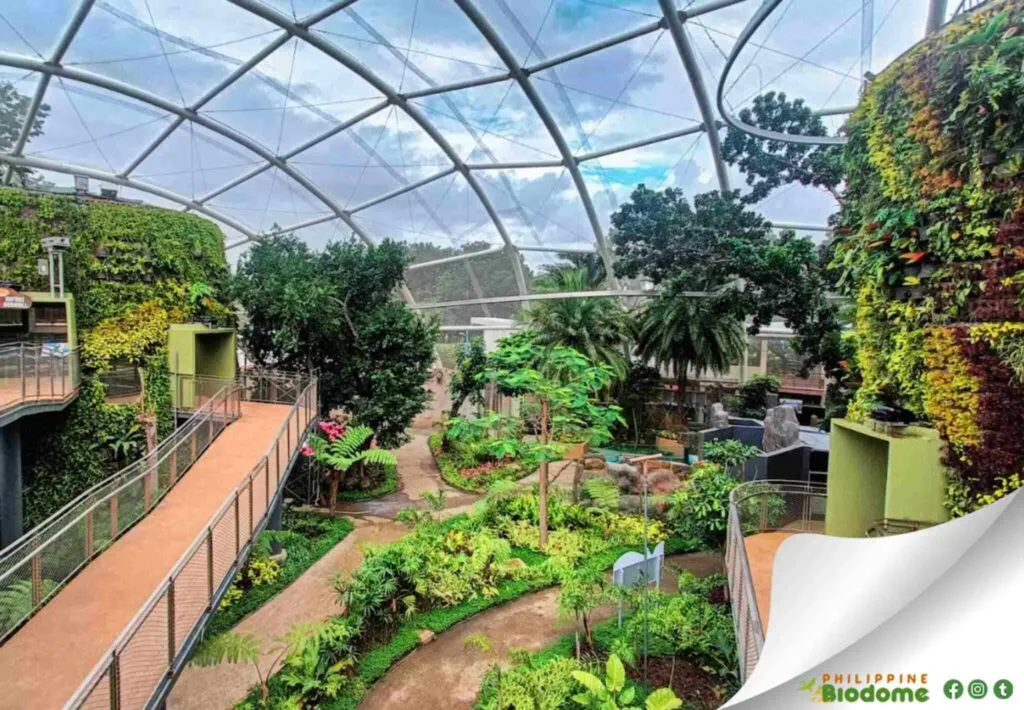
The Biodome is approximately 80 percent open-air. The dome’s netted structure allows sunlight, wind, and rain to pass through, accurately recreating a tropical rainforest environment. It is not air-conditioned, and humidity inside is noticeably high. Some connecting lobbies and the Oceanarium sections of the complex are fully air-conditioned, so the transition between zones is sharp. Pack breathable clothing and expect to sweat.
What time should you visit the Philippine Biodome to see the birds up close?
Arrive at 9:00 AM on weekends or 10:00 AM on weekdays for the best bird activity. The free-flight bird species in the avian cones are most mobile and visible in the cooler morning hours. By midday, many birds retreat to the upper canopy and become difficult to spot. If you also want to catch the Amphitheater Show and Tell, the first slot is at 11:10 AM, so a 9:00 AM arrival gives you time to do both.
Can you re-enter the Philippine Biodome after going out?
The general rule is strict no re-entry: once you exit an attraction zone, your ticket is consumed and you cannot return. The only formal exception is Borealis Nights. Guests who exit before the evening show at 6:30 PM or 7:15 PM can return using their original ticket or a hand stamp specifically for the light show. Outside of Borealis Nights, there is no re-entry mechanism for any other zone in the complex.
Final Verdict: Is Philippine Biodome Worth Visiting?
Rating: 4 out of 5 for families with children aged 2 to 12; 3 out of 5 for adults visiting solo or without kids.
The Philippine Biodome delivers something genuinely uncommon for Metro Manila: a living, functioning ecosystem in the middle of the city where you are not just observing animals from a distance but actually standing inside their habitat. The value is sharpest when you buy a multi-attraction bundle online and plan your day around the show schedule and the Borealis Nights session. Go with realistic expectations about the heat, pack accordingly, and budget for at least one premium add-on, and you will leave having experienced something that no other venue in Manila currently offers.
For a comparison of the broader complex, the ultimate guide to Manila Ocean Park breaks down every attraction in the full compound. If you are planning multiple Manila wildlife visits, the New Manila Zoo and the Space and Time Cube Museum round out a solid Metro Manila itinerary for families who want to mix nature and interactive exhibits across different days.



Thank you for your incredible faith in our efforts. Your presence is priceless.