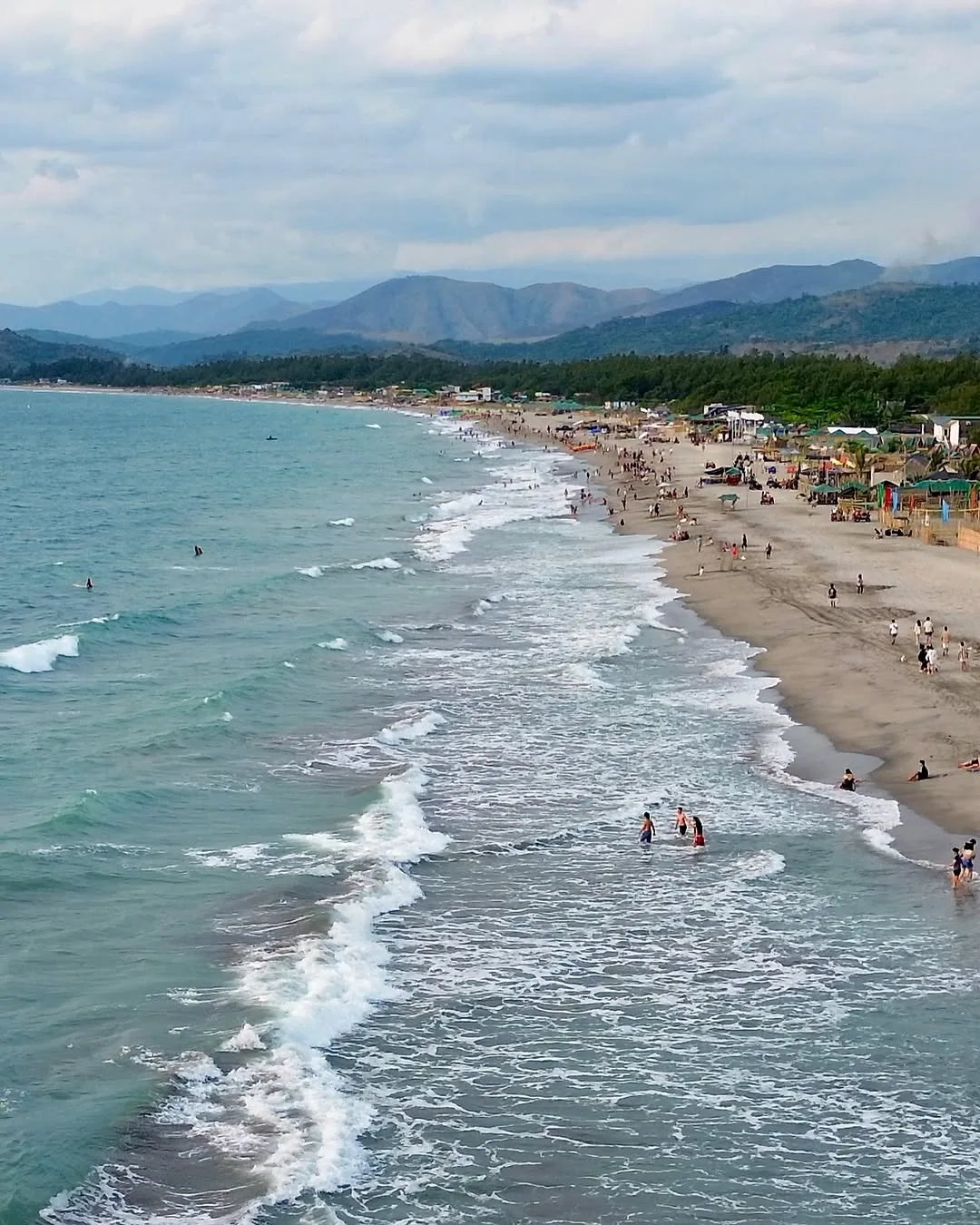
Liwliwa Zambales is a surf-town village in San Felipe, Zambales, about 3 to 4 hours from Manila by private car or 4 to 5 hours by bus. It has consistent beginner-friendly waves, a strong café culture, ATV trails, and some of the best budget hostels on the west coast of Luzon. It is entirely drive-up accessible — no boat required.
Liwliwa Zambales Quick Guide
| Detail | Info |
|---|---|
| Destination | Liwliwa Beach (Sitio Liwliwa) |
| Location | San Felipe, Zambales |
| Province | Zambales |
| Type | Volcanic ash-gray surf beach |
| Access | Mainland / Drive-up — no boat needed |
| Entrance / Env. Fee | ₱50 per adult (₱30 Eco-Tourism Fee + ₱20 Coastal Preservation Fee) |
| Best Season | July to February (surf season); March to May (flat water, swimming) |
| Swimming | Yes — calm months offer safe swimming conditions |
| Island Hopping | Via Pundaquit, San Antonio (separate day trip) |
| Travel Time from Manila | 3–4 hrs (private car); 4–5 hrs (bus + tricycle) |
Table of Contents
Where Is Liwliwa Zambales Located?
Liwliwa is a coastal village in the municipality of San Felipe, Zambales, on the western edge of Luzon facing the West Philippine Sea. It sits roughly 180 kilometers northwest of Manila, tucked between the Zambales mountain range and the open sea.
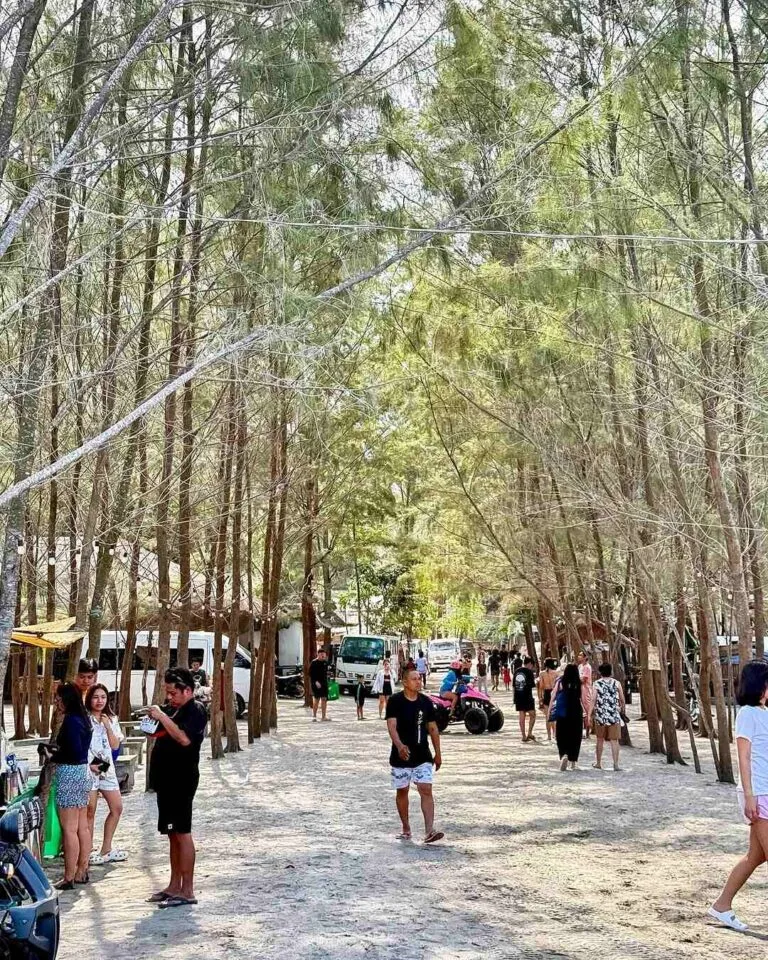
The area sits within the broader Zambales coastline that was dramatically reshaped by the 1991 Mount Pinatubo eruption. That geological history is still visible today — the sand here runs a distinctive ash-gray to dark charcoal color rather than the bright white you’ll find in the Visayas. Agoho pines (a casuarina species) line the shore instead of coconut palms, which gives the village a completely different visual personality from most Philippine beaches.
San Felipe is the gateway town. The San Felipe Public Market and the 7-Eleven near it serve as the main transit hub before the final tricycle leg into the village. You will pass through Castillejos, San Marcelino, and San Antonio if you’re coming down from the Subic direction by road.
How to Get to Liwliwa Zambales
Getting to Liwliwa Zambales from Manila is a straightforward two-part journey: a bus to San Felipe, then a short tricycle ride to the village.
By Private Car or Van
This is the most convenient option and the one I’d recommend for groups of three or more.
- Enter NLEX heading northbound from Metro Manila.
- Transition to SCTEX (Subic-Clark-Tarlac Expressway) following signs for Subic Bay.
- Exit Subic and merge onto the National Highway southbound, passing through Castillejos, San Marcelino, and San Antonio.
- Continue until you reach San Felipe, then turn left at the signs for Sitio Liwliwa near the public market.
- Estimated drive time: 3 to 4 hours, heavily dependent on NLEX traffic on Friday nights and Sunday afternoons.
Parking is available at most resorts and hostels directly on-site. A few accommodations have secured compound parking, which is adequate for overnight stays. Always confirm parking availability when you book.
By Bus (Victory Liner)
The public bus route is well-established and used by solo travelers and barkadas regularly.
- Go to a Victory Liner terminal in Cubao, Pasay, or Caloocan.
- Board a bus bound for Iba, Zambales or Sta. Cruz, Zambales.
- Always take the express route via SCTEX — it costs ₱500–₱600 one-way and bypasses the brutal traffic through San Fernando, Pampanga. The inner-city route is ₱350–₱420 but can add over an hour to your ride on a weekend.
- Request a drop-off at San Felipe Public Market, identifiable by the 7-Eleven on the corner.
- Estimated travel time: 4 to 5 hours from Metro Manila.
Key Cubao express departures run at 03:00, 05:00, 06:00, 10:00, and 13:00. Pasay express departures include 05:00, 08:00, 10:00, 12:30, and 14:30. For the most current schedule, check the Victory Liner official website and online booking portal before your trip.
For a fuller picture of how to plan your Zambales travel logistics, the Zambales Ultimate Travel Guide covers transport options across multiple towns in the province.
From San Felipe to Liwliwa (Tricycle)
Once you’re at the 7-Eleven near the San Felipe Public Market, look for the tricycle terminal right beside it.
- Shared tricycle (2–3 passengers): ₱40–₱50 per person
- Solo / special trip: ₱80–₱100
- Travel time: 10 to 15 minutes
Important: Some resorts have nearly identical names — “Limliwa,” “Liwa-Liw,” and “Liwliwa” can all confuse drivers. Show your destination on Google Maps or a screenshot. Do not rely on verbal directions alone.
From San Jose del Monte (Bulacan)
Take a bus or jeepney to the Victory Liner Caloocan Terminal via Quirino Highway or NLEX, then follow the same Caloocan-to-Iba/Sta. Cruz route above. Total estimated travel time: 7 to 8 hours depending on Metro Manila traffic.
Entrance Fees, Environmental Fees, and Permits at Liwliwa Zambales
Liwliwa charges a combined ₱50 per adult in local government fees, collected at the barangay checkpoint or at your resort upon check-in.
The breakdown is:
- Eco-Tourism Fee (ETF): ₱30 per adult (₱24 for seniors and PWDs, ₱20 for students)
- Coastal Preservation Fee: ₱20 per person
These are mandatory LGU fees, not resort charges. Keep your receipt — you may be asked to show it at the beach. Individual resorts do not typically charge a separate beachfront access fee on top of your accommodation rate, though day-tour visitors at places like Limliwa Beach Resort pay a ₱300 day-use fee covering 6 AM to 6 PM.
Getting Around Liwliwa Zambales
Once you’re inside Sitio Liwliwa, almost everything is walkable. The main village strip — where resorts, cafés, restaurants, and ATV booths are clustered — runs along a single dirt road parallel to the beach.
On Foot
The entire active stretch of Liwliwa village is roughly a 10 to 15-minute walk end to end. Café-hopping, going from your hostel to the beach, and finding dinner after dark are all comfortable on foot. Bring sandals you don’t mind getting sandy — the main road has soft patches.
By Tricycle (Within the Area)
For trips to the falls or back to San Felipe, tricycles are available for charter near the barangay entrance.
- Tricycle to Lubong-Nangoloan (Anghalo) Falls: approximately ₱500 round-trip including driver waiting time
- Tricycle back to San Felipe market: ₱40–₱100 depending on solo or shared
ATVs
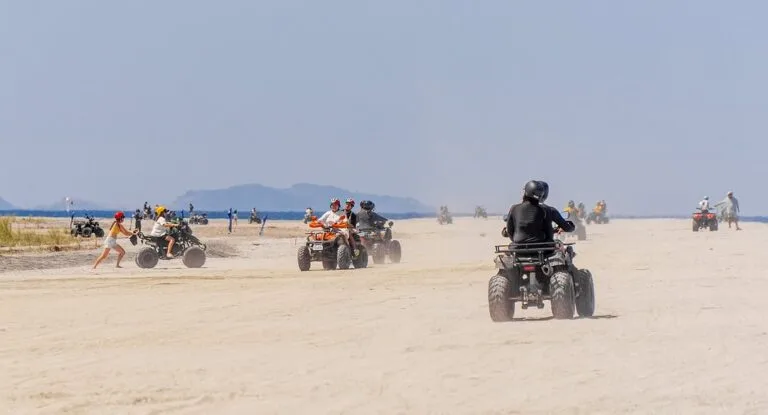
ATV booths are stationed directly on the beach and don’t require advance booking for basic rentals. You’ll see the operators set up by mid-morning on weekends. On weekdays, you may need to ask your accommodation to connect you with a local operator.
Beaches and Things to Do at Liwliwa Zambales
Liwliwa’s beach is the anchor of everything here, but the activity lineup is broader than most first-timers expect.
The Beach Itself
Beach rating: 4 out of 5 — The ash-gray volcanic sand and Agoho pine backdrop make this one of the most visually distinctive beaches in Luzon. The tradeoff is the dark sand absorbs more heat than white sand beaches, so midday barefoot walks require flip-flops.
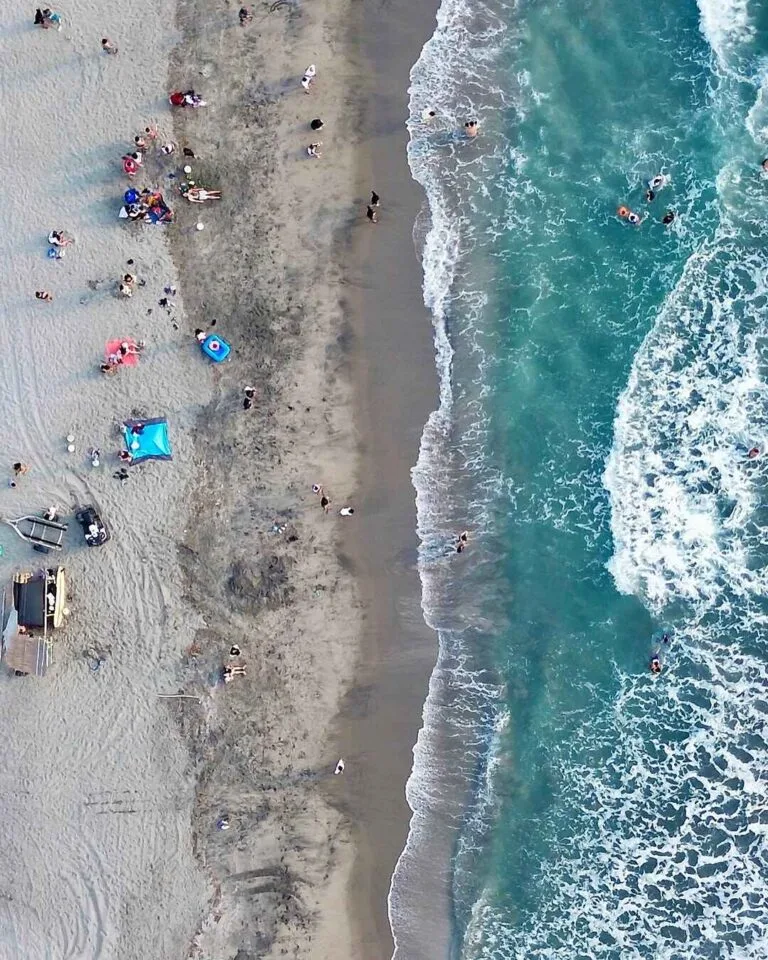
The shoreline is wide and long enough to feel uncrowded on weekdays. On weekends and long holidays, the picture changes. When I visited in April 2026, the beach was noticeably packed by 10 AM. Finding a quiet patch before 7 AM was easy; by midday it had the energy of a festival. If that bothers you, arriving early or visiting on a Tuesday makes a genuine difference.
Surfing in Liwliwa Zambales
Surfing rating: 4.5 out of 5 — Consistent, manageable waves with a solid network of local instructors make this one of the best spots on the west coast for learning.
Liwliwa produces reliable waves from July through February, with the peak of the surf season landing during the southwest monsoon (habagat) months of August to October. From March to May, the sea flattens out considerably — better for swimming, worse for surfing.
- Board rental only (experienced surfers): ₱300–₱400 per hour
- Surf lesson with instructor + board: ₱600–₱700 per hour
Local beach operators require first-time surfers to hire an instructor. This is enforced, not just suggested. One hour of instruction is enough to get you standing, and the instructors here are patient and specific with corrections.
Skimboarding is available for smaller wave days. It’s a good alternative when the surf is mellow, and several locals rent lightweight boards near the shore.
ATV Riding
ATV rating: 4 out of 5 — The lahar trail adds real landscape variety. The environmental noise on peak weekends is the main drawback.
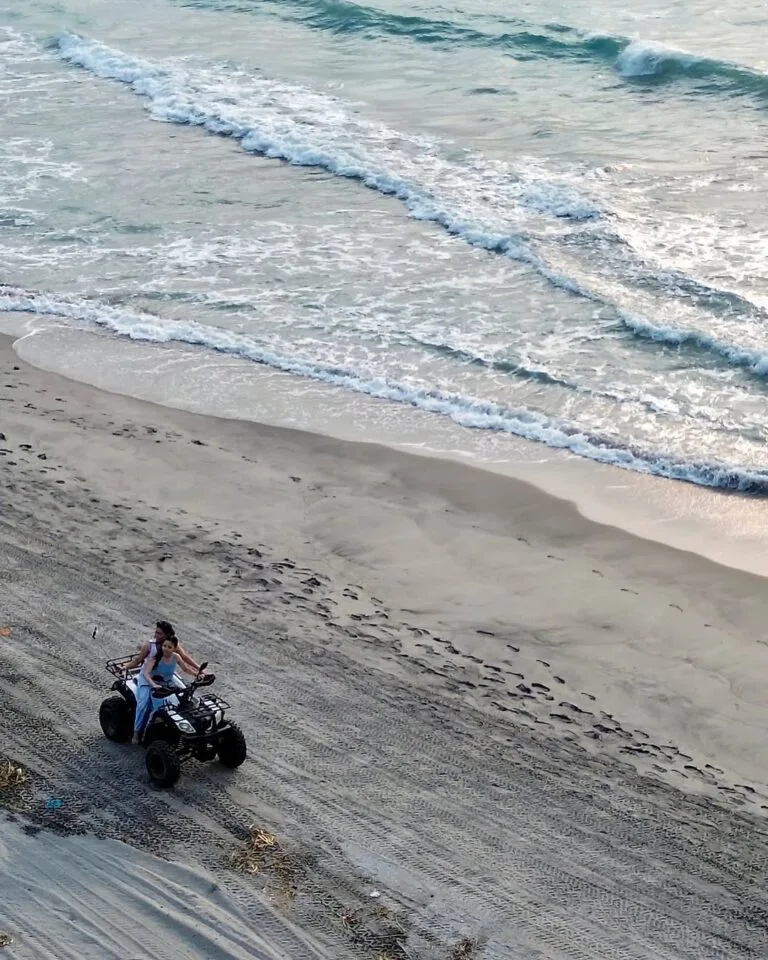
ATV rentals run from the beach directly into inland lahar fields left by the Pinatubo eruption — a genuinely surreal landscape of pale gray hardened lava beds cutting through scrub forest.
- Short beachfront trail (30 minutes): ₱500–₱800 per unit
- Full guided trail through lahar, forest, and beach (1 hour): ₱1,000–₱1,200 per unit
Tandem riders incur extra fees. Booking for the full guided trail on weekday mornings gives you the best conditions — the light is good, the trails are less churned up, and you won’t be in a convoy of other ATVs.
Lubong-Nangoloan (Anghalo) Falls
Falls rating: 3.5 out of 5 — Worth a half-day side trip between July and November. Don’t expect much in April or May.
Located 20 to 30 minutes inland from the beach, the falls have three levels. The first level has a wide, deep basin ideal for swimming. The second is accessed via 58 stairs and features the rock formations locals call the “footprints of Anghalo.” The third level requires a local guide and involves steep rock scrambling.
- Entrance fee: ₱20–₱30 per person (free for San Felipe residents)
- Charter tricycle from Liwliwa: approximately ₱500 round-trip
- Optional carabao cart from jump-off: ₱150 for up to 6 passengers
The falls are most impressive from July through November. By April they can drop to a trickle — I saw photos from a fellow guest’s visit that week and they were underwhelming compared to the wet-season shots at the entrance.
Island Hopping (Pundaquit, San Antonio)
Island hopping is a separate day trip and departs from Pundaquit in the neighboring town of San Antonio, about 30 to 40 minutes from Liwliwa by tricycle.
- 3-island tour (Anawangin, Nagsasa, or Capones): starts at ₱3,500 for 1–4 pax, up to ₱4,500 for 8–10 pax
- Your Liwliwa host can arrange a boat charter, or you can book directly at the Pundaquit shore
For full details on what each cove offers, the guides on Nagsasa Cove and Anawangin Cove break down fees, boat rates, and what to pack for each. The 10 Must-Visit Zambales Beaches guide is also useful for planning a multi-beach Zambales itinerary around a Liwliwa base.
What I’d Do Differently Next Time
I’d arrive on a Thursday instead of a Friday. The wave conditions during my April visit were flat, which I knew going in, but the crowd caught me off guard. By 11 AM the beach was shoulder-to-shoulder. I spent more time at the cafés than I planned — which wasn’t bad, honestly — but I missed the relaxed beach energy I came for.
I’d also skip the ATVs on a weekend afternoon and do them at 7 AM on a Saturday before the main crowd wakes up. The lahar landscape in early light is a different experience than mid-afternoon with a dozen other units kicking up dust around you.
One practical regret: I didn’t withdraw enough cash before leaving San Felipe. The 7-Eleven ATM had a long queue and a withdrawal limit, and mobile data in the village was too unreliable for GCash. Withdraw more than you think you need before getting on that tricycle.
Best Time to Visit Liwliwa Zambales
The best time to visit depends entirely on what you’re coming for.
For surfing: Come between July and February. The habagat (southwest monsoon) season from August to October brings the biggest, most consistent swells. This is peak surf season. Waves are suitable for beginners through intermediates throughout most of this period.
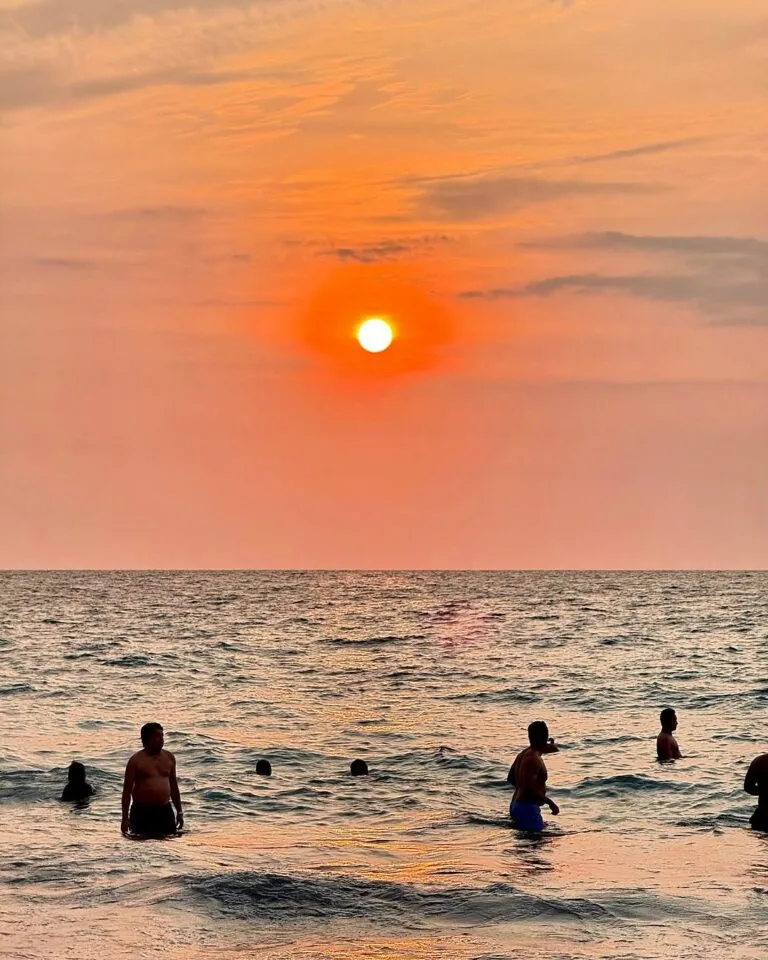
For swimming and calm conditions: Visit between March and May during the amihan (northeast trade wind) season. Seas flatten, the weather is sunny and dry, and the water is calm enough for casual swimming. The tradeoff is weaker surf — or no surf at all during peak summer.
Typhoon season runs from roughly June through October. Most typhoons track across northern or central Luzon rather than directly hitting Zambales, but check PAGASA forecasts within 48 hours of your trip during these months. Flooding on the access roads can disrupt travel even when the beach itself is calm.
Crowd-wise, weekdays from Monday to Thursday are dramatically quieter than weekends and long holidays year-round. If you want to avoid the packed-beach situation, a midweek visit is the most reliable fix regardless of season.
Where to Stay at Liwliwa Zambales
Accommodations in Liwliwa range from ₱750 dorm beds to ₱8,500-plus beachfront glamping setups. Most are a 5 to 10-minute walk from the shore. Book at least 2 to 3 weeks ahead for weekend stays, and further in advance for long weekends or holidays.
Budget (₱750–₱1,000/night):
Aluntala Hostel offers dorm beds at around ₱1,000/night with personal lockers (fits a 32-liter backpack), reading lights, and free morning coffee. Circle Hostel and Hideout are also in this tier. Book via Agoda — walk-in availability on weekends is nearly nonexistent.
Mid-range (₱1,799–₱2,800/night):
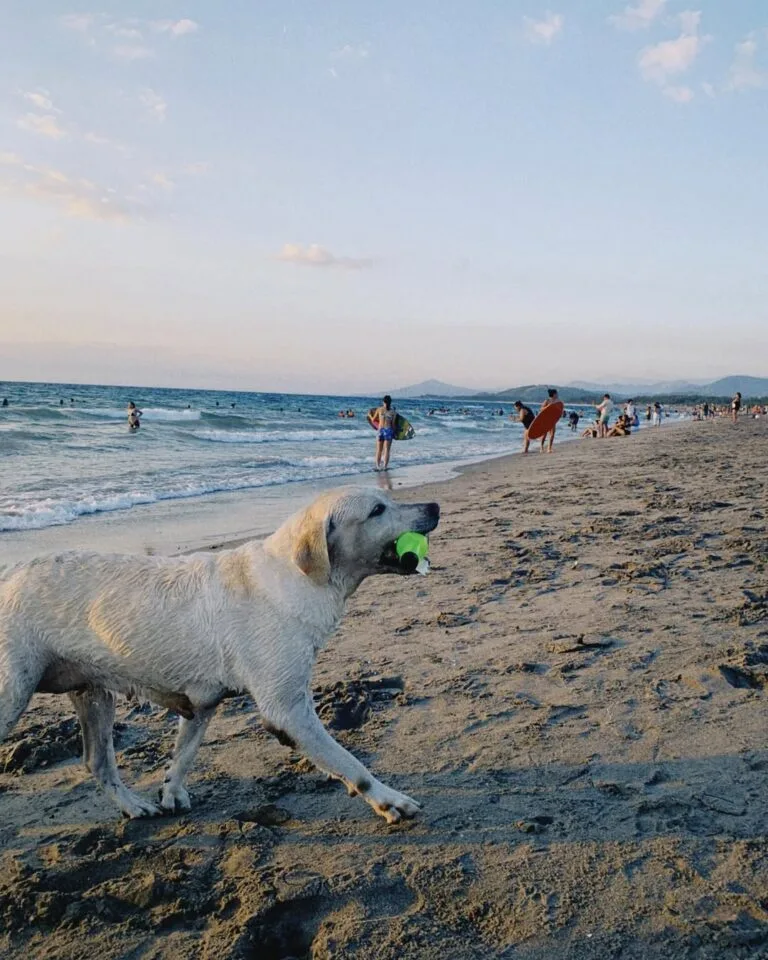
Greenspace Artist Village is the standout in this bracket. It’s a quiet forested compound with fan huts at ₱1,799 and air-conditioned rooms at ₱2,799. The compound has reliable high-speed broadband, making it the only realistic option for digital nomads. Resident dogs escort guests to the beach, which is either charming or mildly chaotic depending on your view of dogs. Luna and Sol Beach Resort offers beachfront gypsea huts for couples and larger bungalows for groups of up to 10.
Upscale (₱2,800–₱8,500+/night):
The Glamp Zambales offers air-conditioned bell tents, villas, and treehouses — the most aesthetic option in the village. Costas De Liwa Bar & Resort has an outdoor pool, a full bar, and a child-friendly policy (kids 3–4 stay free), averaging around ₱2,349/night. It suits travelers who want resort amenities over the rustic surf-hostel atmosphere.
For a broader look at Zambales accommodation options across the province, the 18 Must-Visit Zambales Tourist Spots guide includes context on other areas worth combining with a Liwliwa trip.
Budget Breakdown for Visiting Liwliwa Zambales
This table reflects a realistic Liwliwa Zambales budget travel guide for one person on a standard 2-day, 1-night trip.
| Expense | Estimated Cost (PHP) |
|---|---|
| Bus fare (one-way, express via SCTEX) | ₱500–₱600 |
| Bus fare (one-way, inner-city) | ₱350–₱420 |
| Tricycle (San Felipe to Liwliwa, shared) | ₱40–₱50 |
| Eco-Tourism Fee | ₱30 (₱24 seniors/PWDs, ₱20 students) |
| Coastal Preservation Fee | ₱20 |
| Surf lesson + board (1 hour) | ₱600–₱700 |
| Board rental only (1 hour) | ₱300–₱400 |
| ATV — short trail (30 min) | ₱500–₱800 per unit |
| ATV — full guided trail (1 hour) | ₱1,000–₱1,200 per unit |
| Dorm bed / budget hostel | ₱750–₱1,000 |
| Mid-range fan hut (per night) | ₱1,799–₱1,800 |
| AC glamping / private cabin | ₱2,800–₱8,500+ |
| Meal at carinderia / turo-turo | ₱150 avg |
| Meal at café or restaurant | ₱250–₱350 avg |
| Anghalo Falls tricycle (round-trip) | ₱500 |
| Anghalo Falls entrance | ₱20–₱30 |
Realistic one-night budget per person (bus, dorm, meals, one activity): approximately ₱2,500–₱3,500. Mid-range travelers covering accommodation, surfing, ATV, and good meals can plan for ₱4,500–₱6,000.
What to Pack for Liwliwa Zambales
| Item | Essential? |
|---|---|
| Cash (PHP, sufficient amount) | Yes — mobile signal and GCash are unreliable in the village |
| Insect repellent (heavy-duty) | Yes — niknik (sand fleas) are severe along the shore |
| Sunscreen (reef-safe, SPF 50+) | Yes |
| Reusable water bottle | Yes — stay hydrated; dehydration sets in fast in the sun |
| Rashguard / UV-protective top | Yes — for surfing and long beach sessions |
| Flip-flops / surf sandals | Yes — the dark sand gets extremely hot midday |
| Dry bag or waterproof pouch | Yes — for phone and wallet during water activities |
| Extra towel | Recommended — not always provided at budget accommodations |
| Portable power bank | Recommended — power cuts are occasional |
| Medications and first aid basics | Recommended — the nearest pharmacy is in San Felipe town |
| Provisions (snacks, instant noodles) | Optional — restos are available but limited late at night |
| Change of clothes in a separate bag | Recommended — sand and salt get into everything |
| Board shorts / swimwear | Yes |
Safety Tips for Visiting Liwliwa Zambales
Liwliwa is a low-risk destination, but a few specific hazards require attention.
Rip Currents
Rip currents are present along this stretch of coast, especially during peak surf season from August to October when swells are strongest. There are no lifeguards on duty along the main Liwliwa beach. If you feel a rip pulling you out, do not swim directly against it. Swim parallel to the shore until you’re out of the current’s pull, then angle back to the beach. Inform your surf instructor or resort staff about your swimming ability before entering the water.
Jellyfish and Sea Lice
Jellyfish and sea lice (small larval cnidarians) appear intermittently, particularly during warmer months. Ask resort staff about current conditions before snorkeling or swimming at length. A full-coverage rashguard significantly reduces sea lice contact.
Boat Safety (Island Hopping Side Trips)
If you join an island hopping trip from Pundaquit, confirm that life vests are provided and worn during the boat transfer. Crossings to Anawangin, Nagsasa, and Capones involve open water. Conditions can shift fast — don’t board if waves at the departure point look rough. The Philippine Coast Guard advisory page posts weather and sea condition advisories for the Zambales area.
Cash, Connectivity, and ATMs
Mobile signal for both Smart and Globe is weak to nonexistent in the Liwliwa village. GCash transactions fail regularly. Withdraw all the cash you need at the 7-Eleven ATM near the San Felipe Public Market before getting on the tricycle. The Landbank ATM near the San Felipe Police Station occasionally malfunctions and is not a reliable backup.
Niknik (Sand Fleas)
Sand fleas are a real problem along Zambales beaches, not a minor inconvenience. Apply heavy-duty insect repellent before sitting on the sand, especially in the late afternoon and evening. Virgin coconut oil is a local remedy worth carrying. Bites from niknik welt and itch for days.
Frequently Asked Questions About Liwliwa Zambales
How do you get to Liwliwa Zambales from Manila by bus?
Go to a Victory Liner terminal in Cubao, Pasay, or Caloocan and board a bus bound for Iba or Sta. Cruz, Zambales. Take the express route via SCTEX (₱500–₱600 one-way) to avoid provincial traffic. Ask to be dropped at the San Felipe Public Market, identifiable by the 7-Eleven on the corner. From there, take a shared tricycle (₱40–₱50) to your accommodation in Liwliwa. Total travel time from Metro Manila is 4 to 5 hours.
What is the best time of year to surf in Liwliwa Zambales?
The best surfing in Liwliwa runs from July through February, with the strongest and most consistent swells arriving during the habagat (southwest monsoon) months of August to October. Waves are beginner to intermediate level throughout most of this window. From March to May, the sea flattens significantly and surfing is not reliable — those months are better for swimming.
Is Liwliwa Zambales good for beginners who want to learn surfing?
Yes. Liwliwa is one of the more accessible surf destinations in Luzon for first-timers. The waves are consistent but not violent, local instructors are experienced with beginners, and the ₱600–₱700 per hour lesson package includes board rental. Beach operators require first-time surfers to hire an instructor, which is actually helpful — an hour of guided instruction here is enough for most people to get their first rides in.
What activities can you do in Liwliwa Zambales besides surfing?
Liwliwa has ATV rides through Pinatubo lahar trails (₱500–₱1,200 per unit depending on trail length), skimboarding, café-hopping along the village strip, a side trip to Anghalo Falls (20–30 minutes inland), and island hopping departing from Pundaquit in San Antonio. The dining scene is also a genuine activity — places like Taco Joint, Mommy Phoebe’s, Sestra Café, and Agoho Restaurant give you a reason to spend the full day exploring the village on foot.
How much does an overnight trip to Liwliwa Zambales cost?
A realistic one-night budget per person — covering express bus fare both ways, a dorm bed, meals, fees, and one activity like surfing — runs ₱2,500 to ₱3,500. Travelers choosing mid-range fan huts, adding an ATV tour, and eating at nicer cafés can plan for ₱4,500 to ₱6,000 per person. Glamping or air-conditioned cabins push the total higher. The biggest cost variables are accommodation tier and whether you add island hopping as a separate day trip.
Is Liwliwa Zambales Worth Visiting?
Liwliwa Zambales earns a 4 out of 5 for first-time beach travelers and surf beginners, and a solid 4.5 for anyone who visits midweek or during the surf season between August and November. The combination of drive-up accessibility, a genuinely distinctive landscape, consistent beginner waves, and a café scene that punches above the village’s size makes it one of the most complete beach destinations within a day’s travel from Manila. The crowd issue on long weekends is real and worth planning around — but it’s a scheduling problem, not a destination problem.