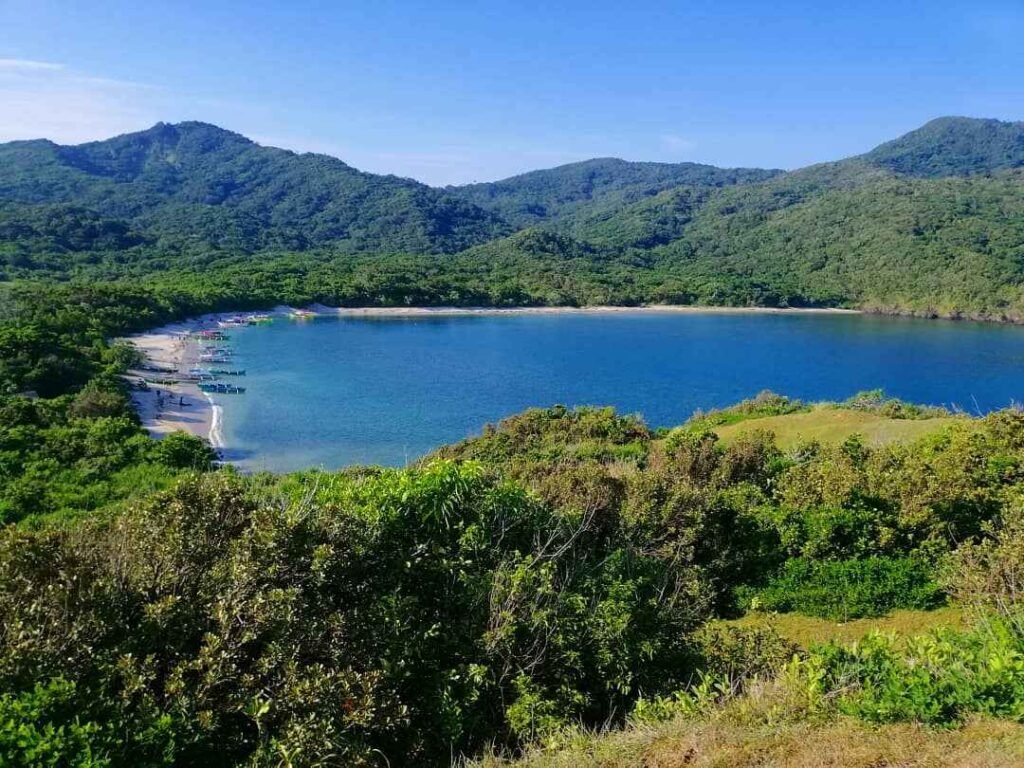
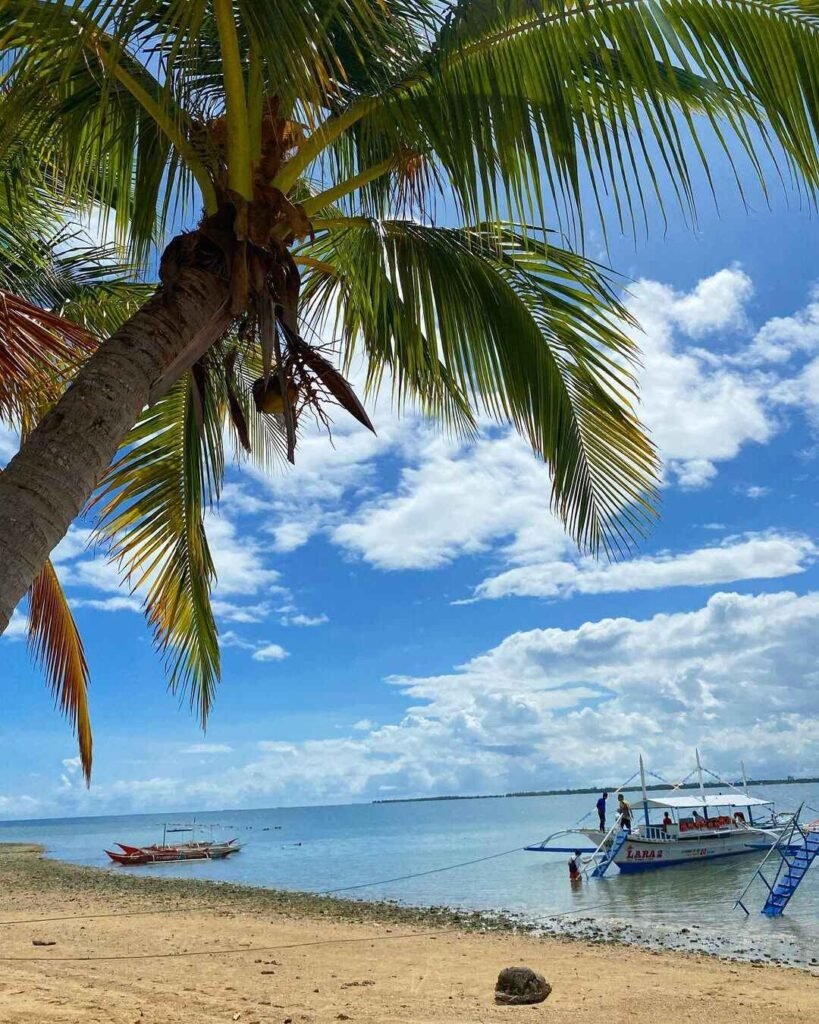
The moalboal sardine run sits just 20–30 meters off Panagsama Beach in Moalboal, Cebu — you swim there from shore, no boat required. Pay the ₱100 environmental fee, rent a mask and snorkel for ₱150–₱250, and you’re in the water with millions of sardines for under ₱600 total. It is one of the most accessible marine experiences in Southeast Asia.
Moalboal Sardine Run Quick Guide
| Detail | Info |
|---|---|
| Destination | Moalboal Sardine Run |
| Location | Panagsama Beach, Barangay Basdiot, Moalboal |
| Province | Cebu |
| Type | Shore-access marine spectacle / dive strip |
| Access | Mainland drive-up — reachable by bus, van, or private car from Cebu City |
| Entrance / Env. Fee | ₱100 per person (Environmental User Fee, collected at beach booth) |
| Best Season | November–May (Amihan dry season; best visibility) |
| Swimming | Yes — shore entry directly onto reef wall drop-off |
| Island Hopping | Yes — Pescador Island boat tours available from Panagsama Beach |
| Travel Time from Cebu City | 3–4 hours by bus; ~2.5 hours by private car or van |
Table of Contents
Where Is the Moalboal Sardine Run Located?
The Moalboal sardine run refers to a sardine bait ball — a massive, dense school of millions of sardines that gathers permanently off Panagsama Beach in the Tañon Strait. Unlike the South African sardine run, which is a seasonal migration event, the Moalboal sardine bait ball is a resident phenomenon: the same general school of sardines has been present off Panagsama Beach year-round for decades, gathering near the reef wall drop-off that begins just 20–30 meters from the shore.
Panagsama Beach in Moalboal, Philippines, is situated along the southwestern coastline of Cebu Island, around 90 kilometers south of Cebu City. The beach sits inside Barangay Basdiot, a few kilometers west of Moalboal town center, along the coastal road that lines the Tañon Strait. The sardine run is located in front of Panagsama Beach. If you check Google Maps, it is right in front of Savedra Dive Center.
The beach is narrow and simple, lined with dive shops, small restaurants, and backpacker stays, but the real highlight is what lies underwater. Basdaku White Beach (also called White Sand Beach), a separate sandy stretch, sits 7 kilometers north in Saavedra. If you want sand between your toes alongside the marine experience, that’s where you head — see the guide to the best beaches in the Philippines for comparison.
How to Get to the Moalboal Sardine Run
Getting to the moalboal sardine run from Cebu City is one of the most well-worn public transport routes in south Cebu — but it still requires a few deliberate steps.
Step 1: Airport to Cebu South Bus Terminal (CSBT)
The Cebu South Bus Terminal is located on N. Bacalso Avenue in Cebu City (not to be confused with the North Bus Terminal). This is where all southbound buses leave for Moalboal.
From Mactan-Cebu International Airport (MCIA), you have two options:
- Budget: Take the MyBus service (regular buses leave every 30–60 minutes, from 7 a.m. to 10 p.m., from the airport) to reach SM Cebu City, then take a jeepney or short taxi to CSBT.
- Direct: A metered taxi or Grab from MCIA to CSBT takes 45–60 minutes and costs approximately ₱310–₱400 depending on traffic. The fastest way to get to Cebu South Bus Terminal is via taxi or Grab.
Step 2: CSBT to Moalboal Town Center
Look for Ceres Liner buses with “MOALBOAL” or “BATO via BARILI” displayed on the front. Don’t take a bus to Bato via Oslob or any other destination. These buses go to the other side of Cebu, and you’d find yourself miles away from Moalboal.
You can choose between Ceres Liner or Sunshine Bus, and the trip takes about three hours and costs around PHP 150–200. Ceres Liner has air-conditioned buses that leave every hour from 05:00 to 18:00. A confirmed fare for an air-conditioned bus ticket from Cebu City to Moalboal is ₱209 per person.
The bus drops you at Moalboal Bus Stop beside the public market, right in front of the Jollibee — a useful landmark if you lose track of where you are.
If you prefer a faster option, you can take a public van from Cebu to Moalboal. Vans don’t make as many stops as the bus so they can complete the journey in around 3 hours. Fares start from ₱180, but be aware that drivers sometimes try to charge foreign tourists more.
Step 3: Moalboal Town to Panagsama Beach
From the town center, ride a tricycle to Barangay Basdiot / Panagsama Beach, which takes about 10–15 minutes. The fair pakyaw (private hire) rate is ₱100–₱150 for the whole tricycle. You can also get to your accommodation with a motorbike taxi for ₱50. Agree on the fare before you board — overcharging is common with tourists carrying bags.
Driving or Renting a Van
If you’re driving privately, from Cebu City, drive south via the Cebu South Road passing through Carcar, Barili, and onward to Moalboal. Travel time usually takes around 3 to 4 hours depending on traffic and stops. Parking is limited near dive shops and accommodations, so it is best to arrive early or coordinate with your stay for designated parking space.
The mountain section through Barili has curves and limited lighting, so avoid driving after dark on the first trip. For a complete look at other top Cebu destinations accessible from the south, see this top tourist destinations in Cebu guide.

Entrance Fees, Environmental Fees, and Permits at the Moalboal Sardine Run
Moalboal sardine run cost and entrance fee is refreshingly simple: pay the ₱100 Environmental User Fee (EUF), mandated under Ordinance No. 165-2021, at the local tourism booth on Panagsama Beach. That’s your permit, your access fee, and your contribution to marine conservation in one transaction. No advance booking is required.
The EUF covers shore snorkeling at the sardine site. It does not cover boat tours to offshore sites like Pescador Island, which are priced and arranged separately through dive shops. Non-swimmers who hire a local guide pay an additional ₱300–₱500 for the guide service, which typically includes a life buoy, basic snorkel gear, and underwater photo assistance. The guide system is locally regulated and mandatory during periods of high current or rough surf.
There is no separate permit required to bring your own gear. Dive shops along the strip rent masks and snorkels for ₱150–₱250, long freediving fins for ₱150–₱300, and GoPro-style action cameras for ₱500–₱600 per session, often including a file transfer to your phone.
Getting Around the Moalboal Sardine Run
Once you’re at Panagsama, almost everything is walkable. The dive strip itself is a single narrow lane lined with hostels, dive shops, and small restaurants — walking from one end to the other takes under ten minutes.
On foot: The sardine site is accessed by walking directly to the water’s edge and entering from the shore. No transport is needed to reach the main snorkeling area.
By tricycle: To reach nearby spots from Panagsama:
- Moalboal town proper (ATMs, market) — ₱100–₱150, 10–15 minutes
- Basdaku White Beach (Saavedra peninsula, for sandy swimming) — ₱150–₱200, about 7 kilometers north
- Kawasan Falls / Badian canyoneering drop-off — ₱150–₱200 by habal-habal, about 30 minutes south
By boat: Pescador Island hopping boat tours depart from the Panagsama shore. Private outrigger charters for 1–6 passengers cost ₱3,500–₱5,000+. These are worthwhile only if your goal is offshore scuba diving — the sardines themselves are accessible from shore without a boat. Camotes Island travel guide
Beaches and Things to Do at the Moalboal Sardine Run
Panagsama is not a traditional beach destination. It is a dive and snorkel hub built around one of the most concentrated marine wildlife spectacles on the planet.
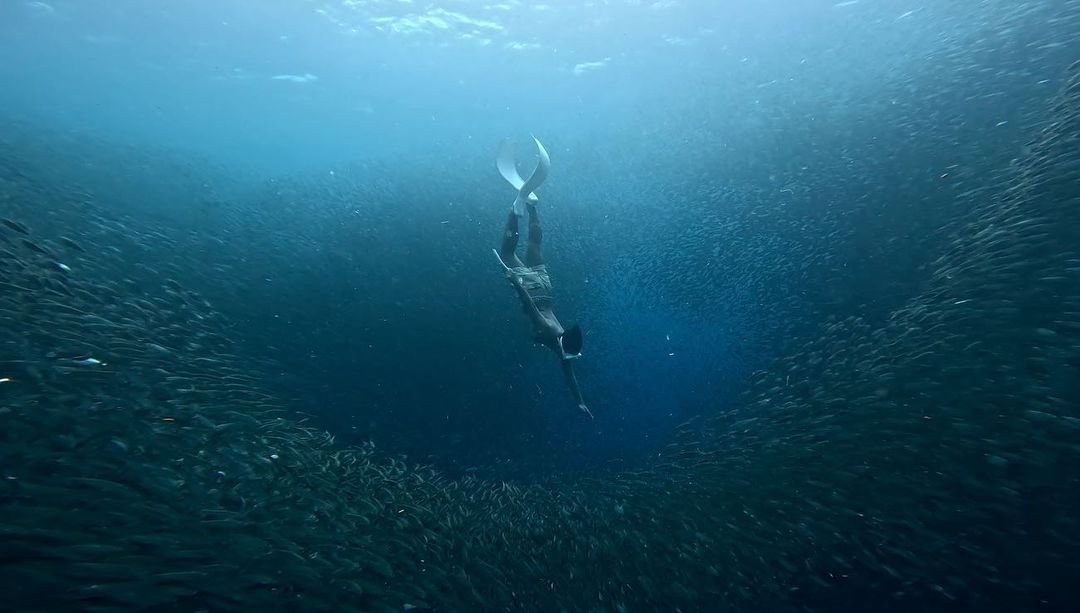
The Sardine Run — Shore Snorkeling (Score: 5/5): Millions of fish swirling in tight formation 20 meters from shore, completely wild, completely free to access. Wade off the rocky shore, swim out to the drop-off, and the bait ball will surround you within minutes. The school shifts shape constantly, parting around your body when you hover still and closing back into a spinning wall when a predator — jacks, trevallies, the occasional reef shark — makes a pass. There is nothing staged or managed about this encounter.
Sea Turtle Encounters (Score: 4/5): Nearly guaranteed sightings of resting green and hawksbill turtles on the same reef wall. Turtles rest on coral ledges along the drop-off and are accustomed to snorkelers. They are wild animals; approach from the side, never above, and never touch them.
Freediving (Score: 5/5): The vertical reef wall is purpose-built for breath-hold diving — deep, dramatic, and endlessly photogenic. The global freediving community discovered Panagsama years ago. On the morning of my April 2026 visit, there were freedivers from France, Japan, and Colombia training on the drop-off before 7:00 AM.
Pescador Island Hopping — moalboal sardine run and Pescador Island hopping (Score: 4/5): Offshore boat tours add scuba diving at Cathedral Cave and open-water drift dives not possible from shore. Worth the premium only if you dive certified or want a different perspective on the reef system. Non-divers can snorkel around Pescador’s shallow sections.
Basdaku White Beach — Sandy Alternative (Score: 3/5): Clean, low-key sand beach 7 km north, useful for rest days but not a destination in itself. If your group includes people who don’t want to snorkel, Basdaku provides calm, flat water and actual sand. Take a tricycle from Panagsama.
Kawasan Falls Canyoneering: This is a separate full-day activity about 30 minutes south in Badian municipality. The route involves navigating river canyons and jumping off ledges up to 30 feet into turquoise pools. The legally mandated base fee is ₱2,100 per person under Badian Municipal Ordinance No. 11-2022. Any operator quoting less is operating outside the law.

Scuba Diving at the Moalboal Sardine Run
Scuba diving at the Moalboal Sardine Run gives you a completely different perspective from snorkeling. Diving with the sardines, you can go as shallow or as deep as you want since they hang out after a rather steep drop-off in front of shore, and their shoals are seriously massive. Going down to 21m (69 ft), you already see smaller and bigger shoals of sardines on the way down.
A guided scuba dive with one of the many dive centers on Panagsama Beach costs ₱1,500–₱2,500 all-in. Multiple PADI 5-Star dive centers line Panagsama Beach, offering fun dives, PADI courses from Open Water to Instructor level, and dedicated freediving programs. One honest caveat: scuba bubbles push the school deeper and scatter it temporarily. Snorkeling is actually better than diving in some cases, because the bubbles from divers cause the sardines to disperse.
Snorkeling at the Moalboal Sardine Run
Snorkeling is the best way to experience the Moalboal Sardine Run for most visitors — including beginners. It’s harder to NOT find the sardines than it is to find them. All you have to do is get into the water and swim about 20 to 30 meters out.
Sardines like it when the water is cold. They tend to stay closer to the shore in the earlier hours of the morning. If you’re not a freediver or good swimmer and prefer to stay near the shore, going early will allow you to enjoy the sardines without venturing into the deep.
For the moalboal sardine run for non-swimmers and beginners, a local guide is the smart call. Guides offer affordable tours that include the Sardine Run and Turtle Cove — around PHP 300–500 for a half-day tour, including a mask, snorkel, and life vest. Add PHP 500 to rent a GoPro for photos and video. The guide tows you with a buoy if you tire, and positions you inside the school for photos. Gear rentals along the strip: masks, snorkels, fins or aqua shoes, and life vests are available from any of the dive shops and stalls along the waterfront.

Best Time to Visit the Moalboal Sardine Run
The sardines are present year-round — this is the single most important fact about the destination. Unlike seasonal migrations elsewhere in the world, the Panagsama school is a permanent resident population. Timing your visit is about conditions, not sardine availability.
Best season — Amihan (November to May): The northeast monsoon brings dry skies, calm seas, and underwater visibility frequently hitting 20–30 meters. April sits squarely in peak season, which matched my experience — visibility was exceptional and the bait ball was dense and active near the surface in the early mornings.
Shoulder and wet season — Habagat (June to October): The southwest monsoon brings stronger winds, occasional heavy rain, and reduced visibility down to 8–15 meters on rough days. Snorkeling is still possible on calm days, but surface chop makes entry and exit on the rocky shore harder. August and September carry the highest typhoon risk for the Visayas region.
For the best time to visit moalboal sardine run, aim for January through April for peak visibility and the highest chance of flat, calm morning conditions.
Where to Stay at the Moalboal Sardine Run
Panagsama Beach has a dense strip of accommodation within walking distance of the water, ranging from dormitory bunks to small dive resorts.
Budget (₱400–₱900/night): Dormitory beds in backpacker hostels are the backbone of the Panagsama economy. Expect basic fans, shared bathrooms, and communal kitchens. Most include free gear storage and are steps from the shore. Beds book up fast in peak season; reserve at least a few days in advance via Hostelworld or Booking.com.
Mid-range (₱1,200–₱3,000/night): Small dive resorts and guesthouses offer private rooms, air conditioning, and in-house dive operations. Several cater explicitly to freedivers with early morning water access, rinse tanks, and equipment lockers.
Day-trip only: If you’re visiting as a day-tripper from Cebu City, you don’t need accommodation at all. The sardine run is fully accessible in a single day. Arrive early, snorkel for two to three hours, eat lunch on the strip, and catch an afternoon Ceres bus back to CSBT.

Budget Breakdown for Visiting the Moalboal Sardine Run
| Expense | Cost (PHP) |
|---|---|
| Ceres Bus, CSBT to Moalboal (AC, one-way) | ₱209 |
| Tricycle, Moalboal town to Panagsama (pakyaw) | ₱100–₱150 |
| Environmental User Fee (mandatory) | ₱100 |
| Mask + snorkel rental | ₱150–₱250 |
| Long freediving fins rental | ₱150–₱300 |
| Local guide / spotter (recommended for beginners) | ₱300–₱500 |
| GoPro rental (includes file transfer) | ₱500–₱600 |
| DIY shore entry total (EUF + basic gear) | ₱250–₱600 |
| Guided scuba dive (with dive center) | ₱1,500–₱2,500 |
| Pescador Island boat charter (1–6 pax) | ₱3,500–₱5,000+ |
| Tricycle to Basdaku White Beach | ₱150–₱200 |
| Kawasan Falls canyoneering (Badian) | ₱2,100–₱2,200 |
| Budget meal on Panagsama strip | ₱150–₱300 |
| Dorm bed (per night) | ₱250–₱800 |
What to Pack for the Moalboal Sardine Run
| Item | Essential? |
|---|---|
| Mask and snorkel (own or rented) | ✅ Yes |
| Water shoes or dive booties | ✅ Yes — sharp coral entry |
| Reef-safe mineral sunscreen | ✅ Yes — chemical sunscreen banned near reef |
| Rash guard / long-sleeve swim top | ✅ Yes — sun protection and coral abrasion |
| Cash in small denominations (₱20, ₱50, ₱100) | ✅ Yes — most of Panagsama is cash-only |
| Waterproof phone pouch | ✅ Yes |
| Reusable water bottle | ✅ Yes — dehydration risk is high in the sun |
| Spare dry bag for electronics | ✅ Yes |
| Long freediving fins | Recommended for freediving |
| GoPro or action camera | Optional — rental available on-site |
| Towel and dry change of clothes | ✅ Yes |
| Light windbreaker (Nov–Feb) | Recommended for Amihan mornings |
Safety Tips for Visiting the Moalboal Sardine Run
There are no lifeguards at Panagsama Beach. This is not a staffed resort beach. Every swimmer is responsible for their own safety, and the rocky entry and active reef current demand specific awareness.
Rip currents and how to react: A mild but consistent current runs along the reef wall at the drop-off. If you feel yourself being pulled laterally along the wall, do not fight it head-on — swim diagonally toward shore, parallel to the current direction, until the pull weakens. The current is rarely dangerous for competent swimmers but can tire beginners quickly.
Rocky entry and sea urchins: The shoreline and shallow reef shelf are covered in sharp coral rubble and black sea urchins. Water shoes are non-negotiable. Step carefully in the shallows — urchin spines break off inside skin and cause lasting irritation. Walk out until the bottom drops, then put on your fins and submerge.
Jellyfish and sea lice: Jellyfish are present intermittently, more commonly during habagat (June–October). Sea lice (tiny larval jellyfish) cause itching under swimwear during the same season. A full rash guard eliminates most exposure.
Sun and dehydration: Water temperature at Panagsama hovers around 27–29°C and the sun is intense from 9:00 AM onward. Snorkelers lying face-down on the surface burn on their backs, legs, and necks without noticing. Cover up with a rash guard and drink water before and after every session.
Boat safety on island hopping tours: When booking moalboal sardine run and Pescador Island hopping boat charters, confirm that life vests are available for all passengers. Outrigger bangka boats are stable in calm conditions but can be challenging in choppy habagat swells. Confirm the skipper’s experience with the current conditions before departing.
Tides and shallow reef: The reef shelf near shore exposes more sharp rock at low tide. Check the tide table for your visit day — entering at or near high tide gives you more water depth over the rocky approach. [INTERNAL LINK: https://lakbaypinas.com/ultimate-guide-to-tumalog-falls-in-oslob-cebu/]
Non-swimmers: If you cannot swim confidently, hire a local guide before entering the water. The drop-off is abrupt — the seafloor goes from 1 meter to 30+ meters within a short horizontal distance. A guide with a life buoy keeps you in position without exhausting your arms. [OUTBOUND LINK: Moalboal LGU official tourism page]
Frequently Asked Questions About the Moalboal Sardine Run
Is the Moalboal sardine run available all year round?
Yes. The Moalboal sardine run is a permanent, year-round phenomenon. The school of millions of sardines lives at the Panagsama reef wall continuously — this is not a seasonal migration. You will encounter the bait ball on any day of the year. Conditions vary by season (visibility is best from November to May), but the sardines themselves never leave.
Do you need to know how to swim to see the Moalboal sardine run?
You do not need to be a strong swimmer, but you need to be able to handle open water with support. The reef entry from Panagsama Beach involves wading across a rocky shelf and swimming about 20 meters to the drop-off. Non-swimmers and beginners should hire a local guide (₱300–₱500) who provides a life buoy, tows you to the school, and assists throughout the session. The moalboal sardine run for non-swimmers and beginners is genuinely achievable with a guide — it is not restricted to divers or experienced snorkelers.
What is the best time of day to see the sardine run in Moalboal?
The window between 6:00 AM and 8:00 AM is the optimal entry time. Early morning brings the calmest surface conditions, the best underwater visibility, and keeps the sardine school near the surface where snorkelers can access it. By mid-morning, large tour groups and motorized outrigger boats arrive from Cebu City, churning sediment and pushing the sardines deeper into the water column. Getting in the water at dawn makes an enormous difference in the quality of the encounter.
How far from shore are the sardines at Panagsama Beach?
The sardine bait ball sits at the reef drop-off approximately 20–30 meters from the shoreline of Panagsama Beach. This is the defining characteristic of the moalboal sardine run panagsama beach location — the wildlife is accessible directly from shore without any boat charter. You swim roughly 20 meters from the water entry point and the reef wall and the sardine school are directly in front of you.
Is the Moalboal sardine run the same as the sardine run in South Africa?
No — the moalboal sardine run vs South Africa sardine run comparison reveals two completely different events. The South African sardine run is an annual migration of billions of sardines moving up the KwaZulu-Natal coastline between May and July, attracting large sharks, dolphins, and gamefish in open water. It is a seasonal spectacle. The Moalboal sardine run is a permanent, non-migratory resident school that lives year-round on the Panagsama reef wall. The Moalboal school is not a migration — it is a fixed population. They are unrelated phenomena that happen to share a common name.
Final Verdict: Is the Moalboal Sardine Run Worth Visiting?
5 out of 5 for snorkelers, freedivers, and marine wildlife enthusiasts — the moalboal sardine run delivers a world-class underwater encounter for under ₱600, accessed directly from shore, with no boat, no booking, and no staging. For active travelers combining the sardine run with Pescador Island hopping, Kawasan canyoneering, and a day trip to Oslob for whale sharks — the moalboal sardine run with whale sharks Oslob day trip circuit makes this one of the most activity-dense two-day itineraries in the Philippines — it is hard to find better value anywhere in Southeast Asia.
The April 2026 sardine encounter I experienced — hovering motionless in the center of a spinning wall of silver fish while a jack shark circled the outside — is the kind of moment that doesn’t leave you. This is a destination that earns its reputation every single day of the year. Go early, bring reef-safe sunscreen, and wear water shoes.