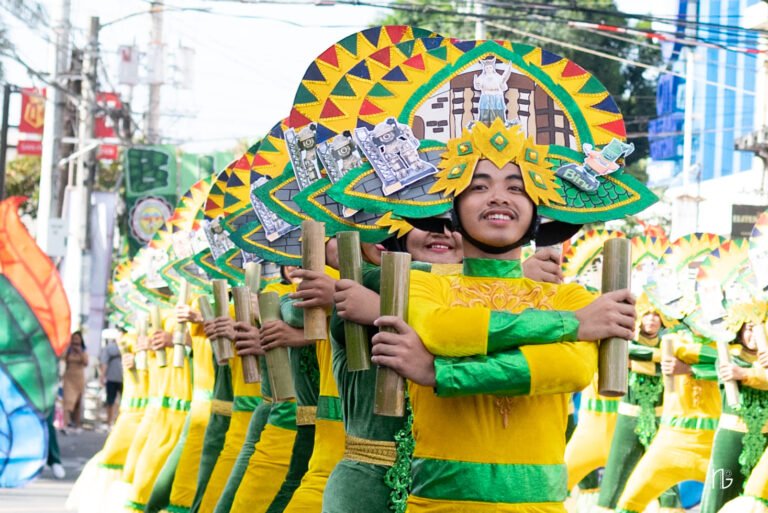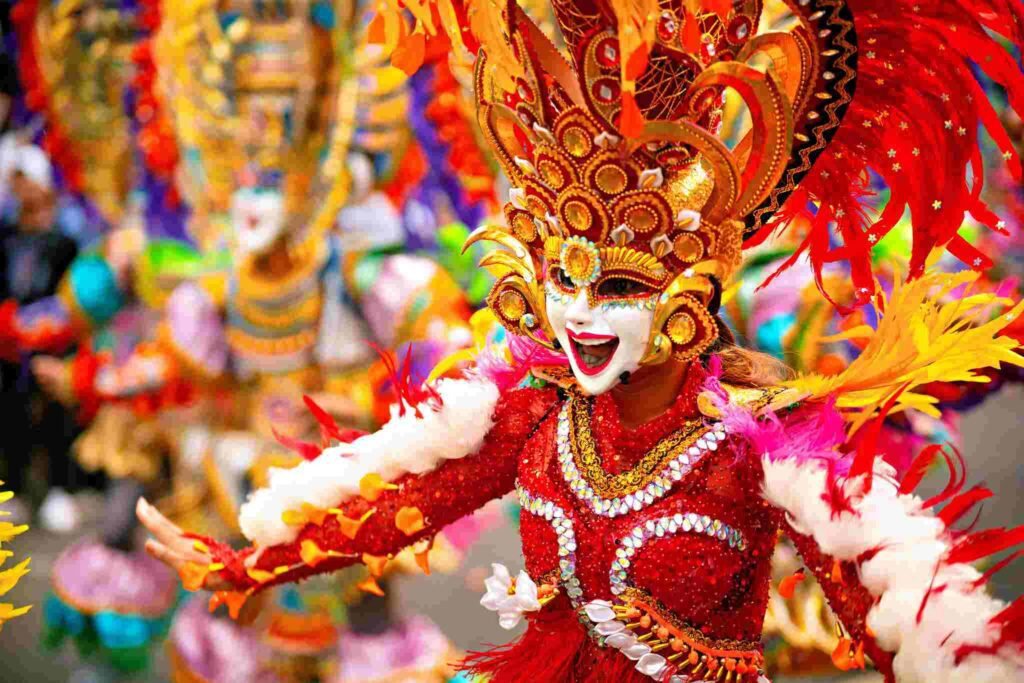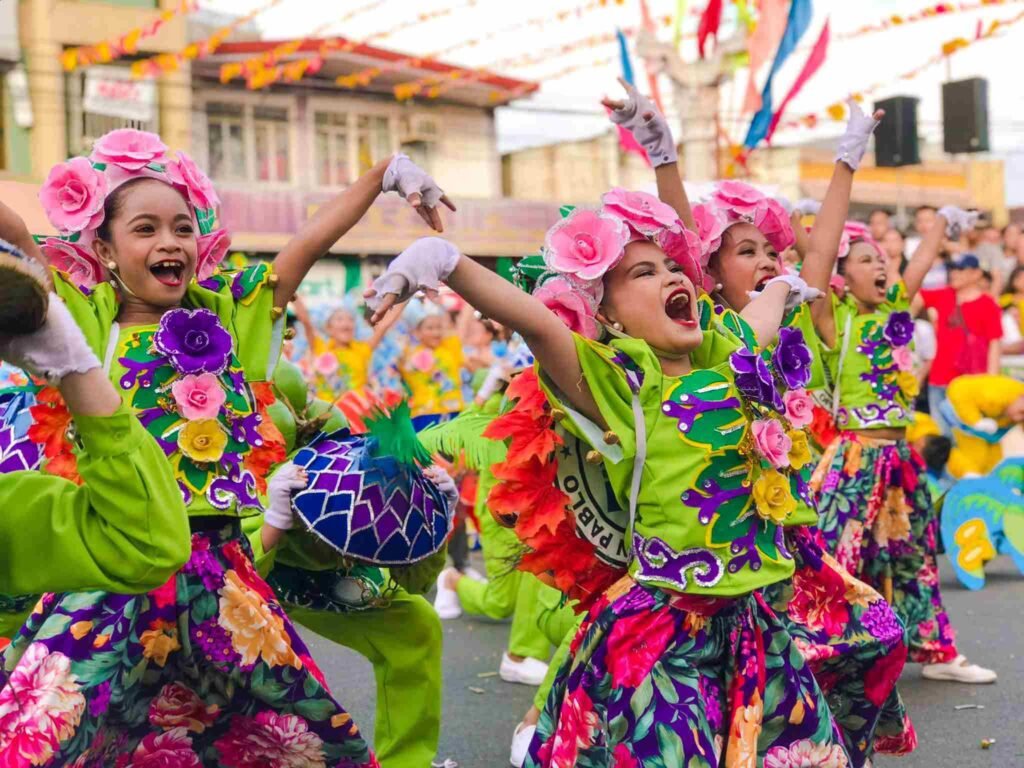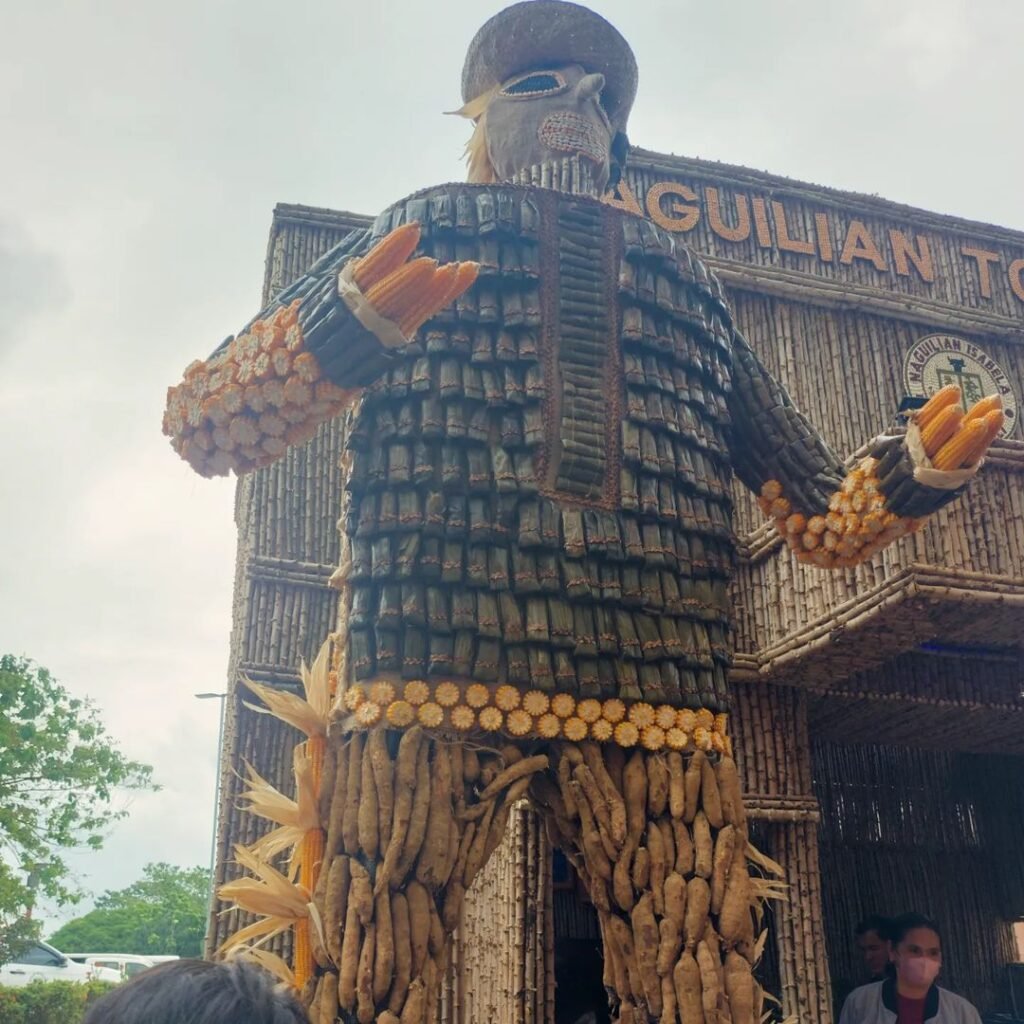
The Sinukwan Festival is a week-long street dance and cultural competition held every late November in San Fernando, Pampanga, and in 2026 it runs from November 21 to 28. The grand street parade on the final day is free to watch from the sidewalk. Grandstand seats at the culminating venue cost ₱500 to ₱2,000.
I covered the 2025 edition (November 20 to 30) and came back with a clear picture of what a first-time visitor actually needs to know before booking anything. This guide is updated with the 2026 dates and schedule.
Key Takeaways
- Dates: November 21 to 28, 2026, in San Fernando, Pampanga. The Grand Street Dance Parade is on Saturday, November 28, starting at 7:00 AM.
- Cost: The street parade is free. Grandstand seats range from ₱500 (General Admission) to ₱2,000 (SVIP) and sell out within two weeks of release.
- Travel: Bus from Cubao or Pasay to San Fernando takes 1.5 to 2 hours and costs ₱120 to ₱180.
- Book rooms early: Hotel rates in San Fernando jump by 30 to 50% during festival week. Book six to eight weeks out. Walk-in availability on parade weekend is essentially zero.
- Who should skip it: Anyone unwilling to be outside in tropical heat from 5:30 AM onward. The best viewing positions along Consunji Street require arriving before 6:00 AM and standing for several hours.
- It is not the Giant Lantern Festival. The Sinukwan Festival is a November celebration of indigenous Kapampangan heritage. The lantern competition is a separate December event.
Table of Contents
What Is the Sinukwan Festival and Where Did It Come From?
The Sinukwan Festival is San Fernando’s annual declaration that Kapampangan culture survived. It was founded by the Foundation for Lingap Kapampangan Inc.
(FLKI) in partnership with the Save Pampanga Movement in the late 1990s, directly in response to the 1991 eruption of Mount Pinatubo. That disaster buried vast portions of Pampanga under lahar, displaced approximately 1.5 million people, and threatened to scatter the Kapampangan ethnolinguistic community permanently.
By 2026, the festival reaches its 29th edition. What started as post-disaster morale-building has grown into a structured, multi-day competition involving street dance contingents of up to 120 performers, academic decathlons, cooking contests, spoken-word poetry, and beauty pageants. Every single competition is tied to Kapampangan language, history, or pre-colonial identity.
This is why Sinukwan Festival feels different from most Philippine fiestas. Catholic patron saint celebrations anchor the calendar of towns across the country, and they are worth attending for their own reasons. But Sinukwan is explicitly secular and explicitly pre-colonial.
It does not celebrate a saint. It celebrates a sun god, a language, and the people who refused to leave.
The festival’s deep connection to Kapampangan identity places it alongside other Filipino provincial celebrations that use competition and performance to preserve local culture, the way the Lanzones Festival in Camiguin uses its harvest tradition to anchor community identity on a much smaller island scale.
The FLKI and the City of San Fernando LGU run the event jointly. Participating schools receive DepEd Region III endorsements, and the Patenakan quiz bee (covering Pampanga history at the elementary level, Philippine history at junior high, and the Philippine Revolution at senior high) is treated as a formal academic competition, not a side attraction.
Who Is Aring Sinukwan and What Does the Festival Represent?
Aring Sinukwan is the pre-colonial Kapampangan sun god of war, death, and agriculture. He resided on Mount Arayat and was considered the second most powerful deity in the Kapampangan pantheon, below only Mangechay, the great elder creator goddess.
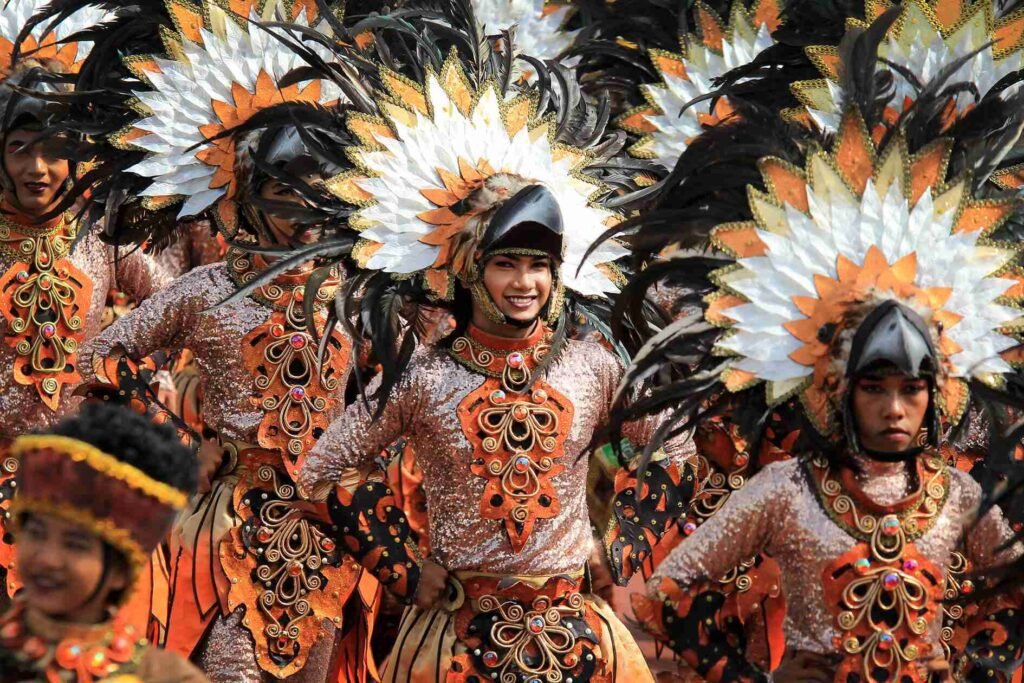
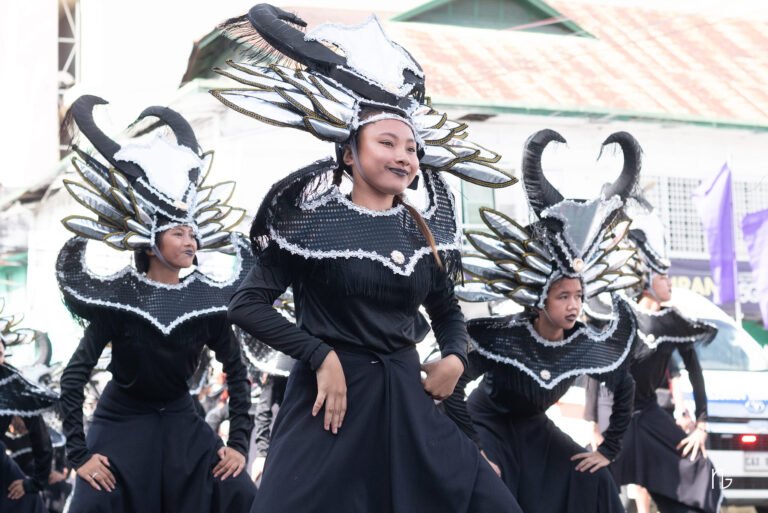
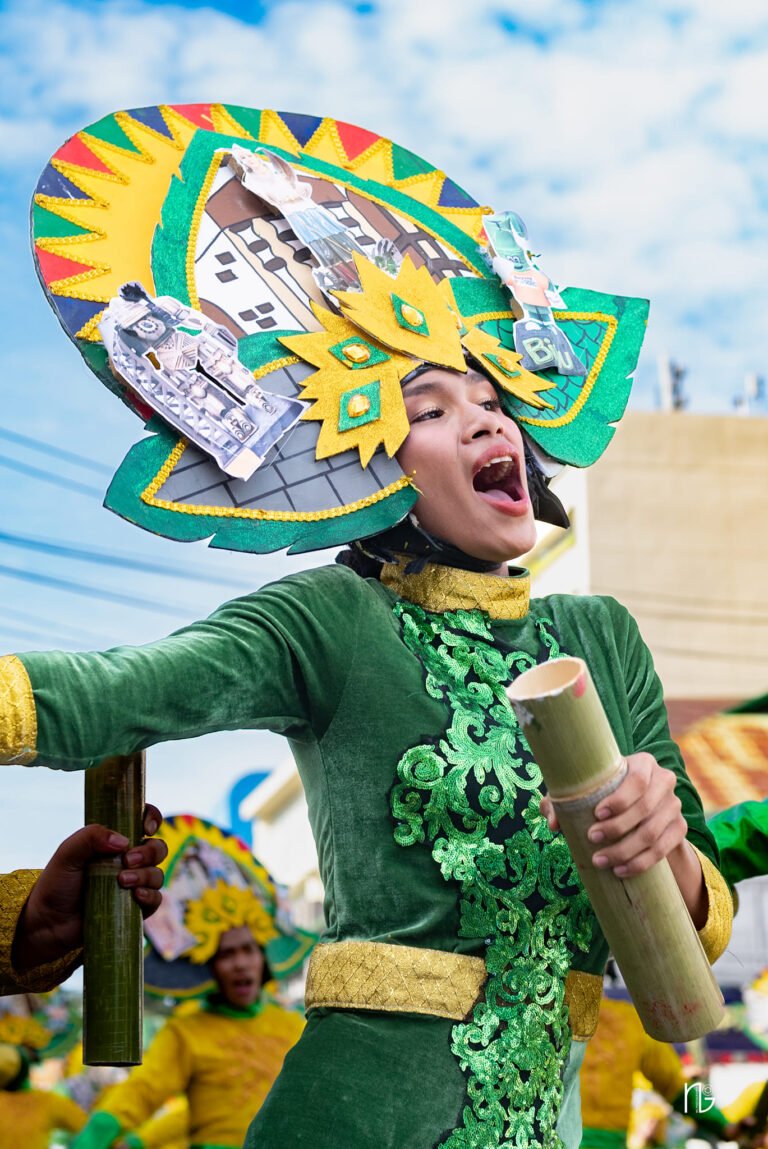
He taught early Kapampangans metallurgy, woodcutting, and wet-rice cultivation. The festival is named for him, and everything visual about it, the giant feathered headdresses, the golden agricultural motifs, the martial choreography, traces back directly to that mythology.
His counterpart was Apûng Malyari, the moon god who ruled the eight rivers from Mount Pinatubo. That geographic and mythological tension between the two mountains sits at the center of the Kapampangan collective identity. When Pinatubo erupted in 1991, the symbolism was impossible to ignore.
The mountain of the rival deity had buried the land. The festival’s answer was to invoke Sinukwan.
Understanding what the festival represents to Kapampangans requires knowing one more layer of history. During Spanish colonization, Catholic missionaries deliberately rebranded Sinukwan as a female mountain fairy called “Maria Sinukuan.”
This was part of a colonial strategy to neutralize authoritative indigenous male deities by recasting them as passive nature spirits. The moralistic folktales that emerged, including stories of Maria Sinukuan turning greedy men into swine on Mount Arayat, were tools of conversion.
The modern festival is an explicit rejection of that rebranding. By staging Aring Sinukwan in his original form, as a solar, martial, agricultural god, the event reclaims the pre-colonial narrative in public, on the streets, in costume and choreography, with thousands of witnesses.
Sinukwan’s divine family adds further layers to the iconography you see on the parade route. His children include Galurâ, a giant eagle deity associated with storms; Munag Sumalâ, a golden serpent representing dawn; Lakandanup, the god of gluttony associated with noontime; and Gatpanapun, a god of pleasure associated with the afternoon. Contingent designers draw on all of these figures when building their costumes and choreographic narratives.
When you see a dancer in a massive golden crown mid-parade on Consunji Street, that crown is not decorative. It is a cosmological argument.
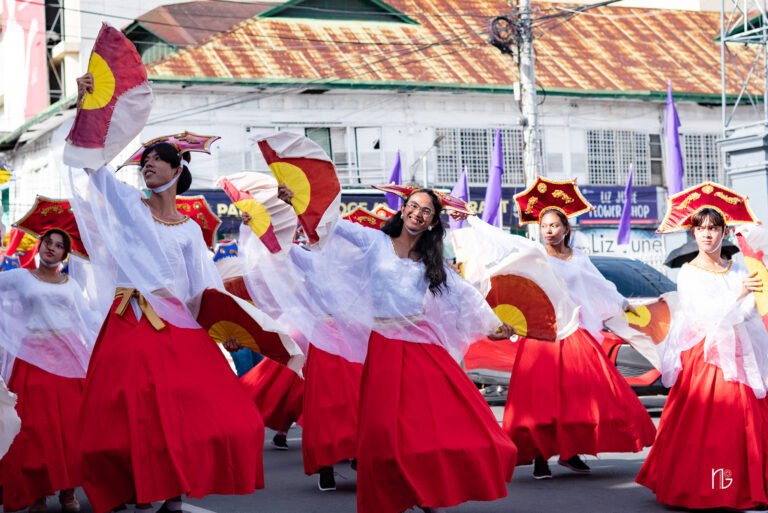
The music reinforces this. Every contingent is required to reinterpret “Atin Cu Pung Singsing” (I Have a Ring), the traditional Kapampangan folk song that serves as an anthem for Kapampangan identity and revolutionary spirit.
Live Drum and Lyre ensembles accompany the dancers, and pre-recorded tracks are prohibited. The song must be live, and it must be Kapampangan.
When Is Sinukwan Festival 2026 and What Is the Full Schedule?
The Sinukwan Festival 2026 runs from Saturday, November 21, to Saturday, November 28. This is the confirmed date range. The festival has operated in the final week of November consistently across recent editions: the 2024 edition ran November 17 to 30, and the 2025 edition ran November 20 to 30.
A note for anyone who has seen the Pampanga LGU tourism page list “December 1 to 7” for Sinukwan: that entry is outdated. The festival moved to late November in recent years and has not returned to December.
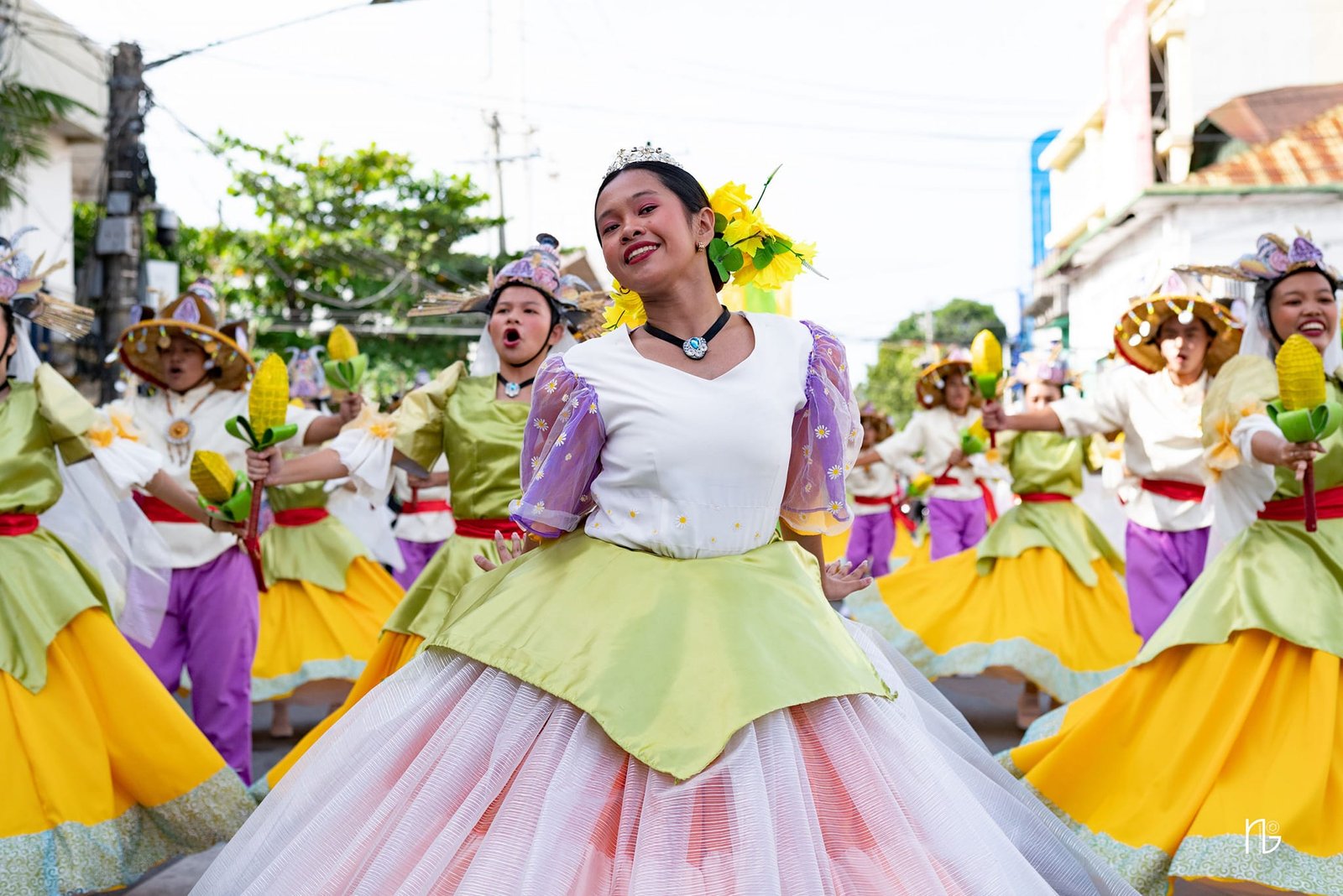
The Grand Street Dance Parade begins at 7:00 AM on Day 7 (Saturday, November 28). The Free Interpretative Dance Competition follows at 1:00 PM at the culminating venue. Everything before Day 7 is a daily program building toward that finale.
The schedule below is projected from the confirmed 2025 structure. The FLKI publishes the finalized daily schedule as November approaches; check the FLKI Secretariat directly for any changes.
| Day | Date | Core Activities | Anticipated Venue |
|---|---|---|---|
| Day 1 | Sun, Nov 22 | Opening program (11:00 AM); Food and Craft Fairs open; Elementary Drum and Lyre; Kapampangan Hip-Hop Competition (1:00 PM) | Robinsons Starmills / Megaworld Capital Town |
| Day 2 | Mon, Nov 23 | Prinsesita ning Sinukwan Pre-Pageant and Coronation (10:00 AM); Malagu Ka SPED Talent Showcase (3:00 PM) | San Fernando City venues |
| Day 3 | Tue, Nov 24 | Creative Story Telling for Elementary (10:00 AM); Song Writing and Rendition for Junior High (3:00 PM) | Heroes Hall Amphitheatre / Civic Centers |
| Day 4 | Wed, Nov 25 | Patenakan Quiz Bee (all school levels); Kapampangan Dance Seminar Workshops | San Fernando City venues |
| Day 5 | Thu, Nov 26 | Secondary Drum and Lyre Competition; Regional Kapampangan Hip-Hop; Lakan at Lakambini Pre-Pageant | San Fernando / Angeles City |
| Day 6 | Fri, Nov 27 | Karulugan: Kapampangan Spoken Word Poetry; Lakan at Lakambini ning Sinukwan Coronation Night | Robinsons Starmills / Heroes Hall |
| Day 7 | Sat, Nov 28 | Grand Street Dance Parade (7:00 AM); Free Interpretative Dance Competition (1:00 PM) | Capitol Grounds to Megaworld Capital Town / Robinsons Starmills |
A few things worth noting about this schedule. The Patenakan on Day 4 is a serious academic competition, not a spectator sport for outsiders, but it is open to observe.
The Lakan at Lakambini ning Sinukwan Coronation Night on Day 6 is the most theatrical evening event of the week and worth attending if you arrive a day early. The Free Interpretative Dance on Day 7 is where the grandstand tickets matter most: the floor choreography is impossible to read from street level.
The culminating venue for the Free Interpretative Dance has been both Megaworld Capital Town and Robinsons Starmills across recent editions, with the latter most recently used for grandstand seating. Confirm the 2026 finals venue directly with the FLKI Secretariat before booking grandstand tickets.
Where Do You Watch and What Does It Cost to Attend?
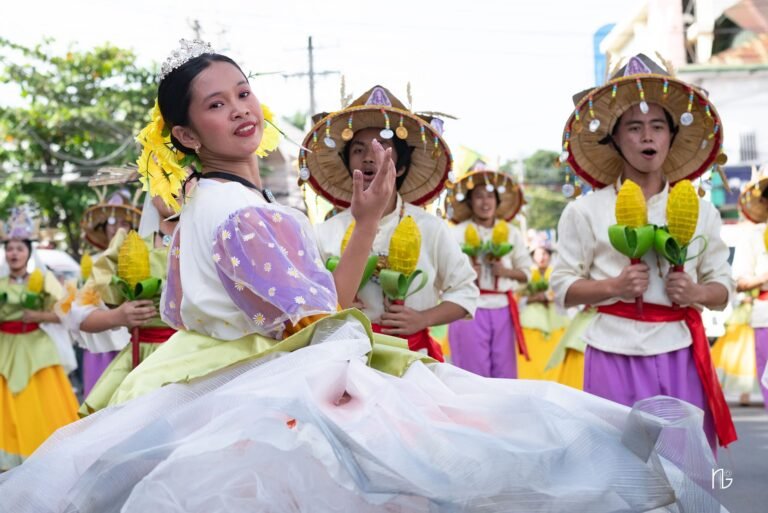
The Grand Street Dance Parade is completely free to watch from the sidewalk. The parade route begins at the Pampanga Provincial Capitol Grounds, moves through Consunji Street, then continues along Jose Abad Santos Avenue (JASA) before terminating at Megaworld Capital Town or Robinsons Starmills.
The best free viewing position is the Consunji Street judging zone. Festival judges are stationed along this stretch, so every contingent performs its sharpest, most demanding sequences exactly here.
Arrive by 5:30 to 6:00 AM to secure a front barrier position. The barricades go up early and the front row fills fast.
Here is a breakdown of viewing positions along the route:
| Location | Best Arrival | Visibility |
|---|---|---|
| Provincial Capitol Grounds | By 5:00 AM | Excellent for costume detail and pre-parade staging |
| Consunji Street (judging zone) | By 5:30 AM | Best on the route; peak choreography for the adjudicators |
| JASA / City Hall mid-route | 7:30 AM onward | Crowded, restricted sightlines once front rows are set |
| Finals venue, street level | 11:00 AM | Poor; flat ground hides floor formations |
| Finals venue, grandstand | Pre-booked | Essential for reading the interpretative dance choreography |
Road closures around the Capitol Grounds, Consunji Street, and access nodes to the finals venue begin before 5:00 AM on parade day. Do not attempt to drive into the city center. Park at a peripheral mall and take a tricycle in.
Grandstand and VIP seating at the culminating event are ticketed. The FLKI sells tickets through authorized partner outlets including the FLKI Secretariat Office, CLTV36, SFELAPCO, Max’s Restaurant branches, The Souq Pampanga, Essel Supermarket, and Marciano’s Barbers.
| Seating Category | Price (₱) |
|---|---|
| General Admission | ₱500 |
| Gold | ₱1,000 |
| VIP | ₱1,500 |
| SVIP | ₱2,000 |
SVIP and VIP seats sell out within two weeks of going on sale. If you want elevated seating, contact the FLKI Secretariat as soon as tickets are announced. Senior Citizens (RA 9994) and Persons with Disabilities (RA 10754) are entitled to a 20% discount on all ticketed seats.
Present your OSCA ID or PDAO ID at the point of sale. This is a statutory right, not a promotional offer.
For the street parade itself, what to bring matters more than what you spend. The parade starts at 7:00 AM and the heat builds quickly. Bring a wide-brimmed hat, high-SPF sunscreen, and at least one litre of water before you leave your hotel.
Avoid alcohol in the morning heat. If you are at the grandstand for the afternoon competition, bring a portable fan and cash for food at the trade fair stalls nearby.
San Fernando hosts the Giant Lantern Festival separately in mid-December, about two to three weeks after Sinukwan ends. The two events draw very different crowds and require separate planning entirely.
How Do You Get to San Fernando Pampanga from Manila?
The fastest and cheapest route from Metro Manila is by provincial bus on Genesis Transport or Victory Liner. Both lines run air-conditioned coaches from Cubao (EDSA) and Pasay continuously throughout the day. The fare from either terminal ranges from ₱120 to ₱180 depending on service class, and the NLEX trip takes 1.5 to 2 hours under normal traffic.
On festival weekend, factor in at least 30 extra minutes in each direction. Provincial buses drop passengers at the San Fernando bus terminal on MacArthur Highway, from which a tricycle ride to the festival zone costs ₱20 to ₱80 depending on your destination within the city.
If you are coming from NAIA or connecting through the Parañaque Integrated Terminal Exchange (PITX), Genesis runs Point-to-Point (P2P) JoyBus services that are more comfortable for a multi-hour pre-dawn departure, which is exactly what a 5:30 AM arrival at Consunji Street requires.
Drivers should take the NLEX and exit at San Fernando (Exit 65). Once off the highway, you will hit festival-induced congestion on JASA and MacArthur Highway.
The practical move is to park at SM City Pampanga or the outer lots of Robinsons Starmills and tricycle in from there. Attempting to reach the Capitol Grounds area by car on parade morning is not worth it.
Travelers arriving at Clark International Airport should take a transit van or jeepney through Angeles City to San Fernando, a commute of roughly 20 to 40 minutes outside of festival traffic.
Where Do You Stay and How Far Ahead Should You Book?
Book your accommodation six to eight weeks before festival weekend. That is not a precaution; it is a hard constraint.
Hotels within San Fernando proper reach near-full occupancy for the final week of November, and dynamic pricing pushes room rates up by 30 to 50% compared to off-peak weeks. Walk-in availability on the parade weekend itself is essentially zero.
The two main accommodation zones serve different priorities:
San Fernando city proper puts you closest to the parade route. Properties here mean no early-morning commute to reach the 7:00 AM parade staging grounds at the Capitol. The Microtel Inn and Suites by Wyndham is one of the more reliable mid-range options within the city.
Clark Freeport Zone offers higher-end properties including the Hilton Clark Sun Valley Resort, Widus Hotel, and Royce Hotel. The trade-off is a 40-minute early-morning commute to San Fernando on a morning when road closures are already in effect.
If you are staying in Clark for the quality of the bed but attending the 7:00 AM parade, leave by 5:00 AM at the latest and plan your return route around the closures.
The Sinukwan Festival overlaps with the end-of-November travel surge across Central Luzon. If you are planning to attend Sinukwan and also want to catch the Masskara Festival in Bacolod during the same season, note that Masskara falls in October, so the two do not compete for dates, but they both require the same advance booking discipline.
For budget travelers, guesthouses and transient accommodations in Angeles City offer lower rates than San Fernando proper and are still within a workable tricycle-plus-jeepney distance, though that commute on parade morning is a real inconvenience.
What Does a Visitor Realistically Spend at Sinukwan Festival?
My honest read after the 2025 edition is that Sinukwan is one of the more affordable major Philippine cultural festivals. The street parade costs nothing to watch, the food fairs are reasonably priced, and the bus fare from Manila is under ₱200 each way. Where the costs stack up is accommodation, and if you want grandstand access, that single ticket is your biggest discretionary expense.
The table below covers a minimum two-day, one-night stay. A single day is not enough if you want to watch the 7:00 AM parade from Consunji Street; you need to be in the city the night before.
| Expense | Budget Traveler (₱) | Mid-Range Traveler (₱) |
|---|---|---|
| Accommodation (1 night) | 1,500 to 2,500 | 4,000 to 8,000 |
| Transport, Manila roundtrip and local | 500 to 800 | 1,500 to 2,500 |
| Event seating | 0 (street viewing) | 1,500 (VIP grandstand) |
| Food and beverage | 1,000 to 2,000 | 2,000 to 3,500 |
| Sunscreen, water, incidentals | 500 | 1,000 |
| Estimated total | 3,500 to 5,800 | 10,000 to 16,500 |
The food fair zone at Robinsons Starmills and Megaworld Capital Town is where most of the eating happens during the festival. Target the Kapampangan staples: sisig (pork face cooked with calamansi and chili), bringhe (glutinous rice with chicken, chorizo, and coconut milk), and duman if it is available, a seasonal green glutinous rice treat harvested specifically in November and December that you will not find at any other time of year.
The more adventurous option is Betute (deep-fried frogs stuffed with pork) or Kamaru (mole crickets, adobo or fried). The Kurang-Kurangan Inter-Town Cooking Competition runs during the festival week and is free to watch, which makes it one of the better no-cost afternoon activities before the evening pageants.
Compared to the Peñafrancia Festival in Naga City, which draws enormous crowds along the Bicol River and fills every Naga hotel weeks out, Sinukwan is easier to budget and somewhat easier to navigate as a first-time attendee. The crowd density on parade day is high, but the route is straightforward and the free viewing positions are strong if you arrive early.
Senior Citizens and PWDs receive the 20% statutory discount on grandstand tickets, as noted earlier in the ticketing section. Present your OSCA ID or PDAO ID at the point of sale.
Frequently Asked Questions About Sinukwan Festival
Who can join or participate in the Sinukwan Festival?
The competitive events are open to municipalities, barangays, and schools within Pampanga and Central Luzon. Street dance contingents must field between 80 and 120 participants including dancers, live instrumentalists, and support personnel.
Schools participate through DepEd Region III endorsements in academic competitions like the Patenakan quiz bee. Individual visitors attend as spectators; there is no open registration for general public participation in the competitions.
What music is used in the Sinukwan Festival?
Every competing contingent is required to perform a live reinterpretation of “Atin Cu Pung Singsing” (I Have a Ring), the traditional Kapampangan folk song. Pre-recorded tracks are prohibited.
Each contingent’s Drum and Lyre ensemble provides live instrumentation throughout the parade and at the judging stations. The song is treated as a consecrated expression of Kapampangan identity, not simply a musical backdrop.
Is the Sinukwan Festival family-friendly?
Yes, the street parade is a practical family event as long as you plan for the heat. Children do well at the Capitol Grounds viewing area early in the morning before temperatures rise.
For families with young children, the mid-route JASA section gets very crowded by mid-morning. Evening events like the Lakan at Lakambini Coronation Night on Day 6 are more relaxed and better suited to a family with older kids.
What should you wear and bring to the parade?
Wear light-colored, breathable clothing. The parade starts at 7:00 AM and the crowd is already thick by then. Bring a wide-brimmed hat, high-SPF sunscreen, and at least one litre of water before leaving your accommodation.
Comfortable closed-toe shoes are better than sandals for standing on concrete for several hours. Bring cash for food stalls; card terminals at festival fairs are inconsistent.
Is there parking near the parade route?
Not usefully, on parade day. The city closes roads around the Capitol Grounds, Consunji Street, and the finals venue from before 5:00 AM. Drive to SM City Pampanga or the outer lots of Robinsons Starmills and take a tricycle from there.
How do I get official updates and tickets for the 2026 festival?
Contact the FLKI Secretariat directly. 3. The office is at the JSL Building, 3rd Floor, Consunji Street, Sto. Rosario, San Fernando, Pampanga.
Phone lines are 0935-899-6811 and (045) 407-2348. Email is flki_spm@yahoo.com. Tickets are also sold through CLTV36, SFELAPCO, Max’s Restaurant branches, The Souq Pampanga, Essel Supermarket, and Marciano’s Barbers.
Are there safety risks at the festival?
The main risks are heat-related illness and crowd density. Late November in Pampanga is dry season, with daytime temperatures of 24°C to 28°C and high humidity. First-aid stations with oxygen and AEDs are placed at the Capitol Grounds and the finals venue.
Mobile medical teams cover the parade route on foot. For emergencies, program the San Fernando CDRRMO hotlines (961-4357 and 409-6750) and the PNP 911 line into your phone before the day starts.
How is Sinukwan Festival different from the Giant Lantern Festival?
They are two separate events that both happen in San Fernando but have nothing else in common. Sinukwan is a week-long November competition celebrating indigenous Kapampangan heritage through dance, pageantry, and cultural arts.
The Giant Lantern Festival is a single-night technological and artistic competition held in mid-December. Conflating them in your itinerary will create serious scheduling problems.
Is Sinukwan Festival 2026 Worth the Trip?
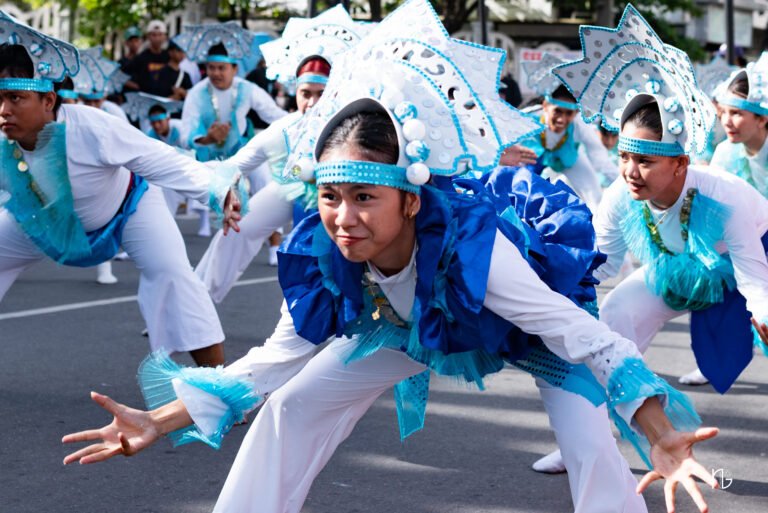
Sinukwan Festival is worth it if you are willing to be outside before sunrise, standing on a concrete sidewalk in building heat, for a parade that earns every early-morning minute of that effort. The Consunji Street judging zone at 6:00 AM, with 120-person contingents performing their sharpest sequences for the adjudicators in full feathered regalia, is the most visually dense and culturally specific thing I have seen across 69 provinces.
The mythology behind the costumes, the live music requirement, the decolonization argument embedded in the choreography: none of that is performance for tourists. It is performance for judges, for rivals, and for Kapampangan identity.
The festival suits travelers who want cultural depth alongside the spectacle, who can manage a 5:30 AM alarm, and who are comfortable planning six to eight weeks ahead for accommodation.
It also suits anyone who wants a Pampanga food trip with a reason to be in the city: the festival week food fairs are the easiest entry point into sisig, bringhe, duman, and the more unusual Kapampangan dishes in their proper context.
Skip it if heat and early mornings are genuine dealbreakers for you, or if you are hoping to simply show up and find a hotel. The parade day logistics are unforgiving and the accommodation market during festival week reflects that.
If you want the grandstand experience for the Free Interpretative Dance, buy tickets the moment they go on sale. SVIP and VIP sell out within two weeks. Ground-level viewing at the finals venue is poor for reading the floor choreography, and that choreography is the point of the competition.
For those planning a broader Central Luzon trip, the Tuna Festival in General Santos, while in a very different part of the country, offers a useful contrast in how Philippine regional festivals are structured around a single defining local product rather than an ethnic identity. Sinukwan has no equivalent in that regard.
There is no other festival in the Philippines doing what Sinukwan does for Kapampangan identity, and that alone makes it worth planning for.
Final Verdict: Is Sinukwan Festival 2026 Worth It?
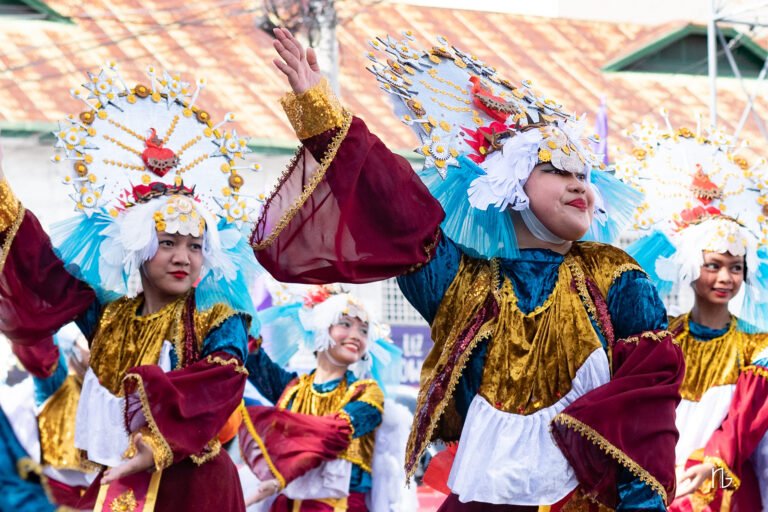
Sinukwan Festival 2026 earns a 5 out of 5 for the first-time cultural traveler. The street dance competition is one of the most technically demanding and culturally specific festival events in the Philippines, and watching a contingent nail the “Atin Cu Pung Singsing” arrangement in full agricultural regalia on Consunji Street is genuinely unlike anything else in Central Luzon. Pair it with a stop at the food fair and a meal of proper Kapampangan sisig, and the trip pays for itself before noon.
For more on planning a Philippines festival trip, the Philippines festival travel guide on Lakbay Pinas covers the broader picture, and the Lakbay Pinas homepage is a good starting point for building your full Pampanga itinerary.