
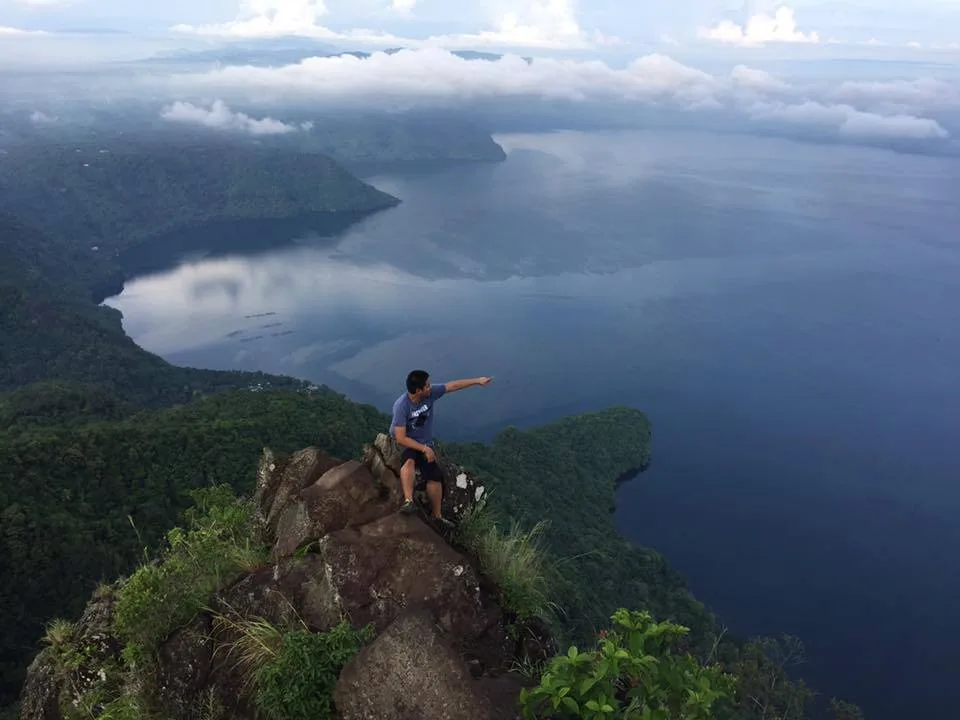
Batangas is a full province sitting two to three hours south of Manila. It has beaches, volcanoes, colonial towns, and dive sites. After covering 69 of the Philippines’ 82 provinces since 2015, I still keep coming back here.
The sheer range of what you can do in one province is hard to match:
- World-class scuba diving in Anilao
- White-sand island beaches in Tingloy
- A heritage town that looks like a Spanish colonial postcard
- An active volcano you can boat around on Taal Lake
I was back in September 2026 to check that the fares, fees, and access rules I have been publishing still hold up. Some of them had changed significantly, and a couple of spots I previously recommended are no longer worth sending people to.
This guide covers all 36 tourist spots in Batangas that are currently open and worth your time. It is organized the way a planner actually needs it: transport first, then destinations by type, then a realistic cost breakdown.
Key Takeaways
These are the six things you need before you book anything.
- Batangas province covers 3,119 square kilometers across the southern tip of Luzon, about 2 to 3 hours from Manila via SLEX and the STAR Tollway outside peak hours.
- The nearest major hub is Batangas City Grand Terminal, which connects to every municipality in the province by jeepney, van, or tricycle.
- Bus fares from PITX to Batangas City Grand Terminal run ₱238 to ₱318 depending on the operator, as of September 27, 2026. Bus fares follow diesel prices, so when pump prices jump the rate at the terminal usually goes up with it.
- Batangas sits on the Verde Island Passage, classified as the center of marine shorefish biodiversity on Earth — over 1,736 fish species in a 10-kilometer radius. This is why Anilao draws divers from Japan, Korea, and Europe.
- Mount Maculot is fully closed as of late 2026 — no hiking, no Rockies trail, no Grotto. The Cuenca Tourism Office has confirmed the closure covers every area of the mountain. Plans based on older guides will put you in front of a locked gate.
- Cash is the dominant payment method at most beaches, island jump-off points, and smaller resorts. Bring enough before you leave the terminal.
Table of Contents
How do you get to Batangas from Manila?
These fares follow diesel and gas prices, so what you pay can be a little higher or lower than the figures below.
The fastest and most organized way from Metro Manila to Batangas is by bus from the Parañaque Integrated Terminal Exchange (PITX), which has a dedicated gate for southbound provincial routes.
At PITX, Batangas-bound buses depart from Gate 5 on the Ground Floor. Gate 2 on the Second Floor handles Tagaytay and Nasugbu routes — a different set of destinations, so check your gate before you queue. PITX connects to the EDSA Carousel at Gate 10, which means you can come in directly from NAIA or anywhere along EDSA without an intermediate jeepney.
Fares as of September 27, 2026:
Ceres Goldstar
- Route: PITX to Batangas City / Pier
- Fare (₱): 268
- First Trip: 4:00 AM
- Last Trip: 10:00 PM
ALPS The Bus
- Route: PITX to Batangas City / Lipa
- Fare (₱): 238 to 318
- First Trip: 5:00 AM
- Last Trip: 7:00 PM
Jam Liner
- Route: PITX to Batangas City / Pier
- Fare (₱): 268
- First Trip: 4:00 AM
- Last Trip: 6:30 PM
N Dela Rosa Liner
- Route: PITX to Batangas Pier
- Fare (₱): 268
- First Trip: 5:00 AM
- Last Trip: 2:30 PM
Schedules run at 15 to 30-minute intervals during peak daytime hours. Travel time is 2 to 3 hours outside of rush hour. Friday afternoons and Sunday evenings can add 45 minutes to an hour even beyond the toll plazas.
If you are driving, take SLEX south to the STAR Tollway. The combined toll from Magallanes to the Batangas exit is approximately ₱379 for a Class 1 vehicle (car, SUV, van). Cash lanes are no longer an option — RFID is mandatory since March 2025, and driving without a loaded tag carries a ₱1,000 violation penalty.
On arrival at Batangas City Grand Terminal, parking for a car runs ₱60 for the first three hours, then ₱15 per succeeding hour. Overnight parking between 1:30 AM and 5:00 AM has a base fee of ₱300 on top of the hourly accumulation. Motorcycle parking is a flat ₱60.
From the Grand Terminal, jeepneys fan out to the different municipalities. For Anilao, take the BW-05 jeepney bound for Mabini at ₱37 to ₱40, then a tricycle to your resort at ₱60 to ₱100.
For San Juan (Laiya), ALPS runs a direct route from:
- Alabang at ₱247
- EDSA-Taft at ₱301
- PITX at ₱330 to ₱340
You do not need to connect through Batangas City.
If you are traveling from the Batangas pier to islands or inter-island destinations like Mindoro, Romblon, or Caticlan, the Batangas International Port in Barangay Santa Clara now charges a passenger terminal fee of ₱90. This was phased in from January 2026. Students, senior citizens, and PWDs are exempt.
What are the top nature and adventure spots in Batangas?
Batangas has more natural attractions per square kilometer than almost anywhere else in Luzon. The challenge is understanding which ones are currently open, which have access restrictions, and how to sequence them logistically.
Taal Volcano and Taal Lake
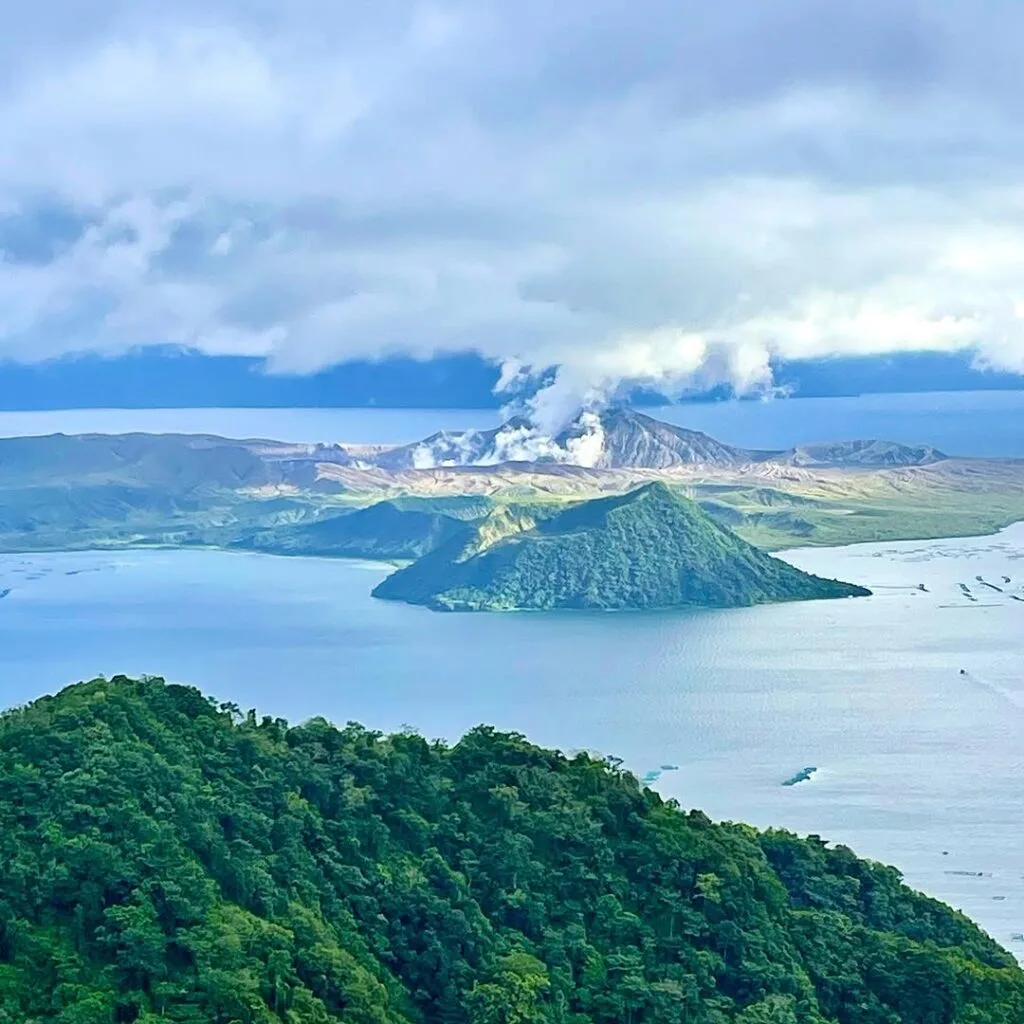
Taal Volcano is the first thing people picture when they think of a Batangas tourist spot: a volcano island sitting inside a crater lake, which itself sits inside a larger caldera. The geography is real, and it looks even more dramatic from the water than from the Tagaytay ridge.
What has changed since the 2020 eruption is how you interact with it. PHIVOLCS is maintaining Alert Level 1 as of 2026, which means low-level unrest and a strictly enforced four-kilometer Permanent Danger Zone (PDZ). Entry onto Taal Volcano Island — including the Main Crater, the Daang Kastila fissures, and any area of Taal Volcano Island itself — is absolutely prohibited.
This is not a soft advisory. Recreational boating close to the island is also banned.
What you can do is take a lake boat tour from Talisay, circling the outer perimeter of the lake without entering the PDZ. The view of the island from the water is worth the trip.
The sulfur dioxide output has spiked to as high as 8,322 tons per day in monitoring periods this year, well above the annual average of 6,057 tons. If you see a vog advisory in effect, the boat operators themselves will often refuse to go out.
The fee structure for a Taal boat tour has multiple layers that the old version of this article did not separate clearly:
- Boat fee: charged per boat, not per person — confirm the group rate with your boatman before boarding
- Environmental / park fee: charged per person at the Talisay or Laurel jump-off
- Guide fee: mandatory for regulated tours, charged per group
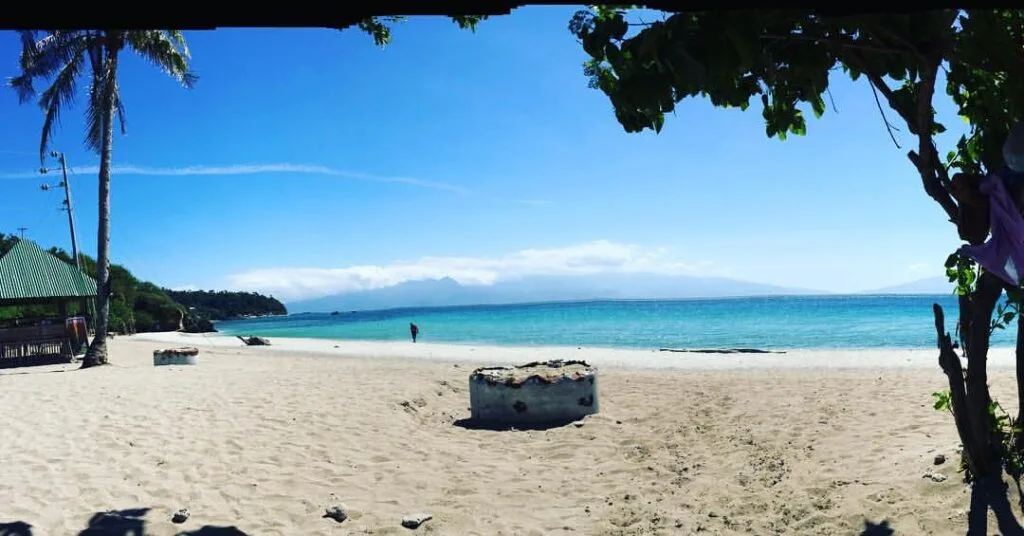
Masasa Beach, Tingloy Island
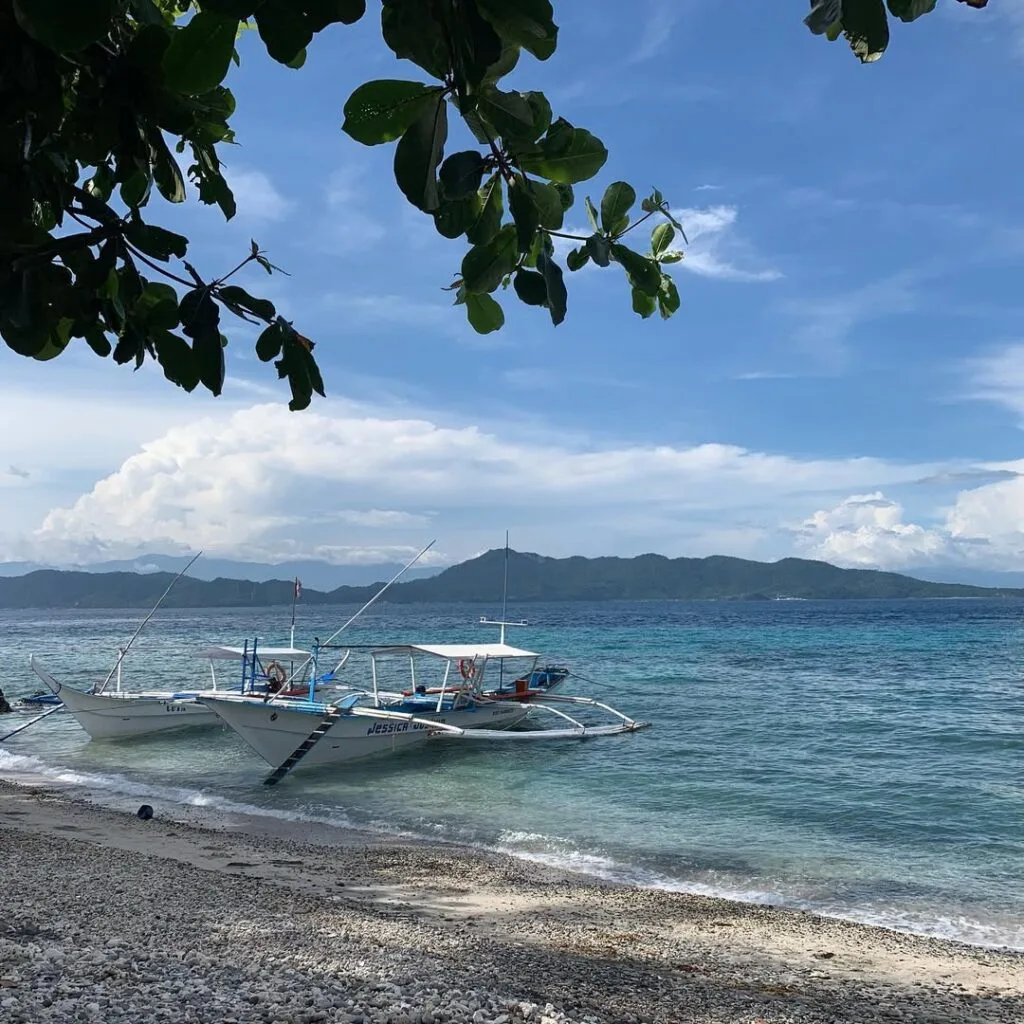
Masasa Beach on Tingloy Island is often compared to a smaller Boracay. The sand is that white, the water is that clear, and the crowd on a long weekend is starting to feel proportionally similar. Tingloy is the only island municipality in Batangas, and getting there requires a multi-leg trip that most first-timers underestimate.
The full route from Manila:
- Bus from PITX to Batangas City Grand Terminal: ₱185 to ₱268
- Jeepney from Batangas to Anilao Port: ₱40 to ₱80, about 45 to 60 minutes
- Pay environmental and terminal fees at Anilao Port before boarding (see table below)
- Public ferry (Montenegro Lines) from Anilao to Tingloy: ₱180 regular, ₱144 student, ₱129 senior/PWD — ferries depart every two hours from 7:00 AM to 5:00 PM, return trips from Tingloy run 6:00 AM to 4:00 PM
- Tricycle from Tingloy Port to Masasa: ₱25 to ₱80, about 10 to 15 minutes
The fees you pay before boarding at Anilao Port are non-negotiable:
| Fee | Amount (₱) | Notes |
|---|---|---|
| Mabini environmental fee | 50 | Per person |
| Tingloy environmental fee | 50 | Per person |
| Terminal fee | 5 | Per person |
| Trash bond | 100 | Covers 2 persons; refundable |
The trash bond is real enforcement, not a suggestion. You are issued an eco-bag at the port and must surrender it filled with collected refuse at Tingloy Port on your way out. Only then do you get the ₱100 back.
Beach camping directly on the sand is prohibited. Accommodation is in inland homestays, including:
- SeaLover’s Place
- Balay Inton
- Jeremiah Homestay
Rates run ₱500 to ₱700 per person per night.
For a complete breakdown of the Masasa Beach DIY route, the full guide to getting to Masasa Beach from Manila on a budget covers the trickier logistics in detail.
From Masasa, you can rent a boat for island-hopping to:
- Sombrero Island (₱200 per person entrance fee, boat rental approximately ₱1,500 for up to 3 passengers)
- Sepoc Point
- Oscar Island
The Sombrero Island boat from the beach costs around ₱1,500 for a maximum of three passengers — group up before you negotiate.
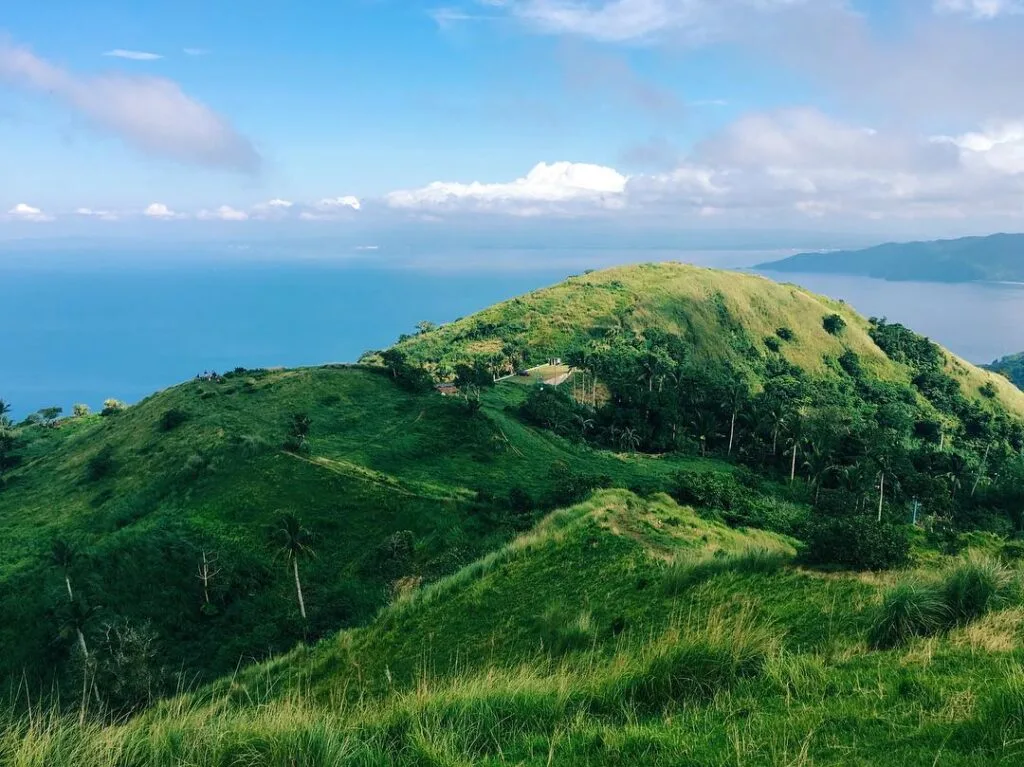
Mount Gulugod Baboy, Mabini
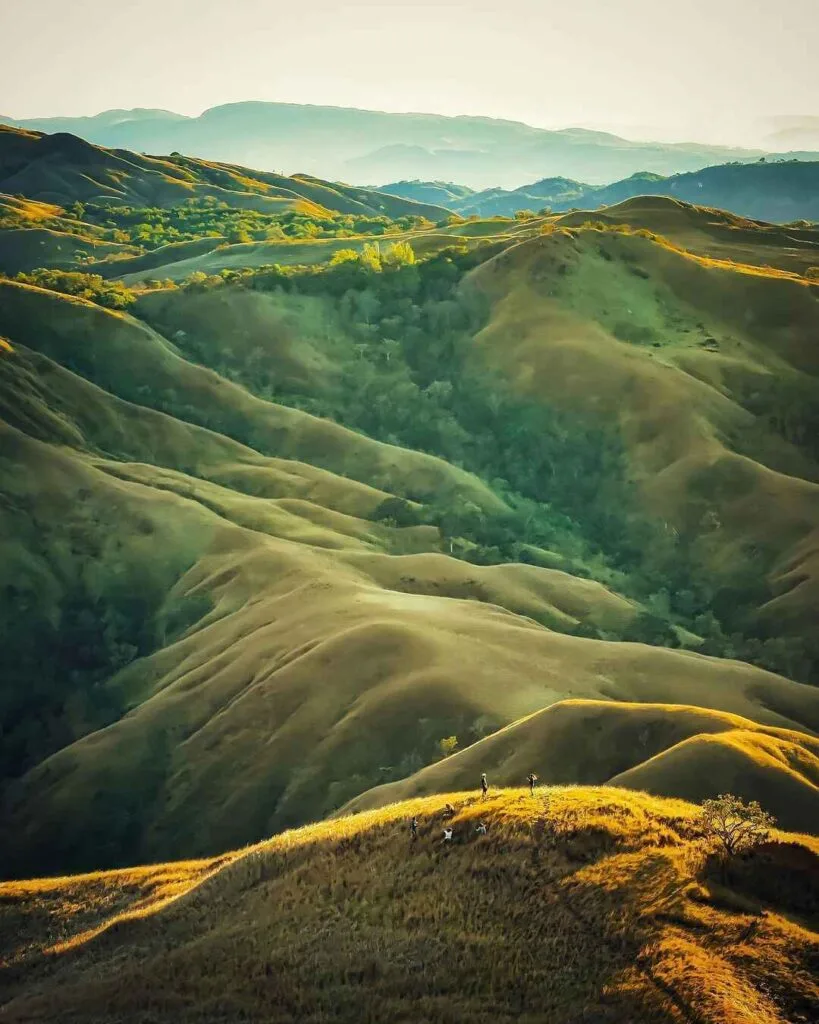
Mount Gulugod Baboy is the most accessible beginner hike in Batangas. The trail above Anilao gives you a panoramic view of Balayan Bay and the Mabini coastline. On a clear morning in September I could make out Sombrero Island and the outline of Verde Island from the ridge.
The trail is capped at 150 climbers simultaneously, with a maximum of 600 daily visitors. These limits came out of carrying capacity research conducted by local guides who were watching the trail erode under unregulated weekend crowds. If you arrive on a Saturday morning and the daily count is approaching 600, you will wait or be turned away.
The jump-off is in Anilao, Mabini. Registration fees are minimal, but check with the barangay office at the base for the current rate before you start. The full trail guide is covered in the separate Mt. Gulugod Baboy day hike guide if you want a more detailed breakdown.
Mount Maculot update: The mountain is closed. Every trail, including the Rockies, the Grotto, and the summit route, is off-limits under Executive Order No. 1, Series of 2020. The Cuenca Tourism Office confirmed in 2026 that the closure covers all areas of the mountain for any purpose — hiking, religious pilgrimage, or photography.
Rumors circulating online that the Rockies trail has partially reopened are false. Do not plan a trip around it.
Anilao Dive Sites
Anilao is the scuba capital of the Philippines and one of the best muck diving destinations in Southeast Asia. The sites sit along the Verde Island Passage, which scientists classify as the center of the center of marine shorefish biodiversity on Earth. There are roughly 1,736 fish species in a concentrated 10-kilometer radius.
The dive sites range from shallow coral gardens accessible to beginners to advanced technical sites pushing 40 meters. Key sites:
- Secret Bay (5 to 21 meters): black volcanic sand, mimic octopuses, wonderpus, flamboyant cuttlefish
- Twin Rocks (5 to 18 meters): coral-encrusted boulders, bigeye trevally, sea turtles
- Cathedral Rock (15 meters): concrete cross surrounded by anthias and moray eels
- Mapating Cave (15 to 40 meters): whitetip reef sharks, occasional hammerheads
- Daryl Laut (40 meters): sunken floating casino, longfin batfish, giant trevally
The Anilao dive corridor covers more than 30 sites in Mabini and Tingloy. Divers crossing into Tingloy waters during a single boat trip pay conservation fees in both municipalities: ₱150 for Mabini waters and ₱150 for Tingloy waters, totaling ₱300.
Dive pricing in Anilao:
| Type | Rate (₱) |
|---|---|
| Discovery dive (uncertified) | 3,500 |
| Boat dive (certified, shared) | 2,000 to 2,500 per dive |
| Shore dive | 1,500 to 1,800 |
| Night / blackwater dive | 3,000 to 3,500 |
| Equipment rental (full set) | 1,500 |
| 5-dive package | 8,000 to 9,000 |
| 10-dive package | 15,000 to 17,000 |
| Open Water certification | 18,000 to 24,000 |
| Discover Freediving | 5,000 to 7,000 |
The full Anilao guide covers gear requirements, the best months by visibility, and resort recommendations — read the Anilao diving guide before booking.
Batangas is not the only province in Luzon with serious marine and adventure credentials. If you are planning a broader southern Luzon circuit, the best natural spots in Zambales are a useful comparison, particularly for overland hikers who want to add a mountain option to a beach itinerary.
Verde Island (Isla Verde)
Verde Island sits at the heart of the Verde Island Passage and is the closest you can get to the epicenter of that marine biodiversity without a research vessel. The reef hosts hawksbill turtles, green turtles, humphead wrasses, and giant clams. Strict fishing moratoriums and reformed environmental user fees are in place to protect the coral.
Snorkeling here on a flat-sea morning is a different experience from the more developed Anilao sites — quieter, less infrastructure, and the coral cover shows it. Environmental user fees are enforced before you board; confirm the current rate with the boatman or at the Batangas City pier.
Fortune Island, Nasugbu
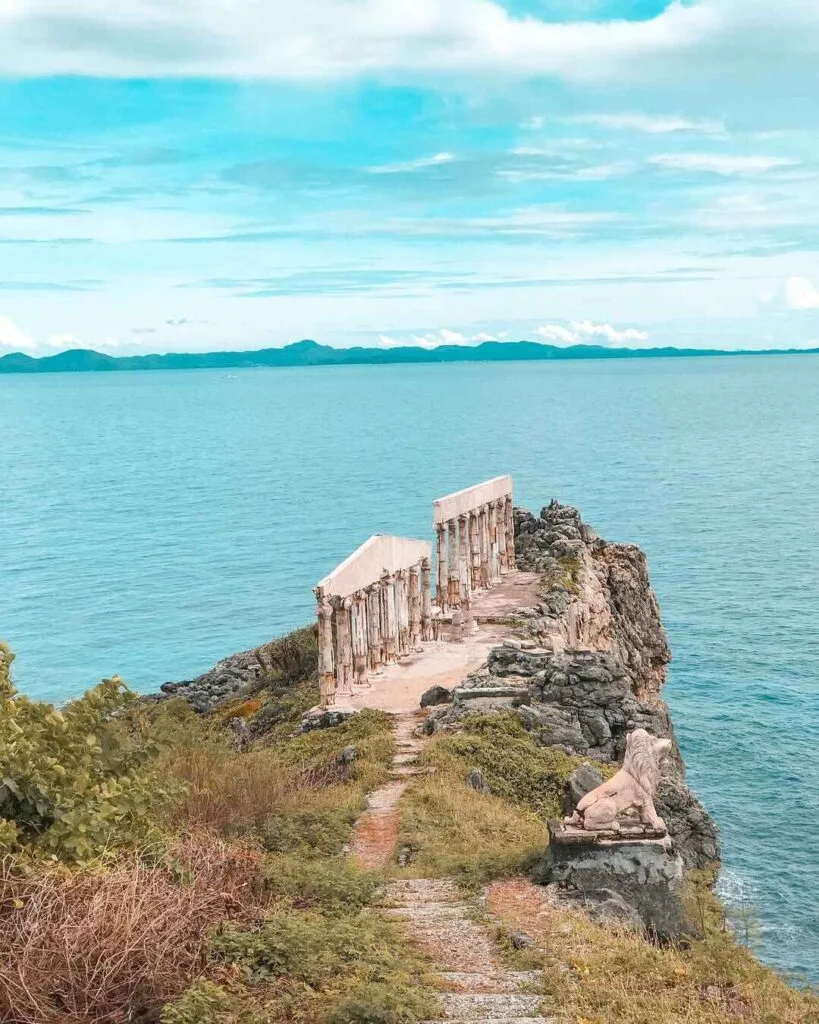
Fortune Island is the most dramatic-looking destination in Batangas: Grecian-style pillars on a limestone cliff above a dark blue sea. It is also the most logistically demanding and the most expensive for a solo or pair of visitors.
The island has no freshwater, no electricity, and no permanent toilet facilities. You bring everything you need. Boat operations run outbound from 6:00 AM to 3:00 PM, with all return trips stopping by 4:00 PM — afternoon swells on this stretch of coast are not a joke.
Fee structure as of September 27, 2026:
| Component | Amount (₱) |
|---|---|
| Entrance fee (day tour) | 350 per person |
| Entrance fee (overnight camping) | 500 per person |
| Ecological fee | 30 per person |
| Tent pitching fee | 100 to 200 |
| Boat rental (1 to 8 pax, day) | 5,500 |
| Boat rental (1 to 8 pax, overnight) | 6,500 |
| Boat rental (16 to 25 pax, day) | 9,000 |
| Boat rental (16 to 25 pax, overnight) | 10,000 |
Because the boat rate does not scale linearly with group size, coming with more people cuts the per-head transport cost sharply. A solo traveler on a private boat pays the same ₱5,500 that eight people split eight ways.
The detailed Fortune Island logistics — including which boat operators to contact and what to pack — are in the Fortune Island Batangas boat rate guide.
Other Coastal Spots Worth Noting
Bituin Cove (Nasugbu) is the budget alternative to Fortune Island: entrance is ₱25 for a day tour and ₱100 overnight, no tent-pitching surcharge. Get there via tricycle to Barangay Papaya, then a short boat transfer costing ₱300 to ₱500.
Calayo Beach (Nasugbu) is a quieter cove mostly used as a jump-off for private cove-hopping. Boat rentals here run ₱1,000 to ₱2,500 for customized coastal routes.
Calatagan Sandbar (Little Boracay) is a narrow sandbar off Calatagan that briefly disappears at high tide. The guide to Little Boracay Calatagan and its boat tour rates has the tide-window logistics that make or break the trip.
The Philippines as a whole has a lot of competition for weekend getaways from Manila. The top Philippine destinations guide puts Batangas in context against what other provinces offer for the same travel time and budget.
What are the top historical and heritage sites in Batangas?
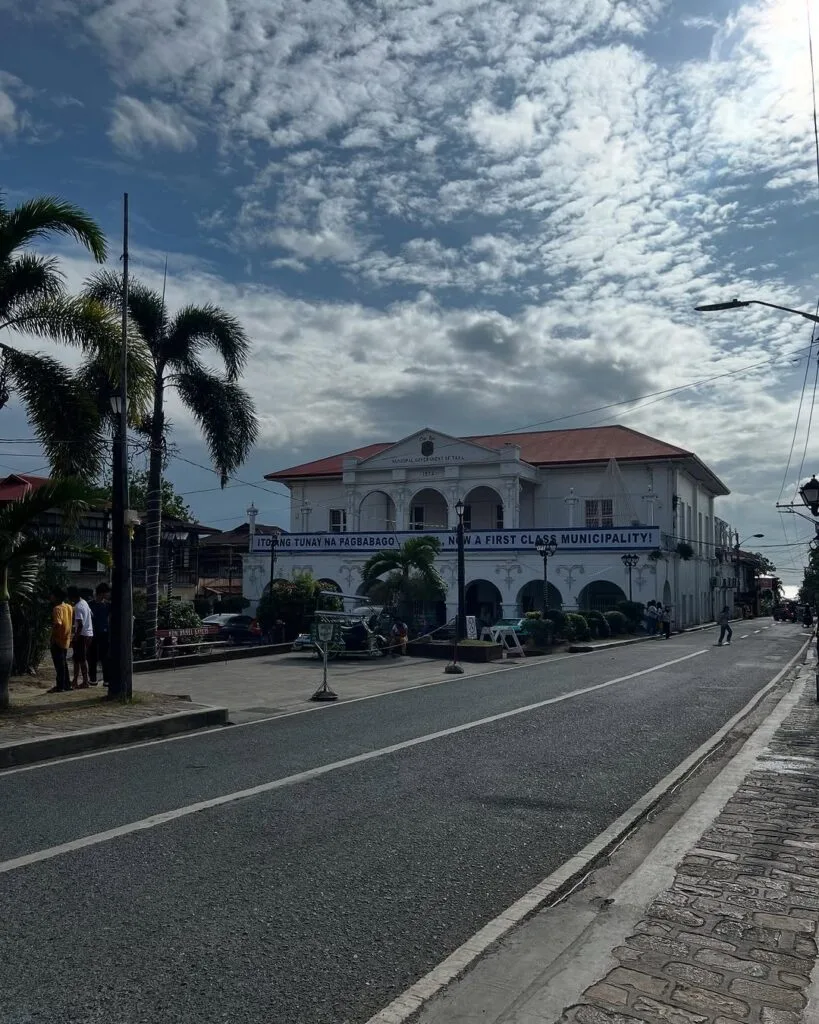
Batangas has the most intact Spanish-colonial townscape in Luzon outside Vigan. The concentration is in Taal municipality, which is not the same as Taal Volcano — first-time visitors mix these up constantly.
Taal Heritage Town
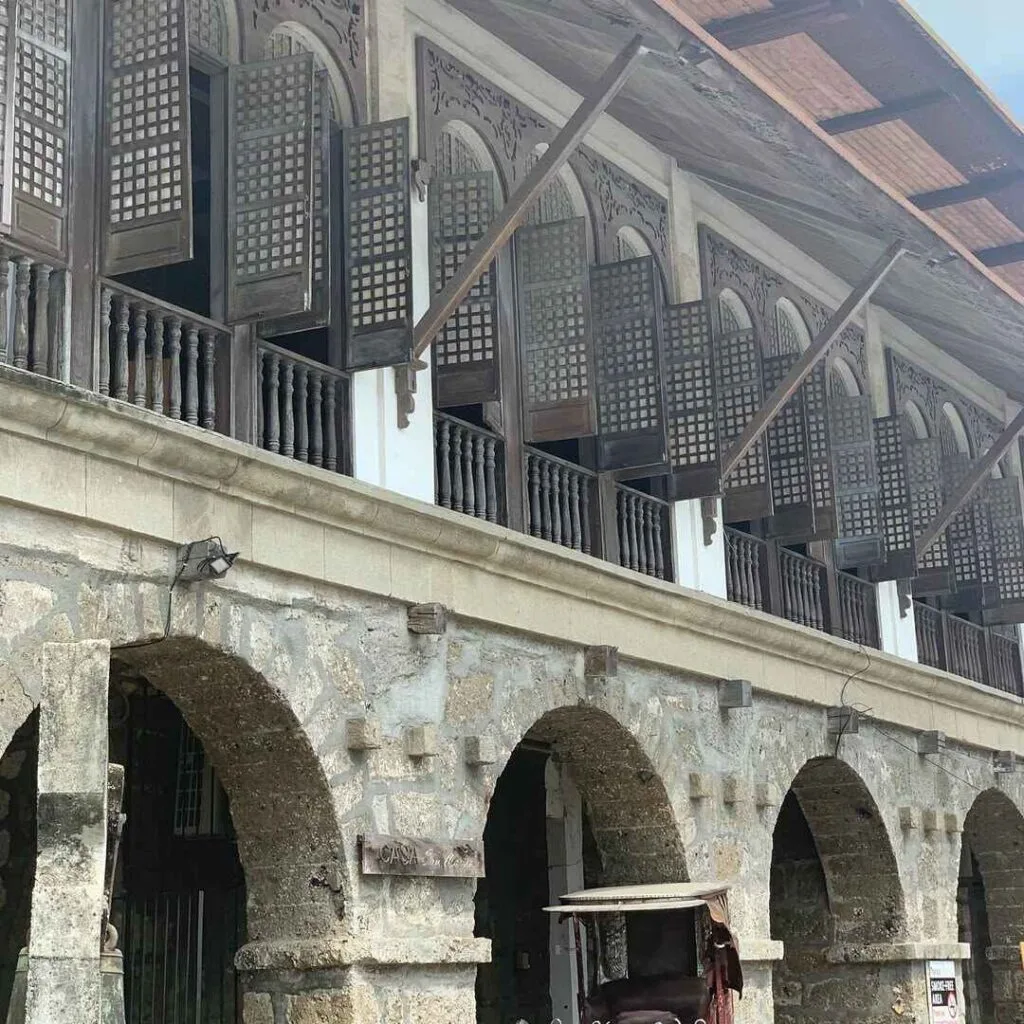
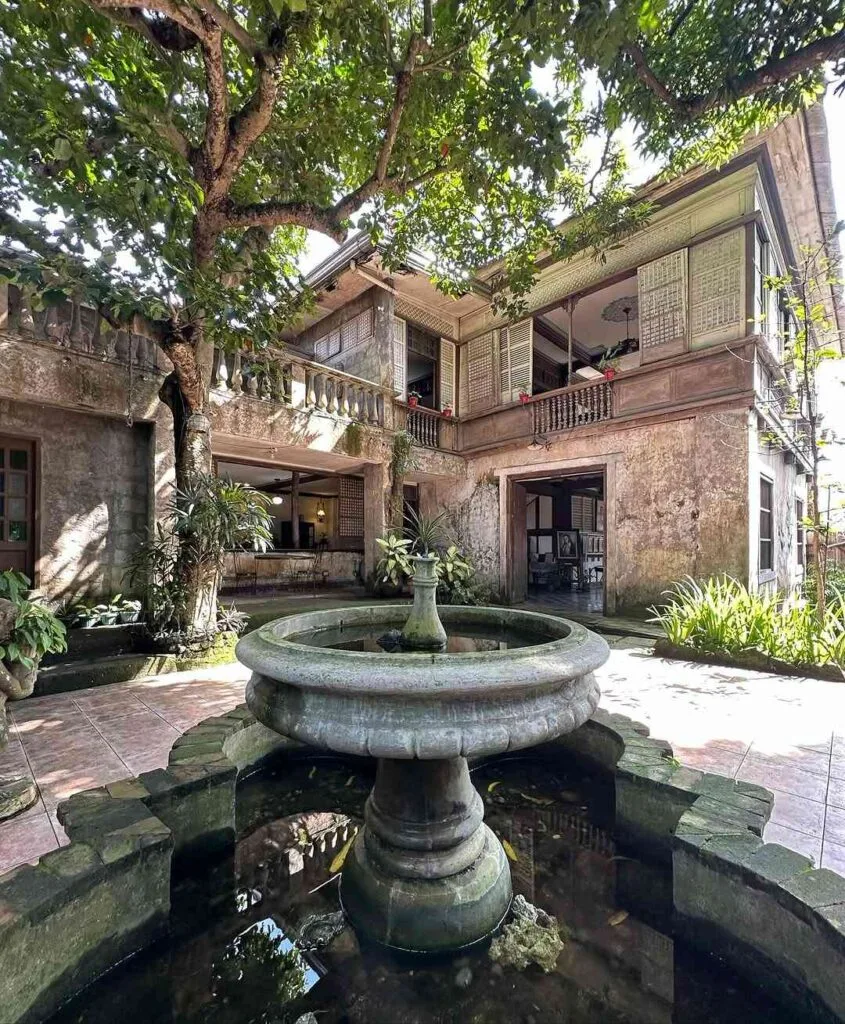
Taal Heritage Town is a living museum of Bahay-na-Bato architecture spread across a compact walking distance. The houses are not reconstructions; they are inhabited ancestral homes built from volcanic stone and hardwood, many of them still in the same families that built them. A Heritage Ordinance requires any structure over 50 years old retaining 75% of its original material to get written approval from the National Historical Commission of the Philippines before any alteration.
Violations carry fines of ₱200,000 and up to 10 years imprisonment. That legal framework is why the streetscape looks the way it does.
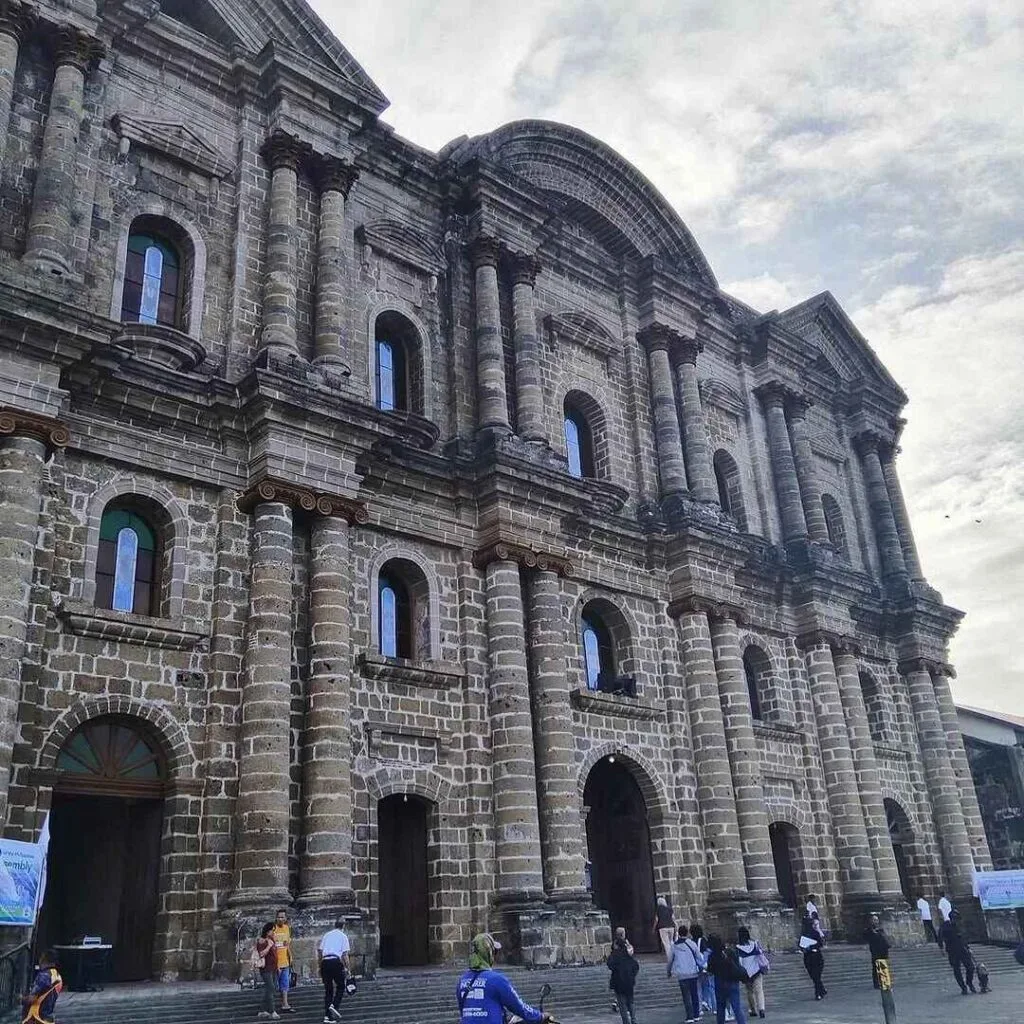
The anchor of the town is the Basilica de San Martin de Tours, recognized as Asia’s largest Catholic church. The bell tower is no longer accessible to visitors as of 2025 due to structural preservation work — if you came expecting to climb it, that access is gone. The basilica itself remains open.
For the heritage museums, the key distinction is public versus private:
Government-operated museums (NHCP) — no entrance fee, closed Mondays:
- Marcela Agoncillo Museum (home of the woman who sewed the first Philippine flag)
- Leon Apacible Museum
Privately operated museums — modest entrance fees fund preservation:
- Galleria Taal (housed in the Ilagan-Barrion ancestral home, first camera museum in the Philippines): ₱100 entrance, rare 1800s Daguerreotype cameras and wartime photographs
- Villa Tortuga: ₱50 entrance, optional Spanish colonial costume rental for photography at ₱250
A complete Taal Heritage Town visit — basilica, two NHCP museums, Galleria Taal, and a walk through the Calle Ligtasin strip of ancestral homes — takes about half a day. If you are pressed for time, the Agoncillo Museum and the basilica are the non-negotiable stops; Villa Tortuga is skippable unless you want the photo opportunity.
Casa de Segunda, Lipa City
The Luz-Katigbak Ancestral House in Lipa, also called Casa de Segunda, was built in 1880. Segunda Katigbak is documented as the first love of Jose Rizal, which gives the house a biographical layer on top of its architectural interest.
The Bahay-na-Bato structure survived World War II with damage and was restored in 1996. Admission is ₱100 for adults and ₱50 for students and seniors, open Tuesday through Sunday, 9:00 AM to 5:00 PM.
What you see inside is a well-preserved ground floor entresuelo and a main floor oratorio displaying statues on a traditional Batangas uno mesa altar. Budget about 45 minutes here.
Bauan Church and Other Batangas City Heritage Sites
Batangas City has its own set of heritage structures, mostly concentrated around the old Poblacion. The Sublian Festival is an intensive two-week cultural event culminating on July 23 to coincide with the city’s founding anniversary.
It is the best time to see the Subli ceremonial dance performed in its original barangay-specific variations. The Sinala style from Bauan and the Talumpok style from Batangas City represent distinct regional interpretations of the same dance.
For visitors doing a heritage circuit that includes multiple Philippine provinces, the well-documented heritage sites of Bataan make a logical companion trip. Both provinces preserve Spanish-era infrastructure at a comparable level of integrity.
Which churches and pilgrimage sites are worth visiting?
Batangas has a denser concentration of significant Catholic sites than most provinces in Luzon, and several of them draw pilgrims from across the country.
Padre Pio Shrine, Santo Tomas
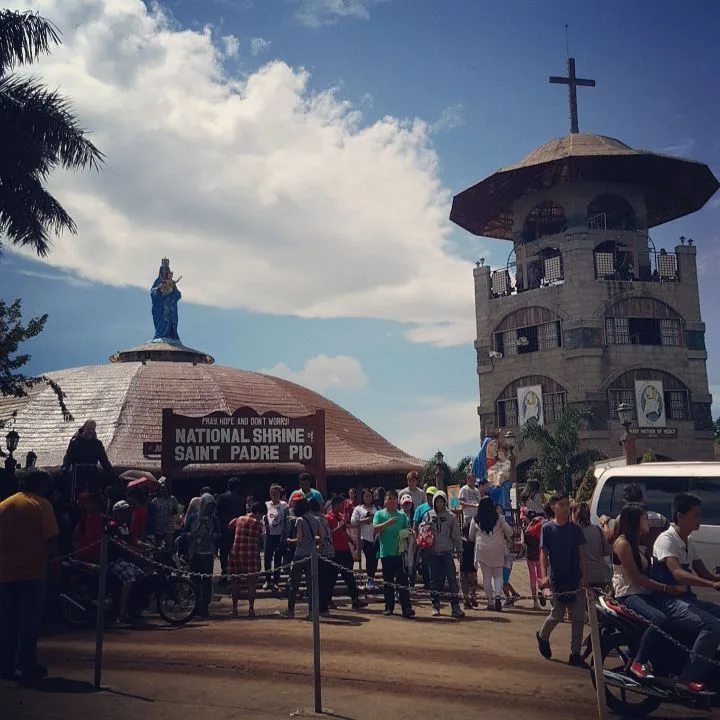
The Parish and International Shrine of Saint Padre Pio in Santo Tomas is the single biggest upgrade to Batangas pilgrimage tourism in recent memory. On September 23, 2026, the Vatican’s Dicastery for Evangelization formally elevated it to the status of International Shrine — only the second in the Philippines, alongside the Antipolo shrine.
The architecture breaks from the European stone basilica model. Wood, bamboo, volcanic stone, and woven sawali (bamboo strips) give the complex a distinctly Filipino character. There is no entrance fee.
Healing liturgies are held on the 1st, 3rd, and 23rd of each month, drawing the largest crowds. If you are not coming for a healing mass, weekday mornings are significantly quieter.
Mass schedule:
- Weekdays: 7:00 AM to 5:00 PM
- Sundays: 5:30 AM to 6:00 PM
Parking at the rear of the complex is free. Spots near the main entrance cost ₱30.
More detail on the pilgrimage experience and the glass walk is in the dedicated Monte Maria Shrine guide, which covers the devotional logistics at a nearby site that is worth combining into the same trip.
Our Lady of Mt. Carmel Church (Mary Mediatrix of All Grace Parish), Lipa
This austere white-walled church with light blue ceilings in Lipa City became internationally known after a series of Marian apparitions in 1948, attributed to Carmelite postulant Teresita Castillo. The apparitions were accompanied by showers of rose petals that botanists identified as being of Russian cultivation.
The Church initially declared the events fraudulent; renewed phenomena in 1990 brought a resurgence in pilgrimage. The feast day on September 12 draws some of the largest crowds the church sees all year.
No entrance fee. The interior is straightforward to visit during non-mass hours. Budget about 30 minutes unless you are coming for a scheduled mass.
Caleruega, Nasugbu
Caleruega Church (formally the Chapel of Transfiguration of Jesus) is managed by Dominican friars on a hilltop above Nasugbu with views toward Mount Batulao.
The grounds include:
- Rustic red-brick arches
- Koi ponds
- A suspension bridge
This is why it appears constantly on social media and has become the most booked wedding venue in the province.
This is primarily a retreat center, not a public church. Visitors pay a ₱30 maintenance fee and a ₱20 environmental fee. Hours are 7:00 AM to 5:30 PM daily.
On weekends with weddings scheduled — which is most weekends — access to the main chapel is restricted for extended periods. Check the schedule with the administrative office before going, especially on Saturdays.
Sunday mass is at 10:30 AM or 11:00 AM.
Marian Orchard, Balete
Marian Orchard is a Catholic theme park and prayer garden in Balete featuring a full-scale Stations of the Cross, a large replica rosary, and European-inspired landscaped gardens. It is open Tuesday to Sunday, 7:00 AM to 5:00 PM, last ticket sold at 4:00 PM.
Entrance runs ₱50 to ₱100 depending on the day and season. No outside food is allowed on the grounds.
Masses: first Friday of the month at 4:00 PM, Saturdays at 4:30 PM (anticipated), Sundays at 10:00 AM.
If you are building a pilgrimage itinerary across multiple provinces, the pilgrimage and church sites in Bulacan are a useful reference. Bulacan runs a similar circuit and is more straightforward to reach for visitors coming from north of Manila.
Where should families go in Batangas?
For a top-10 tourist spot in Batangas for family trips, three areas account for the majority of family visitors:
- The beach resort strip at Laiya in San Juan
- The classic family beach at Matabungkay in Lian
- The hilltop garden retreat at Caleruega in Nasugbu
Laiya, San Juan
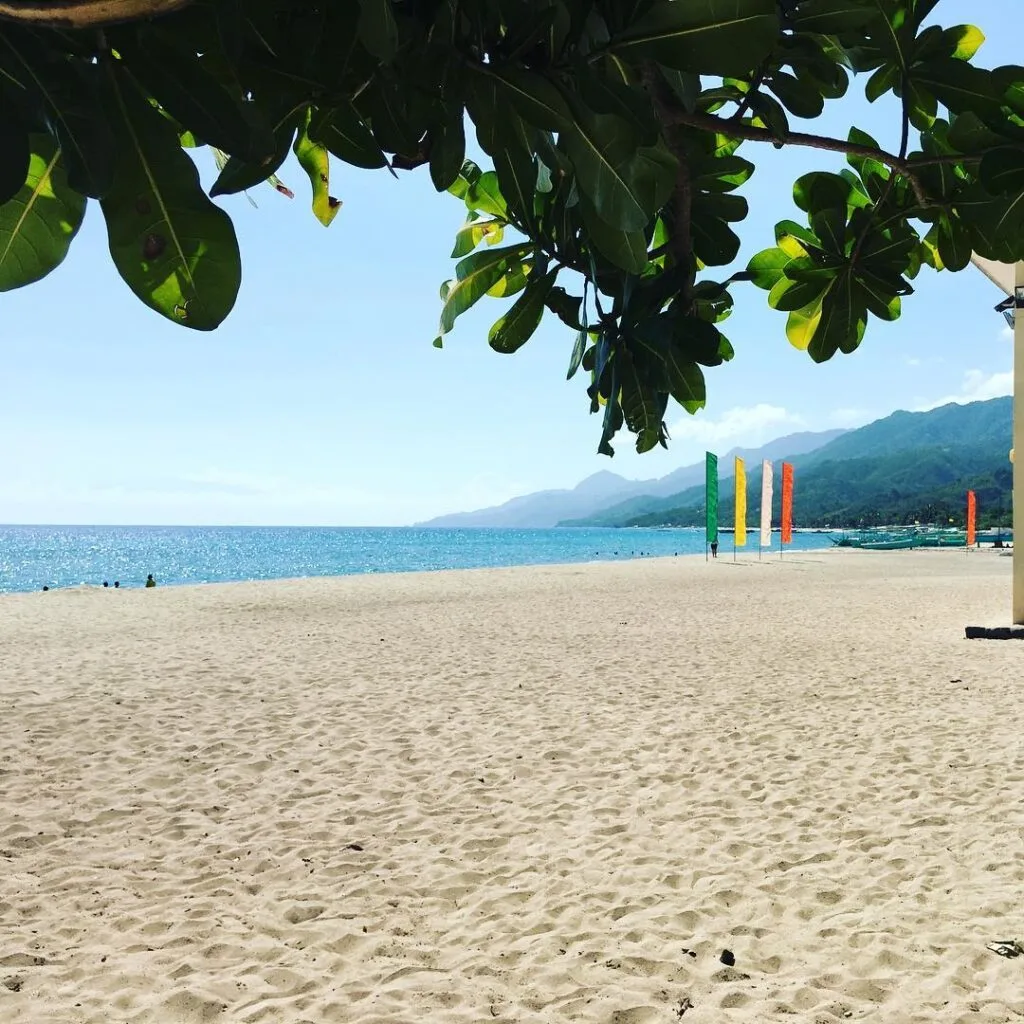
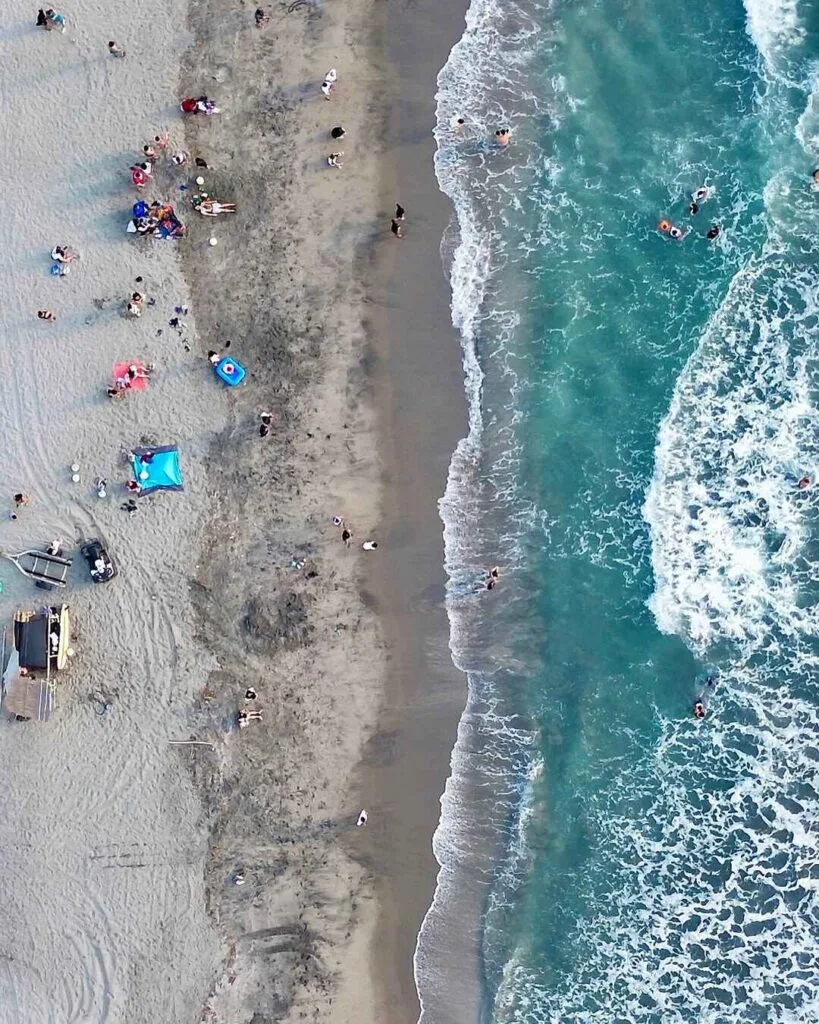
Laiya is the largest concentration of resort tourism in Batangas, spread across Barangays Laiya Ibabao, Laiya Aplaya, and Hugom on the east coast facing Tayabas Bay. The sand is cream-colored and the water is calmer than the west coast. Resort options range from mid-range family packages to high-end venues with infinity pools and floating pool bars.
Resorts operating in Laiya include Acuatico Beach Resort, Palm Beach Resort, and La Luz, all of which offer water sports infrastructure — jet skiing, banana boats, wakeboarding. The LGU requires all operating resorts to maintain DOT accreditation, which creates a consistent baseline across the strip.
Getting to Laiya from Manila does not require going through Batangas City. ALPS runs direct buses from three Manila points:
| Origin | Fare (₱) |
|---|---|
| Alabang | 247 |
| EDSA-Taft | 301 |
| PITX | 330 to 340 |
Buses run 4:00 AM to 8:00 PM with frequent departures. On arrival at San Juan Poblacion (near the BM Ruins), take a jeepney to Laiya for ₱50 or to Hugom for ₱60. Shared tricycles from near Carmel Pharmacy charge the same per-passenger rate; chartering the whole tricycle costs up to ₱350.
Hugom is the public-beach section of the strip — lower-cost access, fewer resort amenities, same coastline. Families on a tighter budget who want to skip resort entrance fees gravitate here. Bring cash; most establishments along the Laiya public beach prefer it.
Matabungkay Beach, Lian
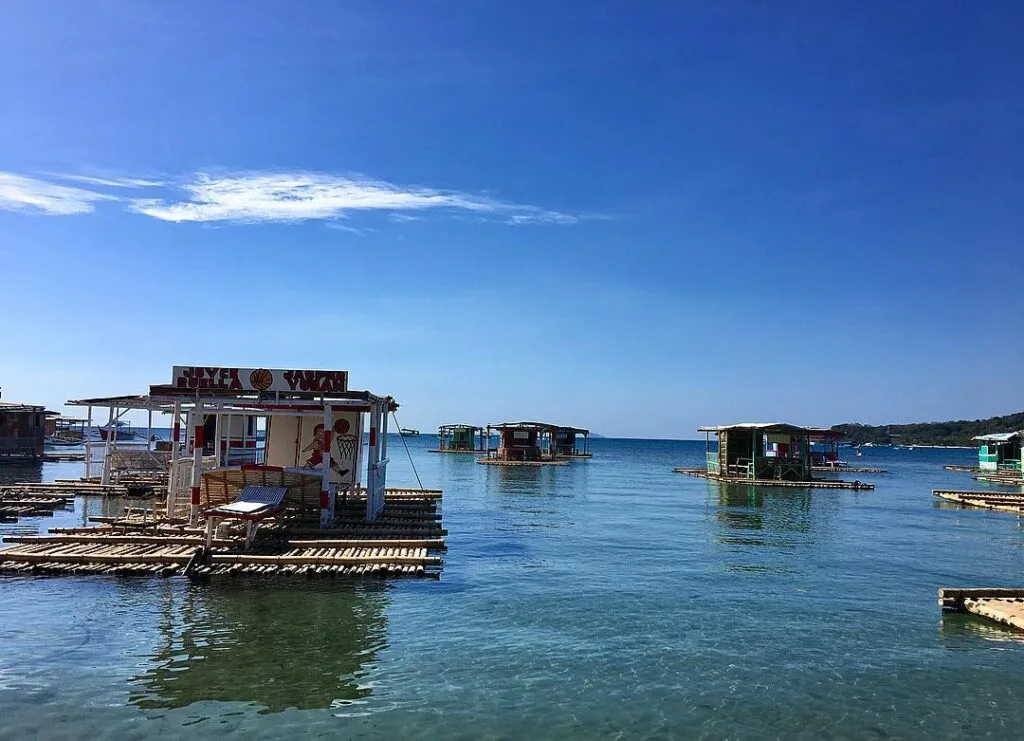
Matabungkay is the oldest and most historically significant beach destination in the province. The sand is gray rather than white, the water is flat and calm, and the defining feature is the network of floating bamboo cottages (balsa) moored offshore. You swim out, climb onto a raft, and rent it for the day — a format that has not really changed since the 1970s.
The annual Balsa Festival in May combines beach recreation with raft parades and cultural shows. If you are planning around school break or a long-weekend in the first half of the year, this is worth timing around.
Caleruega, Nasugbu (Family Context)
Caleruega was already covered under churches, but it merits a mention here. The gardens, koi ponds, and suspension bridge are enjoyable for kids who are not particularly interested in the religious context. The ₱50 combined fee (₱30 maintenance + ₱20 environmental) is the cheapest admission in the province for the amount of space and scenery you get.
The caveat for families: chapel access is restricted during weekend weddings, which are frequent. If the main chapel is the goal, go on a weekday.
Club Balai Isabel and Aqua Park, Talisay
Club Balai Isabel sits directly on the shores of Taal Lake and has pivoted hard toward family recreation since volcano crater treks became off-limits. The Aqua Park is a large floating inflatable course on the lake, with water slides, human cannonball launchers, and hamster wheels. It is the best family water-activity option in the province for families who want structured fun rather than an open beach.
Practical Logistics Families Get Wrong in Laiya
The mistake most first-time family groups make is arriving at the San Juan bus terminal without a plan for the last leg. The jeepney to Laiya leaves from the BM Ruins area, not from the bus stop itself, and there is a gap of about 5 to 10 minutes‘ walk.
On a Sunday afternoon return, the jeepney queue can be long — either leave early or pre-arrange a tricycle charter for the return.
Bring at least one full day to Laiya; the resorts are set up for overnight stays. A day trip from Manila means roughly 4 to 5 hours of round-trip transit for 4 to 5 hours at the resort. The math only works if you start early.
For a different kind of family destination with equally strong beach and mountain options but a cooler climate, the family-friendly spots in Baguio offer a useful contrast for households trying to decide between highland and coastal trips.
What are the most Instagrammable and unique spots in Batangas?
Batangas has several spots that photograph well and offer something distinct from a standard beach or church visit. The most photogenic are not always the most visited, and a few are worth building an entire day around.
J-Castle, Tanauan
J-Castle is a Japanese-inspired castle complex in Tanauan that looks more like a film set than a tourist site. It has multiple towers, stone walls, and landscaped grounds against a sky backdrop that frames well in any light. It draws a younger crowd and has become one of the more consistent generators of social media content from the province.
The entrance fee and hours are covered in the dedicated J-Castle Tanauan guide, which also has the transport logistics from Tanauan town proper.
Kapeng Barako Country, Batangas and Lipa
Batangas was once one of the world’s top four coffee producers. The crop is Coffea liberica, locally called Kapeng Barako. The word translates to “stud” or “wild boar,” and the coffee earns the name: bold, intensely strong, with a sharp anise-like aroma.
The trees reach up to 20 meters in height and the beans are asymmetrical with a characteristic hook at the tip. The traditional preparation steeps the grounds in boiling water, strains through cloth (salo), and sweetens with brown sugar rather than milk.
A coffee leaf rust epidemic in 1889 wiped out nearly all Liberica plantations in the Philippines. This came after a golden era in the 1880s when Batangas briefly became a top global supplier. Liberica now makes up less than 2 percent of global commercial coffee production and is listed as an endangered heritage food in the Slow Food movement’s Ark of Taste.
Several farms in Lipa and around Batangas City still grow and sell it. Buying from a local farm directly is both the cheapest and the most authentic way to try it.
Salt Making, Bauan
The barangays along the Bauan coastline have practiced traditional salt making for generations. Flat clay pans, bamboo filtering trays, and wooden ladles are still the tools of the trade.
Visiting during the dry-season harvest (roughly November to May) gives you something to photograph that most visitors to Batangas never see. This is not a formal tourist site with a fee structure; approach through the barangay tourism office in Bauan to find out which sitios are currently active.
Marian Orchard and Cintai Corito’s Garden, Balete
Both are in Balete and can be combined in a single day. Marian Orchard (covered under pilgrimages) photographs well because of the full-scale Stations of the Cross trail and the European garden layout. Cintai Corito’s Garden is a Balinese-inspired 18-villa resort with intricately carved stone walls, peacocks walking freely through the grounds, and multi-level pools.
Day tour rates run ₱1,350 to ₱1,850, generally including a buffet lunch and snacks (suman with chocolate dip is the usual mid-morning offer). Overnight villa rates for a weekday start at ₱4,200 for a Terrace Villa and go up to ₱9,900 for a Garden Villa.
Cintai Corito is the kind of place that looks expensive because it is. As a day tour destination it is competitive with mid-range beach resort day rates, and the setting delivers.
The Old Grove Farmstead, Lipa
The Old Grove Farmstead in Lipa markets itself as the “Netherlands of Batangas” because of its green windmill, red barn, man-made boating lake, and free-roaming sheep and ducks. It photographs like a postcard from somewhere colder. It operates daily from 8:00 AM to 5:00 PM and requires a reservation with a 50% downpayment to manage crowd density.
Entrance fees are tiered by what you want:
| Package | Adult (₱) | Child (₱) |
|---|---|---|
| Day tour without meals | 350 | 250 |
| Breakfast package | 600 | (check on site) |
| Lunch or dinner package | 800 | (check on site) |
| Pets | 100 | — |
The farm-to-table food quality justifies the package upgrade for most visitors. If you are going purely for photos and plan to eat elsewhere, the base day tour rate covers all the photogenic areas.

Fantasy World, Lemery — Do Not Go
Fantasy World was previously listed in older versions of this article as an Instagrammable destination. The medieval castle complex in Lemery is permanently closed as of early 2026. The entrance gate is locked, no fee is collected, and there is no access.
Sending readers there based on pre-2026 guides is the kind of mistake that wastes a half-day trip. Remove it from your itinerary.
Historic Lighthouses
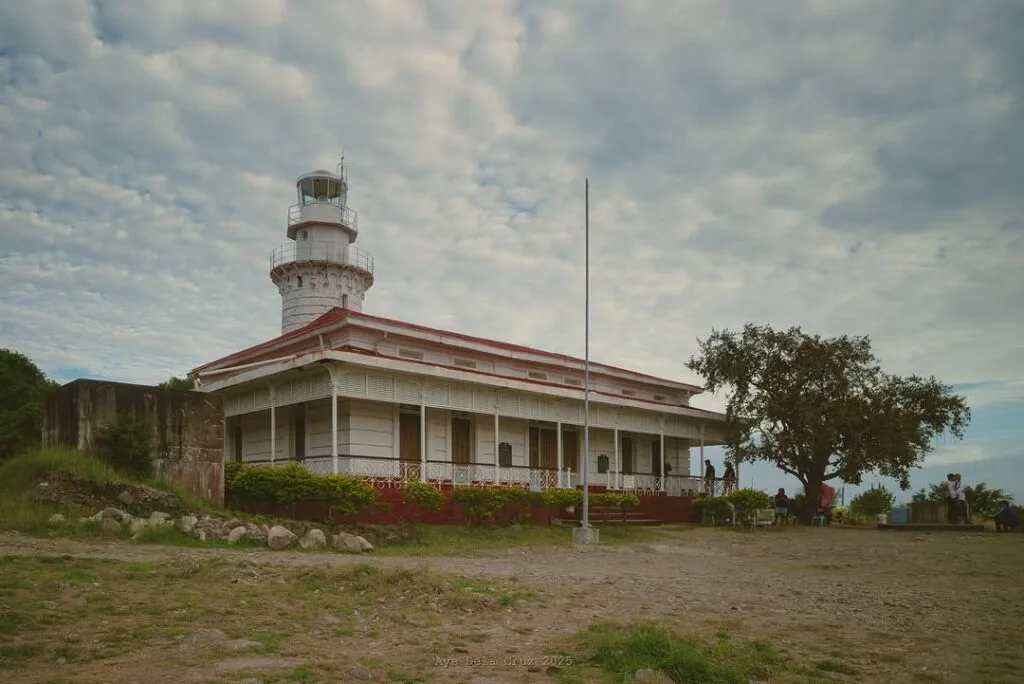
Malabrigo Lighthouse in Lobo and Cape Santiago Lighthouse in Calatagan are both Spanish colonial-era maritime structures. Malabrigo is the better preserved of the two, sitting on a coastal hill with clear views of the sea. Access to both is restricted — the grounds are fenced, and you need to coordinate with the on-site caretaker, who functions as an informal guide.
There is no official fee, but tipping is expected and deserved given the historical context they provide. These are worth a detour if you are already in Lobo or Calatagan, but not a standalone destination for a day trip from Manila.
Milea Bee Farm in San Jose, Lipa teaches visitors about Apis (stinging) and Meliponiculture (stingless) bees through guided botanical tours. The welcome drink is passion fruit juice with raw honey. Entrance runs ₱150 to ₱250 (children under 12 free).
Open Thursday to Monday, 9:00 AM to 4:00 PM — closed Tuesdays and Wednesdays. Booking in advance is required so guides are available. This is a genuine educational stop that works well combined with The Old Grove Farmstead, since both are in the Lipa area.
San Nicolas Bird Sanctuary
Along the dark volcanic shoreline formed by the 1965 Taal eruption, the San Nicolas Bird Sanctuary is a quiet birdwatching site notable for its Little Egrets and Tabon Birds. The volcanic substrate is dramatic and photogenic in a way that differs entirely from the beach shots that dominate Batangas social media. For birders and photographers who want something off the main tourist circuit, this is a legitimate stop.

What does a Batangas trip realistically cost?
A Batangas trip can run anywhere from under ₱1,000 to well over ₱10,000 per day depending on where you go and on overnight accommodation. The biggest variable is not food or entrance fees — it is the cost of a resort room, a boat charter, or splitting both with a group.
When I checked fares and entrance rates during the September 2026 visit, the posted rates at most terminals matched the figures in my research. The totals came out higher than most first-timers expect because of layered ecological fees and wharfage charges that are not listed anywhere obvious.
The Masasa Beach trash bond, for example, is not on the bus ticket. It is collected at Anilao Port, and if you arrived without cash for it, you are not boarding.
The table below uses three scenarios:
- A solo bus traveler doing a budget beach-and-dive trip
- A couple doing a heritage town and beach combination
- A family of four at a Laiya resort
All figures are as of September 27, 2026.
| Item | Solo (₱) | Couple (₱) | Family of 4 (₱) |
|---|---|---|---|
| Bus fare Manila to Batangas (per person) | 268 | 268 x 2 = 536 | 268 x 4 = 1,072 |
| Local jeepney or tricycle (per person) | 80 | 80 x 2 = 160 | 80 x 4 = 320 |
| Env. fees / port fees (Masasa route) | 105 + 100 bond | 105 x 2 + 100 bond | 105 x 4 + 200 bond |
| Ferry Anilao to Tingloy (per person) | 180 | 180 x 2 = 360 | 180 x 4 = 720 |
| Homestay per person per night | 600 | 600 x 2 = 1,200 | 600 x 4 = 2,400 |
| Food (3 meals, budget estimate per person) | 400 | 400 x 2 = 800 | 400 x 4 = 1,600 |
| Approximate total (1 night) | ~1,733 | ~3,261 | ~6,512 |
For a Laiya resort day trip with a family of four, factor in:
- The ALPS bus fare from PITX at ₱330 to ₱340 per person
- The jeepney to the resort zone at ₱50
- Whatever the resort charges for cottage rental and entrance
Resorts in Laiya set their own rates — a cottage for four for a day typically runs CHECK: current Laiya resort day tour and cottage rates as of 2026 — confirm at individual resort booking pages.
For the heritage town and pilgrimage circuit (Taal Heritage Town plus Padre Pio Shrine), the costs are low — NHCP museums are free, the basilica is free, the Padre Pio Shrine has no entrance fee. The main expense is transport between sites, which you do on local jeepneys and tricycles.
Budget ₱200 to ₱300 per person in local transport for a full Taal town circuit, plus whatever you spend at the private museums (₱100 maximum for Galleria Taal).
The one cost most people forget is the Batangas Port passenger terminal fee of ₱90 if their itinerary includes a ferry leg to Mindoro, Romblon, or any inter-island destination. Students, seniors, and PWDs are exempt.
For a comparison of what a similar multi-stop province trip costs in a less-touristed Luzon destination, the Nueva Ecija travel cost breakdown is a useful reference — the inland provinces run noticeably cheaper on accommodation and local transport.
A final note on payment: most beach entry points, port counters, and island jump-offs in Batangas are cash-only. This is not likely to change soon — GCash is accepted at some larger resorts in Laiya and a few Anilao dive shops, but count on cash being the only option for environmental fees, ferry tickets, and tricycles.
Withdraw at the Batangas City terminal if you are coming in by bus, because ATMs thin out significantly past the city.
What do first-time visitors get wrong in Batangas?
Most first-time visitors to Batangas get the transport right and the timing wrong. Here are the specific mistakes I have watched people make, including one I made myself on an earlier trip.
Forgetting the trash bond is collected at Anilao Port, not at Masasa. If you are going to Tingloy, the ₱100 trash bond (covering two persons) and the environmental fees are collected at Anilao Port before you board the ferry.
First-timers often budget for the island fees and forget the port fees entirely. Arrive at the port with at least ₱205 per person in cash before you join the queue.
Arriving at Anilao Port without checking ferry schedules. Montenegro Lines runs Anilao to Tingloy ferries every two hours from 7:00 AM to 5:00 PM. The return from Tingloy runs 6:00 AM to 4:00 PM.
If you catch the 5:00 PM departure from Anilao, the last return is the 4:00 PM boat the next day — you are staying overnight regardless of your original plan. Check the schedule before you commit to your bus departure from Manila.
Underestimating the STAR Tollway RFID requirement. Cash lanes on SLEX and the STAR Tollway are gone.
If you are driving from Manila without a loaded RFID tag, you will get a ₱1,000 violation. Top up your Easytrip or Autosweep balance before you hit the road — the two systems are fully interoperable across all expressways since December 2024, so one card covers the whole route.
Planning to climb Mount Maculot. The closure is total, as covered earlier. No trails, no Grotto, no Rockies.
The Cuenca Tourism Office has explicitly stated that rumors of partial trail openings are false. Do not build this into an itinerary.
Arriving at Batangas City terminal and then finding out your destination requires a separate jeepney connection. The Grand Terminal is a hub, not a destination. Anilao (Mabini) needs the BW-05 jeepney (₱37 to ₱40) plus a tricycle.
Taal Heritage Town needs a jeepney to Taal town proper. San Juan (Laiya) is best served by the direct ALPS route, bypassing the Grand Terminal entirely. Mapping the last leg before you board the first bus saves significant confusion on arrival.
Going to Taal Lake without checking the PHIVOLCS alert level. Alert Level 1 is current as of September 2026 and prohibits all entry onto Taal Volcano Island.
But the level can change, and the SO2 flux has spiked above 8,000 tons per day on recent monitoring days, which can trigger vog advisories affecting outdoor activities across the province. Check the PHIVOLCS website the day before your trip to Talisay or Taal Lake.
Expecting white sand at Matabungkay. The sand at Matabungkay is gray. The water is calm, the balsa floating cottages are fun, and the Balsa Festival in May is worth seeing.
But if you are going for white-sand beach photos, this is not that. Masasa Beach or Laiya is the correct destination.
Forgetting that Caleruega closes the chapel during weddings. Caleruega handles multiple wedding bookings most weekends.
If your plan involves entering the main chapel, call the administrative office in advance to confirm the schedule. Showing up at the gate on a Saturday afternoon and finding it closed for a private event is a common disappointment.
Not knowing where to park at Batangas City terminal. Parking for a car is ₱60 for the first three hours, ₱15 per succeeding hour.
Overnight parking (1:30 AM to 5:00 AM) adds a ₱300 base on top. If you are doing a multi-day trip, leaving your car overnight at the terminal is an option, but the overnight fee adds up across multiple nights — weigh that against paying for in-resort or in-town parking.
Frequently Asked Questions
Is Taal Volcano safe to visit right now?
Taal Volcano is at Alert Level 1 (low-level unrest) as of September 2026, maintained by PHIVOLCS. This means all entry onto Taal Volcano Island is absolutely prohibited, including the Main Crater and all trails.
Boat tours on the outer perimeter of Taal Lake, away from the island, are the current visitor option. Check the PHIVOLCS website the day before your trip because the alert level can change and SO2 flux varies significantly.
How early should I leave Manila to reach Batangas?
For a beach day at Masasa or Laiya, leave by 4:00 AM to 5:00 AM from PITX to reach your destination by mid-morning. The bus trip is 2 to 3 hours, plus at least one connecting jeepney or ferry leg.
Friday afternoons and long weekends can push the total SLEX travel time past 4 hours. Buses from Ceres Goldstar and Jam Liner start at 4:00 AM from PITX, which is the realistic earliest departure.
Can I do Batangas as a day trip from Manila?
Technically yes, but only for a single destination. Laiya or Matabungkay work as day trips if you leave by 4:00 AM and accept 4 to 5 hours of travel each way.
Masasa Beach, Anilao diving, and any itinerary combining two destinations effectively require at least one overnight stay. The last return buses from Batangas City to Manila on most operators depart by 7:00 PM to 10:00 PM depending on the company.
Are credit cards or GCash accepted in Batangas?
Major Laiya resorts and some Anilao dive shops accept GCash and credit cards. Most environmental fee counters, ferry ticket booths, tricycle drivers, and smaller resorts are cash-only.
Withdraw at the Batangas City Grand Terminal before heading to any island or remote beach. There is no ATM at Anilao Port, Tingloy, or most beach jump-off points.
What is the cheapest beach destination in Batangas?
Bituin Cove in Nasugbu has the lowest entrance fee in the province: ₱25 for a day tour and ₱100 for overnight camping, with no tent-pitching surcharge. Matabungkay is the cheapest accessible beach with public facilities. For white sand on a tighter budget, Masasa Beach is more expensive to reach but has no resort-style entrance fee, only the environmental fees collected at Anilao Port.
Is a guide required for Taal Lake?
Local boatmen at the Talisay and Laurel jump-off points are required for lake boat tours, and a guide is mandatory for regulated tours into the lake perimeter. You cannot simply rent a bangka and go alone. Confirm the current guide fee structure with the Talisay Tourism Office before booking, as fees are set locally and can change.
Is Mount Maculot open in 2026?
No. Mount Maculot is fully closed under Executive Order No. 1, Series of 2020.
The Cuenca Tourism Office confirmed in 2026 that the closure covers every area of the mountain, including:
- The Rockies trail
- The Grotto
- The summit route
There is no partial opening. The closure is for ongoing reforestation and trail rehabilitation, and no reopening date has been announced.
What should I bring to Masasa Beach that most people forget?
Bring enough cash for all port and environmental fees before you leave Manila — these cannot be paid by card or GCash at Anilao Port. Bring your own food and drinking water for the island because options on Tingloy are limited.
Bring a bag you can fill with your trash for the refundable bond. Sunscreen is essential; the sun exposure on the ferry crossing and beach is significantly stronger than in Manila.
When is the best time to visit Batangas?
The dry season (November to May) is the standard recommendation for beaches and diving — calmer seas, better underwater visibility in Anilao, and reliable conditions for Fortune Island boat crossings. The shoulder months of November and March avoid both the peak-crowd long weekends and the tail-end rain. Anilao dive sites are open year-round, but visibility and weather improve significantly after December.
Is Batangas worth the trip from Manila?
Batangas is the best-value province you can reach from Manila in under three hours, and that is not a close call. The range is striking: world-class diving at Anilao, white-sand island beaches at Tingloy, a Spanish colonial heritage town in Taal, an active volcano you can boat around, and multiple hiking trails across different difficulty levels.
Very few provinces in the Philippines put that many different things within a single provincial boundary.
After going back in September 2026 specifically to recheck fares, access rules, and which spots had changed, my honest assessment is this: the province has gotten better managed and more expensive at the same time. The ecological fees are real enforcement now, not suggestions — Masasa’s trash bond, Anilao’s conservation levies, Tingloy’s homestay-only accommodation rule. That is good for the reefs and beaches, and it adds cost.
The trip suits you best if you are combining two or more things in a single visit. A pure beach day trip from Manila to Laiya or Matabungkay is doable but borderline efficient — the math of 5 hours of transit for 5 hours of beach only makes sense if you leave very early and stay until the last possible bus.
An overnight or weekend trip, hitting a beach on day one and a heritage town or dive site on day two, is where Batangas earns its reputation.
Who should skip it: if your only goal is a white-sand beach and you want to minimize travel time, Batangas competes with several other options depending on where you are coming from.
If you want the best diving in the Philippines and are not a diver yet, the Open Water certification cost in Anilao (₱18,000 to ₱24,000) is competitive with anywhere else in the country — but plan a dedicated trip, not a half-day add-on.
The province rewards planning more than most. Know which gate at PITX, know your ferry schedule, bring enough cash for the layers of fees, and go with more time than you think you need.



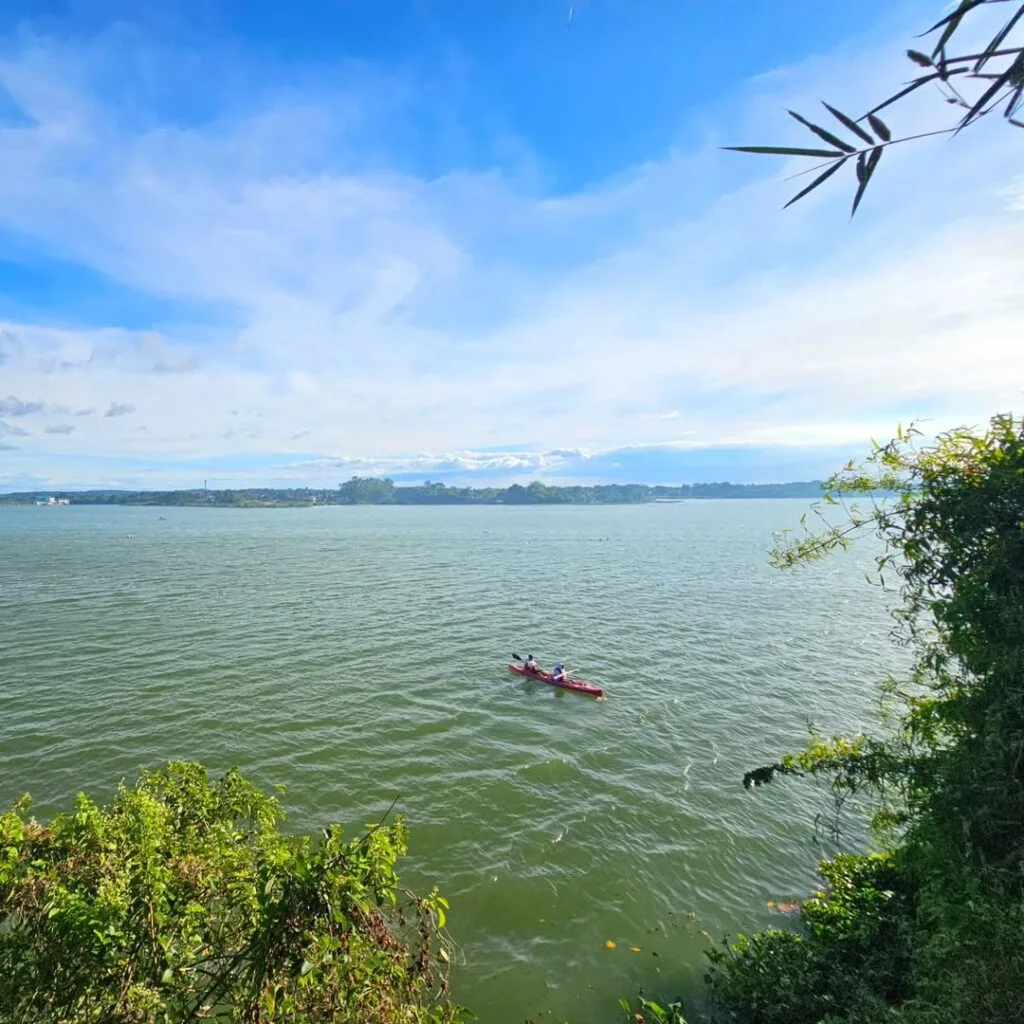

What makes Batangas appealing isn’t just the scenery or the space—it’s the sense that things are unfolding at the right pace.