Why Choosing the Best Type of Luxury Yacht Is Really a Lifestyle Decision
When I first started looking at luxury yachts for sale, I thought it was a numbers game: length, price, engine size, and how far my budget could stretch. It didn’t take long for me to realise the real question wasn’t “How much boat can I afford?” but “How do I actually want to live at sea?”
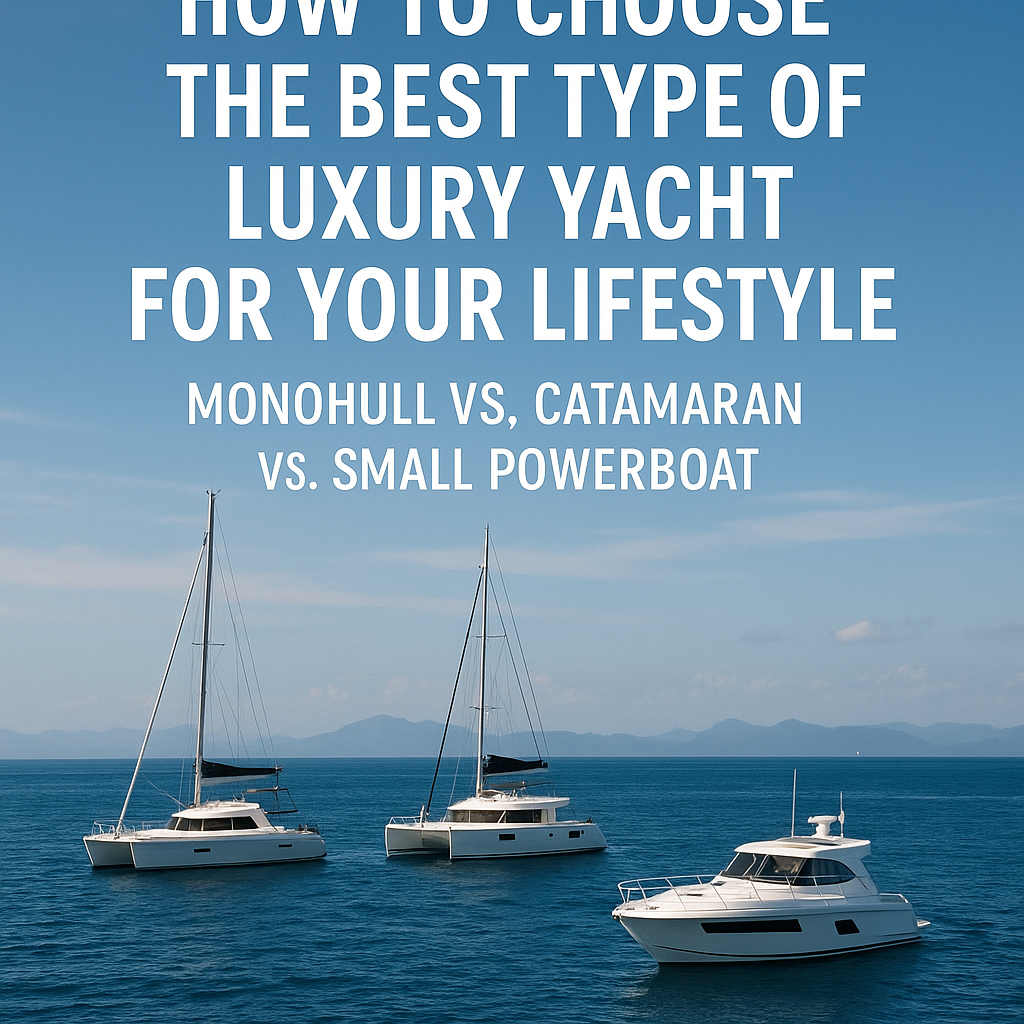
Soon I was comparing three types of luxury yachts that kept appearing in marinas and listings: the classic monohull sailboat, the wide and stable catamaran, and the fast, compact small powerboat. On paper, they all look impressive. But out on the water, each one creates a different rhythm to your days — from how you wake up at anchor to how your friends move around the deck.
This guide is for travellers and owners who don’t just want specs, but want to know which option is truly the best luxury yacht for their lifestyle and budget. Whether you dream of slow blue-water passages, social island-hopping with family, or spontaneous day trips along the coasts of Palawan or Batangas, we’ll unpack the differences in comfort, speed, fuel efficiency, and maintenance — with a focus on how these types of luxury yachts perform in Southeast Asia, especially the Philippines.
By the end, you won’t just be choosing the best luxury yacht — you’ll be matching a yacht to the way you want to live on the water.
Table of Contents
Quick Answer: What Is the Best Type of Luxury Yacht for You? (At-a-Glance Guide)
Not everyone has time to read a full 3,000-word guide, so here’s the quick cheat sheet. If you just want to know the best luxury yacht for you based on how you travel, start here and then dive deeper into the next sections if needed.
Your Best Match in 10 Seconds
Best type of luxury yacht for pure sailing experience: Monohull sailboat
Best type of luxury yacht for comfort and family trips: Sailing catamaran
Best type of luxury yacht for speed and quick island-hopping: Small powerboat
When I sailed my first monohull offshore, I finally understood why sailors are addicted to that gentle heel and steady rhythm of a traditional yacht. It feels alive in the water and is often the best yacht for beginners who want to really learn how to sail.
On a catamaran in Palawan, it genuinely felt like a floating villa—wide decks, stable at anchor, and my coffee never once slid across the table. For many families, this is the best luxury yacht for families who value space and comfort over drama from the waves.
With a small powerboat in Batangas, I could leave late morning, visit two islands, squeeze in a snorkel stop, and still be back at the marina before sunset. If you care most about flexibility and the best luxury yacht for island hopping, a fast, well-equipped powerboat is tough to beat.
The Main Types of Luxury Yacht You Need to Understand
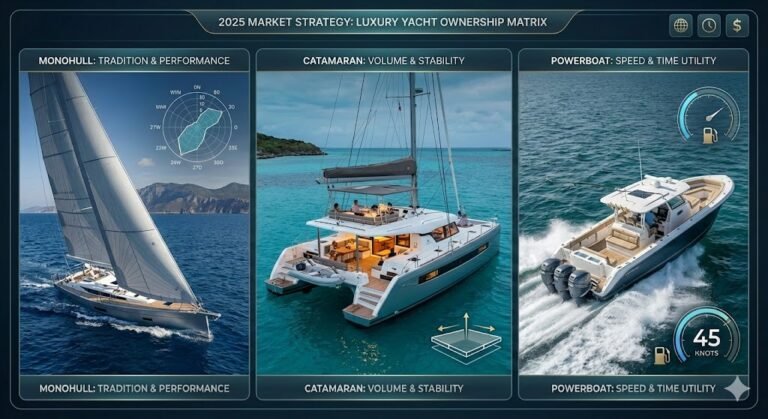
When you start comparing yacht types, it’s easy to get lost in specs. Before you decide on the best luxury yacht for your lifestyle, it helps to understand how each design behaves on the water. Here’s a real-world look at three core categories you’ll see often: the monohull luxury yacht, the luxury catamaran yacht, and the small luxury powerboat.
Monohull Sailboat – The Classic Luxury Sailing Yacht
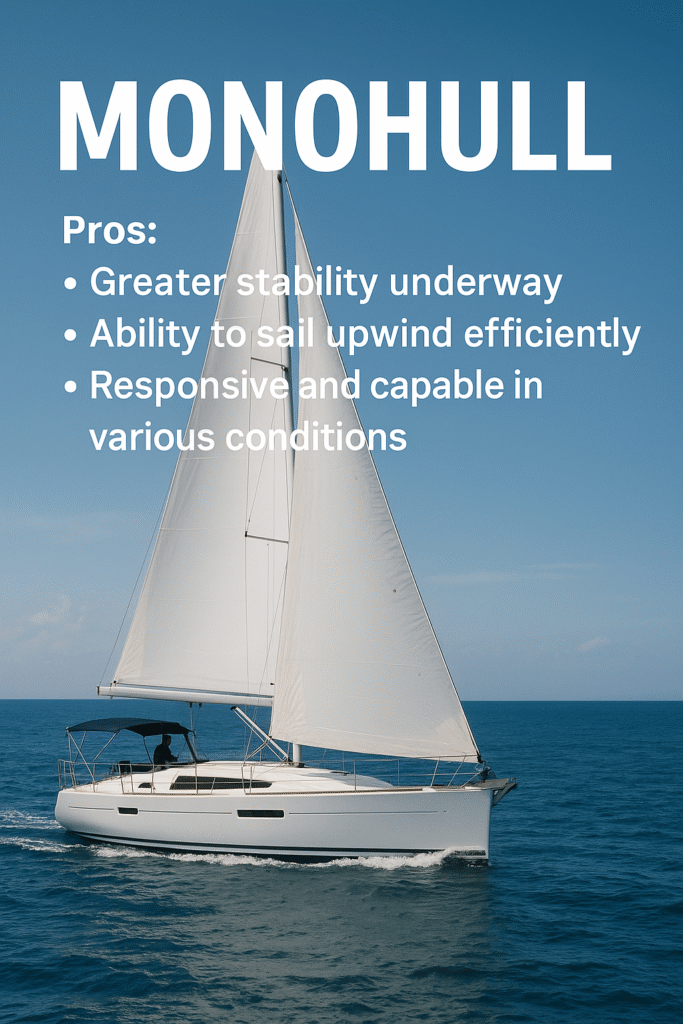
A monohull is a single-hull sailing yacht with a deeper keel, built for ocean cruising and longer passages. When I first stepped aboard a well-kept monohull in Subic, I noticed how narrow and purposeful everything felt: designed to heel, slice through waves, and carry you offshore. This type of luxury yacht rewards hands-on sailing skills and offers that classic feel many first-time owners imagine.
Catamaran – The Spacious, Stable Luxury Yacht
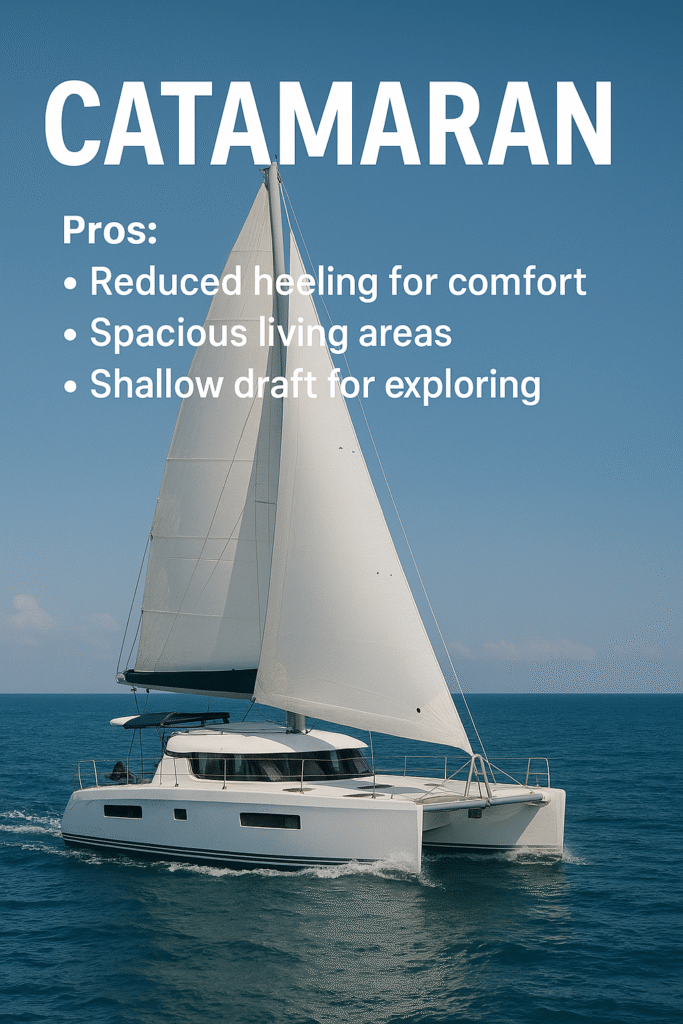
A luxury catamaran yacht has two slender hulls connected by a wide deck, giving you generous living space and impressive stability. On a catamaran trip in Palawan, it felt like a floating apartment—wide saloon, big cockpit, and hardly any rolling at anchor. Catamarans shine for family holidays, crewed charters, and relaxed group cruising where comfort, privacy, and space matter as much as the sailing itself.
Small Luxury Powerboat – Fast, Flexible Coastal Yacht
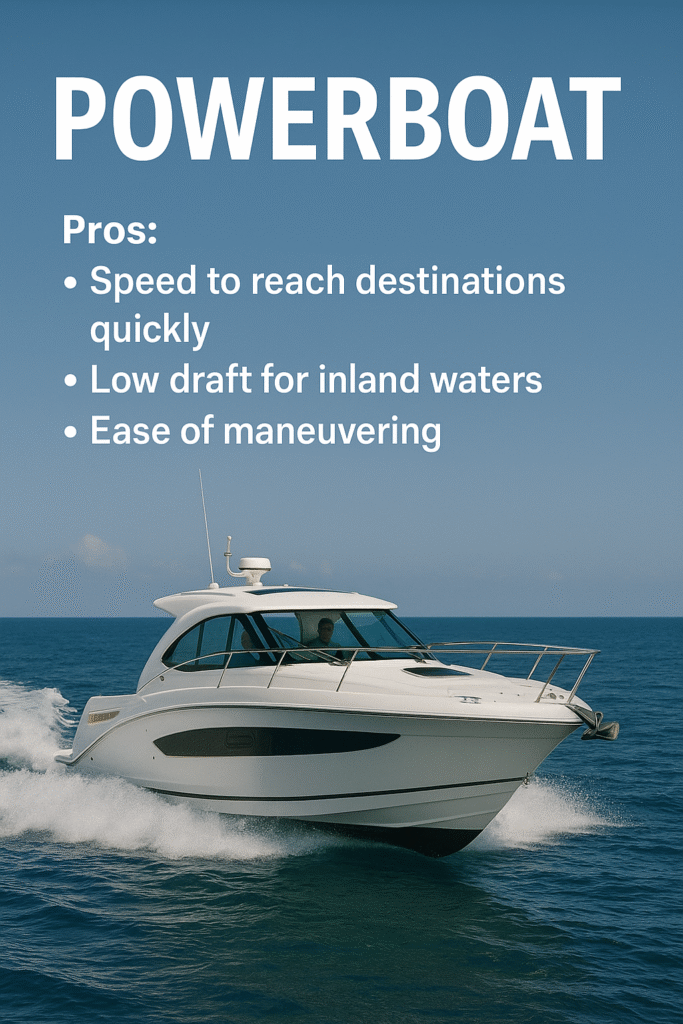
A small luxury powerboat is usually a 25–45 ft motor yacht, built on a planing or semi-displacement hull for speed. In Batangas, I joined a day cruise on a compact power yacht and we hopped between islands in hours instead of days. These yachts are ideal for quick coastal runs, weekend trips, diving, and fishing—perfect if you want the benefits of a luxury yacht without committing to full-time sailing.
Monohull Sailboat: Best Type of Luxury Yacht for Traditional Sailing Lovers
Why a Monohull Can Be the Best Luxury Yacht for Purists
If you’re drawn to the art of sailing, a monohull sailboat is often the best type of luxury yacht for you. This is the boat that heels gracefully, slices into oncoming waves, and rewards every small adjustment of the wheel or sail trim. On my first overnight passage on a monohull, I remember the quiet after we killed the engine and just listened to the wind. The hull leaned, the rig hummed, and every ripple on the water felt like part of the conversation.
A good monohull is designed for blue-water cruising. The deeper keel adds stability and allows the boat to point higher into the wind, which is essential for longer offshore legs and ocean crossings. Many owners also love the psychological comfort of a self-righting ocean-going luxury yacht—if a monohull is knocked down by a big wave, the ballast in the keel helps it stand back up. For traditionalists, this combination of performance and safety is what makes a monohull the best luxury sailing yacht.
Pros of a Monohull Luxury Yacht
Strong upwind performance and efficient pointing angle
Predictable, reassuring handling in heavy seas
Often cheaper to purchase than a similar-sized catamaran or motor yacht
Fits standard marina berths and haul-out facilities with fewer complications
For long passages—whether it’s a slow trip from Palawan to Cebu or a multi-leg voyage across Southeast Asia—this kind of traditional luxury yacht feels purpose-built.
Cons and Practical Limitations
Of course, a monohull isn’t perfect for everyone. You get less interior and deck space for the same length compared to multihulls, and the constant heeling can be tiring or uncomfortable for guests who are new to sailing. The deeper draft can also be a real limitation in shallow lagoons or sandbar anchorages, especially around coral areas in the Philippines.
Who Should Choose a Monohull?
A monohull sailboat is ideal for:
Solo sailors and couples who love hands-on, skill-based sailing
Travelers planning reflective, slower passages rather than quick hops
Owners who care more about classic lines and sailing feel than maximum interior volume
If your dream is a traditional luxury yacht that rewards seamanship, feels alive under sail, and can safely cross oceans, a monohull is still one of the best types of luxury yacht you can choose.
Catamaran: Best Luxury Yacht for Comfort, Space, and Social Trips
Why a Catamaran Feels Like a Floating Holiday Home
If you’re dreaming of the best luxury catamaran for long, lazy days at sea, think of it as a floating holiday home rather than “just a boat.” The wide beam gives you a huge, stable platform, so the deck feels more like a terrace than a cramped cockpit. At anchor, a good catamaran barely rolls, which is why so many families and first-timers fall in love with this stable luxury yacht style.
When I stayed on a catamaran in El Nido, it honestly felt more like a boutique apartment than a boat. I had a wide saloon with big windows, a shaded cockpit where everyone could eat together, and separate cabins in each hull for privacy. The boat hardly moved while we were anchored in a quiet cove, so even my “I-get-seasick-on-ferries” friend was completely relaxed. For travellers who see the yacht as their main accommodation while exploring Southeast Asia, a luxury catamaran Philippines charter makes a lot of sense.
Pros of a Luxury Catamaran Yacht
A catamaran really shines when comfort and social time are your top priorities:
Massive saloon and cockpit space – ideal for families and groups
Shallow draft for lagoons, sandbars, and island-hopping in the Philippines
Level sailing with minimal heel; kinder motion for non-sailors and kids
Excellent platform for snorkeling, diving, and towing water toys
For many travellers, this combination is what makes a catamaran the most practical family-friendly luxury yacht.
Cons and Cost Considerations
Higher purchase price than a similar-length monohull
Often higher marina and haul-out fees because of the wider beam
Two engines mean more maintenance, even if they give you helpful redundancy
In extreme storm conditions, a catamaran cannot self-right once fully capsized
Who Should Choose a Catamaran?
You’ll get the most value from a best luxury catamaran setup if you:
Travel with kids, mixed-experience groups, or VIP guests who want comfort first
Treat the yacht as your primary villa while exploring tropical anchorages
Prioritise space, stability, and easy movement on deck over pure “feel of sailing”
If your perfect day at sea looks like a calm, spacious, and social floating home, a catamaran is likely the best type of family-friendly luxury yacht for your lifestyle.
Small Powerboat: Best Luxury Yacht for Speed and Spontaneous Adventures
Why a Small Luxury Powerboat Is Perfect for Fast Island-Hopping
If you want a fast luxury yacht that matches a busy schedule, a small luxury powerboat for island hopping is hard to beat. When I want a last-minute escape from Manila, a small powerboat lets me leave late, arrive early, and still be home by Monday. There’s no waiting for the right wind or trimming sails for hours—you just turn the key, clear the breakwater, and go.
Most small luxury powerboats cruise comfortably at 15–20 knots or more, compared to 6–8 knots under sail. That difference is huge when you’re running from Batangas to Verde Island, Subic to Capones, or Cebu to nearby islets. For travellers who value time at the destination more than the process of sailing there, this is often the best small luxury yacht configuration.
Pros of a Small Luxury Powerboat
A small powerboat shines on short, high-energy trips:
Best choice for day-trip luxury yacht experiences and weekend cruising
Ideal for diving expeditions, wakeboarding, and coastal exploration
Shallow draft makes it easy to slip into coves and even do gentle beach landings
No sailing skills required; the learning curve for new owners is straightforward
If your idea of the best luxury yacht for island hopping is something that feels like a sports car on water, a compact power yacht will feel instantly natural.
Cons and Operating Costs
Fully dependent on engines and fuel, which means higher ongoing fuel bills
Shorter range than sailboats for long passages or open-sea routes
Less comfortable at anchor in swell than a wide, stable catamaran
Be honest with your budget: a fast luxury yacht is fun, but fuel and engine maintenance are non-negotiable line items.
Who Should Choose a Small Powerboat?
A small luxury powerboat for island hopping is ideal if you:
Are a busy professional or family based near hubs like Batangas, Subic, or Cebu
Prefer quick weekend escapes and day-trip luxury yacht cruising over slow passages
Care more about reaching two or three islands in one day than trimming sails along the way
If you want maximum flexibility, fast transfers, and easy operation, a small powerboat is often the best small luxury yacht for your lifestyle.
How to Choose the Best Type of Luxury Yacht for Your Lifestyle (Step-by-Step)
Choosing a boat isn’t just about specs and price tags—how to choose a luxury yacht really starts with your lifestyle. When I began my own yacht buying journey, the turning point was shifting from “What’s the best deal?” to “What kind of days at sea do I actually want?” Use this mini yacht buying guide to narrow things down step-by-step.
Step 1 – Define Your Primary Use Case
Be brutally honest: is this yacht for quick weekend trips, liveaboard cruising, business entertaining, or big family holidays? A boat that’s perfect for quiet overnights with your partner might feel cramped once you add kids, friends, and work clients into the mix.
Step 2 – Decide How Much You Want to Sail
Ask yourself, “Do I really want to sail or just be on a yacht?” If you’re excited to trim sails and read the wind, a monohull or sailing catamaran fits best. If you just want a smooth ride and easy controls, a small powerboat makes more sense.
Step 3 – Set Your Comfort vs Budget Balance
If space and stability matter more than anything, catamarans and larger motor yachts usually win. If your upfront budget is tight, a well-maintained used monohull is often the most accessible best luxury yacht for lifestyle cruising.
Step 4 – Think About Where You’ll Keep the Yacht
Marina slip, mooring, or private dock? Wide-beam catamarans can face higher berthing costs and fewer available slots, especially in busier marinas. Monohulls and many powerboats slot into standard berths with fewer headaches.
Step 5 – Try Before You Buy
Before you decide on the best luxury yacht for your lifestyle, charter in the Philippines and compare:
1–2 nights on a monohull for the pure sailing feel
A weekend on a catamaran for comfort and space
A day trip on a small powerboat for speed and island-hopping
Nothing beats firsthand experience when you’re learning how to choose a luxury yacht that truly fits you.
In the case of the luxury yacht, one should not make the purchase based on the specifications or first impressions. All kinds of yachts provide a variety of lifestyle experiences, and their distinctions have to be considered thoroughly and with the help of research. By taking some time to learn more about the performance of each yacht in real-world conditions, you will avoid making costly errors and will also be able to make sure that the investment you make is the one you expect.
As an illustration, what appeared to be a dream yacht on paper might not be so on the water when you get to move around in it, its space, and its general functionality. There are those travelers who have comfort and social space as their priorities, and others value speed or the realness of sailing.
A choice made based on a desire for knowledge relating to onboard life, maintenance requirements, and the geographical relevance will give you an improved insight into what boat ownership or charter is all about. Most times, it is the informed decision that makes the difference between a good and a great decision. A luxury yacht is not merely a purchase, but a change of lifestyle, and the more you know beforehand, the better your experience on the water is going to be.
Buying vs Chartering: Test the Best Type of Luxury Yacht First
Why Chartering First Makes Sense
Luxury yachts are long-term commitments, both emotionally and financially. Before you sign anything, it’s smart to explore charter luxury yacht vs buy options. Chartering lets you experience real-world motion, layout, and comfort—plus see how your family or friends actually use the space.
How to Use Charters as “Test Drives”
Treat each charter as a structured test drive of a yacht. Book a monohull sailing charter to feel offshore passages and life at a heel. Try a catamaran charter for social trips and family comfort. Then do a small luxury yacht charter in the Philippines focused on speed-based island hopping with a powerboat. Take notes after each trip: what you loved, what annoyed you, and what you never used.
When Buying Becomes the Better Option
Buying starts to make more sense when you cruise often, know your preferred yacht type and region, and want full control over layout, equipment, and home-port. At that point, those “test drives” pay off—you’re no longer guessing. You’ve already lived a slice of the lifestyle you’re about to invest in.
Technical Comparison: Fuel Efficiency, Handling, and Maintenance
Fuel Efficiency and Range
When you’re comparing the best luxury yacht, fuel burn and range quickly separate each option. If you want a truly fuel-efficient luxury yacht, a monohull sailboat will almost always win. Most of your miles are done under sail, with the engine used only for docking, calm days, or charging batteries, making it ideal for long-range cruising.
A sailing catamaran is also efficient. Under sail it glides easily, and when the wind dies, many owners run just one of the twin engines to save fuel while still maintaining a decent speed. It’s a smart compromise between comfort and economy.
A small powerboat sits on the other end of the spectrum: it gives you speed on demand, but that performance comes with the highest fuel consumption and a shorter range. When I spoke with owners in Subic and Cebu marinas, the pattern was clear: sailboats save fuel, powerboats save time.
Handling, Stability, and Comfort
A monohull heels and rolls, which makes the boat feel alive and responsive but can challenge first-timers. A catamaran, by contrast, is the classic stable luxury yacht—wide, level, and forgiving at anchor, especially for guests who aren’t used to being at sea.
A small powerboat is usually the most easy-to-handle yacht for beginners: point the bow, adjust the throttle, and you’re off. The trade-off is that at higher speeds in choppy seas, the ride can get bouncy.
Maintenance and Ownership Costs
From a luxury yacht maintenance cost perspective, a monohull has one hull, one engine, plus sails and rigging to care for. A catamaran doubles up on hulls and systems and often pays more in yard and berth fees, though resale can be strong.
A powerboat’s budget is dominated by engines and fuel. Less rigging, more mechanical upkeep. In short: monohull = simpler systems, catamaran = more systems and comfort, powerboat = more engines and operating cost.
Best Type of Luxury Yacht for the Philippines and Southeast Asia
Shallow Waters, Reefs, and Island-Hopping Routes
The Philippines and much of Southeast Asia are made for island-hopping yachts. Sandbars, coral reefs, and turquoise lagoons reward boats with a shallow draft. This is where catamarans and many small powerboats shine. You can nose closer to the beach in Palawan, anchor inside calm lagoons in Cebu, or slip into hidden coves around Siargao that deeper-keeled monohulls have to admire from farther out.
When I joined an island-hopping route around the Visayas, the catamaran we used could anchor in just a few meters of water, with coral gardens almost under the trampoline. That shallow-draft access changed the entire experience.
Weather, Seasons, and Typhoon Considerations
In the Philippines, the amihan (cool, dry northeast monsoon) and habagat (southwest monsoon) influence when and where you’ll cruise. Whatever you consider the best luxury yacht for the Philippines, you still need to respect these seasons. Monohulls feel reassuring in heavier offshore seas, while catamarans and powerboats often use their speed to avoid uncomfortable conditions altogether by timing passages between weather systems.
Typhoon season is a non-negotiable safety concern: you’ll want reliable forecasts, storm-safe marinas or typhoon holes, and a habit of choosing protected anchorages.
Matching Yacht Type to Local Use
For a multi-month Philippine loop or Southeast Asia passage, a monohull or catamaran is usually the most practical Southeast Asia luxury yacht choice. For resort-style trips, private charters, and dive expeditions based out of hubs like Cebu or Coron, a catamaran or small powerboat works beautifully.
Around the Visayas, I personally found a catamaran the most practical balance of comfort, space, and shallow-draft luxury yacht access—proof that the “best” yacht in this region is the one that fits how and where you actually cruise.
FAQs About the Best Type of Luxury Yacht
What is the best type of luxury yacht for beginners?
For most beginners, a small powerboat or stable sailing catamaran is ideal. Both are easy to handle, forgiving in light conditions, and let you enjoy the experience before committing to more complex yachts.
What is the best type of luxury yacht for families with kids?
For families with kids, the best type of luxury yacht is usually a catamaran. The wide, stable deck, separate cabins, and big cockpit make it feel safe, spacious, and easy to move around.
Which luxury yacht type is most fuel-efficient?
A monohull sailing yacht is the most fuel-efficient luxury yacht. You travel mainly under sail, using the engine only for docking or calm days, which keeps fuel consumption and running costs low on long trips.
What is the safest type of luxury yacht in rough seas?
In rough offshore conditions, many skippers prefer a well-built monohull. Its deep keel and self-righting design give extra security, making it a strong candidate for those prioritising the safest luxury yacht option.
Which luxury yacht is best for island-hopping in the Philippines?
For island-hopping in the Philippines, a shallow-draft catamaran or fast powerboat works best. Both can approach beaches, reefs, and lagoons easily, turning every stop into a relaxed, resort-style experience.
Is a catamaran or monohull better for long-term cruising?
For long-term cruising, both work well. Monohulls suit traditional sailors and ocean passages, while catamarans offer more comfort, space, and stability—especially attractive if you’re cruising with family or guests.
Are small powerboats suitable as luxury yachts or just day boats?
A small powerboat can absolutely be a luxury yacht if it has quality fittings, a comfortable cabin, and good amenities. It’s best for day trips and weekend cruises rather than long ocean passages.
How much does it cost to maintain a luxury yacht each year?
Annual maintenance costs vary widely, but many owners budget 10–20% of the yacht’s value per year. This covers servicing, insurance, mooring, fuel, and routine repairs for engines, hull, and systems.
Do I need sailing experience to own a luxury yacht?
You don’t need sailing experience to own a luxury yacht, but it helps. Powerboats are easier for beginners, while monohull and catamaran owners should invest in basic sailing courses and safety training.
How do I know if I should charter or buy a luxury yacht?
If you cruise only a few weeks a year, chartering is usually smarter. Buying makes sense once you know your preferred yacht type, home port, and cruising region—and you’re ready for ongoing costs.
Final Thoughts: My Personal Take on the Best Luxury Yacht
After trying all three – monohull, catamaran, and small powerboat – I realised there’s no single “perfect” yacht, only the best luxury yacht for your lifestyle and priorities.
For me, a monohull will always represent romance and traditional sailing: the heel, the creak of the rig, and those slow, meditative passages. A catamaran, on the other hand, is comfort and connection—huge spaces where family and friends can spread out and enjoy long, social trips. The powerboat is pure freedom: speed, spontaneity, and the ability to chase one more island before sunset.
Whichever direction you choose when choosing your luxury yacht, the right boat won’t just take you to new places—it will quietly reshape how you travel, rest, and reconnect with the sea.