By Aiden Kenzy, founder of Lakbay Pinas and a passionate Filipino travel writer dedicated to uncovering the hidden gems and iconic destinations across the Philippines. Since 2015 – Climbed: July 2026 – Published: September 2026
Quick Answer: Mt. Makiling is a 1,090 MASL dormant stratovolcano in Los Baños, Laguna, managed strictly by UPLB’s Makiling Center for Mountain Ecosystems. The standard Mariang Makiling Trail (MMT) is rated 4/9 difficulty, takes 5 to 7 hours to complete, and requires a mandatory guide (PHP 1,200 per group), a physical government ID, and online pre-registration at least one week in advance.
Key Takeaways:
- The entrance fee is PHP 40 per person (PHP 30 for students and seniors); the mandatory guide fee is PHP 1,200 per group of up to 5 hikers, set by UPLB MCME.
- The best time to climb is November through February during the Philippine dry season, though Mt. Makiling generates its own weather and fog is common year-round.
- The trail is 8 kilometers one-way, rated 4/9 difficulty, and split into a punishing concrete road section (Stations 1 to 11) and a raw, muddy forest zone (Stations 12 to 30).
- Mt. Makiling is the 33rd ASEAN Heritage Park in Southeast Asia and home to over 120 bird species, many of them endemic to the Philippines.
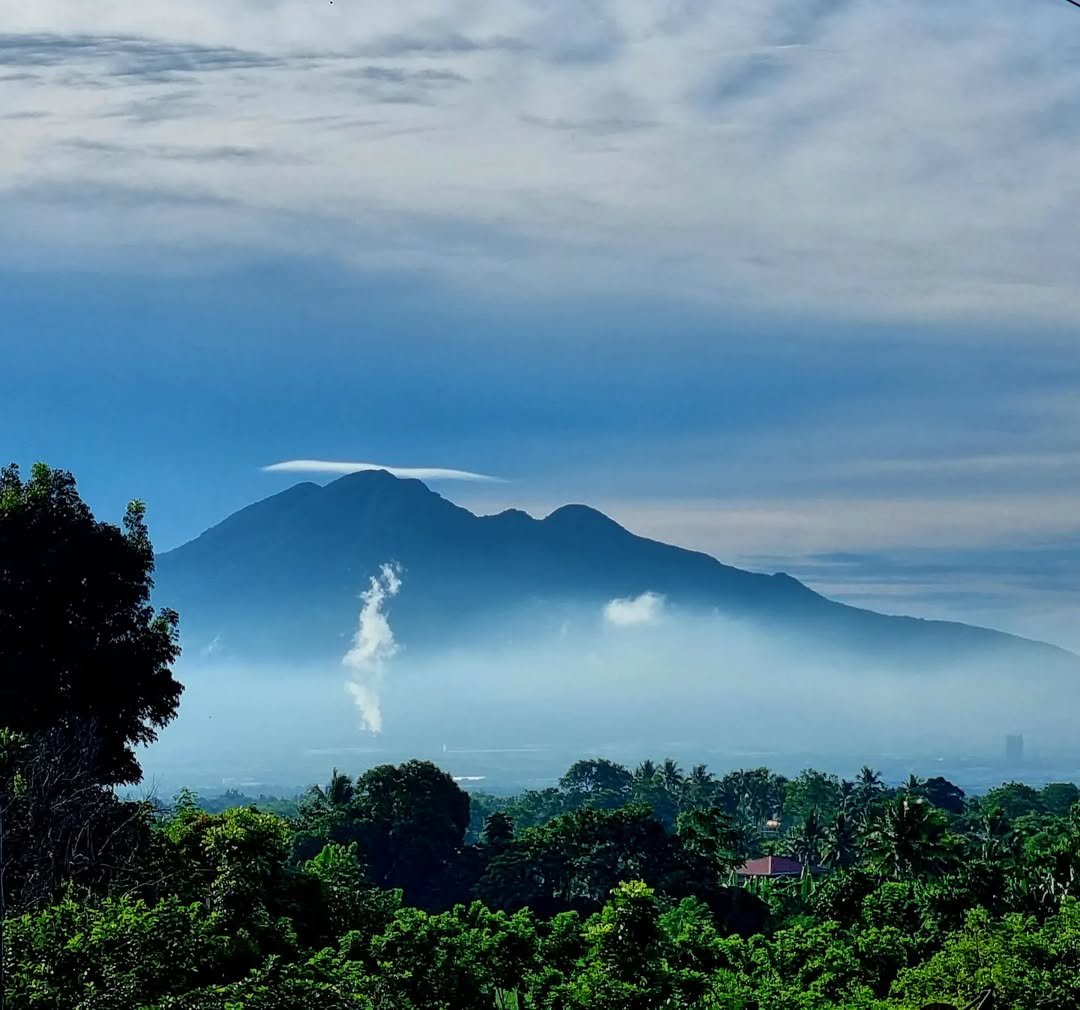
Table of Contents
Where Is Mt. Makiling Located?
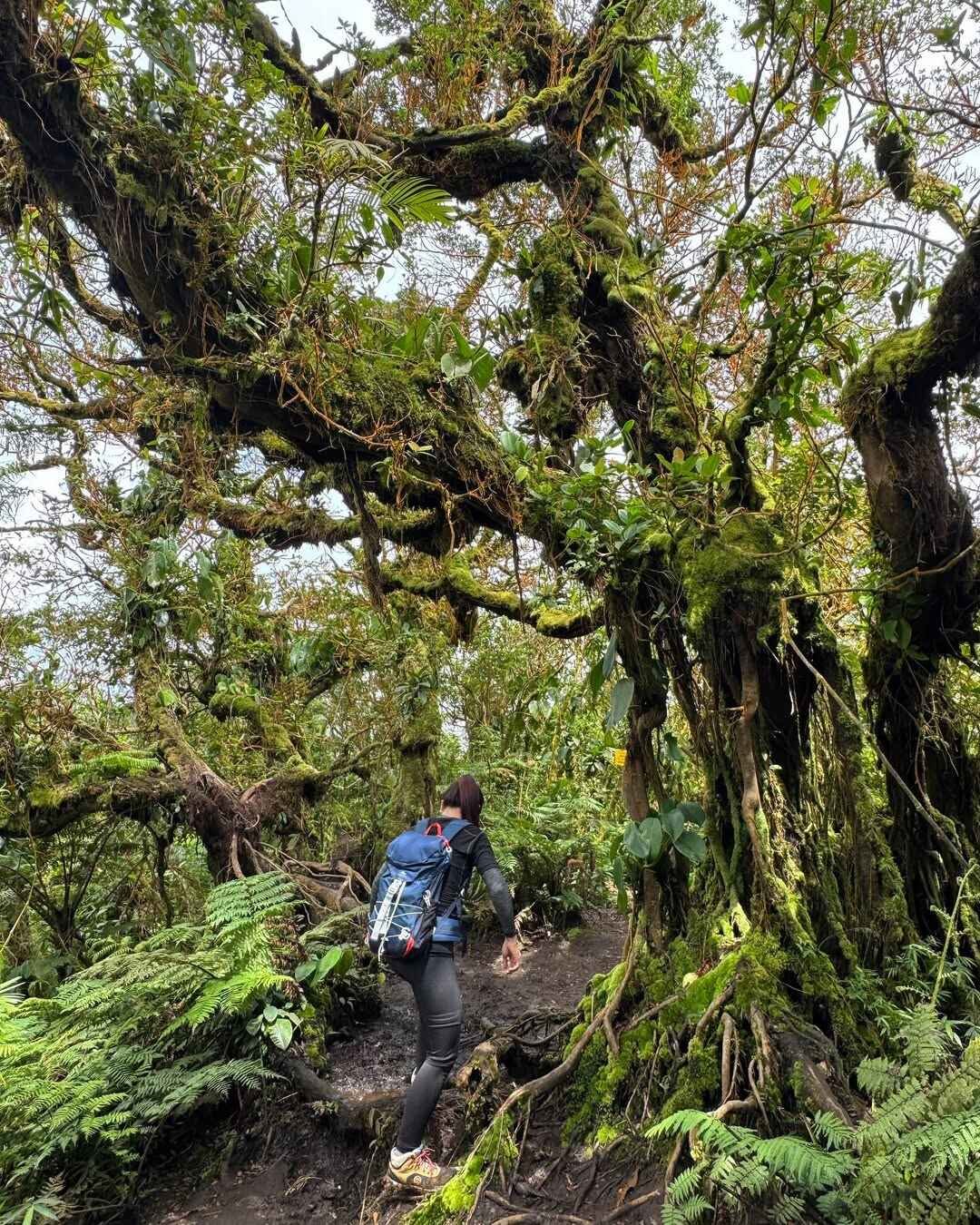
Mt. Makiling is an ASEAN Heritage Park rising to 1,090 MASL in the CALABARZON region. It sits across the municipalities of Los Baños, Bay, Calamba City, and Santo Tomas, spanning a total of 4,244 hectares inside the Mount Makiling Forest Reserve (MMFR).
Mt. Makiling is associated with the province of Laguna, Philippines. The primary trailhead is at the UPLB College of Forestry and Natural Resources (CFNR) in the College district of Los Baños, about 60 kilometers south of Manila via SLEX.
The mountain is a dormant stratovolcano with a collapsed caldera rim. The summit at Peak 2 faces toward Batangas. It is often said that the mountain’s profile, when viewed from a distance, resembles the silhouette of a woman lying on her back — said by locals to be Maria Makiling herself.
The Legend of Maria Makiling
Every hiker who sets foot on this mountain eventually asks about her. Maria Makiling appears throughout Philippine folklore as an ageless diwata (fairy or goddess) who protects the mountain, ensures balance in nature, and sometimes offers aid to lost travelers or true-hearted villagers.
She is the most widely known diwata in Philippine mythology and was venerated in pre-colonial Philippines as the goddess Dayang Masalanta or Dian Masalanta, invoked to stop deluges, storms, and earthquakes. Locals believe that hikers who disrespect the forest, pick plants without permission, or speak loudly in the deep forest risk angering her.
After a betrayal by her mortal beloved, she disappeared from view, though she is believed to still roam Mt. Makiling, watchful and waiting, forever entwined with the land. That belief isn’t just folklore. It’s the cultural weight behind every “garbage in, garbage out” rule the MCME enforces on the trail today.
How to Get to the Mt. Makiling Jump-off Point
The jump-off is at Monitoring Station 1, UPLB College of Forestry, Los Baños, Laguna. From Manila, the route is straightforward but requires close attention at one specific juncture.
From Manila:
- Board a southbound provincial bus (DLTB Co., JAC Liner, or HM Transport) from LRT-Buendia, Cubao, or PITX. The bus ride costs around PHP 90 to 130 and takes 1.5 to 2 hours depending on SLEX traffic.
- Alight at Olivarez Plaza (also called College Junction), near the Robinson’s mall and a Caltex station in Los Baños.
From Olivarez Plaza to the Trailhead:
This is where most first-timers go wrong. The local jeepney network has multiple routes going into UPLB campus, including “UP College Kanan” and “UP College Kaliwa.” Do not board either of these. You want the jeepney with the “Forestry” signboard, not a route number. There is no route number — only the destination text on the jeepney’s board matters here.
The exact jeepney fare from Olivarez Plaza to the UPLB College of Forestry trailhead is PHP 15 per person. The ride winds through the main campus and climbs into the upper forested section, dropping you off at or near Monitoring Station 1.
Important pre-dawn warning: The gate opens at exactly 6:00 AM. If you’re traveling from Manila the same day, you’ll likely arrive at Olivarez around 4:30 to 5:00 AM. At that hour, Forestry jeepneys are scarce. A special trip (whole jeepney rental) costs up to PHP 200. The smarter move is to sleep at the TREES Hostel (Training Center for Tropical Resources and Ecosystems Sustainability) inside UPLB the night before. Room 12 with air-conditioning costs PHP 1,000 per night, it’s run by the College of Forestry, and it puts you a short walk from the gate. There is no confirmed overnight lodging at or near Station 1 beyond the TREES Hostel, so this is your only real option for pre-dawn staging.
For a nearby day trip after your climb, Mt. Tagapo on Talim Island in Rizal is another accessible Laguna-area climb worth adding to your weekend.
Permits, Fees, and Guide Requirements at Mt. Makiling
The UPLB MCME manages the standard 2026 hike with a mandatory guide (PHP 1,200), strictly enforced cut-off times, and a physical ID for entry. This is not a DENR-managed mountain. Rules here come from an academic institution and are enforced with academic precision.
Registration:
Visitors may register and book their activities online or in person at Monitoring Station 1. To ensure guide availability, register online at least one week in advance. Walk-ins are sometimes possible on weekdays, but during peak weekends and Holy Week, guides book out fast.
You can contact MCME directly at (049) 536-3572 or visit mountmakiling.org to confirm openings before your trip. The mountain periodically closes for weather events, research activities, and trail maintenance.
The Physical ID Rule:
The golden rule for 2026 is “No Valid ID, No Entry.” Digital IDs, photocopies, or photos on your phone will be instantly rejected. The ID is held by rangers and returned only once every member of your group has logged out. This enforces a “one-out, all-out” system that prevents faster hikers from abandoning slower group members in the Wilderness Zone.
Fees Summary:
The entrance fee is PHP 10.00 per person according to the official MCME access protocol page, though field reports for 2026 cite PHP 40 for regular adults and PHP 30 for students, seniors, and persons with disabilities. Verify the current rate at Station 1 when you arrive, as fees are subject to revision.
The camping fee at the designated sites is PHP 500 per group per night on regular days, excluding other fees.
The mandatory guide fee is PHP 1,200 per group, covering up to 5 hikers, at a fixed 1:5 guide-to-hiker ratio. Split among 5 people, that’s PHP 240 per person. Solo hikers bear the full PHP 1,200 alone, which stings, but the guide’s knowledge of the trail’s unmarked upper sections is worth every peso.
Prohibited items include portable sound systems, liquor, firearms, and any bladed items. The “Garbage In, Garbage Out” policy means rangers check your bags on exit — all trash you generated on the trail must come back down with you.
What Is the Mt. Makiling Trail Like?
The Mariang Makiling Trail is a 4/9 difficulty minor climb taking 5 to 7 hours to complete. The challenge comes less from steep technical climbing and more from cumulative fatigue, forest humidity, and the long concrete approach to Agila Base.
The trail has 30 monitoring stations marked by yellow indicators on trees or embedded concrete posts. These serve as psychological milestones and emergency reference points. The route breaks cleanly into two very different worlds.
Sector 1: Stations 1 to 11 (The Paved Approach)
Difficulty Score: 2/5 — Physically grinding but technically simple. The gradient on this concrete road wears down your knees and drains your cardiovascular reserve before you even reach the forest.
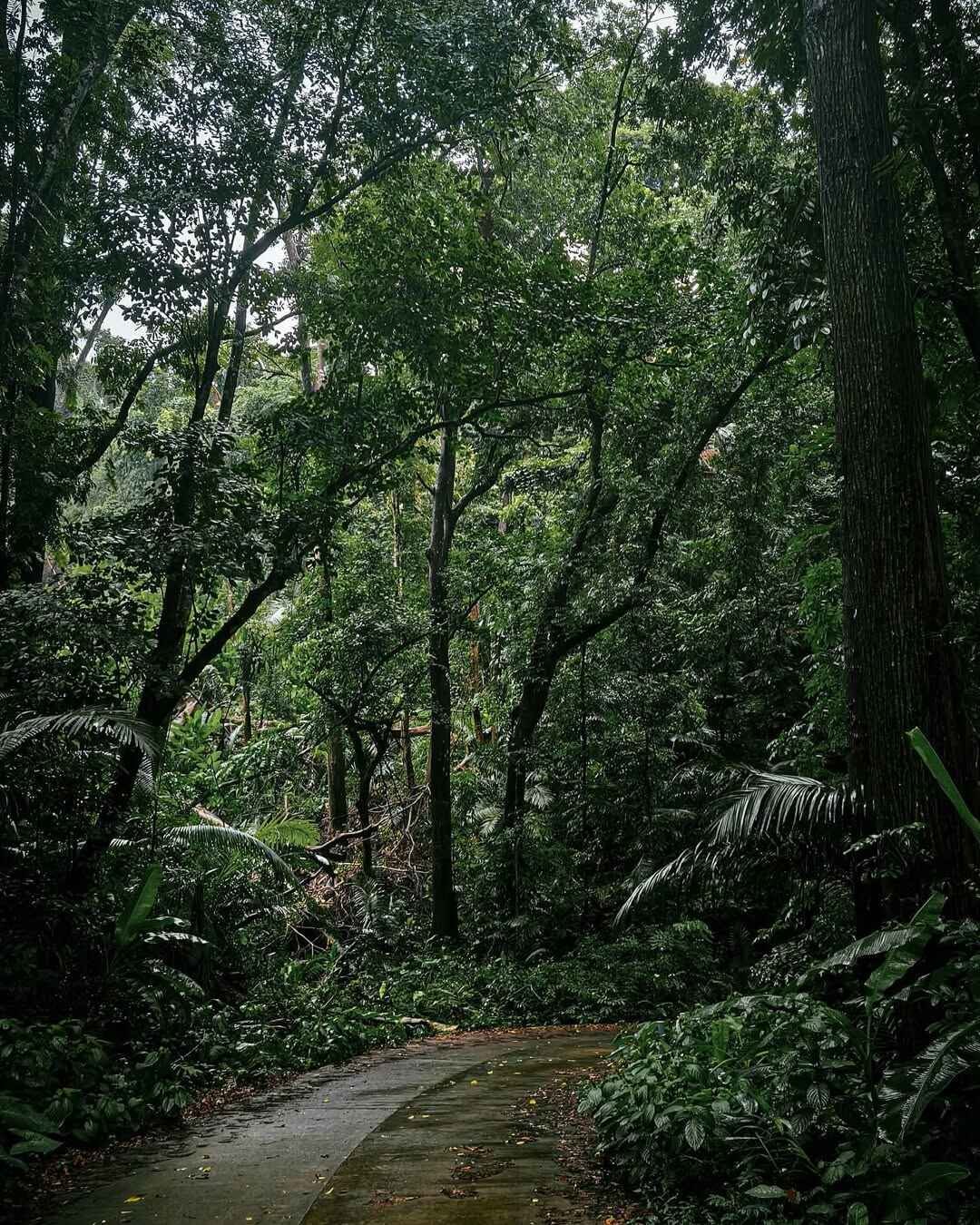
This is 5.4 kilometers of steep concrete road built for research vehicles and geothermal monitoring access. It’s wide, sun-exposed in the morning, and offers zero shock absorption. Most hikers describe it as the most demoralizing part of the whole climb precisely because it doesn’t feel like mountain hiking at all.
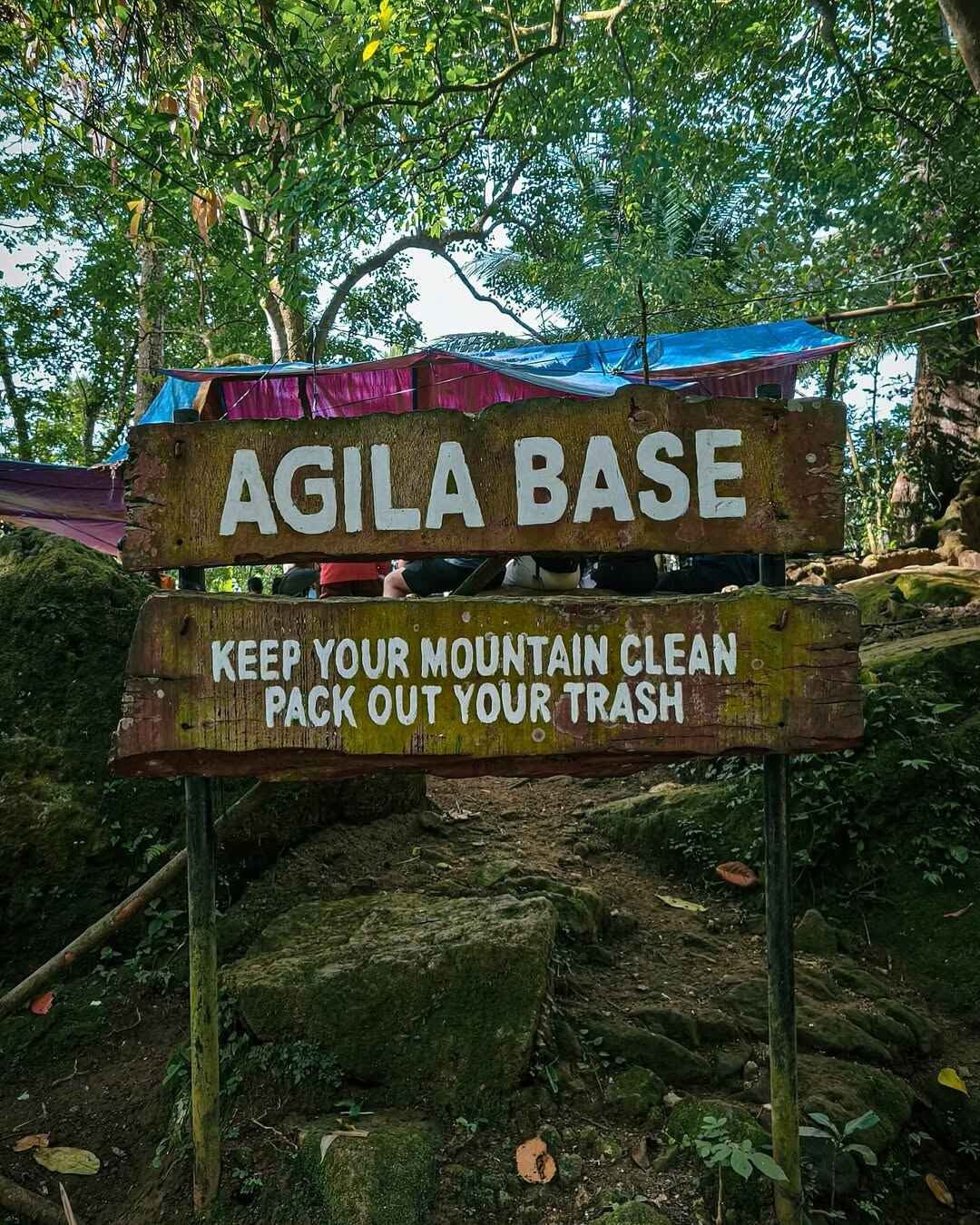
Agila Base (Station 11) is the critical checkpoint at the end of this sector. There’s a small clearing with natural water you can refill from, and occasional vendors on busier weekends. More importantly, this is where rangers enforce the strict 9:00 AM cutoff. Any group not reaching Station 11 by 9:00 AM is turned back and redirected to lower side trips like the Flat Rocks or the Mudsprings.
The habal-habal hack: Ask the MCME rangers at Station 1 if the authorized motorcycle taxi operators are available that day. For exactly PHP 100 per person, a habal-habal driver will take you from the CFNR gate all the way up to Agila Base in about 15 minutes. This replaces a 90-minute uphill concrete slog with a short motorized ride, saves your legs for the actual forest climb, and eliminates any risk of missing the 9:00 AM cutoff. On the way down, the same PHP 100 per person habal-habal ride is available from Station 11 back to the UPLB gate — and your knees will thank you.
Sector 2: Stations 12 to 30 (The Wilderness Zone)
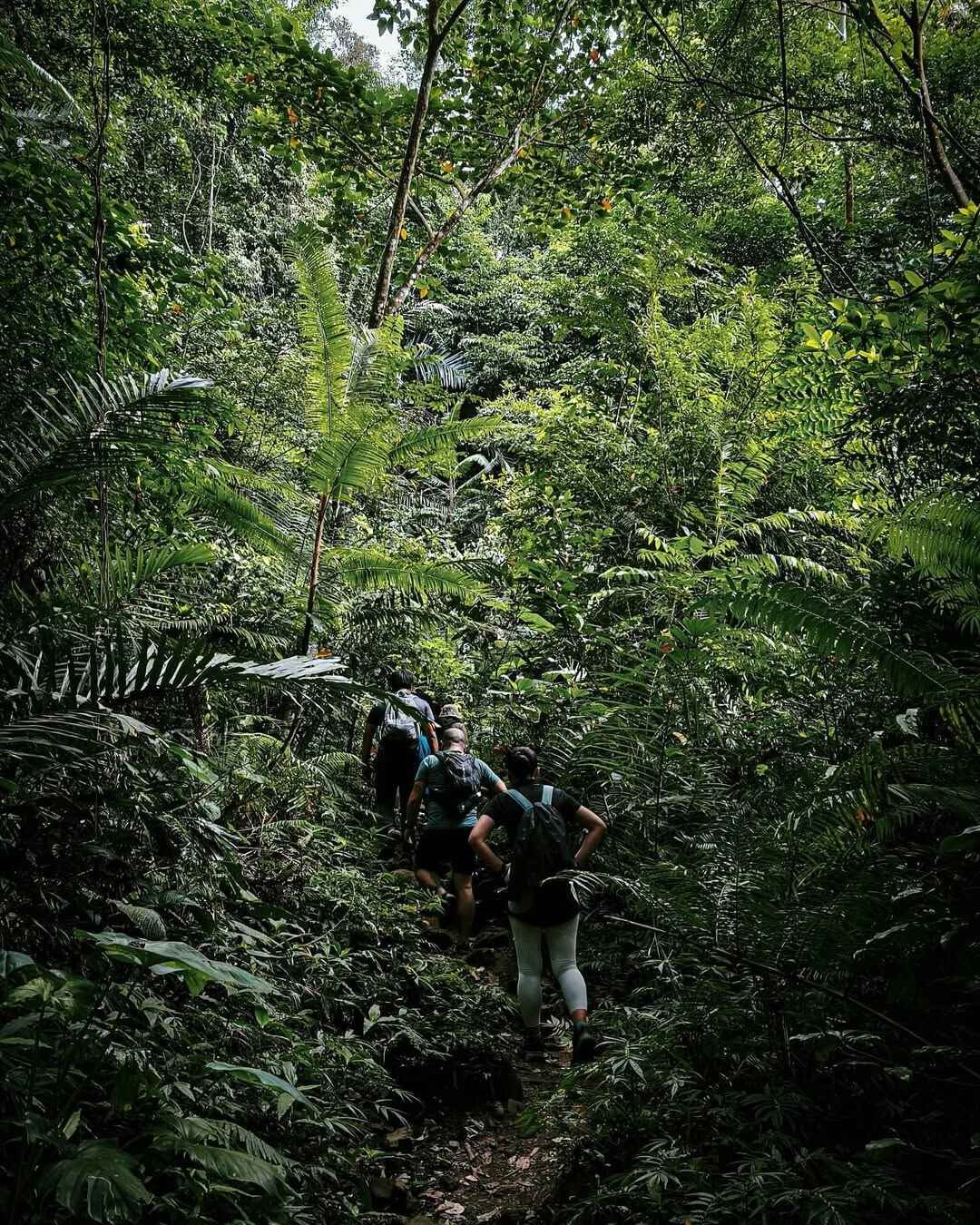
Difficulty Score: 4/5 — The real mountain starts here. Expect heavy mud, near-zero traction, root-scrambling, and active limatik from Station 12 onward.
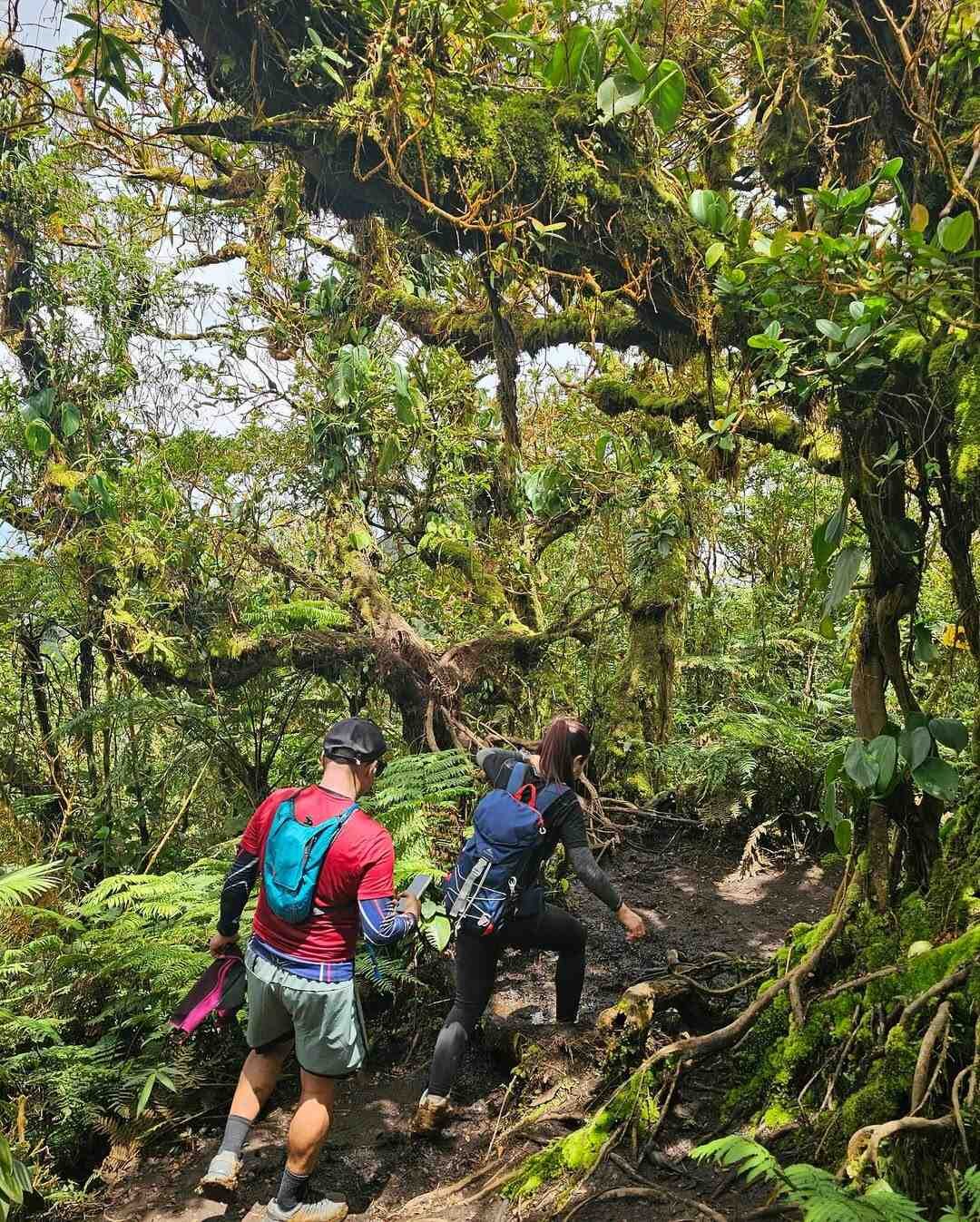
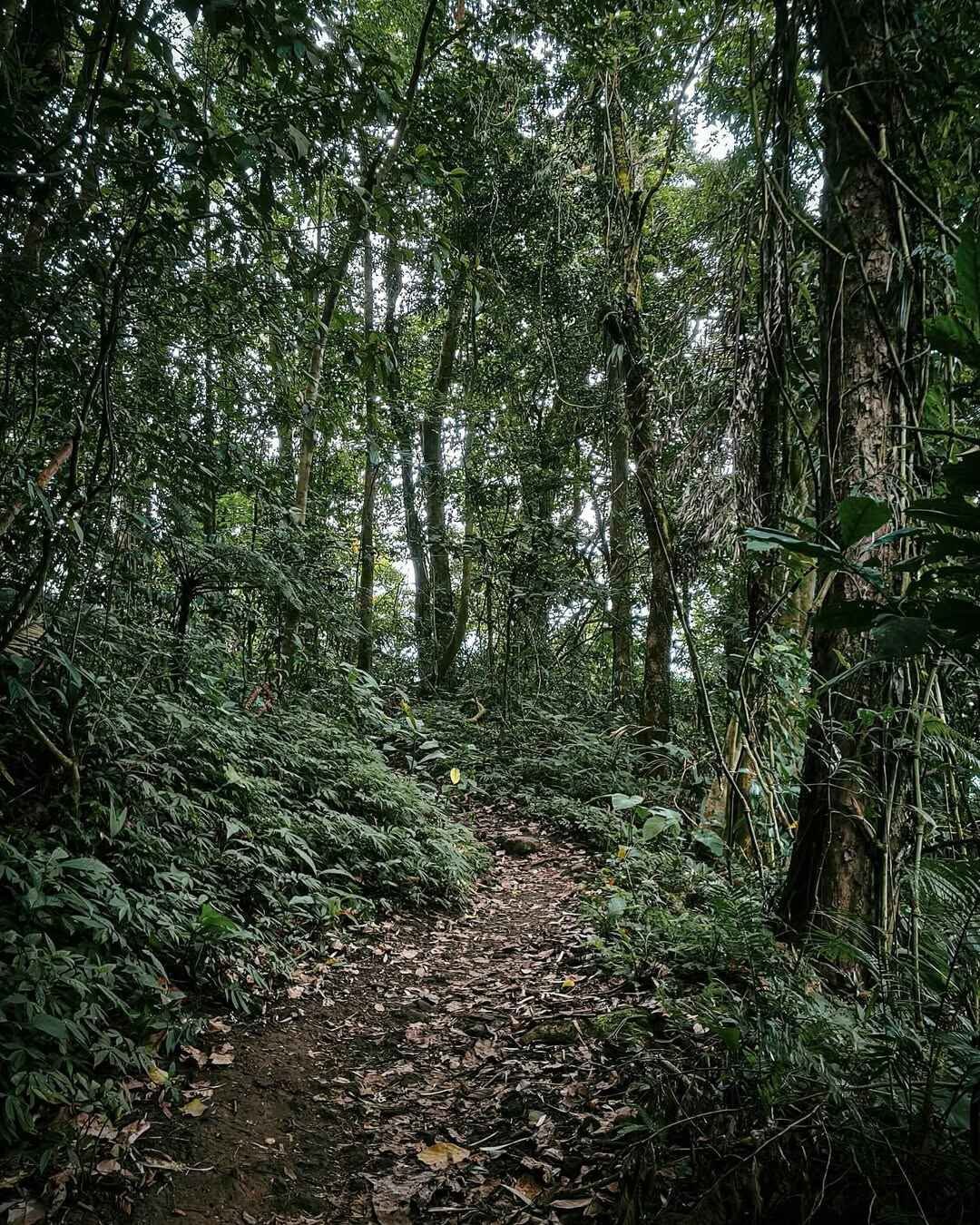
The transition past Station 12 (Malaboo Campsite area) is immediate. Concrete ends. The forest closes in. Humidity spikes. The clay-rich soil, which the guides call “Chocolate Mud,” becomes the dominant surface and offers almost no grip when wet.
Difficulty Score: 5/5 from Station 25 to Summit — The upper section past Station 25 is a series of near-vertical scrambles. Trekking poles become useless here. You go hands-and-feet, pulling yourself up using massive exposed root systems of ancient dipterocarp trees. The physical and mental demand peaks here.
The trail involves near-vertical roped segments and exposed ridge sections requiring serious scrambling with high exposure. Groups attempting Mt. Makiling for the first time should be honest about their fitness level before committing to the full summit push.
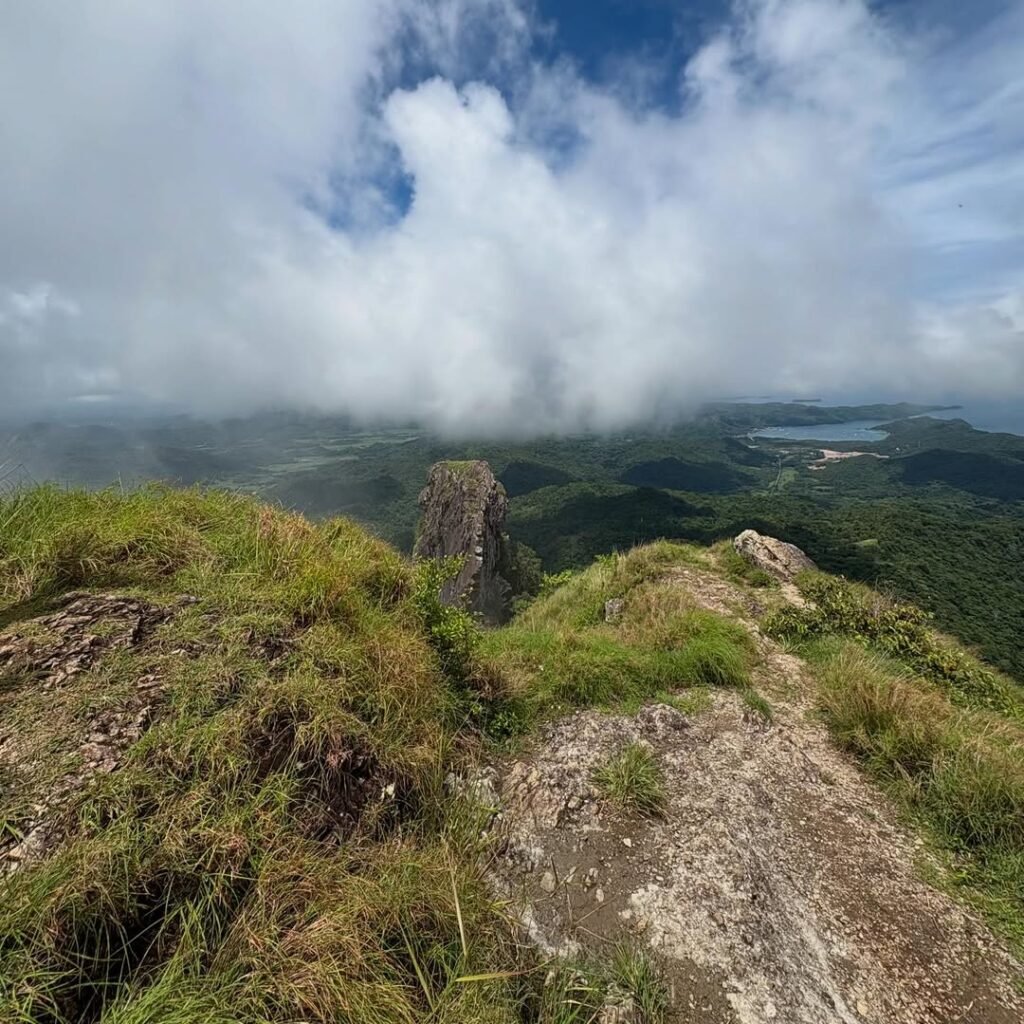
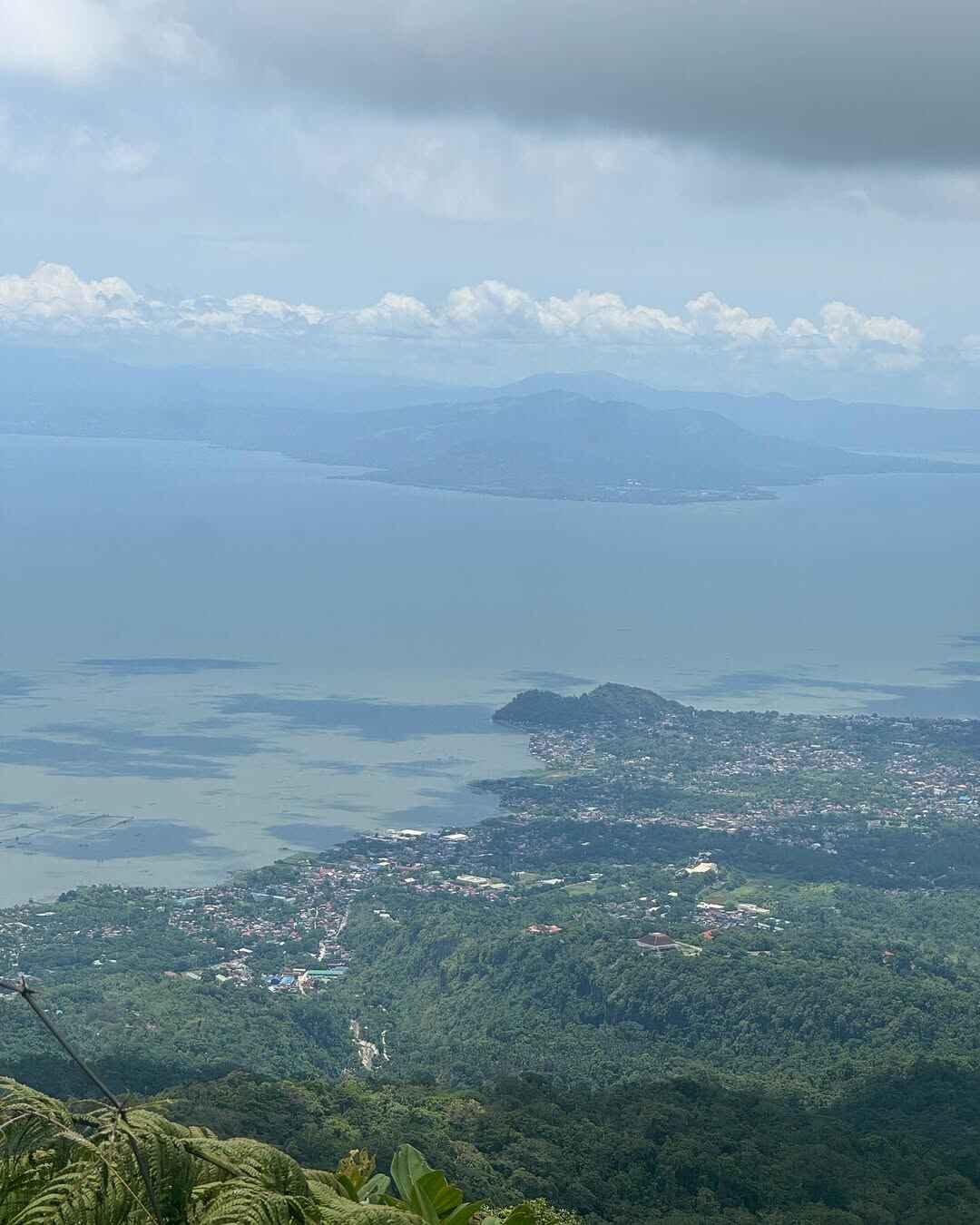
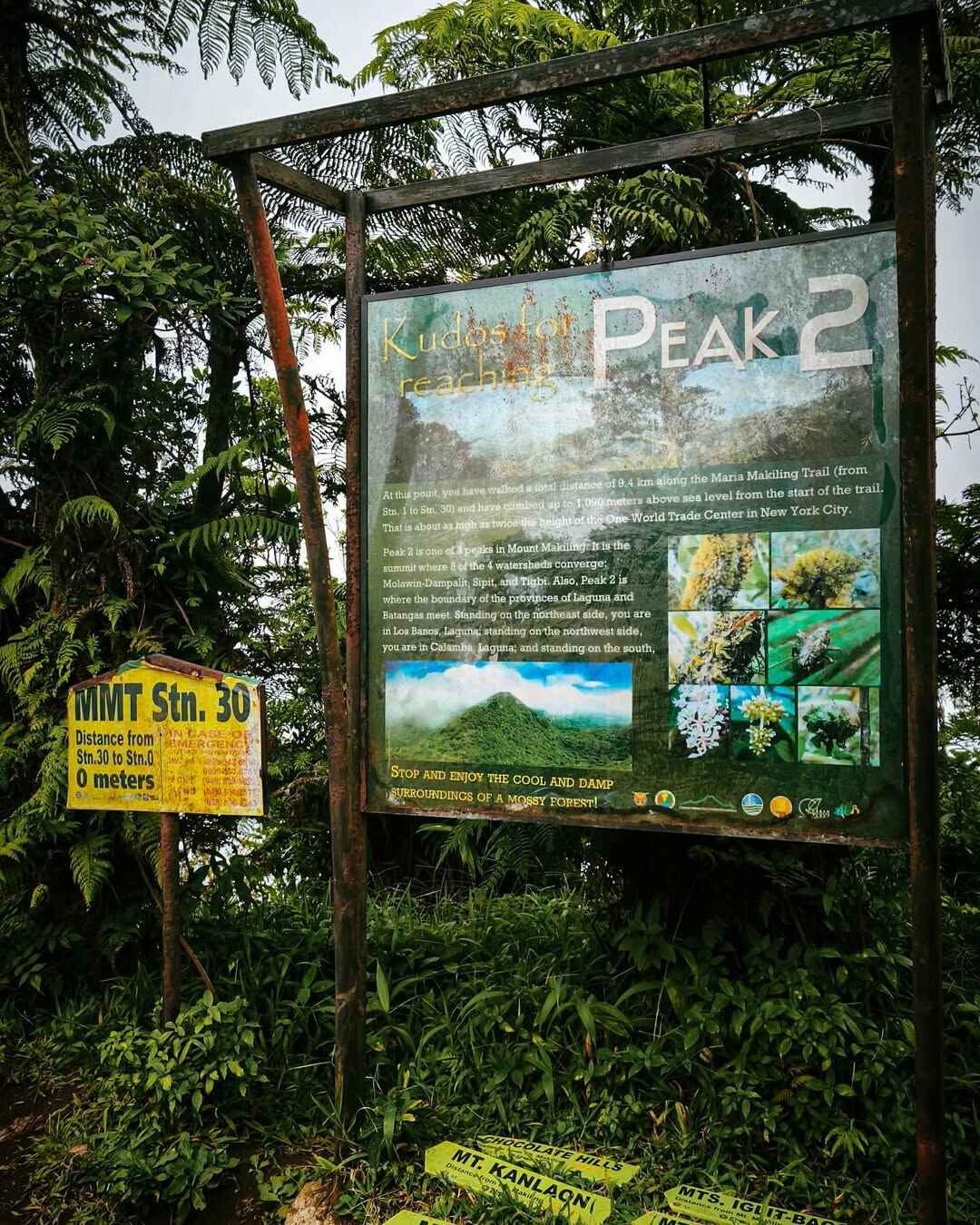
Peak 2 at 1,090 MASL features a modest metal scaffold viewing deck. On clear days you can see Laguna de Bay and the Laguna plains. On most days — especially during the wet season — the summit is wrapped in dense fog.
The Makiling Traverse (MakTrav): The Technical Route
The Makiling Traverse is rated a Major Climb at 6/9 difficulty, taking 6 to 9 hours. Starting at Sitio Jordan in Santo Tomas, Batangas, it involves near-vertical roped segments and the exposed Melkas Ridge (Haring Bato at Station 15). It is frequently closed due to landslides.
The Mt. Makiling Back Trail and full traverse from Sto. Tomas are not consistently open for casual hikers. Confirm with MCME before planning either route. For those comparing the two routes, see this guide to major climbs in the Philippines for context on what 6/9 difficulty actually demands physically.
The Mt. Makiling Limatik: What You Actually Need to Know
No honest guide about Mt. Makiling skips this. The terrestrial blood leeches, called limatik (Haemadipsa sylvestris), are one of the mountain’s defining features.
Limatik live on low-lying leaves, ground cover, and branches. They detect your body heat and movement and move toward you fast. From Station 12 upward, they’re present on every wet day. During my July 2026 climb, one of my trail buddies had a limatik attach directly to his eye. That’s not an exaggeration — these things find every gap in your clothing. We had to remove it carefully while he kept still. After that, everyone in our group became a lot more systematic about checks.
Effective limatik defense:
- Wear full-length compression tights under your trekking pants.
- Tuck pants into thick socks. Use knee-high gaiters to seal the ankle gap.
- Carry a small spray bottle of 70% isopropyl alcohol or a pouch of coarse rock salt. A single spray or pinch causes the leech to detach immediately.
- Never forcibly pull a feeding leech off your skin. It can leave its jaw embedded or regurgitate bacteria into the wound.
- Standard mosquito repellents do not work on leeches. Save your Off! Lotion for mosquitoes.
- Do a full buddy-system body check every 15 to 20 minutes from Station 12 upward. Check ankles, back of knees, collar, wrists, and ears.
The psychological toll of this is real. Knowing they’re on you and not knowing where is harder than the mud or the roots.
Best Time to Hike Mt. Makiling
November through February is the best window, when the Philippines’ dry season reduces rainfall on the lower slopes.
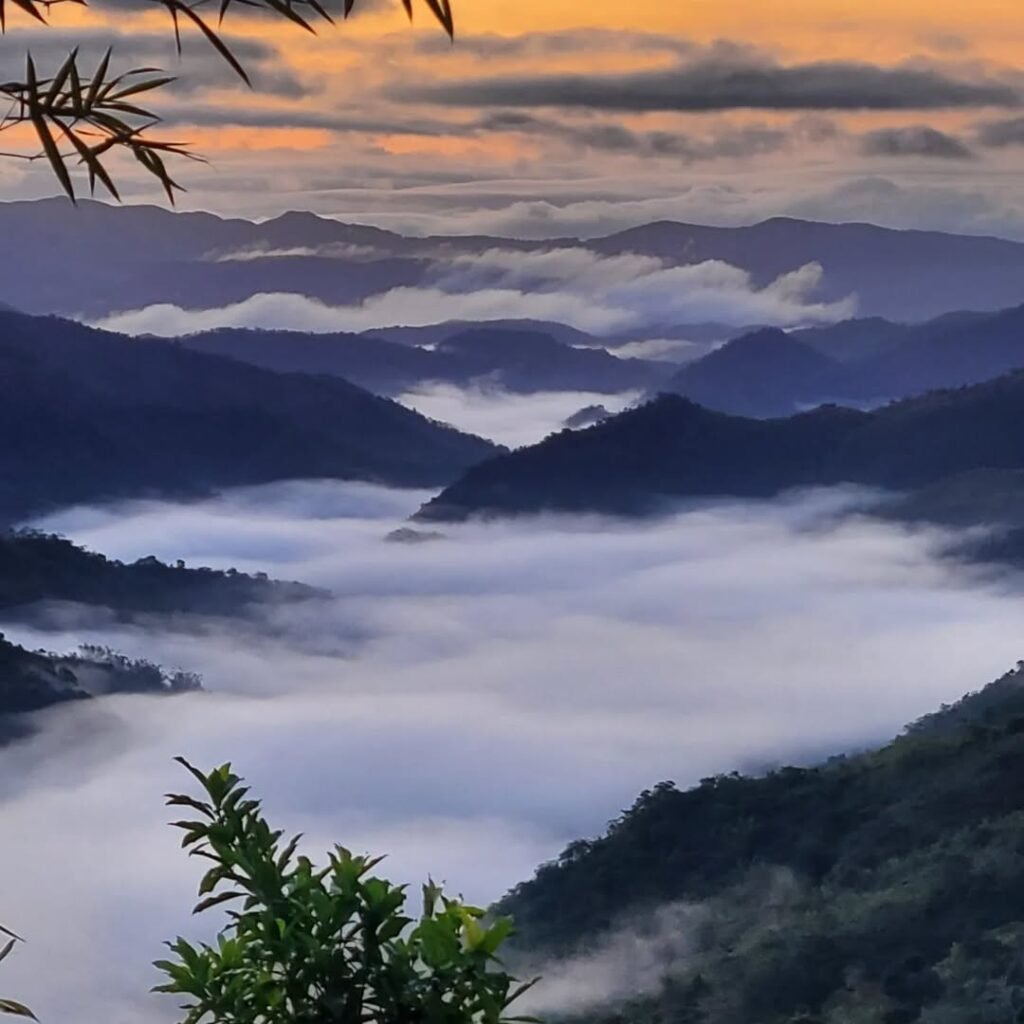
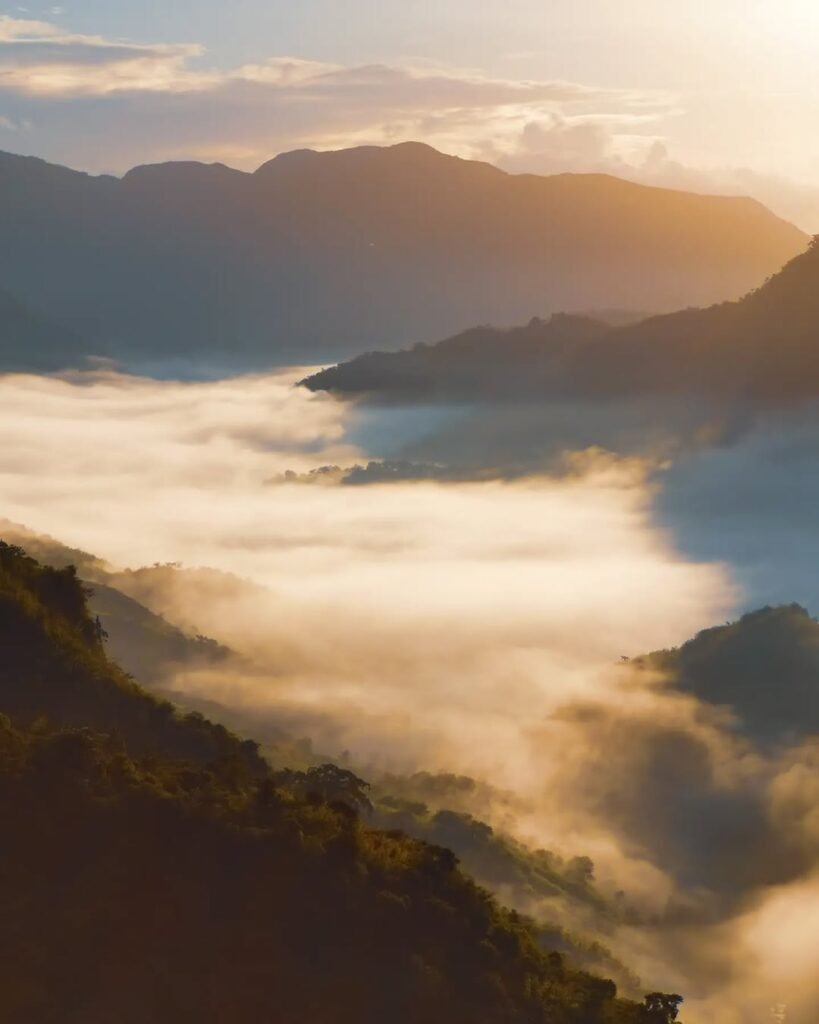
The honest caveat: Mt. Makiling generates its own hyper-localized weather because of its standalone stratovolcano structure. Even in May, which falls in the dry season, the mountain can produce heavy morning fog and constant light rain. During my July 2026 climb, the trail was fully rainy and muddy from the first step past Station 1. The Wilderness Zone was a soup of Chocolate Mud and the fog was so thick above Station 22 that it felt like hiking inside a cloud.
If a clear summit view matters to you, climb on a dry-season weekday morning. If it doesn’t, the wet season is quieter, the forest is greener, and the birdsong is louder. Just prepare for zero traction past Station 12 regardless of season.
Avoid climbing during typhoon alerts, Holy Week (crowds are massive and guides book out weeks ahead), and UPLB-announced research closures. for updated advisories on protected area access across the Philippines.
Budget Breakdown for Climbing Mt. Makiling
| Expense | Cost (PHP) |
|---|---|
| Bus fare from Manila to Los Baños | PHP 90 to 130 |
| Jeepney (Olivarez to UPLB Forestry, “Forestry” signboard) | PHP 15 per person |
| Pre-hike lodging (TREES Hostel, Room 12) | PHP 1,000 per night |
| Entrance fee (regular adult) | PHP 40 per person |
| Mandatory guide fee | PHP 1,200 per group of up to 5 |
| Habal-habal to Agila Base (Station 11) | PHP 100 per person |
| Camping fee (Tayabak or Malaboo) | PHP 500 per group per night |
| Habal-habal descent from Station 11 | PHP 100 per person |
| Food and water (bring from town) | PHP 200 to 400 |
| Total (day hike, group of 5) | ~PHP 700 to 900 per person |
A safe budget is PHP 1,000 per person for a group of five. Solo hikers or pairs carry a heavier share of the guide fee, which can push individual costs to PHP 1,500 to PHP 1,800 or more.
What to Pack for Mt. Makiling
| Item | Essential? |
|---|---|
| Original physical government ID | Yes — no entry without it |
| Trekking poles | Yes for Sector 1; leave at Agila Base for Sector 2 |
| Knee-high gaiters | Yes |
| Compression tights (under pants) | Yes |
| 70% isopropyl alcohol spray bottle | Yes |
| Coarse rock salt (small pouch) | Yes |
| Waterproof rain jacket or poncho | Yes |
| At least 2 liters of water | Yes |
| Water purification tablets | Yes (for refills from natural sources) |
| Headlamp with spare batteries | Yes |
| Energy food (trail mix, energy bars) | Yes |
| Emergency whistle | Yes |
| First aid kit (include wound antiseptic) | Yes |
| Dry bag or waterproof pack cover | Yes |
| Extra dry clothes in a sealed bag | Yes |
| Trekking shoes with deep lugs | Yes |
| Camera or phone in waterproof case | Optional |
| Satellite communicator or two-way radio | Strongly recommended for summit push |
There are natural water sources along the trail, particularly in the lower and mid portions of the ascent. Carry sufficient water, and treat or boil any water sourced along the trail to ensure safety.
Cell signal completely disappears above Station 12 in the Wilderness Zone. If your group gets separated near the summit, a two-way radio is your only real-time communication option. Establish a check-in schedule with someone outside the mountain before you leave Station 1.
I brought two boiled eggs from my lodging as my pre-hike meal. That’s it. Simple, easy on the stomach, and enough fuel to get started. Anything heavier before a 5 to 7-hour push is a mistake.
Safety Tips for Climbing Mt. Makiling
Know the cutoffs. The gate opens at 6:00 AM, with a strict 9:00 AM cutoff at Station 11 (Agila Base). All day hikers must log out by 2:00 PM. These are not suggestions.
Emergency contacts: The MMT Monitoring Station 1 emergency rescue hotline is 0908-9881-778. This connects to MCME personnel who coordinate ranger response and volunteer rescue teams. The UPLB University Police Force is reachable at 536-2803 for escalated emergencies. For medical emergencies, the UPLB University Health Service handles initial triage at 536-6238.
For severe trauma requiring surgery or advanced care, the HealthServ Los Baños Medical Center at 8817 National Highway, Batong Malake, Los Baños, is reachable at +6349 536 4858. It is a DOH-licensed Level-2 hospital and is under 15 minutes from the CFNR gate by vehicle.
Signal: Cell coverage cuts out after Station 12. Designate an able-bodied person to descend to Agila Base to call for help in an emergency, as this is where signal first becomes available on the way down.
Leech bites: A clean leech bite bleeds heavily due to the anticoagulant the leech injects. Clean the wound thoroughly with antiseptic and apply pressure. Post-climb, monitor for signs of infection for 48 to 72 hours.
Trail marking: The yellow station markers are reliable through Station 20. Above that, especially in heavy fog, the path becomes less obvious. Stay close to your guide and do not advance solo.
Group integrity: The “one-out, all-out” ID policy means no one runs ahead alone. This rule literally exists to stop faster hikers from abandoning tired group members in an unmarked wilderness zone with no cell signal. Respect it.
For other Laguna hiking options nearby, check the DIY guide to Mt. Kalisungan and Bunga Falls for a lower-difficulty option in the same province, or the Yambo Lake guide in Nagcarlan for a nature trip that’s more accessible and less physically demanding.
Mt. Makiling Biodiversity: What You’ll Actually See on Trail
Mt. Makiling is an ASEAN Heritage Park and one of the 18 centers of plant diversity in the Philippines. The biological wealth of this reserve is the primary reason UPLB manages it with such strict protocols.
Flora: The lower trail (100 to 500 MASL) is dominated by massive dipterocarp trees, some wide enough that four people couldn’t link arms around the trunk. Past Station 15, the canopy shortens and epiphyte-covered branches replace the giant hardwoods. Above 1,000 MASL approaching Peak 2, you’re in full mossy forest — every surface covered in green growth, dripping constantly with condensation.
Near the Tayabak Campsite around Station 9, look for the Jade Vine (Strongylodon macrobotrys), a rare flowering climber with turquoise-green blooms. Near Malaboo Campsite at Station 13 to 14, the extremely rare Rafflesia manillana has been documented, though sightings depend on bloom cycles monitored by MCME rangers.
Birds and wildlife: Mt. Makiling is a great birding site with many endemic bird species. The MMFR harbors at least 120 bird species. The Luzon Bleeding-heart (Gallicolumba luzonica) is a ground-dwelling dove with a distinctive red breast patch that looks startlingly like a wound. The Philippine Eagle-Owl (Bubo philippinensis) nests deep in the original forest and is rarely seen but sometimes heard at dawn. If you hear a sound that seems like heavy rain but no rain is falling, that’s cicadas — a disorienting experience on your first climb here.
Between Stations 4 and 5, some hikers have spotted small black-furred monkeys on quieter weekday mornings. Conduct protocols are simple: observe without feeding, touch, or approaching wildlife; take photos only with natural lighting and no flash; and never remove plants, stones, or any biological material from the reserve.
For a broader look at where Mt. Makiling fits in the Philippine trail landscape, the complete guide to mountains in the Philippines gives useful context on difficulty comparisons and regional trail classification.
What I Would Do Differently Next Time
Start from the TREES Hostel, not Manila. My group made the mistake of leaving Quezon City at 3:30 AM, arriving at Olivarez by 5:20 AM, and scrambling for a Forestry jeepney in the dark. We found one after 20 minutes of stress. Had we slept at the PHP 1,000-per-night TREES Hostel, we’d have walked to the gate fully rested, eaten a proper breakfast, and been first in line when it opened at 6:00 AM.
Book the habal-habal upfront. We walked the concrete road on the way up. By the time we hit Agila Base, we’d already burned a significant chunk of lower-body endurance on a section of trail that offers zero wilderness payoff. On the descent, we took the PHP 100 per person motorcycle ride down, and the difference in knee comfort was immediate and dramatic. Next time, PHP 100 on the way up, PHP 100 on the way down, no debate.
Bring more salt than alcohol. My spray bottle of isopropyl alcohol ran out past Station 18. The small rock salt pouch my guide carried lasted the rest of the climb. Rock salt is cheaper, takes up less space, and never runs out as fast as liquid.
Frequently Asked Questions About Mt. Makiling
Do you need a guide to hike Mt. Makiling?
Yes, a guide is mandatory in 2026. You cannot hike past Station 1 without a guide. Guides are assigned at a 1:5 ratio and the fixed fee is PHP 1,200 per group, set by UPLB MCME. You cannot hire an unregistered guide or proceed unaccompanied regardless of your experience level. Register online through the MCME portal at least a week ahead to secure one.
How long does it take to climb Mt. Makiling?
The Mariang Makiling Trail takes 5 to 7 hours to complete. That’s round trip for most groups doing a day hike to Peak 2. Faster fit groups finish in 5 hours; groups with slower members or those who spend time at the summit can push closer to 7. Add another 1 to 1.5 hours if you walk both the ascent and descent on the concrete road instead of taking the habal-habal.
Is Mt. Makiling open to hikers in 2026?
Yes, Mt. Makiling is open for regular day hikes via the UPLB Trail (Mariang Makiling Trail). However, closures happen due to weather events, research activities, and maintenance. Check with MCME at (049) 536-3572 or visit mountmakiling.org before finalizing your trip. The Makiling Traverse from Batangas has separate access rules and is not consistently open.
What are the rules and cut-off times at Mt. Makiling?
The gate opens at 6:00 AM and the strict cutoff at Station 11 (Agila Base) is 9:00 AM. All day hikers must log out by 2:00 PM. A physical government ID is required and held by rangers as collateral. No digital IDs, photocopies, or phone photos are accepted. All trash generated on the trail must be carried out. Alcohol, firearms, and sound systems are prohibited inside the forest reserve.
Is Mt. Makiling safe for beginner hikers?
Conditionally yes, for the day hike to Peak 2. Physical fitness matters more than technical experience on this trail. Beginners who exercise regularly, can hike for 5 to 7 hours continuously, and are comfortable with steep, slippery terrain can complete this climb. What stops beginners isn’t technical skill — it’s the relentless mud, heat, and limatik above Station 12.