By Aiden Kenzy — Last updated: August 2026
Cloud 9 Siargao is a world-famous right-hand reef break located in Barangay Catangnan, General Luna, Surigao del Norte — roughly 3–5 km north of General Luna town via a paved coastal road. You reach it by renting a scooter (₱350–500/day) or a habal-habal (₱50–100 each way). The boardwalk entrance fee is ₱100 per entry (as of August 2026). Even if you can’t surf, the boardwalk, beachfront cafes, and day trips make it a full day well spent.
Cloud 9 Siargao Quick Guide
| Detail | Info |
|---|---|
| Destination | Cloud 9 Siargao |
| Location | Barangay Catangnan, General Luna, Siargao Island |
| Province | Surigao del Norte |
| Type | White sand beach + world-class reef break + boardwalk |
| Access | Drive-up — paved road, no boat required |
| Entrance / Env Fee | ₱100 per entry (boardwalk), as of August 2026 |
| Best Season (surfing) | August–November |
| Best Season (non-surfers) | March–May (dry, calm) |
| Swimming | Limited — shallow reef dominates; small sheltered areas near Jacking Horse |
| Island Hopping | Available from General Luna port, ₱1,500/pax (joiner tour) |
| Travel Time from Sayak Airport | ~45 minutes by van or scooter |
Where Is Cloud 9 Siargao Located?
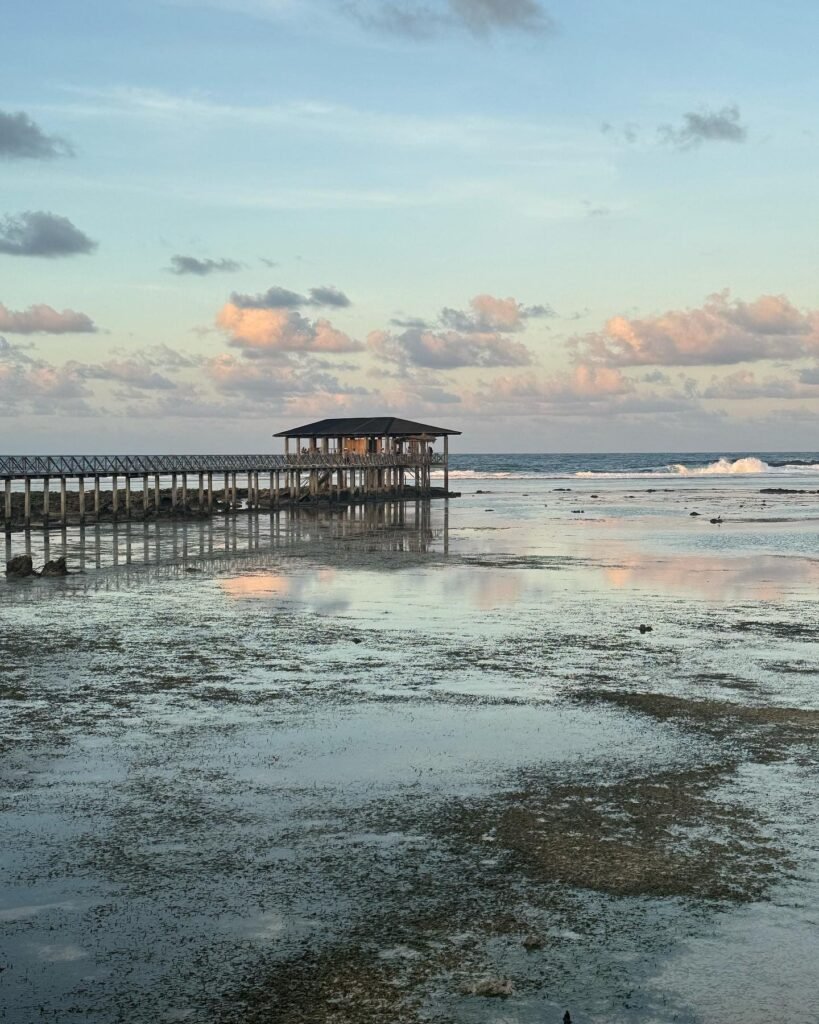
Cloud 9 is located in Barangay Catangnan, Municipality of General Luna, Surigao del Norte, Philippines, along the Tourism Road just about 10 minutes north of General Luna town proper — easily accessible by motorbike, tricycle, or private van with no boat ride or hiking required.
The Cloud 9 area sits about 3 km north of the main General Luna strip, with its own quieter cluster of cafes, surf shops, and places to stay. The surrounding barangay is compact. There is one main road — Cloud 9 Drive — a handful of small restaurants and surf shops, a wellness scene that has grown steadily since 2019, and the boardwalk that doubles as a viewing platform and a pier for the daily lineup of surfers paddling out.
I visited in August 2026, and finding the entrance was straightforward. The Tourism Road runs directly to it. If you pass the Catangnan Bridge, you’ve gone slightly north. Turn around, and the entrance gate is visible on the beach side of the road.
How to Get to Cloud 9 Siargao
Getting to Cloud 9 Siargao is one of the easiest logistics on the island — it’s a direct drive from General Luna on a paved coastal road, with no ferry or hiking involved.
From Sayak Airport (Siargao Airport):
Sayak Airport is approximately 25 km from General Luna, about a 45-minute drive in normal conditions. Options include a habal-habal for ₱400–500 (one passenger), a private tricycle for ₱600–800 (up to 3–4 passengers), or a shared van at ₱200–250 per person when available.
A private van transfer takes about 45 minutes and is the right choice when traveling with bags. Many resorts near Cloud 9 arrange this as part of the booking process, with drivers meeting you at the arrival gate.
From General Luna town to Cloud 9:
A habal-habal (motorcycle taxi) costs ₱50–100 each way and is the fastest, most convenient option — wave one down anywhere on the main road, as they run constantly. A tricycle runs ₱150–200 one way and is slower but good if you have luggage or boards. Travel time is approximately 10 minutes.
Renting a scooter:
The best way to visit Cloud 9 and explore the area freely is by renting a scooter, which costs ₱300–400 per day. You can request a scooter with a surfboard rack — ask when renting and they’ll provide one if available. You may pay slightly more, but it’s often negotiable.
From Cebu to Siargao:
From Cebu City, Cebu Pacific and Philippine Airlines fly to Sayak Airport (IAO) in about 1 hour 15 minutes, with fares from ₱2,500–4,500 one-way. There are 2–4 daily flights during high season. Cebu is the most reliable hub. The Clark-to-Siargao route via Cebgo was suspended from 4 May 2026 — verify the status before booking that routing.
From Surigao City by ferry:
The ferry alternative runs from Surigao City to Dapa port on Siargao, with fastcraft taking roughly 90 minutes — then a van or tricycle south to General Luna. For arrivals via the Surigao ferry, Dapa is the port of entry, about 45 minutes by van or tricycle from General Luna.
Check the Mindanao Tourist Spots Ultimate Travel Guide for a wider view of destinations nearby Siargao in the Caraga region.
Entrance Fees, Environmental Fees, and Permits at Cloud 9 Siargao
The entrance fee is ₱100 per day. You can also get a 2- or 3-day pass, though the price per day remains the same. The fee is charged per entry, not per day — meaning if you leave and come back, you pay again. The practical advice: go once, stay a while.
A 15-consecutive-day pass costs ₱750, and a one-month pass is ₱1,500 — useful only for resident surfers staying long-term.
Surfing the wave itself is free of charge. The ₱100 covers access to the boardwalk and the beach area. Notably, visitors who approach from the adjacent beach rather than the road entrance have been known to access the boardwalk without paying — but the fee is legitimate and goes toward maintenance.
Arriving before 7:00 AM is worth the early alarm — you’ll often have the whole boardwalk to yourself, and the light is better than anything you’ll get mid-morning. The fee collection typically starts around 7:00 AM.
No separate environmental fee applies for the Cloud 9 beach area itself. However, day trips to Sugba Lagoon in Del Carmen carry their own mandatory fees — a ₱100 entrance fee (foreign visitors), a ₱50 environmental fee, and a ₱20 terminal fee, all cash-only.
Getting Around Cloud 9 Siargao
Once at Cloud 9, everything within the barangay is within easy walking distance.
On foot: The shoreline, boardwalk, surf shacks, and beachfront cafes are all within a 5-minute walk of the boardwalk entrance gate. The wooden boardwalk boards get extremely hot in direct sun — don’t go barefoot, or you’ll regret it halfway through.
By scooter: Renting a scooter is the best way to combine a Cloud 9 visit with other spots. It gives you the freedom to reach Cloud 9, Magpupungko, Pacifico, and other spots on your own schedule.
By tricycle: Good for the round-trip from General Luna. When returning to General Luna, many drivers try to charge more than the agreed fare — agree on the price before you get in, both ways.
Parking: Parking can get crowded, especially with scooters. Arrive early or be prepared for a short walk. There is no official paid parking lot — scooters are left along the roadside near the entrance.
Beaches and Things to Do at Cloud 9 Siargao
Cloud 9 Siargao offers far more than watching surf — the boardwalk, beachfront, and surrounding day trips make it a complete destination even if you never paddle out.
The Boardwalk:
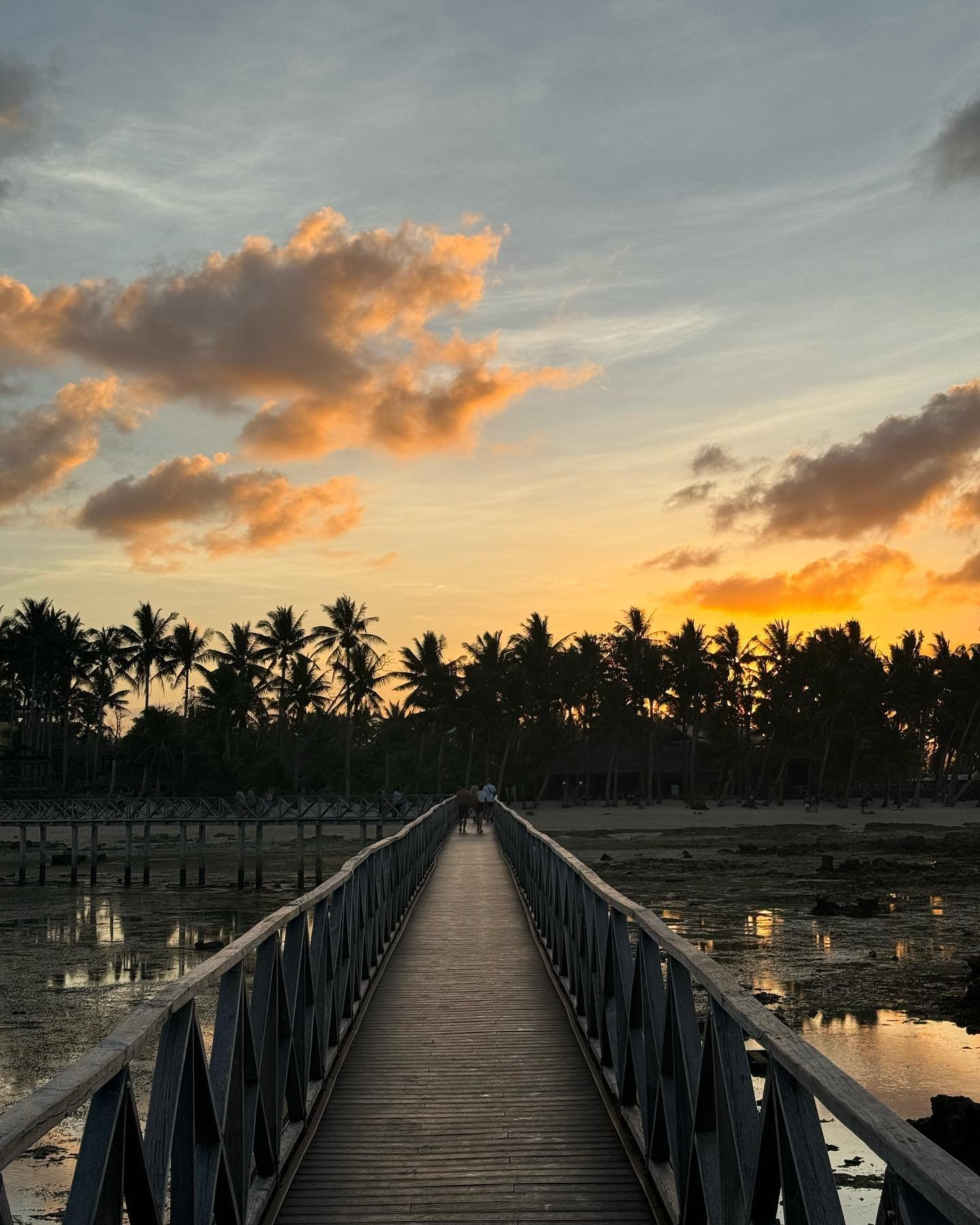
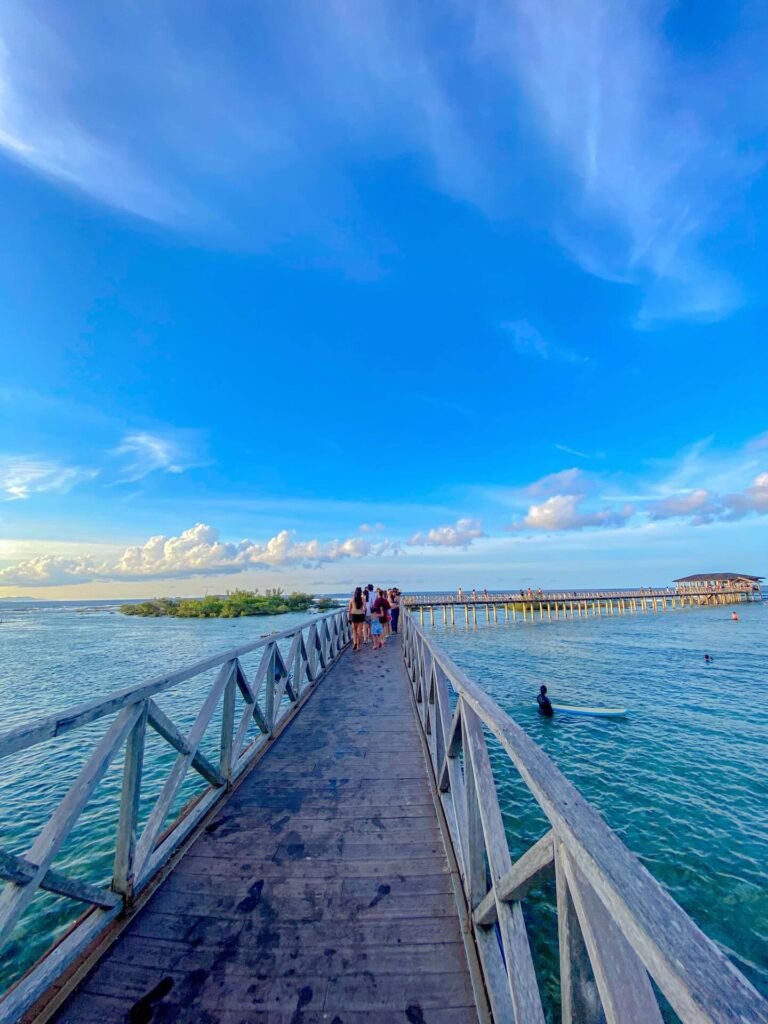
The Cloud 9 boardwalk is a wooden walkway extending over the water alongside the break, ending at an elevated viewing tower positioned directly above the reef where the wave breaks. For non-surfers, this is the single best way to experience Cloud 9 — you can watch surfers drop into barrels just metres below your feet, with nothing between you and the Pacific.
The Beach:
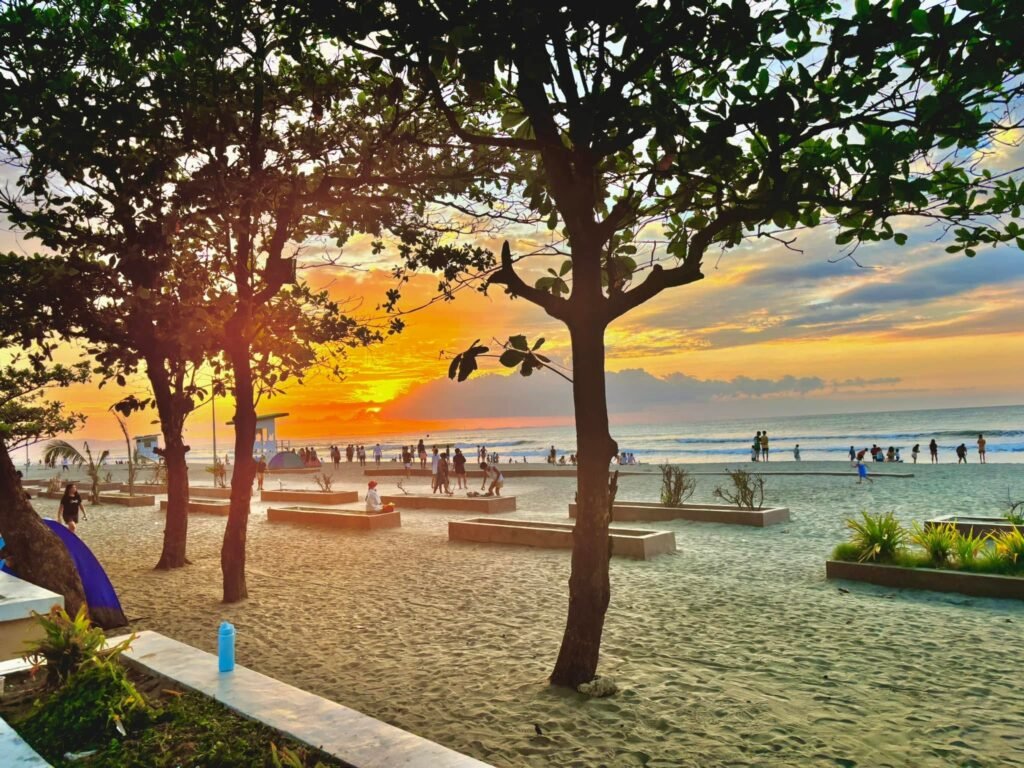
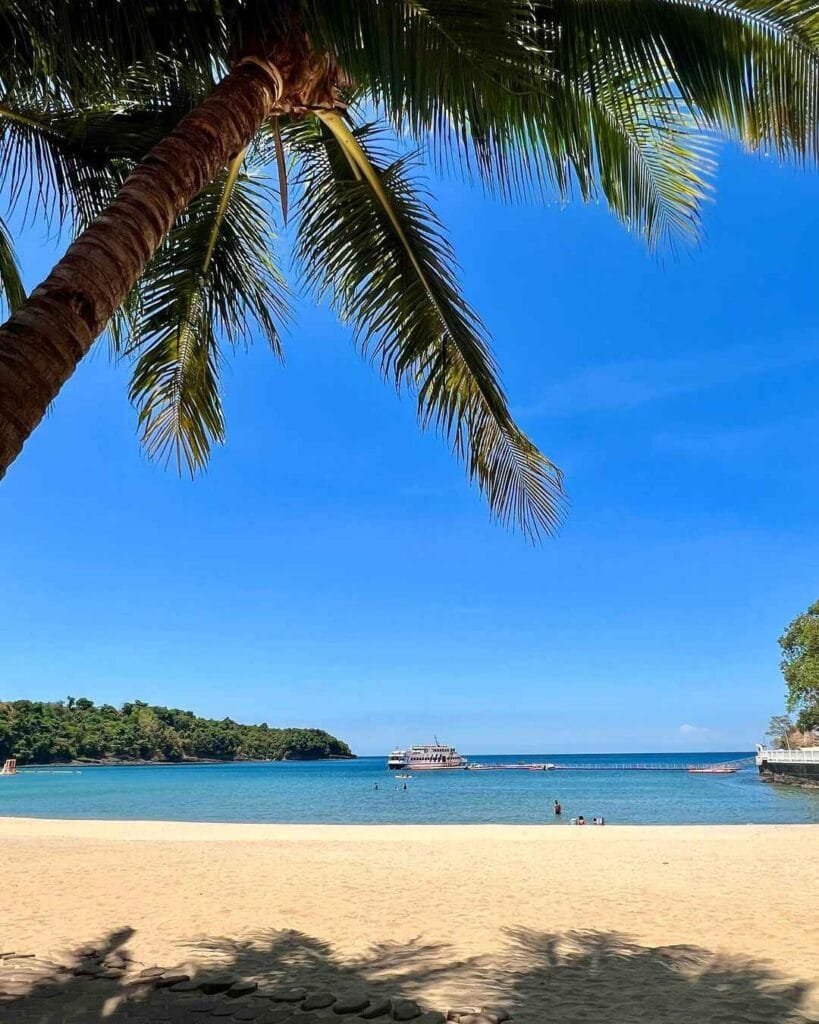
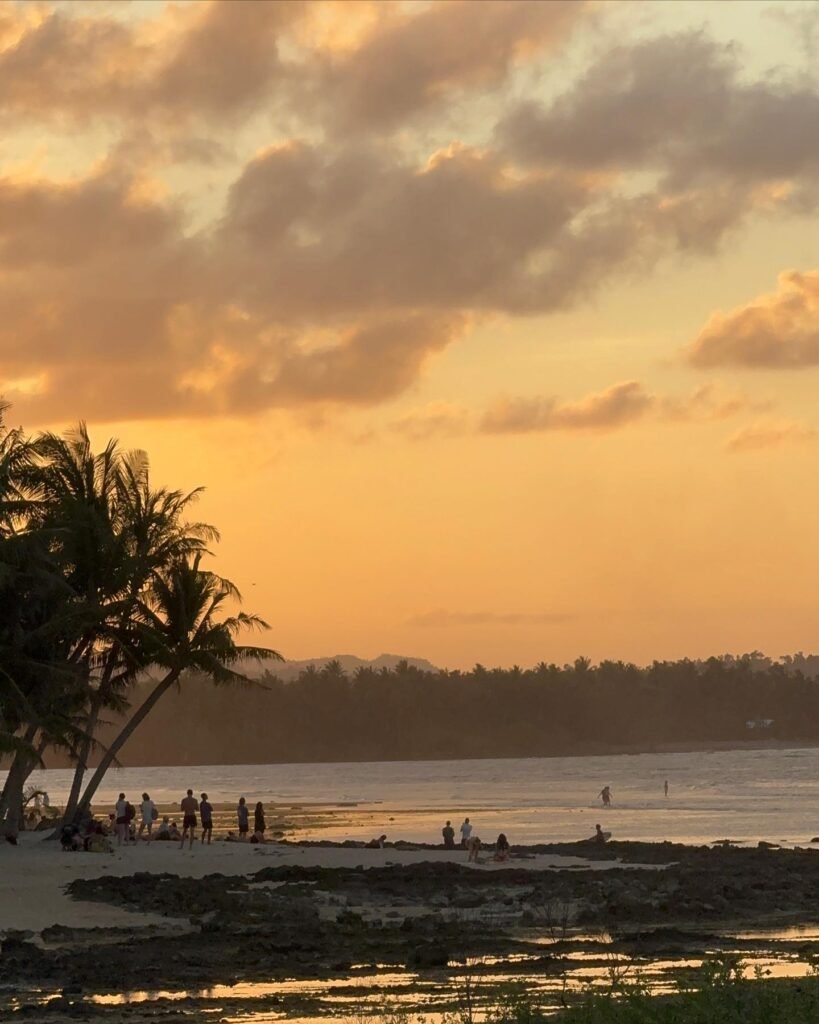
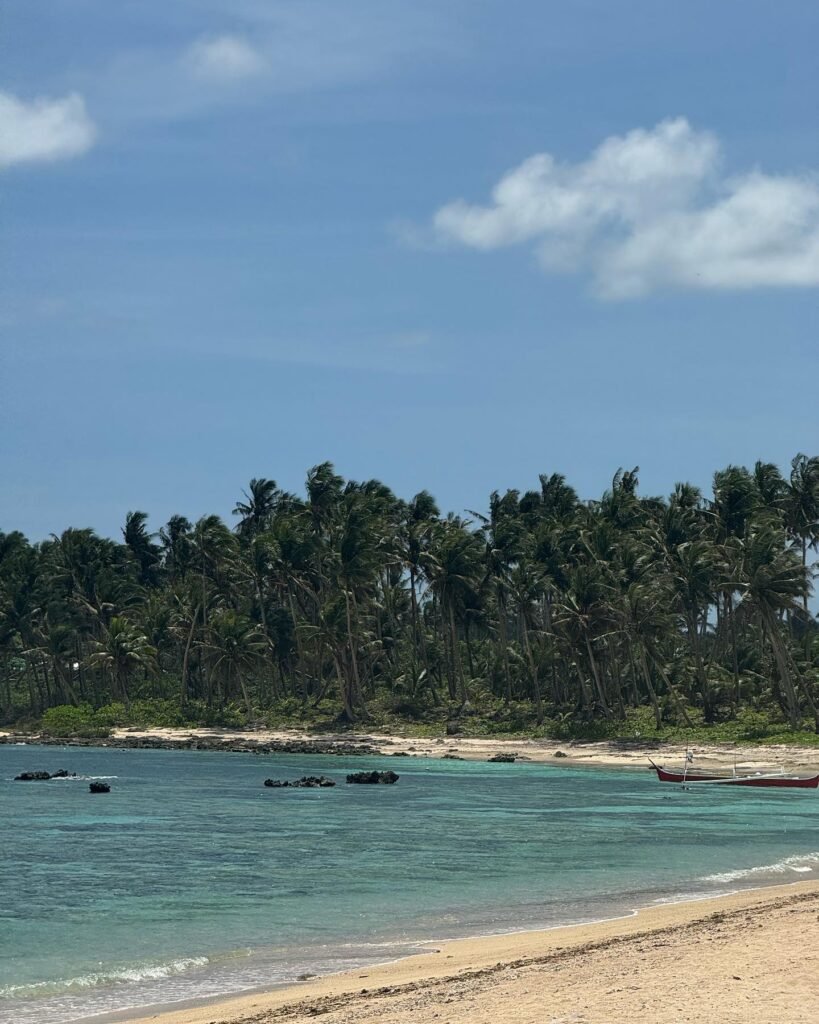
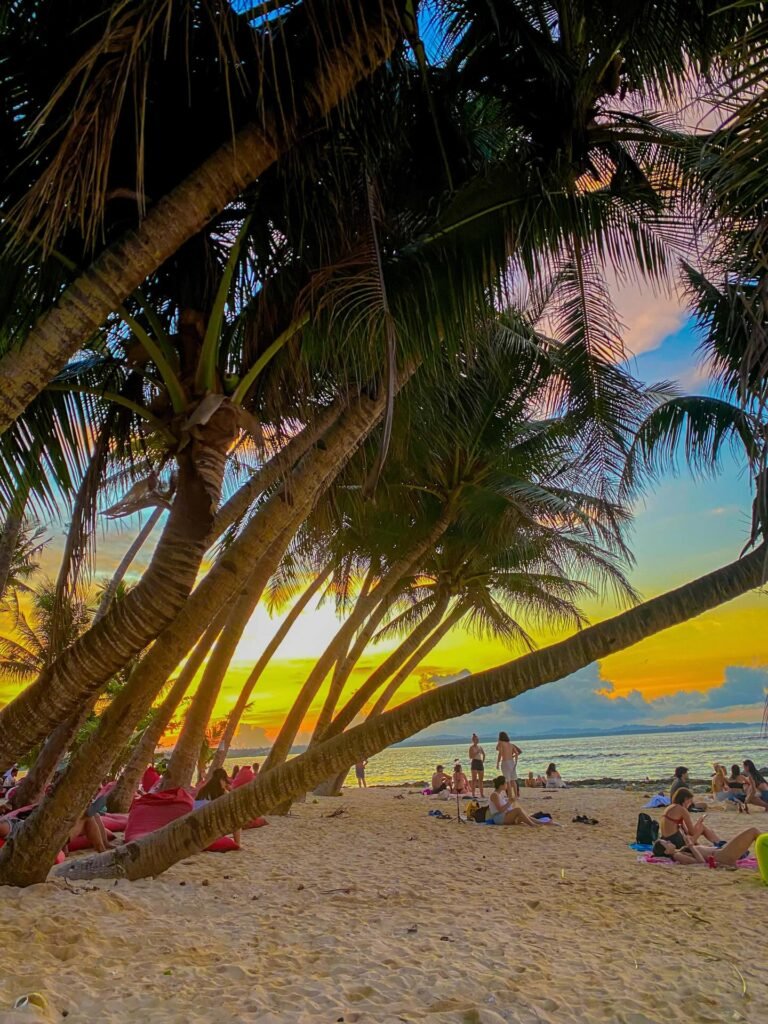
There is a white sand beach dotted with palm trees at the beginning of the pier, where you can find several surf shacks that rent out surfboards. The beach area here is compact — it is not a wide, open swimming beach. If you’re not into surfing, you can still take a dip in shallow areas near the beach, particularly around the Jacking Horse zone adjacent to the boardwalk. The water directly in front of the reef is dominated by the surf break and is not suitable for casual swimming.
Beachfront cafes and food:
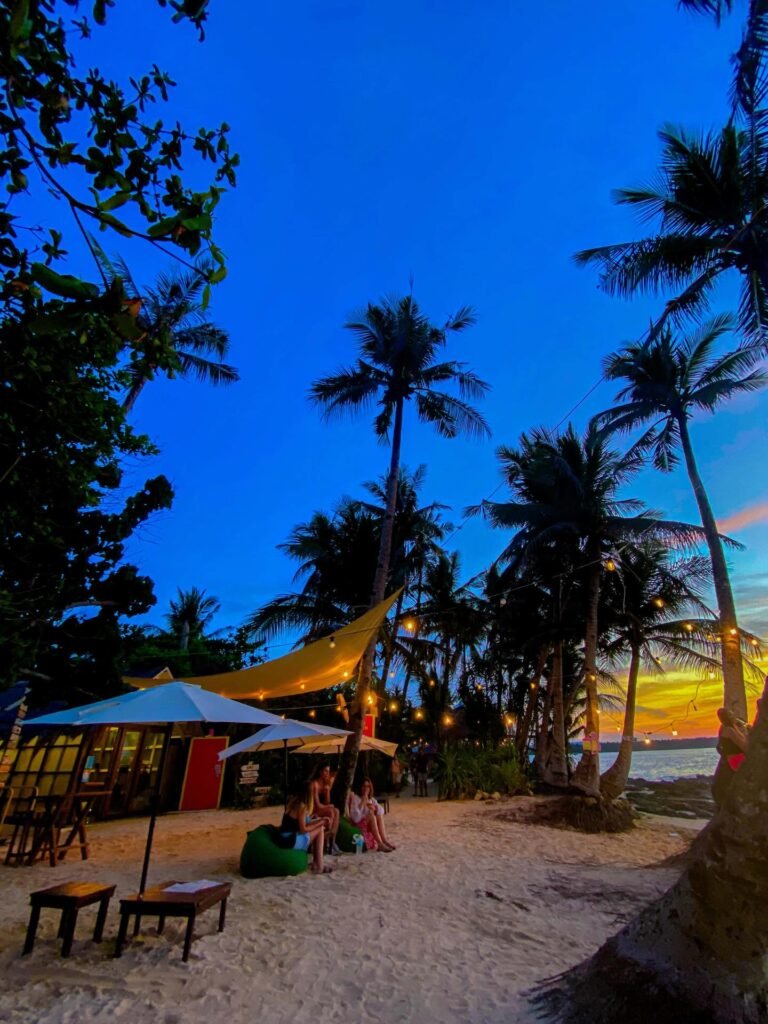
For food before or after a surf, there is a small cafe on the beach next to the pier called Café Loka that serves coffee, fresh juices, and salads. Loca Bar at Cloud 9 also offers drinks and cashless payment options — a rarity in an otherwise cash-heavy area.
Island hopping from General Luna:
The tri-island circuit — Naked Island (a bare sandbar), Daku Island (lunch and beach), and Guyam Island (snorkeling and palms) — is the essential day trip from General Luna. Most boats leave around 9:00 AM and are back by mid-afternoon. Joiner tours cost approximately ₱1,500 per person, inclusive of lunch and all island fees.
Inland and lagoon day trips:
Magpupungko rock pools on the north coast become spectacular at low tide — the pools are clear, shallow enough to swim and jump into from the rock edges. Check a tide chart beforehand, because at high tide there is nothing to see. It’s about 45 minutes from Cloud 9.
Sugba Lagoon in Del Carmen is reached by speedboat from the Del Carmen pier. Activities include paddleboarding, platform jumps, and lunch on a floating bamboo deck — it’s a half-day trip.
Surf schools and beginner lessons (non-surfer entry point):
A two-hour beginner lesson with a local instructor, board included, runs about ₱800–1,000 in 2026, and you genuinely can stand up on day one if conditions are kind. Lessons for beginners are conducted at Jacking Horse beside the Cloud 9 boardwalk — not at the main reef break.
What I Would Do Differently Next Time
I arrived at Cloud 9 at 10:00 AM, paid my ₱100 boardwalk fee, and walked into a crowd of roughly 25–30 people on the platform with direct midday sun. The boardwalk has roof shade at the end (added in the 2025–2026 rebuild period), but it covers only a portion of the deck. Next time, I’d arrive before 7:00 AM to beat the fee, shoot the dawn session in better light, and leave by 9:00 AM before heat and crowd peaks.
I’d also pre-book a SISA-accredited surf lesson rather than negotiating one at the beach, where I saw variable pricing for the same service. And I would bring far more cash — the Euronet ATMs in General Luna were both out of service on the day I needed them.
Surfing at Cloud 9 Siargao
Cloud 9 is a fast, hollow right-hand reef break on the east coast of Siargao Island, and it is classified as intermediate-to-advanced on moderate days, expert-only when it’s pumping. It breaks over a sharp, shallow coral reef at 1–2 metres depth. Wipeouts at medium to large size can result in reef cuts or worse.
For experienced surfers:
The wave produces a thick, pitching peak takeoff over a reef shelf, followed by a hollow section and a clean exit into the channel. It works best on typhoon swells from chest-shoulder high up to triple overhead at high tide. On a clean easterly swell and offshore southwest wind, Cloud 9 can be mechanically perfect, with a guaranteed barrel on every wave.
Crowds run 40–80 surfers during peak season (September–October), with locals commanding priority. Go early — dawn, 6:00–7:00 AM — to avoid the rush and find better waves.
For beginners — the honest answer:
Beginners should not surf Cloud 9 at 6 feet or above. Take lessons at Daku Island for 2–3 days to build skills, then attempt Cloud 9 on a small day with a guide. The minimum skill for Cloud 9 is confident paddling, a solid pop-up, duck-diving ability, and prior reef break experience.
SISA accreditation matters: Wipeouts over shallow coral reefs and strong rip currents have caused serious injuries on the island. Beginner surfers should use an instructor accredited by the Siargao Island Surfing Association (SISA), who will not send you to breaks beyond your ability level. Female travelers in particular have flagged safety concerns with unverified freelance instructors — verified SISA-accredited operators are listed at the General Luna surf hub.
The reef health reality:
The coral shelf beneath Cloud 9 bears genuine damage from decades of heavy surf traffic. Surfers wiping out at low tide, bodies dragged across the reef, and the sheer volume of daily sessions have visibly bleached and broken sections of the coral platform, particularly along the inside reform zone. This is not unique to Cloud 9 — it’s a systemic issue across all high-volume reef breaks.
The LGU has not instituted surfing closures for reef recovery, but reef booties, flat falls, and avoiding walking on the reef at low tide are basic courtesies that also reduce damage. Wear reef booties, learn to fall flat rather than diving down, and never touch the coral. A single reef cut can ruin your trip if it gets infected.
The 2026 WSL competition:
Cloud 9 now hosts the Philippines Pro, a WSL Championship Tour stop — the first ever in the Philippines — running October 31 to November 10, 2026. If you’re here during competition, the break is closed to recreational surfers during event hours; it’s worth watching from the boardwalk. Accommodation costs in the Cloud 9 barangay spike significantly during the competition window — book at least three months in advance.
Surf lesson score: 4 out of 5 — SISA-accredited lessons at Jacking Horse are genuinely good value and well-supervised. The minus one point is for the inconsistent pricing among non-accredited freelancers who approach tourists near the boardwalk entrance.
Best Time to Visit Cloud 9 Siargao
September and October are peak swell months at Cloud 9, driven by typhoon groundswells from the Pacific. November can also be excellent. The dry season (March–May) brings smaller but cleaner conditions suitable for intermediates.
Habagat (May–October): The southwest monsoon delivers offshore winds at Cloud 9, which hold the lip of the wave open and create clean, hollow barrels. This is the best surfing window. Expect short, heavy rain showers — they pass quickly. Seas can be rough for island hopping and ferry crossings during heavy Habagat weeks.
Amihan (November–April): The northeast monsoon drives onshore winds at Cloud 9, degrading wave quality. Cloud 9 on the east side can still fire during December to February, but onshore winds are more common. This period is, however, excellent for non-surfers — calmer overall weather, lower accommodation rates, and cleaner conditions for lagoon and island trips.
For non-surfers: The dry season from February to May is ideal for beginners and wellness-focused travelers — smaller waves, calm beaches, and easier travel.
Typhoon risk: Typhoon Rai (Odette) made its first landfall on Siargao on 16 December 2021, with sustained winds of 195 km/h, and damage assessments put more than 95% of coastal households on the island as affected. Typhoon season runs from October through February. The December–January window carries the highest statistical risk of a direct hit, and flight and ferry cancellations during typhoon alerts are common.
WSL Philippines Pro window (October 31–November 10, 2026): Spectacular for surf watching, but rooms at Cloud 9 and General Luna are fully booked weeks in advance, and prices double or triple. If you’re coming purely to watch, plan accommodation in nearby Dapa as a fallback.
Where to Stay Near Cloud 9 Siargao
Cloud 9 Siargao has accommodation for every budget, from ₱800/night surf hostels on Cloud 9 Drive to a ₱20,000+/night private estate directly across from the boardwalk.
Budget (₱800–₱1,500/night): Basic pension houses and surf hostels line Cloud 9 Drive, steps from the boardwalk entrance. Beds are functional. Shared bathrooms are common. These suit core surfers who spend most of the day in the water and need little more than a place to sleep.
Mid-range, staying in General Luna (₱1,500–₱4,000/night): The best place to base yourself is General Luna, where all the best restaurants, accommodations, and surf rentals are located. You can also rent a motorbike there easily. Properties like Kalipay Resort (recently renovated, outdoor pool, complimentary bicycles) and Tropical Temple Siargao (native-style huts, ₱1,600–₱6,700/night) are popular mid-range picks along Tourism Road.
Luxury at Cloud 9 (₱12,000–₱20,000+/night): Kalinaw Resort offers boutique, French-influenced villas on the beachfront. Kawayan Villa is a 2,450 m² private estate roughly 200 metres from the Cloud 9 boardwalk, featuring two king-bedroom suites, a private mirror pool, and no shared facilities — rates from approximately ₱20,000/night.
Day-trip note: If you’re based in General Luna, Cloud 9 works perfectly as a day trip. The 10-minute scooter ride is nothing. You don’t need to stay at Cloud 9 itself unless surfing access at dawn is your priority.
For a wider perspective on the Philippines’ top destinations, see the Top 10 Tourist Destinations Philippines 2026 and the Top 20 Tourist Destinations Philippines 2025.
Budget Breakdown for Visiting Cloud 9 Siargao
| Expense | Cost (PHP) |
|---|---|
| Flight Cebu–Siargao (one way, incl. fees) | ₱4,000–5,000 |
| Shared van from Sayak Airport | ₱200–500/person |
| Private van from Sayak Airport | ₱2,500–4,000/vehicle |
| Scooter rental (per day) | ₱350–500 |
| Habal-habal to Cloud 9 (each way) | ₱50–100 |
| Boardwalk entrance fee | ₱100/entry |
| Beginner surf lesson (2 hrs, board incl.) | ₱800–1,000 |
| Board rental (per day) | ₱300–500 |
| Rash guard / wetsuit top rental | ₱100–200 |
| Tri-island hopping (joiner, incl. lunch) | ₱1,500/person |
| Tri-island hopping (private, 5 pax) | ₱2,600 base + food |
| Sugba Lagoon entry (foreign visitors) | ₱100 entrance + ₱50 env fee |
| Magpupungko entrance | ₱50 |
| Hostel bed (Cloud 9 Drive) | ₱800–1,500/night |
| Mid-range room (General Luna) | ₱1,500–4,000/night |
| Budget meal (carinderia) | ₱150–250 |
| Cafe/restaurant meal | ₱350–600 |
| Fine dining (ROOTS, Siago) | ₱2,000–3,000/head |
| ATM withdrawal (Euronet, General Luna) | Withdraw all cash in Cebu first |
Estimated daily spend: Budget traveler ₱2,000–₱3,900 · Mid-range ₱5,000–₱10,800 · Luxury ₱17,500+
What to Pack for Cloud 9 Siargao
| Item | Essential? |
|---|---|
| Reef-safe sunscreen SPF 50+ | Yes |
| Rash guard or UV shirt | Yes |
| Reef booties (if surfing) | Yes — sharp coral |
| Waterproof sandals / flip-flops | Yes |
| Reusable water bottle | Yes — required at Sugba Lagoon |
| Dry bag | Yes — for electronics on boats |
| Cash in Philippine Pesos | Yes — withdraw before flying in |
| Tide chart app (e.g., Tide Alert) | Yes — Magpupungko and reef surfing depend on it |
| Lightweight long-sleeve shirt | Yes — midday sun is intense |
| Travel insurance covering surfing / water sports | Yes — non-negotiable |
| Power bank | Recommended |
| Motion sickness tablets | Recommended (open-ocean boat crossings) |
| Snorkeling mask | Optional — rentals available at islands |
| Wetsuit top | Optional — warm water (~28°C), but helps with sun and reef scrapes |
Safety Tips for Visiting Cloud 9 Siargao
Reef and sea urchins are serious hazards. The coral shelf under Cloud 9 is jagged and shallow. Wear reef shoes whenever wading, and enter and exit through the sandy channel, not over the reef. Sea urchins cluster in crevices along the reef edge — a foot-first fall onto one is painful and can cause infection if spines are not fully removed. Flush reef cuts immediately with clean water and antiseptic; coral bacteria cause rapid infection in tropical heat.
Sun and dehydration are underestimated at Cloud 9. Reflected sun off the water accelerates burning. Bring at least 1.5 litres of water for any half-day visit and reapply sunscreen every 90 minutes on the water.
Boat safety on island hopping tours: all compliant operators provide life jackets — put yours on. Open-ocean crossings to Bucas Grande can be rough in swell season. The Philippine Coast Guard issues small-craft advisories that cancel trips without warning; build flexibility into your schedule.
No lifeguards are stationed at the Cloud 9 beach or boardwalk area. The main break has experienced watermen who will assist in an emergency, but there is no formal rescue service. For medical emergencies, the nearest stabilisation is the Siargao Island Medical Center in Dapa (roughly 30 minutes from Cloud 9). Severe trauma requires evacuation to Surigao City or Cebu. Travel insurance covering extreme sports and aerial evacuation is not optional here.
Tidal awareness matters beyond just surfing. The sandbar stops between islands on the Tri-Island circuit are tide-dependent — Naked Island shrinks significantly at high tide, and some secondary sandbars disappear entirely.
The Mindanao Tourist Spots Ultimate Travel Guide covers regional emergency and safety context for the broader Mindanao travel area.
Frequently Asked Questions About Cloud 9 Siargao
Is Cloud 9 Siargao suitable for beginner surfers?
Cloud 9’s main peak is not suitable for beginners — the wave is fast, the drop is steep, and the reef sits at 1–2 metres depth at low tide. Beginners should book lessons at Jacking Horse, the reform wave immediately adjacent to the boardwalk. SISA-accredited lessons cost ₱500–₱1,000 per hour and include a soft-top board and instructor.
What is the best month to surf Cloud 9 in Siargao?
The best months for surfing Cloud 9 are September to November, when northeast and east groundswells from Pacific typhoons produce consistent 4–6 foot faces with offshore winds from the Habagat. The March to May dry season is better for intermediate surfers wanting cleaner, smaller 2–4 foot waves without the danger of peak-season power.
How do you get to Cloud 9 Siargao from Manila or Cebu?
From Cebu, fly Cebu Pacific, Cebgo, or Philippine Airlines to Sayak Airport (IAO) — a 55-minute flight. From Manila, connect through Cebu (direct NAIA–Siargao routes are suspended as of 2026). From Sayak, take a shared van to General Luna (₱300–₱500, 45–60 minutes), then a ₱50 tricycle or 10-minute scooter ride to the Cloud 9 boardwalk.
Is there an entrance fee to visit the Cloud 9 boardwalk in Siargao?
Yes. The boardwalk entrance fee is ₱50–₱100 per person (as of August 2026), collected between 7:00 AM and 5:00 PM. Surfing the break itself is free. Surigao del Norte residents are exempt with valid local ID. Arriving before 7:00 AM lets you access the boardwalk before the collection begins.
What other activities can non-surfers do near Cloud 9 Siargao?
Non-surfers can watch world-class surfing from the viewing tower, paddleboard in the channel, take a beginner lesson at Jacking Horse, or join the Tri-Island joiner tour (₱1,500) from General Luna port. Day trips to Sugba Lagoon, Magpupungko Rock Pools, and Maasin River are all land-accessible by rented scooter or private van.
Final Verdict: Is Cloud 9 Siargao Worth Visiting?
5 out of 5 for surfers — this is one of the cleanest, most consistent reef breaks in the world, and the 2026 WSL Championship Tour stop confirms what serious surfers already knew. 4 out of 5 for non-surfers — the boardwalk experience, the island hopping circuit, and the energy of a genuine surf town make it worth a full day even if you never paddle out, though you will need to be deliberate about building a non-surf itinerary.
Cloud 9 Siargao justifies the journey from almost anywhere in the Philippines — the infrastructure is there, the access is straightforward, and there is nothing else in the country quite like standing on that tower watching a barrel break three metres beneath your feet.
For more Philippine travel planning, browse LakbayPinas and the Top 20 Tourist Destinations Philippines 2025 for destination comparisons across the archipelago.