Ugbo Street Food Guide 2026, Velasquez Street Tondo

Ugbo Street Food

Ugbo Street Food Guide

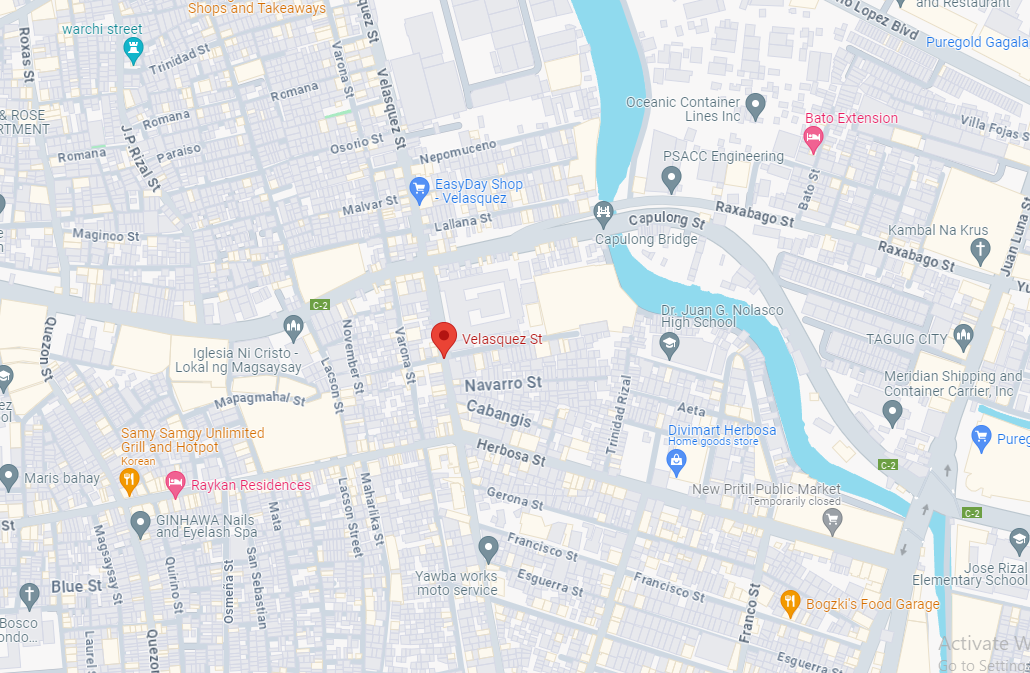
  • Location: Ugbo Street cor. Velasquez St., Tondo, Manila.

  • Best Time: 6:00 PM – 9:00 PM (Avoids extreme heat, hits peak vibe).

  • Avg. Budget: ₱300 – ₱500 per head (Full meal + Dessert + Takeout).

  • Must-Try: Mang Rado’s Tumbong & Aling Consuelo’s Halo-Halo.

  • Parking: Urban Deca Mall (Warning: Strict closing times).

Introduction: The Renaissance of Tondo

Ugbo Street has shed its historical reputation as a gritty residential backstreet to become Tondo’s premier gastronomic destination, transforming a once “no-go” zone into the epicenter of the viral Ugbo street food phenomenon.

For decades, Tondo was viewed through a bifurcated lens: as the cradle of revolutionary heroes like Andres Bonifacio, but also stigmatized by narratives of urban density and criminality. This perception shifted dramatically under the tenure of former Manila Mayor Isko Moreno Domagoso (“Yorme”). As a true son of Tondo, Moreno’s narrative of rising from poverty was intrinsically linked to the district’s culture.

His frequent patronage and public endorsements of specific establishments served as a massive signal to the broader metropolitan population. By championing dishes historically associated with working-class sustenance, he legitimized the “poor man’s meal” as a culinary delicacy. This political endorsement effectively de-risked the location for outsiders, turning the Ugbo street food scene into a bucket-list experience for culinary tourists driving in from as far as Alabang and Quezon City.

The Vibe Check: Old Grit vs. New Neon

The atmosphere in Ugbo is a jarring, electric collision of eras. You are not walking into a polished, air-conditioned food court; you are stepping into the humidity and chaos of the living street. The air is thick with the savory, heavy scent of charcoal-grilled pork mixed with the exhaust of passing tricycles.

On one side of the road, heritage carinderias serve soups from massive, bubbling cauldrons just as they have for thirty years. On the other, trend-driven stalls blast K-Pop and illuminate the wet pavement with blinding neon signage selling liquid nitrogen desserts. It is loud, smoky, crowded, and intensely human—a raw slice of Manila life that defines the unique charm of Ugbo street food.

💡 The Insider Tip: Leave your white sneakers and designer brands at home. The “Ugbo scent”—a clinging mixture of charcoal smoke and grilled meat—will stick to your clothes long after you leave. Dress in “Presko” (breathable) fabrics, as the combined heat from the grills and the crowd can be intense, even at night.

Table of Contents

Ugbo, Velasquez Street Tondo map

Velasquez Street Tondo

How to Get There: Commute & Parking Logistics

The most reliable way to reach the destination is via a “Velasquez” bound jeepney from the Divisoria commercial district or by booking a direct GrabCar to avoid navigation stress. For private vehicle owners, parking is the single biggest logistical challenge, strictly limited to early-closing mall slots or the informal “street pay” economy.

Navigating Tondo requires patience. This is one of the densest districts in Southeast Asia, and the streets were designed long before modern traffic volumes. Whether you are commuting or driving, preparation is the key to avoiding frustration.

Public Transport Vectors

For commuters, the journey is part of the ugbo street food immersion. The area is not directly served by heavy rail, meaning the final leg of your trip will always involve a jeepney or tricycle.

1. The Divisoria Vector (Most Common)

This is the primary jump-off point. Make your way to the intersection of Juan Luna Street and Padre Rada. The definitive landmark here is the Jollibee Padre Rada.

  • The Ride: Board a jeepney displaying the signboard “Velasquez” or “Gasak.”

  • The Drop-off: Tell the driver explicitly to drop you at “Ugbo.”

  • The Vibe: Expect a hot, compressed ride. You will be shoulder-to-shoulder with shoppers and locals. Keep your bag on your lap.

2. The LRT-1 Vector (Tayuman)

If you are coming from Roosevelt or Pasay:

  • Alight at LRT-1 Tayuman Station.

  • Board a jeepney heading to Pritil (Landmark: Puregold Pritil).

  • From Pritil, take a tricycle directly to the food strip (approx. ₱50 per trip).

The Parking Crisis: Mall vs. Street

Driving to Tondo presents a unique “Game of Thrones” scenario regarding parking spaces. You have two distinct options, each with critical trade-offs.

Option A: The Formal Sector (Urban Deca Mall)

Located at Urban Deca Homes Tondo, this is the safest place to leave your vehicle. It features uniformed guards, perimeter fencing, and paved slots.

  • The Trap: This facility has a strict operating schedule. The parking lot typically closes at 9:00 PM or 10:00 PM.

  • The Risk: If you are enjoying your meal and lose track of time, you risk having your vehicle locked inside the complex overnight. This option is only viable for “Early Bird” diners arriving at 5:30 PM.

Option B: The Informal Sector (“Parking Boys”)

Once the mall closes, the street is your only option. As you approach Velasquez Street, local “attendants” will guide you to curbside slots.

  • The Cost: Prepare ₱50 to ₱100 in cash. Pay this upfront.

  • The Reality: This is an informal transaction. You are essentially paying for a spot watcher to ensure your side mirrors aren’t swiped. While generally functional due to the high foot traffic, it lacks the security of the mall.

ModeRoute LandmarkEst. CostRisk Level
JeepneyJollibee Padre Rada₱15Low (Crowded)
TricyclePuregold Pritil₱50Low
Mall ParkingUrban Deca Homes₱40/hrHigh (Lock-in risk)
Street ParkingVelasquez St. Curb₱100Medium (Theft risk)

💡 The Insider Tip:

If you drive, park at Deca Mall before 6:00 PM, but set a hard alarm on your phone for 8:30 PM. The food strip is only a 3-minute walk away. Do not tempt fate with the closing time; guard policies in Manila condos are notoriously rigid.

The Heritage Heroes: “Old Guard” Eateries

A trip to Tondo is incomplete without visiting Mang Rado’s Lechonan and Aling Consuelo’s Halo-Halo, the two non-negotiable institutions that define the district’s culinary soul. While viral stalls come and go with the algorithm, these two establishments have anchored the neighborhood for decades, serving as the true litmus test for whether you have experienced authentic ugbo street food culture.

These spots are not about neon aesthetics or “for the ‘Gram” presentation; they are about recipes forged in the pre-war era, serving the working class with high-calorie, high-flavor sustenance. To skip them is to miss the point of the visit entirely.

Mang Rado’s Lechonan: The Tumbong Authority

Mang Rado’s is the undisputed heavyweight champion of offal dishes, famous specifically for “Tumbong”—a rich, savory soup made from pork large intestine that draws lines stretching down the block.

For the uninitiated, the concept of Tumbong (specifically the rectum/large intestine) can be intimidating. However, the mastery at Mang Rado’s lies in the preparation. The kitchen operates like a surgical unit where the meat undergoes a rigorous, multi-stage cleaning process. The intestines are scraped repeatedly, salted, and boiled for hours to strip away any impurities or “funky” odors.

The Taste Profile:

The result is a texture that defies expectation: thick, gelatinous, and tender, with just enough chew to remind you of its origin. The broth is the real star—a collagen bomb that coats your lips with every sip. It is unapologetically “putok-batok” (a local slang implying a dish so rich it might induce high blood pressure), savory, and deeply comforting.

The Dining Experience:

Do not expect to linger. Mang Rado’s operates with the efficiency of a factory line. You order, you pay, you eat, and you leave to make room for the next hungry patron standing behind your chair. It is loud, hot, and smells of simmering pork and vinegar.

Top Orders at Mang Rado’s

Menu ItemPrice EstimateThe Verdict
Tumbong Soup₱140 – ₱185The Headliner. Must be eaten with rice.
Beef Kamto₱140 – ₱180Flank steak soup. The safe choice for the squeamish.
Lechon Kawali₱150Deep-fried pork belly. Best paired with liver sauce.
Pork Dila Asado₱160Braised tongue. Sweet, savory, and incredibly tender.

Aling Consuelo’s Original Halo-Halo (Since 1960)

Aling Consuelo’s serves the definitive “Manila-style” Halo-Halo, prioritizing high-quality, house-preserved ingredients over the commercial fillers and heavy ice cream reliance found in modern fast-food chains.

Established in 1960, this spot predates the modern ugbo street food hype by over half a century. While flashy new stalls offer liquid nitrogen gimmicks, Aling Consuelo’s sticks to the formula that made it a legend. The magic is in the sahog (ingredients). You won’t find cheap jelly cubes here. Instead, the cup is packed with minatamis na saging (sweetened plantains), monggo (sweet mung beans), ube halaya (purple yam jam), and leche flan (creme caramel).

The “Street Tax” Reality Check:

One of the most compelling reasons to visit in person is the economics. Aling Consuelo’s has become a staple on delivery apps like Foodpanda, but the markup is staggering. A standard Halo-Halo that costs a humble ₱50 to ₱60 when ordered at the counter can balloon to ₱120 or more on delivery platforms. Eating on-site not only saves you over 50%, but it also ensures the shaved ice—which is fine and snow-like—doesn’t arrive as a melted soup.

There is a distinct pleasure in sitting on a monoblock chair on the sidewalk, mixing the evaporated milk into the ice while watching the chaotic choreography of Velasquez Street. It is a sweet, cold respite that acts as the perfect palate cleanser after a heavy, savory meal at Mang Rado’s.

💡 The Insider Tip:

At Mang Rado’s, ask for a saucer of “Toyomansi with Chili” (Soy sauce, Calamansi lime, and Bird’s Eye Chili). The soup is delicious on its own, but dipping the pork intestine into this acidic, spicy mixture cuts through the heavy fat and elevates the dish to a god-tier experience.

ugbo street food

he Viral Wave: Trending & “Vlogger Bait” Food

Beyond the heritage soups, the street has evolved into a playground for “Vlogger Bait”—visually striking, high-concept snacks designed specifically for Gen Z feeds, where the theatrical presentation often takes precedence over culinary depth. While the old guard satisfies the stomach, these new stalls feed the camera, creating a neon-lit corridor of trends that changes with the latest TikTok algorithm.

This is the “New Ugbo,” a direct response to the influx of content creators from outside Manila. The energy here shifts from the serious business of dining to the chaotic fun of snacking. You will see teenagers lining up not for the taste, but for the perfect slow-motion video clip.

The Korean Takeover

The global dominance of K-Culture has physically reshaped the Tondo landscape, with stalls like Oppa Foods flooding the strip with the scent of sesame oil and spicy gochujang.

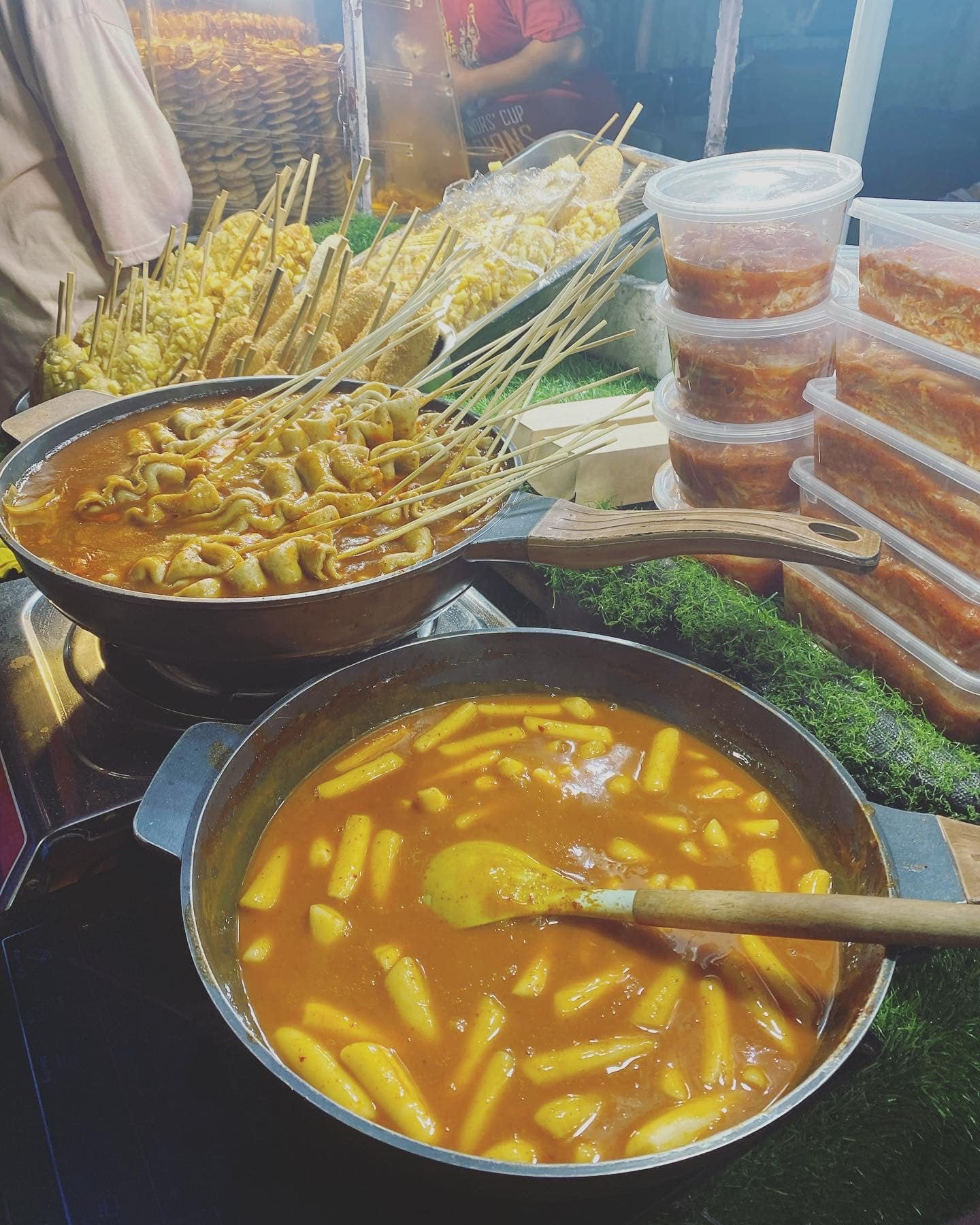
The star of this sector is the Korean Corn Dog. Unlike the American carnival staple, these are heavily battered, rolled in diced potatoes or panko, and deep-fried until golden. The “money shot” is the mozzarella block inside—bite into it while it’s hot, and you get the mandatory 12-inch cheese pull that defines modern ugbo street food content.

Alongside the fryers, you will find pots of Odeng (fish cake skewers) simmering in mild broth and trays of neon-red Tteokbokki (rice cakes). At approximately ₱50 per stick, these offer an accessible, walking-friendly alternative to the sit-down meals, perfect for grazing while you scout the rest of the strip.

Theatrical Desserts

Novelty desserts in Tondo are engineered for shock value, prioritizing liquid nitrogen clouds and sizzling plates over complex flavor profiles.

The most infamous example is Dragon’s Breath (Magic Nitrogen Ice Cream). For ₱150, you get a cup of colorful cereal balls infused with liquid nitrogen.

  • The Reality Check: Be warned—you are paying for the video, not the snack. The actual taste is essentially cold, stale corn puffs. The thrill comes entirely from exhaling thick white vapor like a dragon, a gimmick that lasts about five minutes before the novelty (and the nitrogen) evaporates.

For a dessert with actual substance, look for Pooh-Bah’s Sizzling Ice Cream. It mimics the Filipino love for sizzling platters (usually reserved for sisig), placing a cold scoop of ice cream on a scorching hot plate atop a brownie. The resulting hiss of steam and chocolate sauce creates a sensory clash of hot and cold that is surprisingly enjoyable.

Finally, the Tanghulu craze has landed hard. Vendors display glistening skewers of strawberries and grapes coated in hardened sugar syrup.

  • Quality Test: Tap the fruit against the glass display. It should sound like a hard candy knocking. If the sugar looks thick or gooey, skip it—it will stick to your teeth. You want a glass-thin shell that shatters instantly upon biting.
💡 The Insider Tip: When buying Tanghulu, always ask the vendor which batch was made most recently. In the humid Manila heat, the sugar coating on older skewers starts to “sweat” and melt within 30 minutes, turning the satisfying crunch into a sticky, tooth-aching mess.

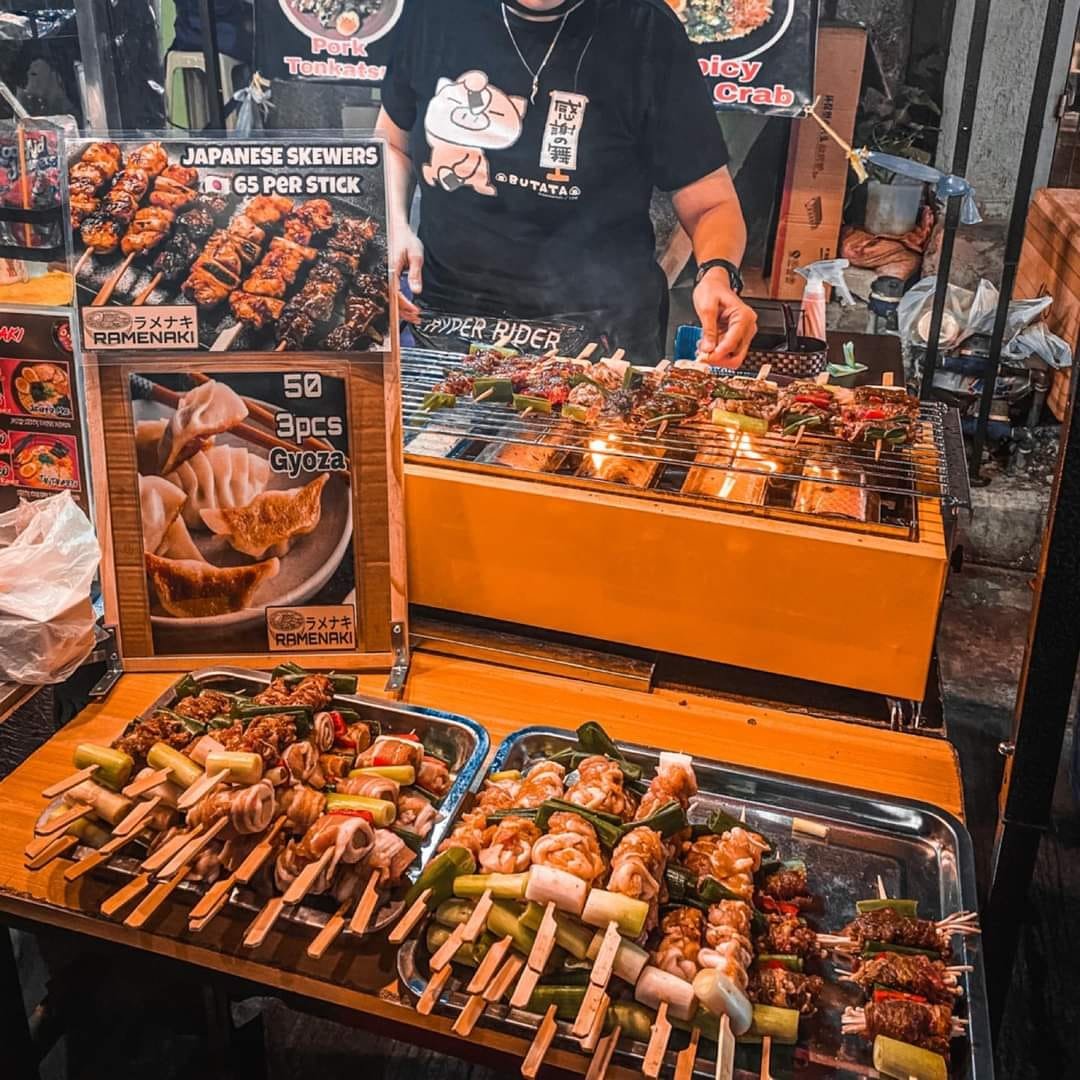
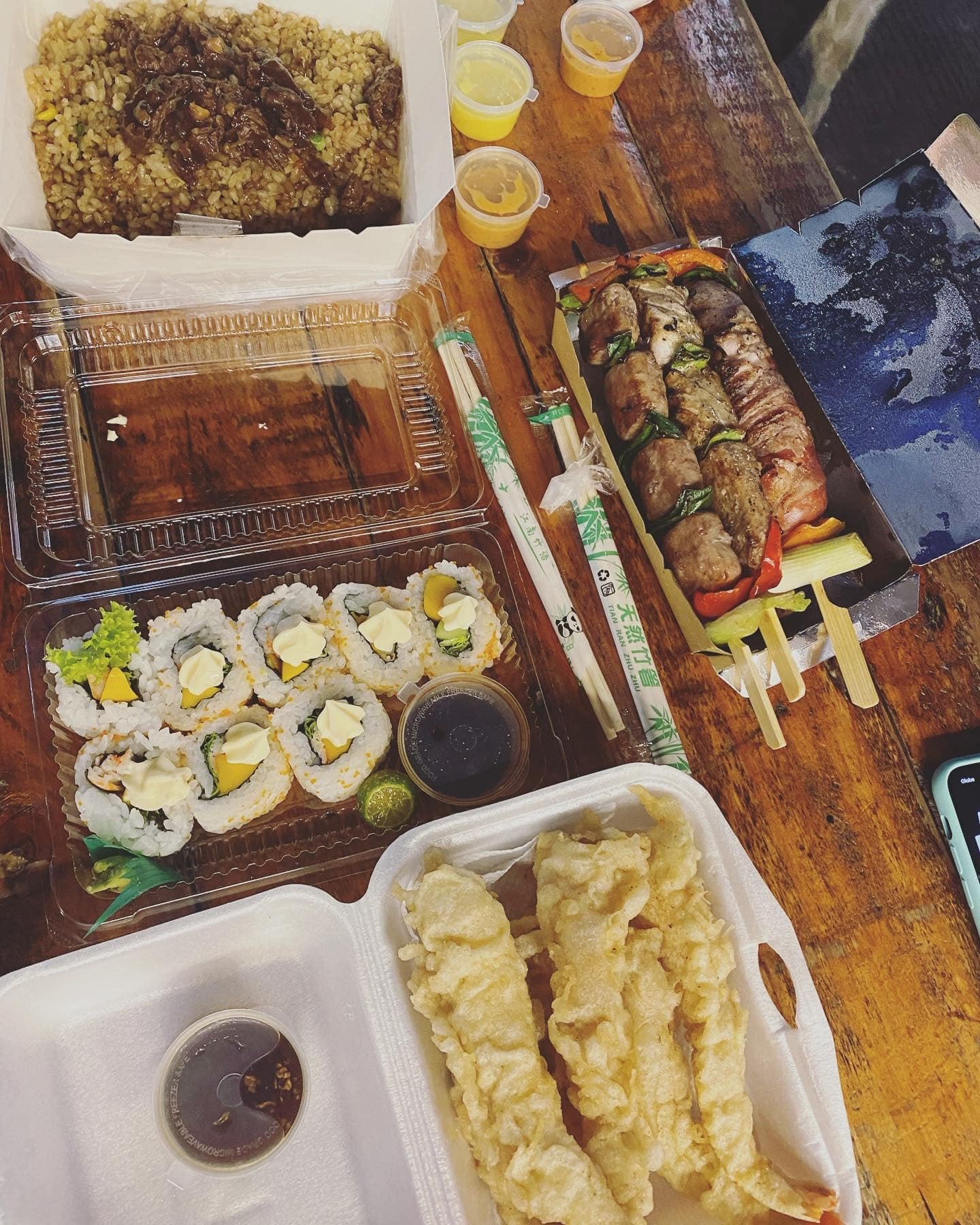
Japanese Skewers at Ugbo Street Food

Heavy Hitters: Seafood & “Inuman” (Drinking) Spots

For large groups seeking a proper sit-down feast rather than walking snacks, the strip offers high-volume seafood stalls and the “Inuman” anchor, House of DG, where beer buckets replace milk tea. Unlike the “eat-and-run” dynamic of the heritage soup joints, this sector of the ugbo street food scene is designed for “barkadas” (groups of friends) looking to linger, drink, and consume calories in bulk.

The energy here shifts from chaotic movement to stationary revelry. The soundscape changes from traffic noise to the clinking of San Miguel bottles and the hiss of sizzling plates, marking the transition from a food market to a street-side gastropub experience.

The Scallop Economy: Volume Over Size

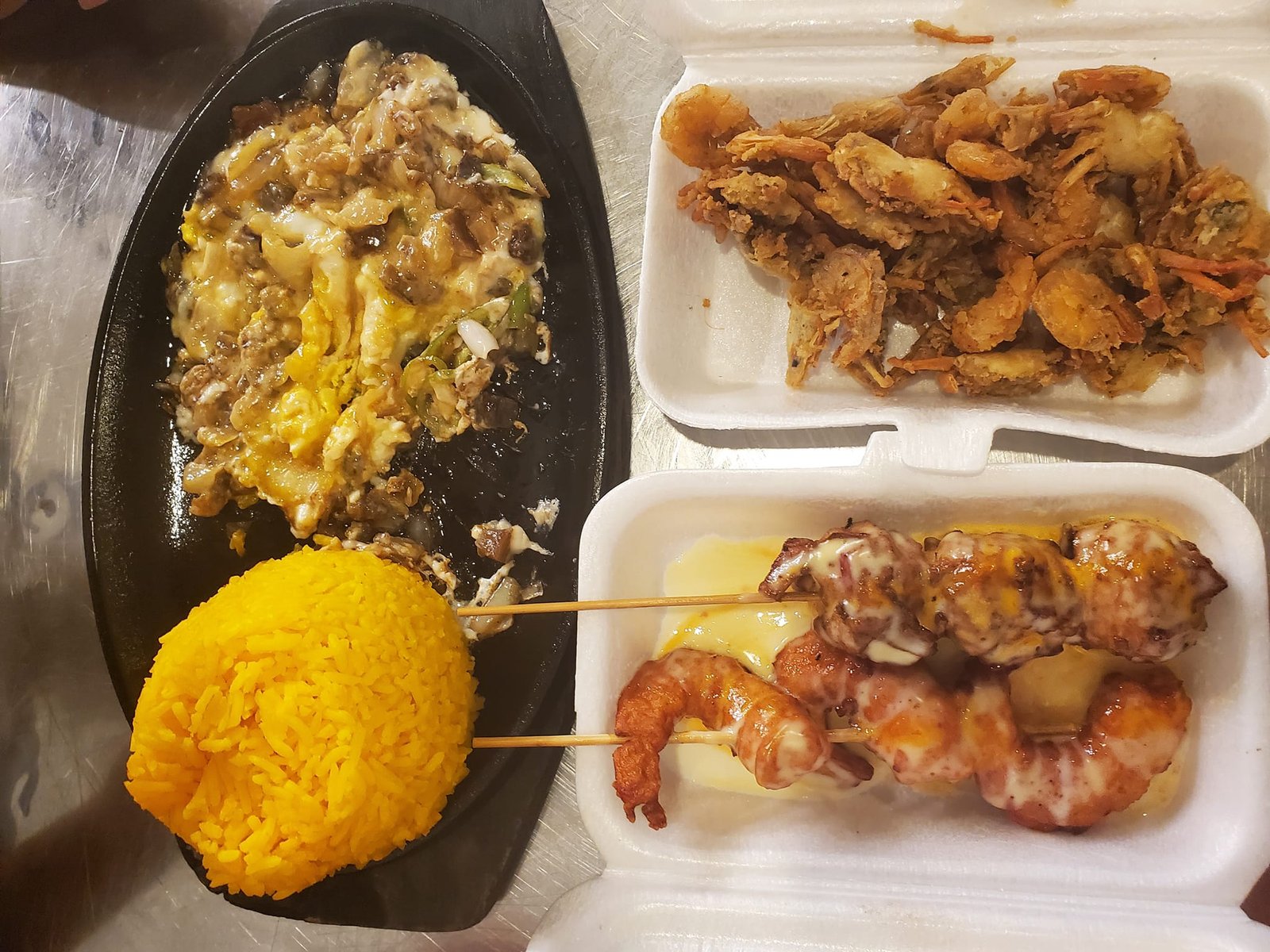
If you are looking for the single best budget deal on the strip, it is undoubtedly the grilled scallops. Vendors line the sidewalks with charcoal grills, fanning smoke that smells distinctly of margarine and garlic into the night air.

The standard benchmark price is ₱100 for a dozen.

  • The Reality Check: Do not expect jumbo, diver-caught scallops. These are typically the smaller, button-sized variety often sourced from the Visayas. However, what they lack in size, they make up for in flavor saturation. They are grilled in the half-shell, swimming in a pool of melted margarine, toasted garlic bits, and quick-melt cheese. They are salty, creamy, and designed to be consumed by the tray-load.

House of DG: The “Inuman” Hub

While most stalls have limited seating, House of DG operates as the district’s primary sit-down venue. It bridges the gap between a carinderia and a bar, offering a roof over your head and sturdy tables capable of holding heavy sizzling plates.

This is the destination for “Pulutan” (drinking food). The menu is anchored by heavy hitters designed to soak up alcohol:

  • Sizzling Sisig: Chopped pig face served on a hot iron plate, crispy and fatty.

  • Bulalo: A massive beef shank soup that serves as the ultimate comfort food for late-night diners.

  • Unli-Wings: Frequent promotions (often around ₱399-₱499) make this a magnet for budget-conscious students and young professionals.

Menu Heavy HitterEst. PriceBest For
Grilled Scallops (1 Dozen)₱100Appetizer / Sharing
Sizzling Sisig₱180 – ₱220Beer Pairing
Bulalo Special₱350 – ₱450Group Soup (3-4 pax)
Bucket of Beer (6 bots)₱400 – ₱500The “Tambay” Session

💡 The Insider Tip:

When ordering the Grilled Scallops, ask the vendor to “toasts” (toast) the cheese a bit longer. Most vendors rush the grilling process due to the queue, resulting in melted but gooey cheese. A request for “extra toasted” gets you that caramelized, golden-brown crust that adds a necessary texture to the soft scallop.

ugbo street food

Ugbo Street Food Price List & Budgeting (2025)

A realistic budget for a full dinner date—including appetizers, main courses, and desserts—is approximately ₱800 to ₱1,000 per couple, making this district one of Metro Manila’s most affordable culinary adventures. While digital wallets like GCash are increasingly accepted at permanent establishments like House of DG, Cash is still King for the smaller street vendors, tricycle drivers, and parking attendants.

Navigating the financial landscape of ugbo street food requires understanding the distinct pricing tiers. The economy here is stratified not by quality, but by “virality.”

  • The Heritage Tier: This offers the highest caloric density per peso. The traditional soups and rice meals have resisted aggressive inflation, remaining the staple for locals.

  • The Viral Tier: This is where the budget often breaks. Trendy items designed for TikTok (like liquid nitrogen snacks or imported Korean ingredients) carry a significant “hype markup,” often costing as much as a full meal for a single photo-worthy cup.

  • The Volume Tier: Designed for groups, these prices drop significantly when purchasing in bulk (e.g., by the dozen or by the bucket).

To help you allocate your cash, here is the 2025 inflation index for the most popular items:

The Tondo Price Index (2025 Estimates)

CategoryMenu ItemEst. PriceValue Rating
HeritageAling Consuelo’s Halo-Halo₱50 – ₱60⭐⭐⭐⭐⭐ (Best Value)
HeritageMang Rado’s Tumbong w/ Rice₱160 – ₱185⭐⭐⭐⭐
VolumeGrilled Scallops (1 Dozen)₱100 – ₱120⭐⭐⭐⭐⭐
VolumePork BBQ (Per Stick)₱25 – ₱35⭐⭐⭐⭐
ViralDragon’s Breath (Nitrogen Balls)₱150⭐⭐ (Novelty Tax)
ViralKorean Corn Dog (Mozza)₱100 – ₱120⭐⭐⭐
ViralTanghulu (Fruit Skewer)₱100+⭐⭐⭐

💡 The Insider Tip:

Break your ₱1,000 bills before you arrive. Most vendors are solo operators handling greasy skewers with one hand and cash with the other. They rarely have enough change for a “blue bill” (₱1,000), especially early in the evening. There is a 7-Eleven near the church—buy a water bottle there to break your bills into ₱100s and ₱50s for a smoother transaction flow.

Strategic Guide: Safety, Hygiene & Itinerary

For the best experience, visit between 5:30 PM and 8:00 PM to beat the midnight congestion, wear “presko” (breathable) clothing, and carry a pack of wet wipes because running water is scarce. To survive the chaotic energy of ugbo street food, you need a game plan that manages your comfort, your wallet, and your stomach capacity.

This isn’t a stroll in BGC. The streets are narrow, the heat is palpable, and the sensory overload is real. Here is how the “Dayo” (visitors) can navigate like locals.

Is Tondo Safe?

The Reality vs. The Reputation: Let’s address the elephant in the room. Tondo has a historical reputation for toughness, but the Ugbo strip is largely insulated from violent crime due to the sheer volume of witnesses. The street is an economic engine for the community; locals and vendors are aggressively protective of the business. They know that if tourists feel unsafe, the money stops flowing.

However, pickpocketing remains a valid concern, just as it is in Quiapo or Divisoria.

  • The Rule: Wear your backpack on your front (“kangaroo style”).

  • The Move: Don’t leave your phone on the table while eating. The crowd density is high, and “snatch-and-run” is easier when you are distracted by a bowl of soup.

The “Clean to Dirty” Eating Strategy

To avoid feeling greasy and uncomfortable ten minutes into your trip, follow this progression. It manages the mess factor effectively.

  1. The Warm-Up (Walking Appetizers): Start with dry or stick-based food. Grab Grilled Scallops or BBQ skewers. These are easy to eat while navigating the crowd to scout for seats.

  2. The Main Event (Sit-Down): Head to Mang Rado’s immediately. Do this before 7:30 PM. This is a heavy, oily, “putok-batok” meal involving soup and rice. You want to be seated for this, and you want to do it before the peak dinner rush creates a 45-minute wait.

  3. The Palate Cleanser (Cool Down): End at Aling Consuelo’s. After the savory assault of pork fat and garlic, the ice and milk of the Halo-Halo will reset your palate and lower your body temperature.

Addressing the “Humba” Question

Many visitors arrive asking for Humba (Braised Pork Belly), expecting a dedicated specialist.

  • The Reality Check: Unlike Cebu where Humba is the star, in Tondo, it is a supporting actor. There is no specific “Humba King” here. You will find it in generic rice stalls (Turo-Turo), but it is often sweeter than the Visayan original. If you want the true “only in Ugbo” experience, skip the generic adobo/humba and commit to the Tumbong.
💡 The Insider Tip: Bring your own water bottle. While vendors sell drinks, the queues for juice stands can be long, and bottled water is often sold at a markup. More importantly, bring a pack of wet wipes. You will be peeling shrimp, holding sticky skewers, and sweating. Paper napkins offered by stalls are thin and useless against pork fat.

Conclusion: Is Ugbo Worth the Hype?

Ugbo is a chaotic, “High-Low” masterpiece that validates Tondo’s place on the culinary map, offering a raw experience where heritage recipes collide with viral trends.

Is it comfortable? No. It is hot, loud, and smells intensely of charcoal and humanity. But is it “Solid”? Absolutely. The magic of ugbo street food lies in its lack of pretension. It democratizes gastronomy. Here, you can watch a luxury SUV park next to a tricycle, with both drivers lining up for the same ₱150 bowl of intestine soup. It bridges the gap between the “Old Manila” of history books and the viral Manila of TikTok.

If you are a sterile traveler who needs air-conditioning and plated service, skip it. But if you are an adventurous eater willing to trade comfort for culture and flavor, Ugbo is one of the most vital experiences you can have in 2025.

Final Verdict: Go for the history (Mang Rado), stay for the energy, and leave before the midnight gridlock.

Read More: The Ultimate Manila Travel Series

Planning a full Metro Manila itinerary? Don’t miss our detailed 2025 guides to these top nearby attractions:

Leave a Comment

Scroll to Top