The “TL;DR” Summary: Fast Facts for the Philippine Biodome
The Philippine Biodome is located behind the Quirino Grandstand and opens at 10:00 AM on weekdays (9:00 AM weekends), with the best ticket deals found exclusively through online bundles rather than walk-in purchases.
If you are rushing to plan your trip, here is the essential snapshot of costs and logistics for the 2025 season:
| Category | The “Need to Know” Detail | The Savvy Local Insight |
| Gate Price (Walk-in) | PHP 750.00 | Avoid this. It is the most expensive way to enter and involves queuing in the heat. |
| Best Value Price | ~PHP 300 – 400 | Only achievable if you buy the “Festive Wave” or 8-Attraction Bundle online (approx. PHP 1,500 total). |
| Operating Hours | 10:00 AM – 6:00 PM (Mon-Fri) 9:00 AM – 6:00 PM (Sat-Sun) | The last entry is strictly cut off 45 minutes before closing. |
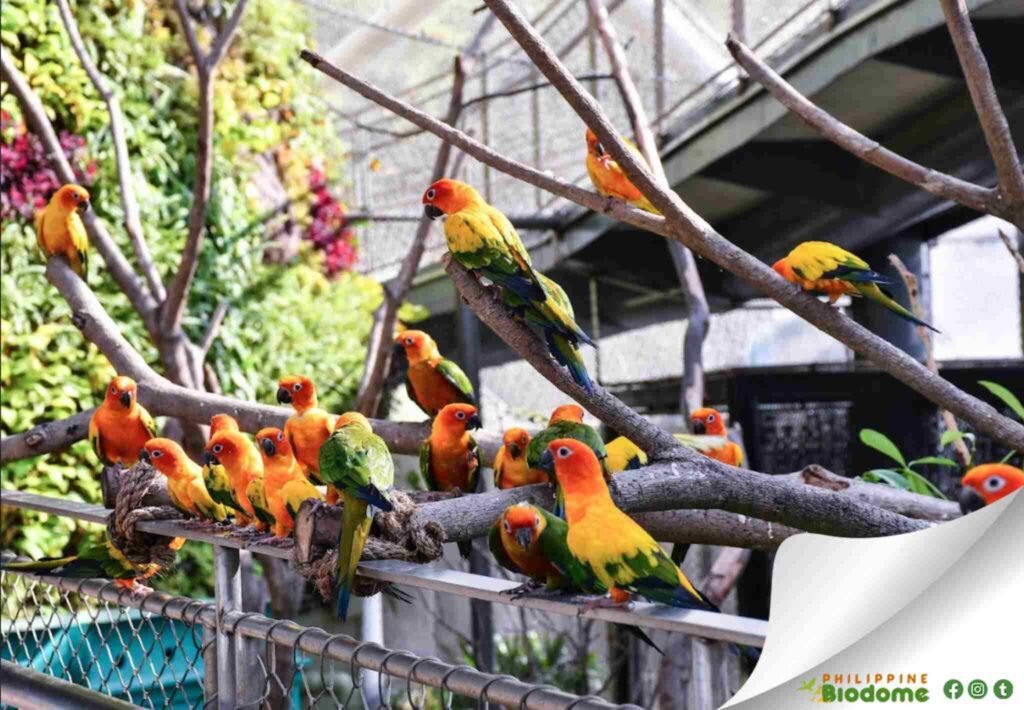
| Best Time to Visit | 9:00 AM – 10:00 AM | The Sun Conures are hungry and active. By 1:00 PM, they are asleep in the rafters. |
| Location | Behind Quirino Grandstand | Do not get dropped at the Ocean Park main lobby; ask for the “Hotel H2O” or North Parking drop-off to save steps. |
Do not let the “Standard Rate” fool you. The Philippine Biodome is rarely worth the full PHP 750 admission fee as a standalone attraction.
Most smart travelers utilize the “bundle math.” By purchasing a multi-park pass (which usually includes the Oceanarium and Antarctic exhibit), the effective cost of your Biodome entry drops by nearly 50%. This is how locals maximize the value of the trip.
Pro Tip: The “Best Time” isn’t just a suggestion—it’s biology. The Biodome is climate-controlled for plants, not people, so it gets humid by noon. Arrive at opening (9:00 AM or 10:00 AM) to catch the birds while they are active and before the midday greenhouse effect kicks in.
Table of Contents
Philippine Biodome Ticket Prices & The “Bundle” Secret
The standard Philippine Biodome entrance fee is PHP 750.00 for walk-ins. However, booking online via Klook typically drops the price to PHP 680.00. The best value is the “Festive Wave” bundle (approx. PHP 1,500), which reduces the effective Biodome cost to under PHP 400.
Navigating the ticketing system at Manila Ocean Park can be confusing, but understanding the pricing structure is the difference between paying tourist rates and local rates. The park employs a “yield management” system designed to penalize spontaneous walk-ins and reward pre-planning.
If you arrive at the gate without a voucher, you will face the PHP 750.00 Over-the-Counter (OTC) price. Worse, you will likely wait in unshaded queues while digital ticket holders breeze past you with QR codes.
Why You Shouldn’t Buy a Single Ticket
Financially, purchasing a standalone ticket for the Philippine Biodome is the least efficient way to spend your money. The park’s pricing model is heavily skewed toward “bundling.”
When you purchase the “Festive Wave” or similar 8-attraction promos (often priced around PHP 1,499 – PHP 1,599 online), you aren’t just buying volume; you are slashing the unit cost of every attraction.
Here is the breakdown of the “Bundle Math”:
Bundle Price (PHP 1,500) ÷ 8 Attractions = approx. PHP 187.50 per entry
Compare that PHP 187.50 effective cost against the PHP 750.00 standalone gate price. Even if you only care about the Biodome and the Oceanarium, the bundle is cheaper than buying those two tickets individually.
The “Borealis” Re-Entry Loophole
The standard park rule is strictly “No Re-Entry.” Once you exit the turnstiles to grab lunch at Harbor View or Makan Makan, you usually cannot go back in. However, there is one critical operational exception.
Guests are permitted to re-enter specifically for the Borealis Nights spectacle, which begins at 6:00 PM. This light show uses projection mapping and fog to simulate an aurora inside the dome structure.
This creates a perfect “Split-Shift” opportunity for savvy travelers:
Morning (10:00 AM): Tour the animals while the birds are active.
Afternoon: Leave the humid dome. Go explore Intramuros, take a nap at your hotel, or grab coffee.
Evening (6:00 PM): Present your hand stamp or ticket for re-entry to watch the light show.
💡 Pro Tip: Don’t just rely on your phone screen for the ticket. The scanners at the turnstiles can struggle with screen glare under the midday sun. Screenshot your QR code and crank your phone brightness to 100% before you reach the gate to avoid holding up the line.
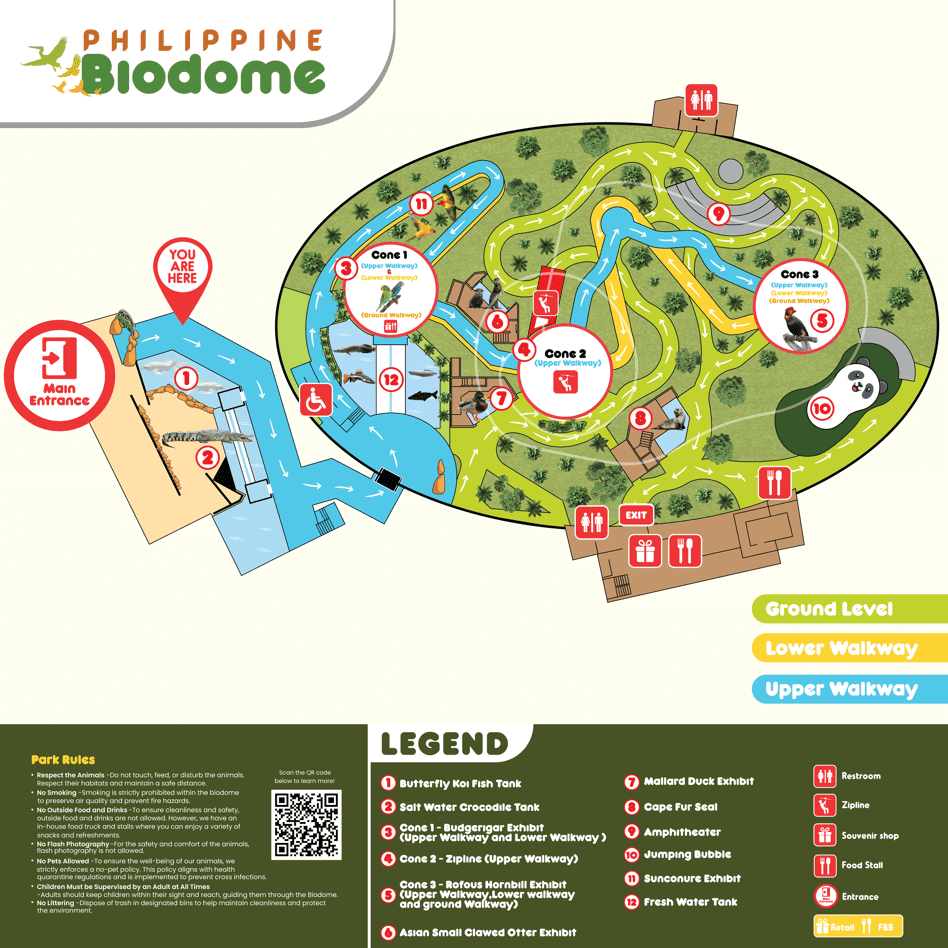
Philippine Biodome Map: Navigate Your Eco-Adventure 

Before you set off on your exciting journey through the Biodome, take a look at the Philippine Biodome map to get a sense of the layout and plan your route. The map highlights all the key attractions, walkways, and amenities to ensure you make the most of your visit.
How to Go to Philippine Biodome (2025 Commute Guide)
To get to the Philippine Biodome: 1. Take the LRT-1 to UN Avenue Station. 2. Ride a Pedicab or E-Trike specifically to the “Quirino Grandstand Rear Entrance.” 3. Alternatively, from PITX, take a modern Jeepney marked “Pier 15” for a direct drop-off near the gate. 4. Private cars should prioritize the North Parking near the Manila Hotel for the shortest walk to the Biodome entrance.
Accessing the complex can be tricky because it sits behind the massive Quirino Grandstand, isolating it from the main public transport spine of Taft Avenue. Whether you are commuting from the north (Quezon City) or the south (Cavite), choosing the wrong vehicle can result in a sweaty 1.2-kilometer trek under the Manila sun.
The “Pier 15” Jeepney Hack (From PITX/South)
If you are coming from PITX, do not blindly board just any bus bound for “Lawton” or “Monument/Fairview.” These buses will drop you off at T.M. Kalaw or Luneta Park, forcing you to walk the entire length of the park to reach the oceanfront.
The smarter move is to head to the PITX Jeepney Bay and look for modern jeepneys with the specific signboard “Pier 15” or “South Pier.”
Unlike the buses that stick to the main Roxas Boulevard, these jeepneys route through the inner service roads near the Manila Hotel and the Port Area. They drop passengers significantly closer to the Philippine Biodome complex entrance. This saves you roughly 15 to 20 minutes of walking in the heat and costs only PHP 30.00 – PHP 40.00.
Driving & Parking Intelligence
If you are bringing a private car, you have two parking zones to choose from, but they serve different purposes:
-
South Parking (Harbor View side): Best if you are visiting the Oceanarium first.
-
North Parking (Manila Hotel side): Park here for the Biodome. It is physically closer to the “Trails to Antarctica” and Biodome entrance, saving your legs for the tour.
The “Gridlock Trap” Warning: Drivers must be hyper-aware of the Roxas Boulevard truck ban schedule. Between 5:30 PM and 7:00 PM, the truck ban lifts, and the boulevard transforms into a logistical nightmare of heavy container vans.
If you attempt to leave the parking lot during this window, you will be stuck in the driveway for upwards of 45 minutes. It is strategically better to leave by 4:30 PM or commit to staying for dinner at White Moon Bar until the traffic volume subsides around 8:00 PM.
Pro Tip: If you take the LRT-1 to UN Avenue Station, ignore the taxis waiting immediately at the bottom of the stairs—they often demand a fixed “contrata” price of PHP 150+. Instead, walk 50 meters to the corner of T.M. Kalaw. From there, flag a passing E-Trike and negotiate a ride to the “Grandstand Rear” for PHP 50.00 to PHP 100.00.
Inside the Attractions: What to See & Do
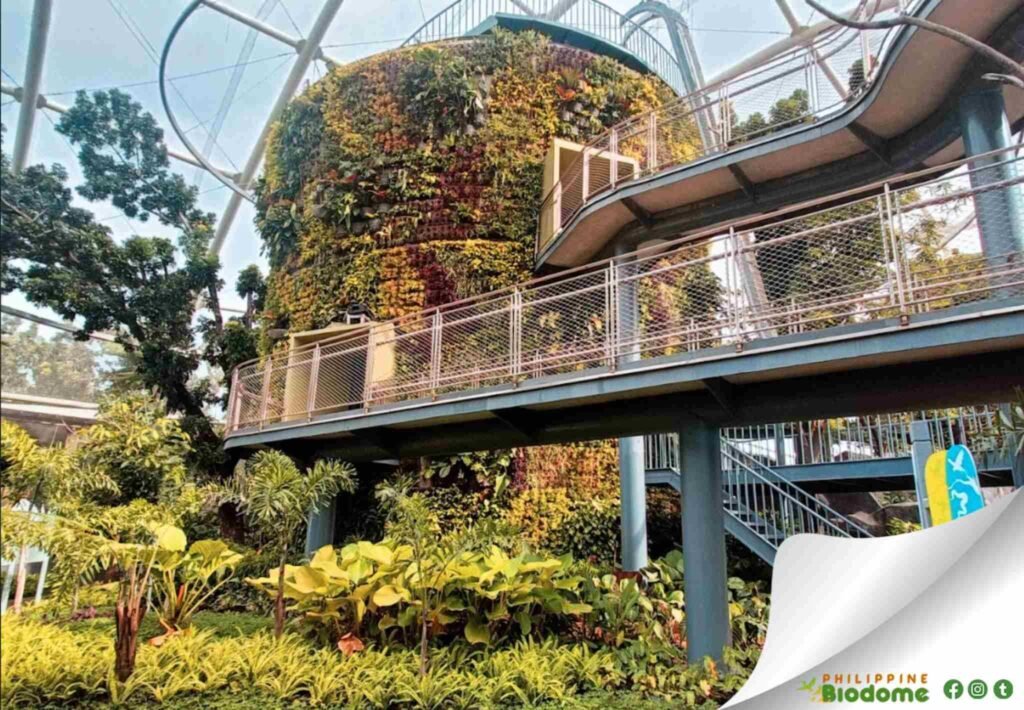
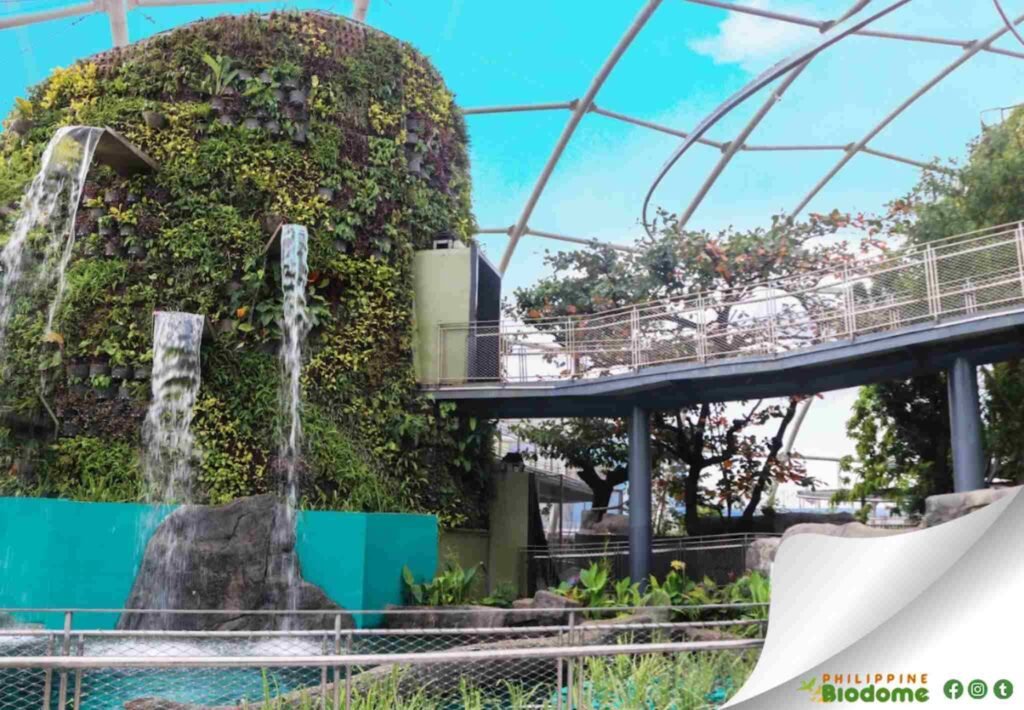
The Philippine Biodome experience is structured as a vertical ascent, transitioning visitors from the semi-aquatic “Transition Corridor” on the ground floor up to the humid, aerial canopies of the Avian “Cones.”
Unlike the Oceanarium which is a passive walk-through, this facility demands active participation—and specific timing—to see the animals at their best. If you arrive at the wrong time of day, you might just be paying to look at sleeping birds and empty branches.
The Prequel: Crocodiles & Koi
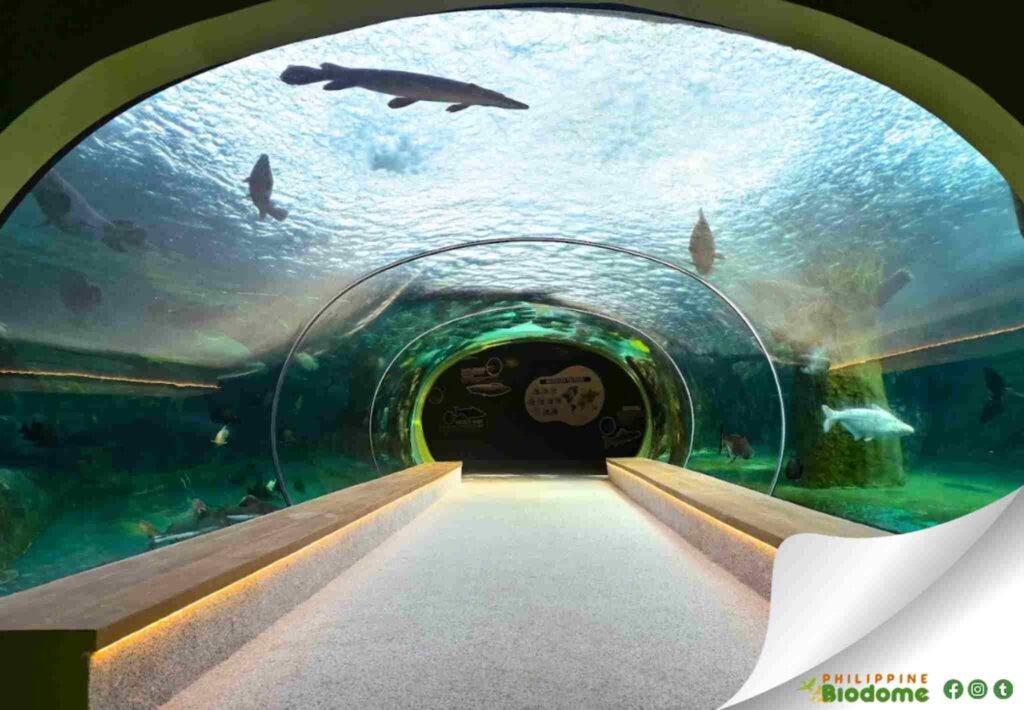
Before you enter the main dome, you pass through an introductory zone anchored by a massive Saltwater Crocodile (Crocodylus porosus). This 14-footer resides in a tank with both surface and underwater viewing panels, allowing you to see the terrifying scale of the apex predator’s underbelly.
Flanking the crocodile exhibit are open-top tanks filled with high-density populations of Butterfly Koi and Paddlefish. The visual effect here is a “living mosaic” of color, designed specifically for social media impact.
Photography Reality Check: The glass on the crocodile tank is incredibly thick and prone to heavy glare from the skylights. If you just snap a photo with your phone, you will mostly see your own reflection.
📸 Photo Hack: To get that crystal-clear shot of the croc’s teeth, take your lens hood (or cup your hand around your phone camera) and press it directly against the glass. This blocks out the ambient light reflections and lets you focus on the animal inside.
The Avian “Cones” (The Main Event)
The architectural heart of the Philippine Biodome consists of three mesh-enclosed aviaries known as “Cones.” This is where the interaction happens, but biology dictates the schedule.
The Golden Window (9:00 AM – 11:00 AM): You must prioritize this area immediately upon opening. The resident Sun Conures (parakeets) and Budgerigars are highly food-motivated in the morning. This is the only time they will actively flock to your hand for feeding sticks.
The “Siesta” Problem: By 1:00 PM, the internal temperature of the dome rises, and the birds follow their natural instinct to retreat to the highest, coolest rafters. Mid-day visitors often find the cones quiet, with the birds acting as passive observers rather than participants.
A Critical Warning on the Hornbills: One of the cones houses the Rufous Hornbill (Buceros hydrocorax), a vulnerable endemic species known as the “Clock of the Mountains.” These birds are extremely sensitive to stress. Flash photography is strictly prohibited here. Please respect the signage; a stressed bird is a sick bird.
The Borealis Night Show
At 6:00 PM, the dome shifts from a zoological exhibit to an atmospheric installation. The Borealis Nights show utilizes commercial fog machines and laser projection mapping to simulate an aurora borealis across the upper canopy.
Manage Your Expectations: This is a mood piece, not a planetarium-grade scientific simulation. Do not expect 8K resolution; expect a hazy, neon-lit “vibey” atmosphere that looks great on TikTok but is distinct from the natural beauty of the daytime tour.
The best viewing spot is not on the ground floor, but on the suspended bridges of the upper level, where the fog is densest and the light beams cut through the mist most effectively.
💡 Pro Tip: The humidity inside the Avian Cones is real—it feels like a rainforest because it is one. If you wear glasses, they will fog up the moment you exit the air-conditioned lobby and enter the dome. Bring a microfiber cloth, or you’ll be wiping your lenses on your shirt for the first 10 minutes of the tour.
The “Vibe Check”: Heat, Rules & Baggage
The Philippine Biodome is not a standard air-conditioned mall attraction; it is a humid, climate-controlled ecosystem designed to replicate a tropical rainforest. Visitors should expect significant humidity, strict biosecurity rules regarding food, and logistical friction if arriving directly from the airport with luggage.
While the facility looks like a futuristic glass structure from the outside, the interior experience is defined by “sticky” heat and rigid entry protocols that catch many tourists off guard.
Is it Air-Conditioned?
No. The dome is climate-controlled for plant health, not human comfort, meaning it maintains high humidity levels similar to a real jungle.
Do not expect the freezing temperatures of a typical Metro Manila mall. The facility utilizes industrial fans, passive ventilation, and misting systems to keep the vertical gardens and animals healthy. It often feels warmer and “heavier” inside the dome than it does outside on the seaside promenade.
The “Contrast” Dress Code: Because the interior is a wall-to-wall explosion of foliage, your outfit matters for photos.
Avoid: Khaki, Army Green, or Brown. You will disappear into the background and look like a floating head in your pictures.
Wear: Bright Red, White, or Yellow. These colors create a sharp contrast against the heavy greenery, making your subjects “pop” in the dim, diffused lighting.
The “Baggage Crisis” & No Food Policy
Security at the Philippine Biodome mirrors airport protocols, and two specific rules cause the most headaches for travelers.
First, there is currently no reliable baggage storage for large suitcases. Reports indicate the baggage counter is frequently unavailable or too small for trolley bags. If you are heading here straight from NAIA or PITX, drop your luggage at your hotel or a third-party storage hub in Malate first. If you bring a suitcase to the gate, you will likely be denied entry.
Second, the “No Outside Food or Drinks” policy is strictly enforced to protect the biosecurity of the animals. Security guards will confiscate water bottles (including expensive Hydroflasks) and snacks at the turnstiles.
💡 Pro Tip: Since hydration inside is expensive (expect a 200% markup on bottled water), do not throw away your confiscated water. Instead, rent a locker at the Aqua Adventure area (approx. PHP 30.00) to store your tumblers. You can step out, hydrate cheaply, and then return to the other park attractions.
Where to Stay & Eat Nearby
For the ultimate convenience, Hotel H2O is the only on-site option, allowing you to walk straight from your room to the Biodome. For dining, avoid the overpriced main courses at the waterfront restaurants and stick to the “Asian Food Village” for better value.
Transforming a stressful day trip into a relaxed staycation requires navigating the accommodation tiers of the Ermita district. If you stay on-site, you buy yourself time; if you eat smart, you save yourself money.
Hotel H2O & The “Aqua Rooms”
This is the only hotel integrated directly into the park complex. Its claim to fame is the “Aqua Room,” where the walls are literally floor-to-ceiling aquariums filled with jellyfish or tropical fish.
-
The Pro: It is unbeatable for families. You can bypass the morning traffic completely and enter the park the moment it opens.
-
The Con: These rooms have no windows to the outside world—only into the fish tanks. Some guests also report a low-frequency hum from the filtration systems that runs 24/7. If you are a light sleeper, request the “Bay View” rooms instead, which trade the fish for a sunset view.
Dining: From Food Courts to Sunset Views
The Budget Pick: Makan Makan Asian Food Village Located inside the hotel, this venue replicates a Singaporean hawker center. It is the safest bet for a hearty meal without the “tourist tax.”
-
Order This: The Laksa (approx. PHP 350) or Hainanese Chicken Rice. The portions are generous, and the air-conditioning is strong—a perfect respite after the humid Biodome tour.
The View: White Moon Bar This outdoor lounge faces Manila Bay and is your strategic waiting area.
-
The Strategy: Do not attempt to drive home at 5:30 PM. Instead, grab a bucket of beer and “Sisig” here. Watch the famous Manila Bay sunset and let the rush hour gridlock subside before you call a Grab.
The Tourist Trap Warning: Harbor View Restaurant You will see this restaurant extending over the water at the edge of the complex. It is famous for a reason, but it comes at a cost.
-
Reality Check: The main courses (especially the seafood platters) are often overpriced for the portion size. You are paying for the location, not the culinary excellence.
-
The Move: Go here strictly for appetizers (Gambas or Calamares) and drinks. Enjoy the sea breeze and the view, then head elsewhere for your heavy dinner.
Pro Tip: If you are booking a Grab from the complex at night, do not pin “Ocean Park Main Entrance.” Drivers hate entering the driveway due to traffic. Walk 5 minutes to the Manila Hotel Lobby or the Quirino Grandstand road. You will get picked up much faster.
Frequently Asked Questions (FAQ)
Common questions about accessibility and timing for the Philippine Biodome centered on strollers, wheelchairs, and tour duration.
If you are visiting with elderly relatives or toddlers, the physical layout of the dome presents specific challenges that brochures often omit. Here is the operational reality.
Is the Philippine Biodome wheelchair friendly?
Yes, the ground level and main exhibits are accessible, but the upper canopy experiences can be difficult. The facility is equipped with ramps and elevators to meet standard accessibility codes. However, the “Cones” (the bird aviaries) are designed with narrow, suspended pathways to mimic a rainforest trail. While a standard wheelchair fits, larger motorized scooters may struggle with the tight turning radiuses on the upper bridges.
Can we bring a stroller inside?
You can bring it to the entrance, but you will likely need to park it. Navigating the avian lofts with a stroller is a logistical nightmare due to uneven “natural” flooring and stair transitions. The management provides a designated Stroller Parking Zone near the entrance. It is highly recommended to use a baby carrier or hip seat for the actual tour to keep your hands free for feeding the birds.
How long does the tour take?
Expect to spend approximately 45 minutes to 1 hour for the full walkthrough. This is not a full-day park. A typical visitor will spend 15 minutes in the lower reptile zone and about 30 minutes interacting with the birds in the upper canopies. If you plan to watch the Borealis Nights show, you will need to kill time elsewhere in the complex and re-enter at 6:00 PM.
💡 Pro Tip: Because the floor inside the dome is often wet from the plant misting systems, wear shoes with good grip. Smooth-soled sandals or flip-flops can be slippery on the metal grates of the canopy bridges.
Final Verdict: Is the Philippine Biodome Worth It?
The Philippine Biodome is a bold, necessary addition to Manila’s tourism landscape. It successfully pivots the Manila Ocean Park complex from a purely marine attraction into a hybrid ecological hub. However, your enjoyment hinges entirely on expectation management.
If you enter expecting a freezing cold, mall-like experience, you will be disappointed by the humidity. If you pay the full PHP 750 gate price for a 45-minute walkthrough, you might feel shortchanged.
But, if you treat it as an educational slice of the rainforest in the heart of the city—and you book via the bundled promos—it is a fantastic stop. It offers a rare chance to interact with wildlife without leaving the metro, making it a solid win for families and photographers.
The Bottom Line:
Go if: You are a family with kids, a content creator looking for unique visuals, or a nature lover who can’t drive 4 hours to a real forest.
Skip if: You have a low tolerance for humidity or are on a strict budget and can’t afford the bundle.
Explore More of Metro Manila
Planning a full weekend itinerary? Don’t stop at the Biodome. Here are the best guides to maximize your trip around the city, from historical landmarks to air-conditioned theme parks.
Within the Complex & Walking Distance Since you are already in the area, maximize your parking fee by exploring the rest of the bay and Luneta.
The Main Park: Read our Ultimate Guide to Manila Ocean Park 2025 to navigate the Oceanarium and Sea Lion shows.
The National Park: Walk across the street to see the monuments with our Guide to Rizal Park (Luneta) in Manila.
Historic Intramuros (10-Minute Trike Ride) Head inside the Walled City for a dose of history after your nature tour.
Fort Santiago: Visit the iconic citadel and the Manila Dungeon.
San Agustin Church: Explore the UNESCO World Heritage site with our Ultimate Guide to San Agustin Church.
Quiapo: Feeling adventurous? Dive into the chaotic heart of the city with our Quiapo Manila 2025 Travel Guide.
More Family Theme Parks Looking for more thrills or air-conditioned play areas?
Star City: The classic choice for rides. Check the Star City Ticket Prices & Guide.
DreamPlay: For a premium, interactive indoor experience, read our Ultimate Guide to DreamPlay (City of Dreams).
Manila Zoo: Compare the Biodome to the newly renovated New Manila Zoo (Entrance Fee & Hours).
Visual Arts: For a futuristic photo op, visit the Space and Time Cube Museum at S Maison.
Thank you for your incredible faith in our efforts. Your presence is priceless.