
Best Major Climbs in the Philippines: The Ultimate Hiking Bucket List 2026
Stepping Up Your Game
You have likely conquered the rolling hills of Mt. Batulao or the scenic ridges of Mt. Ulap. The views were incredible, and the legs felt good. But now, you are craving something deeper. You want the thin air at 2,900 MASL, the eerie silence of the mossy forests, and the true challenge of a multi-day expedition.
If you are looking to upgrade your hiking resume, this guide to the best Major Climbs in the Philippines is your gateway.
We aren’t talking about the “suicidal” or technical 9/9 climbs just yet—we are saving Mt. Guiting-Guiting and Mt. Halcon for when you have more mileage. Instead, this list focuses on the “Sweet Spot”—mountains rated Difficulty 5/9 to 8/9.
These hikes are the perfect bridge between weekend leisure and hardcore mountaineering. They will demand that you carry a 12kg to 25kg full pack, endure near-freezing temperatures (often dropping to 5°C in the Cordilleras), and push your body for 8 to 10 hours a day.
But trust me, when you wake up above the clouds at the saddle of Mt. Pulag (Akiki) or stand on the sulfur vents of Mt. Apo, you will realize that the pain was just the price of admission.
Decoding the Difficulty (What is a 5/9 to 8/9 Climb?)
What is a Major Climb (5-8/9)?
A Major Climb rated 5/9 to 8/9 is an endurance test rather than a technical survival situation. These mountains require multi-day itineraries (2–4 days), full camping gear (tent, cookset, sleeping bag), and the stamina to hike 8–12 hours per day. Unlike “technical” 9/9 climbs that often need ropes, these trails involve steep continuous assaults, root scrambling (Class 3-4), and exposure to high-altitude elements.
Before you book that flight to Davao for Mt. Apo, you need to understand what you are signing up for. In the Philippines, we generally follow the Pinoy Mountaineer Difficulty Scale, which rates mountains from 1/9 (Walk in the Park) to 9/9 (Extremely Difficult).
Many beginners think the jump from a 4/9 Minor Climb (like Mt. Batulao) to a 5/9 Major Climb is small. It is not. The difference isn’t just one point; it is the difference between being home for dinner and sleeping in a wet tent at 2,400 MASL with aching quads.
A. The “Major Climb” Spectrum (5/9 to 8/9)
We categorize this list into two distinct “Zones of Suffering.” Understanding where your target mountain falls will help you pack and train correctly.
The “Mental Game” (Difficulty 5/9 – 6/9):
These mountains are often technically safe—meaning you rarely feel like you’re going to fall off a cliff—but they are mentally draining. The challenge usually comes from extreme heat, length, or monotony.
Example: Mt. Tapulao (5/9) in Zambales isn’t steep, but walking on loose rocks for 36 kilometers destroys your feet.
Example: Mt. Isarog (6/9) involves dealing with aggressive Limatiks (leeches) and unrelenting humidity.
This is where peak physical condition is mandatory. You are not just walking; you are lifting your body weight plus a 12kg – 15kg backpack up steep inclines for hours.
Example: Mt. Pulag via Akiki (7/9) is called the “Killer Trail” because the assault is virtually non-stop for 10 hours.
Example: Mt. Dulang-Dulang (8/9) forces you to navigate mossy forests where the trail is a maze of giant roots and mud.
Insider Tip: Do not underestimate a 5/9 just because the number looks low. I’ve seen strong gym-goers quit on Mt. Tapulao simply because they mentally broke down from the sheer boredom and heat of the open trail.
B. Trail Classes: When “Walking” Becomes “Climbing”
The Difficulty Rating tells you how tired you will get (Cardio). The Trail Class tells you how you will move (Mechanics). In Major Climbs, you often stop walking upright and start using your hands.
Here is the breakdown of what the terrain will demand from you:
| Trail Class | The Vibe | Action Required |
| Class 1-2 | Hiking | Walking on established paths. You can hold a trekking pole in one hand and a camera in the other. (Common in Minor Climbs). |
| Class 3 | Scrambling | Uneven terrain. You need to use your hands for balance on rocks, large roots, or steep dirt. Trekking poles might get in the way here. |
| Class 4 | Climbing | Steep terrain where a fall could hurt. You must use “3-Point Contact” (Two hands + one foot, or two feet + one hand) to pull yourself up roots or boulders. |
Important Note: Mountains like Mt. Apo (Boulder Face) feature sustained Class 4 sections. You will be scrambling over sulfur vents and massive boulders. If you are afraid of heights or have poor balance, you must train for this specific movement using a loaded bag before your trip.

The “Gateway” Major Climbs (Luzon) – Difficulty 5/9 to 6/9
What are Gateway Major Climbs? Gateway Major Climbs (Rated 5/9 to 6/9) are the training grounds for expedition-style mountaineering. While technically safer than the 7-9/9 giants, these hikes require significantly more endurance than a day hike. Expect 8-12 hours of trekking, 1,000+ meters of elevation gain, and the need to carry full camping gear over long distances.
If you are transitioning from day hikes to your first multi-day expedition, start here. These mountains in Luzon are accessible via standard bus routes from Cubao or Pasay, making them perfect for your first “Major Climb” experience without the logistic headache of booking flights.
Mt. Tapulao (Palauig, Zambales)
Tagline: “The Infinite Rocky Road”
Specs: 2,037 MASL | Difficulty 5/9 | Trail Class 1-2
Jump-off: Brgy. Dampay-Salaza, Palauig
The Mt. Tapulao Guide isn’t about surviving a cliff; it’s about surviving your own mind. Known as the “Poor Man’s Pulag” due to its pine forest summit, the real challenge here is the terrain. You will walk on a relentless rocky road (remnants of old chromite mining operations) for nearly 85% of the trail.
The Experience: The distance is the killer here—a punishing 36 kilometers back-and-forth. The rocks are uneven, ranging from fist-sized stones to boulders, which will batter your shoe soles. We typically camp near KM 16 (the “Bunkhouse”) where a reliable water source flows from a pipe. From the bunkhouse, it’s another hour assault to the summit marker at 2,037 MASL.
Tarak Ridge (Mariveles, Bataan)
Tagline: “The Windy Ridge”
Specs: 1,130 MASL | Difficulty 5/9 | Trail Class 3
Jump-off: Brgy. Alas-asin, Mariveles
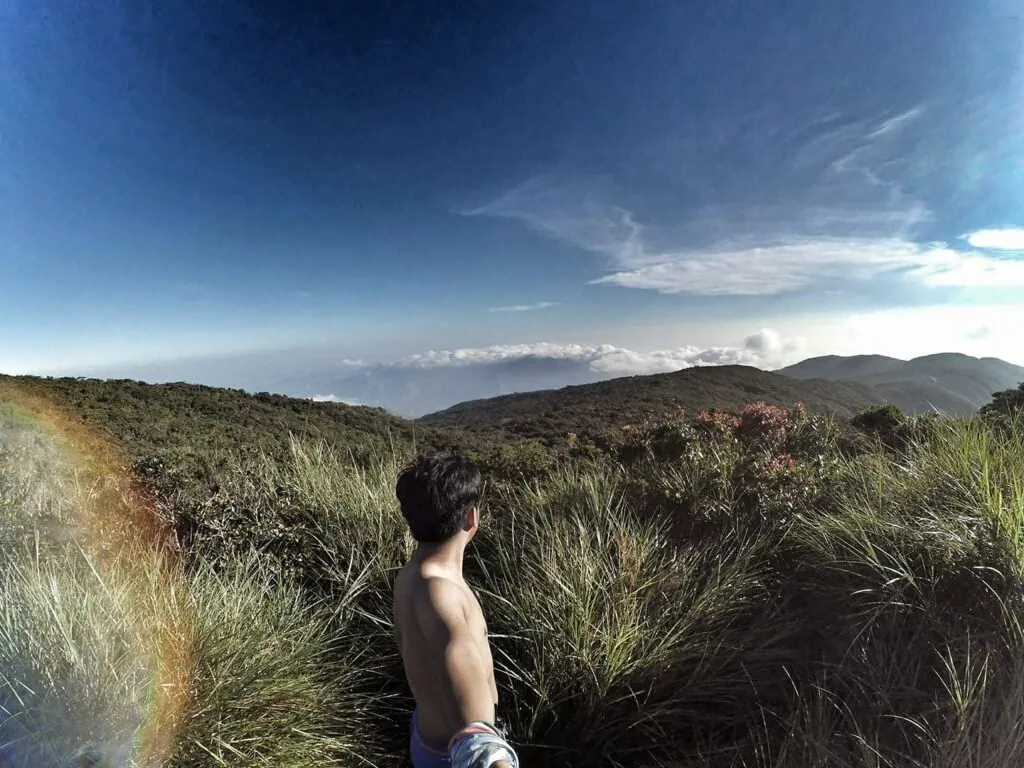
Tarak Ridge is part of the massive Mt. Mariveles caldera. Unlike Tapulao’s gradual incline, Tarak is a steep, cardio-heavy assault. It’s famous for its gale-force winds on the ridge, which offers a stunning view of Corregidor Island and Manila Bay.
The Experience: The hike is divided into two parts. The first leg is a humid trek through the forest leading to Papaya River—your last water source and lunch spot. Fill up everything here (at least 3 Liters if camping overnight). The second leg is the assault: a steep scramble over giant roots and loose soil that will force you to use your hands. Once you breach the tree line, the wind hits you hard.

Mt. Ugo (Kayapa, Nueva Vizcaya to Itogon, Benguet)
Tagline: “The Pine Forest Traverse”
Specs: 2,150 MASL | Difficulty 5/9 | Trail Class 1-3
Jump-off: Kayapa, Nueva Vizcaya (Traverse Entry)
If you want the “Cordillera vibes” (pine trees and cold weather) without the intense difficulty of Mt. Pulag’s Akiki trail, Mt. Ugo is the best alternative. Mt. Ugo gained tragedy-driven fame from a plane crash in 1987, but today it is celebrated for its beautiful trails connecting two provinces.
The Experience: This is typically a 2-day traverse.
Day 1: You ascend from Kayapa through varied forests to Indupit Village, eventually camping near the summit or the school grounds at Domolpos.
Day 2: The descent goes toward Itogon, Benguet, passing majestic pine ridges that rival Pulag. The trail is long (approx. 32km total) but mostly gradual.
The Cordillera Giants – Difficulty 6/9 to 8/9
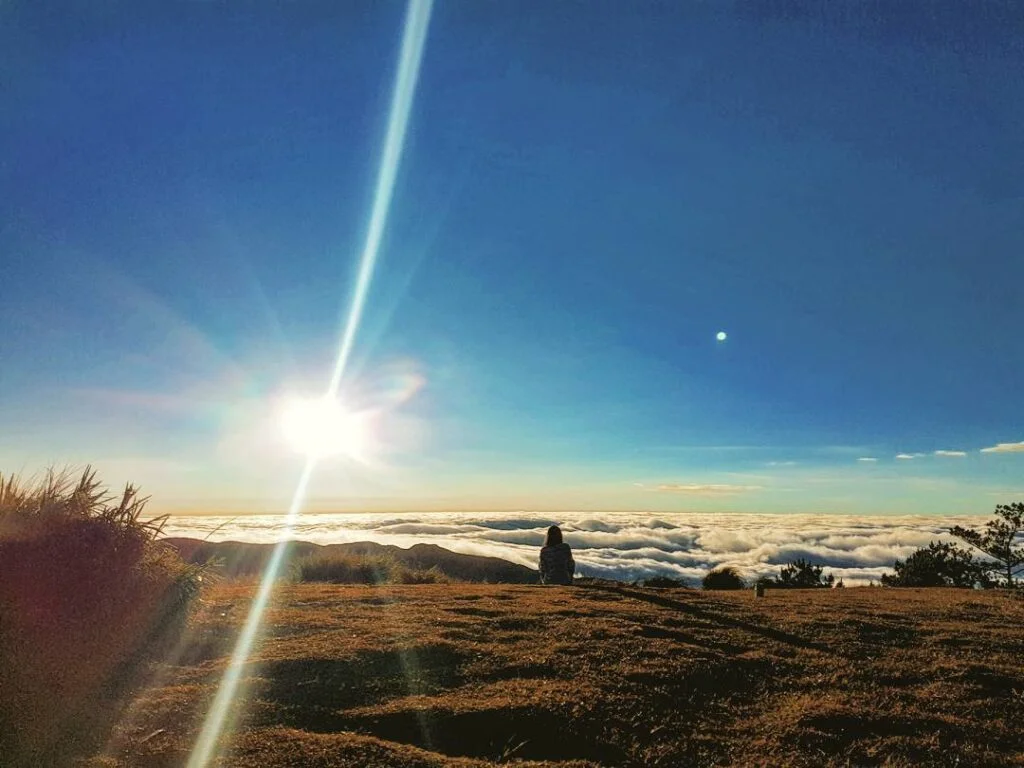
What to Expect in the Cordilleras? The Cordillera giants (Mt. Pulag Akiki, Mt. Amuyao, Mt. Napulauan) are defined by high altitude (2,600+ MASL) and freezing temperatures that can drop to 0-5°C. These Major Climbs involve steep pine or mossy forest assaults requiring 8-12 hours of trekking per day. Proper layering (thermal wear) and a 0°C-rated sleeping bag are mandatory survival gear.
If you think the cold in Baguio is intense, wait until you pitch a tent at 2,800 MASL. This section covers the “Trilogy” candidates of North Luzon. These mountains are not just hard because of the incline; the thin air and biting cold add a layer of difficulty that tests your lungs and gear.
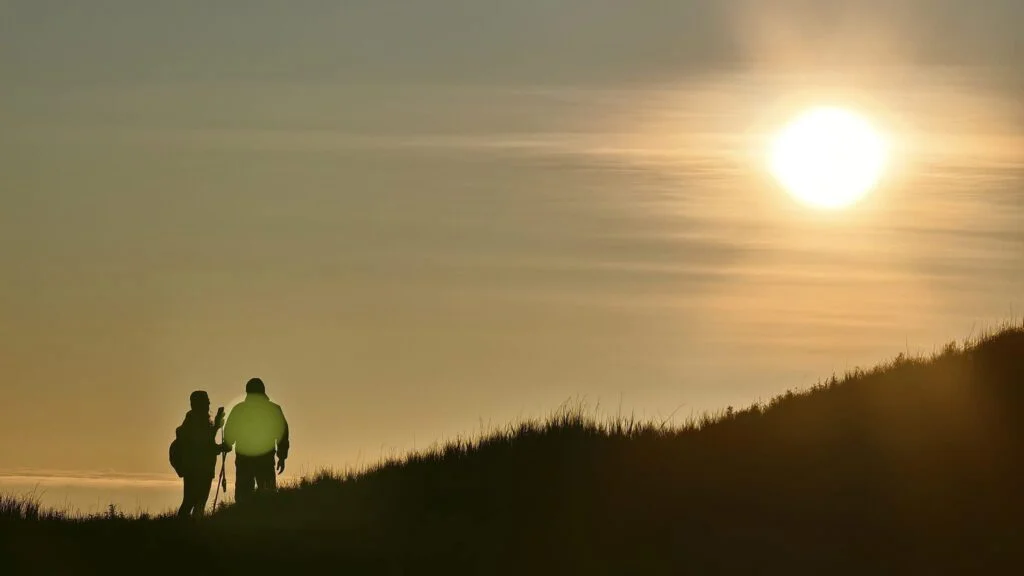
Mt. Pulag via Akiki Trail (Kabayan, Benguet)
Tagline: “The Killer Trail”
Specs: 2,922 MASL | Difficulty 7/9 | Trail Class 3
Jump-off: Brgy. Doacan (Akiki), Kabayan, Benguet
Let me be clear: This is NOT the Ambangeg Trail. While the celebrity-favorite Ambangeg is a “walk in the park,” the Akiki Trail is a relentless vertical assault often dubbed the “Killer Trail.” You start from a lower elevation at the Akiki Jump-off and climb steeply for 10-11 hours to reach the saddle.
The Experience: Mt. Pulag trail starts with a descent to the Eddet River (Camp 1), where you’ll find a hanging bridge. After the river, the “killing” begins—a steep, continuous ascent through pine forests that feels like it never ends. You will camp at Marlboro Camp (Camp 2) before the final assault to the Grassland summit.
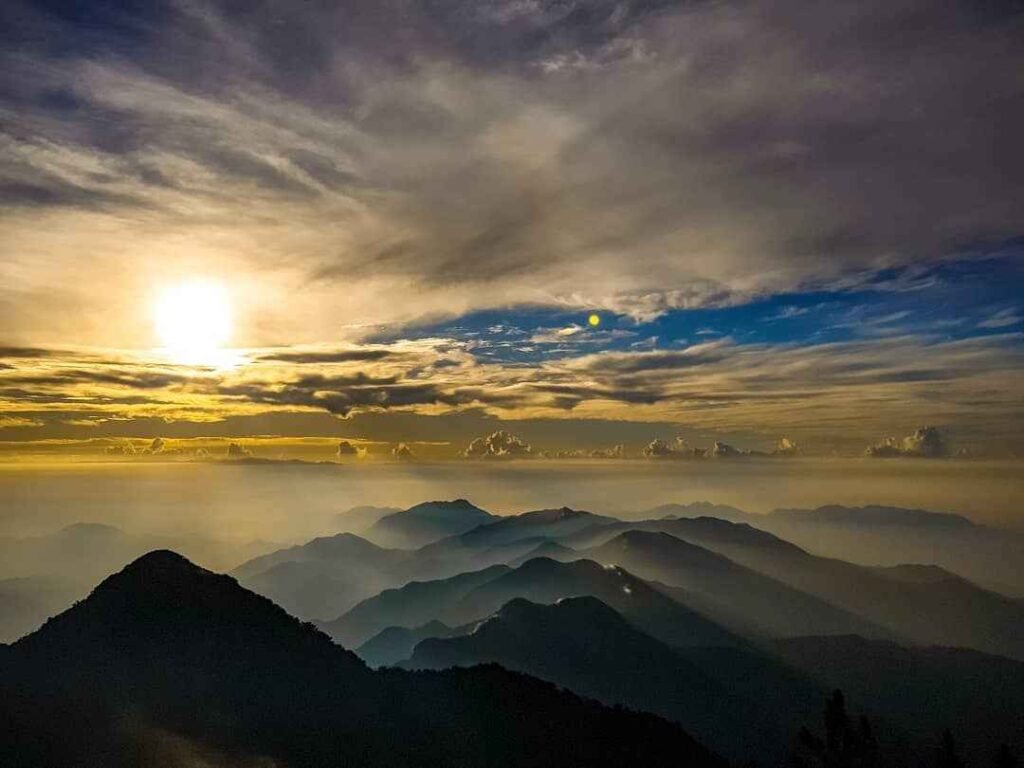
Mt. Amuyao (Barlig, Mt. Province)
Tagline: “The Stairway to Heaven”
Specs: 2,702 MASL | Difficulty 7/9 (Backtrail) or 8/9 (Traverse)
Jump-off: Barlig Municipal Hall, Mountain Province
Mt. Amuyao offers one of the most unique summit views in the Philippines—not just nature, but structure. The peak is crowned by two massive broadcast towers that are visible for miles. You have two options: the “easier” backtrail via Barlig or the punishing traverse descending to Batad.
The Experience: The Barlig trail is famous for its concrete stairs—thousands of them. It feels like climbing a skyscraper that turns into a mossy forest. If you choose the Traverse to Batad, prepare for a knee-shattering descent through wild overgrown trails that eventually open up to the world-famous Batad Rice Terraces.
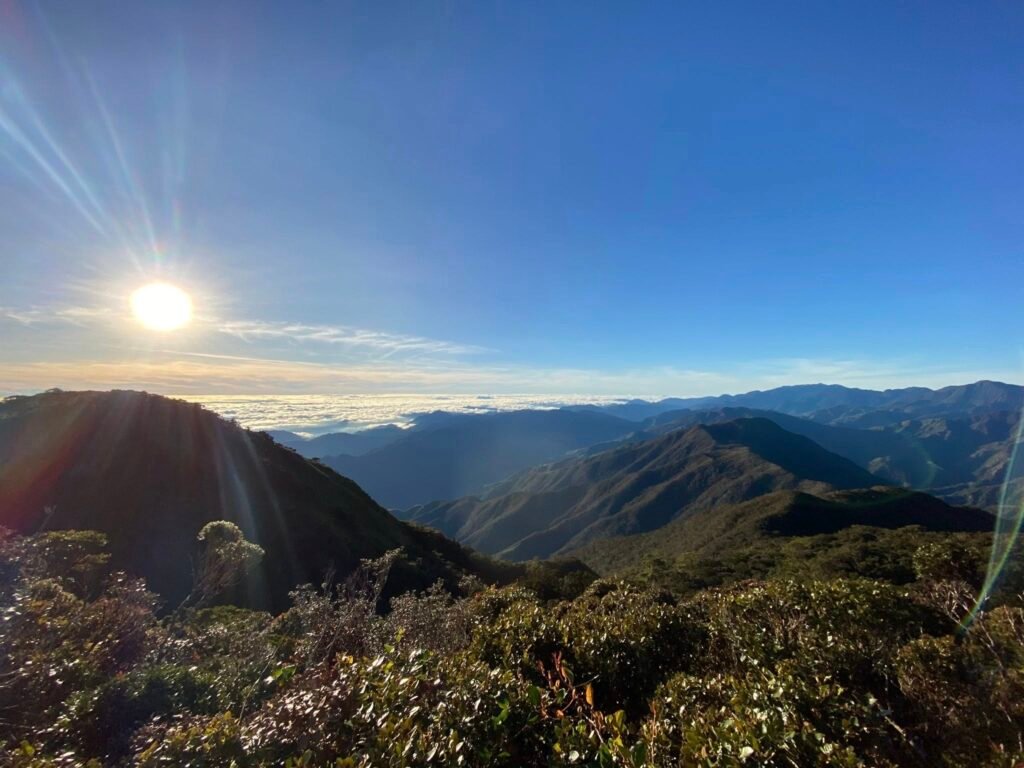
Mt. Napulauan (Hungduan, Ifugao)
Tagline: “The Enchanted Forest”
Specs: 2,642 MASL | Difficulty 7/9 | Trail Class 3
Jump-off: Poblacion Hungduan or Brgy. Hapao
Known for its ethereal, moss-covered trees, Mt. Napulauan is beautiful but brutal. The name comes from the local word “Tuwali,” meaning “place of fog.” It lives up to the name, often blanketing hikers in a wet, cold mist that invites the mountain’s residents: the Limatiks (blood leeches).
The Experience: This hike is a “Major Climb” in the truest sense due to the non-stop assault. From the jump-off to the campsite at Ny-o, the trail barely flattens. It is a cardio nightmare. The summit campsite is small and surrounded by dwarf bamboo and mossy trees, offering very little protection from the wind.
The Visayas & Bicol Volcanoes – Difficulty 6/9 to 7/9
What defines Hiking in Visayas & Bicol? Major Climbs in the Visayas and Bicol regions (Difficulty 6-7/9) are defined by active volcanic terrain and dense tropical rainforests. Hikers must secure PAMB/DENR permits in Bacolod or Naga City weeks in advance. Always check the PHIVOLCS website for Alert Levels, as climbs on Mt. Kanlaon and Mt. Isarog are strictly prohibited during Alert Level 1 or higher.
If the Cordilleras are about pine trees and cold winds, the volcanic giants of the South are about raw power, sulfur, and lush jungle. These mountains are “alive.” You aren’t just climbing a peak; you are walking on the rim of geological history.
Mt. Kanlaon
Tagline: “The Active Titan”
Specs: 2,435 MASL | Difficulty 7/9 (Wasay) or 6/9 (Mapot) | Trail Class 3-4
Jump-off: Sitio Mapot, Canlaon City (Entry) or Guintubdan, La Carlota (Exit)
Mt. Kanlaon is the highest peak in the Visayas and arguably the most majestic active volcano in the country. It is a “Major Climb” that demands respect—not just for the terrain, but for its volatility. The trail offers a stunning contrast: you walk through the ancient trees of the “Garden of Eden” and camp at the Mars-like landscape of Margaha Valley.
The Experience: Most hikers choose the Mapot-Guintubdan Traverse. The ascent via Mapot is steep and often slippery due to loose volcanic soil. The highlight is the summit crater—a massive, gaping mouth of the earth that smells of sulfur.
Warning: This mountain is Active. Before booking flights, check the PHIVOLCS status. If it is Alert Level 1, all hiking activities are automatically cancelled. No exceptions.
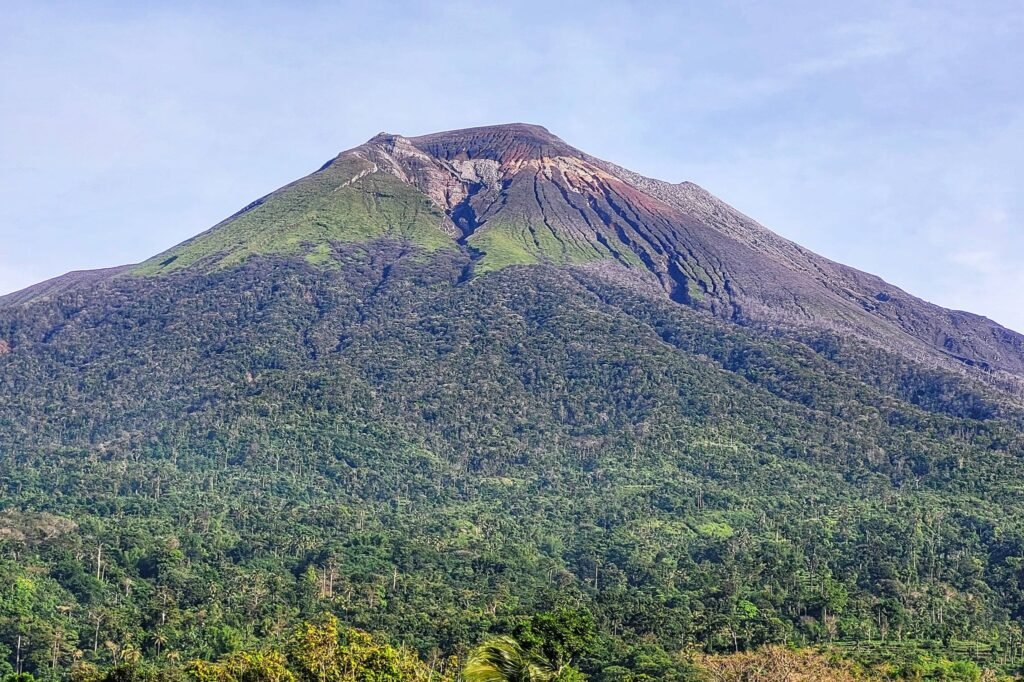
Mt. Isarog (Camarines Sur)
Tagline: “The Land of Waterfalls”
Specs: 1,966 MASL | Difficulty 6/9 | Trail Class 3
Jump-off: Brgy. Panicuason, Naga City
Looming over Naga City, Mt. Isarog is a dormant stratovolcano famous for its rich biodiversity and “mossy crater rim.” It doesn’t have the open views of Pulag, but the jungle experience here is unparalleled.
The Experience: The trail via Panicuason starts deceptively easy with a concrete path leading to the falls, but quickly turns into a relentless assault through a root-filled jungle.
The Hazard: Isarog is the “Limatik Capital” of Bicol. The blood leeches here are aggressive and abundant, especially around Camp 1.
The Reward: The summit is a narrow ridge on the crater rim. On a clear day, you can see Mayon Volcano in the distance.

The Mindanao Summits – Difficulty 7/9 to 8/9
What defines the Mindanao Majors? The Mindanao Summits represent the absolute peak of Philippine mountaineering. Led by Mt. Apo (2,954 MASL) and Mt. Dulang-Dulang (2,938 MASL), these Major Climbs require large budgets (PHP 8,000+), confirmed flight bookings to Davao or CDO, and mandatory rituals or strict LGU permits. Expect 3-day itineraries, freezing nights at high altitude, and technically demanding trails.This is it—the roof of the Philippines. Climbing in Mindanao is a different beast entirely. You aren’t just battling the elevation; you are navigating complex logistics, higher fees, and culturally significant lands protected by indigenous tribes.
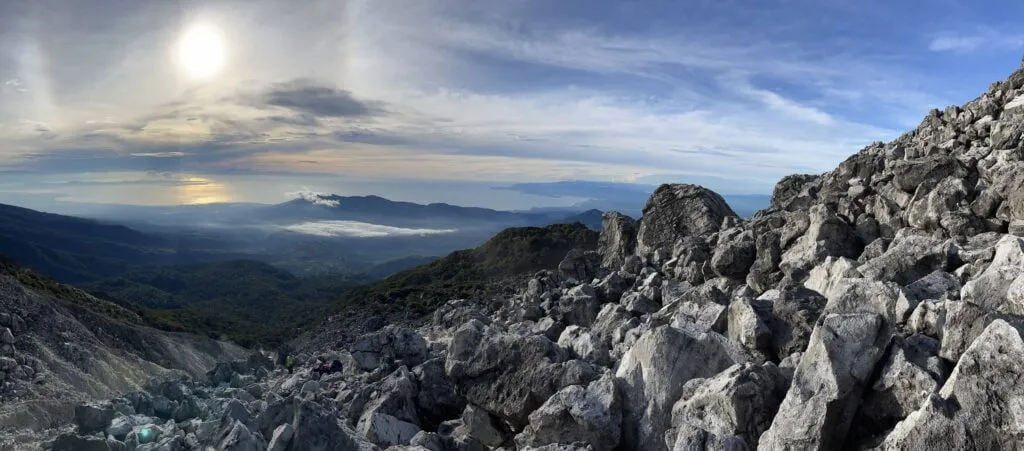
Mt. Apo (Davao del Sur/Cotabato)
-
Tagline: “The Grandfather of Philippine Mountains”
-
Specs: 2,954 MASL (Highest) | Difficulty 7/9 | Trail Class 4 (Boulder Face)
-
Jump-off: Brgy. Kapatagan, Digos (Sta. Cruz Trail) or Kidapawan City
Mt. Apo is the ultimate bucket list item. As the highest peak in the archipelago, standing on its summit feels like a coronation. The mountain has multiple trails, but the experience varies wildly depending on your entry point. The Kidapawan Trail is forested and “easier,” while the Sta. Cruz (Kapatagan) Trail forces you to scramble up the iconic Boulder Face.
The Experience: If you take the Sta. Cruz Trail, the highlight is the Boulder Face—a massive section of jagged volcanic rocks with sulfur vents hissing steam at you. It is alien and intimidating. You will likely camp at Lake Venado, the highest lake in the country, which can freeze over at night.

Mt. Dulang-Dulang (Lantapan, Bukidnon)
Tagline: “D2: The Mossy Realm”
Specs: 2,938 MASL (2nd Highest) | Difficulty 8/9 | Trail Class 3-4
Jump-off: Sitio Bol-ogan, Lantapan, Bukidnon
While Apo is rocky and grand, Mt. Dulang-Dulang (D2) is quiet, mystical, and arguably harder. It is the “Chief” of the Kitanglad Mountain Range. The forest here is so dense with moss that it feels like the set of Avatar. Every branch, root, and rock is covered in a thick green carpet.
The Experience: This hike is almost entirely inside a mossy forest. The air is damp, cold, and thin. The trail involves crawling under giant logs and pulling yourself up vertical sections.
The Ritual: Before ascending, you must participate in a ritual with the local Datu. You usually need to provide a live chicken, a coin, and white cloth as an offering for safe passage.
The D2K Traverse: Most hikers combine this with Mt. Kitanglad (the 4th highest peak) for a 3-day “D2K Traverse.”
Gear Upgrade: Minor Climb vs. Major Climb
What gear do you need for a Major Climb?
Transitioning to Major Climbs (Difficulty 5-8/9) requires a significant gear overhaul. You must upgrade to a 40L–60L backpack with an internal frame to carry 12kg+ loads. Essential additions include a Sleeping System (0°C–10°C rated bag + foam pad), a Portable Cookset (burner + mess kit), and a 3-Layer Clothing System (Base, Fleece, Shell) to survive sub-zero temps in the Cordilleras.
Your 20L daypack and cotton hoodie won’t cut it anymore. When you commit to Major Climbs in the Philippines, you become a self-sufficient unit. You are carrying your house, your kitchen, and your bed on your back for 2 to 4 days.
The rule is simple: “Pack Light, Freeze Later” is a myth. You pack right, or you freeze later.
The Upgrade Checklist: What Changes?
Here is the evolution of your kit from a day hiker (Minor) to an expedition climber (Major).
| Gear Category | Minor Climb (Day Hike) | Major Climb Upgrade (Expedition) |
| The Pack | 20L – 30L Daypack | 40L – 60L Internal Frame Pack (e.g., Deuter, Osprey, or local Brown Trekker). Must have a hip belt to transfer weight. |
| Sleep System | None (or Hammock) | Sleeping Bag (5°C – 10°C Comfort Rating) + Earth Pad. The ground sucks body heat faster than the air. |
| Kitchen | Packed Lunch (Jollibee) | Portable Stove (Kovea/Burner) + Cookset + Butane Canister. You need hot soup at 2,800 MASL. |
| Clothing | Dri-fit Shirt + Windbreaker | The 3-Layer System: 1. Base (Thermal), 2. Mid (Fleece/Down), 3. Shell (Waterproof Jacket). |
| Water | 2 Liters Bottles | 3L Bladder + Water Filter/Tablets. Sources like Mt. Kanlaon‘s Margaha Valley are untreated. |
1. The Backpack (Your New Best Friend)
You will be carrying roughly 12kg to 15kg. A school bag will snap your shoulders. You need a pack with a suspension system (internal frame) that transfers the load to your hips, not your spine.
Budget Pick: Local brands like Sandugo or Brown Trekker (approx. PHP 3,500) offer decent entry-level expedition packs.
Pro Pick: Osprey Atmos or Deuter Aircontact.
LakbayPinas Tip: Line the inside of your bag with a large, heavy-duty trash bag (or a “garbage bag liner”) before packing your stuff. Rain covers often fail during heavy typhoons in Mt. Isarog or Mt. Apo. A trash liner ensures your sleeping clothes stay dry no matter what.
2. The Sleep System (Surviving the Cold)
In the Cordilleras (Mt. Pulag Akiki, Mt. Amuyao), temperatures drop to 0°C to 5°C at night.
Sleeping Bag: Check the “Comfort Rating,” not just the “Extreme Rating.” A bag rated for 15°C will leave you shivering at Marlboro Camp. Aim for a 0°C or 5°C rating.
The Earth Pad: This is non-negotiable. It provides insulation from the freezing ground. An expensive sleeping bag is useless if you are lying directly on the cold earth of Mt. Dulang-Dulang.
3. The Kitchen (Cook or Starve)
On a multi-day hike, you cook your own meals.
Stove: A standard Kovea screw-type burner or a cheap butane adapter stove is standard.
Cookset: Aluminum mess kits are light and cheap (approx. PHP 500 at Decathlon or Shopee).
Fuel: Bring 1 butane canister per day for a group of 3.
LakbayPinas Tip: If you are climbing Mt. Apo via the Boulder Face, the wind is ferocious. Bring a windshield (aluminum foil screen) for your stove. Without it, it will take you 40 minutes just to boil water for coffee.
4. Clothing (Layering is Key)
Forget cotton. You need technical fabrics.
Base Layer: Uniqlo Heattech or merino wool. This stays on your skin to wick sweat.
Mid Layer: A fleece jacket or a light down jacket (puffer). This traps heat.
Outer Shell: A raincoat or hard shell. This blocks wind and rain.
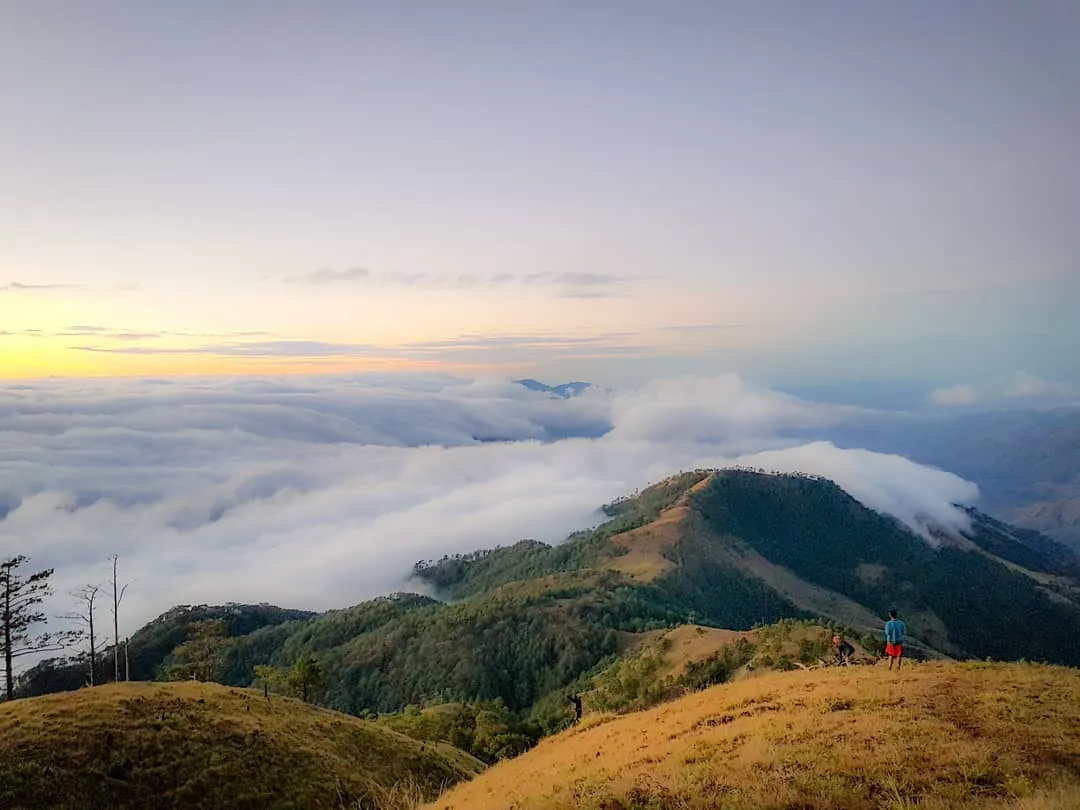
Major Climb Training & Preparation
How do you train for a Major Climb? Training for a Major Climb requires at least 4–6 weeks of preparation focusing on cardio endurance and load carrying (Rucking). Your plan should include running 5km three times a week to build lung capacity and hiking with a 10kg–12kg weighted backpack to condition your legs. Heat training is also essential for open-trail assaults like Mt. Tapulao and Mt. Pulag’s Akiki trail.
You cannot “wing it” on a Major Climb. I have seen seasoned gym rats crumple on Mt. Tapulao because they had big biceps but zero endurance. The mountain doesn’t care how much you bench press; it cares how long you can suffer.
To survive a Difficulty 7/9 climb without being a burden to your team, follow this 4-week “Battle Ready” plan.
1. Cardio: Build the Engine
Your lungs will be the first thing to complain at 2,500 MASL where the air is thinner.
-
The Benchmark: You should be able to run 5km in under 35 minutes without stopping.
-
The Routine: Run or jog 3x a week. Mix it up:
-
Day 1: Steady 5km jog.
-
Day 2: Interval Sprints (Sprint 1 min, Walk 2 mins, Repeat x10).
-
Day 3: Stair Climbing (Find a tall building or MRT station and do 20 mins of continuous stairs).
-
2. Rucking: The “Secret Weapon”
“Rucking” is simply walking with weight. It is the most specific training you can do for mountaineering.
-
The Drill: Load your backpack with water bottles or books until it weighs 10kg. Walk around your village or a park for 1 hour twice a week.
-
Why it works: It hardens your shoulders to the strap pressure and strengthens your ankles for the extra load. If you train with 10kg, the 12kg pack on Mt. Apo won’t feel like a shock.
3. Heat Training (For the Open Trails)
If you are climbing Mt. Tapulao, Tarak Ridge, or Mt. Pulag (Akiki), the sun is your enemy.
-
The Strategy: Do one of your runs or walks at 12:00 PM or 1:00 PM. Get your body used to regulating temperature while under direct heat.
-
Hydration Practice: Learn how much water you consume when sweating heavily. This helps you plan your water carry (e.g., “I need 1L every 2 hours”).
LakbayPinas Tip: Do a “Training Climb” 2 weeks before your major expedition. Mt. Arayat (Quad Peak) or Mt. Makiling (Traverse) are excellent simulators because they are steep, humid, and physically demanding day hikes. If you can survive Arayat with a smile, you are ready for the big leagues.

FAQ (Expert Level)
We get these questions in our inbox every week. Here is the no-nonsense truth about climbing the big leagues in the Philippines.
Is the Mt. Pulag Akiki Trail safe for beginners?
No. Do not let Instagram fool you. The Akiki Trail is nicknamed the “Killer Trail” for a reason—it involves a steep, continuous 10-11 hour assault. If this is your first time in the Cordilleras, book the Ambangeg Trail (Celebrity Trail) instead, which is a manageable 4-hour hike. Attempting Akiki without training is a recipe for hypothermia and injury.
Can I climb Mt. Apo without a guide (DIY)?
AStrictly No. The DENR and local LGUs (Kidapawan/Sta. Cruz) enforce a strict “No Guide, No Entry” policy with a 1:5 Guide Ratio. This is for your safety (the trail is vast and confusing) and to protect the mountain. Hikers caught sneaking in are fined and permanently blacklisted from all DENR-protected areas in Mindanao.
Which is colder, Mt. Pulag or Mt. Apo?
Generally, Mt. Pulag is colder.
Mt. Pulag: Temperatures at the Grassland Camp frequently drop to 0°C to 2°C (sometimes forming frost on tents) due to the wind chill factor on the open ridge.
Mt. Apo: While still freezing (5°C to 8°C), the campsites like Lake Venado are slightly more sheltered. However, Apo’s wind at the summit can still induce hypothermia if you aren’t layered up.
What is the best month to book a Major Climb?
Target the Dry Season from February to April.
Safety: Rain turns the Mt. Apo Boulder Face into a slippery death trap and makes the Mt. Makiling or Mt. Isarog limatiks (leeches) hyper-aggressive.
Views: This window gives you the highest chance of seeing the “Sea of Clouds” rather than a “Sea of Fog” or rain.
Conclusion
There is an old saying among Alpinists that holds true even in the tropical heat of the Philippines: “The view is better when you earn it.”
Completing a Major Climb changes you. The pain of the Akiki Trail assault or the freezing cold at Lake Venado fades the moment you drop your pack at the summit. You aren’t just looking at a postcard view; you are part of the landscape, standing at 2,900 MASL because your legs carried you there.
However, respect is the currency of the mountains.
-
Respect the Weather: If the PAGASA forecast predicts a Low Pressure Area (LPA), cancel the trip. The mountain will always be there; you only have one life.
-
Respect the Locals: Whether it’s the Kankana-ey in Benguet or the Manobo in Cotabato, you are a guest in their ancestral domain.
-
Respect the Trail: Pack out what you pack in. If you see a candy wrapper on the Mt. Tapulao trail, pick it up.
Ready for the Ultimate Challenge? If you have conquered the mountains on this list and feel ready for the “Suicide Trails”—the technical knife edges and 9/9 death marches—we have prepared a guide for the elite few.
[Check out our Top 9/9 Hardcore Climbs in the Philippines]
See you at the summit, ka-Lakbay!
Stay Connected:
Subscribe to our newsletter for exclusive travel insights, deals, and updates. Join our community of travel enthusiasts and stay connected with the latest from our blog.
Follow us on social media for daily inspiration and updates on mountain climbing in the Philippines:
Contact Information:
- Email: travel.ph@lakbaypinas.com
- Phone: 09260******
- Address: Marikina