By Aiden Kenzy, the founder of Lakbay Pinas | Last updated: August 2026
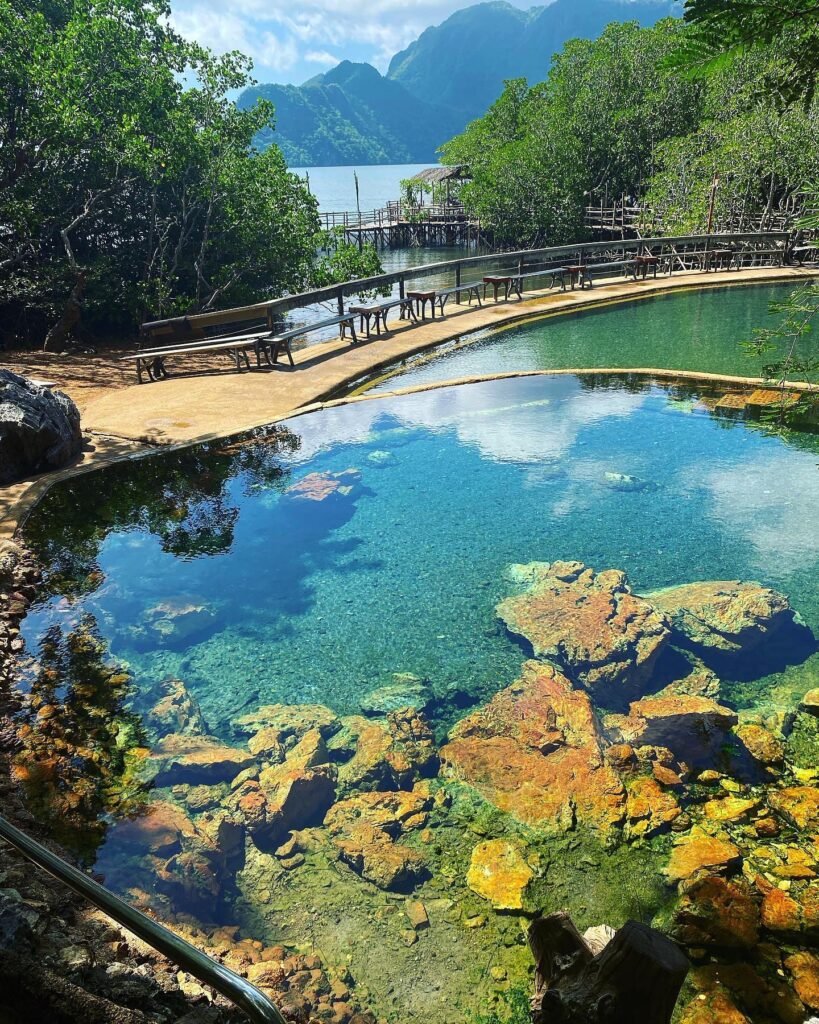
Maquinit Hot Springs is the only known saltwater hot spring in the Philippines and one of the very few in Asia. Located about 30 minutes southeast of Coron town in Barangay Tagumpay, it is open daily from 8:00 AM to 8:00 PM, with a last entry at 7:00 PM, and charges ₱300 per adult in 2026 — cash only.
Key Takeaways:
- Entrance fee: ₱300 for adults, ₱150 for children, ₱143 for PWDs and senior citizens — cash only at the gate.
- Best time to visit: 5:00 PM, so you soak as the air cools and catch the golden light over Coron Bay.
- Access difficulty: Easy — a short, flat walk on wooden boardwalks from the parking area to the pools, about 2–3 minutes on foot.
- Standout feature: Saltwater at 38–40°C, fed by a deep geothermal source — the only pool of its kind in the Philippine archipelago.
Maquinit Hot Springs Quick Guide
| Detail | Information |
|---|---|
| Destination | Maquinit Hot Springs |
| Location | Sitio Maquinit, Barangay Tagumpay, Coron, Busuanga Island |
| Province | Palawan |
| Type | Saltwater geothermal spring pool |
| Access Difficulty | Easy — short flat boardwalk walk, 2–3 minutes from parking |
| Entrance Fee | ₱300 adult / ₱150 children / ₱143 PWD & senior |
| Best Season | Year-round; late afternoon is best any month |
| Swimming | Yes — soaking in pool only, no open-water swimming |
| Activities | Soaking, photography, wildlife watching, sunset viewing |
| Travel Time from Coron | 20–30 minutes by tricycle or van |
Table of Contents
Where Is Maquinit Hot Springs Located?
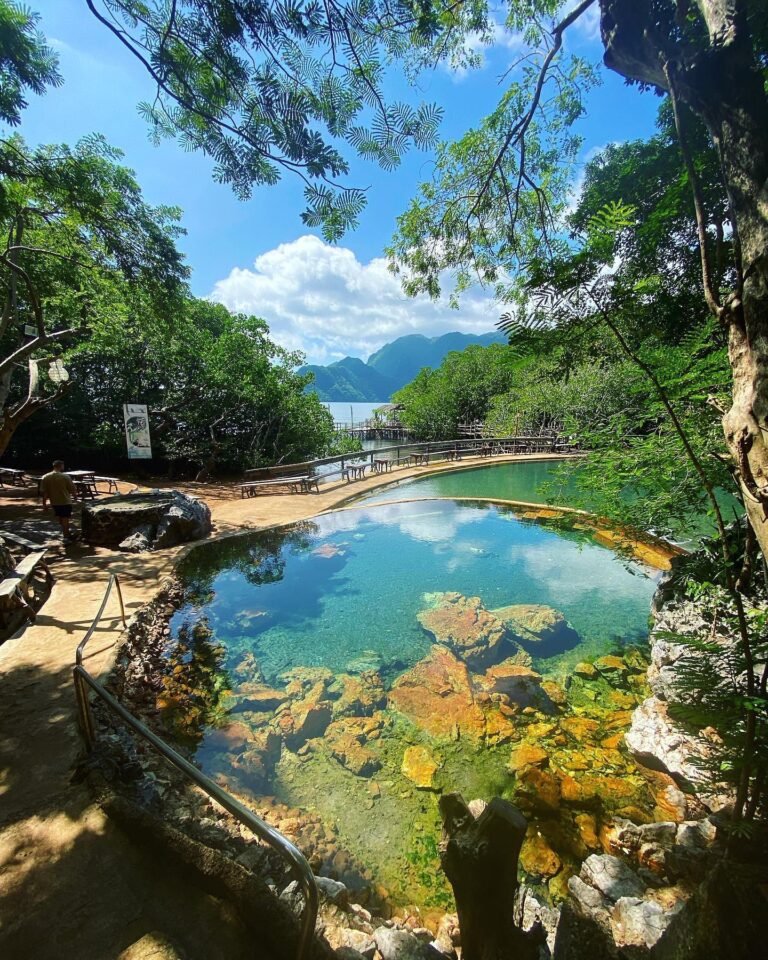
Maquinit Hot Springs sits on the east side of Coron town, on Busuanga Island, Palawan, between a mountain and the sea, with shores lined by mangrove trees. The official address is Sitio Maquinit, Barangay Tagumpay, Coron Municipality, 5316 Palawan. The facility can be reached directly at +639178195327 or by email at maquinit.hotspring@yahoo.com for administrative inquiries.
One distinction worth making before you plan: Coron town and its hot springs sit on Busuanga Island — not Coron Island. Coron Island, which you can see across the bay from the springs’ wooden boardwalks, is a protected Tagbanua indigenous domain. The hot springs, the town infrastructure, and the airport are all on Busuanga.
How to Get to Maquinit Hot Springs
Maquinit Hot Springs is found about 30 minutes east on the outskirts of Coron town, and getting there requires driving through rough roads. There are three practical ways to make the journey.
By Tricycle (Most Common)
The best way to get to Maquinit Hot Spring is by hailing a tricycle, with fare costs around ₱300–₱400 for the entire vehicle, with your driver waiting for you at the entrance. Because the springs sit at the end of an isolated road with no return traffic, drivers always charge a round-trip rate. They wait in the dirt parking area while you soak — standard practice, and worth factoring into your time. If you plan to stay longer than 90 minutes, negotiate that upfront; drivers have been known to push the fare to ₱500–₱600 for extended waits.
The road itself transitions from paved concrete to a heavily rutted track within a few kilometers of town. The road leading to Maquinit Hot Spring is unpaved, rough, and potentially muddy, especially after rain, making the journey uncomfortable and challenging, particularly by tricycle or scooter.
By Organized Town Tour (Most Comfortable)
Town highlight tours that include Maquinit cost around ₱650–₱800 per head and typically cover Mount Tapyas, St. Agustin Church, Lualhati Park, and a cashew factory before ending at the springs. These run in air-conditioned vans — a real difference from an open tricycle on that dusty road. The entrance fee is usually bundled into the tour price, so check before paying again at the gate.
By Rented Scooter (Independent Option)
Renting a scooter gives you full schedule control, but the final 800–900 meters of road are deeply rutted. If you’re renting a motorbike, be careful. More critically, if you visit for sunset, you’ll ride back in complete darkness on a road with zero street lighting. Check that your rental scooter has a working, high-lumen headlight before you leave town — this is non-negotiable.
For island-hopping context in Palawan and how Coron fits into a broader trip, see our complete guide to Kayangan Lake and our overview of the top tourist destinations in the Philippines.
Entrance Fees, Permits, and Guide Requirements at Maquinit Hot Springs
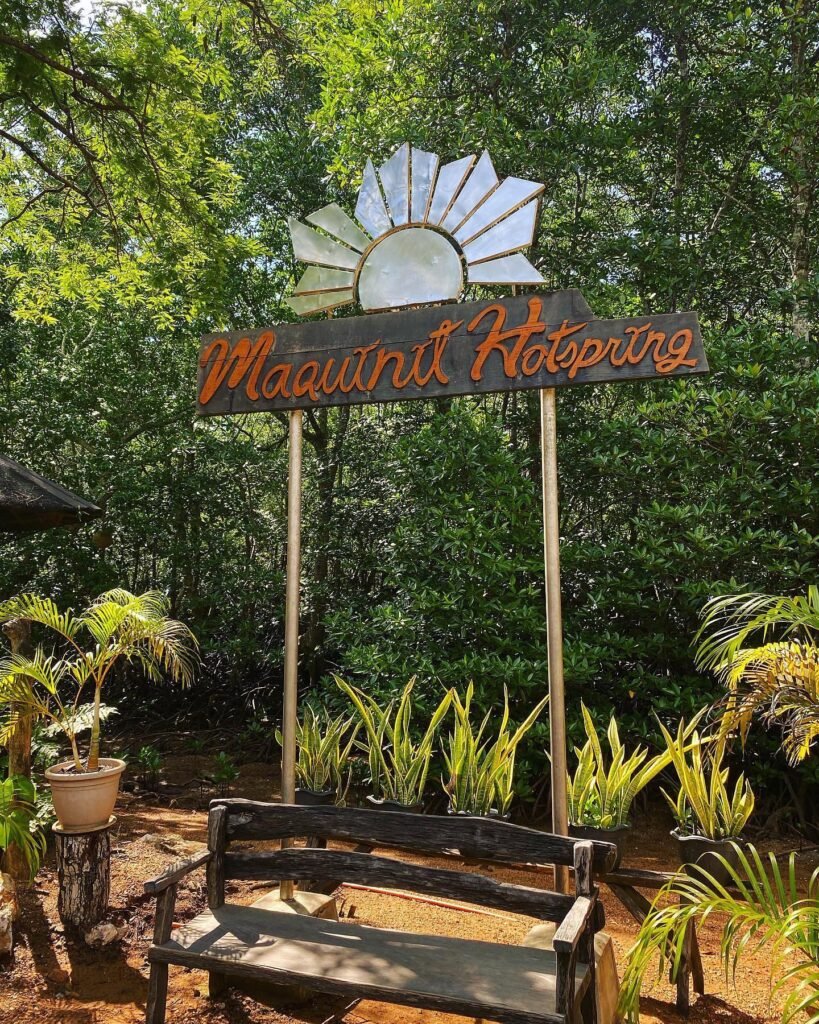
The entrance fee at Maquinit Hot Springs in 2026 is ₱300 for standard adult visitors. Entrance is 300 pesos, cash only. The ticketing system does not accept digital payments, credit cards, or GCash. Withdraw pesos in Coron town before heading out — there are no ATMs near the springs.
The tiered pricing structure, enforced with valid ID at the gate, is as follows:
| Visitor Type | 2026 Fee (₱) | ID Required? |
|---|---|---|
| Standard Adult | 300 | No |
| Children (5–10 yrs) | 100–150 | No |
| Infants (under 5) | Free | No |
| Students | 160–200 | Current student ID |
| PWD & Senior Citizens | 143 | National PWD/Senior ID |
| Coron/Culion Residents | 75 | Proof of residency |
PWDs and senior citizens get a discount — just present your ID and you’ll only have to pay ₱143.
No DENR permit or separate park registration is required for Maquinit Hot Springs. Pay at the gate, get your ticket, and walk in. No guide is mandatory for this site.
Getting to the Water: The Trail at Maquinit Hot Springs
The walk from the parking area to the pools at Maquinit Hot Springs is short, flat, and takes roughly 2–3 minutes on foot.
Stage 1: Parking area to the gate (1 minute)
From the dirt parking lot, you walk a short flat path to the ticket booth. The ground here is compacted earth and gravel. Standard rubber sandals are fine.
Stage 2: Gate to the pool area via boardwalk (1–2 minutes)
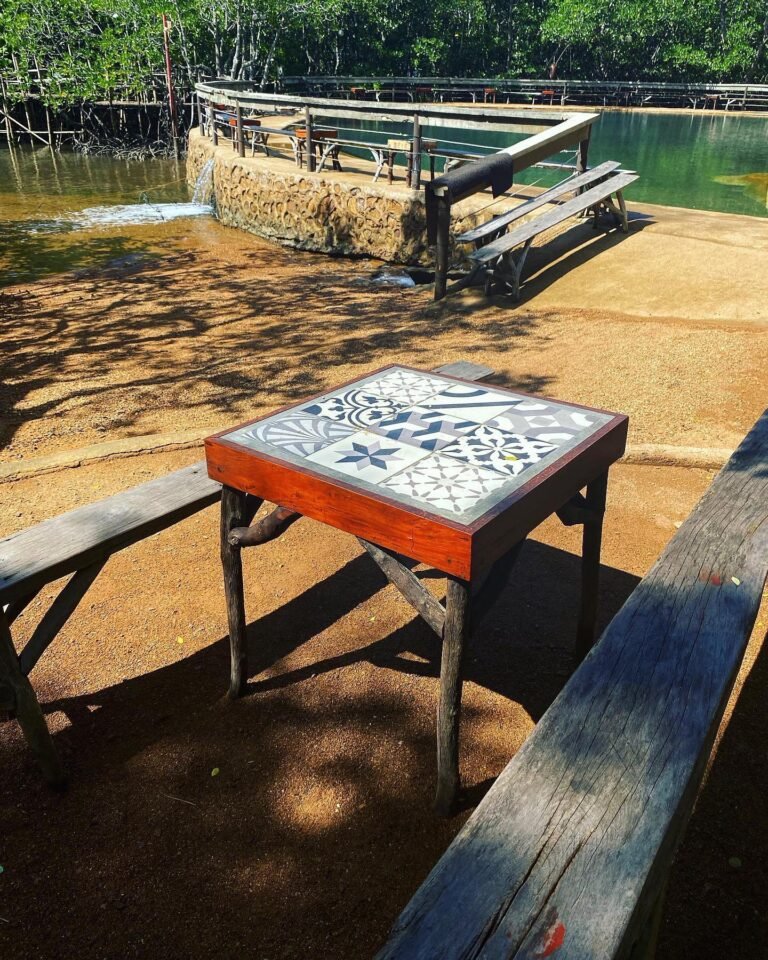
Wooden boardwalks and pathways connect the different pools within the hot springs, and visitors can stroll around the area or sit on the boardwalks and enjoy the surroundings. The boardwalks are elevated slightly above the mangrove floor. They can be slippery when wet from splashing or rain.
Stage 3: Entering the pools
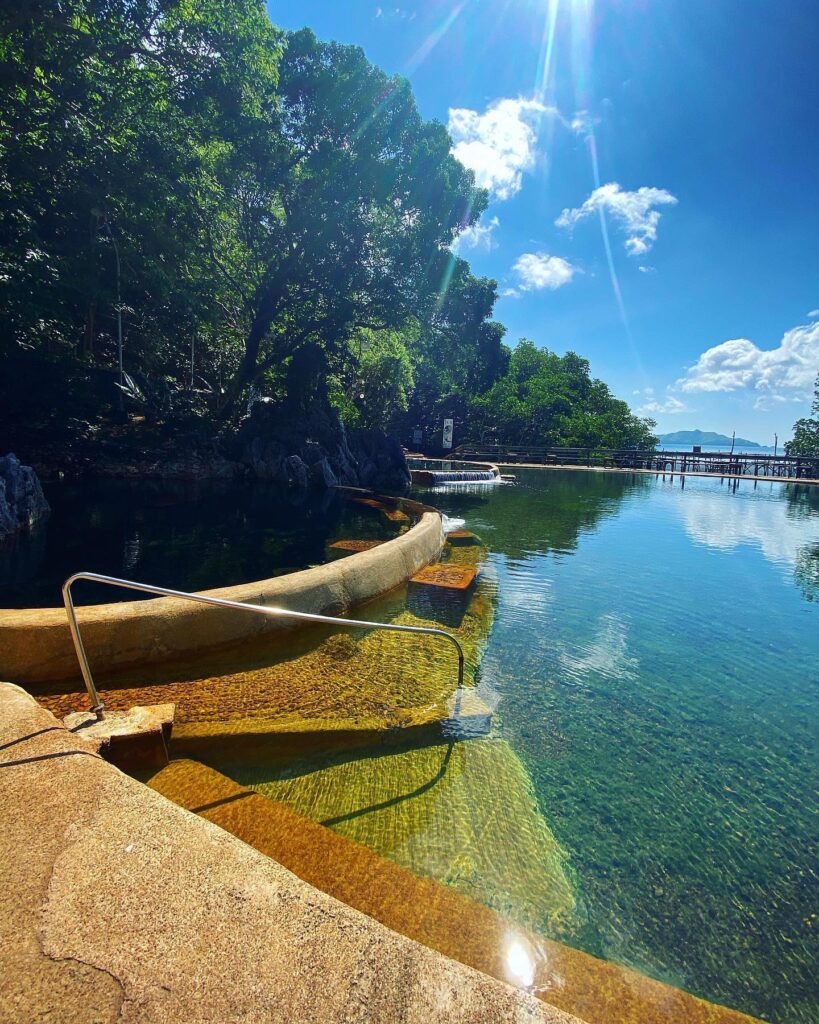
Since it’s a natural hot spring with a rocky bottom, wearing footwear suitable for wet surfaces — such as water shoes or sandals — is advisable for comfort and safety. The pebble floors of the pools are uneven. Rubber sandals or neoprene water shoes are the right call here. Bare feet work in the water once you’ve found stable footing, but the entry points are the trickiest part.
Footwear verdict: Bring water shoes or rubber sandals with a grip sole. This is the single most practical item to pack for this visit.
Accessibility note: The boardwalk path and flat pool surrounds are manageable for most elderly visitors and those with limited mobility. However, the pebble pool floors and the lack of pool-entry handrails make entry into the water challenging for anyone who needs significant support. The rough access road is the bigger barrier for wheelchair users — tricycle transport is not wheelchair-accessible, and the dirt parking area is uneven. Visitors with mobility concerns are better served booking a private van tour. The site has a dedicated, shallower kids’ pool with a gentler depth for younger or less confident swimmers.
Swimming and Activities at Maquinit Hot Springs
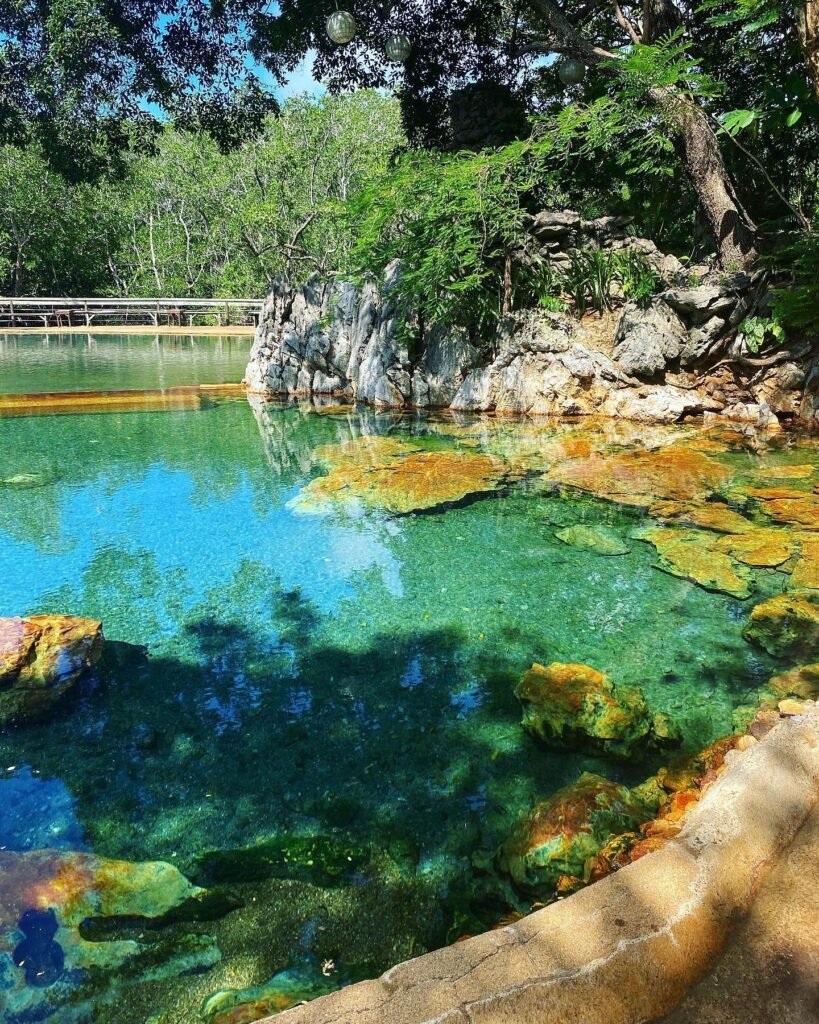
Maquinit Hot Springs is a natural wonder located in Coron, Palawan, and it is the only saltwater hot spring in the country and one of the few in the world. That distinction shapes everything about the experience — the buoyancy, the mineral texture on your skin, and the way the water feels fundamentally different from any freshwater spring you’ve soaked in before.
The Pools
The complex has three geothermal pools. The main pool is large, designed to hold up to 100 visitors at a time. Maquinit Hot Spring offers a unique experience, with a larger pool and two smaller ones that have higher temperatures, providing options for varying preferences. The facility offers several pools with varying temperatures, allowing visitors to choose a temperature that suits their comfort level, from the hottest source pool to cooler overflow pools. There is also a designated shallower kids’ pool.
Water Temperature
The water ranges from 38–40°C (102–104°F). It’s best to enter gradually — feet first, wait a minute, down to your knees, wait another minute, and so on. Pockets near the source vents occasionally push closer to 41°C. The two smaller pools run slightly hotter than the main pool, because they have less volume diluting the thermal output.
Mineral Composition and Claimed Benefits
The hot springs contain a high concentration of minerals such as magnesium, calcium, and potassium, which are known to have therapeutic benefits. The unique combination of warm temperature and salt content is believed to have therapeutic properties for the skin and muscles. The springs are also said to relieve muscle pain, arthritis, and skin problems, though the site is not a clinical facility and individual results vary. What I can say from my own August 2026 visit is that my legs — exhausted from the 720-step Mount Tapyas climb earlier that afternoon — felt noticeably looser after 20 minutes in the main pool.
Soak Time
Lifeguards are present and advise visitors to limit soaking time to 10 minutes at a time, with breaks in between to stay hydrated. Most visitors end up staying 60–90 minutes total, alternating between soaking and resting at the wooden cottages. There is no enforced exit after a specific soak limit, but the staff do remind people who look overheated.
Other Activities
The wooden boardwalk extends over the shallow coastal water and gives you clear sightlines across Coron Bay and the limestone karst islands beyond. Visiting after dusk reveals twinkling stars, quieter crowds, and the soothing sounds of water and night insects enhancing the calm. The mangrove edges around the pools are active with wildlife — monitor lizards are commonly spotted in the roots in the early morning, and egrets work the shallows at low tide. The site strictly prohibits feeding or touching the animals.
For more water-based destinations in the Philippines that pair well with a Coron trip, browse our guide to rivers, lakes, and falls across the Philippines.
Best Time to Visit Maquinit Hot Springs
Many reviewers recommend visiting in the late afternoon or early evening to enjoy the sunset and cooler temperatures. This is the right call, and the reason is straightforward: Coron frequently exceeds 32°C during midday. Soaking in 40°C water under direct overhead sun is physically punishing, not relaxing. The math simply does not work in your favor before 3:00 PM.
The recommended arrival window is 4:30–5:00 PM. This gives you time to soak as the air temperature drops and the light turns warm over the bay. You can’t see the sun setting on the horizon (you’re facing east), but golden hour is glorious here. The pool lights come on at dusk and create a calm, amber atmosphere.
Seasonal variation: The dry season runs from November to May. During this period, the road to Maquinit is dusty but passable. The wet season (June to October) makes the unpaved final stretch genuinely slippery in heavy rain. The water temperature at the springs stays consistent year-round at 38–40°C — the geothermal source does not fluctuate with the weather. However, ambient air temperature affects how comfortable the soak feels. December to February, when Coron is cooler, produces the most pleasant combination of cool air and hot water.
The absolute peak crowd time is 5:00 PM to 7:00 PM — that’s when tour groups from Mount Tapyas converge on the springs. If you want the pools to yourself, come at 8:00–9:00 AM on a weekday.
The site is open Monday to Saturday from 8:00 AM to 7:00 PM based on the most recently updated Yelp listing. The gate closes at 7:00 PM, and the facility closes at 8:00 PM.
Budget Breakdown for Visiting Maquinit Hot Springs
| Expense | Cost (₱) |
|---|---|
| Entrance fee (adult) | 300 |
| Round-trip tricycle (per vehicle, 1–3 pax) | 300–500 |
| Coron town tour (includes tricycle + entrance) | 650–800 per person |
| ATV tour to hot springs | ~706 per person |
| Snacks and drinks on-site | 80–200 |
| Locker rental | Not available — leave valuables at hotel |
| Estimated solo total (tricycle + entrance) | 600–800 |
| Estimated couple total (shared tricycle) | 900–1,100 |
All transactions at the gate are cash only. The nearest ATMs are in Coron town proper — plan for this before you leave.
What to Pack for Maquinit Hot Springs
| Item | Essential? |
|---|---|
| Swimwear | Yes — required |
| Water shoes or rubber sandals with grip | Yes — pebble floor and slippery boardwalk |
| Towel | Yes — no towel rental on-site |
| Change of clothes | Yes — no freshwater showers to rinse salt off |
| Cash in Philippine pesos | Yes — cash only at gate |
| Drinking water (large bottle) | Yes — heat dehydrates you fast |
| Light snack or food | Recommended — outside food allowed, outside drinks are not |
| Sunscreen | Yes — if visiting before sunset |
| Insect repellent | Recommended — mangrove edges at dusk |
| Dry bag or zip-lock for valuables | Yes — no lockers on-site |
| Valid ID (for PWD/senior/student discounts) | If applicable |
The no-freshwater-shower reality: The facility only provides mist showers, which may not be sufficient for those wanting a thorough rinse after soaking in the saltwater. You will leave with salt on your skin. Pack a full change of clothes — not just a dry top. Rinsing in your hotel shower immediately on return is the standard move.
Safety Tips for Visiting Maquinit Hot Springs
Water temperature and heat management are the primary safety concerns at Maquinit. The water sits at a consistent 38–40°C — enough to cause genuine heat stress if you ignore your body’s signals. Soak for no more than 10–15 minutes at a stretch, then exit, cool down in the misting area, and rehydrate before re-entering. Lifeguards are present and advise visitors to limit soaking time to 10 minutes at a time, with breaks in between to stay hydrated, and a misting area is available to cool down.
Cardiovascular conditions and hypertension: If you have high blood pressure or a heart condition, the rapid vasodilation caused by hot water at this temperature can produce sudden dangerous drops in blood pressure. The facility formally advises guests with these conditions to minimize submersion time and exit immediately to the misting area if they feel dizzy or lightheaded. Talk to your doctor before visiting if you have cardiac concerns.
Slippery surfaces: The pebble pool floors are uneven and slick. Wear swimwear and water shoes — the pools are rocky and the walk to the springs can be slippery. Enter slowly, find solid footing, and do not run on the boardwalks.
Children and non-swimmers: The main pool reaches a depth where shorter children cannot stand. There is a dedicated shallower kids’ pool. Non-swimmers should stay in the shallow zones of the main pool or in the kids’ pool, and must be directly supervised by an adult throughout. There are no life vests on-site for loan — it is a pool environment rather than open water, so life vest requirements do not apply in the conventional sense.
Flash-flood risk: The springs are not in a flood-prone position — they sit at the coast, not in a river valley. Heavy rain does not change water levels in the pools. The risk rain creates is on the road: visiting during rainy days can be enjoyable as long as caution is exercised regarding road conditions. After a heavy downpour, the last 800–900 meters of dirt road become genuinely hazardous for scooters. Take a tricycle instead if the sky has opened.
Hydration: Sweat loss in 40°C water is rapid and invisible because you’re already wet. Drink a full 500ml of water before you enter the pool, and another 500ml during your visit. The on-site kiosk sells bottled drinks, or bring your own water. Do not drink the spring water — it is saline.
DENR official website — for current Palawan environmental protection regulations
What I’d Do Differently Next Time
I’d skip the town tour package and take a tricycle. When I visited in August 2026, I joined a town tour and ended up spending 45 minutes at a cashew factory I had no interest in. The tour did simplify logistics, but the springs themselves are the only stop worth lingering at. Next time, I’d negotiate a round-trip tricycle for ₱400, arrive at 5:00 PM sharp, and spend the full two hours at the pools instead of rushing through a bus-tour checklist.
I’d also pack a second towel. One towel for drying off before the ride back, and one for the hotel. Leaving Maquinit with salt-dried skin on a dusty tricycle and then falling asleep without a proper rinse is a decision I won’t repeat.
I’d eat before going, not after. The physical heat of the water suppresses appetite while you’re soaking, so I wasn’t hungry when I left. But by the time I got back to town, found a restaurant, and waited for food, I was genuinely depleted. A banana and a sandwich before departing Coron would have solved this.
Frequently Asked Questions About Maquinit Hot Springs
How hot is the water at Maquinit Hot Springs?
The water ranges from 38–40°C (102–104°F) — too hot to jump straight in, but not too hot for your body to adjust if you enter slowly. Smaller pools near the thermal source can occasionally reach 41°C. The correct entry technique is gradual: feet first, wait, then lower yourself in over 2–3 minutes. Most people fully acclimatize within five minutes.
Is Maquinit Hot Springs saltwater or freshwater?
It is the only saltwater hot spring in the Philippines and one of the few in the world. The salinity comes from deep geothermal groundwater mixing with the coastal marine water table beneath Busuanga Island as it rises to the surface. The water contains a high concentration of minerals including magnesium, calcium, and potassium. You will taste the salt if any water gets near your mouth, and your skin will feel noticeably mineral-coated after soaking — that is normal and expected.
How far is Maquinit Hot Springs from Coron town proper?
Maquinit Hot Springs is about 30 minutes east on the outskirts of Coron town. The road is paved for the first half and transitions to a rough, unpaved track for the final stretch. By tricycle, the journey is bumpy but manageable. By private van through an organized tour, it is significantly smoother. The distance is approximately 7–8 kilometers from the town center.
What should I bring to Maquinit Hot Springs?
Bring your swimwear, a towel, a full change of dry clothes, water shoes or rubber sandals with grip soles, a large bottle of drinking water, and enough cash for the entrance fee plus tricycle fare. Bring a towel, a change of clothes, and personal toiletries — and since it’s a natural hot spring with a rocky bottom, wearing footwear suitable for wet surfaces such as water shoes or sandals is advisable for comfort and safety. Leave your passport and laptop in your hotel safe — there are no lockers at the site.
Can you visit Maquinit Hot Springs independently without a tour?
Yes — the easiest and best way to get there independently is by hailing a tricycle and paying ₱300–₱400 for a two-way trip. No guide is required, and no advance permit or registration is needed. You pay the entrance fee at the gate in cash and walk in. The process is completely self-directed. The only planning required is withdrawing enough cash in Coron town before you leave, since there are no ATMs at the springs.
Final Verdict: Is Maquinit Hot Springs Worth Visiting?
Maquinit Hot Springs earns a solid 4 out of 5 for first-time Coron visitors — and a rare 5 out of 5 for anyone arriving after a full day of island-hopping or climbing Mount Tapyas. It is a genuinely unusual geological site: the only saltwater hot spring in the Philippines and one of the few in the world.
The entrance fee is fair, the pools are well-maintained, and the late-afternoon light over Coron Bay makes the timing feel like it was designed for this specific experience. The rough access road and the absence of freshwater showers are real inconveniences — but they are manageable with a small amount of planning, and they are precisely what keep this place from being overwhelmed by mass tourism.
For a broader look at planning a multi-destination Palawan trip that includes Maquinit, see our guides to Honda Bay in Puerto Princesa and Balabac Island island-hopping.