
By Aiden Kenzy, founder of Lakbay Pinas and a passionate Filipino travel writer dedicated to uncovering destinations across the Philippines. Since 2015 – Climbed: August 2026 – Published: September 2026
Mt. Mariglem is a 573 MASL minor peak in Cabangan, Zambales that runs a ridge-to-river loop trail of roughly 4.5 to 6.2 kilometers, taking most groups 4 to 5 hours to complete. It is short and technically non-technical, but the fully exposed volcanic ridge makes it far more physically demanding than its elevation suggests, so prepare for heat above everything else.
Key Takeaways:
- Registration and environmental fee: PHP 50 to PHP 100 per person, paid at the Sitio Maporac barangay hall
- Best season: November to February (cool, low-risk dry season window before the brutal March-to-May heat peak)
- Trail difficulty and time: Trail Class 1 to 2, roughly 4 to 5 hours total, with a relentless uphill ascent and a loose scree descent
- Standout feature: A 360-degree summit view of the West Philippine Sea, Capones Island, Mt. Tapulao, and the full Zambales range, followed by a cold river swim at the base
Before conquering Mt. Mariglem or any off-the-beaten-path destination in the Philippines, don’t forget to get covered with travel insurance. We recommend SafetyWing Nomad Insurance for its flexible, subscription-based plans perfect for weekend warriors and long-term adventurers alike. With emergency medical coverage, trip interruptions, and worldwide support, it’s peace of mind that fits in your backpack.This is an affiliate link. I may earn a small commission if you sign up, at no extra cost to you. I only recommend services I trust

Table of Contents
Where Is Mt. Mariglem Located?
Mt. Mariglem sits within Sitio Maporac in Barangay New San Juan, under the municipal jurisdiction of Cabangan in Zambales. It is part of the southern portion of the Cabangan Mountain Range, which itself belongs to the broader Zambales Mountain Range running along the western coast of Luzon.
The mountain stands at 573 MASL and was officially opened to hikers in 2023. Its name traces back to a local variant of the Tagalog word madilim, meaning “dark,” referencing the large shadow the peak casts over nearby farming communities at dawn and dusk.
The jump-off barangay, Sitio Maporac, is the ancestral domain of the Aeta Abellen, an indigenous Negrito group who have lived in these mountain ranges long before Spanish colonization. Visiting this mountain means entering their community, and that context matters for how you behave on and off the trail.
For a broader look at what this province has to offer beyond the mountains, the Zambales ultimate travel guide covers beaches, resorts, food, and other destinations worth adding to your itinerary.
How to Get to the Mt. Mariglem Jump-off Point
The jump-off point is Sitio Maporac in Barangay New San Juan, Cabangan, Zambales. Getting there from Manila by public transit takes roughly 5 to 6 hours depending on traffic.
From Manila by Bus
Board a Victory Liner bus bound for Iba or Santa Cruz at any of their major terminals in Pasay, Cubao, Caloocan, or Sampaloc. Tell the conductor you are getting off at Cabangan town proper. The one-way fare runs PHP 450 to PHP 600.
From the Cabangan highway drop-off, hire a local tricycle to Sitio Maporac. That short transfer costs around PHP 300 per tricycle (shared among your group). For a midnight bus departure from Manila, expect to arrive at Cabangan between 5:00 AM and 5:30 AM, which lines up well with a pre-dawn registration.
From Baguio City
There is no direct bus from Baguio to Cabangan. Take a southbound Victory Liner bus from Baguio to Olongapo City (roughly 5 hours and 20 minutes), then transfer to a northbound local bus toward Iba and disembark at Cabangan. Total transit cost from Baguio runs PHP 650 to PHP 1,500, depending on your bus class.
By Private Vehicle
From Manila, take the NLEX connecting to the SCTEX, then exit at the Subic/Tipo toll plaza and drive north along the Olongapo-Bugallon Highway until you reach Cabangan. Budget PHP 550 to PHP 700 in one-way toll fees for a Class 1 vehicle, plus fuel. Make sure both your Easytrip and Autosweep RFID tags are loaded before you leave.
Parking is available near the Sitio Maporac registration area for private vehicles, but note that standard sedans cannot proceed past the registration point. The road beyond is severely degraded and rocky. From the registration area, everyone, including those with private cars, must board a kolong-kolong to reach the true trailhead.
The Kolong-Kolong Ride
A kolong-kolong is a motorcycle fitted with a welded open-air passenger cage on the side. It is the only vehicle that can handle the final 3 to 4 kilometers of rocky path to the trailhead. The standard rate is PHP 550 per vehicle, holding up to five passengers, which comes to roughly PHP 110 per person. The ride takes 15 to 20 minutes and is bumpy, loud, and covered in trail dust. Bring a buff or dust mask.
Permits, Fees, and Guide Requirements at Mt. Mariglem
A mandatory guide and a barangay registration fee are both required. Neither is optional under current 2026 LGU policy.
Registration
All hikers register at the Sitio Maporac barangay hall before boarding the kolong-kolong. You sign a liability waiver, log your group details, and pay the environmental fee there. The registration booth opens at approximately 5:00 AM on weekdays. On weekends, you must book in advance because Manila-based joiner groups fill the slots fast.
For advance booking, contact the LGU coordinator at 0949 879 1342 or the Cabangan Municipal Tourism Office at 0917 508 9672. Walk-ins Tuesday through Friday are generally fine if you arrive early.
Guide Fee
Hiring a local guide is strictly mandatory, with a 1:5 guide-to-hiker ratio enforced by the LGU. The group guide fee ranges from PHP 700 to PHP 1,500 depending on the season and whether you book through a tour organizer or directly with the municipality. Solo hikers or pairs are not exempt and pay the full group rate. Guides are assigned from the local Aeta community and lowland residents of Sitio Maporac, so your fee goes directly into the community.
To arrange a guide, contact the same numbers above. There is no centralized online booking system as of 2026; everything is done by phone or through the municipal tourism Facebook page.
For a full breakdown of permit rules and what to expect from the LGU process on similar beginner climbs, check out this guide to [beginner-friendly hikes in the Philippines.
What Is the Mt. Mariglem Trail Like?
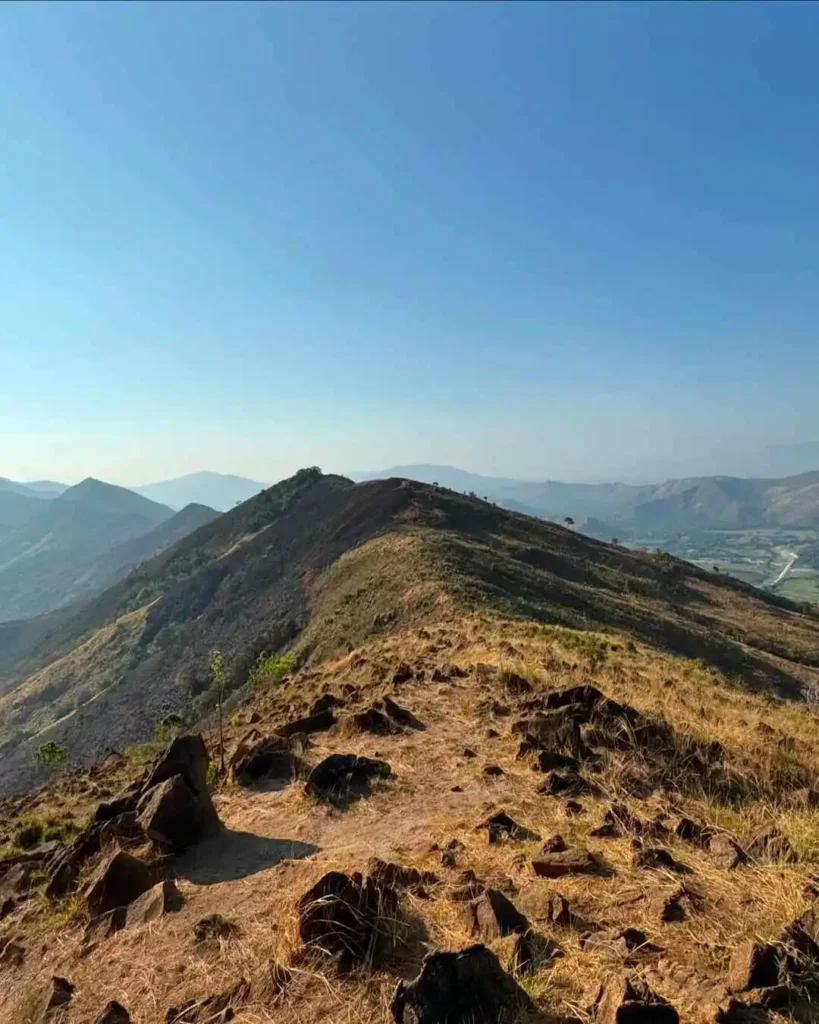
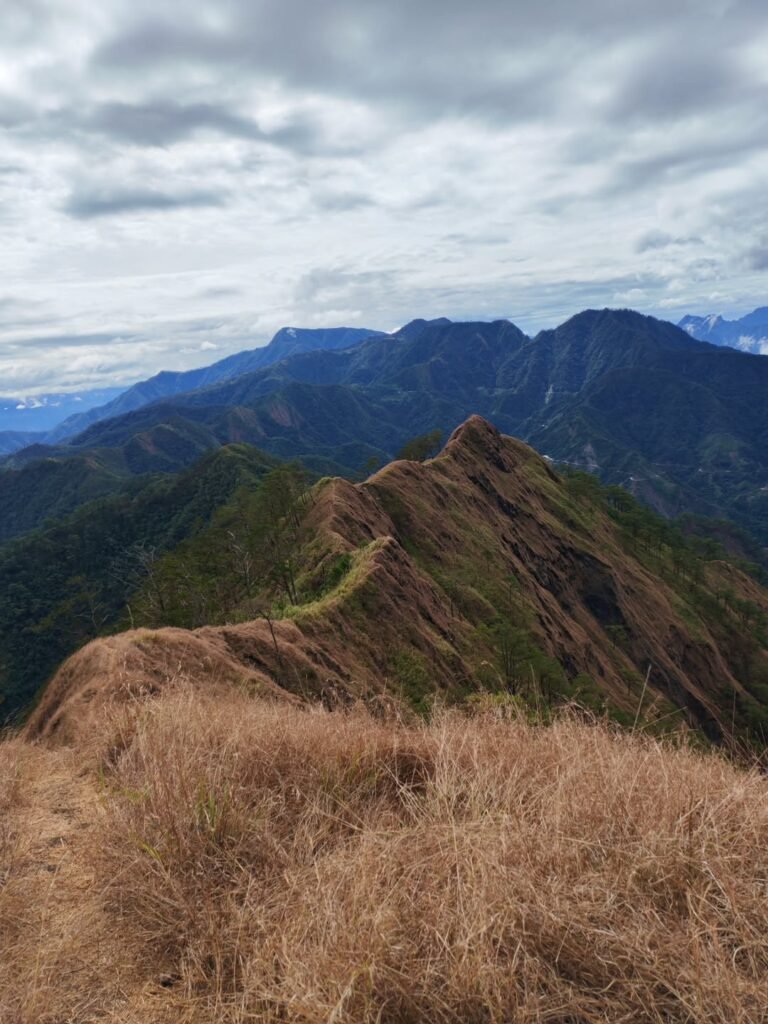
The trail is a ridge-to-river loop, ascending exposed volcanic ridgelines to the summit and descending through loose scree into shaded river valleys. It is technically Trail Class 1 to 2, meaning no ropes, no rock climbing, and no technical scrambles. But do not let that classification fool you into underestimating this mountain.
The “Unli-Ahon” Ascent: Stations 1 to 5
Local hikers call this the unli-ahon, a continuous, relentless uphill grind with no flat sections to catch your breath. The trail gains roughly 490 to 500 meters in elevation from a starting point of just 80 MASL, so the gradient is steep from the very first step.
The trail is divided into five stations, with Station 5 being the true summit at 573 MASL. After the first station, the tree line disappears entirely. From Station 2 onward, there is no shade whatsoever. Historical pace data from guided groups shows Station 2 reached around 3:50 AM, Station 3 by 4:15 AM, and Station 4 by 4:40 AM on pre-dawn climbs.
Per-Stage Difficulty Scores (1 to 5):
- Station 1 (Trailhead to Station 1) – Score: 2/5. Agricultural buffer zone, still has some tree cover, manageable slope. Your legs are fresh here.
- Station 1 to Station 2 – Score: 3/5. Gradient steepens significantly. The volcanic lahar underfoot starts reducing traction. Cogon grass appears on both sides.
- Station 2 to Station 3 – Score: 4/5. Full sun exposure begins if you are not doing a pre-dawn climb. Loose gravel increases. This is where underprepared hikers start struggling.
- Station 3 to Station 4 – Score: 4/5. Ridge narrows. Wind picks up but provides minimal cooling. The heat index peaks on this open, dark-soiled section.
- Station 4 to Summit (Station 5) – Score: 3/5. The ridge funnels you to the top. The gradient is slightly more forgiving here, but fatigue makes it feel harder than it is.
The cogon grass lining both sides of the ridge is sharp. It will cut exposed skin. Wear long pants or leggings, not shorts.
The Summit at Station 5
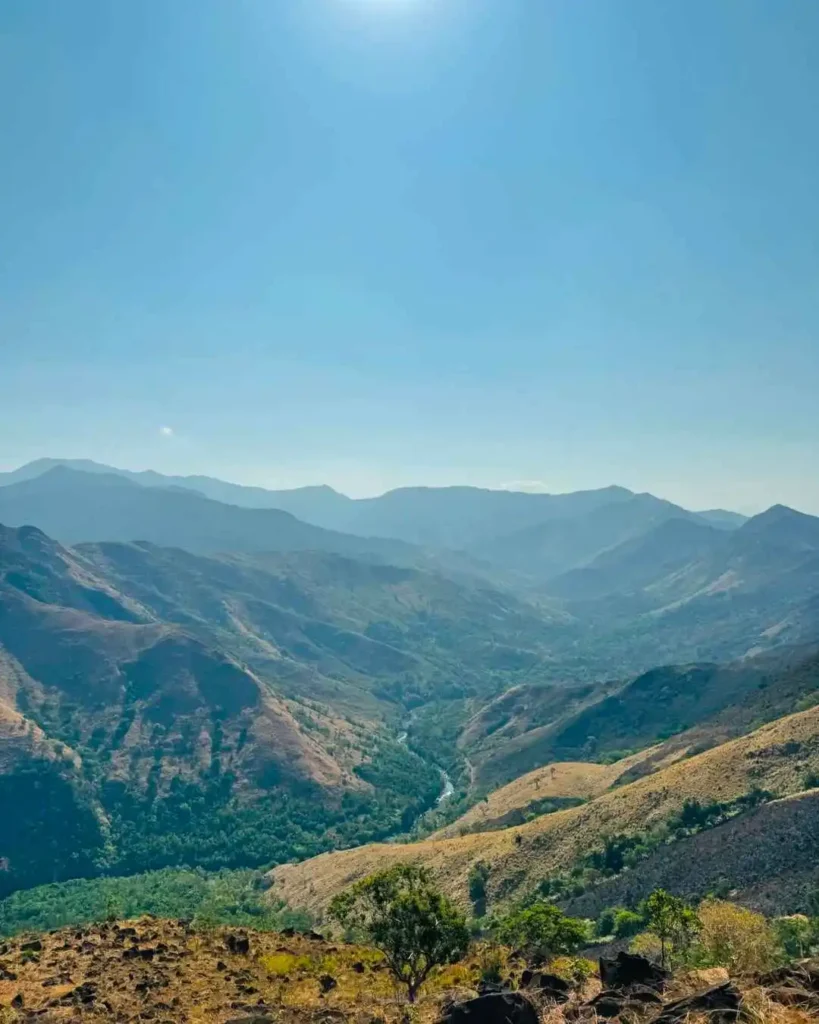
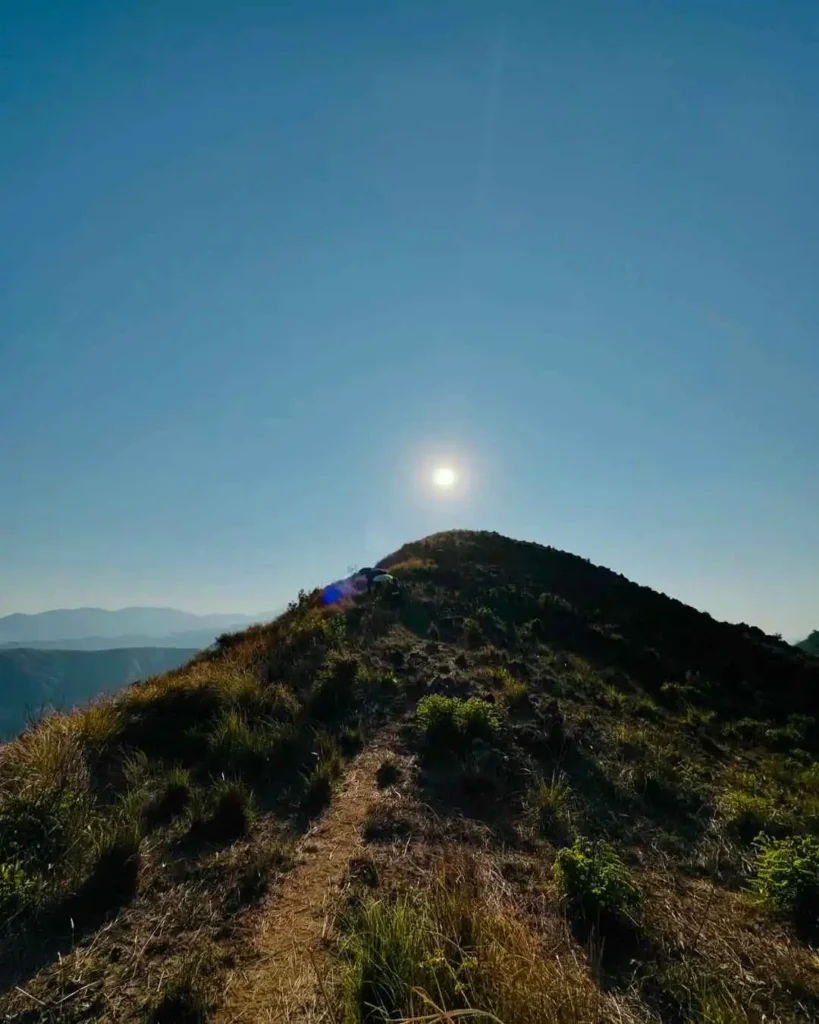
The summit plateau is wide and open, composed of compacted volcanic lahar with no shelters and no shade. On a clear day, the view is a full 360 degrees: the West Philippine Sea and Capones and Camara Islands to the west, Mt. Tapulao (the highest peak in Central Luzon) and Mt. Lunitan to the east, the Cawag Coastal Mountains to the south, and Mt. Negron and Mt. Bataan peeking through the southern horizon.
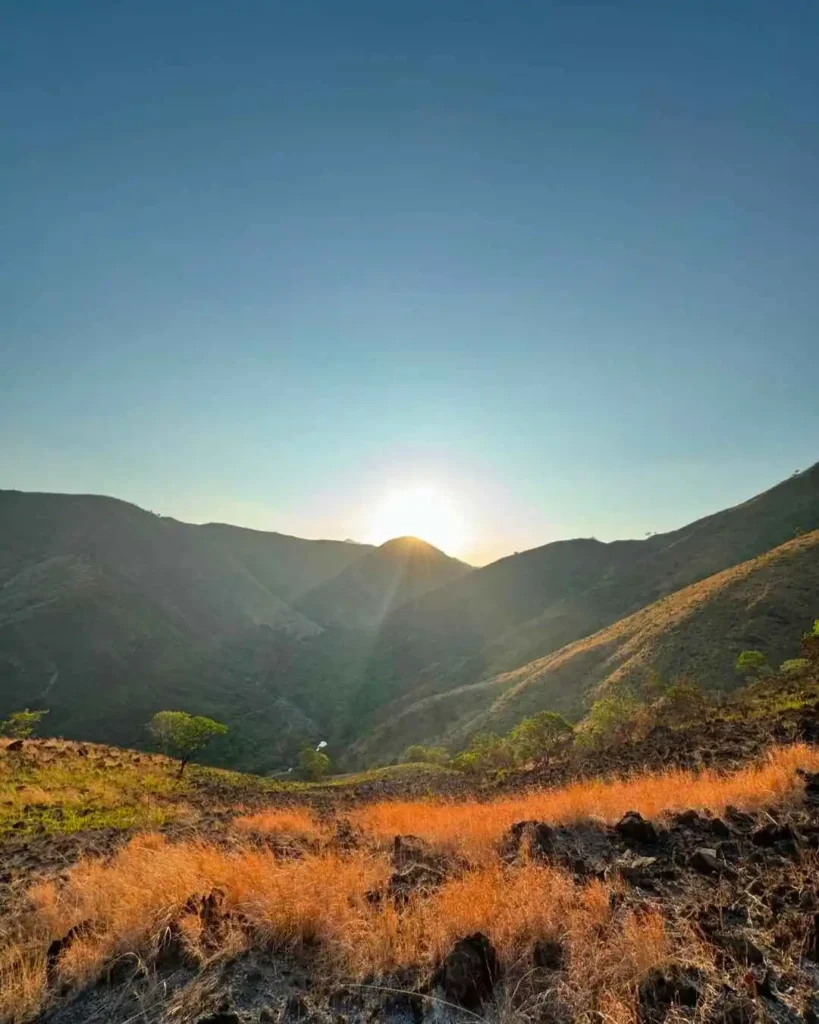
When I climbed in August 2026, the sky was partly cloudy, which actually helped. The clouds softened the sun just enough to make the summit comfortable rather than punishing. The view was still full and clear between cloud breaks. Standing there, I kept thinking the elevation number sounded modest until you realize you can see this far from only 573 meters.
The Scree Descent
The descent from the summit to the river valley is arguably the most technically demanding part of the entire hike. The loose volcanic scree behaves like ball bearings underfoot. Dual trekking poles are strongly recommended here. Take it slow, keep your weight back, and do not rush.
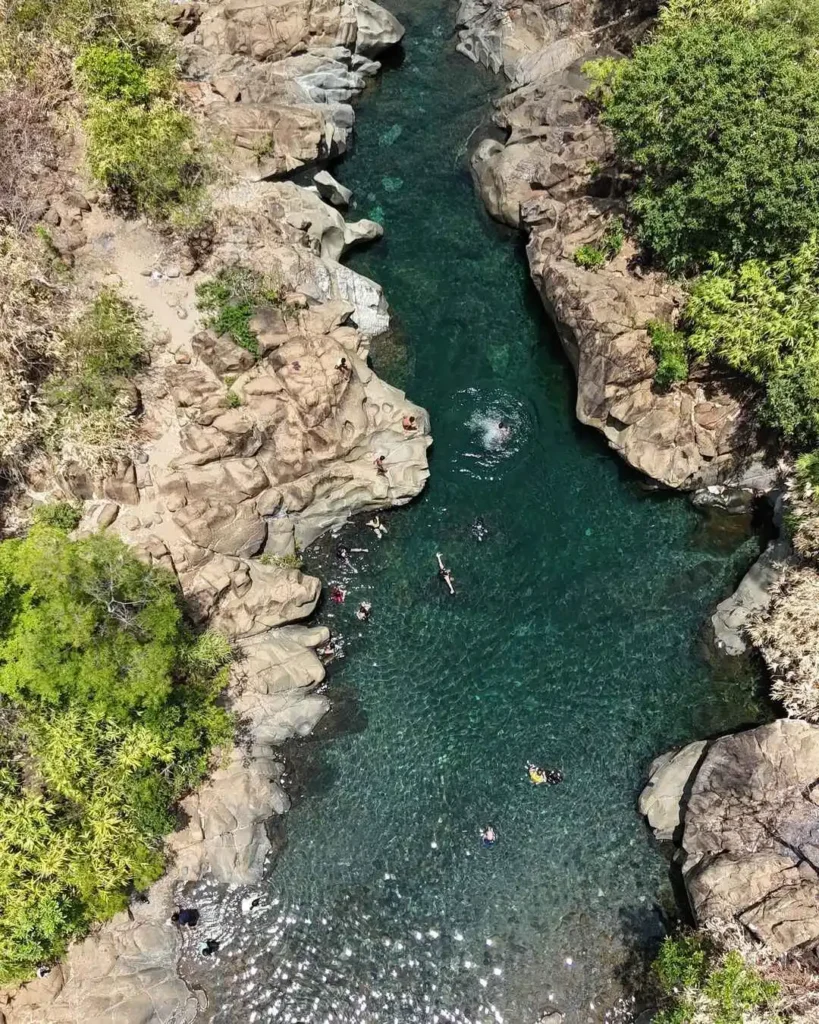
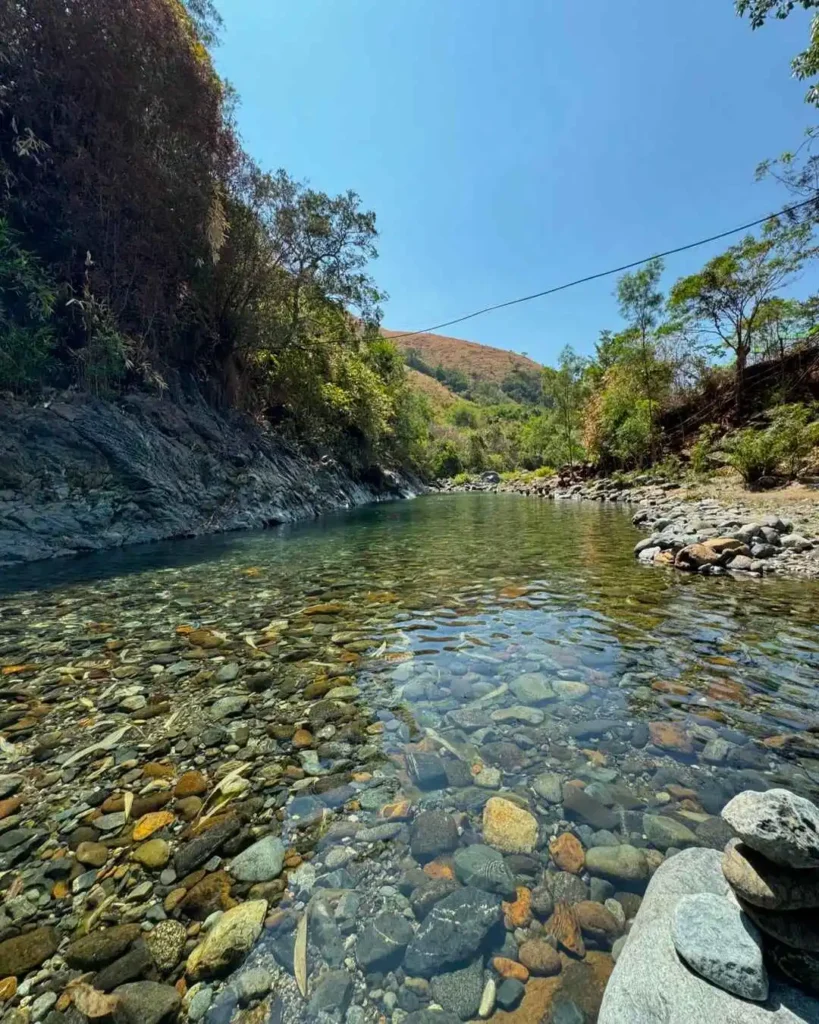
The trail drops you into the shaded micro-climate of the Maligha River and the Agbobotilya River. The Agbobotilya sector has striking white rock formations and emerald water. The rocks in the river are coated in a natural biological film that makes them extremely slippery. Wear aquatic footwear or strapped river sandals in the water. Standard trail runners will slide.
After the summit views, the cold river swim was the part I will actually remember longer. You have been on an open, shadeless volcanic ridge for hours. Dropping into that clear water at the base feels like the mountain giving you something back.
What I Would Do Differently Next Time
I would start the ascent at 3:00 AM instead of after dawn. Even in August, with cloud cover softening the heat, the ridge gets uncomfortable by 8:00 AM. A 3:00 AM start means you hit the summit around sunrise, get the best light for photos, and descend into the river before the midday heat builds. I would also skip the cotton shirt. I wore one and it was soaked within 20 minutes. A moisture-wicking long-sleeve top would have made the whole ascent significantly more bearable.
For context on how Mt. Mariglem compares to other Zambales peaks, including longer multi-day challenges, check out the Mt. Tapulao travel guide and the Mt. Kapigpiglatan DIY guide.
Best Time to Climb Mt. Mariglem
November to February is the best window. The northeast monsoon brings cooler temperatures and overcast skies that dramatically reduce the heat index on the exposed ridge.
March through May is the dry season, and while trails are dry and river crossings are lower, the heat index along the open volcanic ridge regularly exceeds 40°C by 8:00 AM. The dark lahar soil absorbs and radiates heat from below while the sun hits you from above. Climbing during this period is not impossible, but it demands strict pre-dawn timing and significantly more water and electrolytes.
June through October is the wet season. The trail can become slippery, and the rivers pose a real flash flood risk. If you climb during the wet season, as I did in August, check weather conditions the night before and trust your guide’s judgment about river crossing safety.
Budget Breakdown for Climbing Mt. Mariglem
Total estimated cost for one person in a group of five, traveling from Manila by public bus:
| Expense | Cost (PHP) |
|---|---|
| Victory Liner bus (Manila to Cabangan, round trip) | 900 to 1,200 |
| Local tricycle transfer (Cabangan town to Sitio Maporac, round trip, split) | 120 to 150 |
| LGU registration and environmental fee | 50 to 100 |
| Mandatory guide fee (split among 5 hikers) | 140 to 300 |
| Kolong-kolong transport (split among 5 hikers) | 100 to 110 |
| Food, water, and electrolytes (minimum 3L water required) | 300 to 400 |
| Total per person (estimated) | PHP 1,610 to 2,260 |
Private vehicle groups should add PHP 550 to PHP 700 in one-way tolls (NLEX and SCTEX combined for a Class 1 vehicle) plus fuel. Parking near Sitio Maporac is informal and free.
The tapsilog I had at the jump-off area before the hike cost about PHP 80 and was the right call. You need carbs in your stomach before that ascent.
What to Pack for Mt. Mariglem
| Item | Essential? |
|---|---|
| Water (minimum 3 liters per person) | Yes, absolutely non-negotiable |
| Oral rehydration salts or electrolyte drinks | Yes |
| Silver reflective umbrella (UV-blocking) | Yes, carries a 5°C to 10°C perceived temperature reduction |
| Moisture-wicking long-sleeve top | Yes |
| Long pants or leggings (cogon grass protection) | Yes |
| Trail shoes with grip | Yes |
| Aquatic sandals or water shoes (for the river) | Yes |
| Trekking poles (pair) | Strongly recommended for scree descent |
| Headlamp with fresh batteries | Yes (for pre-dawn start) |
| Sunscreen SPF 50+ | Yes, but reapply frequently; sweat removes it within the first hour |
| Dustproof buff or mask | Yes (for kolong-kolong ride and dusty trail) |
| Packed lunch or trail snacks | Yes; no food vendors on the trail itself |
| Small trash bag | Yes; pack out everything you bring in |
There are zero water sources on the exposed ridge. The only water available after you leave the registration area is from vendors at the river at the very end of the descent. Carry everything you need from the start.
Safety Tips for Climbing Mt. Mariglem
Heat exhaustion is the most common risk on this trail, not elevation. The open volcanic ridge with no shade and dark lahar soil creates an extreme localized heat environment that catches unprepared hikers off guard.
Deploy your silver umbrella from the first step out of tree cover. Do not wait until you feel hot. By the time you feel the full effect of the heat, you are already behind on hydration and thermal management.
Watch for flash floods in the river valley. The Binaong River system drains a large mountain catchment. Even if it is sunny where you are swimming, rain higher up can send a flash flood downstream within minutes. The immediate warning sign is water turning muddy or brown. If that happens, get to higher ground immediately and stop swimming.
Cellphone signal on the mountain is highly variable. Globe, Smart, and DITO all have coverage in Cabangan town, but signal becomes intermittent on the steep ascent and drops to a complete dead zone in the river valleys. The summit plateau has a usable but inconsistent signal. Do not plan on being reachable in the river area.
In a medical emergency, contact the Cabangan MDRRMO at 0964 315 4201. They maintain 24-hour emergency response and coordinate with local barangay rescue teams. The nearest hospital is San Marcelino District Hospital, roughly 27 to 32 kilometers south of Cabangan, with an estimated transport time of 32 to 53 minutes by emergency vehicle.
There are no blood leeches (limatik) on this trail, which removes one common concern for first-timers. The real biological hazard is the biofilm on submerged river rocks: it is genuinely slippery, and a fall on those rocks can cause serious injury. Wear proper footwear in the water.
For an overview of more Zambales destinations to explore after your hike, the Zambales tourist spots guide covers beaches, resorts, and natural attractions within easy reach of Cabangan.
Frequently Asked Questions About Mt. Mariglem
Is Mt. Mariglem good for beginner hikers?
Mt. Mariglem is suitable for beginners with a baseline level of fitness, but it is not a casual walk. The trail is Trail Class 1 to 2, meaning no ropes or technical climbing, and the total distance is only 4.5 to 6.2 kilometers. The real challenge is the complete lack of shade on the ridge combined with a relentless steep ascent from the very start. A first-timer who prepares properly, starts before sunrise, carries enough water, and uses a silver umbrella will complete it. Someone who shows up in cotton shorts with one liter of water in the midday heat will not have a good time.
How long does it take to reach the summit of Mt. Mariglem?
Most groups reach the summit in 2 to 3 hours from the trailhead, with the full loop including the river descent taking 4 to 5 hours total. On a pre-dawn climb starting the ascent at 3:00 AM, groups moving at a standard pace pass Station 2 around 3:50 AM, Station 3 by 4:15 AM, and Station 4 by 4:40 AM, arriving at the summit (Station 5) around sunrise. Pace varies depending on fitness level and how often the group stops to manage heat.
How do you get to Mt. Mariglem from Manila?
Board a Victory Liner bus at Pasay, Cubao, Caloocan, or Sampaloc bound for Iba or Santa Cruz, and ask the conductor to drop you at Cabangan town proper. The fare is PHP 450 to PHP 600 one way, and the journey takes 4.5 to 6 hours depending on Metro Manila traffic. From the Cabangan highway stop, take a local tricycle to Sitio Maporac for around PHP 300 per tricycle. The full transit from Manila to the registration area is manageable in a single overnight trip, departing around midnight to arrive by 5:00 AM.
What is the best time of year to hike Mt. Mariglem?
November through February is the best period. Cooler ambient temperatures and partial cloud cover reduce the heat index significantly on the fully exposed volcanic ridge, making the ascent far more manageable. Avoid March through May unless you are starting before 3:00 AM and have proper heat mitigation gear, as the heat index on the ridge can exceed 40°C by 8:00 AM during peak dry season. The wet season (June to October) is hikeable but requires extra caution due to slippery trails and flash flood risk in the river valleys.
Is a guide required to climb Mt. Mariglem?
Yes, a local guide is strictly mandatory under 2026 LGU policy. The Cabangan municipal government enforces a 1:5 guide-to-hiker ratio, and there are no exceptions for solo hikers or pairs. The guide fee ranges from PHP 700 to PHP 1,500 per group, split among the hikers. Guides are arranged by contacting the LGU coordinator at 0949 879 1342 or the municipal tourism office at 0917 508 9672. On weekdays, walk-in arrangements at the Sitio Maporac barangay hall are usually possible, but weekends require advance booking.
Final Verdict: Should You Climb Mt. Mariglem?
4 out of 5 for fit beginners and intermediate hikers looking for a high-reward, half-day challenge near Manila. Mt. Mariglem delivers a genuinely spectacular summit view, a satisfying ridge-to-river experience, and a cold river swim that earns its place as the best part of the day. Treat the heat seriously, start before sunrise, and carry more water than you think you need, and this climb will absolutely be worth the trip to Cabangan.

Thanks for sharing. I read many of your blog posts, cool, your blog is very good.
Pwede po makahingi number ng local Guide sa Mt Mariglem