Quick Facts: Ati-Atihan Festival 2026 Cheat Sheet
The Ati-Atihan Festival peaks on the 3rd Sunday of January. For 2026, the Grand Procession and High Mass fall on January 18, 2026. The event takes place in the Poblacion of Kalibo, Aklan, centering on Pastrana Park. Major highlights include the Sadsad (Street Dancing) on Saturday and the religious transfer on Sunday.
| Feature | Details for 2026 |
| Main Festival Dates | January 10–19, 2026 |
| Festival Peak Day | Sunday, January 18, 2026 |
| Official Theme | Hala Bira Bagong Kalibo |
| Cell Signal Status | OFF (Signal Jamming confirmed for Jan 18-19) |
| Transport Apps | None (No Grab/Uber available) |
Intro: The Mother of All Philippine Festivals
The Kalibo Ati-Atihan Festival 2026 culminates on Sunday, January 18, 2026, in the streets of Kalibo, Aklan. Unlike other fiestas, this event centers on the Sadsad—a barrier-free street party where tourists dance alongside tribal performers. Expect strict “Code White” security protocols, zero Grab availability, and scheduled signal jamming near Pastrana Park. This year’s theme: “Hala Bira Bagong Kalibo.”
Welcome to the progenitor of them all. Before Cebu had the Sinulog and Iloilo built the Dinagyang, Kalibo, Aklan was already beating the drums.
Historically designated as the “Mother of All Philippine Festivals,” the Ati-Atihan is the primordial archetype of the Filipino fiesta. It lacks the stadium-style choreography of its younger siblings, and that is exactly why we love it. There are no velvet ropes here. There are no “VIP Observation Decks” that separate you from the action.
The Sadsad: A Vow in Motion
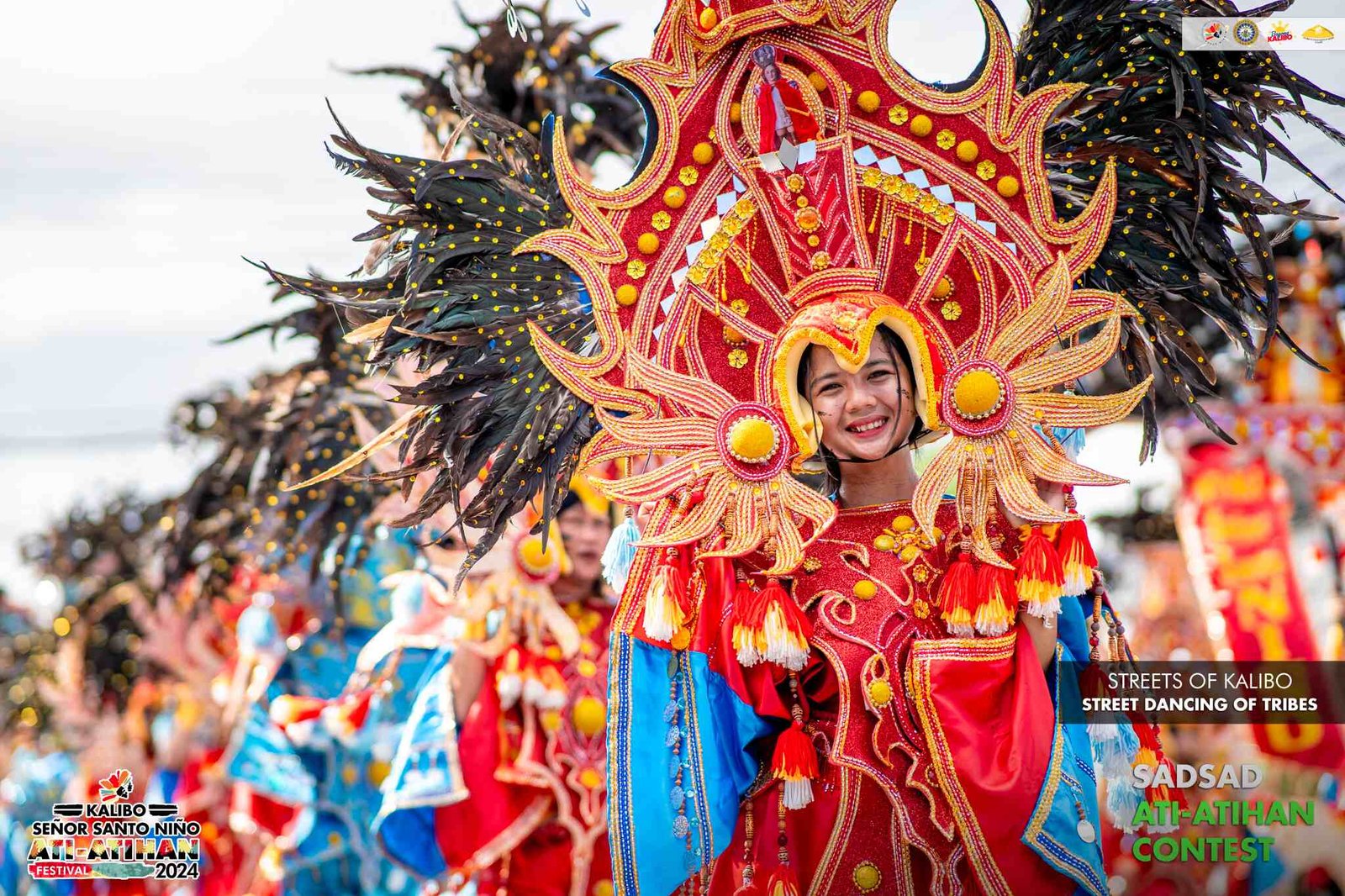
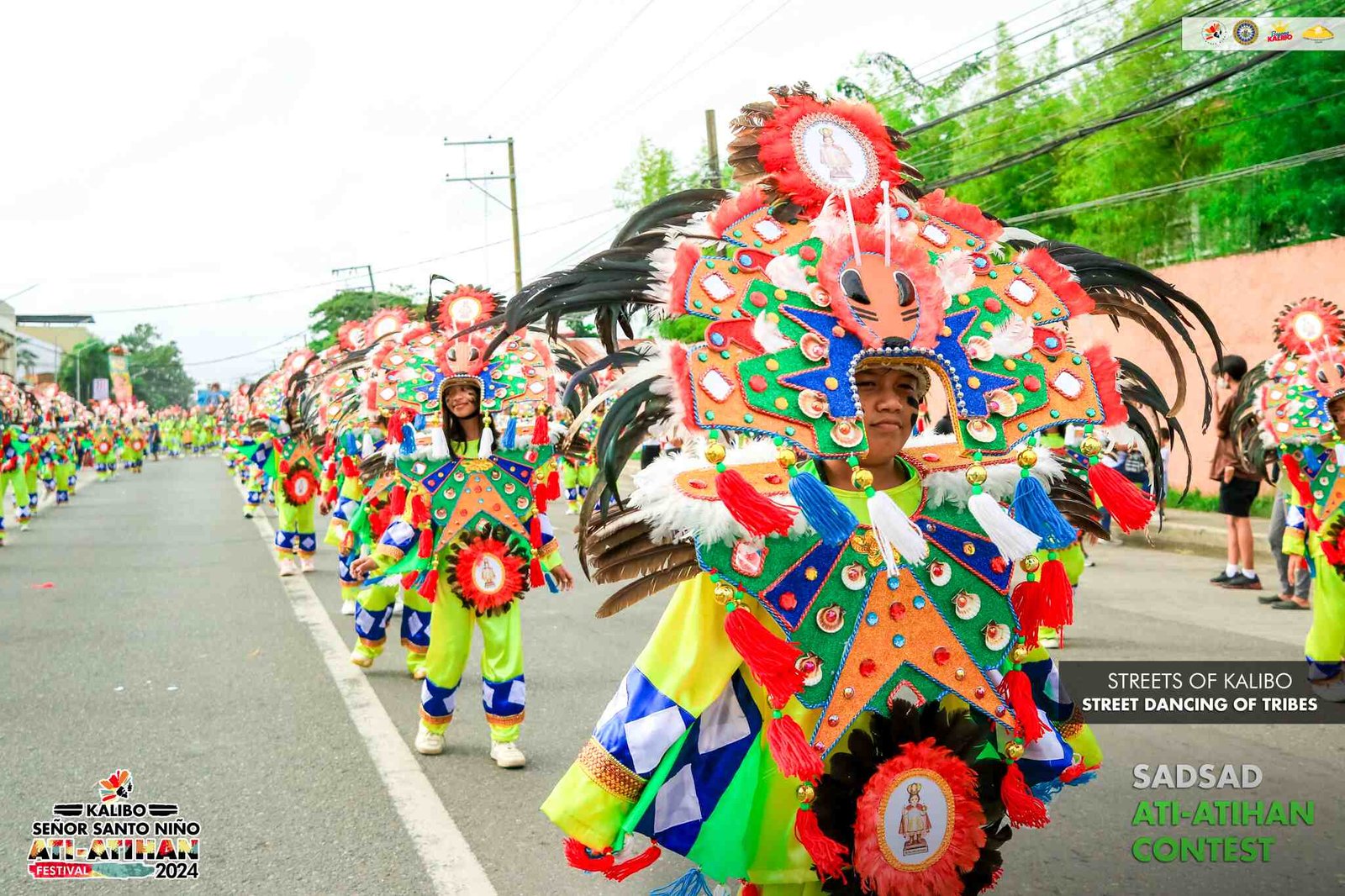
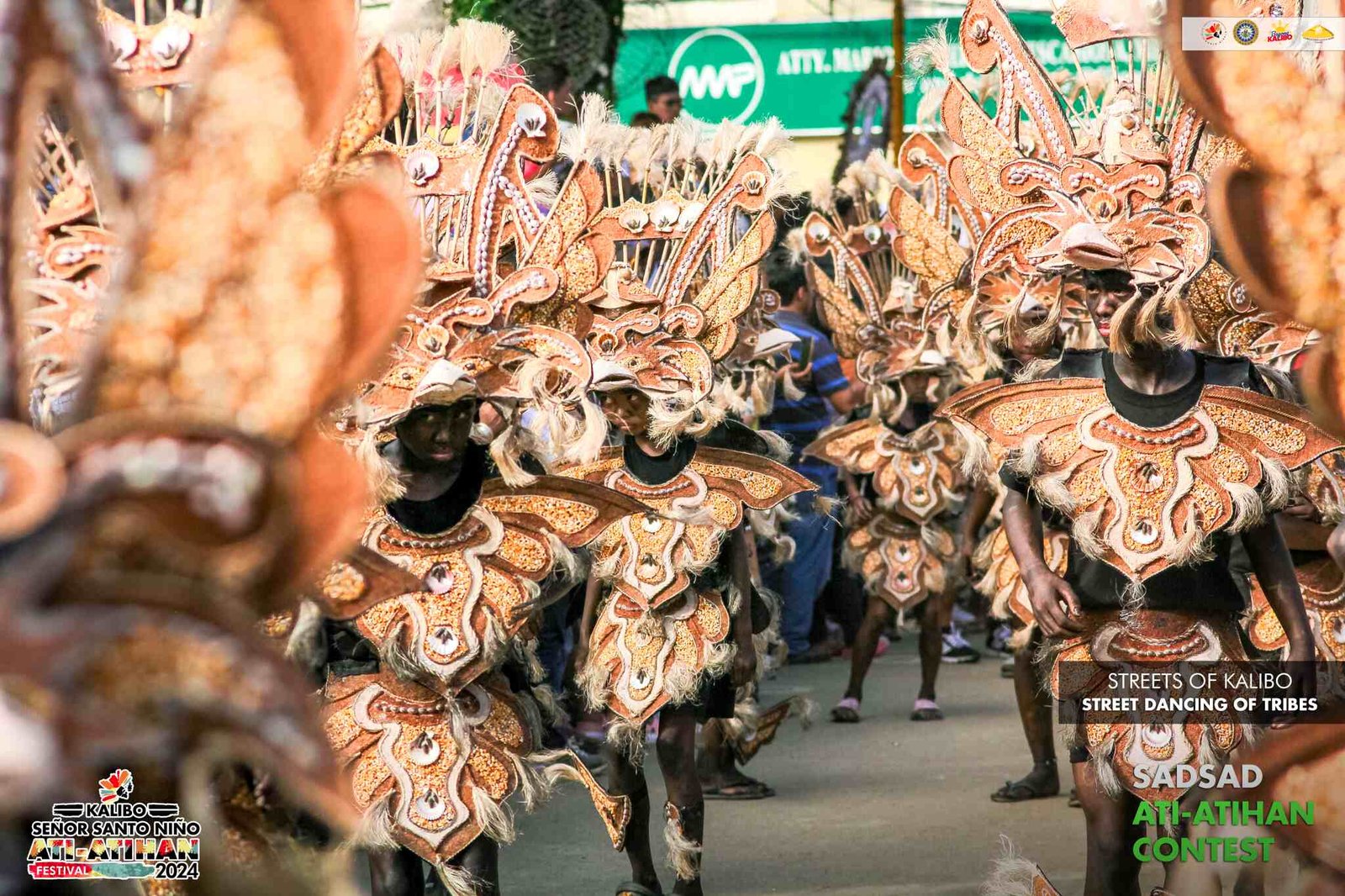
The heartbeat of the festival is the Sadsad—a visceral, street-level engagement where the demarcation between performer and spectator is deliberately dissolved. You don’t just watch the tribes; you become one with them.
For the locals, this isn’t just a party; it’s a Panata (vow). You will see devotees at the St. John the Baptist Cathedral wiping the image of the Santo Niño with handkerchiefs before heading out to paint their faces black with soot. This duality—the sacred kneeling inside the church and the raucous dancing outside on XIX Martyrs Street—is the soul of the experience.
Insider Tip: Do not wear your expensive white sneakers or designer clothes to the Sadsad. Participation often involves voluntary “smudging,” where revelers might playfully swipe soot or charcoal on your face or arms. It’s a blessing, not a stain—wear it with pride (and wear dark clothes).
Ati-Atihan Festival 2026 Theme: Hala Bira Bagong Kalibo
For the 2026 iteration, the Municipality of Kalibo and the local council are enforcing a rigorous framework under the banner “Hala Bira Bagong Kalibo” (Go for it, New Kalibo).
While the chaotic energy remains, the operational landscape has shifted. The LGU is implementing “Code White” security status, which means tighter checkpoints around the Festival Zone and strictly enforced ordinances on trash disposal and public conduct.
This isn’t just a travel brochure; it’s a strategic manual. Kalibo operates on a different frequency during the third week of January—literally. You will navigate a complex environment with no ride-hailing apps, widely reported telecommunications blackouts (signal jamming), and a hyper-inflationary accommodation sector.
We wrote this guide to help you survive the chaos, respect the culture, and shout “Viva kay Señor Sto. Niño!” until your voice gives out. Let’s get to the logistics.
Attending vibrant Philippine festivals like Ati-Atihan? Make sure your experience is safe and stress-free with SafetyWing Nomad Insurance. This travel insurance is designed for long-term travelers and digital nomads—offering coverage for medical emergencies, delays, and more. With flexible plans, it’s a must for festival hoppers and backpackers across the Philippines.

Table of Contents
How to Get There (Logistics & Mobility)
To reach the Ati-atihan Festival 2026, fly directly into Kalibo International Airport (KLO), located just 3-5km from the main event area. If KLO flights are sold out, fly to Caticlan (MPH) and take a 1.5 to 2-hour van transfer (approx. PHP 250–400) to Kalibo. Note that ride-hailing apps like Grab do not operate in Aklan; you must rely on motorized tricycles or walking.
By Air: KLO vs. MPH
Your entry point dictates your stress level. We strongly recommend booking flights to Kalibo International Airport (KLO) as early as possible. KLO is incredibly convenient—you land just a 10-minute tricycle ride away from the Poblacion (Town Center).
If you are flying into Godofredo P. Ramos Airport (MPH) in Caticlan (usually the gateway to Boracay), prepare for a land journey.
Van Transfer: You will find vans at the Caticlan Jetty Port area. The ride to Kalibo takes about 1.5 to 2 hours.
Cost: Expect to pay between PHP 250 and PHP 400 per person.
Bus: Ceres buses are cheaper but slower, stopping frequently along the coastal highway.
Getting Around: The “No Grab” Reality
Leave your ride-hailing apps in Manila. GrabCar and JoyRide do not operate in Kalibo. While you might see local logistics apps like “Deliverya,” these are primarily for parcels, not passenger transport.
In Aklan, the motorized tricycle is king. However, supply and demand during the Ati-atihan Festival 2026 creates a unique economy.
Regular Fare: Under Ordinance No. 2022-055, base fares are typically PHP 15–20 for the first kilometer.
“Special” Trip: This is the de facto festival standard. If you want a tricycle to take you directly to your hotel without picking up other passengers, or if traffic is gridlocked near Osmeña Avenue, drivers will ask for a “pakyaw” or special rate. Expect to pay PHP 50 to PHP 150.
Insider Tip: Always agree on the fare before you sit inside the tricycle. If a driver demands an unreasonable amount (like PHP 500 for a short trip), note the Body Number painted on the side of the cab and report it to the Police Assistance Desk near Pastrana Park.
Road Closures & One-Way Loops (EO No. 60)
Mayor Juris B. Sucro has issued Executive Order No. 60 to manage the influx of devotees. The entire perimeter around Pastrana Park and the St. John the Baptist Cathedral transforms into a strictly enforced Pedestrian-Only Zone from January 15 to January 19.
If you are renting a private van or bringing a car, be warned: There is virtually no parking in the Poblacion.
Incoming Traffic (Iloilo/Capiz): Diverted to circumferential roads like the Mabini Street extension.
Incoming Traffic (Caticlan): Re-routed via the Kalibo Bridge to the diversion road.
Parking Strategy: Do not try to park near the plaza. Drop your car at designated areas near the Provincial Capitol or Magsaysay Park and walk the rest of the way.
Insider Tip: During the Sadsad (especially on Saturday and Sunday), walking is often faster than riding. The One-Way Loops on XIX Martyrs Street and Rizal Street force vehicles into long detours, while pedestrians can cut through the side streets. Wear comfortable shoes—you will be walking kilometers.

Ati-Atihan Festival 2026 Schedule of Activities
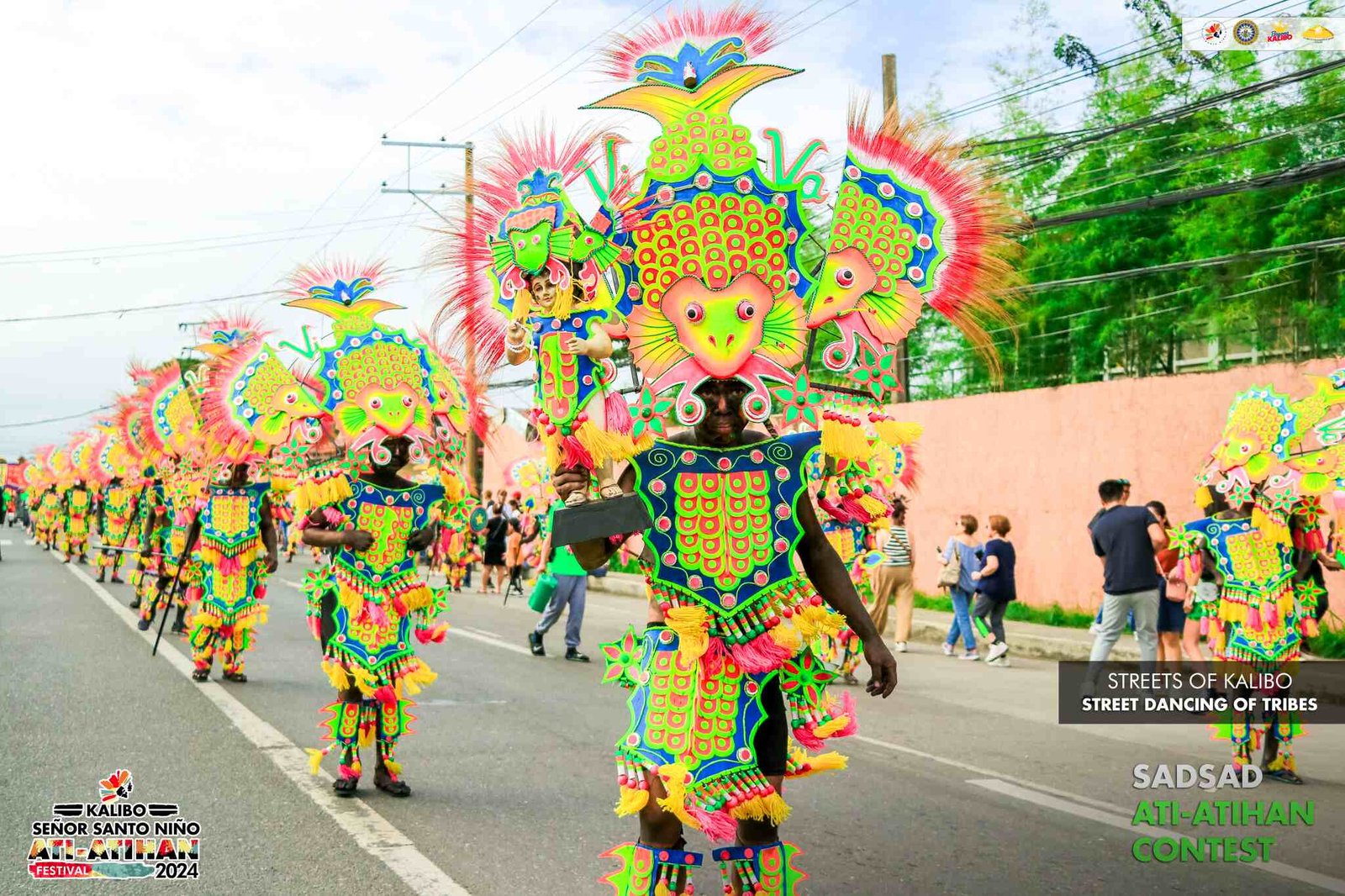
The core events for the Ati-Atihan Festival 2026 run from January 14 to January 18. The massive “Sinaot sa Calle” hits the streets on Wednesday, Jan 14, followed by the “Higante Parade” on Thursday, Jan 15. The festivities peak with the all-day Tribal Street Dance Contest on Saturday, Jan 17, and conclude with the High Mass and Grand Procession on Sunday, January 18. Expect total road closures in the Poblacion from Friday to Sunday.
The Week-Long Buildup
Don’t make the mistake of arriving only on Sunday. The energy in Kalibo builds like a slow burn, starting with the student parades midweek and exploding into the tribal frenzy by the weekend.
While the “Third Sunday” rule dictates the main feast, the Local Government Unit (LGU) of Kalibo fills the preceding days with events that shut down major arteries. If you are chasing the authentic Sadsad experience without the crushing weekend density, the weekday parades are your sweet spot.
Here is the projected itinerary based on the traditional ecclesiastical calendar for January 2026.
Note: The festival schedule revolves around the Feast of the Santo Niño (3rd Sunday of January). For 2026, this falls on January 18.
| Date | Day | Event Highlights | Traffic Alert Level |
| Jan 14 | Wed | Sinaot sa Calle (Student/Teacher Parade) | High (PM Gridlock at Town Center) |
| Jan 15 | Thu | Barter of Panay Reenactment & Float Parade | Medium (Magsaysay Park/Plaza) |
| Jan 16 | Fri | Higante Parade (Papier-mâché Giants) | Very High (Major Road Closures) |
| Jan 17 | Sat | Tribal Street Dance Contest (Dawn to Dusk) | Extreme (Pedestrian Only Zone) |
| Jan 18 | Sun | High Mass & Grand Religious Procession | Maximum (Total Shutdown) |
Key Events Breakdown
The Higantes (Thursday/Friday):
Before the tribes take over, the Higante Parade dominates the streets. These are massive papier-mâché figures—often caricatures of politicians or pop icons—parading down Mabini Street and Desposorio Maagma Street.
Logistics: If you have a rental car, move it out of the Poblacion before 1:00 PM. These giants require the full width of the road.
The Tribal Sadsad (Saturday, Jan 17):
This is the “Day of the Tribes.” Registered tribes (Big, Small, and Balik-Ati categories) compete in a grueling street dance that starts in the morning and lasts until night.
The Route: The tribes circulate counter-clockwise around the Pastrana Park complex.
Insider Tip: The Kalibo Pastrana Park Grandstand is ticketed and cramped. For a better (and free) view, position yourself near the corner of XIX Martyrs Street and Rizal Street. You catch the tribes as they turn the corner, and the lighting is better for photos.
The Feast Day (Sunday, Jan 18):
The mood shifts from raucous to reverent.
4:00 AM: Dawn Penitential Procession. Devotees walk barefoot with rosaries.
7:00 AM: Pontifical High Mass at the St. John the Baptist Cathedral.
Afternoon: The Grand Procession. This is the longest parade, lasting 6–8 hours.
Warning: Signal jamming is almost guaranteed during the Sunday procession (approx. 6:00 AM to 2:00 PM). Do not plan on livestreaming the Mass.
Insider Tip: If you are joining the Sunday religious procession (“The Transfer”), bring a candle and a drip protector. The wax will ruin your clothes in the dense crowd. Also, stick to the sides near Osmeña Avenue if you need an escape route; once you are in the middle of the procession column, you are stuck there for hours.


Ati-Atihan Festival 2026 Parade Route & Best Vantage Points
For the rawest Ati-Atihan Festival 2026 energy, head straight to Pastrana Park, the festival’s “Ground Zero.” If you prefer breathing room, position yourself along XIX Martyrs Street or the corner of Rizal Street. Note that the entire Poblacion enforces a strict “One Direction” pedestrian flow during the Sadsad; do not attempt to walk upstream against the tribes.
The “Festival Zone”: Chaos vs. Comfort
Unlike the linear parades in Manila, the Ati-Atihan Festival 2026 route is a massive, pulsating loop. The energy radiates outward from the town plaza, and choosing your spot determines whether you dance or just survive.
Pastrana Park (The Epicenter): This is where the tribes are judged. The density here is “sardines-can” level. Unless you have a VIP ticket for the Kalibo Grandstand, you will be shoulder-to-shoulder with thousands of painted revelers.
St. John the Baptist Cathedral: Located right next to the park, this is the spiritual anchor. It is the best spot for the Sunday High Mass, but the courtyard gets packed by 6:00 AM.
XIX Martyrs Street: This is the “Main Avenue” of the festival. It offers a wide view of the incoming tribes. It’s loud, but you can usually find an escape route into the smaller side alleys if you need air.
Insider Tip: Avoid the bottleneck at the intersection of Archbishop Reyes Street and Pastrana Park (near the Cathedral entrance). It is a notorious choke point. If you need to cross from the church to the market, loop around Mabini Street instead of cutting through the plaza crowd.
The “One Direction” Policy
This is the most critical survival rule in Aklan during the festival weekend. To prevent human crushes, the Kalibo LGU and police enforce a strict unidirectional flow for pedestrians within the Festival Zone.
If the parade is moving counter-clockwise (which is standard), you must move with it.
Do not counter-flow: Trying to walk against the stream of tribes on Rizal Street is dangerous. You will be pushed back by the drumlines and the crowd.
The Loop: Traffic typically flows from Mabini Street, turns into Archbishop Reyes, and circles the Plaza.
Crossing: If you need to get to the other side of the street, wait for a gap between tribes (usually right after a drum line passes) and move diagonally.
Secret Spot: The Kalibo Bridge Diversion
If you want to see the tribes before they get exhausted from the main loop, head towards the Kalibo Bridge (incoming from Numancia). Many “Balik-Ati” tribes assemble in the outskirts and march inward. The lighting here is better for photographers because the buildings aren’t blocking the sun, and you can actually hear the individual drum beats before they merge into the plaza’s wall of sound.

Where to Stay During Ati-Atihan Festival 2026: Strategic Booking
Book your accommodation for Ati-Atihan Festival 2026 by September 2025 at the latest; rooms in the town center are often sold out months in advance. Hotels within the Poblacion charge a “festival premium” (up to 300% surge) and strictly enforce a 3-night minimum stay. For budget travelers, look for homestays in the neighboring towns of New Washington or Numancia and commute via tricycle.
The “Zero Zone”: Staying in the Poblacion
If you want to roll out of bed and straight into the Sadsad, you need to book a hotel along Rizal Street or XIX Martyrs Street. This puts you within walking distance of Pastrana Park and the St. John the Baptist Cathedral.
However, convenience comes with a literal price. During the third week of January, a standard room that usually costs PHP 1,500 can skyrocket to PHP 5,000 per night. Furthermore, most establishments will require you to book for the entire festival window (Friday to Monday).
-
The Trade-off: You save on transport, but you will not sleep. The drums start at dawn and the street parties last until 3:00 AM.
-
Target Areas: Look for inns near the Kalibo Municipal Hall or Osmeña Avenue if you want to be close but slightly buffered from the main parade route.
Insider Tip: If you book a room facing the street in the Poblacion, pack high-quality silicone earplugs. I once stayed at a hotel near the corner of Mabini Street, and the vibration from the bass drums rattled the windows until sunrise. You have been warned.
The Periphery: Andagao, Estancia, and Beyond
For travelers who value their hearing (and their wallets), the barangays just outside the town center are the smart play.
-
Barangay Andagao & Estancia: These areas are technically still in Kalibo but are outside the “Festival Zone.” You can find pension houses here at standard rates.
-
Commute: A 10-15 minute tricycle ride to the center.
-
-
New Washington & Numancia: These are neighboring municipalities.
-
Commute: New Washington is about 20-30 minutes away by jeepney or tricycle. Numancia is just across the Kalibo Bridge.
-
Cost: You will pay roughly PHP 30–50 for a regular tricycle fare, though you might need to negotiate a “special” rate at night.
-
Insider Tip: Do not rely on online booking platforms like Agoda or Booking.com for smaller pension houses in Aklan. Many local owners still operate via Facebook Pages or direct mobile numbers. If the apps say “Sold Out,” try searching for “Kalibo Homestay” on Facebook Groups—you’ll often find spare rooms in local homes for half the price of a hotel.


Ati-Atihan Festival 2026 Survival Guide: Security & Safety
Yes, expect a total signal shutdown during the Ati-Atihan Festival 2026. Security protocols mandate signal jamming on Sunday, January 18 (Grand Procession) and likely Saturday morning (Tribal Contest) to prevent IED triggers. Since GCash and Maya will not work, bring physical cash and download offline maps of Kalibo before you arrive.
The “Code White” Reality: Signal Jamming
The Philippine National Police (PNP) and the LGU of Kalibo operate under “Code White” alert status. This means maximum deployment and strict electronic countermeasures.
The signal jamming is not a glitch; it is a tactical necessity to disrupt remote detonators.
-
When: Confirmed for Sunday, January 18 (approx. 6:00 AM to 2:00 PM) during the High Mass at St. John the Baptist Cathedral and the Grand Procession.
-
Where: The blackout radius covers the entire Poblacion, centered on Pastrana Park.
-
Impact: You cannot call, text, or use data. Your “Find My Friends” app is useless here.
Insider Tip: Do not agree to “meet at the 7-Eleven.” There are multiple convenience stores and they are all swamped. Pick a permanent, non-moving landmark like the Left Lion of the Rizal Monument in Pastrana Park or the Belfry of the Cathedral. Synchronize your watches (not phone clocks) and agree on a specific time to regroup if separated.
Prohibited Items (Strictly Enforced)
Border control points at Mabini Street and XIX Martyrs Street will check every bag. To get into the Festival Zone faster, follow these rules:
-
No Large Backpacks: Leave the hiking packs at your hotel. Security requires clear tote bags, small belt bags, or transparent sling bags for faster inspection.
-
No Glass Bottles: All alcohol and water must be transferred to plastic cups or pouches. Broken glass is a major hazard for the barefoot devotees during the Sadsad.
-
Weapon Ban: This includes “costume props.” If your tribal spear is made of metal or has a sharp tip, it will be confiscated. Only registered tribes with vetted props get a pass.
Health: Heatstroke and “Pwera Pasma”
The medical tents near the Kalibo Municipal Hall treat hundreds of people daily, mostly for heat exhaustion and alcohol intoxication.
Locals strictly observe “Pwera Pasma”—the belief in avoiding illness caused by sudden temperature changes.
-
The Danger: Dancing for four hours under the 32°C sun and then immediately entering an air-conditioned convenience store or hotel room. This shock to the system can flatten you with fever/muscle spasms.
-
The Fix: Cool down gradually in the shade (try the trees near Magsaysay Park) before blasting the AC.
-
Hydration: Buy water outside the perimeter. Once you are inside the barricades near the Main Stage, prices for a bottle of water can triple.

Food Guide: Eating Like an Akeanon
When in Kalibo for the Ati-Atihan Festival 2026, you must eat Inubarang Manok (native chicken stewed with banana pith) and the infamous Tamilok (woodworm ceviche). For quick energy during the street parties, grab a stick of sweet Chorizo de Kalibo at the “Kaean-an sa Plaza” food market near Pastrana Park, or visit Saylo Cuisine for a proper sit-down heritage meal.
The Holy Trinity of Aklanon Dishes
Aklan’s culinary identity is distinct from its neighbors in Iloilo or Capiz. Here, gata (coconut milk) is liquid gold, and the river dictates the menu. If you leave Kalibo without trying these three dishes, you haven’t really been here.
-
Inubarang Manok: This is the ultimate hangover cure after a night of Sadsad. It looks like rice porridge, but that texture actually comes from ubad (the pith or core of the banana stalk). It’s creamy, savory, and usually made with tough, flavorful native chicken.
-
Binakol: Forget the ginger-heavy Tinola you know in Manila. Authentic Aklanon Binakol is chicken soup cooked inside a bamboo node or coconut shell, using pure coconut water as the broth. It’s naturally sweet and incredibly refreshing.
-
Tamilok: The badge of courage. These are woodworms harvested from the mangroves of Batan or New Washington. We eat them raw as kinilaw (ceviche) with vinegar and chili. It looks terrifying but tastes exactly like a creamy, briny oyster.
Insider Tip: Do not buy Tamilok from random street peddlers in the heat of noon. Spoilage happens fast. Order it fresh at established restaurants like Saylo Cuisine or Occh’s Restobar to ensure your stomach survives the festival.
Where to Eat: From Street to Seat
During the festival week, the perimeter of Pastrana Park transforms into the “Kaean-an sa Plaza”—a massive pop-up food market.
-
For the Budget Traveler: Follow the smoke to the barbecue stalls at the plaza. Look for Chorizo de Kalibo—it is sweeter and stickier than other Philippine sausages. You can grab a meal here for under PHP 150.
-
For the “Tita” Break: When the heat becomes unbearable, run to Latte Coffee Cafe near the Kalibo Cathedral. It is one of the few spots with reliable air-conditioning and excellent coffee. It gets packed by 2:00 PM, so go for an early lunch.
-
For the Big Group: If you are with a barkada, take a tricycle to Ramboy’s on the highway. Their Liempo (pork belly) is legendary in the region—crispy skin, tender meat, and no fancy frills.
Insider Tip: If you see Ninoy’s Fruit Stand near the public market, check if they have Pomelo or Lanzones. While January is often off-season for some fruits, Aklan produces some of the sweetest varieties in the country, and vendors often save their best stock for the tourist influx.


Ati-Atihan Festival 2026 Suggested Itineraries
For the complete Ati-Atihan Festival 2026 experience, choose your path: The “Devotee” route starts Saturday at 4:00 AM for the Dawn Procession along the main streets of Kalibo, culminating in the Sunday High Mass. The “Reveler” route focuses on the all-day Friday Sadsad (street dancing) on XIX Martyrs Street and the Tribal Competition at Pastrana Park on Saturday. You can, and should, mix both.
Choose Your Own Adventure: Faith or Fiesta?
The magic of Kalibo lies in its duality. You can be on your knees praying one moment and dancing with a beer in hand the next. Whether you are here for the Panata (vow) or the party, we have mapped out two distinct ways to navigate the Ati-Atihan Festival 2026 schedule.
Option A: The Devotee (Spiritual Focus)
This route follows the traditional Panata. It requires early mornings, endurance, and deep respect for the religious roots of the festival.
-
Saturday (Jan 17) – 4:00 AM: Dawn Penitential Procession. Wake up before sunrise. Join thousands of devotees walking barefoot from St. John the Baptist Cathedral while reciting the Rosary. It is a hauntingly beautiful contrast to the noise that comes later.
-
Saturday (Jan 17) – 9:00 AM: Paepak (Healing Rite). Head back to the Cathedral grounds. Here, a lay minister rubs a small image of the Santo Niño on your body (shoulders, head, back) to pray for healing.
-
Sunday (Jan 18) – 7:00 AM: Pontifical High Mass. Arrive at the Cathedral courtyard by 6:00 AM to secure a standing spot. This is the spiritual apex of the week.
-
Sunday (Jan 18) – 2:00 PM: Grand Religious Procession. Instead of squeezing into the front with the drumlines, stay at the “tail” of the procession. This is where the carrozas (floats) and serious devotees walk. It is solemn, orderly, and deeply moving.
Insider Tip: The line for the Paepak can loop around the entire cathedral block by mid-morning. Go immediately after the 4:00 AM procession finishes (around 6:30 AM) to beat the crowd. Also, bring your own small Santo Niño image; priests are stationed at the side gates of the church to bless them throughout the day.
Option B: The Reveler (Cultural Immersion)
This is for the adrenaline junkies who want to experience the “Mother of All Festivals” in its rawest form. Prepare to sweat, shout, and walk at least 20,000 steps.
-
Friday (Jan 16) – 1:00 PM onwards: The Grand Sadsad. This is the best day for street dancing. The crowds are dense but manageable compared to the weekend. Start at XIX Martyrs Street and let the flow of the tribes carry you toward Pastrana Park. Jump into the “Snake Dance” lines—strangers will pull you in!
-
Saturday (Jan 17) – 8:00 AM: Tribal Competition. Skip the ticketed Grandstand. Stand near the corner of Rizal Street and Desposorio Maagma Street. You will see the tribes performing their full routines for the judges without the obstruction of fences.
-
Saturday (Jan 17) – 8:00 PM: Magsaysay Park Party. After the contest, the energy shifts to the food parks and concerts. Magsaysay Park usually hosts the biggest live bands and beer gardens.
-
Sunday (Jan 18) – 6:00 AM: The Transfer. Watch the ceremonial transfer of the Holy Child from the Cathedral to the Pastrana Park altar. It’s a short but visually stunning event that signals the start of the final festivities.
Insider Tip: If you are doing the Reveler Route, buy your drinks (water or beer) before you enter the inner perimeter of Pastrana Park. Vendors inside the chaos are scarce, and maneuvering through the crowd to find one can take 30 minutes. We always pack a hydration bladder in our belt bags to stay hands-free for dancing.
Frequently Asked Questions (FAQs)
Bringing small children to the Ati-Atihan Sadsad is strongly discouraged due to extreme crowd density and deafening drum noise at Pastrana Park. For transport, tricycle fares range from PHP 15 (regular) to PHP 100+ (special); prepare small bills. Signal jamming on January 17–18 means GCash will likely fail, so carry physical cash. Street dancing is free, but Grandstand seats cost PHP 500–1,000.
Q: Can I bring small children to the Sadsad?
A: We strongly advise against it. The drumlines in Kalibo are not just loud; they are physically vibrating walls of sound that can damage sensitive ears. Furthermore, the crowd density on XIX Martyrs Street during the height of the parade is suffocating.
The Risk: Children can easily get separated or overheated in the crush.
The Alternative: If you must bring kids, stay on the far periphery near Magsaysay Park or rent a second-floor balcony along the route to watch safely from above.
Q: Will my GCash or Maya work during the festival?
A: Assume the answer is NO. Due to the “Code White” security protocols, signal jamming is almost guaranteed during the major events on Saturday (Jan 17) and Sunday (Jan 18).
The Reality: Even if the signal isn’t fully jammed, the sheer volume of users crashes the local cell towers.
The Fix: Withdraw enough cash in Manila or Iloilo before you travel. The ATMs around Pastrana Park (like BPI and Metrobank) often run out of cash by Saturday morning.
Q: Is it safe to join the tribes dancing?
A: Yes! This is what makes Ati-Atihan unique. Unlike Sinulog in Cebu where barriers separate you from the dancers, Ati-Atihan Festival 2026 encourages interaction. You can jump into the street and dance behind the tribes.
The Rule: Respect the “One Direction” policy. Flow with the parade counter-clockwise.
The Etiquette: Do not cut directly in front of a tribe when they are performing for judges near the Kalibo Cathedral. Jump in behind the drum section.
Q: Do I need to buy tickets to watch?
A: The street party is 100% free. You can stand anywhere along Rizal Street, Archbishop Reyes Street, or Mabini Street and see the show.
The Exception: If you want a guaranteed seat away from the sun, you can buy tickets for the Kalibo Grandstand at Pastrana Park.
The Cost: Expect to pay between PHP 500 and PHP 1,000 depending on the proximity to the stage. These usually sell out a week before the event.
Q: How much should I budget for a tricycle ride?
A: Bring a pocketful of PHP 20 coins. While the ordinance states the regular fare is around PHP 15–20, the festival reality is different.
Regular Trip: Sharing the ride with strangers to a common route. (PHP 20).
Special Trip (“Pakyaw”): Hiring the tricycle just for yourself to go to a specific hotel or restaurant. Drivers will ask for PHP 50 to PHP 150.
Insider Tip: If a driver tries to charge you PHP 300 for a 2-kilometer ride, politely decline and walk to the next corner. There are thousands of tricycles in Aklan; don’t reward predatory pricing.
Conclusion
The Kalibo Ati-Atihan Festival 2026 is a test of physical endurance that rewards you with the most authentic cultural immersion in the Philippines. It is raw, soot-stained, and devoid of VIP barriers. To survive the chaos peaking on January 18, prioritize hydration, respect the “Code White” security protocols, and embrace the relentless “Hala Bira” spirit.
The “Mother” Demands Your Energy
If you are looking for a festival where you can sit comfortably in a stadium seat and watch a choreographed show from a distance, Kalibo is not for you. This is the “Mother of All Festivals” for a reason—it demands that you participate.
The Ati-Atihan Festival 2026 experience is measured in sweat and shoe leather. By the time the Grand Procession winds down on Sunday evening, your feet will ache from walking the loop around Pastrana Park, your ears will ring from the drumbeats on XIX Martyrs Street, and your clothes will likely be stained with the soot of a stranger’s hug.
But this is exactly why we keep coming back to Aklan. There is no velvet rope separating the tourist from the tribe. When the drums start beating the rhythm of the Sadsad, the distinction dissolves. You are not just watching history; you are dancing inside it.
Your Final Checklist
Before you head out to the Poblacion, remember the three golden rules of survival we covered:
Disconnect to Connect: Your phone signal will likely be jammed near the Cathedral. Take the photo, then put the phone away and be present.
Respect the Panata: Have fun, but remember that for the locals smudging soot on your face, this is a centuries-old vow to the Santo Niño.
Walk with the Flow: Don’t fight the current. When the crowd moves counter-clockwise, you move counter-clockwise.
Ready to shout “Viva”? Book your accommodation in Kalibo now before the September rush wipes out the inventory, and download our offline map below!
Plan Your Ultimate Philippine Festival Run
The Ati-Atihan is just one part of the legendary Visayan Festival Triangle. If you are planning a month-long celebration or looking for your next adventure after the soot is washed off, check out our other essential guides:
The Cebu Connection: Flying to Cebu next? Don’t miss the country’s grandest street parade.
The Iloilo Finale: Just a van ride away from Kalibo, witness the most choreographed festival in the Philippines which happens right after Ati-Atihan.
 Where to Go After the Chaos? Need a break from the drums? diverse into the country’s most stunning islands and hidden gems for your 2026 itinerary: