
TL;DR: Jomalig Island at a Glance
Here is the quick snapshot of what you need to know before packing your bags:
Location: Polillo Group of Islands, Quezon Province (Eastern seaboard of Luzon).
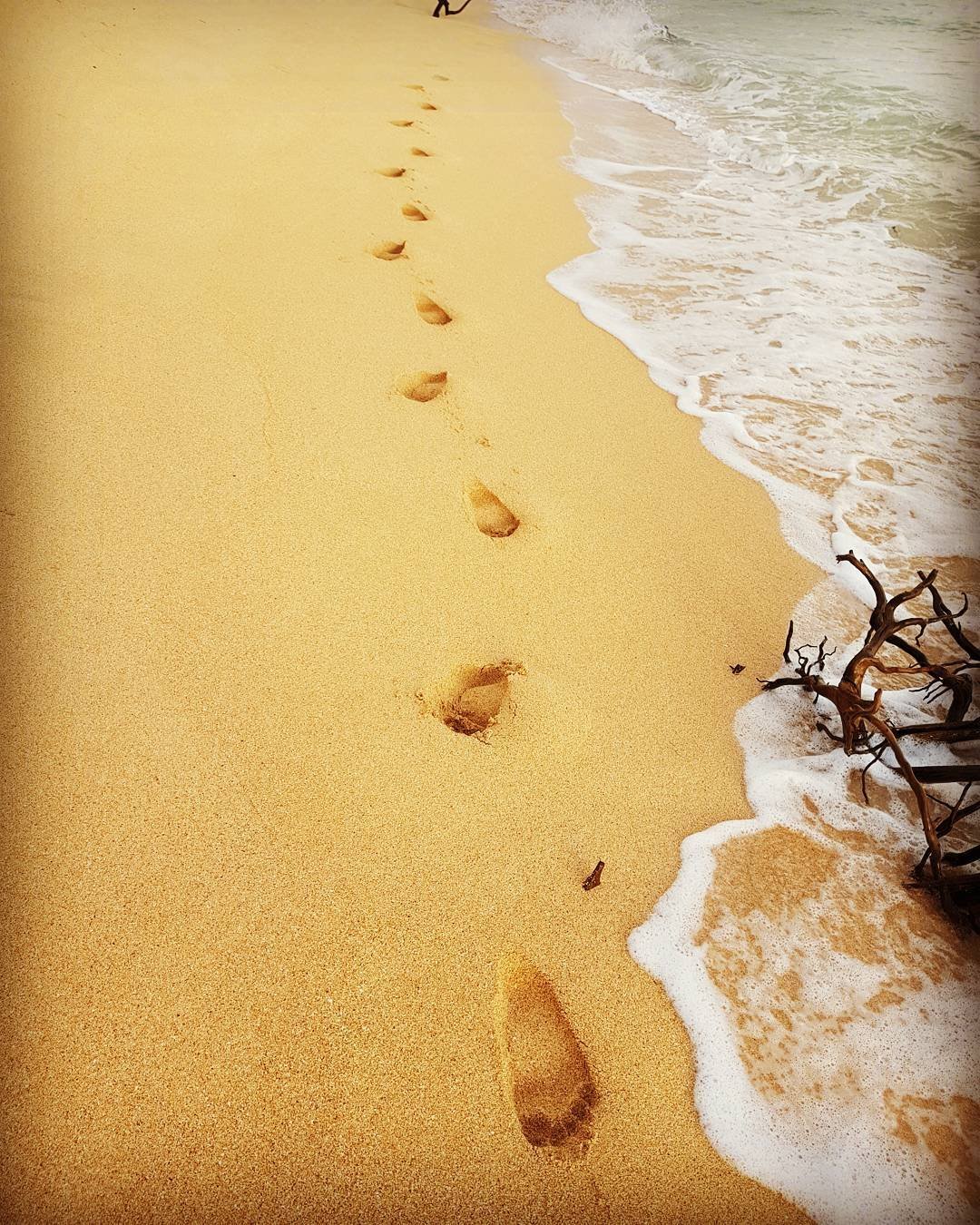
Best Feature: The “Golden Sand” (Salibungot Beach) that glows orange at sunset and the Agoho trees that mimic a tropical pine forest.
Total Travel Time: Expect 9–11 hours one-way from Manila to the island shoreline.
Budget: ₱3,500 – ₱5,000 is a safe DIY estimate for a comfortable 3D2N stay, including transport, food, and environmental fees.
Vibe: Completely off-grid, rustic, and raw nature. Do not expect 5-star luxury; expect electricity interruptions and limited mobile signal
Lakbaypinas Tip: If you love the raw, electricity-free vibe of Cagbalete Island in Mauban, you will find Jomalig to be its wilder, more secluded big sister. The waves are rougher and the journey is longer, but the solitude you get on the golden sand is unmatched by any beach in Batangas.
II. Introduction: The Golden Paradise of Quezon
Jomalig Island is a remote municipality in the province of Quezon, famous for its distinct shimmering golden sand and rows of agoho trees that offer a rugged, unspoiled alternative to the crowded white beaches of Boracay or Palawan. Situated on the easternmost fringe of the Polillo Group of Islands, it faces the vast Pacific Ocean, making it one of the most secluded and pristine destinations reachable from Manila by land and sea.
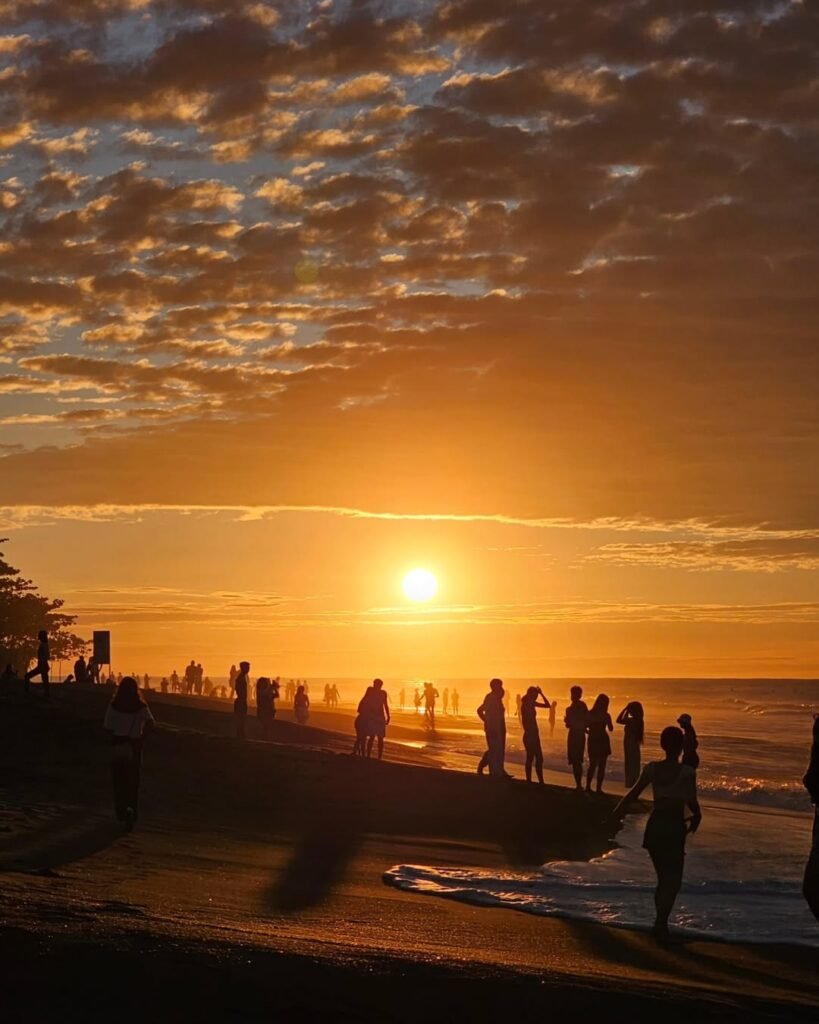
When I first set foot on Jomalig (pronounced Hu-ma-lig), I immediately understood why travelers endure the grueling journey to get here. It isn’t just another beach; it’s a sensory experience. The sand here isn’t the typical powdery white you might expect. It is a coarse, vibrant gold that magically transforms into a soft pink hue during the “golden hour” of sunset. Walking along Salibungot Beach, with the cool breeze from the Pacific brushing through the needle-like leaves of the Agoho trees, feels less like a typical tropical vacation and more like discovering a secret edge of the world.
Where is Jomalig Island Located?
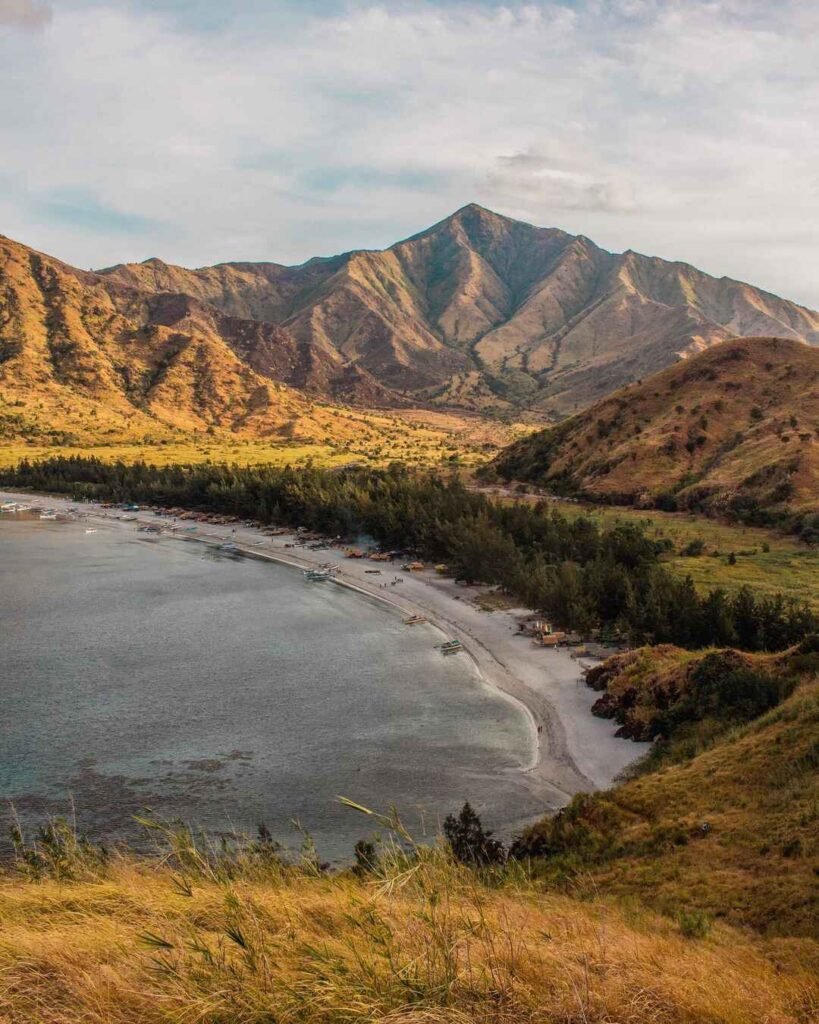
Geographically, Jomalig Island, Quezon is an island municipality located about 75 nautical miles southeast of the Polillo Islands. Because it sits directly facing the Pacific, it acts as a barrier against the open ocean swells. This geography is a double-edged sword: it gifts the island with raw, untouched beauty and rich marine life, but it also means the waves can get intimidatingly high.
It is part of the Polillo Group of Islands, a cluster that includes Polillo, Burdeos, Patnanungan, and Jomalig. While its neighbors are known for mangroves and caves (check out our Polillo Island Guide for more on that), Jomalig is the undisputed queen of beaches in the cluster.
A Journey for the Brave
I have to be honest with you: getting here is not a walk in the park. It is a test of patience and endurance. The boat ride alone can take anywhere from 4 to 6 hours, crossing the unpredictable Polillo Strait. The waves here are legendary among local sailors, often referred to as “washing machines” because they hit the boat from multiple directions.
But is the fatigue worth it? Absolutely. The moment your boat docks and you see that stretch of golden sand contrasting against the deep turquoise water, the butt-numbing 5-hour ride instantly fades from memory. This is a destination for the adventurer who prefers silence over parties, stargazing over nightlife, and raw nature over commercial resorts.
III. Best Time to Visit Jomalig Island
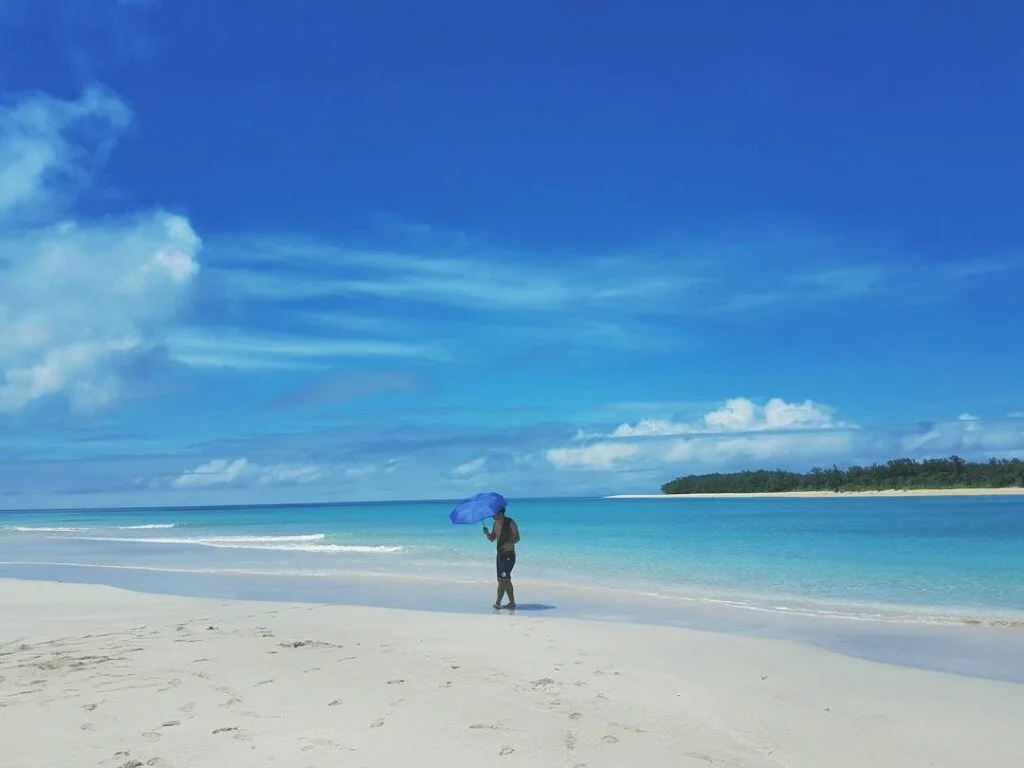
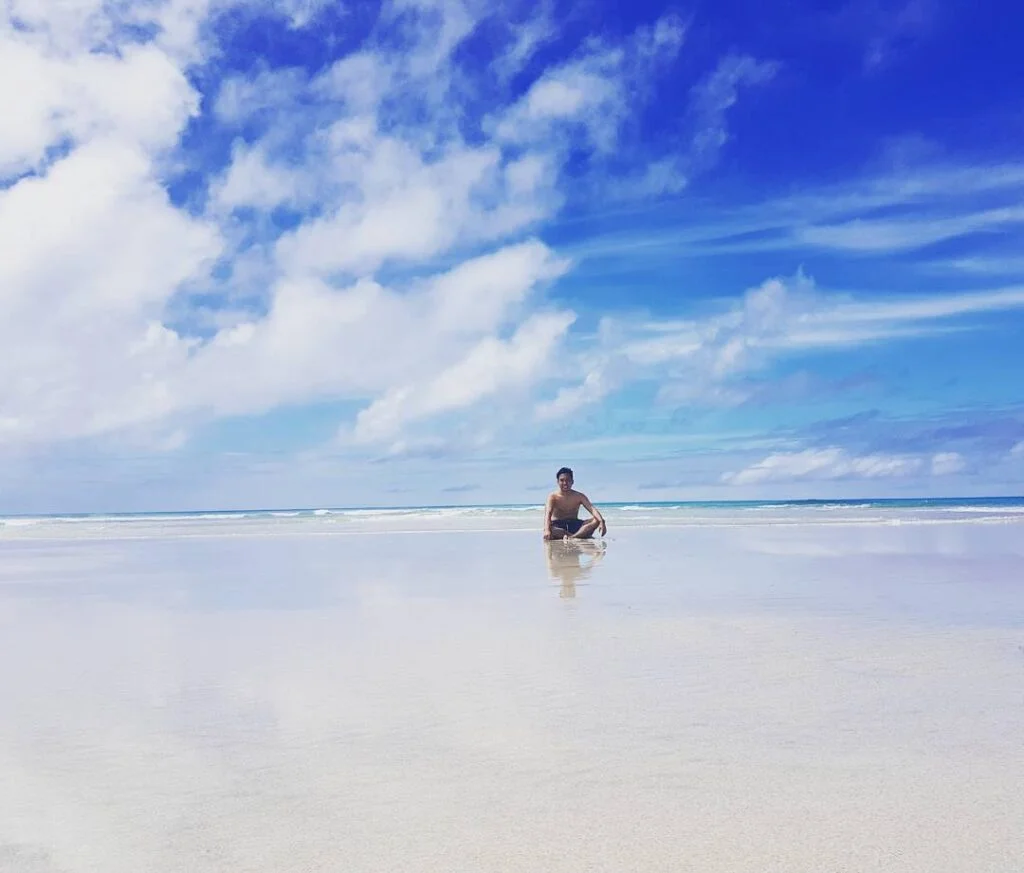
The best time to visit Jomalig Island is strictly during the Philippine dry season, specifically from March to May. During these months, the Pacific Ocean is at its calmest, ensuring a safer and more bearable boat journey. Visiting during the summer also guarantees that the signature golden sands are dry and vibrant, creating that perfect contrast against the turquoise waters for your photos.
If you are planning a trip outside of these months, you need to be extremely cautious. Jomalig faces the open Pacific, meaning weather patterns here are far more volatile than in sheltered bays like Subic or Batangas.
Summer (March – May): The Safest Window
This is the “Sweet Spot.” I highly recommend booking your trip during these months. Not only is the Jomalig Island travel time shorter (often closer to 4 hours) because the boat can cut through smooth waters, but the water clarity is also at its peak. This is when the island is most accessible, and you can enjoy island hopping to spots like Kanaway Beach without fear of sudden squalls.
The “Amihan” Warning (October – February)
I cannot stress this enough: avoid the “Ber” months if you are not a seasoned traveler. During the Amihan season (Northeast Monsoon), the winds slam directly into the eastern seaboard of Luzon.
I once attempted a trip in late January, thinking the weather app looked “sunny.” The sun was out, yes, but the swells were terrifying. The boat ride extended to nearly 7 hours of rocking and rolling. In many cases, the Philippine Coast Guard will cancel trips at the last minute if a gale warning is raised. There is nothing more frustrating than enduring the 4-hour bus ride to Real, only to be stranded at the port for two days waiting for the waves to subside.
Notes on Travel Duration and Sea Conditions
The weather doesn’t just affect safety; it affects your itinerary.
Calm Seas: ~4 to 4.5 hours boat ride.
Rough Seas: 6+ hours boat ride.
Monsoon Season (Habagat): While June to September might have occasional calm days, typhoons are frequent. If a typhoon enters the Philippine Area of Responsibility (PAR), boats to Jomalig are the first to be grounded.
Lakbaypinas Tip: Always check the gale warnings from PAGASA before leaving Manila. This is a non-negotiable step for this trip. Unlike beaches near Manila like Batangas or Zambales, there is no “Plan B” or alternative route here if the waves are too high. If the Coast Guard says no, you are stuck in Real, Quezon.
IV. How to Go to Jomalig Island (2026 Logistics)
Getting to Jomalig is an adventure in itself. Unlike popular tourist spots where you can just drive up to the resort, reaching Jomalig Island from Manila requires a coordinated dance between land and sea transport. For 2026, the logistics remain largely rustic, but reliable if you know the schedule.
Here is your step-by-step guide on how to go to Jomalig Island via the main gateway: Real, Quezon.
Step 1: Manila to Real, Quezon (Bus)
Your journey begins at the Raymond Transportation terminal in Legarda, Sampaloc, Manila (near the Arellano University). This is the primary bus line servicing the Manila-Real-Infanta route.
Target Drop-off: Tell the conductor you are heading to Ungos Port in Real.
Schedule: I strongly suggest taking the 11:00 PM or 12:00 MN trip. The bus ride takes about 4 to 5 hours. Departing at midnight ensures you arrive at the port around 4:00 AM or 5:00 AM, just in time to secure a spot on the morning boat.
Alternative: If you are bringing a private vehicle, you can drive to Real using Waze/Google Maps (search for “Ungos Port”). There are secure parking lots near the port where you can leave your car for a daily fee (usually around ₱150–₱200 per night).
Step 2: Real (Ungos Port) to Jomalig (Boat)
Once you arrive at Ungos Port, you will board a large passenger outrigger boat known locally as a “Lantsa.” These are not fast crafts; they are heavy, wooden vessels designed to withstand open sea swells.
Jomalig Island Ferry Schedule: Boats typically depart daily between 5:00 AM and 7:00 AM. There is usually only one trip per day, sometimes two during peak summer weekends. They operate on a “fill-up” basis, so being early is crucial.
The “Fisherman’s Meal”: A unique feature of the Manila to Jomalig Island route is that your boat fare (₱500–₱600) usually includes a simple meal served during the trip. It’s often rice with a fish or meat dish, eaten strictly with your hands (boodle style) or on paper plates. It’s a humble welcome to the island life!
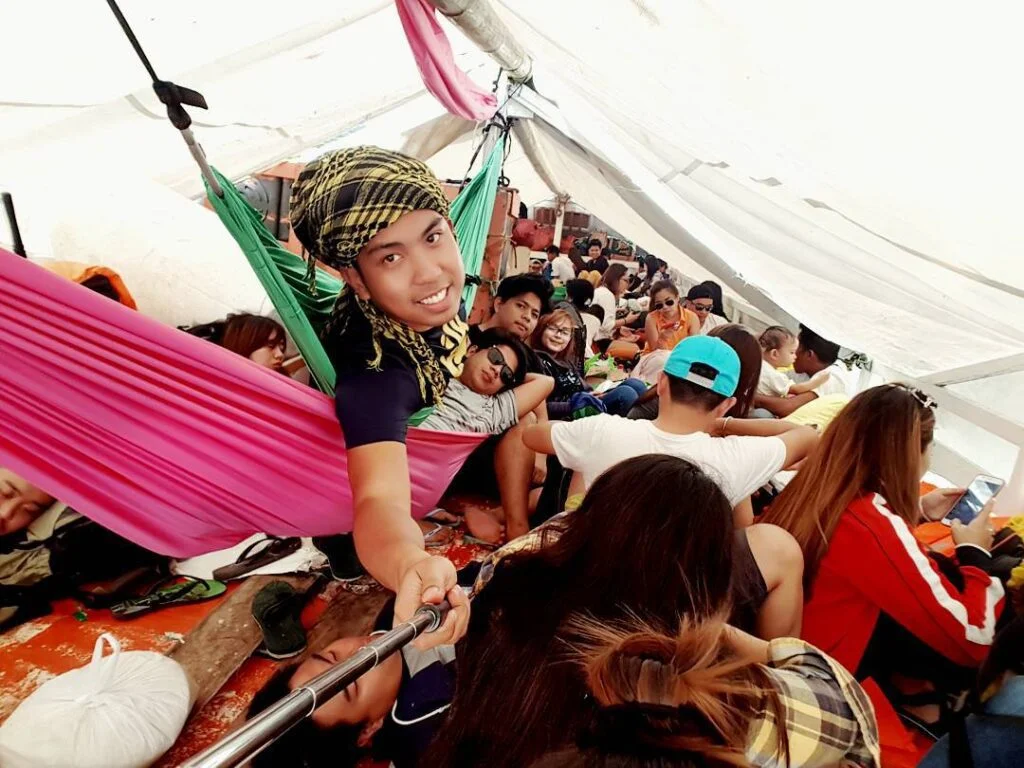
Comfort: Do not expect airline seats. You will likely be lying down on plywood bunks or sitting on makeshift benches. I recommend bringing a malong or a travel pillow to make the 4 to 6-hour nap more comfortable.
Step 3: Arrival & Transfer
The boat will dock at the Port of Jomalig (Barangay Talisoy). However, during low tide, the large boat cannot dock directly at the pier.
Flat Boat Transfer: You might need to transfer to a smaller flat-bottomed boat to get to the shore (approx. ₱50 fee).
Habal-Habal: Once on land, habal-habal (motorcycle taxi) drivers will be waiting to take you to your chosen resort. The fare is standard, regulated by the local tourism office.
Manila to Jomalig Fares & Fees (2026 Estimates)
| Leg | Transport Mode | Est. Cost (PHP) | Notes |
| Manila to Real | Bus (Aircon) | ₱280 – ₱350 | Travel time: 4-5 hours |
| Tricycle to Port | Tricycle | ₱20 – ₱50 | From bus stop to Ungos Port |
| Real to Jomalig | Passenger Boat | ₱500 – ₱600 | Includes simple meal |
| Terminal Fee | Port Fee | ₱10 – ₱20 | Pay at Ungos Port |
| Env. Fee | Tourism Fee | ₱170 – ₱200 | Pay upon arrival in Jomalig |
| Total One-Way | ~₱1,000 – ₱1,200 | Per Person |
Lakbaypinas Tip: If you arrive early in Real (e.g., 3:00 AM), don’t just sit in the dark. There are carinderias (eateries) open 24/7 near the port serving hot lugaw (rice porridge) and coffee. It’s a similar jump-off vibe to the trip for Alibijaban Island in San Andres—fuel up, because it’s a long ride ahead!
V. Where to Stay: Jomalig Island Resorts & Camping
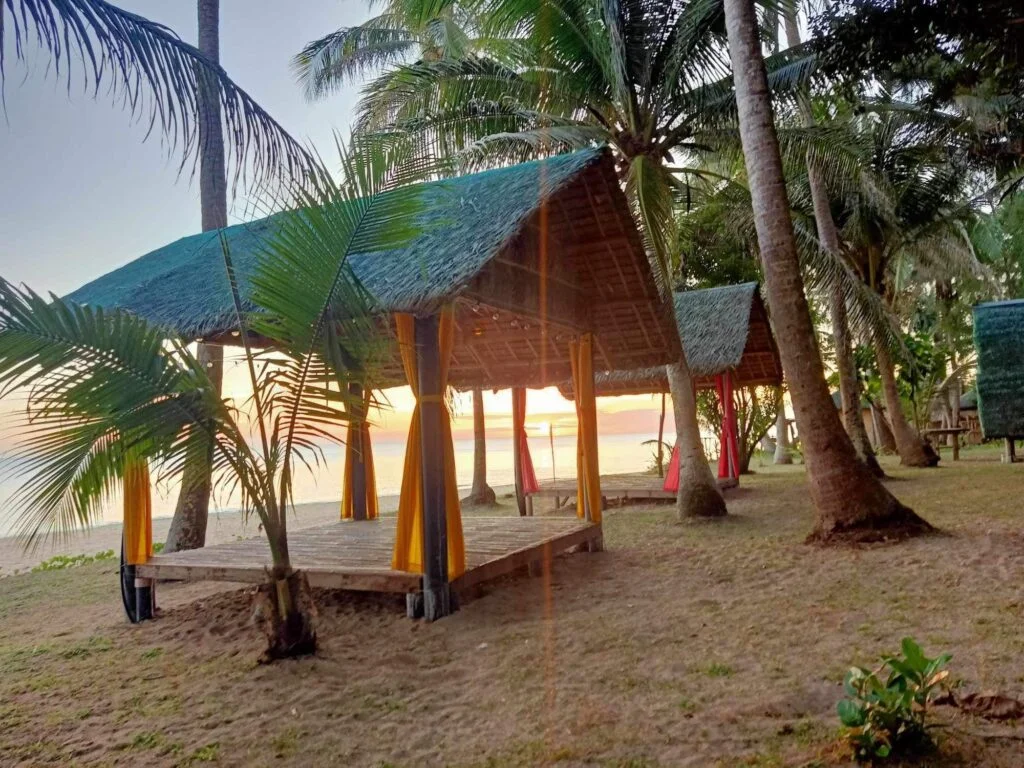
When looking for a Jomalig Island resort, the first rule is to manage your expectations. You won’t find high-rise hotels, air-conditioned lobbies with chandeliers, or room service here. The accommodation landscape in Jomalig is defined by rustic cottages, homestays, and beachfront camping sites. This simplicity is part of the charm—it forces you to disconnect from luxury and reconnect with nature.
Most accommodations are clustered around the main beach area (Salibungot), offering direct access to the golden sands. Electricity in these resorts typically runs on generators and is only available from late afternoon (around 6:00 PM) until midnight or early morning.
Top Resort Picks
While options are limited, there are a few established spots that offer comfort and security:
Jomalig Island Resort: Often considered the “main” resort on the island, this spot offers the most developed amenities. They have concrete rooms with private bathrooms and a spacious dining area. It’s a great choice if you are traveling with family or elders who might not be comfortable with communal restrooms.
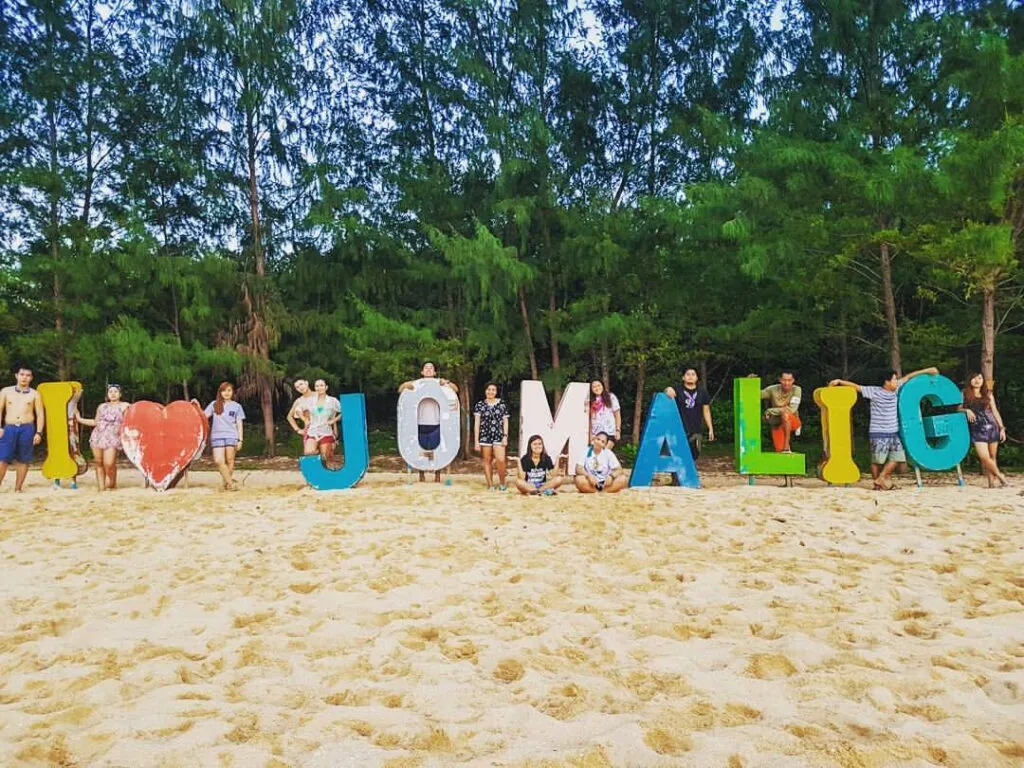
Tejada’s Place: This is a crowd favorite for barkadas (groups of friends). They offer closed cottages and open huts. Their location is prime—right in front of the thickest grove of Agoho trees, providing ample shade even during high noon. The vibe here is very communal and laid-back.
South Pacific Island Resort: A slightly more secluded option, perfect for couples or solo travelers who want a bit more privacy away from the main camping grounds.
Camping: The Real Jomalig Experience
For the ultimate budget-friendly adventure, camping is the way to go. Where to stay in Jomalig Island if you are on a tight budget? Anywhere you can pitch a tent!
Most resorts allow travelers to pitch their own tents for a small fee, usually ranging from ₱150 to ₱250 per tent. If you don’t have your own gear, many locals rent out tents for about ₱300–₱500 per night. Camping on the golden sand, under the canopy of Agoho trees with the sound of the Pacific waves as your lullaby, is an experience that expensive hotels simply cannot replicate.
Lakbaypinas Tip: Bring a hammock! The Agoho trees lining the shore are perfect for afternoon naps, similar to the vibe at the 10 Must-Visit Quezon Province Spots. There is nothing quite like swaying in the breeze after a lunch of fresh grilled squid, watching the ocean turn from blue to gold.
VI. Things to Do & Tourist Spots (Island Hopping)
The best things to do in Jomalig Island revolve around exploring its diverse coastal landscapes. Unlike traditional island hopping in Palawan or Cebu where you board a boat to visit different islets, “island hopping” in Jomalig, Quezon is actually done via land. You will hop on a habal-habal (motorcycle) to traverse the island’s dirt roads and visit various beaches scattered along its coast.
The Habal-Habal Island Tour
This is the heartbeat of the Jomalig experience. Since the island is relatively large and public transport is non-existent between barangays, hiring a local guide with a motorcycle is essential. The standard rate for a whole day tour (usually 8:00 AM to 4:00 PM) is around ₱600 to ₱800 per person.
I love this system because it directly supports the local livelihood. Your driver serves as your navigator, photographer, and sometimes even your cook. Be prepared for a bumpy, dusty, and sun-soaked ride—it is raw adventure at its finest.
Top Spots to Visit
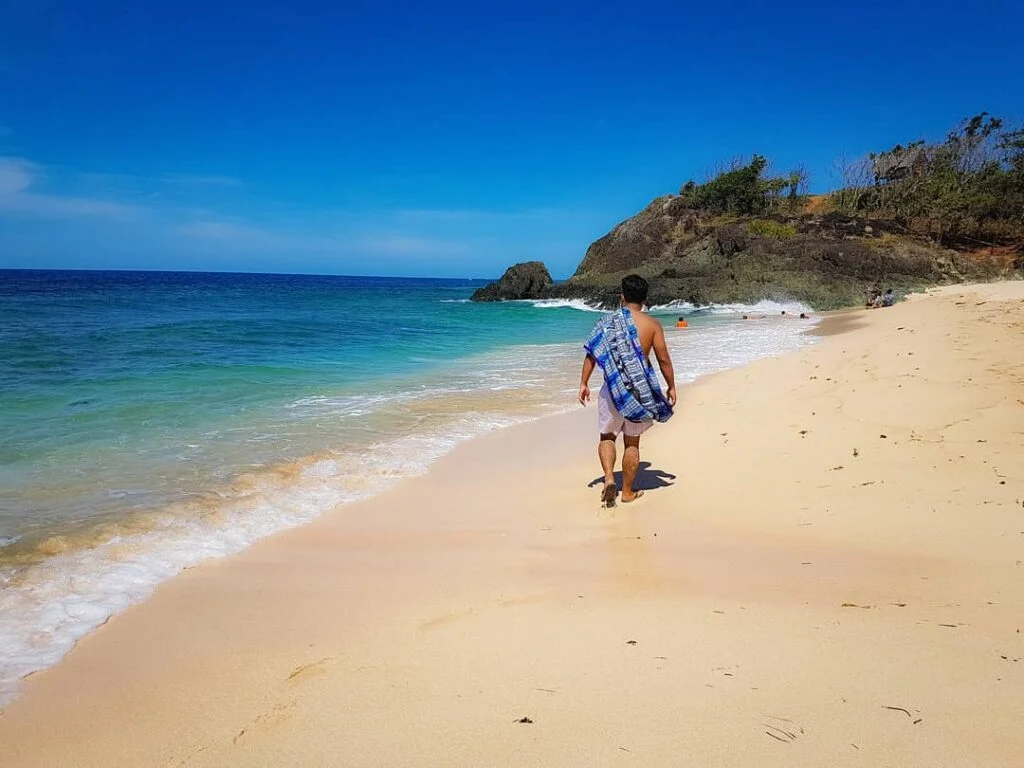
Salibungot Beach (The Golden Sand): This is the island’s crown jewel and likely where your resort will be located. Salibungot is famous for its wide shoreline covered in golden sand that turns a vibrant orange-pink hue during sunset. The beach is lined with hundreds of Agoho trees (similar to pine trees), creating a unique landscape that looks like a cross between a beach and a mountain forest.
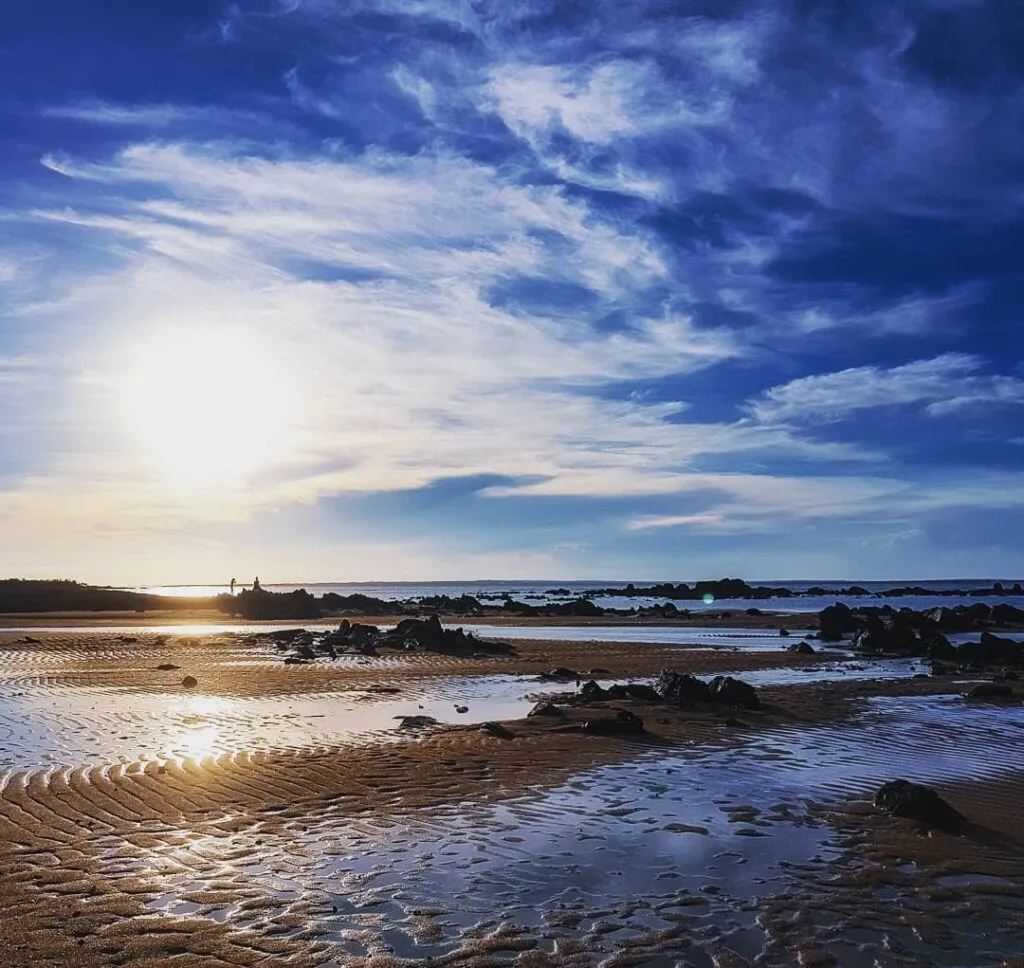
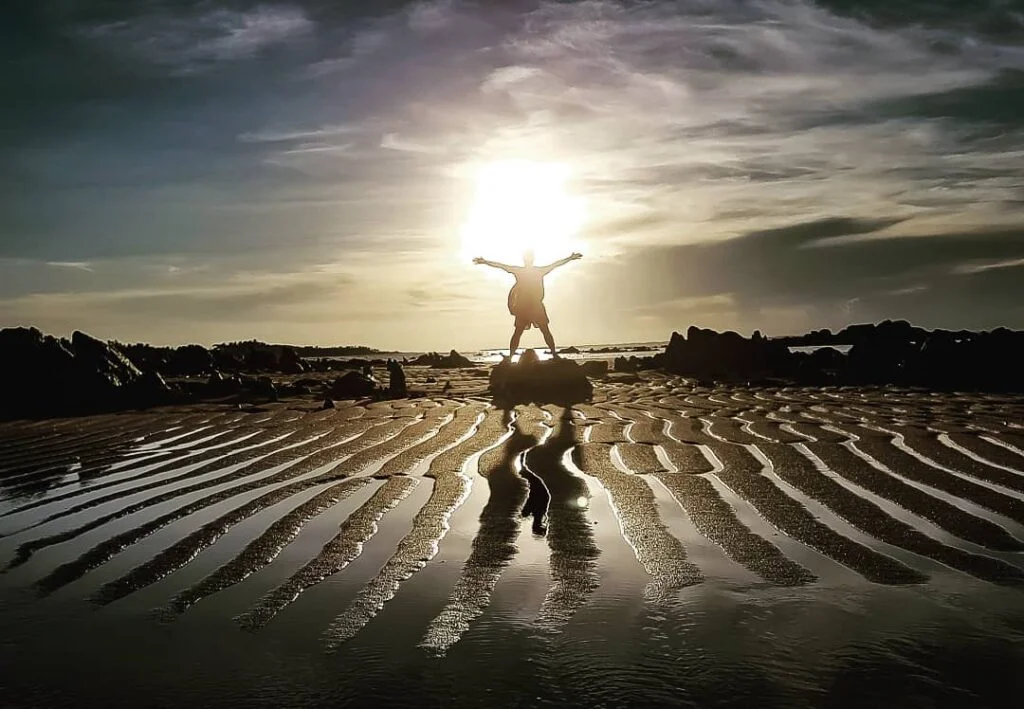
Kanaway Beach: Located on the eastern side of the island, Kanaway offers a dramatic change of scenery. During low tide, vast rock formations and natural sandbars are revealed. It is best known for its “turtle rock” formations and small natural pools where you can just sit and soak. The sand here is more textured, and the waves crashing against the rocks make for epic drone shots.
Little Boracay (Pamana Beach): If you miss the classic white sand, ask your guide to take you here. Locals call it “Little Boracay” because of its finer, whiter sand compared to the rest of the island. The water is often calmer here, making it a great spot for a mid-day swim and a picnic lunch.
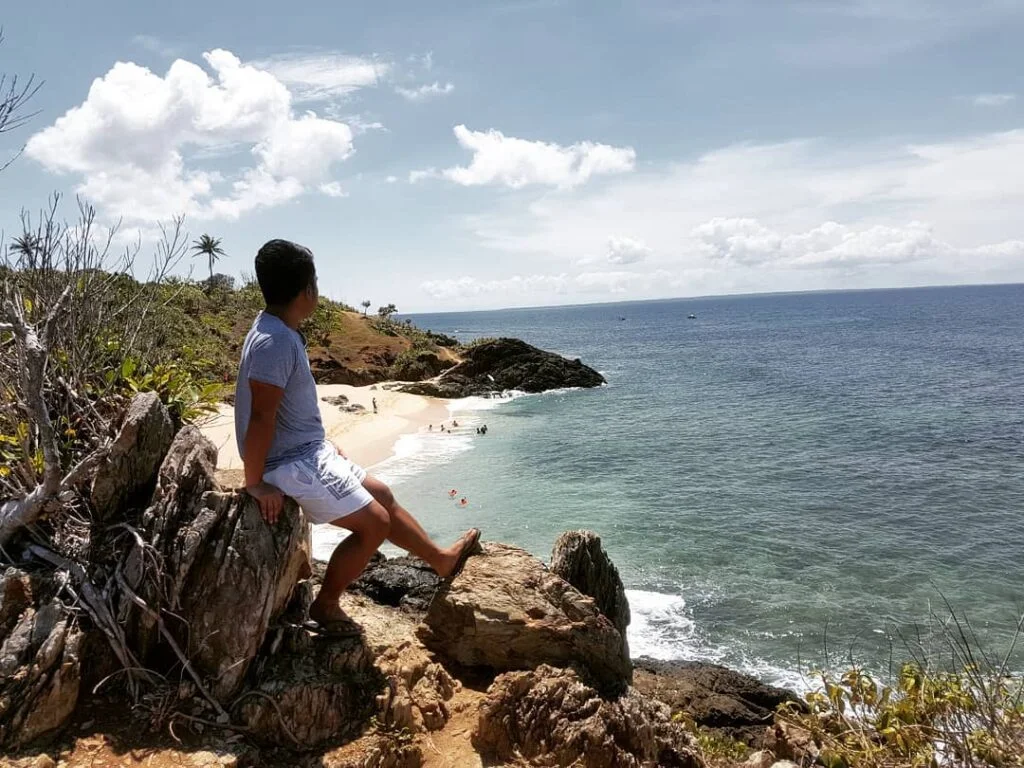
Lingayen Cove: This was my personal favorite stop. It features two twin coves separated by a rock formation. The water here is a stunning shade of turquoise, often clearer than the main beach. It feels very intimate and secluded, perfect for those quiet moments away from the main tourist crowd.
Puno ng Walang Forever (Tree of No Forever): A quirky, must-visit land attraction. It is essentially a solitary tree standing in the middle of a vast, open field. It has become a humorous pilgrimage site for broken-hearted travelers or couples wanting to ironically prove the name wrong. It’s a simple spot, but the panoramic view of the island’s interior is surprisingly peaceful.
Lakbaypinas Tip: Photographers love the Golden Sand at ‘Golden Hour’. The sand literally glows orange/pink, distinct from the white sands of Polillo Island. Schedule your tour so you end up back at Salibungot Beach right before 5:30 PM to catch this magical transformation.
VII. Jomalig Island Itinerary (3D2N DIY)
Planning a Jomalig Island DIY guide can be tricky because your schedule is entirely dependent on the boat’s departure. Unlike destinations with hourly ferries, you have one shot per day to get on and off the island. To maximize your weekend and make the long journey worth it, I highly recommend a 3-day, 2-night schedule.
Here is the itinerary I’ve used on my last three visits. It balances the fatigue of travel with ample time to soak in the views.
Day 0: The Night Trip
10:00 PM: Meet up with your travel buddies at the Raymond Transportation Terminal in Legarda, Manila.
11:00 PM: Board the bus bound for Infanta/Real. Do not take a trip later than midnight, or you risk missing the boat. Sleep through the zigzag roads of Rizal and Laguna.
Day 1: Arrival & The Golden Sunset
04:00 AM: Arrival at Ungos Port, Real, Quezon. Secure your boat tickets immediately. Grab a quick breakfast (hot lugaw or cup noodles) at the port eateries.
05:00 AM – 06:00 AM: Boarding time. Find a comfortable spot on the boat to sleep.
11:00 AM: ETA in Jomalig Island. The boat ride takes about 5 hours on average.
11:30 AM: Transfer to the flat boat (if low tide) and take a habal-habal to your chosen resort.
12:00 PM: Check-in and Lunch. Most resorts can cook a “Paluto” lunch for you if you buy fresh seafood from the catch of the day.
02:00 PM – 05:00 PM: Rest and Recovery. Trust me, you will be tired from the boat ride. Pitch your tent, hang a hammock between the Agoho trees, and nap.
05:30 PM: Sunset Watch at Salibungot Beach. This is the mandatory “Golden Hour” session where the sand turns pink.
07:00 PM: Dinner and Stargazing. Since electricity is limited and light pollution is non-existent, the Milky Way is often visible here.
Day 2: The Grand Island Tour
06:00 AM: Wake up early to catch the sunrise (optional) and have a heavy breakfast.
08:00 AM: Start of the Habal-Habal Island Hopping Tour.
09:00 AM: Explore Kanaway Beach and its rock formations.
11:00 AM: Swim at Little Boracay. The water here is perfect for a midday dip.
12:30 PM: Picnic Lunch at Lingayen Cove. Pack packed meals to save time.
02:00 PM: Photo op at the “Tree of No Forever” (Puno ng Walang Forever).
04:00 PM: Head back to the resort.
07:00 PM: Socials. This is the best time to bond with locals or other travelers over a bonfire (if allowed) or drinks.
Day 3: Departure & Side Trip
06:00 AM: Early breakfast and last swim.
07:00 AM: Buy souvenirs. The best take-home gifts are fresh or dried seafood (dried squid and fish are much cheaper here than in Manila).
08:30 AM: Check out and head to the port.
10:00 AM: Board the boat back to Real. (Note: Boat schedules can vary; sometimes they leave as early as 9:00 AM, so ask the boatmen the day before).
03:00 PM: Arrival at Ungos Port, Real.
03:30 PM: Board the bus or van back to Manila.
Lakbaypinas Tip: On your way back to Manila, if you have energy left, ask the van or bus driver if they pass through Lucban or are willing to drop you off. Dropping by for authentic Pancit Habhab or visiting Kamay ni Hesus for a quick pilgrimage is a great way to break up the travel fatigue before hitting the city traffic.
VIII. Budget Breakdown (Per Person)
One of the most common misconceptions about Jomalig is that it is a “dirt cheap” destination like nearby beaches in Batangas. While the cost of living on the island is low, the logistics to get there are where most of your budget goes.
For 2026, a realistic Jomalig Island budget for a DIY traveler falls between ₱4,500 and ₱5,500 for a comfortable 3-day, 2-night trip. You can do it for less (around ₱3,500) if you are strictly camping, bringing your own canned goods, and traveling with a large group to split food costs.
The Cost of Isolation
Because everything on the island—from soda to gasoline—has to be transported by boat from the mainland, prices for goods are slightly higher than in Real, Quezon. However, seafood is incredibly cheap if you know where to buy it.
Here is a detailed breakdown per person for a standard 3D2N trip.
Table: Estimated 3D2N Expenses (Per Person)
| Category | Item | Cost (Approx) | Notes |
| Transport | Bus (Manila-Real) RT | ₱700 | Aircon (~₱350/way) |
| Tricycle (Town-Port) RT | ₱50 | Shared | |
| Boat (Real-Jomalig) RT | ₱1,100 | ~₱550/way (w/ meal) | |
| Flat Boat Transfer | ₱100 | Ship-to-shore (RT) | |
| Fees | Terminal Fee (Real) | ₱20 | Paid at Ungos Port |
| Tourism/Env. Fee | ₱170 – ₱200 | Paid at Jomalig Port | |
| Entry Fees (Various Spots) | ₱150 | Little Boracay/Coves | |
| Activities | Habal-Habal Tour | ₱600 – ₱800 | Standard day rate |
| Stay | Accommodation (2 Nights) | ₱1,000 | Based on ₱500/night room |
| Food | Meals & Water (3 Days) | ₱1,500 | ~₱250 per meal avg |
| TOTAL | Safe Estimate | ~₱5,320 | Per Person |
How to Lower Your Costs
If you want to hit the ₱3,500 – ₱4,000 range, here is how you hack the budget:
Camping is King: Instead of renting a room (₱500/head), bring a tent. You only pay a pitching fee of ₱150–₱200 (good for the whole stay in some resorts, or per night in others). This instantly saves you ~₱600.
The “Paluto” Hack: Dining ala carte at resorts can cost ₱250+ per meal. Instead, go to the local talipapa (market) early in the morning.
Buy 1kg of fresh squid (~₱250).
Ask your resort to cook it adobo or grilled (Service fee: ~₱150).
Total: ₱400. If you are a group of 4, that’s only ₱100 per person for a feast!
BYO Supplies: Alcohol and chips are expensive on the island. Buy your snacks and “emats” (emergency materials/liquor) in Real, Quezon before boarding the boat.
Lakbaypinas Tip: Bring extra cash! I cannot repeat this enough. There are NO ATMs on Jomalig Island. While some resorts might accept GCash, the signal is too unreliable to depend on it. Calculate your budget, then add ₱2,000 as a contingency fund for emergencies (like getting stranded due to waves).
IX. Essential Travel Tips (Read Before You Go)
Traveling to Jomalig is not like booking a weekend in a commercialized destination. It is a remote island municipality where modern conveniences are a luxury, not a guarantee. To ensure your trip remains a paradise getaway rather than a logistical nightmare, here are the essential travel tips you must know before boarding that bus.
1. The Electricity Reality
If you are a digital nomad hoping to work remotely here, think again. Electricity on Jomalig Island is not 24/7.
Power Schedule: Most of the island relies on a power plant that typically operates only from 6:00 PM to 12:00 MN (sometimes extended to 2:00 AM during summer).
Charging: You only have a small window to charge your cameras, drones, and phones.
The Fix: Bring high-capacity power banks (20,000mAh or more). If you are camping, bring battery-operated fans because it can get humid inside the tents once the resort generator turns off.
2. Mobile Signal & Connectivity
Is there a signal in Jomalig? Yes, but manage your expectations.
Networks: Both Smart and Globe have presence, but coverage is spotty. You might get 4G/LTE near the port or town proper, but it drops to ‘E’ (Edge) or ‘No Service’ in secluded coves like Little Boracay.
Data Speed: Do not expect to stream Netflix or make high-quality video calls. This is the perfect excuse for a digital detox. Upload your Instagram stories when you get back to Real.
3. Cash is King (No ATMs)
This is the most critical tip: There are NO ATMs on Jomalig Island.
Cash: You must withdraw all the money you need in Manila or Real, Quezon before boarding the boat.
GCash: While some local stores or larger resorts might accept GCash, this is entirely dependent on the fluctuating mobile signal. Do not rely on it as your primary source of funds.
Budgeting: As mentioned in the budget section, bring your estimated cost plus a generous emergency fund in cash.
4. Water & Hygiene
Drinking Water: Tap water on the island is generally used for washing and bathing, not for drinking. Most resorts sell mineral water or distilled water (often in blue containers). To be safe and eco-friendly, bring your own large tumblers and buy water by the gallon to refill.
The “Tabo” Life: While some premium rooms in Jomalig Island Resort have showers, most accommodations, especially homestays, utilize the traditional tabo (dipper) and timba (bucket) system. Embrace it!
5. Essential Packing List
Aside from your swimsuit, ensure you pack these items:
Dry Bag: Essential for the boat ride. The waves will splash inside the boat, and you don’t want your gadgets getting soaked before you even arrive.
First Aid Kit: There is a rural health unit, but for headaches, motion sickness (Bonamine is a must!), or small cuts, it’s best to be self-sufficient.
Insect Repellent: The Agoho trees are beautiful, but they can harbor sand mites (nik-nik) or mosquitoes, especially at dusk.
Lakbaypinas Tip: If you enjoy cultural festivals, plan your trip around May 15 to hit the Pahiyas Festival in Lucban, Quezon on your return leg. Since you are already passing through the province, seeing the colorful kiping-adorned houses is a fantastic cultural bonus to your beach trip.
X. Frequently Asked Questions (FAQ)
To wrap up this guide, I’ve compiled the most common questions I get from travelers planning their first trip to Jomalig. These answers are based on the latest 2026 on-ground situation.
1. Is there a direct flight to Jomalig Island? T
echnically, yes, but practically, no. There is a small airstrip on the island, but it is primarily for private chartered planes (often usually 4-seaters or for emergency use). For 99% of travelers, there are no commercial airlines like Cebu Pacific or PAL that fly here. The boat from Real is the only public way in.
2. Can I bring my car to Jomalig Island?
No, you cannot bring your car to the island itself. The passenger boats are not RORO (Roll-on/Roll-off) vessels capable of transporting vehicles. You must leave your car at a secure parking lot near Ungos Port in Real, Quezon. The going rate for overnight parking is around ₱150 to ₱200 per night. The parking areas are generally safe and guarded.
3. Is Jomalig Island child-friendly?
This is a tricky one. The destination is very child-friendly—the water is shallow, the sand is fine, and it’s quiet. However, the journey is tough. The 5-hour boat ride can be grueling for toddlers, especially if the sea gets rough (which happens often). There are no proper toilets on the boat, and the motion is constant. I only recommend bringing children if they are used to long travel or if the weather forecast is exceptionally calm (summer).
4. How long is the boat ride from Real to Jomalig?
The travel time varies significantly depending on the ocean conditions.
-
Calm Seas (Summer): 4 to 4.5 hours.
-
Moderate/Rough Seas: 5 to 6+ hours. Always prepare for the longer duration. Bring entertainment, sleep aids, and snacks.
5. Is there a mobile signal in Jomalig?
Yes, but it is inconsistent. Smart usually has a slightly better signal than Globe in the town proper and main beach areas. You can send texts and make calls, but data for internet browsing is often slow (Edge or 3G speeds). In remote spots like “Little Boracay” or Kanaway, expect zero signal.
6. Are there sharks in Jomalig?
This is a common fear because it faces the Pacific! While the Pacific Ocean is home to sharks, the swimming areas in Jomalig are shallow and generally safe. There have been no reports of shark attacks on tourists in the shallow waters of Salibungot or Kanaway. The biggest “dangers” are usually jellyfish during certain seasons or sand mites (nik-nik).
XI. Conclusion
Jomalig Island is not a destination for the faint of heart, nor is it for the traveler seeking 5-star pampering and seamless convenience. It is a place that demands effort—a badge of honor earned after enduring a long bus ride and conquering the swells of the Pacific Ocean.
But for those willing to make the journey, Jomalig offers a reward that few other places in the Philippines can match. It gifts you with the silence of the Agoho forests, the raw power of the ocean, and that magical hour when the golden sands glow pink under the setting sun. It is a reminder that the most beautiful places are often the hardest to reach, keeping them pristine, rugged, and gloriously wild.
If you are looking to disconnect from the noise of the city and reconnect with nature in its rawest form, Jomalig is waiting for you.
Ready to brave the waves for golden sands? Share this guide with your travel buddies, pack your malong and power banks, and book that bus ticket to Real, Quezon now!



Pingback: Travel Guide – BigBizStuff
Pingback: lakbay pinas – FreeBizNetwork
Pingback: Travel Guide: Explore the Beauty of the Philippines with Exp – BizBackLinks
Pingback: Travel Guide: Explore the Beauty of the Philippines with Exp – A4Everyone
Pingback: Discovering Jomalig Island: A Hidden Paradise - Onedayhit
I don’t even know how I ended up here, but I
thought this post was great. I do not know who you are but definitely you’re going to
a famous blogger if you aren’t already 😉 Cheers!
Thanks for sharing. I read many of your blog posts, cool, your blog is very good.
Very informative Thank you!