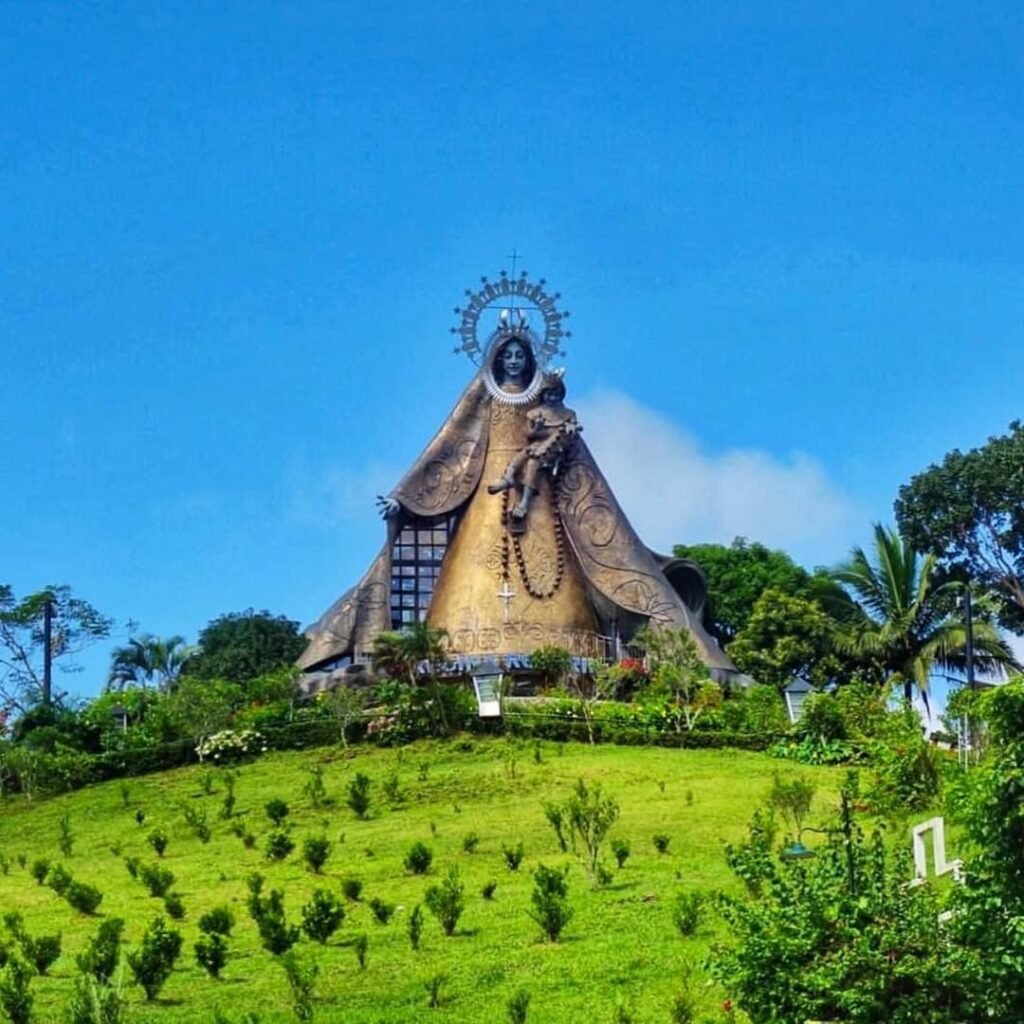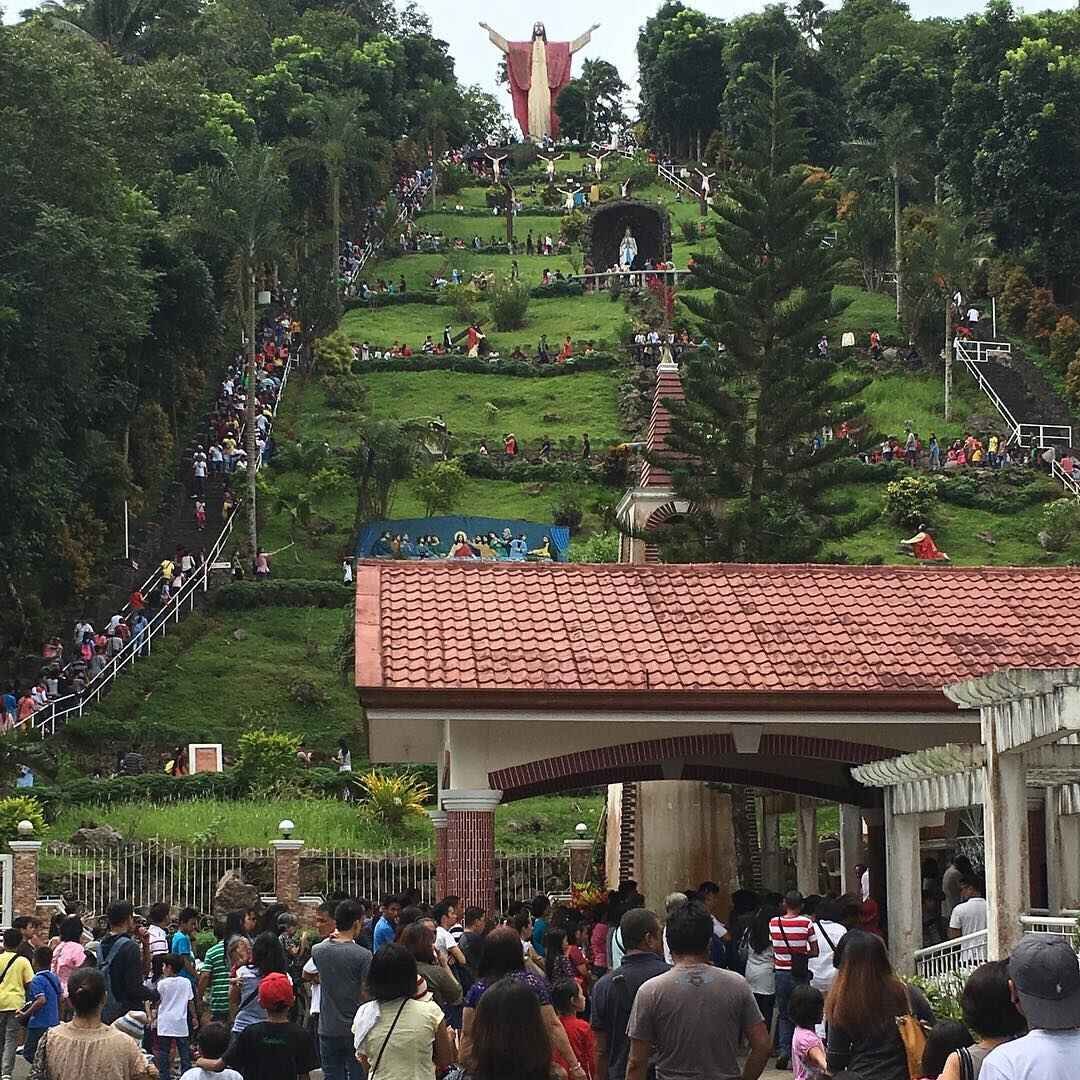
Kamay ni Hesus Healing Church and Shrine sits in Barangay Tinamnan, Lucban, Quezon, about 105 to 120 km southeast of Metro Manila, at the foothills of Mount Banahaw. It is a free-entry Catholic pilgrimage site built around a 305-step climb and a 50-foot Risen Christ statue. It draws devotees to its Wednesday and Saturday Healing Masses.
Millions more visit every Holy Week. I have been going back to this place since long before I started documenting the 69 of the 82 Philippine provinces I have reached since 2015, and my most recent visit was October 2025. This guide reflects what I saw and paid on that trip, updated with the full 2026 schedule.
Key Takeaways
- Free entry. Kamay ni Hesus charges no admission to the grounds, the church, or the hill. Bring cash for donations, candles, and transport instead.
- 305 steps lead from the base grotto to the Risen Christ statue at the summit, lined with 14 life-sized Stations of the Cross.
- Healing Masses are every Wednesday and Saturday at 9:30 AM. Arrive before 9:00 AM or you will be moved to an outdoor overflow area.
- Sunday Masses run at 7:30 AM, 9:00 AM, 10:30 AM, 11:30 AM, and an afternoon slot between 2:30 PM and 4:00 PM depending on the season.
- Open daily from 7:00 AM to 5:00 PM. The grotto and upper sections may close as early as 4:30 PM, so do not arrive in the afternoon expecting a full climb.
- Fares as of October 11, 2026: bus from Manila to Lucena ₱190 to ₱225, jeepney to Lucban ₱25 to ₱30, tricycle to the shrine ₱20 to ₱30. Fares here follow diesel and gas prices.
Table of Contents
Kamay ni Hesus Location and How to Get There from Manila
Kamay ni Hesus is at Barangay Tinamnan, Lucban, Quezon, along the Lucban-Tayabas Road corridor at the foothills of Mount Banahaw. Search “Kamay ni Hesus Healing Church Lucban Quezon” on a map and the pin will place you directly on the highway entrance.
This is the route I use every time because bus departures are frequent and the terminal connections are straightforward.
Buses leave from EDSA-Kamuning, Buendia-Taft, or Araneta Center Cubao. Operators include JAM Liner and JAC Liner. Fare to Lucena Grand Terminal runs ₱190 to ₱225 (as of October 11, 2026); the ride takes 3.5 to 4 hours.
From Lucena Grand Terminal, take a jeepney or mini-van to Lucban for ₱25 to ₱30, a 45 to 60-minute ride. Ask the driver to drop you at the highway entrance in Brgy. Tinamnan to skip the tricycle leg. If you alight at Lucban town plaza instead, a tricycle to the shrine costs ₱20 to ₱30 per person.
Via Sta. Cruz, Laguna (better if coming from the south)
Buses to Sta. Cruz cost ₱120 to ₱140 and take about 2 hours. From Sta. Cruz, a jeepney through Pagsanjan, Cavinti, and Luisiana to Lucban costs ₱38 and takes about 1.5 hours.
By private vehicle
Exit SLEX at Santo Tomas, Batangas, then drive through:
- San Pablo
- Tiaong
- Candelaria
- Sariaya
- Tayabas
into Lucban.
The alternative exit at Calamba through Los Baños is less congested but more winding. Total drive time is 3 to 4 hours. Budget ₱800 to ₱1,200 for round-trip fuel and tolls.
A parking area sits on the lower grounds; a small fee is collected by local attendants. Arrive before 8:00 AM on Sundays and Healing Mass days to get a spot.
For families traveling with elderly members or young children, driving removes the pressure of multiple terminal transfers and is the setup I would recommend.

Mass Schedule and Healing Mass Times at Kamay ni Hesus
Kamay ni Hesus holds daily Mass, with Healing Masses every Wednesday and Saturday at 9:30 AM and multiple Sunday Masses from early morning into the afternoon. The schedule below is the standard 2026 lineup. The Kamay ni Hesus healing church posts schedule changes on its official Facebook page, particularly during Holy Week and diocesan feast days.
| Day | Mass Type | Time |
|---|---|---|
| Monday | Regular Mass | 9:00 AM |
| Tuesday | Regular Mass | 9:00 AM |
| Wednesday | Healing Mass | 9:30 AM |
| Thursday | Regular Mass | 9:00 AM |
| Friday | Regular Mass | 9:00 AM |
| Saturday | Healing Mass | 9:30 AM |
| Saturday | Anticipated Mass | 5:00 PM |
| Sunday | Regular / Healing | 7:30 AM, 9:00 AM, 10:30 AM, 11:30 AM, afternoon (2:30 PM to 4:00 PM, varies by season) |
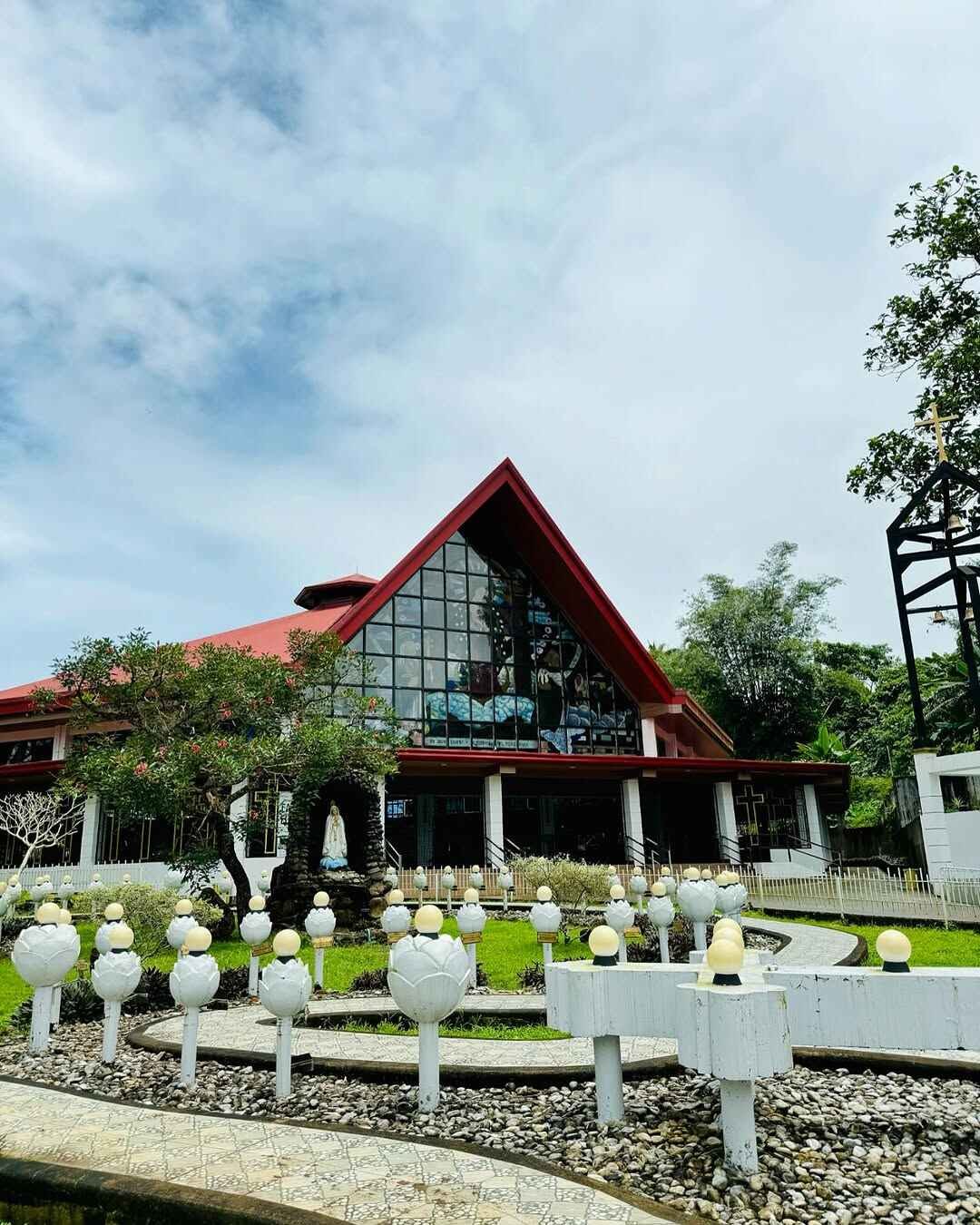
The Healing Mass is the primary draw for most pilgrims. The church fills fast, if you arrive at 9:25 AM, you will likely end up in the outdoor overflow area with no seating and full sun exposure. Aim to be seated inside by 9:00 AM at the latest.
During the Healing Mass, the priest blesses religious items, holy water, and healing oils that many devotees bring from home. The atmosphere is focused and emotionally charged in a way that feels different from a regular parish Mass.
The afternoon Sunday slots run between 2:30 PM and 4:00 PM depending on the liturgical season and are part of the regular Sunday rotation.
How Many Steps Does Kamay ni Hesus Have?
Kamay ni Hesus has 305 steps from the grotto base to the Risen Christ statue at the summit. The climb follows the Via Dolorosa (Way of Sorrow).
Along the ascent are 14 life-sized, vividly painted dioramas of the Stations of the Cross. Each gives you a natural pause point to pray and catch your breath.
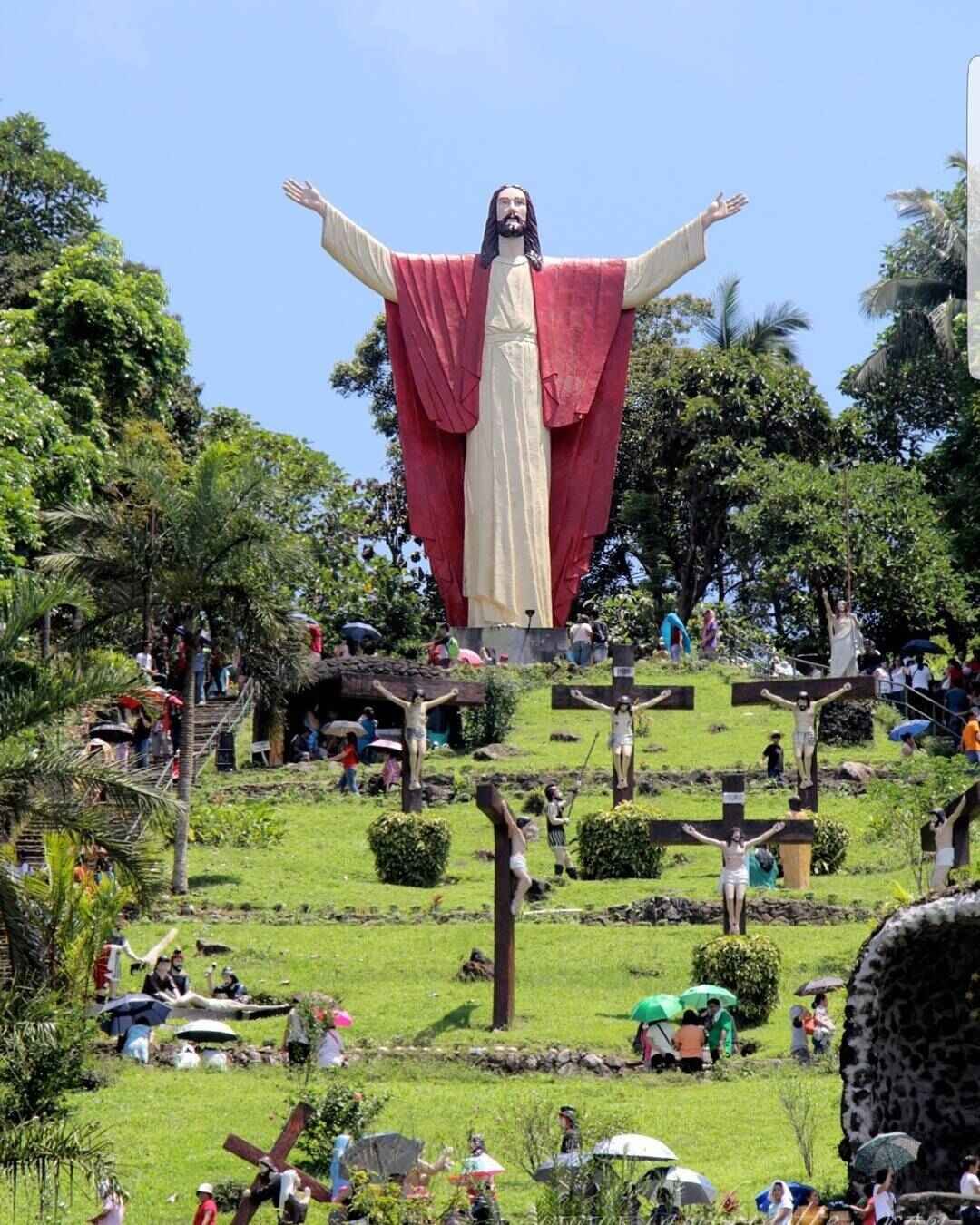
At the top, the 50-foot statue of the Risen Christ overlooks the town of Lucban and the surrounding landscape.
The steps are steep in several sections and fully exposed to the sun from mid-morning onward. I was sweating through my shirt well before the halfway mark on my October visit. Wear shoes with grip, not sandals or slippers.
For elderly visitors or anyone unable to do the climb, the shrine has Rosary Hill (Luklukan ni Maria). It is located near the grotto exit. All the mysteries of the Holy Rosary are presented through life-sized statues on level ground.
Another shrine built around faith and a significant climb is Regina Rica in Tanay, Rizal. It follows a similar format of outdoor Stations of the Cross leading to a hilltop statue.
Is Kamay ni Hesus Entrance Fee Really Free?
Access to the grounds, the church, the steps, and the summit is entirely free. No ticket booth, no gate fee, no bracelet. The shrine runs on donations.
| Item | Estimated Cost |
|---|---|
| Entrance to grounds, church, hill | ₱0 |
| Candles and small offerings | ₱50 to ₱100 |
| Pancit Habhab and snacks on site | ₱50 to ₱150 |
| Tricycle from Lucban plaza (if needed) | ₱20 to ₱30 per person |
| Pasalubong (Lucban longganisa, rosaries) | ₱150 to ₱300 |
| Parking (private vehicle) | ₱50 to ₱100 |
On my October 2025 visit I paid ₱70 for a plate of Pancit Habhab from a stall just outside the exit, eaten off banana leaf the traditional way. The donation box near the main altar is where I leave most of what I set aside for the shrine. Authorized candle and souvenir stalls are positioned around the lower prayer grounds and near the start of the climb.
Carry ₱20, ₱50, and ₱100 bills. Larger notes are hard to break at the small stalls and tricycle stands that surround the complex.

What to Wear and Bring to Kamay ni Hesus
Kamay ni Hesus is a Catholic shrine: shoulders covered, no shorts above the knee, no sleeveless tops. Staff at the entrance will turn you back if you are dressed inappropriately.
Footwear matters more here than at most churches. Wear closed-toe shoes or rubber-soled sneakers with grip.
Sandals and slippers are risky on steep sections, especially when wet. I wore trail shoes on my October visit and was glad for it.
Bring these before you leave home:
- Water, at least one bottle per person. The climb in full sun drains you faster than expected.
- An umbrella or hat for sun on the exposed upper steps, and rain cover between June and October.
- A rosary if you plan to pray each station.
- Small bills: ₱20, ₱50, and ₱100 for tricycles, candles, and food stalls.
- Basic medicine: paracetamol and rehydration salts for anyone prone to heat or altitude discomfort.
The shrine has basic restrooms and shaded waiting pavilions on the lower grounds but no shower facilities. If you are bringing kids, the family travel guide for the Philippines has packing and timing advice that applies directly here.
When Is the Best Time to Visit and What to Expect During Holy Week
The best time to visit Kamay ni Hesus is a weekday morning between 7:00 AM and 9:00 AM, outside of Holy Week and the Pahiyas Festival season in May. You get the cooler air, the quietest version of the climb, and a real shot at a seat inside the church before the morning rush.
Weekends are heavier, with Sunday crowds peaking after the 9:00 AM Mass. Wednesday and Saturday Healing Mass days are also dense, even on weekdays, because devotees come from far away and arrive early.
Holy Week is a different category entirely. During the Easter Triduum, Kamay ni Hesus receives between 3 to 6 million visitors. Good Friday alone drew over 2.4 million in 2025.
Projections reach 8 to 10 million total in peak years. The PNP deploys thousands of officers, bag inspections are conducted at the entry gates, and K-9 units are on site. Gates to the summit are locked at dusk on Good Friday to prevent accidents on the unlit steps.
One crowd reality that most travel guides skip entirely: the Alay Lakad. On Good Friday night, millions of devotees walk the 24-kilometer route from Lucena City to Lucban as an act of penance. This walk makes the road effectively impassable for vehicles from late Thursday night through Good Friday morning.
If you are driving to Kamay ni Hesus during Holy Week, either arrive before midnight on Thursday or wait until Saturday. There is no shortcut through that corridor while the walk is in progress.
The Pahiyas Festival on May 15 also causes major spillover into the shrine. If you plan to attend both Pahiyas and Kamay ni Hesus on the same day, be in Lucban no later than 5:00 AM, by private vehicle.
The history and traditions of the Pahiyas Festival explain what you are walking into, including the house decorations and street crowds. Read that before you try to combine both in one day.
For a quieter pilgrimage, visit on a Tuesday or Thursday in the dry months of December through February. The heat is lower, the steps are less punishing, and the church has room to breathe.
If Holy Week pilgrimages are your interest across the Philippines, the Moriones Festival in Marinduque is the other major Catholic tradition worth knowing about.

Beyond the Steps: Other Attractions Inside the Grounds
The grounds of Kamay ni Hesus cover five hectares, and most of it is outside the main church and steps. First-time visitors often spend all their time on the climb and miss the rest.
Noah’s Ark is a multi-level replica of the biblical ark with sculpted animal pairs at each level’s entrance. Children focus on this more than anything else on the grounds and can easily spend twenty minutes here.
The Garden of Eden is a landscaped area with water features and statues of Adam and Eve, with a small playground. It is cooler than the steps and works well as a rest stop.
The Sea of Galilee is a water feature set within a forested section, quieter and suited to reflection rather than group photos.
Holy Family Park and Angels Hill offer:
- Statuary of saints, angels, and the Holy Family
- Shaded prayer spots away from the main paths
Go here for quiet after the summit crowd.
Rosary Hill (Luklukan ni Maria) is the accessible devotional area near the grotto exit. Elderly visitors and those with mobility limits spend most of their time here.
The KNH Noah’s Ark Pastoral Center also offers overnight accommodation inside the complex, primarily for retreatants and religious groups. Contact them at +63 42 540 2206 or noaharks@kamaynihesus.ph for current rates. Staying overnight is the only way to experience the grounds in early dawn, before the day-trip buses arrive.
Nearby Destinations to Pair with Your Visit
Kamay ni Hesus works well as a half-day stop within a broader Quezon or cross-province itinerary. The most natural pairings are within a short drive of the shrine.
In Lucban town proper, the San Luis Obispo de Tolosa Parish Church is a five-minute drive from the shrine. Built in its current form in 1738, it is a three-story baroque colonial structure. It gives historical context to Quezon’s Catholic heritage.
That context is absent from the modern 2002 architecture of Kamay ni Hesus. Entry is free.
Bukid Amara, about two kilometers from the shrine, is a flower farm that makes a quick, low-effort add-on for photography and a walk through a different kind of grounds.
Across the provincial border into Laguna, Taytay Falls in Majayjay is frequently bundled into Lucban day tours for its cold, clear water sourced from Mount Banahaw. Many organized packages combine the shrine and the falls in a single day. You can read the full logistics at the Taytay Falls travel guide.
For travelers building a multi-province pilgrimage circuit, the Monte Maria Shrine glass walk in Batangas is the closest major religious site in the next province over. It draws a similar devotional crowd.
For the wider Quezon picture, the full Quezon Province tourist spots guide covers the islands and coastal destinations that make sense if you are staying overnight rather than day-tripping.
Kamay ni Hesus FAQs
Yes. Both spellings refer to the same pilgrimage site in Barangay Tinamnan, Lucban, Quezon.
“Hesus” is the Filipino spelling used in all official communications; “Jesus” is what many visitors use when searching online. The shrine, church, steps, and Healing Masses are identical regardless of spelling.
Is Kamay ni Hesus open on Good Friday?
The grounds and church are open during Holy Week, including Good Friday, but hours shift to manage extreme crowds. Bag inspections and police checkpoints are in place throughout the Easter Triduum. Arrive very early or expect significant time in crowd queues.
Can tourists attend Mass at Kamay ni Hesus?
Yes. The church is open to all visitors, Catholic or not.
The expectations are respectful behavior, modest dress, and no flash during Mass. During the Healing Mass, the emotional atmosphere is intense, so be prepared if you are attending as a cultural observer.
How long should I set aside for a visit?
A focused visit covering the church, full climb, and immediate grounds takes about 2 to 3 hours. Adding Noah’s Ark, the Garden of Eden, and Rosary Hill calls for half a day. A full day makes sense only if you are pairing the shrine with Lucban town or a side trip to Taytay Falls.
Is it safe to visit as a solo traveler?
Yes. The grounds are well-attended and crowds are generally orderly outside of Holy Week.
During peak periods, keep valuables in a front-facing bag and hold your phone deliberately on the steps. If you have been to large Catholic festival events before, the crowd management here will feel familiar.
Can children and elderly visitors participate?
Children can do the climb with adult supervision, and Noah’s Ark and the Garden of Eden are good for young kids. Elderly visitors or anyone with joint or cardiovascular concerns should stay on the lower grounds and use Rosary Hill. The steps are not suitable for wheelchairs or anyone with significant mobility limits.
Are there photography rules on the grounds?
Photography is allowed throughout the grounds, on the steps, and at the summit. Inside the church, avoid flash during Mass and be discreet around worshipers.
Along the Via Dolorosa, step aside from people in active prayer. The summit statue draws constant cameras from across Quezon, and the top has enough space for a clear shot without disrupting others.
Is Kamay ni Hesus Worth the Trip from Manila?
Kamay ni Hesus is worth the trip if you are going for:
- The devotional experience
- The physical challenge of the climb
- A day out with family that combines faith, nature, and a Lucban meal
The free entry, the scale of the grounds, and the weight of the Healing Mass atmosphere set it apart from a standard church visit.
It is not the right choice if you are looking for comfort or a relaxed afternoon. The steps are real work. The sun on the exposed sections is unforgiving past 9:00 AM.
On Sundays or Healing Mass days, the crowds compress the experience into something closer to crowd management than contemplation. I have been to dozens of hilltop shrines across the country and Kamay ni Hesus is among the more physically demanding. It is nothing like the full mountain walks of some Lenten penitensya routes in the Visayas.
Who should go: devotees attending the Healing Mass, families with older kids who can handle the steps, and anyone building a Quezon day trip around Lucban food and the