
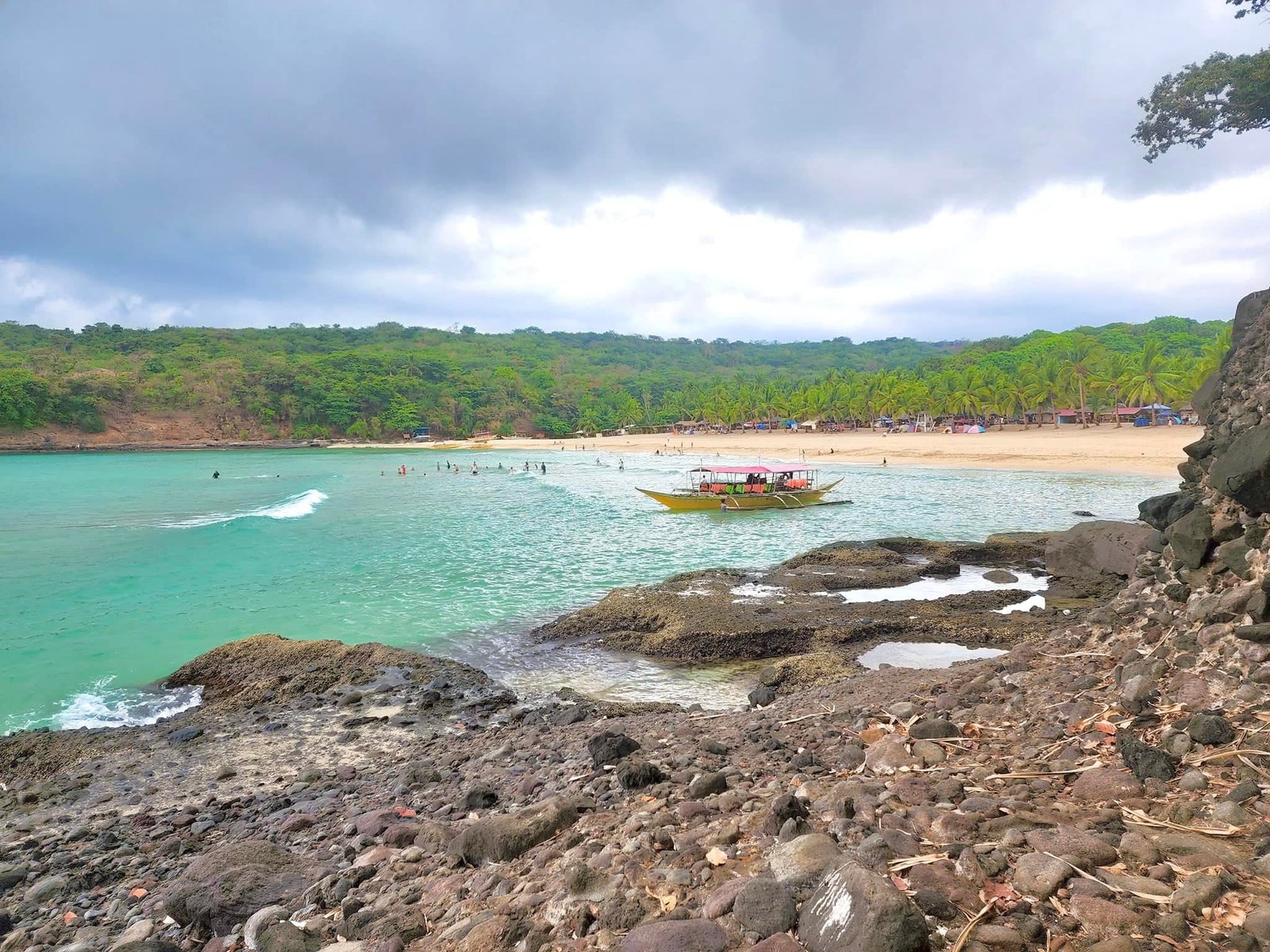
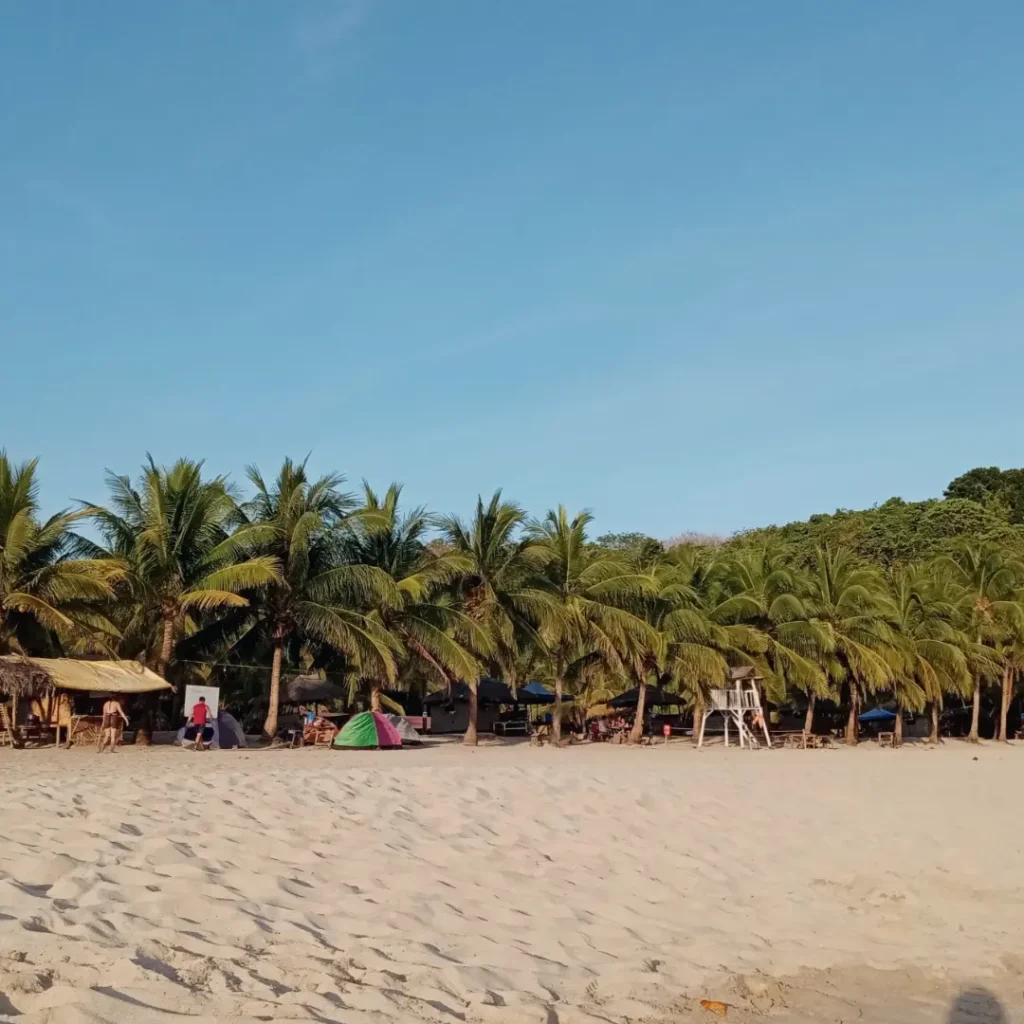
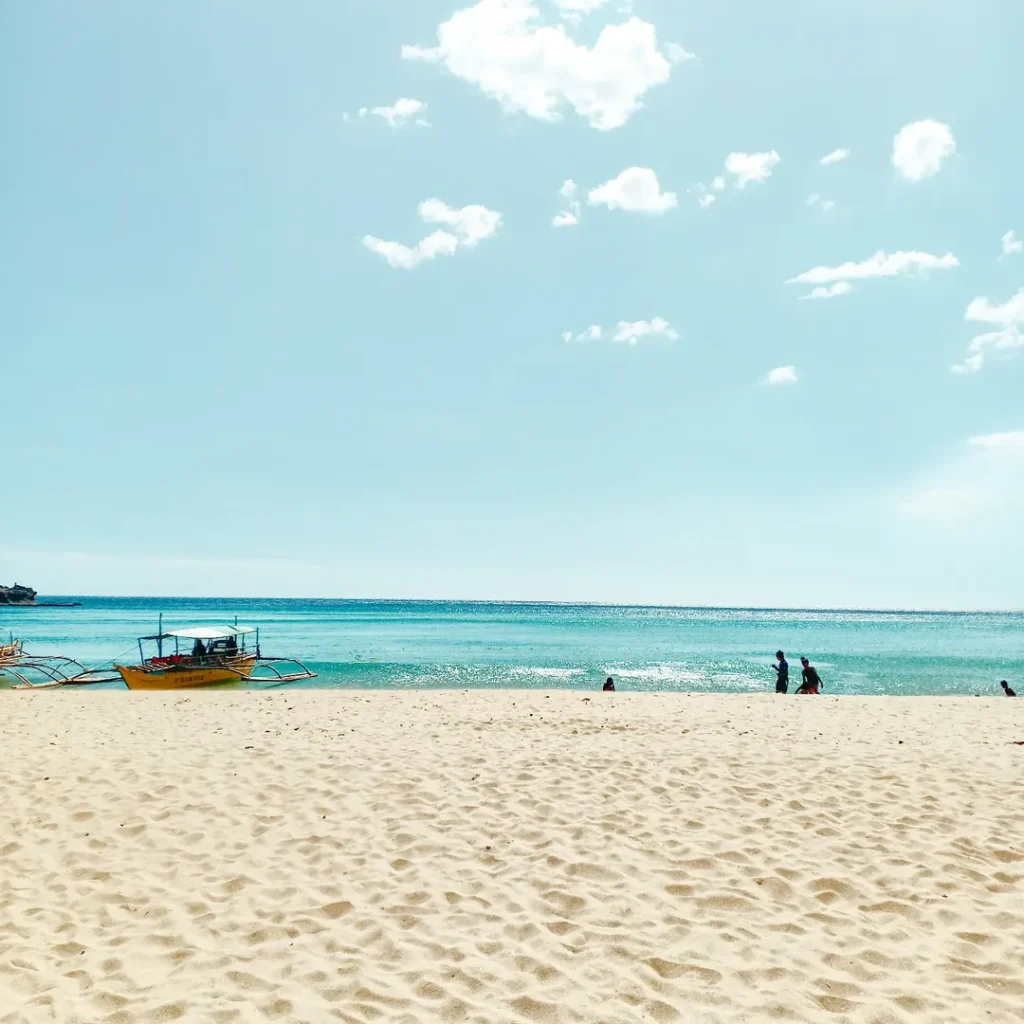
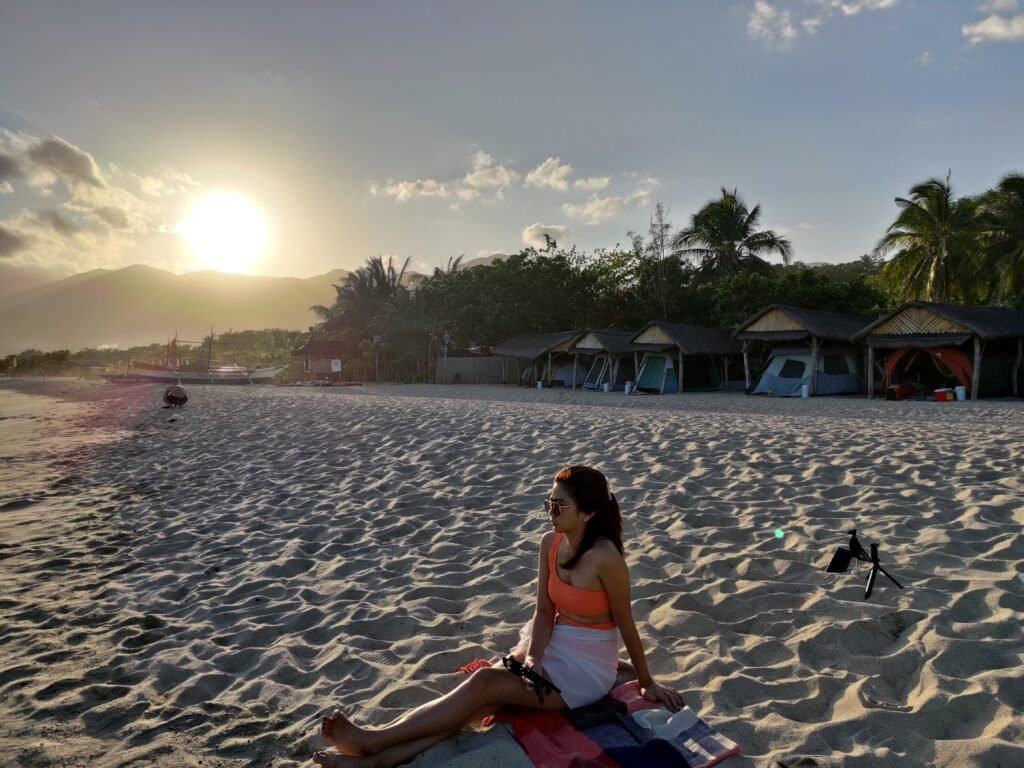
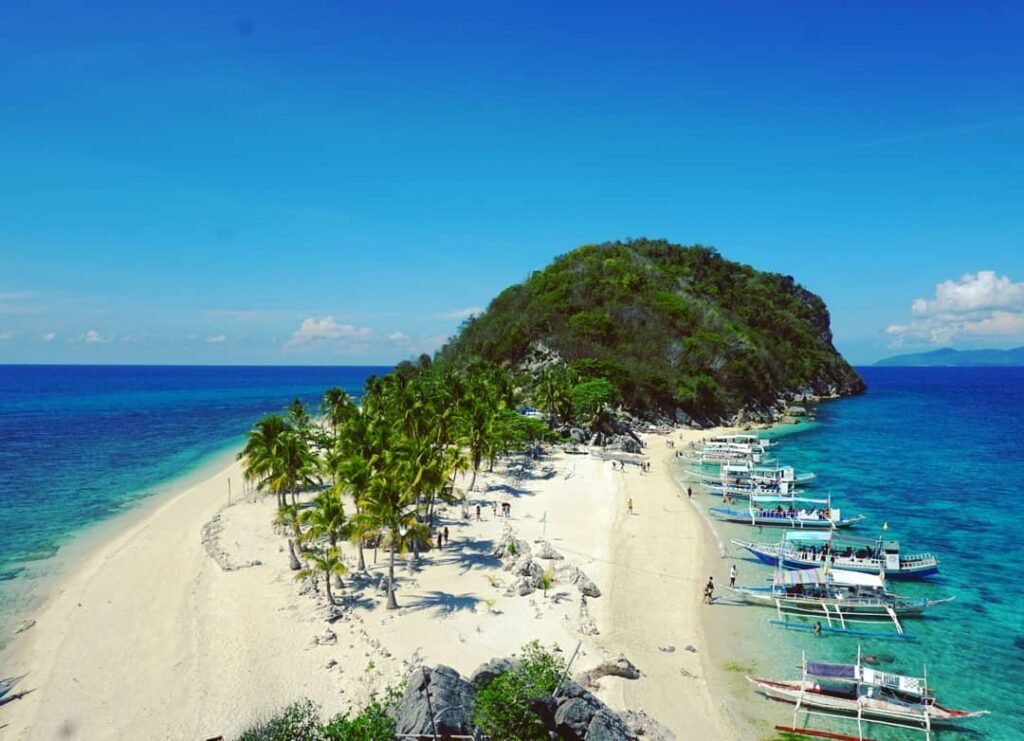
Laki Beach in Mariveles, Bataan is a boat-access beach in Barangay Balon, reached from the Porto del Sol jump-off. There is no road to it, no resort check-in, and no ferry schedule. You charter a private outrigger, log your name in a manifest, and the boat drops you on cream-to-white sand backed by sea cliffs.
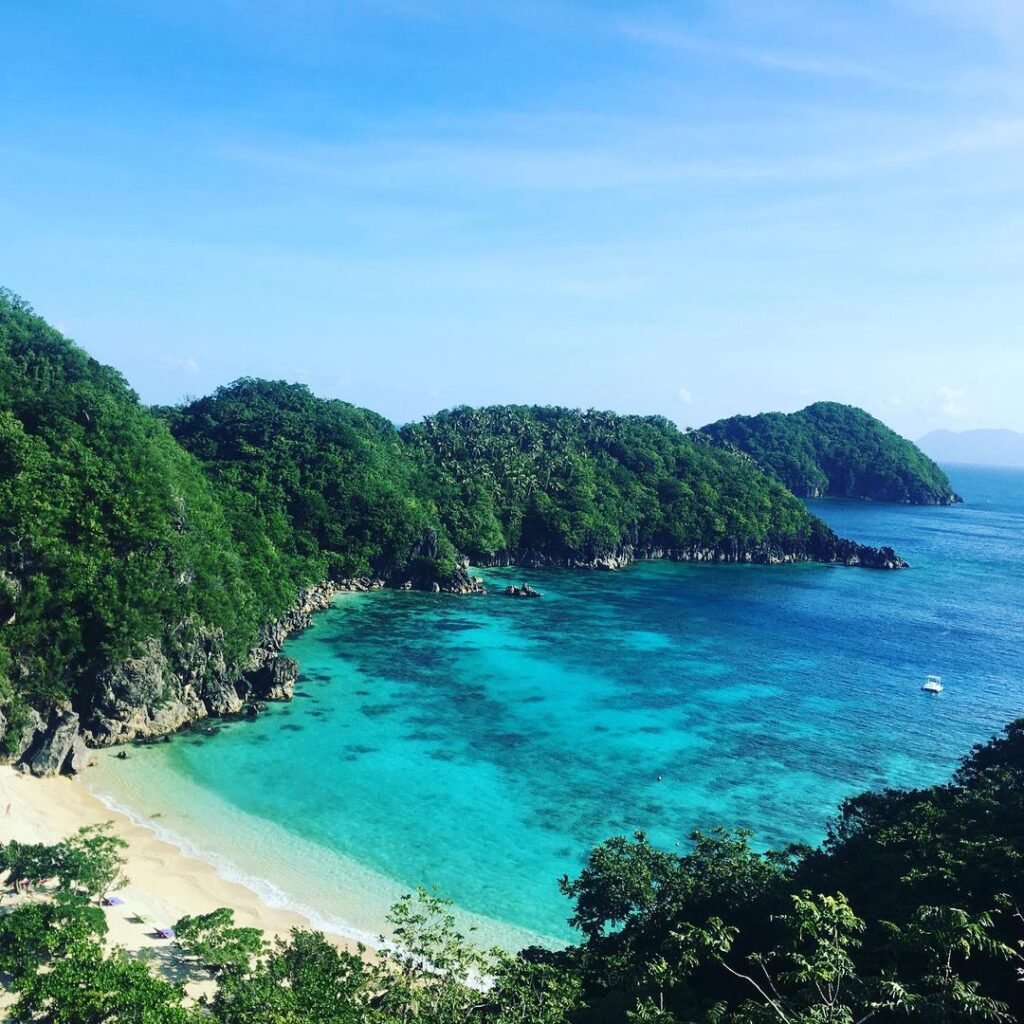
I have covered 69 of the 82 provinces since 2015, and Mariveles is one of the places that keeps rewarding the effort of getting there. The water is clear and turquoise. The Five Fingers coves beside it are some of the most dramatic coastal formations near Manila.
The whole trip costs less per head than a Palawan flight if you go with the right group. My most recent visit was in September 2026. This guide reflects what I found.
What Laki Beach is not: a resort. No electricity, no Wi-Fi, no restaurant, no lifeguard, and only three to four bucket-flush comfort rooms for the entire beach.
Weekend crowds in summer are heavy. If that is a dealbreaker, Camaya Coast is twenty minutes away by road and offers everything Laki Beach deliberately does not.
Key Takeaways
- Entrance fee is ₱300 per person for a day tour and ₱400 per person for an overnight stay. Tent pitching is free if you bring your own gear.
- Boat charter costs ₱2,000 to ₱2,500 for a day tour or ₱3,000 to ₱3,500 overnight, per boat (capacity 5 to 10 passengers). Solo travellers joining an existing group pay roughly ₱250 as a boat share.
- The jump-off is Porto del Sol in Barangay Balon, Mariveles. From the Mariveles bus terminal, a tricycle ride costs ₱75 to ₱150 for the whole vehicle, not per person.
- Best months are December to May. June to November brings habagat winds and Philippine Coast Guard voyage cancellations that can strand you on the mainland regardless of your booking.
- Sea urchins are real and abundant, especially at the Five Fingers stops. Aqua shoes are not optional.
- Buy all food, water, and ice in Mariveles town before you head to Porto. The sari-sari store at the beach charges inflated prices and has no refrigerated stock.
Table of Contents
Is Laki Beach in Bataan Worth It?
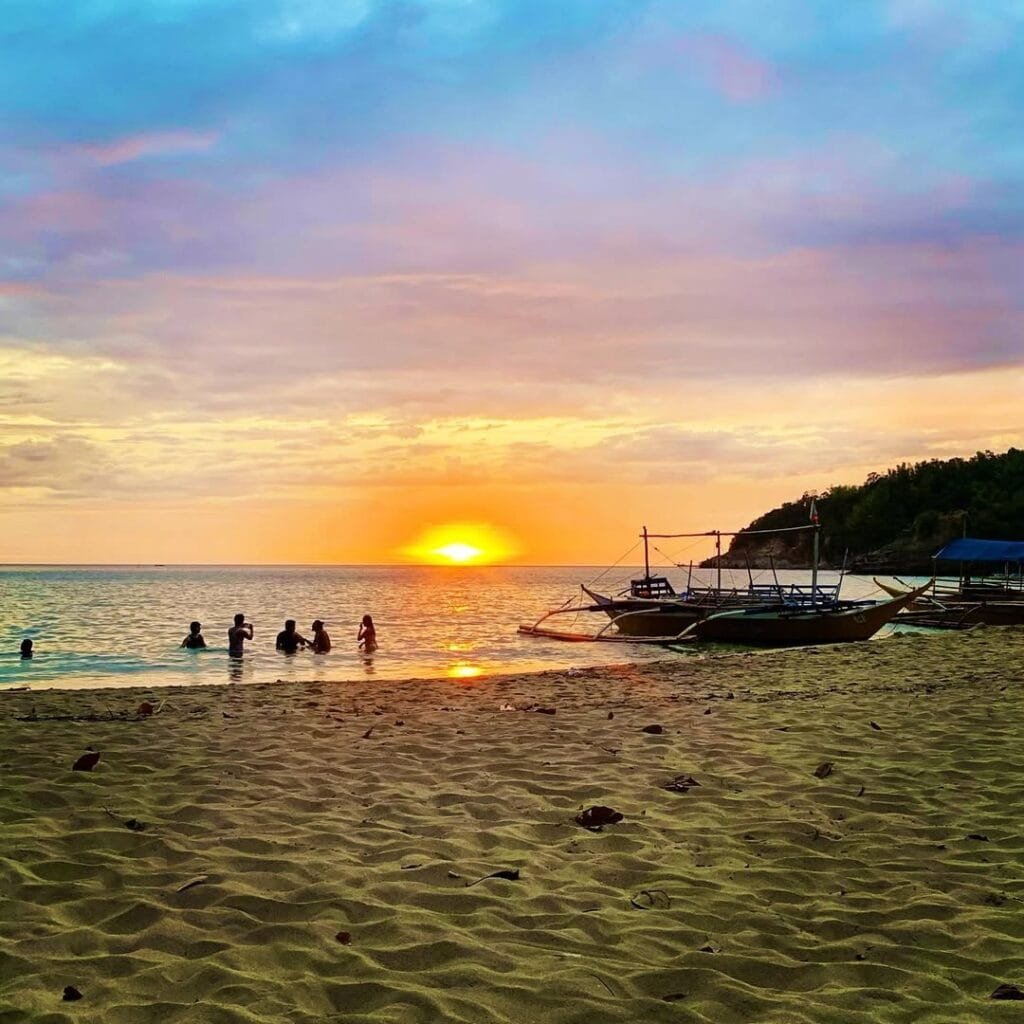
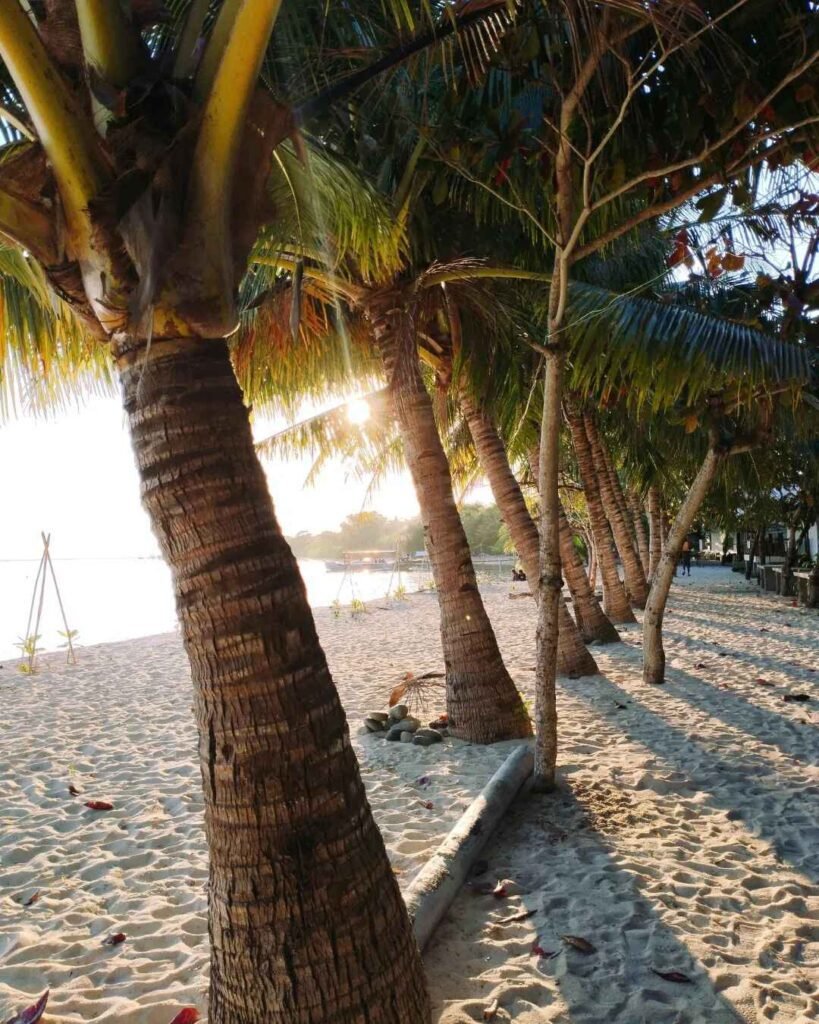
Laki Beach is worth it if you go prepared for a raw, off-grid camping and island-hopping trip, not a beach resort stay. The sand is fine and cream-to-white.
The water is clear. The Five Fingers circuit alongside it makes the outing more dramatic than any other beach within a similar distance from Manila.
The plain version:
- The comfort rooms are basic bucket-flush only
- The signal drops to nothing once you are on the water
- On a summer weekend the beach gets packed wall to wall.
The facilities have not improved meaningfully since the site became popular. What has improved is road access to Mariveles, which makes the journey faster than it used to be.
Who should skip it:
- Travellers who need reliable power for medical devices
- Anyone who cannot manage rocky terrain in aqua shoes
- Families with very young children who have no experience on open-water outrigger boats
- Anyone booking in habagat season without checking PCG gale warnings first
Who it is for:
- Barkadas that can split boat costs
- Solo adventurers willing to find a group at the market
- Campers comfortable with pack-in pack-out rules
- Anyone who has already done the usual beach circuit, including the kind of surf-town strip scene at Urbiztondo Beach in La Union, and wants something with more texture
The Five Fingers cliffs and coves beside it are the detail that separates Laki Beach from every other affordable beach near Manila. Skipping Five Fingers to just sit on the sand is a trip half-taken.
How Much Does Laki Beach Cost?
Laki Beach entrance fee is ₱300 per person for a day visit and ₱400 per person for an overnight stay. These fees are paid directly to the landowner’s caretakers at the beach, separately from whatever you paid for the boat.
The boat is almost always the biggest single expense, and it is charged per vessel, not per passenger. That makes group size the most important budget variable on this trip.
| Expense | Day Tour | Overnight |
|---|---|---|
| Entrance fee (per person) | ₱300 | ₱400 |
| Boat charter (per boat, 5–10 pax) | ₱2,000–₱2,500 | ₱3,000–₱3,500 |
| Boat share (solo, joining a group) | ~₱250 | varies |
| Tent pitching (own tent) | free | free |
| Tent rental (beach unit) | ₱300 | ₱300 |
| Open-air cottage | free | free (first come) |
| Nipa hut / bahay kubo | n/a | ₱1,200/night |
| Overnight parking at Porto | n/a | ₱100/vehicle |
Joiner tours through travel agencies pool strangers onto one boat. A day joiner runs roughly ₱999 per head inclusive of boat and guide.
An overnight joiner runs ₱1,699 to ₱2,099. The trade-off is a fixed itinerary and strict departure times, but for a solo traveller who cannot find a group, it works.
The DIY approach for a solo traveller with no group is harder. The entire ₱2,500 day-tour boat falls on one person unless you find companions. My tip from September 2026: walk around the Mariveles market early morning and ask groups who are clearly prepping for a beach trip whether they have space on their boat.
It is a normal thing to do here and it cuts your costs dramatically. Nobody I have seen do it has been turned away.
For a barkada of five splitting an overnight boat, the per-head boat cost drops to ₱700. Add ₱400 admission, round-trip bus from Manila (₱560 to ₱630), tricycle transfers (₱75 to ₱150 per vehicle split among the group), and food I packed myself. The realistic total lands around ₱2,820 per person.
For a solo DIY traveller with no group, expect roughly ₱4,900. That includes the full ₱2,500 boat, admission, transport, and food.
Showers are not available at the beach. At Porto on the way back, households near the jump-off offer freshwater showers for about ₱20 per person, which most people take before boarding the bus home.
Senior and PWD discount rates at the beach are not posted on the rate board. Ask the caretaker directly on arrival, or contact the Mariveles Municipal Tourism Office before your trip.
How to Get to Laki Beach in Bataan from Manila
Getting to Laki Beach from Manila is a three-leg journey: bus to Mariveles, tricycle to Porto del Sol, then boat to the beach. There is no single direct transport and no ferry walk-up counter.
Bus from Manila to Mariveles
Genesis Transport and Bataan Transit both serve the Manila-to-Mariveles route from multiple terminals. The route uses NLEX and SCTEX, then the Roman Superhighway south through Hermosa, Balanga, and Limay into Mariveles.
Pasay
- Operator: Genesis
- First Trip: 1:00 AM
- Last Trip: 7:30 PM
- Fare: ₱280–₱315
Avenida
- Operator: Genesis
- First Trip: 4:00 AM
- Last Trip: 7:30 PM
- Fare: ₱280–₱315
Cubao
- Operator: Bataan Transit
- First Trip: 10:00 PM
- Last Trip: early evening
- Fare: ₱280–₱315
San Fernando, Pampanga
- Operator: various
- First Trip: 2:29 AM
- Last Trip: 10:59 PM
- Fare: ₱250–₱420
Travel time from Manila is 3.5 to 5 hours depending on NLEX traffic. For a day tour, the 1:00 AM Pasay dispatch is the one to take. It gets you to Mariveles around 5:30 to 6:30 AM, which leaves time to buy provisions before boats depart around 8:00 AM.
Travellers coming from Bulacan have no direct bus. Transit through San Fernando, Pampanga, or Cubao first. By private vehicle via Plaridel Bypass and SCTEX, the drive from Bulacan takes roughly 2.5 hours.
From Mariveles bus terminal to Porto del Sol
Tricycles outside the terminal go to Porto (also called Barangay Balon or Porto del Sol). The ride takes 15 to 20 minutes. The tricycle fits four to five passengers.
Before you board the tricycle, agree on whether the fare quoted is for the whole vehicle or per person. The standard range is ₱75 to ₱150 for the vehicle. Groups of four or five split it easily; solo travellers sometimes pay ₱75 to ₱100 flat.
Buying provisions: do this before the tricycle
Stock up on food, water, and ice at the Mariveles market or nearby stores before heading to Porto. Nothing perishable and nothing cold is available at the beach at normal prices. Do not skip this step.
Boat from Porto del Sol to Laki Beach
At Porto, boat operators and coordinators manage charters from the waterfront. Walk-ins are accepted but on peak summer weekends, boats fill fast. For guaranteed departure, contact Kuya Tikboy at 09075946138 or Ate Melca at 09971074378 to reserve in advance.
Before boarding, you log your name in the passenger manifest. This is a MARINA requirement, not optional paperwork. Bring a valid ID.
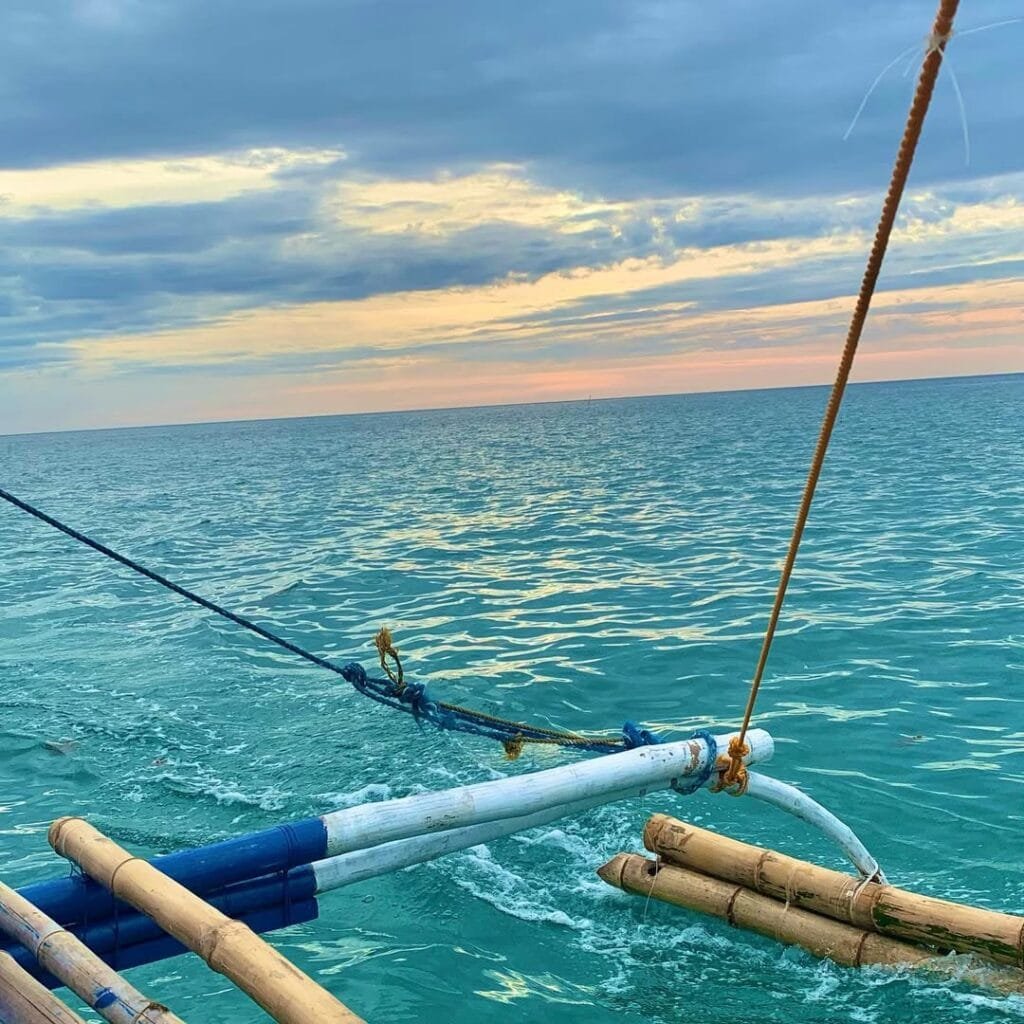
Every passenger wears a lifejacket from the moment of boarding until arrival. The boatman enforces this; the Philippine Coast Guard monitors compliance and can fine operators who do not.
The crossing to the first Five Fingers stop takes roughly 25 minutes. The full circuit before reaching Laki Beach runs 3 to 4 hours.
If you want to compare this kind of boat-access beach to other DIY-friendly coastlines near Luzon, the full guide to Nagsasa Cove in Zambales covers a similar pack-in, charter-boat setup with different fees and a different crowd profile.
What Is Five Fingers Bataan and What Happens at Each Stop?
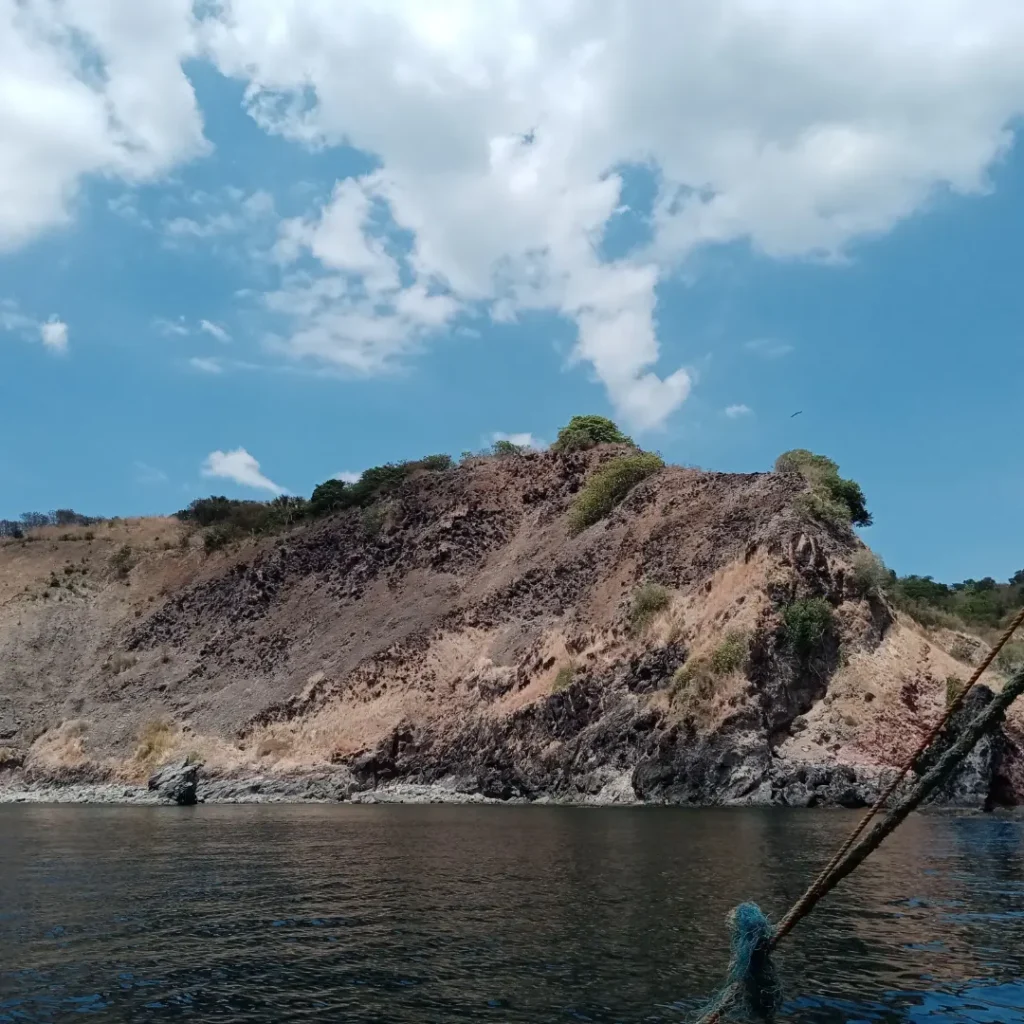
Five Fingers Bataan is a series of coves, cliffs, and rock formations along the Mariveles coastline, named for their aerial resemblance to an outstretched hand. The boat circuit covers five main points and several additional stops between them. Most day tours start here first and end at Laki Beach.
The circuit takes 3 to 4 hours and is physically demanding. Boats move through open water, you swim in open coves, some stops involve rocky terrain, and the sun is direct and relentless from 10:00 AM onward. Sea urchins are present at multiple stops.
On my September 2026 visit, guides at every rocky entry point reminded us to check the shallows before stepping. I saw at least three people in flip-flops at Naiclec Point who should not have been.
Cochino’s Point (The Thumb)
The first stop, about 25 minutes from Porto. A short 20-minute trek leads to cliff-top views of the West Philippine Sea and the silhouette of Mount Mariveles inland.
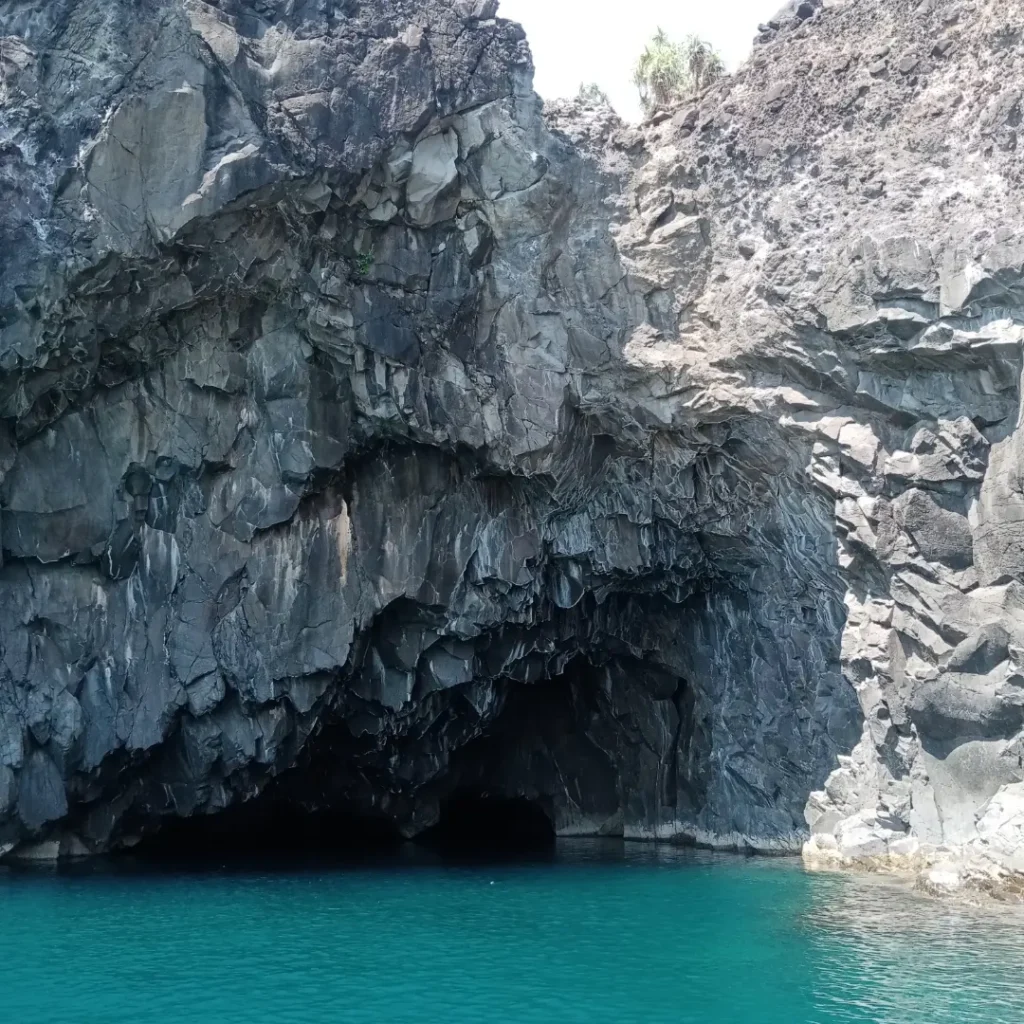
The name comes from the Spanish word for pig because the landmass resembles a resting pig from above. Tidal caves below are swimmable, though the terrain is uneven.
Talaga Point and Natsu Lagoon (The Index Finger)
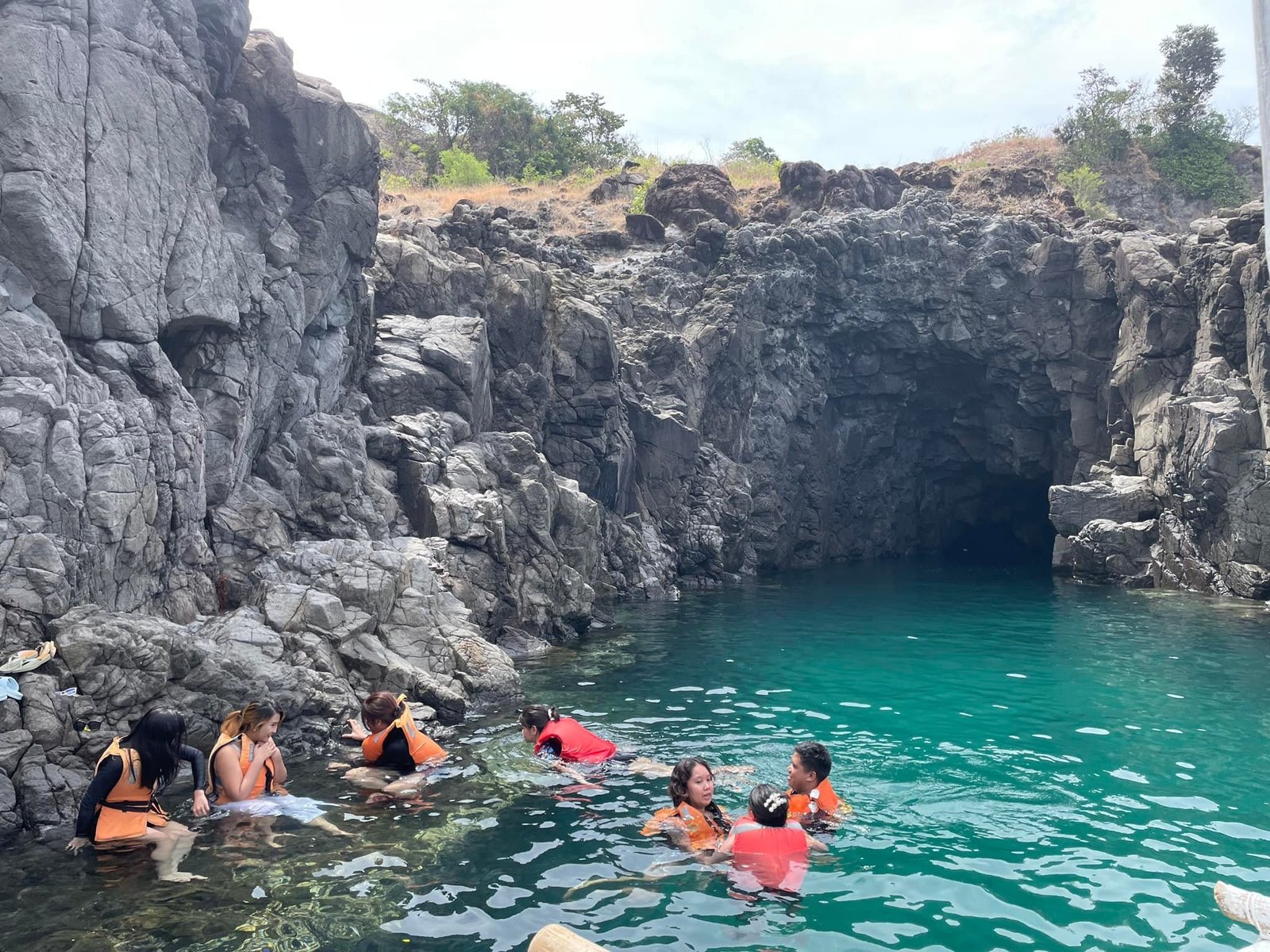
Apatot Cove here has shallow, calm water suited to snorkeling. The highlight is Natsu Lagoon, named after the Japanese word for summer, bordered by limestone and volcanic rock.
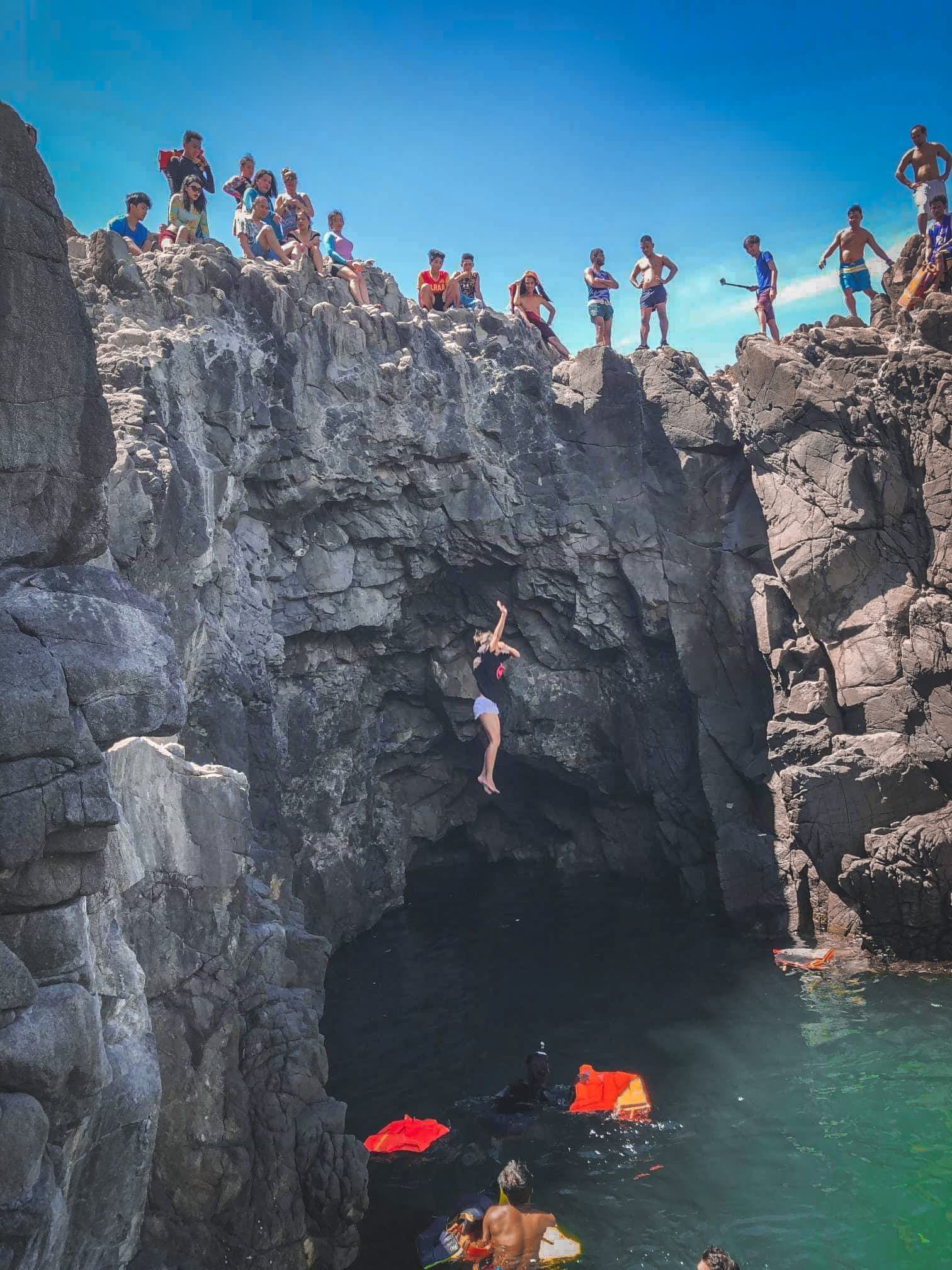
Two cliff jump heights are available: 10 feet and 15 feet. Sea urchins and jellyfish appear seasonally, most often from March to May.
Hornos Point / Puntang Mahaba (The Middle Finger)
The longest of the five formations. The boat passes Pebble Cave inside Nagbayog Cove and Nagmandala Rock, where erosion has cut the cliff face into geometric layered sections. The water here is notably calm and clear, which makes it one of the better photography stops on the circuit.
Naiclec Point (The Ring Finger)
This stop has the highest concentration of sea urchins on the circuit. The rock formations have eroded into abstract shapes, some resembling frogs, and the submerged outcroppings are everywhere.
Aqua shoes are not optional here. An urchin spine in the foot is a painful problem to manage hours from the nearest clinic.
Longos Kawayan (The Pinky Finger)
The final formation is popular for pre-nuptial photography because the submerged rocks create an optical illusion of walking on water. Do not climb the peripheral limestone structures. The rock is brittle and local boatmen specifically warn against it.
Between the fingers: the stops worth naming
Three additional sites sit between the main formations and define the adventure side of the trip. Tinanlakan Cliff is the cliff diving spot, with a 40-foot drop into a deep lagoon. Nagbintana Arch, also called the Kryptonite rock or Dragonstone, is a natural archway through the rock face with the best snorkeling on the tour.
Navigate carefully around urchin beds. Pulong Kawayan holds a bat cave and a freshwater swimming hole inside a large rock formation. Aglaloma Beach is a secondary brown-to-white sand beach used as an alternate camping site.
If you enjoy this kind of cove-to-cove circuit, the DIY travel guide to Sabang Beach in Baler, Aurora covers a very different surfing and reef-edge setup on the Pacific side of Luzon. It is useful if you are planning back-to-back coastal trips.

When Is the Best Time to Visit Laki Beach in Bataan?
The best months to visit Laki Beach are December through May. The amihan (northeast monsoon) keeps the West Philippine Sea calm. The Philippine Coast Guard allows small boat departures without restriction during this window.
December to February is the least crowded window. Temperatures are cooler, which makes the Five Fingers trek and the open-water crossing significantly more comfortable.
March to May delivers the clearest water visibility for snorkeling but brings intense heat, jellyfish blooms at Natsu Lagoon and Naiclec Point, and the heaviest weekend crowds of the year. On summer Saturdays in Mariveles, boats at Porto fill by 8:30 AM.
June to November is habagat season. The southwest monsoon raises wave heights across the West Philippine Sea, and the PCG enforces voyage restrictions that cancel all small-boat departures when gale warnings are issued. This is not a seasonal inconvenience.
A gale warning means you physically cannot board at Porto, even with a paid boat charter. The cancellation can come the morning of your trip. Anyone who books Laki Beach during habagat months needs a backup plan for an entirely wasted travel day.
My September 2026 visit happened during the tail end of habagat. We got lucky with weather, but I saw a group at Porto turned back because the PCG had issued a restriction the night before. Plan around this risk, not despite it.
What to Expect at Laki Beach: Facilities, Camping, and the Off-Grid Reality
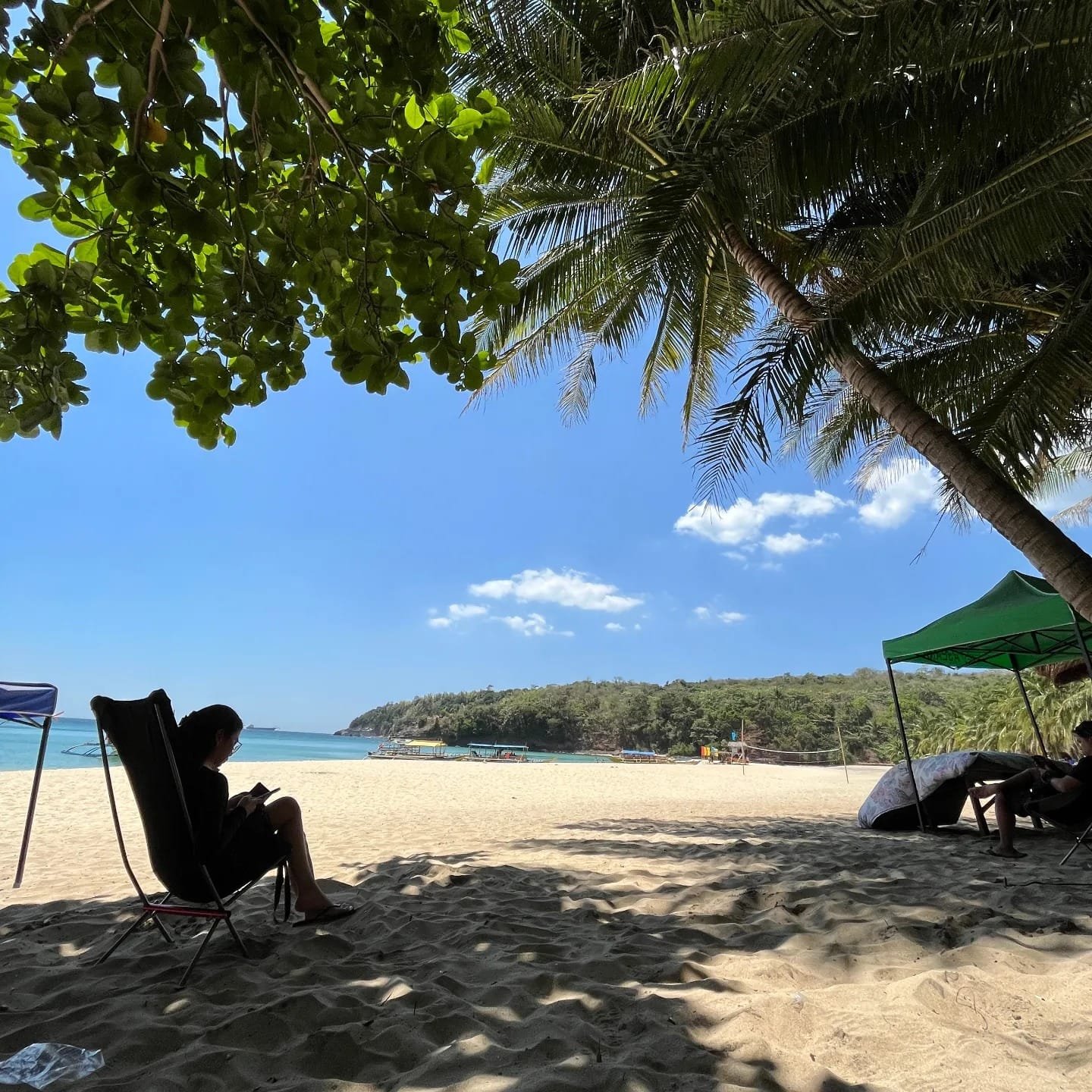
Laki Beach is privately owned land, and the landowner has made a deliberate choice not to develop it commercially. That is the reason the sand looks the way it does in photos. It is also the reason the facilities are what they are.
There is no electricity on the beach. No generator runs on weekdays, and no charging stations exist anywhere on the property. Power banks are your only option, and high-capacity ones at that, because a night camping without a headlamp is a serious problem, not just an inconvenience.
Mobile signal is intermittent to nonexistent. Both data and voice calls drop out consistently once you are on the water and remain unreliable at the beach itself. This limits your ability to call for help if something goes wrong, which is a real consideration for anyone with a medical condition or travelling with children.
The comfort rooms are three to four bucket-flush units for the entire beach population. On a packed summer weekend, the queue is long.
Showers do not exist at the beach. Most people wait until the return to Porto, where households near the jump-off rent freshwater showers for ₱20 per person.
Accommodation options on the beach are limited. A small sari-sari store sells snacks and warm drinks at inflated prices.
There is no carenderia and no food preparation service. Everything you plan to eat or cook at the beach has to come with you from Mariveles.
For overnight camping, a few nipa huts are available at ₱1,200 per night, though availability is rarely guaranteed in advance. Open-air cottages are free on a first-come basis. Most overnight visitors pitch their own tents, which costs nothing beyond the overnight admission fee.
If Laki Beach is closed for a private event, the alternative redirect is Lusong Cove. It charges a ₱100 entrance fee, restricts public access to a portion of the cove, and has a noticeably worse sanitation situation.
CLAYGO (Clean As You Go) is enforced here. You pack all your trash into bags and carry it back to the mainland. The beach has no waste disposal infrastructure.
This rule exists because of where the beach sits ecologically, not because of a government ordinance alone. Leave it dirty and it degrades fast.
What to Bring and Mistakes to Avoid
Packing right for Laki Beach is not about comfort upgrades. Several of these items determine your ability to physically complete the Five Fingers circuit safely.
Bring all of these:
- Aqua shoes with thick soles (not flip-flops, not barefoot)
- High-capacity power bank, fully charged before you leave Manila
- Headlamp with fresh batteries for overnight stays
- Dry bags for phones, documents, and electronics during the boat crossing
- Rash guard to protect against both sun and jellyfish
- Enough food and water for your full stay plus return travel
- Ice in a cooler if you are staying overnight
- Trash bags, at least two per person
- Valid ID for the passenger manifest at Porto
The mistakes that actually ruin trips here fall into a predictable pattern. Not confirming whether the tricycle fare is per person or per vehicle before boarding is a common friction point. Assuming there is a public ferry or a walk-up transport counter at Porto sends people to the wrong place entirely.
Expecting the sari-sari store to cover meals means arriving hungry. Relying on mobile signal for navigation or emergency contact is a risk that the beach’s geography does not forgive.
Wearing only flip-flops at Naiclec Point is the one I keep seeing. An urchin spine embedded in your foot is a problem you treat in Mariveles at best, in Manila at worst. Aqua shoes are the single piece of gear this trip demands above everything else.
Do not force Mount Samat or Las Casas Filipinas into the same day as Five Fingers and Laki Beach. The Five Fingers circuit alone takes 3 to 4 hours on the water.
Combined with the Manila bus commute and the return journey, the day is already at its limit before you add a heritage park detour. Those sites belong on Day 2.
Where Else to Go in Bataan After Laki Beach
Bataan’s peninsular layout makes multi-day itineraries efficient in practice. Most of the worthwhile stops are along or just off the Roman Superhighway, so adding them on the drive back to Manila costs very little extra time.
Sisiman Bay is the closest secondary stop to Mariveles, just minutes from the town proper. It has rocky cliffs, a photogenic old lighthouse, and San Miguel Peak.
DENR water quality testing brought fecal coliform levels down from 790 MPN/100 ml to 12 MPN/100 ml, which now makes it safe for swimming. It is a good short stop if you are heading back early.
Camaya Coast, also in Mariveles, is the opposite of Laki Beach in almost every measurable way. It is a developed 450-hectare resort with manicured grounds, a water park, and ferry connections from Manila. After a night of camping with bucket-flush toilets, it is not an unreasonable place to decompress before the bus ride back.
Mount Samat National Shrine in Pilar has a 92-metre cross memorializing Filipino and American soldiers from World War II. Admission is ₱20.
It sits on a ridge with panoramic views of the peninsula and takes around an hour to visit properly. It is a logical Day 2 morning stop before heading north.
Las Casas Filipinas de Acuzar in Bagac is best saved for its own day. The reconstructed 18th-century Spanish-Filipino mansions take time to walk properly and deserve better than a rushed late-afternoon stop.
If you are building a longer coastal loop through Luzon, Tondaligan Beach in Dagupan, Pangasinan is a useful reference for a very different kind of free-access beach on the Lingayen Gulf. It is worth comparing for a north-bound extension. For a full southern alternative on a longer trip, Gumasa Beach in Sarangani is the benchmark for fine white-sand beaches if you are planning ahead to Mindanao.
Frequently Asked Questions
Is Laki Beach the same as Lucky Beach in Bataan?
Laki Beach and Lucky Beach are the same place. “Lucky Beach” is a phonetic misspelling that took hold on social media and never fully died, so you will still see it in captions and group chat pins. The correct name is Laki Beach, located in Barangay Balon, Mariveles, Bataan. Local signage at the barangay uses Laki, and some boat operators write it as “Laque Beach,” which is a third variant you will encounter on handwritten rate boards at Porto del Sol.
How much is the boat fare to Laki Beach?
Boat charters from Porto del Sol run ₱2,000 to ₱2,500 for a day tour and ₱3,000 to ₱3,500 for an overnight trip. Those are per-boat rates for a vessel that fits 5 to 10 passengers, so the math changes fast depending on your headcount. A solo traveller who joins an existing group pays roughly ₱250 as a seat share. If you book through an agency joiner tour, expect around ₱999 per head for a day trip and ₱1,699 to ₱2,099 for overnight.
Is there an entrance fee at Laki Beach?
The entrance fee is ₱300 per person for a day visit and ₱400 per person for an overnight stay. You pay this directly to the landowner’s caretakers when you arrive at the beach. It has nothing to do with the boat charter you already settled at Porto, so budget for both as separate line items. Tent pitching is free if you carry your own gear. Tent rental at the beach is ₱300 per unit, subject to availability.
Do I need to book the boat in advance?
Walk-ins are accepted at Porto del Sol, but on peak summer weekends the boats fill before most people have finished breakfast. To lock in a vessel, contact Kuya Tikboy at 09075946138 or Ate Melca at 09971074378 ahead of your trip. Regardless of whether you booked or walked in, every passenger signs a passenger manifest and presents a valid ID before boarding. That is a MARINA MC 180 requirement, not a suggestion, and the boatman will not move until it is done.
Can you go to Laki Beach as a solo traveller on a budget?
Yes, and it is more manageable than it sounds. If you absorb the full ₱2,500 boat charter alone, a day trip from Manila lands at roughly ₱4,900 all-in. The practical workaround is to arrive at the Mariveles market early in the morning, find groups that are clearly gearing up for a beach trip, and ask if they have an open seat on their boat. That kind of informal pooling is normal there. The other option is a joiner tour at around ₱999 per head, which puts strangers on one boat with a fixed schedule.
What documents do I need to board the boat?
Bring a valid government ID. All passengers at Porto del Sol sign a passenger manifest before the boat leaves, as required under MARINA MC 180. Every passenger also wears a lifejacket from boarding until disembarkation. The boatman enforces this without exception, and PCG inspectors can fine operators who allow otherwise.
Can boats be cancelled at Laki Beach due to weather?
Yes, and when it happens there is no negotiating around it. Under PCG weather dispatch protocols, the Coast Guard can stop all small-vessel departures from Porto during gale warnings or when sustained winds exceed 16 knots. A confirmed booking and a paid charter do not override that call. The risk is highest during habagat season, which runs June through November. Check the PAGASA weather advisory and confirm the local PCG office status the evening before you go, not the morning of.
Are there senior or PWD discounts at Laki Beach?
Discounted rates for seniors and PWDs are not posted on the rate board at the beach. Ask the caretaker directly when you arrive, or reach out to the Mariveles Municipal Tourism Office before your trip to get the current policy in writing.
How early should I leave Manila for a Laki Beach day tour?
Leave Manila no later than 1:00 AM on the Genesis bus from Pasay.

Thank you my friend.
SKL?
is the fare for boat ride going to laki beach is one way or two way?
two way