
TL;DR: The Quick 2026 Snapshot
If you are looking for a rapid breakdown of what to expect at Laki Beach this year, I have compiled the essential logistics below. This table covers the critical updates for the 2026 season, ensuring you know exactly what you are getting into before you leave Manila.
| Category | The 2026 Reality |
| Location | Mariveles, Bataan. Jump-off point is Porto (Brgy. Balon). |
| Land Access | Strictly No. You cannot drive or hike to the beach. You must take a boat (20-30 mins). |
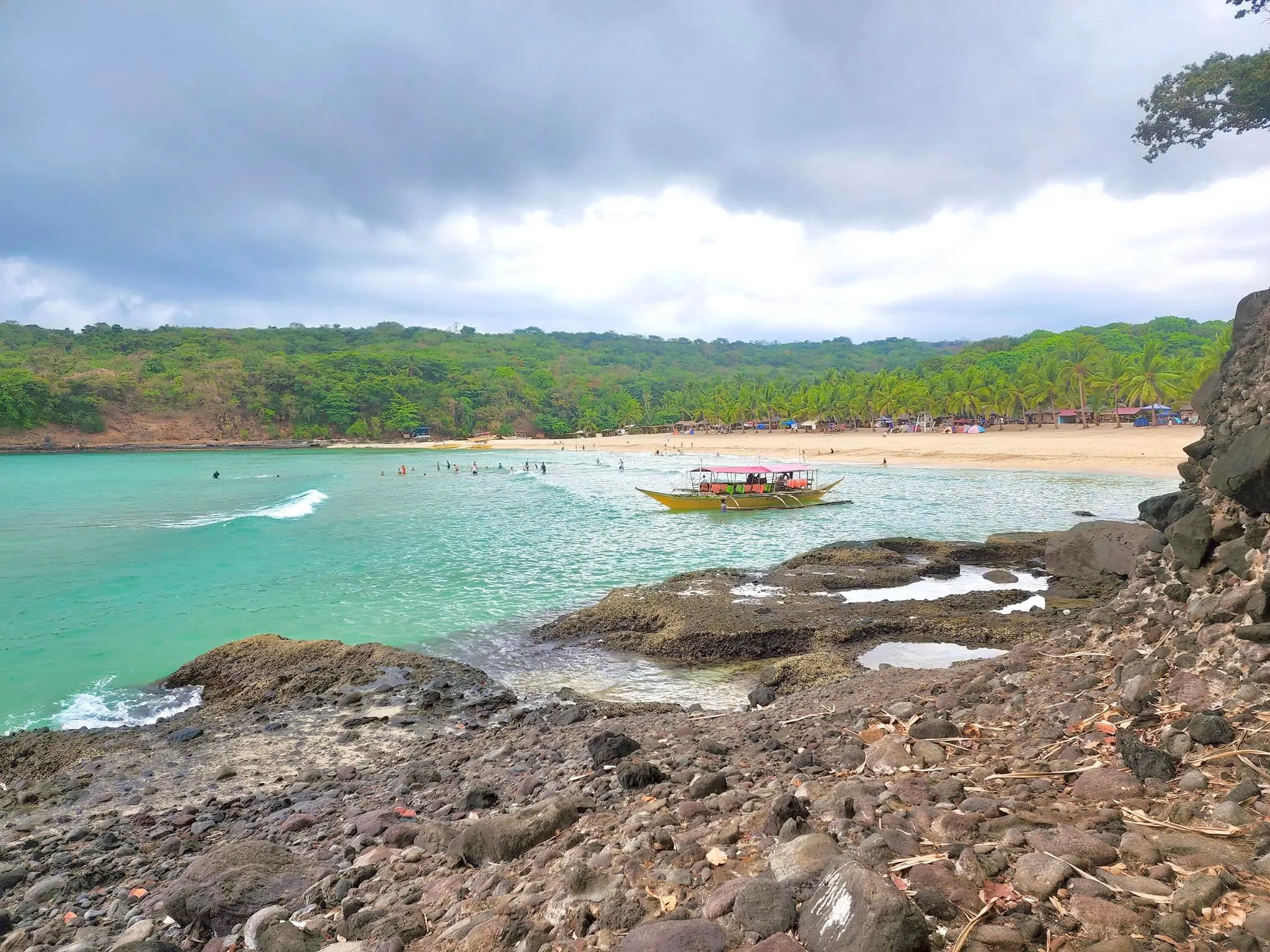
| Top Features | Pristine white sand cove, “Five Fingers” cliff hopping, and raw volcanic rock formations. |
| Estimated Budget | ₱2,500 – ₱3,500 per person (Based on a group of 4). Includes transport, food, and boat rental. |
| Best For | Campers, cliff divers, backpackers, and travelers seeking a “digital detox.” |
| The Vibe | Rustic and Off-Grid. Expect no electricity, limited mobile signal, and “bring your own” everything (food/water). |
| Entrance Fees | Day Tour: ₱300 |
| Boat Rates | Day Tour: ~₱2,500 – ₱3,000 |
Introduction: The Raw Beauty of Mariveles
Quick 2026 Guide: Laki Beach is a secluded, white-sand cove located in Mariveles, Bataan, accessible only by boat from Barangay Balon (Porto). Often paired with the “Five Fingers” cove hopping tour, it offers a rustic, electricity-free camping experience perfect for travelers seeking an alternative to commercialized resorts in 2026.
When you +9127533mention Bataan, most people immediately picture the smoking chimneys of the oil refineries, the bustling Freeport Area of Bataan (FAB), or the somber historical markers of World War II. For years, this province was seen strictly as an industrial hub or a history field trip destination.
But hidden behind the industrial facade of Mariveles lies a secret that has slowly transformed from a local whisper to a top-tier destination for 2026: Laki Beach.
In an era where travelers are increasingly moving away from the hyper-commercialized, concrete-heavy vibes of places like Boracay or Puerto Galera, Laki Beach offers the exact opposite. It is raw, unrefined, and refreshingly disconnected. There are no hotel chains here—only coconut trees, fine white sand, and the sound of waves crashing against volcanic cliffs.
A Dual-Destination Package
You rarely go to Laki Beach just to sit on the sand. The true magic lies in the Laki Beach and Five Fingers combination. Located just a 20-minute boat ride from the jump-off point in Porto, this area is often called the “Batanes of the West” because of its dramatic cliffs and rolling hills.
If you are asking where is Laki Beach located exactly, it is tucked away on the southern tip of the Bataan Peninsula, geographically shielded by steep rock formations that make land access impossible. This isolation is its best feature. It preserves the “island life” atmosphere even though you are technically still on the Luzon mainland.
Lakbaypinas Tip: Did you know? Mariveles is geologically distinct due to its violent volcanic origins. The “Five Fingers” coves are actually the remnants of ancient volcanic vents radiating from the Mariveles Volcano. From a drone’s perspective, these land fingers splay out into the sea, looking exactly like a giant hand.
For those of you planning a rustic travel 2026 itinerary, this is your playground. It is affordable, accessible from Manila, and provides that grit and adventure that polished resorts simply cannot replicate.
If you have more time to spare after your camping trip, I highly recommend exploring other Bataan Tourist Spots like Las Casas Filipinas de Acuzar or the Mount Samat Shrine to round out your history-plus-nature adventure.
Table of Contents
2. How to Go to Laki Beach Bataan from Manila (2026 Update)
Quick 2026 Logistics: You have three options: the 1Bataan Ferry (fastest, ~1.5 hrs), Public Bus (cheapest, ~5 hrs), or Private Vehicle (flexible, ~3-4 hrs via NLEX/SCTEX). Destination pin: Porto, Brgy. Balon, Mariveles.
Getting to Mariveles used to be a test of patience, often involving a grueling 5-hour bus ride through Pampanga traffic. But the transport landscape has shifted significantly. For 2026, the local government has streamlined the “Manila-to-Nature” pipeline, making Laki Beach more accessible than ever.
Here is the breakdown of how you can get there, ranked by efficiency and budget.
Option A: The Fastest Route (1Bataan Ferry)
If you value your time more than saving a few hundred pesos, this is the only way to go. The 1Bataan Integrated Transport System operates high-speed ferries that cut the travel time by more than half.
You depart from the Esplanade Seaside Terminal (EST) near the CCP Complex/MOA in Pasay. The ferry lands directly at the Capinpin Port in Orion or the FAB Terminal in Mariveles (depending on the season). If you land in Orion, there is usually a free shuttle van waiting to whisk you to Mariveles.
Travel Time: 1.5 – 2.5 Hours (approx.)
Ideal For: Weekend warriors who want to maximize beach time.
Booking: Highly recommended to book online via the 1Bataan app or website at least 2 days prior. Walk-ins are risky on weekends.
Ferry vs. Land Travel Comparison (2026 Estimates)
| Mode | Duration | Cost (Est.) | Pros |
| Ferry | 1.5 Hrs | ₱499 – ₱700 | Fast, Scenic, No Traffic jams |
| Bus | 4-5 Hrs | ₱280 – ₱315 | Cheaper, Frequent Departures |
Option B: The Budget Route (Bus)
For the backpacker on a tight budget, the classic bus route remains reliable. Genesis Transport and Bataan Transit are the two major players here.
Terminals: Cubao (Five Star Terminal) or Pasay (near MRT Taft).
Target Bus: Look for signage that says “Mariveles”. Do not take the “Balanga” bus unless you want to transfer again halfway.
The Route:
Board the bus to Mariveles (~₱300).
Ask the conductor to drop you off at the Mariveles Municipal Hall or the 7-Eleven near the town proper.
From there, hail a tricycle to “Porto” (Brgy. Balon).
Tricycle Cost: Expect to pay around ₱75 – ₱100 per head depending on your haggling skills and group size.
Option C: Private Vehicle (NLEX/SCTEX)
Driving gives you the freedom to pack heavy (coolers, tents, grills) without worrying about baggage limits.
Directions: Take NLEX northbound and exit at SCTEX. Follow the signs to Subic/Tarlac but take the exit toward Dinalupihan/Bataan. Merge onto the Roman Superhighway and drive straight until you hit Mariveles.
Navigation: Waze or Google Maps is accurate. Search for “Porto Basketball Court, Mariveles”.
Parking: Once you arrive at Porto, you cannot drive to the beach. You must park your car at the designated parking area near the basketball court or barangay hall.
Parking Fee: ~₱100 – ₱150 per night (secure and guarded).
4. Laki Beach and Five Fingers: The Tour Experience
Quick 2026 Tour Guide: The standard Mariveles boat tour is a “Cove Hopping” package that combines the adrenaline of the “Five Fingers” cliffs with the relaxation of Laki Beach. Expect a 4 to 5-hour adventure involving trekking, 40-foot cliff dives, cave exploration, and snorkeling before settling down at the main campsite.
When you arrive at Porto, you aren’t just paying for a taxi ride to a beach; you are signing up for an adventure course carved by nature. Most boat operators will automatically suggest the “Five Fingers” tour before dropping you off at Laki Beach. My advice? Do it.
This isn’t just a side trip; for many, it’s the highlight. The area is named “Five Fingers” because the coves look like splayed fingers from a map view. Here is what goes down at each point.
The Five Fingers Adventure
The boat ride itself is an experience, weaving through turquoise waters that rival the clarity of Palawan on a good day.
Cochino’s Point (The Thumb)
This is usually the first stop. Known as “The Thumb,” Cochino’s Point offers a raw trekking experience. You will dock at a rocky outcrop and hike up a short but steep trail for about 15 to 20 minutes. The view from the top is a panoramic sweep of the West Philippine Sea and the Mariveles caldera.
For those who are new to trailing, the terrain here is loose and rocky. It is comparable to some of the country’s Beginner Friendly Hikes, but you definitely want sturdy sandals or shoes, not flip-flops.
Talaga Point (Index Finger)
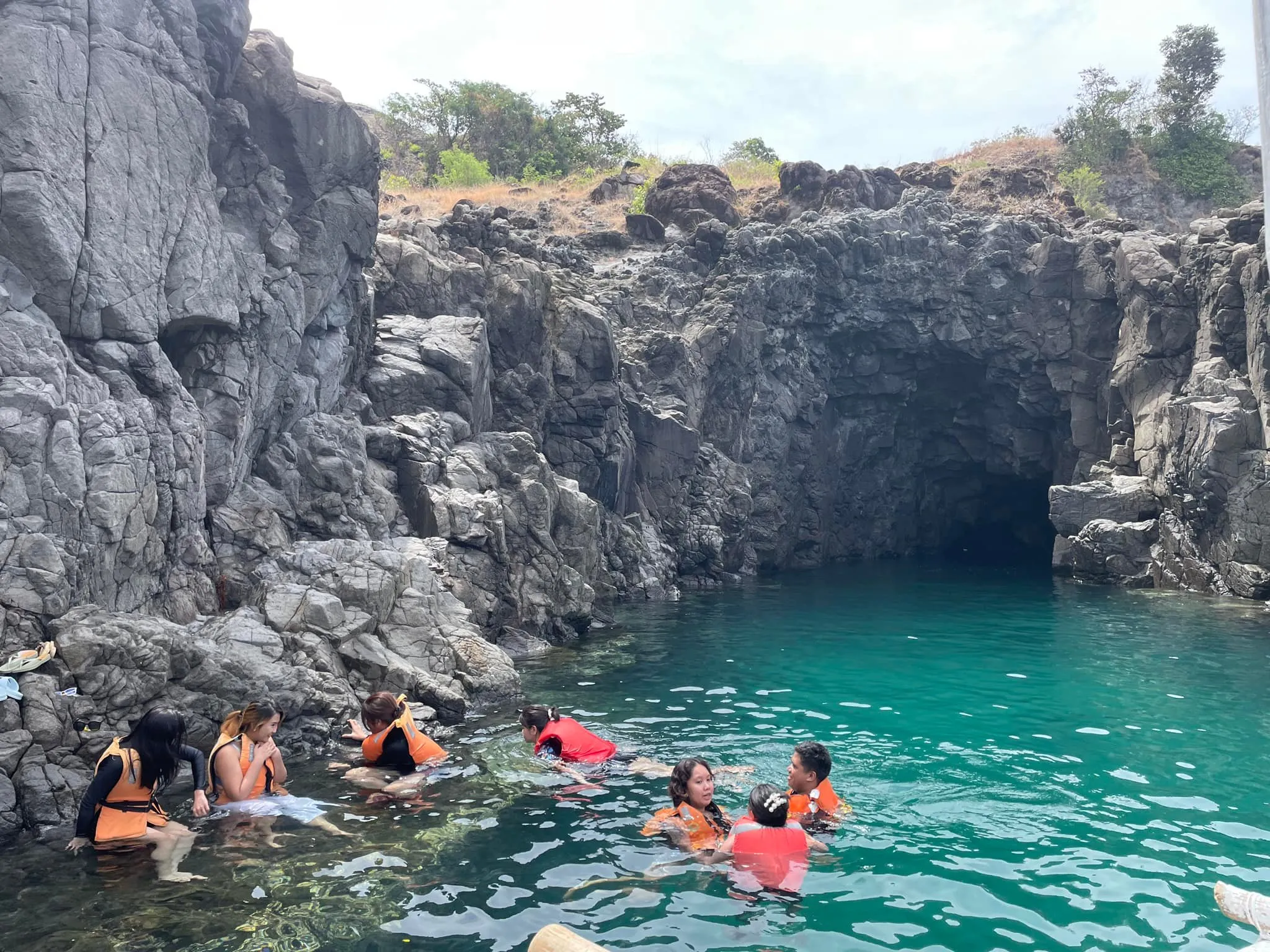
Next is the Index Finger, home to the famous “Natsu Lagoon.” This spot is a crowd favorite because it features manageable cliff jumping spots ranging from 10 to 15 feet. The water here is often calm and enclosed by tall limestone walls, giving it a secluded “secret lagoon” vibe. It is the perfect warm-up before the bigger jumps later in the tour.
Hornos Point (Middle Finger)
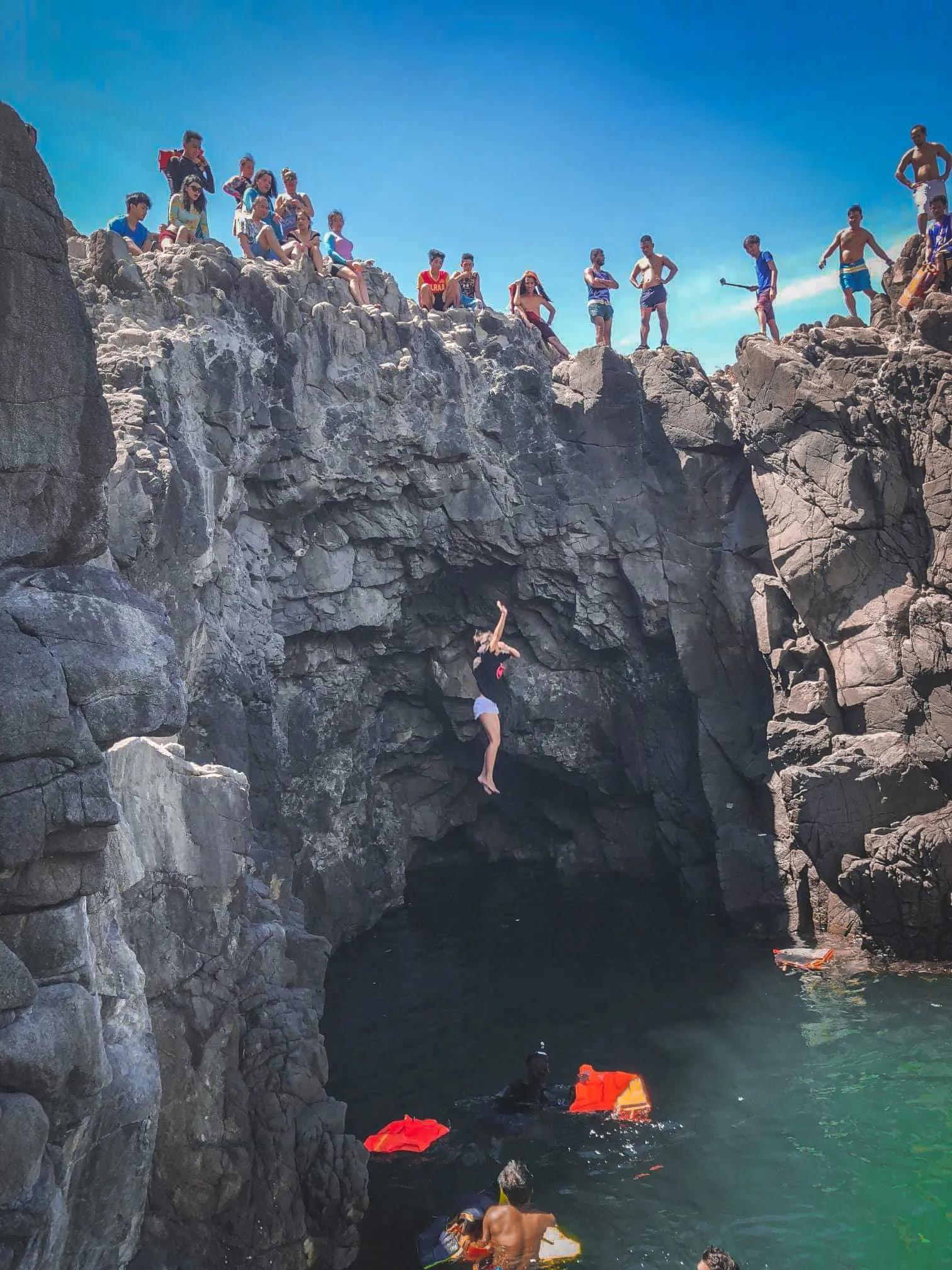
This is where the real adrenaline junkies shine. Hornos Point, specifically the “Tinanlakan” area, hosts the infamous 40-foot cliff dive. Looking down from the ledge, the water looks deceptively far away. If you aren’t into high-altitude leaps, you can just float in the water and watch the brave souls scream their way down.
Naiklec Point (Ring Finger)
If you are looking for the most unique Laki Beach photos for your feed, this is the spot. Naiklec Point features the “Kryptonite Rock” formations—jagged, layered rock plates that look like they belong on another planet. The geology here is fascinating, with sharp, vertical strata that make for a dramatic background.
Longos Kawayan (Pinky Finger)
The final finger, Longos Kawayan, is a bit more subdued but equally interesting. It is known for its small sea caves (some inhabited by bats) and distinct rock tunnels you can swim through. It’s a great spot for snorkeling if the water is calm.
Laki Beach: The Main Destination
After about 3 or 4 hours of hopping from cliff to cove, the boat will finally bring you to the main event: Laki Beach.
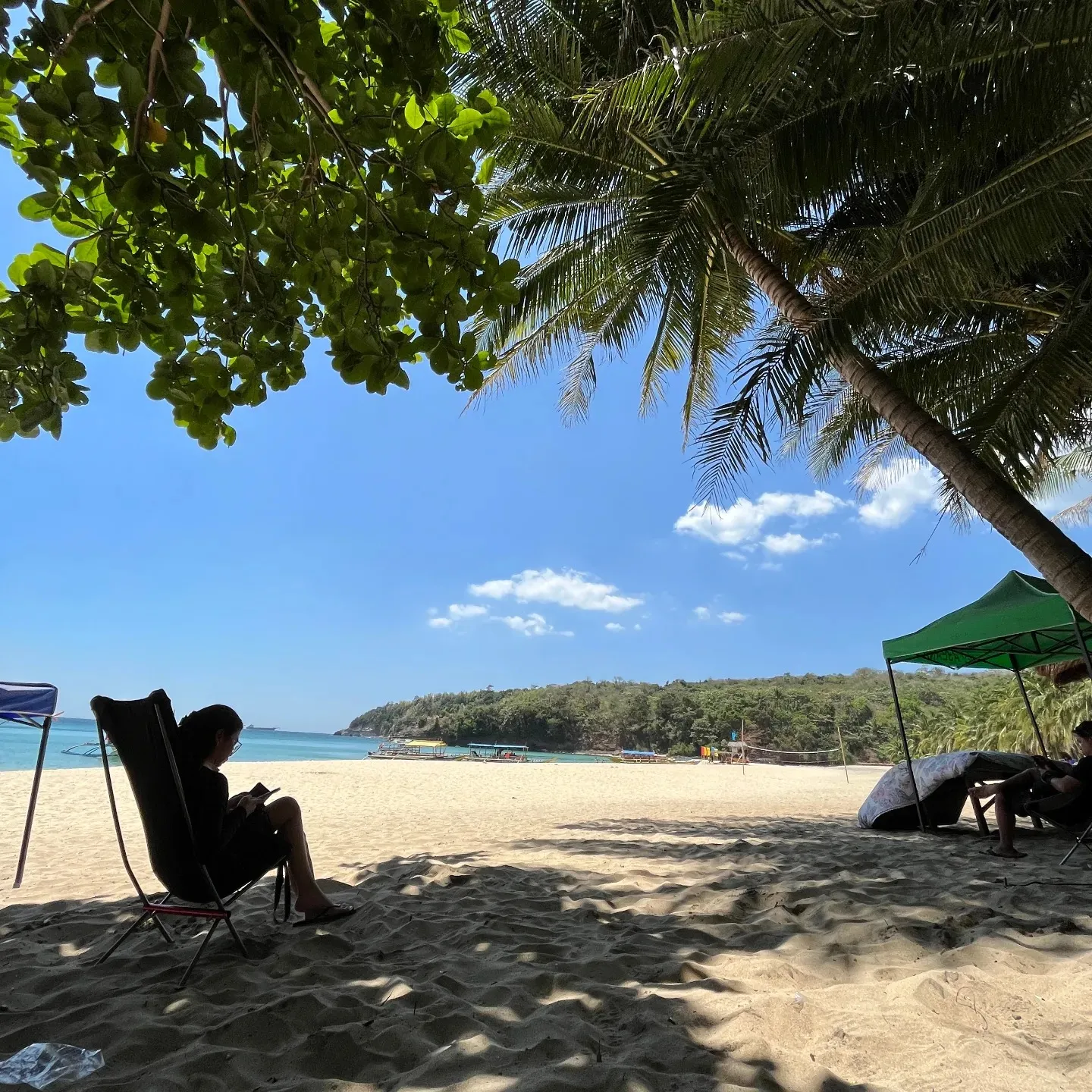
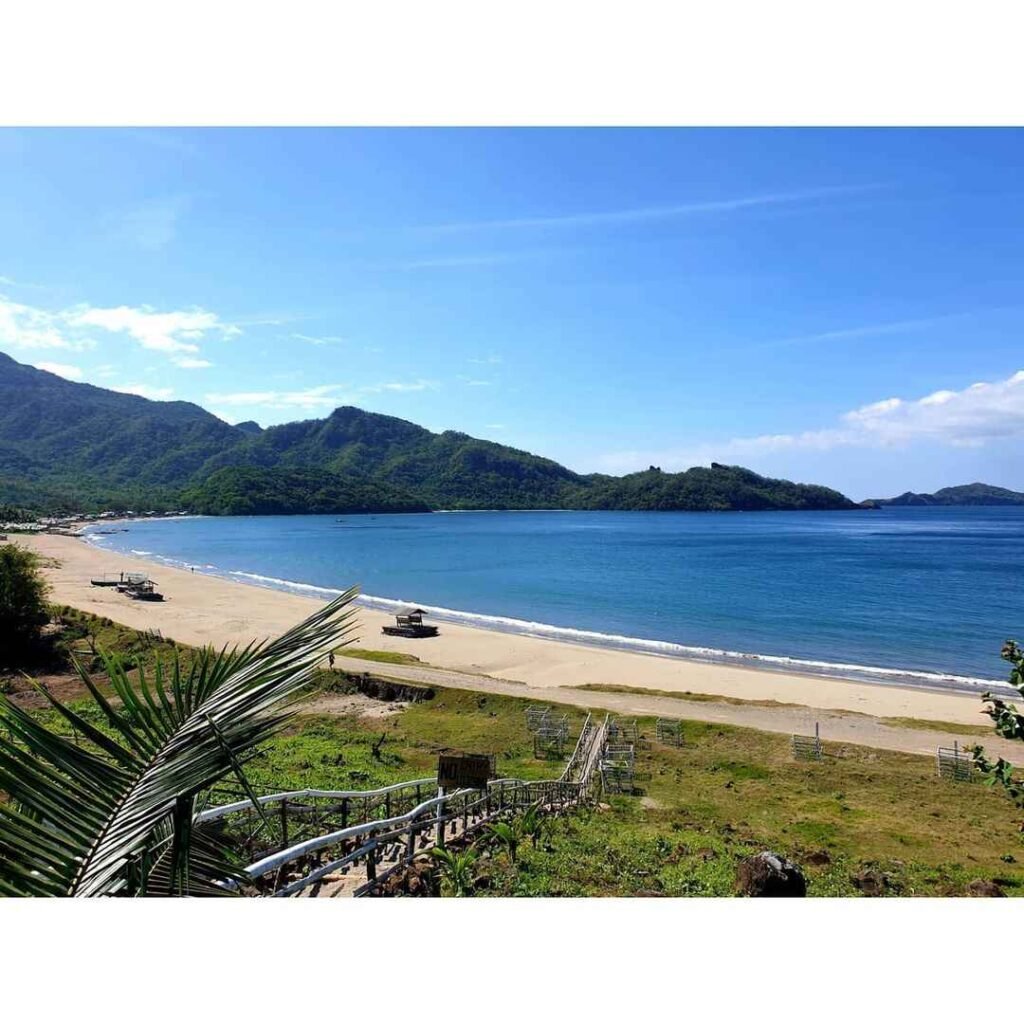
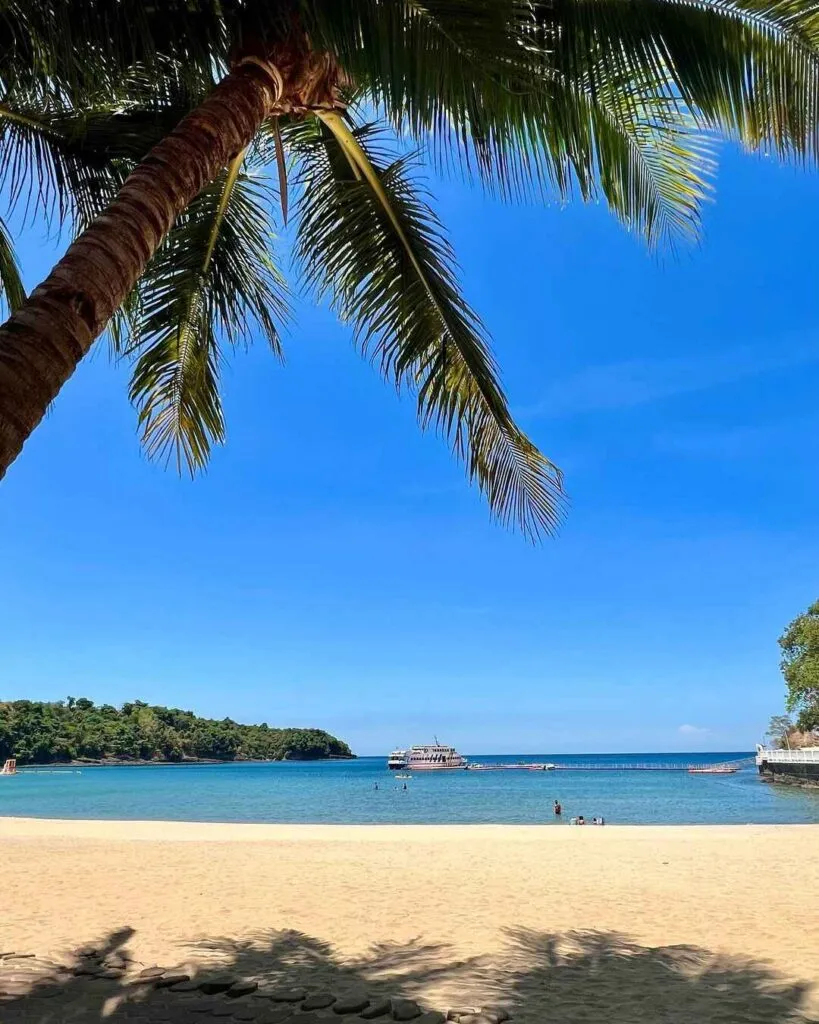
The contrast is immediate. While the Five Fingers are jagged, intense, and rocky, Laki Beach is wide, soft, and inviting. It features a long stretch of fine white sand lined with coconut trees that provide essential shade since there are no concrete structures here.
This is where the “vacation” part of the trip begins. The water is clear turquoise, deepening gradually, which makes it safe for swimming. The vibe here is completely unhurried. You set up your tent, crack open a cold drink, and just watch the sun dip below the horizon.
When planning things to do in Laki Beach, remember that the best activity is often doing nothing at all. However, if you want to capture the perfect golden hour shots, the best time to visit Laki Beach photography-wise is right before sunset when the light hits the coconut groves, or early morning when the water is glass-like and empty of day-trippers.
5. 2026 Budget Breakdown & Fees
Quick 2026 Budget Snapshot: Laki Beach operates on a strict CASH ONLY basis. There are no ATMs in Porto or at the beach itself. For a comfortable overnight camping trip in 2026, budget approximately ₱2,500 – ₱3,500 per person (based on a group of 4). This covers transport from Manila, boat rental, entrance fees, and basic food supplies.
One of the biggest mistakes travelers make when visiting Mariveles is assuming they can “Gcash” their way through the trip. While digital payments are growing in the town proper, the boat operators and local caretakers at Brgy. Balon (Porto) and Laki Beach still prefer—and often demand—hard cash.
To help you prepare your wallet, here is the transparent pricing structure for the 2026 season.
Mandatory Fees (Porto Jump-off)
Before you even step on a boat, there are standard municipal fees collected at the registration area in Porto. These funds go toward the maintenance of the port and environmental cleanup efforts.
Environmental Fee: ₱100 per head (Municipal Levy).
Terminal/Port Fee: ₱50 per head.
Parking Fee: ~₱100 – ₱150 per night (if bringing a private car).
Laki Beach Entrance Fees
Unlike public beaches, Laki Beach is private property. The caretakers collect an entrance fee upon arrival. Note that this fee does not include a tent; you are paying for the space and access to the common restrooms.
Day Tour: ₱300 per head.
Overnight: ₱400 per head.
Boat Rental Rates (Standard 2026 Pricing)
Your boat rental is the single largest expense, but it is also the most shareable cost. These rates typically include the round-trip transfer from Porto to Laki Beach and the “Five Fingers” cove-hopping tour.
| Duration | Boat Size | Capacity | Rate (Est.) |
| Day Tour | Small | 1-4 Pax | ₱2,000 |
| Day Tour | Big | 5-10 Pax | ₱3,000 |
| Overnight | Small | 1-4 Pax | ₱3,000 |
| Overnight | Big | 5-10 Pax | ₱4,000 |
Lakbaypinas Tip: The rates above usually cover the boatman’s fee and fuel. However, if your boatman guides you through the cliff jumps, helps you set up camp, or assists with your luggage, a tip of ₱300 – ₱500 per group is a highly appreciated standard in 2026.
Recommended Contact Persons
Finding a boatman upon arrival is easy, but booking in advance ensures you don’t get stuck waiting during peak weekends.
Kuya Tikboy: 0907-594-6138
Ate Melca: Known for organizing reliable boats and assisting with campsite logistics.
If you contact them, mention your group size and intent (Day Tour vs. Overnight) immediately so they can reserve the correct boat size for you.

6. Where to Stay in Laki Beach: Accommodation Options
Quick Answer: There are no hotels on Laki Beach. Your options are Camping (bring a tent or rent one for ~₱300), renting a basic Open Cottage (~₱1,200), or staying at a nearby luxury resort like Camaya Coast and visiting Laki as a day trip. Expect zero electricity and weak mobile signal.
If you are Googling “Laki Beach Resort” hoping to find air-conditioned rooms, room service, or a pool bar, you will be disappointed. Laki Beach is a “back-to-basics” destination. The accommodation landscape here is defined by one rule: Nature is your host.
Here is a breakdown of where you can stay, ranging from rugged camping to nearby luxury.
Option A: Camping (The Full Experience)
This is the primary way to experience Laki Beach. 90% of visitors camp out on the sand. The lack of electricity means the beach stays dark at night, allowing for incredible stargazing.
Bring Your Own Tent (Highly Recommended): If you have your own gear, bring it. Most of the time, the “pitching fee” is already included in your entrance fee.
Tent Rental: If you don’t have gear, the caretakers have tents for rent.
Cost: ~₱300 – ₱500 per tent (good for 2-3 pax).
Condition: These are basic dome tents. Don’t expect mattresses or pillows unless specified.
Lakbaypinas Tip: Since the sand can get cold at night, bring a sleeping mat (earth pad) or a thick yoga mat. A battery-operated fan is also a lifesaver during humid summer nights.
Warning: The “Digital Detox” Reality There is NO electricity at Laki Beach. There are no outlets to charge your phone.
Signal: Smart/TNT usually has a weak signal (1-2 bars), enough for a text but not for TikTok. Globe is often dead.
Must-Haves: Bring two fully charged power banks (20,000mAh recommended) and solar lights.
Option B: Cottages and Kubos
For groups who want a designated area to eat and store bags, there are wooden structures available.
Open Cottages (Tables/Benches): These are simple wooden structures with a roof but no walls.
Cost: ~₱1,000 – ₱1,500 per unit.
Usage: Great for dining and keeping your bags off the sand, but you will still need a tent to sleep in.
Closed Nipa Huts (Kubos): There are very few enclosed huts (less than 5 usually). These are often booked weeks in advance.
Cost: ~₱2,500 – ₱3,500 (prices vary by size/season).
Amenities: Just a floor and a roof. No fan, no beds.
Option C: Nearby Resorts (Non-Camping)
If sleeping on the ground isn’t your thing, you can stay at a hotel in Mariveles or a nearby resort and just visit Laki Beach for the day.
Camaya Coast (Luxury Option): Located just a few coves away, this is the complete opposite of Laki Beach. It has infinity pools, hotels, and restaurants.
Strategy: Book a room at Camaya (starts at ~₱6,000/night) or a Day Pass, and hire a boat to take you to Laki Beach for a few hours of “raw nature” before heading back to comfort.
Mariveles Town Proper Hotels: There are budget inns like The Oriental Bataan or Pupung’s Grill and Sleeping Quarters in town. You can sleep there and take the boat from Porto early the next morning.
Estimated Laki Beach Camping Budget (Overnight)
Entrance: ₱400
Tent Rental: ₱150 (shared)
Food/Water: ₱500
Total Accommodation Cost: ~₱1,050 per person (excluding boat/transport).
7. Travel Guide & Tips: “Lakbaypinas” Essential Knowledge
Quick Travel Tip: Success at Laki Beach relies on preparation. Visit between December and May for safe seas. Bring aqua shoes for the cliffs, gallons of water (there is no potable source), and your own trash bags to pack out what you pack in.
Laki Beach is not a “show up and figure it out” destination. Because it is disconnected from the main grid, your comfort depends entirely on what you pack. Over the years, I’ve seen campers miserable because they forgot a simple item like a tabo or ice.
Here is the essential “Lakbaypinas” knowledge to ensure your 2026 trip is smooth.
Best Time to Visit
The window is strict: December to May (Dry Season).
Why? The boat ride from Porto to Laki Beach crosses open water that gets incredibly rough during the Southwest Monsoon (Habagat) from June to October.
Safety Warning: If the boatman says the waves are too high, listen to them. The coast guard in Mariveles is stricter now in 2026 regarding small craft advisories.
Food & Water: The “BYO” Rule
There are small sari-sari stores on the beach, but they carry limited stock and prices are understandably high (often double the retail price due to transport costs).
Water: There is no potable water source on the island. Bring 6-10 liters (gallons) for drinking and rinsing off sticky saltwater.
Food: Pre-cook your meals. Chicken Adobo or Liempo are camping staples because they don’t spoil easily. Bring a portable butane stove if you plan to cook fresh rice or instant noodles.
Ice: This is the most valuable currency on the beach. Pack a high-quality cooler with block ice (not cubes) to keep your drinks and perishables cold for 24 hours.
Restrooms and Hygiene
Set your expectations to “rustic.”
Facilities: The CRs (Comfort Rooms) are communal concrete blocks.
Water Supply: Depending on the season, the flush might be a bucket of saltwater.
The “Tabo” Rule: Always bring your own tabo (dipper) and toilet paper. Do not expect bidets or showers with strong pressure.
Safety Gear: Aqua Shoes are Mandatory
I cannot stress this enough: Do not wear flip-flops to Five Fingers. The rocks at “The Thumb” and “Kryptonite Rock” are razor-sharp volcanic formations. One slip can ruin your trip. Wear sturdy aqua shoes or trekking sandals that strap securely to your feet.
Leave No Trace (LNT)
Laki Beach has remained beautiful because the locals fight to keep it that way.
Trash: There is no garbage truck that comes here. Pack In, Pack Out. Bring XL black garbage bags and take every single piece of plastic back with you to the mainland (Porto) for proper disposal.
Adventure Extension: If lounging by the beach feels too tame and you crave more hardcore adventures nearby, consider the Mount Natib Major Climb or read up on What You Need to Know about Mt. Natib. It’s a beast of a mountain that offers a stark contrast to the beach life.
8. Sample 2D1N Itinerary (2026)
This itinerary maximizes your time, hitting the Five Fingers adventure while everyone else is still waking up, and giving you the prime sunset hours to relax at camp.
Day 1: The Adventure Begins
04:00 AM: Depart Manila (Cubao/Pasay) via Bus or Private Car.
08:00 AM: Arrival at Porto (Brgy. Balon). Register, pay environmental fees, and meet your boatman. Buy last-minute ice or charcoal here.
08:30 AM: Breakfast at a local carinderia in Porto.
09:00 AM: Start of Five Fingers Tour.
Stop 1: Cochino’s Point (Trekking).
Stop 2: Talaga Point (Cliff Jumping).
Stop 3: Hornos Point (Deep Dive).
12:00 PM: Lunch at one of the coves (boatmen usually have a preferred spot).
02:00 PM: Arrival at Laki Beach. Unload gear and set up camp.
03:00 PM: Free time. Swim, nap, or explore the rock formations on the far end of the beach.
05:30 PM: Prepare for Sunset. This is the golden hour for photos.
07:00 PM: Dinner / Socials / Stargazing.
Day 2: The Chill Morning
06:00 AM: Wake up for Sunrise. The beach is calmest at this hour.
07:00 AM: Breakfast at camp (Coffee is essential here).
08:00 AM: Final swim and photo ops.
09:00 AM: Break Camp. Ensure no trash is left behind.
10:00 AM: Boat ride back to Porto.
11:00 AM: Wash up at the shower facilities in Porto (usually ₱20-₱50 per head).
12:00 PM: Side Trip Options:
Visit the Zero KM Marker (Death March starting point).
Head to Sisiman Lighthouse for a quick view of Corregidor.
02:00 PM: Departure for Manila.
9. Frequently Asked Questions (FAQ)
Here are the specific logistical questions I get asked most often about the 2026 Laki Beach experience.
Is there electricity at Laki Beach?
No. There is no commercial power line connected to the cove. The beach is pitch black at night, which is actually a perk for stargazing.
Recommendation: Bring at least two 20,000mAh power banks. If you have a portable solar panel, bring it. Some boatmen might rent out small generator sets (gensets) for a fee (~₱500/night), but this kills the quiet vibe.
Is Laki Beach pet-friendly?
Generally, Yes. Since it is an open beach, you can bring your dogs. However, the decision ultimately lies with your boat operator.
Warning: The boat ride can be choppy. If you have a large dog (Golden Retriever, Husky), inform the boatman beforehand so they can assign a stable boat. Also, please be a responsible owner—bury or pack out your pet’s waste.
Q: Can we cook there?
Yes, absolutely. Cooking is the standard here. You are allowed to build campfires (in designated spots) or use portable stoves.
Tip: Bring a windbreaker for your butane stove. The sea breeze can make boiling water difficult without one.
Is there a mobile signal or data connection?
Weak to None.
Smart/TNT: Usually has 1 bar of 4G near the shoreline, enough for a slow Messenger text but not for uploading Reels.
Globe: Often “No Service.”
Preparation: Download your Spotify playlists and offline Google Maps before you leave the port. Treat this as a mandatory digital detox.
Are there jellyfish in the water?
Seasonally, Yes. The jellyfish season in Bataan typically peaks during the hot summer months (March to May).
Safety: While most are harmless moon jellies, stingers do appear. It is wise to bring a small bottle of vinegar for first aid and wear a rash guard if you plan to swim far from the shore.
10. Is Laki Beach Worth the Trip in 2026?
As travel trends in 2026 shift back toward “hyper-local” and “raw nature” experiences, Laki Beach stands out as a rare survivor. It has resisted the urge to pave over its sand with concrete hotels or fill its silence with karaoke bars.
My Verdict: If you are looking for 5-star amenities, room service, or a party beach, skip this. But if you are willing to trade electricity for a Milky Way view, and a hotel bed for the sound of crashing waves, then Laki Beach is absolutely worth the trip. It remains one of the few accessible, uncommercialized gems in Central Luzon where you can truly disconnect.
Your Next Step: Ready to disconnect and dive in? Call your barkada, book your boat with Kuya Tikboy, pack your tent, and experience the rugged beauty of Mariveles before it changes!
Looking for a bigger challenge? If a relaxing beach camp isn’t enough adrenaline for you, explore other Major Climbs in the Philippines to pair this beach trip with a serious mountain conquest.



Thank you my friend.
SKL?
is the fare for boat ride going to laki beach is one way or two way?
two way