
I. Quick Stats
Elevation: 2,586+ MASL
Difficulty: 9/9 (Major Climb)
Days Required: 3-4 Days
Season: Open Feb 1 – May 31 (Strictly)
Est. Budget: ₱6,000 – ₱8,000 (Solo joiner basis)
II. The Monolith of Mindoro: Understanding Mt. Halcon (Sialdang)
Mt. Halcon is widely considered the toughest climb in the Philippines (9/9 difficulty), defined not just by its 2,586+ MASL elevation but by its aggressive biodiversity, unpredictable microclimate, and the technical “Knife Edge” ridge that demands absolute focus.
The View from the Azotea (Knife Edge)
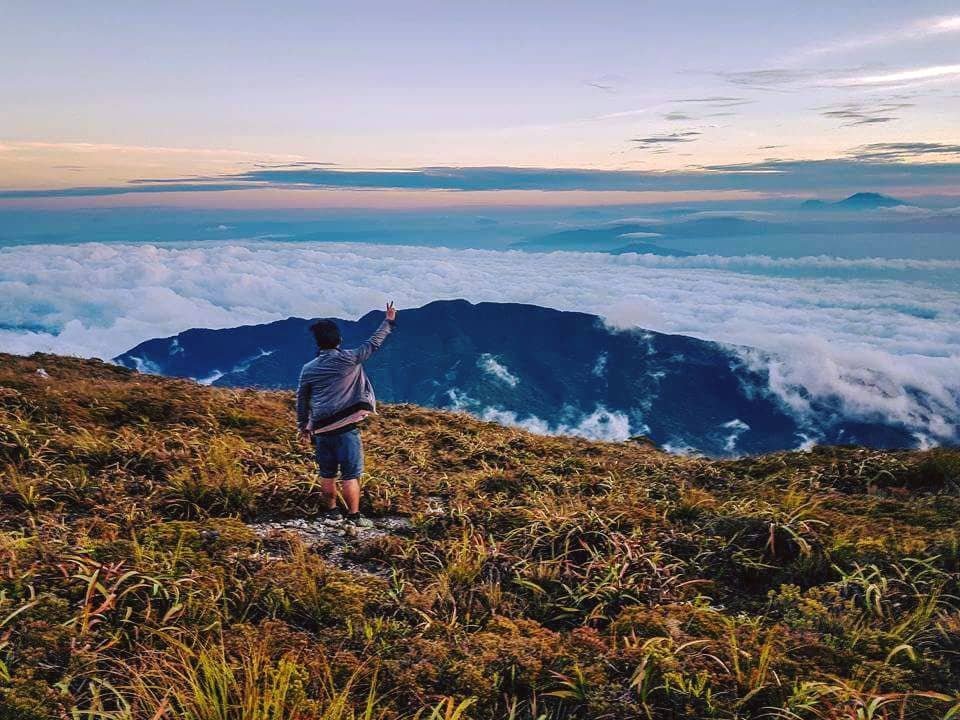
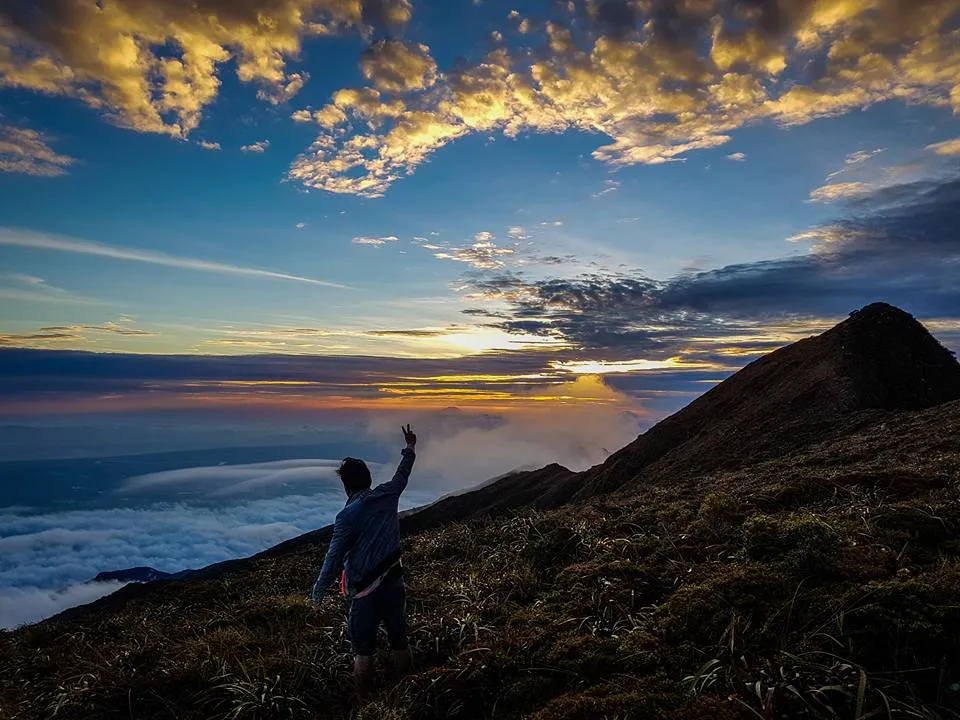
There is a specific moment on the Azotea—the famous Knife Edge ridge—where the reality of this mountain hits you. You are standing on a spine of rock barely a meter wide, flanked by stunted bonsai trees twisted by decades of monsoons. To your left, a sheer drop vanishes into a whiteout of clouds. To your right, the abyss is identical.
The wind here doesn’t just blow; it screams, carrying a wet chill that cuts through substandard layering systems instantly. Then, just as quickly, the wind might die down, leaving a heavy, suffocating silence. This isn’t the scenic, rolling slopes of Mt. Pulag. This is a vertical world where vertigo is a constant companion and a single misstep can be fatal.
Halcon vs. Sialdang: A Tale of Two Names
To the cartographers and the Spanish colonizers who first charted this peak, it is Monte Halcón (Mount Falcon), likely named for its beak-like silhouette or the raptors that patrol its thermals. But to the Mangyan-Alangan tribes, the indigenous custodians of this land, it has always been Sialdang.
In the local dialect, Sialdang translates roughly to “High Above the Clouds.” This isn’t just semantic trivia; it is the cultural framework of your climb. You are not merely traversing public land; you are entering a sacred ancestral domain. The trail you walk is a hunting path used for millennia. Recognizing it as Sialdang acknowledges that your safety relies as much on the permission of the Mangyan spirits as it does on your Gore-Tex gear.
The Thesis: Not a Hike, But an Operation
Let’s be brutally honest: Mt. Halcon is not a “hike”; it is an expedition.
Most mountains in the Philippines allow for a margin of error. Sialdang does not. It is a biological hazard zone where the Limatik (blood leeches) are not just a nuisance but a psychological torment that will test your sanity. It is a hydrological engine where the Dulangan River can trap you for days if it swells.
If you approach this mountain with a tourist mindset—underestimating the humidity, the mud, or the freezing wet-bulb temperatures at the summit—you will not just fail to summit; you will put your entire team at risk. This guide assumes you are ready to prepare for a tactical operation, not a weekend walk.
Table of Contents
III. PREREQUISITES: Can You Actually Climb This?
The 2026 Regulatory Framework & Requirements
Yes, the requirements are strict and non-negotiable. For the 2026 season, the Baco Municipal Tourism Office enforces a hard “No Walk-In” policy, requiring confirmed reservations, a valid Medical Certificate explicitly stating “Fit to Climb,” and proof of technical competency via a Basic Mountaineering Course (BMC) or a certificate of a previous major climb (e.g., Mt. Guiting-Guiting, Mt. Apo, or Mt. Pulag-Akiki).
The Analog Booking Process
Unlike US National Parks that use automated systems like Recreation.gov, securing a slot for Mt. Halcon is a manual, bureaucratic process. You cannot book this via an app.
-
Coordination: All communication is routed through the Baco Tourism Culture and The Arts Facebook page or their official email. Expect response times to vary.
-
Lead Time: Due to the daily carrying capacity (often capped at 100 hikers), you must secure your slot at least 2-3 months in advance, especially for Holy Week dates.
The “Seasonal Window” Logic
The mountain is only open from February 1 to May 31. This strictly enforced closure is not arbitrary; it serves two critical functions:
-
Ecological Regeneration: It allows the trails and the endemic flora of the mossy forest to recover from trampling.
-
Meteorological Safety: The closure coincides with the Southwest Monsoon (Habagat) and typhoon season. The Dulangan River becomes uncrossable during these months, turning the mountain into a death trap.
Insider Tip: Ensure your Medical Certificate is dated within one week of your climb. Older certificates are frequently rejected by the tourism officer at the Municipal Hall, forcing you to scramble for a local clinic in Calapan.
Physical & Mental Conditioning
Mt. Halcon is rated 9/9 for a reason: it combines Class 2 to Class 4 trail technicality with relentless anaerobic assaults. You are not just hiking; you are often hauling your body weight up vertical root systems (the “Monkey Trail”) while carrying a 15kg pack.
The “9/9” Reality Checklist
Do not rely on linear distance. The trail is short but vertical.
-
Cardio is not enough: You need compound strength. The climb involves hours of high-stepping up muddy embankments.
-
The “Wall”: Sections near Camp Karuwayan require upper body strength to navigate wooden ladders and root networks.
The “Leech Paranoia” (Limatik)
The most unique prerequisite for Halcon is mental tolerance for infestation. The Limatik (blood leeches) here are aggressive, responding to vibration and CO2.
-
The Psychological Toll: It is not the blood loss that breaks climbers; it is the “Phantom Itch.” You will feel them even when they aren’t there.
-
Focus Discipline: The danger arises when you stop paying attention to your footing on a knife-edge ridge because you are panicked about a leech on your neck. You must be able to compartmentalize this discomfort to stay safe.
Reality Check: If you have a phobia of worms or crawling insects, Mt. Halcon is likely not for you. No amount of alcohol spray will keep you 100% leech-free.
IV. LOGISTICS: How to Get There & Cost
Getting to the Jump-Off (Manila to Lantuyan)
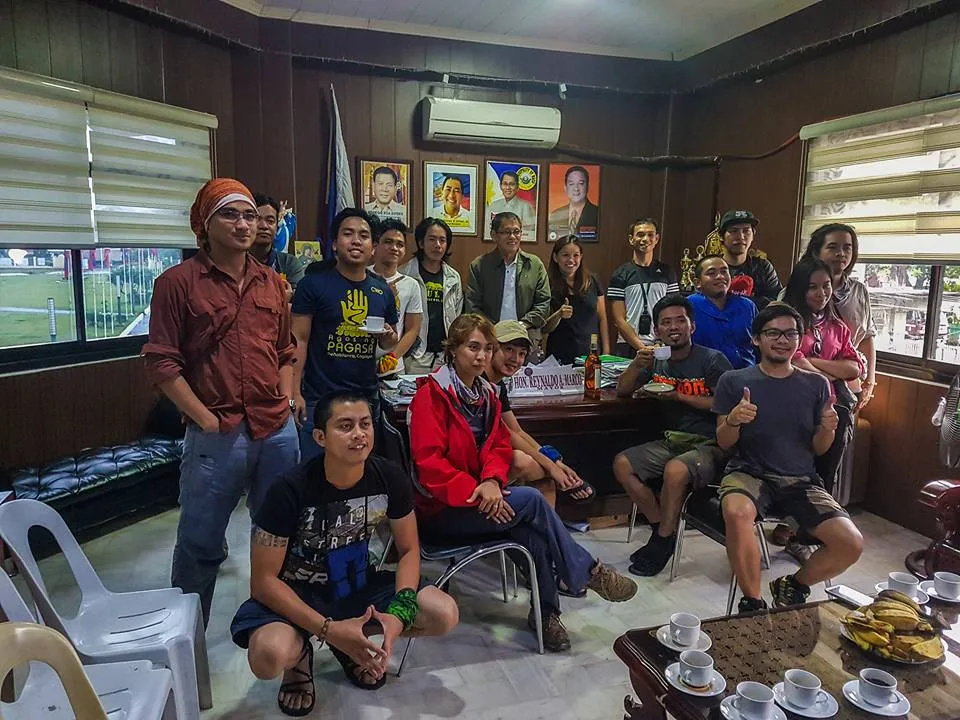
The journey from Manila to the Mt. Halcon trailhead requires a multi-leg transit of approximately 6 to 8 hours involving land and sea travel. The standard route is a bus to Batangas Pier (₱200-275), a ferry to Calapan Port (₱300-700), and finally a chartered jeepney directly to the jump-off point (₱3,500/vehicle).
Leg 1: Manila to Batangas Pier (Land)
Head to the bus terminals in Cubao (Quezon City) or Buendia (Pasay). Major carriers like JAM Liner, Ceres Transport, and DLTB operate 24-hour routes to Batangas Pier.
Insider Tip: Board a bus with the “CALABARZON” signage. These units bypass the frequent stops in Tanauan and Lipa City, shaving nearly 45 minutes off your travel time via the STAR Tollway.
Leg 2: Batangas Pier to Calapan Port (Sea)
Upon arrival at the pier, you must pay a ~₱30 terminal fee before choosing your vessel.
Fast Craft (SuperCat/OceanJet): The premium option (1-1.5 hours, ~₱600-700). Best if you are rushing to meet the tourism office cutoff. Note that baggage allowances here are stricter.
RORO (Montenegro/Starlite Ferries): The budget option (2-3 hours, ~₱300-400). These run 24/7 and offer more space for oversized hiking packs.
Leg 3: The Jeepney Charter (Calapan to Baco to Lantuyan)
Once in Calapan, do not take a tricycle. The road to the jump-off in Barangay Lantuyan is rough, and tricycles cannot handle the grade with full expedition packs.
The Protocol: You must hire a chartered jeepney (approx. ₱3,500 roundtrip). The driver will take you first to the Baco Municipal Hall for mandatory permit processing and orientation, and then proceed 45 minutes inland to the Lantuyan trailhead.
Reality Check: Coordinate your arrival time carefully. The Baco Tourism Office operates on standard government hours. If you arrive too late to register, you will be forced to stay overnight in Calapan, delaying your itinerary by a full day.
Estimated Budget Breakdown (2026)
For a safe and comfortable expedition in 2026, budget between ₱6,000 and ₱8,000 per person. This estimate assumes a standard “Solo Joiner” scenario within a team of 5 climbers sharing communal costs.
| Expense Item | Est. Cost (Group of 5) | Notes |
| Bus (Manila-Batangas RT) | ₱550.00 | Based on JAM Liner fares. |
| Ferry (Batangas-Calapan RT) | ₱1,300.00 | Fast Craft estimate + Terminal Fees. |
| Jeepney Share (1/5) | ₱700.00 | Based on ₱3,500 charter rate. |
| Permits & LGU Fees | ₱450.00 | Includes Permit (₱375), Green Fee, Registration. |
| Guide Fee Share (4 Days) | ₱400.00 | Based on ₱2,000 total (₱500/day). |
| Porter Share (Community) | ₱400.00 | To carry group food/tents. |
| Food Supply | ₱1,500.00 | Fresh markets in Calapan are cheaper than Manila. |
| Contingency Fund | ₱1,500.00 | Crucial for emergency lodging or extra days. |
| TOTAL | ₱6,800.00 | Does not include personal porter. |
The “Hidden Costs” of Halcon
Guide Meals: You are responsible for feeding your guide. If you do not include them in your meal plan, you must provide a cash allowance (typically ₱150-₱200/day).
Porter Overages: Porters have a strict weight limit (usually 15kg). Every kilo over this limit incurs a penalty fee. Weigh your group gear before you leave Manila to avoid an expensive surprise at the jump-off.
V. THE TRAIL: A Tactical Walkthrough
Day 1: The Heat & The Approach (Lantuyan to Aplaya)
Day 1 is a deceptive test of heat tolerance rather than vertical endurance. You begin at Barangay Lantuyan, sitting at a stifling 50 MASL, where temperatures frequently exceed 30°C (86°F) with near-100% humidity.
The “Oven” Stage
The first 2-3 hours wind through exposed agricultural zones. You will navigate through active Mangyan settlements, coconut groves, and banana plantations. There is no canopy cover here.
The Hazard: Many climbers burn out early because they push the pace in this “easy” terrain. The goal is to conserve electrolytes.
The Transition: By midday, you hit the forest line. The ground shifts from dry earth to the infamous “Halcon Mud”—a churned mixture of clay and organic decay that can swallow boots whole.
Camp Life: Aplaya Campsite
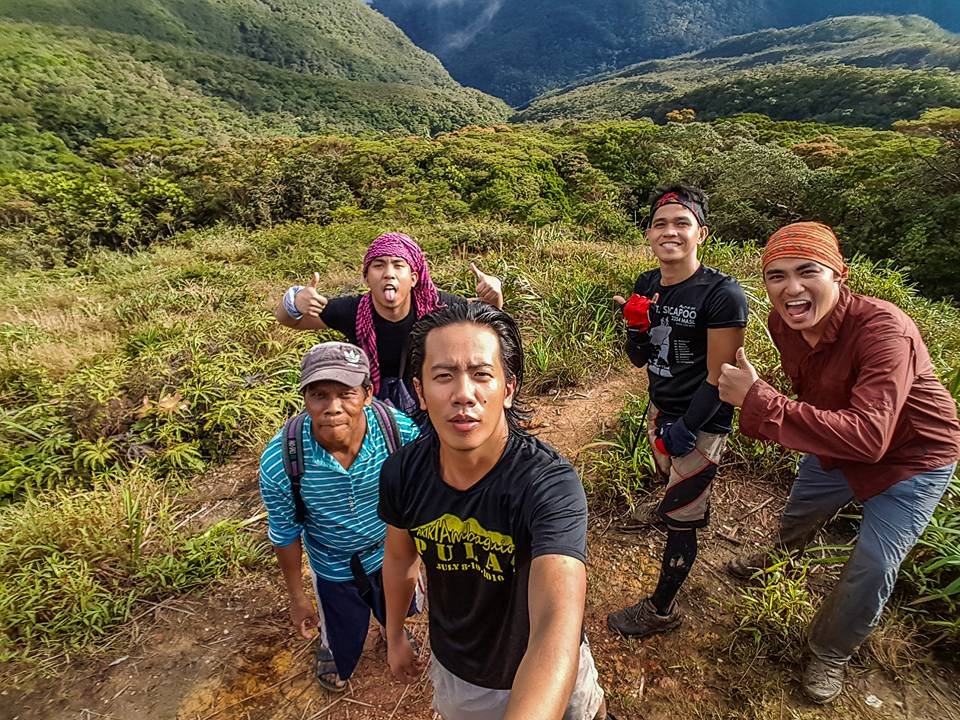
You will likely terminate the day at Aplaya Campsite (approx. 1,100 MASL).
The Reality: It is less of a “campsite” and more of a clearing in the jungle. It is perpetually damp and prone to becoming a mud pit during afternoon rains.
Logistics: Water is accessible nearby. Prioritize setting up a robust tarp system immediately; dry ground is a luxury here.
Day 2: The Crux (Dulangan River, Wall, & Knife Edge)
This is the most technically demanding 10-hour push of the expedition, requiring a transition from river crossing to vertical rock scrambling.
The Gatekeeper: Dulangan River Crossing
Before you ascend, you must cross the Dulangan River. In the dry season, it is knee-deep; in a storm, it is a raging torrent that cuts off the mountain.
Safety Protocol: Unbuckle your hip belt and sternum strap before entering the water. If you slip and the current catches your heavy pack, you must be able to jettison it instantly to avoid being dragged under and drowned.
Go/No-Go: If the water is “chocolate” (turbid/brown), do not cross. Wait for it to subside.
The “Wall” and The Monkey Trail
Post-river, the trail becomes nearly vertical. You will encounter the “Wall,” a section requiring you to haul yourself up using exposed roots (the “Monkey Trail”) and rotting wooden ladders installed by locals.
Water Logistics: Your last reliable water source is at Camp Karuwayan (also known as Balugbog Baboy). You must fill all hydration bladders here (4-5 Liters recommended) because there is no water source at the summit.
The Knife Edge (Azotea)
The final hour is the traverse of the Azotea.
The Vibe: The ridge narrows to a meter. On both sides, the mountain drops into a white abyss. The vegetation shrinks to bonsai-sized trees, offering zero protection from the wind.
Summit Camp: The campsite is small, exposed, and cold. If the wind is howling, pitch your tent low and guy it out aggressively.
Day 3 & 4: The Punishment (Descent)
Contrary to popular belief, the descent is often physically harder than the ascent due to the eccentric loading on your joints.
The Knee-Breaker
Descending 2,000+ meters on slippery, root-filled mud is a recipe for IT band syndrome and knee injuries.
Technique: Shorten your trekking poles. Trust the roots but test them first.
The “Taong Lumot” (Moss Man): As you descend back through the mossy forest in the twilight, you might recall the local folklore of the Taong Lumot. Whether it’s a spirit or just a trick of the light on the green algae-covered rocks, it serves as a reminder to respect the silence of Sialdang. Keep your noise levels down—not just for the spirits, but to hear the warnings of your guide.

VI. CRITICAL SAFETY PROTOCOLS
Managing the Limatik (Blood Leeches)
Prevention is your primary defense against the aggressive Limatik of Halcon; there is no way to avoid them entirely. To minimize bites, you must create a sealed mechanical barrier: wear dedicated “leech socks” (oversocks made of tightly woven cotton/nylon), use gaiters, and tuck your trousers into your socks. If a leech attaches to your skin, do not pull it off forcefully; spray it with 70% ethyl alcohol or salt water to force it to detach naturally.
Chemical vs. Mechanical Warfare
-
Mechanical Barriers: This is your first line of defense. Wearing light-colored rash guards helps you spot the black, worm-like creatures quickly before they find skin. Spandex or compression leggings are better than loose cargo pants, which provide entry points.
-
Chemical Deterrents: Carry a spray bottle of 70% alcohol or a saltwater solution attached to your shoulder strap for quick access. Some climbers apply DEET or eucalyptus oil to their boots, though this washes off quickly in the rain.
The “Eye Protocol” (Crucial)
The nightmare scenario is a leech attaching to the eyeball.
-
The Rule: If this happens, DO NOT PULL IT. The leech’s teeth are anchored, and forceful removal can cause severe corneal abrasion or leave the jaw embedded in your eye.
-
The Fix: You have two options: wait for it to get full and drop off (terrifying but safe), or seek immediate medical evacuation. Do not put alcohol or salt directly into your eye.
Insider Tip: Check your “warm areas” constantly—armpits, groin, and behind the ears. Limatik seek heat and thin skin.
Hypothermia & The “Dry Set” Rule
Hypothermia is the leading cause of fatalities on tropical mountains like Mt. Halcon, often striking when climbers underestimate the lethal combination of rain, wind, and fatigue. Even in the Philippines, temperatures on the ridge can drop to single digits (Celsius) with the wind chill factor.
The 1994 Lesson
The modern safety protocols of Philippine mountaineering were written in blood on this very mountain. During the 1994 tragedy, the Sialdang Mountaineering Club lost a member not to a fall, but to hypothermia amidst Typhoon Katring. This proved that altitude isn’t the only killer; wet-bulb temperature is. When you are soaked and exposed to high winds on the Knife Edge, your body loses heat 25 times faster than when dry.
The “Sacred Dry Set”
To survive the night at Summit Camp, you must strictly adhere to the Dry Set Rule:
-
The Protocol: Pack one set of thermal clothes (base layer, wool socks, bonnet) inside a high-quality dry bag. These clothes never leave the dry bag while you are hiking. They are only worn inside the tent.
-
Cotton Kills: Do not bring cotton shirts for this layer. Once wet, cotton loses all insulating properties. Use Merino wool or synthetic fleece.
Reality Check: If you arrive at camp soaking wet and shivering, strip off your hiking clothes immediately. Do not try to “dry them out” by wearing them. Put on your dry set and get into your sleeping bag. Your wet hiking clothes will be miserable to put on the next morning, but that is the price of sleeping warm.
VII. CONCLUSION: The Crucible of Sialdang
Mt. Halcon is not merely a recreational hiking destination; it is a crucible that strips away your ego with every vertical meter gained and every leech bite endured. Completing this expedition does more than just add a “9/9” rating to your mountaineering resume—it fundamentally recalibrates your definition of difficulty.
The Philosophy of the Ascent
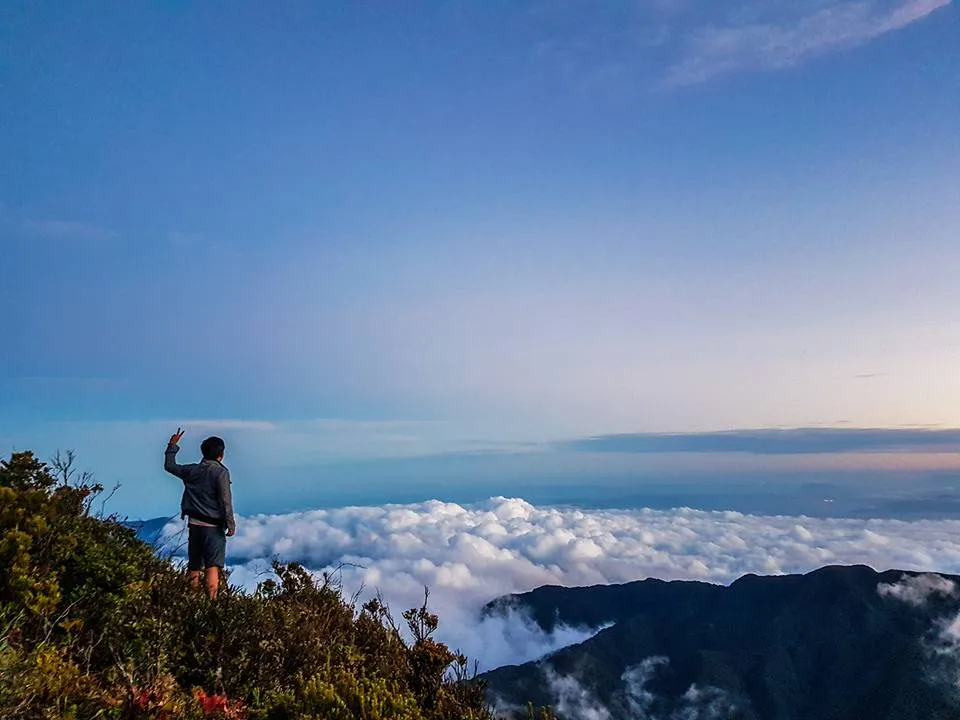
You do not conquer Sialdang; the mountain simply allows you to pass. The weather systems here are too volatile, the ridges too exposed, and the trails too unforgiving for arrogance. If you stand on the summit with a clear view of the Mindoro Strait, consider it a gift, not a right.
The Mental Shift: The true challenge isn’t the physical exertion of the “Wall”; it is the mental discipline required to stay calm when you are cold, wet, and covered in mud for three days straight.
The Cultural Imperative: Always remember that you are a guest in the ancestral domain of the Mangyan-Alangan. Their permission is the only reason you are here. Treat your porters and guides not as service staff, but as the survival experts they are. Pay them fairly, share your food, and listen to their warnings.
Final Operational Reminders
Leave No Trace (LNT) is not optional here—it is the law. The Baco Municipal Tourism Office has worked for decades to rehabilitate this ecosystem after the 2006 closure.
Pack It In, Pack It Out: If you bring a candy wrapper up, it comes down with you.
Bio-Waste: Use cat holes properly (at least 6 inches deep and away from water sources) to protect the pristine quality of the Dulangan River.
Are you ready to test your limits on the Knife Edge? The 2026 season slots are limited and fill up months in advance. Start your cardio training today, secure your Medical Certificate, and contact the Baco Tourism Office to book your expedition. The clouds of Sialdang are waiting.
VIII. FAQ SECTION: Your Questions Answered
Quick answers to the most common logistical and safety questions for the 2026 season.
Can I hike Mt. Halcon without a guide?
No, the “No Guide, No Climb” policy is strictly enforced by the Baco Municipal Government. Under the 2026 ordinance, every team is mandated to hire accredited local guides at a strict ratio of 1 Guide for every 5 Climbers.
The Reason: This is not just for livelihood; the trail is riddled with confusing forks and hazardous terrain that only locals know how to navigate safely.
The Consequence: Attempting to bypass this will result in immediate apprehension by Bantay Gubat (Forest Rangers) and permanent blacklisting from the mountain.
Is there a store at the summit?
No, Mt. Halcon is a designated wilderness area with zero commercial infrastructure above the trailhead. Unlike Mt. Pulag or Mt. Apo, which may have small stores at lower camps, Sialdang is raw nature.
Self-Sufficiency: You must carry 100% of your supplies from the jump-off point, including butane, rice, and emergency rations.
Resupply: The last place to buy last-minute goods (eggs, crackers, batteries) is at the sari-sari stores in Barangay Lantuyan before you cross the hanging bridge.
What is the hardest part of Mt. Halcon?
The difficulty lies in the “compound stress” of continuous vertical assault combined with the psychological toll of the Limatik. While the “Knife Edge” gets the photos, the “Monkey Trail” (vertical root climbing) physically drains you, while the constant vigilance against leeches drains you mentally.
The Reality: Many climbers “bonk” (hit the wall) not because they aren’t fit, but because the mental energy required to monitor their footing and check for leeches exhausts their calorie reserves faster than expected.
Is there mobile signal on the trail?
Signal is extremely intermittent and should not be relied upon for navigation or emergency comms. Generally, the deep ravines of the Dulangan River are dead zones.
Network Specifics: Climbers often report spotty Smart signal at Aplaya Campsite and certain exposed sections of the ridge. Globe signal is notoriously weak to non-existent.
Tech Tip: Do not rely on cloud-based maps. Download offline GPX files to your watch or phone before leaving Batangas.
Where are the reliable water sources?
Water is abundant in the lower forest but completely non-existent at the Summit Campsite. Understanding the hydrology is critical to avoiding dehydration.
The Sources: You will find strong water flow at Aplaya Campsite and the Dulangan River.
The Critical Chokepoint: The Last Water Source is at Camp Karuwayan (Balugbog Baboy). You must haul enough water (approx. 4-5 Liters) from here to cover your summit dinner, breakfast, and the descent back to this point the next day.
IX. BEYOND THE SUMMIT: Recovery & Next Steps
You don’t just go home after Halcon. Whether you need to wash off the mud in world-class waters or you are hunting the next “Knife Edge,” here is where your itinerary goes from Mindoro.
Recovery & R&R (Within Mindoro)
Puerto Galera: The Post-Climb Wash Down
Located just 1-1.5 hours north of the Baco jump-off, Puerto Galera is the standard recovery hub for Halcon conquerors. After 4 days of “jungle rot” and mud, the white sand beaches here offer the fastest relief.
The Logistics: From the Baco Municipal Hall, take a jeepney or van back to Calapan, then catch a van directly to Puerto Galera.
Where to Stay:
White Beach: Go here if your team wants to celebrate with nightlife, fire dancers, and Mindoro Sling cocktails.
Talipanan/Aninuan: Go here for quiet seclusion. It’s less crowded and better for sleeping off the fatigue.
The Vibe Check: The saltwater is excellent for drying out leech bites and minor scrapes (though it stings).
Apo Reef Natural Park: The “Halcon of the Seas”
If you have 2-3 extra days, head to Sablayan in Occidental Mindoro to dive the world’s second-largest contiguous coral reef. While Halcon is the biodiversity highlight of the land, Apo Reef is its underwater equivalent.
The Logistics: From Calapan, take a bus/van to the southern port of Roxas, then a RORO to Caticlan OR (more commonly) take a bus crossing the jagged central spine of Mindoro to Sablayan (approx. 3-4 hours).
The Experience: Swimming with sea turtles, reef sharks, and barracudas. It provides a stark, beautiful contrast to the dark mossy forests of Sialdang.
The “Knife Edge Trilogy” & Comparisons
Mt. Guiting-Guiting (G2): The Next Leg
If Halcon is the “Muddy Knife Edge,” G2 in Romblon is the “Rocky Saw Tooth.” Often considered the second leg of the Philippine “Knife Edge Trilogy” (along with Halcon and Mantalingajan), G2 is the natural progression for climbers who enjoyed the technicality of the Azotea.
The Comparison:
Halcon: Slippery roots, deep mud, leeches, wet cold.
G2 (Sibuyan Island): jagged granite rocks, bouldering, intense heat, jagged ridges (Kiss the Wall).
Logistics: You can access Romblon via the Batangas Pier, the same hub you used for Halcon. Many climbers plan these as back-to-back major climbs in a single season.
Mt. Pulag: The Benchmark Comparison
Mt. Halcon is frequently compared to Mt. Pulag, but the comparison only holds if you are discussing the Akiki Trail.
Ambangeg Trail (Executive): This is a walk in the park compared to Halcon. Do not use your Ambangeg experience as a gauge for Sialdang readiness.
Akiki Trail (Killer Trail): This is the closest Luzon equivalent to Halcon in terms of vertical gain and physical exhaustion. If you found the assault from Eddet River to Marlboro Country difficult, you are ready for the Halcon assault from Dulangan to the Ridge.
The Difference: Pulag offers wide, open grassland vistas and the “Sea of Clouds.” Halcon offers a claustrophobic, prehistoric jungle aesthetic that feels more raw and untamed.

Pingback: MT. Ugo Unbound: Trails Conquered, Majesty Unleashed - LakbayPinas
Thanks for sharing. I read many of your blog posts, cool, your blog is very good.